‘My Least Favourite Aspect of Shopping is Shopping’

There are dozens of quotations about shopping, and most of them don’t fit me. I can’t agree with Marilyn Monroe – ‘Happiness is not in money, but in shopping.’ nor with the words from a film I haven’t seen, Confessions of a Shopaholic: ‘When I shop, the world gets better.’ I’m more with Franklin Jones: ‘A bargain is something you can’t use at a price you can’t resist.’ My title quotation is by AJ Lee.

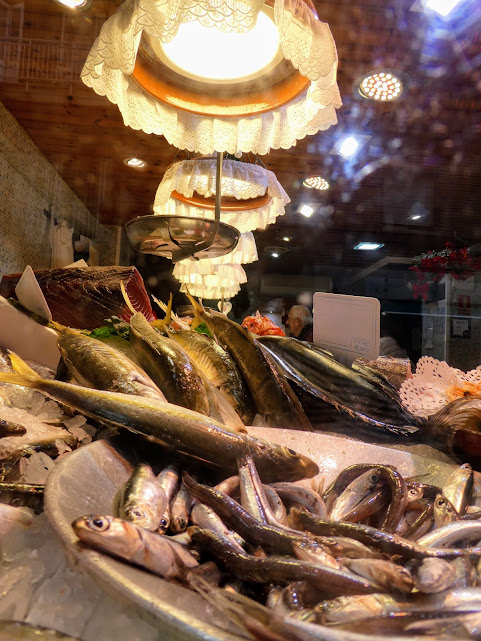
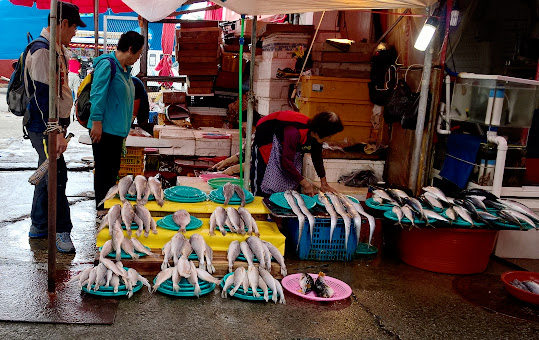
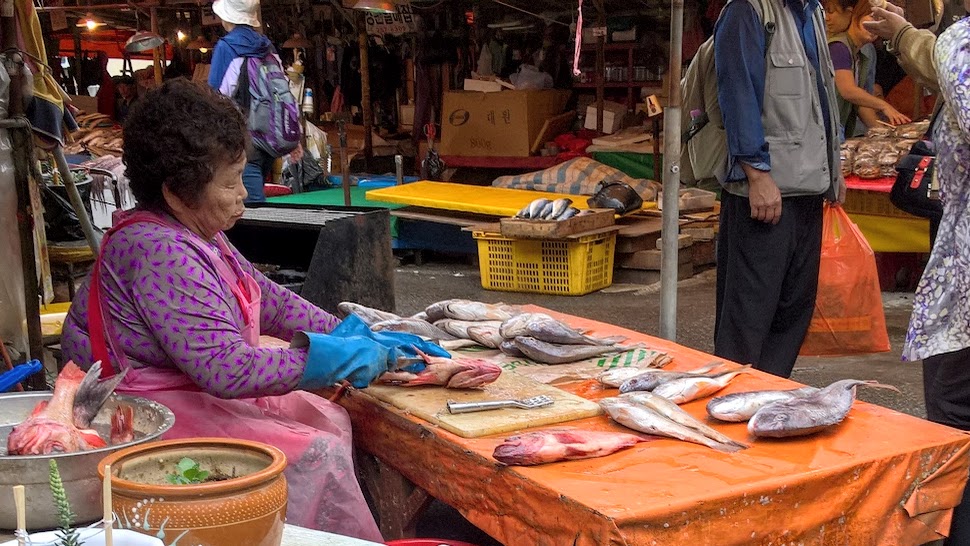
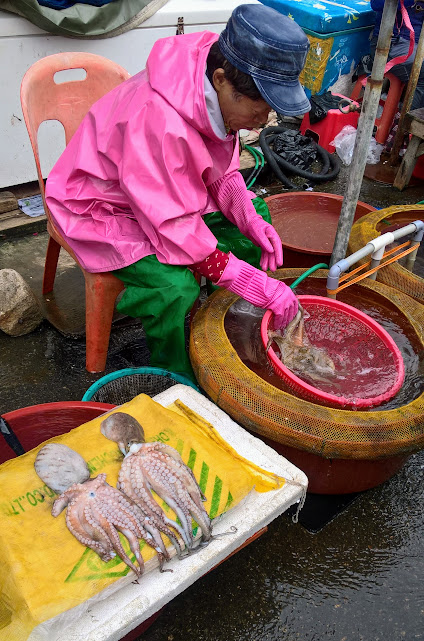
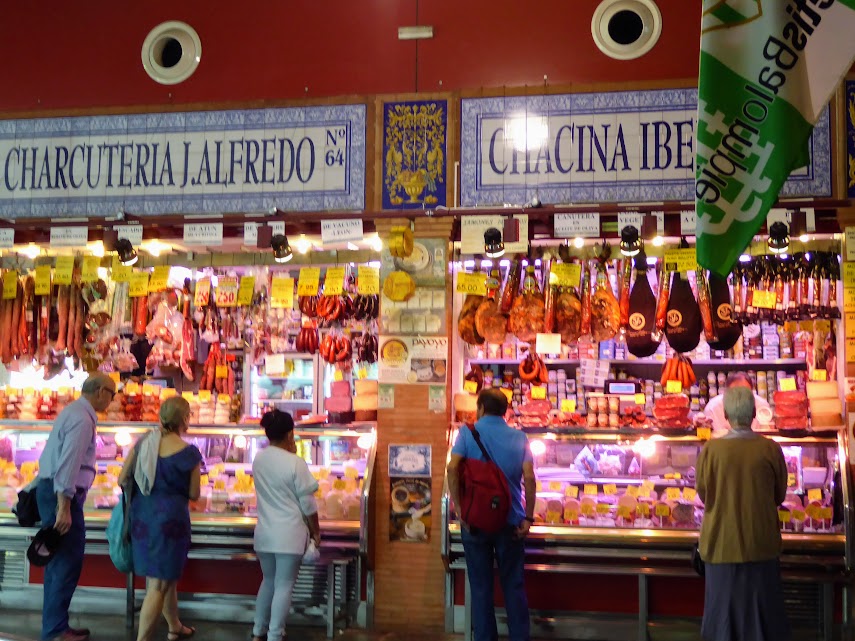
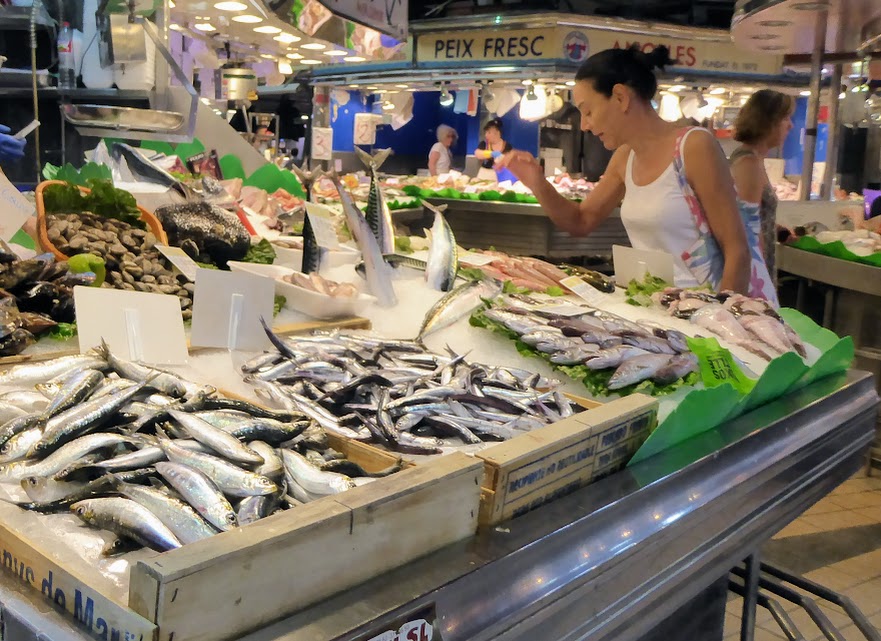
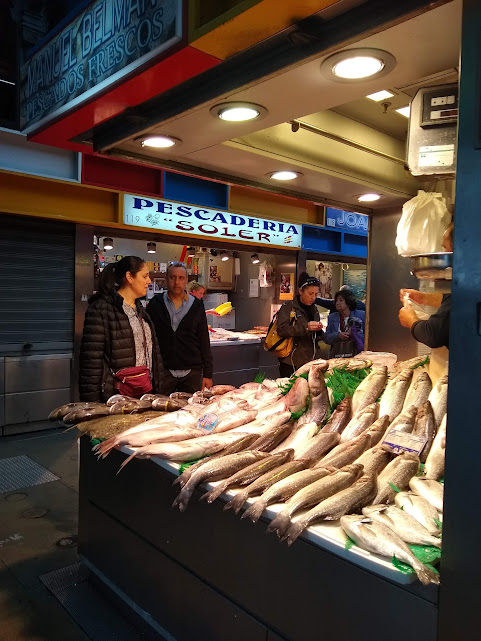
I make an exception though with food shopping- especially abroad, and especially in markets. And even more especially in fish markets. In this country, we seem hardly to extend our reach beyond cod, plaice and haddock, with tuna and salmon as well these days – and even those may be tinned . So a visit to a fish market in Europe or Asia is a revelation. Here are some shots taken in Spain and South Korea, where they seem to catch enough daily to empty the oceans.
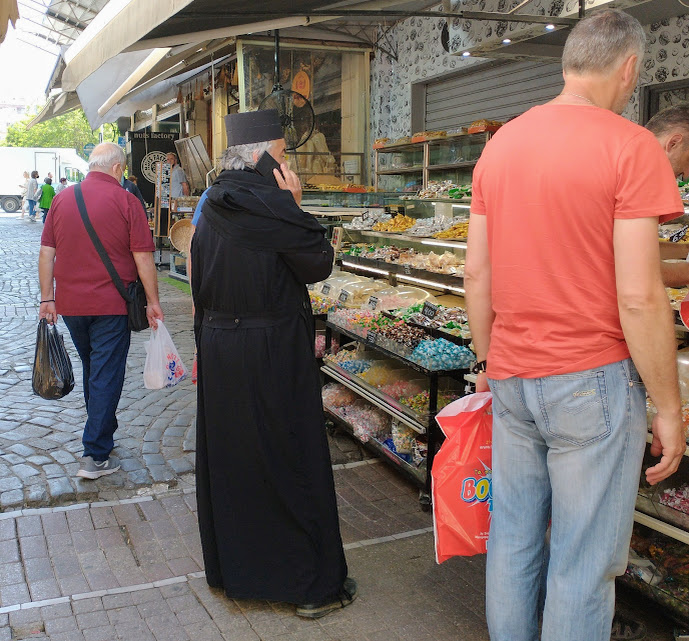
Fruit and veg and groceries seem more interesting in a sunny spot: especially if a fellow customer in Thessaloniki is a Greek Orthodox priest busy on his mobile phone.
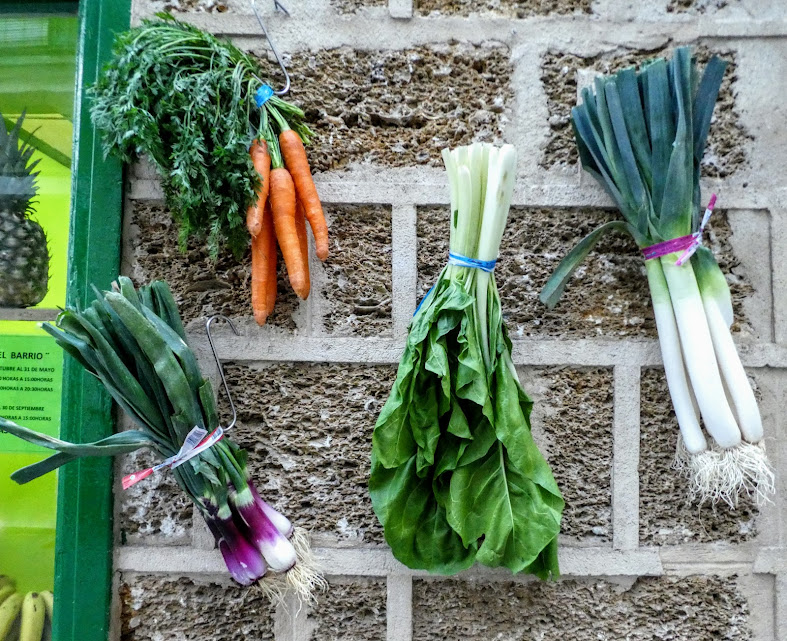
Or if the shopkeeper has made a point of announcing his wares in a very original way, as here in Cádiz.
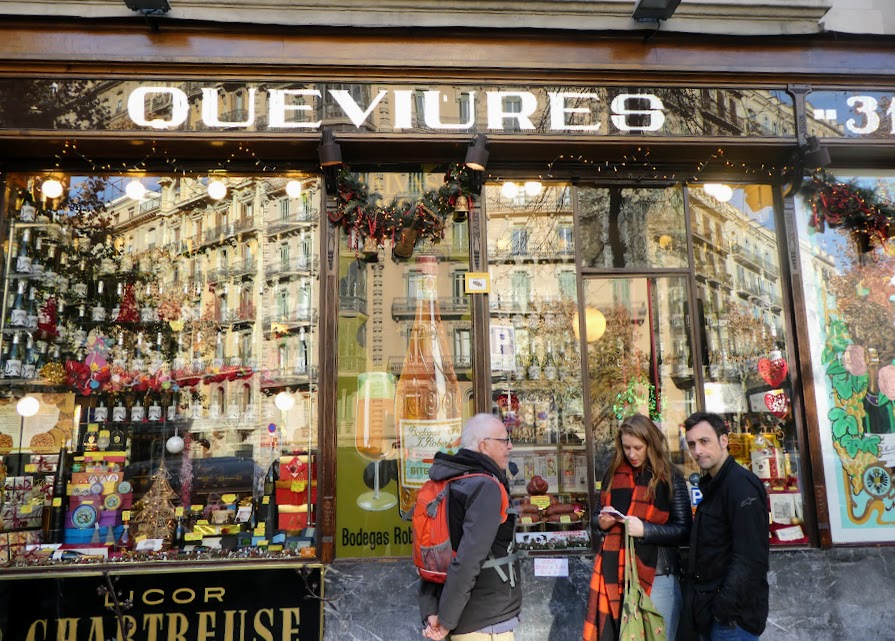
Some shops are so handsome they simply invite browsing. This shop in Barcelona, Queviures, is thinking of charging an entrance fee to those who mumble ‘just looking‘. And look – you get a view of the street behind in the window reflections – for free.
Here’s another – in Newcastle this time – also providing a view of the street it was in.
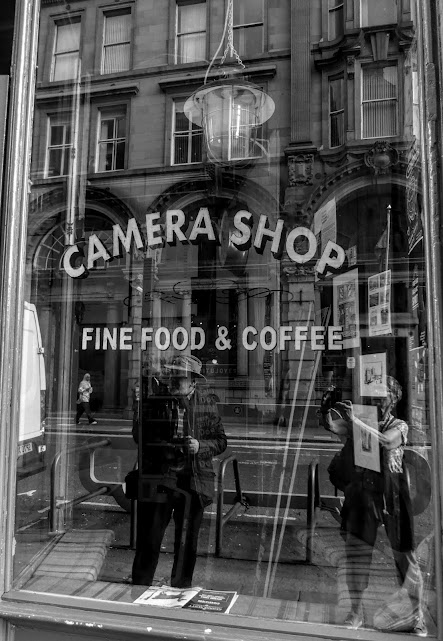
It’s no longer a camera shop. But that day, it wasn’t selling fine food and coffee either. But we had fun photographing it for free.

No clothes shops here. I’ve shopped for clothing exclusively in charity shops for five or six years now – yes, even for my outfit as mother-of-the-bride. And I didn’t look like a bag lady. So I’ve been told. I therefore have no shots of elegant and fashionable clothes emporia. Just this. Once upon a time, this mannequin was the clothes horse for many a stylish window display in Málaga. Her glory days are over.


Despite my lack of enthusiasm for retail therapy, I’ve thoroughly enjoyed strolling round markets and shops at home and abroad for Ritva’s Lens-Artist Challenge #288. I’ll never be keen to shop-till-I-drop, but ‘you can always find something you want‘ (Sophie Amurosa). Especially if it’s edible.
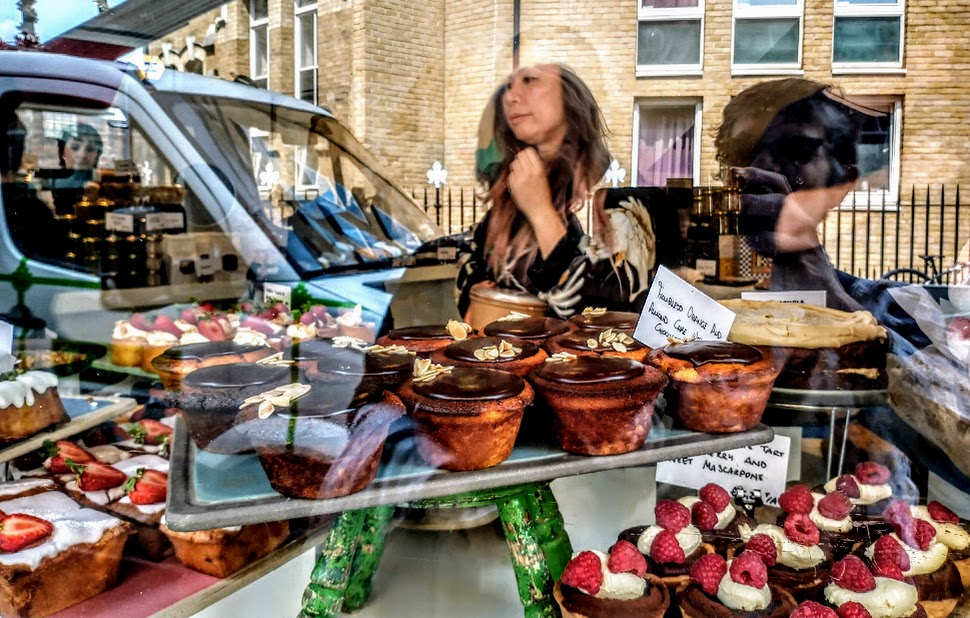
My featured photo is from the indoor market in Seville.
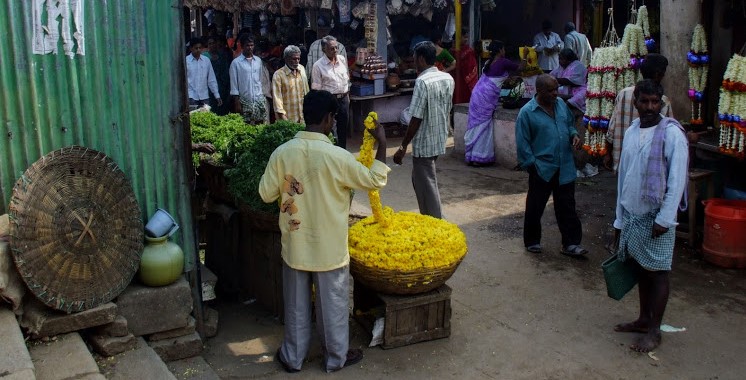
A Bad Day and a Good Day in the Market, Indian style

When abroad – or even somewhere fresh here in the UK – a big pleasure comes from visiting the local market.  People-watching ordinary folk going about their daily business: seeing what’s on offer at the run-of-the-mill fruit and veg stalls.  What are the local cheeses?  Is there any honey from round and about? What have they got on sale that‘s unexpected?  Perhaps a stall holder will invite me to try this kind of apricot – and then that one – before I buy.  Maybe a nun from the local convent will be selling home-pressed apple juice.

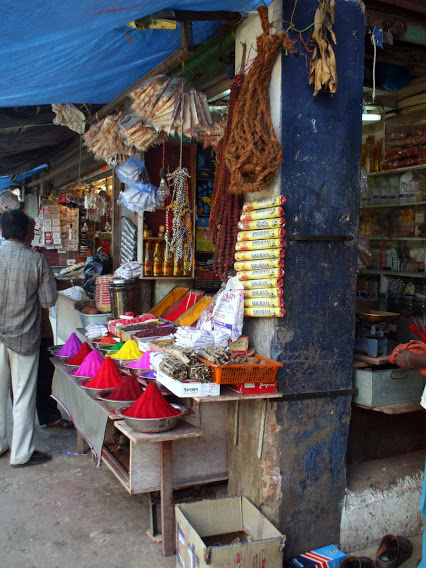
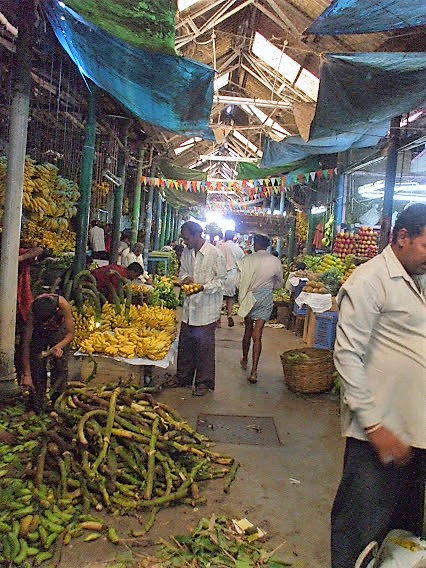
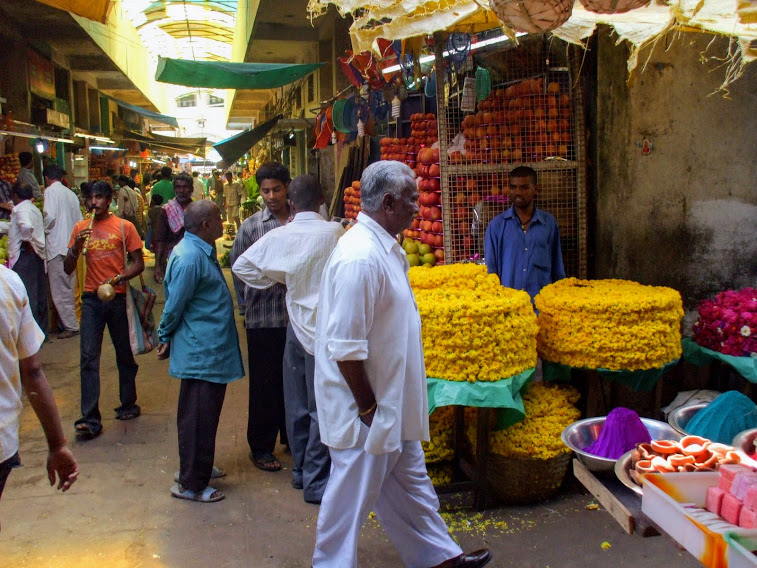
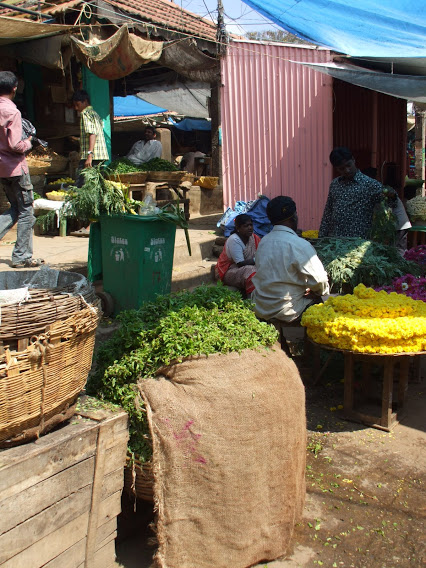
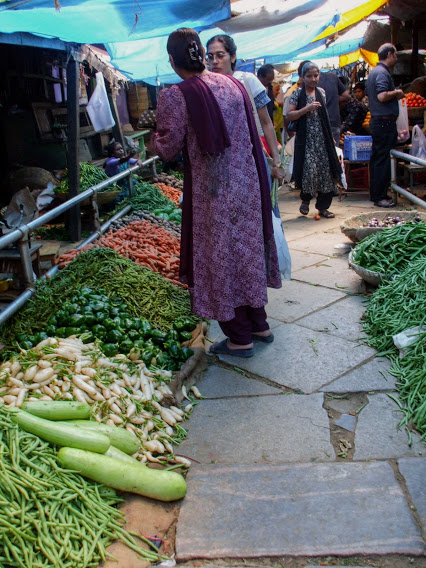
In India, it was spices I was particularly keen to see.  But in Mysore, which isn’t short of European visitors, I had such a bad time I almost didn’t venture into a market again.  I had Tourist emblazoned across my forehead for all to see.  And I was pestered, by one young man in particular, who wouldn’t take ‘no’ for an answer, whether I was nice, nasty or ignored him.. Whatever.  I left with no purchase, and in a very bad mood.  Though later I got a few photos – the ones you see below and as the featured photo.

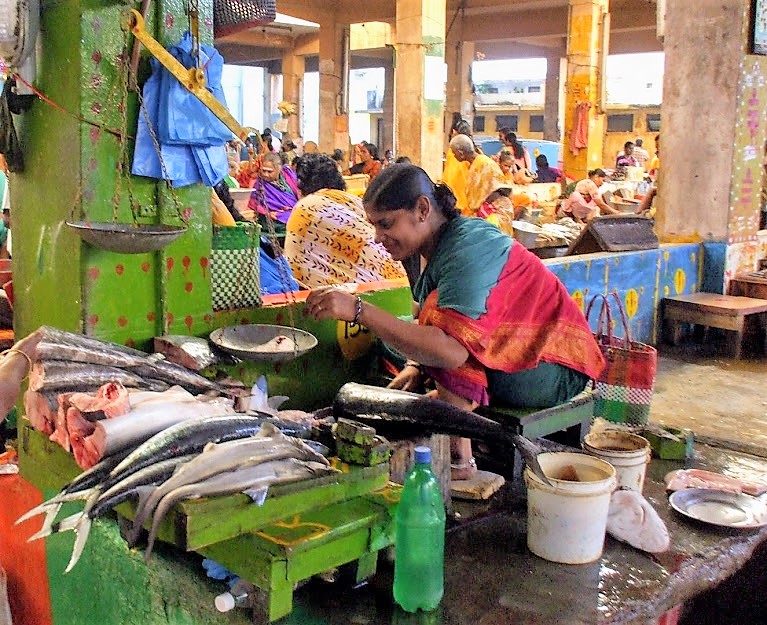
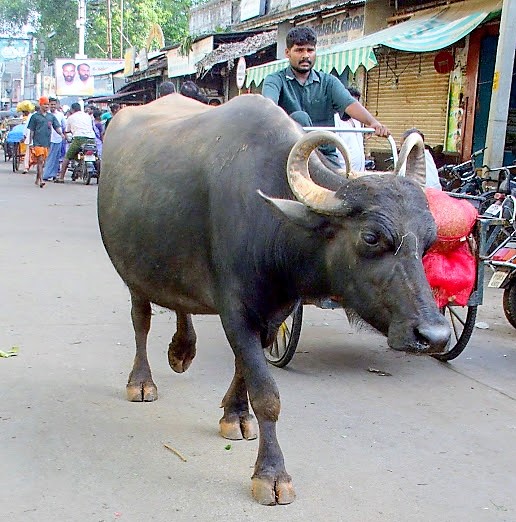
Pondicherry was much better.  Here were men, women, seated on the floor and selling whatever they had – a few vegetables from their land, a few fish.  There were larger, more business-like stalls too.  I was doing my usual diffident-about-asking-to-take-photos there, so I only have one of a  woman selling fish, and one water buffalo, who made a good story for the day by peeing copiously all over my feet.

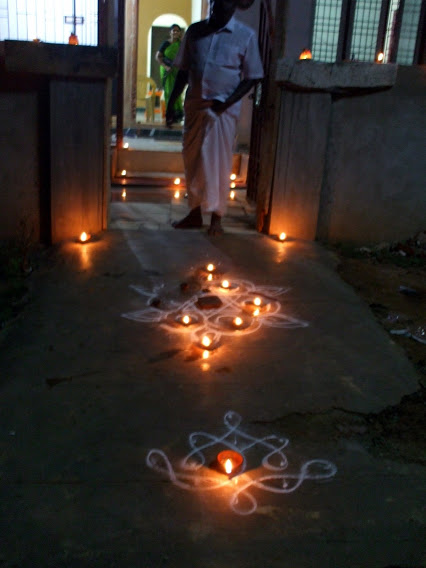
Best of all was Thanjavur.  Here, I stayed with a young American academic, who spoke fluent Tamil, and took me into the homes of her Indian friends, walked me round the back streets to admire the Diwali pavement decorations, and generally gave me a good time.

  One day, she wanted me to go to the market for her.  Just a few simple purchases.  Carrots, onions, that kind of thing. For the first time in India, I met people who spoke no English at all.  And my Tamil didn’t extend beyond ‘please’(தயவு செய்து Tayavu ceytu)  and ‘thank you’ (நன்றி Nanri).  But pointing’s fine.

I don’t think they’d ever had an English tourist wanting anything, let alone humble carrots at the vegetable stall, and soon I was the centre of an amiable group helping me make my purchases.  They tried to increase my vocabulary, and begged me to teach them the same words in English because it was the end of the day and they weren’t busy.  It was such fun.  And when it came to payment, I tried to press far too much money into their hands.  I thought they’d asked for 70 rupees (about 70 pence), and felt it cheap at the price.  How ridiculous!  They wanted seven.  Honestly, that English woman!  Is she made of money?  And my new friend, the one who actually served me with the vegetables I needed, begged for a photo.  Here it is.

My friend in the Market

So here we are: Two market traders for Just One Person from Around the World. There are a few more from where these came from. If we can’t go very far, we could at least do a Virtual Trip to India for a week or two.

Postcards from Barcelona 2

How to have a relaxing day of discovery in this most crowded of tourist venues:

1. Stay away from the city centre. Begin your day mooching around a neighbourhood market.

2. Stroll through the university zone and a peaceful park. Visit the serene and beautiful Monasterio de Pedralbes, and spend time in its ancient cloisters.

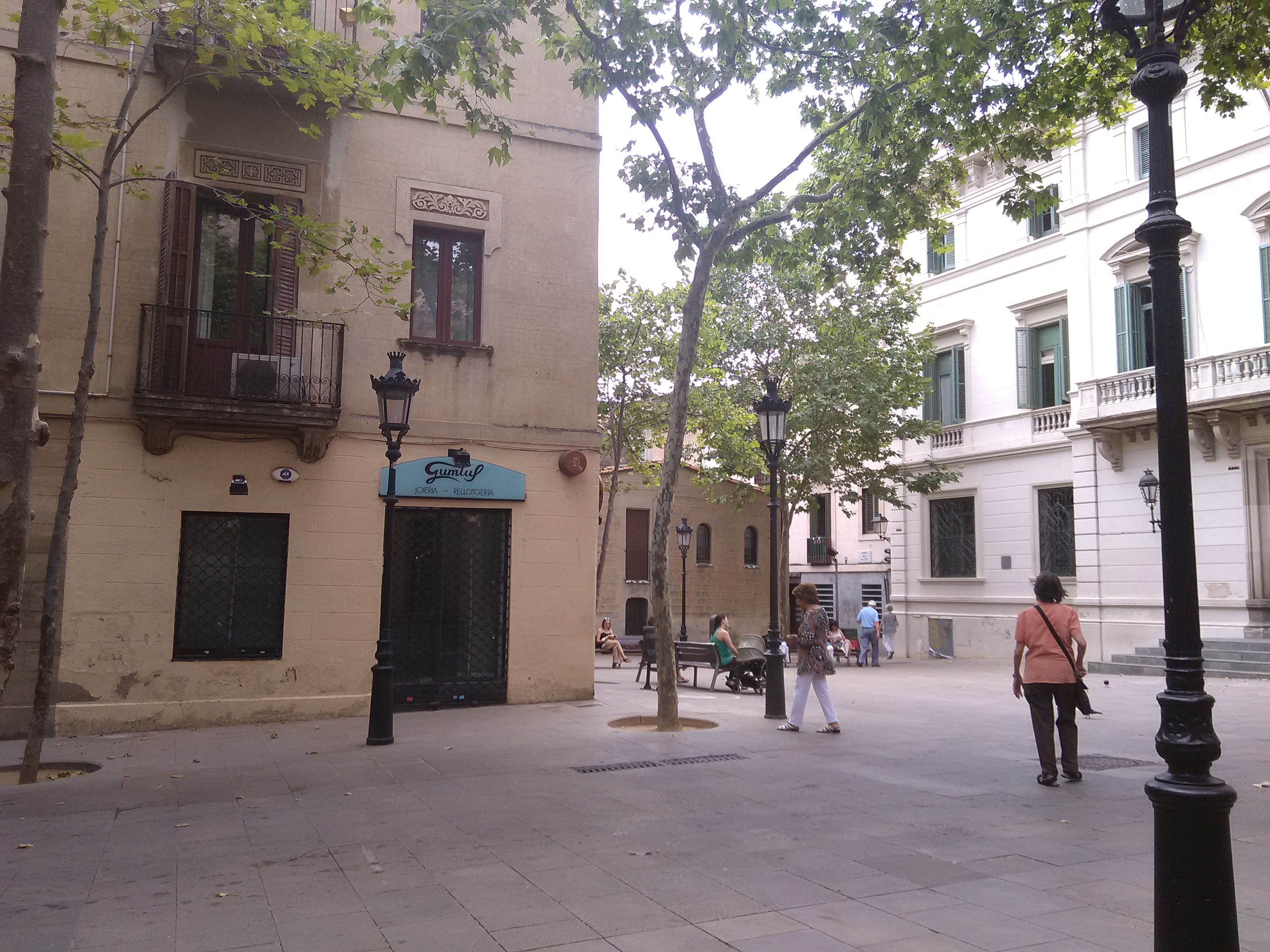
3. Afterwards, in the nearby well-heeled suburb of Sarrià , find a quiet square to linger over a restorative clara.

4. Later still, mooch round looking for a lunch spot where the locals eat: office workers, the granddad who’s collected his small charges from their hockey game, that sort of thing. Enjoy.

5. Later, much later, meet Emily and Miquel. Another meal, I think. Watch this space. It hasn’t happened yet.

Sauntering in Seoul

If you want a pair of experts in miming for your Christmas charades, we’re your team. We spent the morning getting coffee from a back-street coffee shop, directions from anyone whose eye we caught and lunch from a market stall, all without benefit of much language at all. Pidgin Konglish rules.

Mainly though we got our bearings and pottered round the markets. Whole zones – large zones – concentrated entirely on their specialisms – traditional jewellery; timepieces; electricians’ goods (whole shops for instance of flexes and cables); rubber bands; string; cardboard packaging; logo packaging; sports trophies …..

From late morning, women scurried about with newspaper-covered tin trays on their heads containing appetising looking lunches. These meals were delivered to shop assistants and tradesmen who sat on the floor of their workplace or in the street to eat.

At the moment, rain has stopped play. But we needed a break anyway.

Market day there, market day here…..

We’ve just come back from a Saturday morning strolling round Richmond market.  It’s a pity for Richmond that our most recent Saturday-strolling-round-market experiences date from our days in the Ariège.  The Saturday morning market in Saint Girons is an incomparable experience which Richmond couldn’t match.

Saint Girons has fewer than 7000 residents, but it’s the administrative centre of the Couserans, and the centre of gravity not only for its own inhabitants, but for townspeople, villagers and farmers for miles around.  Saturday is the day they come to stock up on fresh fruits and vegetables, charcuterie, cheeses, dried fruits, hardware and haberdashery, plants for the potager, and to link up with friends and neighbours over a coffee or a beer in a local bar.  Saturday is a day when they might themselves be stallholders.  Among the joys of the market is the pleasure of finding small stalls selling just a small selection of say, goats’ cheeses, produced that very week by a ‘petit producteur’, or asparagus picked no more than 24 hours before, and only available for a few short weeks in April or early May, or home-produced charcuterie, or mushrooms and fungi foraged from the woodlands and meadows round and about.  There’ll usually be a crowd surrounding these specialised stalls, which may not be there every week, or in every season, because they can only put in an appearance when they have enough good things to sell.  And the market sprawls between two squares, along the banks of the river, and up a couple of other streets.  You won’t get away in a hurry.

Compare Richmond in Yorkshire.  It too is the main town in its region, Richmondshire, and only a little larger than Saint Girons: it has somewhat more than 8000 inhabitants.  But its market barely extends beyond the handsome market square.  There are several good greengrocery stalls, an excellent fish stall, which is well-known throughout the region, others selling home-produced sausages and other prepared meat products, and plant stalls with herbs, bedding plants, bulbs and seeds.  Best of all is the wonderful cheese van, ‘The Cheesey Grin’, whose knowledgeable, enthusiastic and cheerful owner has the best variety of cheeses from Britain and Europe, from small producers, brought out for sale when at its very best, that we’ve seen in quite a long time.  But that’s all. You can be done and dusted in 15 minutes.  I fear that markets, or at least the ones local to us, are in decline.  Ripon too has noticeably fewer stalls of any kind than was the case only a very few years ago, and a smaller number of stalls selling well-produced or sourced local food.  Still, small shops selling these things seem slowly to be on the way up, so perhaps we’re exchanging one kind of market for another. Perhaps it’s not a death knell.  As a French friend of ours said recently, ‘I don’t hope so.’