Six Degrees of Separation: From Wild Dark Shore to Island Dreams

On the first Saturday of every month, a book is chosen as a starting point and linked to six other books to form a chain. Readers and bloggers are invited to join in by creating their own ‘chain’ leading from the selected book.

Kate:  Books are my Favourite and Best
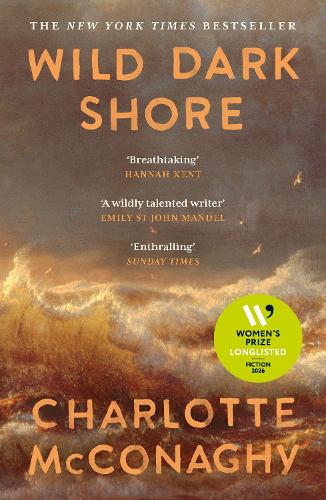
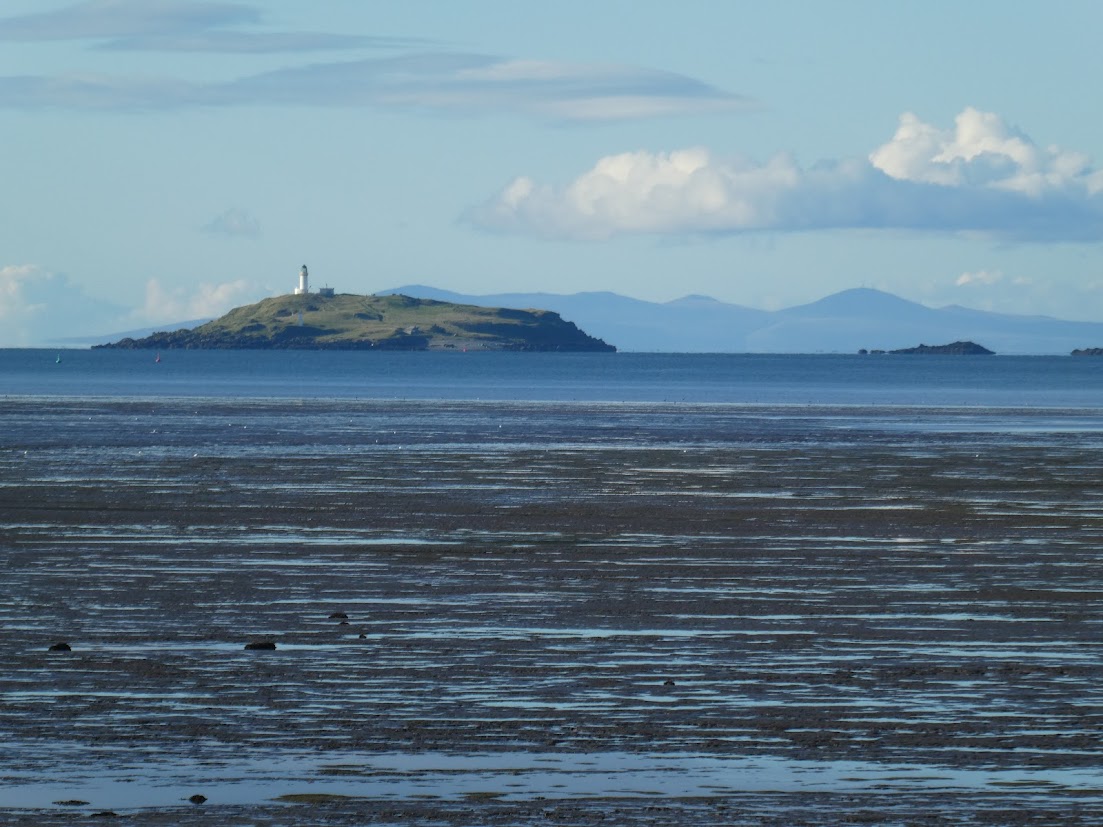
This month’s chain starts with Wild Dark Shore by Charlotte McConaghy.  I’m fourth in a queue of readers at the library waiting to borrow this book.  Here’s the first sentence of the book’s resume. ‘Dominic Salt and his three children are caretakers of Shearwater, a tiny weather-lashed island that is home to the world’s largest seed bank.’ 


So I’m going with the sea for all the books in my chain this month.  I’m going to try to dodge books I’ve showcased before, and that I know many of you have also recommended.  So no Clear by Carys Davies, no Seascraper by Benjamin WoodOr James Rebanks The Place of Tides, which Kate has just reviewed.
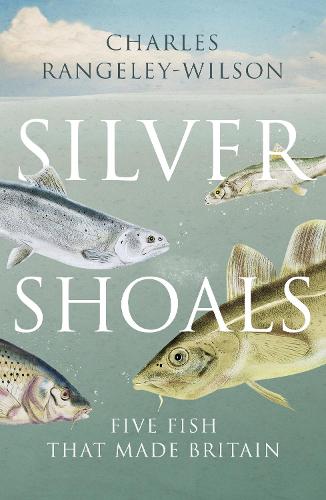
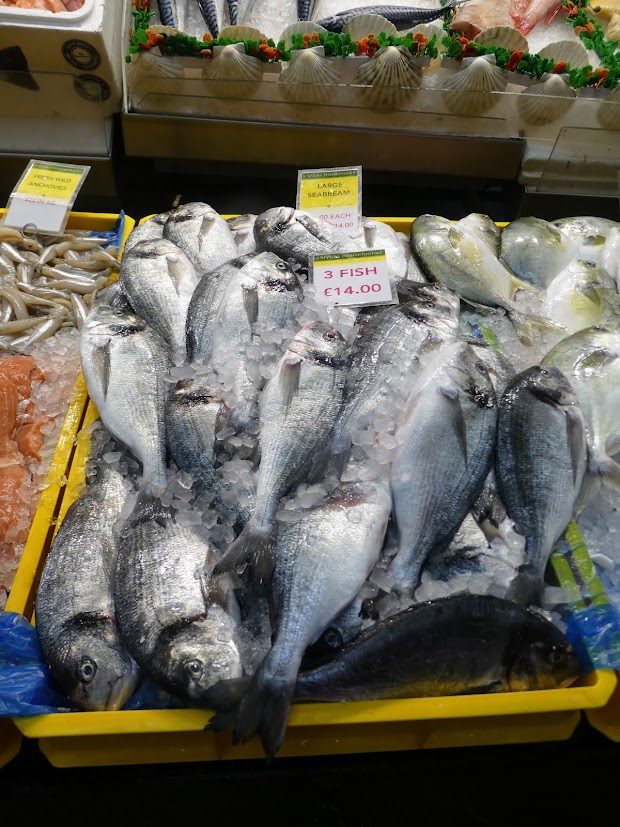
In fact, let’s not start with a novel at all.  Let’s celebrate the fish that so often feed us – specifically here, the fish round the British coast, in Silver Shoals by Charles Rangeley- Wilson. I was entirely and unexpectedly engaged by this book, an exploration of our nation’s iconic fish: cod, carp, eels, salmon and herring. This is a story of the fish themselves; of fishermen; of the consequences of greed and the way back from it; of geology; meteorology; our nation’s social history as it relates to food and farming; of corruption and political will. It combines serious discussion of issues with good yarns about the fishermen who took Rangeley -Wilson fishing with them, whether on week-long voyages on trawlers, or half day sorties to the local river bank. He travelled north south east and west in quest of fish and their stories, and produced an absorbing account which I read in record time because I was so enthralled by all the threads of the story Charles Rangeley-Wilson told. 
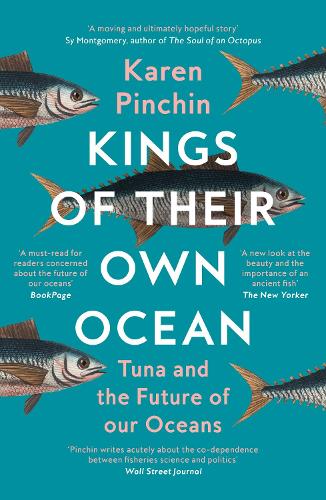
Those Silver Shoals don’t include tuna.  Kings of Their Own Ocean: Tuna, Obsession, and the Future of Our Seas by Karen Pinchin talks of little else. This is quite a story. It details the history of man’s love of eating tuna, from way before Roman times, to the present day, when the Japanese have cornered much of the market, while teaching the world to enjoy their own particular obsession with the freshest, choicest tuna flesh. The book details a history of overfishing, of trying to understand the tuna’s migration patterns, of political interests and manoeuvres and focusses on particular individuals who have been prominent in the story, such as tuna-tagging supremo Al Anderson. An engaging book, reeling in this non-scientist who has no prior knowledge of the industry: and who doesn’t even eat tuna (even less likely to now). 
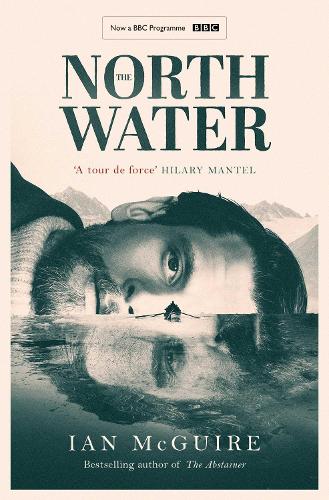
So now to a novel about fishing.  About whaling to be exact. The North Water by Ian McGuire.  This is a gritty story set largely in a 19th century whaling ship. There’s violence, brutality, bad language, bowel movements a-plenty, but it doesn’t feel gratuitous. Patrick Sumner has – we eventually discover – left the British Army in disgrace and his options are few. He becomes a ship’s surgeon on the whaling ship, and finds that a hard and desperate life becomes even worse as the ship and its crew battle against an arctic winter and a particularly brutal and amoral member of the crew. An involving and gripping story that recreates a world I can only be grateful not to be a part of. I saw a good and faithful  TV adaptation of this book some years ago.  Recommended.
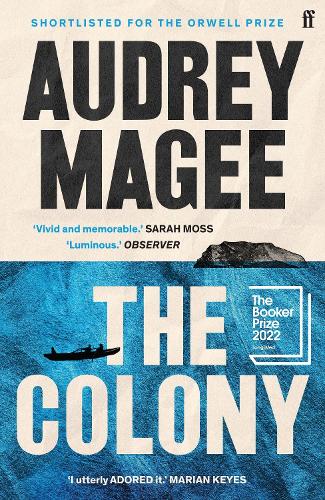
Audrey Magee’s The Colony might have been a good choice to begin my chain. We’re in Ireland in 1979, on a small, sparsely populated and isolated island, whose inhabitants have only recently started to learn and use English. Two visitors come to spend their summers there. Mr. Lloyd is a painter who wants to explore the landscape. He’s rude and entitled, but interesting to young islander James who has ambitions to go to art school. Masson, known as JP, is a French academic, keen to preserve and promote the Irish language, whether the inhabitants want it or not. Each chapter is interspersed with a terse newspaper-like account of a sectarian murder on the mainland, whether of a Catholic or a Protestant. At first these almost seem an irrelevance. Gradually, the penny drops that these incidents are deeply rooted in the history of the English towards their Irish ‘colony’, and do much to explain the largely hostile feelings both of the islanders and its two visitors. The book paints a picture of an island in many ways left behind, whose characters still struggle to find their place in the world, as indeed do the two visitors. A book to provoke thought long after the last page has been turned. 
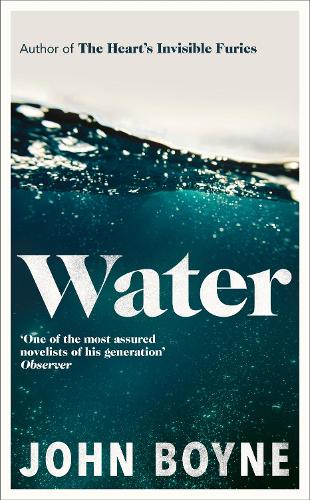
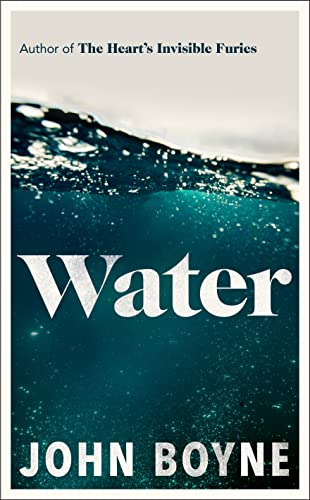
Let’s turn to another Irish island in John Boyne’s Water, part of his Elements quartet. We meet a woman in middle years who has just fled to live on a fairly remote Irish island, changed her name and as far as possible her appearance.  Why?  Only slowly do we find out.  Her husband’s crimes reflect on her: the world assumed she had enabled them – and, she believes, one even greater tragedy. She has done her best to vanish. She meets a few characters who are also uncomfortable with their lives, making relationships with some.  Slowly she regains the strength of character necessary to reject her husband and to renew her relationship with her daughter.  This book deftly charts her slow, but steady steps to recovery.

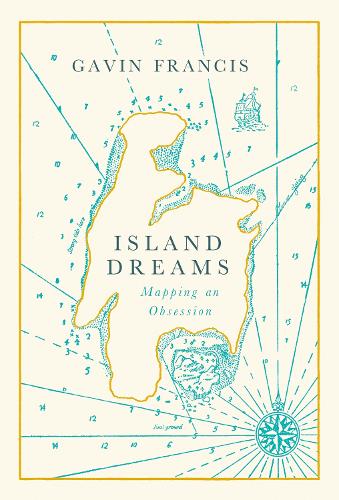
I’ll finish where I began, with non-fiction.  And with the subject of the starter book and two of my other choices:  islands, in Island Dreams, by Gavin Francis.This is a beautifully produced book. On heavy paper, with blue and black ink, the text is allowed generous space to breathe. As well, the text is interspersed – also generously – with maps old and new illustrating the outlines of islands he visits and discusses. These are the only illustrations. Often the subject of the map will be – for instance – the usual trade routes using the islands illustrated. So this is a book to savour and linger over, returning several times to the maps on display. Gavin Francis has often been able to combine his passion for island-hopping with his career, working in those places he has most wanted to visit. He appreciates the way that islands can offer both isolation, and yet a sense of community with those who call it home. This is a book that’s both very personal, yet also universal. It encompasses myth, psychology, philosophy, literature and straightforward travel writing. Quickly read, it demands to be looked at again and again. It will stay in my mind for a long time.

So there we have it. My sea-related chain. Our next book is Stefan Zweig‘s The Post-Office Girl. Will my next chain be post office related? Now that would be a challenge.


Six Degrees of Separation: From Sandwich to My Coney Island Baby

On the first Saturday of every month, a book is chosen as a starting point and linked to six other books to form a chain. Readers and bloggers are invited to join in by creating their own ‘chain’ leading from the selected book.

Kate: Books are my Favourite and Best

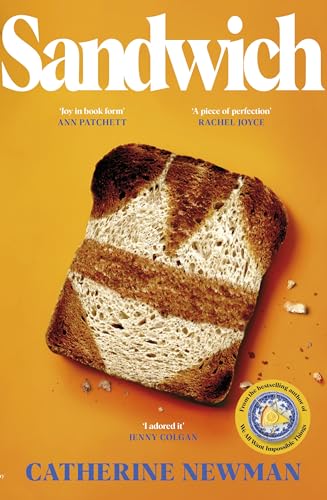
This month begins with Catherine Newman‘s Sandwich. It’s a book I enjoyed – with reservations – but let’s concentrate on the basics. This is a smartly delivered story told through the voice of menopausal Rocky as she goes with her husband; her two grown up children; and for part of their week there, her elderly parents to the same -faintly decrepid – house in Cape Cod that they’ve rented every summer for years and years. This gives me my premise for my Six Degrees this month. All my choices will have a marriage embedded in the story – to a greater or lesser degree.

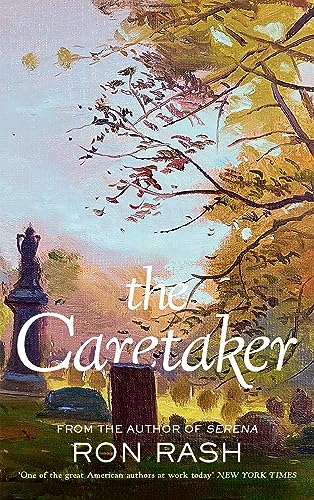
Here’s another American marriage, in Ron Rash‘s The Caretaker. Jacob is called up to fight in the Korean war, and has to leave his pregnant wife Naomi behind. He is from a privileged background, and Naomi most definitely is not. His parents disapprove of the match so much that they set up a subterfuge to ensure that the couple will never see one another again once Jacob returns. Only one person, Jacob’s childhood friend has an idea that something very wrong is taking place. The book quietly presents a story that slowly unfolds when Jacob comes home, invalided out of the war, and believing himself a widower, with a child who never saw life. A cleverly devised plot, which for all its lack of high drama, is suspenseful to the end. My first Ron Rash. But definitely not my last.

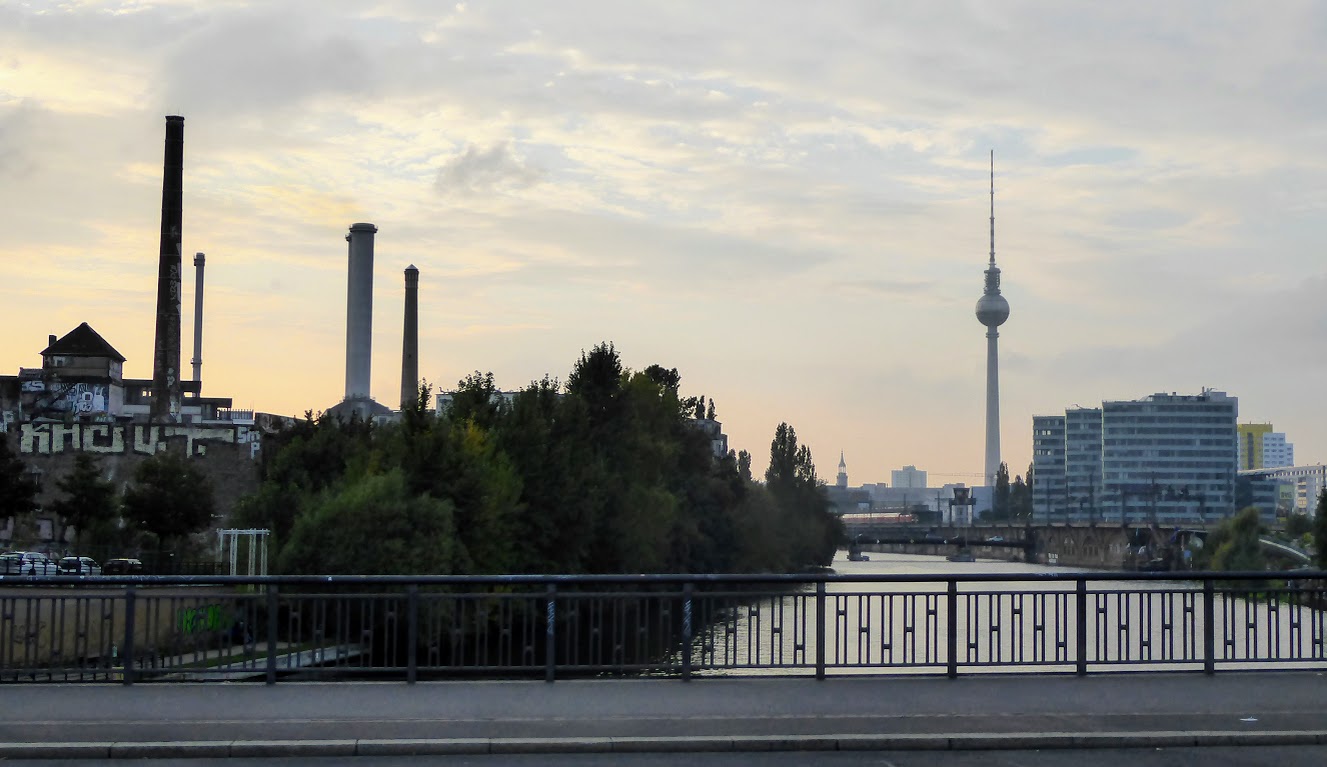
Naomi doesn’t feature directly in Rash’s story. The wife in my next choice doesn’t either: Bernhard Schlink‘s The Granddaughter. 1964. A young West Berliner spending time in East Berlin meets a young woman and falls in love. He contrives her escape, marries her. But they do not live happily ever after. She only half heartedly returns his love, is constantly searching for she knows not quite what, and eventually dies in a drunken stupor. Only then does her husband, a bookseller, discover that she’d had a baby whom she’d abandoned before marrying him. The book describes his search for this woman, who must now be well into her 40s, and it results in his taking the woman’s own daughter under his wing and having her visit him for weeks at a time. A tale of complex feelings: getting to understand that the East was not in fact necessarly grateful to be ‘liberated’: that anger, bitterness, political feelings that resulted in the rise of the Far Right in Germany is one of the consequences of the fall of the Berlin Wall. His granddaughter’s father has passed all this anger onto his child, and this plays out in the latter part of this book. A moving and illuminating account of the feelings informing modern German politics.

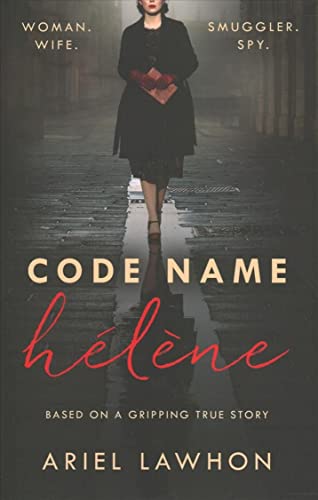
The division of Germany into East and West was a consequence of World War II, so let’s go to wartime France. Code Name Hélène by Ariel Lawhon. A real fast-moving page-turner, detailing the war time adventures of the real-life Nancy Wake. An Australian, Nancy lived and worked in Europe as a reporter in the years before the war. By 1939, she was in Marseille, and it’s here that her story begins – as far as the book is concerned. The plot however, weaves between her four incarnations as, initially an ambulance driver and people-smuggler for the French resistance: and increasingly, under different guises, as a fully fledged member – and commander even – of the guerilla military arm, in her case in the Auvergne. We are also witness, in Marseille, to the slow-burning yet passionate love affair between herself and Henri which results in their marriage. Her war work drives them physically apart, but does not diminish their love for one another. This work cannot be described as a biography. Lawhon has admitted to some characters being composite, some incidents elided or transposed for the sake of the story. And certainly there are scenes here whose veracity could never be proved: though I am sure the general ‘flavour’ remains accurate. Nancy was unusual in being a female commander in a male world, which brought its own difficulties, and also meant she probably had to be larger-than-life. Henri has his own role in the story. But not until towards the end. Because I already am familiar with much of the history of the French resistance, I found this a fascinating and involving story, and I fairly raced through its (almost) 450 pages.

Let’s stay in France and look at Boxes by Pascal Garnier. I simply don’t know what to make of this. Brice’s wife Emma has disappeared, leaving him to manage alone the move into the countryside which she had wished for. In this book, we witness Brice’s descent into depression and madness. We see his developing odd friendship with his neighbour Blanche. Various intriguing hints are dropped, but never ultimately satisfied. For instance, why does Brice so strongly resemble Blanche’s father? The house, the surrounding countryside are described in unsettling ways. Everything is alien. Brice’s past life. His present life. His career, which he abandons, apparently on a whim. Everything’s on a whim: from his shopping choices to the hole he stoves into the kitchen/dining room wall. It was all a bit like watching a certain kind of French film, and I was bemused, rather than enthusiastic about this book.

Now for another book where it’s a woman who’s centre stage: Water, by John Boyne. We meet a woman in middle years who has just fled to live in a fairly remote Irish island, changed her name and as far as possible her appearance. Why? Only slowly do we find out. Her husband’s crimes reflect on her: the world assumes she had enabled them – and, she believes, one even greater tragedy. She has done her best to vanish. She meets a few characters who are also uncomfortable with their lives, making relationships with some. Slowly she regains the strength of character necessary to reject her husband and to renew her relationship with her daughter. This book deftly charts her slow, but steady steps to recovery.
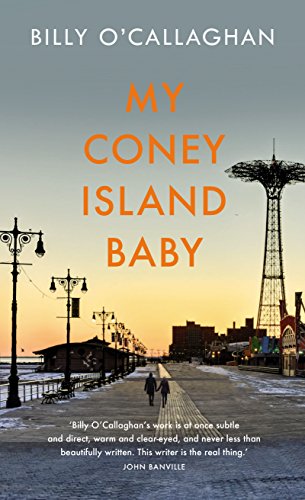
And for our last book, we’ll return to America, though to (like Boyne) an Irish writer, in Billy O’Callaghan‘s My Coney Island Baby. Michael and Caitlin have been meeting as lovers for one day a month, for a quarter of a century. They are married, but unhappily, to other people. The book explores their time together, on a single day. The day when Michael reveals that his wife has been diagnosed with terminal cancer. And Caitlin will reveal that her husband is likely to be promoted, and will require them both to move to Illinois, almost 1000 miles away. Yet despite their marriages’ fading passion, duty and the constraints of middle age will probably keep them tied to their respective spouses. The book swings between the hotel bedroom where the couple meet, and their past lives which have brought them to where they are now, disappointed by the choices they have made. An achingly poignant exploration of an intense and long-held love, drowned out as darkness falls and duty calls.

So that’s it for this month. A selection of marriages and stories, and ending where we began, in America. Next month we leave earth all together, and read Booker Prize-winning Orbital, by Samantha Harvey.

Six Degrees of Separation: from Long Island to A Girl’s Guide to Winning the War

On the first Saturday of every month, a book is chosen as a starting point and linked to six other books to form a chain. Readers and bloggers are invited to join in by creating their own ‘chain’ leading from the selected book.

Kate: Books are my Favourite and Best

I haven’t managed to read this month’s choice yet: Long Island by Colm Tóibín. I want to, because I loved its precursor, Brooklyn.

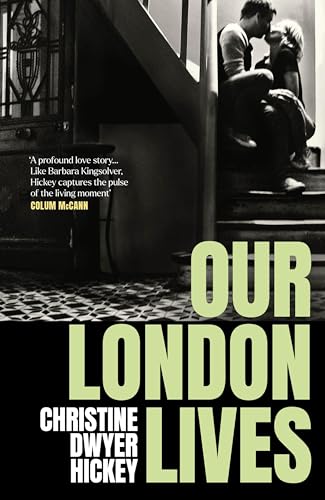
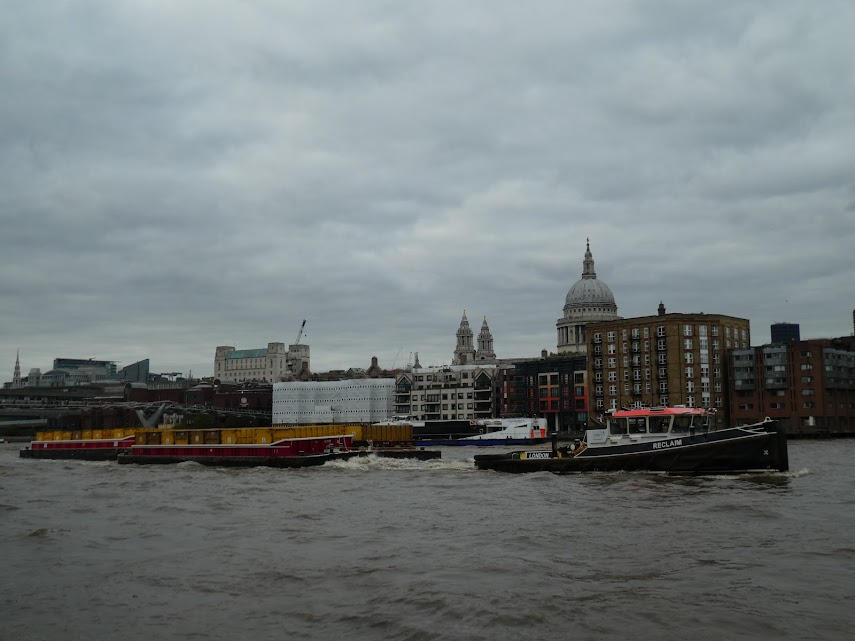
It’s about a young Irish woman who leaves Ireland to have a fresh start in America. I’ll begin my chain with a young Irish woman who leaves Ireland to have a fresh start in London. As told in Christine Dwyer Hickey‘s Our London Lives. This could easily turn out to be my Book of the Year. It features three main characters: Millie, who’s run away from Ireland; Pip, an aspiring boxer who drinks at the pub where Millie finds work; and London itself, seen at its best and its worst – its vibrancy, its diversity, but also its expense, its violence and its diminution as a community in the face of capitalist redevelopment.The chapters pass between Millie and Pip. Millie’s story begins in 1979; Pip’s not until 2017 when, a recovering alcoholic, he’s just been released from prison. We don’t read a continuous narrative. Rather it’s a series of vignettes, from which we are able to work out the un-narrated years for ourselves. Real events pepper the narrative: the release of the Guildford Four; the Grenfell Tower disaster, and this contrubutes to the novel’s very real sense of place. Here is a story of flawed individuals who make, and fail to make choices; who miss opportunities and fall through the cracks, but about whom we come to care. I was involved for every one of the book’s 500 pages.

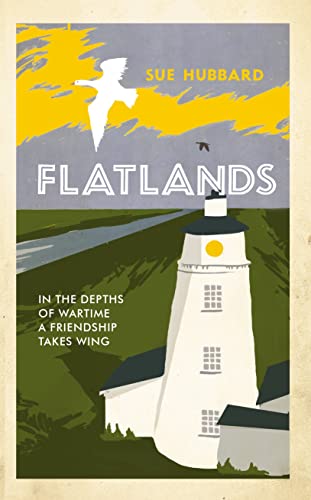
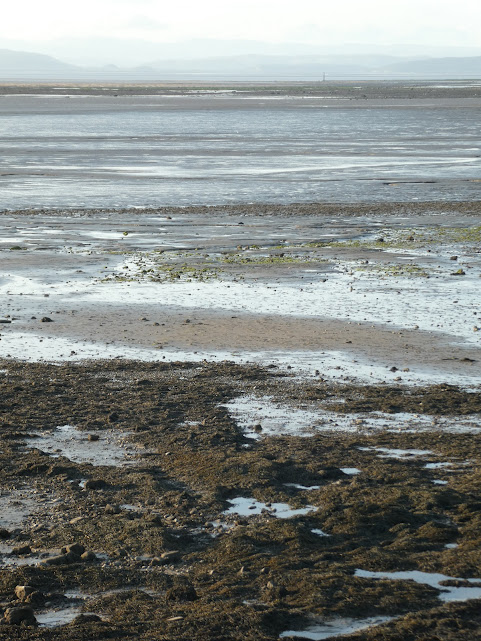
My next book starts with a young girl born in London, Frida -in Flatlands, by Sue Hubbard. A quietly powerful piece of storytelling, set in the flatlands of Lincolnshire near the Wash during WWII. The narrative is divided between 12 year old Frida, evacuated to an impoverished and unfriendly farming couple whose house is also remote: and the more privileged young adult Philip, who as a consciencious objector is working as a farm labourer while developing his painting skills in his spare time. Despite their differences, the two have much in common – their loneliness, their apparent abandonment by those who should love them, their poverty. The wetlands which are their temporary home is also a character: their savage beauty, their harshness. A moving tale, well told.

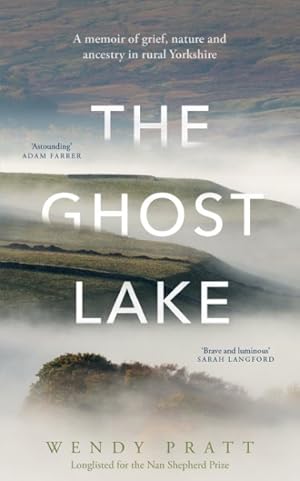
My next book is also deeply rooted in the landscape, whose main character, the author, has barely moved at all. This is an intensely personal and lyrical memoir from poet Wendy Pratt. The Ghost Lake is embedded in two things: her deep connection to the part of East Yorkshire where she has lived her entire life; and the death, at the moment of her birth, of her much-wanted daughter. She focuses each chapter on a different community surrounding the Paleolake Flixton. This now-vanished lake provides an epicentre to her story. Throughout the book she dwells on its own history; and her own – though not in order. Her father’s decision not to continue the family tradition of farming; her own ‘oddity’ and inability to mix, to shine – despite her intelligence – at school; her chequered job and personal life; her conversion from working class girl to educated and successful – though always working class – career as a facilitator and poet. And always, threaded through the narrative, the much mourned dead baby daughter. A haunting, powerful and poetic memoir, bringing to life the natural world and landscape of her home patch, as well as exploring belonging, and loss.

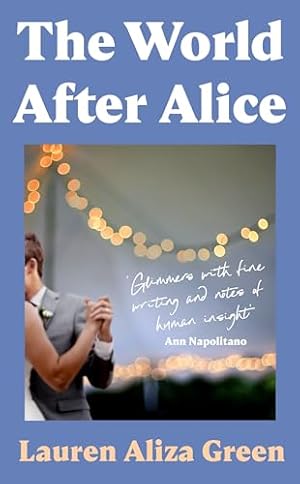
Death is central to The World After Alice, by Lauren Aliza Green. On page one of this book, teenage Alice stands on a bridge … jumps … and dies. Then the story proper starts, 12 years later. Morgan, once Alice’s best friend is to marry Benji, Alice’s brother, after a courtship long kept secret. In a series of visits to the present day and flashbacks to the period both before and after Alice’s death, we gradually build up a picture of the turmoil her death effects in two increasingly disfunctional families and those who are closest to them – that of Alice, and that of Morgan. This is a story of family dynamics, of love, of loss, of secrets, of individuals who have lost their ability to trust, to communicate. A deftly written and immersive book, and not at all as irredeemably depressing as I have undoubtedly made it sound.

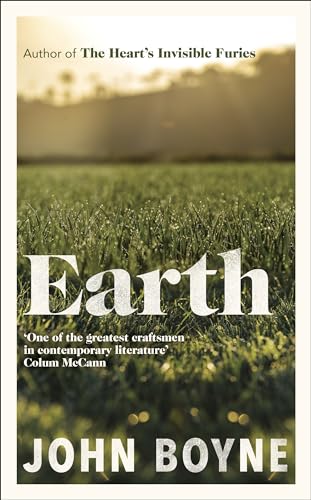
Another story about how life is complicated, and about how past events can cast a long shadow. John Boyne‘s Earth. ‘I became a different boy than the one I was supposed to be. I wanted to be a painter. I wanted to be good. I wanted to love someone, and to be loved in return. But none of those ambitions came to be.’
This is Evan, a young Irish would-be abstract painter – only he wasn’t good enough; impossibly handsome; gay. He’s a top-class football player, against his inclinations – but it brings him money and lots of it. One of his (sort of) friends in the team is Robbie, an arrogant young man whom Evan can’t take his eyes from, as heterosexual Robie is well aware of. After a party in Robbie’s flat, Evan is accused of filming his friend’s rape of a young woman. This is far from a simple narrative. It explores several themes: the long shadow of upbringing; class; homophobia; moral corruption; the way the legal system treats alleged sexual offences. In doing so, it drops several bombshells into the narrative, none more shocking than the one revealed in the last pages of the book. A thought-provoking and well-turned out read.

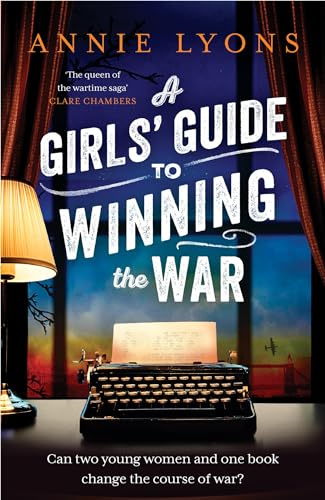
I’m choosing my final book, because perhaps we need to lighten up a bit. Life doesn’t always turn out as expected, but it doesn’t have to be awful. A Girl’s Guide to Winning the War, by Annie Lyons. This was an entertaining read, and the pages turned themselves easily enough. It’s about how clever, bookish but working class Peggy, and her titled side-kick Marigold become the darlings of the Ministry of Information with their writing and photographic skills, producing heart-warming books about aspects of the war as experienced by ordinary peple, whether serving in the forces or on the home front. Although I enjoyed it, I found the characterisation a bit stereotypical. Warm, loving working class family. Formal, buttoned up, emotionless public school types. Everyone however, if you look hard enough, has a Heart of Gold. A book to curl up with and race through on a foggy winter evening. And to bring us back to London, where I began my chain.

We’ve had a bit of a gallop through a series of books that in different ways touch the heart strings. Next month the chosen book is Intermezzo by Sally Rooney.