A ‘So British’ Christmas in Lavelanet

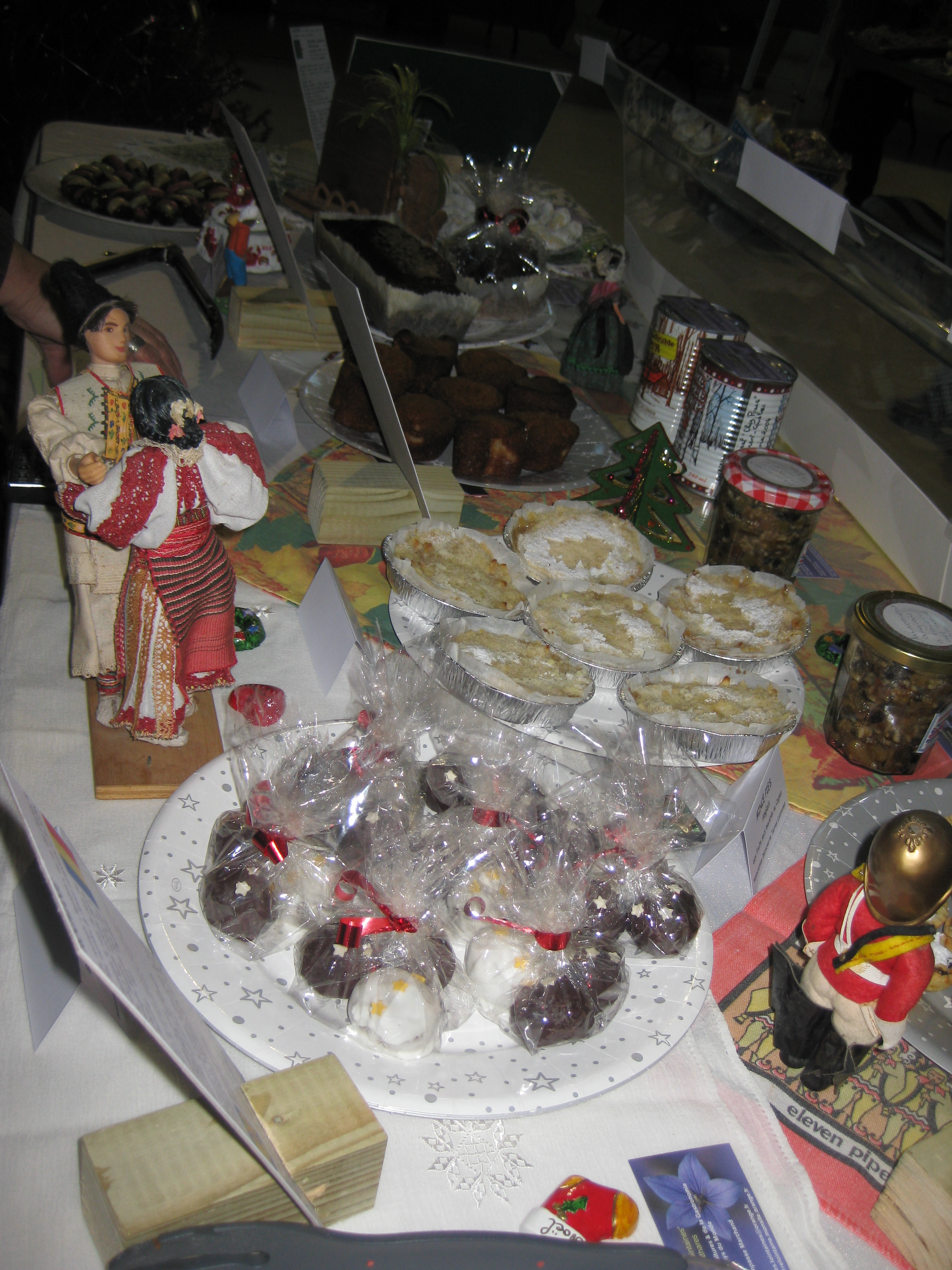
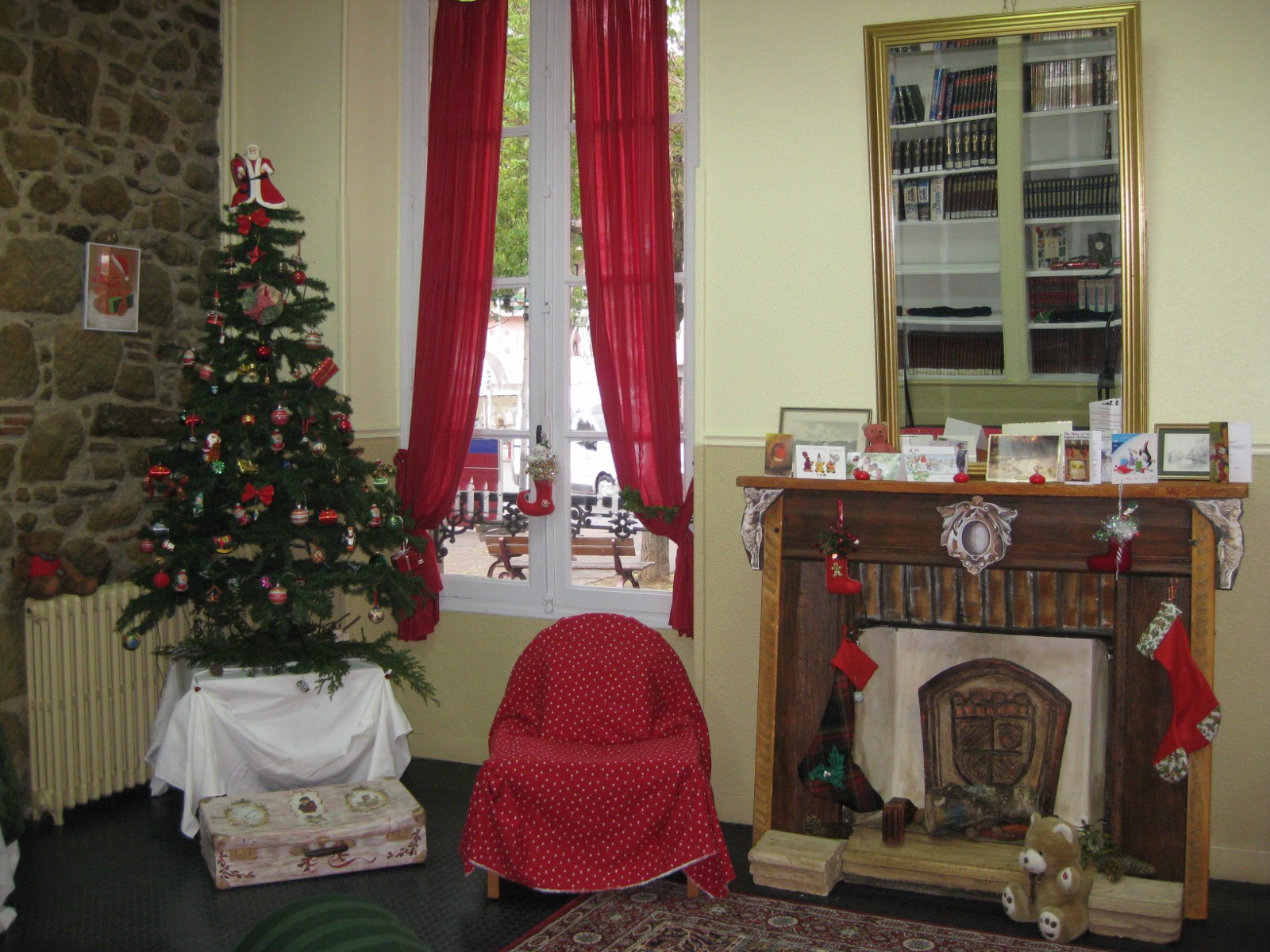
A homely Christmas at Lavelanet library

A good old-fashioned English Christmas has come early to Lavelanet.  To the library (oops, mediathèque) to be exact.  The librarian there enjoys children’s literature, and is a bit of an Anglophile.  So she’s mounting a small festival of English Children’s literature featuring everyone from John Burningham and Quentin Blake to, of course, Charles Dickens and Beatrix Potter.

What a disappointment I am to her.  I can’t produce a pretty tea set awash with rosebuds, and she can’t believe I really don’t like tea very much: and that when I do drink it, I decline to add milk.
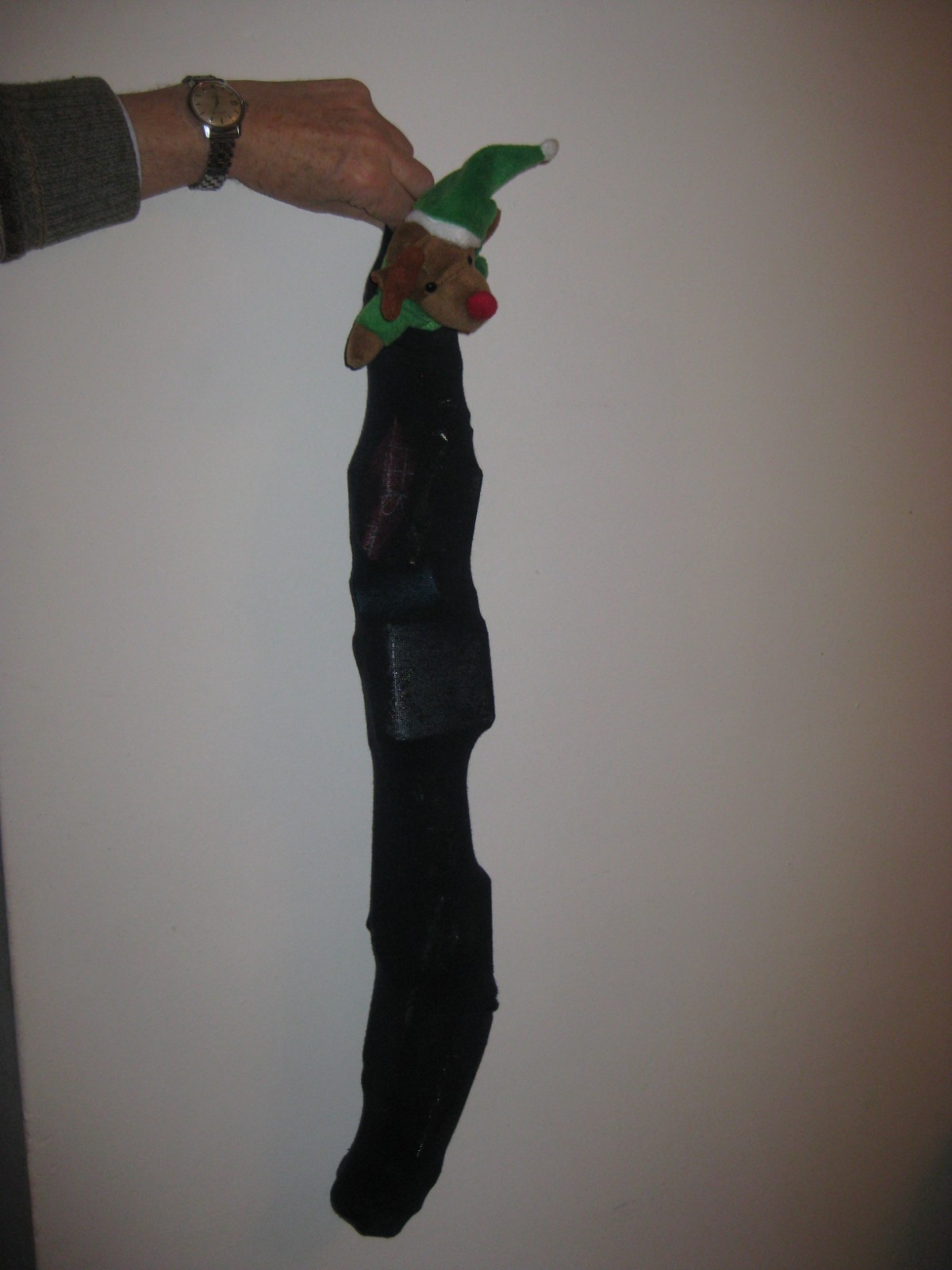
Look what father Christmas left!

She’s wheeled in Découverte des Terres Lointaines to help with all the activities for schools, retirement homes, and the general public.  And DTL have wheeled me in as Consultant on All Matters English. Together we’ve chosen recipes and we’re baking biscuits and cakes and we’ve planned craft activities round, for instance, our ‘so British’ Christmas cards.  From tomorrow, I’ll be reading stories in English, helping pull crackers, and unpacking – many times – a stocking which dear old Father Christmas has delivered to me early.
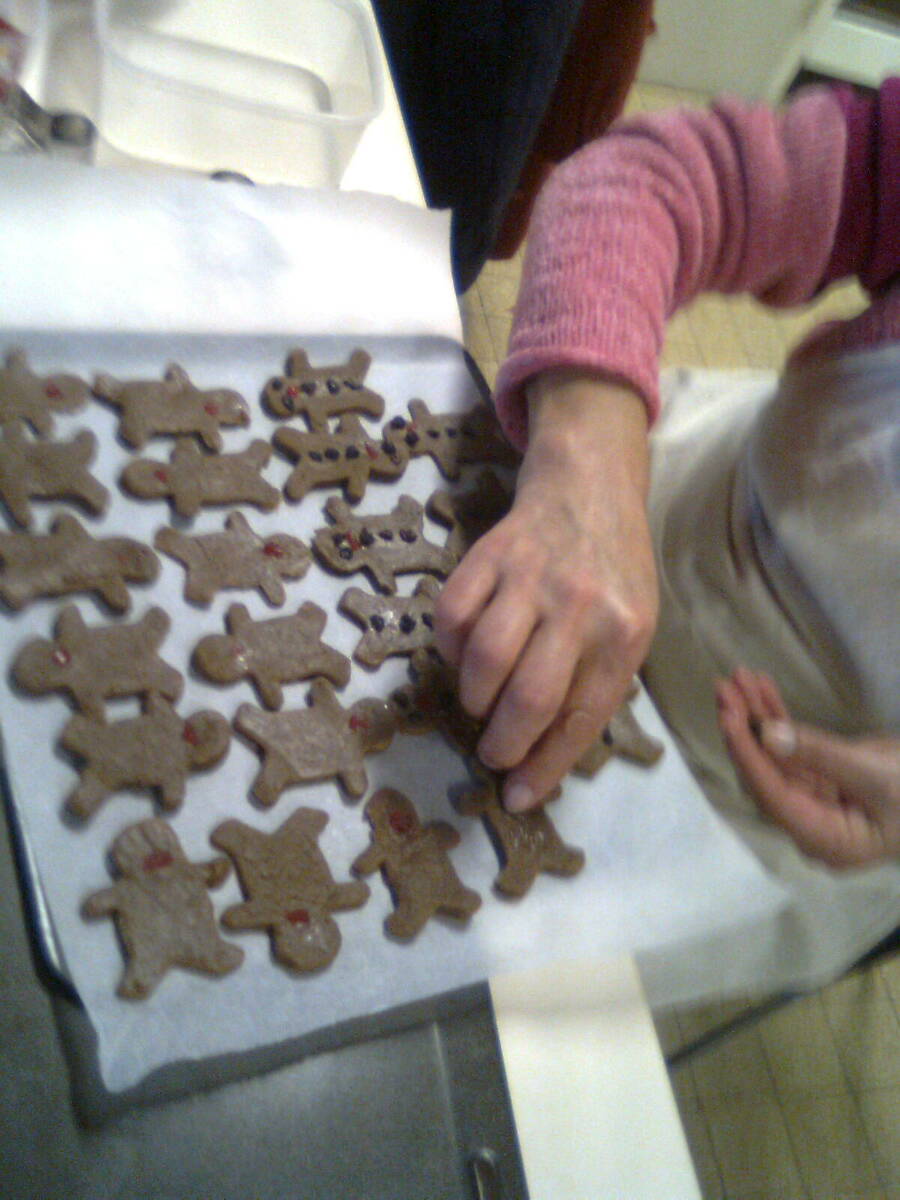
Mass production of gingerbread men

My other job is to correct the misapprehensions learnt from French websites and children’s books about England. Who knew that the English enjoy tucking in to a huge plate of oysters at the beginning of Christmas dinner? Or that all British schoolchildren have a free bottle of milk every morning?  Margaret Thatcher abolished that back in the early 70’s.  And Sylvia misunderstood me, and thought we served stewed cherries, not sherry sauce, with our Christmas pudding (cherries – sherry: easy to confuse when you speak no English).  And so on.

But it’s been fun transforming the community room in the library into an impossibly cosy snug, full of Christmas cheer.  Let’s see what ‘le tout public’ think, when we open the doors tomorrow.

Rather a lot of marmalade cake

Azinat

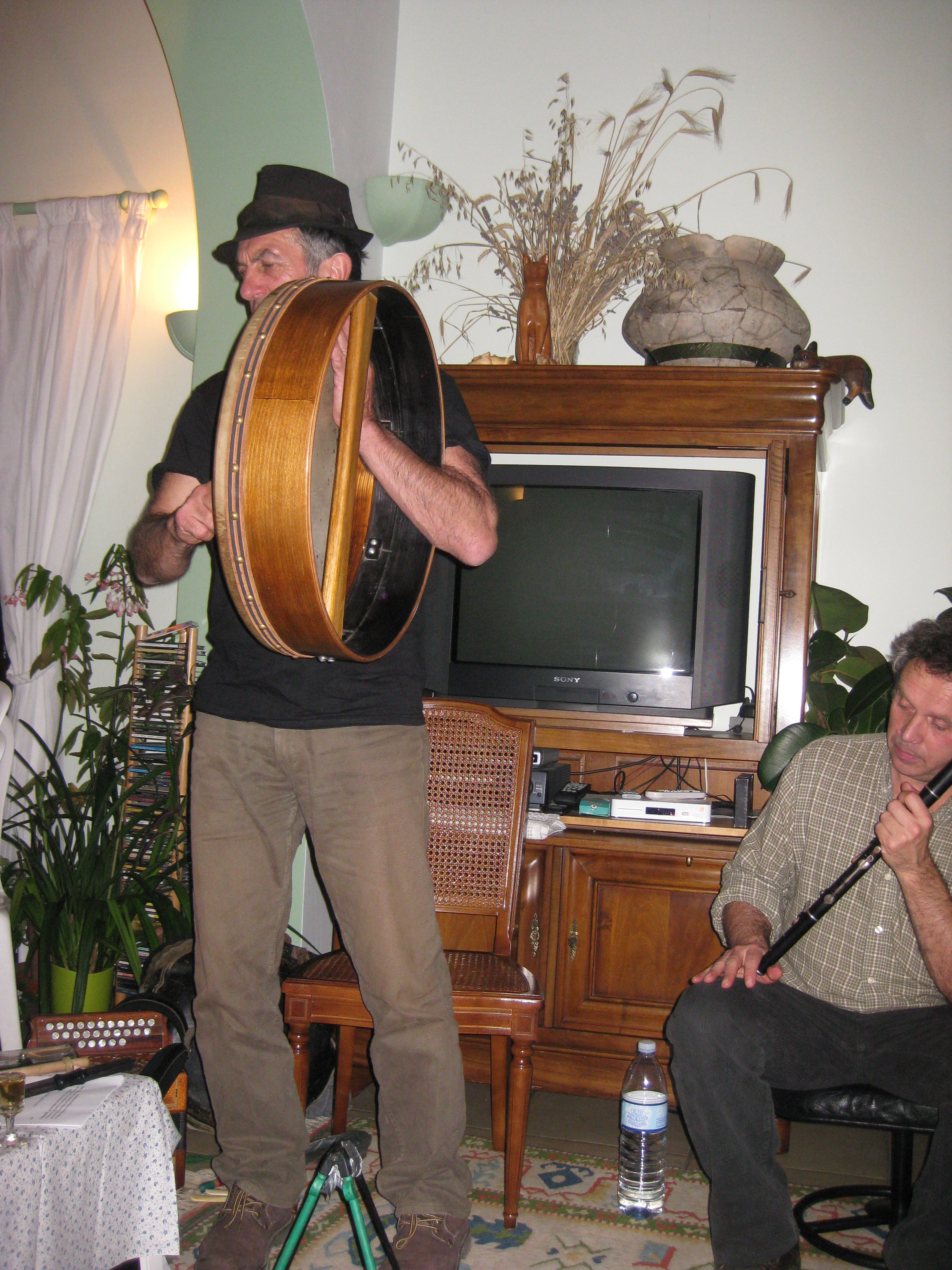
Bertrand and his bodhran

It’s town-twinning time again.  Our Breton friends were here in Laroque for a few days, and a Good Time Was Had By All.  It’s hard to describe the simple pleasure of this weekend.  Re-discovering the region through Breton eyes and getting to know our northern friends a bit better: getting to know our Laroquais friends and acquaintances better too: music – lots of it – thanks to the talented and eclectic musicians who always form part of the group – a singer and bodhran player, a flautist and a keyboard player: and shared eating, lots of it.

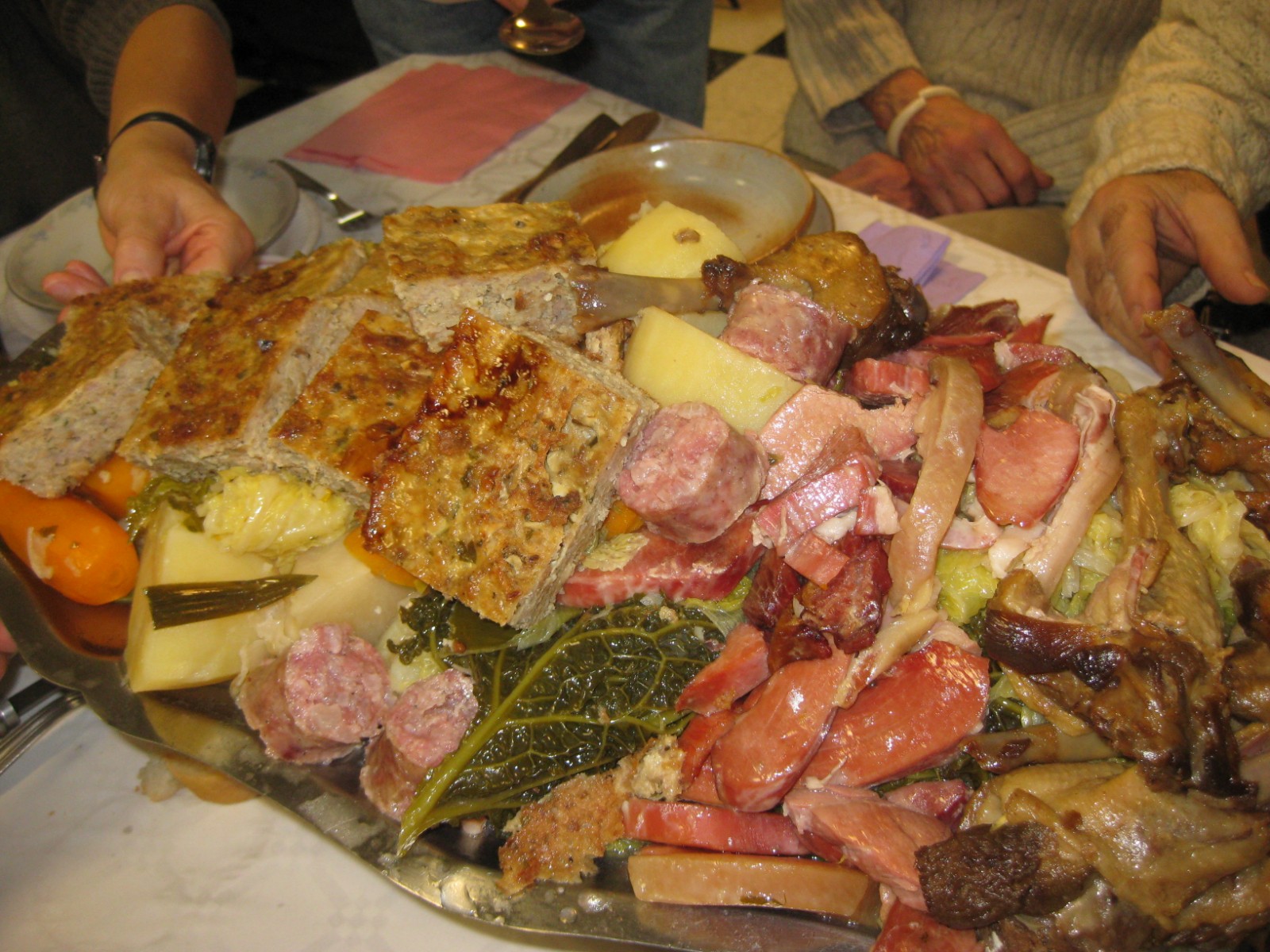
If you still think France is the land of sophisticated and fine dining, you’ve yet to discover the Ariège.  People lived close to the land, they were out with their stock, working the fields, or keeping the textile industry alive and successful.  Busy women put a pot of food on the fire in the morning and expected it to look after itself till hungry workers came in demanding nourishment.  And they were likely to get azinat.  Azinat with rouzolle.  That’s what about 80 of us sat down to on Saturday night,

I suggested it was a dish that was more than a bit troublesome to prepare.  Joscelyne, in her 70’s and a life-long Ariègeoise was having none of it.

‘No, it’s easy!  Take a large cabbage and blanch it for 5 minutes.  Meanwhile, chop your onions or leeks, carrots and any root vegetables you fancy, and sauté them gently.  Add some slices of belly pork, some sausages, a couple of bay leaves and the cabbage.  Throw in a couple of litres of water and simmer gently for at least a couple of hours.

Now throw in some large chunks of potato, some dried sausage, and the duck leg confit (these are portions of duck which have been preserved by salting the meat and cooking it slowly in its own fats) which you’ve browned gently in a frying pan to remove the excess fat, and continue to cook gently for another half hour or so.

Meanwhile, make the rouzolle.  Mix together chunky sausage meat, some chopped fatty bacon, eggs, milk, a couple of slices of bread, chives, parsley, garlic.  Form into a flat cake and fry on both sides.’

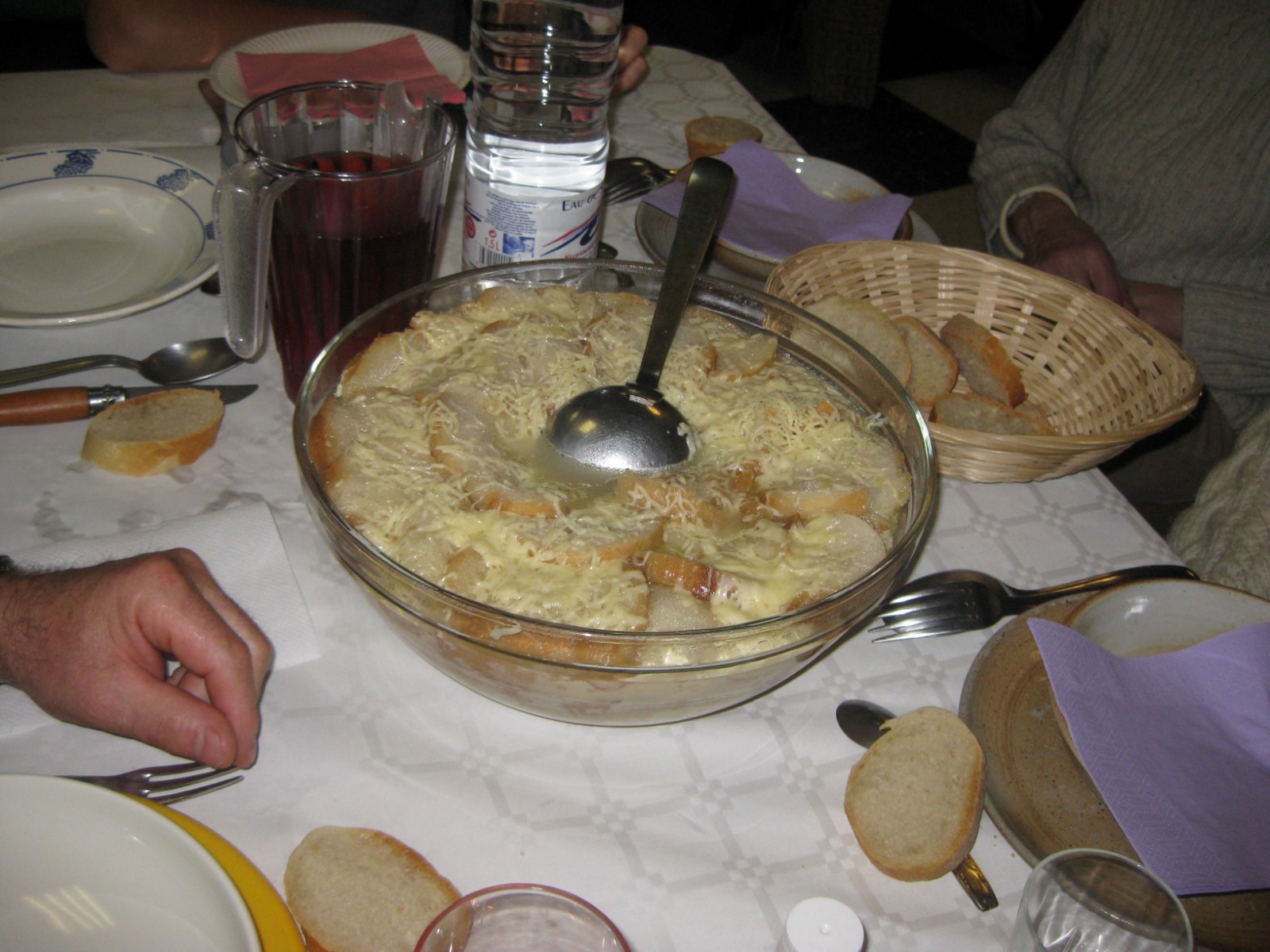
According to Joscelyne, the hungry family would have as their lunch the bouillon from the dish, poured over slices of bread generously sprinkled with grated cheese.  Cheap, filling and nourishing.

The deliciously soggy bouillon

Dinner, at the end of the day, would be all the meats and vegetables.

Azinat

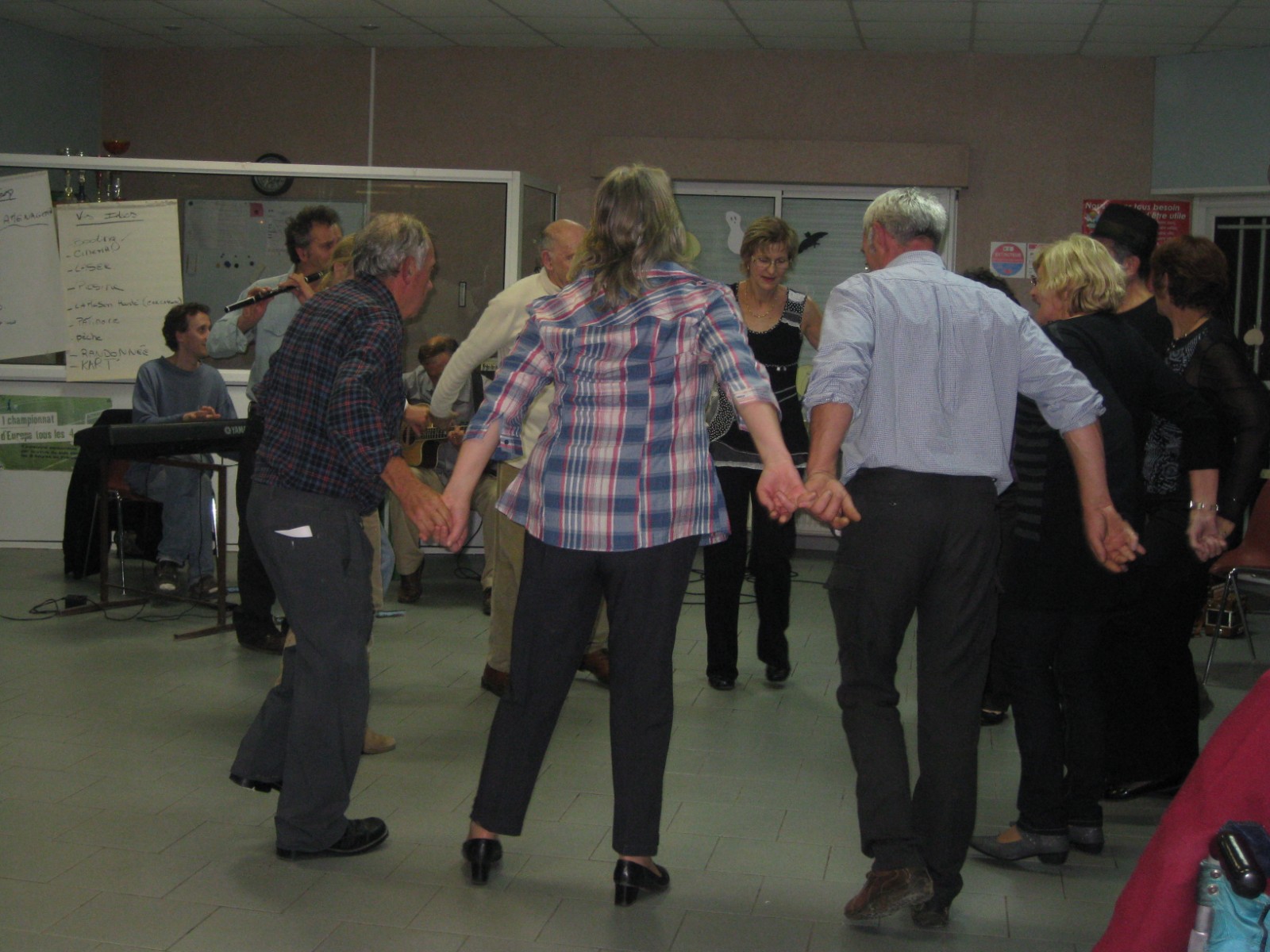
That evening, we sat down to the soup, followed by the meats.  Followed by cheese.  Followed by croustade, the Ariègeois answer to apple pie.  Followed by membrillo – quince paste – and coffee.  Followed by an energetic evening of Breton dancing.  We needed to burn off those calories.

It took a while to get us all on the floor. But we all made it eventually. Even me.

Postcards from Catalonia

We’ve just got back from our weekend on the other side of the Pyrénées, and I’ve decided to post these ‘postcards’ to show a few happy days in Sant Cugat del Vallès, the very attractive town where Emily is now working; the not-Hallowe’en-but- la Castañada festivities; and a relaxing weekend.

Eating and drinking were important.  Straight away, as we drove across the mist and rain shrouded Pyrénées from France, there was a decision to be made. Lunch on this side of the border?  You can’t get fed much later than 12.30 here.  Or wait till Spain?  Nothing there is open much before 2.00 p.m.

We arrived in Catalonia just in time for la Castañada. Instead of Hallowe’en, they commemorate All Souls’ Tide. Roasted chestnuts are sold wrapped in cones of newspaper with roasted sweet potatoes and peddled from impromptu stalls, or by excited groups of children.  Panellets are mashed potato, sugar syrup and ground almonds – maybe cocoa or dried fruits too, rolled in pine nuts and briefly baked till the nuts turn golden. It sounds odd, but they’re delicious accompanied by a shot of strong black coffee.

Coffee shops, with tables outside so you can enjoy the late October heat seem to be in every street, and we adjusted our bodies to Spain’s very different rhythms. Food generally seems cheaper in Spain.  A pleasant pause for breakfast, after taking the children to school, after shopping or work, or just because it’s a nice idea and the sun is shining is an affordable treat, and cafés don’t seem to struggle for custom.  Nor do lunch-stops.  As in France, the 3 course lunch with wine and coffee is on offer in most restaurants, but cheaper here.  And it’s a leisurely affair.  We found ourselves spending an hour or two every day that we were there over the lunch table, eating, talking and simply people-watching.

Shopping seems less anonymous too.  Whether in St. Cugat, or city-centre Barcelona, greengrocers and grocers, wine merchants and bakers – especially bakers – all seemed to be doing brisk business.  The out-of-town supermarkets are there alright, but so far, they don’t seem to have won.

So here are my postcards.  Have a glance at them over a lazy cup of coffee.

This slideshow requires JavaScript.

Six weeks: a souvenir

Dear reader, perhaps you are feeling quite short-changed.  You subscribe to a blog called ‘Life in Laroque’, and for the last 6 weeks or so, have had nothing but news from England: Yorkshire, to be exact.

Well, we’re back in Laroque, where in our absence they’ve had bitter cold, driving rain lasting for days, and astonishing heatwaves in which the thermometer has topped 40 degrees.

But just before we abandon postings about England, here is a souvenir slideshow of our time there.  It’s a reminder for me really, so if dear reader, you decide to skip it on this occasion, I quite understand.

Normal service will be resumed in my next post.

This slideshow requires JavaScript.

Summer solstice, Montségur

All this time we’ve been here, we’ve not seen the sunrise over Montsegur.  Today, midsummer day, I decided to change all that.  Me and 99 others……

I arrived at the car park just after 5 o’clock,  at the same moment as a hare which had for at least two frantic minutes been trying to out-run me.  And realised I was not alone.  It was still dark, and quite a difficult business to trek up a steep, slippery rocky path.  Other more provident people had torches, and everybody helped one another.

The route to the top. Still pretty dark

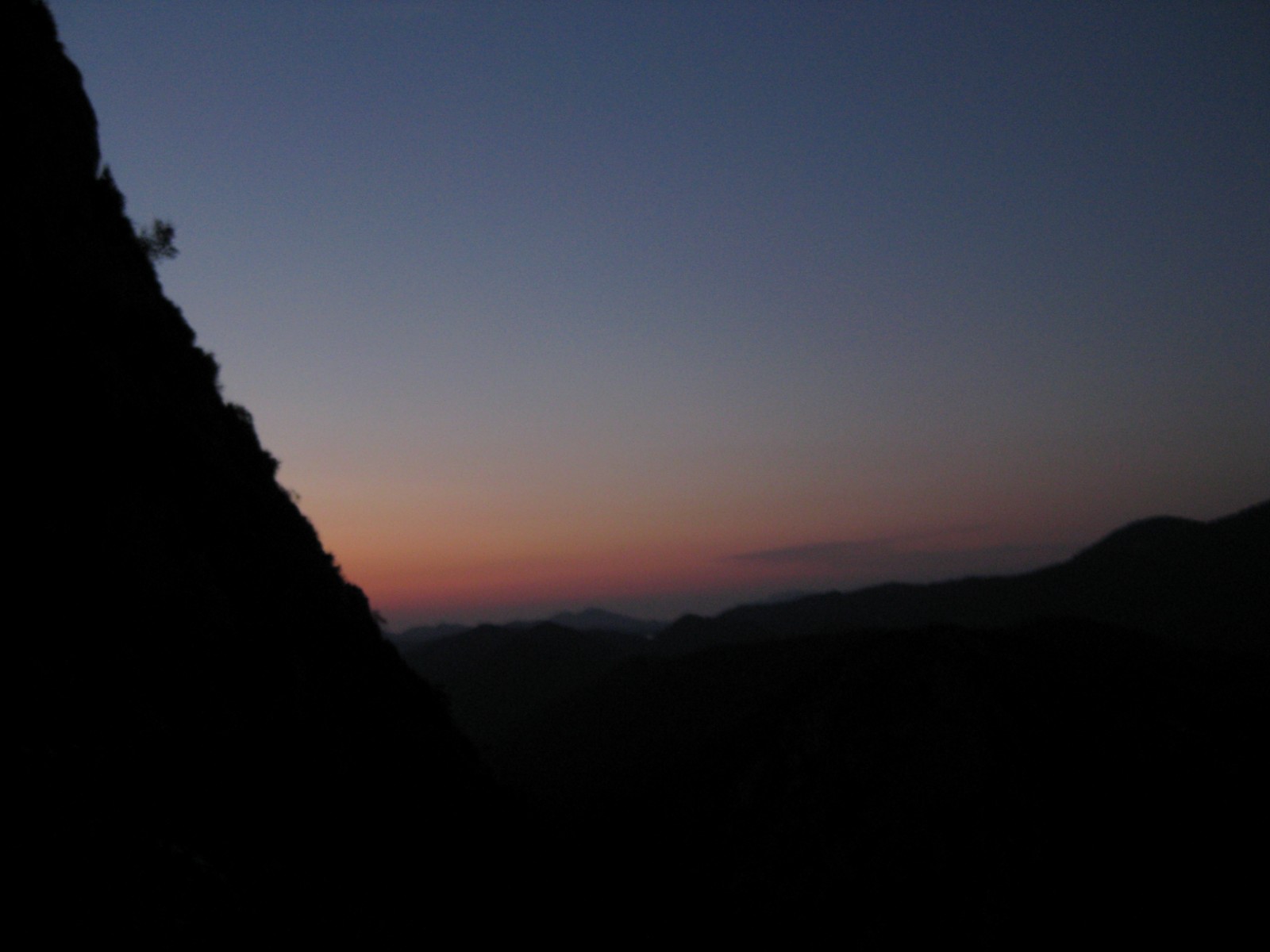
Towards the top, the night sky was slowly washed from inky blue to delicate blues, pinks and greens by the sun which was still well below the horizon.

The sun first appears. It’s just after 6 o’clock

I found a couple of friends there, and a vantage point relatively distant from the crowd crammed into the castle ruins.  They had come to see something special- the rays of the sun as they poured through the ruined windows.  I decided it was too packed with people to feel special in there.  I’ll come back another day soon, to see for myself.

And again, a very few minutes later

What I saw was quite wonderful enough: a rich copper disk slowly mounted above the line of mountains in the distance,  tinting the sky ochre, rusty-red, sugar-pink, finally emerging so fiery bright I could no longer look at it.  Some locals burst – quite beautifully – into song.   Occitan/Ariègeois stalwarts, ‘Quand lo Boièr ven de laurar…’ and,inevitably, ‘Se Canto’.

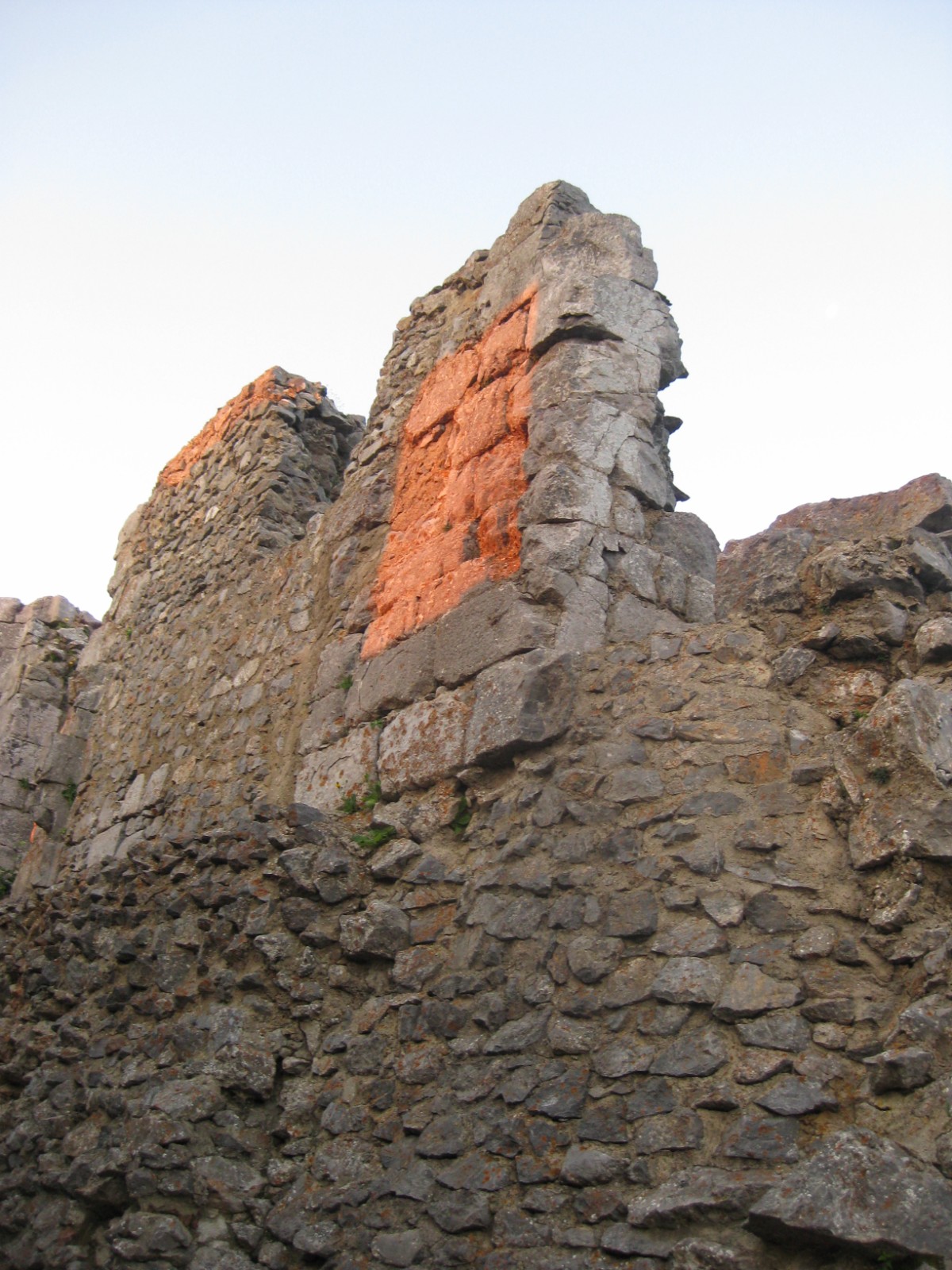
The rising sun, shining through a ruined window, casts an image on the castle wall

Gradually the whole sky lightened and brightened, turning the entire landscape crisply clear.  I strolled round the summit – it was surprisingly easy to get-away-from-it-all, before skidding and climbing my way down to the car park again….

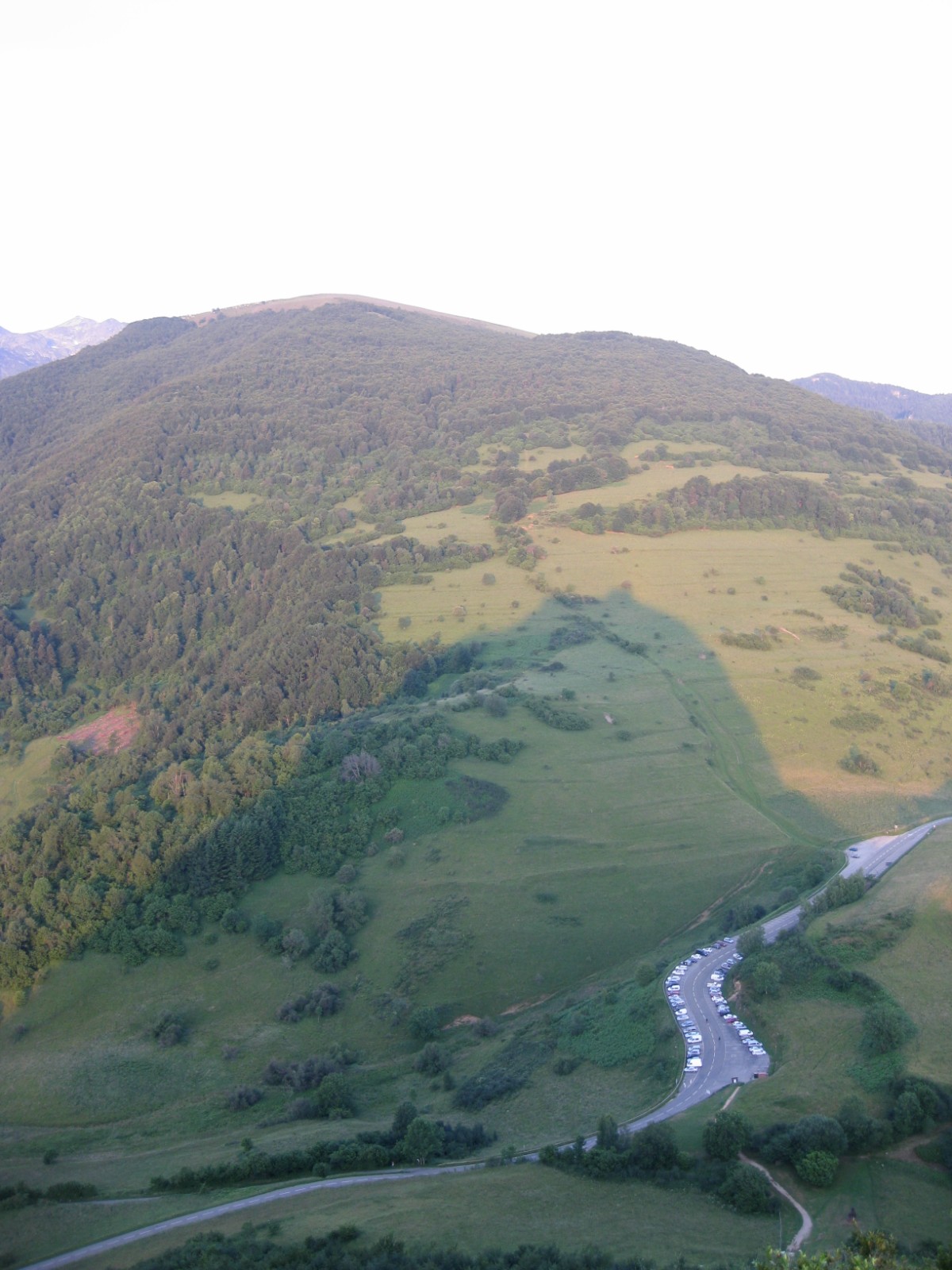
Montségur casts a shadow on the hillsides beyond. The car park’s still full.

….and there were my companions who’d provided torchlight.  They were hitching, because their car had failed to start.  We journeyed back to civilisation together, ready to resume normal service.  It was 7.30 a.m.

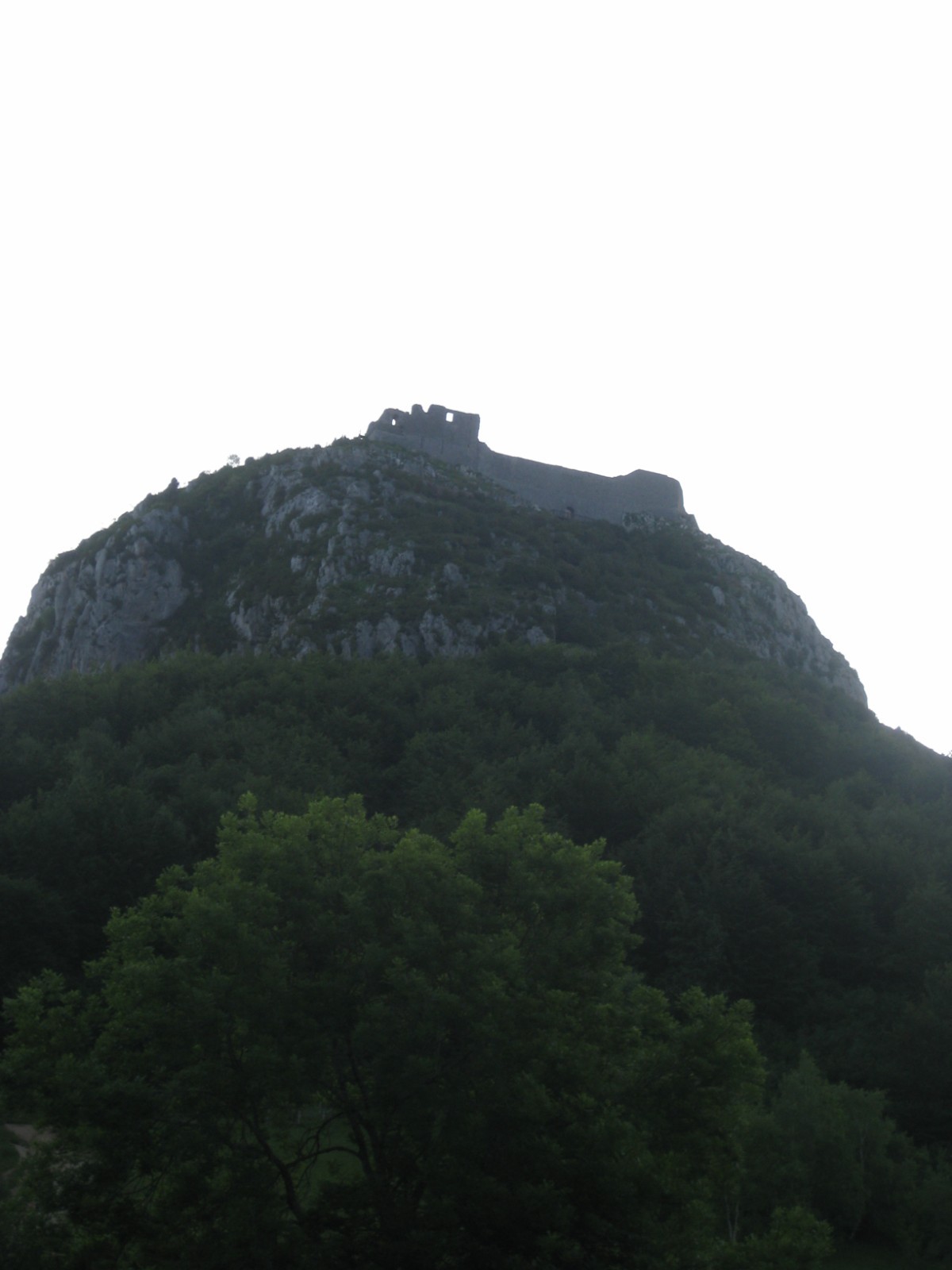
Almost deserted again, Montségur in the early morning light

Transhumance in the Haut Salat

Transhumance.  It’s that time of year where here near the Pyrénées, the cattle and sheep are moved from their winter quarters down on their lowland(ish) farms up to the lush summer pastures in the mountains.  They’ll stay there till Autumn, and then be brought down again.  And each time, it’s the excuse for a party.

On Saturday, we joined in, and went over to Seix to meet friends who live there.  The Transhumance celebrations in Haut Salat last three days, but we made do with Saturday morning.  We nearly arrived late – very late – because we found ourselves behind a herd of cattle making their steady way along the road.  Overtaking’s not an option: the cows commandeered this route hundreds of years ago.  But we managed to zip down a side road and make a detour.  A whole hour later, after coffee with our friends, the herd reached the edge of Seix and passed their door….

…and finished their long walk into town.  We went too, and arrived just as the last flocks of sheep were arriving, to be corralled like the cattle, at the edge of the town square.  For a while, and probably much to their relief, they were no longer centre stage.

Instead it was jollity of the traditional kind. There were processions of large solemn plaster effigies, local bands.  Dancers from Gascony, the Basque country, the Landes made sure we all had fun, and Malcolm and I even joined in some Basque dancing.  Stars of the show for us were the shepherds from the Landes.  Theirs is flat, marshy country, and they used to keep their eyes on their roving flocks by ranging round on stilts.  But this was a day for dancing, and that’s just what they did, up high on those stilts.  Have a look at the photos.

We went off for lunch at the end of the morning.  But there was more celebrating, more meals to be shared, particularly by those farmers and country people who over the centuries have welcomed the fellowship of Transhumance as a break from the routines of an often lonely life.

This slideshow requires JavaScript.

That Wedding

I’m not a big fan of Prince Philip.  But he was right on the money when he declared to Marc Levy, author of ‘«Elizabeth II, la dernière reine» that  ‘You French are frankly funny.  You adore the monarchies of the rest of us, but got rid of your own.’

William-and-Kate-mania can’t be escaped by simply fleeing across the channel this week

Last week for example I noticed a French magazine headline that suggested some 14 million French will be glued to their sets to watch That Wedding.  The Prince and his bride-to-be have already had a big chunk of TV air time, and just look at this week’s schedules:

M6 kicks off on Thursday evening with a three and a half hour marathon, but Friday the 29th is the day those 14 million French take the phone of the hook, kick off their shoes and hole up on the sofa.  Here’s their schedule:

TFI: 9.30 – 14.45
France 2: 9.15 – 13.45
M6: 9.00 – 17.35 ( that’s 5 programmes all about the couple, one after the other)
W9: 20.40 – 1.50.

Actually, I would have been quite interested to watch for a bit, to see how French and British coverages compare, but we’ve chosen that day to arrive in England, confident that the usually busy roads will be traffic-free.  We’ll be glad too to escape the constant questions.  Being British does not make us Royal Experts, but our neighbours are remarkably slow to catch on.

A quick peek at Algeria

Last November, I joined L’Assocation Découverte Terres Lointaines, and wrote about it here.  This month, I’m really involved, up to the neck, because next week, at the library in Lavelenet, we’re taking over, and bringing Algeria to town. More later, then. But for now, have a look at some of our more relaxing moments during our preparations.

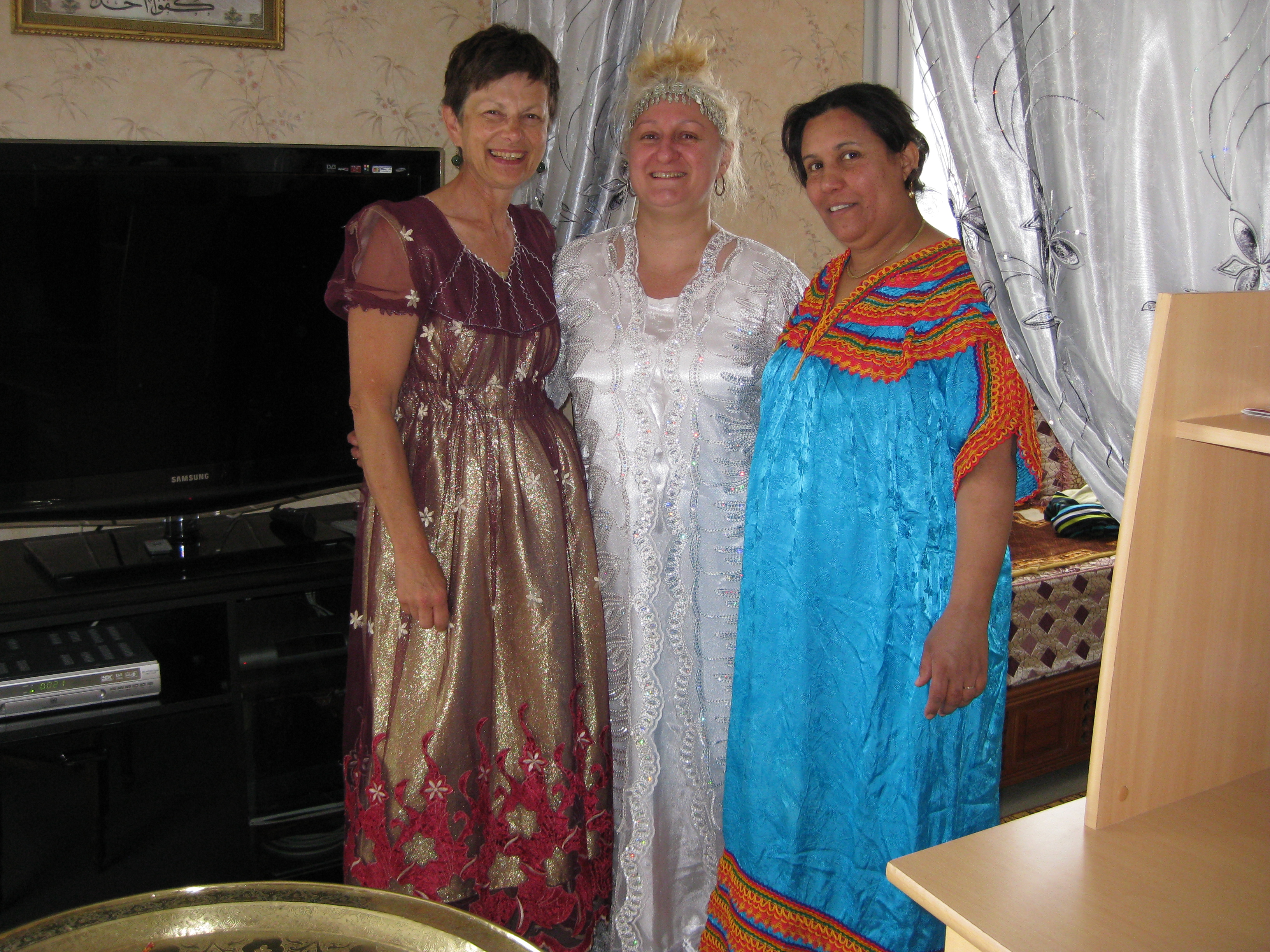
Were from England, Brazil, Algeria: but the clothes are all from Algeria

On Friday afternoon, Nadia invited us round and got out a tantalising bundle of her traditional Algerian clothes, many dating from the time of her wedding, for us to try on ahead of next week. Here’s what some of us eventually chose, after we’d struggled in and out of dresses each prettier than the last, elaborately embroidered, beaded and sequinned.  Just as well you can’t see us pirouetting around our workaday tee shirts and trousers discarded on the floor.

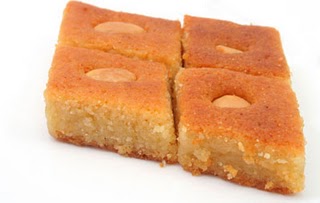
Before that, we’d been busy baking, selecting recipes to make for some of next week’s sessions.  Here’s my favourite, Basbousa.  Like most recipes from the area, quantities are expressed in volume rather than weight.

Basbousa

  • 2 cups fine semolina
  • 1 teaspoon baking powder
  • ½ teaspoon bicarbonate of soda
  • ½ cup unsalted butter
  • 1 cup sugar
  • 2 eggs
  • ½ cup water
  • about 20 blanched split almonds
  • 2 cups caster sugar
  • 1 cup water
  • Tablespoon of orange flower water or the juice of 1 lemon

Preheat the oven to 180°C, gas mark 4. Grease a rectangular cake tin, about 8” x 12”.

Sieve together the semolina, baking powder and bicarbonate of soda. Set aside.

Beat the butter and sugar together until creamy. Stir in the eggs with a little semolina to prevent curdling. Mix in ½ cup of water. Stir the sifted semolina in and beat until you have a smooth batter. Pour into the prepared cake tin. Score diagonal lines across the top of the cake creating diamond shapes. Place an almond in each diamond. Bake for about 30 minutes or until the cake is firm and golden.

Meanwhile place the caster sugar in a small saucepan with 1 cup of water. Heat gently until the sugar has dissolved then add the orange flower water or juice of the lemon and bring to the boil. Boil for about 10 minutes or until syrupy.

When the cake is removed from the oven, gently spoon the syrup over it. You may not need all the syrup: stop spooning when the cake has absorbed all it can. Allow to cool in the tin before turning out and serving sliced into diamonds.

When I tested the recipe at home, I had no orange flower water, so used lemon juice.  Nadia said it wasn’t traditional…..but she liked it anyway.  It’s sweet, simple, and keeps well.  Worth having in the cake tin.

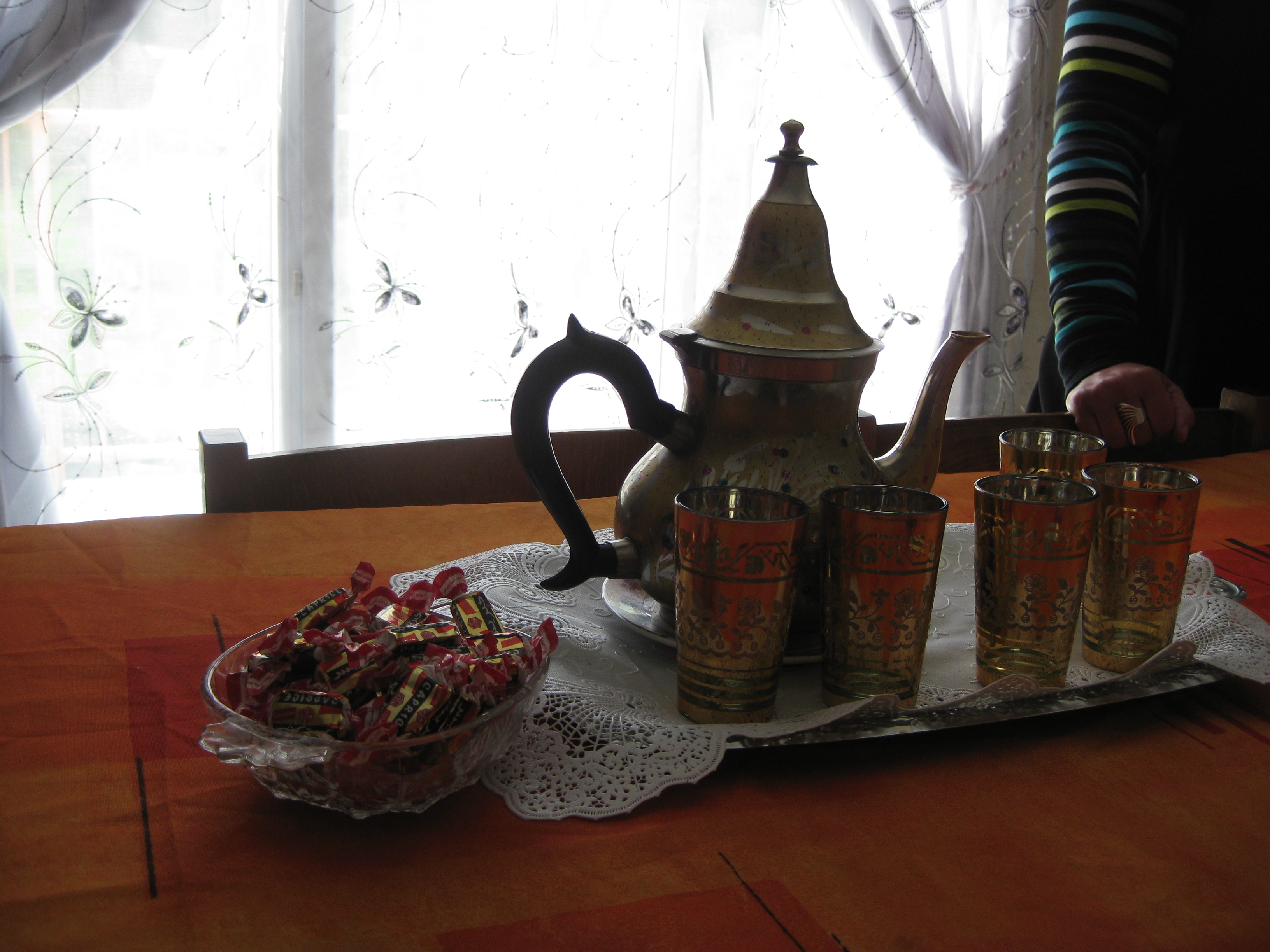
Nadia serves mint tea the traditional way, from this elegant pot in small decorated glasses

Carnival at Laroque

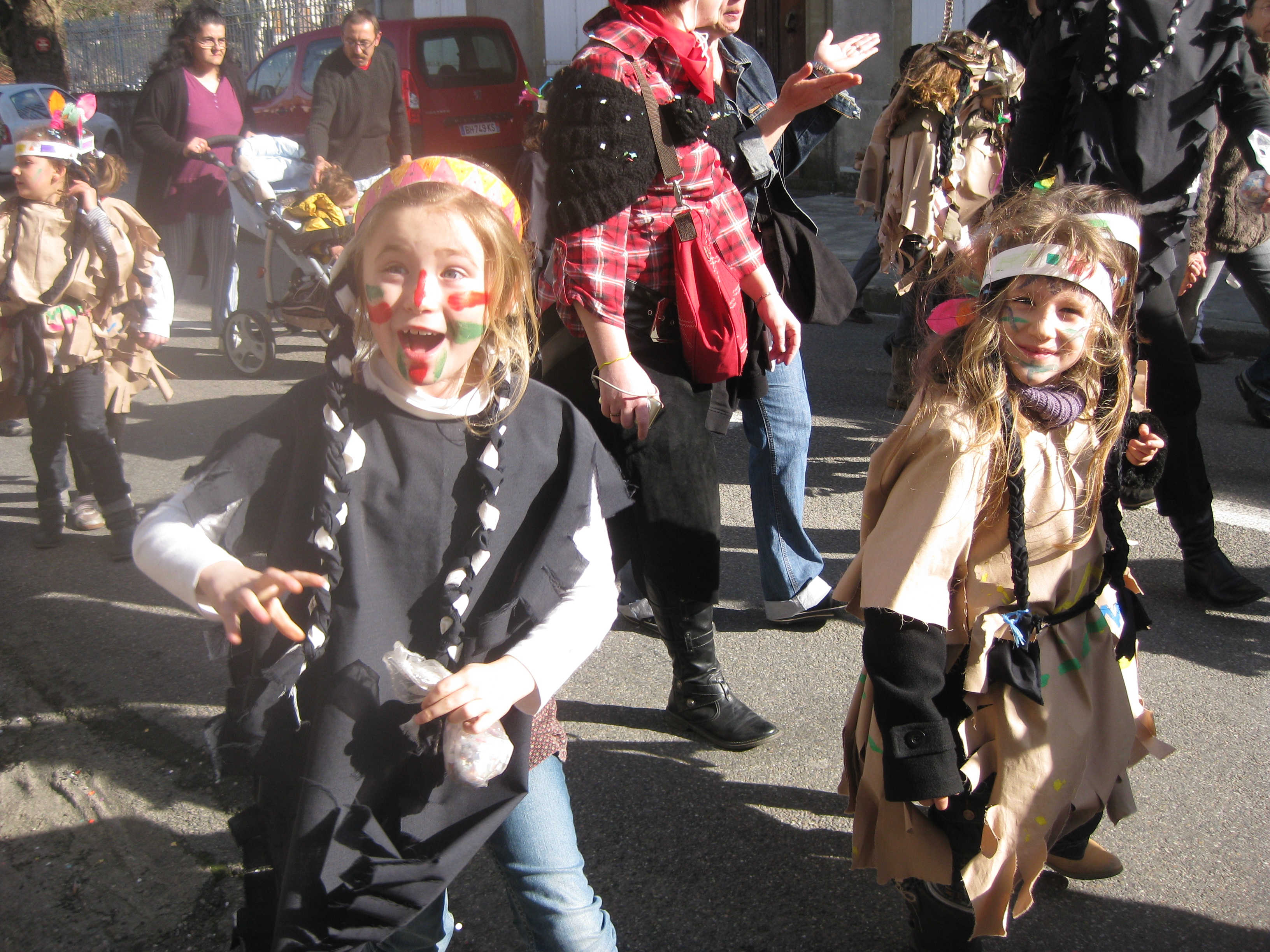
Lydia: our favourite Native American

But don’t get too excited.  It’s only dear old Laroque, and little old Laroque falls between two stools.  It’s not small enough to get every single person in the community involved in some way in this local festivity.  Nor is it big enough, or rich enough, to throw money at it.

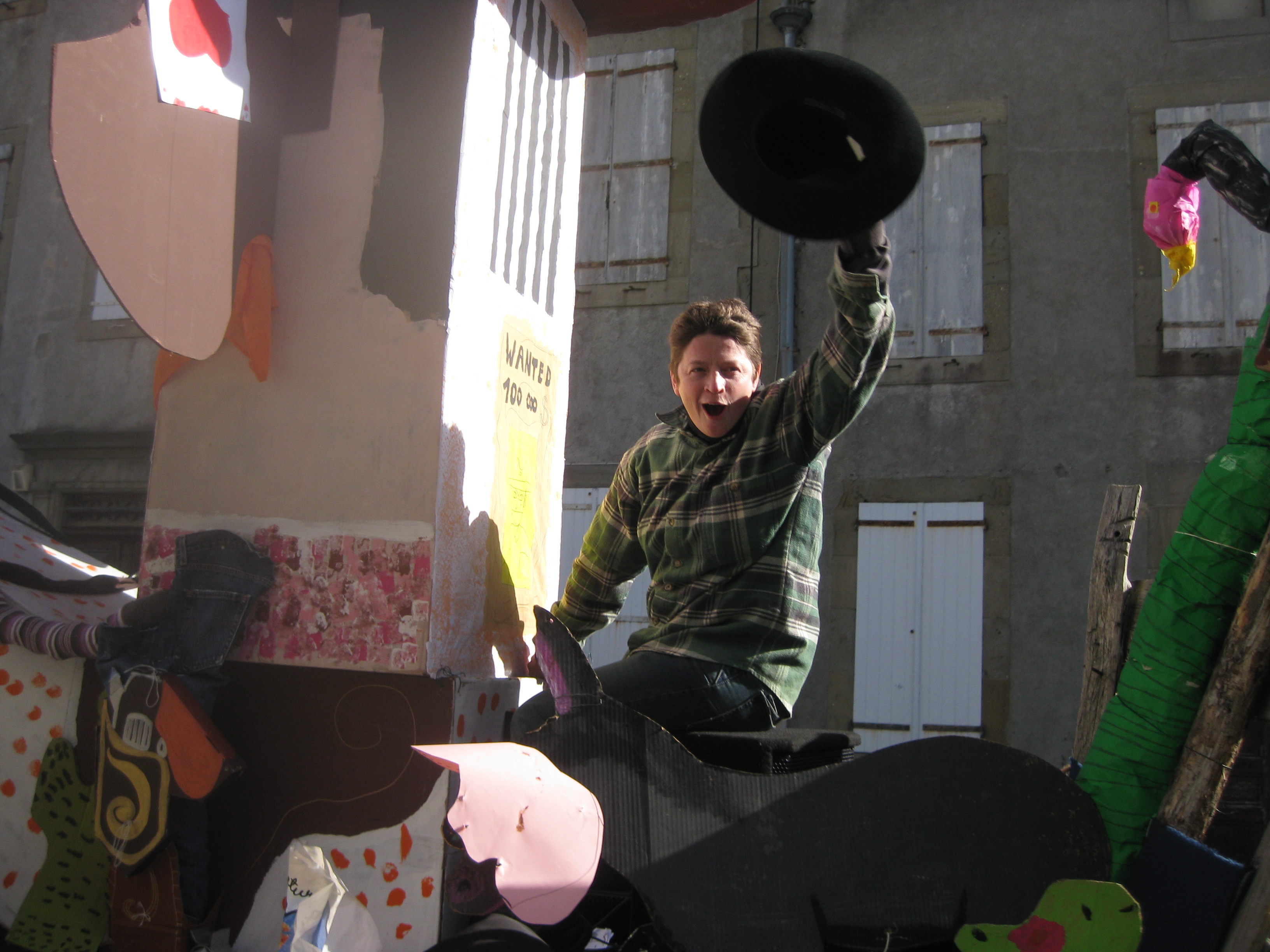
Miriam atop a float

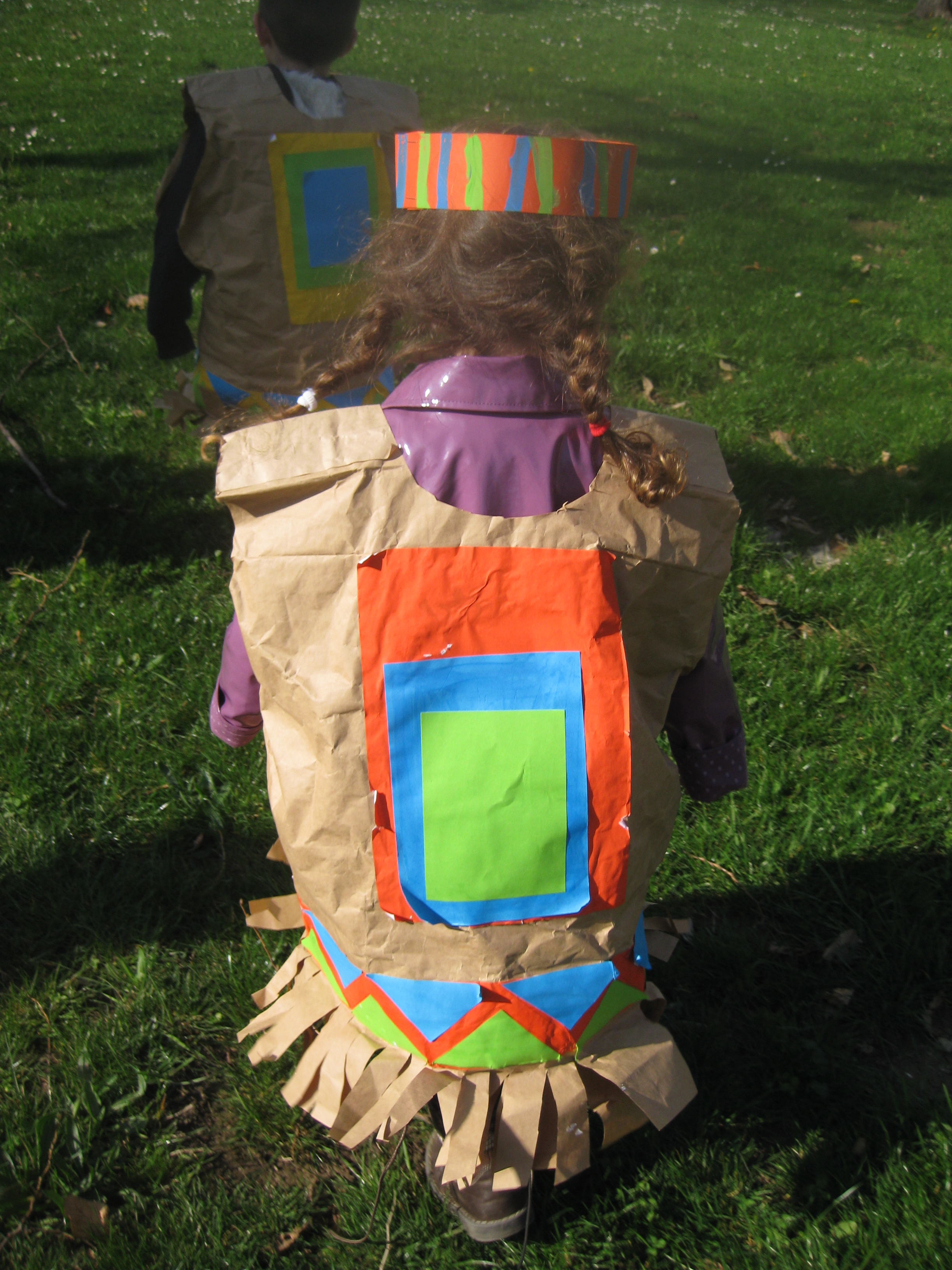
So the primary school is the key.  For several weeks the children have been focusing on the ‘Far West’, and making Native American costumes, cowboy outfits, totem poles and so on, and learning songs and music to fit in with the theme.

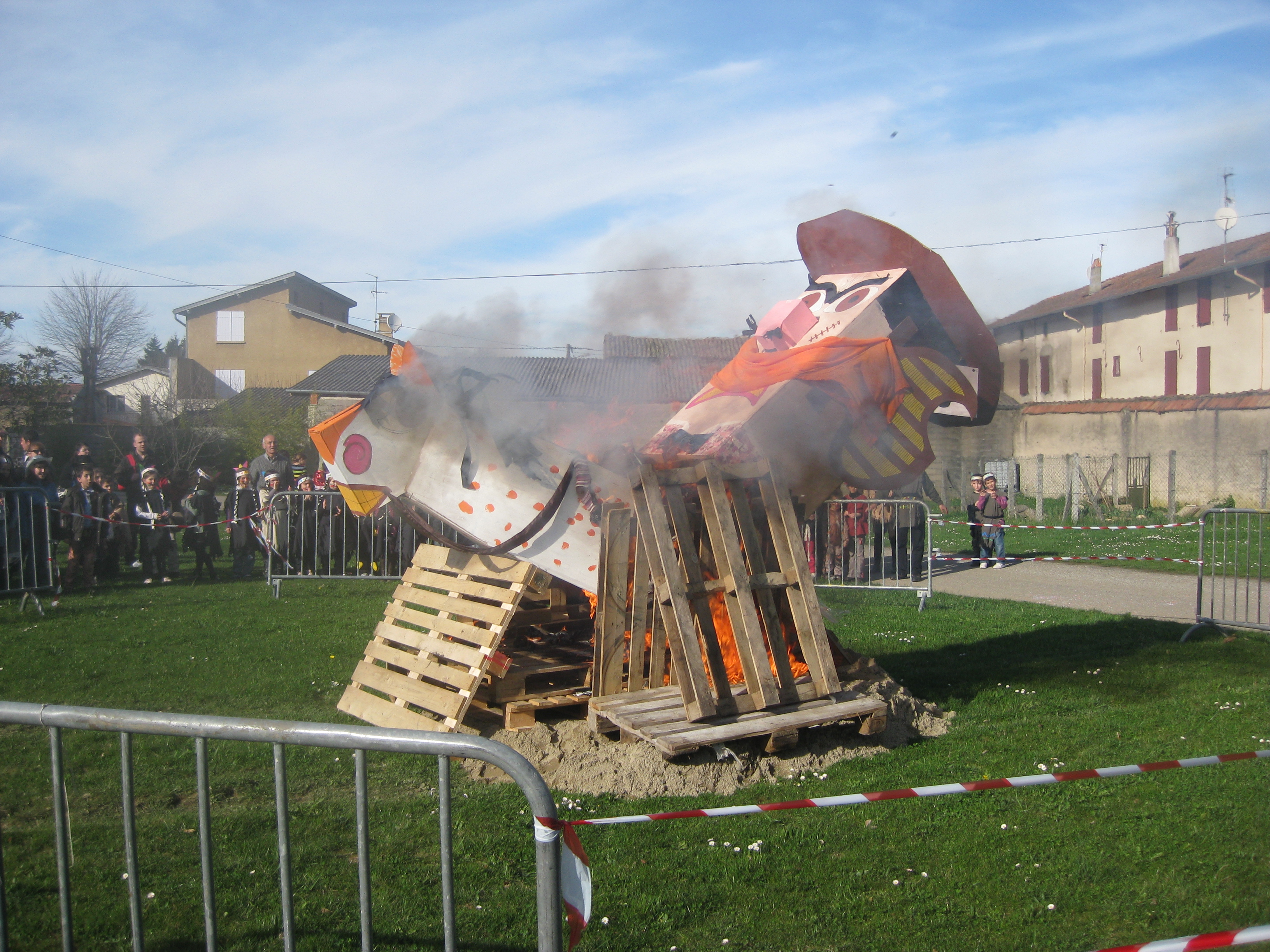
Today was the day they put it all on show.  They processed round town.  Tractors with floats trundled round the streets  and into the grounds of the Château.  The poor old cardboard cowboy on his horse the children had so painstakingly made became a sort of Guy Fawkes figure burning on a bonfire.  The schoolchildren sang their songs.  Grillades (a barbecue).  As darkness fell, everyone moved off to the MJC (Maison de Jeunes et Culture).  More grillades, more bands, dancing.  A concert featuring our Music Centre.  General merriment, a late night for the children.  A good time had by all.

The end of the road for this poor old cowboy

Christmas markets

Christmas markets always used to be a German thing.  They still are, I think: they do sound rather special.  It’s many years now that Leeds has had its own German Christmas Market, though I’ve always wondered what would bring German stall holders across the channel to pitch their stalls.  Just as I’ve wondered what the attraction is for the hundreds and hundreds of French market traders who regularly fetch up in the UK for the popular French markets, where the prices are inevitably sky high.

But Christmas markets, where you can look for all your presents, made by local craftspeople and artisans, or in sweatshops in China are everywhere.  The difference is that in the UK, they began in November and are now largely over.  Here they’re just beginning, and will go on in some cases, like Toulouse, until after Christmas.

Here’s our stall, Découverte Terres Lointaines, at the market at Lavelanet, on today and tomorrow