Well, a month in Yorkshire really. It must have been one of the best Mays on record: blossom, flowers, lush greenness everywhere. Here are some pictures to convince anyone who doesn’t yet know, that Yorkshire really is ‘God’s own county’.
Tag: England
Diminishing Returns
About 15 years ago, we moved from Leeds (pop. 716, 000)…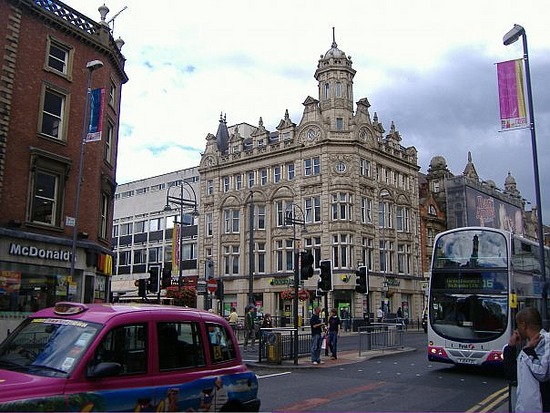 …. to Harrogate ( pop.72,000). How charming and manageable in size it seemed!
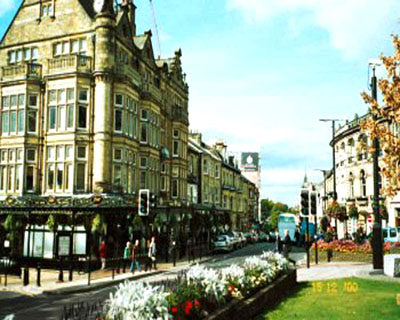 Now we’ve moved to Ripon (pop. 16,000). Its cathedral gives it city status, though it’s so much smaller than Harrogate.
 And of course, we also live in Laroque d’Olmes (pop. 2, 600)
 Where next? A farmstead on a remote hillside?
Next stop: Ripon
After that outburst last week, we had a think. And then we thought some more. And some more. And we realised that we really need a base here. For us, and for our daughter. Home-hunting was as depressing as it always is. Until we had an idea.
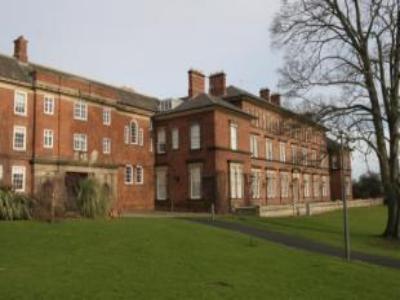
Would Ripon, a mere 10 miles from Harrogate, but too far for regular commuters to Leeds, Bradford and York provide a more affordable answer? It did, in the very first flat we looked at to rent. It’s small, but the complex has been thoughtfully developed on the site of the old College of Ripon and York St. John. Its trees and parkland have been preserved. By car, it’s out of town. On foot, it’s a ginnel or two away from the town centre.
And we love Ripon. It’s so near to Harrogate that we can easily maintain our relationships there, but it has a different centre of gravity, with the open spaces of North Yorkshire so near to explore, and Fountains Abbey as a near neighbour.

For over a 1000 years, it’s been a market town. Its Thursday market is still busy and lively and there are plenty of independent shops in the ancient streets clustered round the market square. It has a Cathedral, and a lively cultural life. I’ve just discovered it’s twinned with Foix, departmental capital of the Ariège. I think we’re going to be happy here as we divide our time between France and England.

That Wedding
I’m not a big fan of Prince Philip. But he was right on the money when he declared to Marc Levy, author of ‘«Elizabeth II, la dernière reine» that ‘You French are frankly funny. You adore the monarchies of the rest of us, but got rid of your own.’
William-and-Kate-mania can’t be escaped by simply fleeing across the channel this week
Last week for example I noticed a French magazine headline that suggested some 14 million French will be glued to their sets to watch That Wedding. The Prince and his bride-to-be have already had a big chunk of TV air time, and just look at this week’s schedules:
M6 kicks off on Thursday evening with a three and a half hour marathon, but Friday the 29th is the day those 14 million French take the phone of the hook, kick off their shoes and hole up on the sofa. Here’s their schedule:
TFI: 9.30 – 14.45
France 2: 9.15 – 13.45
M6: 9.00 – 17.35 ( that’s 5 programmes all about the couple, one after the other)
W9: 20.40 – 1.50.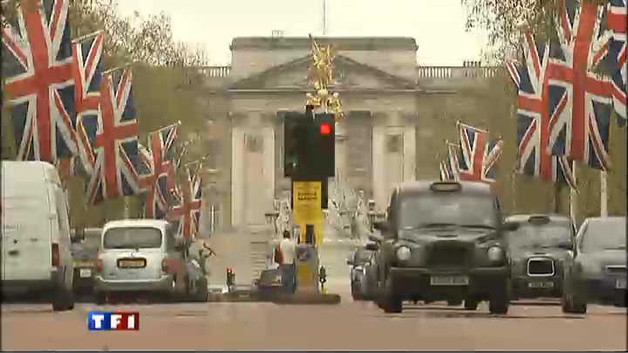
Actually, I would have been quite interested to watch for a bit, to see how French and British coverages compare, but we’ve chosen that day to arrive in England, confident that the usually busy roads will be traffic-free. We’ll be glad too to escape the constant questions. Being British does not make us Royal Experts, but our neighbours are remarkably slow to catch on.
Learning to speak French again after 6 weeks’ hard labour
Returning to France on Wednesday was a bit of a shock to the system. Six weeks speaking English every time we opened our mouths, and then…..French again. It was there somewhere, deep inside the recesses of our skulls. But it was hidden right away at the back, covered in fluff, layers of dust and paint splashes, and scarcely fit for purpose.
Opening our mouths to make simple comments to the receptionist at our overnight hotel stop in Blois that first night back seemed strange. Standard phrases escaped our lips, sounding odd, like some once familiar lesson learned at school, since long-forgotten.
Two days on, things are returning to normal: the language machine has been oiled and serviced, and is creaking back to business as usual, as we resume our daily round.
But in those 6 weeks in England, we scarcely engaged our brains at all. We painted the house ready to be put in the hands of a letting agent. We packed. We discarded years of family life. We sorted out bags and bags of stuff for the local charity shop: we called there so often that we fully expected them to open a new branch named after us, and were convinced that the one day we didn’t go, disgorging huge plastic bags of donations from the car, they’d put out a Missing Persons enquiry. Things that neither family members nor the charity shop wanted got advertised on Freecycle, and we had fun helping those who responded to cram large bookcases or cumbersome chairs into rather small cars. ‘Freecycle groups match people who have things they want to get rid of with people who can use them. Our goal is to keep usable items out of landfills’.
Furniture and books – 9 cubic metres – were collected by a removal firm who’ll deliver it all to us here in about 10 days, after they’ve collected and delivered other consignments all over England and France.
What would we have done without all the friends who fed and entertained us in the evenings after our 10 hour-long-days labouring in the house? They made it possible for us to pack up virtually every cooking pot and plate days before the end of our stay.
And what would we have done without our friends in LETS? Some of you have asked what LETS (SEL in France) is:
LETS – Local Exchange Trading Systems or Schemes – are local community-based mutual aid networks in which people exchange all kinds of goods and services with one another, without the need for money.
Nidderdale LETS is the group in the Harrogate area. With about 50 members, many of us have worked and socialised together over the years, helping each other revitalise overgrown gardens or have a big spring clean. People offer massages, Alexander technique, translation services, animal care, teaching and practical skills: all sorts of things. This time, LETS members turned out in force to help us paint and clean the house from top to bottom. We couldn’t have done without them, and working together was fun and gave us all a feeling of real achievement as we shared lunch and conversation after a hard morning’s work.
After all that, though, our bodies were exhausted, and our brains non-existent. No wonder speaking French again seemed a bit of a challenge.
Down at the Greasy Spoon
No stay in England is complete without a visit to a Greasy Spoon. Hot, crowded, cheerful, and full of burly men stolidly chewing their way through mountainous piles of chips, bacon and sausage, the average transport caff is not the place for fine dining. But the good ones are worth a visit, and today, we visited the Bridge Cafe at Apperley Bridge, on the way over to Bolton to see the boys.
It was only quarter to twelve, but we needed an early break after a hard morning shifting furniture, skidding up and down our impossibly icy street, lugging huge bags of books and discarded household items to the charity shop, visiting the Letting Agent, scouring Bradford’s Asian shops for essential supplies of Indian spices that are hard to get in France. After that, what better than a hot plate of comfort food washed down with a huge mug of tea?
Yes, quarter to twelve. But the place was already crowded with joiners, truckers, shoppers, pensioners. Most were having the all-day breakfast.
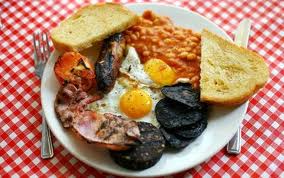 This is what you get if you order the small one: £3.80
2 slices bacon, 1 sausage, 1 egg, beans, tomatoes, toast, fried bread, tea.
Some had gone for the Full Breakfast: 2 slices bacon, 2 sausages, 2 eggs, spam, black pudding, mushrooms, hash browns, beans, tomatoes, fried bread, toast and tea or coffee.
Nope, not a chance that we could cope with that: poached eggs on toast was more like it.
A quick flick through the daily papers provided – tabloids of course, broadsheets need not apply – a quick chat to the owners ( Italian? Lithuanian? We couldn’t agree), and we were off, sustained for an afternoon of meeting 5 year old twins as they came out of school, to enjoy the rest of their action-packed day
Urban wildlife
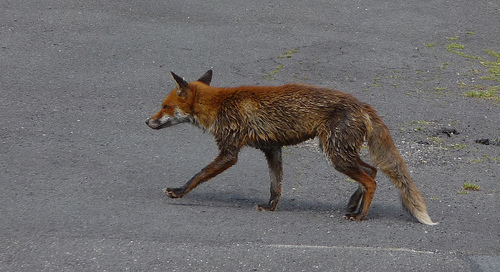 When we left Laroque for Christmas and New Year in London and Harrogate, we thought we’d left most wildlife behind too. Not so. It seems as if wherever you are in South London, you’re only yards from a fox’s lair. Tom and Sarah refused to share our excitement at seeing so many. ‘They’re on the station every night when we come home from work’, they yawned. ‘They’re quite mangy anyway’. We didn’t think so. We loved to see them trotting spiritedly along the street once darkness had fallen, sniffing round the dustbins for Christmas turkey.
Back in Harrogate, the birds we thought would have abandoned our garden, now we aren’t there to feed them regularly, have quite simply moved in. Chaffinches hunt for seed, blackbirds tug at worms, and all of them relish the garden pond for regular bathing sessions in the all-but-frozen water. They’re obviously glad we’ve not been there to disturb them
The horror story that never was. Not for us, anyway.
Everyone worried about our journey back to the UK. WE worried about our journey back to the UK. The news in France, England and throughout Europe was of snow, delay, disruption. TV images showed exhausted families sleeping on luggage conveyor belts at airports, crammed train stations, lines of immobile traffic on motorways. And we were planning to drive back to England, the best part of 1000 miles away from Laroque. Friends begged us to change our plans, or at least buy snow tyres.
But we decided the information on the internet was at variance with that provided on TV and radio bulletins, and far more positive. Our planned route, as far as http://www.meteo services were concerned, was pretty much fine, apart from some snow as we neared Pas de Calais.
And so it proved.
 It did snow, mainly near Rouen. And I wouldn’t have wanted to be a lorry driver. Gendarmes on roundabouts rounded them up from Dreux onwards and sent them on different routes. Just after Rouen, they closed the fast lane of the motorway, and forced all the truckers to park up there, mile after mile of lorries from France, Spain, Luxembourg, Portugal, the UK…. And there they all sat in their cabs, unfed, unwatered, puffing away at endless cigarettes, or occasionally jumping down to take a stroll along the not-so-fast-lane. I hope they’re not still there. For us, although driving was tricky for an hour or two, it was a chance to enjoy Winter Wonderland views across hills and forests, only animal tracks disturbing the perfect white landscape
The motorway snow petered out, and we picked up speed, and got to Calais just in time. But the ferry was late. It had become a refuge for those unable to fly, unable to travel Eurostar, but desperate to cross the Channel any way they could. Hard to believe we’d had it so easy. On the other side of the Channel, travelling through to London, we listened to Radio 4. The BBC was full of sad stories of those unable to get home to their families for Christmas. Politicians held forth about how Britain’s handling of the situation was ‘the laughing stock of Europe’. We don’t think so. Things were hardly better in France, to our certain knowledge, and Belgium and Germany weren’t having a good time either. Perhaps it’s quite simply that we humans aren’t quite so in charge as we like to think. Nature has her ways of humbling us after all, from time to time.
Christmas markets
Christmas markets always used to be a German thing. They still are, I think: they do sound rather special. It’s many years now that Leeds has had its own German Christmas Market, though I’ve always wondered what would bring German stall holders across the channel to pitch their stalls. Just as I’ve wondered what the attraction is for the hundreds and hundreds of French market traders who regularly fetch up in the UK for the popular French markets, where the prices are inevitably sky high.
But Christmas markets, where you can look for all your presents, made by local craftspeople and artisans, or in sweatshops in China are everywhere. The difference is that in the UK, they began in November and are now largely over. Here they’re just beginning, and will go on in some cases, like Toulouse, until after Christmas.
Here’s our stall, Découverte Terres Lointaines, at the market at Lavelanet, on today and tomorrow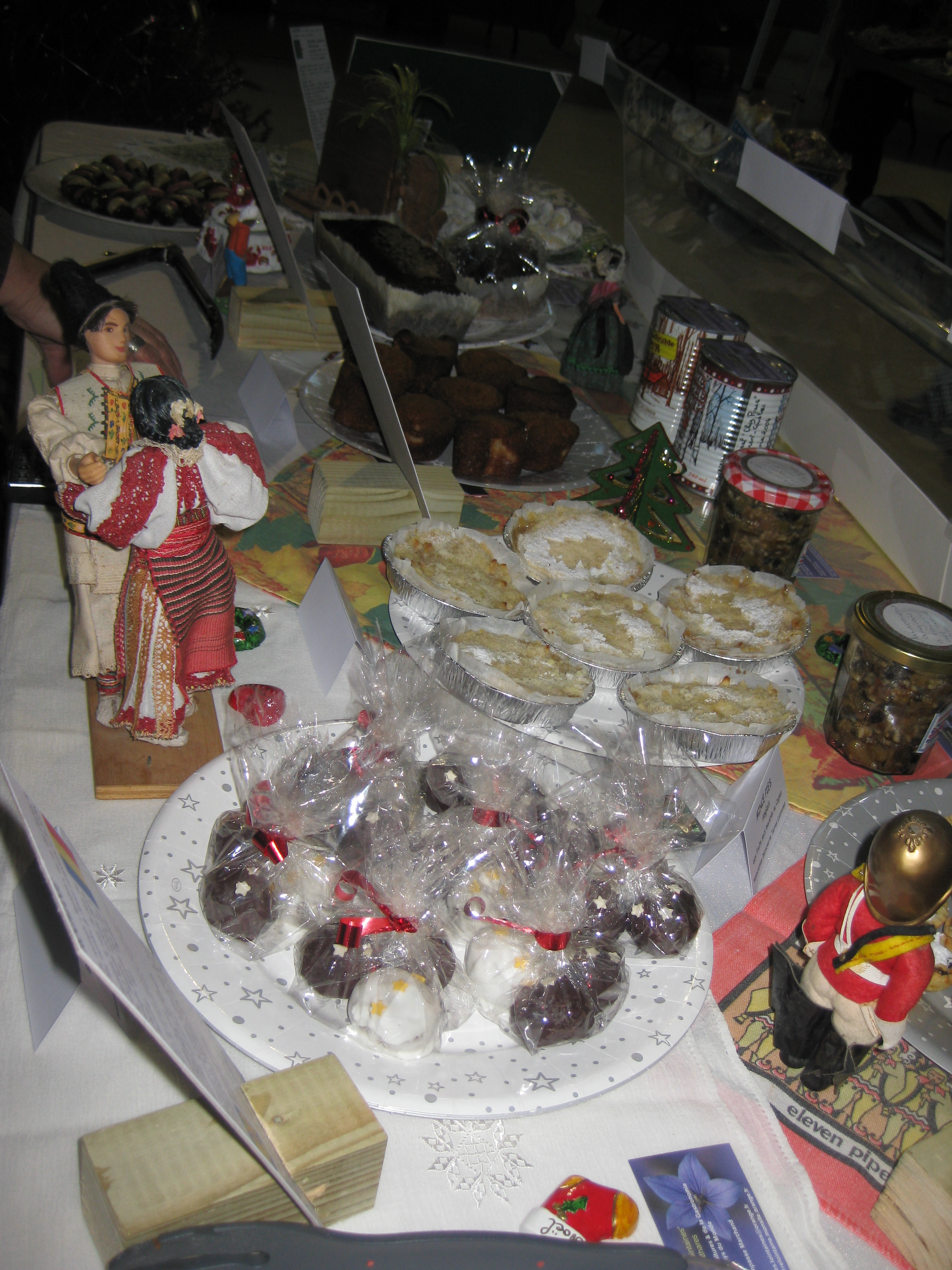
A nation of shopkeepers…or a small town with small shops
Depending on your point of view, it was either Napoleon or Adam Smith who first called England ‘a Nation of Shopkeepers’
But it was only after I came to settle here in France that I started to think of shopkeeping and market trading as skilled occupations, and realised just what is involved in keeping the customer happy.
It’s probably because it’s just so much easier, where we live in England, to nip down to the supermarket. There weren’t too many independent shops on our daily round: so much for a nation of shopkeepers. Mind you, we loved it when Emily was a Saturday girl at the French patissier who was then in Harrogate, Dumouchel. She would often be sent home with a couple of unsold petits gateaux for us to enjoy, or some slowly-fermented sourdough bread. It was small shop, and quite expensive, so she learnt quickly to value customers and to treat them well, so they’d come back. She learnt too that while most of the people she served were friendly and appreciative, customers could be curmudgeonly too.
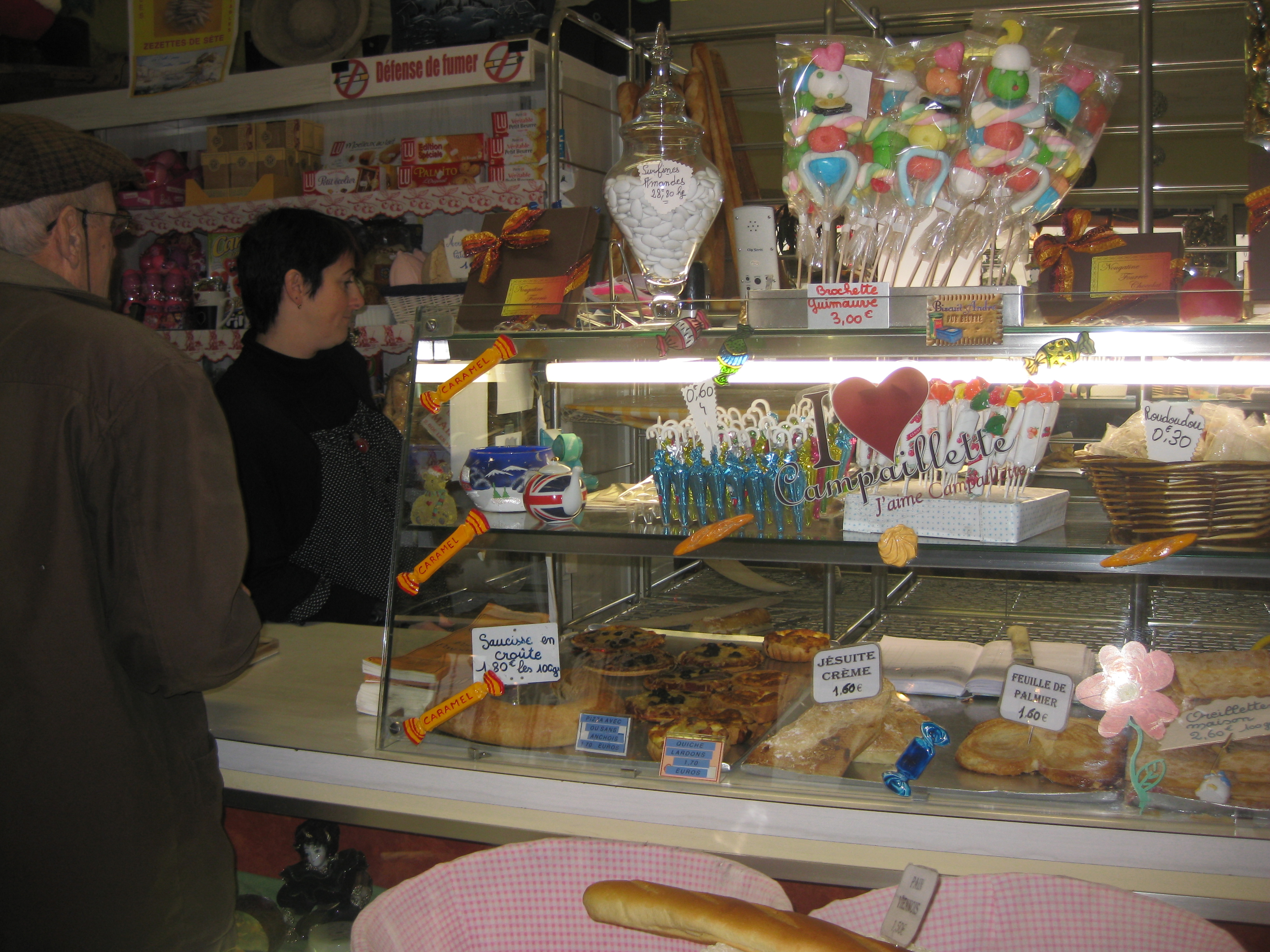
So who are the good commerçants here? Well, down at the bakers, they’ll often put aside our much-loved pain noir without being asked if I’m not in bright and early, knowing we’d be disappointed if they sold out.
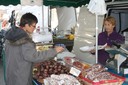
Today at the market, madame who runs the cheese and charcuterie stall had printed off some recipes specially for me, because she knew I might enjoy trying them out.
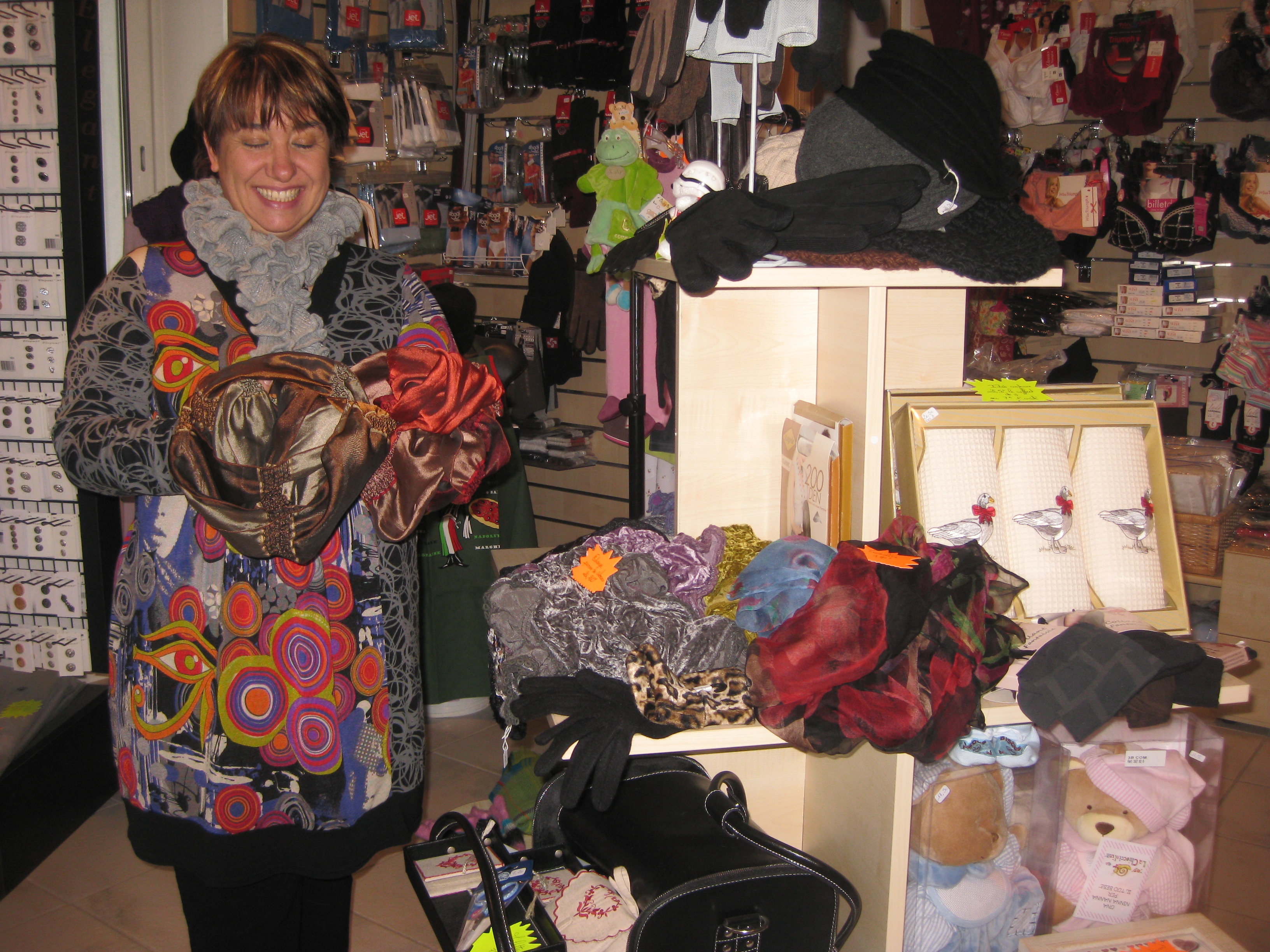
Down at Bobines et Fantaisies, she goes to Toulouse most weeks to seek out unusual scarves and accessories, so there’s always something new and worth trying at her tiny shop. ‘Let her try it on. If she doesn’t like it, bring it back!’, she’ll insist, as you dither between a bracelet, a couple of scarves and a chic but cosy winter hat. These shopkeepers remember us, our tastes, our whims and foibles. They welcome us, and chat cheerfully with us, even if we leave the shop empty-handed.
There’s just one shop here that doesn’t cut the mustard. ‘Il n’est pas commerçant’ we all grumble. Those of us outside the select band are routinely ignored, and as we feel our custom isn’t valued, some of us now go elsewhere.
But not to the supermarket. Oh no. Yesterday we DID pop into one, but as the muzak system was belting out a schmaltzy version of ‘Auld lang syne’ in what passed for English, we very soon shot out again. Small Shops Rule OK.
 From Pyrenees to Pennines
You must be logged in to post a comment.