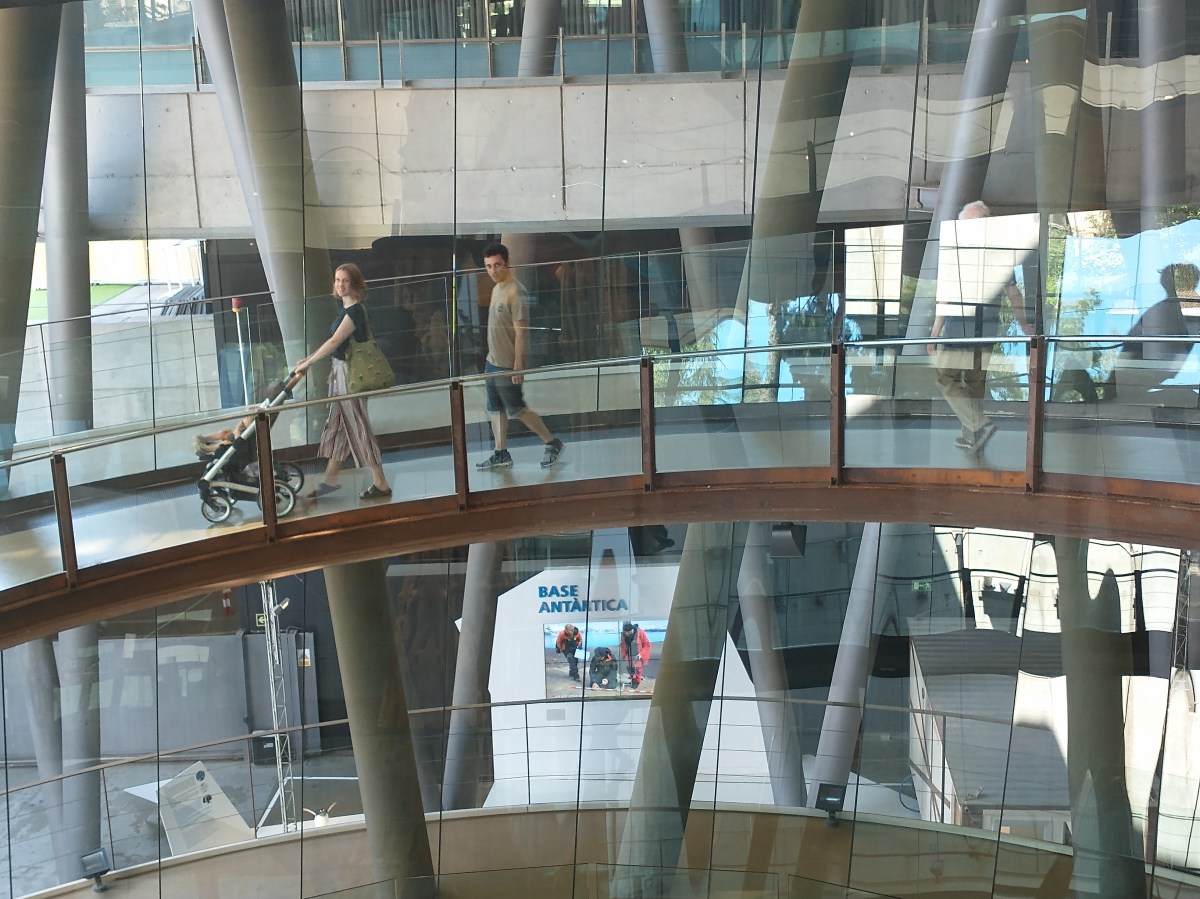
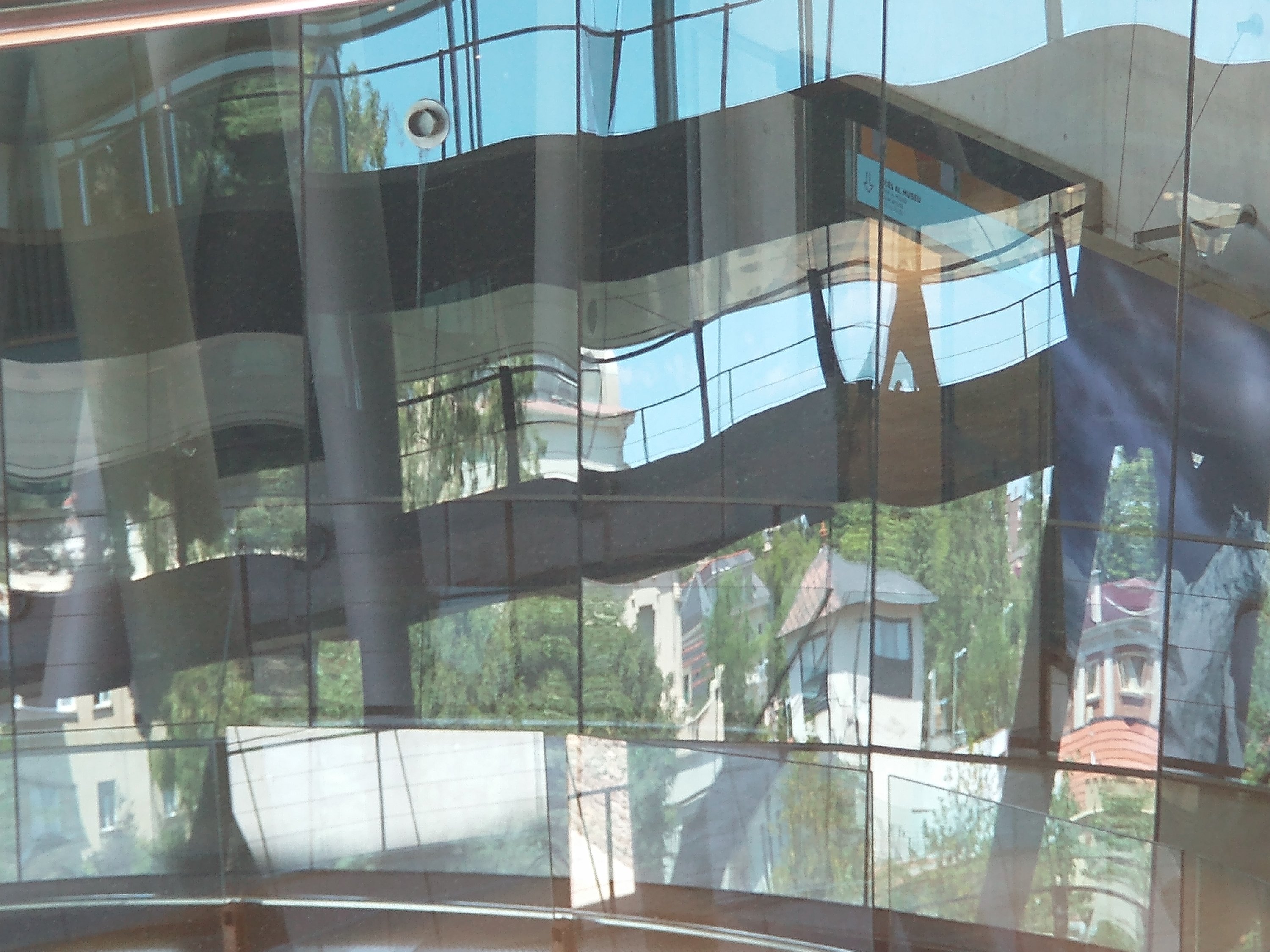
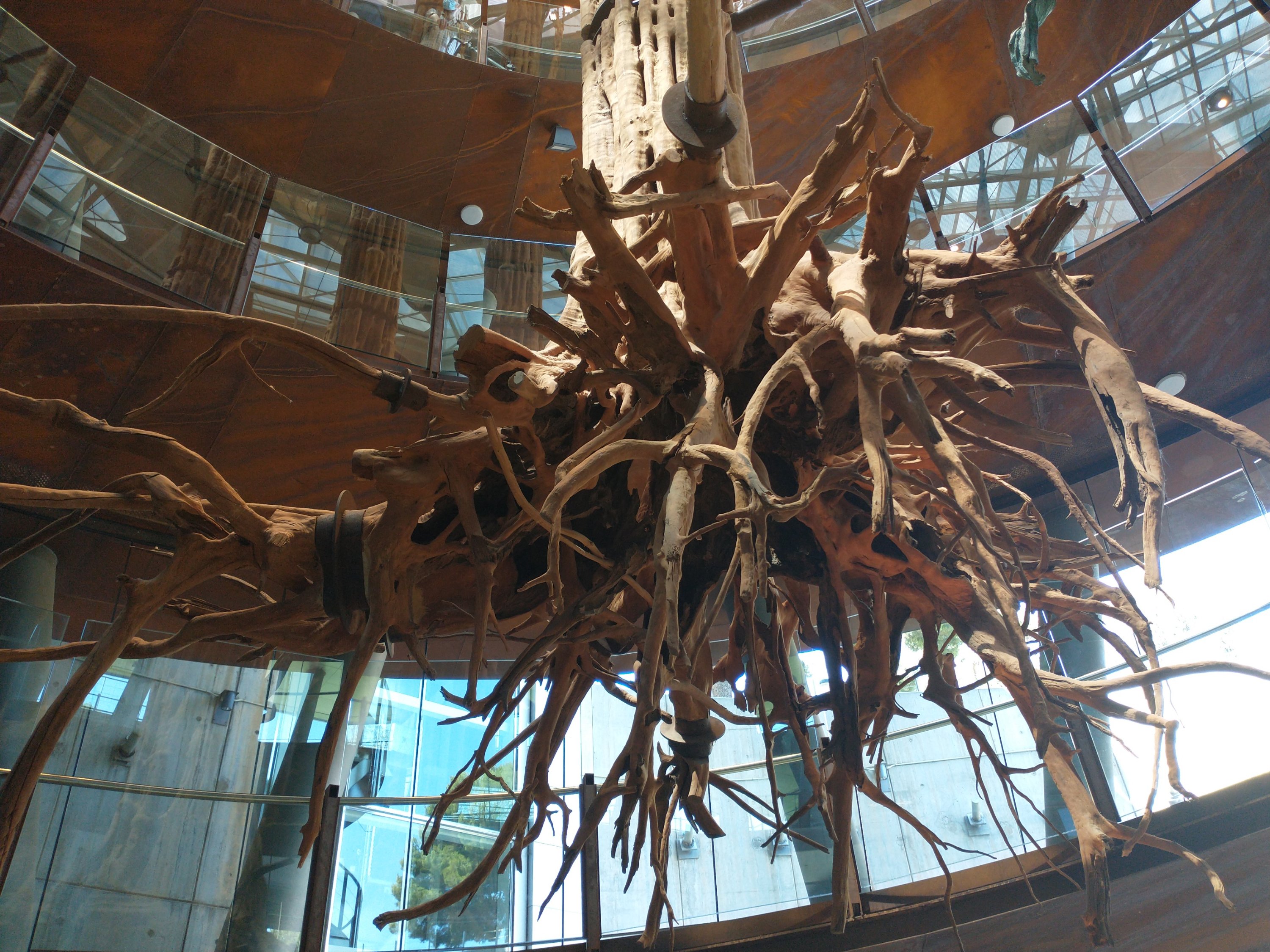
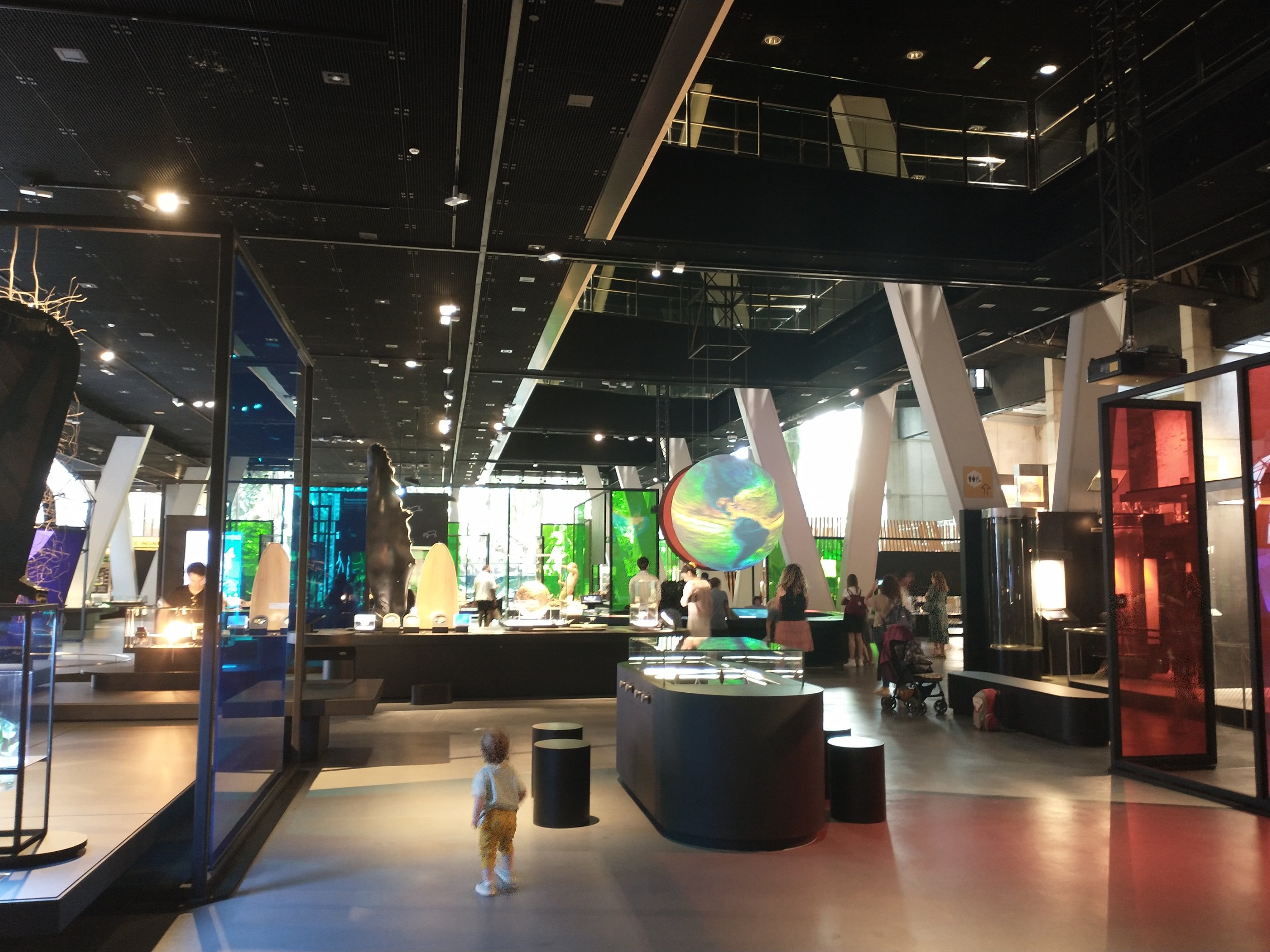
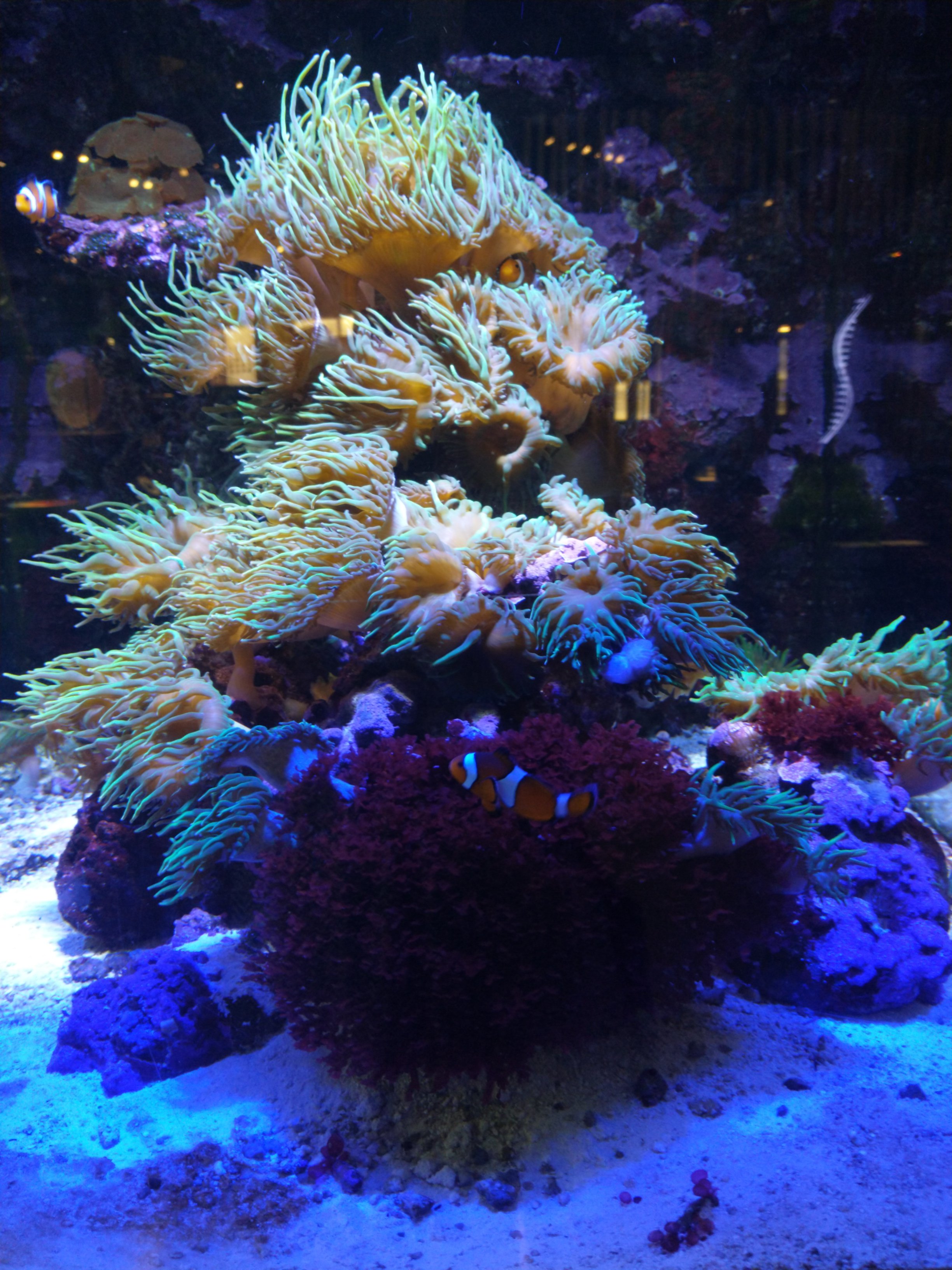
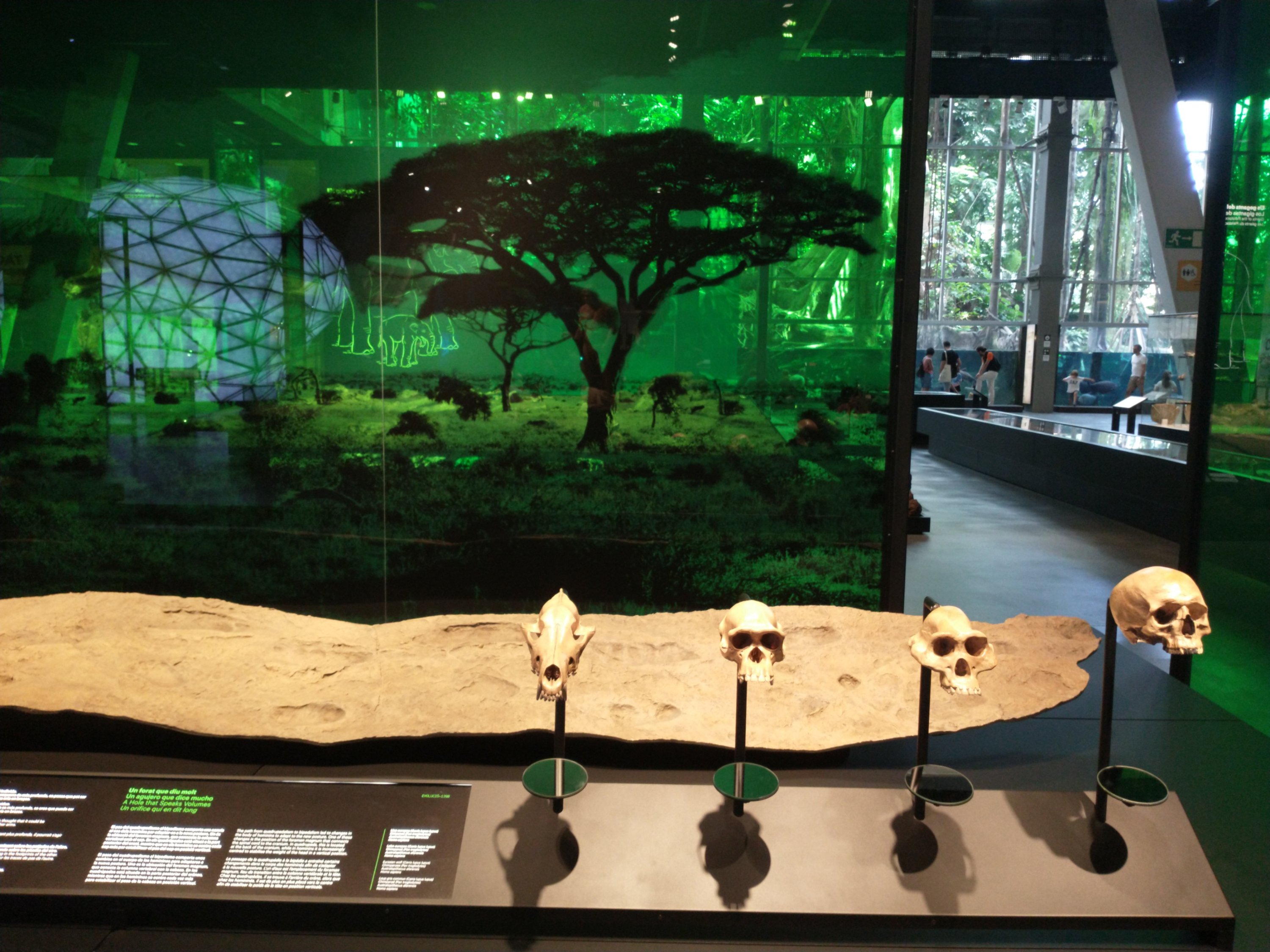
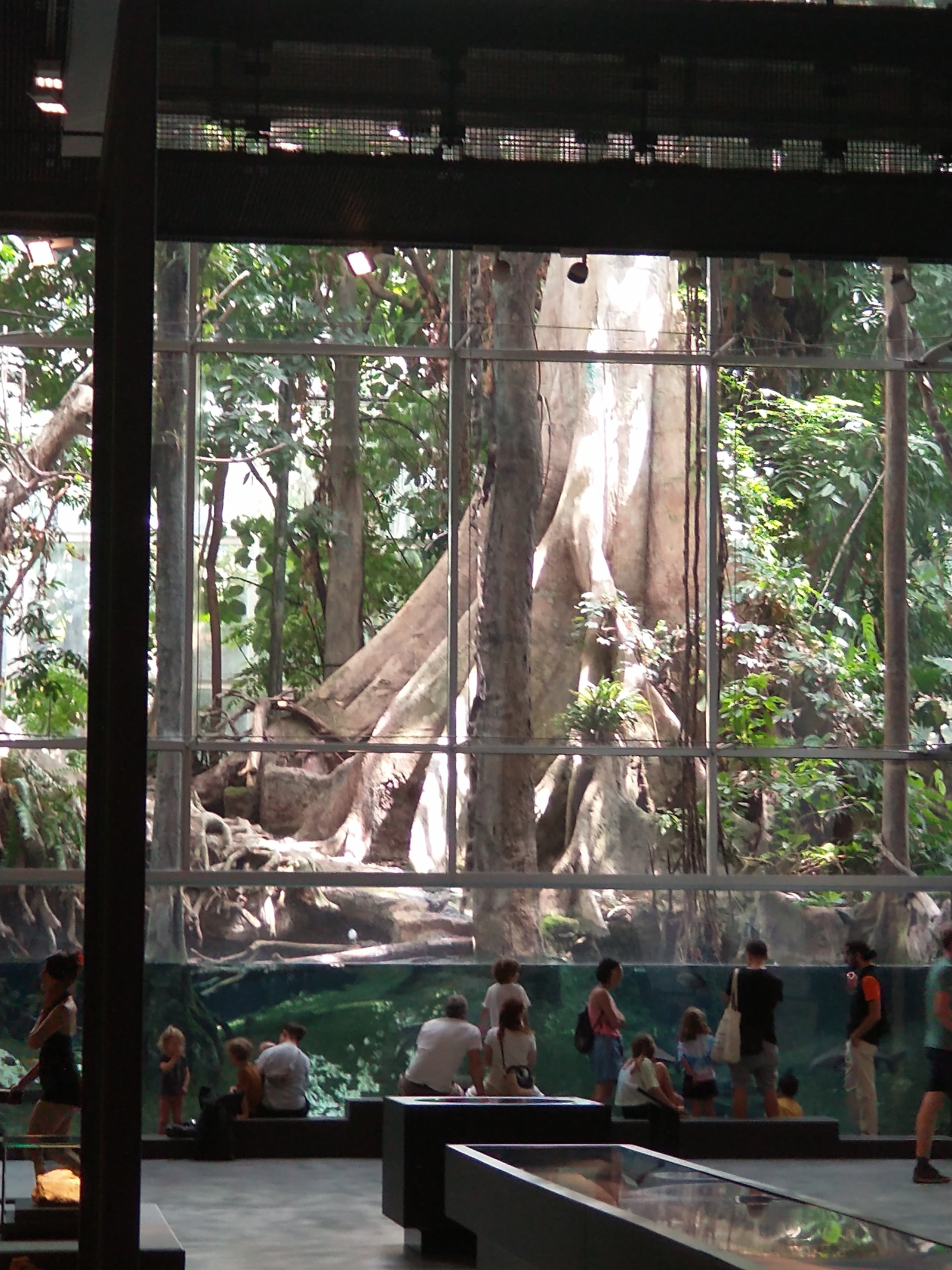
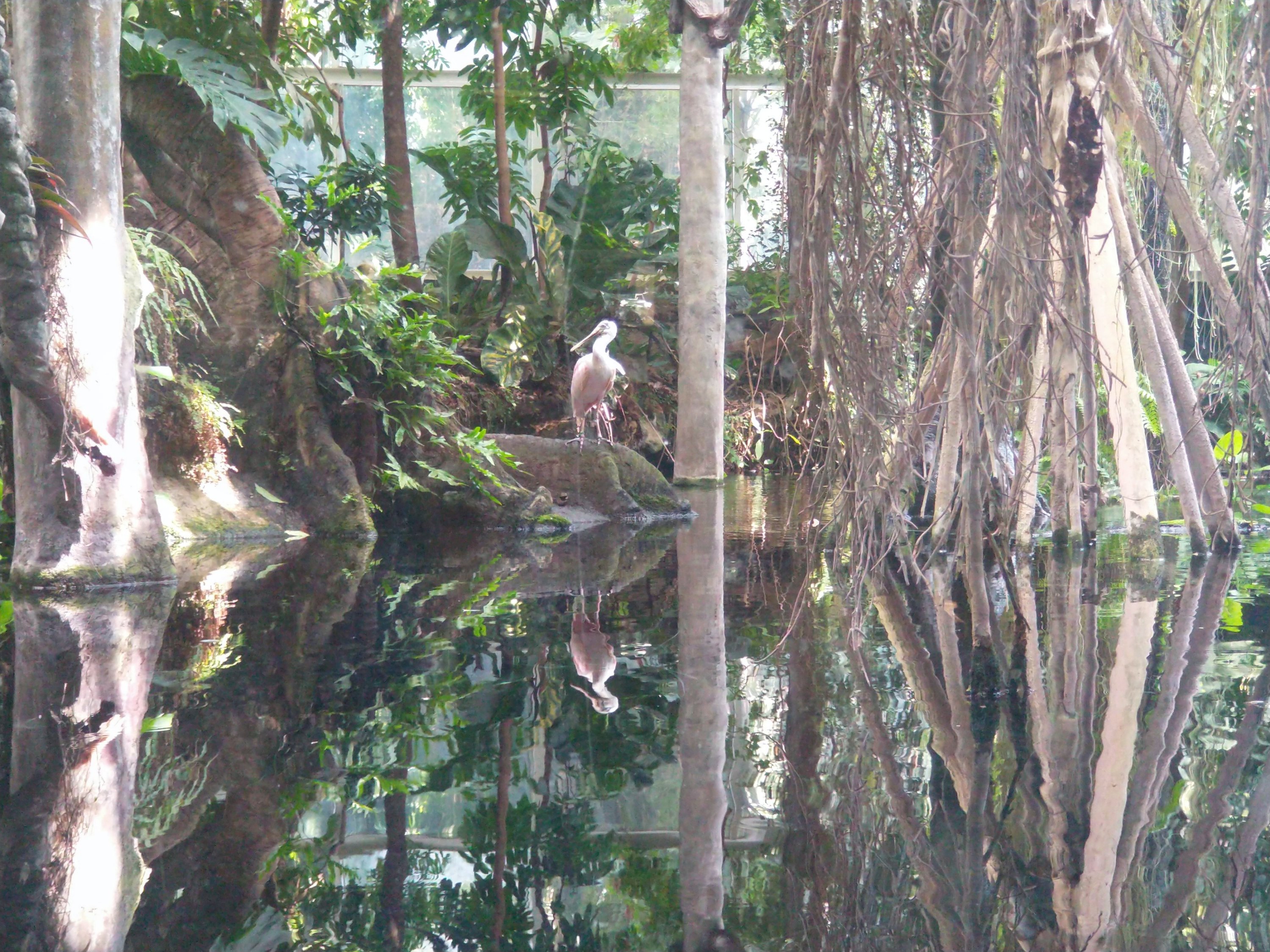
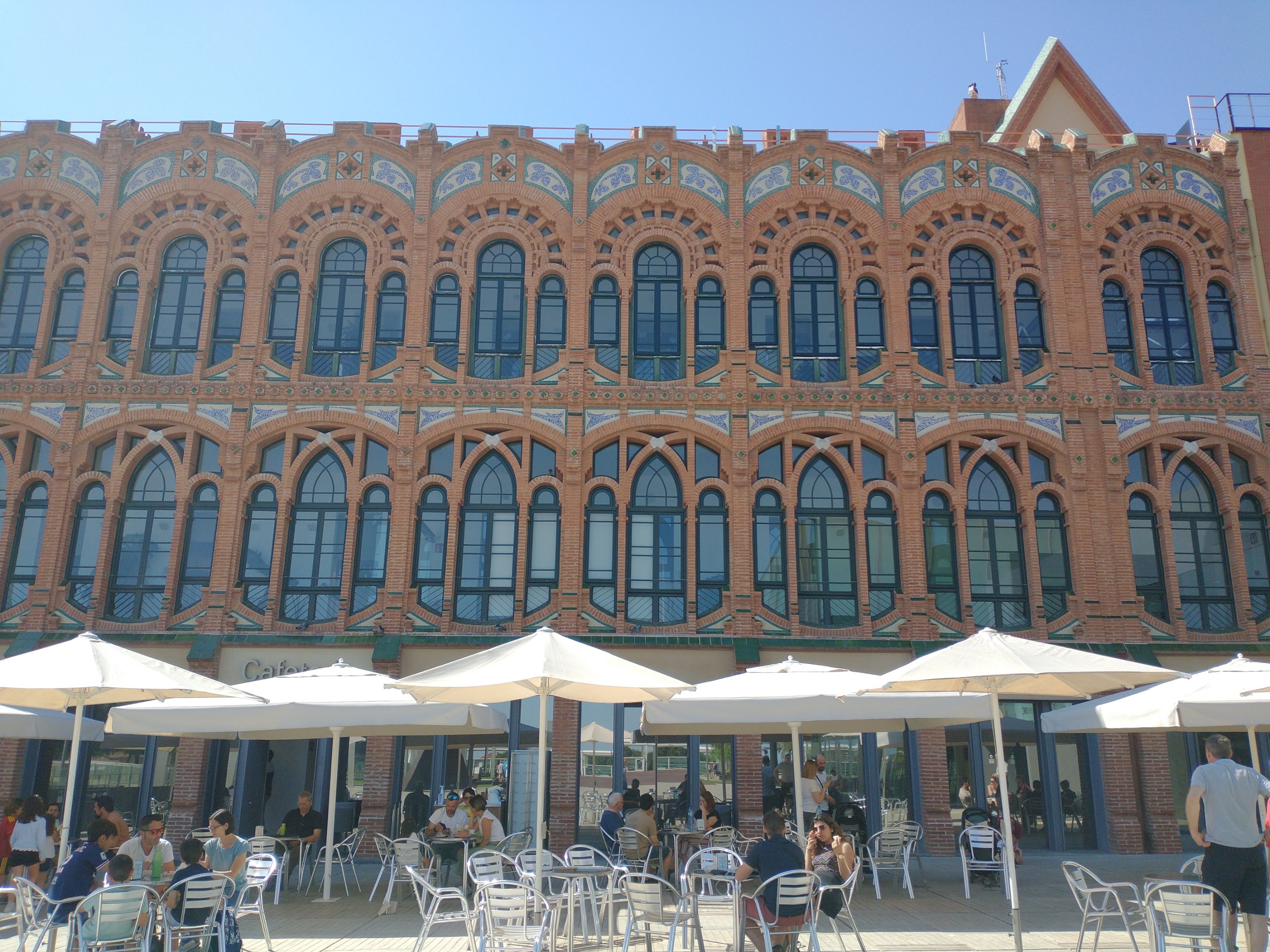
Today we went to Cosmo Caixa. It is, quite simply the best science museum we have ever been to. Interactive, engaging, visually stimulating, informative. Even Anaïs, at 16 months old was kept interested.
I’m sending you some postcards with no attempt to explain anything,but in hopes that one day, you to will have the chance to visit.
A well earned drink and ice cream at the end.
And that’s it… tomorrow night we’ll be in England, and on Tuesday, home. It’s been quite an adventure. We’re not really ready for it to end …
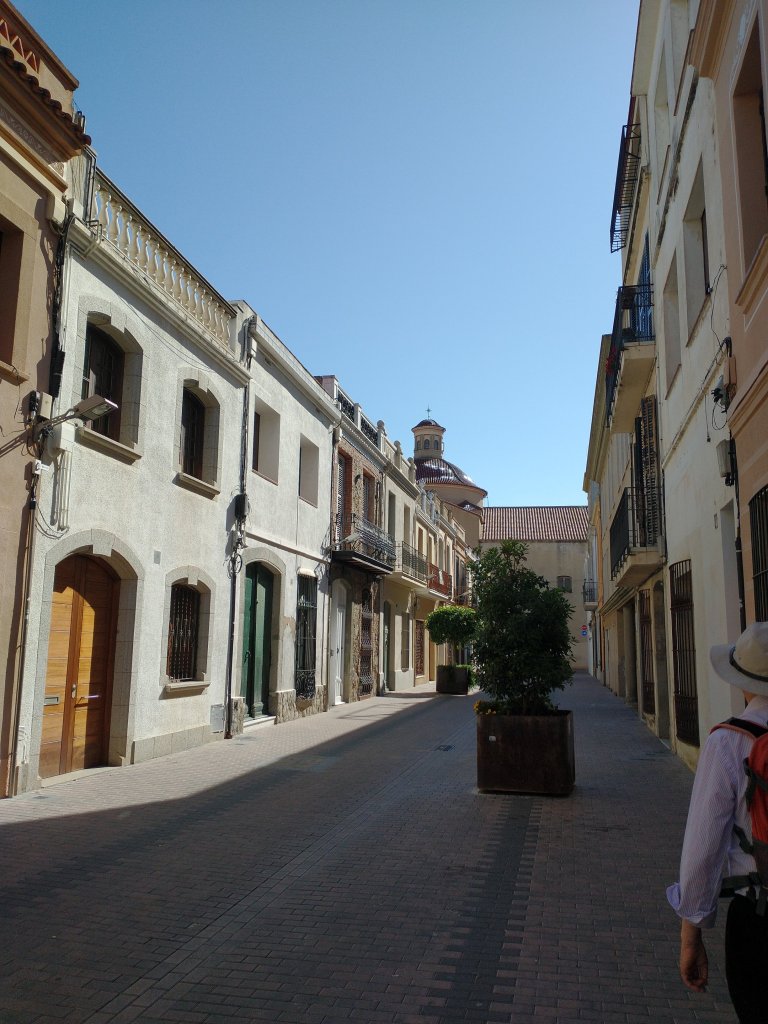
From Premià de Mar, you could go south west to Barcelona, or northeast to Mataró, a town of some 120,000, and that’s what we did today.
It used to be a textile manufacturing town. It saw the very first railway in the whole of Spain run between here and Barcelona in 1848. It’s still a prosperous and busy town.
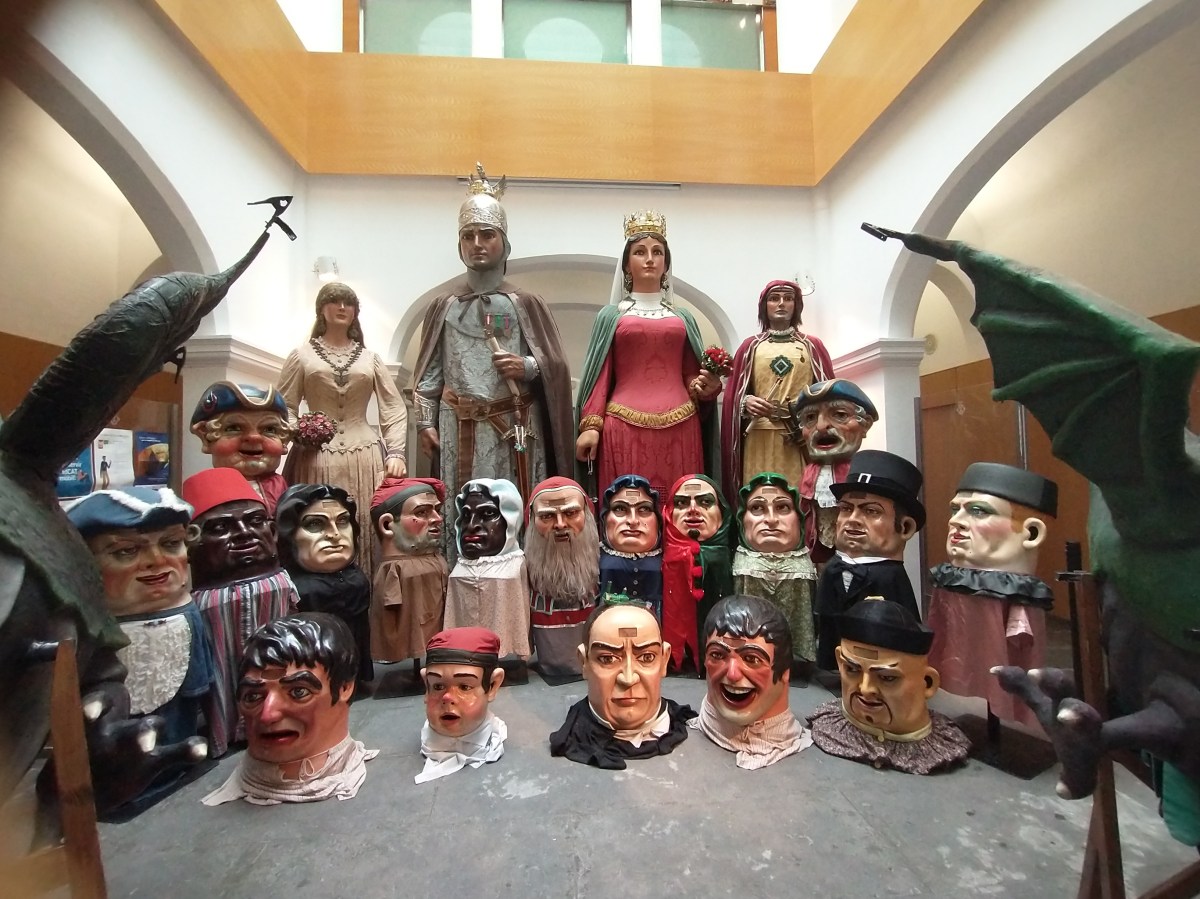
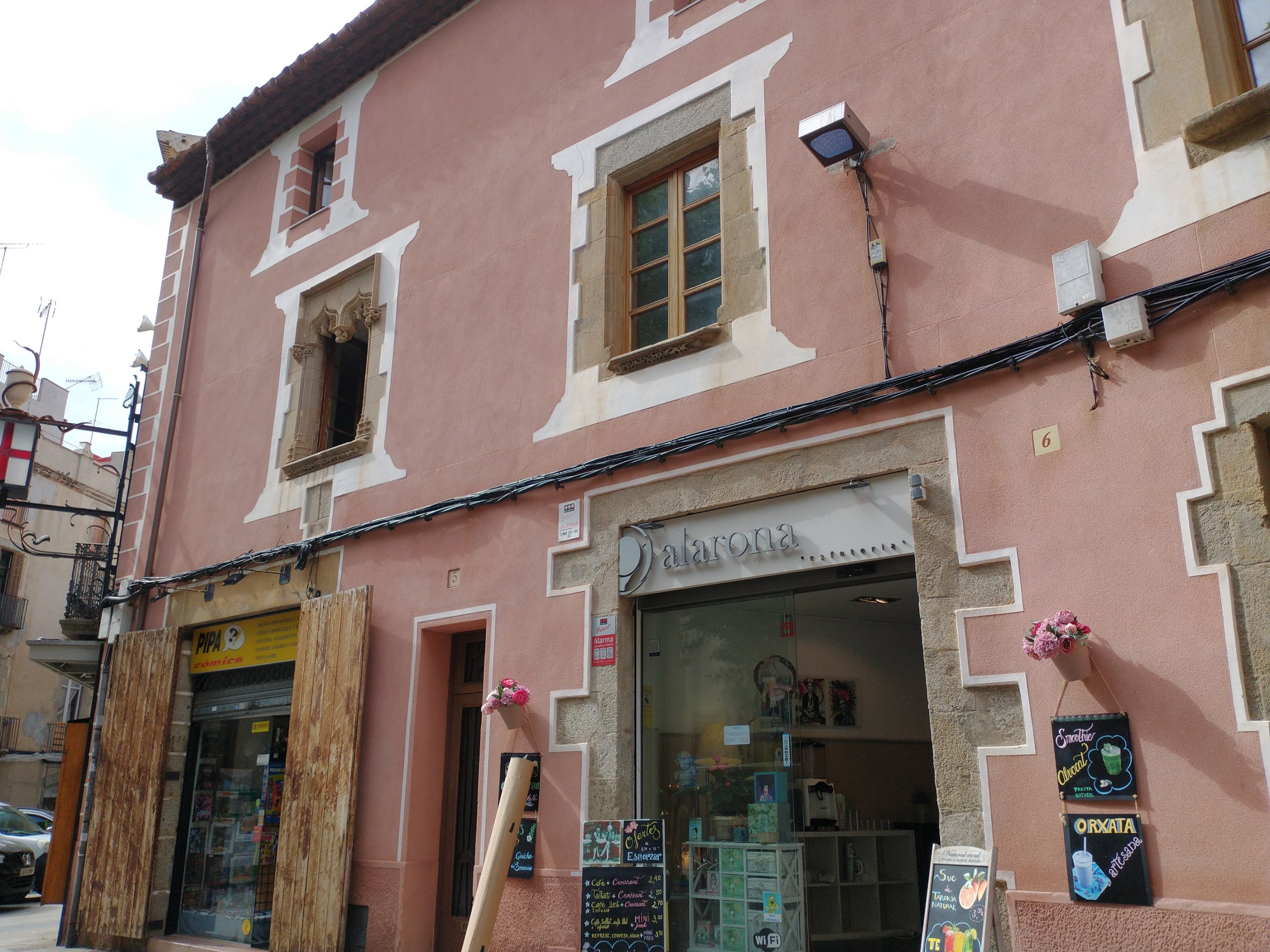
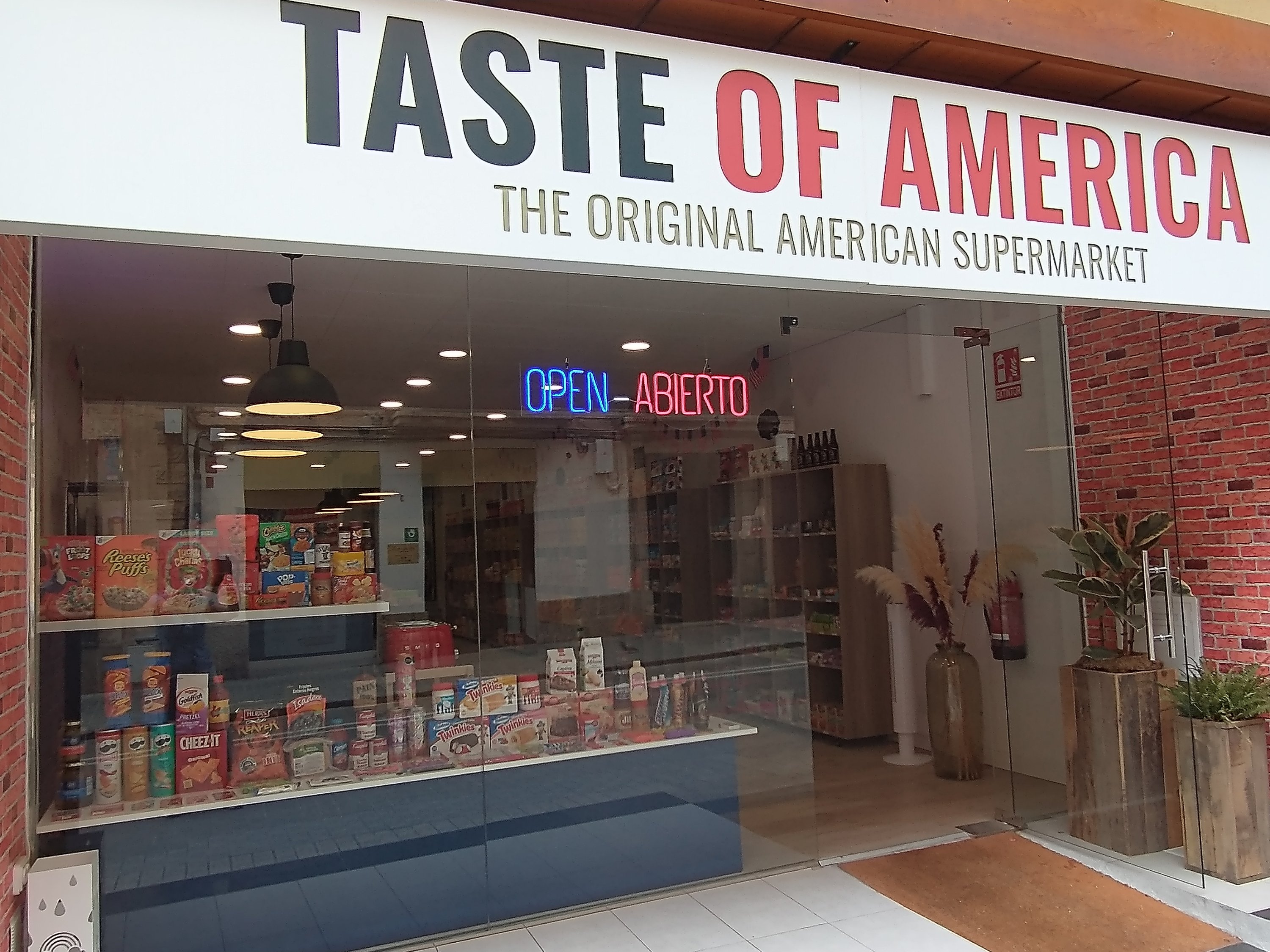
We saw an exhibition of Catalan gigantes, those colossal figurines and heads processing on ceremonial occasions through the town, and later, in local shops, gigantic Playmobil figures on display, for – er – Playmobil week. Mainly we hunted down Modernista architecture. But that’s for another day …
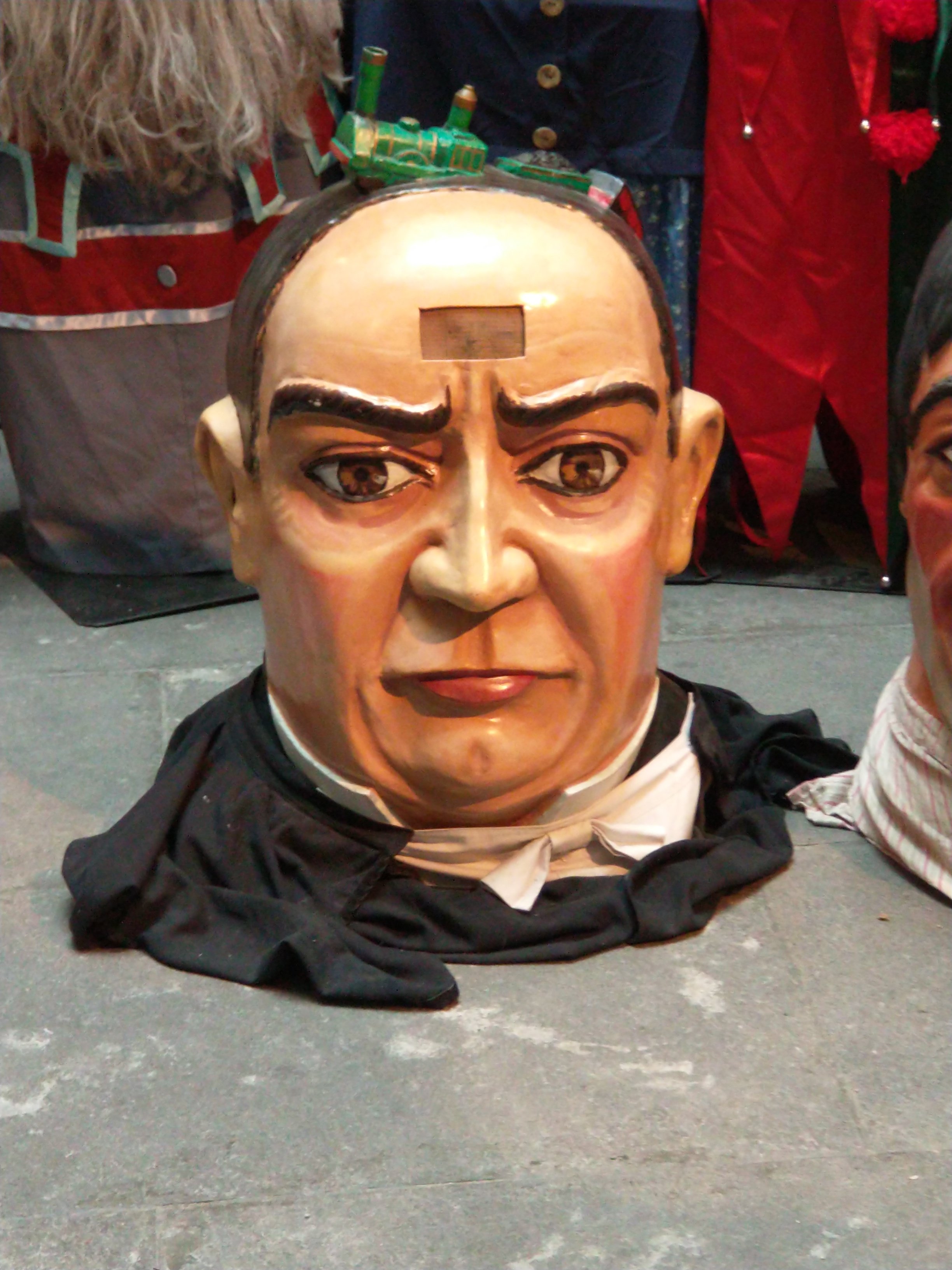
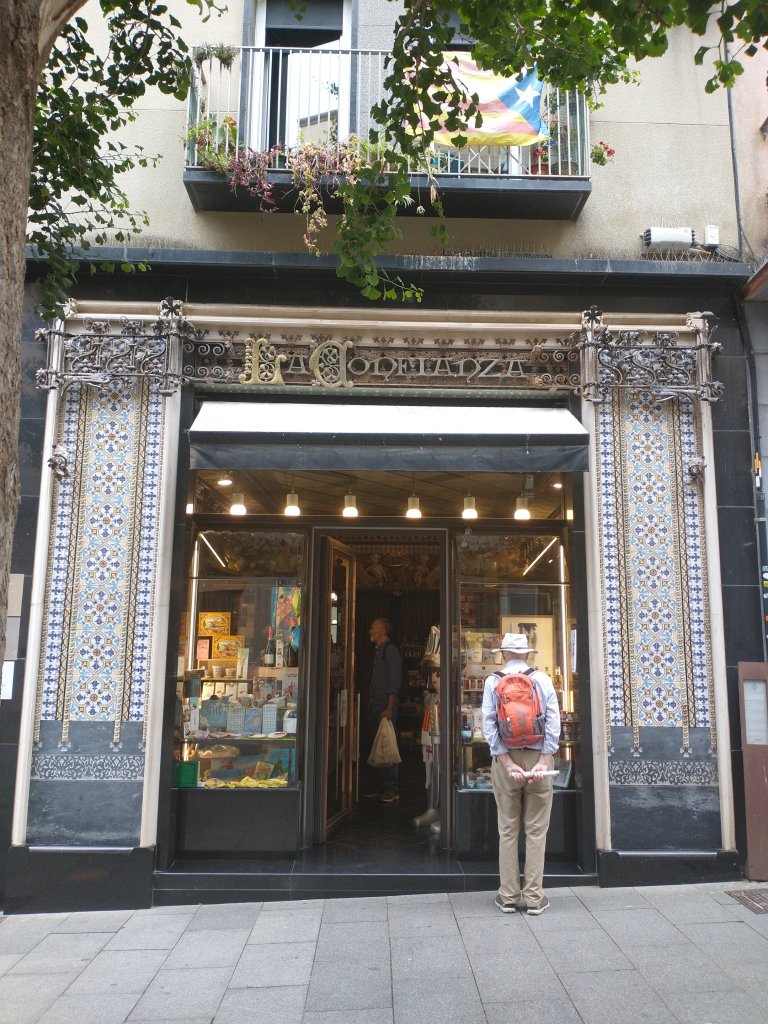
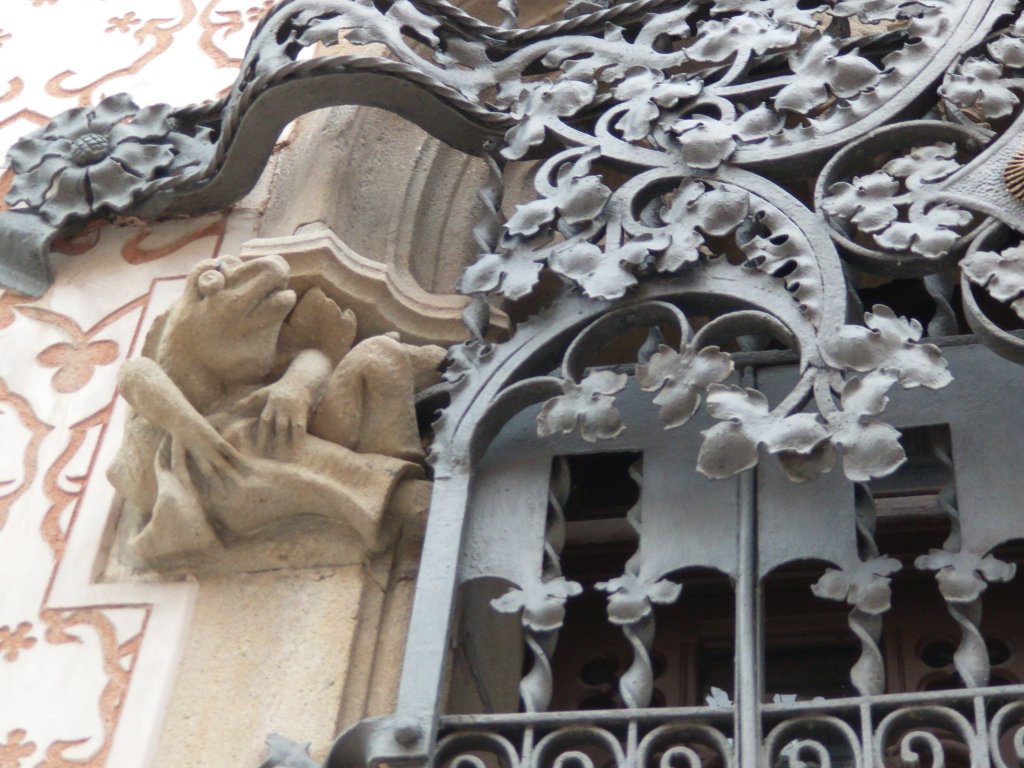
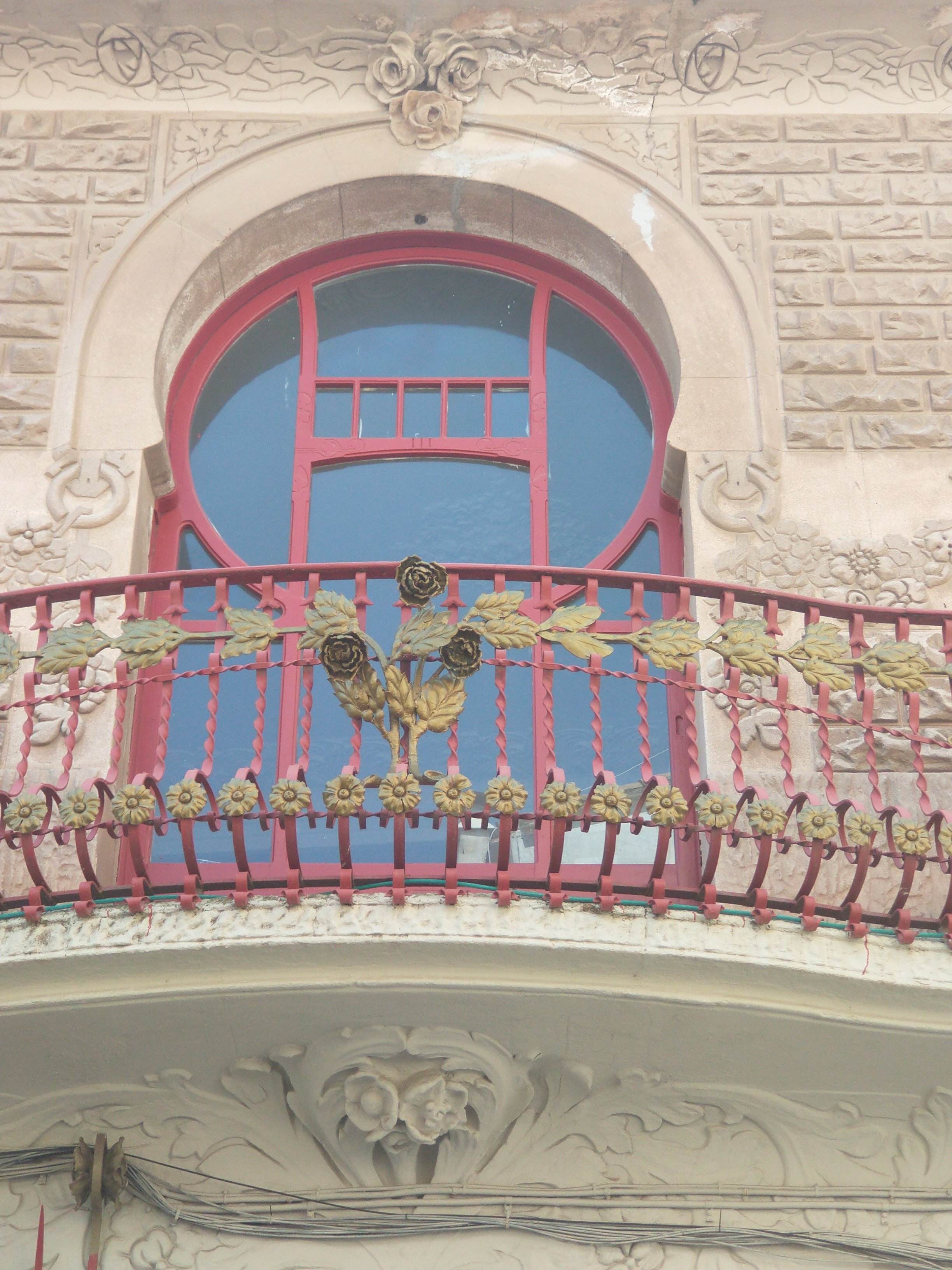
This giant head, topped with a steam train celebrates Mataró’s place in railway history.The best shop in town?Spot the Gothic window.A cheese shop guarded by a Playmobil figure for one week onlyThe most surprising shop we found.A detail from a special house, Casa Coll i Regas.
We’re having a quiet day. We’re exploring Premià’s change from fishing village to dormitory town via its skirmish with industrialisation in the 19th century. Few signs are left of its days as a textile town, like many in Catalonia.
Fishermen’s cottages built round about 1839, just before industry arrived and expanded the town.
But here’s something we can’t get our heads round. The textile and gas industries depended on coal. And the coal was transported from Barcelona by rail, on the very first trainline in Spain, opened in 1848.
But where did the coal come from? Asturias, some of it. But most of it came by sea from England. Just think: England, all the way down the coast of France to the Iberian peninsula which had to be skirted virtually in its entirety. It seems economic madness, but it can’t have been.
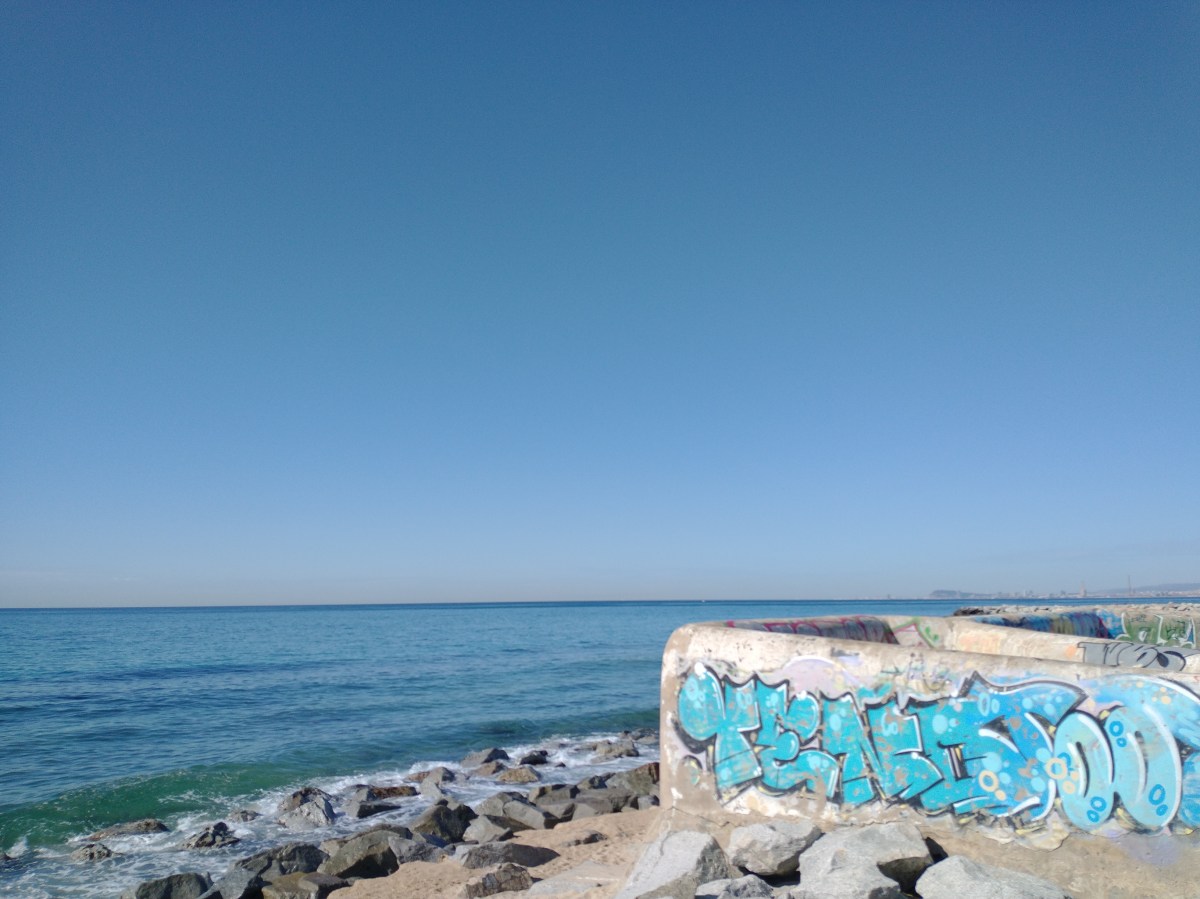
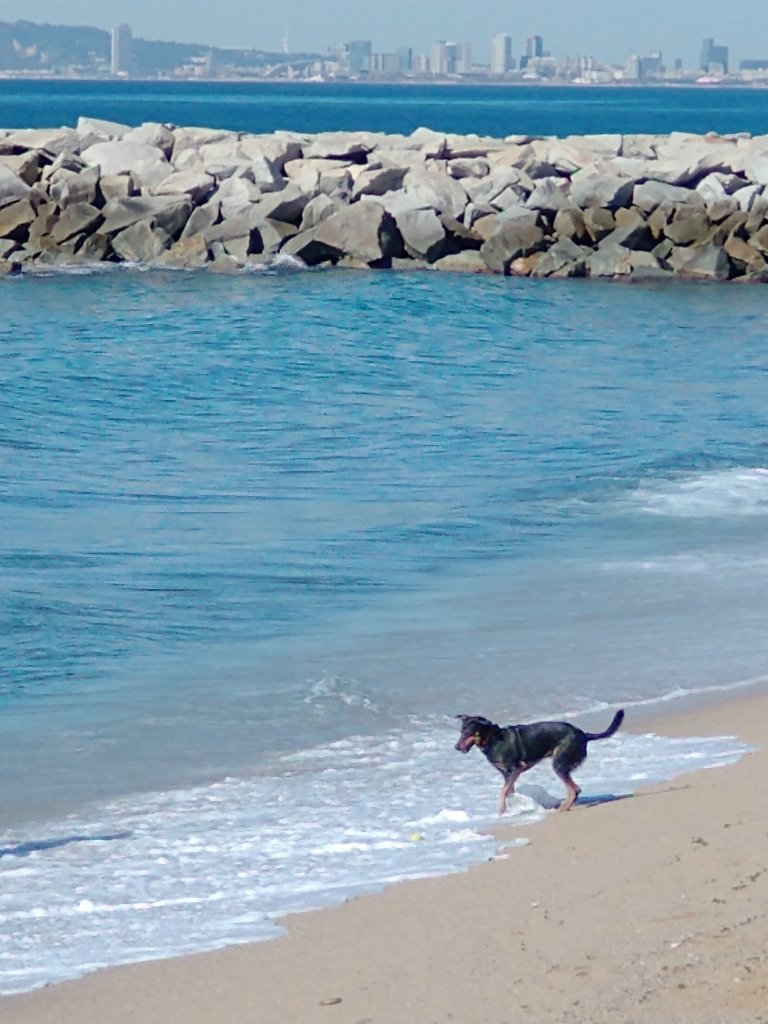
The station still exists. The nearby docks hardly at all. One man and his dog play in the shallows of la Descàrrega. I’m sure they don’t give a thought either of this area’s industrial past, nor of its more recent role in the Spanish Civil War. Bunkers were erected here to protect the railway signals from attack by Francoist troops, and you can see their remains in the featured photo..
One happy dog. His master’s having a swim. That’s Barcelona in the distance.
Daughter Emily has lived in and around Barcelona for ten years now, so we feel well-versed in its tourist destinations. It’s fun for a change to get to know different neighbourhoods.
Today, we explored Sant Andreu, which was until the later 19th century an entirely separate town, a textile town, the home of Fabra i Coats (surely you or your mum had a sewing box full of brightly coloured Coats threads, though they won’t have come via Spain?). This factory complex is now an arts centre, not very busy this rainy day. And at Christmas time, it’s transformed into a toy factory for the Three Kings to collect the gifts they’ll deliver to the children of Barcelona at Epiphanytide. It’s a popular family destination at that time of year.
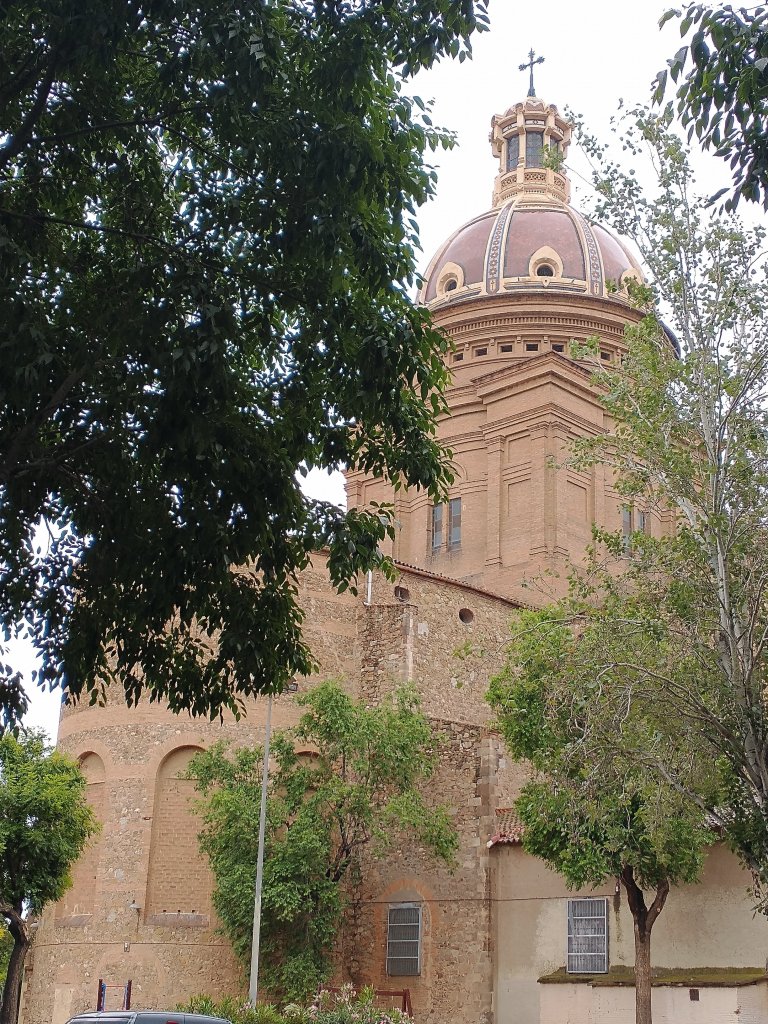
Our explorations began and ended with churches. First the church of Saint Andreu de Palomar of course, which gives the area its name …
This 19th century church has its beginnings in the 10th century. We’d like to have explored it more.
… and then Sant Pacià, which we were keen to see, as its mosaic floor was created by Gaudí in his early days. Irritatingly, both buildings were shut.
Sant Pacià. Firmly shut. Another Gothic Revival church.
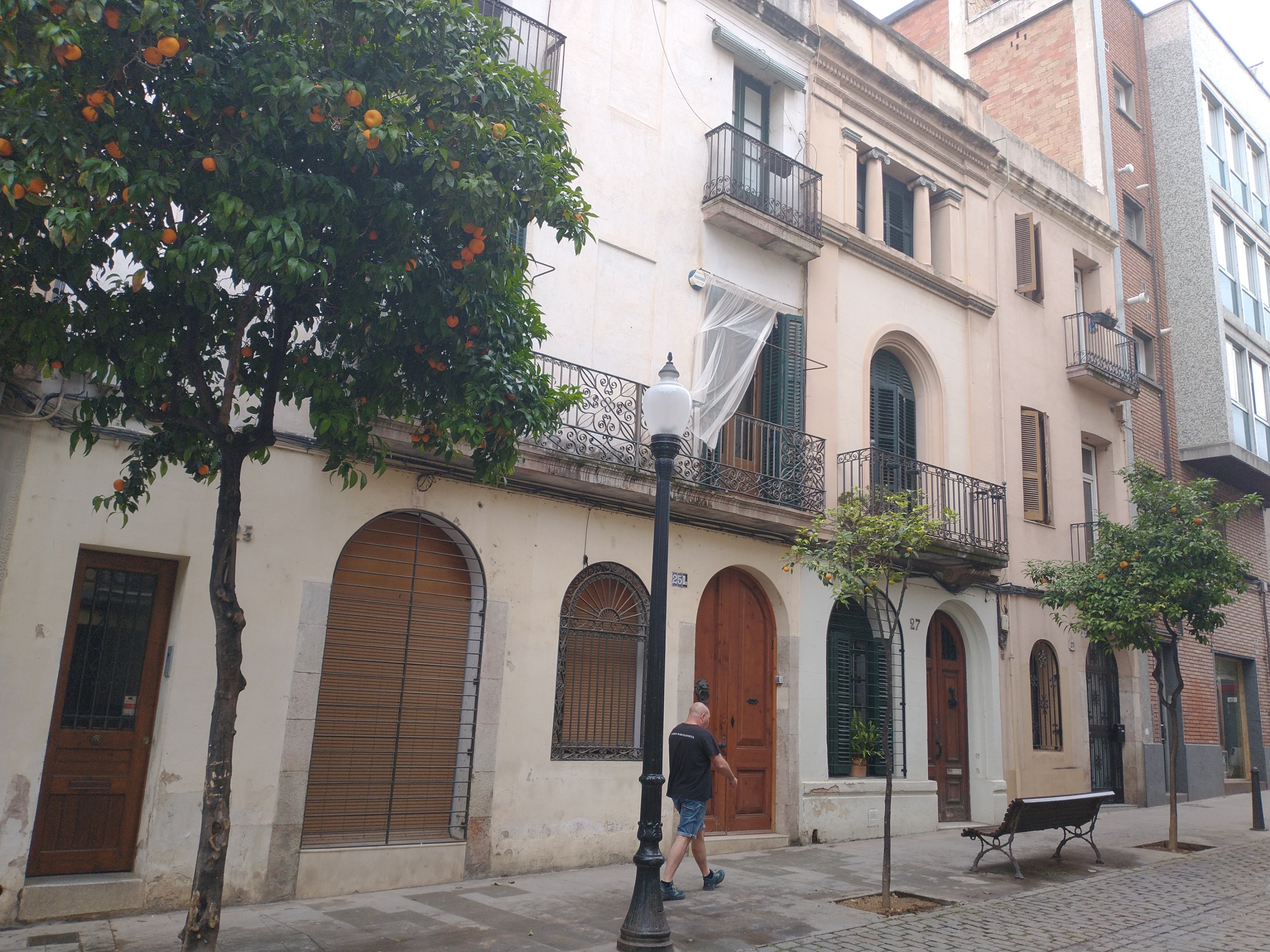
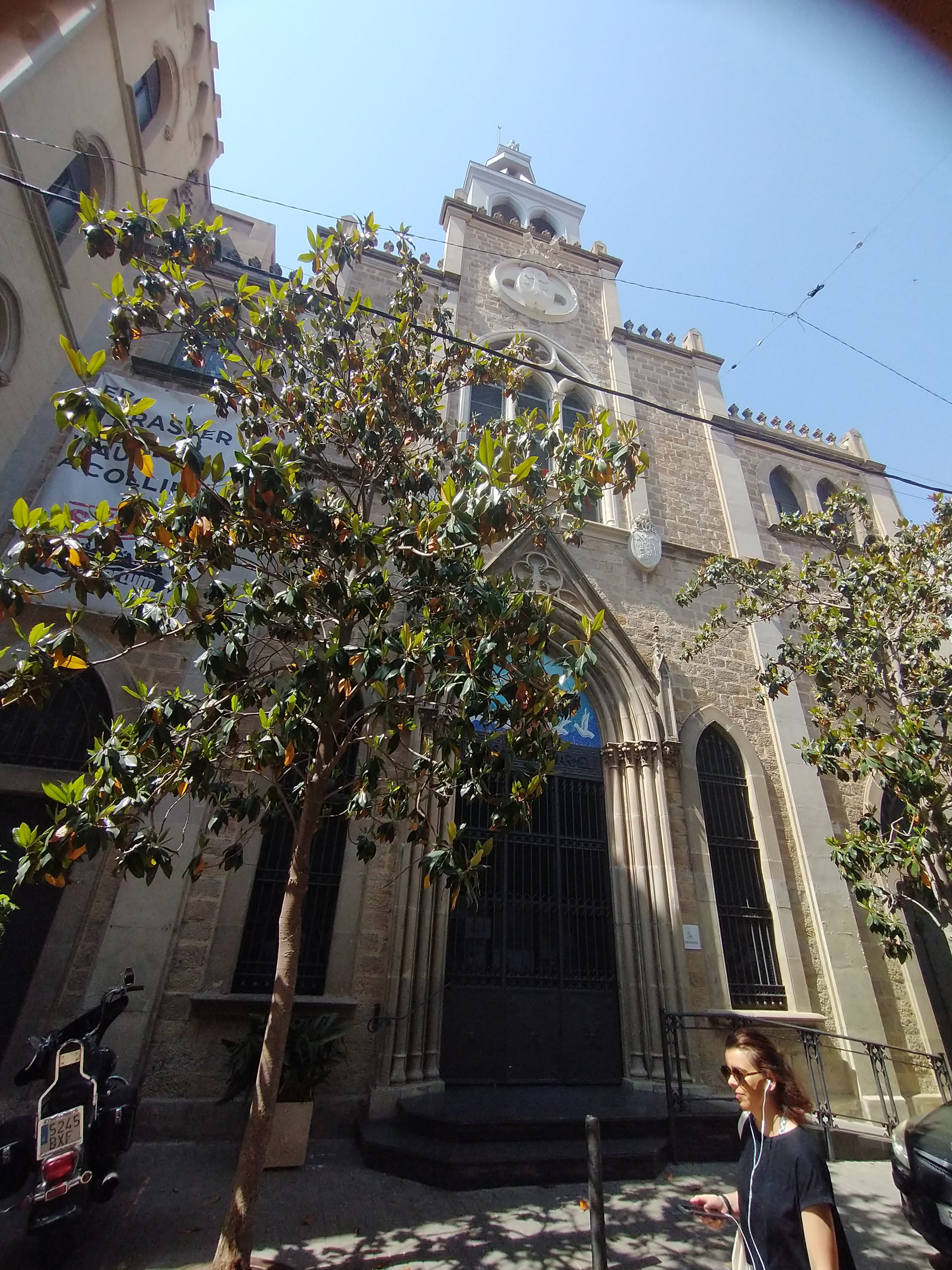
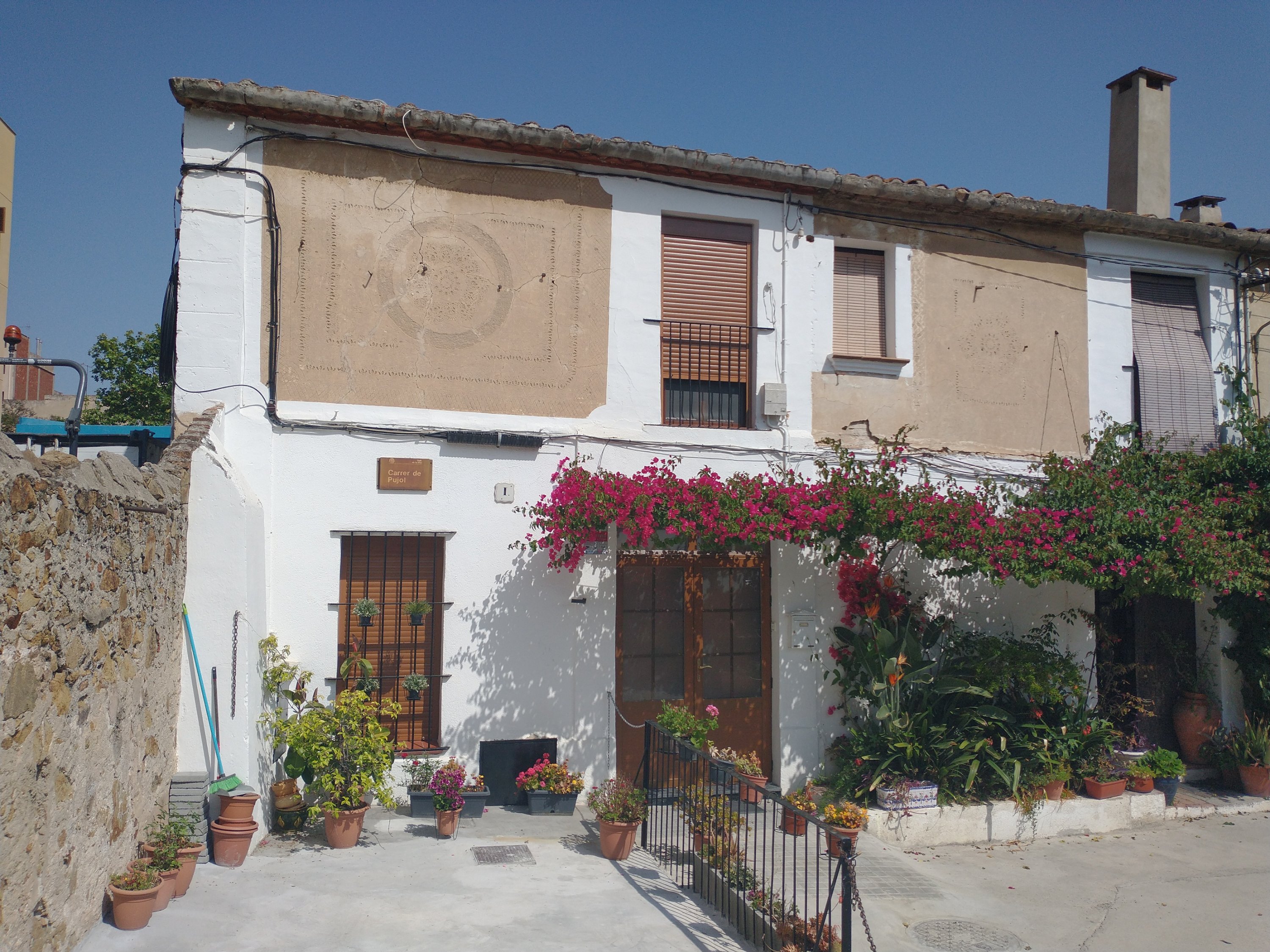
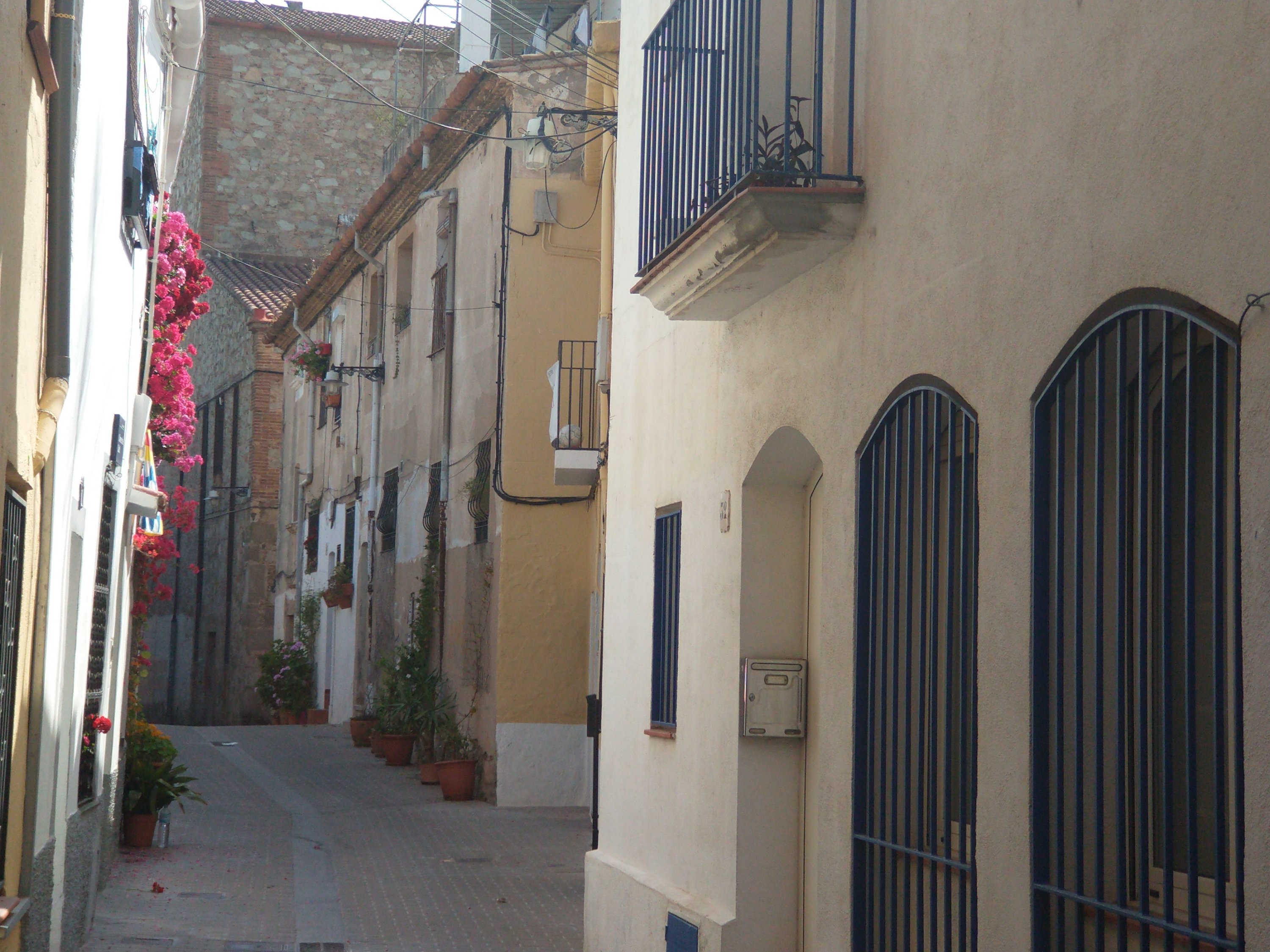
Never mind. Mooch about with us and enjoy the cobbled streets of the old town, its Modernista buildings and independent shops: orange tree lined and bougainvillea bedecked. The area has a great feeling of community. We’d cheerfully live here.
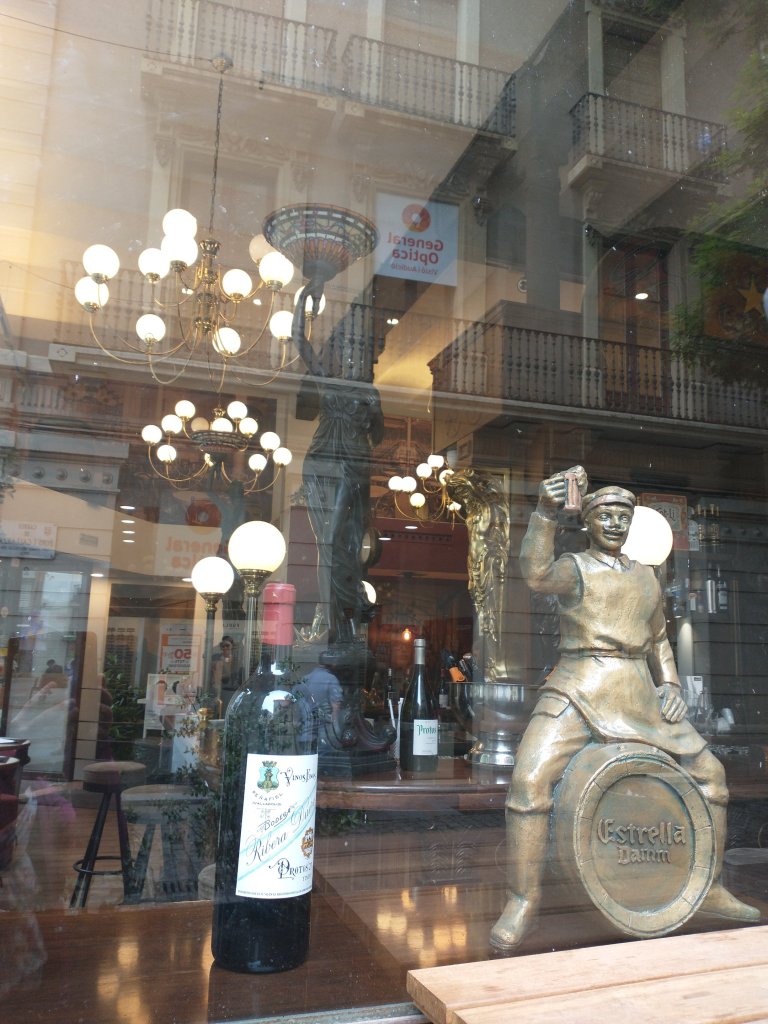
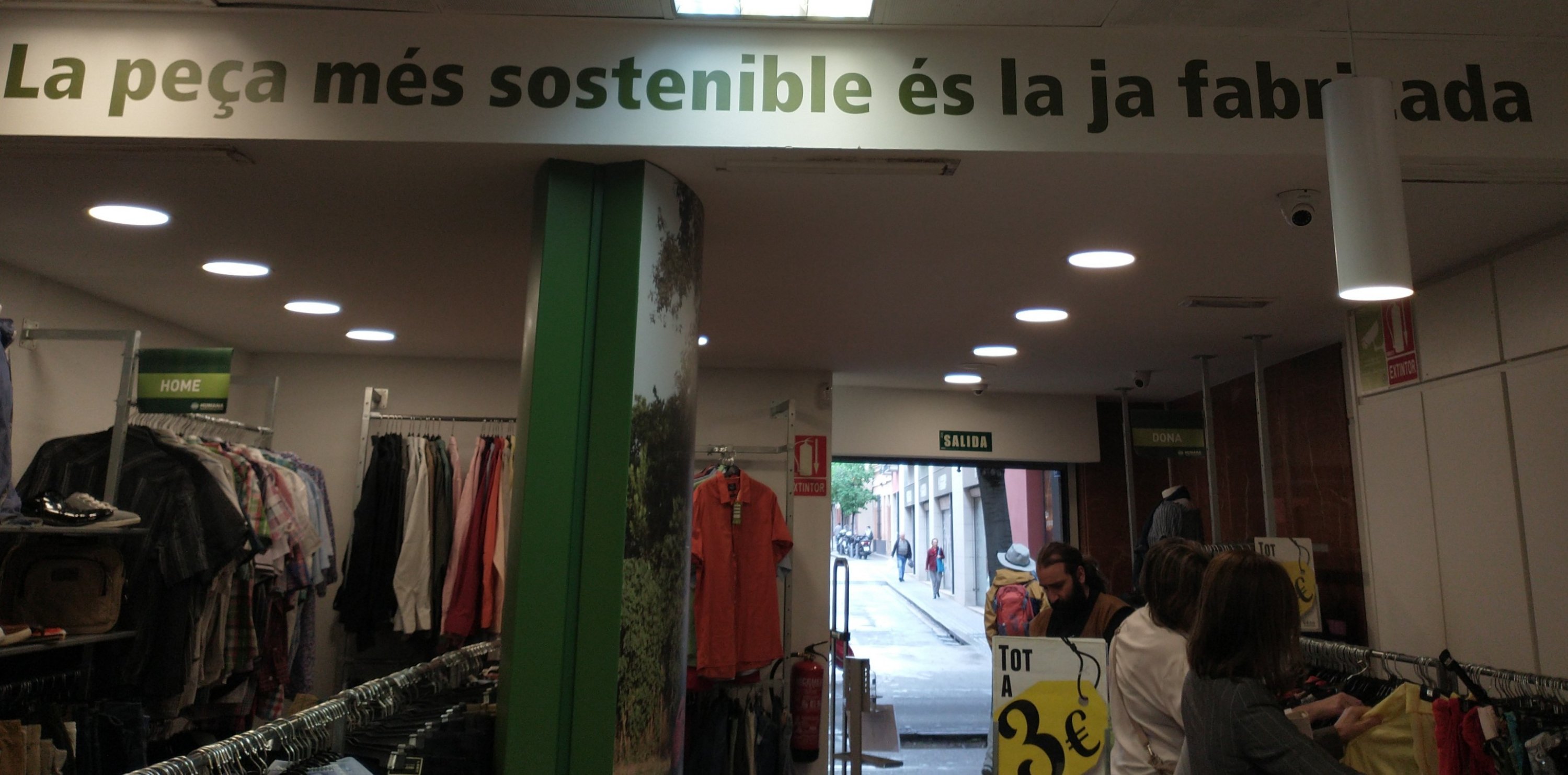
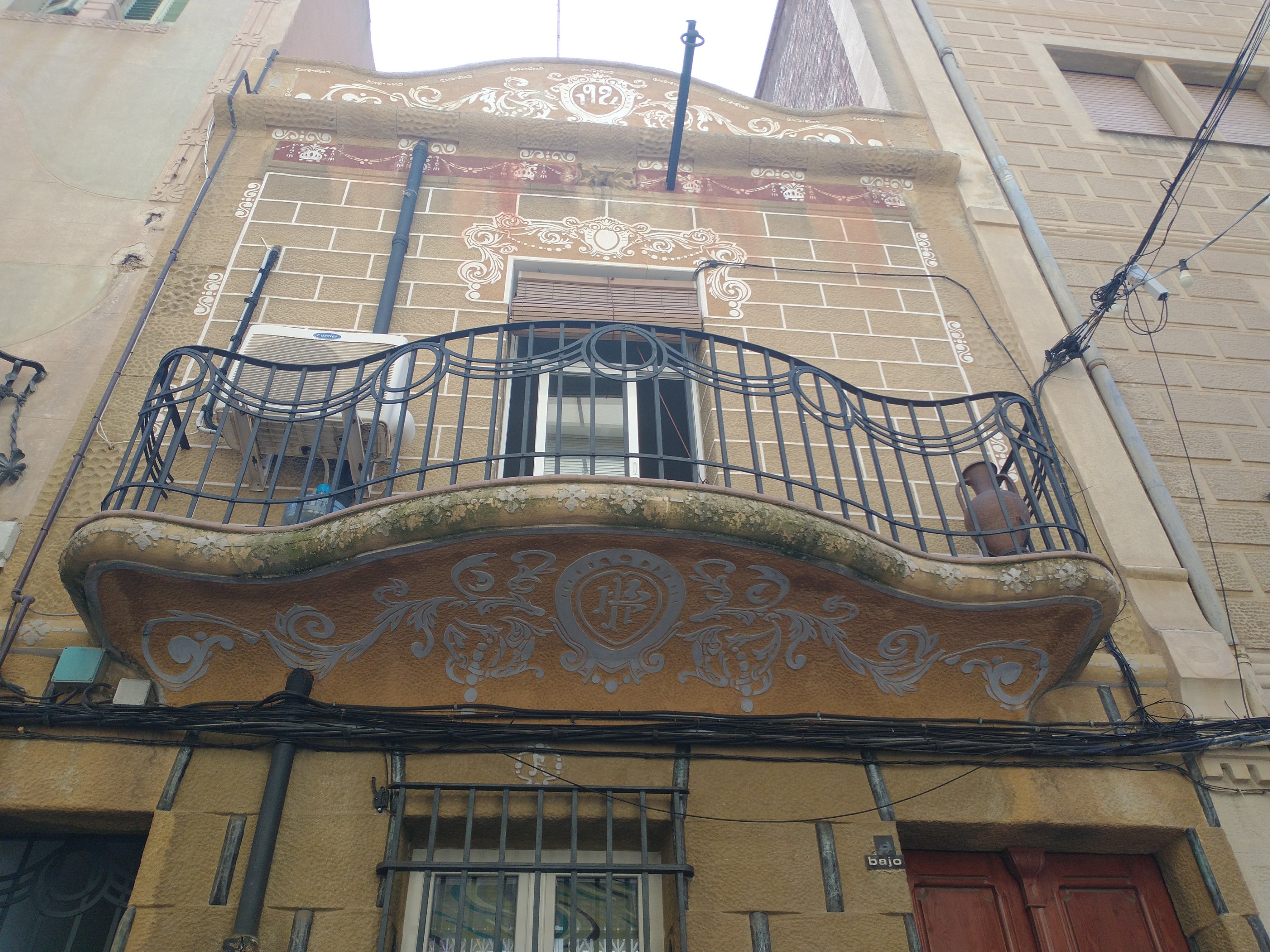
Versalles, the oldest bar in town, and a fine Modernista buildingPeering in through Versalles’ windows. We’d only just had lunch and weren’t up for further refreshmentA typically decorated house.Lunch stop at Several, a friendly café.Charity shops barely exist here, but this is one. ‘The most sustainable piece is the one that’s been made already’.An ordinary street.
We love our time with the family in Premià de Mar. Their home here is only some twelve miles from Barcelona, and well connected by rail and road. But it’s a world away. Strictly no tourists. Just everyday people living everyday lives.
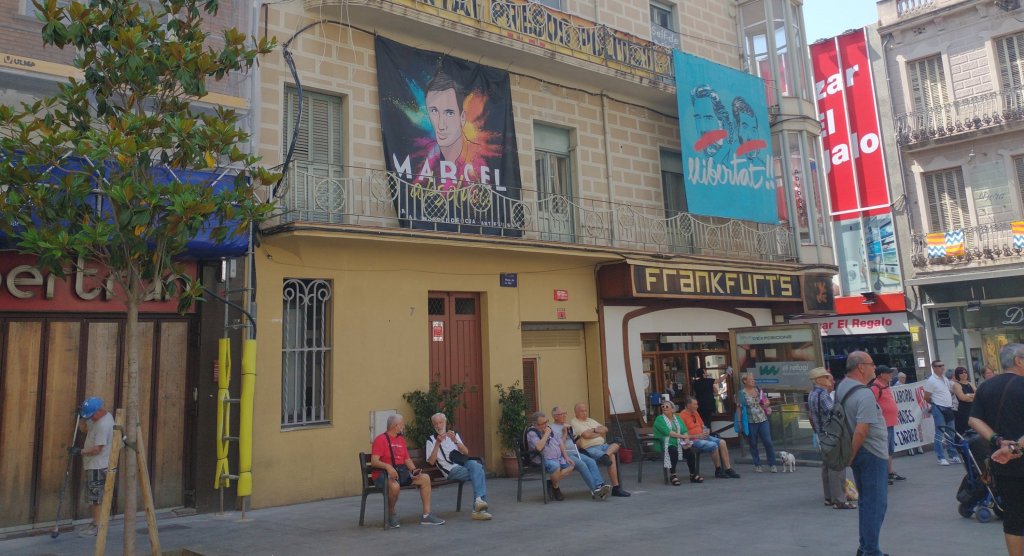
Sometimes we venture into neighbouring towns for more of the same. Today it was Badalona and its charming Old Town – Dalt de la Vila. But no town in Catalonia can hold its head up high if it’s not protesting about something. Today we witnessed …
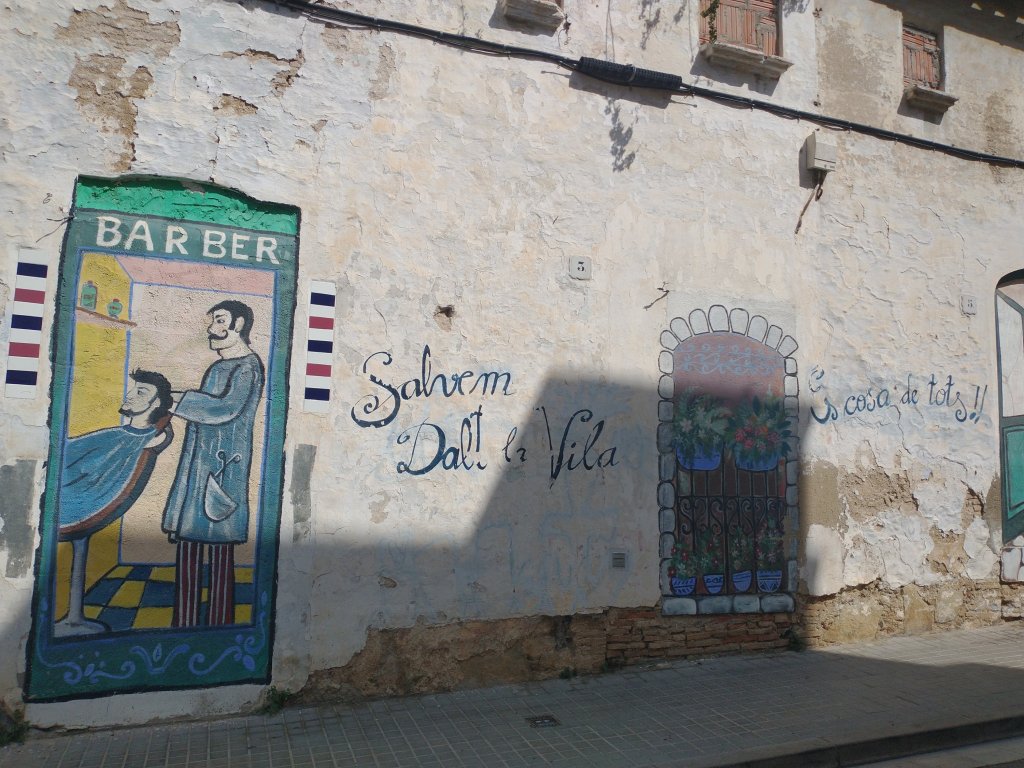
… painted protests against the projected destruction of some of this quarter’s oldest buildings …
… a small protest by and for pensioners (are you sitting comfortably?) …
… a poster near the beach: your struggle has secured freedom for others. We must continue the fight.
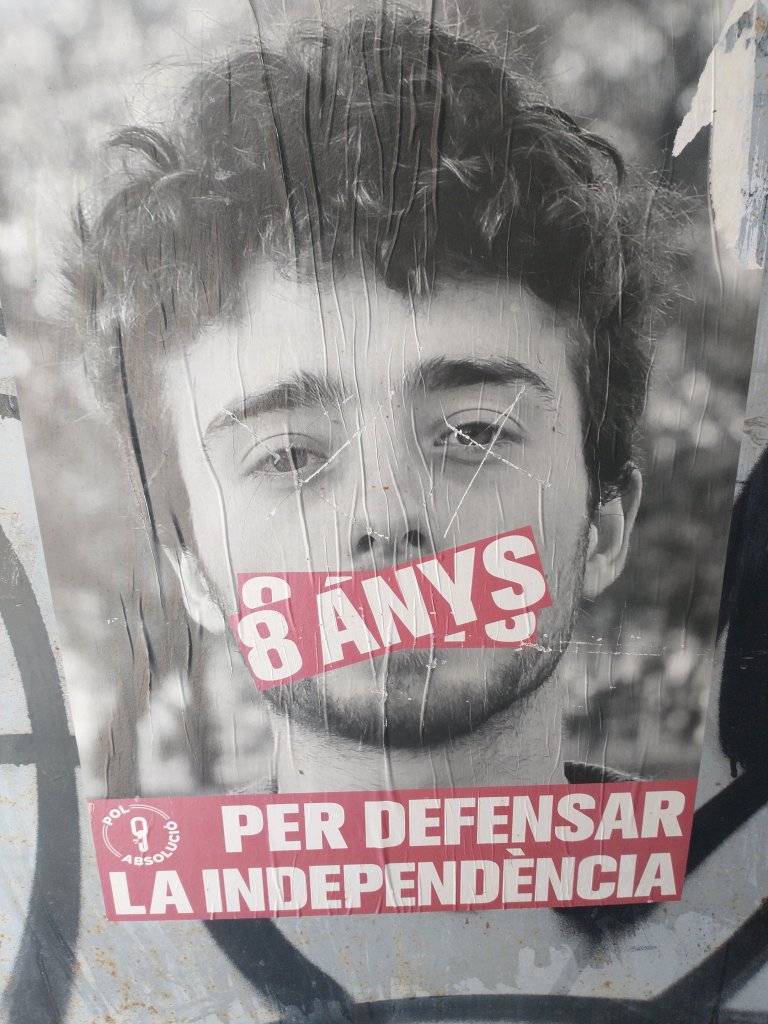
… and the inevitable posters proclaiming the need for Catalan independence.
Let’s finish with a few shots demonstrating some of the charms of Dalt de la Vila.
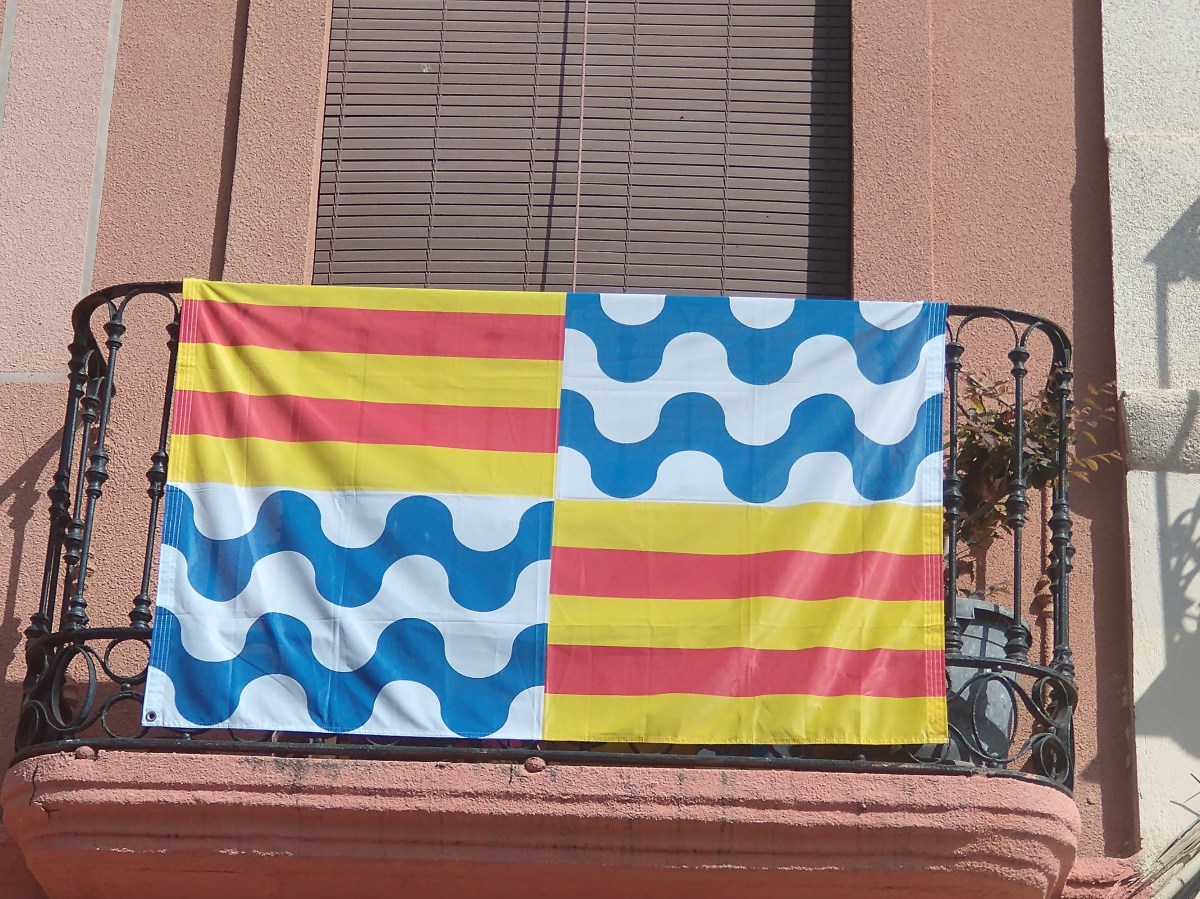
The featured photo, by the way, is of Badalona’s town flag.
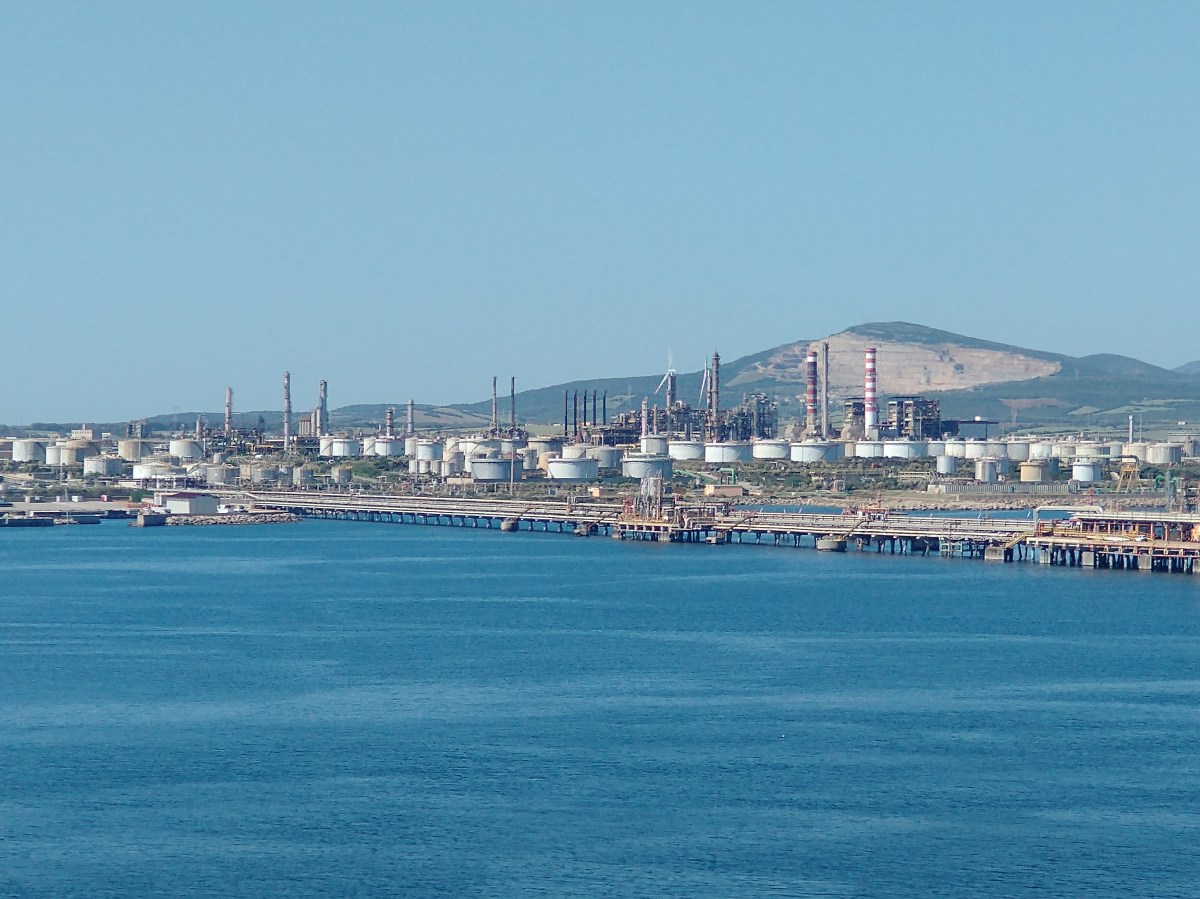
A journey. A difficult journey, because getting from Greece to Catalonia proved a trip surprisingly taxing to pull together. Thessaloniki to Athens. Athens to Rome. Then a bit of an adventure. A sea voyage from Civitavecchia to Barcelona, sailing past Corsica and calling at Porto Torres in Sardinia, featured in the top photo. Sounds good? One day I’ll tell the story of this misadventure. Currently I’m far too cross.
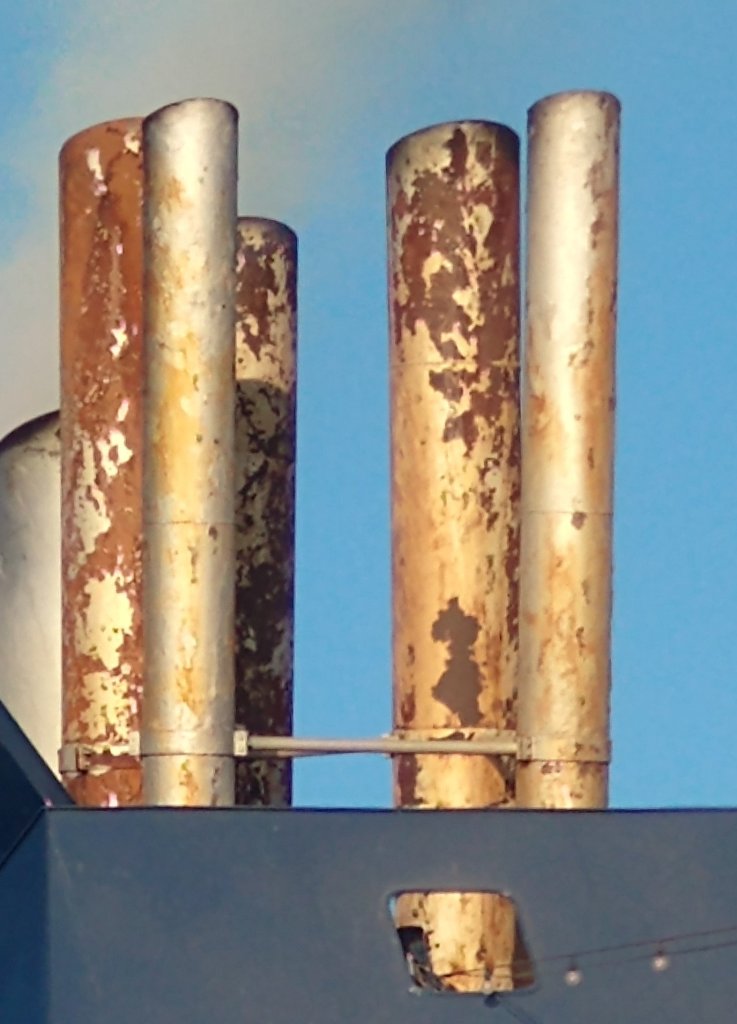
However, it produced one – actually rather picturesque – photo which sums the whole thing up. The rusting chimneys of our ship, Roma.
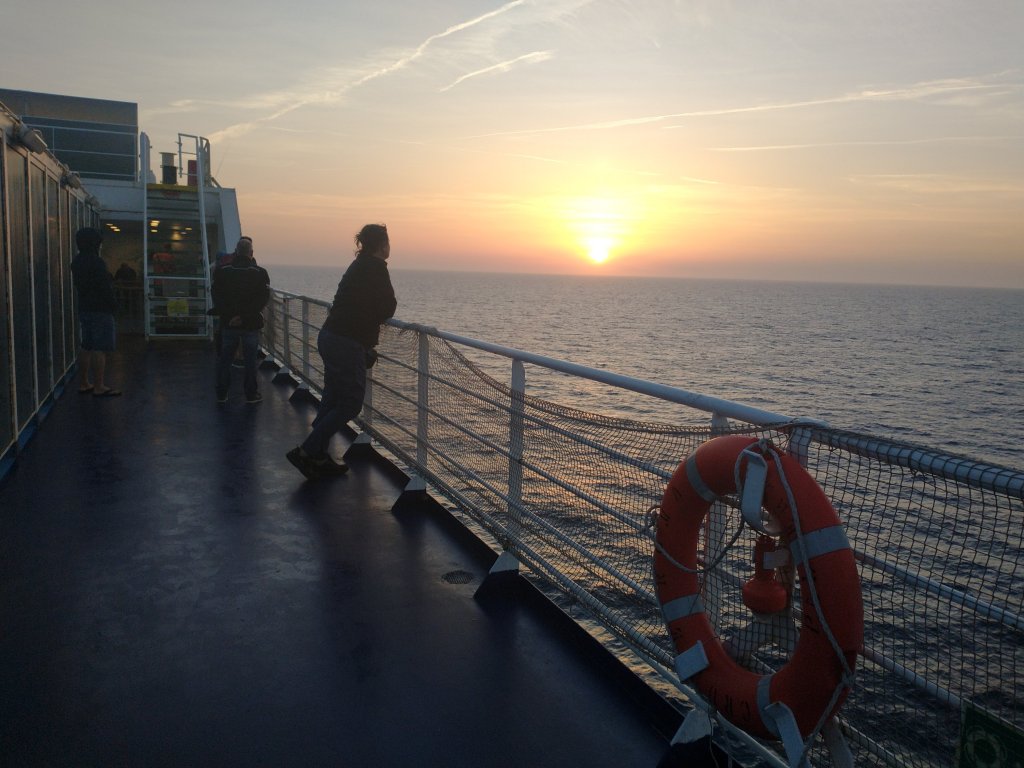
And, not to be totally negative, a half way decent sunset.
We’re here now though, at home with the Catalonian branch of the family, for a satisfyingly relaxing end to our holiday. Well – as relaxing as a lively and charming 16 month old granddaughter will allow.
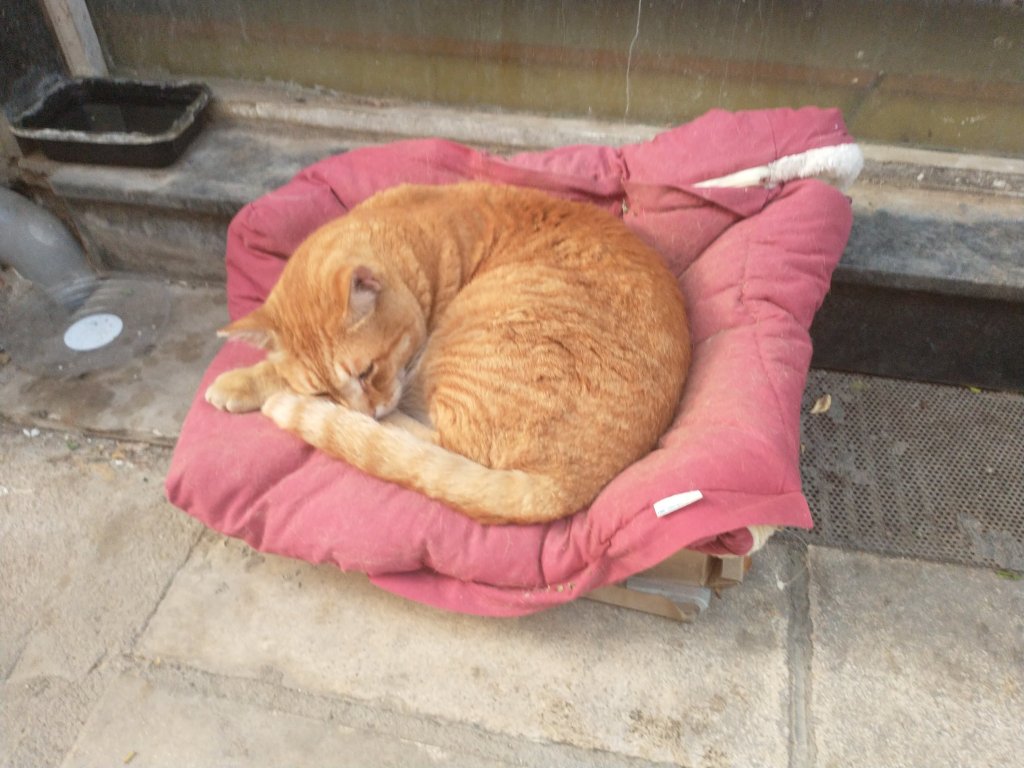
All over Thessaloniki, you’ll find little tableaux like this: a stray cat in a cat-hostel for one. A wooden fruit-box or similar, with a plump cushion. On it sleeps a cat. Next to it is another box, a covered one, just big enough to let the cat jump in when the weather’s poor. Alongside these are dishes of cat food and water.
Semi-feral cats are all over the place here. But many of them have benefactors providing food and shelter, and even more get daily doses of cat food, left on street corners and on doorsteps.
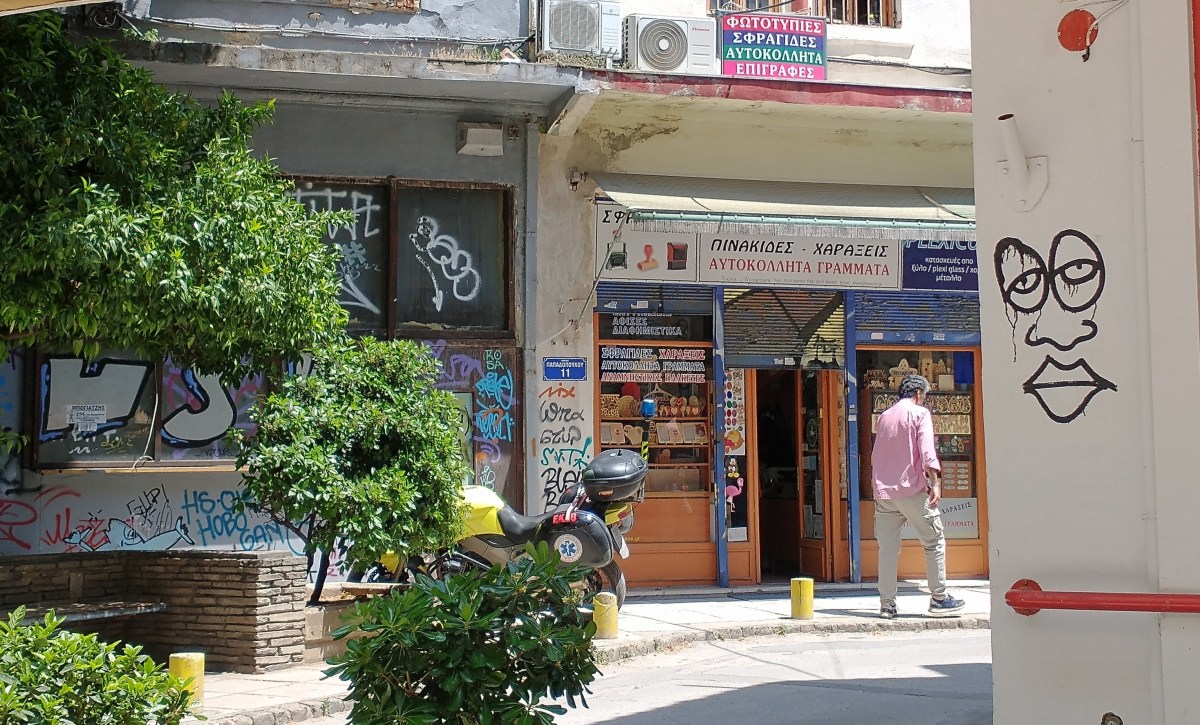
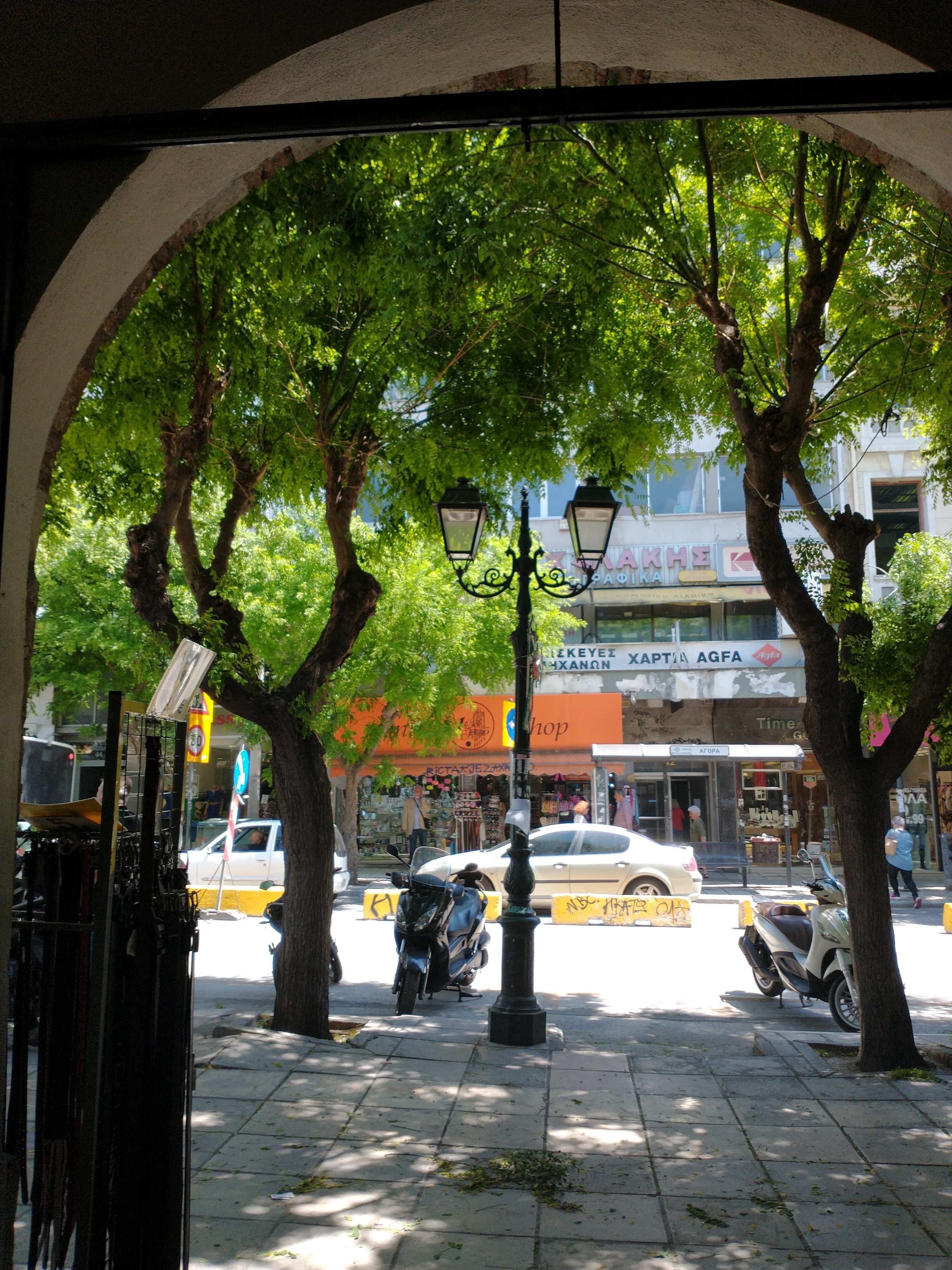
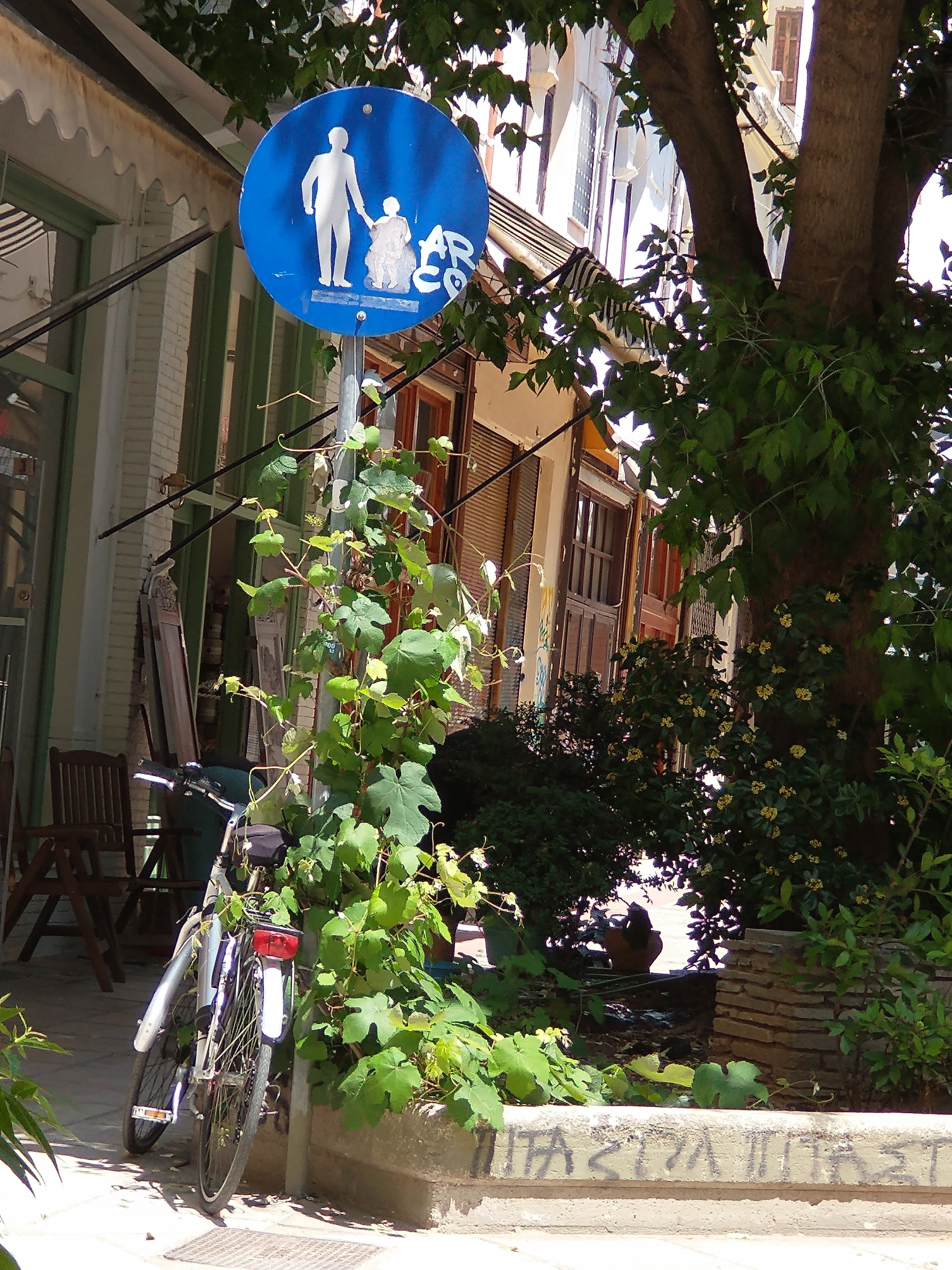
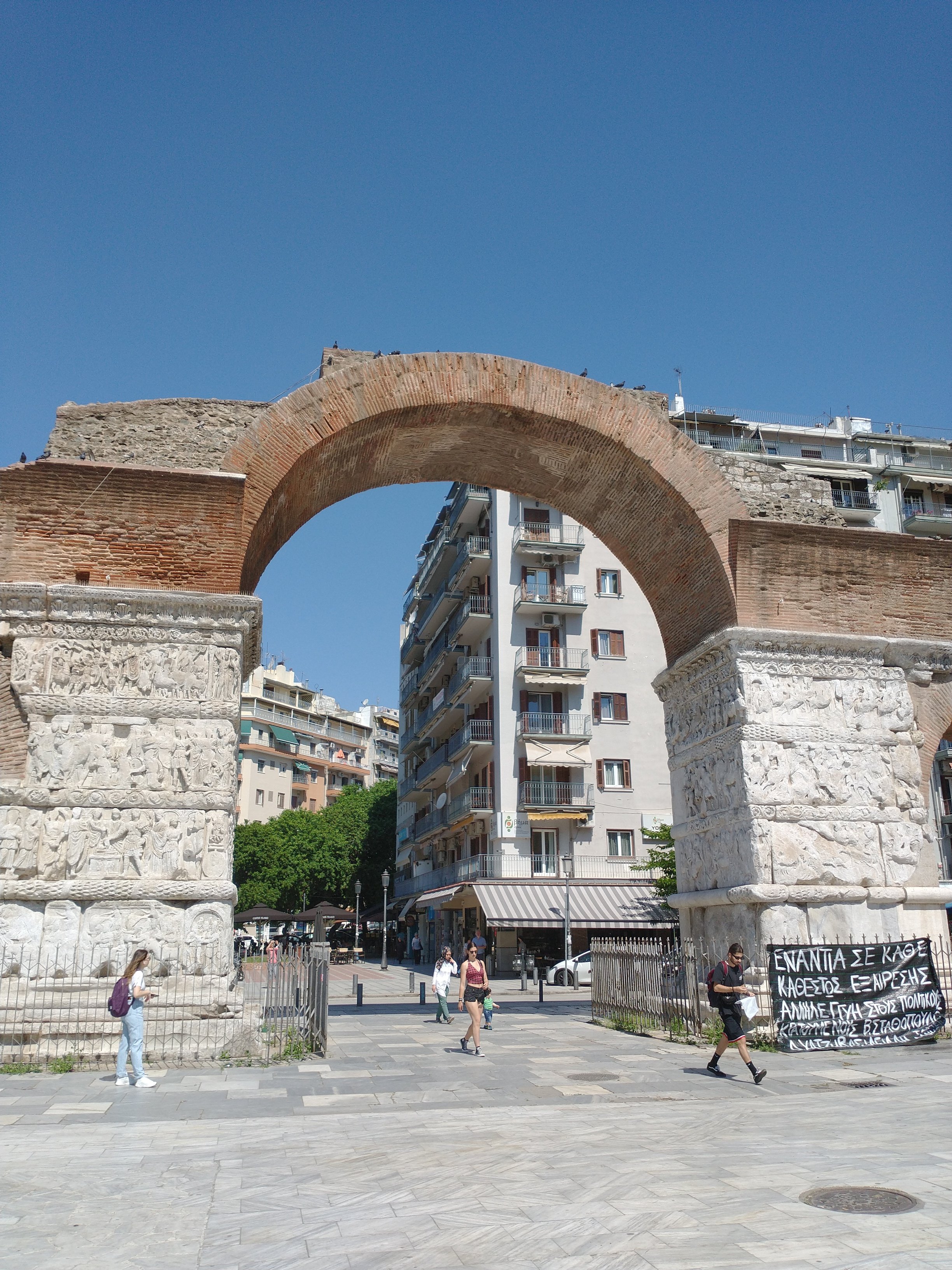
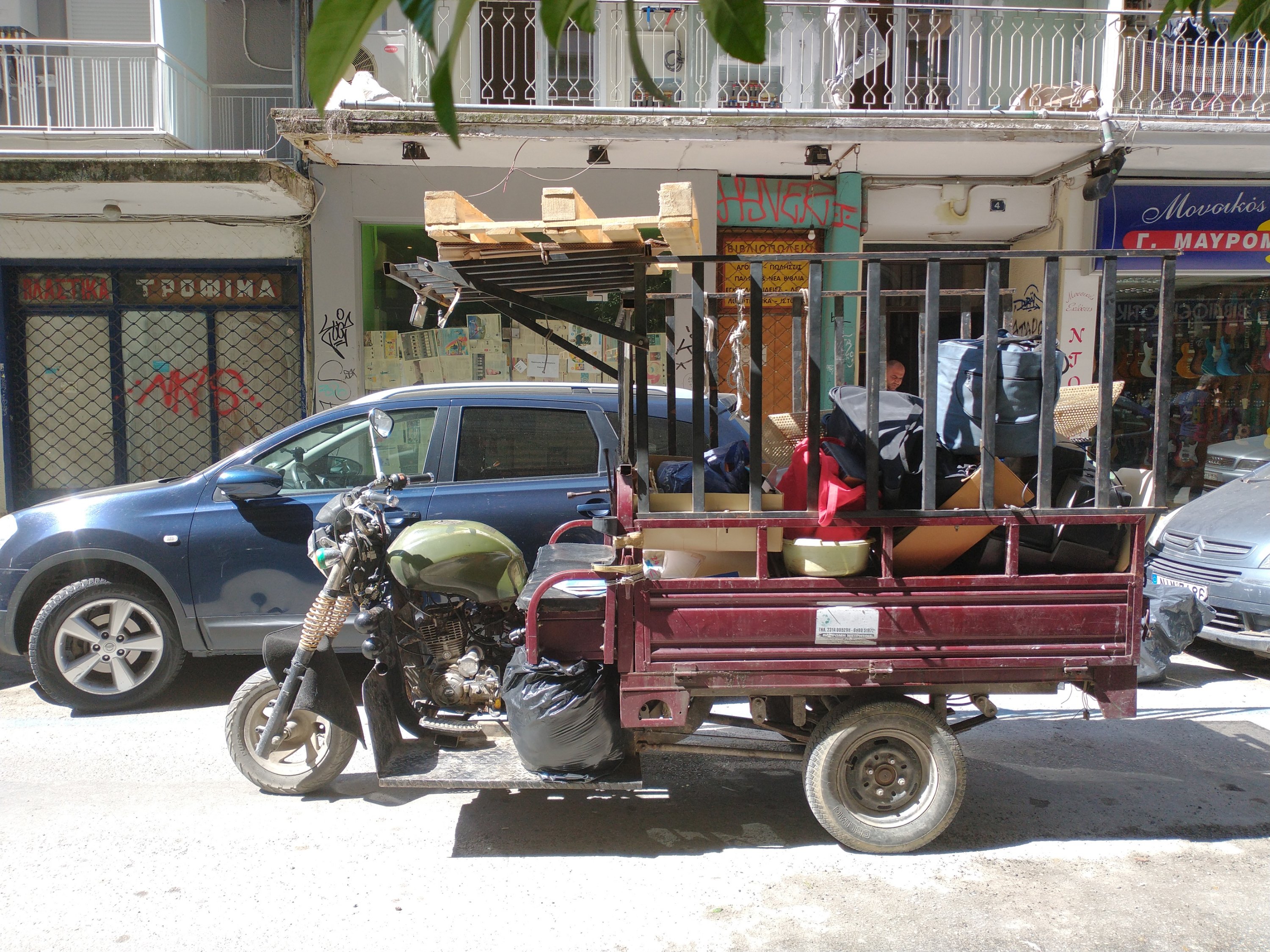
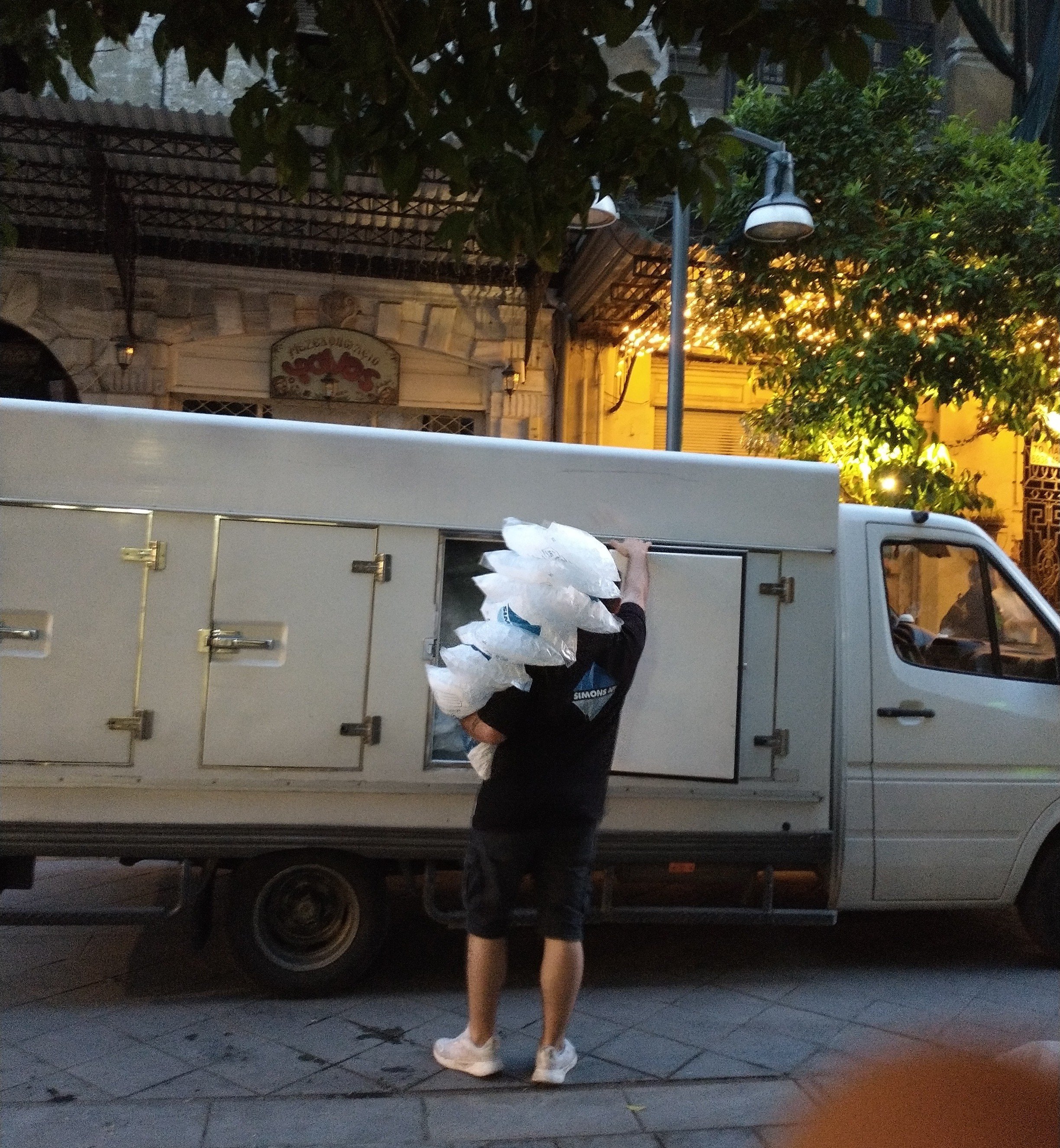
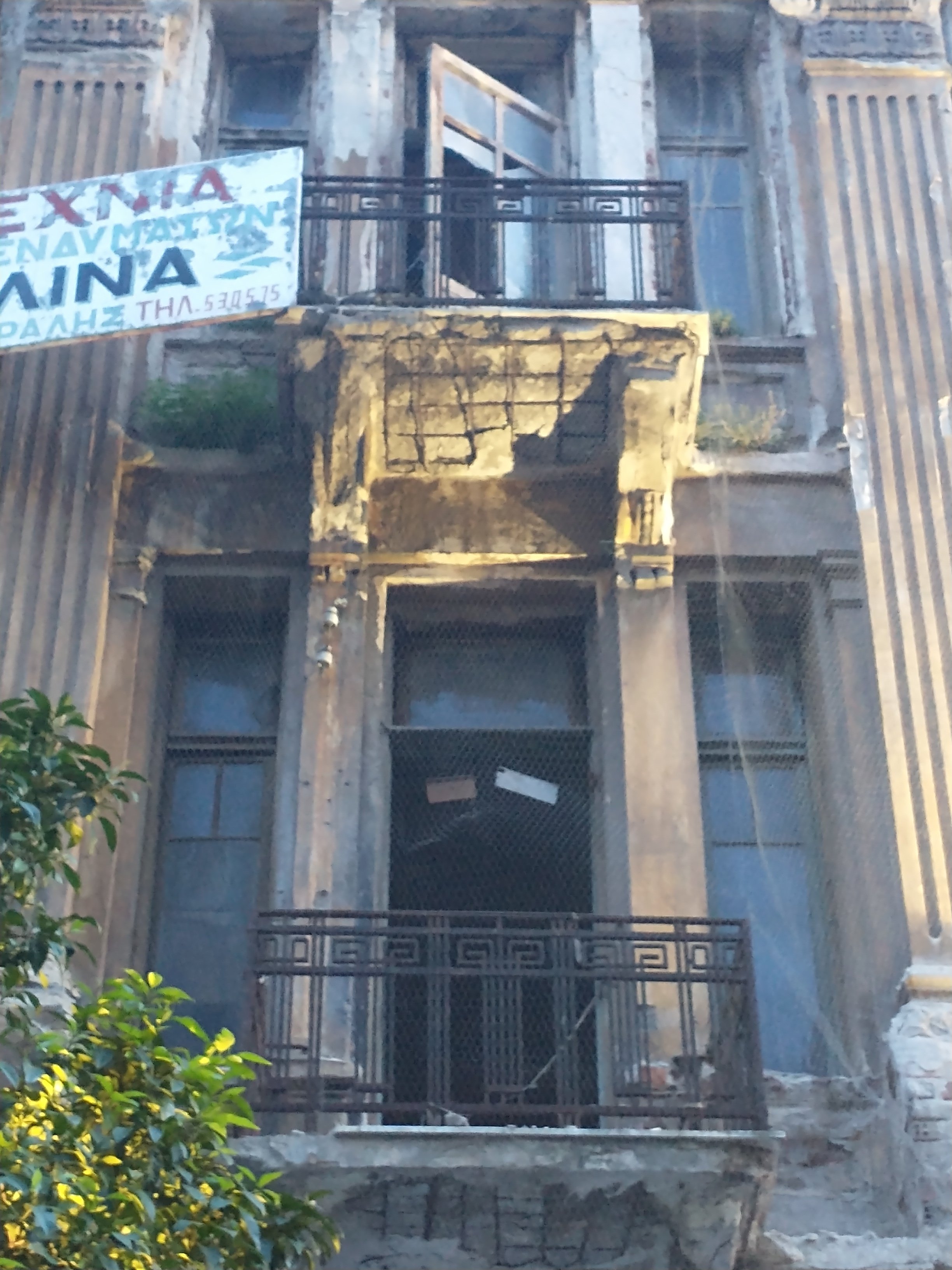
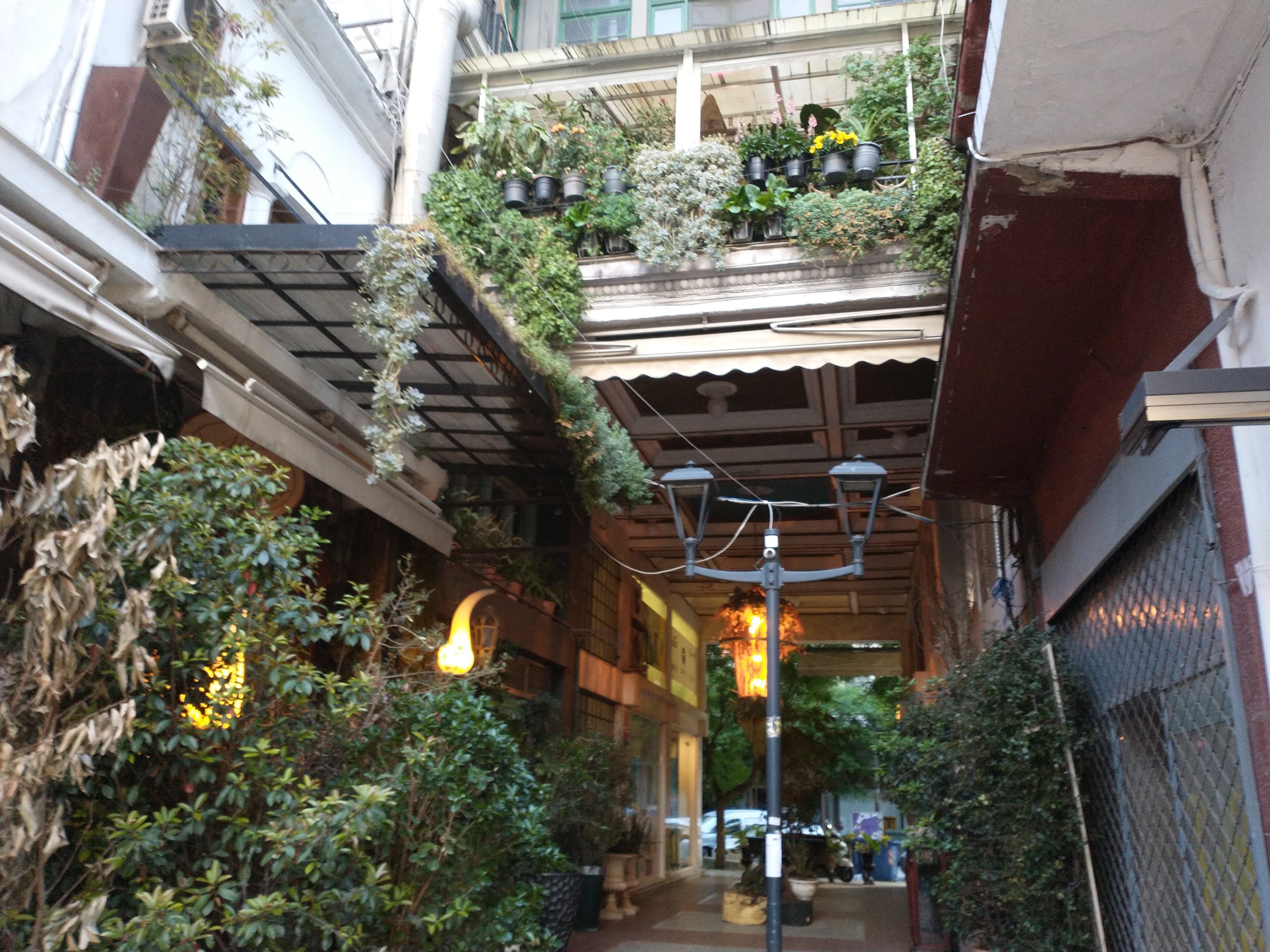
Our time in the Balkans is coming to an end. But there’s just time to send a few postcards of life as it’s lived here in Thessaloniki – in the street. Time enough for history lessons when we’re back in England.
Street sceneEven street signs attract climbing plantsPre- Christian Arch of Galerius meets 21st century ThessalonikiRag and bone man, Greek style.The ice man cometh.Handsome building WLTM sympathetic restorer.Eating out in a convivial corner.Yup, that’s me. Or Malcolm
We’ve had a tiring day, and each of us has a severe case of Museum Foot. It’s been fun and varied too. Perhaps I’ll share a portait or four.
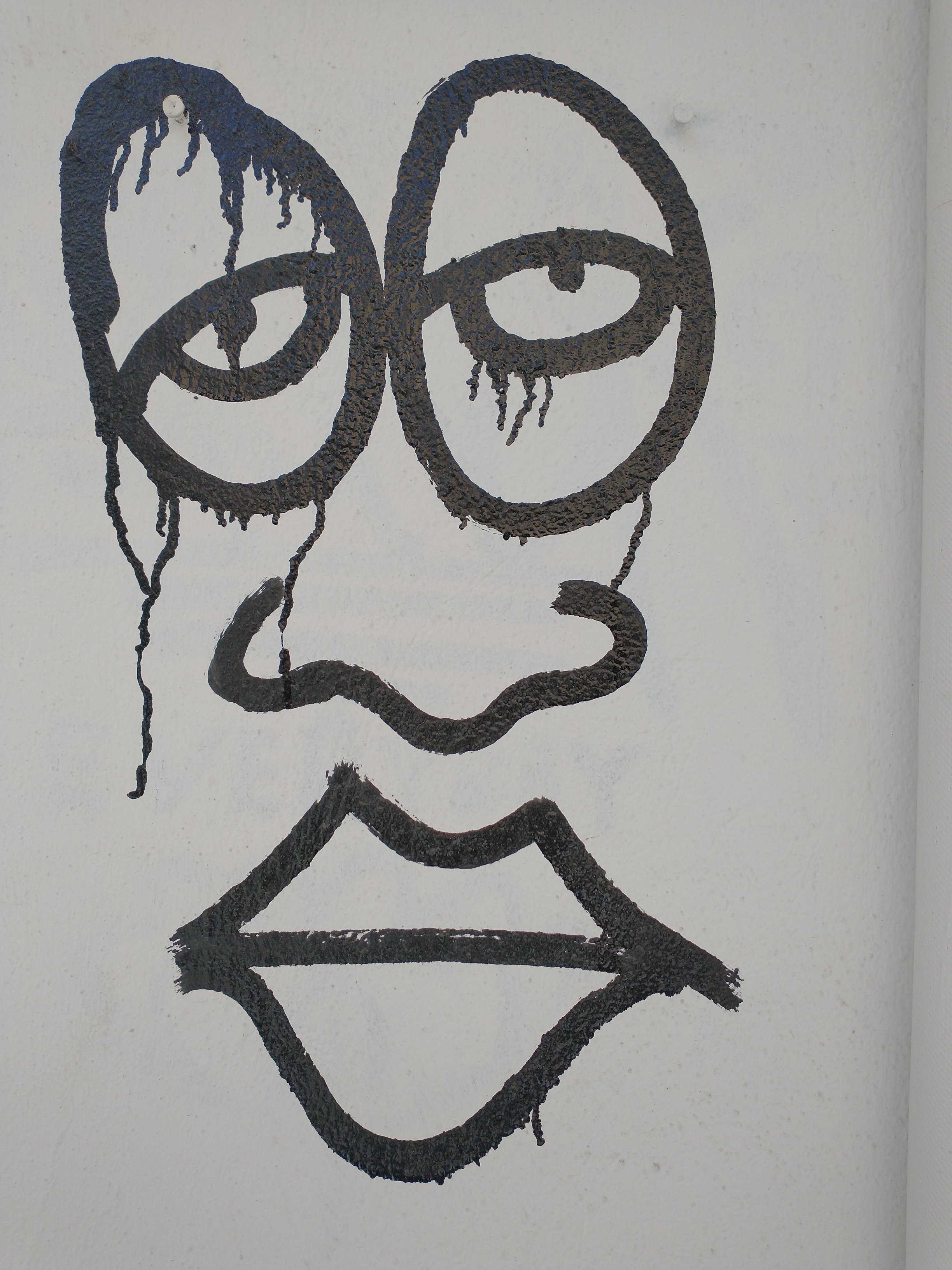
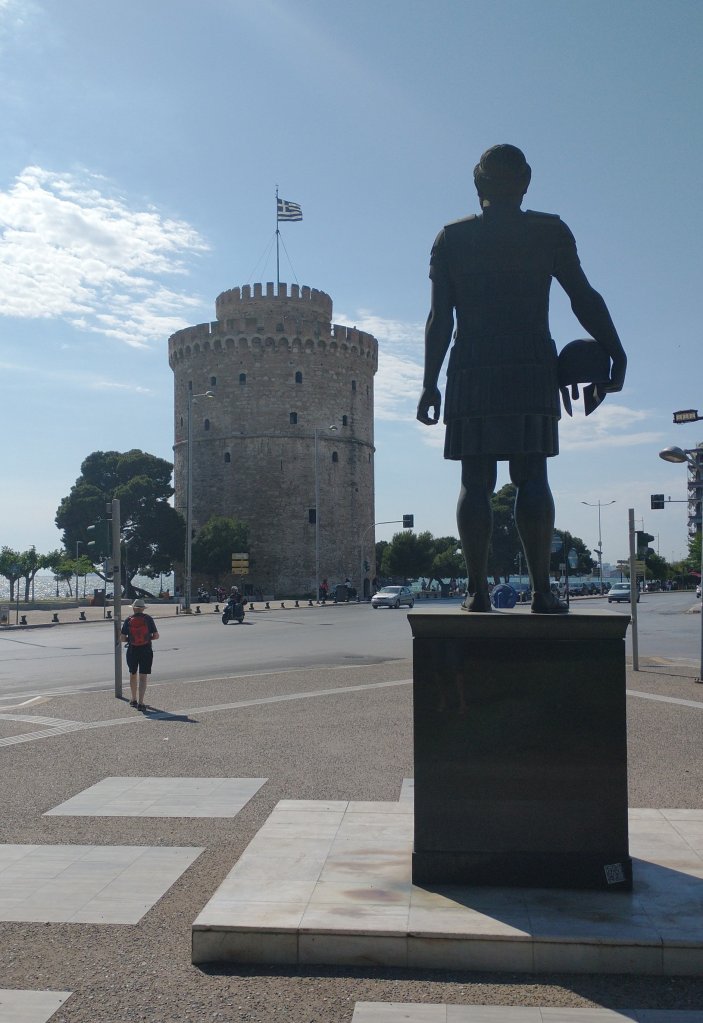
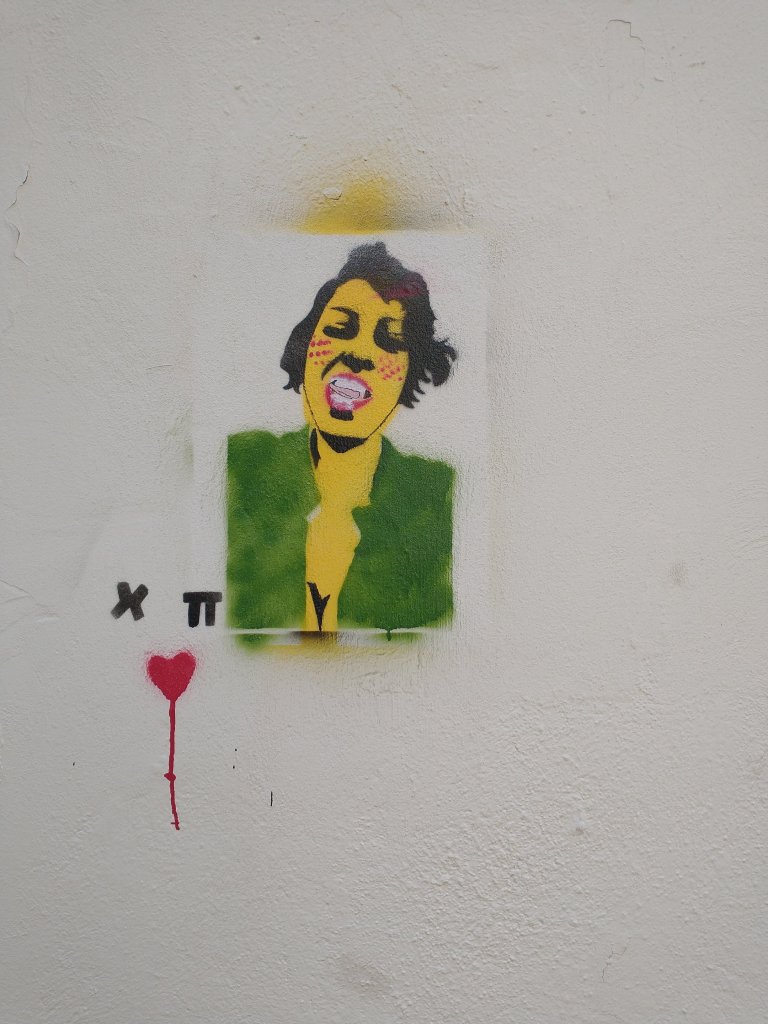
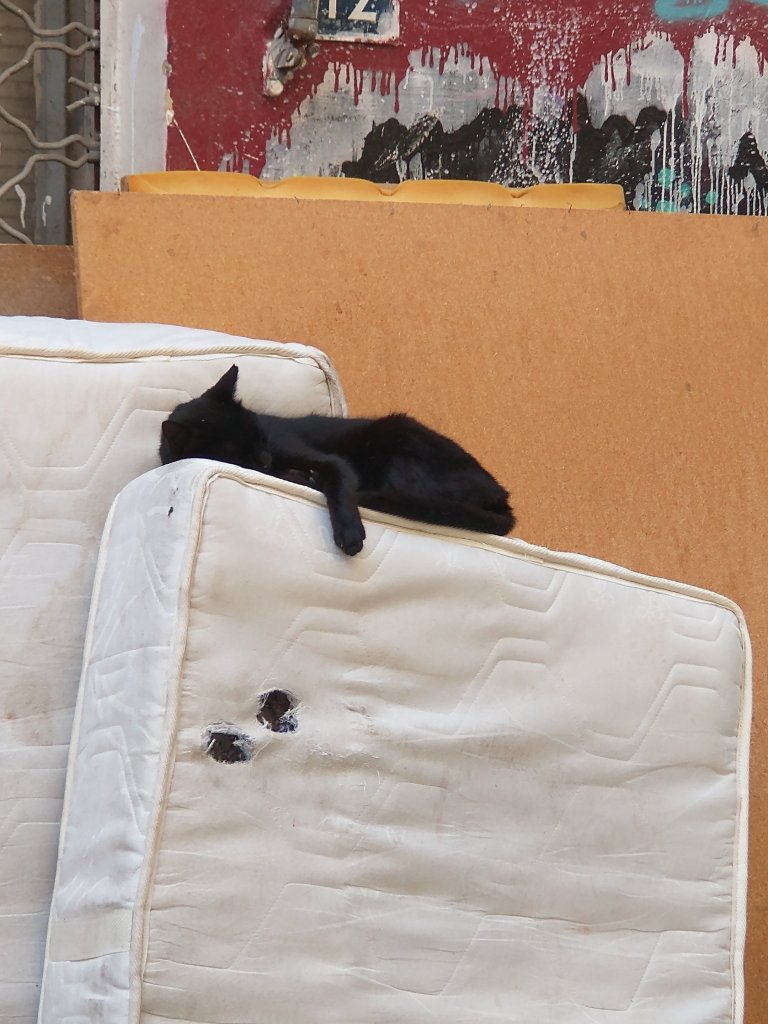
This funerary portrait in the Archaeology Museum impressed me. Did this man, who could easily be The Chap Next Door, really live more than 200 years BCE?; Here’s another figure from the past, Alexander the Great. He’s posing outside the White Tower, part of Thessaloniki’s defences since the Ottoman era.Spotted on a wall in town. I don’t know any more about it.I know how this cat feels. Might join her.
Our first morning in Thessaloniki: a day in which to find our feet & get used to the heat. Here are a few postcards ….
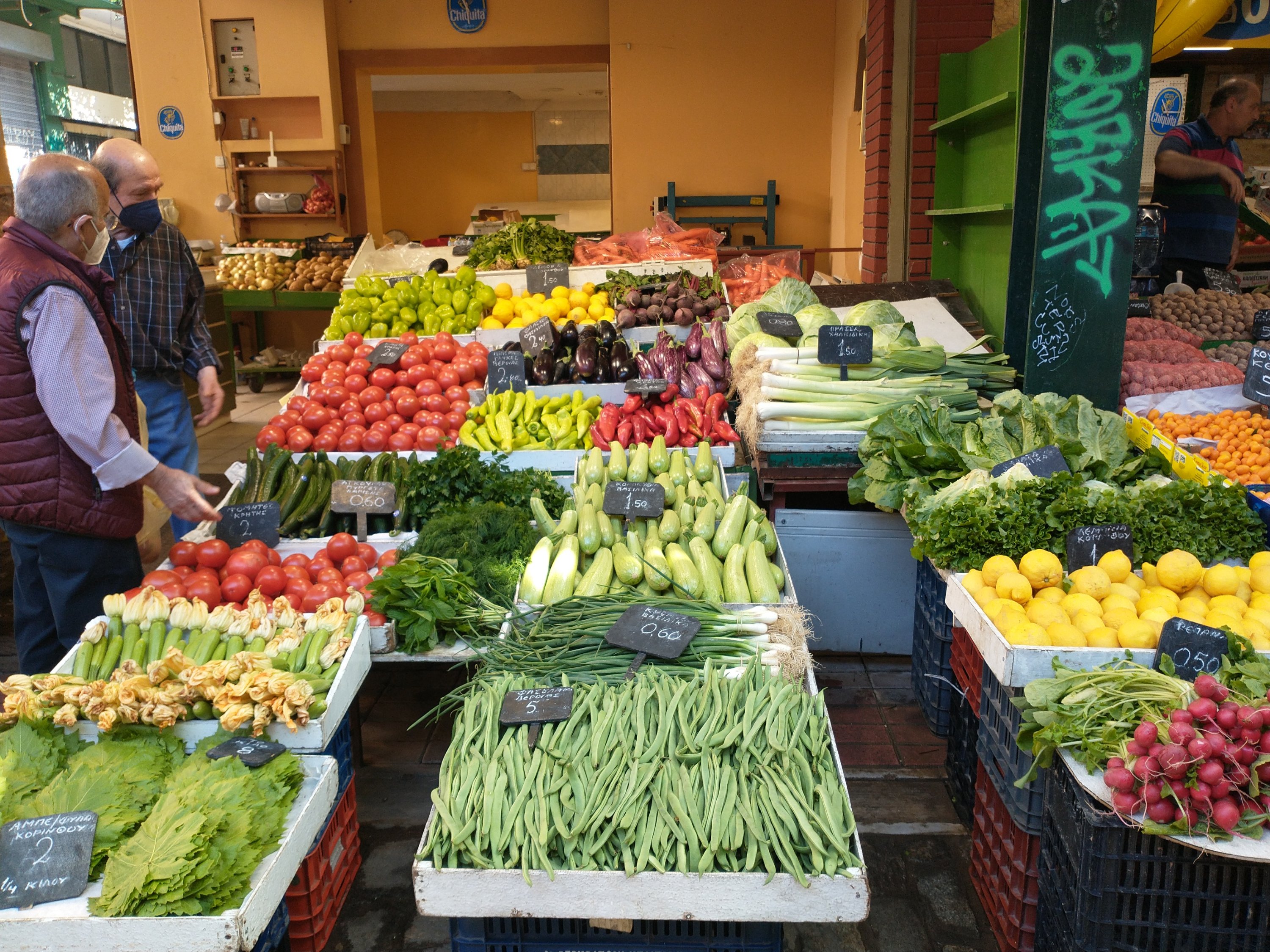
… from the market ..
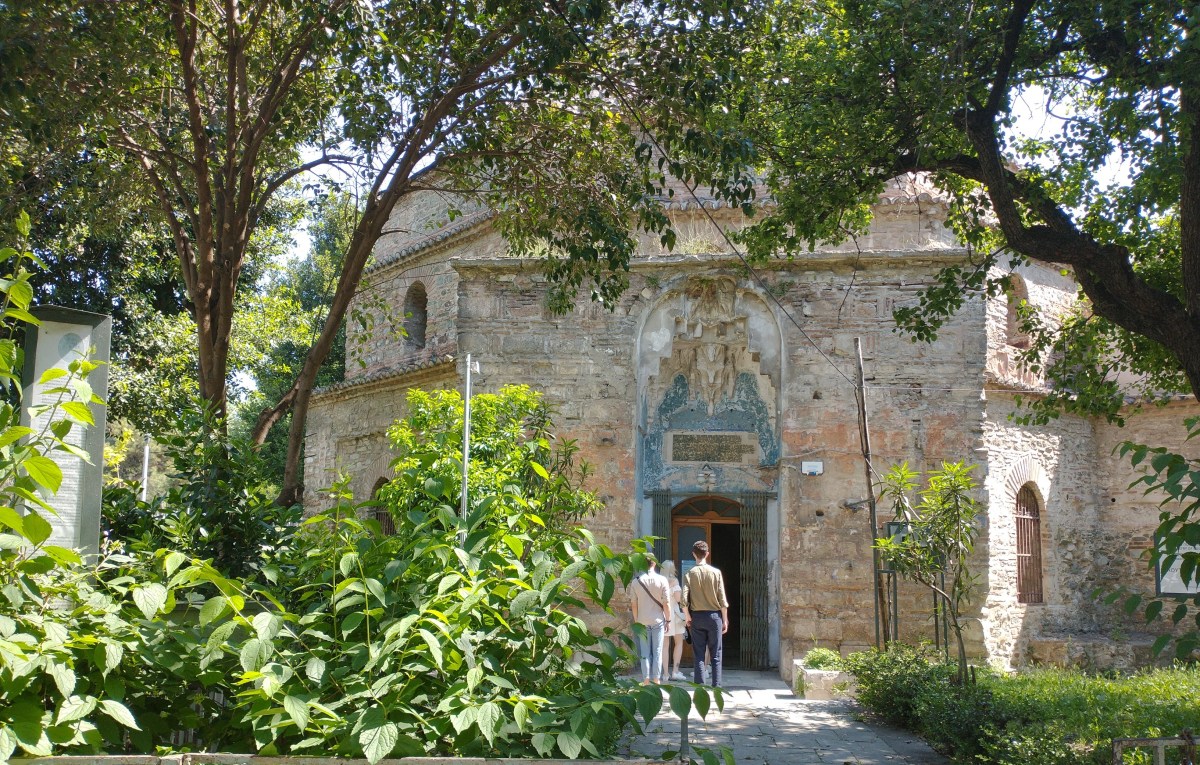
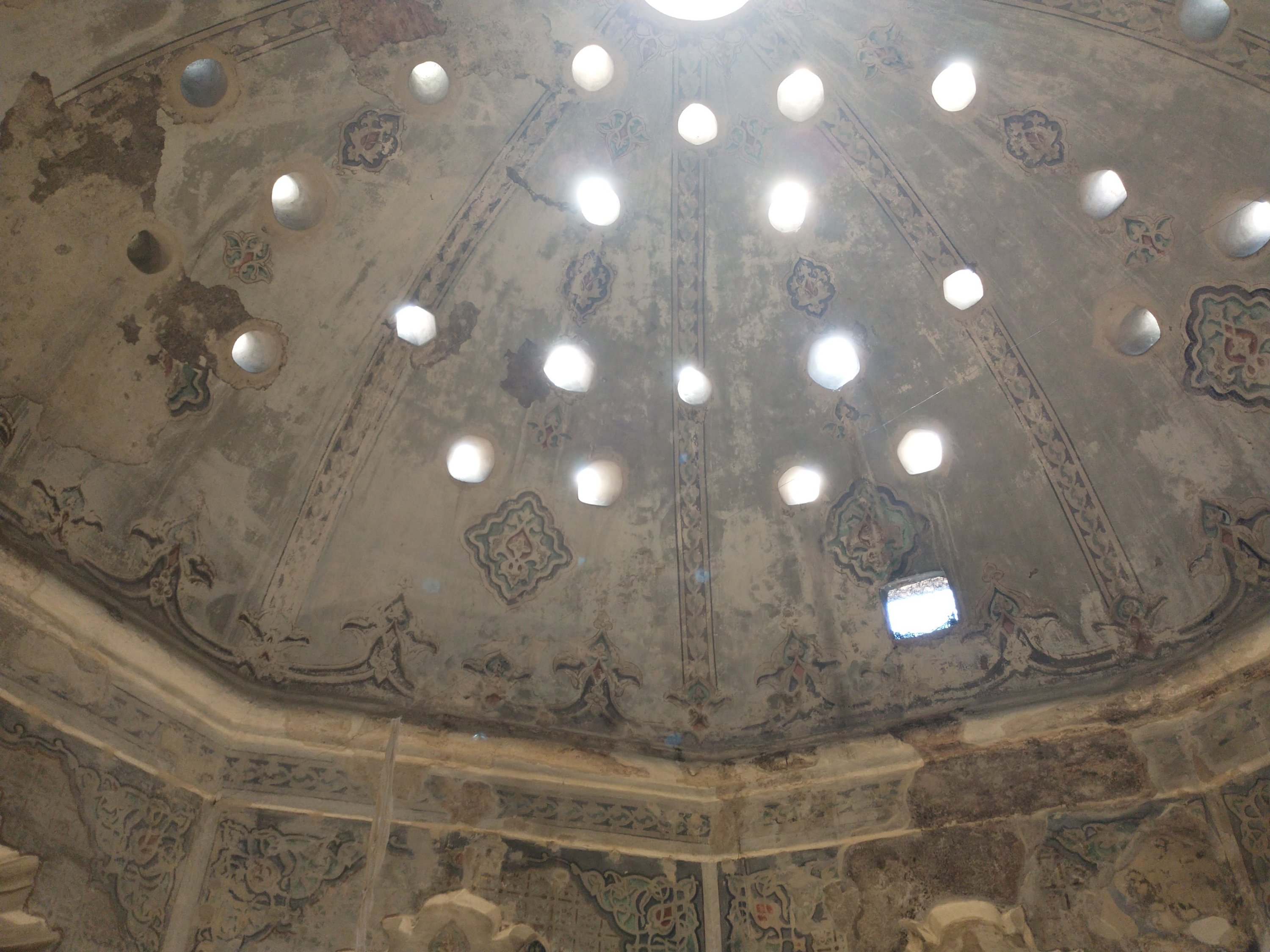
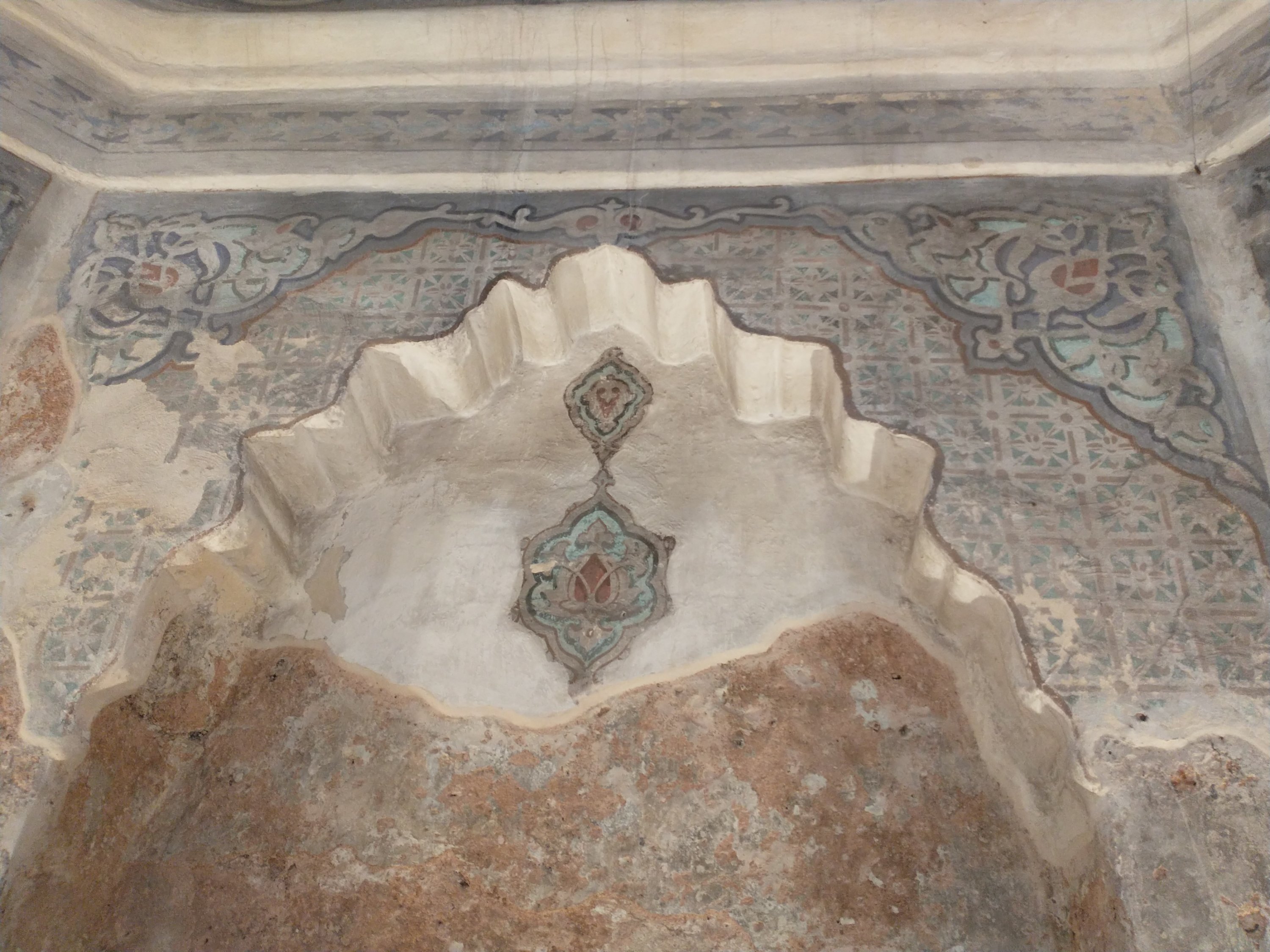
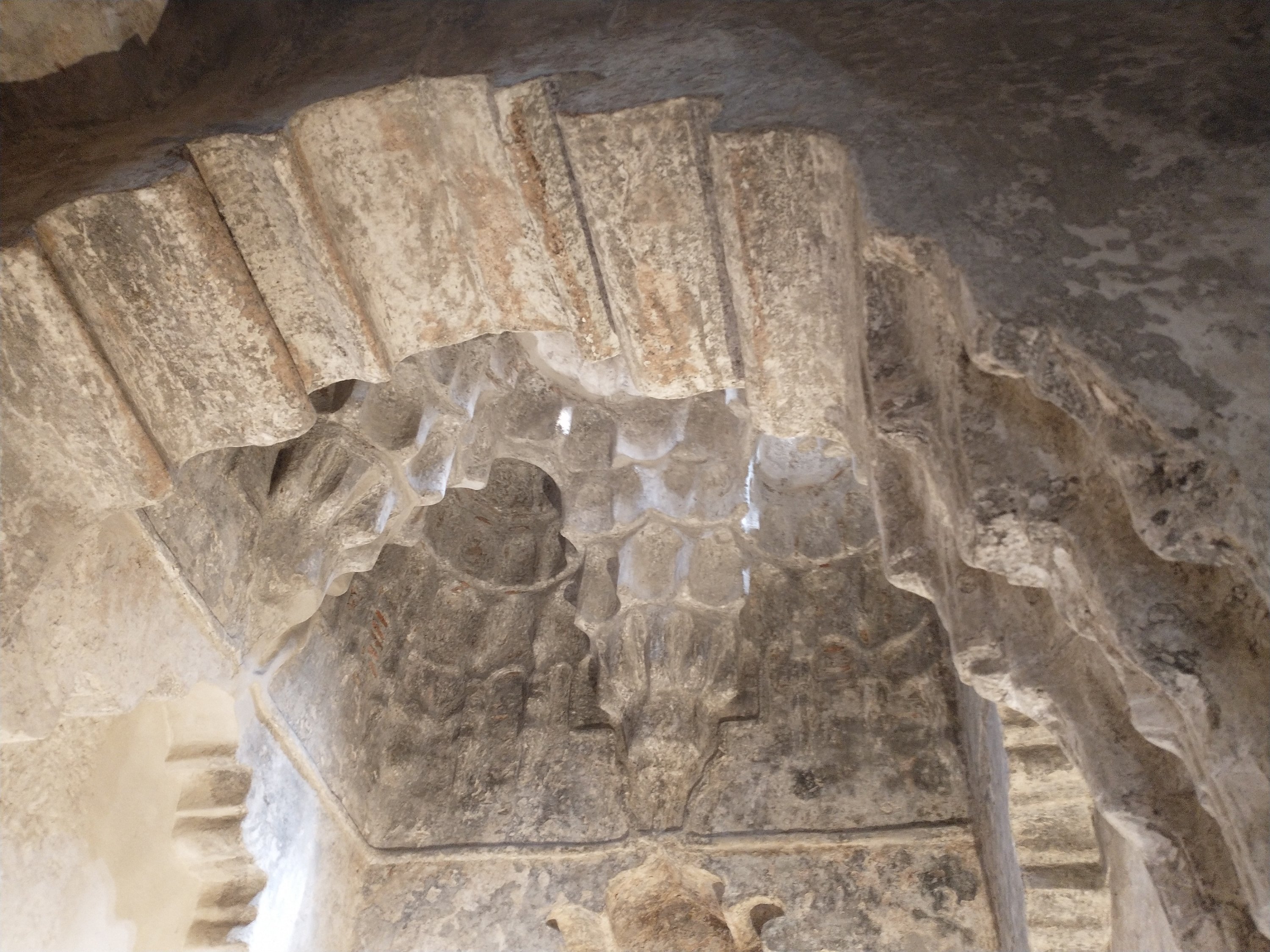
… and from the Bey Hamami, a peaceful and still beautiful public baths to the city from 1444 till 1968, and closing today at 2.00 pm for two years for much-needed restoration.
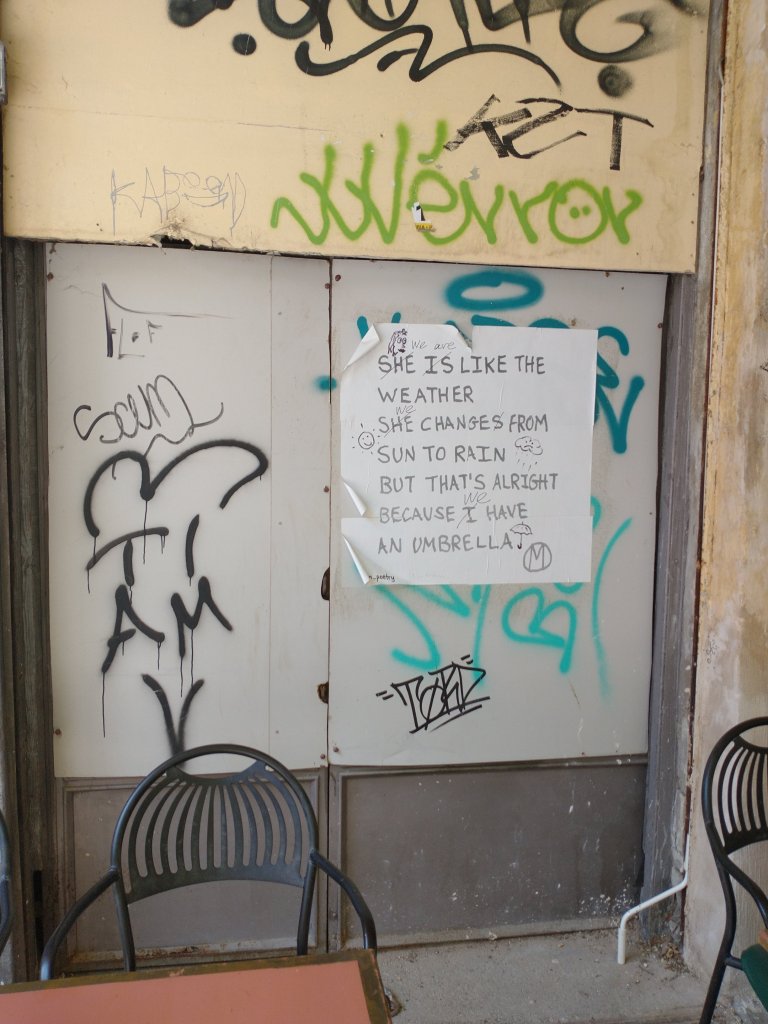
And finally, a bit of street poetry, helpfully altered for a twenty-first century audience.
Later, when the heat dies down a bit, we’ll be ready for more.
The featured photo shows the entrance to the Bey Hamami.












 From Pyrenees to Pennines
You must be logged in to post a comment.