On the first Saturday of every month, a book is chosen as a starting point and linked to six other books to form a chain. Readers and bloggers are invited to join in by creating their own ‘chain’ leading from the selected book.
Kate W: Books are my favourite and best https://booksaremyfavouriteandbest.com/2023/03/04/six-degrees-of-separation-from-passages-to-soundings/
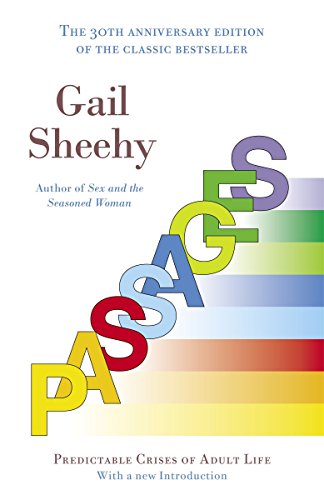
The full title of Passages, this month’s starter book, describes it as being about ‘predictable crises of adult life’ Gail Sheehy’s road map of adult life shows the inevitable personality and sexual changes we go through in our 20s, 30s, 40s, and beyond. And I haven’t read it.
But I have read a book whose female heroine is forced into adapting to a life for which she had been totally unprepared, and for which there was no self-help manual: A room made of leaves, by Kate Grenville. This is an involving story based on the lives of John Macarthur, who has a bit part in Australian history, and his wife Elizabeth, who hasn’t, but who, through her amanuensis Kate Grenville, wrote this book. It’s 1788. After an unwise liaison with a hot-headed and unbalanced soldier, John Macarthur which results in her pregnancy, she is forced to make a new life in Australia where her husband has duties guarding the penal colony in New South Wales. Isolated in this unfamiliar terrain, she has to develop strategies and find strength to navigate her new life and her impetuous and unpredictable husband. This book beautifully evokes the landscape of this part of Australia, and the tough life shared by army personnel, prisoners, and the original Aboriginal population, for whom, unlike most of her fellow countrymen, she develops respect and sympathy. An evocative and poignant story.
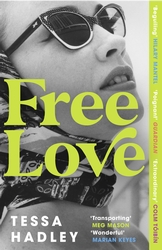
Another book had me reading about a woman who also couldn’t have read Passages: Free Love by Tessa Hadley. We are in the 1960s, and are introduced to Phyl, a middle class housewife with a husband in the Foreign Office and two children. The family is prosperous and content. Then Nick, the son of old friends comes for a meal, and everything changes as Phyl makes choices which up-end this happy and conventional family. I was immediately immersed in this story, where first one twist, then another interposed itself in the narrative. Extraordinary as these twists were, the sixties setting gave them the ring of authenticity, and I had little difficulty in being totally sucked into the worlds which Phyl and her various connections inhabited. I found it a real page-turner.
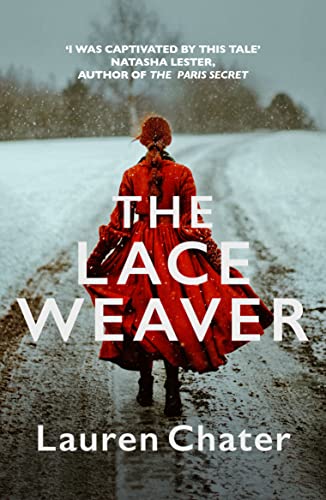
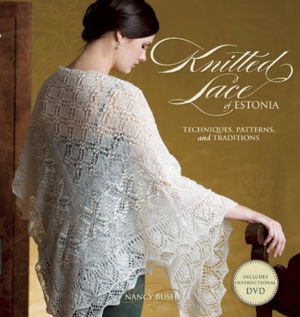
The next two women also had little control over how their lives unfolded:, as told in The Lace Weaver by Lauren Chater. Estonia, 1941. The country is in the grip of a savage conquest and occupation by Russia. Increasingly deprived of a means of scrabbling a livelihood together, for the women of the town where young Kati lives, hanging on to their heritage tradition of shawl-weaving in delicate lacy patterns becomes a way of asserting their commitment to their country. Moscow, 1941. Lydia, a privileged young woman of Kati’s age discovers some unwelcome facts about her parentage and resolves to escape. After several heart-stopping adventures, she finds herself in the same refugee camp as Kati.The two young women tell their stories in alternating chapters, with the leitmotif of the shawl being the device that threads their stories together: stories of danger, love, brutal deaths and the importance of all the women’s support of one another as their men fight the Russian occupiers in under-the-radar resistance groups. Although I found that difficulties were sometimes too slickly resolved, nevertheless the story emphasised the fragility of life, the strength of the human spirit.
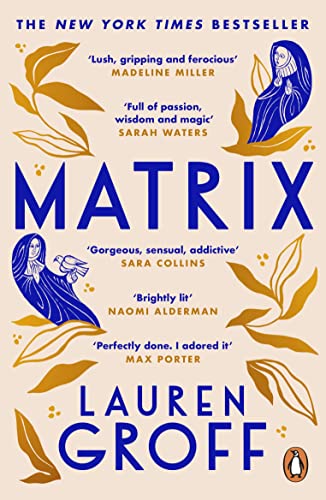
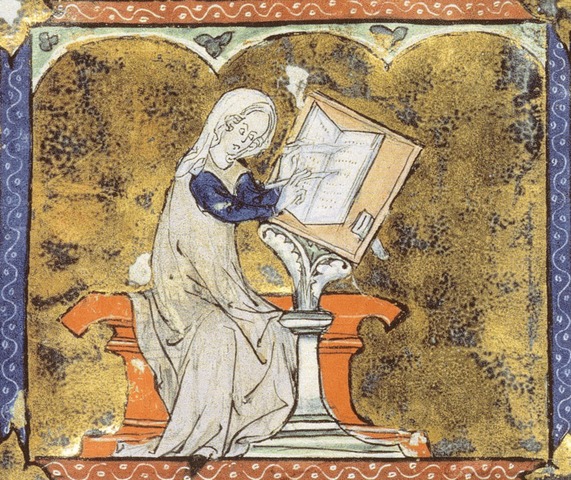
We’ll go back to the 12th century now, to read about a woman who at first had little control over her life- until she learnt how to assume it: Lauren Groff’s Matrix. I expected to enjoy this book far more than I actually did. The hero, Marie de France, is someone known to have existed, but very little of her history is known. Which pretty much gave Lauren Groff carte blanche to write her story as she chose. In short, Marie, a bastard of noble birth, is big and ungainly. Sent as a prioress to an impoverished and unimportant abbey, she successfully devotes her whole life to making it large, beautiful, and extraordinarily wealthy. Groff’s research is impressive: she clearly understands the mediaeval religious life well. Her writing is striking, luminous. But I was entirely uninvested in the life of Marie de France and in the lives of her fellow-nuns. Dramas were quickly resolved: whole years, or even a decade or so passed in a single sentence. I didn’t care for Marie a great deal – for her visions and her acquisitiveness – apparently for the glory of God. And really, it was a matter of some indifference to me whether I finished the book: I did – for the quality of the prose, rather than the uninvolving narrative.
Another woman – in fact The hero of this book is the subject of Elizabeth McCracken’s story. Apparently it’s her mother, but actually it’s auto-fiction, which is fictionalised autobiography. A book that is curiously hard to describe or pigeon hole. The author – American – is playing the tourist in London, re-exploring the haunts she and her recently deceased mother enjoyed together. She moves seamlessly, but never inappropriately between her London adventures, her mother’s life as a woman with life-affecting health issues, and the need to sell the unwieldy and neglected house that was her parents’ last home. Her father also died not too long ago, but he plays no more than a bit part in this story. McCracken’s mother was wilful and opinionated, witty and optimistic – and great fun, despite her very real mobility difficulties. McCracken herself vacillates between protecting her mother’s privacy and wanting to cherish her memories. She wants to write a book that’s like ‘David Copperfield except Jewish, and disabled, and female, and an American wiseacre, but there’s too much I don’t know and I can’t bear to make up.’ This is a funny, unsentimental and vivid book which is impossible to characterise – or to put down.
I seem to have a chain which is all about women, so here’s my last one, and so different from any previous choices. Night crawling by Leila Mottley. 17 year old Kiara’s father, always in and out of jail, is dead, her mother is in a halfway house, and her older brother chases unrealistic dreams of becoming the next big name in the music industry. She’s in charge of their home, and de-facto of her friend and neighbour’s 9 year old child, whom she loves unconditionally. Under-educated and with no training, she has no means of paying the rent and eviction looms. Sex-working provides an answer, but soon she falls into the clutches of a ring of sex-seeking cops from whose grip she has little chance of escape. This is her story: that of a feisty young woman making the best of the rotten hand that life has dealt her. Told in her own words, Kiara paints a picture of a world where racism and poverty and lack of choice are normal and where the choices she must make are impossible. It’s inspired by a true story of corruption in the police department. Kiara is bold, witty and tough, and Mottley gives her a rhythmic, new and exciting langage. An energising read.
Six women, roughly fashioned into this month’s chain. Where will next month’s take us? It’s Bruce Springsteen’s autobiography Born to Run.
PS. Away from home, I am finishing this post off on my phone. Getting the link to Kate’s post to display in the usual way has turned out to be above my pay-grade.
















































You must be logged in to post a comment.