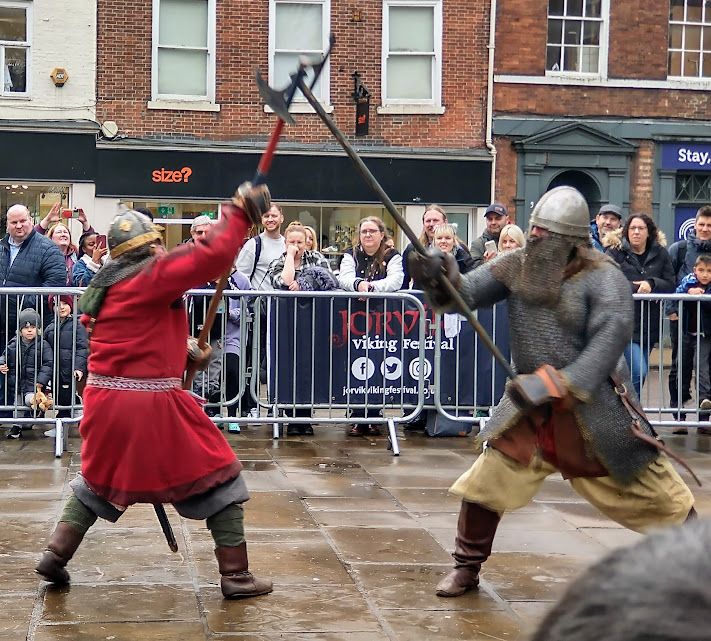
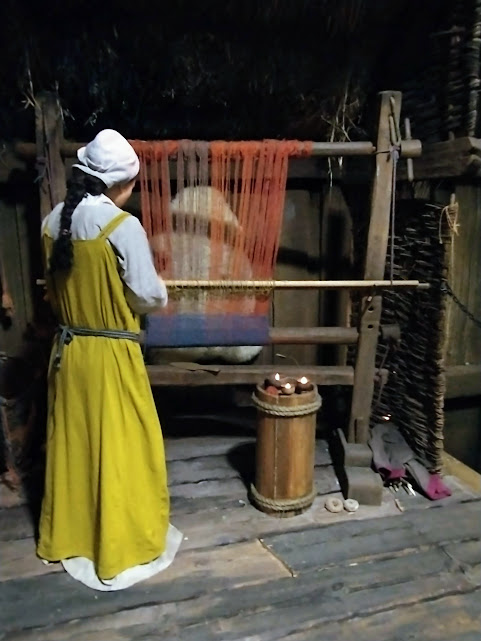
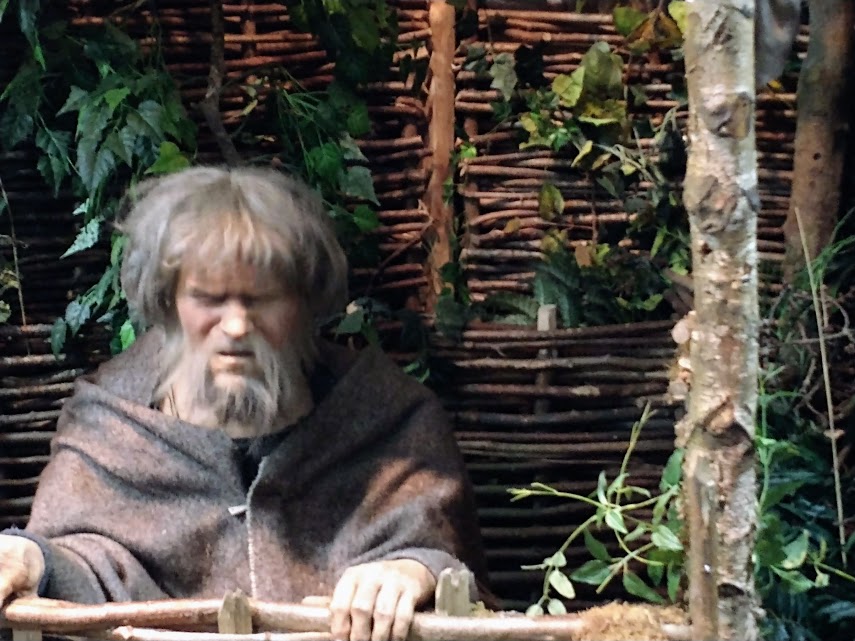
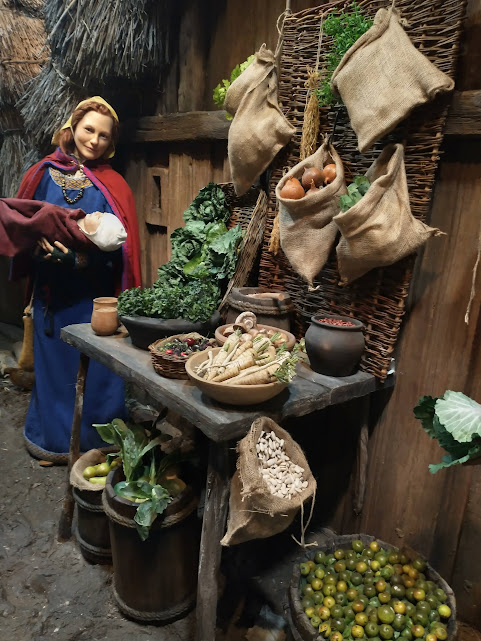
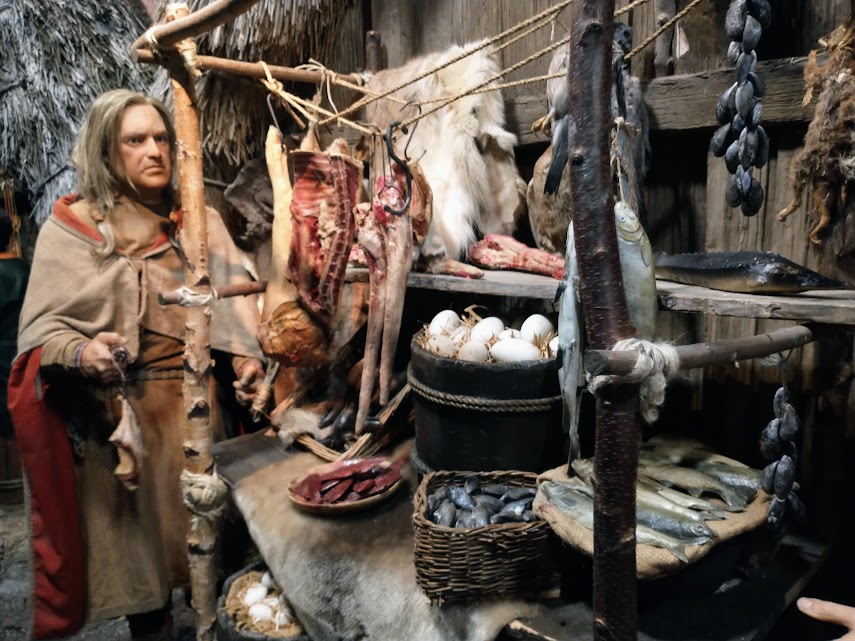
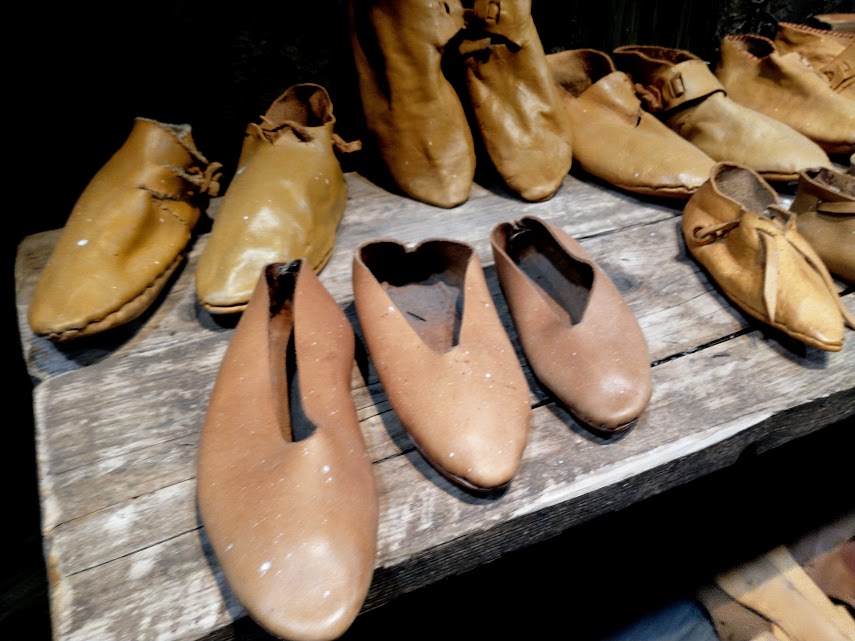
The featured photo shows the Vikings as we always seem to think of them: a bellicose lot of marauders and fighters. In fact they were much like the rest of us – seeking a simple life of home, work and family. A trip to York, the Jorvik Viking Centre and the Viking Festival showed us an everyday story of country folk.
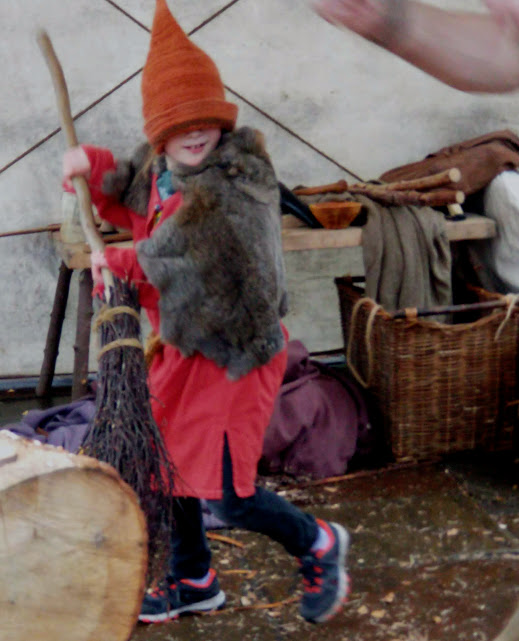
They must have been doing something right. They even had a willing slave in the form of my eight year old grandson cheerfully wielding his broom for his temporary Viking master.
In this week’s Lens Artists Challenge, Donna of Wind Kisses fame urges us to show images that make us hear the sounds issuing from them.
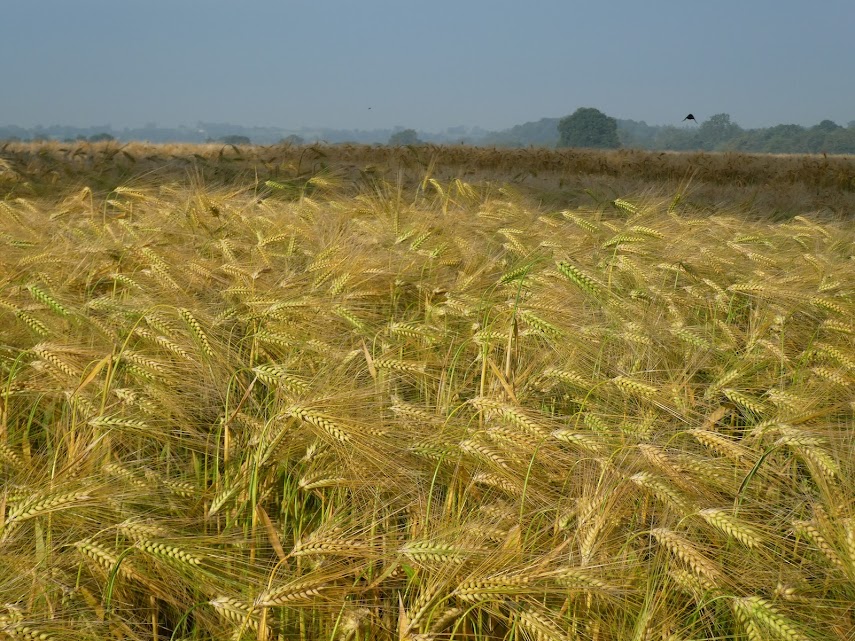
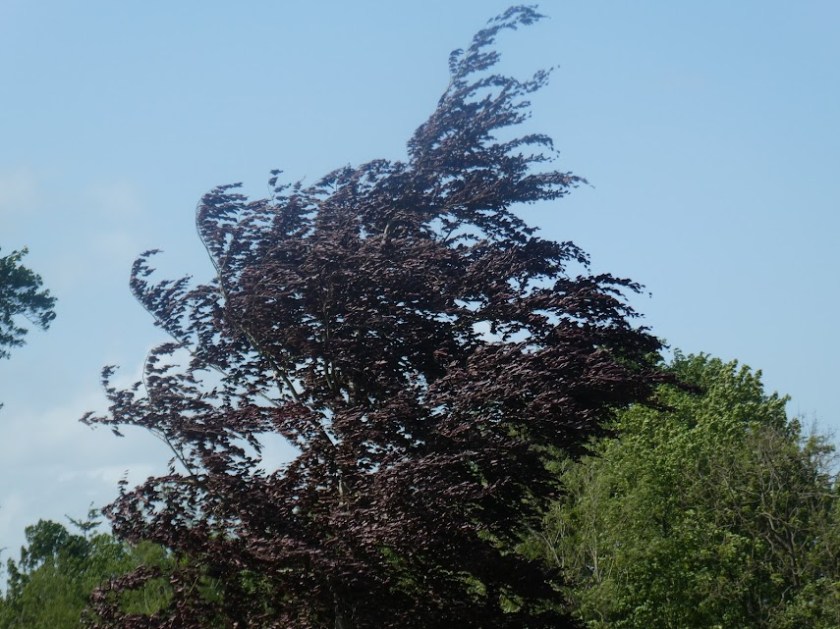
I immediately thought of the fields round here, when during the spring and summer, the backdrop to a walk is often the quiet susurration of crops swaying in the breeze. Or maybe this image here shows a brisker noise as the breeze becomes instead a hearty wind.
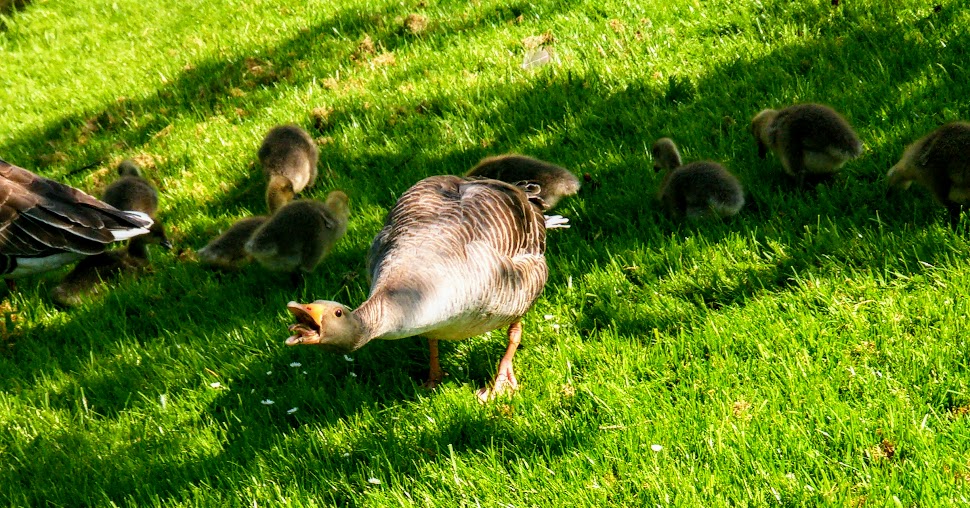
Birdsong is the backdrop to any country walk. But instead of images of birds trilling their hearts out, I’m showing you two shots from times when I was a major source of irritation. ‘Don’t you even THINK of harming my babies’, hissed the graylag goose.
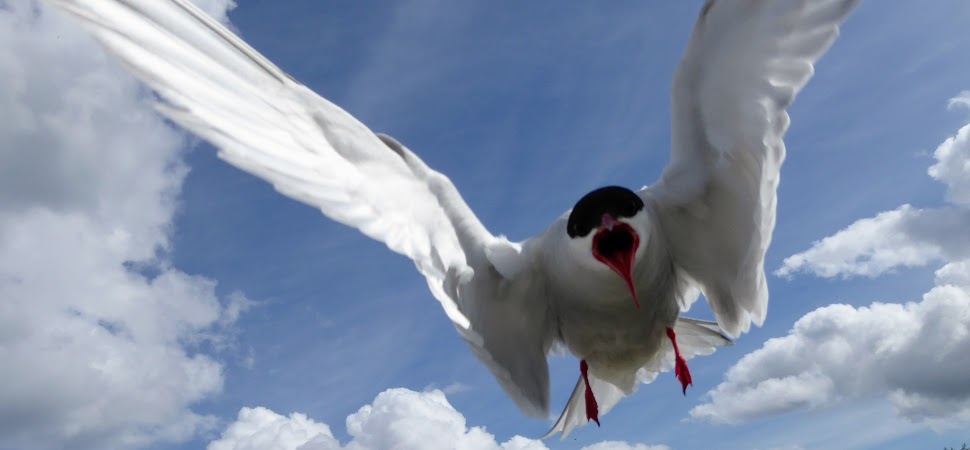
‘Don’t you even THINK of harming my babies’ screamed the Arctic Tern. What do you mean, I haven’t got the wings entirely in shot? I was in fear of my life here.
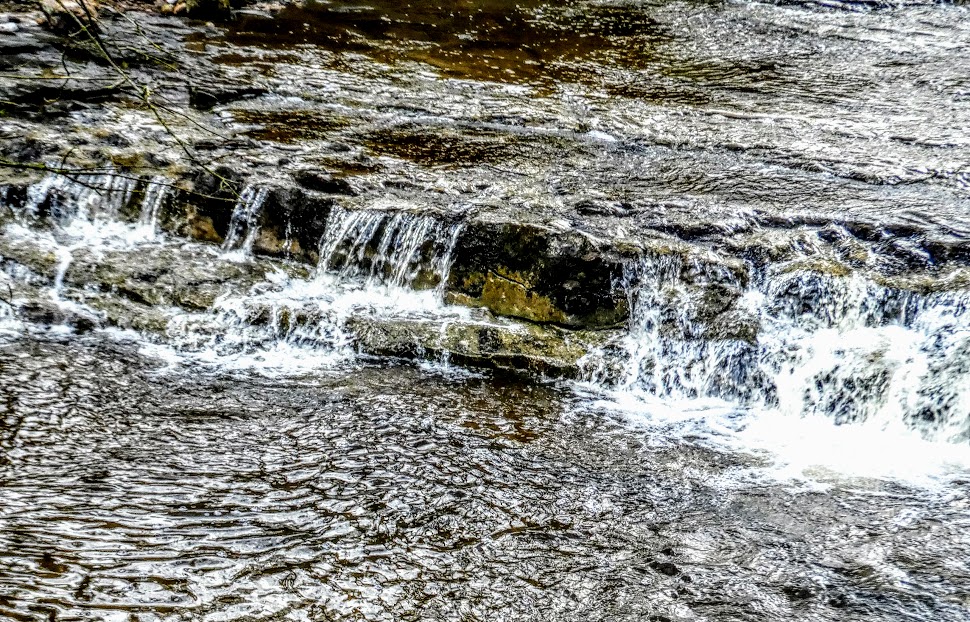
Ours is a riverside landscape here, and especially now in winter, the waters chatter rhythmically over rocks and gravel.
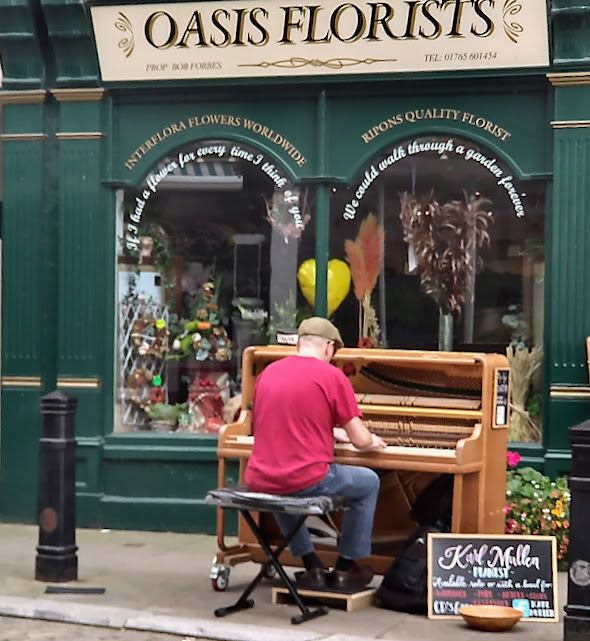
Let’s go into town. Any town. There’s bound to be something going on. Maybe someone has dragged a piano out into the street.
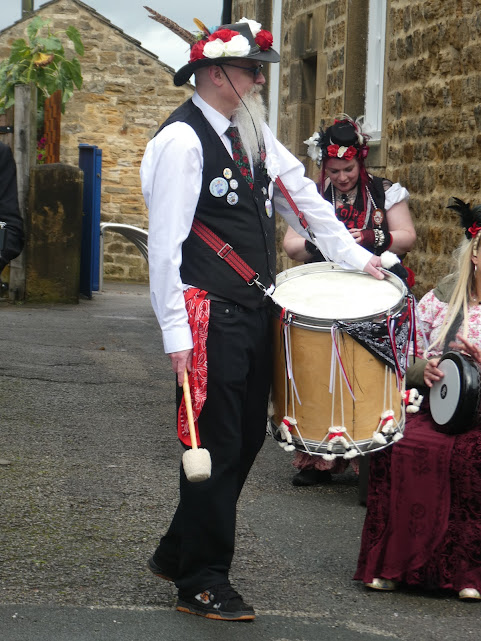
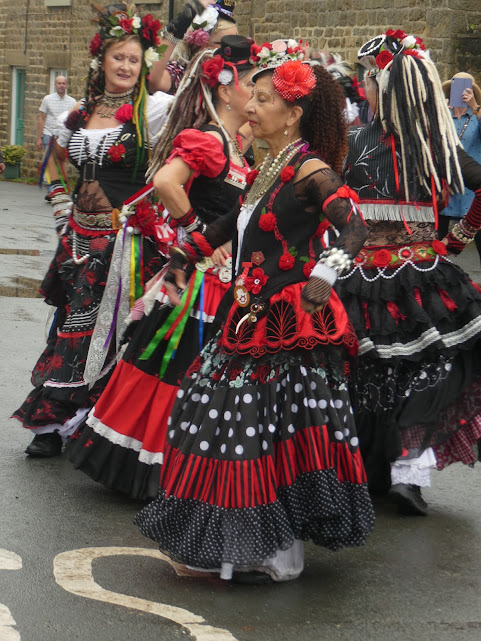
Maybe there are Morris dancers out and about. And Morris dancers don’t have to be men these days …
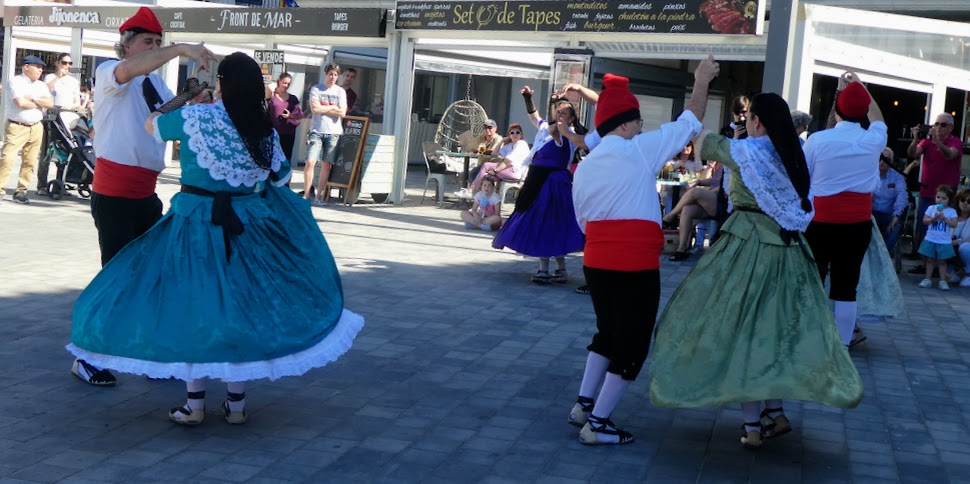
There might be dancing in the street in Catalonia …
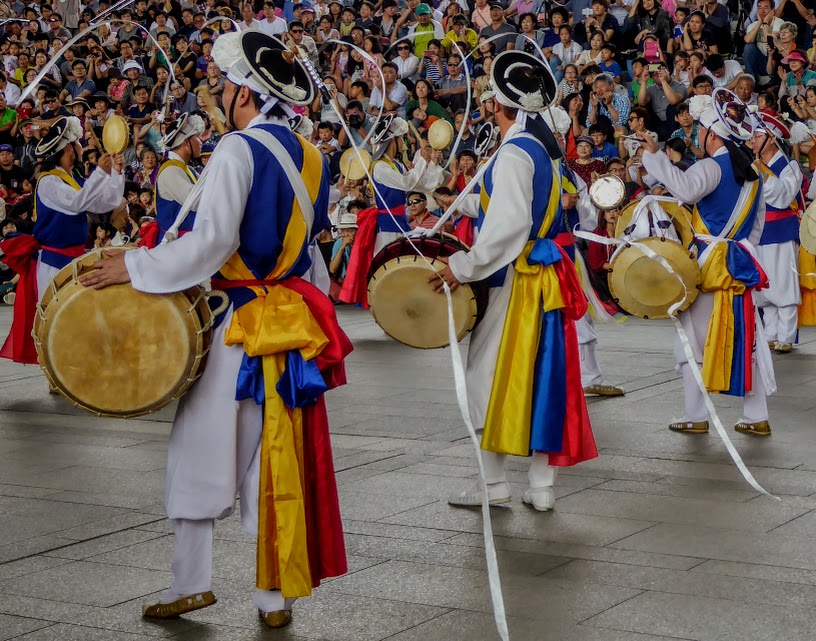
…. or celebrations of Chuseok in South Korea, with insistent drum beating .
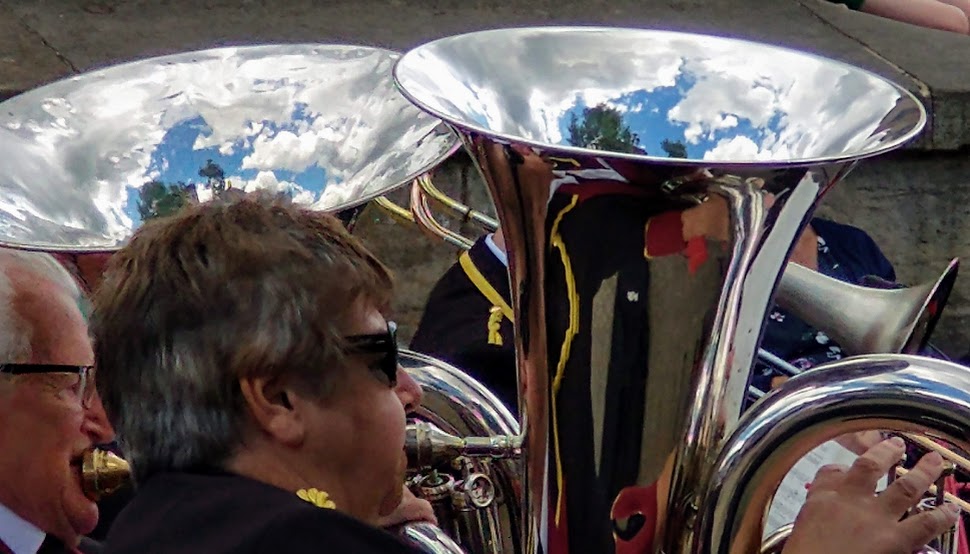
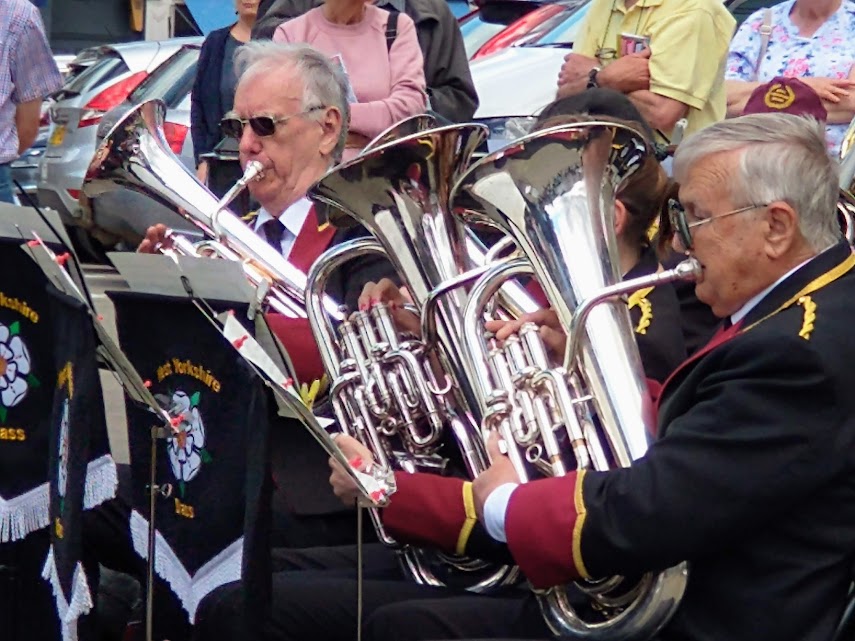
But bah gum, I’m a Yorkshire lass, and I can’t close without a rousing melody from a fine brass band. You’ll find another image in the featured photo.
This is a window designed in honour of a vet – James Herriott. He (under his real name of James Alfred Wight) made his name by writing a whole series of books about being a young vet in Darrowby (actually Thirsk) visiting farms and their animals hither and yon in the Yorkshire Dales from the 1930s onwards. If you don’t know his books, you may know one of the TV series going out under the name of All Creatures Great and Small: 1978 & 2020, as apparently they’re doing the rounds the world over.
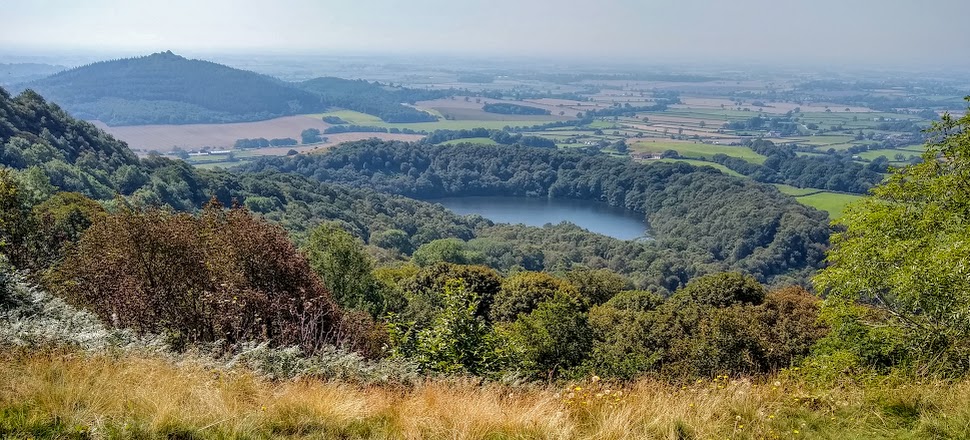
Well, there’s a museum in Thirsk as well – World of James Herriott – occupying the house he and his family lived and worked in all those years ago. And it has a window celebrating the landscape that formed the backdrop to his work. Here it is as the featured photo. And here is a bit of a collage of the backdrop to the working week of any Yorkshire vet, then and now. Except I haven’t got a picture of the White Horse at Kilburn featured in the window. About 170 years ago, it was cut into the landscape to emulate the chalk hill figures of southern England, and Herriott, like all the rest of us, would see it often as he drove round and about the area.
If you’re in the area and want a good family-friendly destination, the museum is highly recommended. You’ll come away with all the older family members saying ‘I remember those’, as they peer at tea-cosies, mangles and a thoroughly ancient car (Gumdrop, anyone?), bemused by the vetinary equipment, and entertained by the quizzes and activities in the children’s gallery. You too can insert your arm into a cow’s rear end to deliver a reluctant calf.
And for a bit of context, here’s a view from a window in the museum.
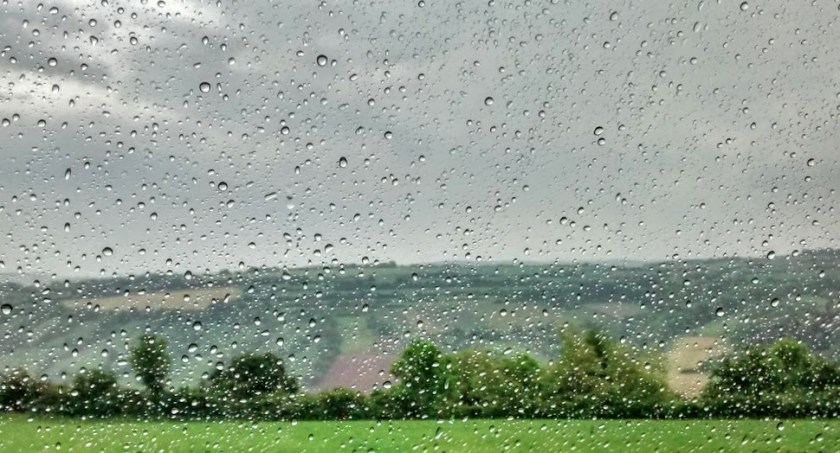
Rain, rain, go away,
Come again another day.
Rain, rain, go to Spain,
Never show your face again!
Traditional
A shot taken not in England, but in Bavaria, Germany
It’s not just children who’d willingly sing this these days. In the UK it’s rained pretty much constantly all this year. But in Spain, they’d cheerfully take some of our surplus. In Catalonia, in mid-winter, the reservoirs are a mere 16% full, and water-use restrictions are in place.
When the wind is in the east
'tis neither good for man nor beast.
When the wind is in the north,
the skilful fisher goes not forth.
When the wind is in the south,
it blows the bait in the fishes' mouth.
When the wind is in the west,
then 'tis at the very best.
Traditional
A particularly windy May morning near home.
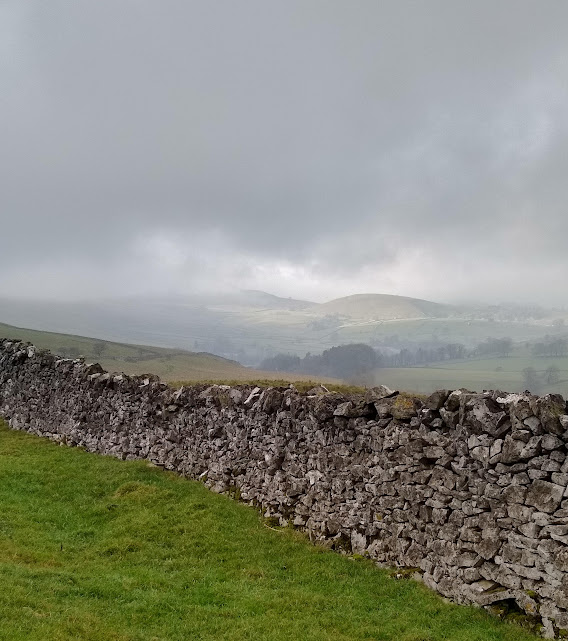
The fog comes
on little cat feet.

It sits looking
over harbour and city
on silent haunches
and then moves on.
Carl Sandburg
I can’t claim that Carl Sandburg’s is a children’s rhyme. I couldn’t think of one. Can you?
Fog slowly lifting near Burnsall, Wharfedale
The north wind doth blow,
and we shall have snow,
and what will the robin do then, poor thing?
He'll sit in a barn,
and keep himself warm,
and hide his head under his wing, poor thing!
Traditional.
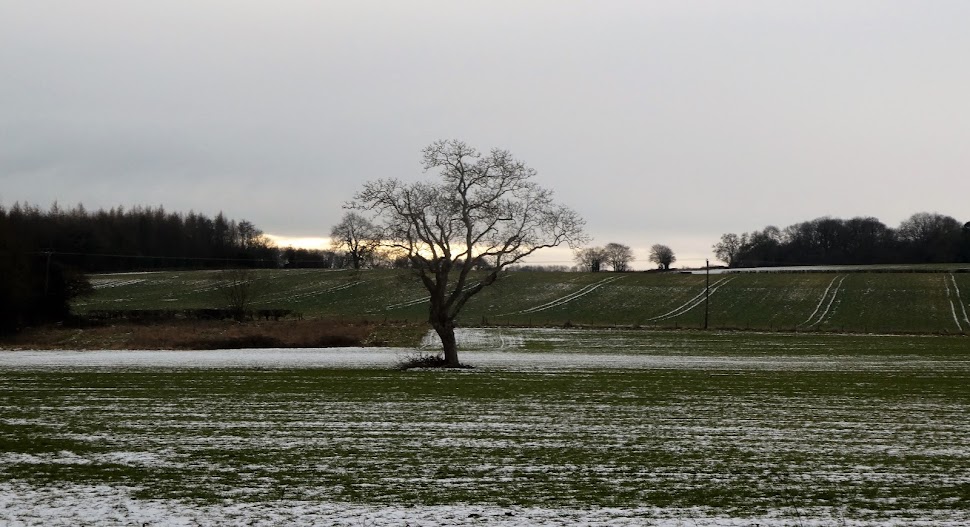
The field-just-down-the-road one January.
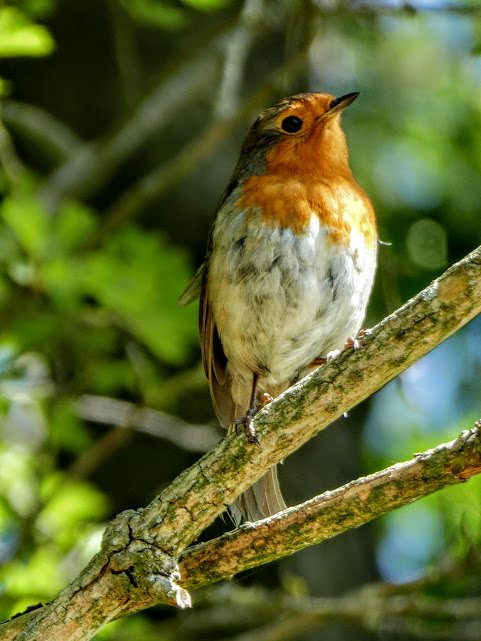
This hardly-there snow is pretty typical of wintry conditions in England. And I know that a robin lives pretty close by: this field almost qualifies as my back yard.
The robin -just-down-the-road, not in January
Red and yellow and pink and green,
purple and orange and blue:
I can sing a rainbow,
sing a rainbow,
sing a rainbow too.
Arthur Hamilton
All three of my children used to sing this one – often – at assembly in primary school. I wonder if it’s still going strong?
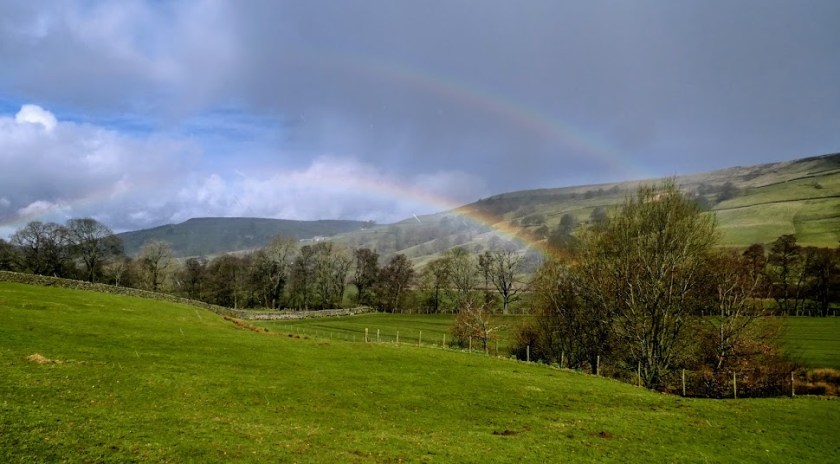
Lofthouse in Nidderdale, North Yorkshire.
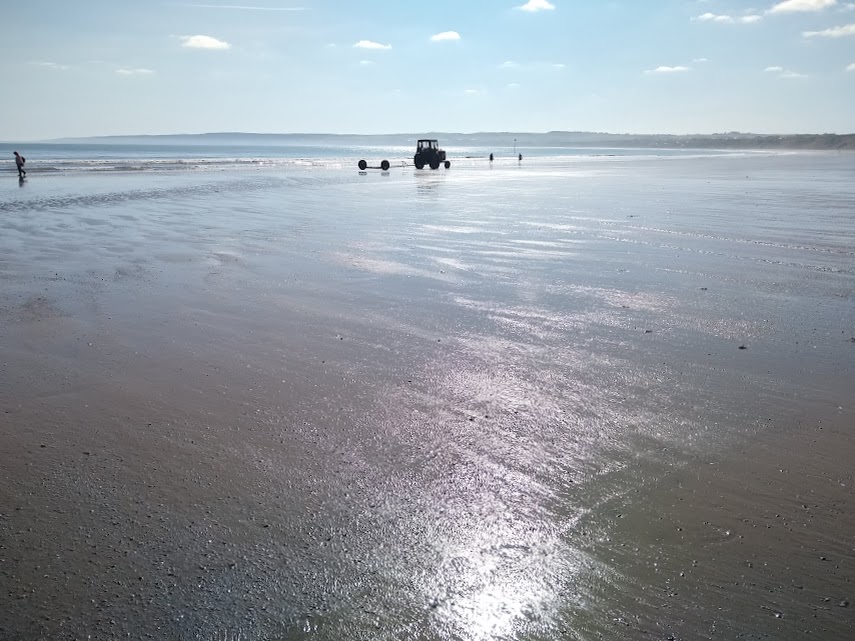
So that’s it. Oh, hang on, I’ve forgotten something. Sunshine. Well, I would, wouldn’t I? It’s February in England, and famously sunless. Let’s show British sunlight, rather than the full-on sun of the holiday of our dreams.
It’s September. The schools have gone back, so here is a sunny beach, gloriously (almost) empty in Filey, North Yorkshire
And most children can sing the less-than-traditional The Sun Has Got His Hat On by Noel Gay. So let’s leave you with this cheery version.
Most of us living in Britain know something about the model villages built by philanthropic industrialists in the 19th century. With the advent of the Industrial Revolution, workers poured in from the countryside to a filthy urban environment. They found, alongside work for long hours in the newly-established factories, hastily built, crowded, poor quality housing with no facilities.
Some philanthropic factory owners decided to do things differently. Robert Owen built New Lanark for his miners. Titus Salt built Saltaire near Bradford for his textile workers. William Lever, 1st Viscount Leverhulme built Port Sunlight for his soap workers. And so on. All these communities offered decent, usually terraced housing with a small amount of outside space. There was a shop, a school, an institute for adult learners, a health-care facility of some kind, certainly a church. There was not however, a pub, or anywhere where alcohol was sold. Workers at the time often drowned out the reality of their miserable lives by drinking, and those philanthropists wanted a different life for their workers, whether they liked it or not.
So we were interested to visit Colonia Güell when we found out about it. It’s a similar set up in a manufacturing area, Santa Coloma de Cervelló, just outside Barcelona. Spain’s industrial revolution came later than ours: but in 1890, industrialist Eusebio Güell realised that if he wanted to attract workers from Barcelona to the factory he was building on his country estate – an essentially rural area – he would have to provide housing. And like his British counterparts, he wanted to do The Right Thing.
Eusebio Güell didn’t just want to have any old housing. He sought out the best architects of the day, disciples of the Modernista movement: the ideas behind Art Nouveau found particularly vibrant expression in Catalonia. More details here.
He provided decent housing for both workers and professionals in spacious streets, the factory itself of course, a theatre, a doctor’s surgery, a school. The school however was for boys only. In many ways it was progressive, teaching foreign languages as well as the three Rs. But girls had to make do with being taught embroidery and other manual skills that would make them dextrous with machinery when they went to work later on. Nuns at the convent taught them, and also provided a nursery so that mothers could return to work soon after they had given birth.
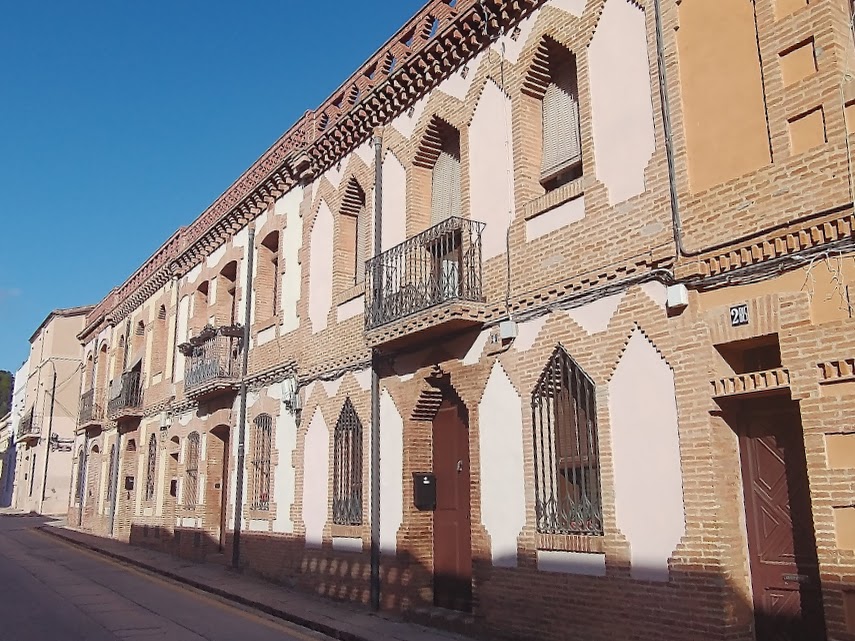
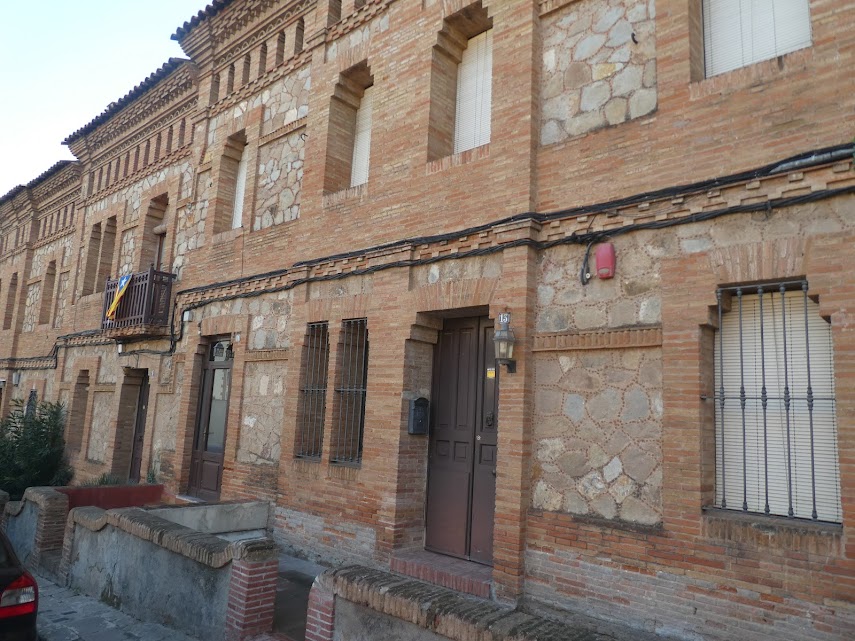
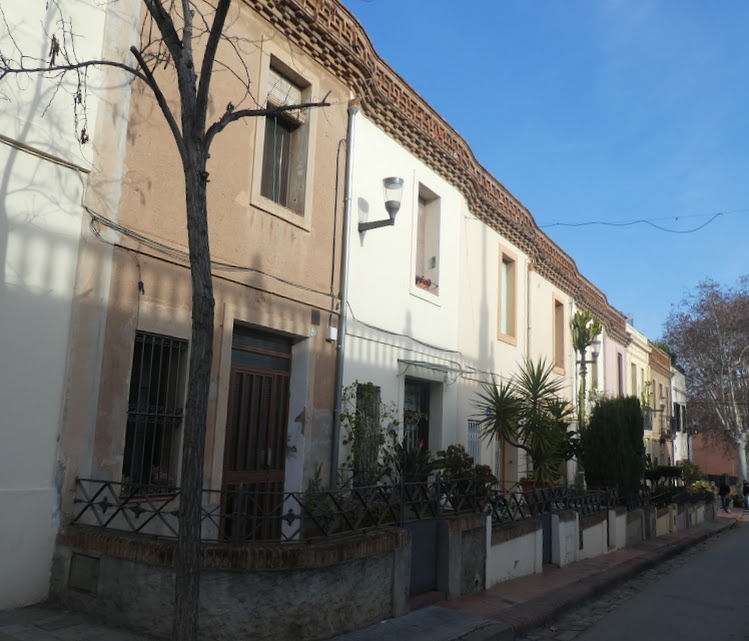
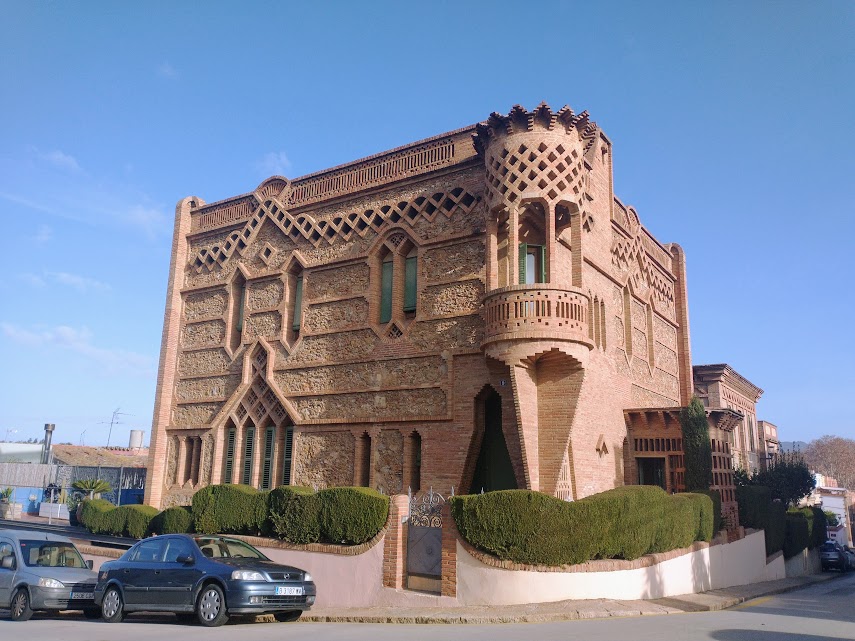
Ca l’Espinal, the Factory Manager’s HouseA detail from Ca l’EspinalThe schoolhouse, linked by an aerial tunnel to the schoolmaster’s quartersCa Ordal: three farming families lived here, supplying much of the fresh food needed in the community
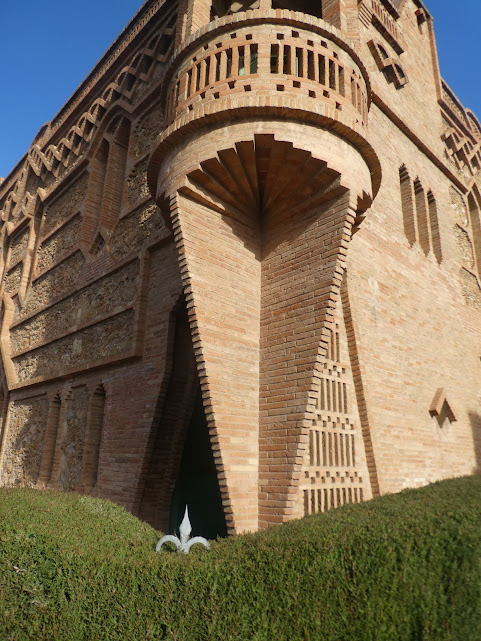
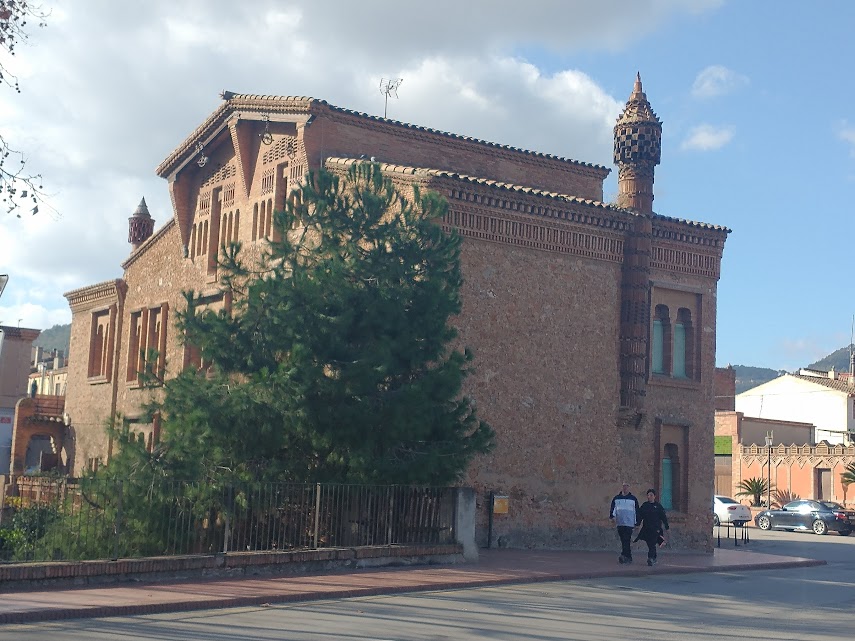
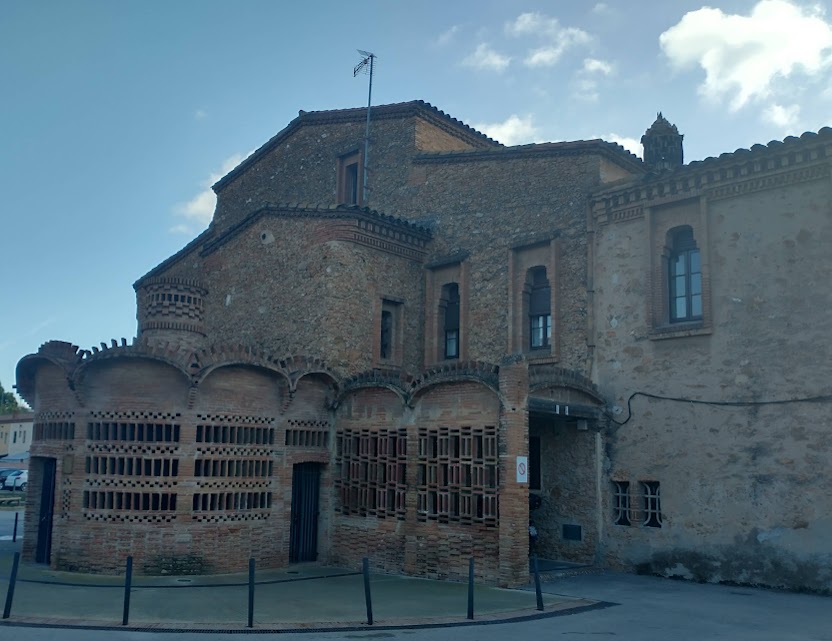
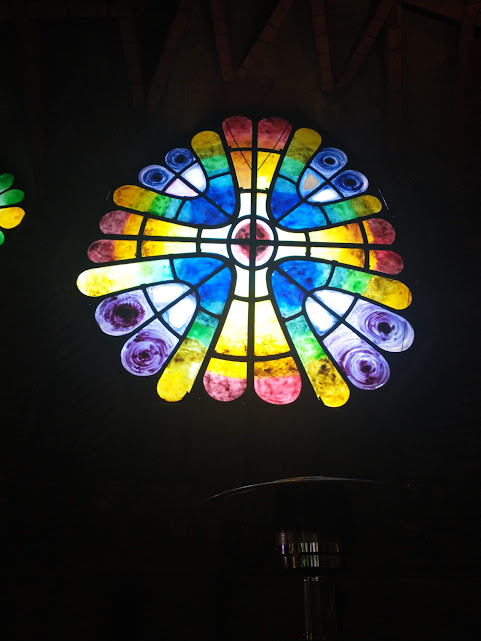
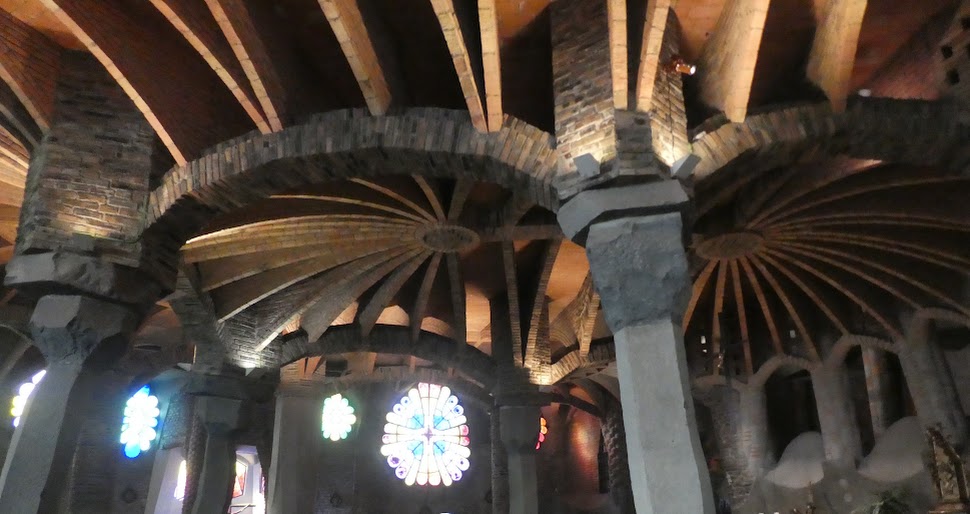
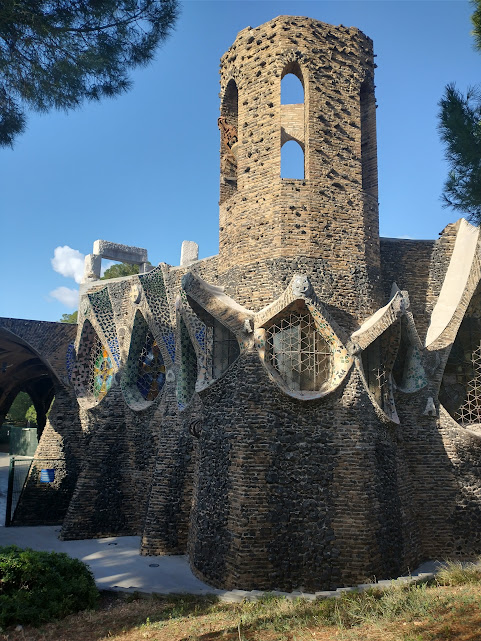
Of course there was a church. And in 1898 Eusebio Güell commissioned the young Antonio Gaudí to design and build it. Had it been finished, this church would have been as ambitious a project as Gaudí ‘s still not quite finished Sagrada Familia. Two naves, lower and upper! Towers! A central 40 foot dome!
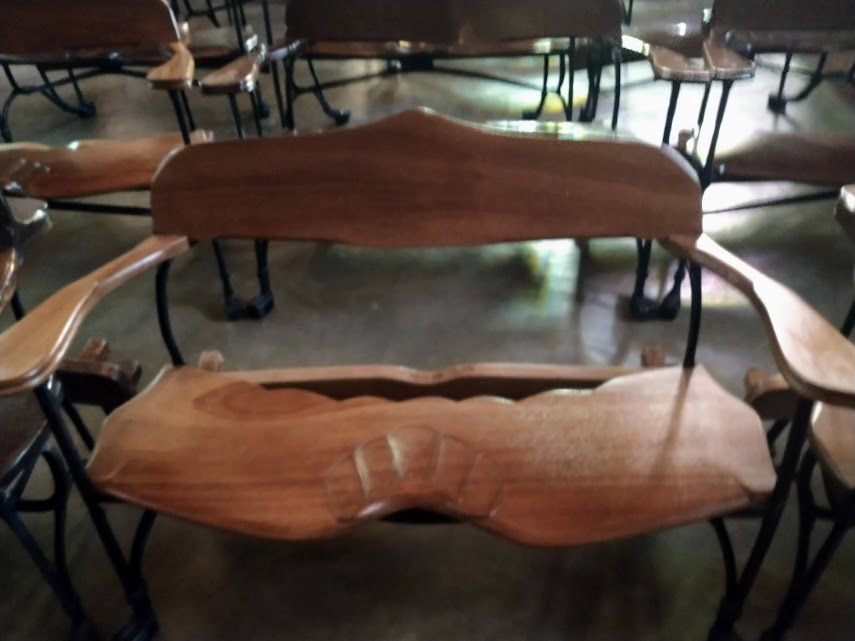
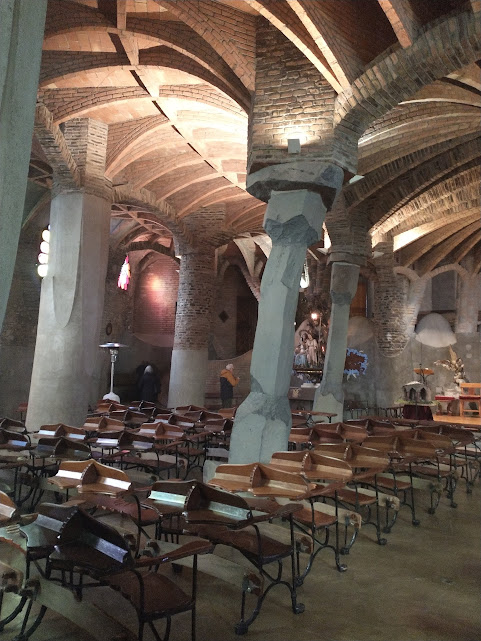
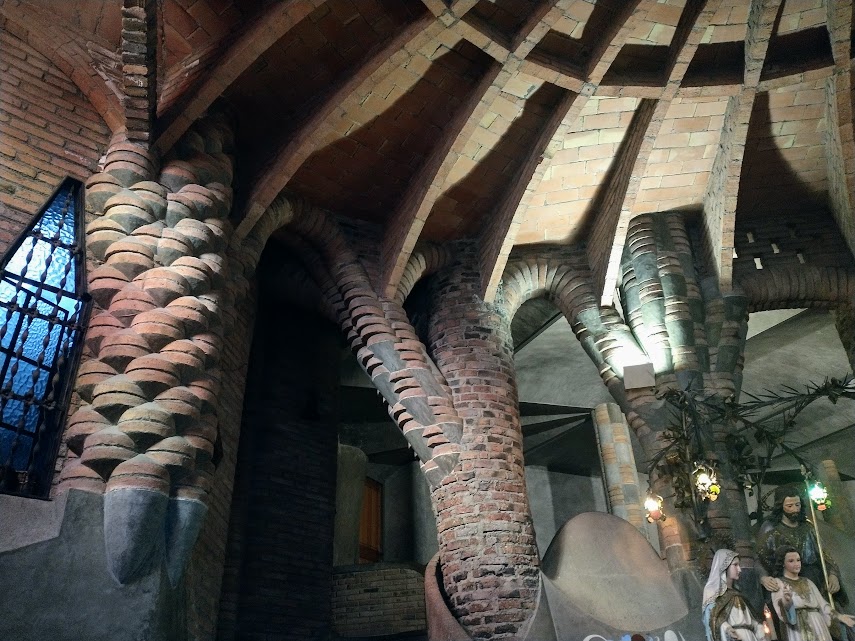
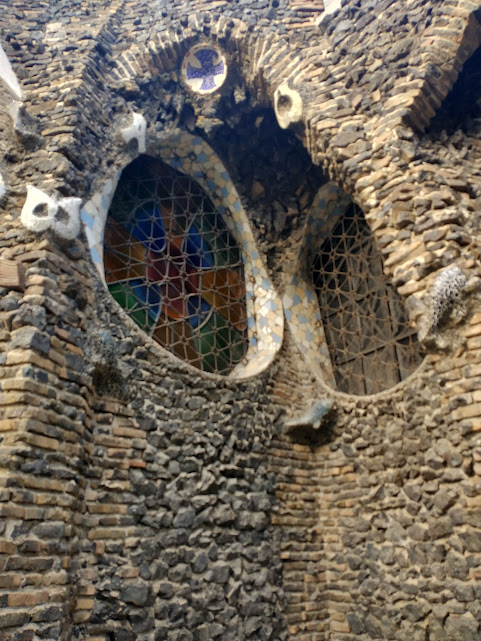
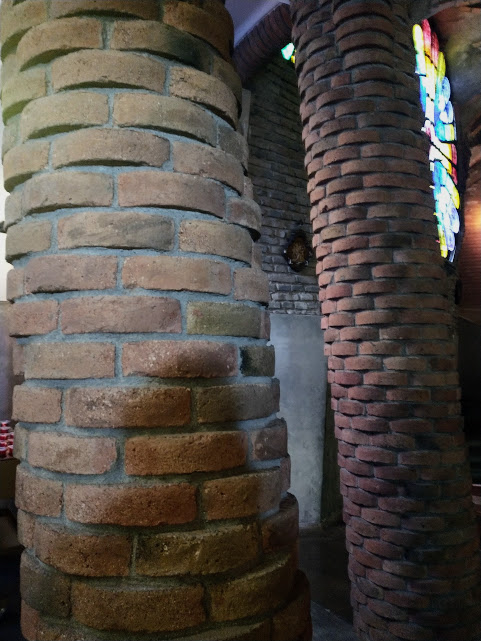
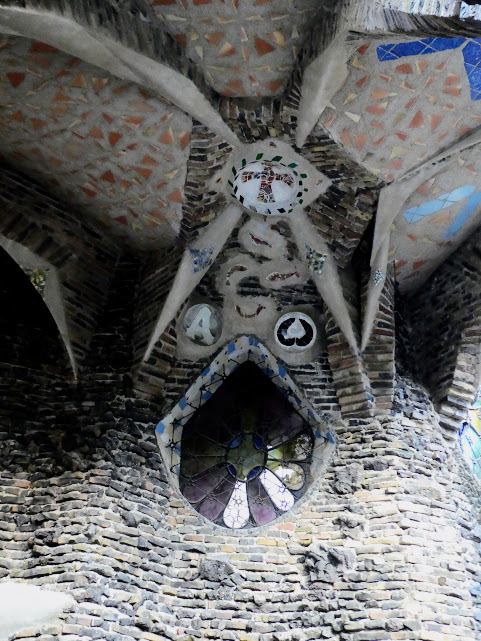
The building was begun, but in 1914 the Güell family decided to stop funding the project and Gaudí turned his back on it with only the lower nave completed, now known as the crypt. It was consecrated in 1915. I found it difficult to photograph, but here is a miscellany of shots from the inside and outside of an astonishing building.
During the Spanish Civil War, the mill was collectivised and run by its workers. After the war it was sold back to the Güell family, who sold it on again. Its days were numbered. The textile industry in Europe was collapsing and the factory ceased production in 1973. The factory itself was sold off piecemeal, and the houses to their residents. The settlement was in danger of losing its identity. But in 1990 the Colonia Güell was declared a ‘Heritage of Cultural Interest’ by the Spanish government and the protection of some of its most relevant buildings was established. Nowadays it’s an ordinary working community with an extraordinary history.
We enjoyed walking round and exploring. Sadly, we couldn’t see the factory. On Sunday its current many and various component businesses are shut, the gate to the site barred.
It’s not the easiest place to reach from Barcelona without a car, and as these things are apt to change, I won’t include public transport options. But we’re so glad to have visited, and will go again.
I haven’t done the Lens Artist Challenge for weeks, what with the busyness of being a granny to the latest granddaughter near Barcelona. But this week, Egidio proposes Warm Colours.
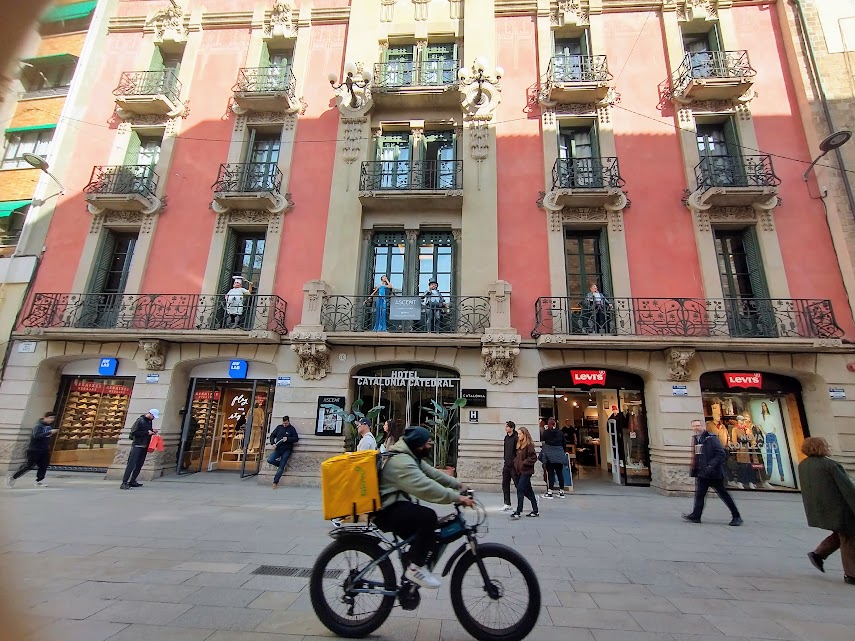
Well, Barcelona is warm at the moment. Here is a photo I snatched on 26th January – January! – of a young girl perfectly adequately dressed for the season.
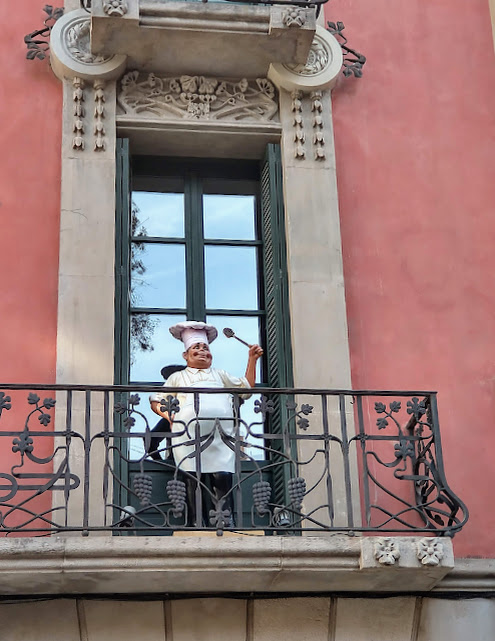
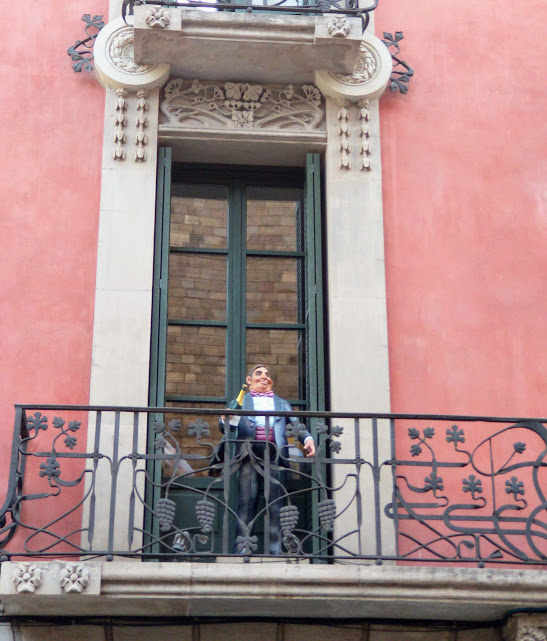
And of course the weather is not what this challenge is necessarily about. But maybe a bit of fun played out against a hotel wall painted a vibrant shade of coral, on a balmy winter’s day, will not be too much of a cop-out.
Here are vignettes of three snippets of lives lived on the balcony of Hotel Catalonia Catedral, near – of course – the cathedral in Barcelona.
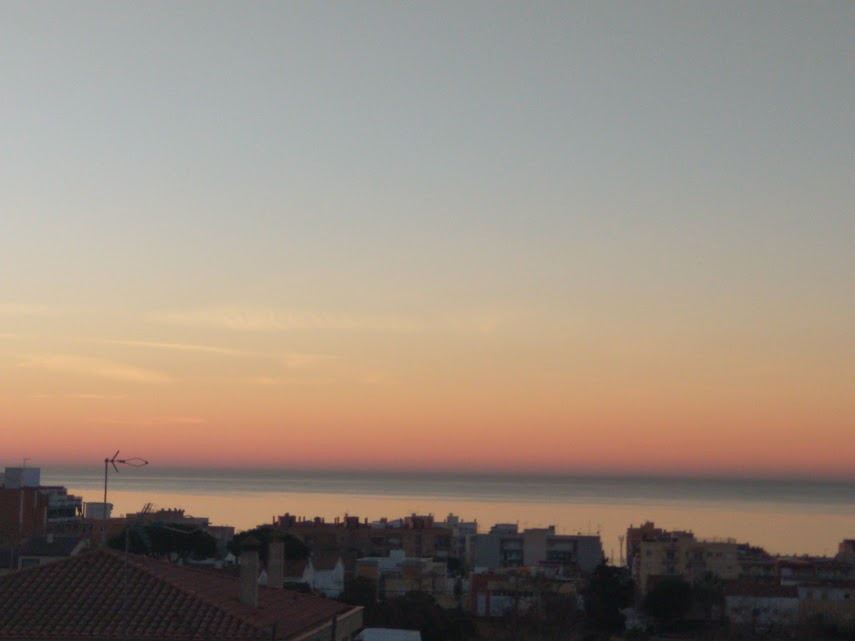
And here is a scene from our bedroom, taken at the beginning – or the end – of the day. Which? Only you can decide.
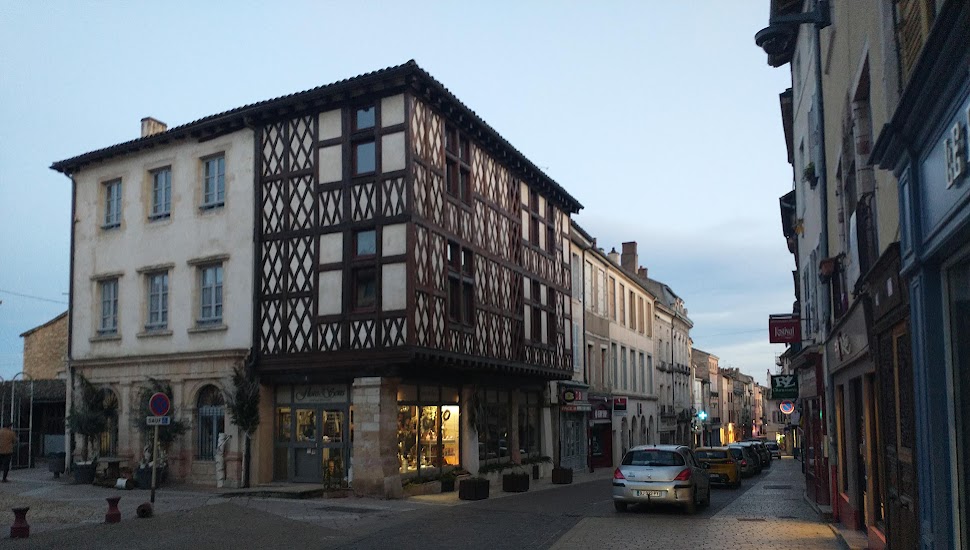
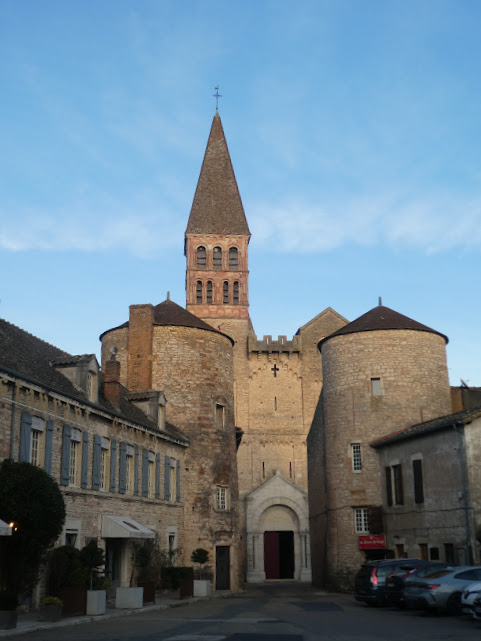
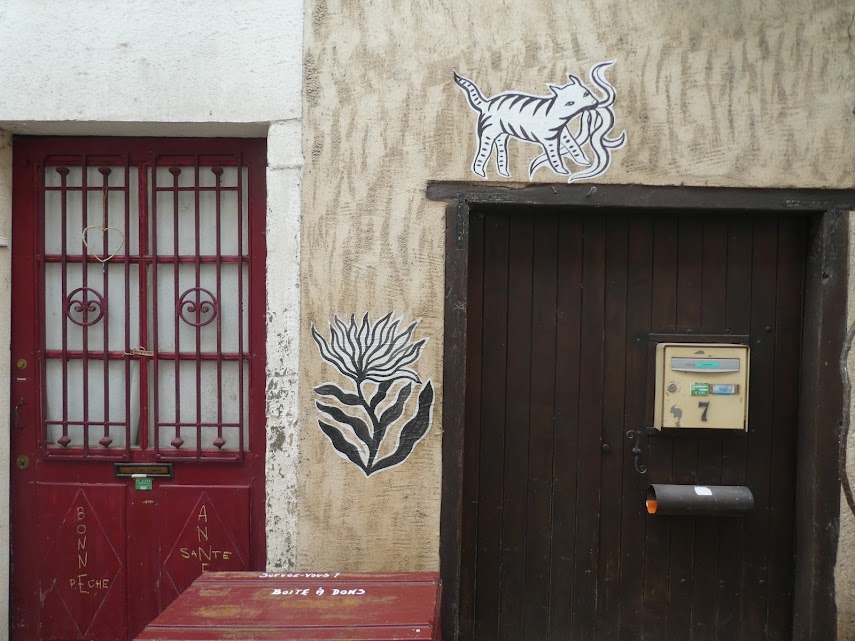
Tournus is a lovely little mediaeval town in Burgundy that we happened upon after a difficult day dodging the farmers’ blockades across the roads of France. Sitting in queues was the order of the day.
I could show you the fabulous abbey dedicated to Saint Philibert. But that’s for another day, maybe.
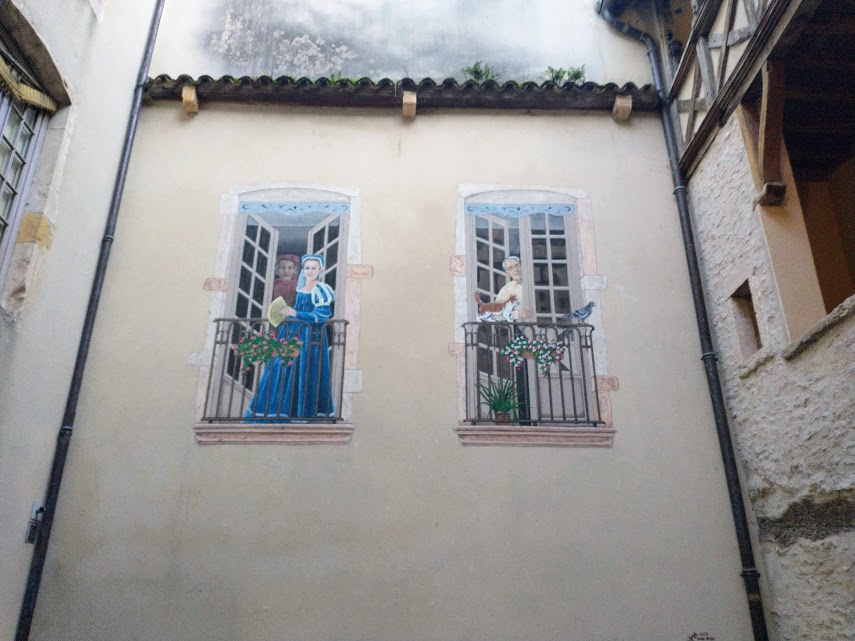
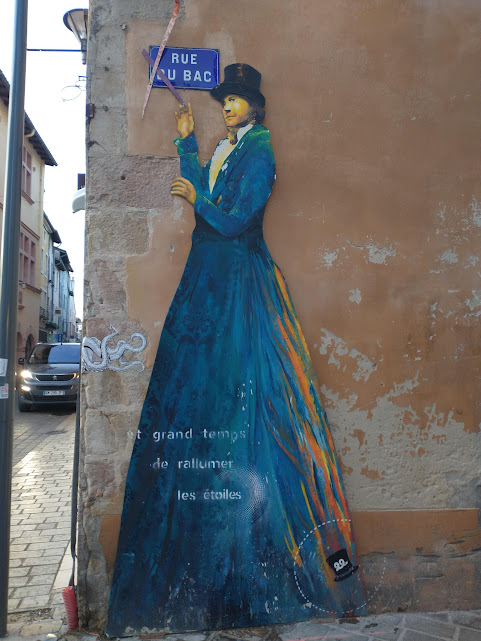
Instead, I’m choosing to go low-brow. I’m just offering a miscellany of street art and of enjoyable examples of whimsy that we discovered as we loitered along its ancient streets.
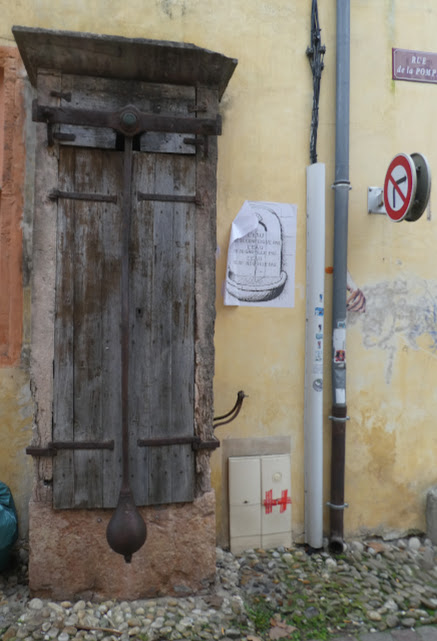
And finally, one curiosity. These doors used to open to reveal the parish pump. You can spot the water pipe on the right, with its handle at the bottom. You’ll find it in Rue de la Pompe. Obviously.
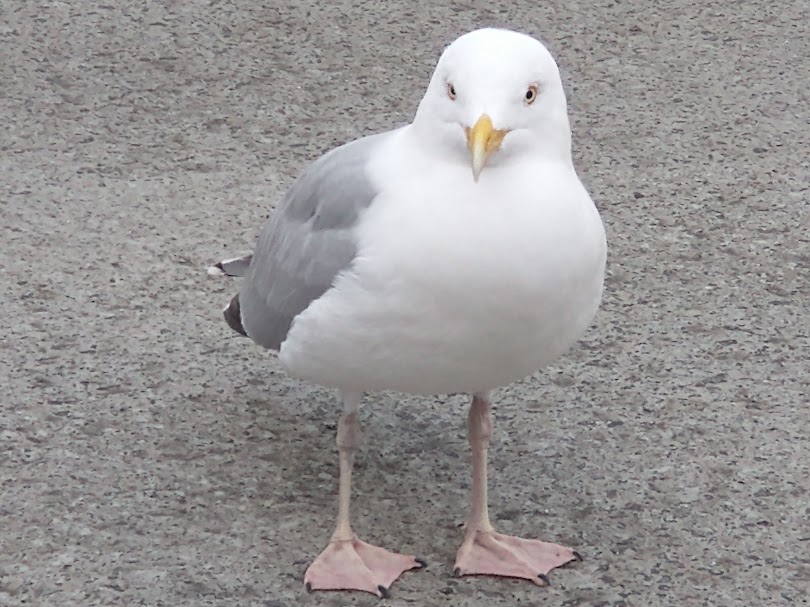
The featured image is of a herring gull who paraded obstreperously outside our car – only our car – as we waited to board the ferry at Dover. It was elevenses time-ish, but we displayed no evidence of snacking, so I don’t know what it was all about.
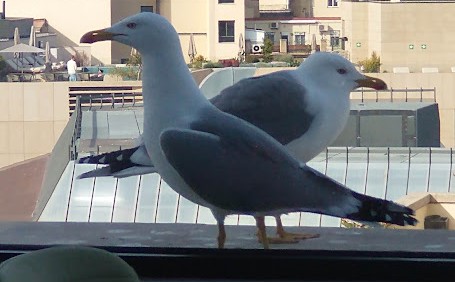
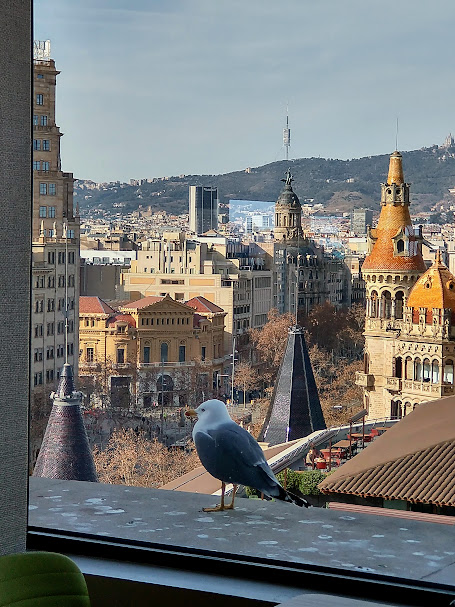
These other gulls are, according to Google Lens, yellow-legged gulls, and closely related to the herring gull. These specimens were loitering on the window ledge of the roof top café from which we were enjoying the view in the centre of Barcelona.
Thank you, everybody who identified last week’s creature as an Egyptian Grasshopper. It is good to know what this impressive creature is.



















 From Pyrenees to Pennines
You must be logged in to post a comment.