I receive my annual report……

Just over 5 years ago, I first started writing a blog.  I was going on the trip of a lifetime, to India, and I wanted to record it.  For my family, who’d made it possible.  For my friends, who wanted  the story.  And most of all, for me, as a record of a special month.  It wasn’t this blog, but one hosted by The Travel Blog.

I found I enjoyed writing, recording, sharing my new experiences, so I continued when I got back to France.  All the same, France was my new home, so a travel blog didn’t seem quite right.  After a few false starts ( I’m really no kind of geek), I made the move to WordPress, and here I still am.

My interest always was, and still is, in keeping in touch with friends, and as a sort of diary for me.  I never expected anyone else to read it.  But gradually, other regular readers came along: people I’ve never met, and in most cases probably never shall.  From Germany, from America, from France and of course from the UK.  They comment, they encourage.  In many cases they write blogs too, and I enjoy glimpses into very different lives from mine.

Compared with many of the other blogs I read, mine has a small readership.  But it still astonishes me that something I started so I could keep in touch with maybe 30 people has resulted in several cyber-friendships, and regular or occasional readers in every continent.

I find it interesting that no one blogger’s ‘reading list’ in any way resembles anybody else’s. There are thousands, I suppose millions of blogs on offer these days, covering every possible area of life.  I read those that touch my life in some way, and comment too, just as many readers comment on my posts.  I enjoy this interaction  and so I guess that for the time being, I’ll keep writing.  The day I run out of things to write about, or it becomes a chore, I’ll stop.

Meanwhile, I’m showing you my Annual Report not because I expect you to show the remotest interest in the detail, but because you might be astonished, as I am,  at all the information that WordPress has been able to collect.  They know who you are……

‘The WordPress.com stats helper monkeys prepared a 2012 annual report for this blog.  (You might like to know that the people on their Help Desk are called ‘Happiness Engineers’)

Here’s an excerpt:

4,329 films were submitted to the 2012 Cannes Film Festival. This blog had 14,000 views in 2012. If each view were a film, this blog would power 3 Film Festivals
Click here to see the complete report.

Salvador Dali and a star-shaped fortress

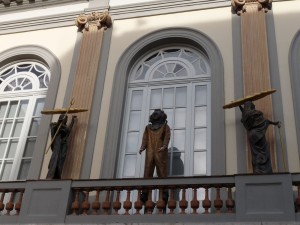
These three figures look down on you as you wait to visit the Dali Museum.  And the loaves of bread?
These three figures look down on you as you wait to visit the Dali Museum. And the loaves of bread?

“Where, if not in my own town, should the most extravagant and solid of my work endure, where if not here? The Municipal Theatre, or what remained of it, struck me as very appropriate, and for three reasons: first, because I am an eminently theatrical painter; second, because the theatre stands right opposite the church where I was baptised; and third, because it was precisely in the hall of the vestibule of the theatre where I gave my first exhibition of painting.”

That’s Salvador Dali, speaking about his wish to create a museum to his own work in the shell of the theatre at Figueres, destroyed, like so many other buildings in Catalonia and throughout Spain, at the height of their Civil war.

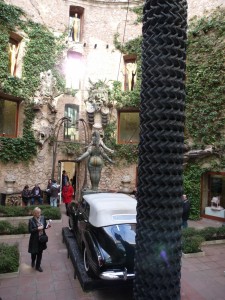
The courtyard, the Cadillac, the tyres... and... and....
The courtyard, the Cadillac, the tyres… and… and….

It’s an astonishing place.  Start out in the central courtyard, and you’re confronted by a Cadillac – Al Capone’s allegedly – beside a tower of tyres topped off by a fishing boat.  Wander round – in any order, please: Dali insisted there was no timeline or other imperative to be followed.

Homage to Hieronymus Bosch?
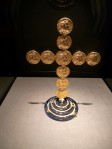
Gold cross.
Gold cross.

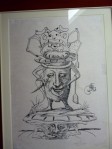
You’ll discover rooms of paintings in which he worked in the style of other artists as diverse as Vermeer, Picasso, Goya, Velasquez, Millet, de Chirico: was he in search of a personal voice, or simply exploring and celebrating his knowledge of art history?  A room full of fantastically bizarre creatures shows an affinity with the work of Hieronymus Bosch, but only a few yards away is a room full of exceptionally fine gold and bronze jewellery, largely made from coins with the heads either of Dali or his beloved wife Gala on them.

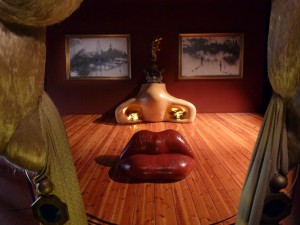
Then there’s the Mae West room.  Walk in, and you’ll see some random objects: a couch, two wall paintings, a fireplace.  Climb the stairs at one side of the room however, and look though the lens, and there she is, Mae West herself, in all her ruby-lipped glory.

And here she is.
And here she is.

It goes on.  He’s copied Michelangelo’s Moses: but what’s an OT prophet doing with a giant squid?

Or go and get vertigo while standing four-square on the ground, viewing the dizzying perspectives of the ceiling in the Palau del Vent.

...and that's only a bit of the ceiling.
…and that’s only a bit of the ceiling.

The whole thing was by turns stimulating, exciting, puzzling and sometimes even annoying – bizarre for the sake of being bizarre.  We’re really glad we went, though once may be enough.  And if you want to know more, there’s an interesting account in the blog ‘Elsewhere’

The Civil War came up again when we visited the Castell de Sant Ferran, just outside Figueres.  It’s an enormous, star-shaped site, built in the 18th century to protect the Spanish from the French, but it saw almost no action.  But in the 1920’s, Salvador Dali did his military service there. It only came into its own during the Civil War.  Then it provided secure storage for masterpieces from the Prado in Madrid, and became a stronghold for international brigades and ammunition.

We spent so long tramping round the walls – it’s a 3 km walk to encircle the entire site – that we didn’t explore the interior, which may have been a pity: some other time.  But what a walk!  As we began we could clearly see the Mediterranean coast and towns such as Roses.  Then the Pyrenees, covered in snow over to the north, and the dusty more barren nearby hills.  Figueres itself doesn’t give a good account of itself from up here: modern concrete factories and lots of high-rise blocks.

A small stretch of castle wall, with the Pyrenees beyond

And that was it.  Our brush with the law in Barcelona had left us feeling a bit sour, and we felt our holiday was at an end.  So off home for us, planning a return one day to explore that coast we’d caught distant glimpses off from the castle walls.

The cops and robbers of Barcelona

Christmas in Barcelona.  A perfect way to celebrate.  Son and daughter-in-law were there too, and we all stayed in Emily’s flat, since her flatmates had gone away.  Perfect times for us don’t make for interesting reading for others: the balmy weather, meandering round the endlessly fascinating streets as desultory sight-seers, coffee stops at the outside tables of bars in picturesque squares, shopping at temptingly- stocked shops and market stalls in the cosmopolitan quarter which is Emily’s home, eating out or sharing tapas at simple neighbourhood restaurants….  Here’s the story in pictures.

So something had to come along and spoil it.

The car and Barcelona don’t go well together. Even driving in and out of the ill-signposted city is something we always dread.  With a superb and cheap public transport system, we’d have liked to have left the car at home, but it was stuffed with extra bedding, presents, bits and bobs Emily needed from home, so when we arrived, we unloaded and then took it off to park elsewhere for the duration, since she lives on a square with little parking.  She’d taken advice, and suggested a quiet nearby corner of town where a Spanish friend said it would be safe and out of the way.  Once there, we checked, and checked again that there were no restrictions.  One morning, we popped up and checked yet again.  All was well, so we left it until we were packing to go….. walked to the street where we’d left it…… No car.

Stolen!  Panic! What to do next?  Contact our insurers, see if we could sort out one-way car hire between Spain and France?  Would insurance pay? What about replacing the car, which we’d newly and expensively fitted out with snow tyres?  How could we possibly afford that? Emily rang the police, who promised to call back once they’d made enquiries.  After a couple of hours to-ing and fro-ing, we learnt that the car wasn’t stolen, but had been towed away because of parking infringements.  There should have been a notice stuck on the road where the car had been, telling us what had happened: but there was nothing there. We’d need to go in person to the Police.  There are three sorts here: those belonging to Barcelona itself, local Spanish police, and the national service.  We went to see the Barcelona lot, a 20 minute walk away.  Eventually they tracked our car down – thank goodness for Emily’s command of Spanish – to the Spanish police’s car pound at the last stop on the metro line.  If we went with ID and 239 Euros, we could have out car back……

Walk to metro.  Impatiently sit out long journey.  Emily spends time texting Spanish friends.  They’ve all had similar experiences: ‘It’s to try to fill the city’s empty coffers’, they explain. Track down car pound.  Join disgruntled queue of fellow-sufferers. Pay up.  No choice.  Receive form on which to write our grounds for appeal. Try to make our way back to Emily’s from a completely unknown part of town – we get good at buying time by circling roundabouts twice.  All the time fuming at the loss of precious hours with Tom and Sarah on our last day together.

Heigh ho.  Even run-ins with the Police however, can’t take away our memories of a wonderful Christmas break.

Bugarach: ‘Doomsday Destination’

Cold.  Pale thin fog baffles the contours of the hillsides, and those of the distant castle at Coustassa.  Glimmering frost bristles the short maquis grass beneath our feet.  A watered lemony sun high above us attempts to burn winter away, and eventually does so.

That’s when we have our first view of Bugarach, the imposing thick-set mountain which dominates this part of the Aude, because it stands alone, rather than as part of a range, and today is pretty much thatched in snow.

Bugarach has been in the news for a while.  Here’s BBC’s ‘From our Own correspondent’ back in July 2011:

‘According to an ancient Mayan calendar, at some point towards the end of 2012, the world will come to an end.

It is not clear how that will happen, but apparently humanity does not stand a chance – except for those who seek shelter in the area surrounding Bugarach.

Just 200 people live there all year round, but doomsday believers and spiritual groups are convinced the village has magical powers, thanks to the local mountain – the Pic de Bugarach.

For years, rumours have circulated on the internet that extra-terrestrials live in the mountain, and come the apocalypse, the top will open and they will emerge with spaceships, and rescue the local inhabitants.’

Although it’s quite hard to entertain the idea that the mountain might be some sort of underground UFO car park, there are plenty of people who have done so, and with great fervour.  Here’s today’s Daily Mail, which has been talking to Jean-Pierre Delord, Mayor of the tiny village of Bugarach (pop. 176).

‘On Wednesday, he will close the village for five days to anyone who doesn’t live here or isn’t already booked to stay, and draft in hundreds of police, military, firemen and Red Cross to ban any gatherings, shut off the mountain and arrest anyone silly enough to try flying over it.

‘What if tens of thousands of people turn up?’ he says, throwing his arms up in the air. ‘I have no way of knowing what will happen. I have no crystal ball! I don’t care if people want to chant naked or talk to the trees, but I have to protect my villagers. I am responsible for them.’’

He’s not over-reacting.  Local house-owners have been able to rent out their homes for the period in question for astronomical prices, and even camping spots are going for 400 euros a night.  For most locals though, the whole thing is at best a nuisance, at worst a real headache.  The nearer we get to December 21st, the more people descend on the area, and the police and army are already involved in keeping order.
We enjoyed our views of Bugarach, as ever.  We spent time pretending to look for UFOs and generally mocking the New-Agers who are so convinced by the end of the world as we know it.  Then we got on with the business of enjoying our walk in the here-and-now.  Here are some photos of our day.

Christmas on the High Street

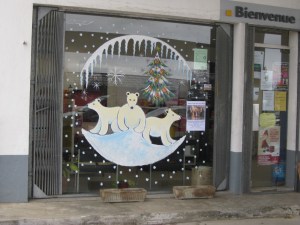
Verzeille&decoDec2012 033It was 5 years ago when we were first in Laroque round about Christmas time.  There were no signs of its coming until well into December, and we thought it wonderful: no decorations, no adverts, merchandise or muzak,  just a bustle of festive activity from about two or three weeks beforehand.

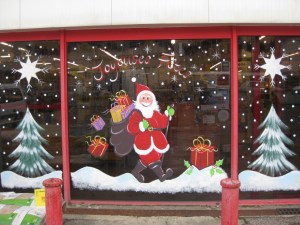
The first signs, as in England, were in the shops.  Unlike England however, most shopkeepers didn’t usually buy tinsel, baubles, and several packs of cotton wool to introduce a Christmas theme into their window display.  Instead they had a seasonal design applied directly to the window.  We once saw a scene-painter busily decorating a local window, and wondered what he did the rest of the year.  Shops in small town high streets like Laroque’s would all be unified by being the same but different.  The same folksy interpretations of Christmas motifs, the same limited palettes of white, red, greens and yellows.  Some would choose scenes of reindeer amongst the Christmas tree forests, others Father Christmas,  snowmen, or radiant candles.

Garage in Laroque
Garage in Laroque

Five years on, hardly any shopkeepers are keeping up this tradition.  They’re decorating their shops, but in their own way: dressing up their window display with baubles, snowflakes and Santa Claus figures.  They’re nicely done too, but I miss the particularly French idea, which I’ve seen nowhere else.

Here are the few traditional window scenes I’ve been able to find this year.  Maybe next year even these will be part of the past.

A baker's shop in Laroque
A baker’s shop in Laroque

Bodge-it-yourself

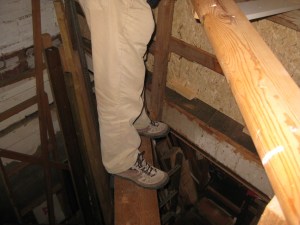
We’ve been up in the atelier today, making the workshop part of it frost-free for winter.  Because the roof will HAVE to come off next year – it really leaks quite seriously – there is no point in doing a tremendously fine job at the moment.  Cobbling something together from odds and ends is the order of the day.

Now this is fine by me, less fine by Malcolm.  In the DIY department, we are an extremely ill-assorted couple.  Malcolm has a fine selection of tools,which he keeps neatly organised, clean, sharp and  ready for action.  I have only the haziest notion of DIY skills, and am prone to use broken knives as screwdrivers.  The only time I went in for any serious sawing, more than 18 months ago now, I made such a bad job of it that I permanently damaged my shoulder.  I’m as keen on DIY as Malcolm is on cooking.

This leads to conflict.  Increasingly, I feel obliged to help – well, it’s my house as much as Malcolm’s.  The poor man is up against someone who simply has no instinct for the task in hand.  Holding steady something to be sawed, I’ll grip the wrong end of the plank.  Asked for a hammer, I’ll produce a mallet.  I yawn.  I clock-watch. I fidget.  I don’t notice when I could be fetching and carrying, and that is indeed as much as I’m fit for.  I make a mess of the simplest tasks: I confuse screws with nails and can’t remember where I put the drill bits.

Poor man.  He enjoys what he does on the whole, and is usually entitled to feel real satisfaction in a job well done.  If only he had a keen apprentice, rather then the moody and reluctant Work Experience type he ended up with, he’d get on so much faster, and we could all knock off in time for tea.

Don't even ask what's going on here.  You get the picture.  There's A LOT to do in the atelier
Don’t even ask what’s going on here. You get the picture. There’s A LOT to do in the atelier

If Heath Robinson* only knew

Over in a tiny village in the Couserans today for a huge lunch – Azinat – with friends, we came across this sight:

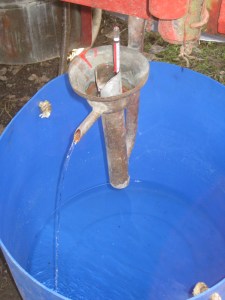
It’s an alambic – well two alambics actually.  We knew that, because we’ve seen plenty of these historic pieces of machinery on display in villages throughout the area.  We even know what they’re for: every autumn, villagers still look forward to the annual visit of the alambic man whom they pay to transform the juices from their apples, plums or whatever into the most potent hooch you can imagine: up to 50% proof.  These alambics  showed signs of having been recently used: the tractor next to them still had its engine running.

We retired to our restaurant for lunch.

Three and a half hours later, the meal over, we sauntered over to where we’d spotted the alambics: huge copper contraptions encased in a battered wooden frame.  They were functioning!  Three large rubicund men, the types you can meet in the countryside anywhere, any country, were supervising hooch production, and were very happy to explain everything.

Checking everything’s fine

Well, I can’t be sure I’ve got this right.  It’s something like this though.

A fire under the first cylinder heats the juices that are poured into it.

The all-important fire. Note the wheels on which the machine originally travelled

The resultant steam is forced up through pipes, which are cooled by water.  The vapour condenses into alcoholic liquid.  That doesn’t sound quite right to me: I never was any good at science.

Copper lid – parked for the moment.

Anyway, it’s the result that counts.  We met a Dutch couple who’d brought along their plum juice to be processed.  135 litres of juice.  And their eau de vie was now almost ready for them to pay for and take away.  Their 135 litres had become …. 10 litres.

Here’s the hooch

They didn’t yet know what they were going to be charged.  But they had been told they’d have to fill in a lengthy document for the tax office, and pay a suitable levy for this astonishingly potent product.  We know for a fact it’s strong stuff.  There were the dregs in a large plastic container.  They invited us all to dip a finger in and taste it.  We did.  And I promise you – just licking a fingerful probably put us over the limit.

We felt as if we’d witnessed a real piece of history.  When these men retire, are there young people around who will follow in their footsteps?

This alambic’s probably good for very many more years

* And if you don’t know Heath Robinson, click the link

‘Let them eat cake’

Back in the UK, I hear everyone’s gone baking mad, that the entire nation was glued to its screens to watch the final of  ‘The Great British Bake-off’.  Here in France, it’s the one branch of cookery in which the average French person will allow the average Brit some supremacy.

The French are rightly proud of their high-end patisserie, the delectable tarts and gâteaux which traditionally come to the table at the end of a family celebration or Sunday lunch: from the baker’s naturally, no shame in that.

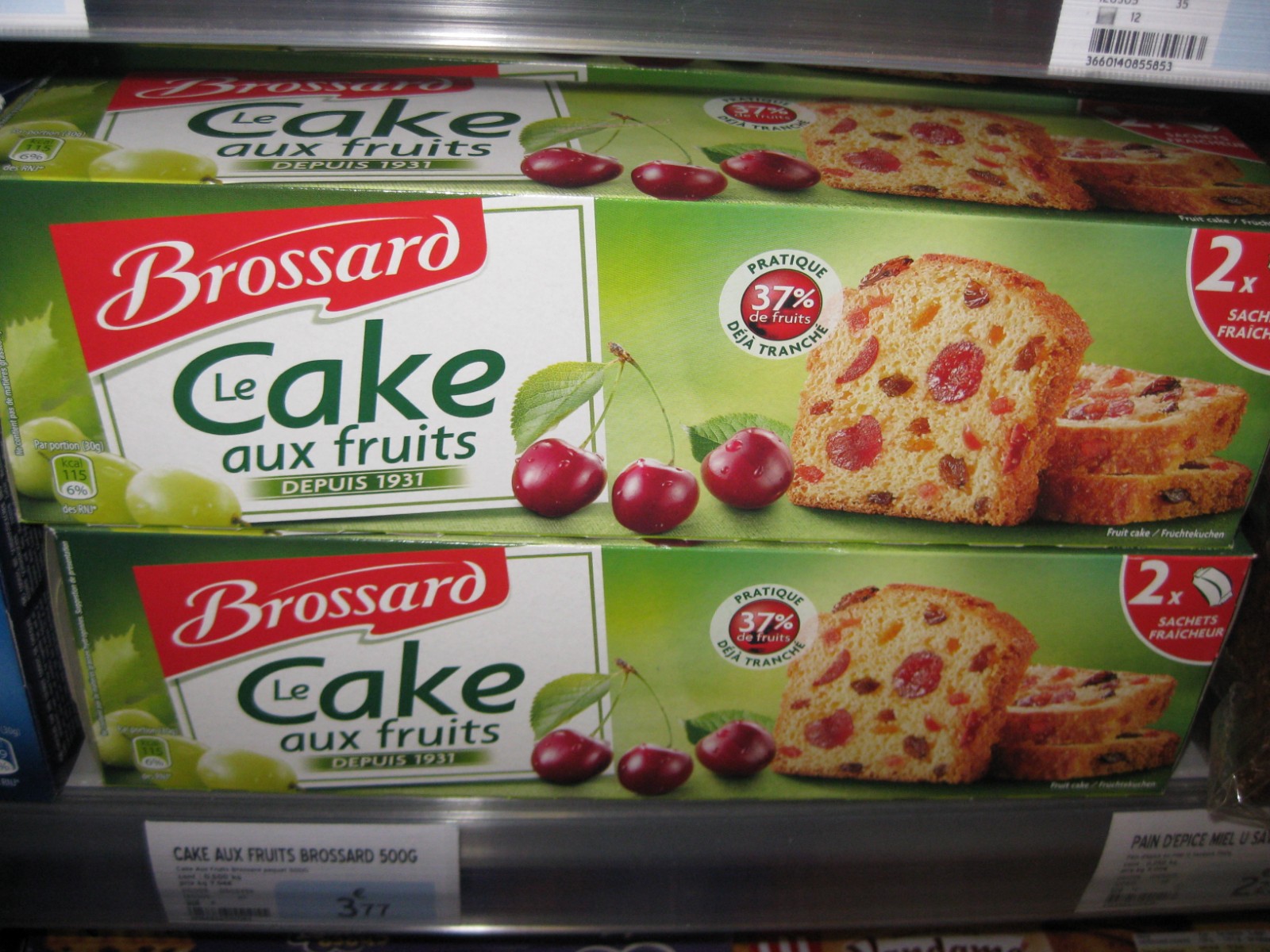
More day-to-day baking is a different matter, however.  Plainish cakes, loaf-shaped and known in France as ‘cake’, are a big disappointment, especially if they’re from the supermarket.  I find them over-dry, over-sugared, too strongly flavoured with something, such as vanilla, that should be a subtle undertone.  I never thought I’d find myself saying this, but even cakes available in any old British supermarket can be quite a treat in comparison.

McVitie’s Jamaican ginger cake, for example, dark and sticky, is just the thing with a hot cuppa after a brisk country walk in winter: it even has its own website.  And while I’m not sure that Mr. Kipling makes exceedingly good cakes, they’re – well – not too bad.

No wonder then, that when we run our cookery workshops at Découvertes Terres Lointaines, and announce that we’ll be turning our hands to British tea-time treats, the group is immediately oversubscribed .  Scones, coffee and walnut cake and a nice of cup of tea anyone?

Supermarket scene in France

The Orange Man

Winter has arrived.  How do I know?  Although the nights are cold, the afternoons are still for going walking or tidying up the garden wearing a tee-shirt, beneath a duck-egg blue sky. So until the other day, I thought we were clinging on to autumn.

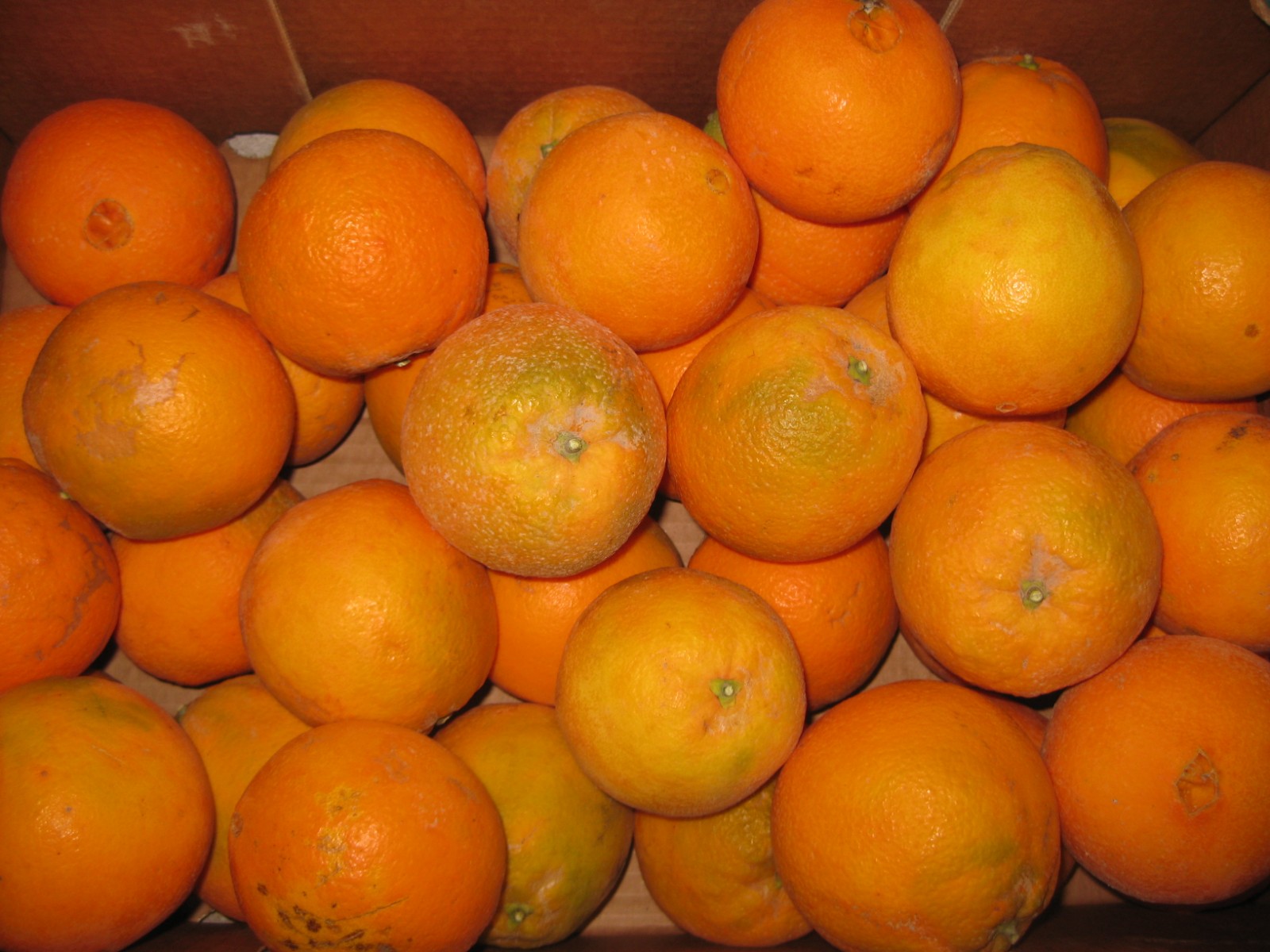
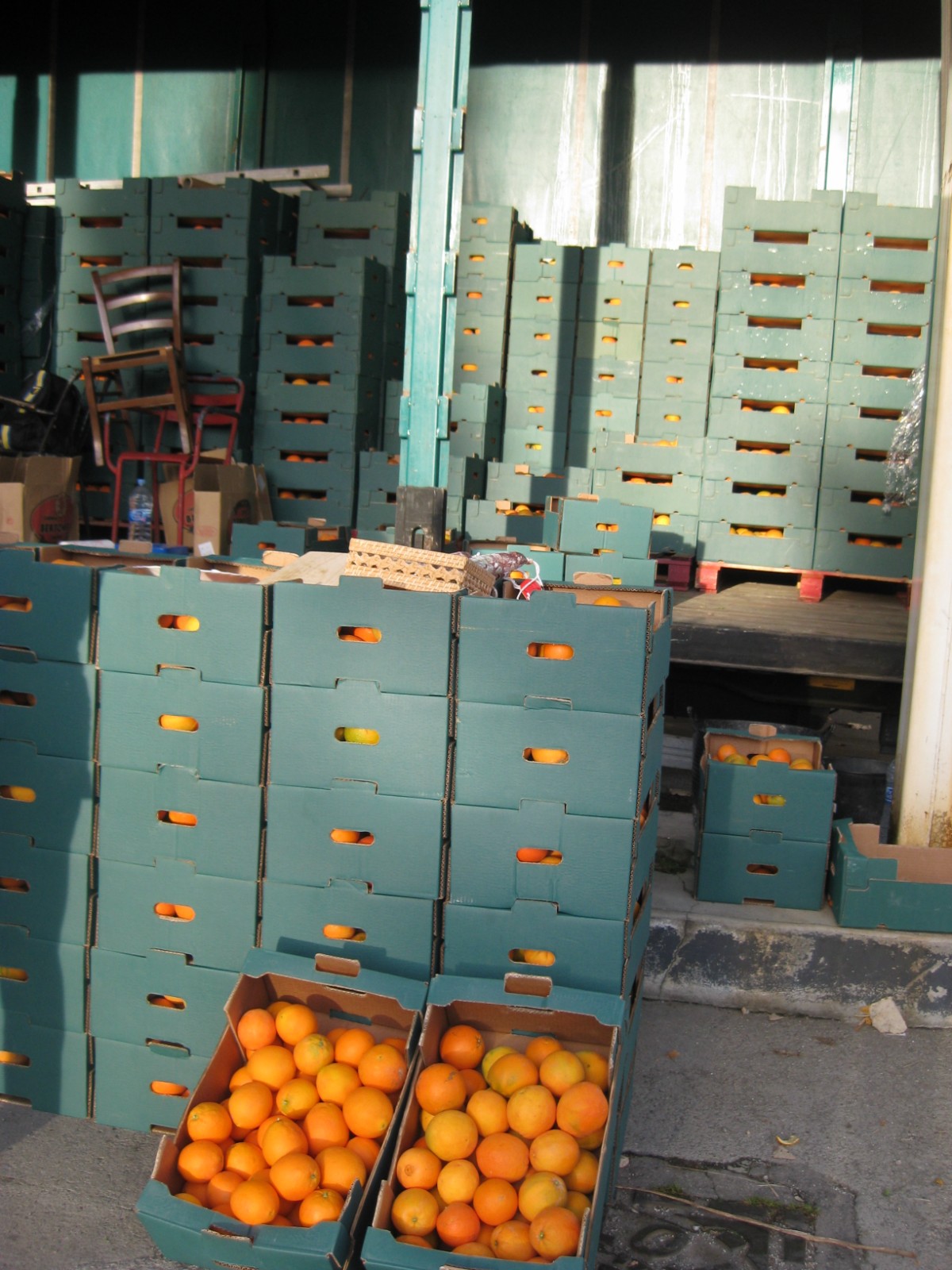
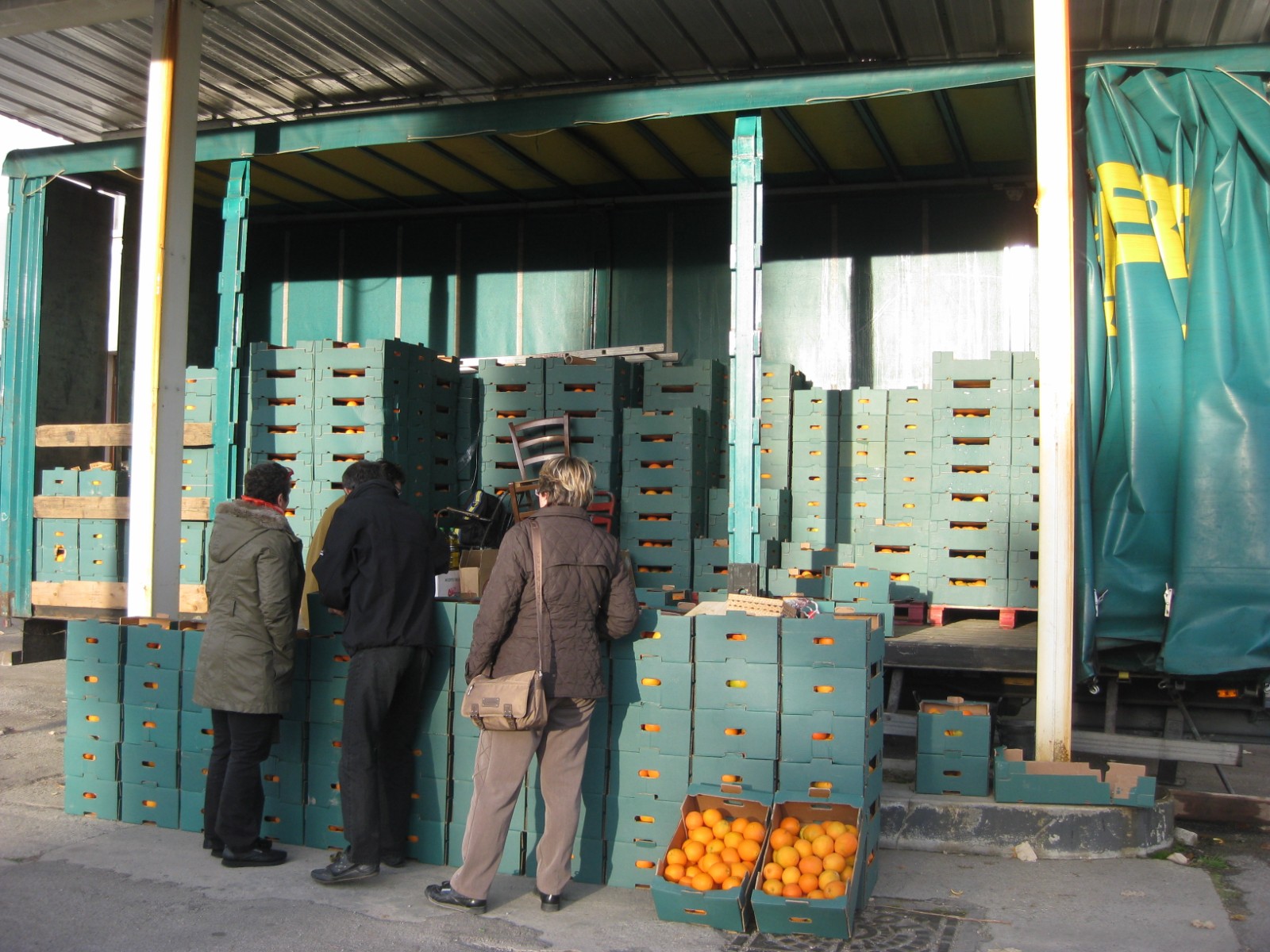
But on Thursday, the Orange Man arrived.  This is exciting enough news for it to be worth phoning a friend.  Every year, once winter kicks in and the orange harvest is well under way in southern Spain, a huge container lorry arrives in Lavelanet. It parks up at a disused petrol station on the main road into town and becomes an impromptu shop.

The man with the lorry, the Orange Man,  speaks only Spanish, and sells only oranges.  Not singly or by the half-dozen, but in large 10 kilo boxes.  10 kilos, 10 euros.  What a bargain.  These oranges, though sometimes a little knobbly and in irregular sizes, are the juiciest and tastiest you’ll ever eat, and it’s no wonder that whenever you pass, you’ll see someone pulling up their car and opening the boot for a case or two.  Our Spanish friend won’t have to stay long.  In a few days the entire container-load will be sold, he’ll return to Spain …. only to return when he’s loaded up again.

When he departs for the last time at the end of the season, we’ll know for sure that spring has arrived.

PS.  Very topically, Hugh Fearnley-Whittingstall takes oranges as his subject in today’s cookery column in the Guardian