The Lord Mayor’s Show: a day out in London


‘Even in 1215 London was an independent sort of a place: rich, well-connected and hard to govern. With nearly 15,000 residents it was already the largest city north of the Alps. Its merchants were organising a mediæval commune to protect themselves against pillaging barons and a taxing King, and its diverse trading population had strong connections to Europe and Scandinavia.

Meanwhile, bad King John was in trouble. He was retreating in France, running out of money and losing control of his Barons. Discontent was turning into open revolt and the King was very short of allies.

In 1215 the King was persuaded to issue a Royal Charter that allowed the City of London to elect its own Mayor. We presume that he gave his blessing to the commune in order to keep the City on his side, but there was an important condition. Every year the newly elected Mayor must leave the safety of the City, travel upriver to the small town of Westminster and swear loyalty to the Crown. The Lord Mayor has now made that journey for 800 years, despite plagues and fires and countless wars and pledged his (and her) loyalty to 34 kings and queens of England.’

That’s a quotation from the official site of the Lord Mayor’s Show.  This is not so much a show as a procession that over the centuries recognised the Lord Mayor of London as one of the most powerful men in the country. This may no longer be the case, but in its day the procession was one of the greatest spectacles in the country, worth a mention by the likes of Shakespeare and Samuel Pepys.  It’s still the occasion when the new Lord Mayor travels in a splendid coach which, were it to be built today, might cost some £2,000,000 to build.

Lord Mayor's coach
The new Lord Mayor bravely sticks his head out into the pouring rain to wave at the crowds.

You’ll see city businesses, Livery companies, charities, the armed forces, police, Londoners from every walk of life, marching or on floats reminding us of the complex and varied history of the City of London, a small square mile area at the centre of the now enormous wider city, which is some 607 square miles in area.  London has its own Mayor, an elected politician (currently Boris Johnson): please don’t confuse the two offices!

We were in London for a couple of days.  Son Tom was singing in a concert with his Choral Society on Saturday evening, and for the rest of the weekend, the five of us, including four-month old William, became tourists.  Four month old babies have a habit of imposing their own daily rhythms on the day, so we didn’t arrive for the start of the procession, or in time to secure a very good vantage point.  But there were highlights, the last of which was the appearance of the Lord Mayor himself in that magnificent coach, accompanied by halberdiers in their ancient uniforms.  Before that we’d seen horseguards, and representatives of some of the great Livery Companies.  These were ancient trade and craft guilds.  They existed all over Europe as Trading Standards organisations, as trade unions, as philanthropic organisations helping members in times of sickness and infirmity, but those remaining in London are unique in their survival, number and diversity.

These days we are charmed by the names of the more ancient Guilds: the Watermen and Lightermen; the Tallow Chandlers; the Spectacle Makers; the Painter-Stainers, the Merchant Taylors: we saw none of those, though they still exist. More recent additions are the Air Pilots, the Environmental Cleaners and so on, and we saw representatives of the Guild of Human Resources Practitioners and of the World Traders.  What would Dick Whittington, the 14th century rags-to-riches thrice times Lord Mayor of London, more commonly these days seen in Pantomime have made of them, I wonder?

Old and new A
The City of London old and new, seen through the windows of Leon, a natural fast-food restaurant.

I love the City of London.  Despite its being home to the Tower of London, to some 4 dozen Wren churches including St Paul’s and a host of other sites; despite its wonderful street names (‘Hanging Sword Alley’, ‘Gutter Lane’, ‘Wardrobe Terrace’), it’s a surprisingly people-free zone at the weekend.  I love the dissonant notes as delicate, ancient buidings and churches butt up against stark modern constructions.  I love it that these modern flights of fancy in glass and steel are obliged to squeeze themselves into street patterns established in the middle ages, and unchanged even after London’s famous Great Fire of 1666.  There’s a surprise around every corner.
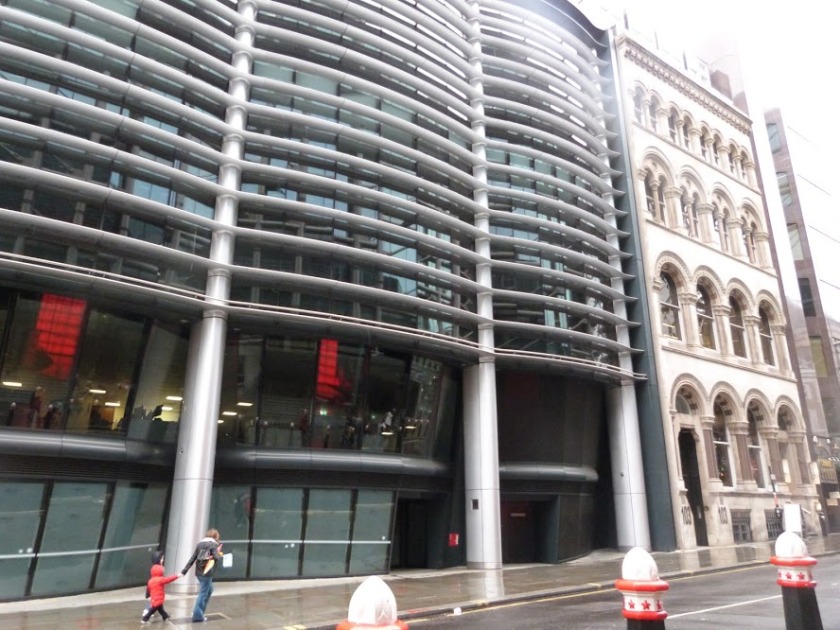
Old and new
New city, old city.

And afterwards, a stroll along the Thames, to see more evidence of London old, London new.
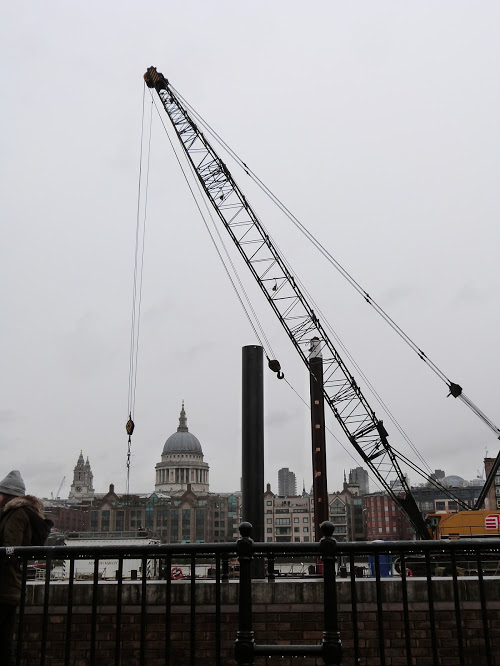
St. Paul's
St. Paul’s Cathedral, and a few cranes.

‘Rain, rain, go to Spain….’

I was out walking near Ripon this morning. For once it’s not raining – and it has been, more often than not, for days and days. But the river, viewed on a gusty but mild Autumnal morning, offered proof of all that recent rain. The Ure raged and surged at the bridges. Every bank had been breached, and trees were paddling in several feet of water. Impromptu lakes formed in fields and too-close-for-comfort to urban streets. Riverside paths, usually solid affairs of beaten earth, were slick and slippery with sludge: or worse, deeply hidden under soft ribbons of oozy mud. How very like an English November, I thought.

But then I remembered a November in France, only two years ago. It made our current Autumn weather look rather OK, especially as it’s unseasonably mild: 16 degrees today. Nobody’s talking about snow …… yet.

margaret21's avatarFrom Pyrenees to Pennines

Bridge over the River Touyre Bridge over the River Touyre

I think we’ve had enough.  When I last posted  – three days ago – we’d already had a week of rain.  It’s barely stopped since.  During the night, we can hear dull thudding as the roof tiles take another sodden pounding.  We get up in the morning, raise the shutters, and immediately the rain batters the windows.  Going for the breakfast loaf, usually a good way to begin the day, seems unattractive.  We make a comforting pan of porridge instead.  And so the day wears on.  We go out when we have to, but there’s no pleasure to be had in scurrying down the street, heads down, coats spattered by any passing car.  And I don’t know when we’ll ever have a country walk again.  The fields are waterlogged, the paths sticky and slippery with thick deep mud.

This was the River Touyre this morning…

View original post 112 more words

A job worth doing ….

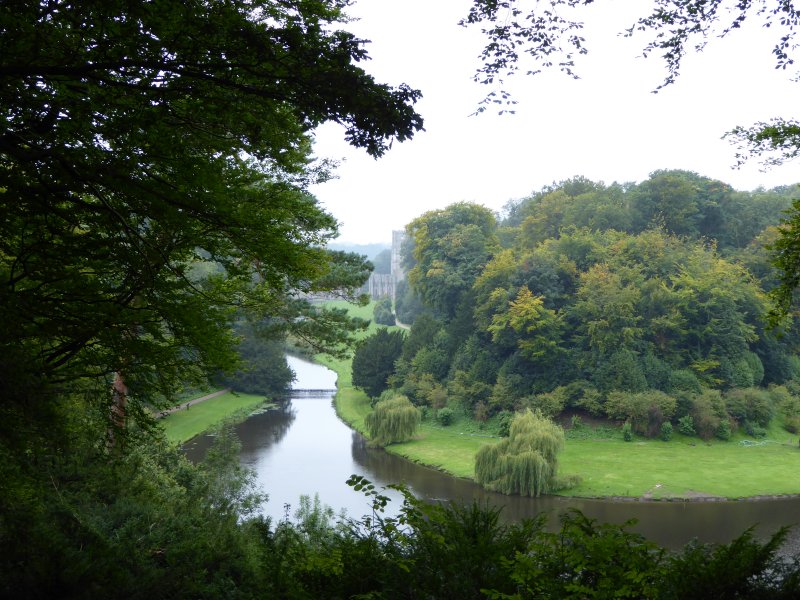
Walk round the grounds of Studley Royal, and this will be your first sighting of Fountains Abbey.

A few months ago, I got a job.  Not for the pin-money, because I’m not paid a penny.  But I’m richly rewarded.  I signed up to be a volunteer for the National Trust, at the property nearest our home, Fountains Abbey and Studley Royal.  Cistercian Abbey, Georgian water garden and mediaeval deer park…. no wonder it’s a UNESCO World Heritage Site.

Since we moved to Ripon, we’d loved spending time there, so I got to wondering….what would it be like to volunteer there?  What could I do?  What might be involved?

The answer turned out to be…almost anything you want  There are dozens of different roles, from gardening to guiding.  You could drive the mini-bus or form part of the archaeological monitoring team.  You could work in the shop, or in the admissions areas. Badged up, you could wander the grounds, being alert to the needs of visitors who’d like a potted history lesson  or to find their way to the toilets.  You could work in the wildlife team, helping look after and monitor all those ancient trees, or the herds of deer.  You could turn to when there’s a special event, and put out chairs.  And you’re quite entitled, over the years, to change your mind and try something else.

I for instance, started out as a visitor assistant at the Victorian High Gothic Church of Saint Mary’s in Studley Royal Park.  It’s a real masterpiece of Victorian architect William Burges, but it turned out not to be ‘me’.  I admire the building hugely, but it doesn’t involve me at an emotional level as the ruined abbey does.  So I quit.  No hard feelings

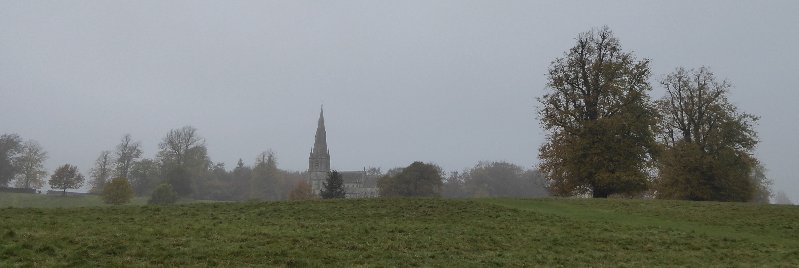
Looking across at St.Mary's from the Deer Park.
Looking across at St.Mary’s from the Deer Park.

But I shan’t be quitting the Learning Team.  Our bread-and-butter is sharing a Day In the Life of a Monk with schoolchildren.  The children dress up in monk-style habits, and tour the site getting in touch with the brothers’ silent and family-free routines, led by one of the team.  We examine the roofless, windowless Abbey and try to picture the church back in its prime. We imagine the vast space, illuminated only by candles, as the monks worshipped there eight times a day, from 2.00 a.m. onwards.  We visit the refectory where the monks dined, in silence, once a day. Did those monks eat meat?  What about potatoes?  No?  Why not?  We visit the Warming Room and imagine having just four baths a year, shaving our tonsures with oyster shells.  We discuss bloodletting.  We talk about all the daily routines.  Maybe the children remember only a few of the facts later, But we hope they are moved by these atmospheric ruins, and return later with their families.

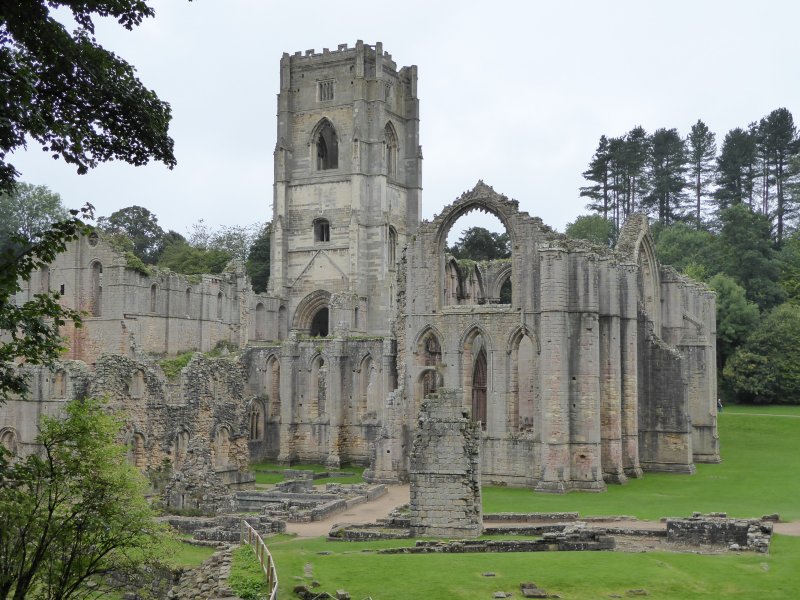
Fountains Abbey.
Fountains Abbey.

They might come though, to experience the natural environment of the grounds: they might go pond dipping, or on a walk where they try to use all their senses by listening, touching , seeing, smelling and so on.  Or make mosaics based on what they’ve observed.  Or go den-building in the woods.  They’re as sure of a grand day out as are the volunteers in the team.

I’ve ended up doing all sorts of stuff I’d never have thought of attempting.  Car park attendant on Bank Holidays?  I didn’t think so.  But it turns out to be fun togging up in a hi-viz jacket, barking out radio messages on the walkie-talkie system, getting in touch with your inner traffic cop, and generally being a welcome face to visitors as you help them manouevre themselves into the busy car park.

And some things are quite simply, a privilege.  I wish you could have joined me on Sunday evening.  After dark, the site was opened to less mobile visitors.  For one night only, cars were welcome on site, to be driven s-l-o-w-l-y past the floodlit Abbey buildings.  The evening was cold, misty, moody, atmospheric.  Night birds swirled above the trees, dampness dripped from the trees, and monks could clearly be heard from within the abbey, chanting their plainsong (a recording, actually, but none the worse for that).  I talked to some of the visitors, often very elderly, as their cars and drivers made their stately way through the grounds.  Their appreciation of the staff and volunteers who were there helping the evening to go smoothly, though nice to hear, was quite unnecessary.  I wouldn’t have missed this experience for anything.  A special evening indeed.

And there are other perks.  A couple of times a year there’s a ‘works outing’, when volunteers can take a trip to properties in other parts of the country. Here’s one.  There are winter lectures for those who want them, to widen and deepen their knowledge of the history of the place  There are times to socialise – a barbecue, a quiz night, meals.  We’re very well supported, properly trained, and appreciated by the regular paid staff.  I look forward to every single thing I do as a volunteer at Fountains Abbey and Studley Royal.  I feel very lucky.

Project Exhaust-a-Twin (or two)

It’s half term this week.  It seems to have become a bit of a tradition to have the twin grandsons – now ten – over for a few days.  This time though, all plans got thwarted by almost a week of constant unremitting rain.  No fresh air and fun for us this time.

An hour or two at the local adventure playground was rejected in favour of a visit to the local swimming pool.

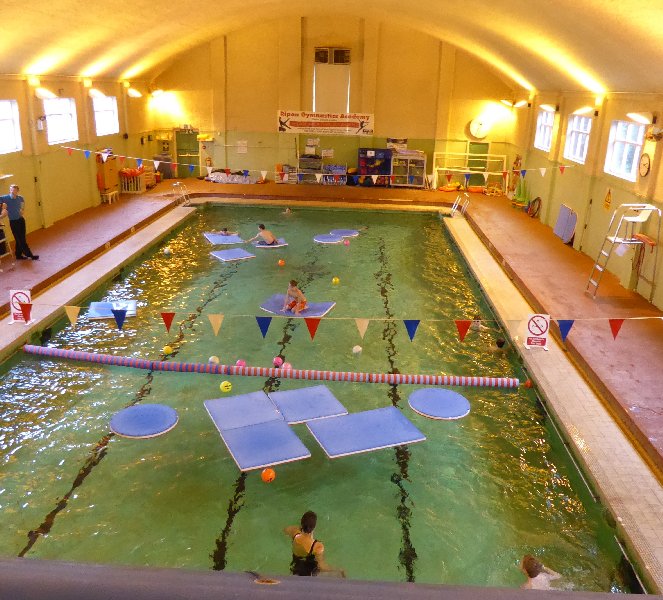
The boys were charmed by the antiquity of Ripon Baths - built 1903.
The boys were charmed by the antiquity of Ripon Baths – built 1903.

We spent hours playing old-fashioned board games like ‘Go for Broke’.  This involves trying to lose the million pounds with which you started the game.  In  ‘The London Game’, you have to blunder round London’s Underground system whilst your opponents do their best to prevent you reaching your destination. ‘Stone Soup’ means lying through your teeth about the cards you’ve just placed, face down on the table.  All useful worthwhile life lessons, I’m sure you’ll agree.

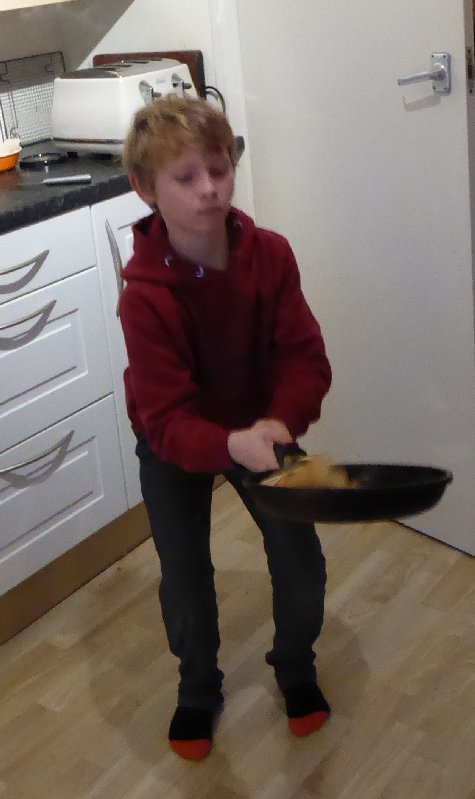
It’s a tradition that breakfasts have to involve ‘Grancakes’ – pancakes to you.  Here’s a shot of Ben tossing his – and that one didn’t end up on the kitchen floor.

Well caught, Ben!
Well caught, Ben!

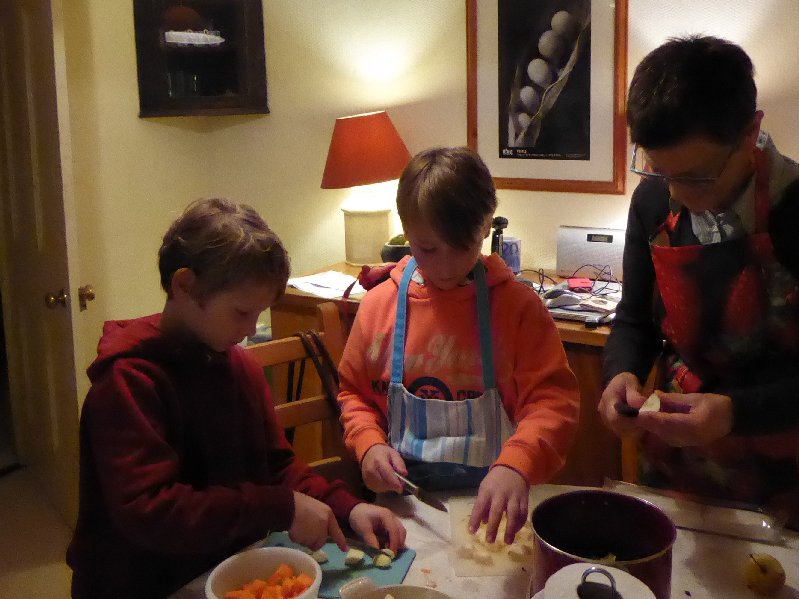
A more recent tradition insists that during every stay, a traditional English Roast Dinner has to make an appearance, and the twins have to do much of the hard labour: roast chicken, roast potatoes, Yorkshire pudding, carrots, broccoli…and the all-important gravy.  I find the timing of all this a bit stressful.  No wonder roasts don’t make a frequent appearance in this house.

Spud and carrrot peeling.

And of course, we had to have a Grand Day Out.  Malcolm had communed with  timetables to plan our journey by train and bus: public transport’s a rare treat for these young twins.  But the weather on the day was so evil, we abandoned the idea.  Walking through town to stand in the rain waiting for a bus that would almost certainly be late suddenly didn’t seem that exciting.  So we took the car to Elvington, home of the Yorkshire Air Museum.  It was a Bomber Command Station during World War II, and was also the only base used by French heavy bomber squadrons. With one twin passionately knowledgeable about planes – his future career as a pilot is already mapped out – and the other fascinated by World War II, we thought we had a hit on our hands.  We did.  They clambered in and out of uncomfortably chilly, uninsulated, uncomfortable and draughty cockpits, trying to imagine how it would feel flying long hours through winter skies to the industrial heartlands of Germany, always on the look out for enemy craft, fearful of being shot down in enemy territory.  We remembered that only half of all pilots survived the war.  We looked round workshops and period displays.  And we watched a few films, moving accounts of the lives of those young men who gave their youth, their normal careers and loves and often their lives to the war effort.  Lunch at the NAAFI however raised our mood.  We were glad not to be placed on wartime rations.

That night, Ben slept for 12 hours straight, and Alex managed 10.  Result.

So that was Project Exhaust-a-Gran (& Grandad).  No, wait……. it was meant to be called ‘Exhaust-a-Twin’.

Souvenirs of Seville

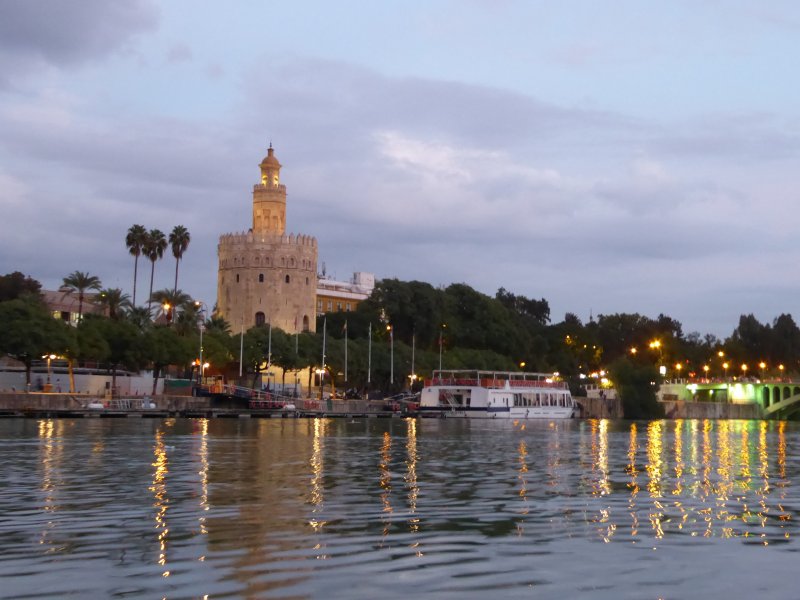
Torre del Oro by night: or Seville as not seen by Columbus.

 ‘In fourteen hundred and ninety two

Columbus sailed the ocean blue’……

….as any English school child of my generation will tell you.  Well, he actually set sail from Palos, not too far away from the city of Seville: soon it became the gateway to the New World.  Ships returned here laden with silver bullion from Bolivia, Peru and Mexico.  And before that, in the 12th century, Seville had been the capital of the Almohad Moorish dynasty.  So it’s had a splendid past, and has still scores of magnificent buildings from those glittering periods in its history.  Seville is famous for its fiestas, its party-going spirit, its bullfights even, and as the home of the tapas, those delicious snacks made the more enjoyable for always being shared with friends.  What’s kept us from visiting it until now, I ask myself?

We spent a week there.  In mid-October it should have been as warm as an English summer’s day.  But in true English style, it rained, deluged, bucketed down for the whole of our first two days.  So we’ll draw a veil over the soggy sights we saw then. I won’t tell you about the wonderful cathedral and its Moorish tower, la Giralda , or about the palaces of Real Alcázar: you can read about those elsewhere.

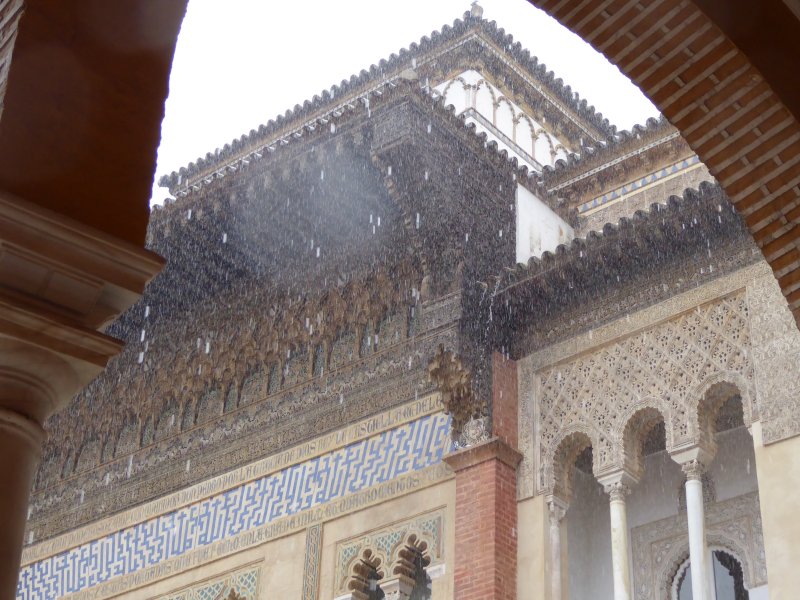
Real Alcazar in the rain.

Let’s talk instead about other highlights: Pilate’s house, for instance.  It’s sometimes called the poor man’s Real Alcazar, but for us it was magnificent.  A mixture of Gothic, Renaissance and Mudéjar styles, it’s a visual feast of elegant and beautiful tiling of the kind even the meanest back street in Seville will produce a dozen examples.  It was the then Mayor of Seville who started to have this house built following his pilgrimage to Jerusalem in 1519. He discovered that the distance from Golgotha to Pontius Pilate’s house was the same as the distance between his planned new home and a Sevillian temple known as Cruz del Campo…. so Pilate’s house it was.  Here are some photos.

The historic centre of Seville is a warren of tiny streets, some barely longer than a garden path, no wider than a single car.  How does anyone become familiar with them?  We didn’t.  Once, Malcolm decided to explore what he thought was the parallel street to mine and meet me on the corner.  We didn’t see each other again for an hour, not till we’d both abandoned meeting again and each returned to the hotel.  On the way of course, we both got waylaid by splendid ceramic tiles in entrance halls, over doorways and climbing up facades.  Every stroll through the town was an act of discovery.

We had a special evening on the Guadalquivir river, seeing the city by night.

LaRioja&SevilleOct2015 620

I went to a truly wonderful concert, ‘In-vocazione’, that I spotted advertised in a craft-makers cooperative.  Sixty singers from Seville, from Italy, and a Franco-Russian-Spanish(??) group sang together, plundering mainly from the folk traditions of southern and Eastern Europe, of Iran, of India,.  At the beginning, a single male voice was joined by other men, then by women singing from the balconies.  As one group moved down to join the men, more sang from the balconies and others, joyfully, among the audience. They inhabited and involved the architecture of the building as much as they did us, their audience.  At the end, as part of their encore, they taught all of us there to join in one of my own choir’s standards, ‘Belle mama’. Singing ‘our’ song with these astonishing choirs was one of the most moving moments of my life.

We didn’t expect to enjoy visiting the Bullfighting Museum.  But we did.  Who knew that bullfighting was devised not as a spectator sport, but as a means of teaching the soldiers of the nobility how to go to war with the enemy?  Or that Spain’s youngest bullfighter in recent times was merely nine years old?  Or that tickets on the black market to a specially anticipated fight can cost as much as three thousand euros? No wonder we don’t plan to go.

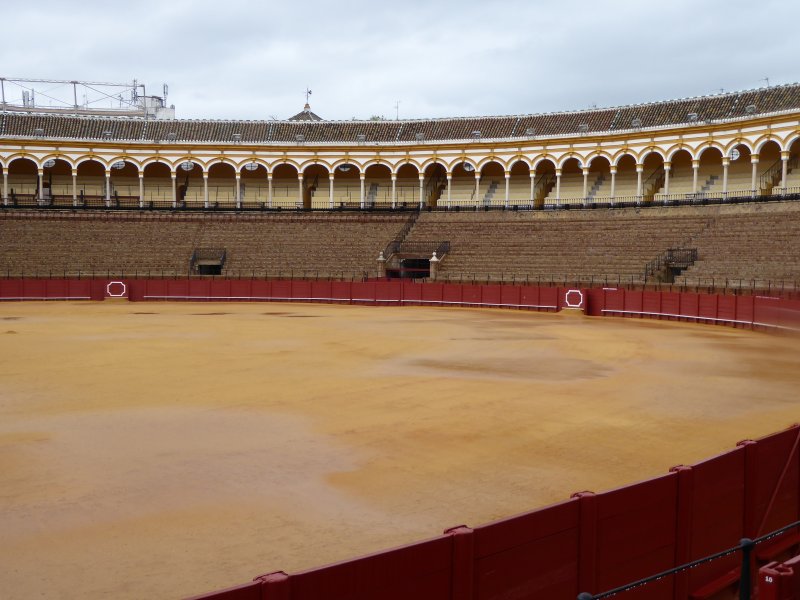
Plaza de Toros de la Maestranza: not a bull in sight today.

And tapas.  We ate somewhere new every day.  We ate different dishes every day. The variety of foods on offer is quite extraordinary, from refined and elegant to rib-sticking and peasanty, with fish very often being star of the show.  Here’s a picture of a DIY dish.  Bake your own chorizo over a little bonfire of alcohol.  Delicious.

Cook your own tapa.
Cook your own tapa.

Let’s end on a popular, un-cultural note.  Here’s a sequence of decorated garage doors and graffiti that made us smile as we mooched round the city.

This slideshow requires JavaScript.

Do you fancy going to Seville soon?  I certainly do.

A view of Plaza de España, and the popular horse-drawn carriages of Seville, seen reflected in the windows of the public toilets.

Have baby, will travel.

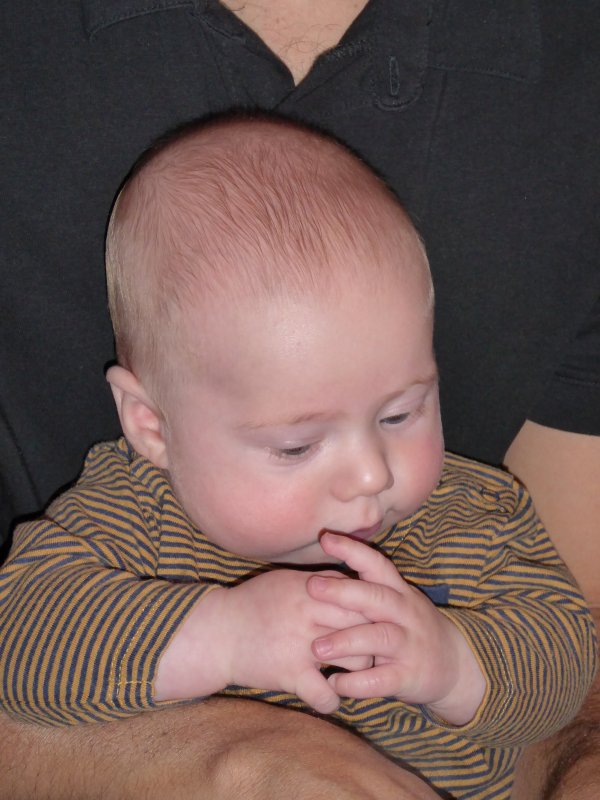
William in reflective mood.

It starts at the airport.  No standing for ages in an untidy queue waiting to struggle your way onto your place in the ‘plane.   You, your partner and baby are ushered forward, taken onto the aircraft like minor dignitaries and shown to your seats where the emergency procedures are explained.

At your destination, everyone’s prepared to make friends with you, help you in every way they can.

Out at a restaurant, your baby will be the star of the show.  He may be passed round for a series of cuddles while you get on with your meal .

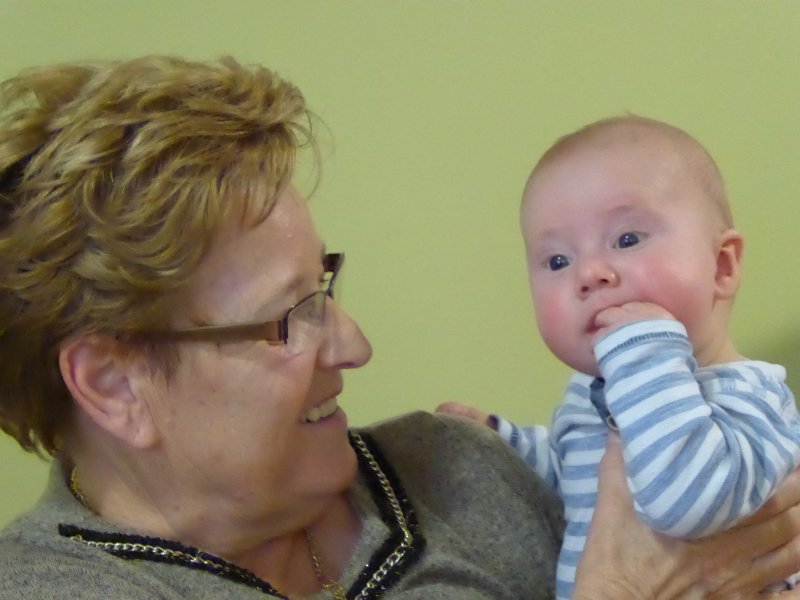
William in a restaurant with his Spanish would-be Granny, who made every attempt to add him to her existing collection of 8 grandchildren.

If you have the sense to travel with two sets of the baby’s grandparents, you may only get a chance to spend quality time with your infant after bedtime and before breakfast. This may mean you see him mainly round about 3.00 a.m. , but you can’t have everything

So that was how our holiday in la Rioja, Spain, worked out.  We’d gone there with three-month-old William, his mum Sarah and dad Tom (my son), and Sarah’s parents. Daughter Emily and her boyfriend Miquel joined us from Barcelona for the weekend too. We’d chosen an area unknown to us all, which seemed worth exploring.  Our base was a tiny hamlet, El Villar, whose only claim to fame is that there are dinosaur prints, lots of them, all over the place.  You’ll find them by looking out for life-sized models of Tyrannosaurus Rex and similar ranging round the area.  But we spent time wandering round the extraordinarily folded and buckled landscape of hills and mountains and the tiny villages perched on the slopes.  There were vultures, soaring high above us on the thermals as they searched for their next meal.  There were ancient towns and churches.  There were Spanish lunchtimes, lazy affairs that started at 2.00 or so and carried languidly along till 4.00 or later.  There were evenings of fiercely competitive card games in which the best (wo)man didn’t always win

This slideshow requires JavaScript.

Most of all though, there was William.  He was the centrepiece of a holiday in which an extended family had the chance simply to spend time together, getting to know each other better, and having fun. Babies make good holiday companions.

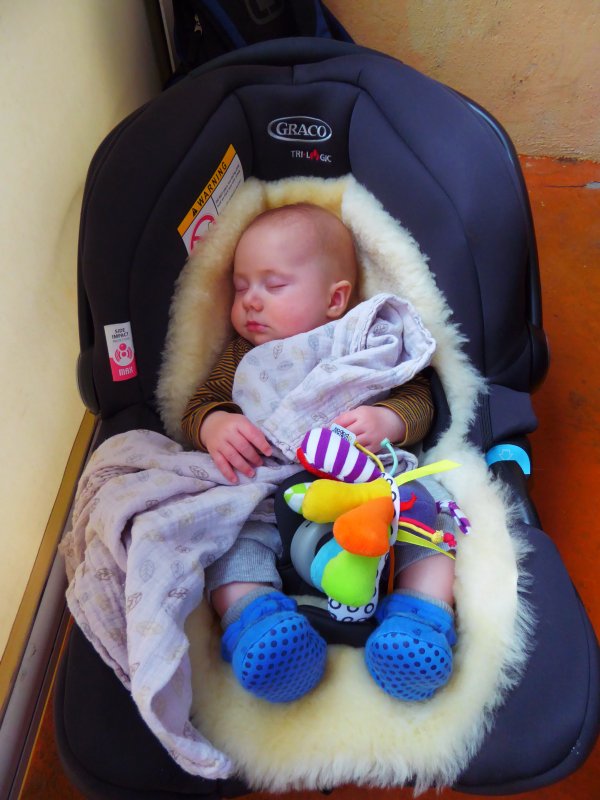
William's exhausted.
William’s exhausted.

A church crawl in Beverley

‘A minster is a church that was established during Anglo-Saxon times as a missionary teaching church, or a church attached to a monastery. A cathedral is the seat of a bishop (his seat, or throne, is called a cathedra).’

So that sorts that one out.  We’ve been wondering what makes York and  Beverley minsters, when one is in effect a cathedral, and the other a parish church: both are equally magnificent.

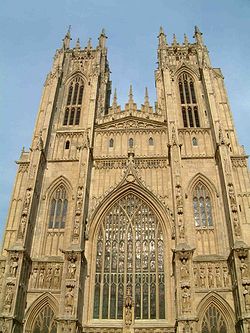
West Towers, Beverley Minster: Wikimedia Commons

Over the years, we’ve visited York Minster many times.  But Beverley, tucked away in the East Riding of Yorkshire, in the flatlands of the Wolds, was unknown to us both.  An outing organised for some National Trust volunteers at Fountains Abbey & Studley Royal put that right this week.

Beverley itself is a lovely town, founded way back in the 700s by St. John of Beverley, who was a scholar, a healer and a holy man.  He built the monastery which became the nucleus of the town, and indeed of the minster.  Even by the 1100s this church had been rebult several times, especially after a serious fire in 1188. Then it was all to do again in 1213: the tower they had built was too ambitiously large, and collapsed.  But later, the building was yet again in a bad way:

‘The Minster as we have it today owes much to the work of the great 18th Century church architect Nicholas Hawksmoor. By the early 18th century the church was in a bad state – decaying and neglected. Worse, the north wall of the north transept – built on a marsh, don’t forget – was listing badly: it had actually leaned four feet into the street.

Hawksmoor was called in to advise how to save the building. The roof of the north transept was removed, and a wooden cradle, designed by York joiner William Thornton, was fixed around the wall. Then, over a period of 11 days, using ropes and pulleys, the entire wall – 200 tonnes of stone – was pulled back upright.’.

Do follow the link to the article in The York Press from which this quotation is taken.  It’ll give you an excellent potted history of this wonderful building.  And it’ll introduce you too to the Minster’s very special tower.  Toil up the 113-stepped spiral staircase and you’ll find a Georgian treadmill, used to open up a ceiling boss over the nave to enable workmen to haul materials into the roof area.  You’ll find graffiti, some more than 200 years old, scratched into the plain glass of the rose windowsby the men who’ve worked up here over the centuries.

So here is a serene and beautiful building which has so much to offer: a fascinating ecclesiastical and architectural history, wonderful stonework and stained glass, misericords to investigate.

The Minster could keep you happily exploring all day.  But Beverley has another church, St. Mary’s, which is one of the great parish churches of England, and it too provides a lesson in mediaeval church architecture.

There are traces of its early years, when it was first built in 1120, but wander round, and you can see how the nave, side aisles and chancel date from the 13th century, the truly wonderful west front from the 14th century, the glorious painted wooden roof, and the choir stalls with their misericords from 1445.  You don’t know what a misericord is?  It’s a ledge projecting from the underside of a hinged seat in a choir stall, which when turned up, gives support to someone standing through the long, long moments of a mediaeval church service.  Not normally on public display, they’re often whimsical, drawing on folk traditions, or slightly imperfect knowledge of exotic beasts.  Here’s an elephant from St. Mary’s.  And here are minstrels atop a carved pillar.  And a 13th century rabbit, thought to be the inspiration for Tenniel’s illustration of the White Rabbit in Alice in Wonderland.

After all that, there was no time left to explore Beverley.  We’ve decided that’s a pity.  We’ll be back.  But however much time we spend in the town, we’ll be sure to revisit both the Minster and St. Mary’s: both are very special places

Fountains by Floodlight

Darkness falls at Fountains Abbey.

The days are getting shorter.  The nights are getting longer.  We grumble every time we notice another milestone passed, another hour in which it’s no longer possible to enjoy sun and light and – daytime.  Ten o’clock. Nine o’clock.  Eight o’clock.  And now we’ve reached 7 o’clock. Winter’s on its way.

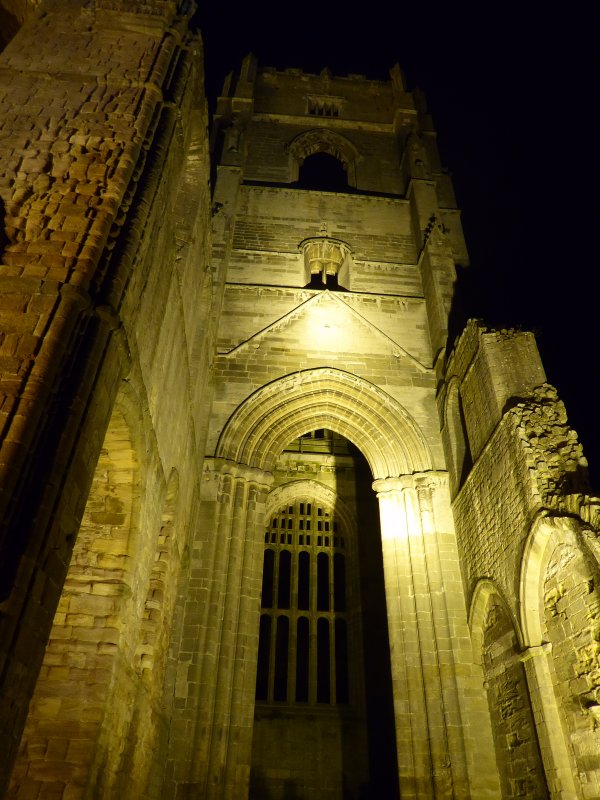
But there are consolations in that diminishing light.  Yesterday for instance.  As darkness started to blot Fountains Abbey from view, floodlighting blazed over the buildings, enhancing well-known silhouettes against the night sky. Places grown familiar to me over the past months presented themselves fresh and new. The structure and proportions of those arches!  Those solid yet soaring columns, supporting unimaginable weight!  That vaulting in the cellarium!  No mediaeval monk would have had the least experience of the power of modern lighting to illuminate every corner of the abbey they knew so well from a lifetime spent within its confines.  Yet last night, I felt closer to them, and to their spiritual concerns and way of life than I do as I enjoy the abbey site by day.

Glancing upwards to Huby's Tower.
Glancing upwards to Huby’s Tower.

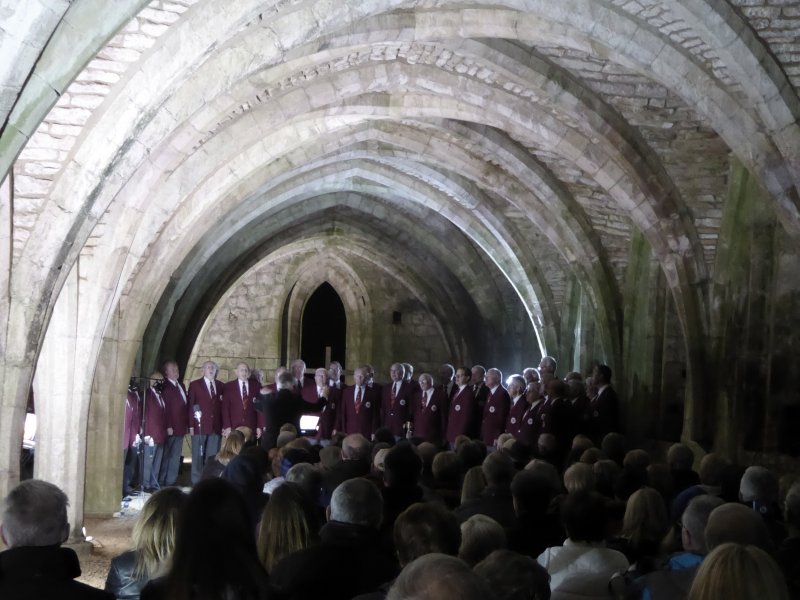
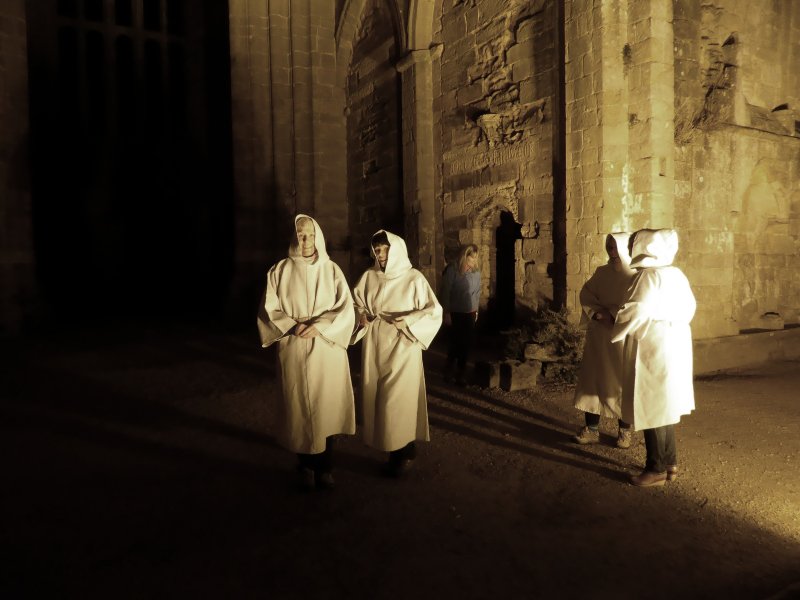
The place was busy though.  I was there as one of my duties as a regular volunteer there*.  Dressed as a monk, I first of all spent an hour or so with families, taking them round the site while talking about the daily routine of those silent choir monks, from their first act of worship at 2.00 a.m. to their eighth and final one at an early bedtime.  And then I stayed dressed in those robes as night fell, the floodlighting came on, and Saddleworth Male Voice Choir assembled in the cellarium to perform in the gathering darkness.  The acoustics of the place are exceptional, bringing a power and mystery to the voices of the singers, affecting listeners and performers alike: everyone present knew they were witnessing something special.

Performing in the cellarium

As for me and my fellow ‘monks’.  Well, we answered questions,  We tried to persuade children to join us at 2.00 a.m. Vigils (Did any of them come?  I don’t know.  I was asleep at the time).  We were on call as local colour for all kinds of photo opportunities.

Monks by night.
Monks by night.

As the music finished, we all walked up the hill, away from the Abbey, to street lights, a car journey back home, and 21st century life.  It had been good, very good, to have an hour or two away from all that, in touch with life in simpler times.

Fountains Abbey by night,

*I keep promising to tell you more about life as a National Trust volunteer at Fountains Abbey and Studley Royal.  And I will, I will. 

Our well-travelled tourists … and guests

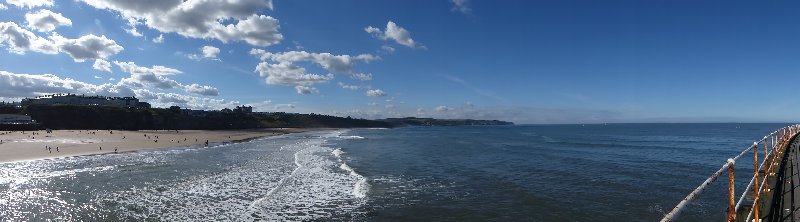
We do like to be beside the seaside..... at Whitby.
We do like to be beside the seaside….. at Whitby.

According to my daughter and son-in-law, there’s an old Chinese proverb that says that guests, like fish, begin to smell after three days.

According to our friend Kalba, it’s Benjamin Franklin who coined exactly the same phrase.

Either way, received wisdom is that nobody can put up with house guests for more than a very few days without losing their patience, their good humour, and the friendship.

Our Ariegeois friends have just proved all that wrong.  They stayed ten days, and it was wonderful.  Though pretty exhausting, it was nothing but pleasure to spend an extended period with friends whom we value, but see far too little, and a fantastic chance to showcase Yorkshire – or a tiny portion of it anyway.

In my last post, I did a whistle-stop tour of our first few days together.  Here’s how the rest of the holiday went….

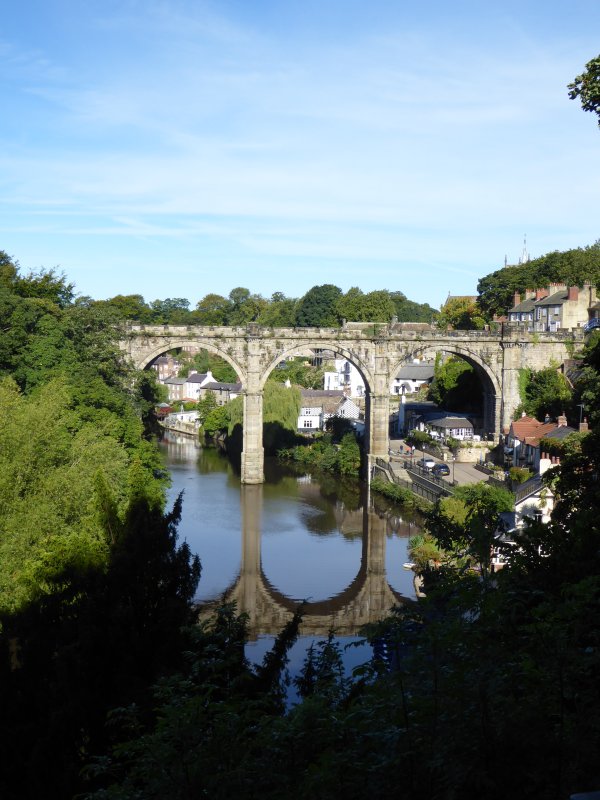
Knaresborough, with its wonderful 19th century railway viaduct spanning the River Nidd…

Knaresborough Viaduct.

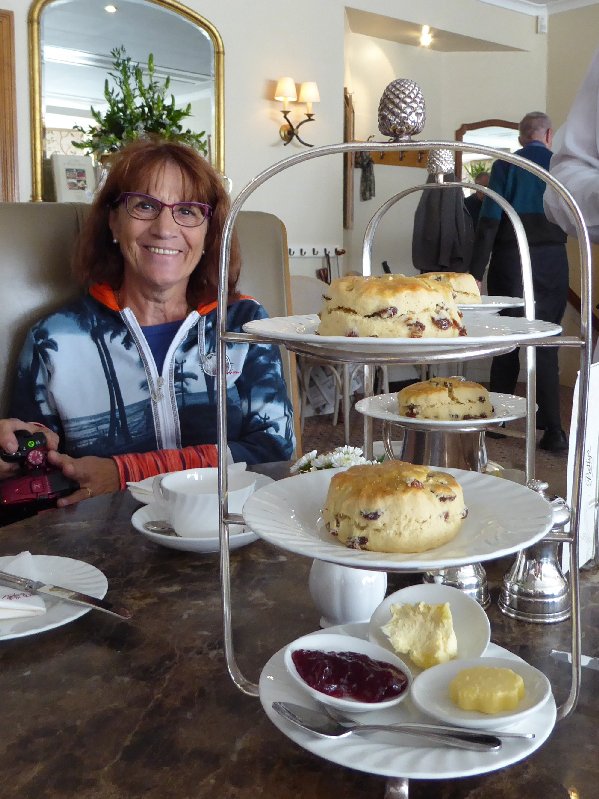
An obligatory coffee-stop at Betty’s, Yorkshire’s most famous tea room…..

Christine and a plate of Bett's scones.
Christine and a plate of Betty’s scones.

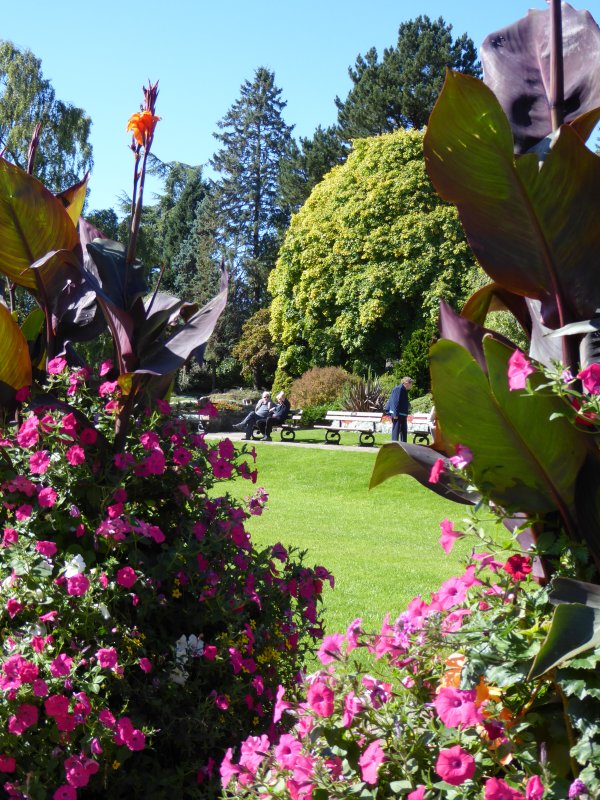
A meander round the Valley Gardens in Harrogate…..

The Valley Gardens
The Valley Gardens

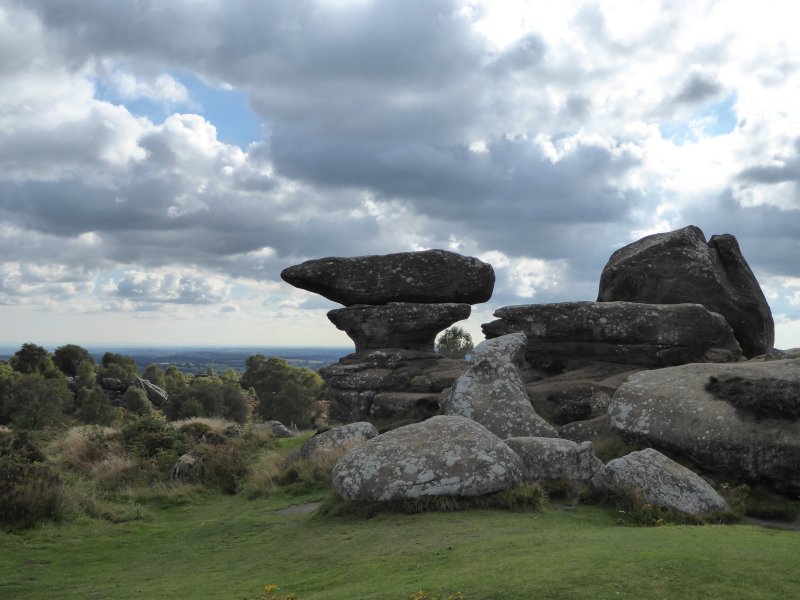
A trip to the fantastic geological outcrops of Brimham Rocks

Brimham Rocks.
Brimham Rocks.

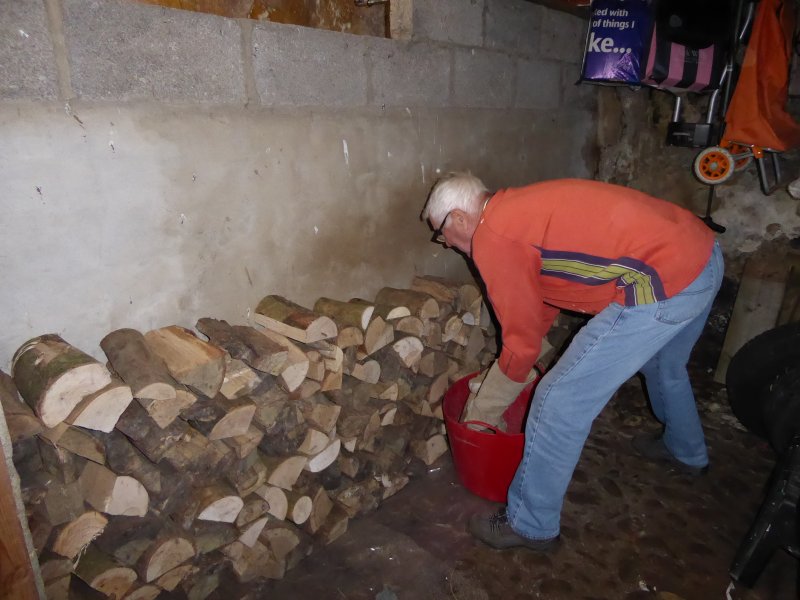
A day when our friends more than paid for their board by taking charge and getting our wood delivery for the winter shifted and sorted……

Max making a fine job of stacking the wood.

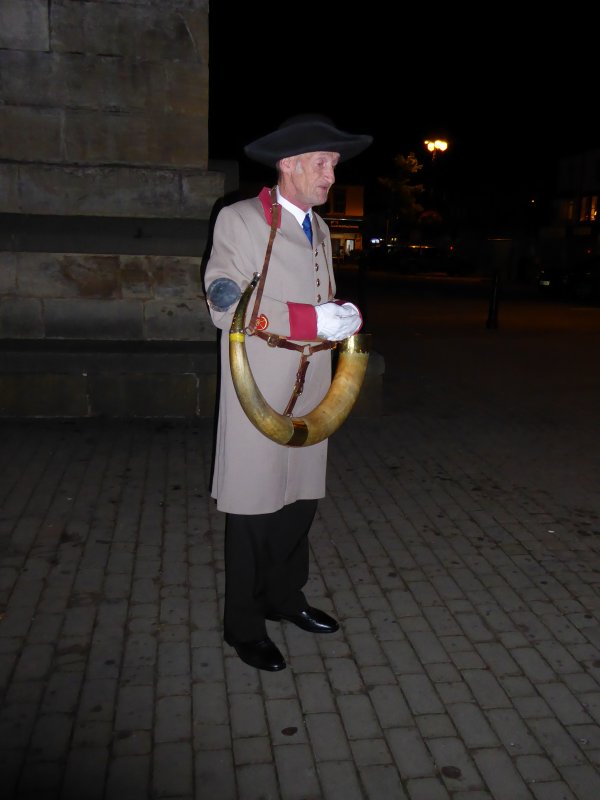
An evening with Ripon’s Wakeman, who since AD 886, has ‘set the watch’ to guard the citizens, sounding his horn at 9.00 p.m. every evening – every single day, whatever the weather, whatever the circumstances…..

The Wakeman and his horn.

A trip to York…..

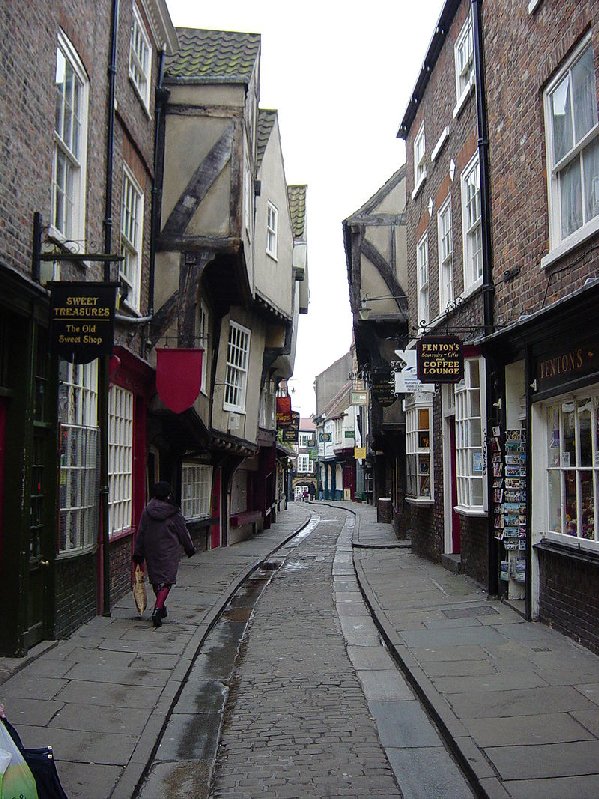
The Shambles, once the street where all the butchers were, now a tourist Mecca. Wikimedia Commons.

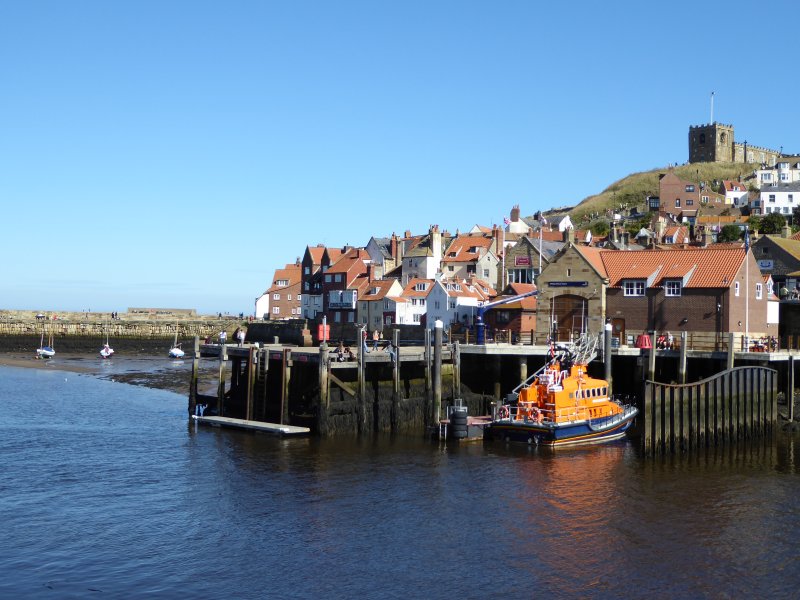
A day in Whitby, fishing port, tourist destination, jet-mining town, and home of Dracula’s author, Bram Stoker…… Oh, and we ate fish and chips.  Of course.

The harbour at Whitby.
The harbour at Whitby……
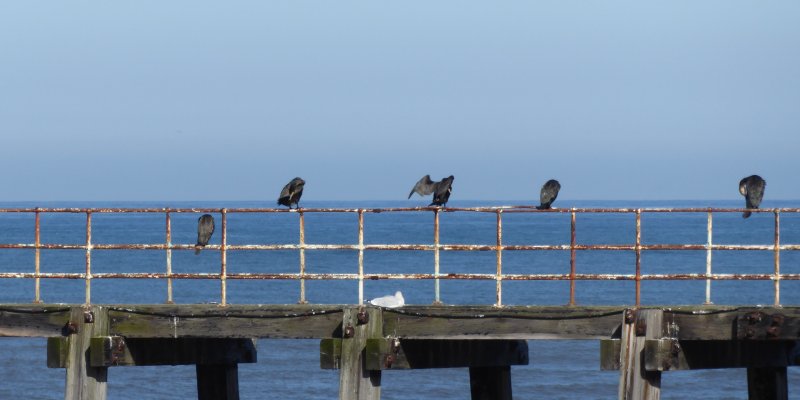
..... and a line of cormorants.
….. and a line of cormorants.

And that’s only the headlines.