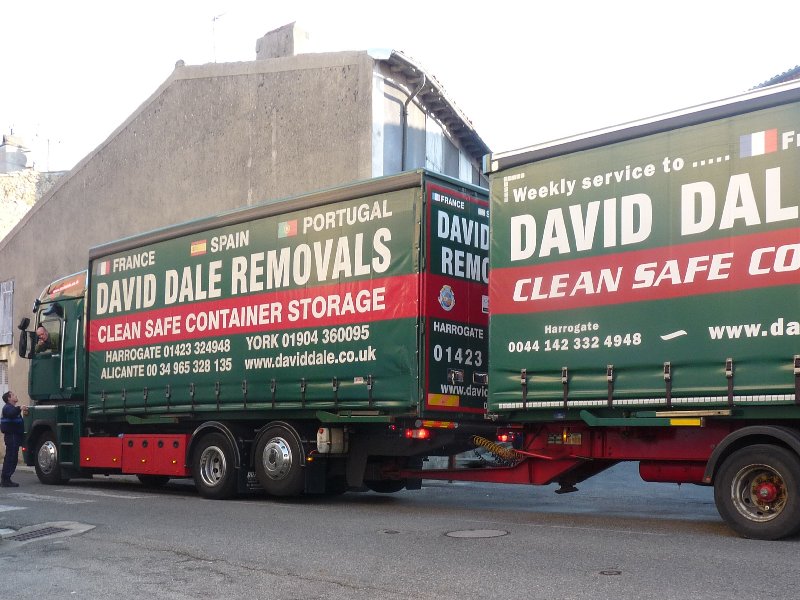
Our removal men travel weekly between northern England and southern Spain with all stops – including Laroque – in between.
You’re making your last visit to Laroque today, for the time being. We left 3 days ago, and now we’re in Ripon. Those last days were a furore of packing, cleaning, ‘goodbyes’ (though never, never final farewells), and two visits from the removal firm, who couldn’t fit everything in, first time round. At this moment, perhaps, the person who bought our house is planning his own removal to Laroque.
I never told you, probably out of sheer superstition, the story of the house sale. The housing market’s incredibly tough in the Ariège just now. House prices have tumbled 25% since 2008. Properties remain unsold for one, two, three years, as unhappy owners reduce the price of their homes in hopes of at last attracting a buyer.
Whereas we had nothing but luck. A man from near Paris, house-hunting here, in the area where he’d grown up, saw our house, arranged to view, and said he liked it. A week later he came again, showing his ‘coup de cœur’ off to his mum and dad. He made a low-price offer, as you do. We refused it, as you do. But we offered him our non-attached garden, being sold separately, at a generous discount, and said we’d include some of the furniture in the house sale. Reader, he offered full price, and the rest is history. Vue-vendue.
We’d just locked the door for the last time. And helping us wave ‘Goodbye’ are Martine, Francis and Anaïs, almost the very first friends we made when we arrived.
So here we are in Ripon, ready to house hunt and begin our new lives here. Oh, and there’s the Tour de France starting in Yorkshire too, in a couple of months. We’ll keep you posted.
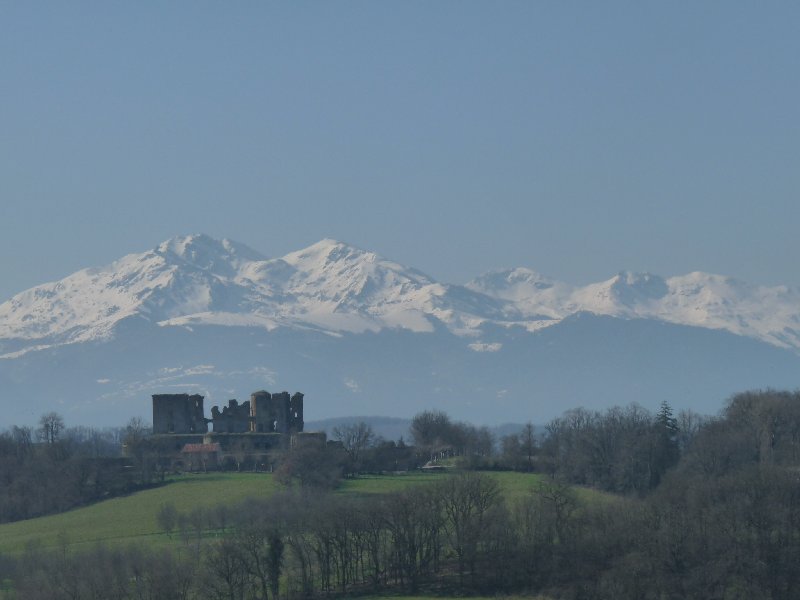
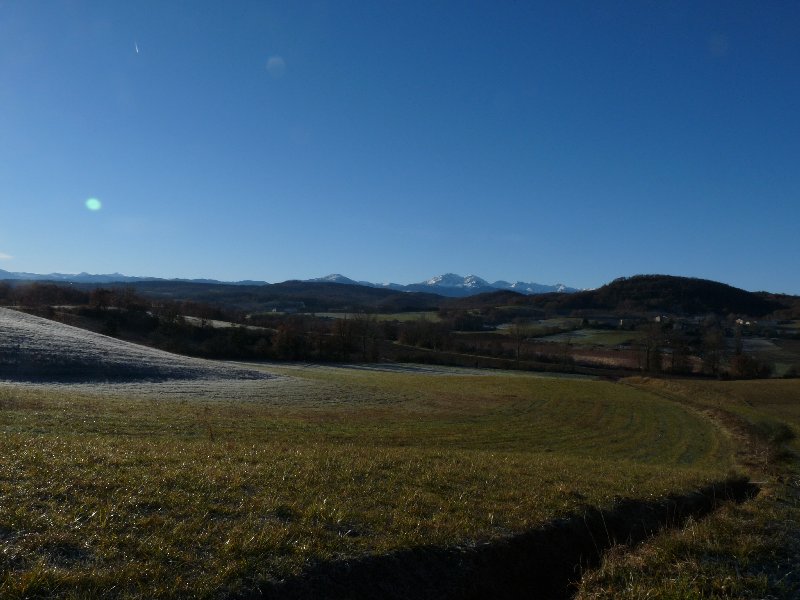
One of the views from our walk last Thursday. In the distance, the ruined castle of Lagarde. In the far distance, the Pyrenees.
It’s come at last. The week we move back to Yorkshire. On Saturday we did ‘The Long Goodbye VI’. This time next week, we’ll have been back in England almost three days.
So that’s it for ‘Life in Laroque’. Maybe one more post. Maybe not.
So what do I do about it? Shut up shop and start again? Or simply change the title and keep writing? I don’t know how things will change for me once I get back to Yorkshire. I’m fairly sure I’ll want to keep on writing a blog. I’ve enjoyed the discipline of getting memories recorded. I’ve loved having feedback from friends. At first, these friends were people I’ve shared part of my life with, people I’ve worked with or spent time with socially. Increasingly, they’re cyber-friends: people who take the trouble to comment, criticise, offer suggestions and memories of their own, and whose blogs interest me.
Yesterday, though, Malcolm made a suggestion, remembering the exhibition I’d had a hand in organising here, comparing the Ariège with Yorkshire. Why not change the title of my blog to ‘From the Pyrenees to the Pennines’? That’s what we’re going to be doing after all : exchanging one set of hills for another. For quite a while, having been away so long, I expect to be something of a foreigner in my own country, and this might be reflected in what I choose to write about. Or not. I just don’t know.
I’m sure I’ll lose some of you, dear readers. Perhaps your interest is in France, specifically this part of France. But I’d love it if some of you choose to continue the journey with me, as we settle back to life in the UK and travel further afield from time to time. We’re bound to come back to the Ariège too. There are favourite people to see, favourite places to visit, and new places still to discover.
So ……. new blog? Continue with this blog under a new name? What do you think? I’d love to hear from you, especially if you’re one of those bloggers with whom I have cyber-conversations. Thanks for coming with me this far. I’ve enjoyed your company.
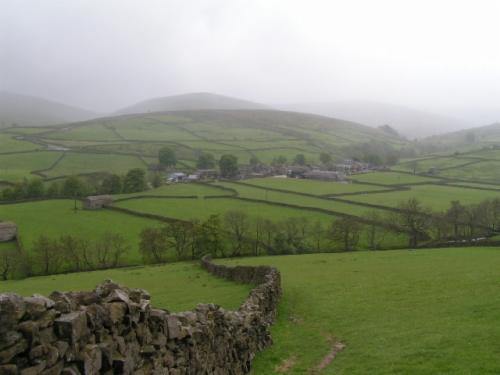
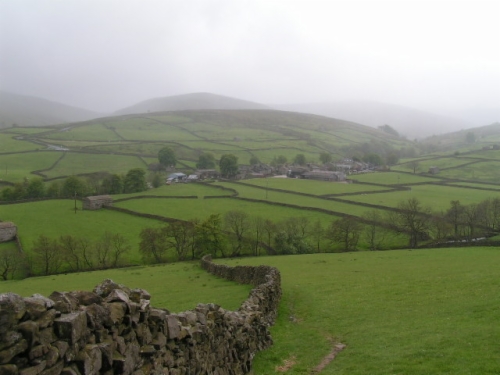
The Yorkshire Dales. They’re not bad either, are they?
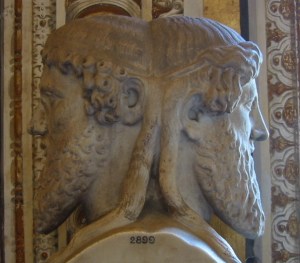
We’ve all heard of Janus, the Roman god of beginnings, endings and transitions. He’s the one with two faces: the grizzled lived-in one looks back towards the past, while on the other side of his head is the younger version, looking with optimism and hope to the future. He puts himself about at this time of year, and indeed gives his name to January.
He’s been putting more energy at the moment however, into clambering inside our heads, mine and Malcolm’s. He’s got us at our own game, as we look both forwards and backwards at every moment
The grizzled half of my head is fully occupied in reminiscence. It doesn’t even try to understand why anyone would want to look at a future in England. It thinks about our walks, particularly our Sunday walks with our Laroque friends. What scenery! However characterful, green and lovely English scenery might be, nowhere is going to provide the snowy summits of the Pyrenees as a backdrop to every walk. And there’s something about those midday picnics too which I’m not expecting to see repeated at an English walker’s lunch spot. The aperitif that gets handed round, the bottle or two of wine, two or three home-made cakes, coffee and digestif….. And last Sunday, a mid-December Sunday, it was so warm that one of our number stripped off his tee-shirt to get the sun on his back.
The Pyrenees: always there. The constant backdrop round here
Apéro anybody?
Towards the end of Sunday’s picnic
View from the picnic spot, near St. Julien de Gras Capou.
The grizzled half of my head realises that tomorrow’s concert with the choir will be my last one ever and makes sure that my eyes mist over and my throat constricts as I try to follow the music. It points out that those summer evenings spent in our back yard over a leisurely meal and glass of wine are now things of the past. Those moments with friends, those trips to explore, discover and re-discover the area we’ve called home these last few years area are all but over. Grizzled Janus is holding all the cards when he’s in the mood. He knows very well that we’re finding it tough to say ‘Goodbye’ to all this.
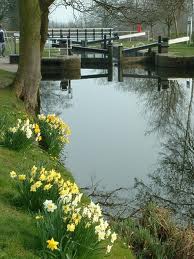
Ripon Canal in spring (Nigel Homer, geograph.org.uk via Wikimedia Commons)
But Janus has two equally potent faces. The young version is optimistic and cheerful. He points out that we’ve never fancied growing old, much less infirm in France, and this is the moment to get involved in life in Ripon, a community where we already feel comfortable, but where there is so much more still to discover. Much of what we most appreciate in France is available to us there too: wonderful walking scenery and an active community that welcomes people who want to join in. Theatre and concerts will be within easy reach and we’ll be able to mix small-town life with easy access to bigger towns too. And do you know what? I’m going to appreciate those English summers, if not the winters so much. I can’t be doing with those days when the temperature is in the high 30s: and I used to be a sun-worshipper. It’ll be good to return to speaking English and to understand most cultural references : though I expect we’re dreadfully out of touch.
Thwaite in the Yorkshire Dales (David Dunford, geograph.org.uk. via Wikimedia Commons)
Dear two-faced Janus, you’re a terribly mixed up sort of chap. We expect to be terribly mixed up too. We made a decision, and we believe it’s the right one. But we don’t think we’re going to get through the next few months without periods of excitement, periods of mourning, periods of confusion. Often all on the same day. It’s probably all going to be a bit exhausting….. and it might end in tears.
We were Christmas shopping in Toulouse yesterday. A day in this, the fourth largest city in France, is always a treat. It’s affectionately known as ‘la ville rose’, because of the predominant building material, a deep pink brick. Elegant long tall terraces of town houses, public buildings, hidden courtyards wait to be discovered and re-discovered on every visit. We have so much more still to find and explore. There are fabulous churches and museums, wonderful and often quirky independent shops, appetising restaurants and bars to suit every budget and taste. The River Garonne and the Canal du Midi pass though the city offering a feeling of space and fresh air.
Toulouse roofscape from Lafayette
Old building, new shop
Always plenty of interest if you keep your eyes open. Silk stockings once made here.
The Cathedral of Saint Sernin
The Garonne passing through Toulouse
The main square in Toulouse – the Capitole – at night
And yet…..
By about half past three, we’re footsore, weary and confused like Aesop’s poor dear Country Mouse who decided the simple, yet safe country life was preferable to the riches and dangers of life in the city. We want to go home.
A couple of more recent Pearly Kings
I was always a city girl. Raised in London, I had a childhood enriched by Sunday afternoons at the Natural History Museum or frenetically pushing buttons at the Science Museum. We’d go to watch the Changing of the Guard at Horseguards Parade, nose round hidden corners of the city, still scarred in those days by the aftermath of wartime bombing. We’d go on our weekly shop to Sainsbury’s: not a supermarket then but an old-fashioned grocery store, with young assistants bagging up sugar in thick blue – er – sugar paper, or expertly using wooden butter pats to carve up large yellow blocks of butter. If we were lucky, there would be a Pearly King and Queen outside collecting for some charity.
It was Manchester for my university years. I loved those proud dark red Victorian buildings celebrating the city’s 19th century status as Cottonopolis, as well as the more understated areas once populated by the workers and managers of those cotton mills, but developed during my time there as Student Central. I loved the buzz of city life, the buzz of 60’s student life.
Then it was Portsmouth. Then Wakefield, and Sheffield, and Leeds. City life meant living with up to 750,00 neighbours. And I thrived on it. I never felt too far from wide open spaces, yet a short bus ride brought me theatres, cinemas, exhibitions, shops, choices of schools for my children. When we moved in 1997 to Harrogate, with a mere 75, 000 inhabitants, it felt small.
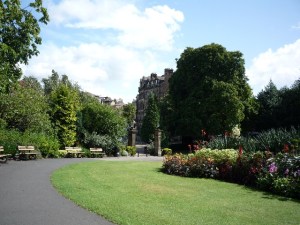
This is the Valley Gardens in Harrogate. I must say it doesn’t look too crowded
Then we came to the Ariège, to Laroque, population just over 2,000. The largest town in the whole area is Pamiers, with a mere 19,000 inhabitants. How could we still think of Harrogate as really rather tiny? So we needed to change the way we saw things. We’re accustomed now to at least recognising most of the people whom we see round and about. We enjoy the fact that we count many people in the community as friends, and that we all turn up to the same events. We relish the space, the more relaxed pace of life, the sense of belonging that we have here.
These are the kind of traffic conditions we’ve got used to
Now, as we plan our return to England, the idea of the clogged roads of the Harrogate rush hour is unattractive, the busy streets unappealing. Ripon, where we more recently lived is much more like it: 14,000 people. But we ask ourselves – is even a town this size too big and scary for Country Mice? Should we continue as we’ve started? Perhaps we should look at Galphay, Gargrave, Greenhow or Grewelthorpe, average populations about 400? Or Masham, about 1,250? All of these are near our centre of gravity, Ripon.
So much to think about. But wherever we end up, we’ll still want the odd sortie to The Big City. Toulouse hasn’t seen the back of us yet.
Photos 4, 5, 6 0f the Toulouse series; the Pearly Kings and Harrogate’s Valley Gardens courtesy of Wikimedia Commons
That exhibition, ‘From the Pyrenees to the Pennines’, about Yorkshire. It’s over and I’m not sorry. I loved working with the children in schools and in Centres de Loisirs, but the whole business of getting the exhibition for the general public up and running was stressful and exhausting.
Still, it’s good to remember why we did it. We wanted to introduce Yorkshire, particularly North Yorkshire, to local people here. We wanted to show how much these two areas have in common.
Both North Yorkshire and the Ariège are largely rural areas, where sheep have an important part to play. In no small part, they contributed to the development of the textile industry. Once the most significant part of the economy in the communities where the industry once thrived, now textiles have largely left Europe for the Far East. Formerly prosperous areas such as Bradford and Lavelanet are now struggling to find a new role. At the same time, immigrant textile workers have changed the face of these communities for ever: Spaniards in southern France, those from the Indian sub-continent in northern England.
Mining is similarly in decline. Coalmining in the north of England is the most obvious casualty, but industrial archaeologists in Yorkshire and the Ariège can point out many signs of a mining past – in disused and decaying workings of lead, alum, potash and talc. Jet, the black gemstone popular in the 19th century was worked here too, and a local historian here in the Ariège has uncovered correspondence between manufacturers here and in Whitby.
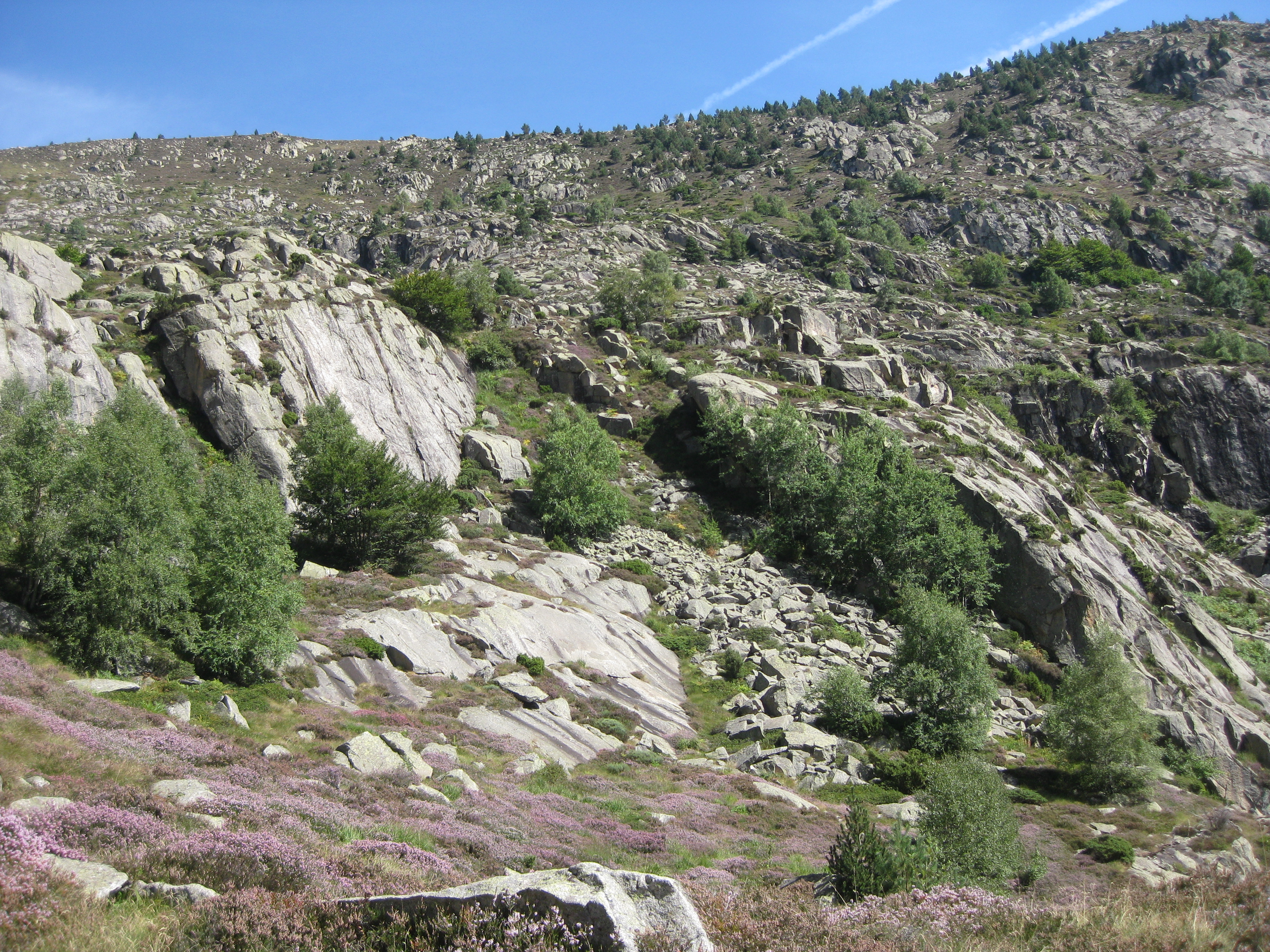
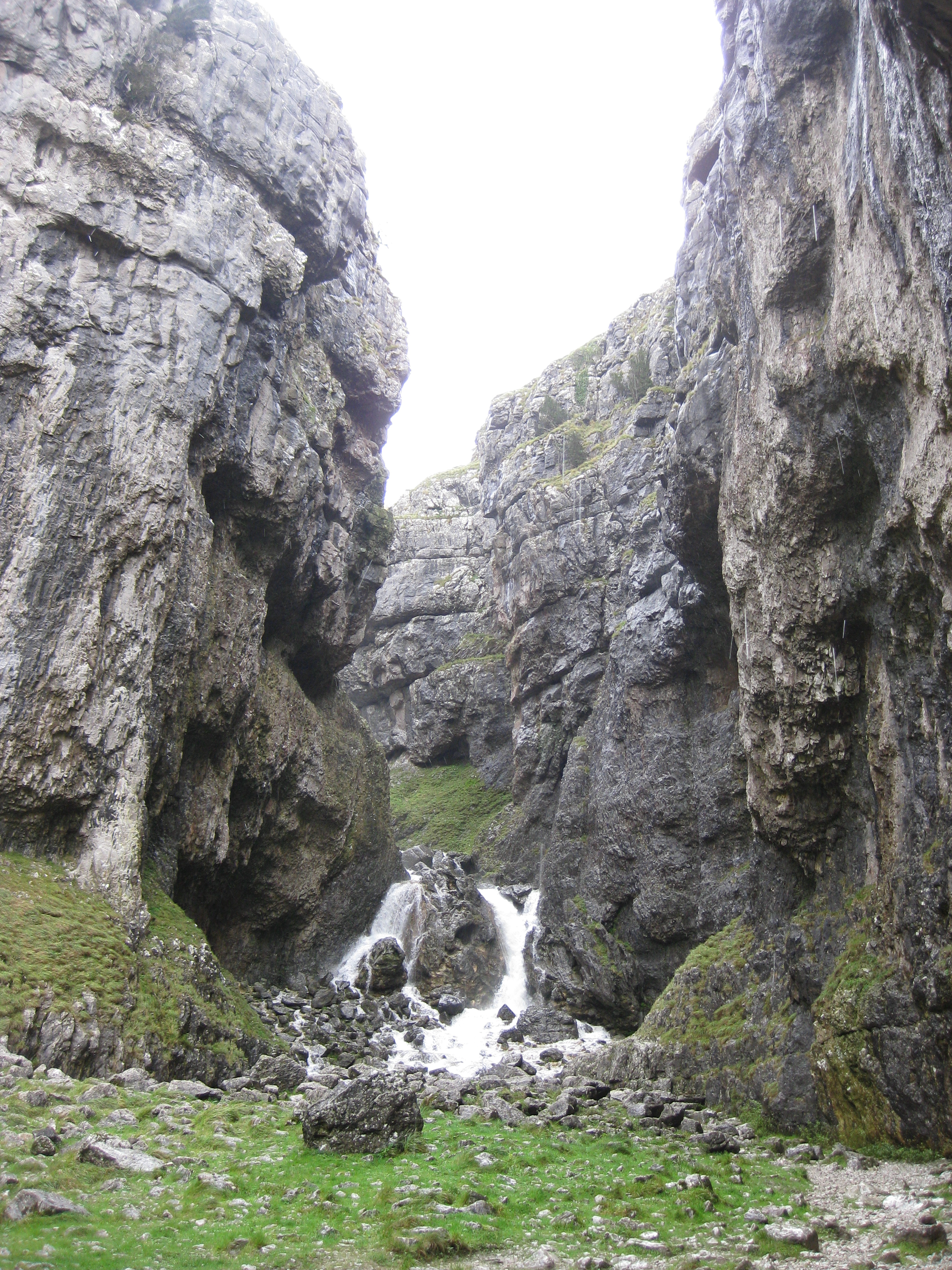
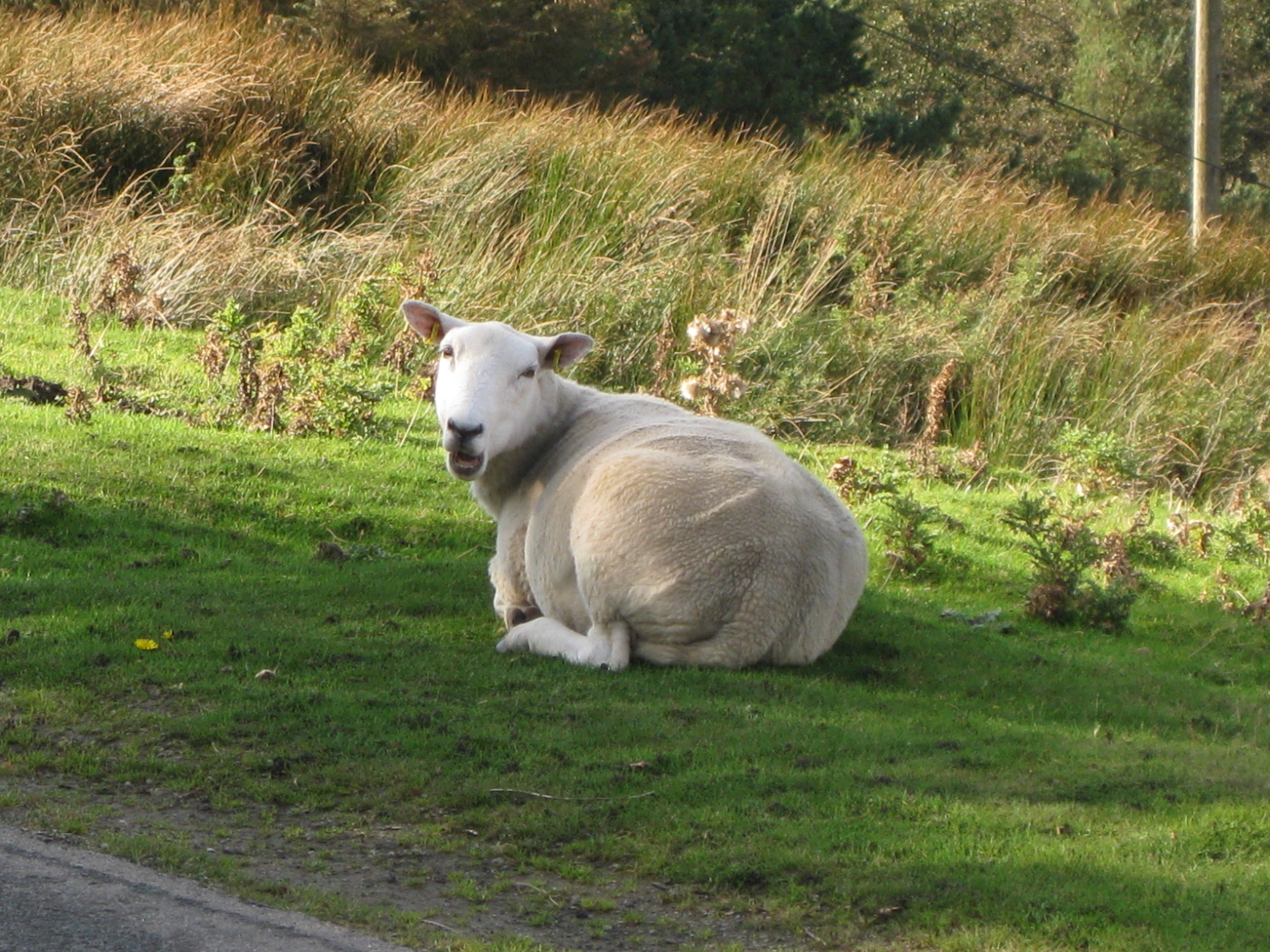
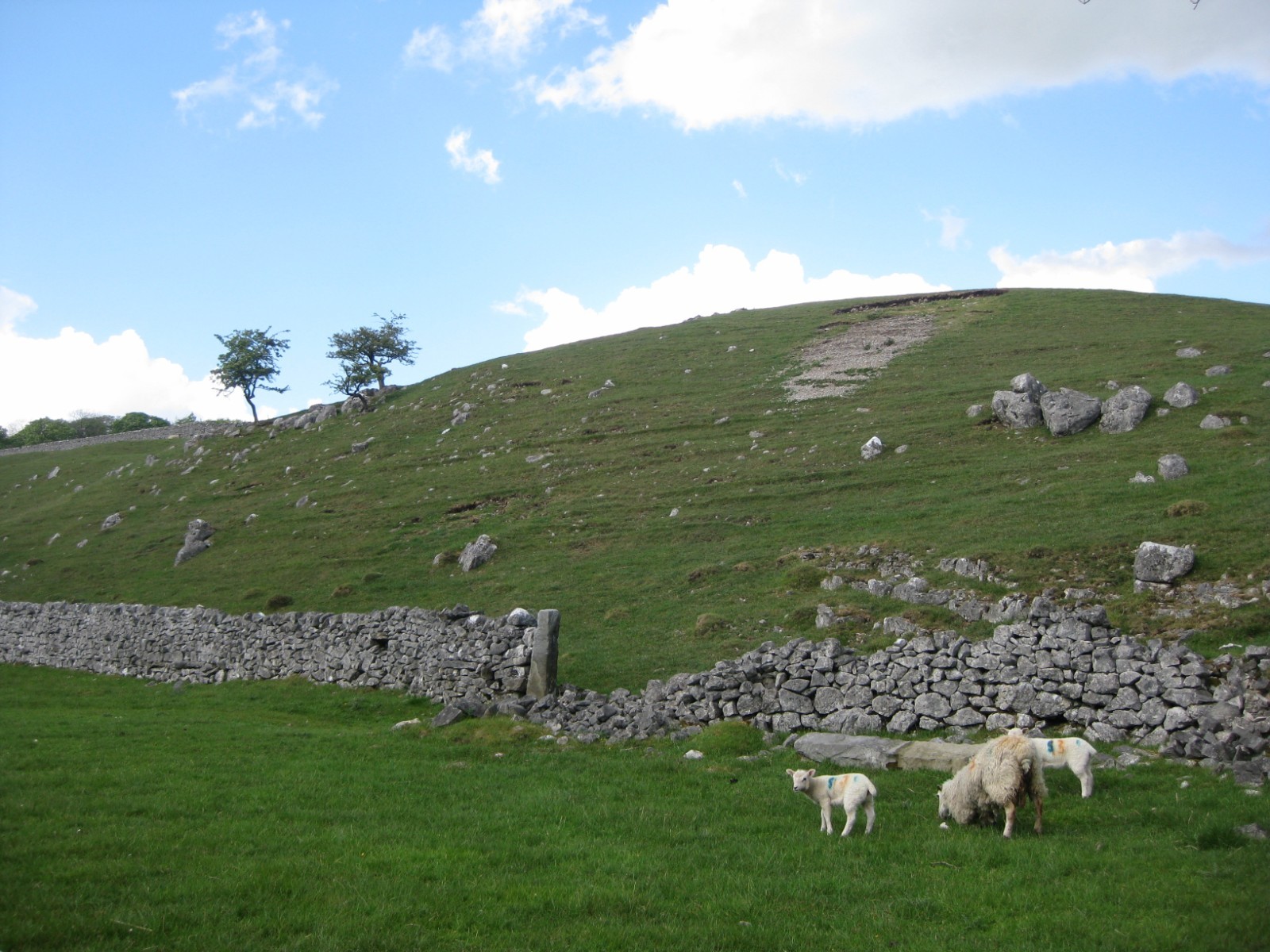
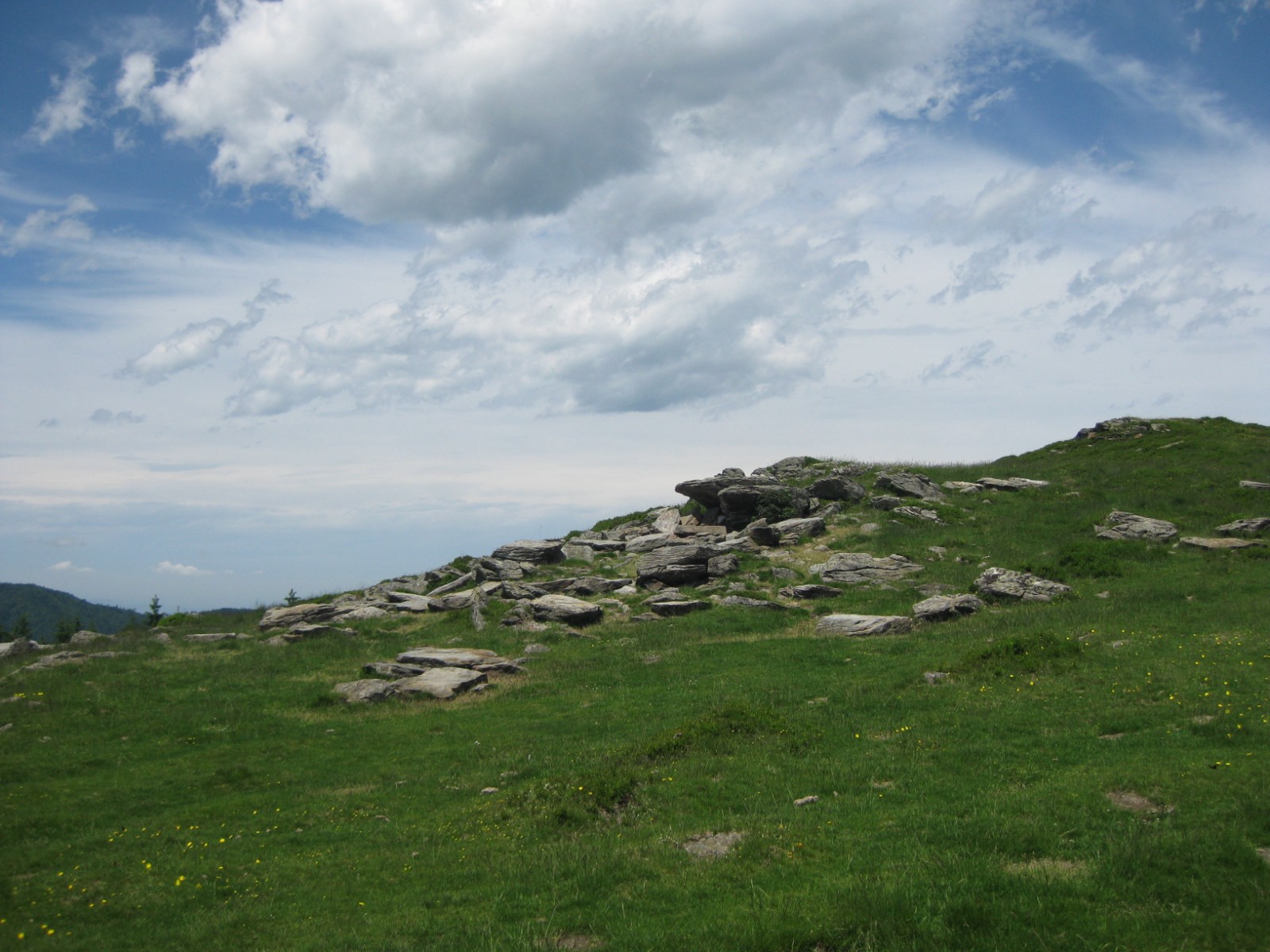
Both areas owe much of their character to limestone scenery. That’s why I’m going to give you a little quiz. Have a look at these photos. Where were they taken do you think? Yorkshire? Or the Ariège? It’s not always easy….
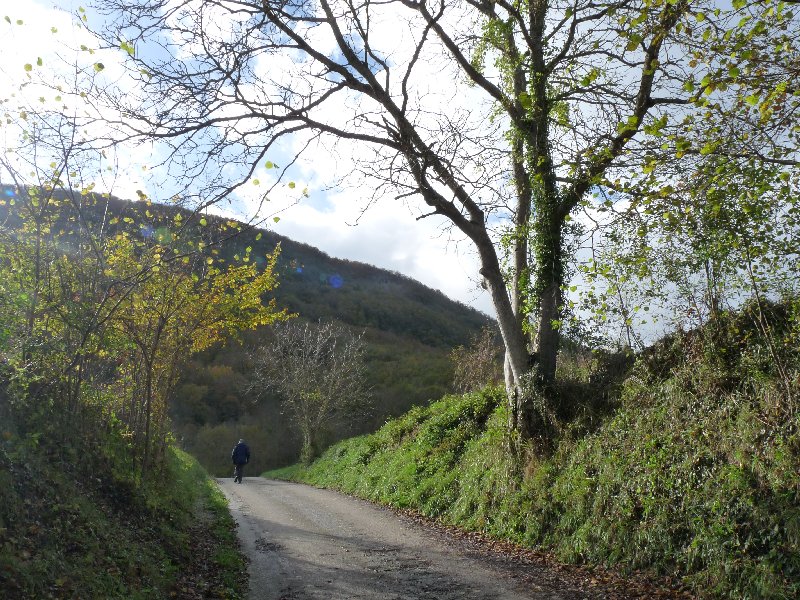
1. Limestone rocks. But where?
2. And this?
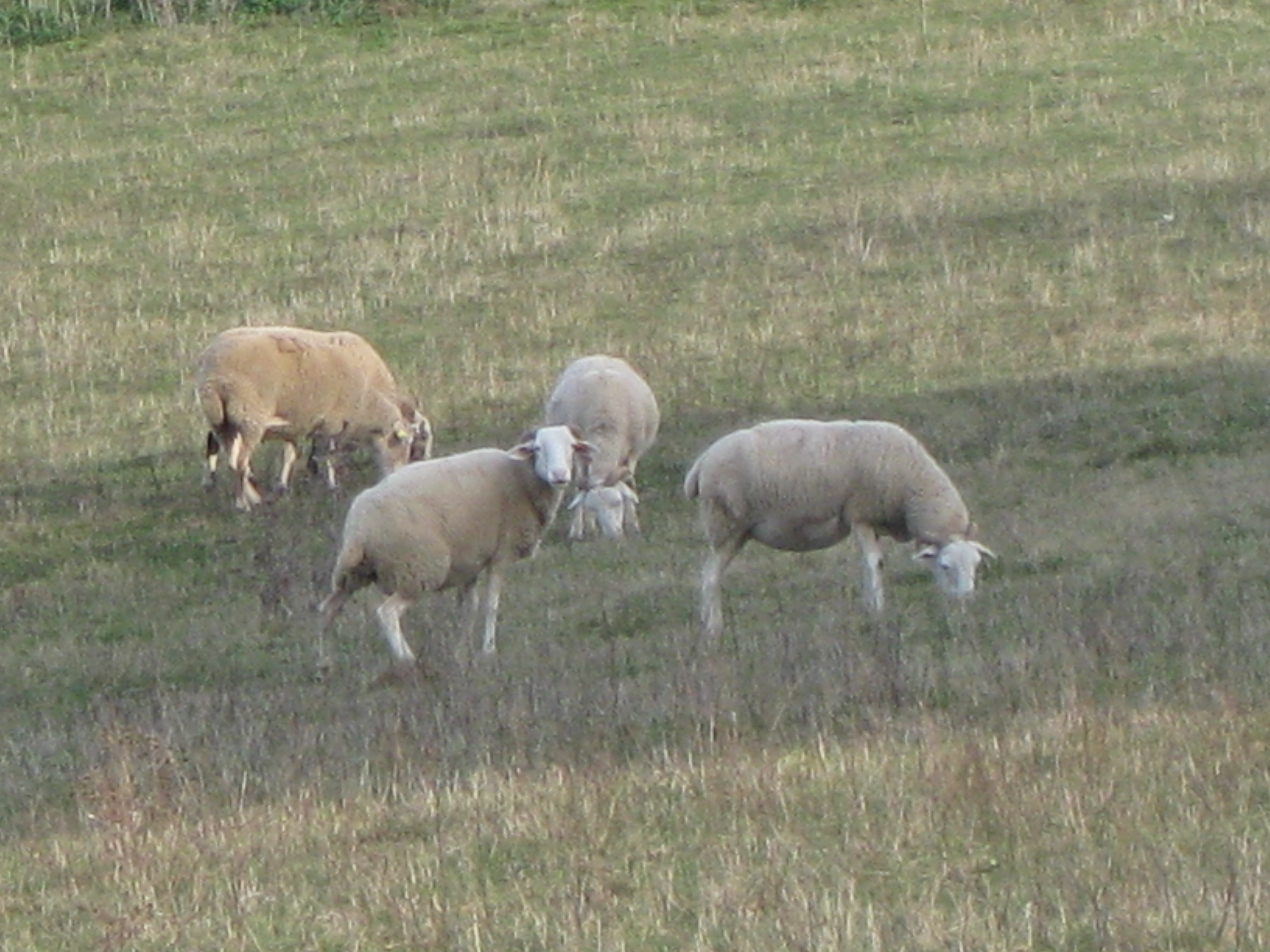
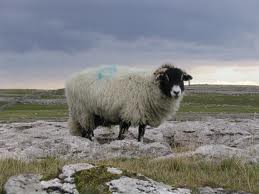
3. Does this sheep baa in English or French?
4. And these?
5. Where’s this?
6. And this?
7. More scenery.
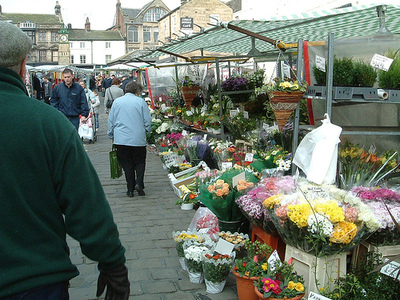
9. And a typical market in, er….
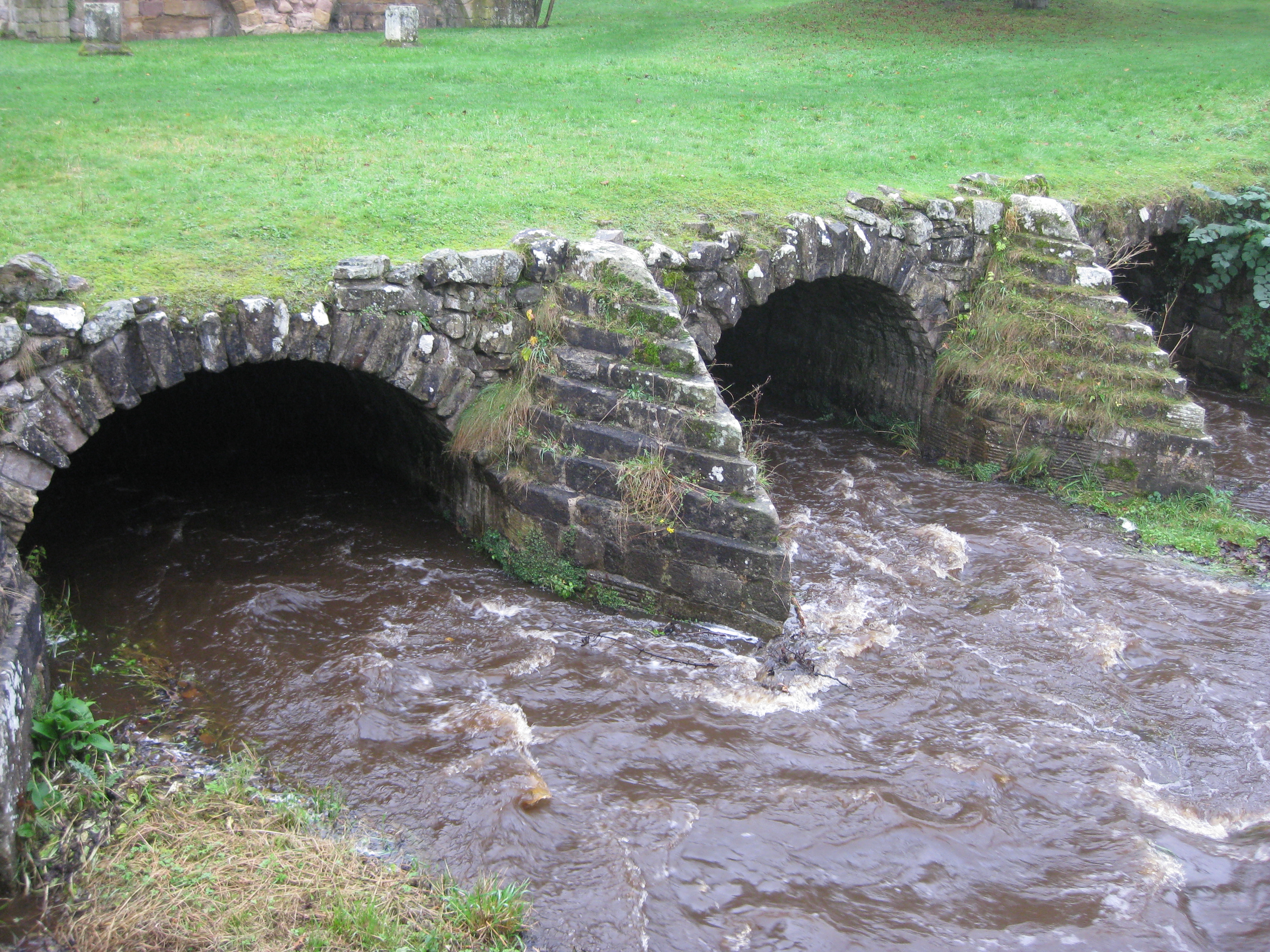
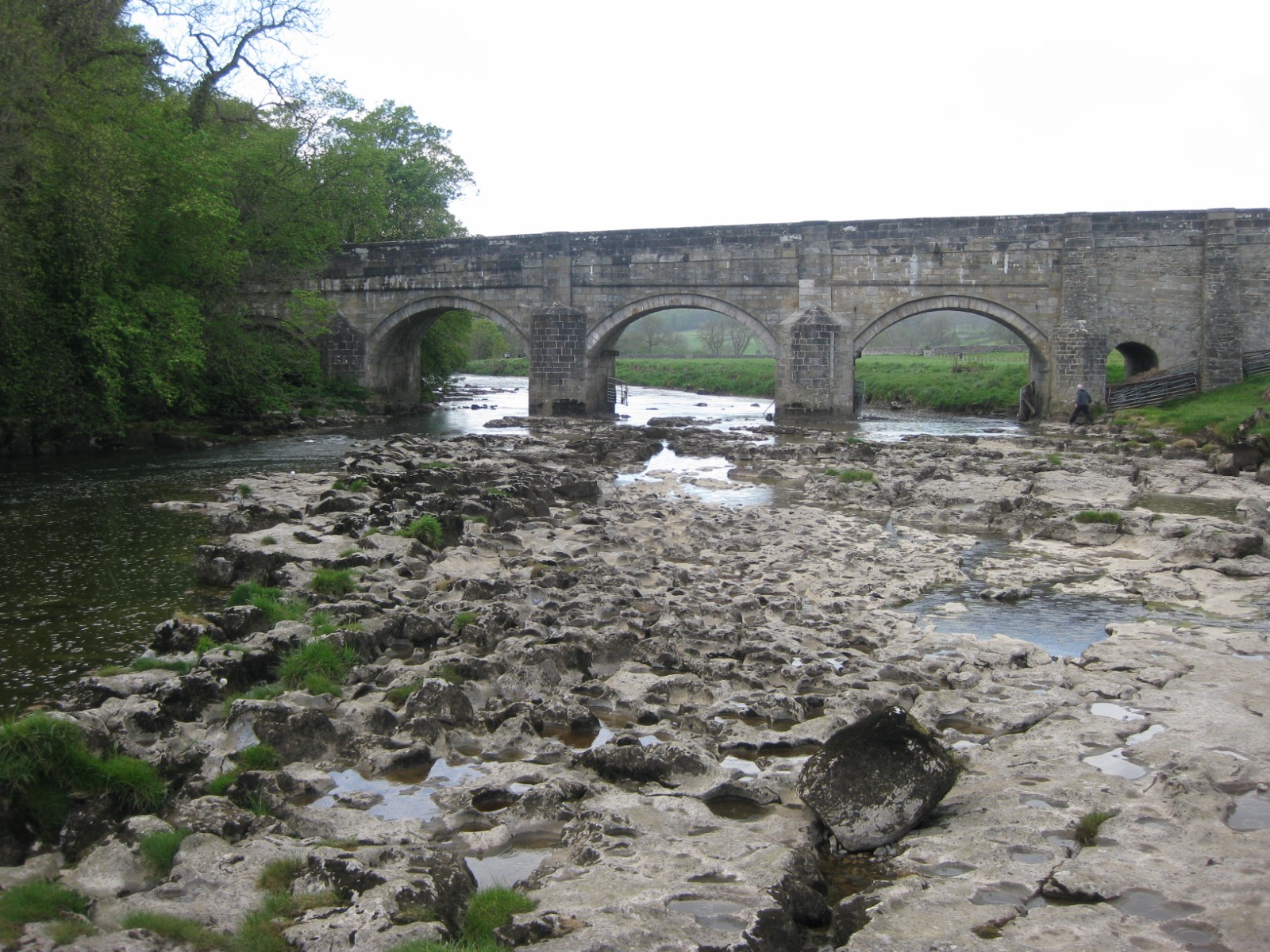
10. And a bridge.
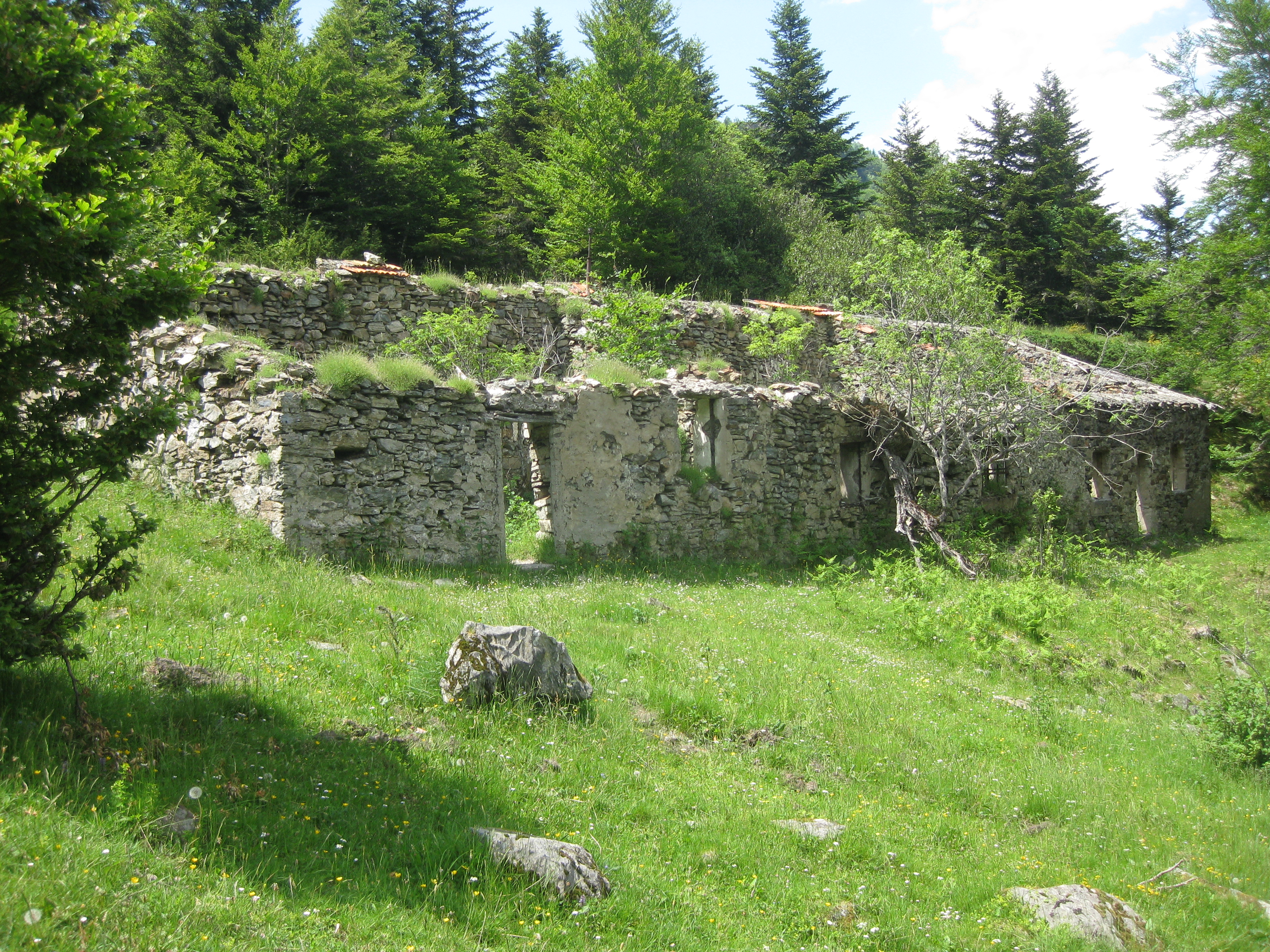
11. And a ruined house
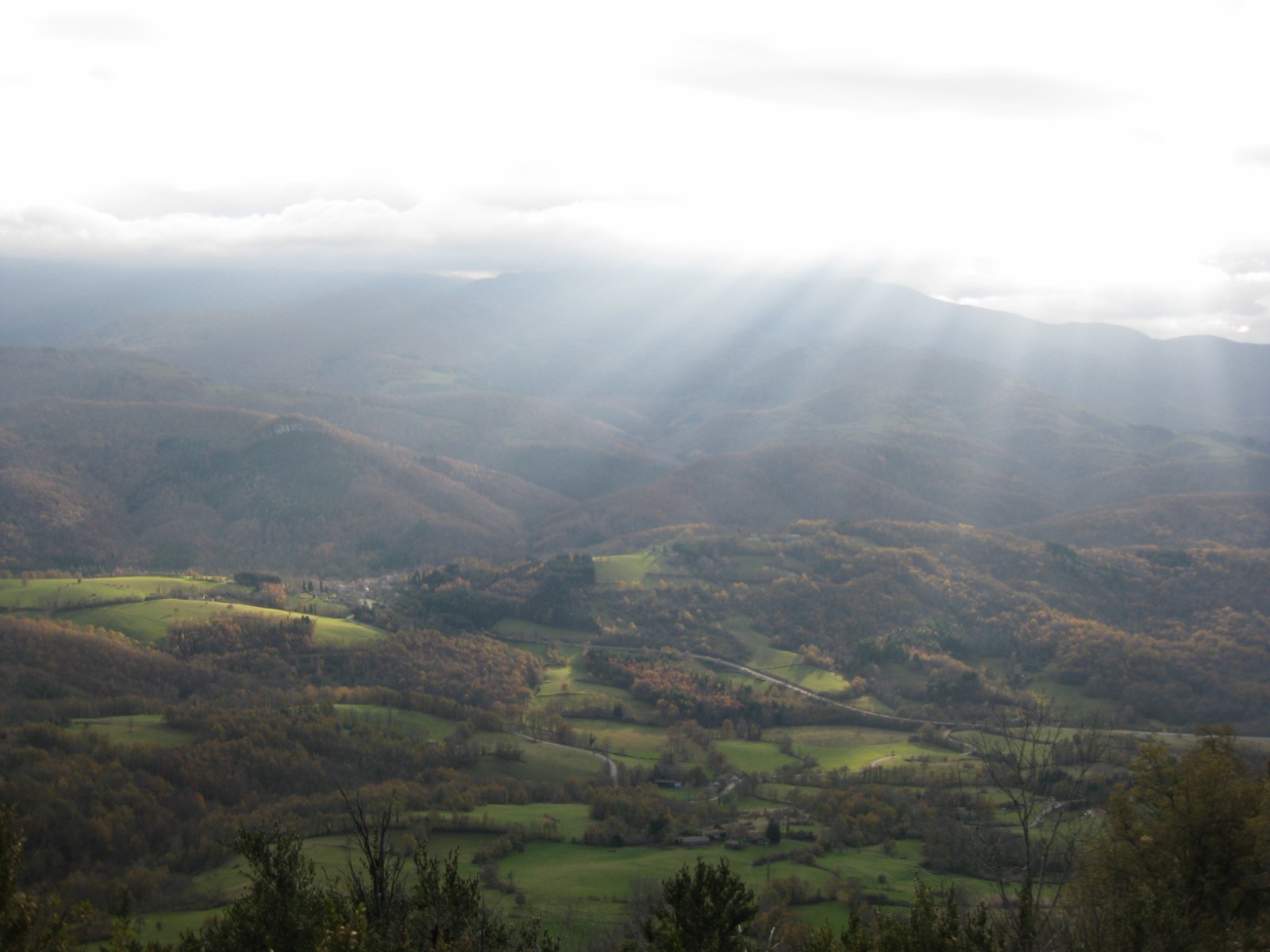
12. Last one
13. Oh, an afterthought
Answers
1. Rocks near Marc, Ariège
2. Goredale Scar, Yorkshire
3. Herdwick sheep
4. Tarasconnaise sheep in Troye d’Ariège
5. Axat, Ariège
6. Bridge at Fountains Abbey, Yorkshire
7. Grassington
8. Cap de Carmil, Ariège
9. Otley Market
10. Bridge at Grassington
11. Le Taulat
12. Roquefixade
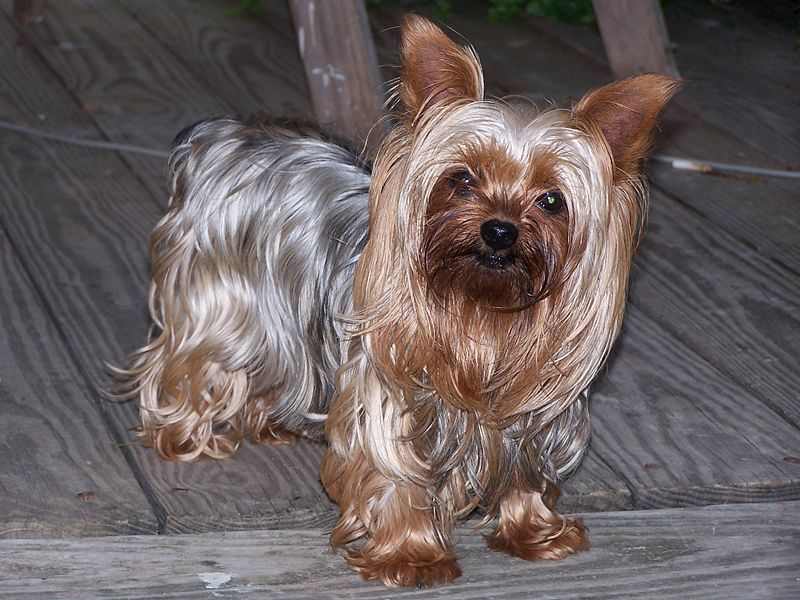
13. A Yorkshire terrier. Often seen here in the Ariège. I wonder how many owners know these little dogs were originally bred in the 19th century in Yorkshire to catch rats in the textile mills?
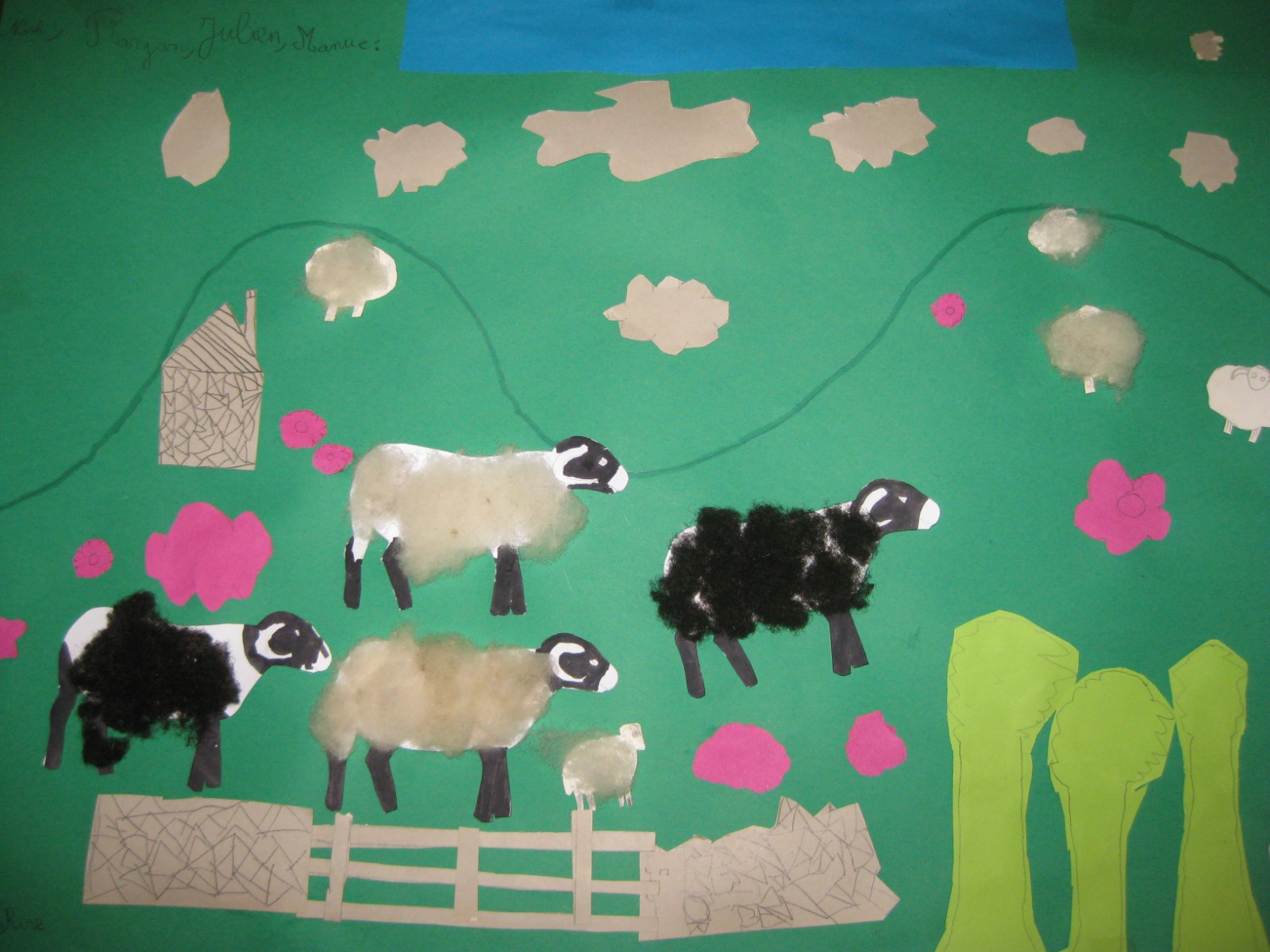
Yorkshire Dales: as interpreted by the children at the Centre de Loisirs, Laroque.
Yesterday afternoon was the best fun. 20 odd-children (that’s ‘about 20 children’, not ‘Twenty Odd Children’) here in Laroque spent the day in England, courtesy of ‘Découverte Terres Lointaines’, without setting foot outside town.
These children spend their Wednesdays, a no-school day, at the Centre de Loisirs. Their parents are probably out at work, and here is somewhere they can spend the day having purposeful fun, without its costing their parents too much.
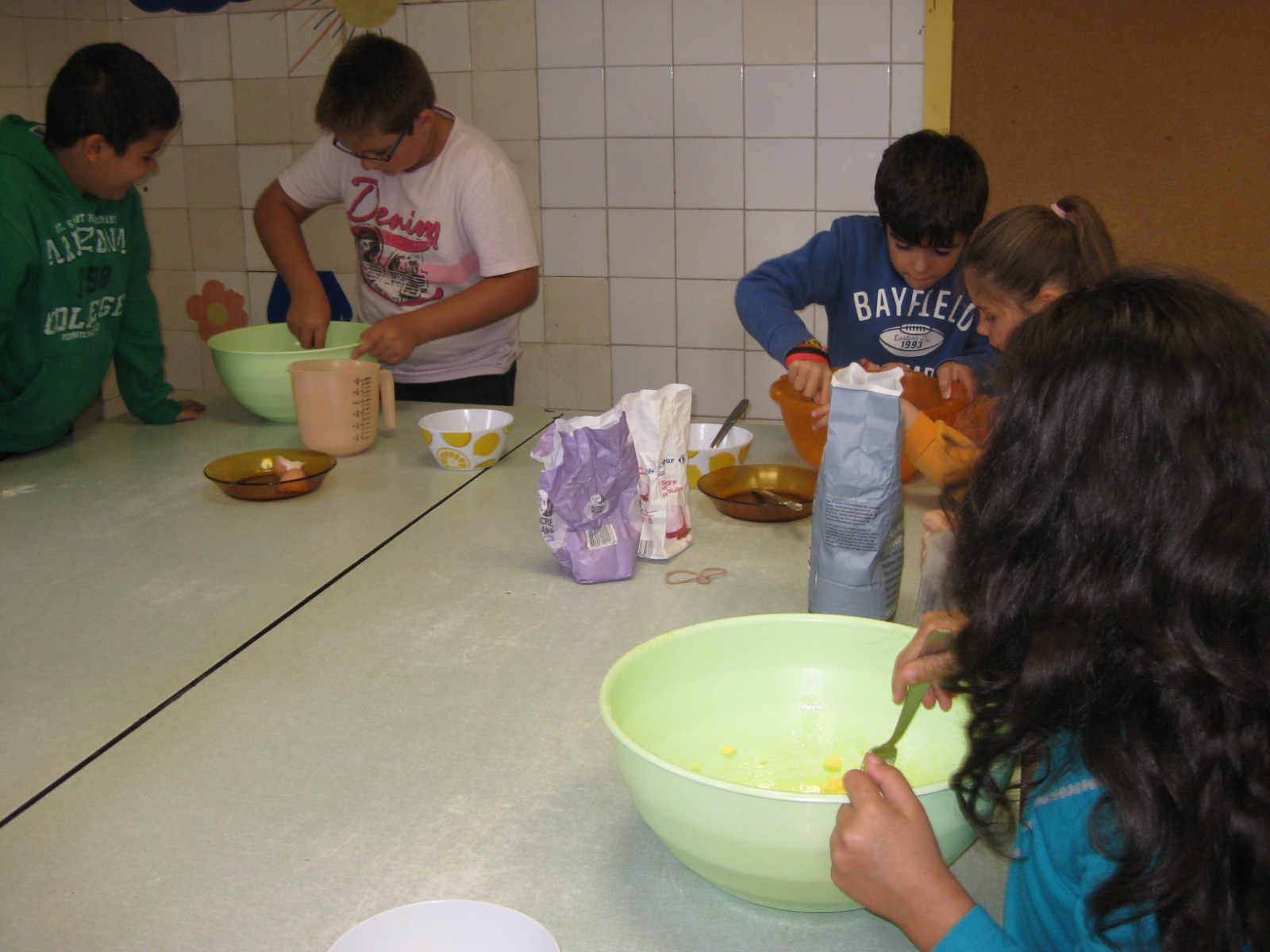
We turned up with bag full of groceries, and spent half the morning baking biscuits, basic English everyday crunchy biscuits. It was great to see them, girls and boys alike carefully measuring out flour, sugar, butter and so on, stirring, mixing, watching a dough come together from these simple ingredients.
Let the baking begin.
A bag full of cutters and a rolling pin meant that they could transform the mixture into stars and circles, miniature gingerbread-style people, bells and flowers.
Upstairs, another group had been talking about the green moorlands of the Yorkshire Dales, then making a mural of a Daleside landscape, complete with Swaledale sheep, farm gates, and obligatory grey cloud (it’s England after all).
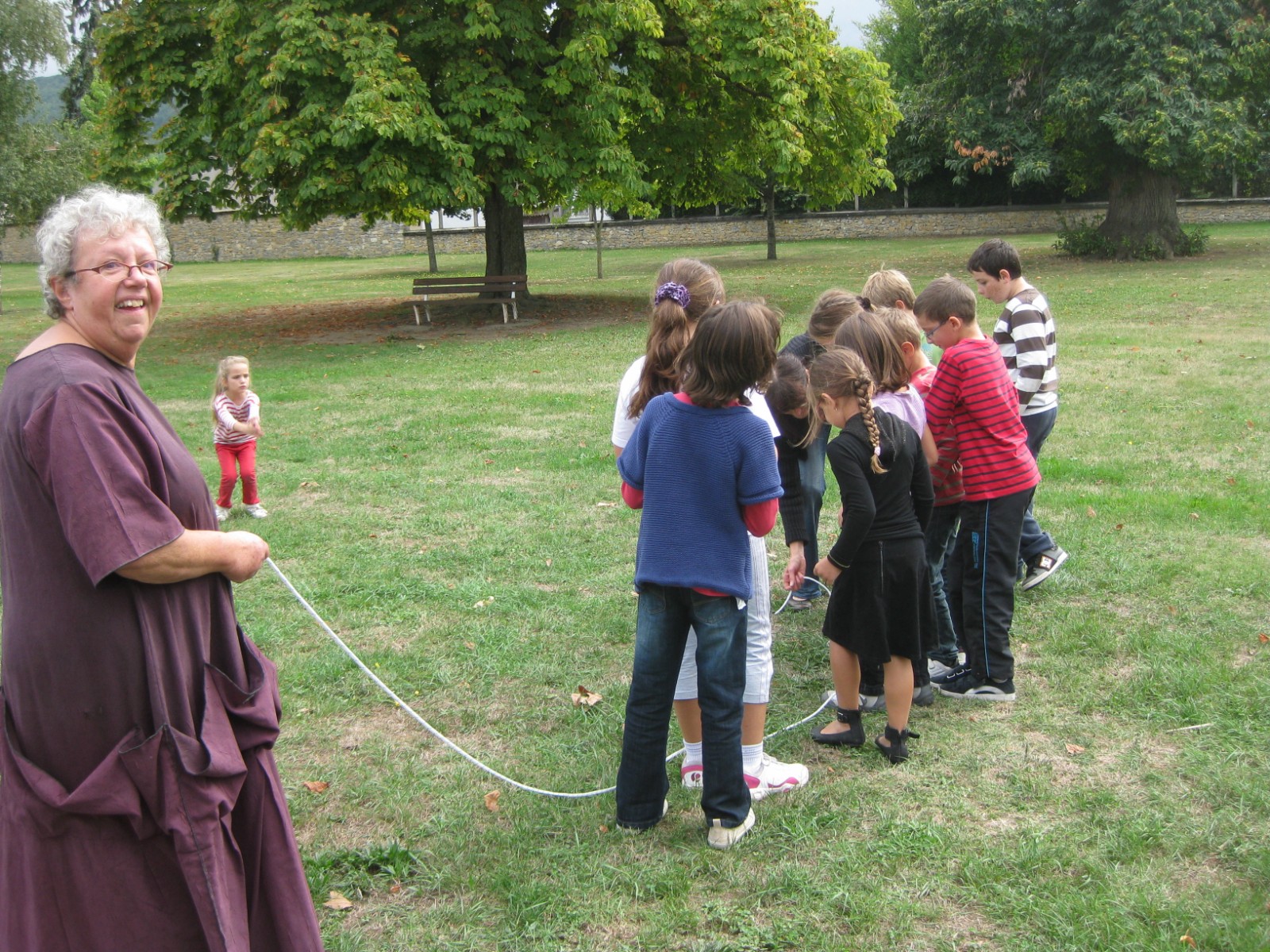
Lunch break. Afterwards, the children came to see our long-prepared exhibition looking at North Yorkshire, which has so many features in common with the Ariège: mountains (OK, the best Yorkshire can manage is Whernside’s 736 metres. Ariège’s Pic d’Estats is 3143m); textile and mining industries past their glory days; wide open spaces home only to sheep…. and so on. They enjoyed an extract from Roald Dahl’s ‘George’s Marvellous Medicine’, and then it was back to the Centre de Loisirs. Where we produced a long skipping rope with the idea of teaching them a couple of English skipping games…
‘I like coffee, I like tea
I’d like, er, Nadine, to jump with me’.
Getting started with skipping.
They loved it. Unfortunately they couldn’t skip at all and tripped and fell all over the place, and all the adults mourned that it was a lost art. As in England (Is that so? Not sure.) children don’t skip any more.
Back into the kitchen, it was time to decorate those biscuits. They tinted their bowls of icing in lurid shades, and made free with all the sugary decorations we provided. ‘Glorious Technicolor’ doesn’t begin to do it justice. Once decorated, they ate the lot, and we sent them off to their parents for the evening crammed full of enough e-numbers to see them through the week. One lad, as he set off home, was heard to say ‘I’ve had a great day’. So had we.
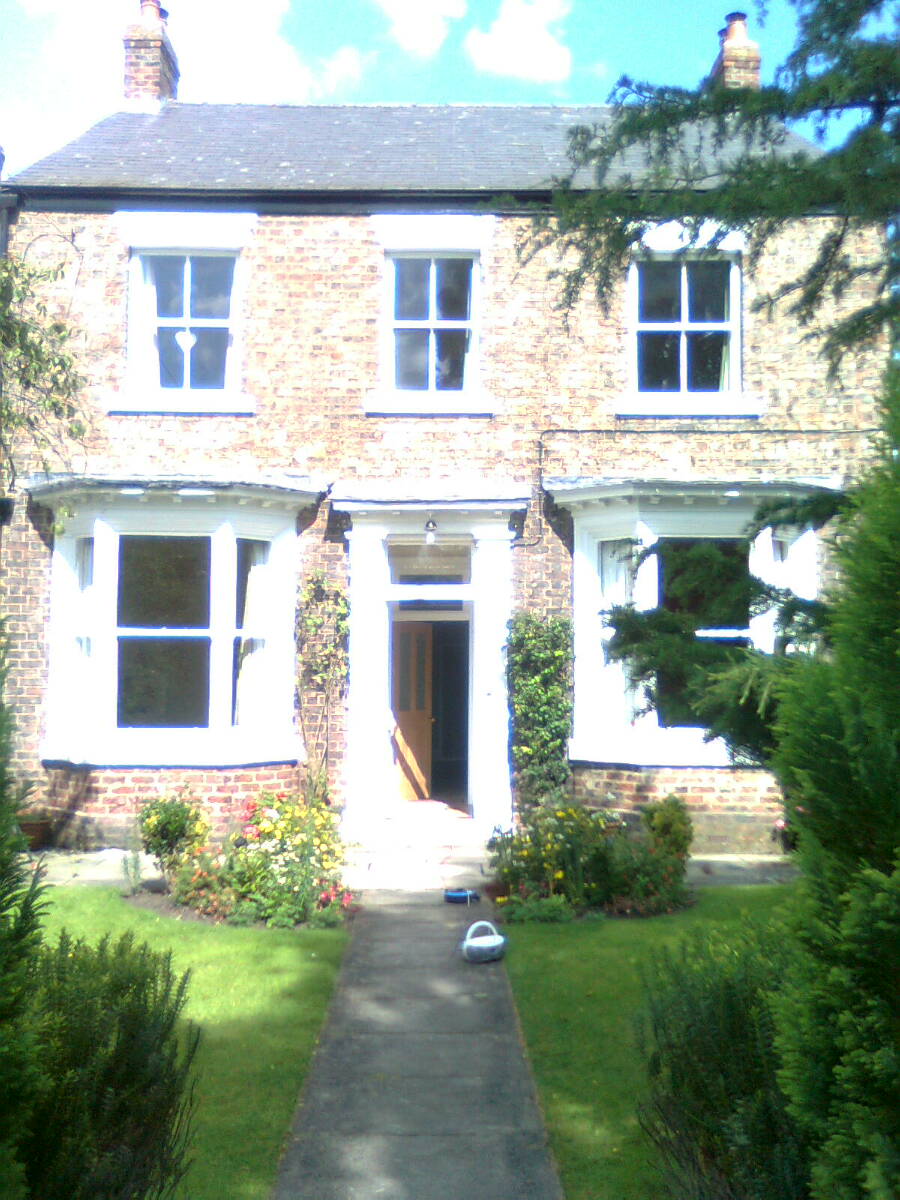
I don’t actually. I was only six months old when we moved away from York to Alne, near Easingwold in North Yorkshire. And today I visited Alne again.
I lived there till I was 4, and my earliest memories come from there. I remember our house having a long garden, with an espalier apricot tree growing against an ancient brick wall. I remember my father gardening and growing vegetables towards the bottom of the garden, spending hours doing this hated task because he couldn’t find paid work. My mother had no choice but to be the only breadwinner, and as a female teacher, earned less than her male counterparts. Every weekday, she would cycle the 12 mile journey to York, where she taught, with me strapped firmly behind her.
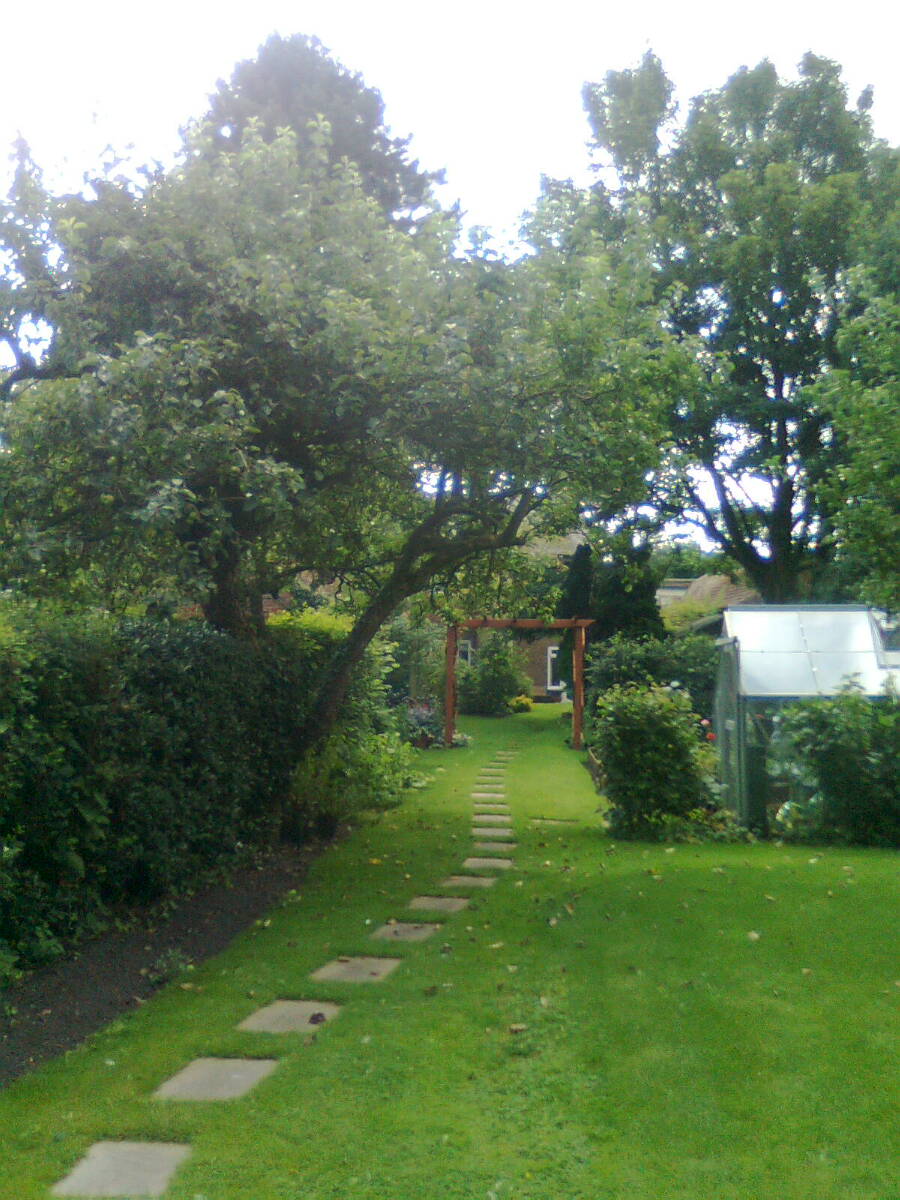
My very earliest memory of all dates from the time when, aged about 2, I wanted to pick my mother a bunch of flowers from the garden. I chose the best tulips, and carefully snapped them off with about an inch of stem attached. I couldn’t understand my mother’s fury and the hiding that followed from my father. I must eventually have been forgiven though. When I came downstairs on my 4th birthday, there was a home-made swing hanging from the branches of the apple tree. I used to spend hours playing on it, but then, as now, I never learnt to propel myself up and down in a satisfying rhythmic swinging motion.The back garden today: not so very different from the back garden I remember.
We weren’t at all well off, but this house, like so many others in the village is now only affordable by someone with means. When we found it today, the owners were out, but a painter was tackling the garden gate and invited us to look round the garden. He assured us the owners wouldn’t mind. The old stone-flagged kitchen, where my mother had to skin the rabbits my father used to catch must have been re-vamped, and there’s a modern extension at the back of the house. The fields at the bottom of the garden have been built over.
Some things remain. The Village Hall is still there. I can just remember that about twice a year, a mobile cinema came to the village. I was too young to see the films, but I remember everybody turning to to arrange hard wooden benches in the hall so the villagers could gather round the screen. I remember too the very occasional visit of an ice-cream van. Cornets or ‘sandwiches’, 2 flavours, vanilla or ‘pink’ (Yes, I do mean ‘pink’. ‘Strawberry’ doesn’t cover it at all). There was a wood at the edge of the village, and it’s this wood that to this day illustrates the tales of Hansel and Gretel or Little Red Riding Hood in my imagination. I used to half long for, half be scared witless by the prospect of being irrevocably lost in this forest, which I now realise was little more than a glade of trees.
Alne’s become quite ‘twee’ commuter country I think. Back then it was a fairly isolated community offering housing to farm labourers and other country workers. I’ve just found our old home on Rightmove, because it changed hands some 5 years ago, and there’s not a chance we, or anyone else in our family could afford to think of living there now.
Easy at first. Up through the woods, bilberry bushes everwhere
A first glimpse of the Pyrénées
…then another….
…. onwards and upwards…
The views come thick and fast
We’ve just come from there
Almost at the top
…and here’s the signpost to prove it
A view in one direction
…and in another direction
Massat’s far below
Tour Lafont
Horses on the homeward stretch
A final view
Every Thursday, Anny leads us on a walk. We might go eastwards to the Aude, south towards the higher Pyrénées….or indeed travel in any direction, certain of a wonderful day’s walking.
Today we met just beyond Foix, and still in our cars, climbed…and climbed…and climbed, steadily for 9 miles. And at the highest point of the Col d’Uscla (1260 metres), we parked. Then we laced up our walking boots, slipped on our rucksacks, and climbed…and climbed…. and climbed.
It was steady rather than challenging, and several times, Malcolm and I remarked that if it were not for the Pyrénées beyond, we could have been on the North York Moors, with added altitude and sunshine. Endless expanses of bilberry plants added to the illusion. Each hill we climbed promised to be the last: but as we reached each summit, another hillside appeared in view.
Our eventual reward was at the Cap-du-Carmil, at 1617 metres, with a 360 degree panorama of the Pyrénées. It was quite, but not perfectly clear, yet we could probably see 50 miles or more in any direction. The only sounds were from the skylarks, joyfully singing way above our heads. I’ll let my pictures tell, slightly inadequately, the story.
Down through more wooded paths, there was the town of Massat below. Once the Ariège’s largest town, its isolated position and failing industrial life means it’s slightly forlorn now. But not when you’re looking down on it, several hundred feet below.
A quick sortie to the Tour Lafont. This was built in the 1830’s, at a time when 12,000 French soldiers descended on the area to fight the ‘demoiselles’, local guerrillas disguised for some reason as women, determined to maintain their rights to collect wood for fuel, rather then allow it to be taken for the industrial economy slowly emerging throughout France. Despite their superior numbers, the soldiers lost the battles, and there are only odd reminders of their presence at the time in towers such as this one.
After lunch, on through the woods, until we rejoined once more our path with its open mountain views. Horses grazed the short grasses, and seemed only mildly curious about us.
And then it was over. Boots and rucksacks off: cold juice, a moist and squidgy chocolate cake (thanks, Anny!), a final chat…. and back down that narrow uninhabited 9 mile road to civilisation , home and a cool shower.
Back in France, we go out with our walking group most Sundays. ‘Most’, not ‘all’. Some are just too damn’ tough, but more often, it’s because the walk’s been cancelled. Rain stopped play. Unlike their English counterparts, no French hiker wants to hole up behind some convenient rock at midday to fuel up on a damp spam sandwich. No, lunchtime on a French walk is the opportunity for an extended picnic in some scenic spot, when someone will produce a pastis, someone else a home-made cake or chunks of chocolate, and the whole thing will be rounded off with sugar lumps soaked in some potent home made hooch. And you can’t do that when the weather’s poor.
We English are made of sterner stuff. As we discovered just after Christmas. Our Friends Hatti and Paul arrange a post-festivity walk for about 20 of their friends each year. It blows away the cobwebs and gets rid of some of those unwanted calories we all seem to absorb throughout December.
On the day, it was intermittently raining. The wind was gusting and the sky was solidly grey. Did anyone cancel? Certainly not! Instead we were all welcomed at our rendez-vous point with hot coffee or a warming nip of home made sloe gin, and route -maps to send us on our way.
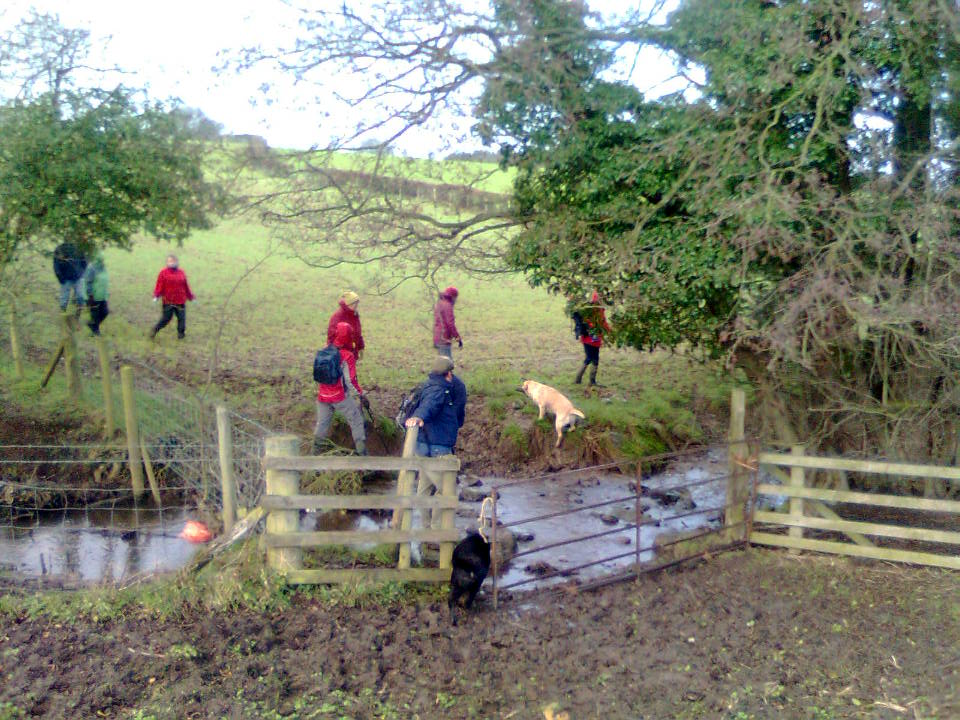
Fording our first stream
The walk itself was under 5 miles long. But we got our work-out alright. Leg muscles strained to heave limbs out of gloopy mud, or to leap from stepping stone to stepping stone across overrflowing streams. Vocal chords often gave up the unequal struggle as wind whipped away shouted attempts at conversation. Our feet became heavier and heavier with the weight of solid clay sticking to our boots .
But it was fine, dear French reader. We had fun. Along the route, we spotted a rainbow which accompanied our path for much of the journey. Welcome pauses in the wind and rain gave us the chance to appreciate the scenery: the skeletal trees set against the grey-green hillsides: the stone farm cottages and the folly at Azerley and the rushing tumbling streams which punctuated our journey.
Arriving at Kirkby Malzeard
No soggy spam sandwiches for us. At journey’s end, we were snug and warm in the Queen’s Head at Kirby Malzeard. Paul and Hatti had organised sandwiches and chips to be be ready and waiting as we arrived. And that, surely, is the perfect walk. A good work-out in good company in lovely countryside, followed by the chance to relax and laugh with friends and food, knowing that nothing more taxing than a hot bath and cosy evening indoors remains to conclude a well-spent day.
Today, three friends from Lavelanet are coming to stay in Ripon (with friends of ours: we can’t cram them into our tiny flat). They’re members of Découverte Terres Lointaines coming to Discover Yorkshire in Six Days. Over the next few months, you’ll find out why.
But Yorkshire in 6 days? That’s quite a challenge isn’t it? Especially as it would be good to show something of what the Ariège and Yorkshire have in common: dairy and sheep farming, a textile industry long past its glory days, mining and quarrying ditto, a religious past coloured by conflict…. If you were Tour Guide, what would YOU choose?
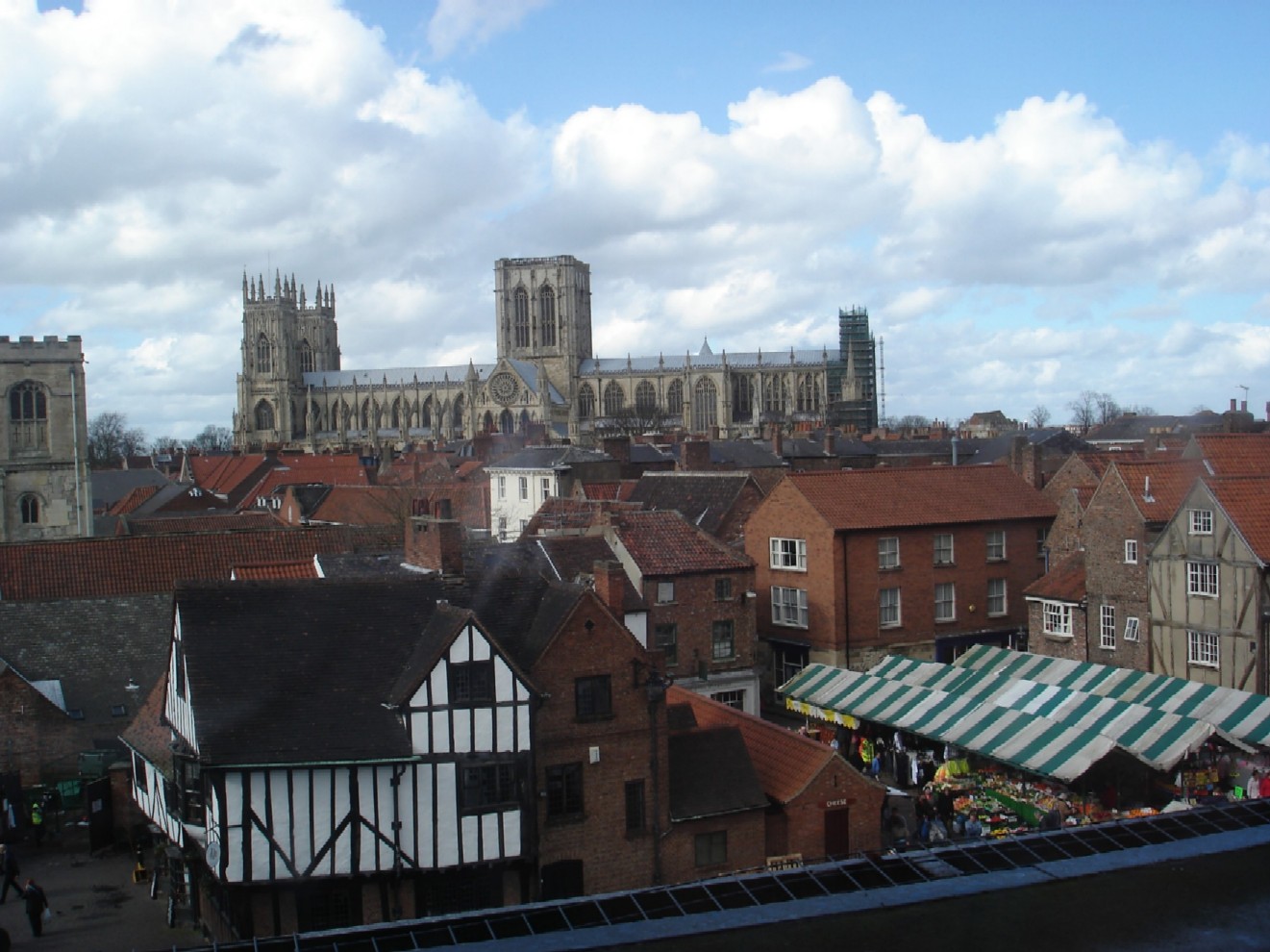
York: The Romans, the Vikings have all been here: a day won’t be long enough
The Dales? Swaledale, Wharfedale, Nidderdale….etc. Which is your favourite?
Swaledale
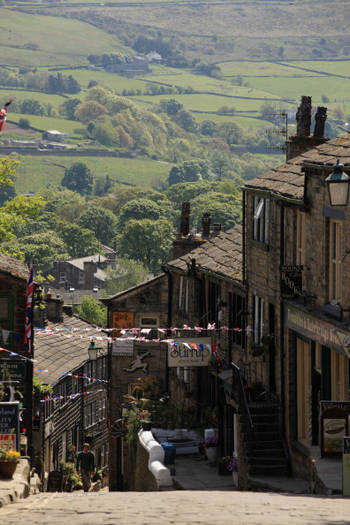
Hawarth: A chance to see a bit of the wonderfully bleak landscape, and visit the home of the Brontë family.
Hawarth
Bradford: its textile industry brought the workers from Pakistan and India who are now such a significant part of the town’s population
Textile Machinery at Bradford Industrial Museum
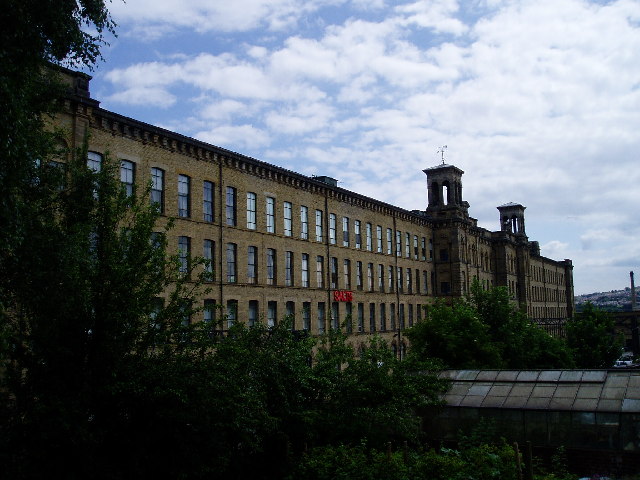
Saltaire: a model village built by philanthropist Titus Salt in the 19thcentury as a decent place for workers to live. Philanthropists like Salt built others in the UK – such as Port Sunlight on the Wirral and New Earswick inYork.
Salt’s Mill, Saltaire
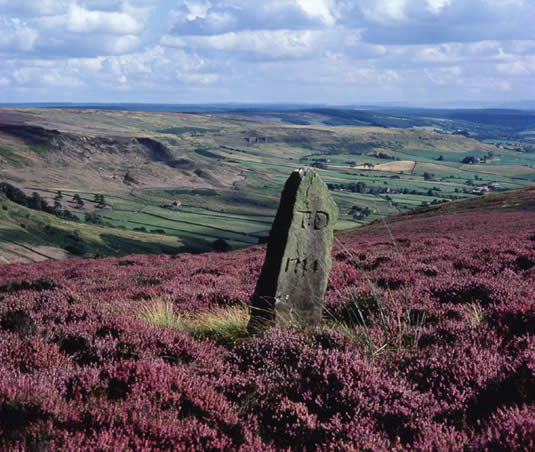
North York Moors:
Rosedale, North York Moors
we’ll see the views on our way to……………
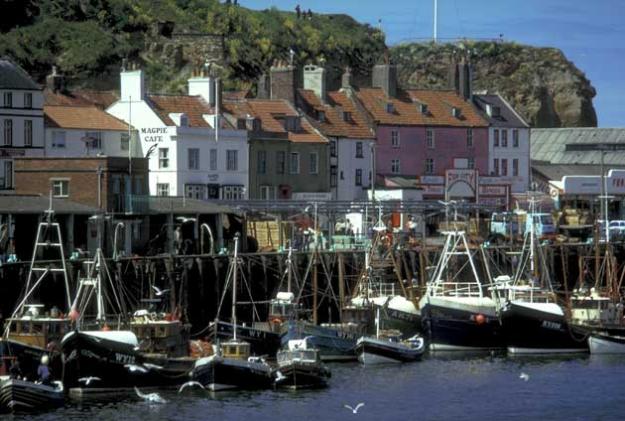
Whitby: fishing port and holiday resort
Whitby
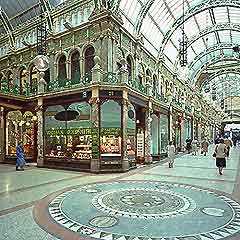
Leeds: the city centre – a mix of Victorian civic pride and modern business district.
Many of the Victorian Arcades are now an up-market shopping destination
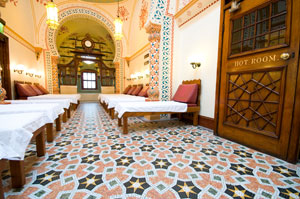
Harrogate Turkish Baths: time for us to relax and re-charge our batteries.
The Turkish Baths at Harrogate
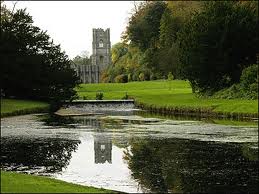
Fountains Abbey: this Cistercian monastery is, like Saltaire, a World Heritage site. And a beautiful and peaceful place.
Fountains Abbey
We’ll need to include a pub, fish and chips, preferably eaten on the seafront out of soggy paper. Curry too. But why is the totally inauthentic chicken tikka masala apparently now our national dish?
I’m so looking forward to being a tourist in my own birth county. I hope our friends enjoy it too.















You must be logged in to post a comment.