‘Our favourite walks’: a nomination

The walk begins.  St. Julien de Gras Capou
The walk begins. St. Julien de Gras Capou

We keep a mental list of the walks we’ve particularly enjoyed.  Walks we’ve treasured for the views, the flowers, the butterflies, the skyscapes, the lunchspot – all sorts of reasons.  The only problem is that the walk at the top of the list tends to be the one we did last.  There’s no such thing as a duff hike round here.

But last Sunday’s walk is assured a place of honour on this list.  It’s one we’ll want to share with you if you come to stay, and we’re keen to do it again ourselves, at every season of the year.

If you drive from here to Mirepoix, you’ll pass through a village called la Bastide de Bousignac.  Just after that there’s a road off to the left, signposted to Saint Julien de Gras Capou.  Take it.  It’ll wind upwards between grassy pastures, home to sheep and cattle and not much else, and finally deposit you in the main street of the village – current population 62.  Park near the church, lace up your walking boots, grab your rucksack with its all-important picnic, find the first yellow waymark – and set off.

The village is so-called because back in the 12th and 13th centuries, it had acquired a reputation as being the place where fine fat capons were raised to feed fine people: that’s the ‘gras capou’ bit.  I don’t know where St. Julien comes into it.  There are hens here still, and in so many ways, the village is perhaps little changed.  It’s a peaceful, rather isolated place, despite being so near to Mirepoix and one of the main roads in the Ariège.

Our walk took us along farm and forest tracks, through fields and woodland still splashed with colour from flowers and late butterflies.  It was an easy route, rising only gently, passing the tiny hamlet of Montcabirol towards the village of Besset.  Shortly after that though, we found we did have a short sharp climb, through the woods, to reach the Pic d’Estelle.

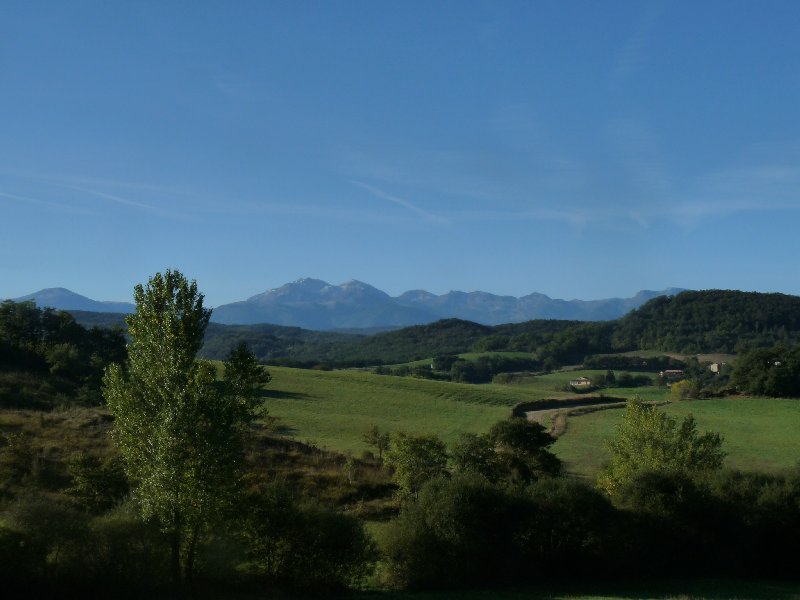
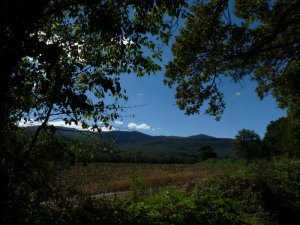
Wow.  It was worth it.  From here, we had a 360 degree panorama.  The chain of the Pyrenees marched across our horizon, its peaks already dusted with snow, or even quite thickly covered in the case of the higher summits.  As we turned in other directions, we could see Mirepoix, immediately recognisable from its distinctive cathedral spire, and the Montagne Noir beyond.  There are foothills nearby too, across which pilgrims on the Chemin de Saint Jacques de Compostelle still travel: and other sights too – the ruined Château de Lagarde, and its near neighbour the Château de Sibra.  We stayed a long time, simply relishing these views, the sky, the silence and peace at what seemed to us, at that moment, the top of the world.

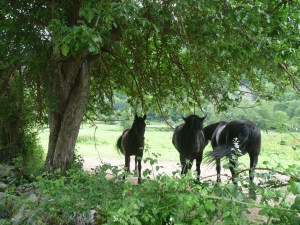
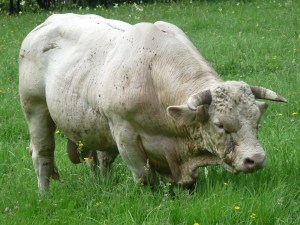
When we finally shrugged on our rucksacks once more, we only had three or four more kilometres to go, along more unpeopled pathways.  After negotiating the only obstacle of the afternoon, a group of cows supervised by a bull – we let them get well ahead of us – we were soon back at base.  It was good, very good.  I just wish my camera could do justice to those peaks.  But we’ll be back, in winter, when they’re truly thick with snow

Le Jardin Extraordinaire est mort. Vive le Jardin Extraordinaire.

Gosh.  Was it really only five weeks ago that we were there?  Was it only 5 weeks ago that we togged ourselves in skimpy sun gear, floppy hats and clodhopping sensible shoes to make our annual pilgrimage to Le Jardin Extraordinaire?  If you’ve been following our story of our life in France you may remember the photos of this joyful, playful, meditative, exuberant, and quite lovely space which so many of us come to explore and relax in for the one weekend only, in very early September (follow the link above).

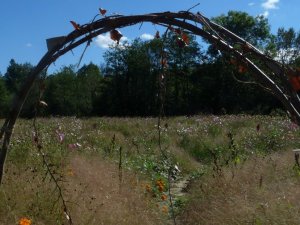
The meadow at the Jardin Extraordinaire today

Today we wanted a walk: it’s not high summer any more, but the sky was very blue, the sun was pretty hot, the morning mists had burnt off and who knows if tomorrow it may rain?  We wanted to take bags and a bucket and see if there were a few late blackberries (there were), a few sloes (there weren’t) and a few early walnuts (there were) to make our sortie near Lieurac worthwhile.

That was the entrance, a few weeks ago.

Our path took us past the site of Le Jardin Extraordinaire.  It’s not normally a public space, so we couldn’t wander down to the river, or scramble up the hillside.  But we could walk by the meadow which had greeted us at our last visit, and we could see the tunnels and bowers of gourds.  Autumn has struck.  The bright fleshy stems and leaves of the gourds and sunflowers have changed into gnarled and bony twigs.  The pumpkins which once peeped from beneath their leafy green sunhats are now exposed on bare earth, those leaves crisp and brown like curls of tobacco.  The sunflowers still rear their tall heads over the scene, but they too are blackened and dry.

It’s still lovely though.  This is no cemetery.  The seed pods, the gourds, the berries are all ripe now, They’re ready for the next stage: marauding animals may eat them, humans too, or else they’ll seed themselves, so that early next year, the garden can begin to grow again, and be transformed by the creative artists and gardeners of Artchoum.

Rosehips along our walk

And we too marauded today.  We came back after our walk with full bags, muddy shoes, and that feeling of well-being that comes from a peaceful and productive afternoon  out in the countryside in the bright Autumn sunshine

P1070802

Butterflies III: Half an hour of my life

There we were at Roquefixade, showing our favourite walking destination off to two of our Harrogate friends, when a butterfly discovered me.  Then another.  These two creatures played round my wrist for more than half an hour before finally dancing off into the sunshine.  They made our day.

I’m thinking they’re the Common Blue (Polyommatus icarus).  Any dissenters?

Butterfly bonanza

I’ve never been all that good at butterfly spotting.  Back in the UK, I could manage my red admirals, peacock butterflies and cabbage whites.  Oh yes, I could certainly identify those pesky cabbage whites.  Their eggs were usually plastered over the undersides of nearly every vegetable I had on my allotment.

On Sunday though, we had a real butterfly bonanza.  We had a perfect day’s walking on the nearby Plateau de Sault, near Belcaire.  It was perfect because the scenery was friendly: gently rising and falling lightly forested slopes offered distant panoramas of the Pyrenees.  The wonderful weather was bright and sunny, without being too hot. The walk offered challenges but no real difficulty; good companionship too.  What made this Sunday memorable though were the butterflies.  At this altitude – about 1000 metres – the summer flowers were still bright and fresh, and the butterflies couldn’t leave them alone.  They fluttered ahead of us every step of the way, and we finally gave up exclaiming over their delicate beauty.

What we couldn’t do was identify them.  This evening I’ve pored over sites on the internet.  I’ve excitedly identified a specimen.  Then I’ve looked at the next image… and the next… and realised that my confident identification isn’t at all secure.  Tentatively, then, I’ve named my photos.  But I rely on you, dear reader, to put me right about the undoubted mistakes I’ve made.

In the end though, whether I’ve been able to name them or not, I carry with me the memory of a summer’s day made extra special by the presence of those butterflies  wheeling, turning, diving and fluttering, rarely still, but constantly engaging our admiration and attention

What’s the point of horse flies?

There’s a series on BBC Radio 4 that somehow I’ve never caught up with on i-player.  It’s called ‘What’s the point of….? and examines a whole range of British institutions, from the Tate Gallery at the more serious end of the spectrum, to lawns and pubs at the other.  Though some right-thinking Englishmen might argue that nothing could be more important than a well-kept lawn and a drink in your local after you’ve finished mowing same.

I have a suggestion for a programme, though the subject that interests me isn’t a British institution. But I really need to know.

What’s the point of horse flies?

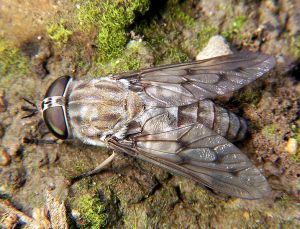
Thanks to Dennis Ray and Wikimedia Commons for this graphic image of a happy horsefly

Out walking at this time of year, some – but not all of us – have come to dread being near horses, cattle or still water.  Because when we’re near any of them, we’re likely suddenly to feel a sharp piercing of our skin, as a horse fly eagerly pumps poison into our flesh whilst sucking our blood.  It’s not easily brushed away.  In the hours that follow, our skin swells, and for several nights, sleep will elude us as we scratch frantically at our fiery, itchy, tightly inflamed skin.  These nasty creatures are pretty immune to any repellents, though a cocktail of essential oils such as lavender, melissa and tea-tree sometimes helps.  Nor have I found any remedy soothing after the event.

So what are they for?  It’s bad enough for us humans, but cattle and horses seem truly to suffer all summer long, as flies of all kinds cluster round their eyes and mouths, resisting all attempts to flick them away.

Here be horseflies....
Here be horseflies….


.... and here be horse flies
…. and here be horse flies

Apparently they make a tasty snack for a swallow or a frog.  I’m sorry, that’s no good.  There are plenty of other insects about, so their having a place in the food chain simply isn’t justification enough.

And while we’re about it, what’s the point of ticks?  And mosquitos?  And another thing.  Why do I get so many bites from all of the above while Malcolm, and so many of my other friends, are blissfully immune?

Mountain Apollo

P1050895

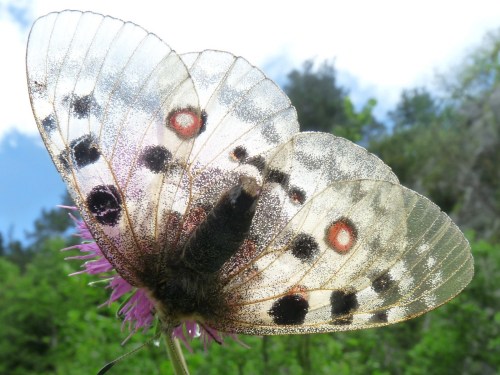
I just want to share a photo I took on our walk on Sunday, when we went to the Gorges de la Frau.  This butterfly seduced us all with its distinctive spots and white grisaille wings.  It turns out to be rare, a protected species, and known only in mountain regions, mainly in Southern Europe.  The French know it as Apollon, and its Latin name is Parnassius Apollo.  If your French is up to it, you can read about it here.  

And here’s a small taste of the Gorges de la Frau, only a few miles from our house.

Danger Mouse: The Sequel

After my last post about Mr. Mouse, things went quiet.  Not quite quiet enough for Malcolm, who swore he could still hear scuttling in the wainscot.  I decided he was paranoid, as I’d gone on dusting surfaces with cornflour at night to track our intruder, and they’d remained undisturbed, just as the traps remained unbreached.

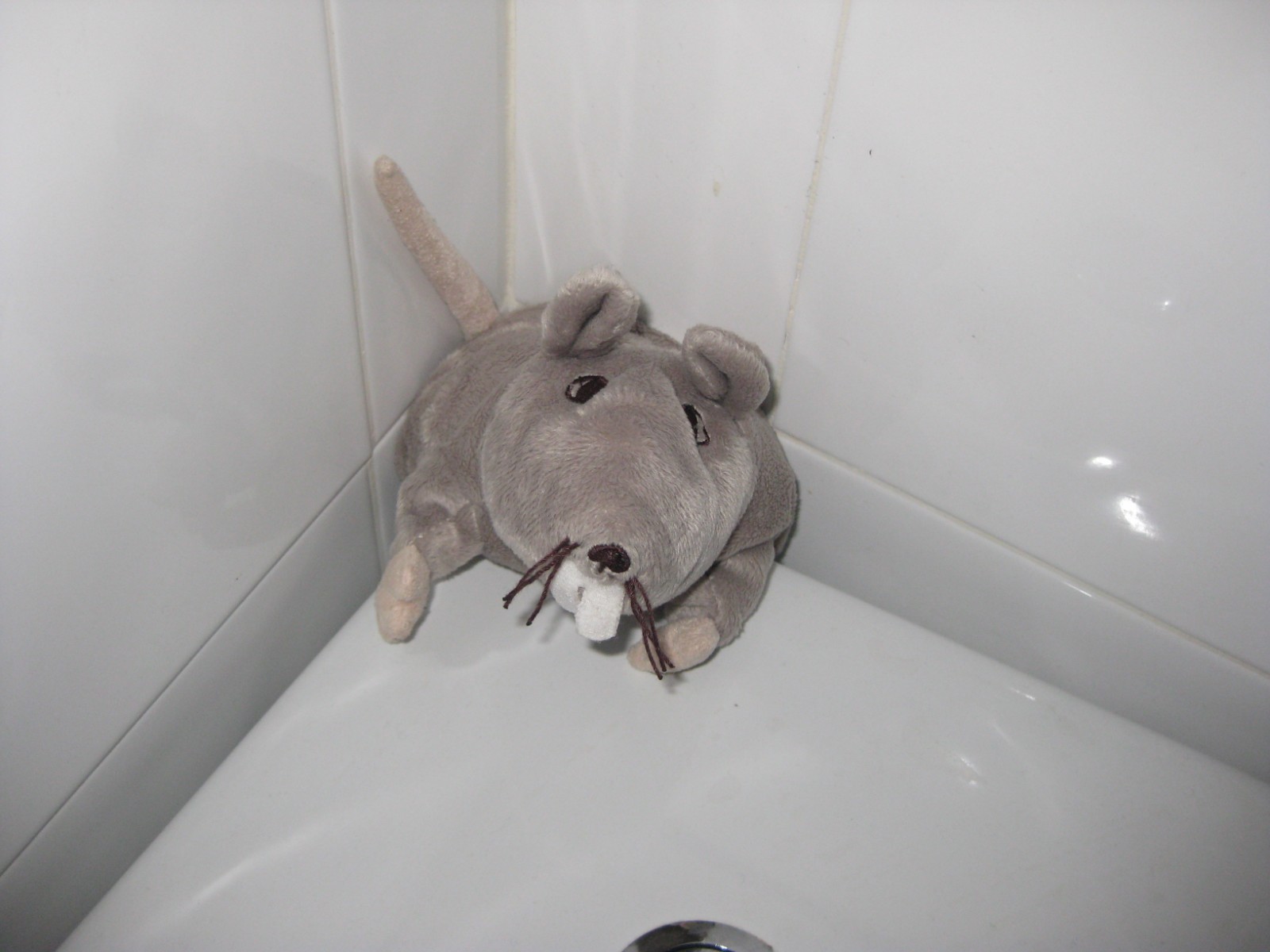
We’re getting a bit silly. Emily’s rat keeps popping up in odd places, because one of us has whisked it off there with the aim of making the other one jump.

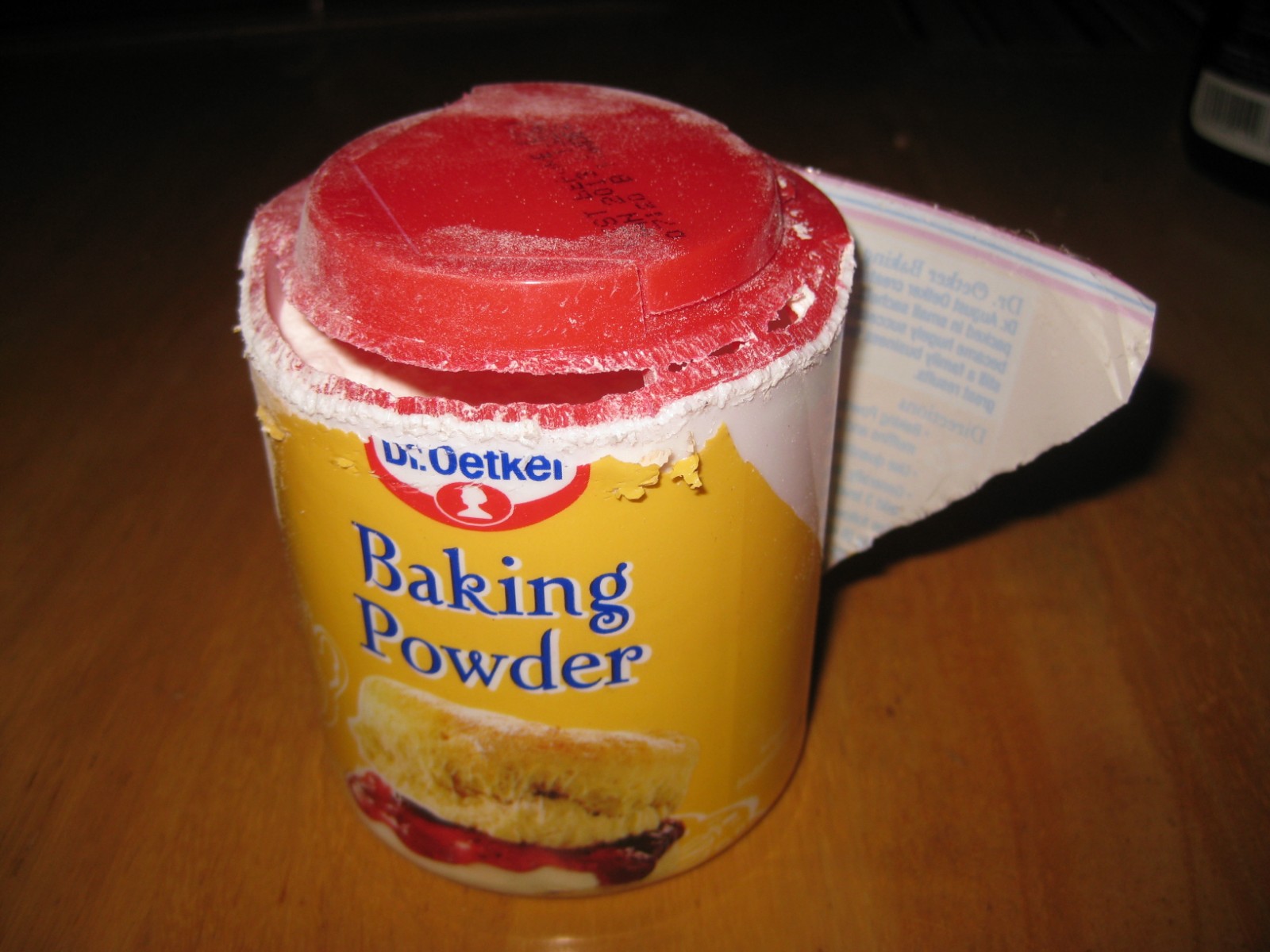
Then this morning, two things happened.  A bag of walnut shells, bagged up and waiting to do duty as slug-deterrent on some outdoor pot plants, was found to be ripped and the contents spilled all over the kitchen.  Later, tidying the garage (which is next to the kitchen), I discovered a bag of foodstuffs I’d forgotten to unpack after a recent cooking atelier.  The lid of the baking powder container had been gnawed, and the bag and everything in it was coated with a thick dusting of powder.

That’s what Danger Mouse is capable of.

The other thing is…. we’ve both seen him.  And he’s not a mouse at all, but almost certainly a hamster.  Anyone lost one?

So while you’re thinking of what we should do next, why not watch an episode of that 1980’s children’s cartoon Danger Mouse (or Dare Dare Motus, if you’re French), the James Bond of the mouse kingdom ?  Just click the link.

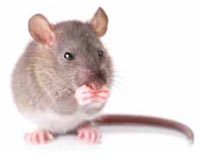
Mouse in the house

Thanks, Hull City Council, for useful info and this photo.

We first noticed it about a month ago.  Scrabbling and scratching somewhere near the kitchen skirting boards, mainly at night.  Then, one night, we accidentally left out the insignificant remains of a tomato, chili and pepper pasta sauce.  The following morning, a greasy red trail led from those leftovers to the space just behind the cooker.  Out came the cooker; off came the kitchen unit kick-boards.  Lying on the floor underneath the units, we saw it all: the napkin that had gone missing, now neatly and minutely shredded, a small cob of bread; fragments of kitchen roll….. and mouse droppings.

We bought humane traps.  We baited them with peanut butter: so much tastier than cheese, apparently, if you’re a mouse.  But we didn’t set them for a few nights, as per instructions.  Set or unset, Mr. Mouse ignored them, or extracted the prize and ran safely away to eat it.

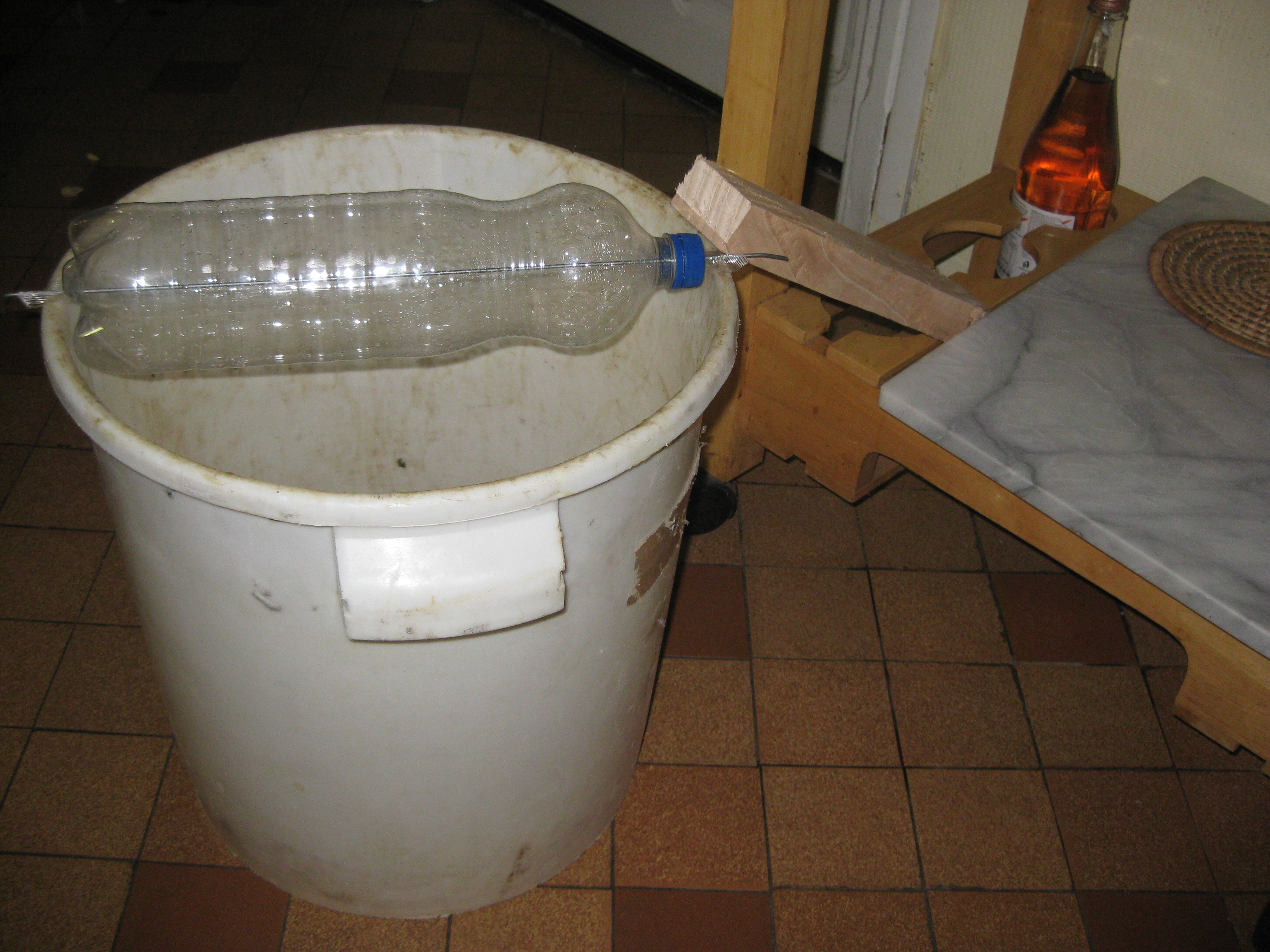
This is not a tube trap, but a spin-the-bottle model, on duty for the first time tonight. Let’s see….

Mal spent long hours on the net, watching excruciating amateur videos about making humane traps.  He picked out some of the ideas involving tubes, bait and deep buckets and set to.  Each night we left collections of baited tubes, unset, over the surfaces Mr. Mouse seemed to use, till one night, we set the trap.  Mr Mouse was to scuttle down the baited tube in quest of peanut butter and fall from the work surface into the deep bucket on the floor.  Theoretically.

At 11.30, Mal heard a crash in the kitchen, smiled at the thought of a job well done, turned over and went to sleep.

At 1.30, I woke up to the sound of Malcolm having a pee in the bathroom.  But wait!  Mal was snoring sweetly beside me.  I got up.  There was poor Mousie, almost drowned, swimming round the lavatory pan.  We have no idea at all how he got (a) upstairs and (b) clambered into the toilet.  Both awake now, and seeing that Mr. Mouse seemed almost dead, I’m truly ashamed to say we flushed him away.

Revealed: Mr. Mouse’s nest

So Mr. Mouse was no more.

The following morning saw us, despite our agonies of conscience, pulling off the skirting board and hoovering out Mr. Mouse’s flat, which was a mess, frankly, though undoubtedly cosy.

Peace at last.

Until the day before yesterday.  In the evening, we heard that familiar scrabbling in the kitchen. Round Two to Mr. Mouse.

Château de Lordat

This slideshow requires JavaScript.

Fourth of October.  The sun’s shining hot, but not too hot, high in an azure sky.  A small group of hikers stands outside a little church and gazes up a steep slope towards the ruins of the Château de Lordat.  And then sets off in the opposite direction.

It’s Anny who’s picked our route, and it’s designed to wind us up the hillside to the castle along chunks of country road, craggy uphill scrambles, dry-leaved woodland just thinking about exchanging green summer leaves for the ochre and russet tints of autumn, and the occasional tiny village – no more than a couple of streets encircling an ancient church.

Most of the time there are views upwards, towards the castle itself, or the cable-wagons serving the talc mines of nearby Luzenac, or across to the more distant mountains covered for the first time this season with bluish-white powdering of snow.  Or down, past thickly forested almost vertical slopes to craggy rust-stained rocky outcrops with occasional hamlets and villages scattered through the countryside. Near villages and farms, we pass walnut trees, and feel obliged to gather the recently ripened and fallen nuts – this is France after all.  We exchange recipe ideas.

Suddenly, we’re there. Lordat.  In high season, the village must be a tourist trap, but now we’re happy to saunter along the sunny empty streets, with their pastel-painted cottages and tubs of geraniums.  A final yomp and we’re at the castle walls.  It’s ruined and closed to the public at the moment, but the views in all directions make the climb worthwhile.

A meandering trek through the woods, trying hard not to kick over the delicately-stemmed autumn crocus, brings us to our lunch spot in Axiat, sitting outside its Romanesque church.  Mal and I are particularly taken by a notice on the door in French, English and Spanish. The English version reads: ‘Ladies and Gentlemen the visitors, we thank you for closing the door by going out’.

Afterwards, more craggy descents, sometimes through woods, at other times with more of those impressive views, along an ancient man-made winding path.  And back to the village we started from.  It’s a wonderful walk.  If you come to stay, make us take you.

In search of a druid – or a trout

Mont d’Olmes: local playground for skiers.  You wouldn’t travel any great distance to spend a holiday here, but for locals, it’s the ideal winter sports spot.  It’s a wonderful area for walkers too.  We’ve only just begun to discover the wealth of footpaths, mainly across truly ‘sauvage’ slopes, with views downwards to Montségur, Roquefixade, and northwards almost, it seems, as far as Toulouse.

It’s alright waxing lyrical though.  For many people living in the area many years past, and until the early years of the 20th century, these slopes were the places where they came for long hours each day, working both on the surface and by crawling through narrow airless tunnels, mining talc.

Talc?  Yes, that stuff you sprinkle on babies’ bottoms.  That stuff those Olympic gymnasts plunge their hands into before taking to an overhead bar.  That stuff that apparently still has many industrial uses, notably in the ceramics industry and for plastics paints and coatings.  This soft soapstone was found here on Mont d’Olmes and is still mined in nearby Luzenac.  Here though, all that is left are the gashes in the mountainside where the workings once were, and a few ancient trucks once used to transport the material down to civilisation.

Come and take the path we took last Sunday.  We walked in more or less a straight line, up and down hill after hill, as the path became increasingly rocky and impassable.  Our reward was the occasional handful of raspberries or bilberries, then a lunchtime picnic by l’étang des Druides.  No, sorry, l’étang des Truites.  Whatever.  Nobody seems to know which name is correct.  Some say the person making the first map of the area misheard and wrote ‘truite’ – trout – instead of ‘druide’.  We saw no trout.  We definitely saw no druids.  But we had a jolly nice picnic.  And I paddled.  And then ruined a perfectly good day, in which morning chill and mist had given over to hot sunshine, by falling flat against the rocky path, cutting open my face and chipping three teeth.  I hope the druids weren’t lining me up for some kind of sacrifice.

This slideshow requires JavaScript.