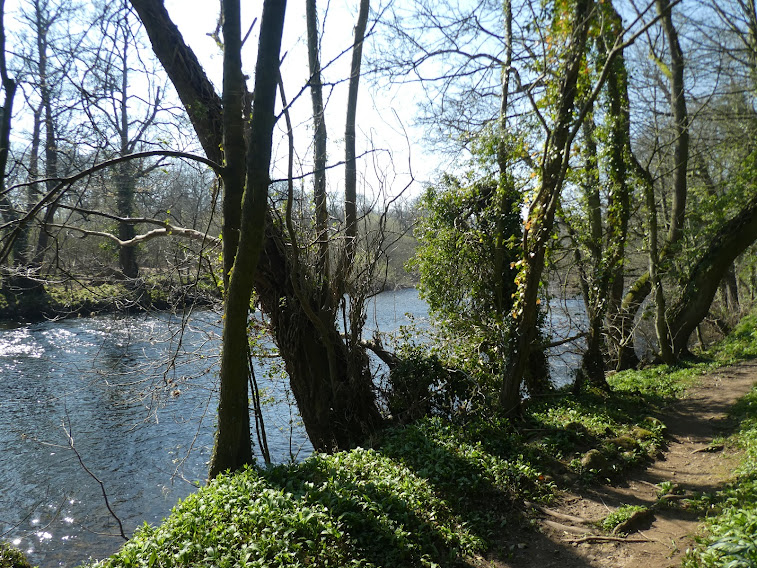
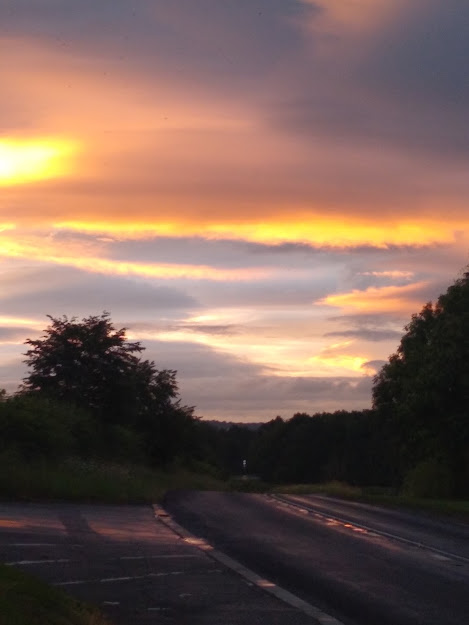
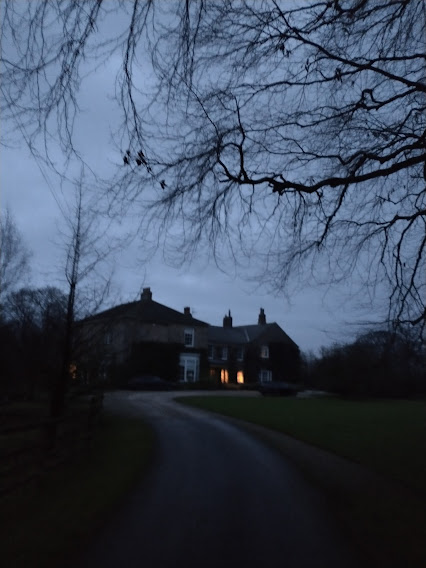
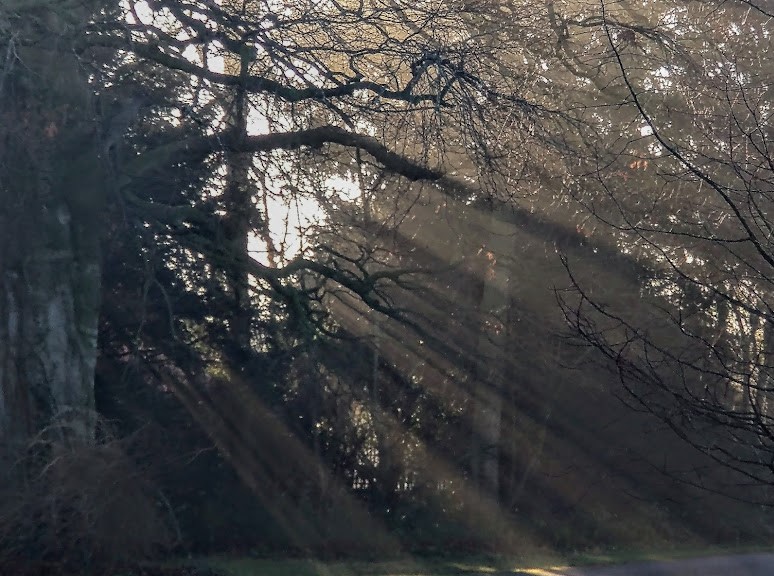
In my last post, we took a walk through my village. Over lockdown, and the weeks and months afterwards, I came to know our local paths more intimately than I would ever have imagined. But I came to see them through fresh eyes, enjoying the changes of season: the difference between a walk taken at dawn, at midday, at sunset. A sunny walk: a snowy walk: a rainy walk: a windy walk. Walks with bluebells: walks with poppies: walks in mud.
Following last week’s Lens-Artists Challenge, when we were encouraged to dip into a new challenge or two, I think I’ll give Monday over to just that – for a while anyway. I’ll revisit the challenges that were new-to-me then, as well as revisiting older favourites.
I should explain. For some time now, I’ve joined in Rebecca of Fake Flamenco’s monthly poetry challenge. It’s a challenge indeed, especially for strict amateurs like me, because every month she invites us to try a different poetic form on the announced theme. This month, it’s a haiga. It’s new to me, and perhaps to you. Here’s what Aha Poetry says: ‘Haiga is a Japanese concept for simple pictures combined with poetry, usually meaning haiku‘.
So what you see above is my first effort, on Rebecca’s chosen theme of time, personal development and change. Many of you know that last year I challenged myself to walk every day, and get the miles in – 1500 miles to be exact. It was fun, and helped keep me fit. This year though, I don’t want to do it again. I still want to walk every day (said she, looking out at a grey and rain-sodden garden). But instead of getting my head down and pounding the tracks and pathways, I want to slow my pace and savour the moment: take pleasure in discovering the new in views that have perhaps become over-familiar in these all-but lockdown days.
We’re almost at the end of 2021. Christmas has come, but not yet gone (the Twelve Days of Christmas), though Team Spain departed yesterday, leaving a big hole in the lives of two very debilitated grandparents who had long forgotten how exhausting a delightfully energetic eleven month old could be.
It’s time to review the year- two bits of it anyway.
I kept my resolution to walk every single day, whatever the weather – a promise that will not impress the dog owners among you, who have no choice in the matter. I reached one target, then another, and have finished the year with more than 1536 miles (2473 km) under my belt and still one walking day to go. I’m quite pleased.
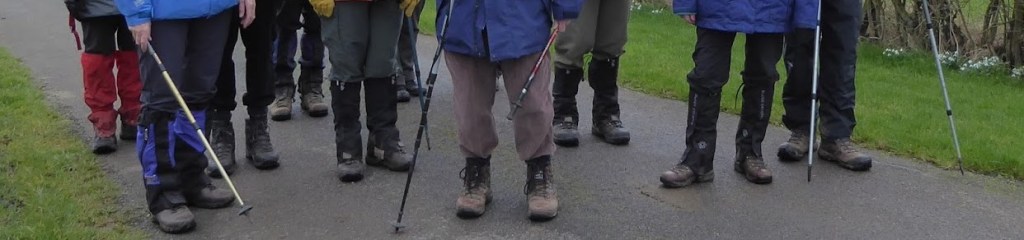
I walked, sometimes in company…
… or alone …
This isn’t me. I don’t do selfies.
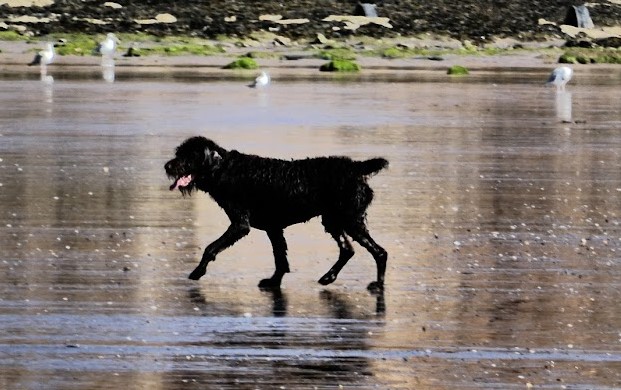
… at times accompanied by a Virtual Dog ..
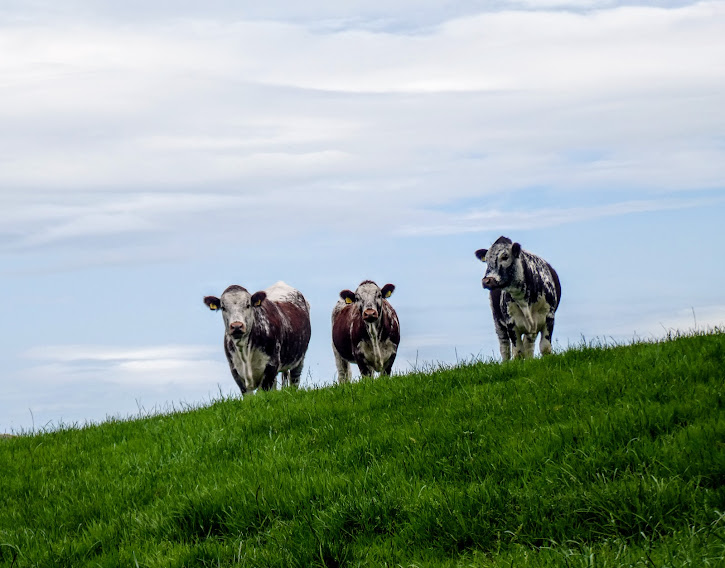
… or other curious onlookers …
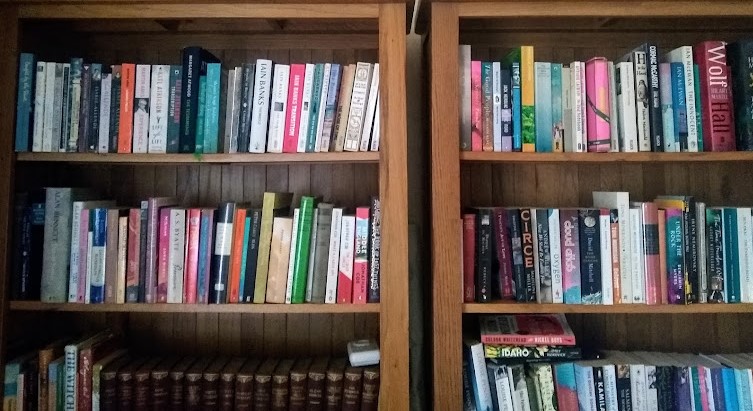
Back at home, I kept my promise to myself not to let Lockdown Lassitude interfere with my reading, as it had in 2020. I didn’t precisely set goals, but I aimed to read far more literature in translation, and more non-fiction that wasn’t Nature related. I managed that too. Here are the 101 books I read, as recorded in Goodreads
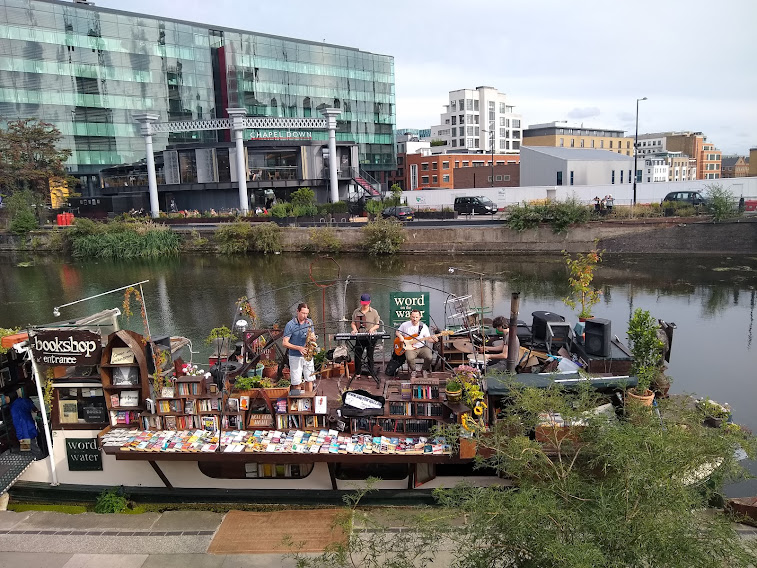
My header photo illustrates walking and reading combined: a stroll along the Regents Canal, where you’ll find a floating bookstore with, if you’re very lucky, a musical interlude as well.This isn’t a photo from 2021. Perhaps such treats with be part of my life again in 2022.
It’s 7.45. Here’s the sunrise on our way to Studley Royal.
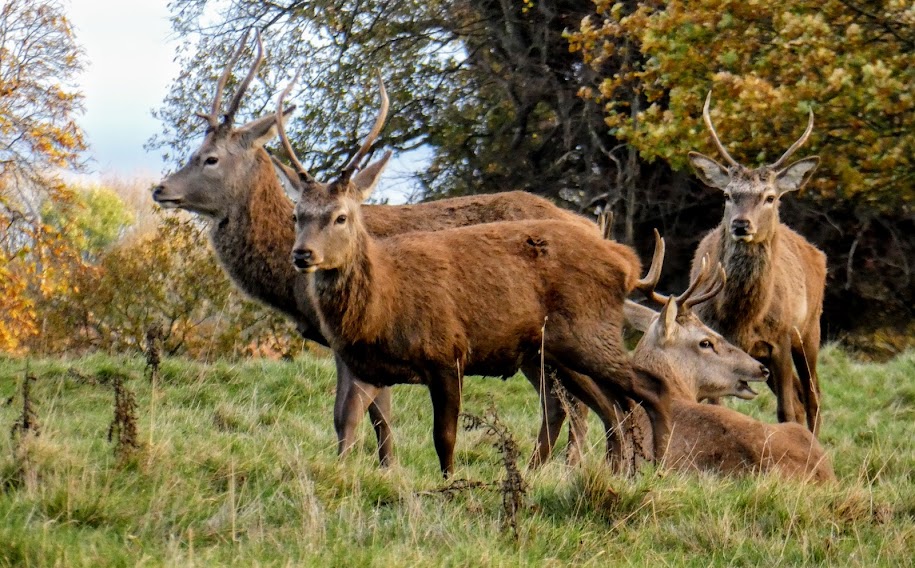
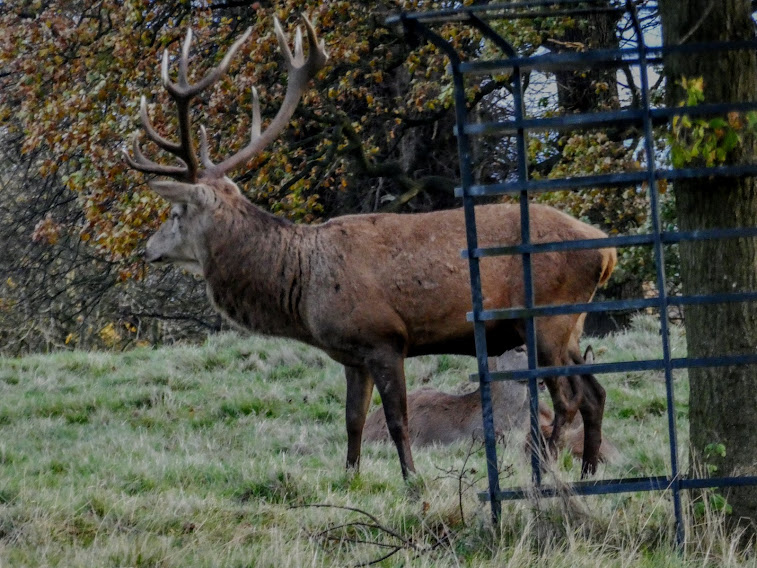
And having met the rangers and our fellow walkers – volunteers on the site, here’s who we’d come to see.
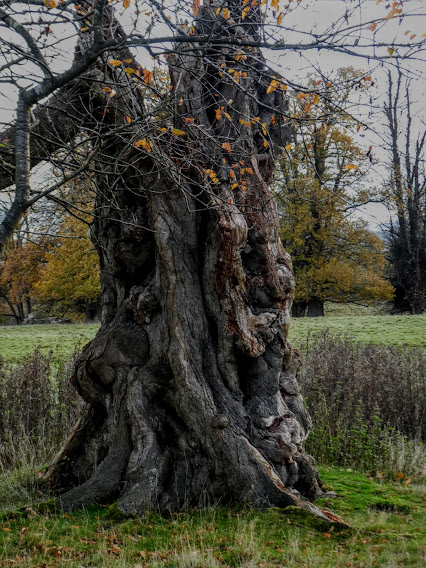
Red deer, but ancient trees too. Cherry trees aren’t meant to last 400 years, but somehow this one is clinging on. Whereas the oak nearby is thought to be more than 800 years old, and dating from the days when the monastic community was at its height in nearby Fountains Abbey.
The ancient cherry …… and its trunk.An oak dating from the time when nearby Fountains Abbey was a busy monastic community.
Come with us as we walk past the entrance to the park, framing the view down towards Ripon Cathedral, before we climb uphill to less frequented parts of the parkland, where deer usually roam free and we could enjoy open views across to Ripon and the North York Moors beyond.
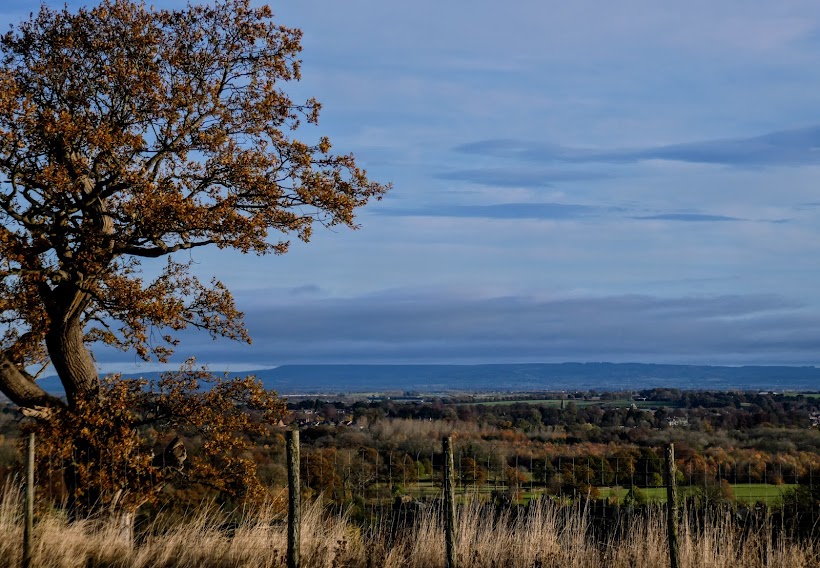
Since clock change, I’ve been unable to wake up later than 5 o’clock. So inspired by Becky’s walk at sunrise, and by the clear sky last night, I was out by 6.00 to catch the sun’s first rays. But it was cloudy – thick cross-patch grey. And my phone doesn’t do low light levels. But here’s my early morning photo-diary. With not a sunrise in sight.
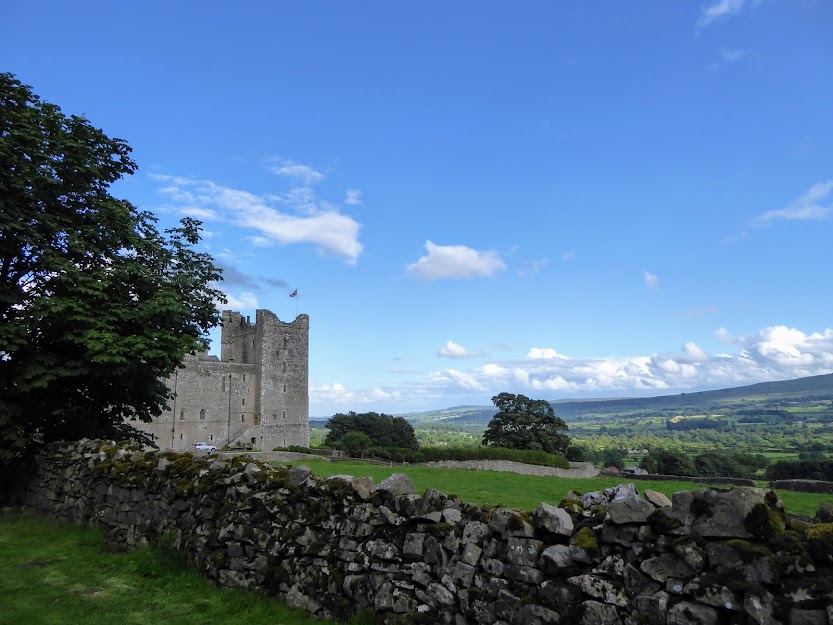
We seem to have been to Castle Bolton quite often recently. It reminded me that shortly after we came back from France, one of our early walks was here. Maybe it’s time to revisit my blog post about it, to remind myself, if nobody else, about its history.
A CASTLE FIT FOR A CAPTIVE QUEEN
October 2014
We travelled the road in thick white mist, fearing a dank and gloomy day. But the higher we climbed, the more the mist fell away, and the brighter the sun shone.
Looking down over Wensleydale from Castle Bolton
As we began walking, Daphne shared some of the castle’s history with us. It has belonged to the Scrope family since the time it was built in the 14th century, and has always been admired for its high walls. It’s a proper castle, looking exactly like the ones you will have drawn when you were eight years old.
Bolton Castle
Tudor history is largely about the constant religious and temporal battles between the Catholic and the Protestant church, which Henry VIII had made the Established Church, with the king as its head: the Fidei Defensor – Defender of the Faith (unbelievably, Henry hung onto this title, awarded him in his pre-Protestant days by Pope Leo X, in recognition of his book Assertio Septem Sactramentorum which defends the supremacy of the pope). His son Edward briefly succeeded him, and then his daughter Elizabeth, and both were Protestants.
But Elizabeth’s rule was threatened by the Catholic Mary Queen of Scots, and she was held captive first at Carlisle Castle, then at Bolton. Here she was attended by 51 knights, servants and ladies-in-waiting, not all of whom could be accommodated in the castle itself. She also had cooks, grooms, a hairdresser, an embroiderer, an apothecary, a physician and a surgeon, while furnishings fit for a queen were borrowed from nearby Barnard Castle. She went hunting, learnt English – for she spoke only French, Scots and Latin – and spent time with local Catholics. She made an unsuccessful bid to escape from captivity. It’s said she climbed from an upstairs window in the castle, and fled on horseback past the nearby market town of Leyburn. It’s here she dropped her shawl and so was discovered and recaptured. And that is why, so they say, the long escarpment above the town, nowadays a playground for walkers and sightseers, is still called ‘The Shawl’.
As we enjoyed our history lesson, we passed a field of Wensleydale sheep. We very much admired their sultry fringes.
Wensleydale Sheep
And onwards. Autumn colours.
A completely pointless stile in the middle of a meadow.
Then Aysgarth Falls. What a wonderful lunch spot. The crashing waters made conversation quite impossible, but we sat enjoying the surging waters, the coppery leaves above our heads, and the all-encompassing percussion of the tumbling River Ure.
And then it was time to turn round and head back by a different route. Another great day’s walking, with an added history lesson.
But wait! This post was all for Fandango’s Flashback Friday, when we’re invited to dig up a Post From the Past. But Becky’s Past Squares demands a look at the past too: here’s Bolton Castle, square style:
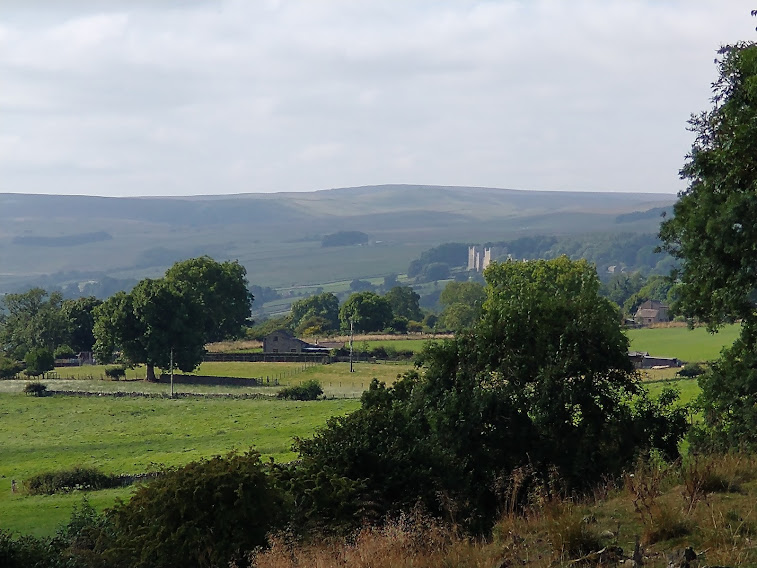
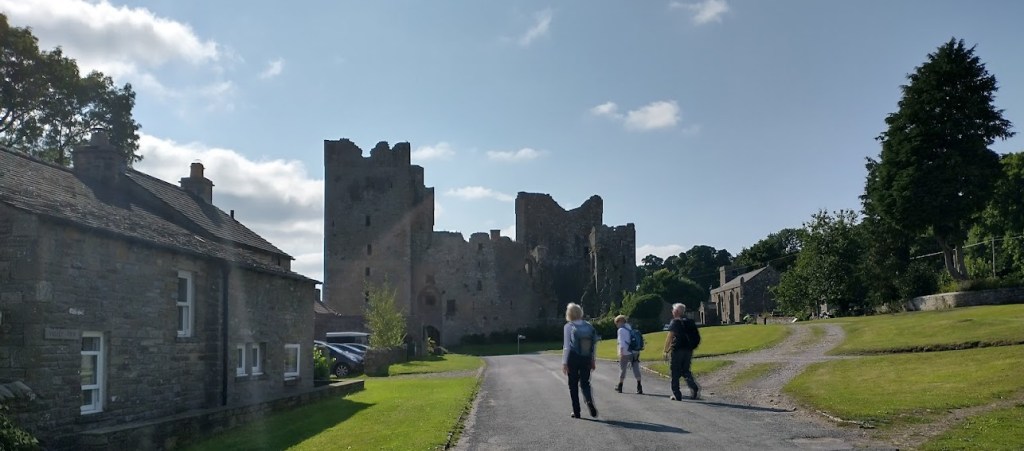
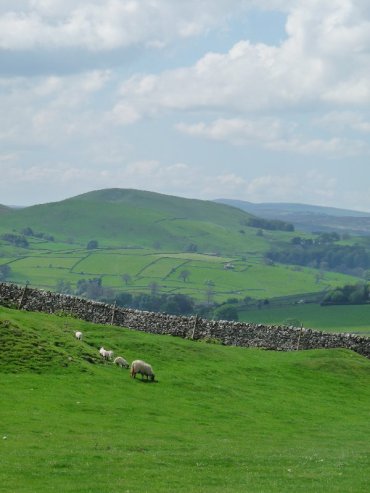
The landscape in the featured photo shows the bucolic beauty of Wensleydale, still green and welcoming at this time of year. And look! Here’s Bolton Castle, one time prison of Mary Queen of Scots: where she was obliged to stay for six months with a retinue of 30 servants, permitted to go hunting, and receive English lessons This is where we began and ended our walk last week.
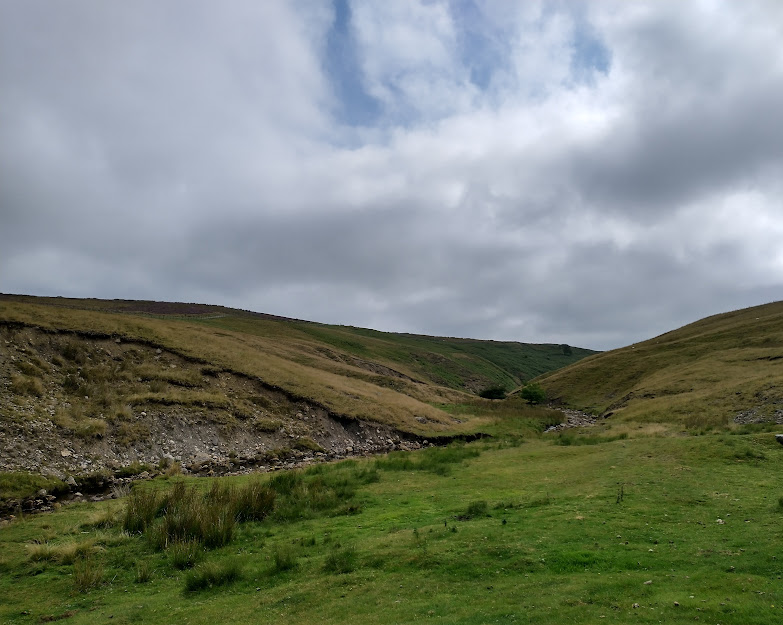
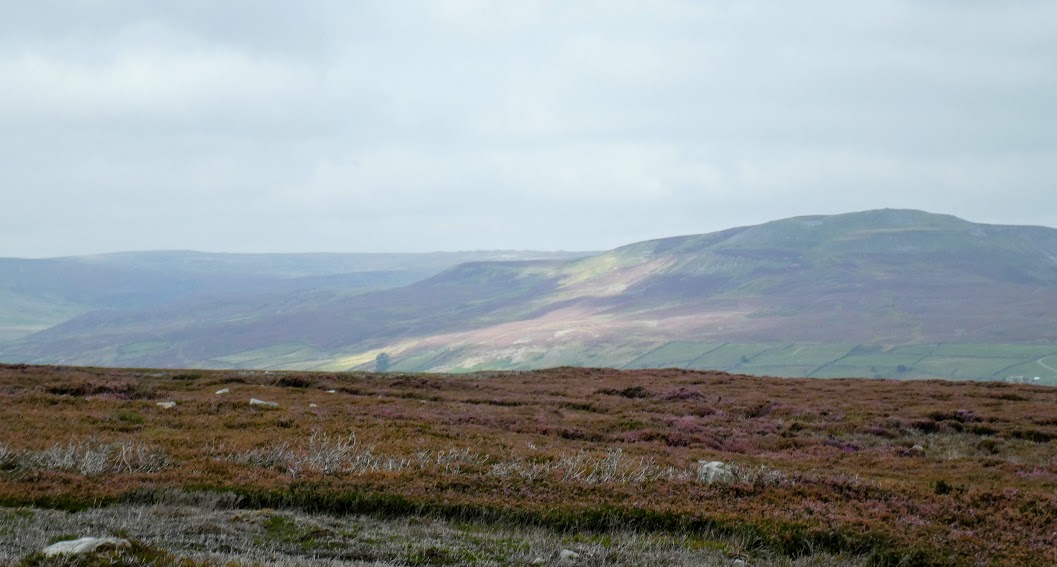
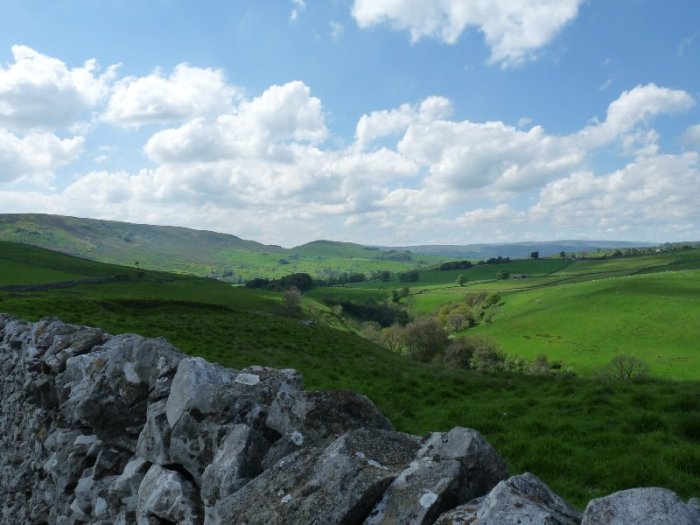
Most of our hike wasn’t in such favoured countryside. We slogged up to the bleaker moorland where once lead was mined, and no farmer could make any kind of living, unless he kept sheep. Here there are no villages, no houses or farms, and few roads.
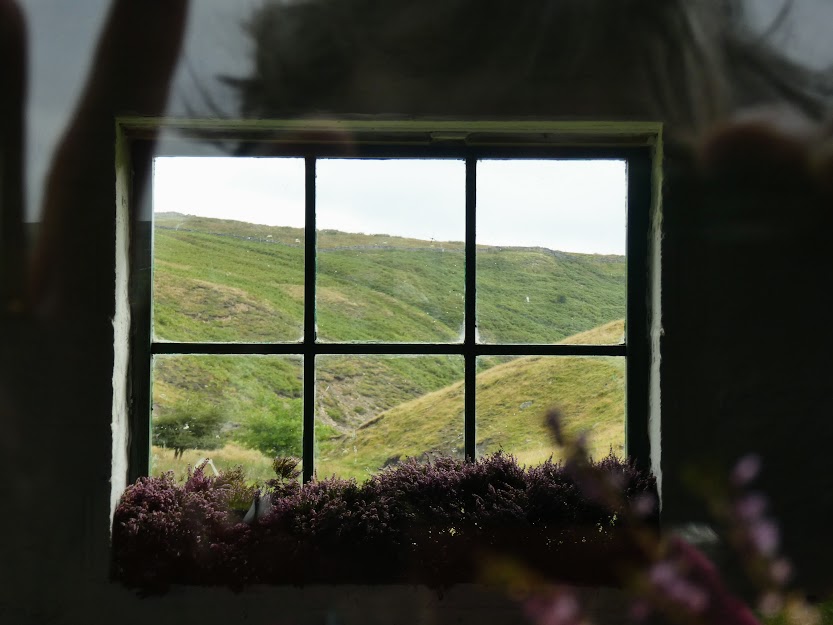
We’d hardly been going more than a mile when we came upon a shooting lodge, now set up as a resting place for the weary traveller. Here’s the view through one of the windows:
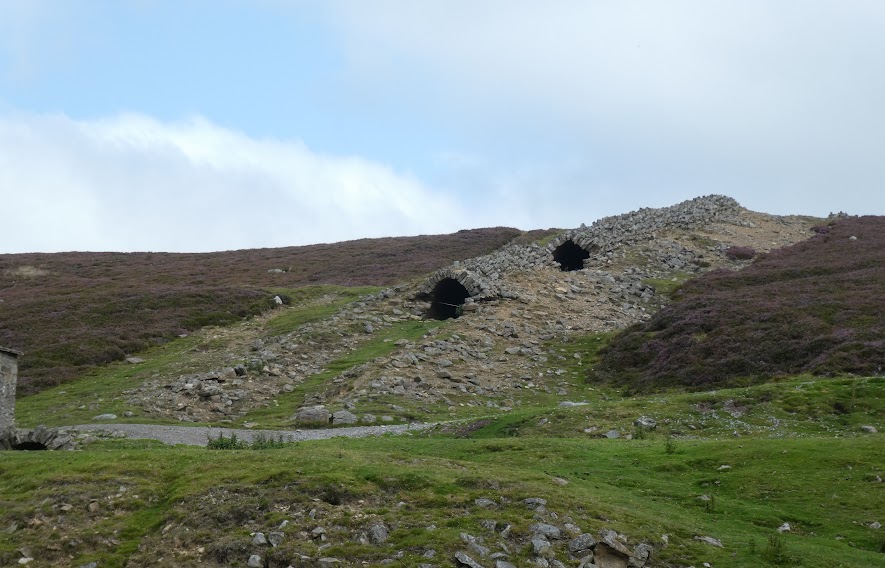
There was buffeting wind, and the smallest hint of rain, so we were glad to shelter for a few moments, and look at the view from inside, through that welcome window . But then out we went again, to the windswept landscape. It’s easy to see traces of the old lead mining industry: the grassed over spoil heaps, the ruined stone sheds, the pits where once a mine was sunk.
Lead was found here long before the Romans came. By the Middle Ages, blocks of land known as meers – roughly the size of a cricket pitch – were leased out to the miners who, if they were lucky, could find lead almost at the surface: or by running shafts below ground. The process only became industrialised, and mining companies developed in the 18th century. The last mine in the Dales closed in 1912, and for the first time in hundreds and hundreds of years, no one quarried for lead.
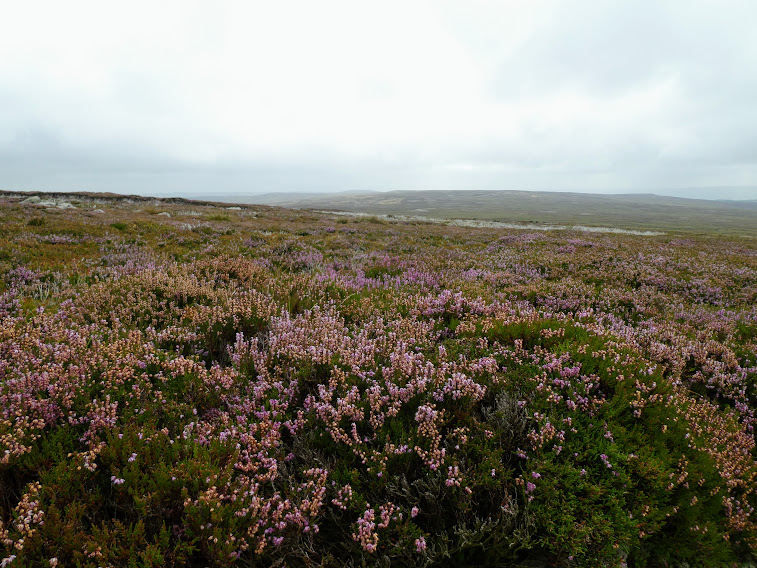
This is a bleak landscape, austere and unforgiving: open to winds coursing across the Dales, and to lashing rain. I love its ascetic grimness and the beauty to be found in its treeless simplicity. The time of year when the hillsides are cloaked in purple heather – August – is not to be missed. We caught the end of this glorious display.
Though our day had been one of grey skies, at the end the sun came out, as was fitting for the gentler Wensleydale landscape near Bolton Castle
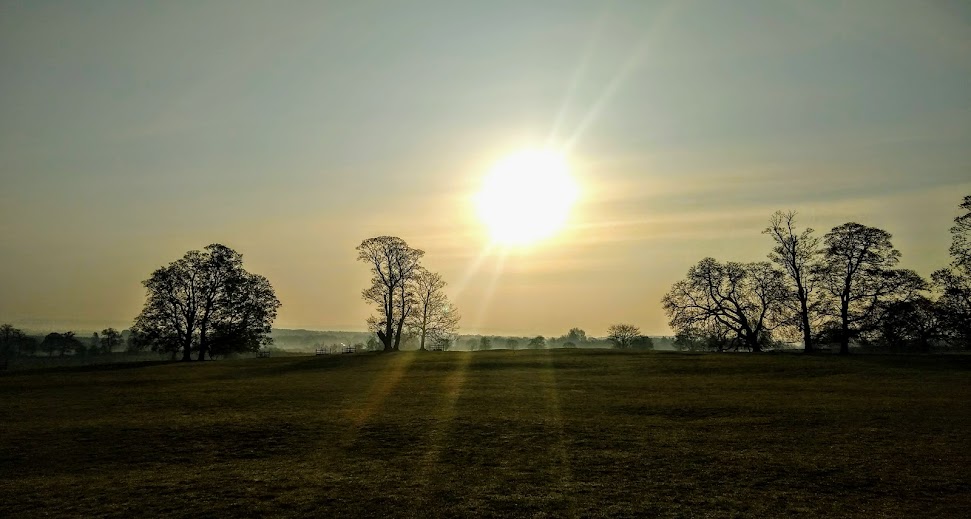
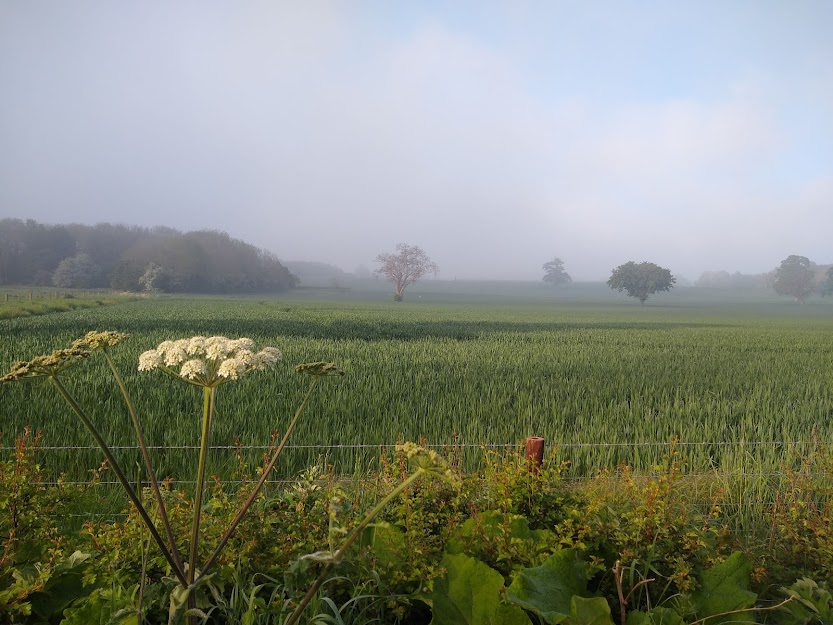
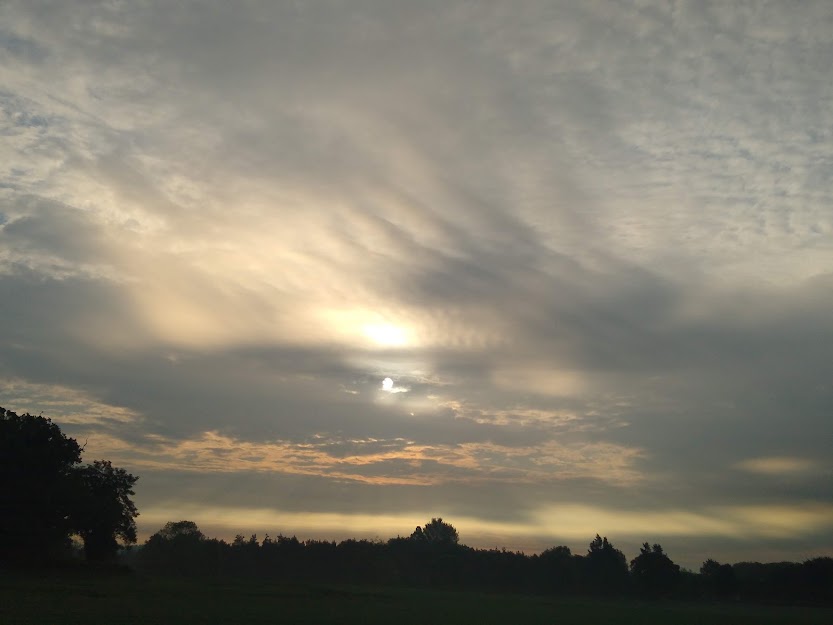
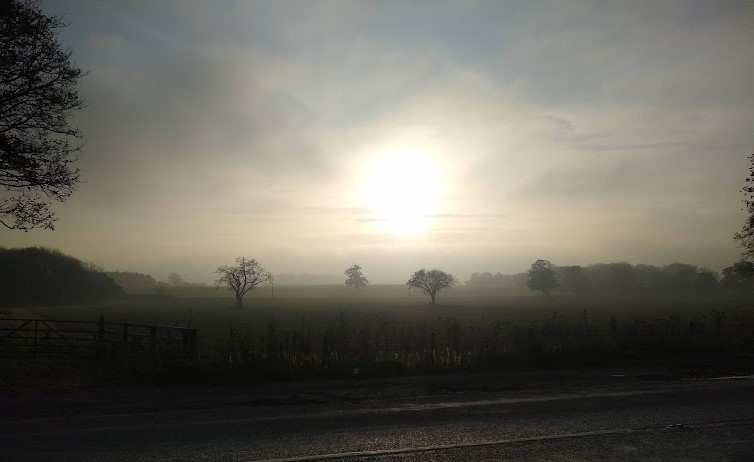
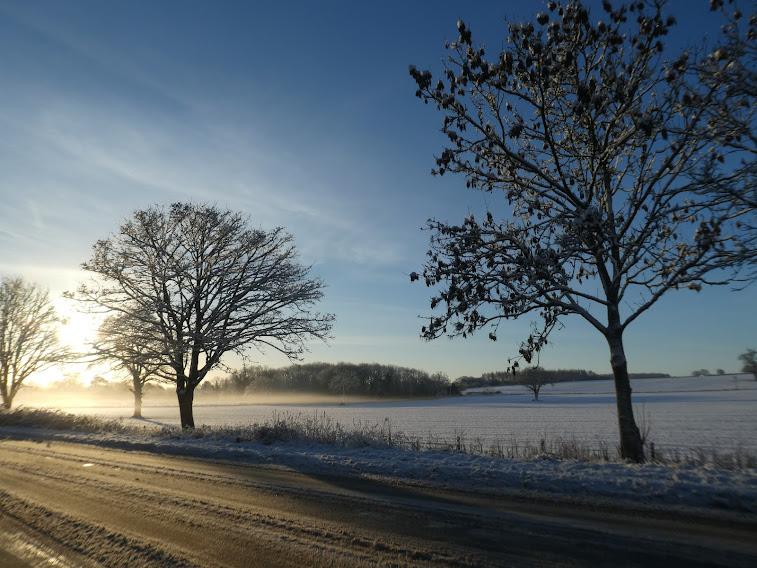
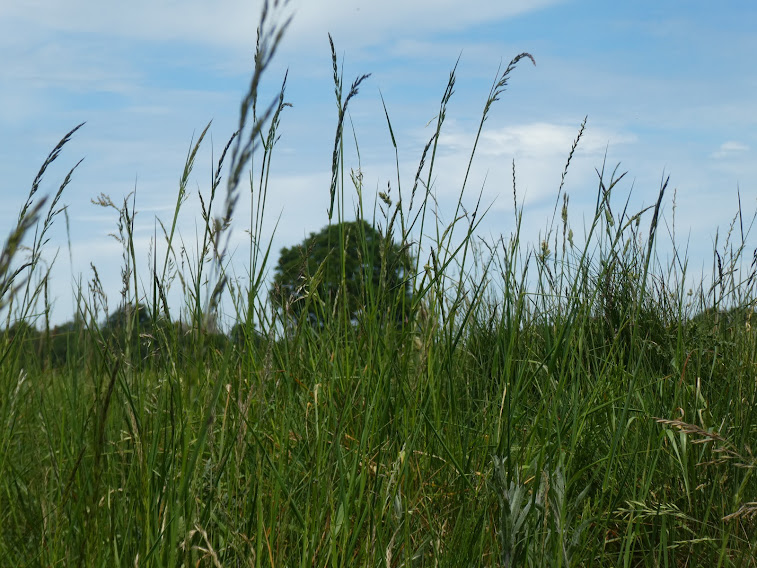
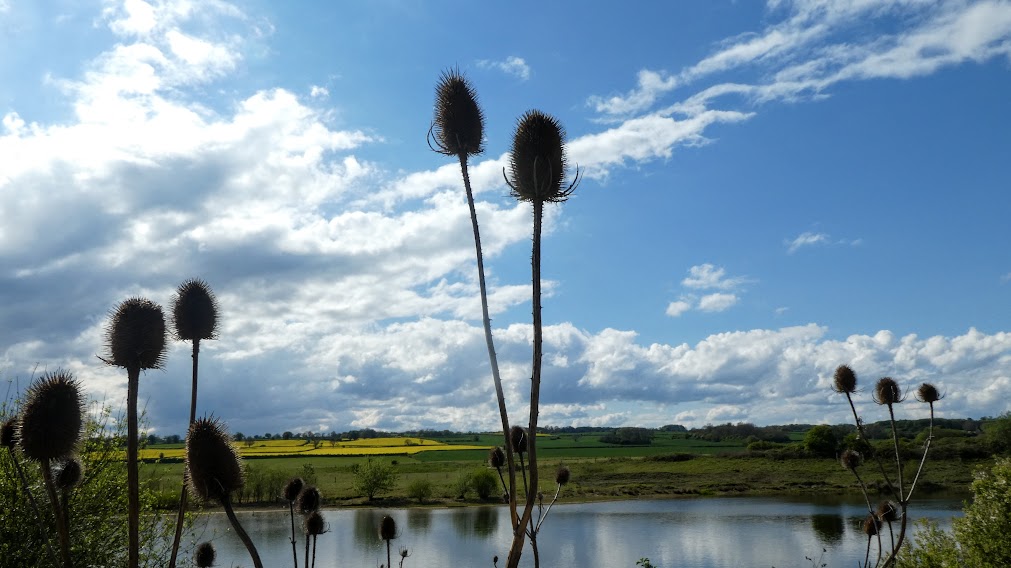
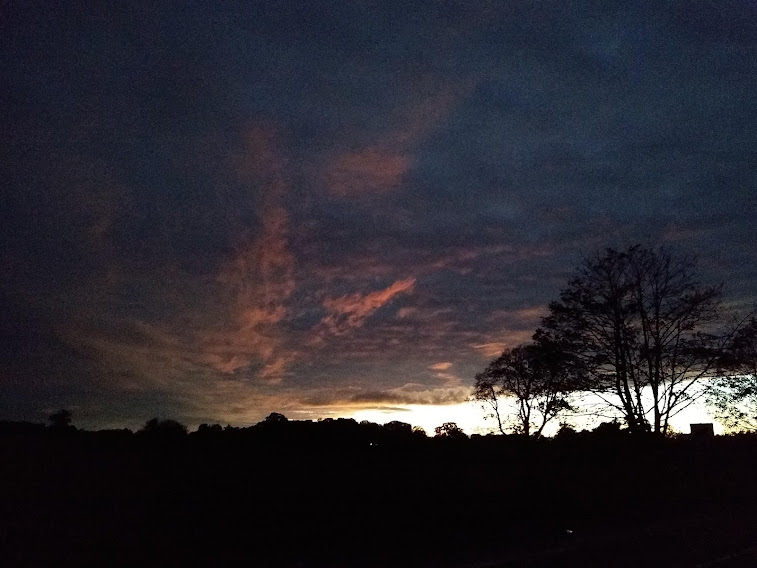
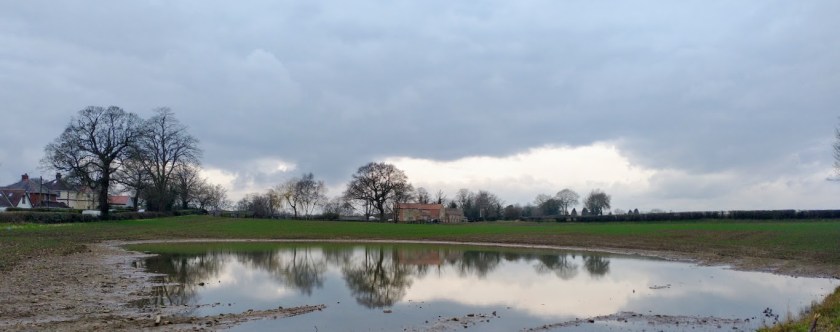
Tina’s asked us to consider light, in Lens-Artists’ Challenge #162. I decided I could do worse than wander about our own home patch, and go for a stroll that lasted from early morning to evening, from summer to a snowy day and watch how the light changes as the day wears on.
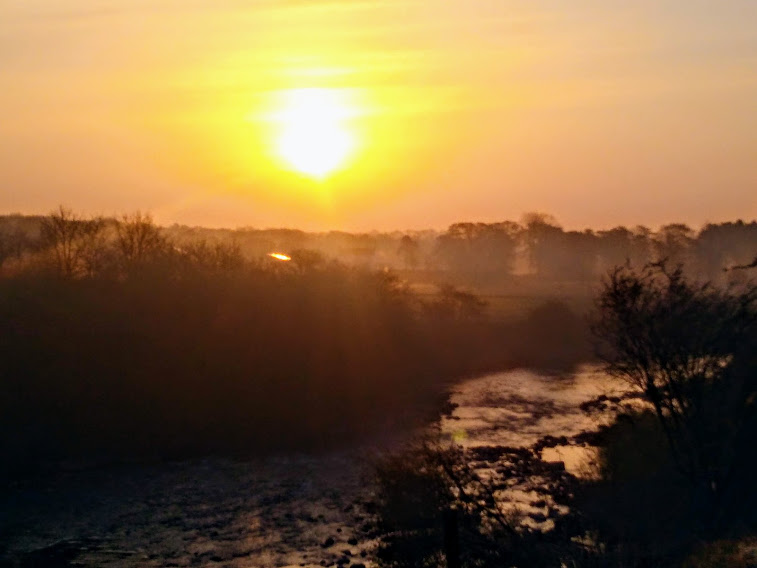
I got into the habit, during lockdown, of getting up bright and early to watch the sun rise. Here it is, over the River Ure.
And here we are, never more than ten minutes away from home, in the morning, at noon, and at sunset.
The last two are taken, firstly on one bright morning when there’d been so much rain the fields had flooded, and then later, one evening just as the sun had set.
Since the Yorkshire Dales – or other popular destinations – are understandably still not keen on receiving hordes of visitors, we’ll have another Virtual Walk, and revisit a post written in May 2014, shortly after we returned to England.It’s for Fandango’s Flashback Friday, and for Jo’s Monday walk.
ANOTHER DAY IN THE DALES
Burnsall – Howgill – Middle Skyrehome – Gill’s Laithe – Troller’s Gill – Appletreewick (often pronounced Aptrick locally) – Kail Lane – and Burnsall again
What’s not to like in a walk that passes through places with such enticing names? It was Rosemary who led the Ripon Ramblers yesterday and she’d organised not only a splendid walk with varied Dales scenery, but a warm sunny day too. Here are my picture postcards from the day. Click on the images you’d like to see enlarged, or to have a slideshow.
We crossed over the ancient packhorse bridge at Burnsall to begin our walk.
Then we walked along the River Wharfe past farmland, using the Dalesway path.
Sometimes we had open views.
Here’s the River Wharfe
And here’s a view across to the hilltops.
A disused ancient limkiln
Approaching Trollers Gill
Trollers Gill
Drystone walls still divide the ancient field boundaries.
Northumberland sheep accompanied us along this bluebell-strewn path.
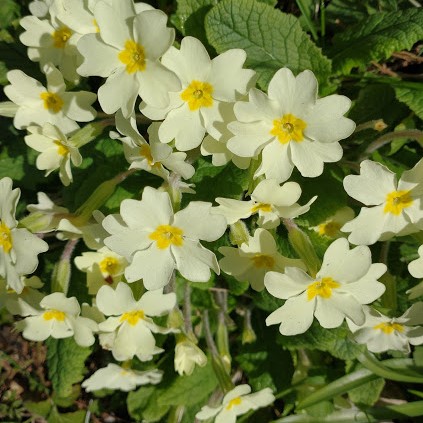
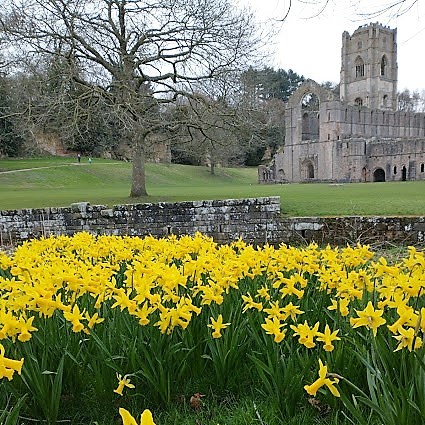
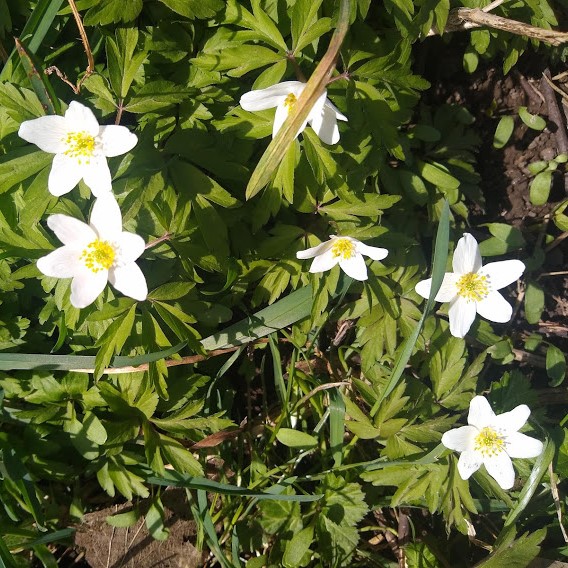
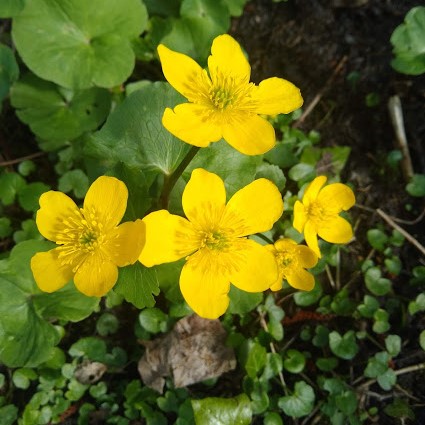
March was a month like every other since last March, in that every day, I walked. March was a month like no other – except perhaps last March – because spring arrived. And that’s what I’ll celebrate here, in a simple photo gallery that shows the last of the snowdrops, the first of the blackthorn: and all stops in between via primroses and first daffodils and clematis (in the featured photo) and wood anemones and kingcups and cherry blossom.
Last of the snowdrops on the Ripon Rowel
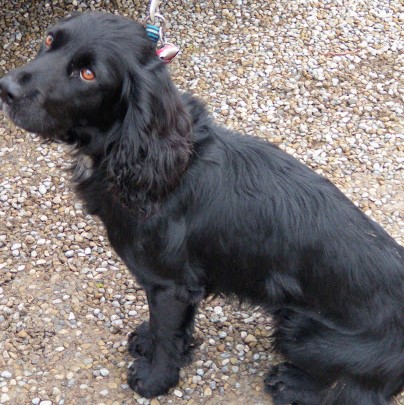
I made a new friend in March, Monty, and he is my Virtual Dog in April. He’ll make sure I’m out whatever the weather. He’ll make sure I work towards my walking goal of 500 miles before June. Actually, ahem, I should make it. I’m on 425 miles now. Which probably means that Monty is on 1000 at least.
Bright as a button Monty, who walks or runs four miles at least to every one any human ever manages.
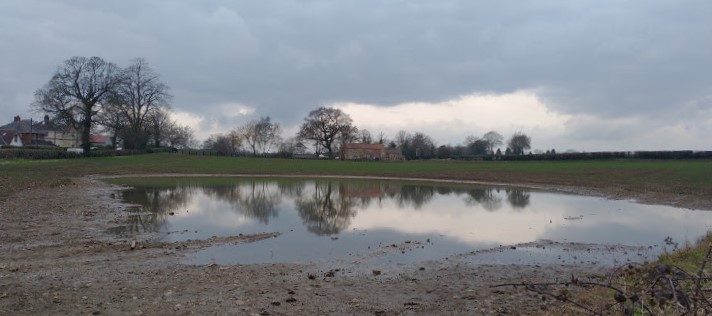
Here are some of the landscapes I explored. There’s still a lot of mud around. And we don’t have as many lakes and ponds as you might think. They’re just Super-Puddles.
These images are all taken with my not-so-very-smart phone. Just click on any images that you want to see full size. This March showcase is for Su Leslie’s Changing Seasons. All the flower shots – and indeed Monty – qualify as Bright Squares. Another multi-tasking post.

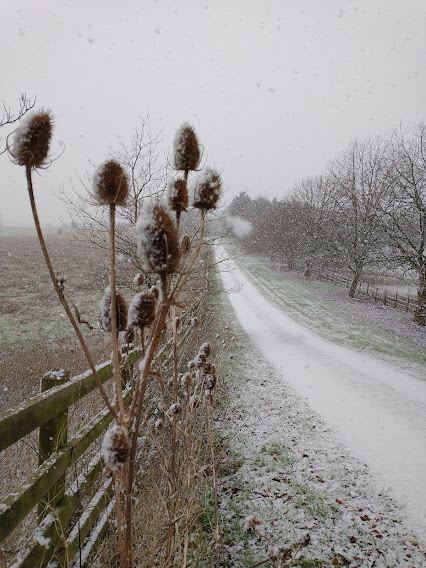
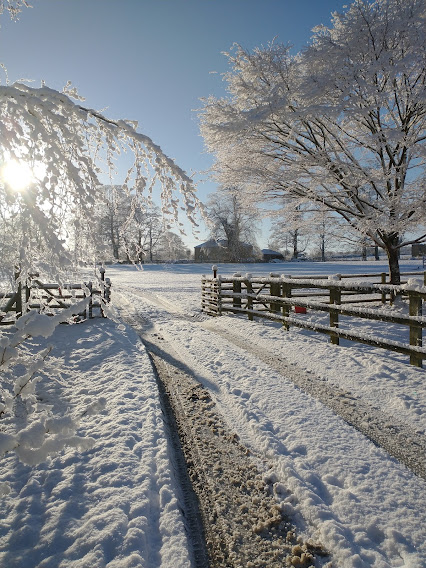
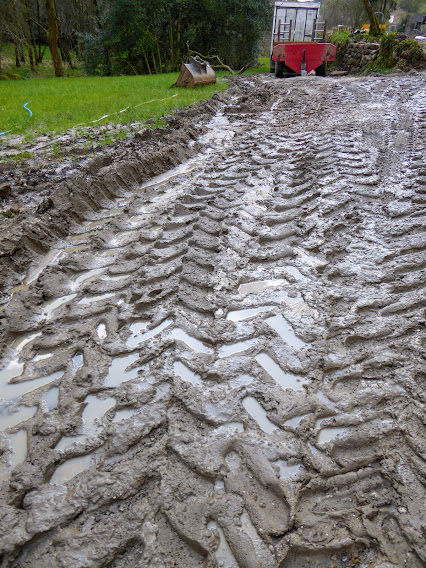


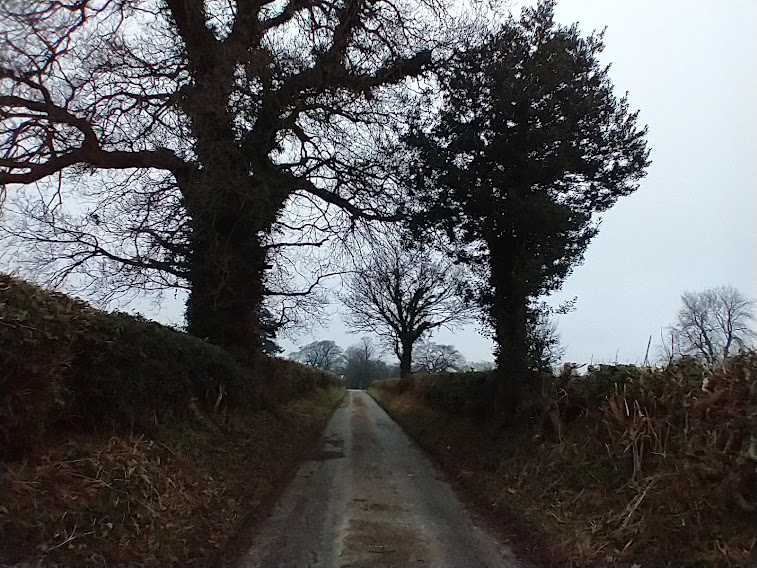




















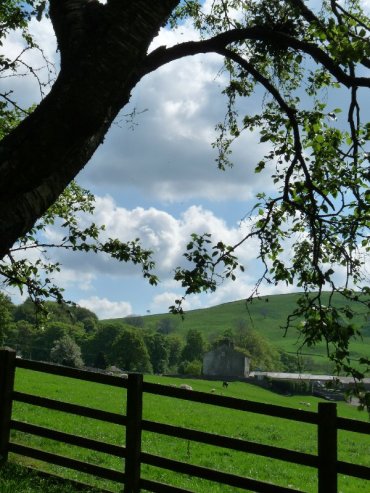


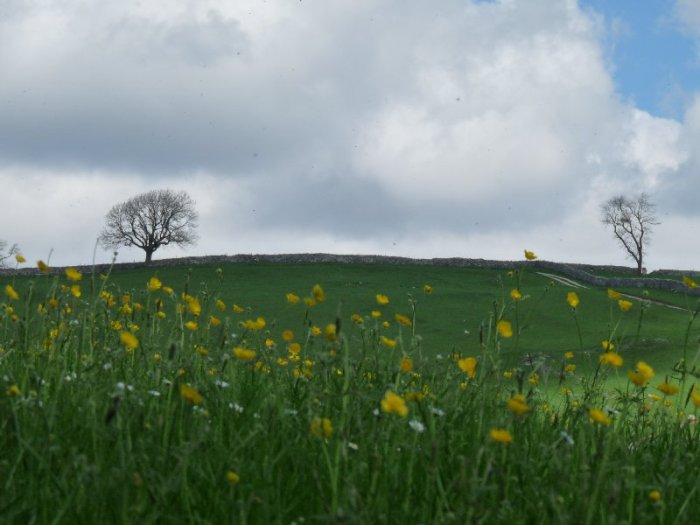


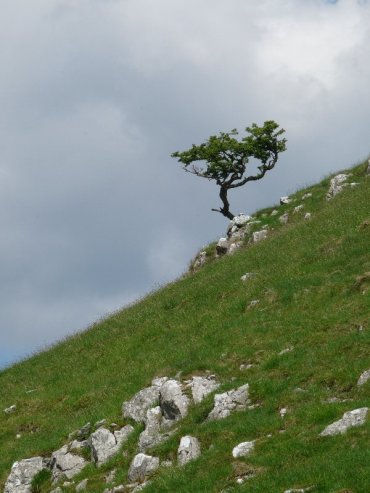


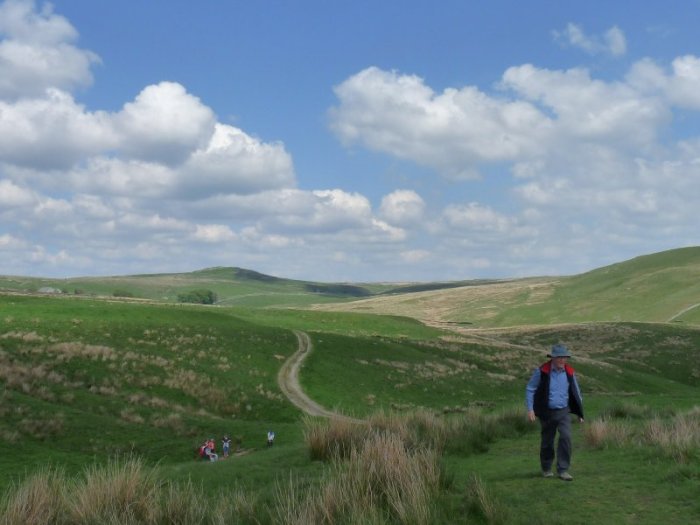








 From Pyrenees to Pennines
You must be logged in to post a comment.