Blood Swept Lands and Seas of Red

Today is the eleventh day of the eleventh month. Remembrance Day. This year has been the one in which we’ve all been encouraged to focus on the horrible loss of life in the First World War: a war in which there were 16 million military deaths worldwide and 20 million casualties.

‘Casualties’ sounds such a, well, casual word. In fact many of these ‘casualties’ were unable any longer to work, to form sustained relationships, or in any way able to re-join normal life. And the communities from which the dead and injured came were also maimed, losing many or in some cases all of their young men. The way of life in such communities changed forever.

The most telling way of appreciating the scale of this loss, for me, has been the sea of poppies at the Tower of London. I’ve been unable to witness it in person, but this blog, which I came by thanks to fellow blogger KerryCan, brings the whole project to life in a most moving way. Thank you,  Silver Voice from Ireland.  Here is your post:

The Silver Voice's avatarA SILVER VOICE FROM IRELAND

I have just returned from a short trip to London, England,where we  lived for almost two decades before returning to Ireland. London is a city that I love and I look forward to each return visit. This year marks the centenary of the start of the First World War which has been commemorated in the most astonishing way at the historic Tower of London.

image The ‘Weeping Window’ the source of the wave of poppies that will fill the moat

Some decades ago, when I worked  in the banking area in the City of London, summer lunchtime would be spent sitting on the grass looking down at the Tower and enjoying the sunshine. We happily munched on our ham and mustard  or cheese and pickle sandwiches while enjoying the historic view and discussing the gruesome executions that took place just yards from where we dined! The Tower itself dates back to…

View original post 448 more words
Wensleydale bread

We love a good country show.  Farm animals on their best behaviour,  sheepdogs out to impress with their skills in rounding up sheep, horses in the ring neatly jumping a clear round, country crafts, tough-guy tractors, food to sample, all in some pretty slice of countryside with the sun (maybe) beating down.

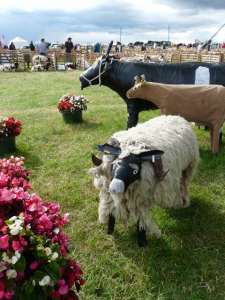
At Wensleydale Show, Leyburn Auction Mart went for animals made from  gaffer tape and oddments.  So much more biddable.
At Wensleydale Show, Leyburn Auction Mart went for animals made from gaffer tape and oddments. So much more biddable.


Since we got back to England, we’ve failed to go to the Great Yorkshire Show in Harrogate – too crowded, and the Ripley Show – way too wet.  Would it be third time lucky at the Wensleydale Agricultural Show?  Well, yes, we did make it there.  And just after we arrived (this was the 23rd August, remember) we found ourselves scurrying for cover to avoid a heavy hail storm, with sharp icy crystals slashing at our faces and battering at the marquees.

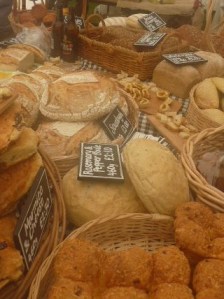
It didn’t matter.  The sun soon came out again, but in any case, we spent much of the day inside.  We were there to work.  Bedale Community Bakery, where we continue to enjoy volunteering every Wednesday, had a stall, and there was bread to sell.  Some of the team had worked through the night to get loaf after loaf mixed, kneaded, proved, baked and loaded up for the journey from Bedale to Leyburn and the show.  By the time Malcolm and I arrived, some of the team had been there several hours already.  And here’s what the stall looked like….

A tiny part of our stall.

We sliced and buttered loaves to provide samples for an eager public who wanted to talk to us and to try before they bought: sourdough; spicy chilli sourdough (soooooo good); cheese and onion bread; another cheesy loaf marbled with Marmite; harvester loaves; wholemeal loaves; bloomers; rosemary and pepper loaves; ‘seedtastic’ spelt; a loaf made using a locally brewed beer; a Mediterranean bread, all made the traditional way, proved long and slowly over several hours.  There were spicy vegetable pasties; tomato and onion focaccia; roasted vegetable focaccia; four different types of scone (Jamie and I had made quite a lot of those on Friday, and they were baked off in the small hours of Saturday morning).

Try before you buy.
Try before you buy.

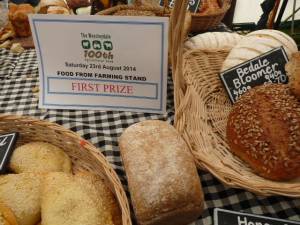
It all paid off.  We were in the food marquee, surrounded by other small food businesses offering bread, pies, jams and curds, cakes and biscuits, chocolate, cured meats: all good stuff.  But we got first prize in the ‘Food from Farming’ category, for the quality of our products and (buzz word alert) our community engagement.

And here's the certificate
And here’s the certificate


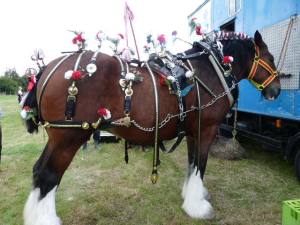
There was almost no time to get away and enjoy the show, but it hardly mattered.  Serving on the stall to an appreciative public was all good fun.  But here are a few shots from the times I did escape.  Here are shire horses, beautifully decorated in the manner traditional for the area.  Yorkshire horses, apparently, sport flowers, whereas Lancashire ones wear woollen decorations (very odd, as we had a  woollen industry in Yorkshire, whilst Lancashire did cotton).


A Yorkshire shire horse, her 80 year-old owner's pride and joy.
A Yorkshire shire horse, her 80 year-old owner’s pride and joy.


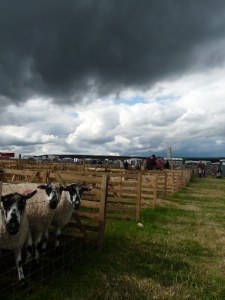
Here are sheep.

P1150966

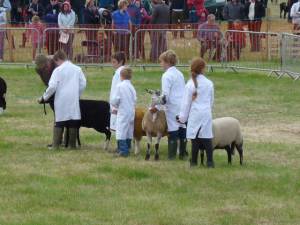
And here are children working sheep.  There seemed to be opportunities in every category for smartly-overalled and seriously skilled children to show off their prowess as animal managers: it’s clearly important to encourage the next generation of farmers.

P1150957

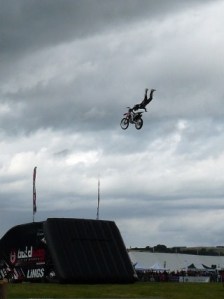
And here, oddly, are stunt bikers.  We saw them as we left somewhat before 5.00, every single loaf sold, as the show slowly started packing up for yet another year .P1150980

There are quite a few more shows left before the summer’s over.  We’ll get one into the diary.

Outside the showground: on our way home now.

Our départ réel from Harewood House.

Wednesday, August 20th.  The morning air was chilly, just a little damp and drippy.  Flowers in the borders hung their heads, their petals shabby and tired.  Autumn has arrived.  It does seem a little previous.

'All is safely gathered in/ Ere the winter storms begin'
‘All is safely gathered in/
Ere the winter storms begin’

All the more reason to get out and about, before the days really close in.  Ripon Ramblers chose to go to Harewood.

You’ll perhaps have seen Harewood House  on TV recently, as that’s where the Tour de France really started from this year, after the Départ fictif  from Leeds.* Half way between Leeds and Harrogate, it’s a playground for both towns, with its fine Adam-designed stately home, and extensive grounds designed by Capability Brown. At the time, the 1750s,  investment in the slave trade brought immense wealth to the Lascelles family.  Their descendents, the Earl and Countess of Harewood live in these fine surroundings built two and a half centuries ago.  This stately home is regarded as being among the finest in Britain and is for the most part open to the public.

Our walk took us on a circular path that began outside the grounds, over farmland and with views across the Wharfe Valley.  The route across the cow pastures was a bit of a puzzle.  Weren’t those mango stones beneath our feet?  And melon seeds? And even squashed tomatoes?  The smell of rotting fruit wasn’t what we looked for on a country walk.  Finally a young woman from a nearby stables helped us out.  A local supermarket regularly dumps its surplus fruit at this farm for the cattle to enjoy.  Four tons of fruit seemed to us to be remarkably poor stock control on the shop’s part, and we couldn’t help wondering what the cows’ insides made of this exotic diet.

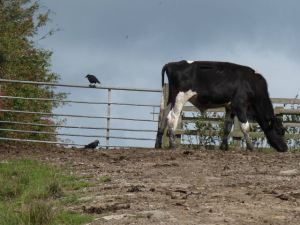
Cow on a mango-hunt.

Far more enjoyable were the autumn fruits that lined our route for much of the day.  We gathered blackberries every time we felt hungry or thirsty.  We enjoyed the sight of haws turning red, elderberries turning black, and prickly chestnuts swelling and fattening on the trees.

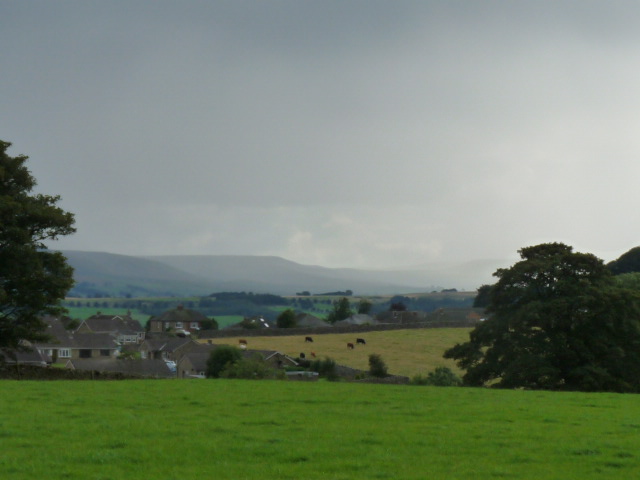
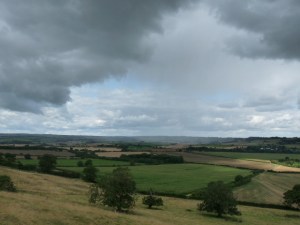
We completed our upward yomp, and walked along the ridge which offered a fine panorama across to the Crimple Valley and Harrogate beyond, to Almscliffe Crag, and even Ilkley Moor.  Clouds in a dramatically cloudy sky were unloosing light rain into the nearby plain, and the breeze soon pushed the showers our way…..

Look carefully.  You'll see rain falling in the plain  below.  But not on us.
Look carefully. You’ll see rain falling in the plain below. But not on us.

….and then pushed them on again, so that we could enjoy a rain-free lunchtime picnic with all that view before us.

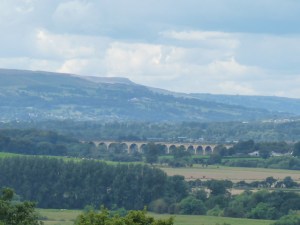
Lunchtime view over the Crimple Valley.

After lunch, we were in the grounds of Harewood.  Not the formal grounds near the house itself, but areas of woodland, pasture, lakes, deer park and farmland.  And  in the distance we spotted a fake Dales village, only built in 1998.  This is  Emmerdale, used in filming the long-running soap of the same name.  No filming that day, so we were soon on our way, hurrying now before the rain, promised for mid-afternoon, settled in to spoil our walk.  We made it – just.

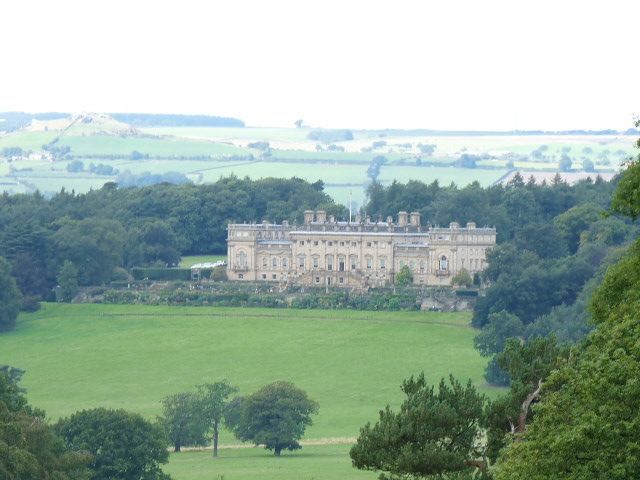
Our best view of Harewood House came at the end of our walk.

* The ‘départ réel’ of the Tour de France from Harewood signified the true beginning of the race.  City centre Leeds was no place for cyclists to jockey for position, so riders just tootled out to Harewood on the ‘départ fictif’.  Then the action started.

In praise of am-dram

We’ve just had a marvellous few days.  We trooped over the Pennines, together with Emily-from-Barcelona, to see the Bolton branch of the family.

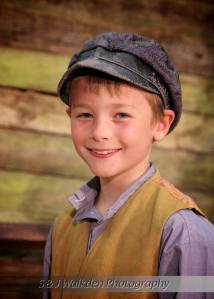
This was no run-of-the-mill visit though.  No, we’d chosen this particular weekend because 8-year-old grandson Alex was playing feisty little Gavroche in a production of ‘Les Miserables’.  Not only were the actors all amateurs, but all were young people under the age of 18.  They played to a packed house for five nights in a row.  Now you don’t get packed houses by relying on proud parents, devoted grannies, supportive uncles, aunts and cousins.  You get packed houses because there’s a wider public who recognise talent and commitment, and are prepared to pay to see it, even if it’s not a ‘professional’ production.

Here's Alex as Gavroche ((S &J Walkden Photography)
Here’s Alex as Gavroche (S &J Walkden Photography)

As the potted biographies in the programme demonstrated, many of the young people on stage last week hope to be the professional performers of the future.  They’ve already shown they have much of what it takes.  Like many professional actors, they rehearse during the evenings and at weekends so they can work round the day-job: in their case school.  Like professional companies, amateur groups use the ticket income generated to pay for sets costumes, publicity, printing and the like.  Many groups even perform in the same venues as their professional cousins. The distinctions between the two become ever hazier.

 Alex, like twin brother Ben, is a junior member of C.A.T.S., a youth theatre group in Bolton whose senior members put on two productions a year. It certainly turns out some talented performers, but that isn’t the main aim.  It’s much more about teaching children and teenagers new skills, and developing their confidence in a supportive environment.  Some young people may eventually find their interest lies more on the technical side: lighting and  so on, others in developing scenery.  Yet others will use the lessons learnt there in fields utterly unrelated to the stage. For both young and adult groups however, amateur dramatics, whether you’re acting, sewing costumes, selling tickets or stuck in the prompt corner, is a real means of being part of a purposeful, busy and enriching community.  Ben and Alex’s mum Elinor should know: she’s usually to be found engaged in some production or other in the thriving Bolton am-dram world.

I never came across amateur dramatics in France.  It seems a quintessentially English activity.  In the village where I now live, the Arts Society sits alongside WI membership, cricket, book groups and so on as a real focus for village life.  This weekend, everybody will be crowded in to the  hall as the Arts Society puts on ‘Blood Brothers’, for two nights only.

And afterwards, everyone has to come back to earth.  Adrenalin gone, late nights having taken their toll, it’s time to take a breather.  But only till the next time.  Am-dram is a drug, and addictive for performers and audience alike.

The grand finale of 'Les Miserables'. That's Alex, waving the flag. (S &J Walkden photography)
The grand finale of ‘Les Miserables’. That’s Alex, waving the flag. (S &J Walkden photography)

Hundreds of books, thousands of books…..

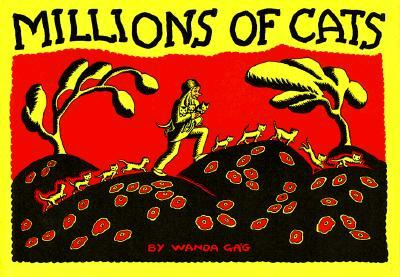
Facing the task of packing and moving our library, I was reminded of that wonderful book I used to read with my children, Wanda Gag’s ‘Millions of cats’.

Wanda_Gag_Millions_of_Cats-book_cover

‘Hundreds of cats books, thousands of cats books and millions and billions and trillions of cats books’.

Oddly, I no longer have the book, though I hope one of the offspring has.  ‘Oddly’, because I seem to have most of the others that have accompanied me through life.  Both of us is incapable of downsizing when it comes to books.  Till now.

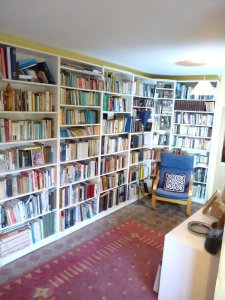
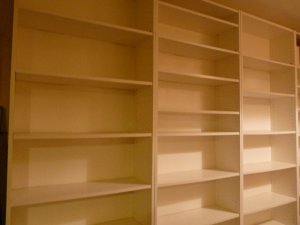
The study, before downsizing started.

When we realised that much of what we own has remained unopened since the day it arrived in France and probably for some years before that, we decided something had to change.  Jettisoning them was unthinkable.  And where in France could we re-home so many books in English?

By chance, I was browsing on the web one day, and realised that many of these old faithfuls have a value.  They could be sold.  So that’s what we’ve decided to do.  But it’s really not about the money.  It’s about knowing that these books will end up with someone who has chosen them and wants them, rather than in some charity shop where, as we know from experience, some would simply moulder or even be thrown before reaching the shelves, even though many would be snapped up.

So…… we now have three kinds of book.  The central core: books we can’t think of doing without – mainly reference books and other much-used non-fiction, with some of our best-loved fiction.  The second kind, the saleable ones, are now boxed up to send to England.  And the last, and smallest group: the ones we’ve decided to do without, and which have little apparent value.  We’ve opened doors to all-comers who want to browse, and we’ve probably re-homed about half.  There are still some 450 still remaining.  They’re heading to Amnesty International in nearby Castelnaudary, who raise funds by selling to both English and French customers.  We know how excited we get when we get the chance to browse a new collection of English books, so we hope they’ll be a good money-raiser for them.

Come and look at some of our books – rejected and selected.

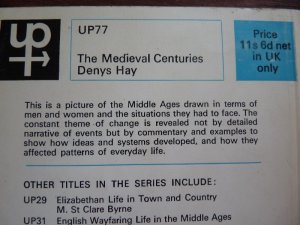
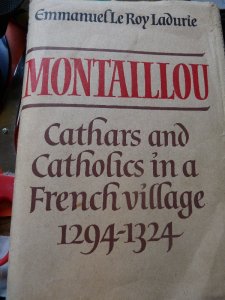
You can tell how long I’ve had this one: it was priced in pre-decimal days, before 1972, so even many British readers may have difficulty in deducing that this scholarly work of non-fiction cost me….. 57 ½ p.

A history book that's now history.
A history book that’s now history.

This book was given to me as a leaving present from work back in the mid ’70s.  It was a good read then, but even more so now as a history of the area we now live in.

Emmanuel Le Roy Ladurie's classic work based on our corner of France.
Emmanuel Le Roy Ladurie’s classic work based on our corner of France.

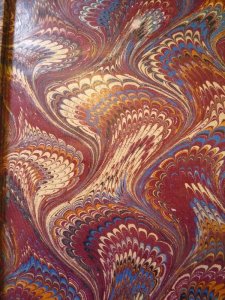
This book belonged to my grandfather, a man who died long before I was born.  Beautiful marbled end papers such as this often came as standard in the 19th century.

Marbled endpaper.
Marbled endpaper.

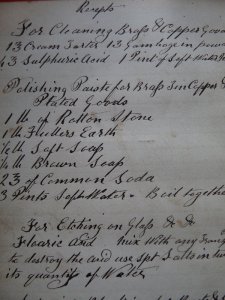
And finally, a book which though incomplete, is a real piece of history.  It includes handwritten recipes for making ink, polish, peppermint cordial, stove-blacking.  Here’s how to keep your brass and copper ware in tip-top condition.

Handy housewife tips from another age.

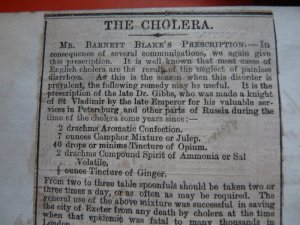
It includes just one newspaper cutting.  By snooping around on the net and looking for this particular  (and unsuccessful) cure for cholera, I surmise it comes from the 1820s.

Cholera cure: a suggestion.

Surely even the most die-hard minimalist will forgive me for keeping this book firmly among the family treasures?

And now the books are packed.  Every single one – apart from a few bedtime stories for the next three weeks.  One room done, seven to go.

All gone.
All gone.

A new look for an old blog.

Back in 2007, family members funded the trip of a lifetime for me.  A whole month in India: a country I’d wanted to visit since my teenage years.

I wanted to keep them in touch with my travels.  I wanted my friends too to know what I was up to.  So with great difficulty, since I was and am no geek, I started a blog.  If I knew then what I know now, I’d never have chosen the blogging platform I chose to use.  When I revisit it, I find it clunky and cumbersome.  So I decided to transfer the lot to WordPress.

Here it is. and you’ll recognise the first few sentences of its front page post.

It makes a change from winter in France or in England.  It certainly makes a change from the freezing conditions being endured by my American readers.  But worry not.  Next time, we’ll be back in France again.

By the way, I have just understood from one of my readers not too far from here that it wasn’t clear you have to click the link.  Click HERE if you’d like to look at my new-improved-old-travel-blog, SouthIndia 2007.

Is this France?  Or India?  Actually, it's the view from the window of my hotel in Pondicherry back in 2007.
Is this France? Or India? Actually, it’s the view from the window of my hotel in Pondicherry back in 2007.

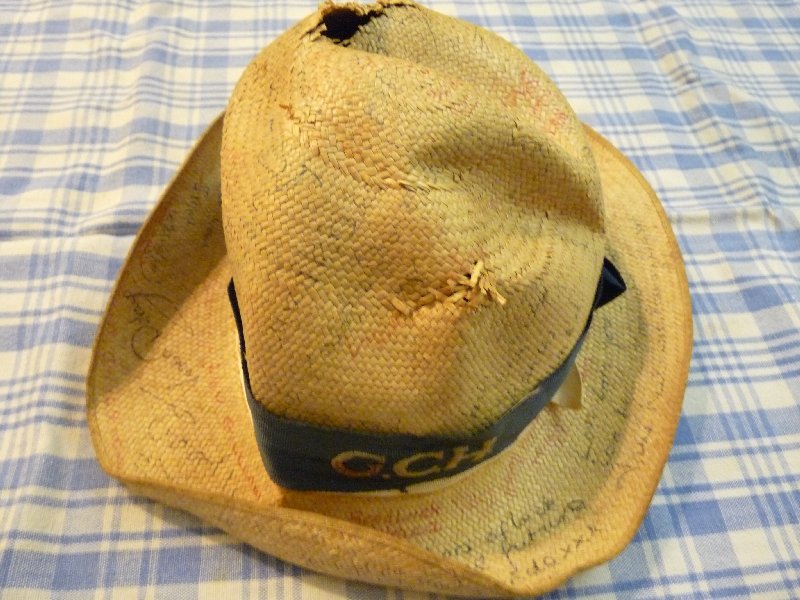
My old school hat.

School panama hat: signed by all my friends before becoming a museum piece.  Or I could have done as some others did, and thrown it into the Thames.
School panama hat: signed by all my friends before becoming a museum piece. Or I could have done as some others did, and thrown it into the Thames.

The fact that I can show you a picture of what remains of my school hat, some 55 years after I first wore it, tells you a lot about me.  I am a hoarder.  I have books that have come with me since childhood, wallets full of photos from places I can no longer identify, mementos from holidays that were reasonably unmemorable, scraps of wall paper from houses I no longer live in.  I keep step ladders deliberately paint-spattered from the occasions I used them when house-decorating because they tell a story of my changing tastes, and remind me of former homes.  I’m impossible, and I know it.

It has to stop.  We’ve lugged furniture and possessions half way across Europe to furnish and personalise our home here, and we’re determined that we’re not going to ship the whole lot back. The house here has conspired to feed my addiction.  It’s … ‘ow you say?  ‘Deceptively spacious’ .  That means that almost every – large – room has cavernous cupboards.  There’s an attic with 3 rooms begging to be stuffed with my junk, an outside workshop, several inside storerooms.  I’ve had no incentive to change.

But when we return to England we’ll be looking for a home of modest proportions.  It won’t have more than one spare room. It certainly won’t have a cavernous outhouse.   The rooms are unlikely to be enormous.  So we’ve both taken a grip, especially me.

Yesterday, I threw out that hat.  I sorted through all those precious paintings my children made when they were under 10 or so, and have kept just a small selection from each of them.  I threw out boxes of tiny black and white photos peopled by unknown old friends, and junked all the letters I wrote home in my very late teens when I was an au pair in Italy.  Actually, for the first time since those days, I read through a few, and then I couldn’t wait to destroy them before anyone else realised what a pompous brat I was.

Now we’ve got the difficult bit.  We’ve put aside a whole book-case full of fiction that we probably bought in charity shops in the first place.  No: that was easy enough.  Now there are all the books we’ve loved since adolescence, the seminal works from university days, the much-loved reference books which may in some cases be outdated. There’s all my history of art books with wonderful reproductions, Malcolm’s language stuff, my vast collection of cookery books.  Of course we won’t get rid of them all.  But some must go.  Last time we did this, 20 years ago, we were leaving our large house in Leeds.  We sold a large selection of our less-used books to a second-hand book dealer.  A week later, I was down at his shop, buying quite a few of them back again.

If you need a new bedtime story, we may be able to help.

The stuff we’ve so far discarded is, if suitable, bagged up for Secours Populaire here in Laroque.  The rest has been dumped in one of the town poubelles: municipal dustbins.  Don’t be too surprised if in a couple of days, you find me at the tip, desperately scrabbling through the rubbish awaiting transportation to landfill as I hunt for my old school hat.

Destined for Secours Populaire .... or landfill.
Destined for Secours Populaire …. or landfill.

Bones Festes!

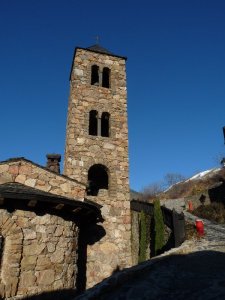
The church in our little hamlet, Aubinyà

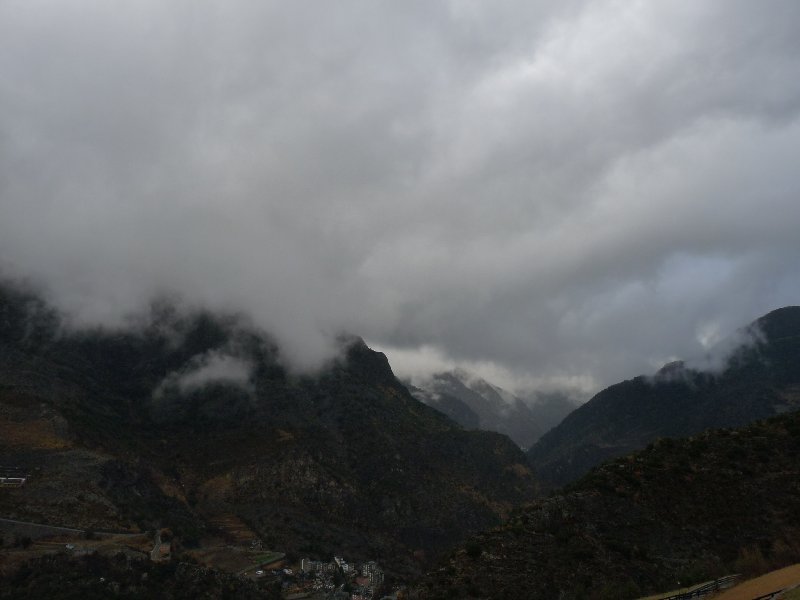
A quick post from Andorra to wish you all Happy Christmas.  Here we are in Andorra, half way between Laroque and Barcelona, to share a snowy Christmas with Emily.  Except in this part of Andorra there is no snow.  Just rain , rain, mist and more rain.  But we did arrive, unlike many English-bound travellers from the continent, and we haven’t been flooded, unlike many people in southern England and northern France.  So we’re very lucky.  I hope you too are having a lucky Christmas.

The view from our window this morning.  It's really not so bad, is it?
The view from our window this morning. It’s really not so bad, is it?

‘Trees are the earth’s endless effort to speak to the listening heaven’*

We’re in England.  We’ve been here nearly three weeks, and so busy catching up with Those Twins in Bolton and friends in Yorkshire that blogging has quite simply not been on my agenda.  But here we are in South Gloucestershire with daughter-in-law’s parents: there should be a name for this particularly satisfying relationship as it’s one we enjoy and appreciate.

On Friday they took us to Westonbirt Arboretum.  If you’re spending a few days round Bristol and Bath there’s no better place to recharge your batteries.  You could pass the morning in the Old Arboretum, a carefully designed landscape dating from the 1850’s.  There are something like two and a half thousand varieties of tree – 16,000 specimens in all,  from all over the world, planted according to ‘picturesque’ principles of the 18th and 19th centuries, offering beautiful vistas, enchanted glades and stately avenues.  After a light lunch in the on-site restaurant you could go on to explore the Silk Woods an ancient, semi-natural woodland, or the grassy meadows of the Downs

It was Robert Holford who designed and encouraged the planting of the Arboretum, back in the mid 19th century.  This was a period when plant-hunters were bringing new and exotic species back from their world-wide travels. Holford was able to finance some of these expeditions, and the Arboretum contains many of the specimens his scientific adventurers brought back.

Truly, it’s a magical place.   We arrived, let out a collective sigh, and simply allowed  stress and worry to fall away.  Strolling about, we gazed upwards at trees whose end-of-summer leaves seemed to be fingering the clouds, into copses where we could glimpse others already turning to the ochres and russets of Autumn, and then closely at the trees themselves.  It was the bark that caught our attention close up.  Smooth and silvery, brown and knobbly, grey and wrinkled, the variety astonished us.  Take a look at these.  And if you get a chance to visit this Arboretum, at any time of year, then take it.

*Rabindrath Tagore

Blog alert

This isn’t a post from me today.  Not here.  Not really. But there is one from me somewhere.  It’s just a question of looking for it.  You could try HERE

This is what happens when you start blogging.  You start to read other blogs.  If you’re not careful, blog-following could even take over your life, there’s so much stuff being posted: all day, every day.  Other bloggers start reading what you write.  They comment on your posts, you comment on theirs.

This doesn't need a caption - does it?
This doesn’t need a caption – does it?

And that’s where the trouble starts.

About 18 months ago, I noticed a post that struck a chord with me.  As a schoolgirl I must have been scarred for life because a post on a blog now called ‘renée a schuls-jacobson’s blog : because life doesn’t fit in a file folder’ set me thinking about that day when…. oh it doesn’t matter now, but I revealed all when I commented.  And lo, I was invited to be a guest blogger, for one day only…….

….. as one of a series called ‘So wrong’.

Renée says: ‘In 2013, I asked a few of my blogging buddies to share their most embarrassing moments from which they learned. . . something.‘  Oddly, it was quite hard to decide what to write about, but Renée never seems to have a problem choosing material.  She writes because she loves to write, loves her family and friends, loves life, and no subject is off limits: words, family life, Jewish stuff, Tingo Tuesday (Just look it up.  Follow the link).  For her, blogging is a conversation with everyone who reads what she has to say. She puts a lot of energy too into bringing together an eclectic bunch of people as guest-writers, so I’m very flattered to have the chance to join this select club.

Renée always hopes that her readers will leave comments – they often do and she always replies.  As I do. It’s  good to talk, and I enjoy the relationships I’ve made with regular commenters whom I’ve yet to meet.  If you haven’t yet done so…why not join in?

PS.  What you may not say when you read my post on Renée’s blog  is ‘I’ve read the first part of this before’.  Yes.  You have, if you’ve been here for the long haul.  But only the first part.

PPS.  Message from Renée: ‘Hey friends of Margaret! You can click on my name and be magically transported to just the right place!’  She’s right you know…..