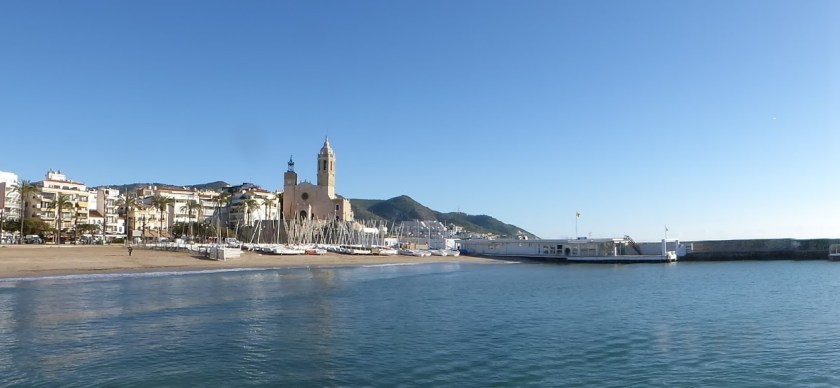
Last month, as faithful readers know, we had a day in Sitges. It was perfect. The sun shone, the sea sparkled, and we sauntered along its clean wide sandy beaches.
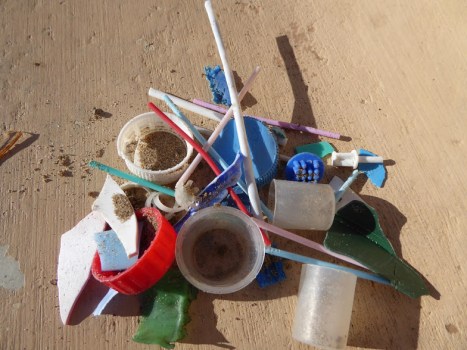
All was not as it seemed though. In just five minutes, from the apparently uncontaminated sands, we recovered these: mainly plastic straws and bottle tops, many disintegrating into the shards and fragments now wreaking such havoc in our oceans. And this is a ‘clean’ beach.
On a happier note, here’s a parakeet in a palm tree. The high prices of housing in this fashionable holiday destination don’t worry him. He has all he needs to build a home simply by fossicking around among the palm trees’ tall fronds.
Our Spanish holiday ended in Alicante, some 550 km from Barcelona, and was all to do with our flight home. Don’t ask.
My second impression of Alicante, and Malcolm’s first, was that it’s a lovely town. It’s suffered a bit in English eyes from its proximity to Benidorm, the British home of sun, sand, sangria and sex (and that’s probably a bit unfair too). Actually, it’s a fairly wealthy town, a historic Mediterranean port, and strolling round its historic centre, and along its seafront and esplanades was a pleasant experience.
I struggled to find much that was weathered, for this week’s WordPress Photo challenge, but here is a nicely picturesque house above the old town, and a slightly sun-battered detail from the Basilica de Santa Maria.
My other snapshots (click on any of them to see a slideshow) display a busy, prosperous town which we’ll happily return to. Especially if we can enjoy lunch outside in temperatures of 17 degrees in the middle of January.
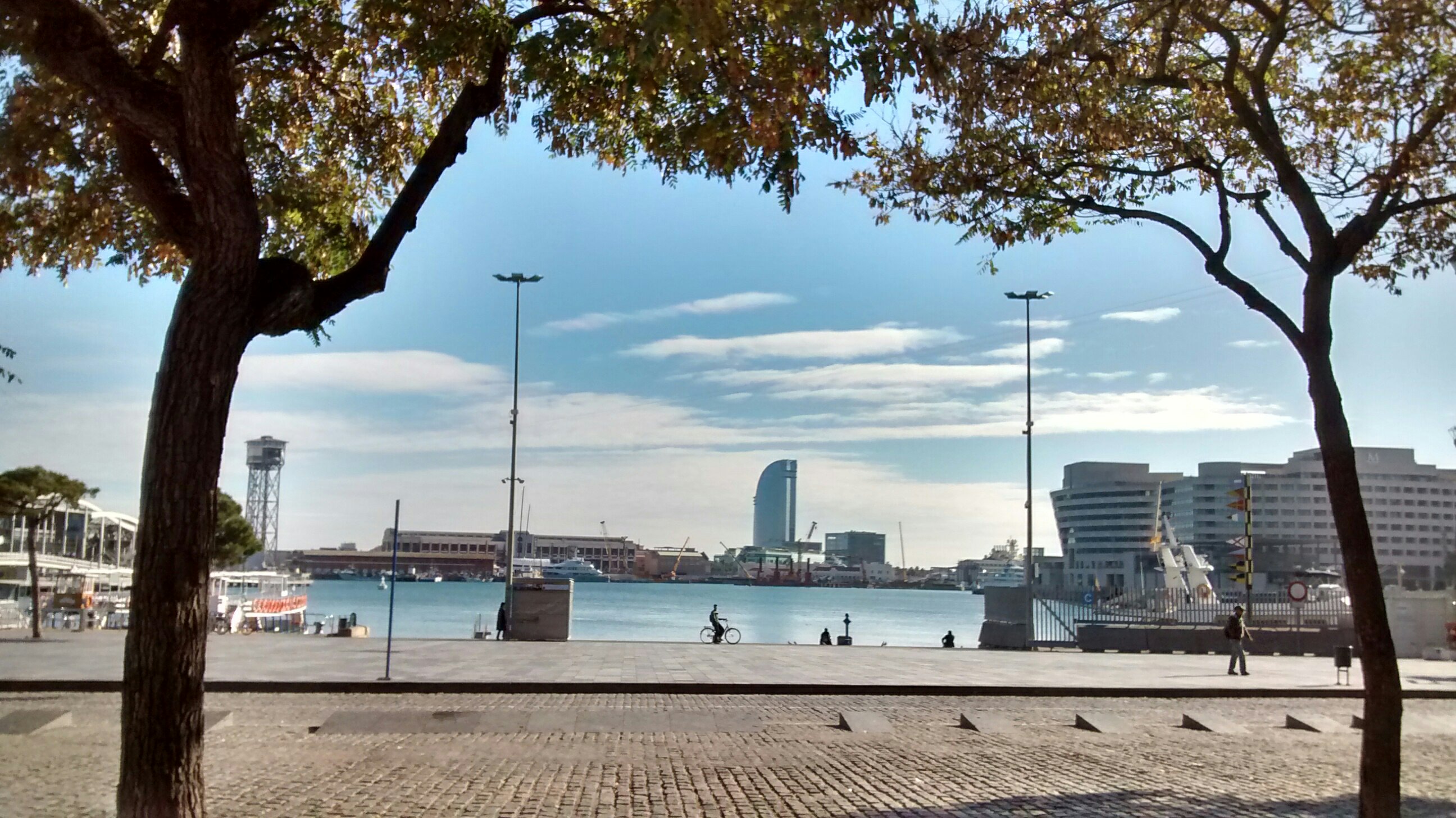
Another bright sunny day, so the seashore beckoned again – in Barcelona this time.
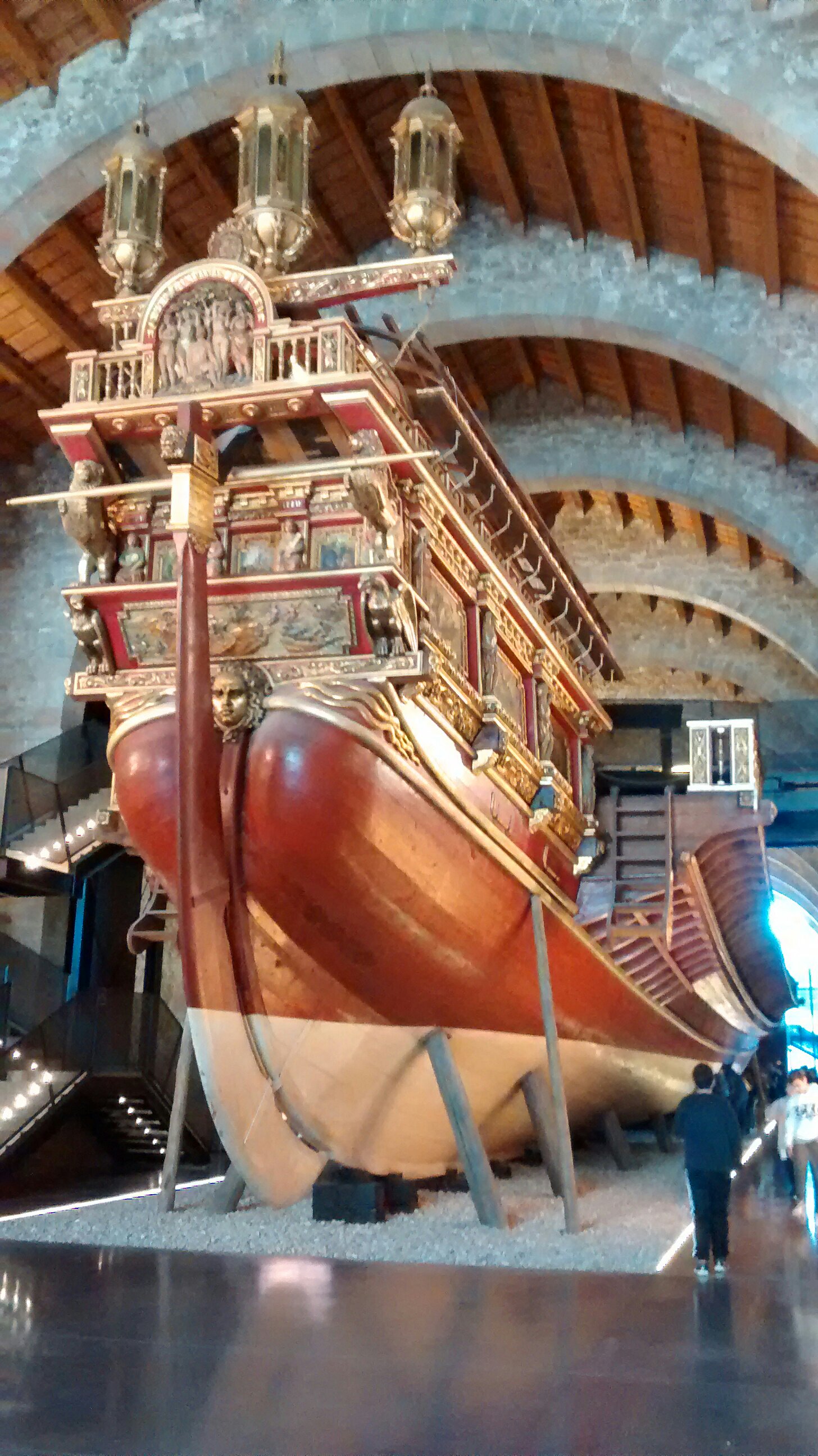
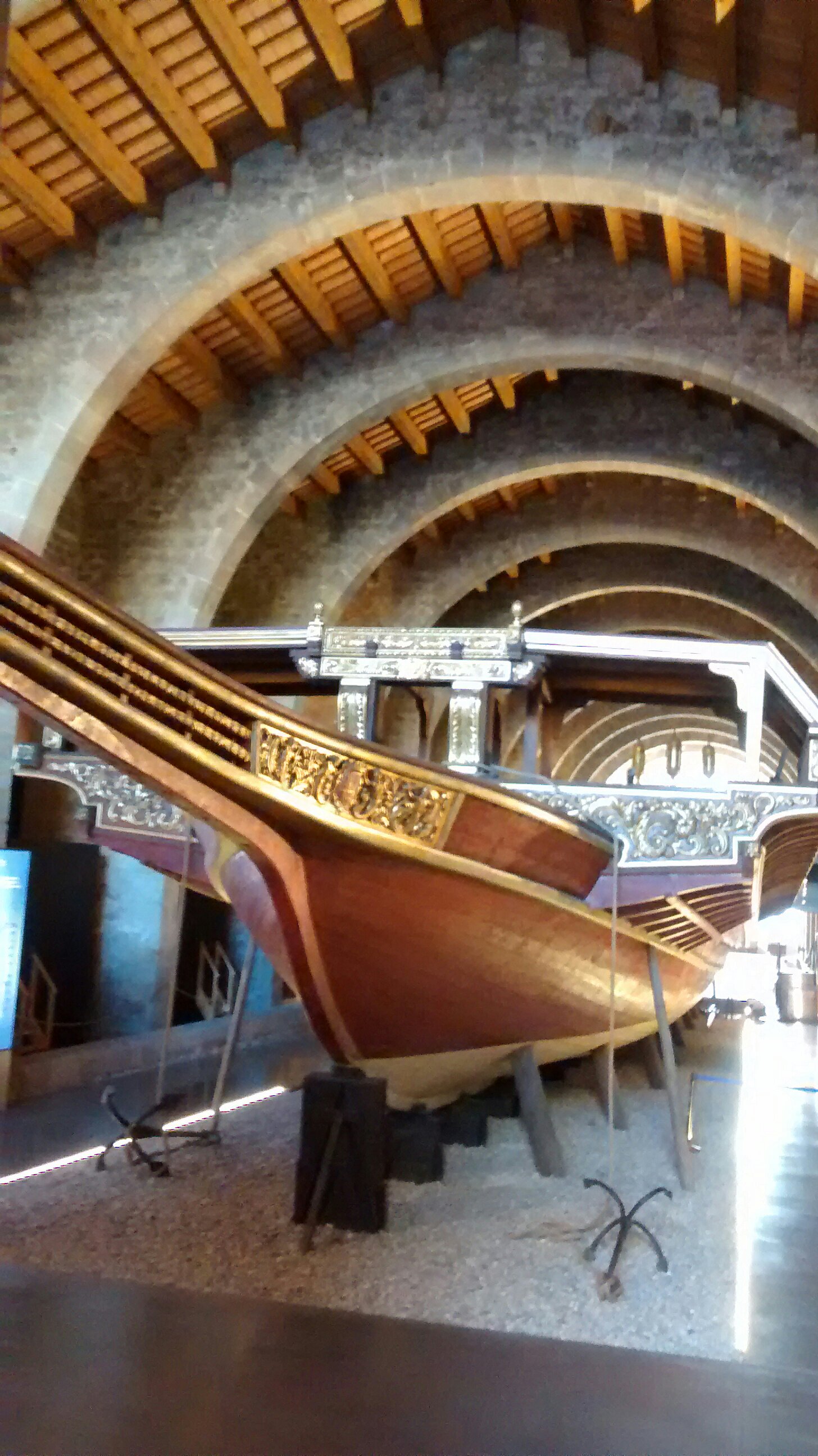
First though, we visited the MuseuMarítim, located in the impressive DrassanesReials, the mediaeval shipyard dating originally from the 13th century. It was remodelled time and again till the 18th century, when it fell out of use.
Our main memory of this engaging and beautifully curated museum is of the impressively reconstructed galley ship the GaleraReyal of 1568, and all the instruments, arms, ordnance and documents associated with such a warship.
What about this? Thirty oars each side, each manned by four slaves. These men toiled for hours and hours each day, shackled to the same spot for the entire voyage. They worked, ate and slept here, puddled in their own excrement. A ship such as theirs could never surprise the enemy. The smell preceded it by several knots. The exquisite ornamentation of this vessel, rich in symbolism, loses some of its allure against this background.
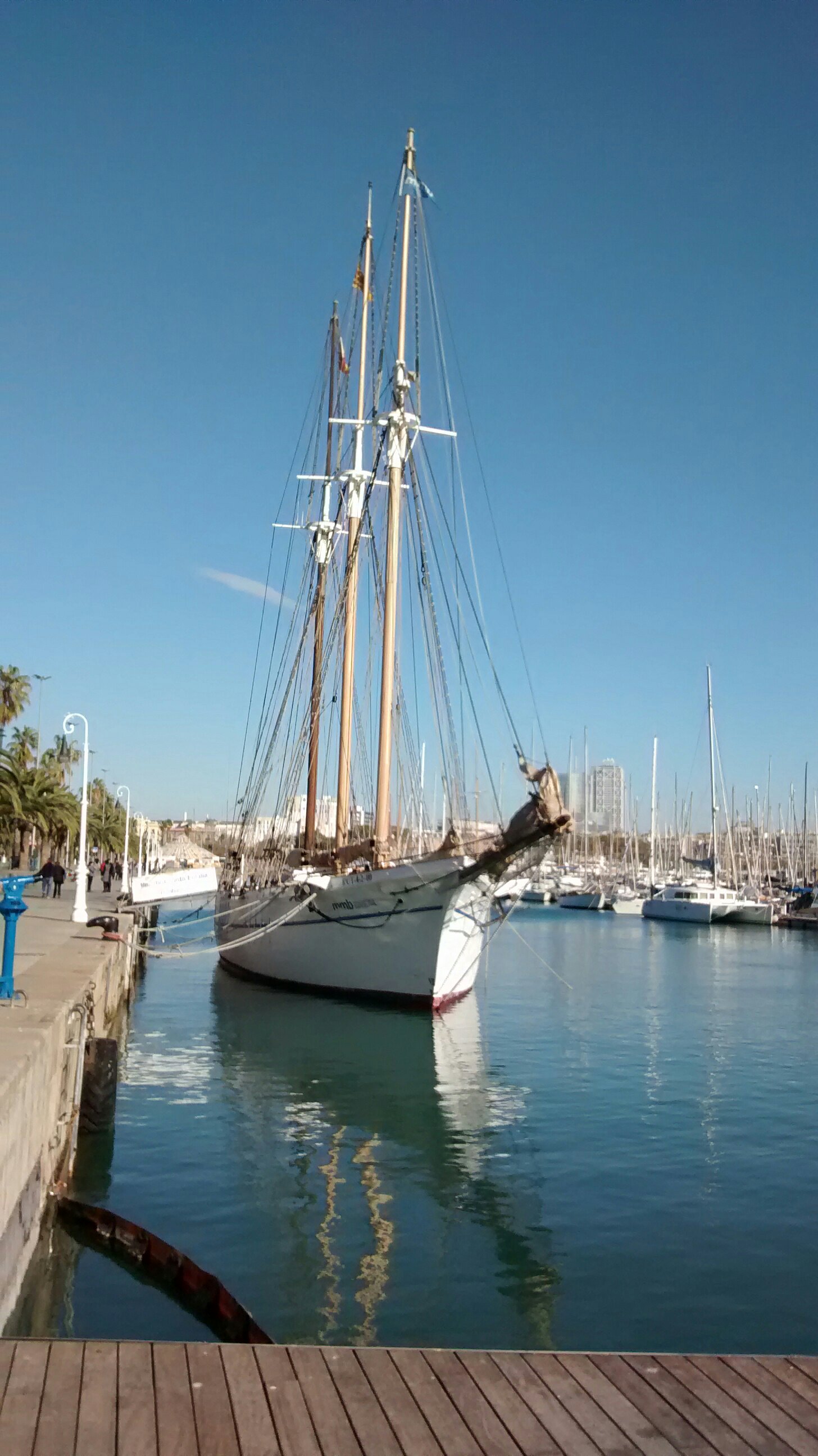
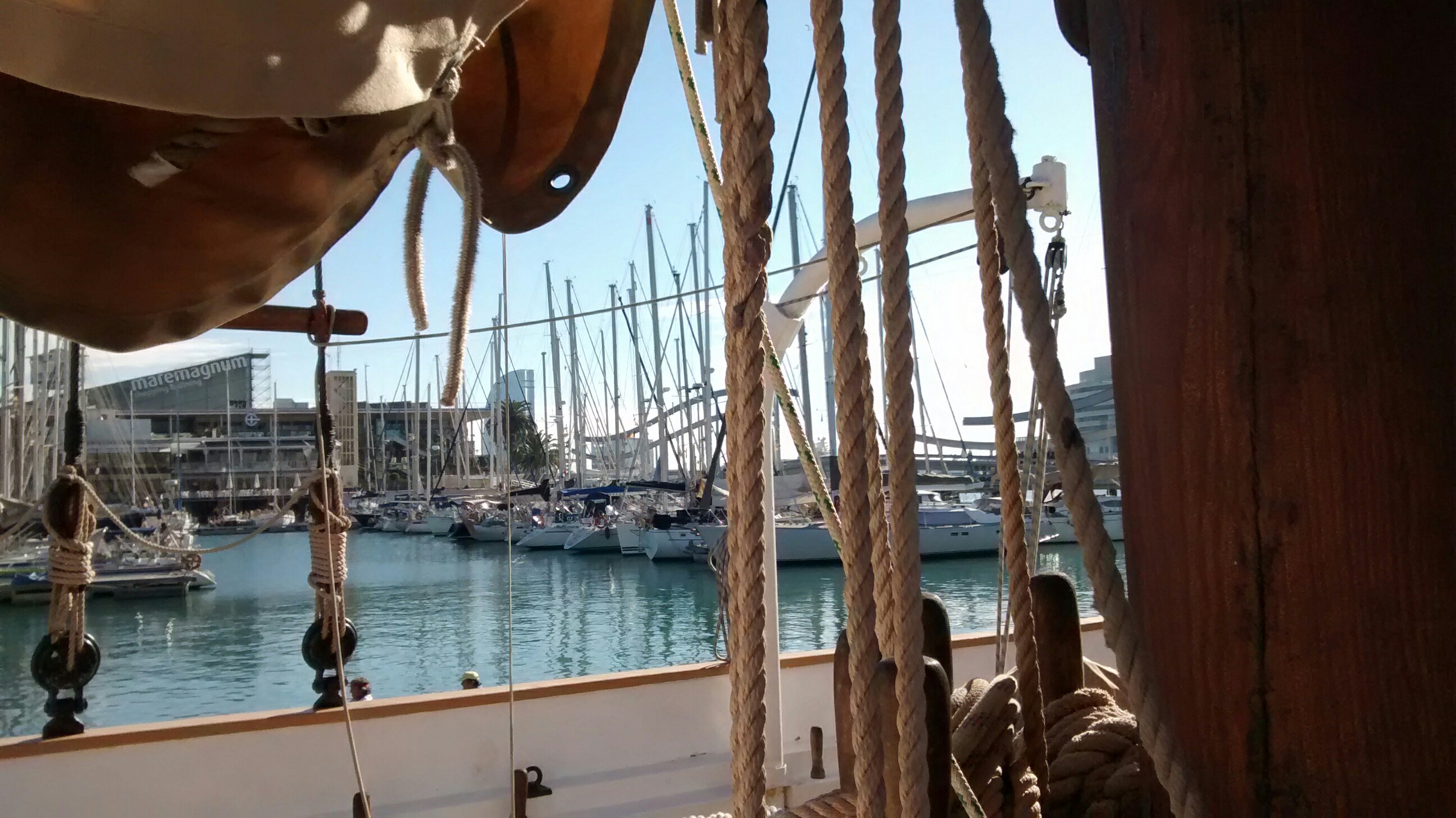
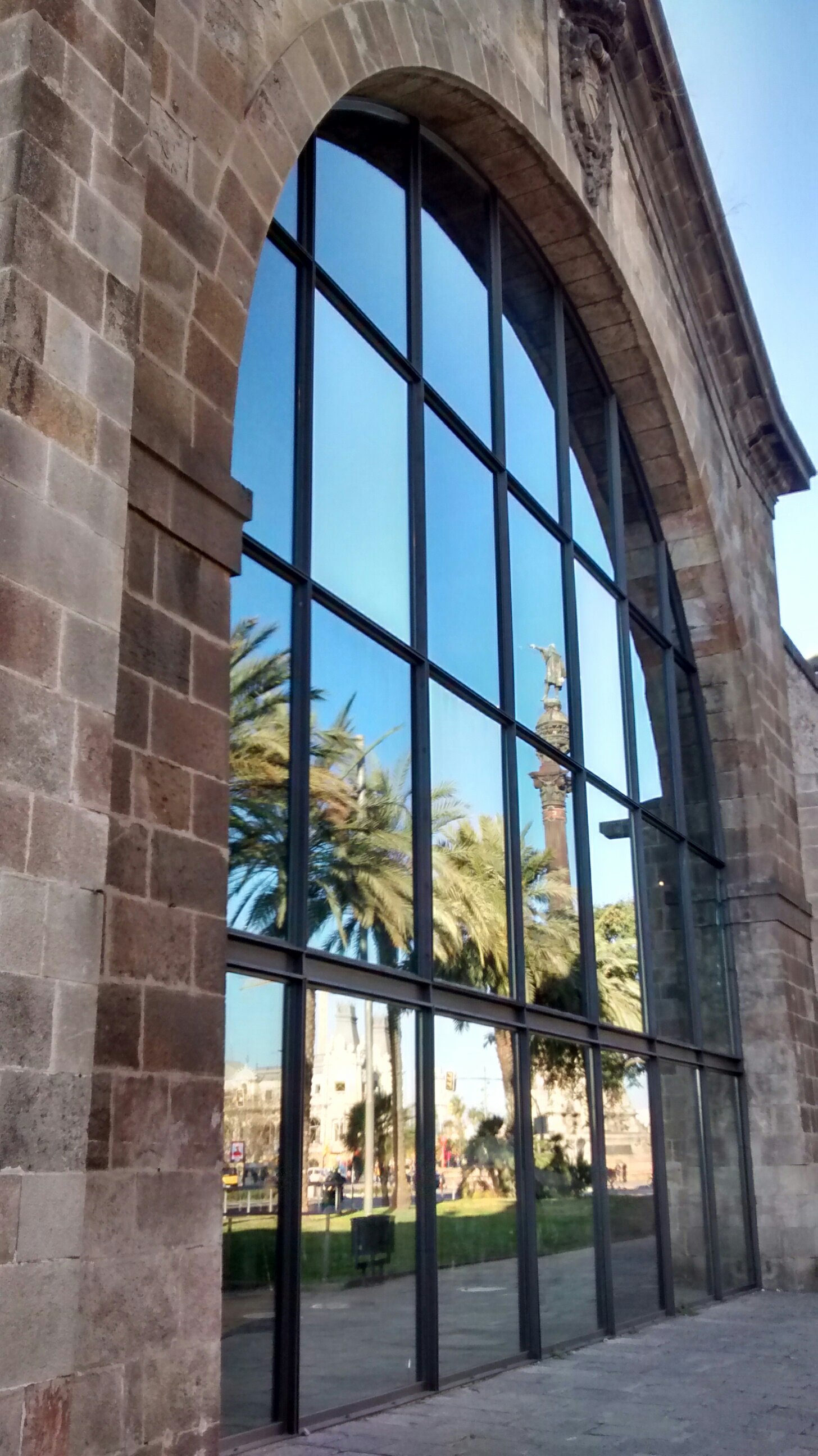
The whole of the dockyard area is rich in history. Here are just a few pictures, and from the more recently developed Port Vell.
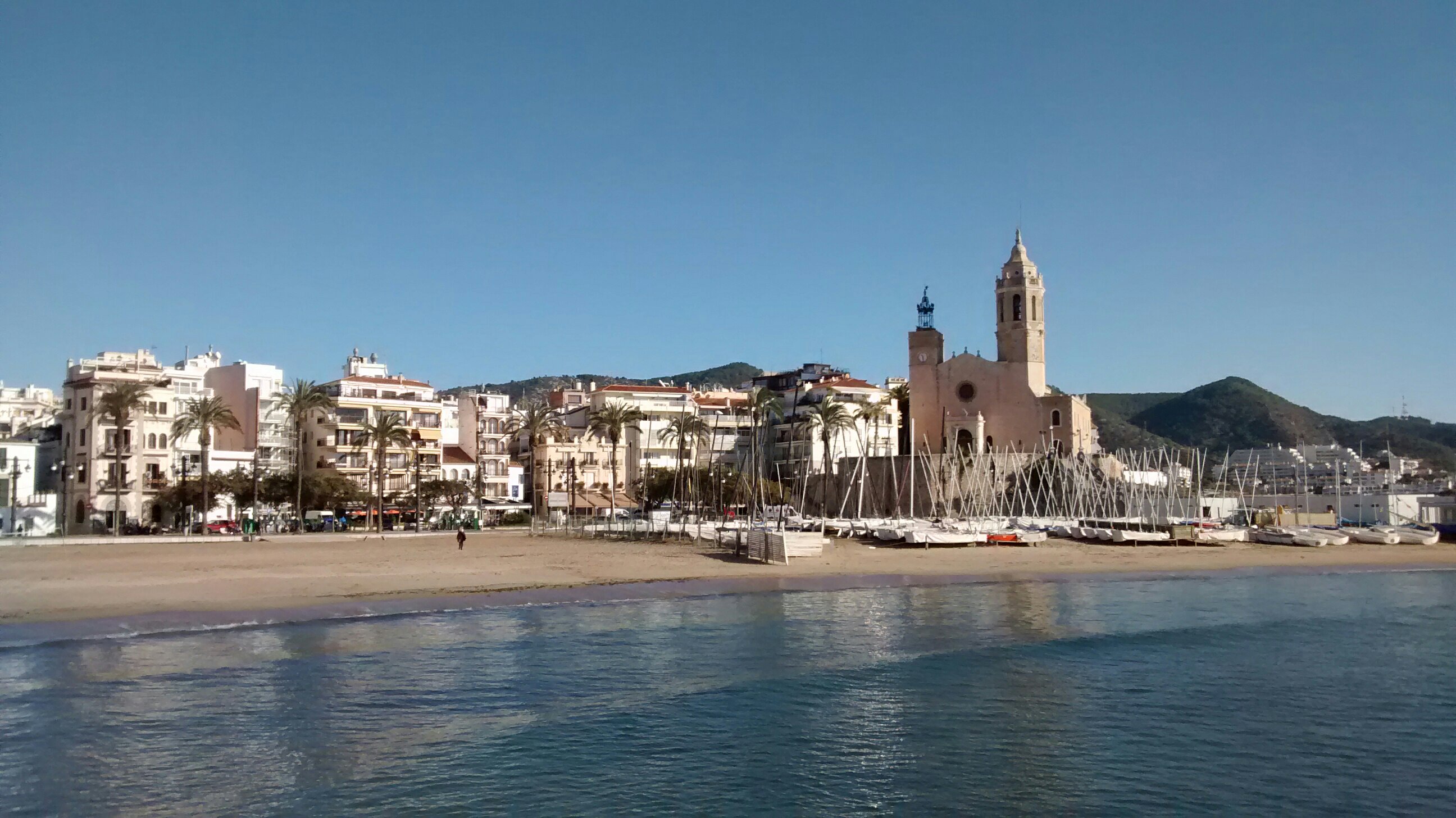
Top tourist tip. Visit Sitges, as we just have, on a bright day in January. You’ll have the place almost to yourself.
We last visited a few years ago, when Emily took us to see the Corpus Christi Flower Festival in June. We could barely move for other people doing exactly the same thing.
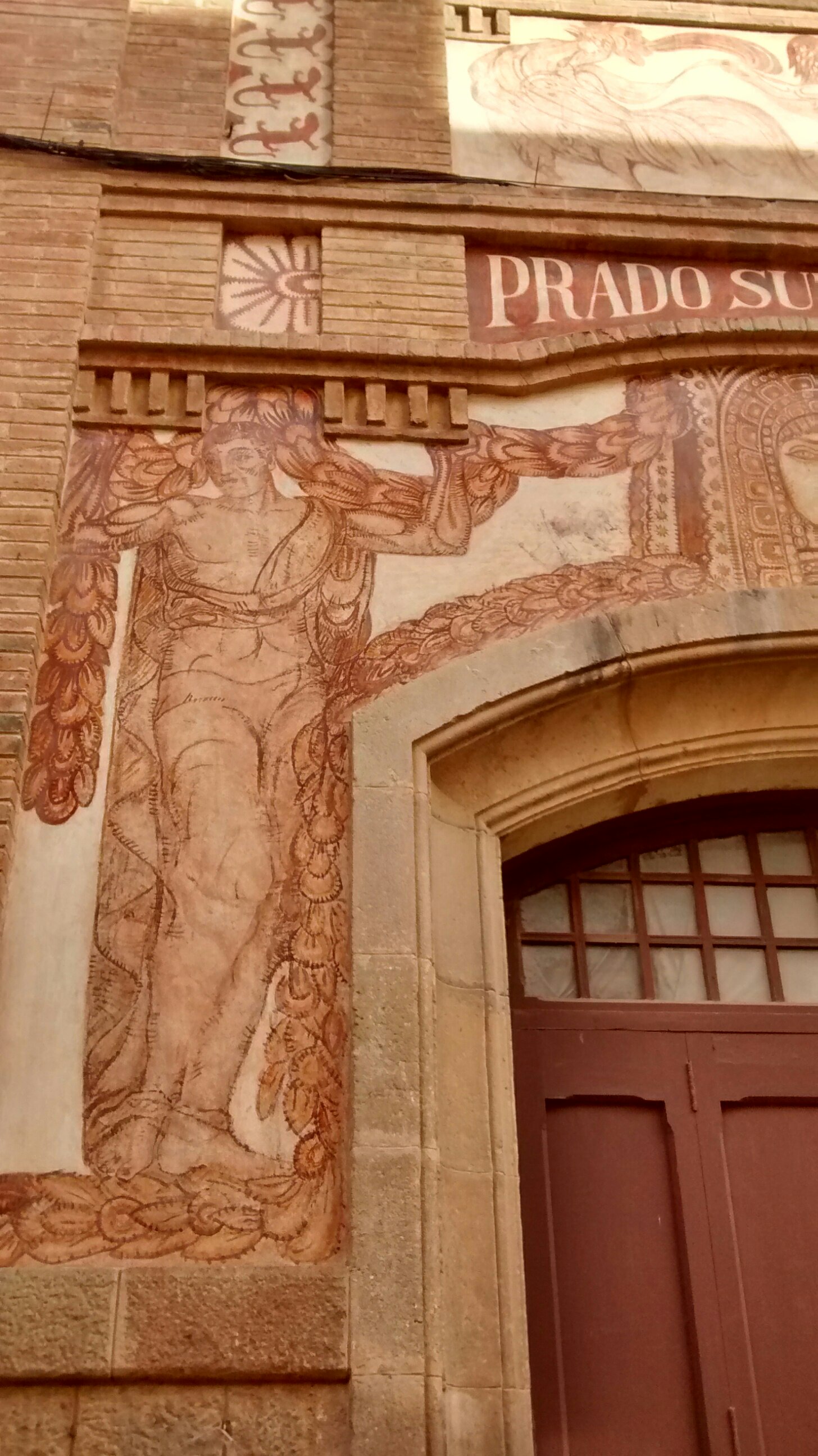
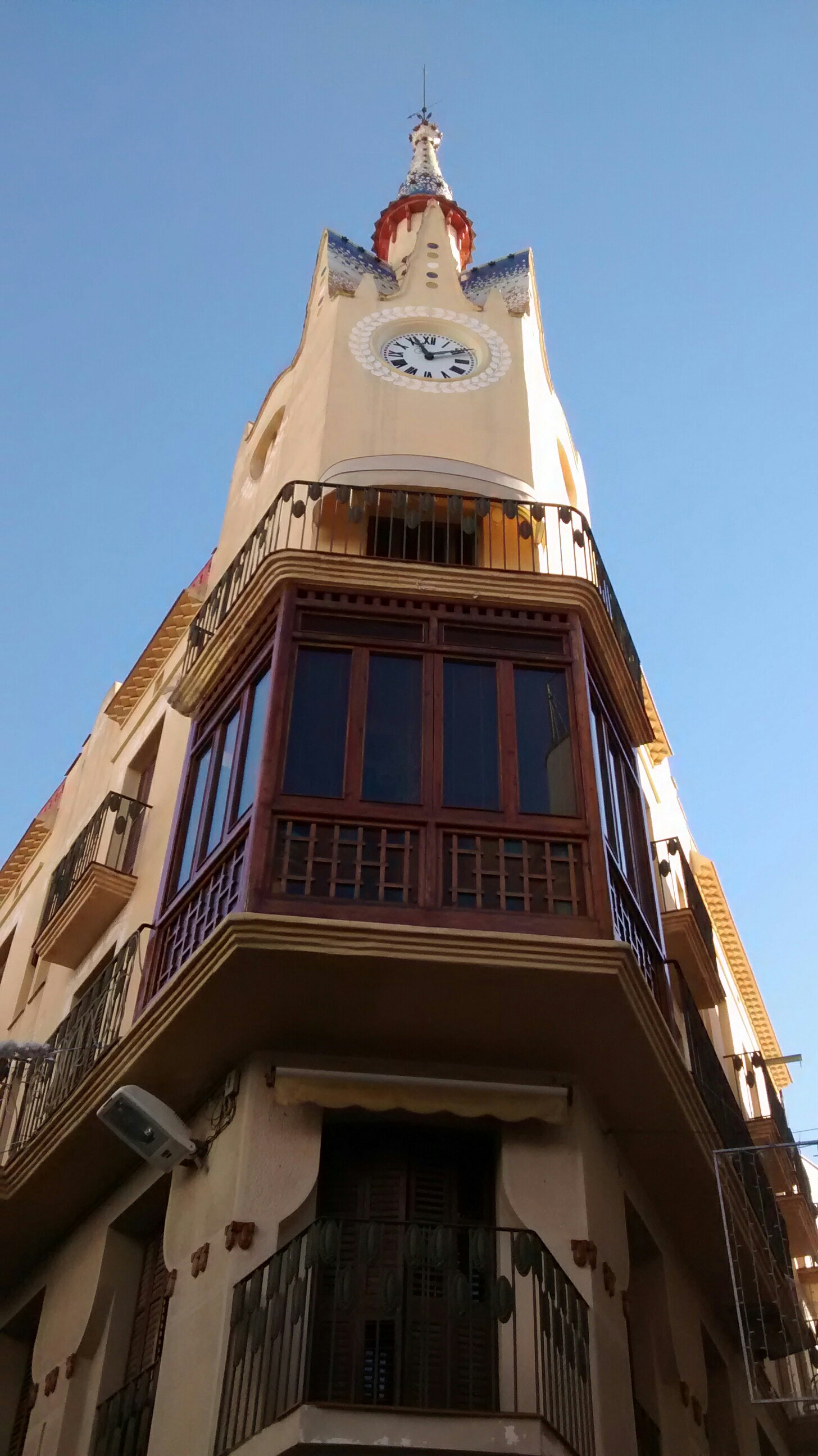
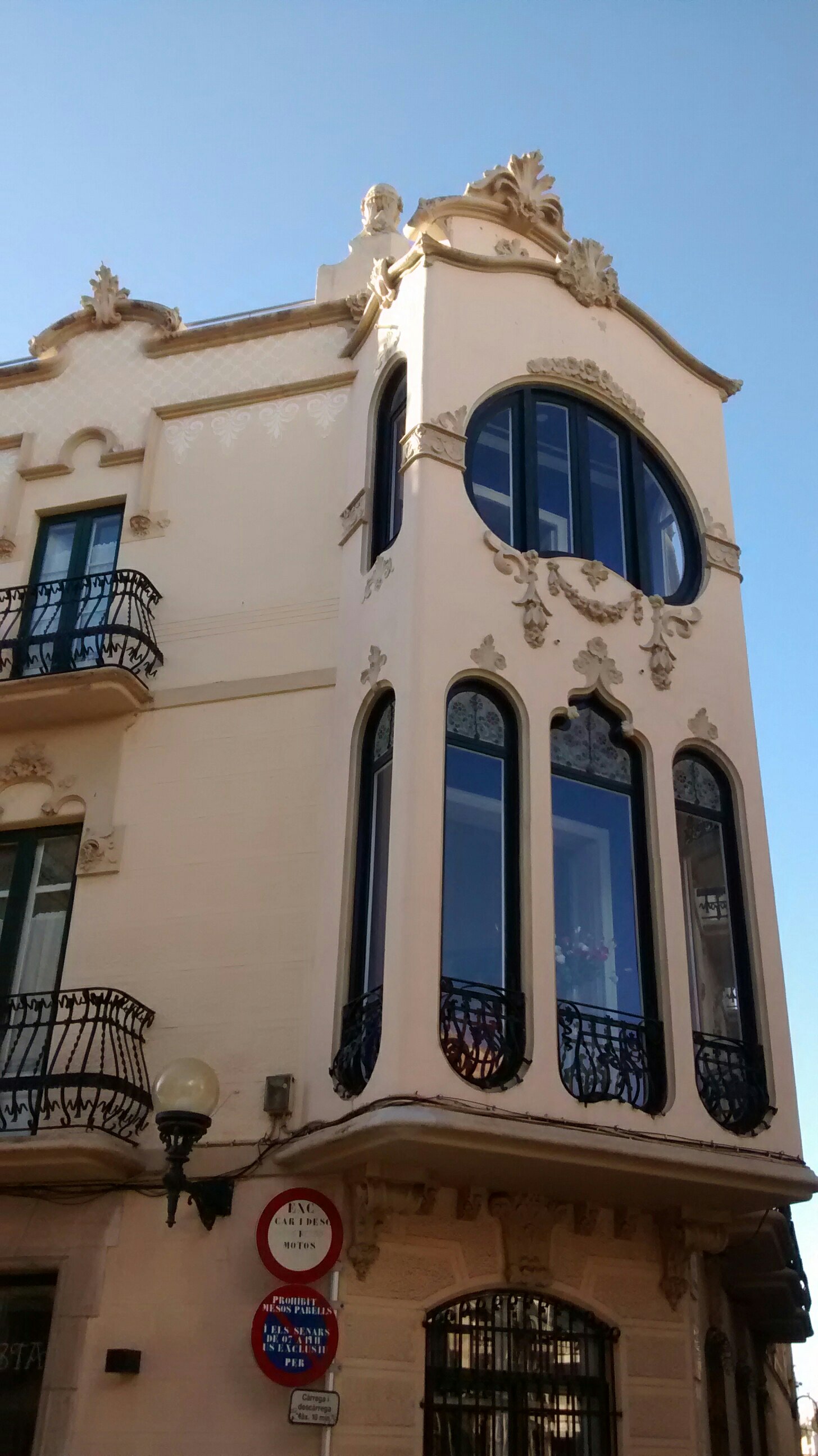
Today was different. We mooched round enjoying the narrow streets of the old town, the Modernista buildings, and the wide sunny beach. I even paddled. Malcolm didn’t.
A tasty tapas lunch was in a quiet bar in a quiet park. It was the perfect antidote to busy Barcelona, a mere half hour train journey away.
Did Father Christmas come your way the other week? I hope so.
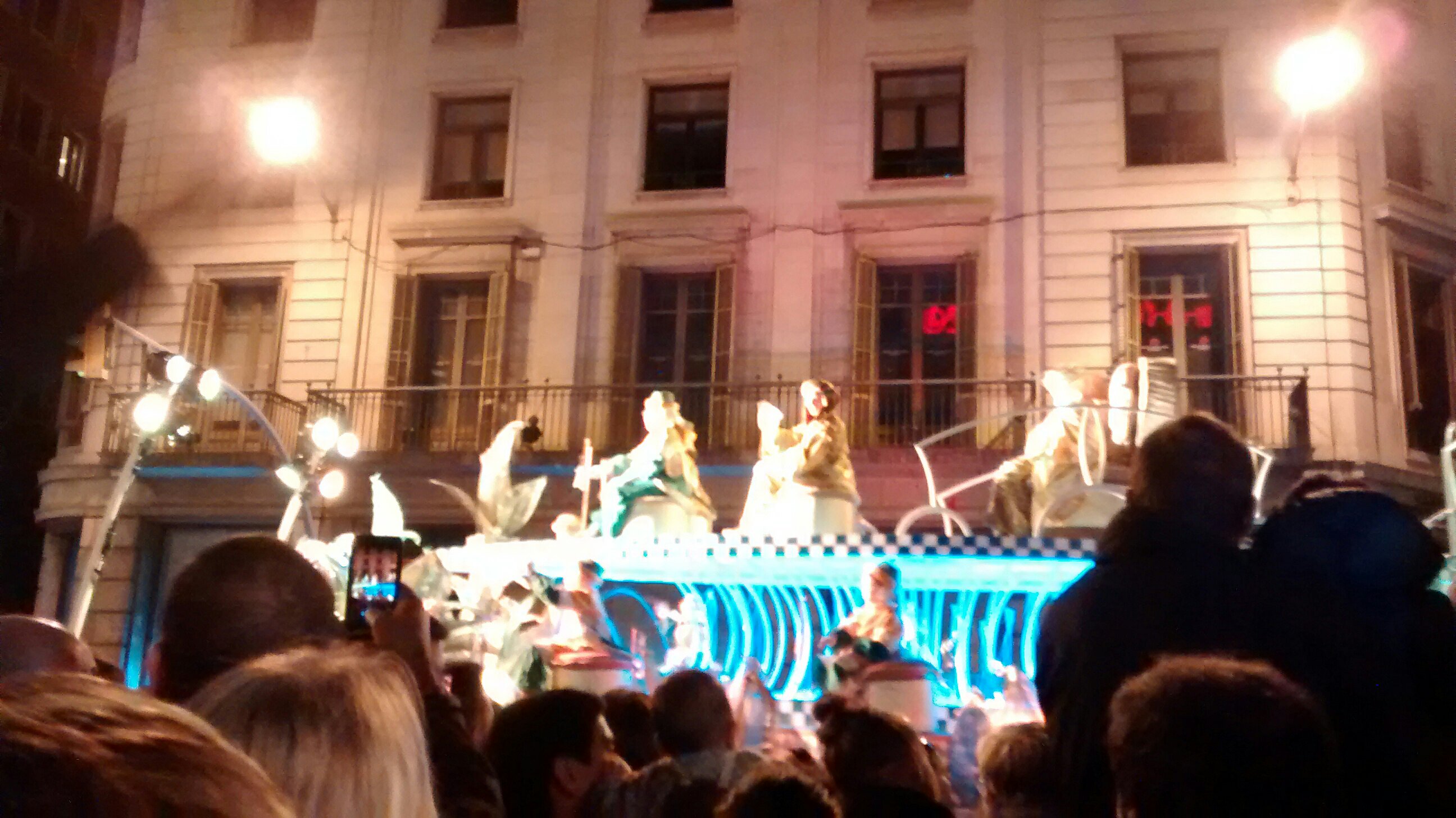
But this year we’ve come to try to spot another team bearing gifts. We’re in Barcelona, where tonight children are waiting eagerly for their Christmas presents from – the Three Kings.
It was at Epiphany that the Magi visited the infant Christ, and at Epiphany that they continue the tradition by bringing gifts to all Spanish and Hispanic children.
We’ve already spotted them. Here they are, slowly winding their way through the crowded streets of Barcelona with their accompanying queens, elves, African drummers and jungle creatures. My phone hasn’t made a good job of recording their visit. I hope my camera will have done better.
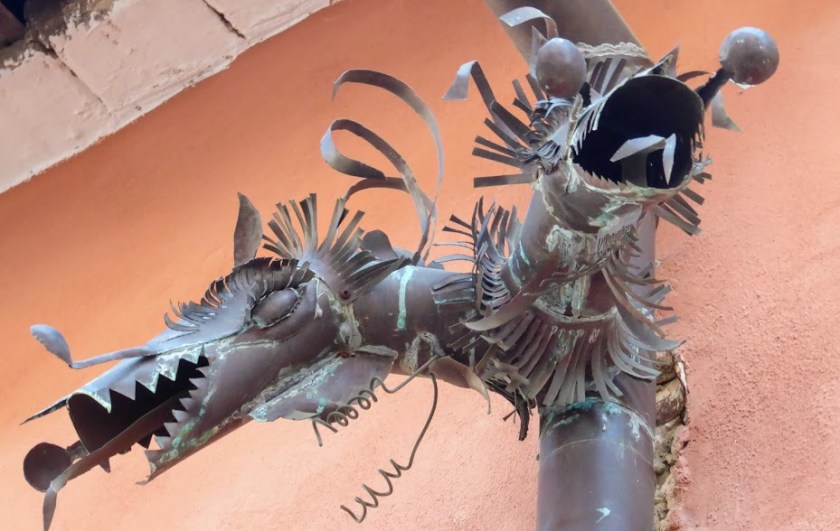
This day three weeks ago, I was in Sagunt, near Valencia. When I wrote about it, I posted not a single photo, but promised you a few later. You’ll have to wait for the ones celebrating this fine city’s Roman, Moorish, Jewish and Civil War past. Today, you can see the cheeky dragon who’s roaring from the top of a perfectly ordinary drainpipe fixed to a perfectly ordinary house.
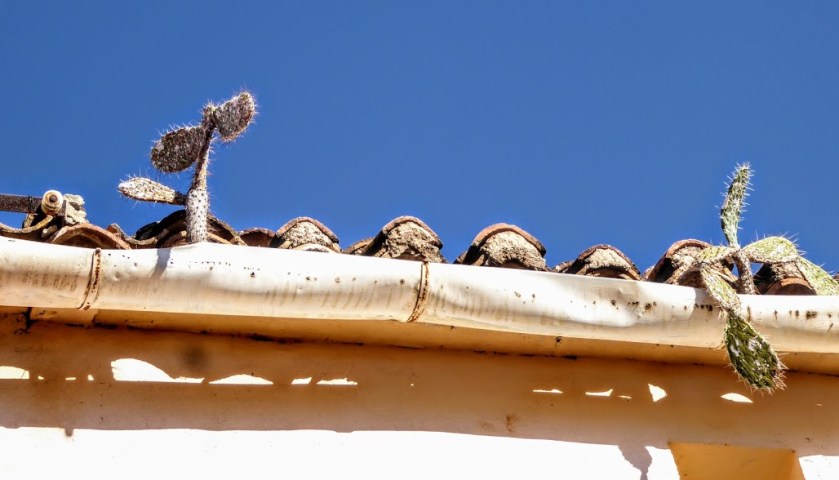
I’ll show you the cheeky cactus growing in the gutter of another perfectly well-appointed house nearby.
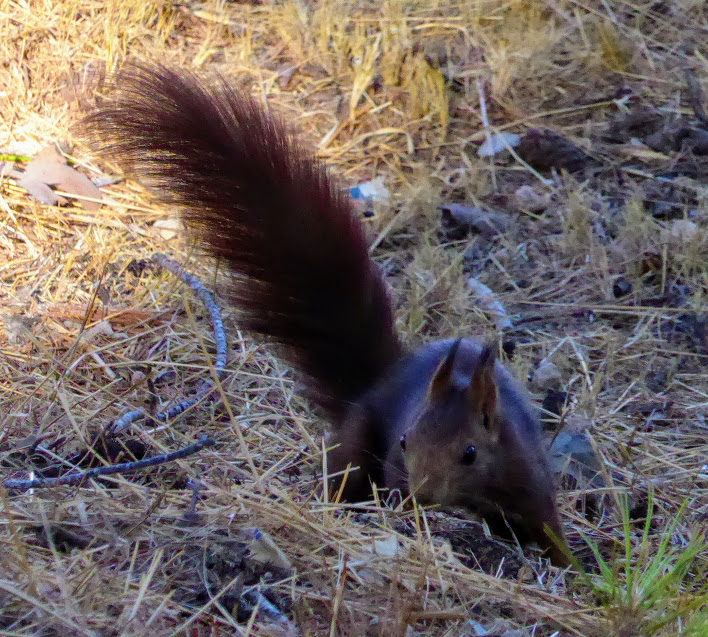
And you can see the cheeky red squirrel – so exciting to an English person used only to his pushy grey cousins – who declined to sit still and pose nicely while I fussed around turning on my camera.
This week’s WordPress photo challenge invites us to find cheeky photos.
Once upon a time – 1989 actually – two babies were born: a girl in England, a boy in Spain. They each had siblings more than ten years older than they were. They each went to school and did well, and in due course they went to University.
When they graduated, they wanted to train or work as teachers. The reality was that one of them could only find a job in a call centre, the other by working in a bar or restaurant It wasn’t what they wanted.
By chance, opportunity knocked. The English girl got the chance to work as a teaching assistant in Spain. The Spanish boy became an au pair in England. They worked and learnt hard, and within a year, both had found regular teaching posts.
Since then, five or six years have passed. The English girl speaks Spanish with ease. The Spanish boy is very comfortable speaking English. Their careers have developed nicely. Each considers the country that they ended up in, almost by chance, as home.
Have you guessed yet that the English child is my daughter Emily? The Spanish child is my new Spanish teacher Javi. If they wanted, it’s not impossible that they could swap the lives they’ve chosen by exchanging their jobs, their homes and their social lives with each other, and go back to their countries of birth. But they don’t want to. They’re settled, and feel enriched by the choices they’ve made. It’s called ‘Freedom of Movement’.
Oh, I say, WordPress Photo Challenge. That’s a bit much. ‘Serene’? I did that last week, under the heading of ‘Transformation’.
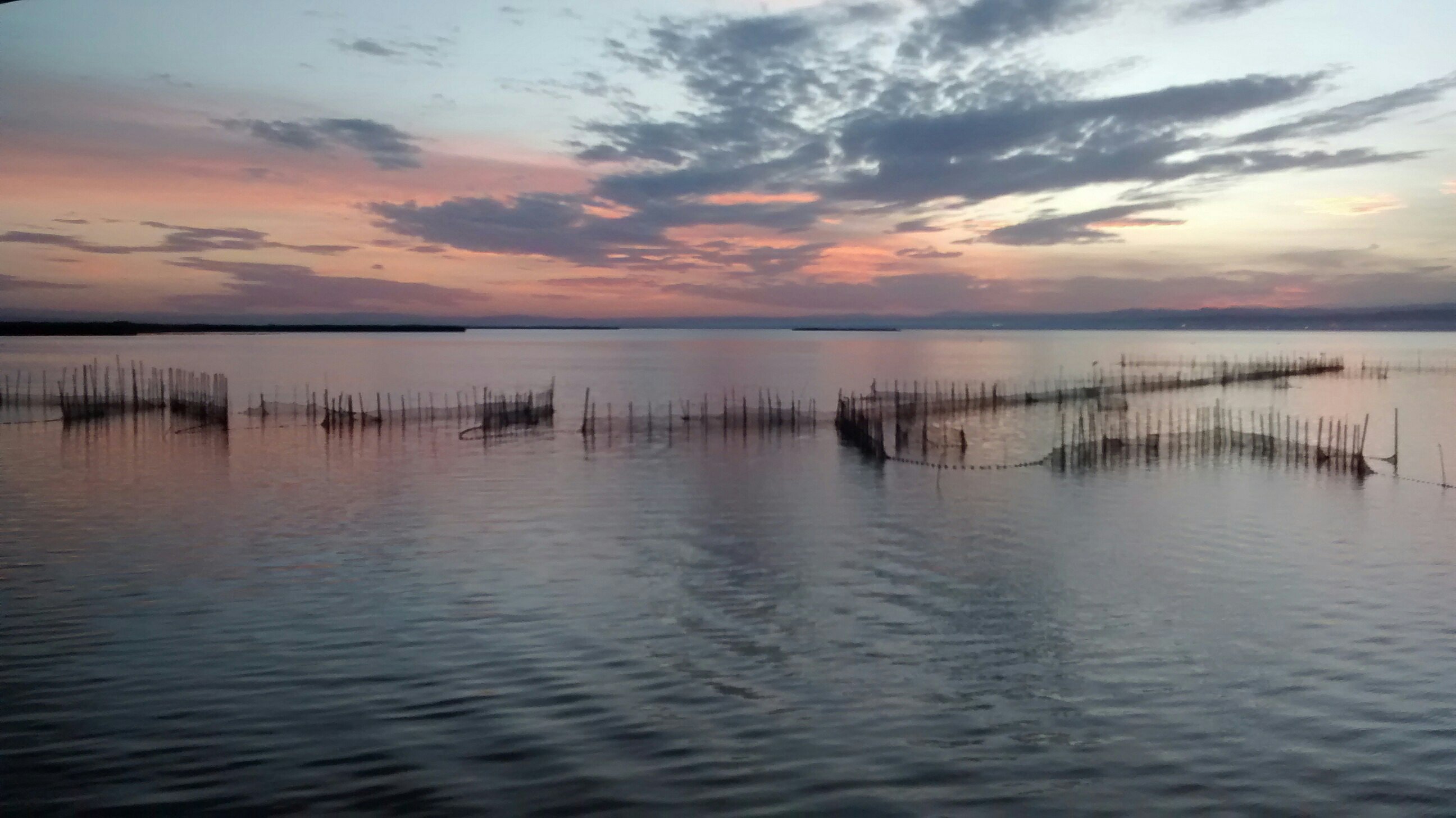
Still, you can’t keep a serene place down. And if l’Albufera as the sun was was setting good enough for last week’s post, it’s good enough this week too. Especially as I’ve exchanged enjoying the warmth in balmy Spain for shivering in temperature of 1 degree in gusty, snowy North Yorkshire.
This was a weekend of travel. Of packing up and leaving my temporary home in Valencia and catching a coach to Barcelona (there was some kind of disruption on the rail network which I was keen to avoid).
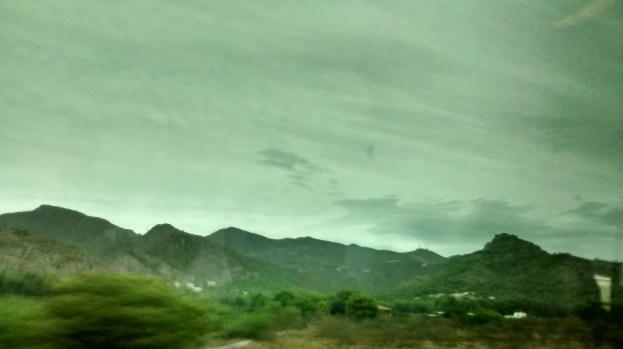
A view from the coach
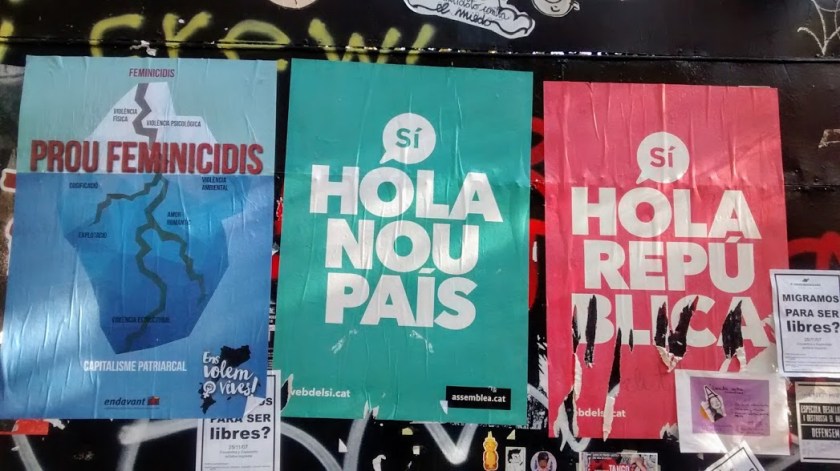
I was a little anxious about Barcelona. Every day for a fortnight, I’d watched the evening news on TV with my hostess. Every day for a fortnight the situation in Catalonia had been top of the agenda, for a good twenty minutes or so. There were pictures of massed placards, of disaffected locals chuntering volubly into microphones, of city fountains running in Catalonia’s colour of yellow.
Yes! It’s time.
I arrived in a city where everyone was enjoying a normal sunny Saturday, Spanish style. There were flags and posters certainly, but mainly concentrated in various hotspots. Catalonia’s been keen on nationalist flags for years in any case. What was (not) going on? ‘You’ve been watching Telecinco?’ howled Emily and Miquel, leaving me in little doubt that this less-than-even-handed commercial channel is the Daily Mail of the Spanish airwaves.
I don’t feel qualified to comment on what’s going on in Catalonia. But it does seem an awful lot like Brexit. Nobody is going to be happy whatever happens. Families and friends are divided. Hatred is legitimised. It’s a mess.
Still, I was there just to catch up with Emily and Miquel before flying home. To join the crowds of locals enjoying the warm autumn weather, calling in for a drink at a bar every now and then, before later, much later, having a convivial meal in a thoroughly convivial restaurant.
Dancing in the street in Gràcia on Saturday evening.
On Sunday, a bit more of the same, with Miquel’s family this time, before flying back to a windy Leeds, where the temperature was a mere 23 degrees colder than it had been in Valencia in the middle of the week.
Barcelona skyline from Miquel and Emily’s flat, Can you spot la Sagrada Familia?
And this week? I’m doing as little as possible. Exhaustion has set in.
My fortnight in Valencia is at an end. I’ve got the certificate to prove it, from my school of Spanish. And before you send me virtual pats on the back, it’s a certificate of attendance, not of achievement.
But goodness, I needed a break yesterday afternoon. This fortnight’s been full on. If I haven’t been doing Spanish, or watching Spanish TV with my hostess (not recommended), I’ve been getting a severe case of Museum Foot.
An afternoon at the sea? In the country? Why not both? L’Albufera is Valencia’s Natural Park. It’s a large fresh-and-seawater lake, a rice-growing marsh, and a sandbar. It’s beautiful, and only an eight kilometre bus ride from town. I spent the afternoon exploring the unexpectedly characterful Mediterranean maquis scrubland and a deserted beach.
But it was the last hour of all that was transformative, washing away a fortnight’s stress. Good stress, but still….
I got a trip on a boat which puttered slowly and quietly across the lake and through the reed beds as the sun set, herons and cormorants fished, and ducks patrolled the waters. It was perfect, quite perfect.











 From Pyrenees to Pennines
You must be logged in to post a comment.