Night photography isn’t really my thing, so Elke, this week’s host for Monochrome Madness, provided me with a real challenge when she proposed Night time as her theme.
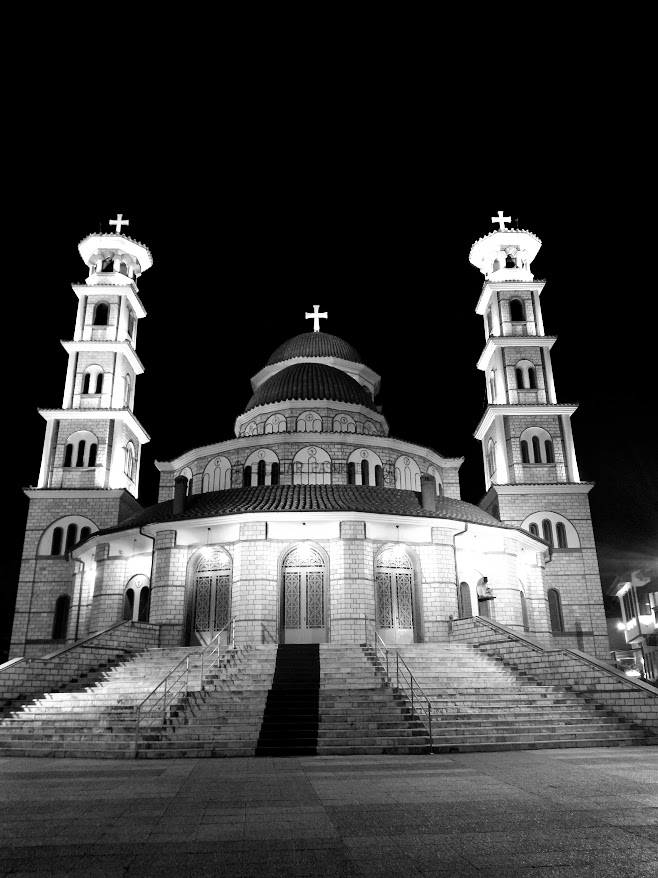
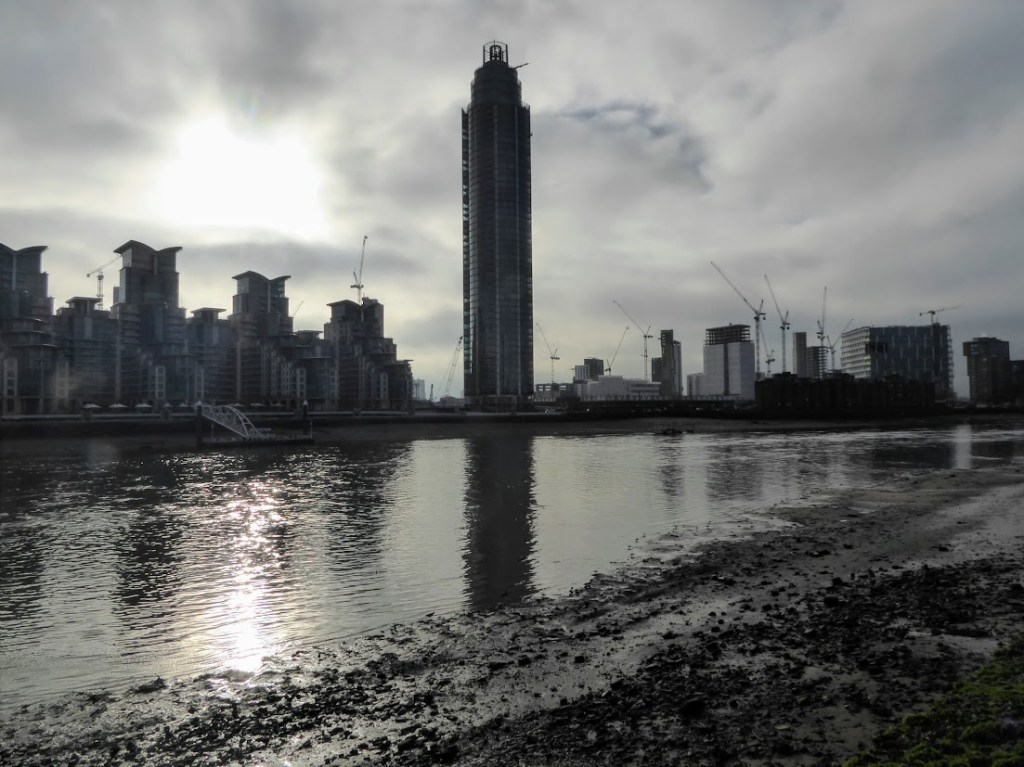
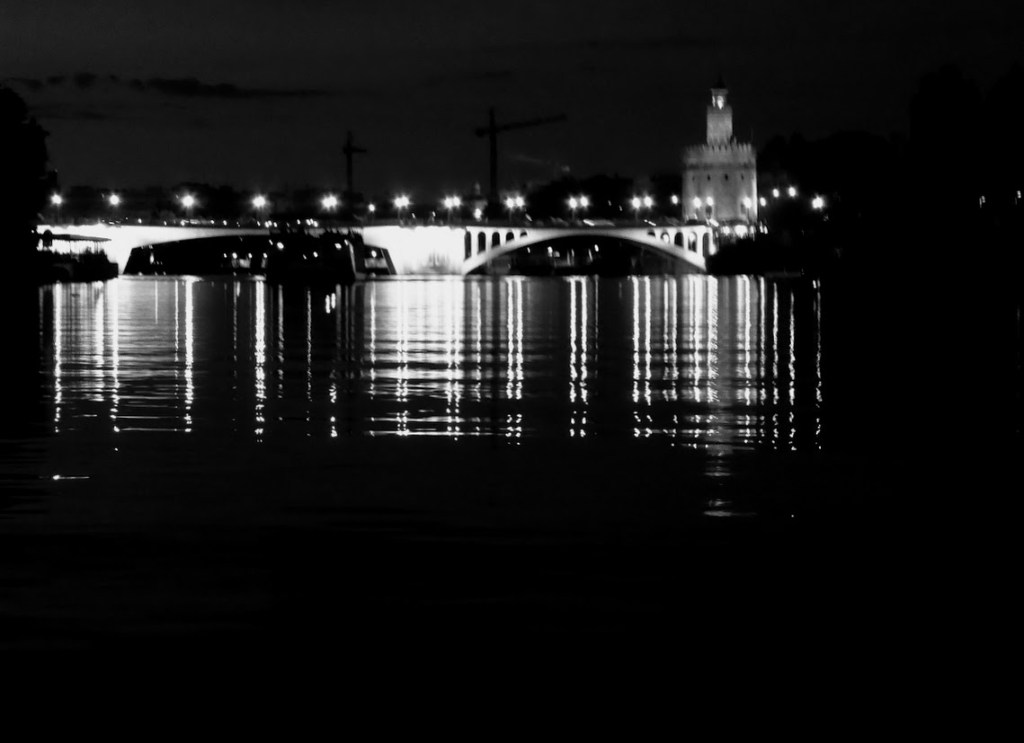
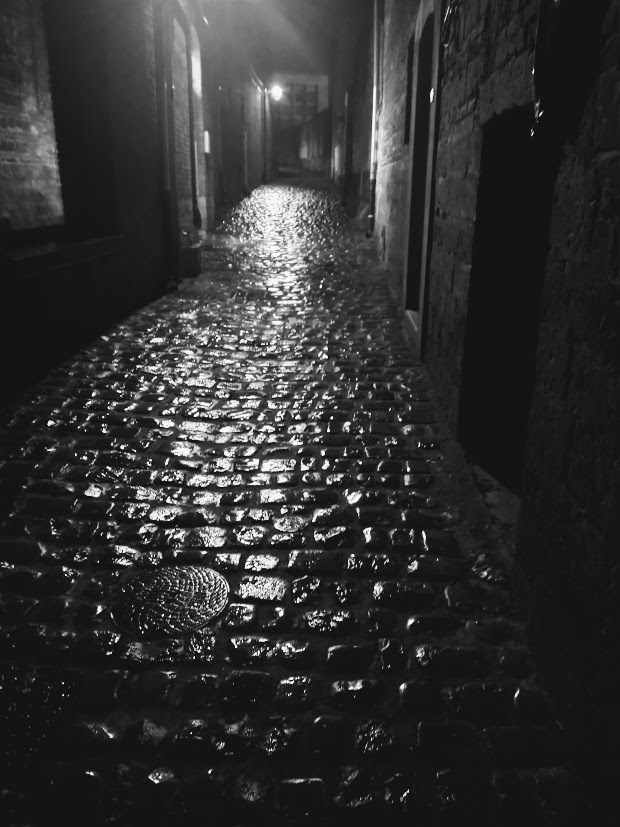
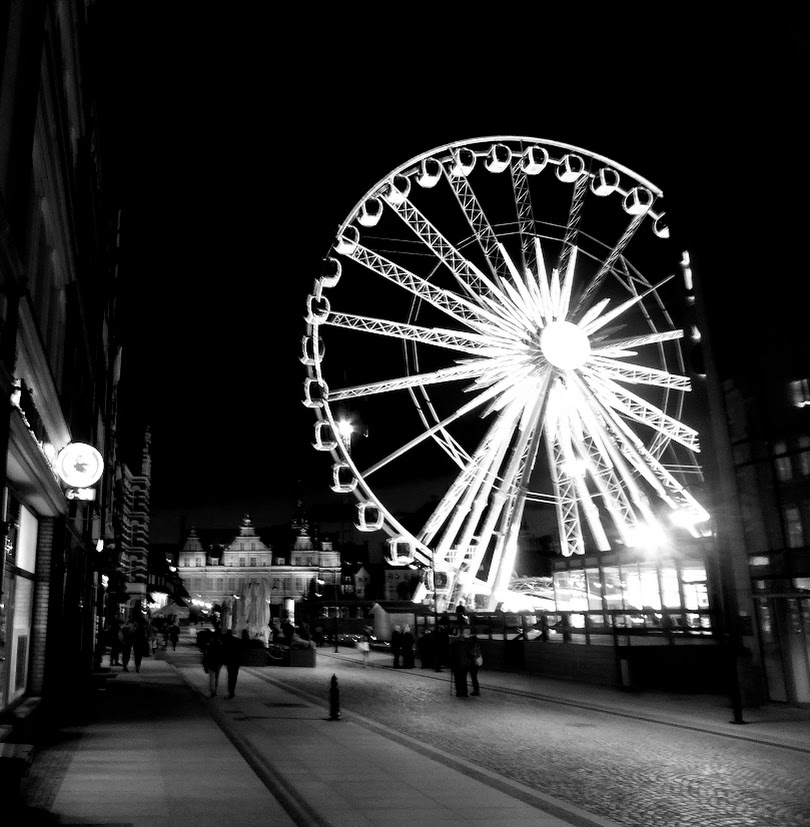
Unsurprisingly, towns and cities provided me with a few ideas. Let’s go on a quick tour. Let’s visit Albania, England, Spain, France, South Korea and Poland…
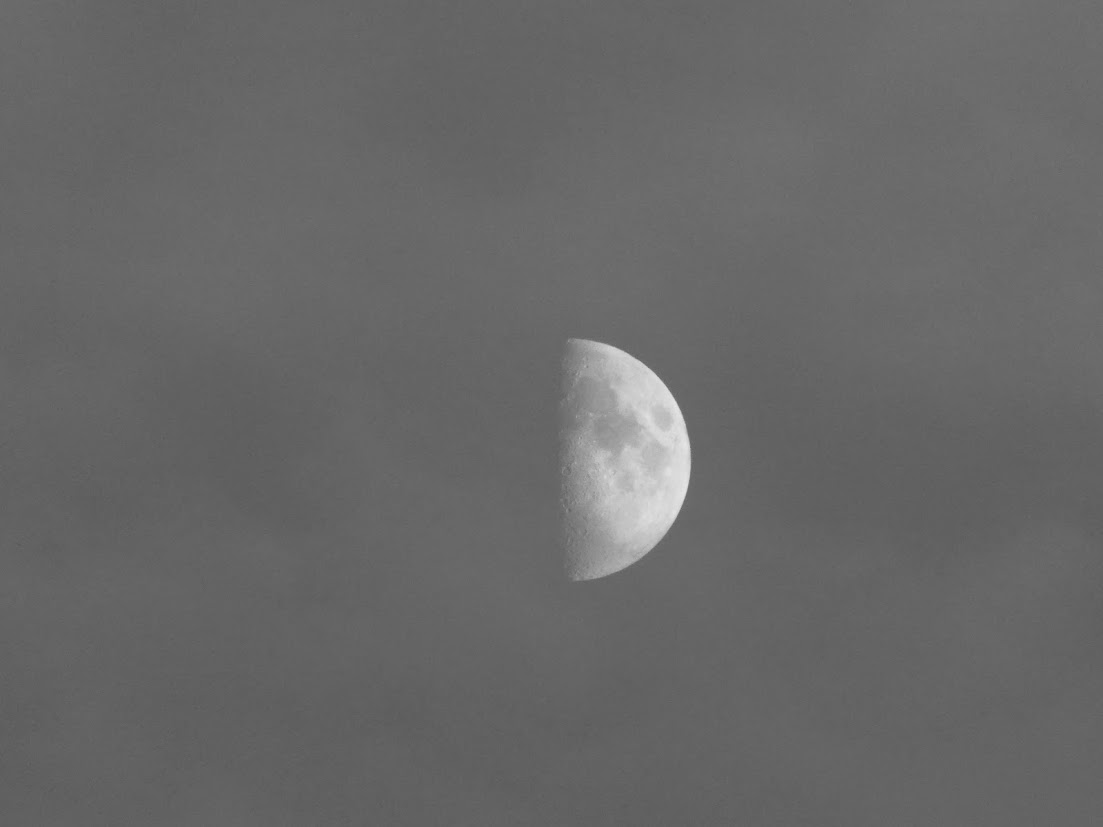
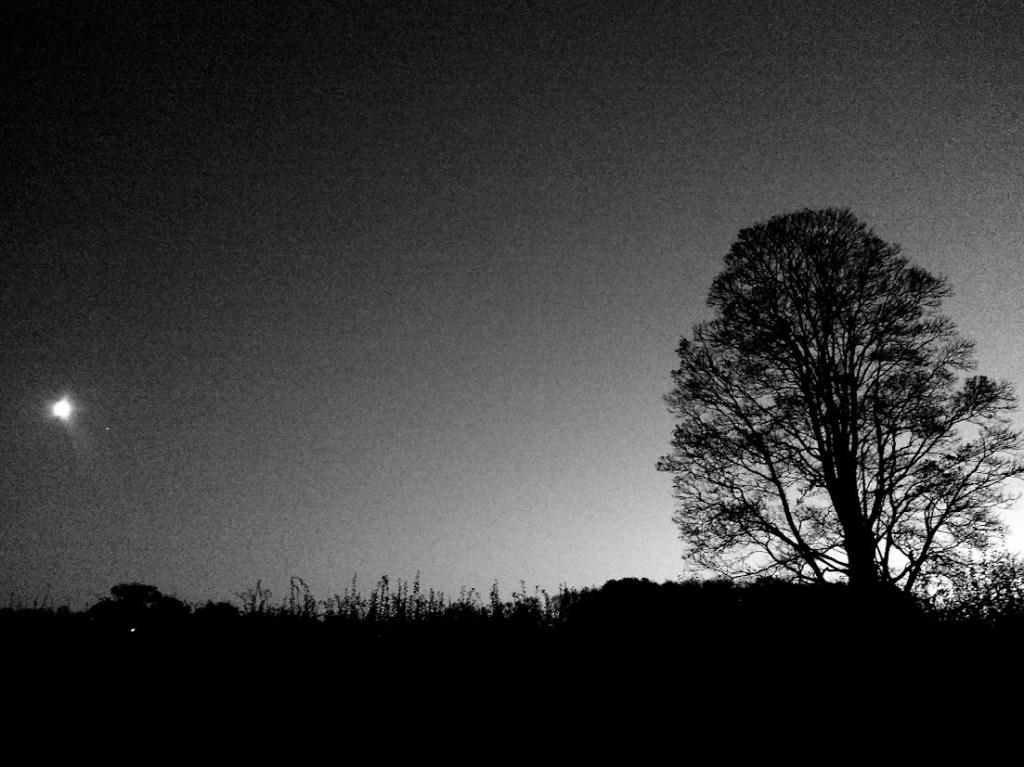
Really though, Country Mouse prefers to dodge big cities. My featured photo is of the moon as darkness fell recently, while the photo below was taken just at the end of the road.
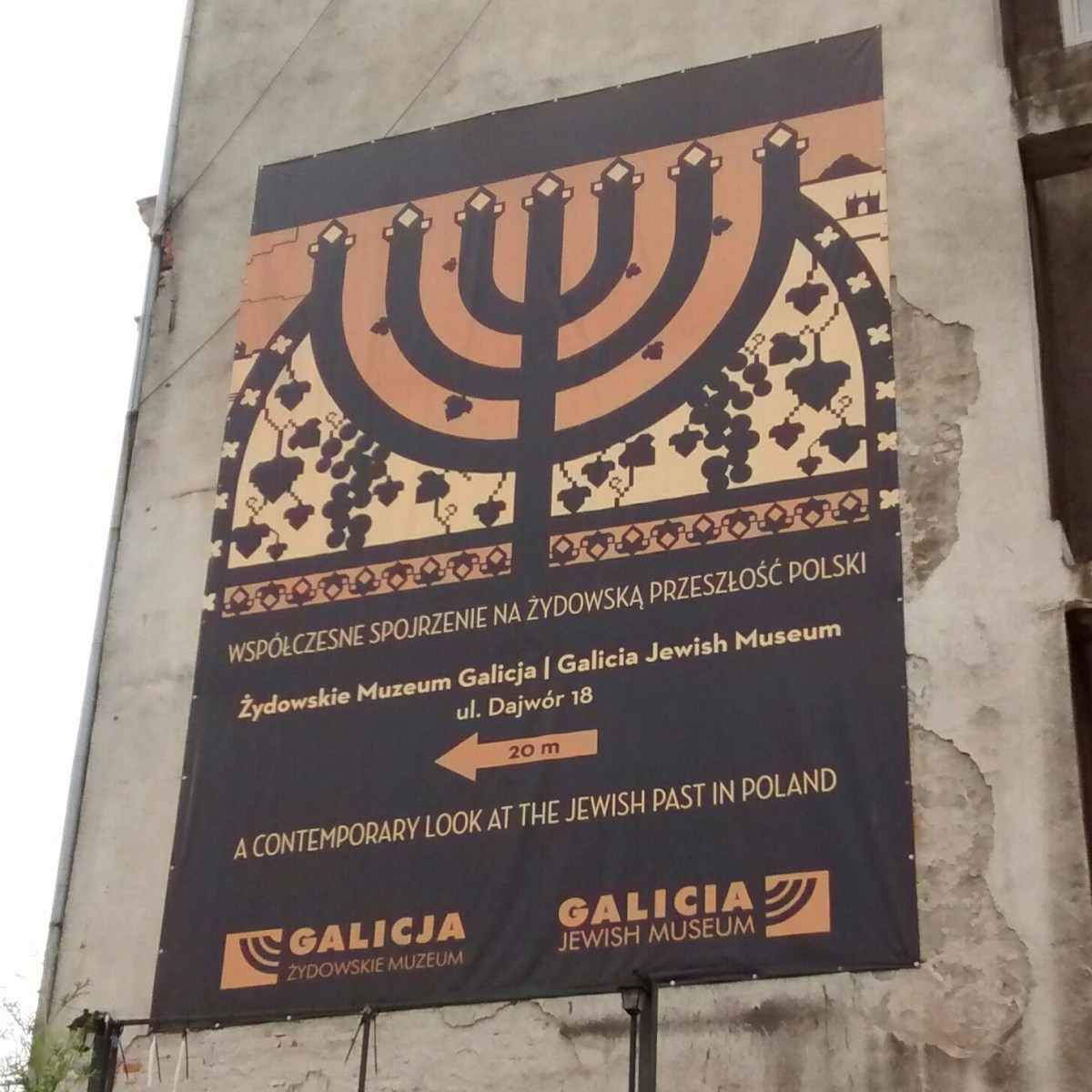
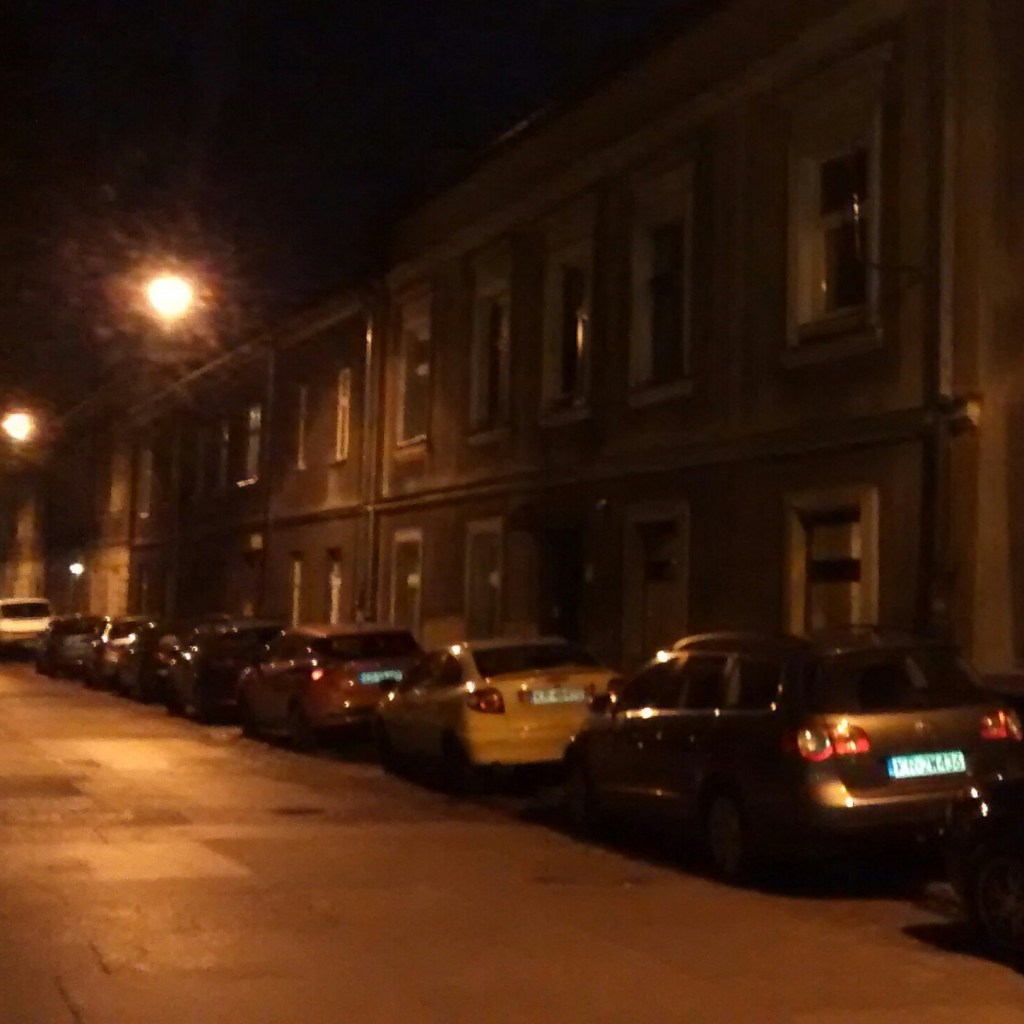
Exactly seven years ago today we were in Poland, the country of my father’s birth. And we’d fetched up in Krakow, where were were staying in the former Jewish quarter. The feature photo shows the view from our window. Yes, advertising the Jewish Museum was an image of the menorah, the seven headed candelabrum which has become the symbol of Judaism. Here’s the post I wrote on 16th September, 2017.
Jewish Krakow
Here we are in Krakow. And here we are, staying in the former Jewish quarter, Kazimierz, once a completely separate town.
How come there were so many Jews in Poland by the early 20th century? They formed, for instance, 20% of the population of Krakow by the beginning of WWII.
Blame the crusades. The Polish kings at the time declined to get involved. Jerusalem was so far away after all. So there were no crusaders from Poland in the routine persecution of Jews that took place in those so-called Holy Wars. And Poland became a place of sanctuary.
Along came the Black Death. Citizens from all over Europe looked for someone to blame. Jews, obviously. Jews needed somewhere to flee. Poland, obviously. Poland somehow escaped the Black Death, so didn’t need to persecute Jews at that time.
Over the centuries, Jews did well in Poland. Well educated by their rabbis at a time when education was far from universal, they prospered. They tended to live together, in harmony with their Christian neighbours.
Then Hitler came to power. As he occupied Poland, he began his all-too familiar persecution, then extermination of the Jews. But in Krakow, the factories were short-handed. and Jews were required as slave labour. 3000 Poles were forced to leave their homes in the Podgorze area, and 16,000 Jews moved in to the ghetto it became.
This street forms one of the boundaries of the ghetto.
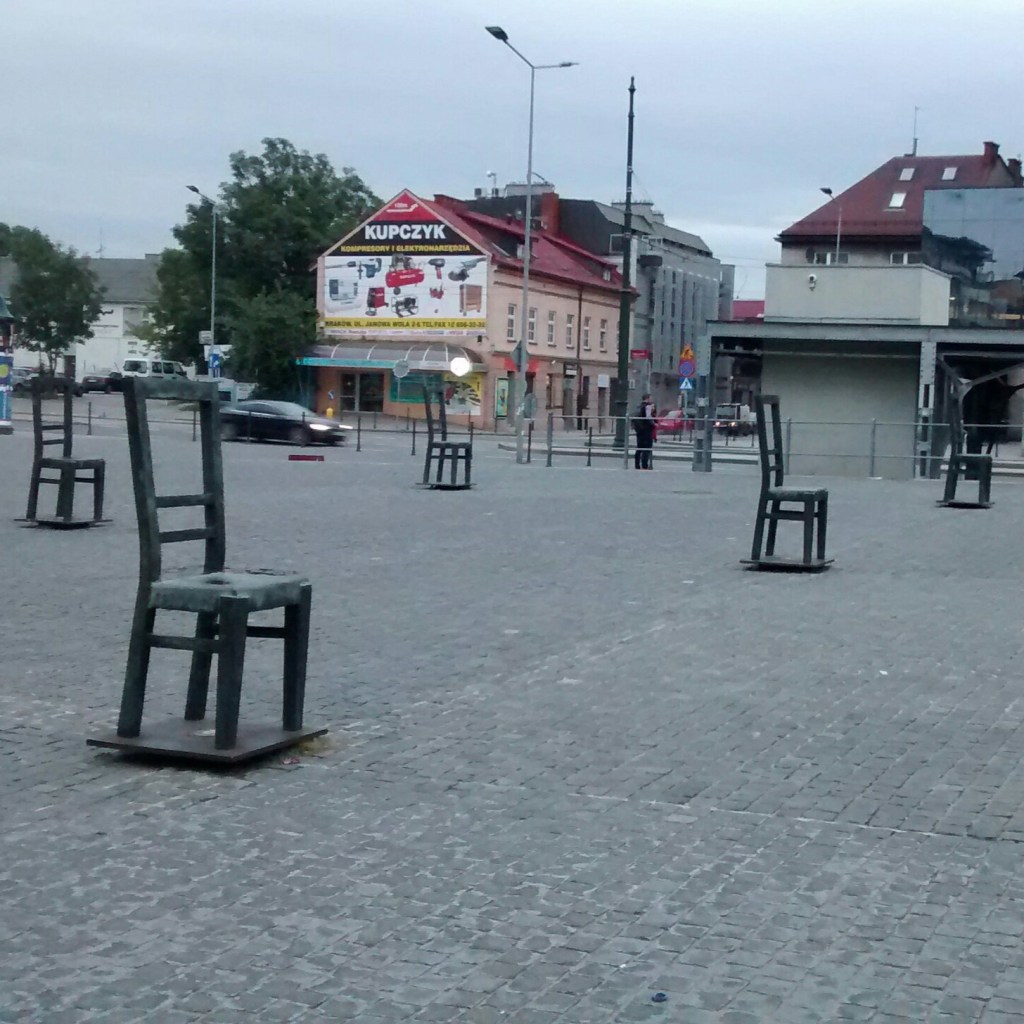
One of those factories was Otto Schindler’s. 1000 Jews who might otherwise have died lived because of his protection – he could have managed with 100 workers. This dark period is remembered in Plac Bohaterow Getta – Ghetto Heroes Square, where 70 chairs symbolise absence, departure. This Square was the place where Jews were executed, or sent to almost certain death in the local Concentration Camps. Another sobering day.
Plac Bohaterow Getta – Ghetto Heroes Square
Other posts I wrote during our holiday mentioning the Jews in Poland include:
People photos. That’s Tina’s Lens-Artist Challenge #292. This is difficult. I’m only just learning to be less shy about making snapshots of innocent strangers, with or without their permission. One way or another though, people at work is an easier ask, so I’m off to see who we can find doing just that.
We’ll start at the second biggest fish market in the world: Jagalchi Fish Market, Busan, South Korea. Here’s someone who’s probably been filleting fish for decades. She could probably do it with her eyes closed.
An experienced ajumma at the fish market
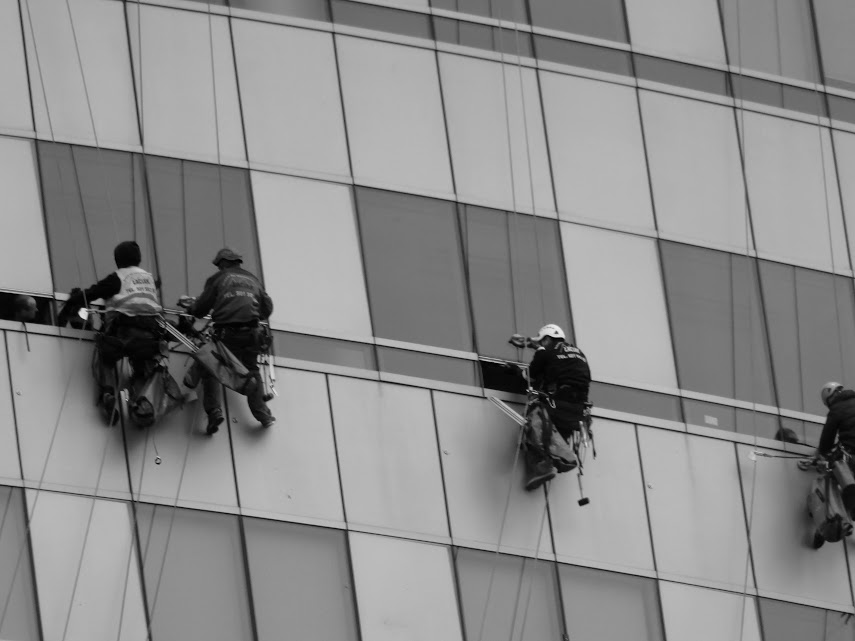
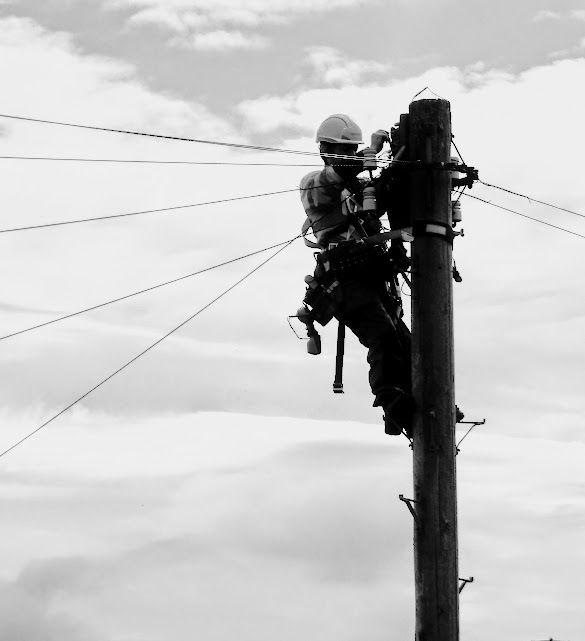
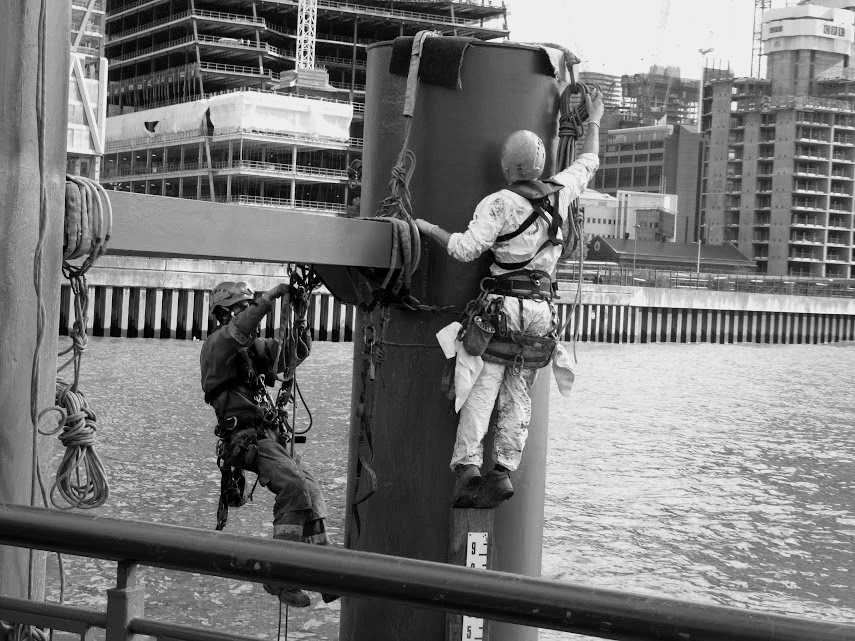
Here are some workers who have a head for heights: Window cleaners in Warsaw; a telephone engineer in Wensleydale; and two workmen doing something useful at a Thames-side structure.
This auto-rickshaw driver isn’t working at the moment. He’s proud to have taken a very green, very-jetlagged-but-too-wired-to-sleep English tourist (me) on an informative two hour whistle-stop tour of Bengalaru, and is cheerfully posing for a photo.
My first friend in Bengalaru: the rickshaw driver who took me on a tour of the city
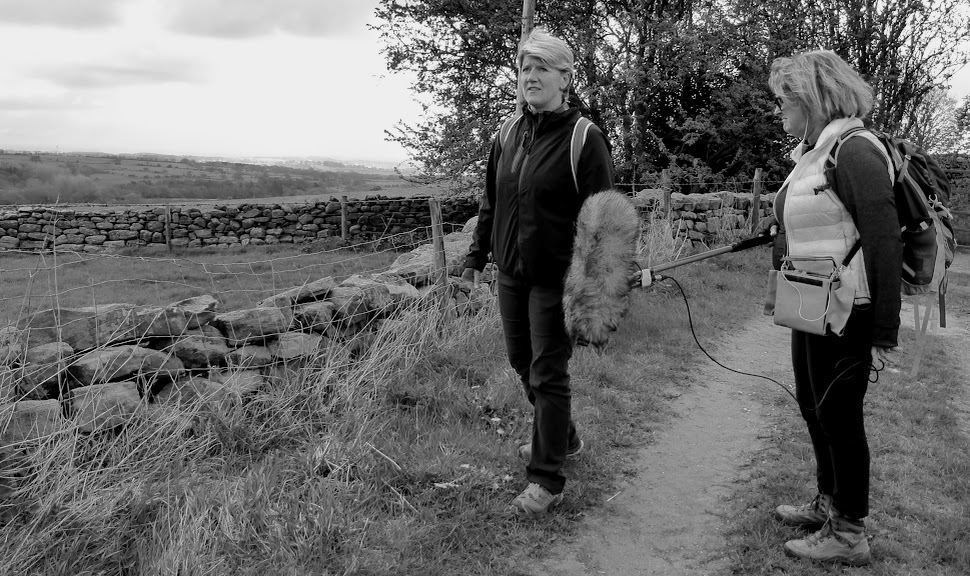
Here’s a different kind of job. Most Brits have heard of Clare Balding, radio and tv presenter. One of her jobs is presenting a BBC Radio 4 programme, ‘Ramblings’ about the joys of walking. A few years ago, two friends and I had the pleasure and privilege of walking part of the Nidderdale way with her. You can read all about it here. And here Clare is describing the scene before her, as her producer and sound recordist Lucy saves her every word on that muff-on-a-stick while we hover in the background.
Clare and Lucy on the Nidderdale Way
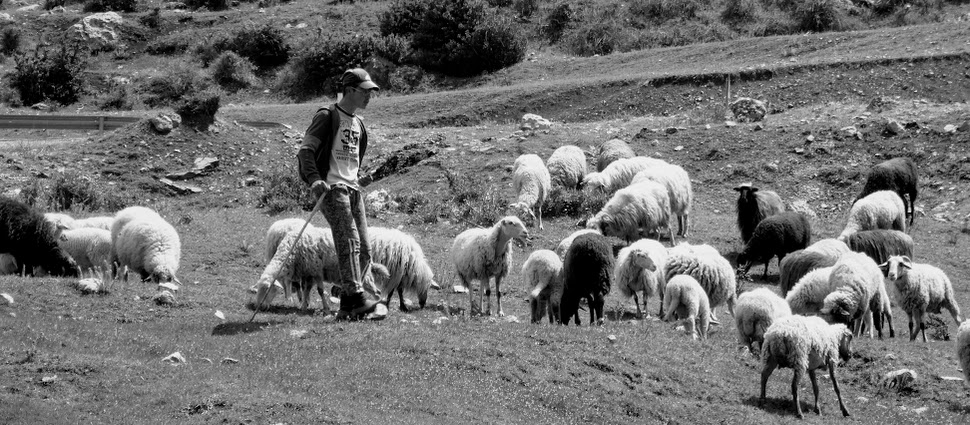
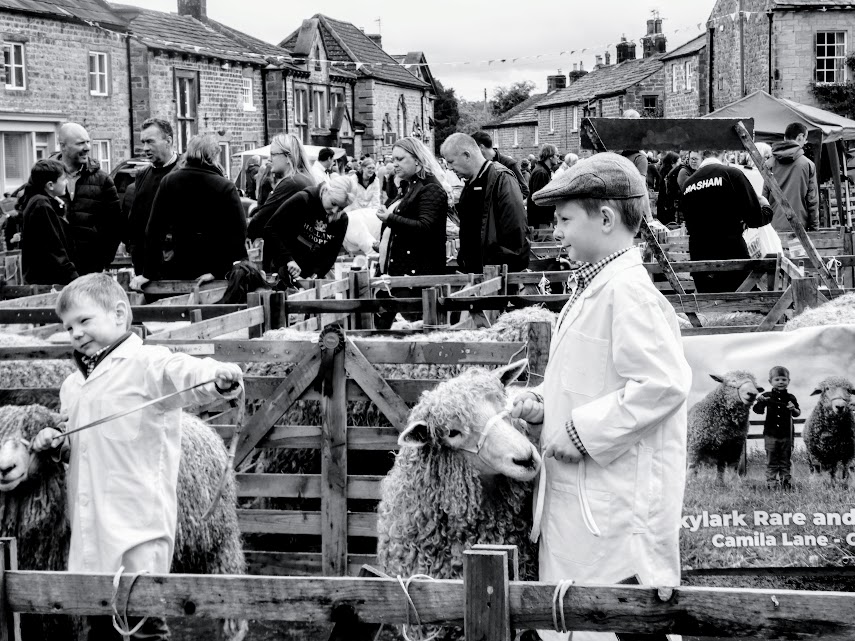
Not all work is paid of course. Every year, sheep farmers from all over the north of England and beyond gather for Masham Sheep Fair, to show their sheep off at their very best. Some of the keenest contestants for honours are under ten, the farmers of the future. But the featured photo shows someone who is paid – very little I suspect – for his work: A herdsman in Albania, constantly moving his herd of sheep and a few goats in quest of lush pasture.
Waiting for their sheep to be judged, two young contestants.
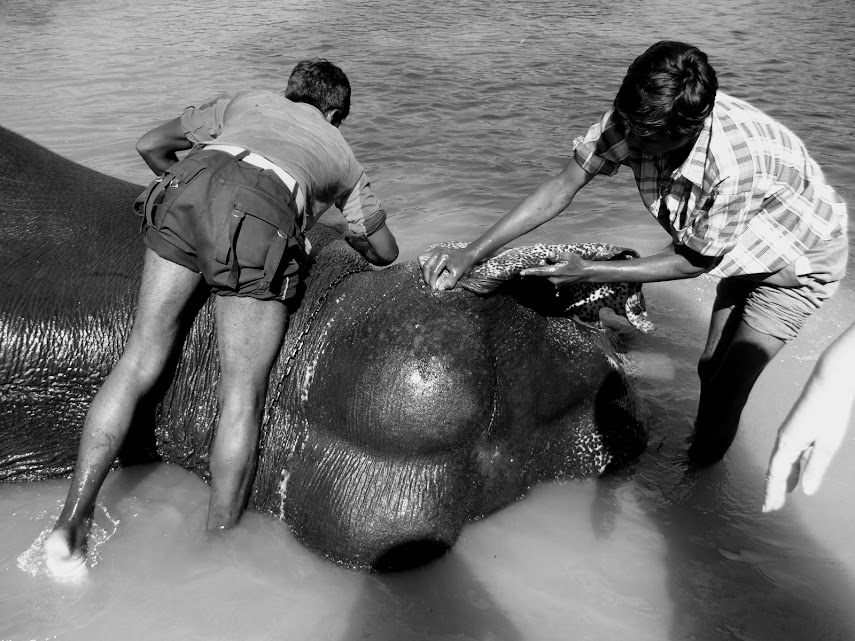
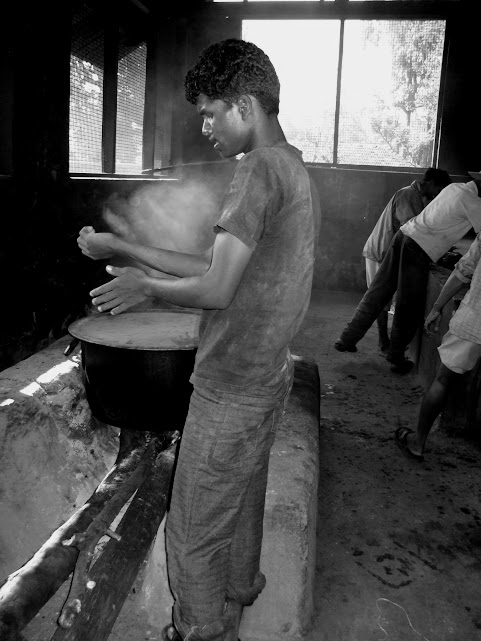
But over in India, you could be working with different animals -elephants, perhaps at Dubare Elephant Camp. You might be washing them in the river, or cooking their next meal of jaggery, millet and vegetation.
You might be a waiter. Here are two French ones. Only they’re not really French, or serving at table. They earn a crust as actors – in this case at Ripon’s annual Theatre Festival.
Zey kept ze crowds amused at Ripon Theatre Festival
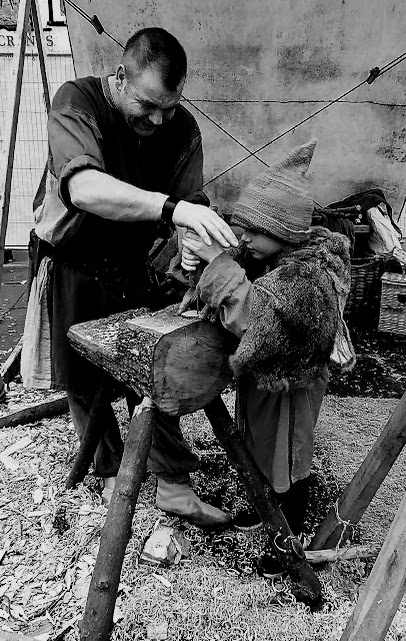
Or you might be a slave. A willing one. At half term, my grandson was taken on – for half an hour only – to be enslaved to a Viking master who turned out to be extremely personable, and even helped him with some of his tasks, such as wood turning. Well, it was part of York’s annual Jorvik Viking Festival.
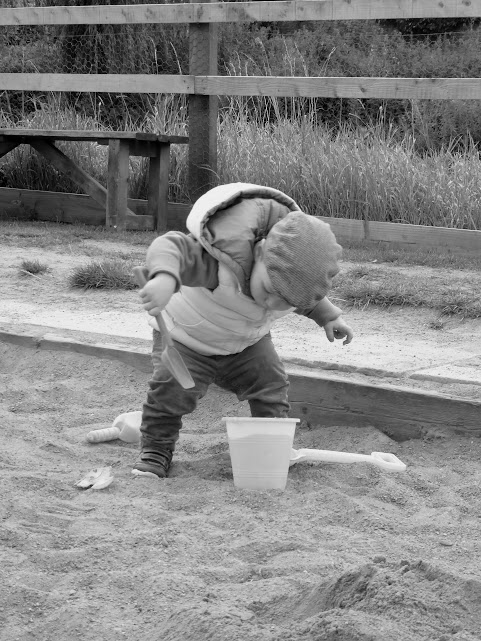
Children can be good at working for free – unless you want them to tidy their room. Catch ’em while you can.
Poor Algernon (if I may be so familiar). I abandoned my Major General last month as he planned further destinations in a trip to invigorate him in his old age. He’s my stooge as I attempt to complete Paula’s Pick a Word Challenge. The five words Paula offers us are intended to be a stimulus to us to choose five appropriate photos: I decided a bit of verbal silliness would add a little extra difficulty. Not ‘alf. These are Paula’s chosen words: distinctive; floating; fortified; playful and saddle. Make something of that, Major General!
In case you’re not familiar with him, this is how his saga began …
A retired Major General from Hove
with the moniker Algernon Gove
said ‘Before life unravels
I must finish my travels.’
And forthwith he made plans to rove.
But it gets worse …
His next plan was to go pony-trekking.
He booked something in Wales without checking.
It might be quite a chore ?
He could get saddle-sore?
Oh dear no - there’s a plan that needs wrecking.

Our old chap nursed a long-term ambition
to explore sites with years of tradition.
A castle, he voted,
fortified, or deep-moated.
He’d find one - he'd make that his mission.

Perhaps all his plans were restrictive?
He should aim now for something distinctive.
Something playful and fun.
‘Cos when all’s said and done
to enjoy life should just be instinctive.

He knew he’d no taste for long trips
that took him o’er oceans in ships.
But he’d go in a boat
floating nowhere remote -
while enjoying some fresh fish and chips.
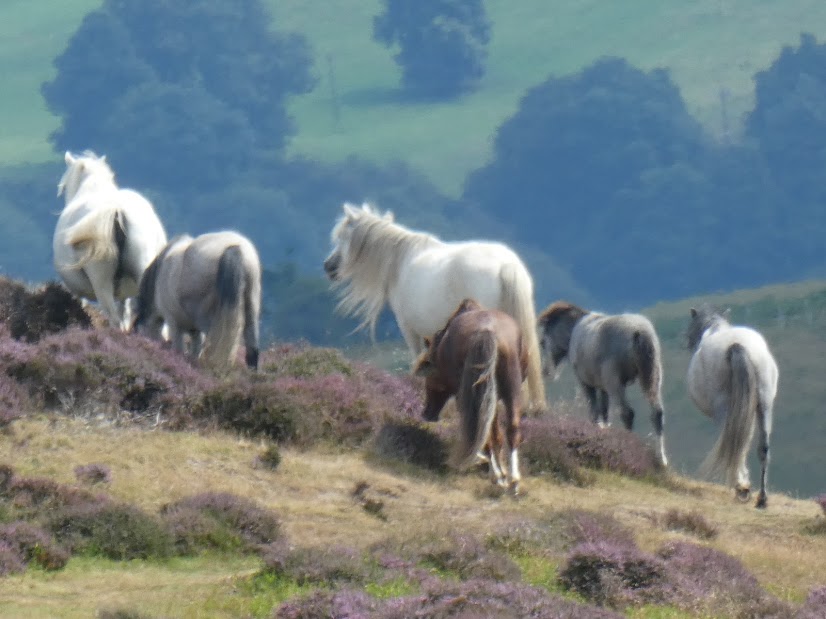
When the Major General saw frisky ponies like these, he knew he’d never be able to stay in the saddle.
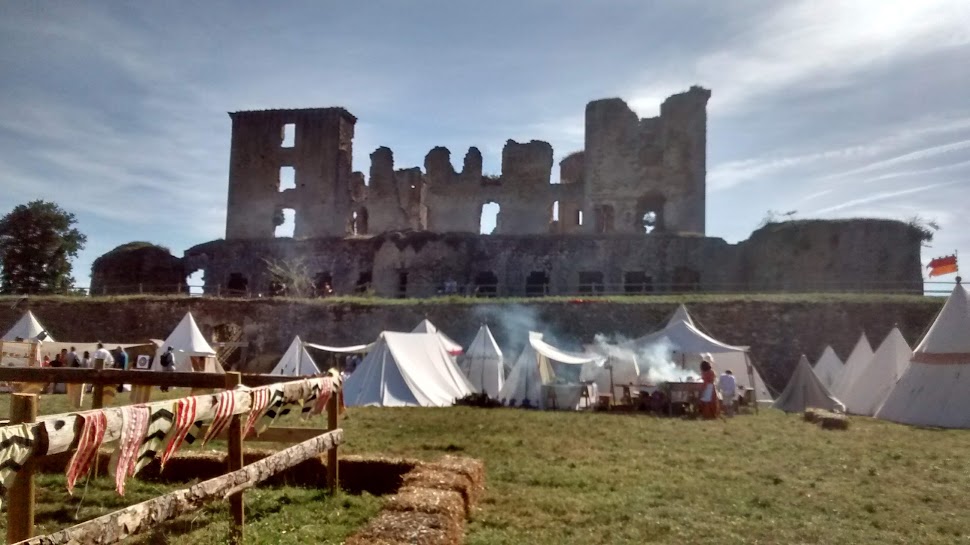
He started off at Dunstanburgh Castle in Northumberland. Not very adventurous. So he went to the Château de Lagarde in the Ariège, France, shown in the featured photo, and then…
… Sagunt, near Valencia.
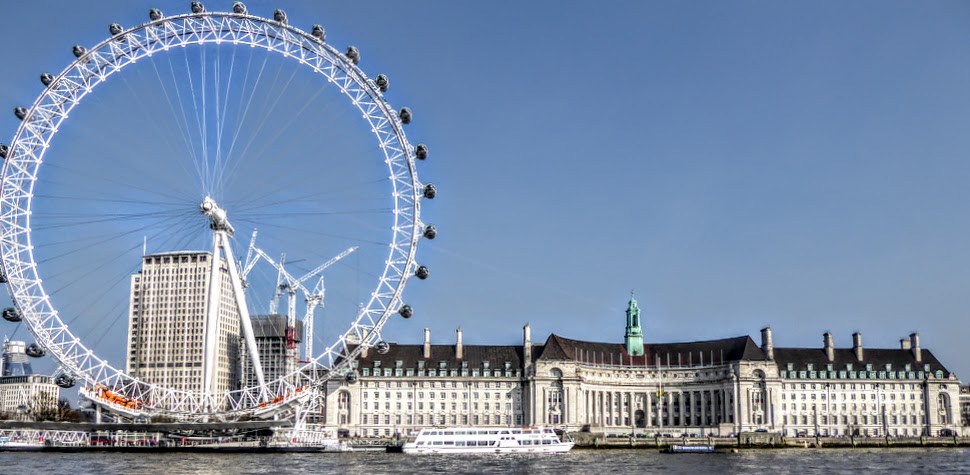
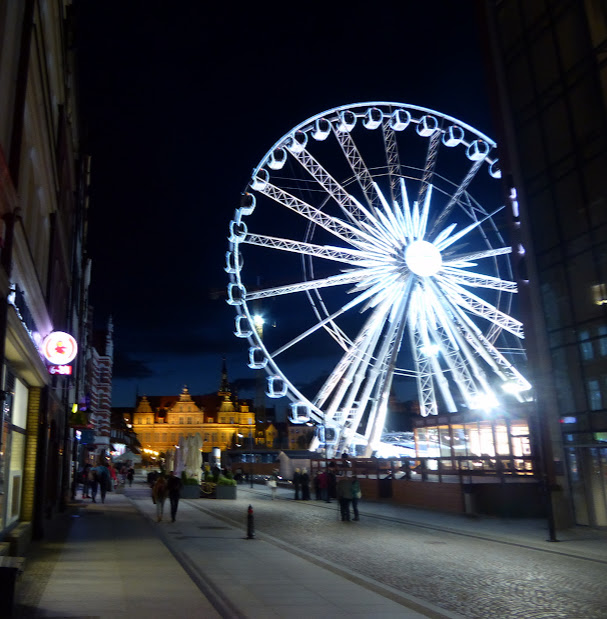
You can have a playful time on London’s South Bank, and at the London Eye. But it’s more distinctive to discover pastures new – at the evening fair in Gdansk, perhaps.
That’s more like it. Floating quietly on Lake Ohrid, North Macedonia. He had the fish he’d caught in the lake later, where they cooked it for him at the lakeside restaurant.
WP is being very irritating today. It won’t let me centre some of my photos, or alternatively to align all my shots to the left, whatever I try, and however loudly I shout at my laptop. So I have to admit defeat.
That is the question posed by Patti, for this week’s Lens Artists’ Challenge #228. Well, not done for me exactly, but done for my photos. Have a photos diagonal lines invited us in, encouraged us to explore the picture, or to focus on some detail?
Let’s have a look, and have a bit of a trip out too.
We’ll start off close to home, one cold wintry morning as I went to get the paper. Those rays of sunshine enlivened the scene, and my mood.
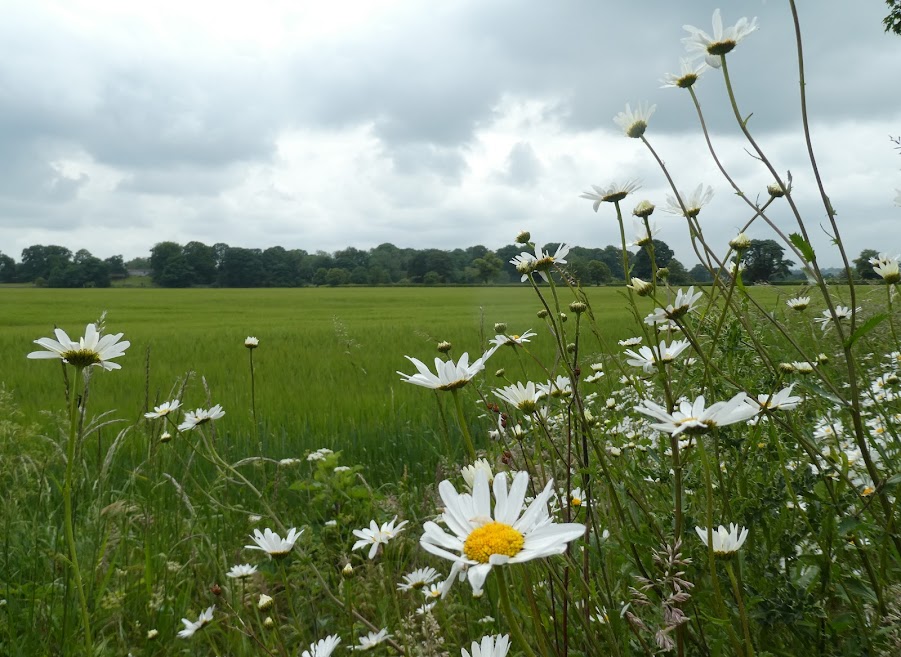
Here are two more, from just down the road. A tree which instead of reaching skywards, leans across the woods to demand a place centre-stage for the whole shot. And ox-eye daisies splicing the image in half, showing us there’s countryside, not a garden beyond.
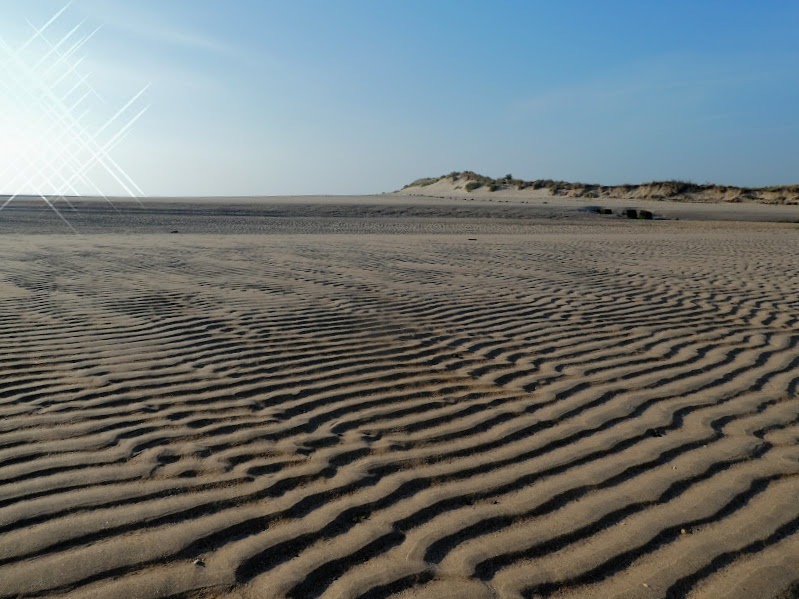
A trip to the seaside? Alnmouth in Northumbria?
This quiet beach looks dramatic when the tide’s out.
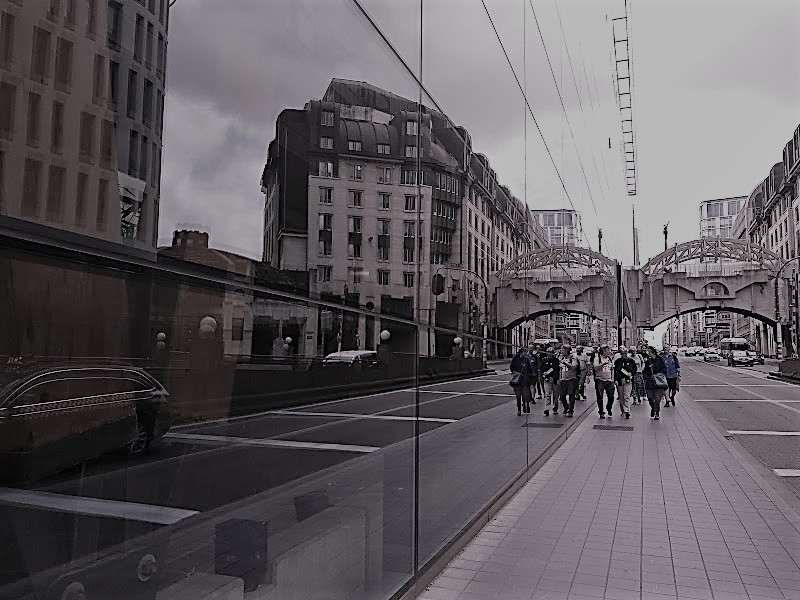
Brussels now. A bank of plate glass windows reflects the opposite side of the road to dramatic effect. Monochrome too, for Bren’s Mid-Week Monochrome.
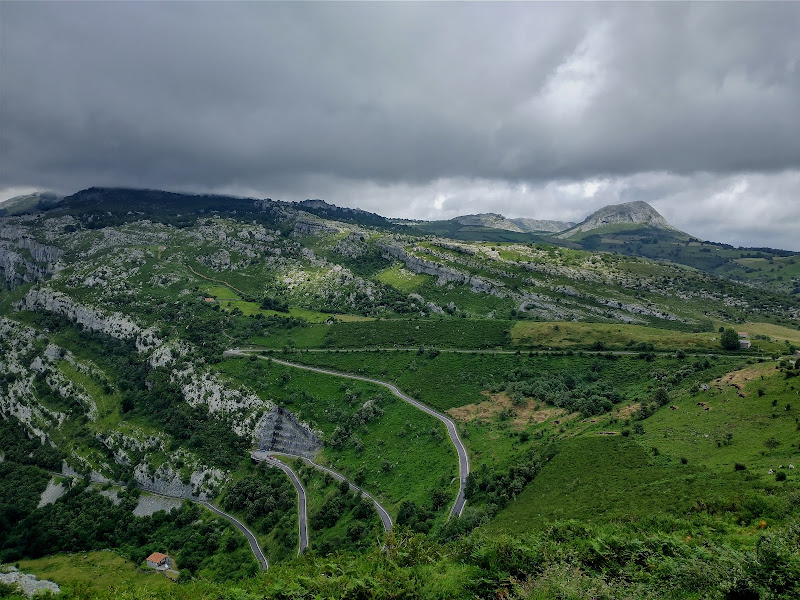
Off to Spain now. All those dizzy hairpin bends in Cantabria invite us to explore.
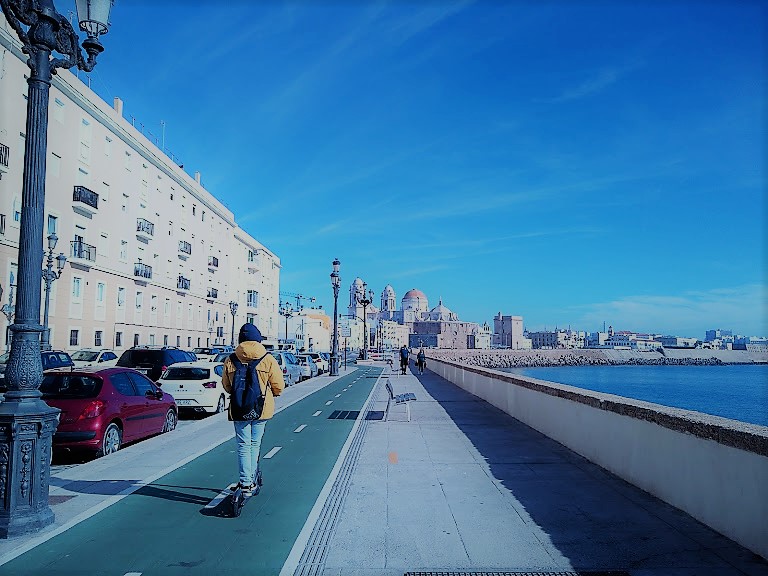
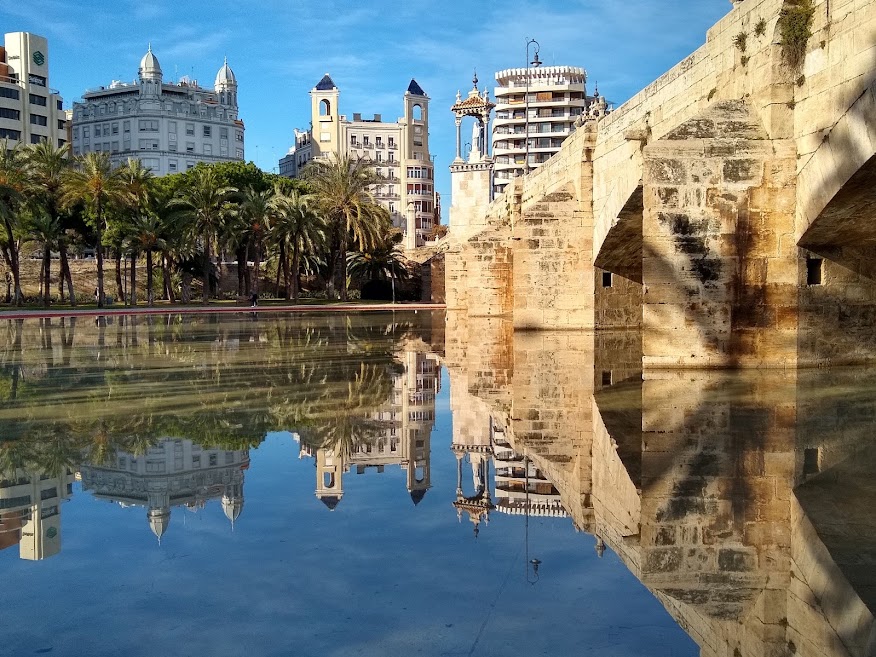
Then two more scenes – one from Cádiz, the other from Valencia. Those diagonals pull us in to explore the cathedral in one, the reflections in the other.
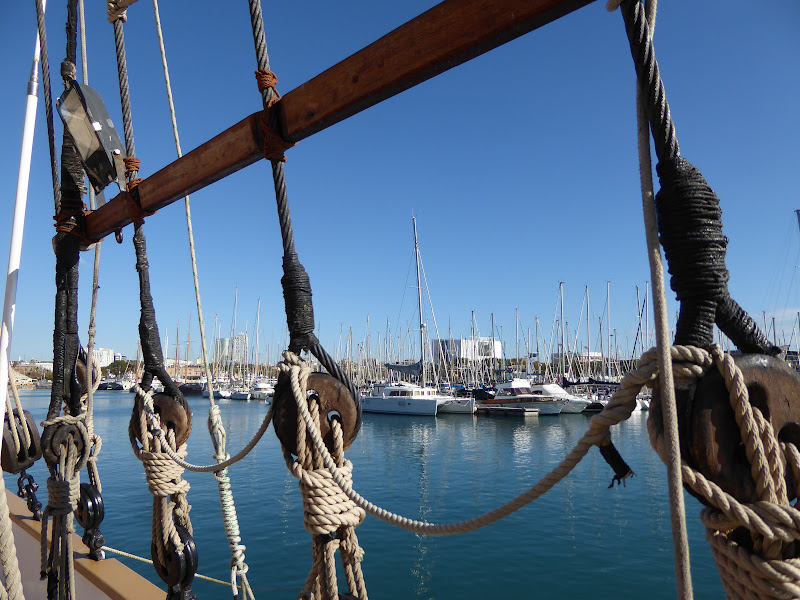
This shot, from Alicante, uses the ropes on a yacht as a frame for the scene beyond.
Alicante
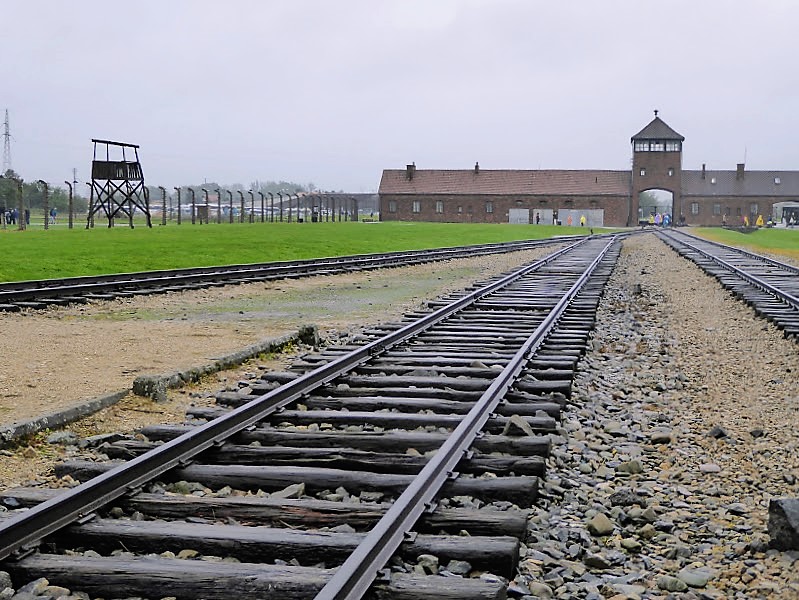
I’ve hesitated over whether to include this last shot in what is essentially a light-hearted post. But this photo – not a particularly original one as so many others have taken similar shots – has stayed with me. It’s Auschwitz-Birkenau concentration camp in Poland. These are the railway lines that brought so many thousands of Jews on their very last journey. I wrote about it here.
I decided on balance to include it, as the relative optimism I felt when I wrote that post five years ago has disappeared in the light of world events over the last couple of years: and we shouldn’t forget.
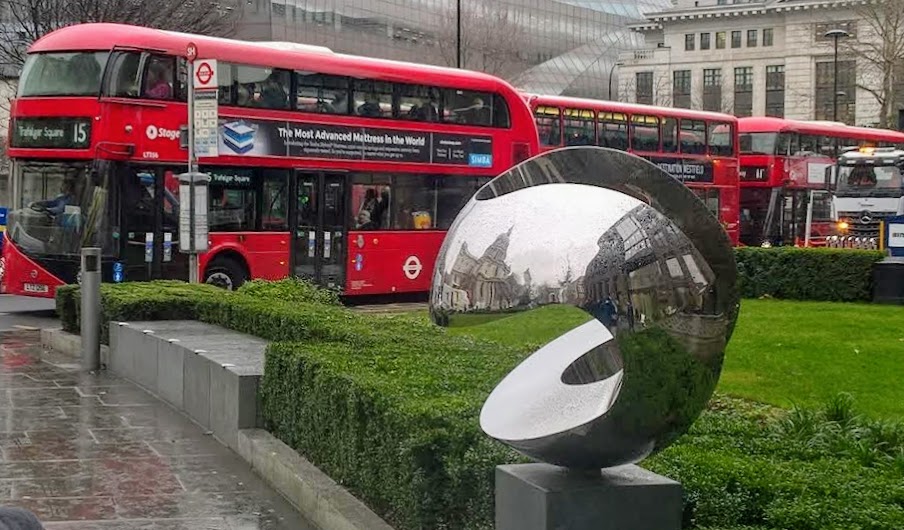
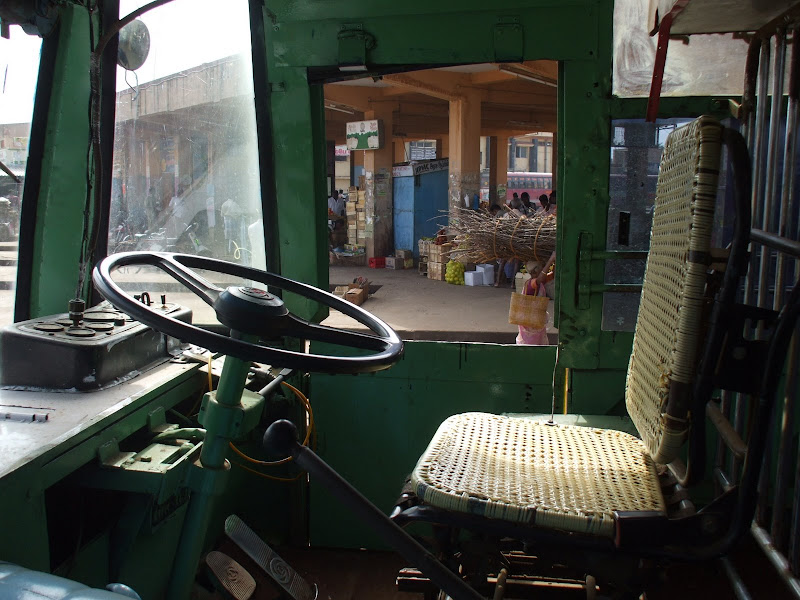
A bus can be fun, but that’s strictly for local exploring. Unless you can get yourself to India and hitch a lift in God’s Own Palace … Though you’re much more likely to be catching the long-distance bus whose driving seat I feature here …
Air travel has lost its sheen, since Airport Security and Queuing became a A Thing, not to mention those CO2 emissions of which we’re now so horribly aware. Even so, there is something thrilling about watching the changing landscapes of the earth far below, and cloud formations too.
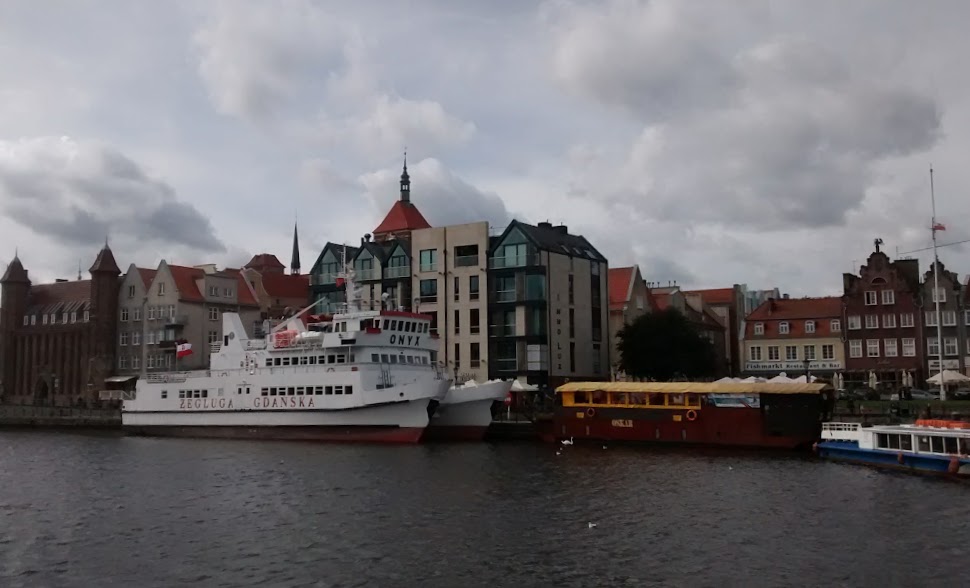
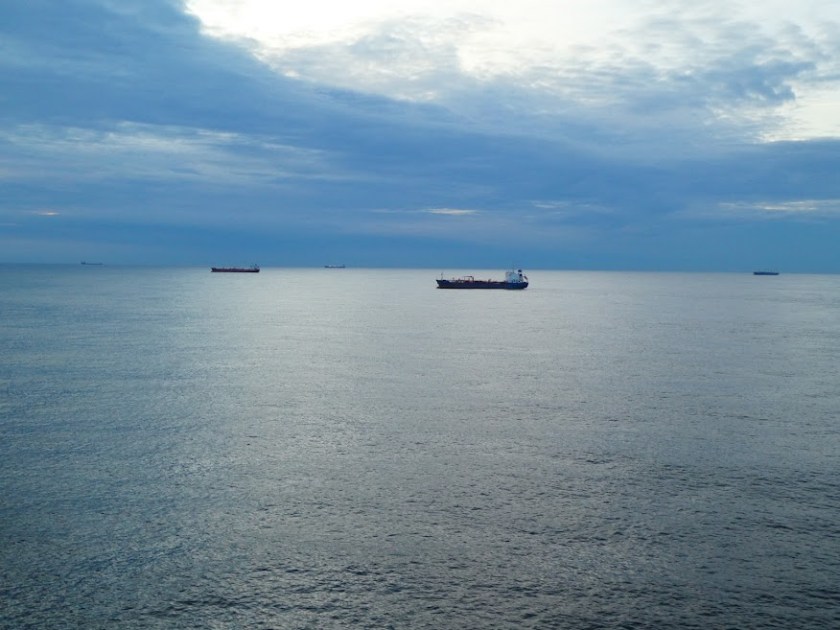
You could take to the water, and sail to your destination near or far…
On the way to Rotterdam
Car travel gives you the opportunity to please yourselves and follow your noses, and even to get off the beaten track, but again … all those emissions.
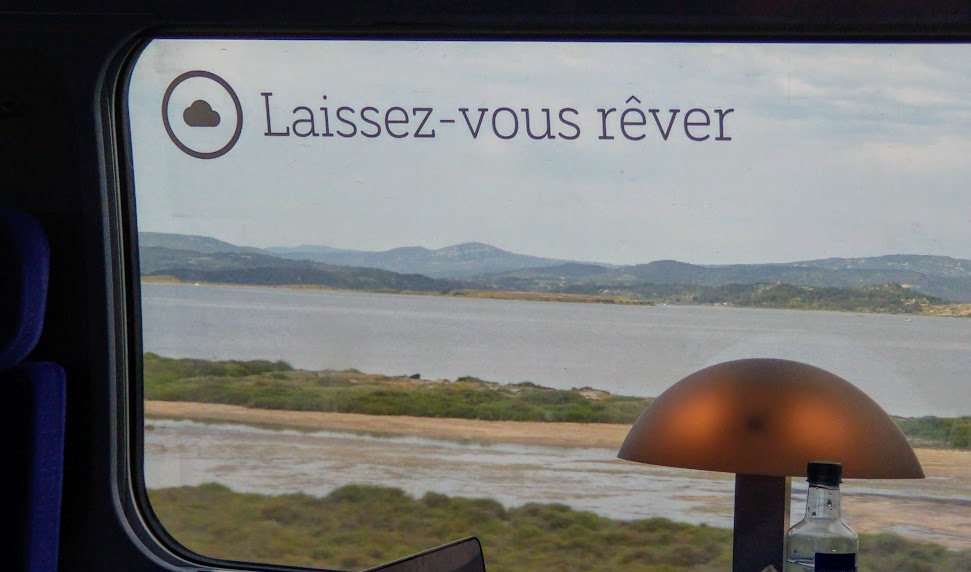
My own favourite way to get from A to a distant B is by train. I sit, I watch the world go by. I read. If I’m lucky, there may be coffee on offer. And the journey eases the transition from home to away by gradually introducing fresh landscapes, fresh outlooks. There’s something discombobulating about leaving – say – foggy England by plane and arriving two hours later – say – in sunny Spain. Here’s the TGV from Barcelona to Paris. It says it all …
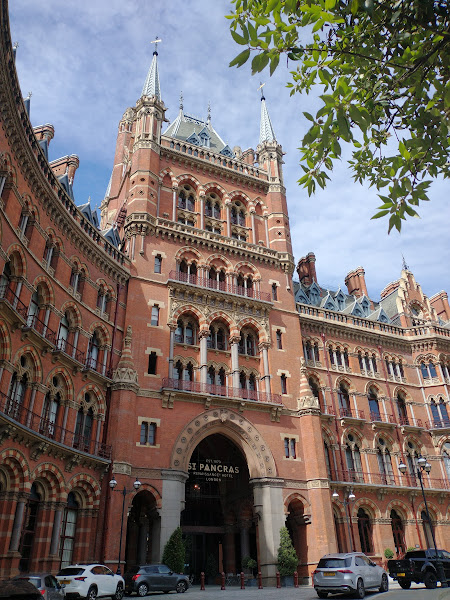
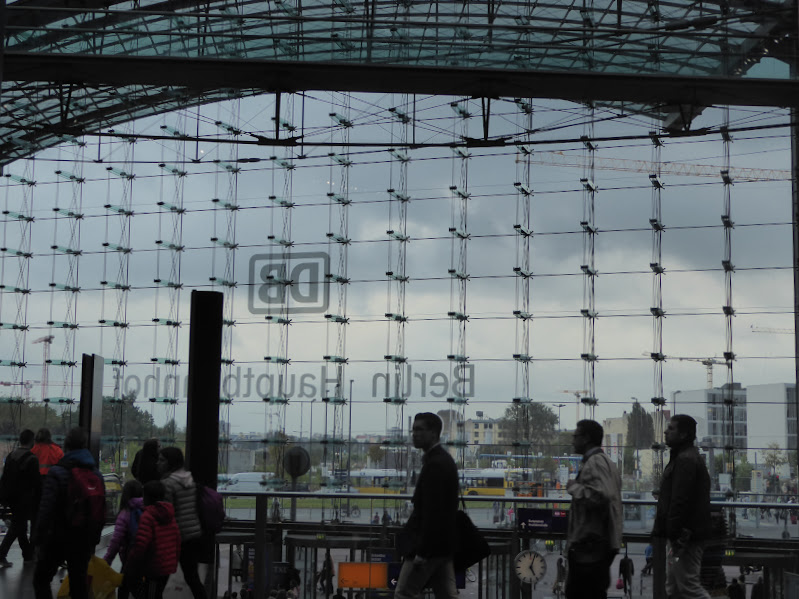
Station architecture may be inspired, whether from the Golden Age of Steam, or assertively twenty first century.
All things considered, I can’t agree with the disconsolate boredom of this particular passenger. By the way, you, get your feet off the seat!
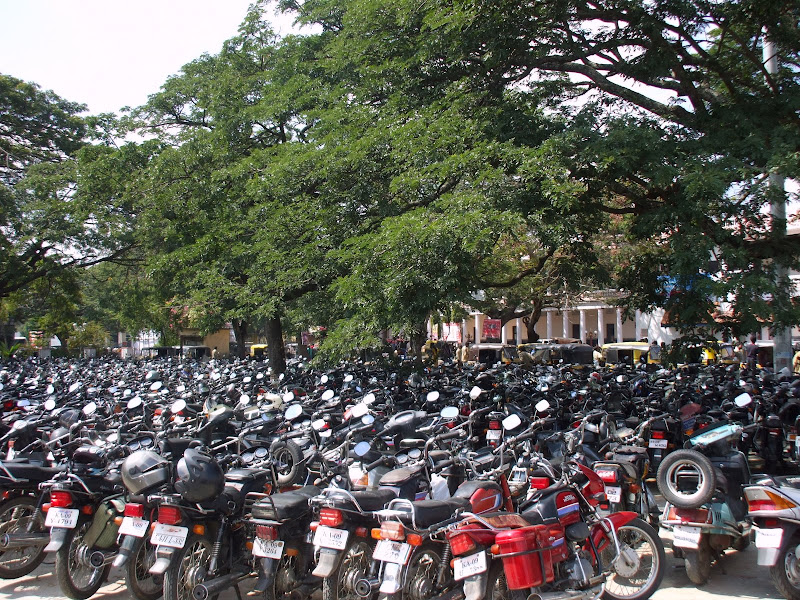
Or … there’s always the motorbike … as spotted in their dozens and dozens outside Mysore Station.
Bike park outside the Station
All the same, modern travel with all its advantages can seem busy, stressful. Sometimes, we might just want to exchange the traffic jam for something rather simpler.
John has provided this week’s LENS-ARTISTS CHALLENGE #215 – Planes, Trains, and Automobiles, and the places they take you.
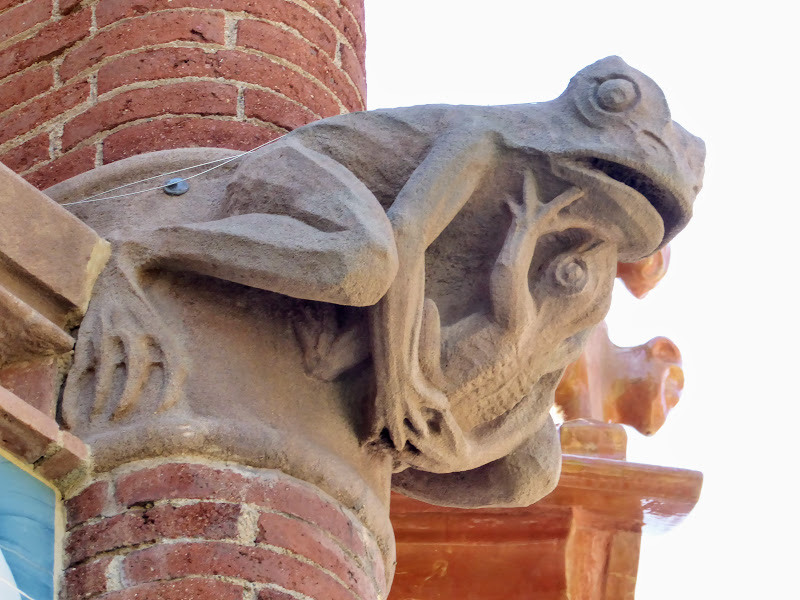
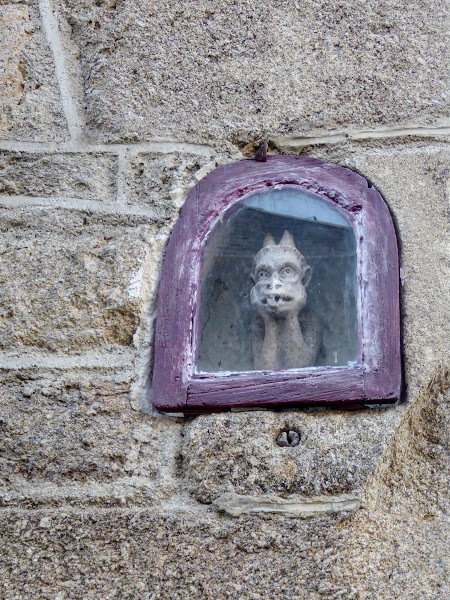
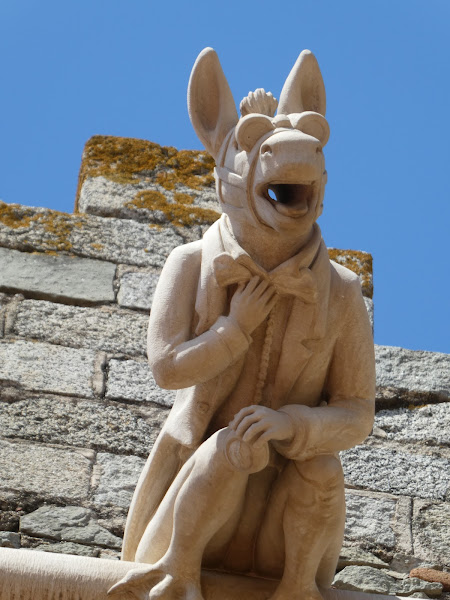
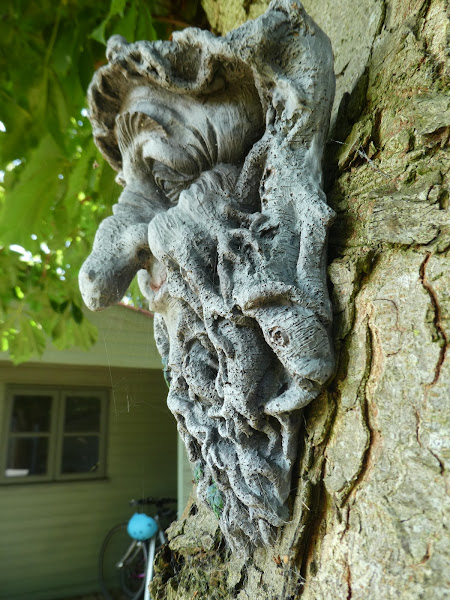
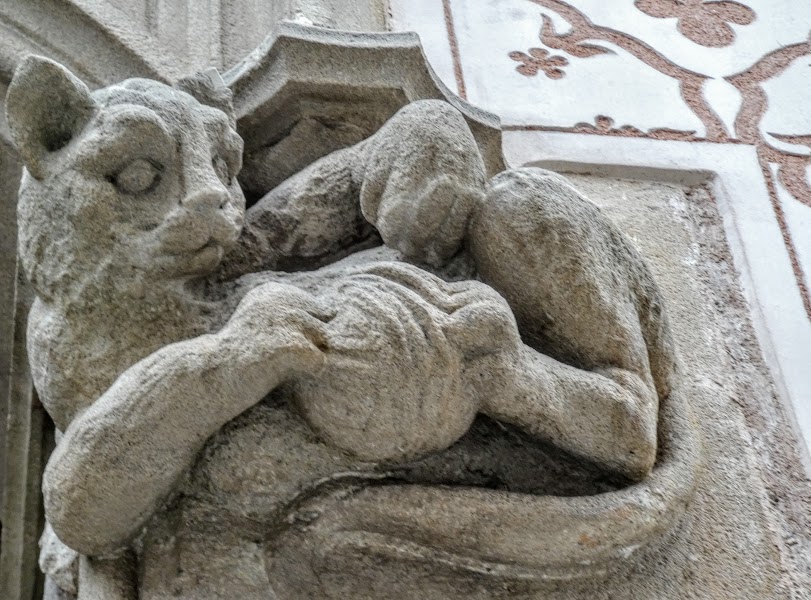
This week, Ann-Christine is urging us, in Lens-Artists Challenge #214 to indulge ourselves and our readers with Favourite Finds in our collections of photos. Well. Where to start? What to choose? I’ve settled on those things that we sometimes notice as we glance up above, or find ourselves gazing at, such as drainpipes or old walls in city streets: we’ll see everything from … well, let’s have a look …
Click on the image to discover where to find it.
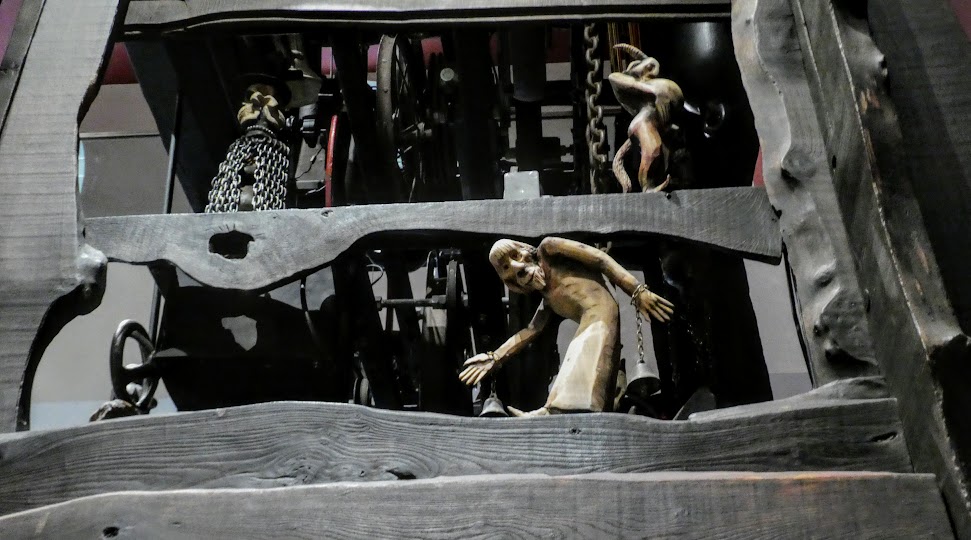
The featured image is from the Millennium Clock in the National Museum of Scotland, Edinburgh
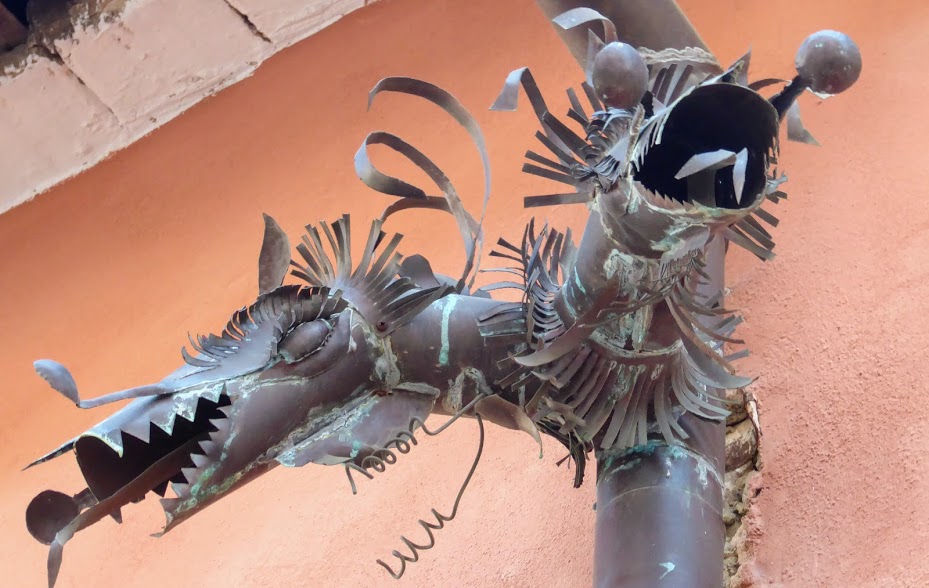
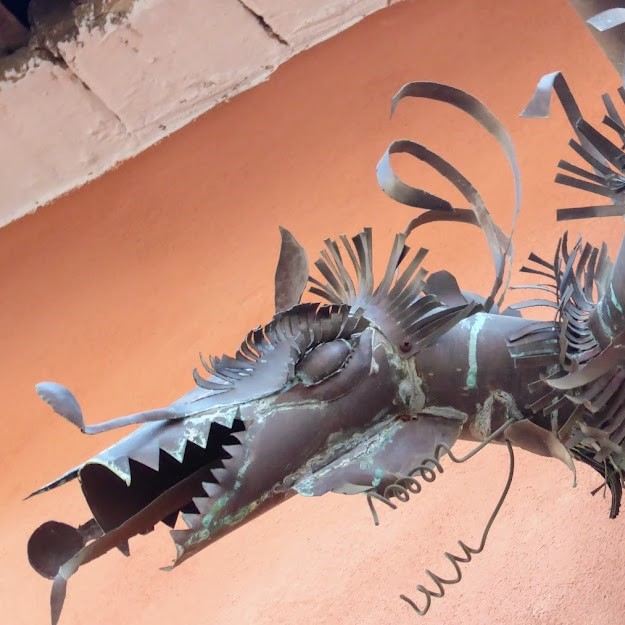
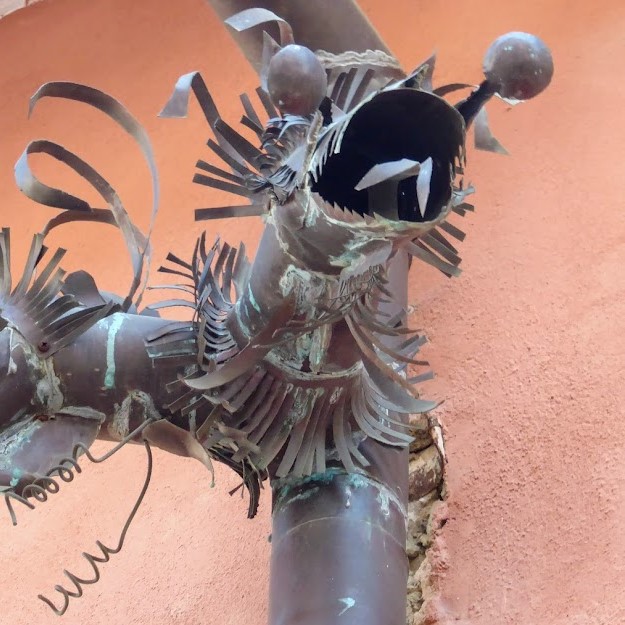
The header shows a splendid pair of dragons topping off a perfectly ordinary drainpipe on a perfectly ordinary house in Sagunt in the Province of Valencia. How perfectly odd. Here they both are, shown singly, to keep to the Rule of Squares.
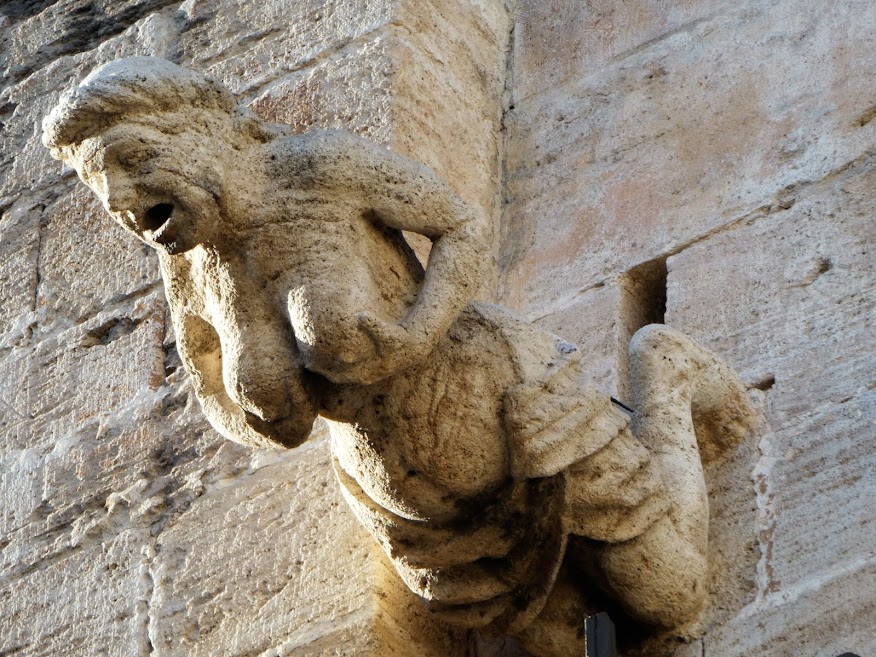
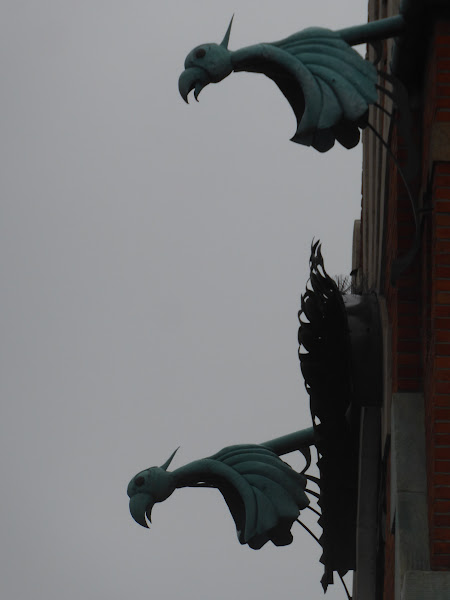
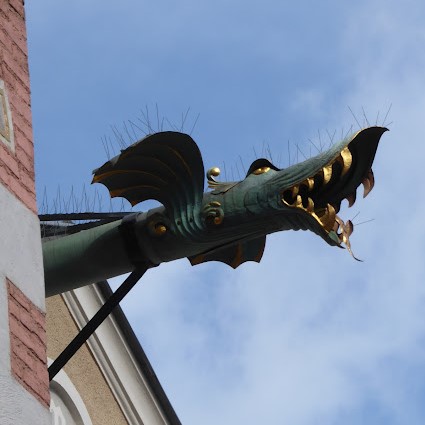
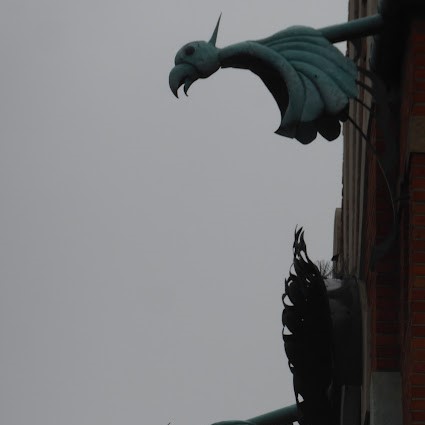
And just to keep them company, let’s show two more dragons, gargoyles this time, one from Gdansk, and one from Krakow.
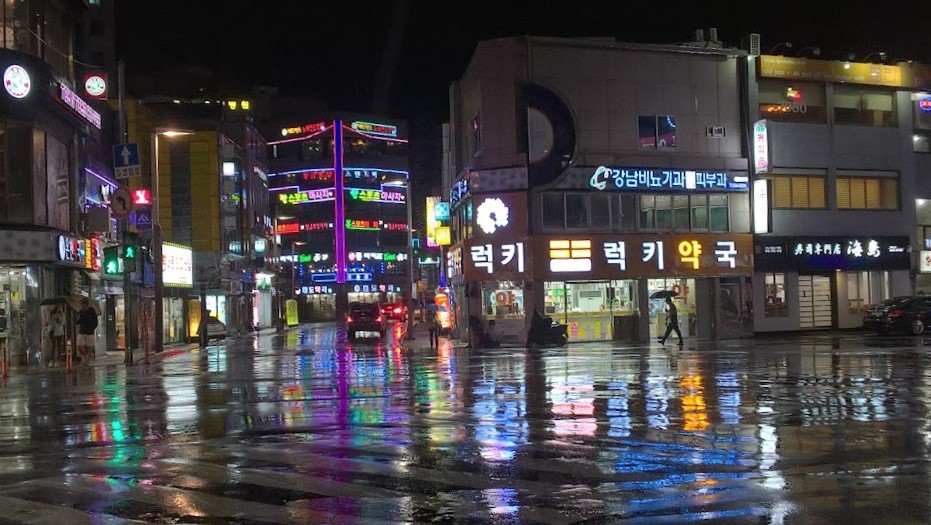
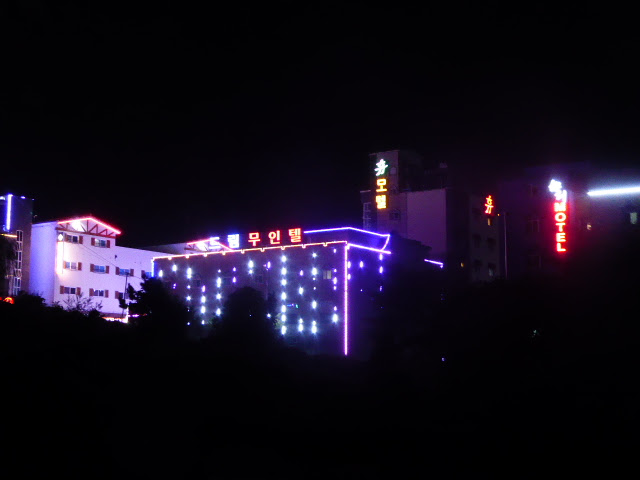
Electric light outside – as streetlights, spotlights, making our streets and subways safer: an undeniable blessing. But spotlights, bright and colourful advertising? The featured photo is of a rainy night in Busan South Korea. Cheery colours certainly, but far more than we needed to find out way round. And look at this. These hotels are out in the country, in a small mountain resort, surrounded by forest. The lights went on as dusk fell, and remained on till morning …
The JaJa, Gyeryongsang
All the same, it’s hard not to enjoy streetlights reflected in the water while mooching round a city. Here are a couple of shots near the river Guadalquivir in Seville.
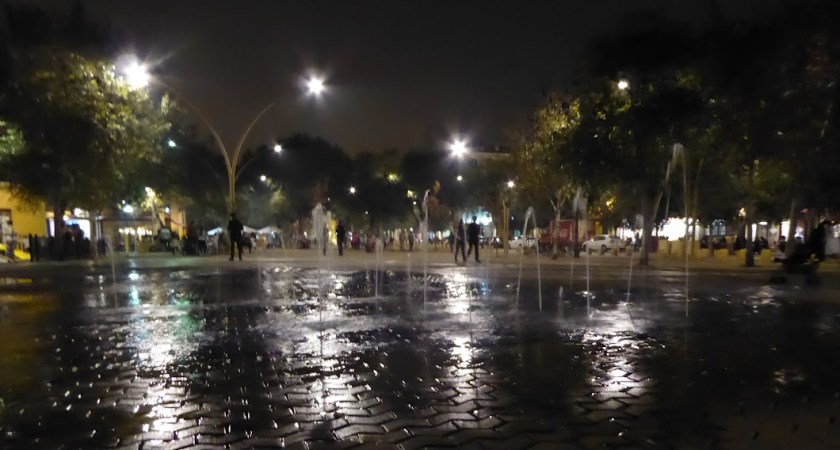
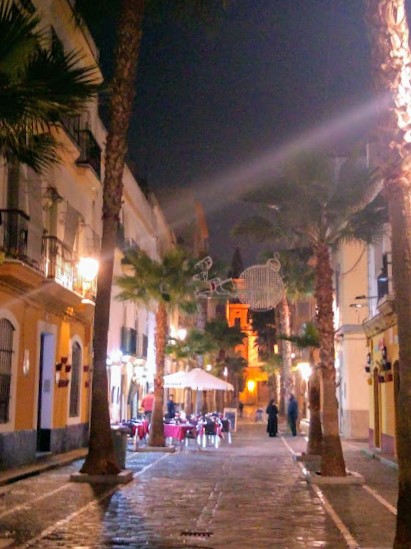
It’s mood-enhancing to see the city become a playground at night. Here are the fountains of La Alameda, also in Seville. And the neighbourhood of la Viña in Cádiz, where post-Christmas groups relax over a meal or a few drinks in the still-decorated street.
La Alameda, Seville
la Viña in Cádiz
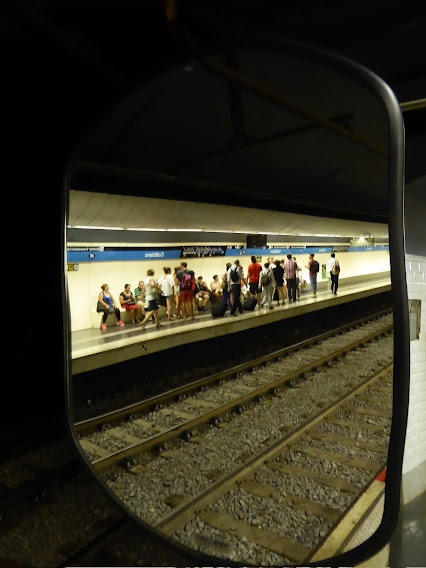
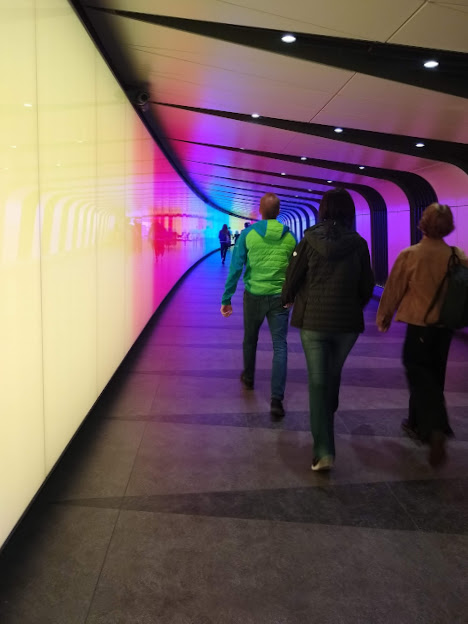
But metro stations and subways need lighting too. Here’s Barcelona, and London.
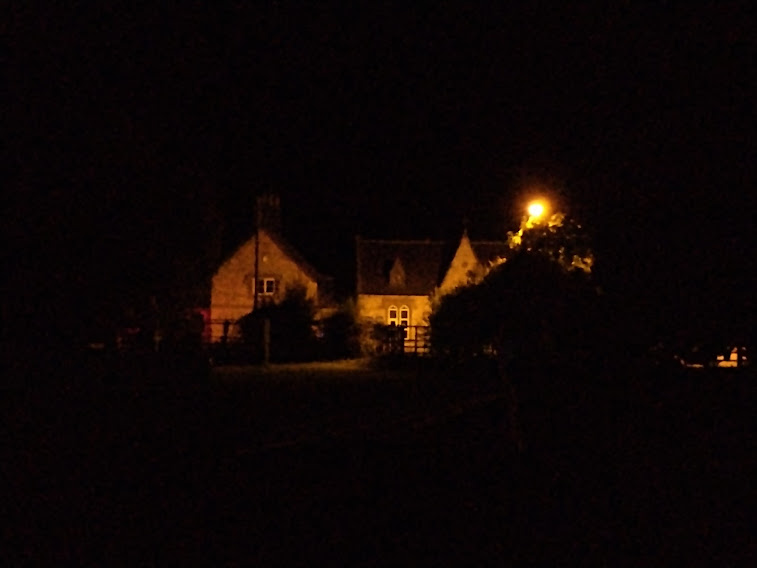
But the other evening, taking a late walk round the village, best of all was the glow surrounding the houses as families wound down for the day. A cosy, comforting and gentle radiance.









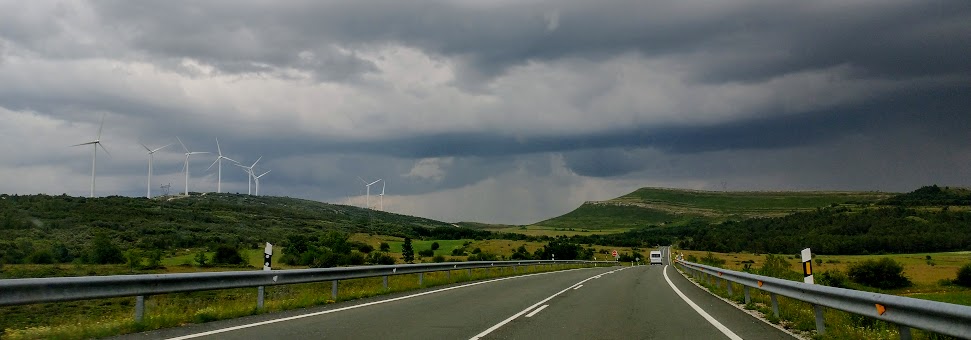
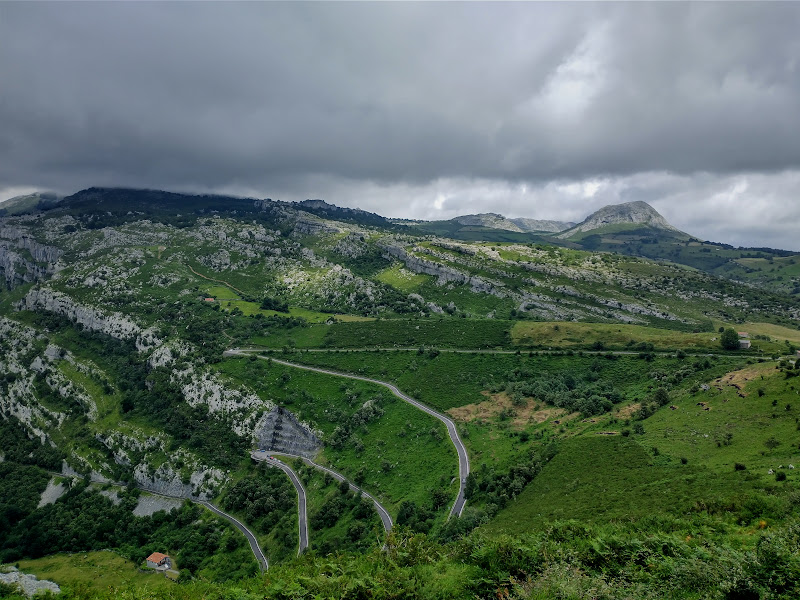
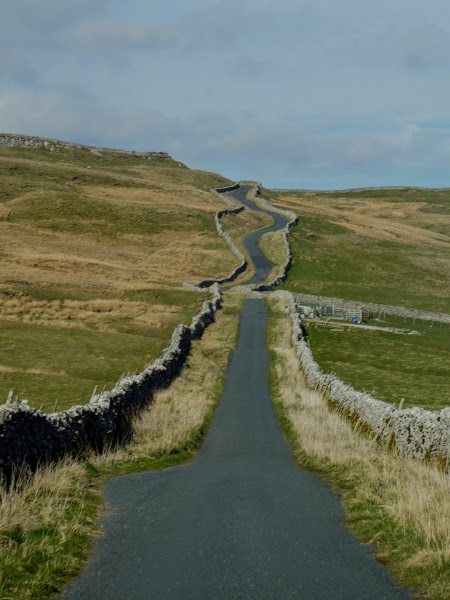
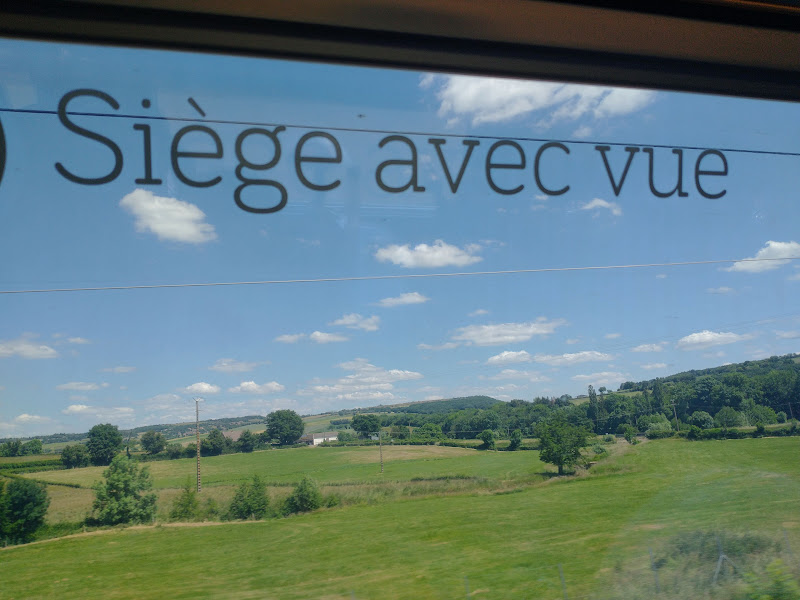


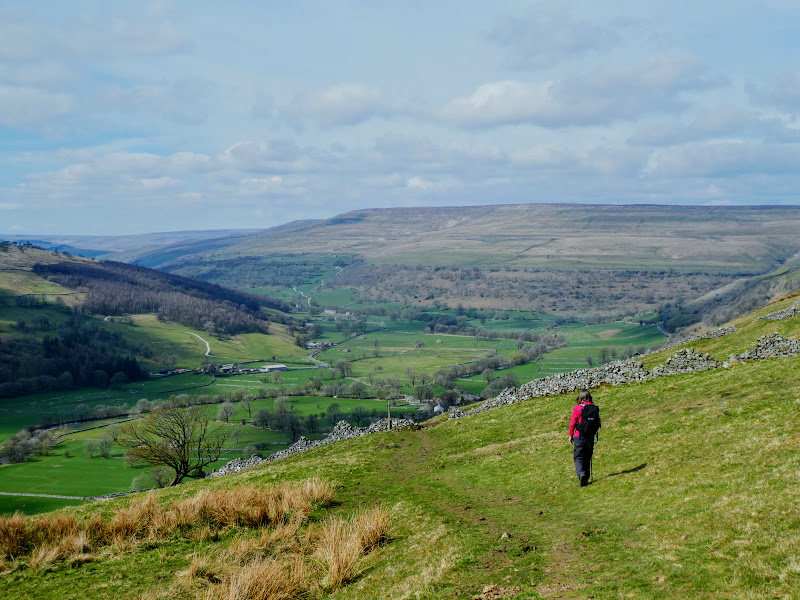





 From Pyrenees to Pennines
You must be logged in to post a comment.