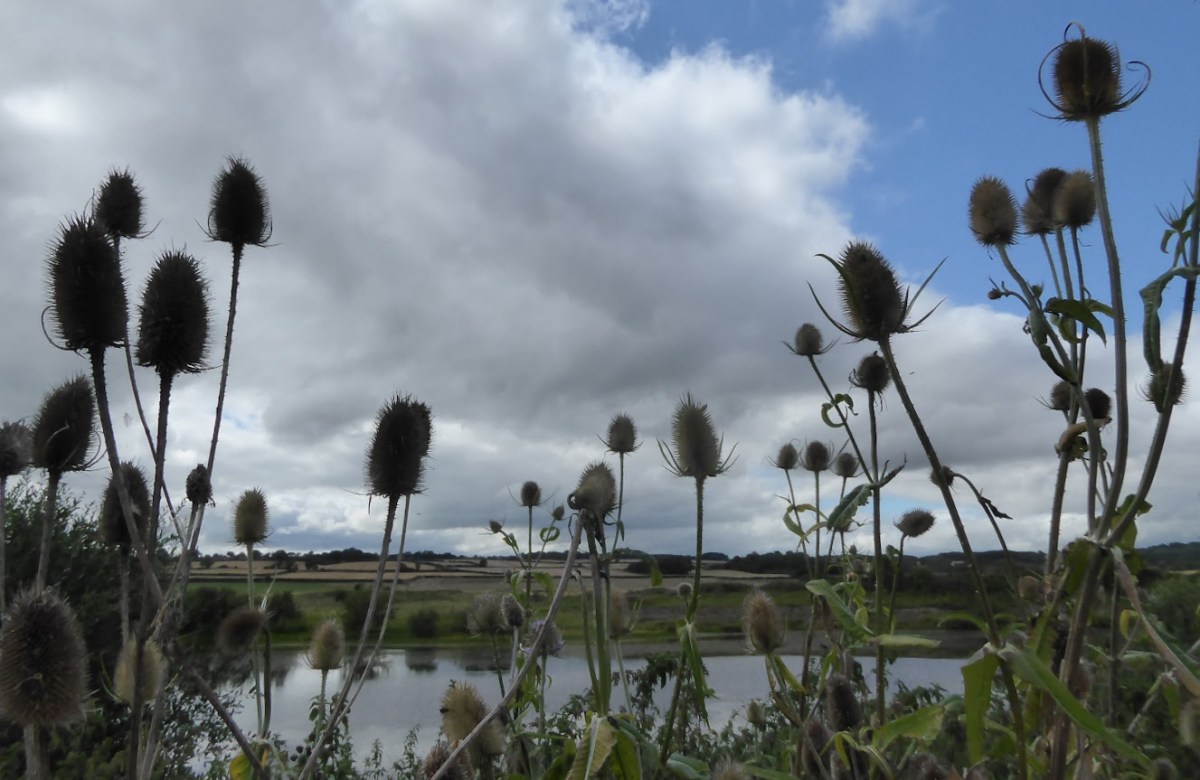
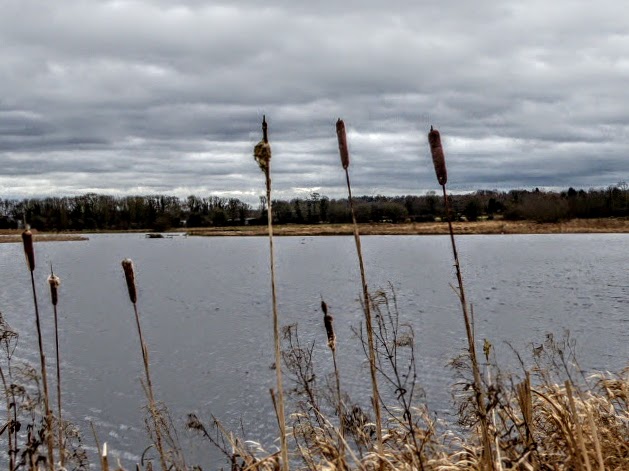
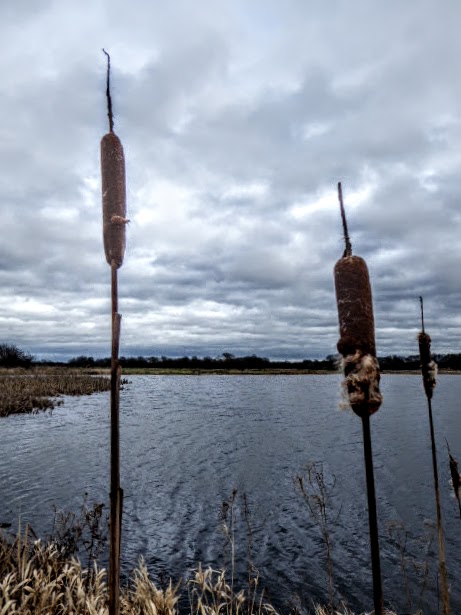
Our local Nature Reserves tend to be chilly in December. Especially when, as today, the wind is making its presence felt. Best to rush round the bulrushes and hurry home for a mug of hot chocolate. Sunny days, though, are available, for a gentler amble. My header photo is from Nosterfield on a sunny day. A wintry trip to Staveley was distinctly nippy,
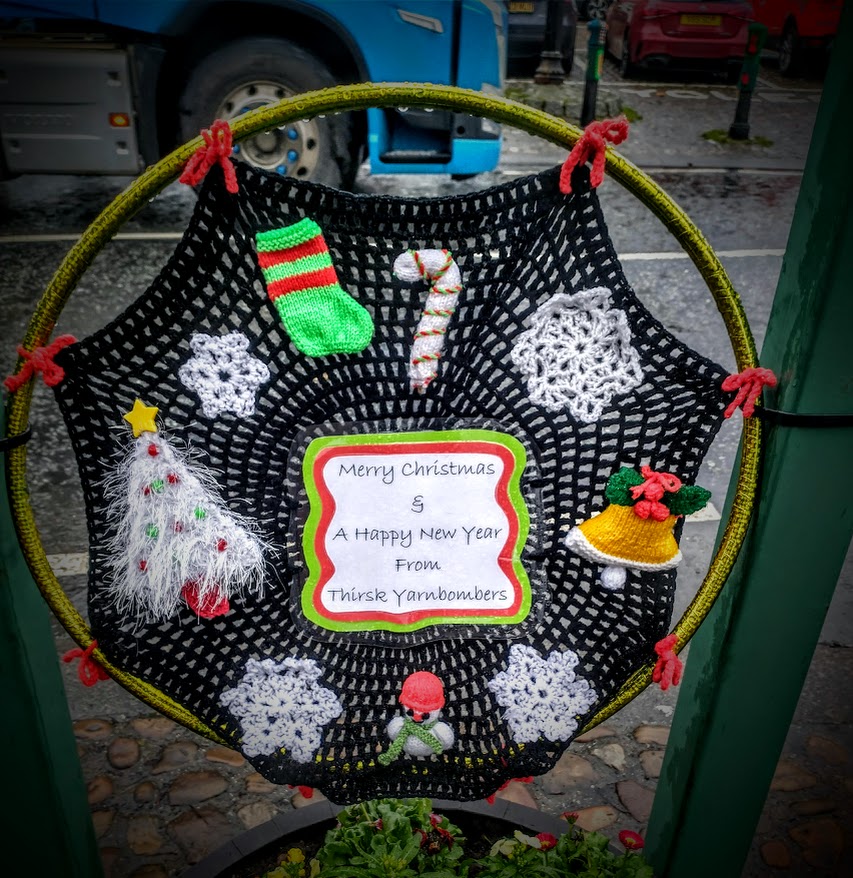
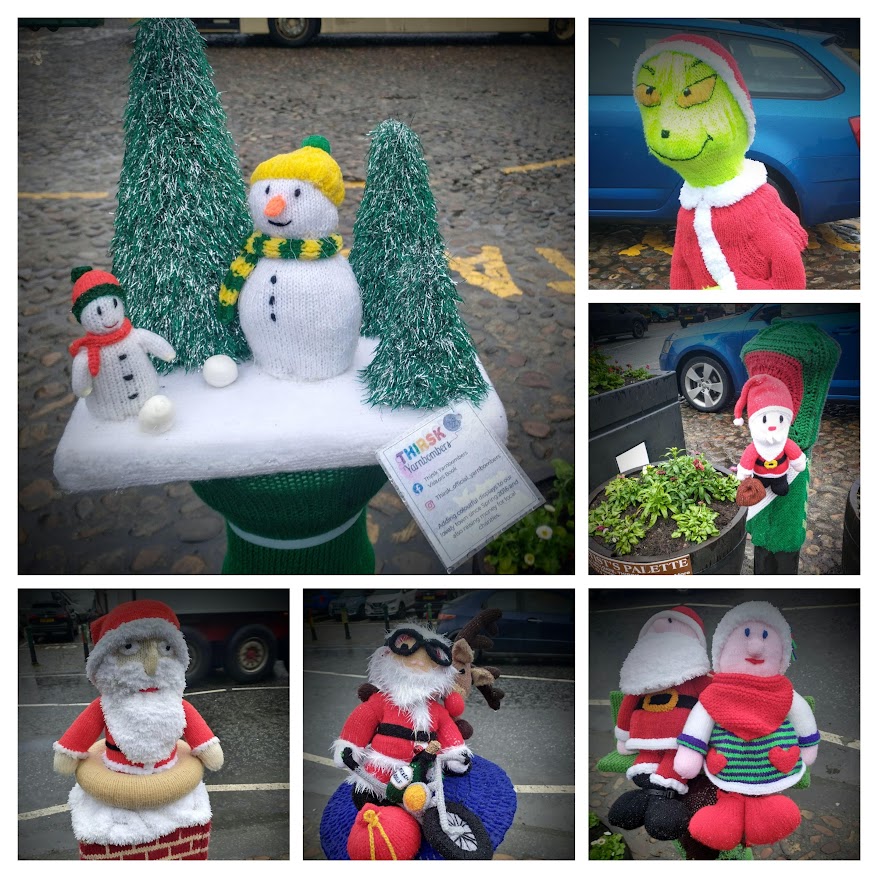
Those yarn bombers in Thirsk always have something new to show us. And now of course, it’s time to celebrate the Christmas season. So Happy Christmas from me too. I may or may not post next week, so I’ll get the good wishes in early.
Where words fail, music speaks: so said Hans Christian Anderson. And when Leanne invited me to host Monochrome Madness for One Week Only, I thought Music might be a good theme. We bloggers come from all over the world. Though many of us, in many nations, have English as our first language, there are dozens of different ones in the WordPress melting pot. But we can all enjoy music together, whether singing, playing instruments, or dancing, Or all of the above at once. Let’s do it.
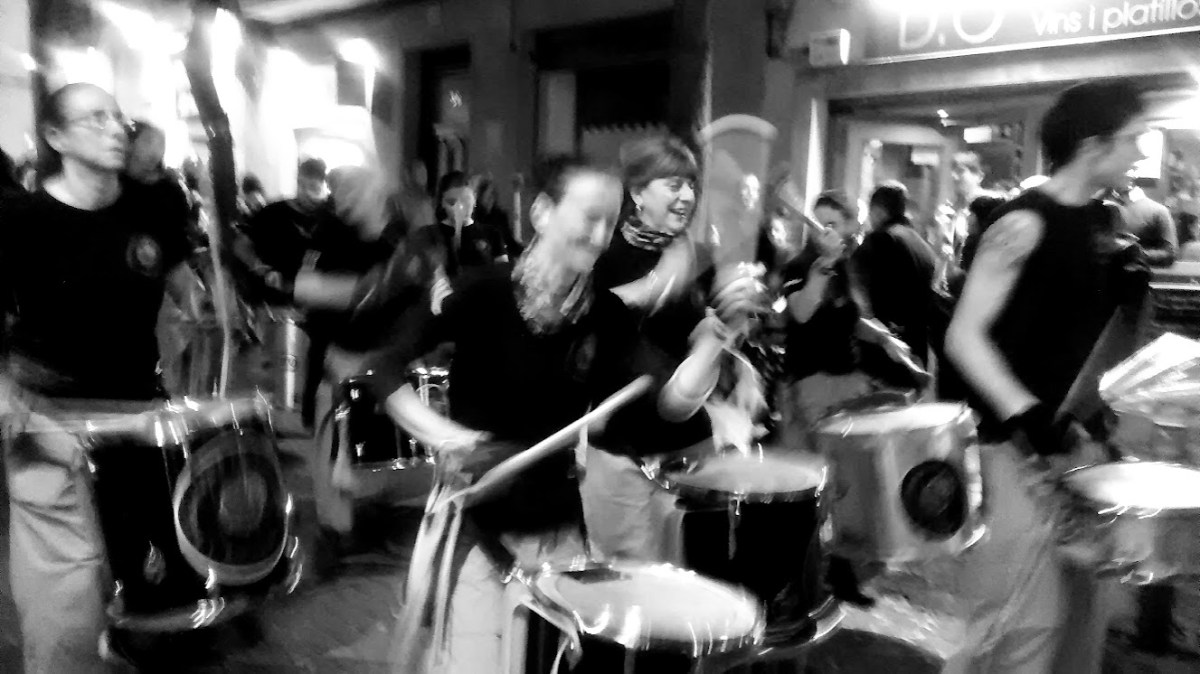
My header image was taken at the neighbourhood Festa Major in Gràcia, Barcelona. It’s out of focus, and I don’t care. It captures I think the verve and enjoyment of those performing drummers.
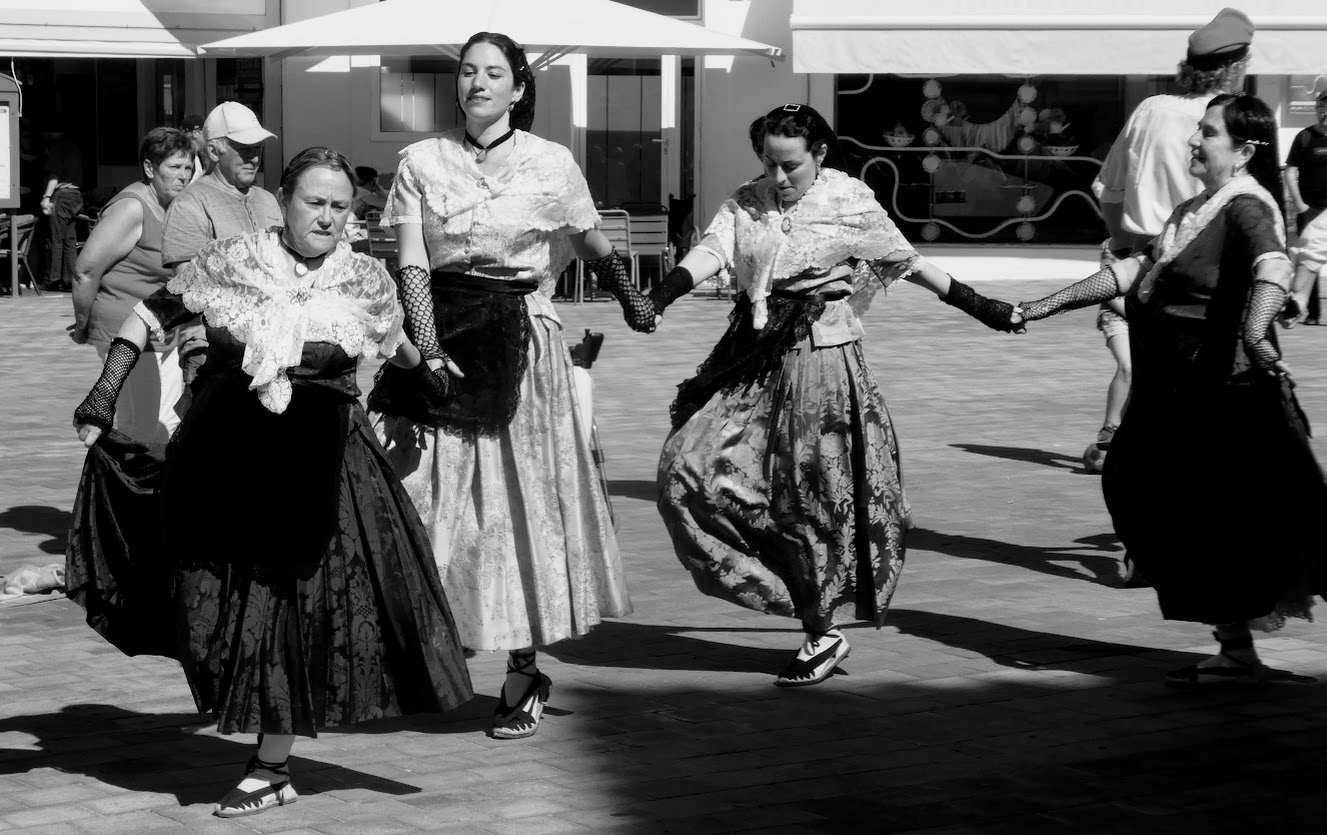
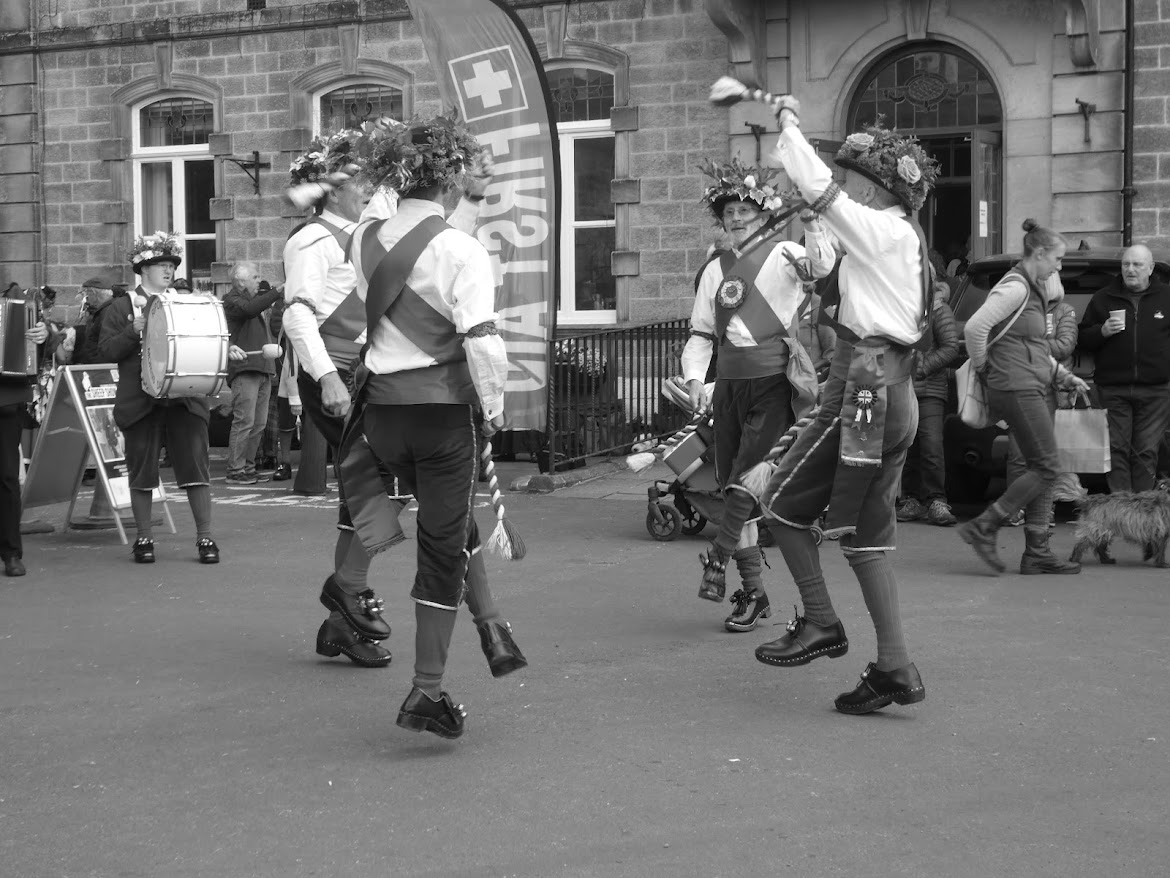
Here are some dancers in neighbourhood festivals: in Catalonia; and in England – Morris Men.
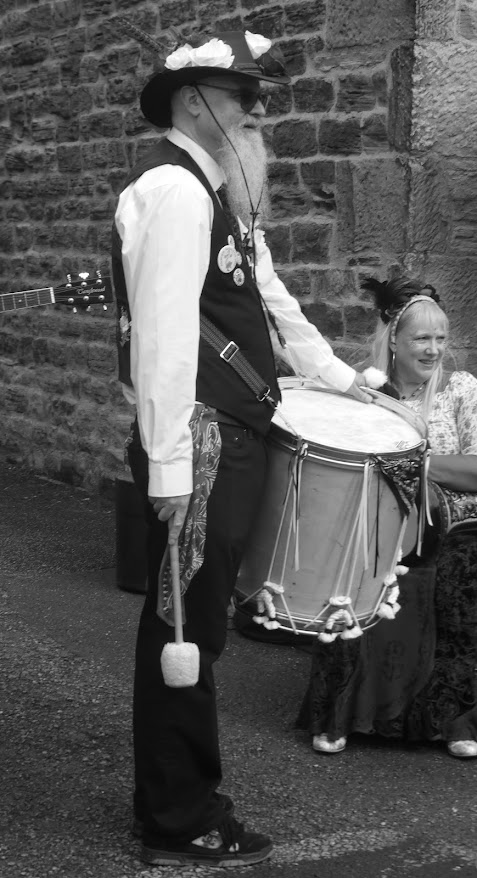
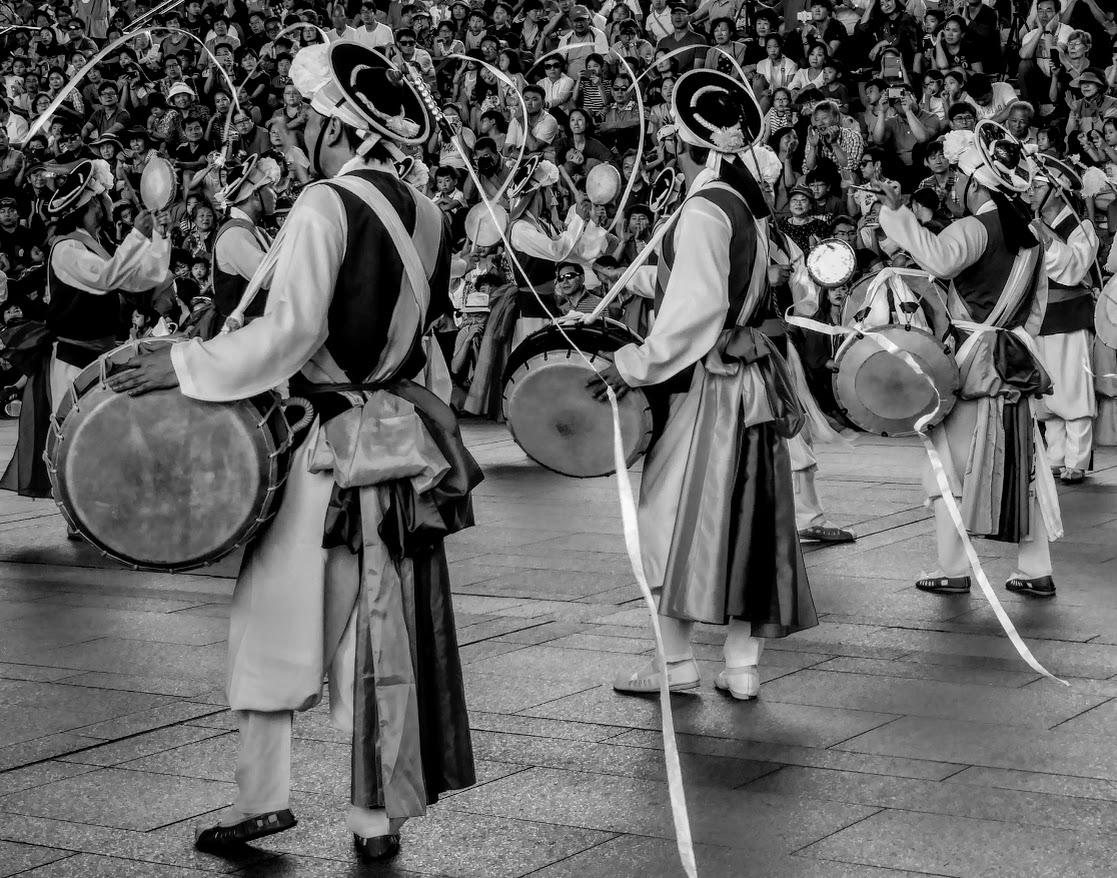
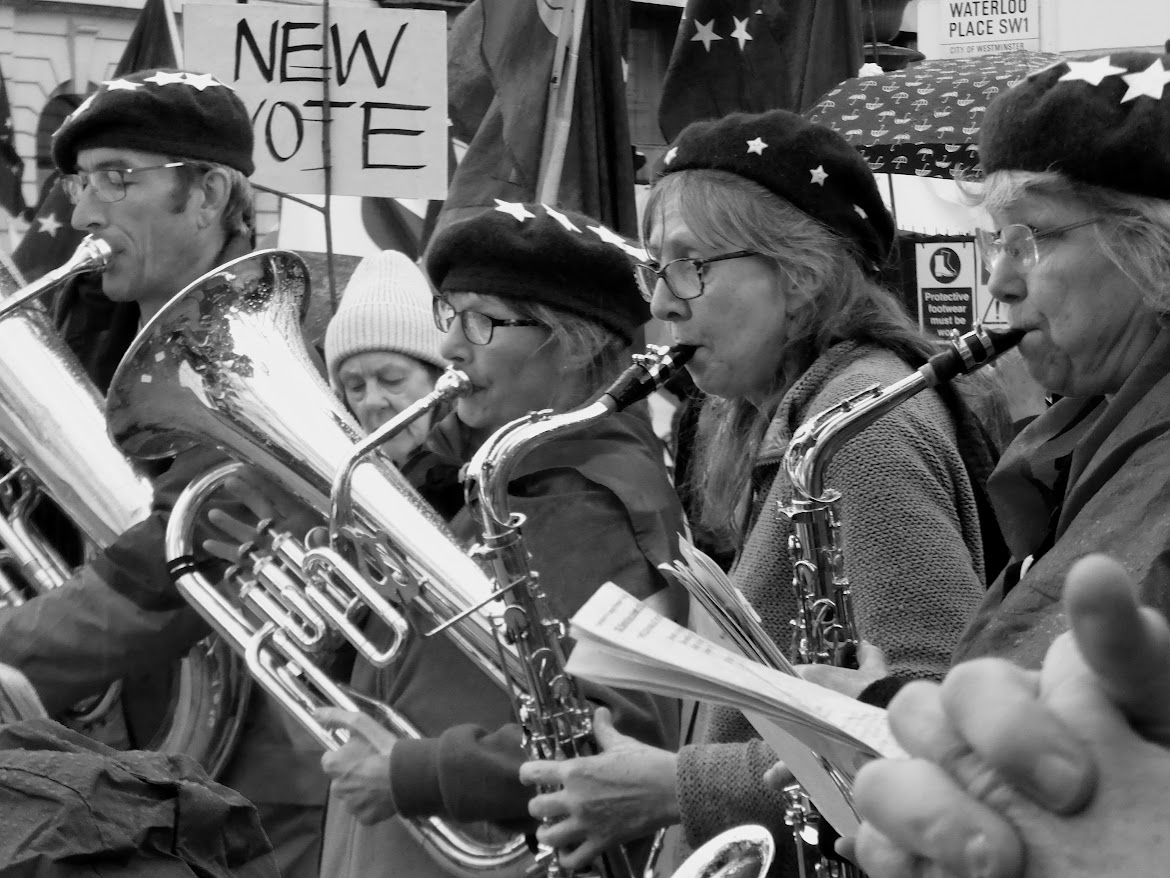
Instrument players now. The drummer accompanying the Morris dancers; drummers celebrating Chusak in South Korea, and brass players marching in London in those heady optimistic days when some of us still thought Brexit might not happen.
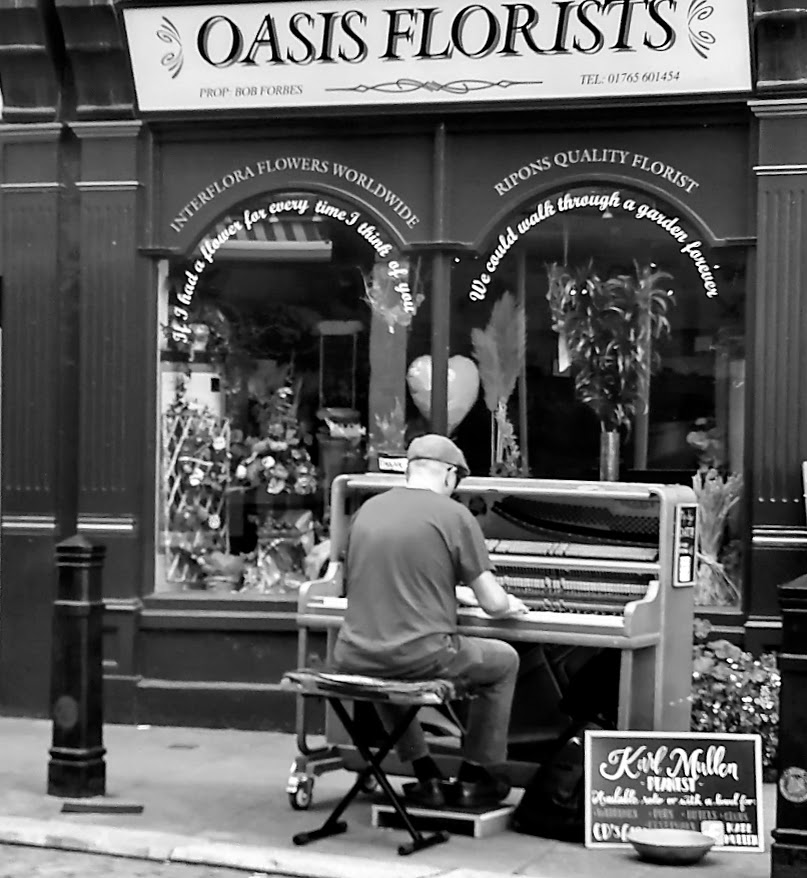
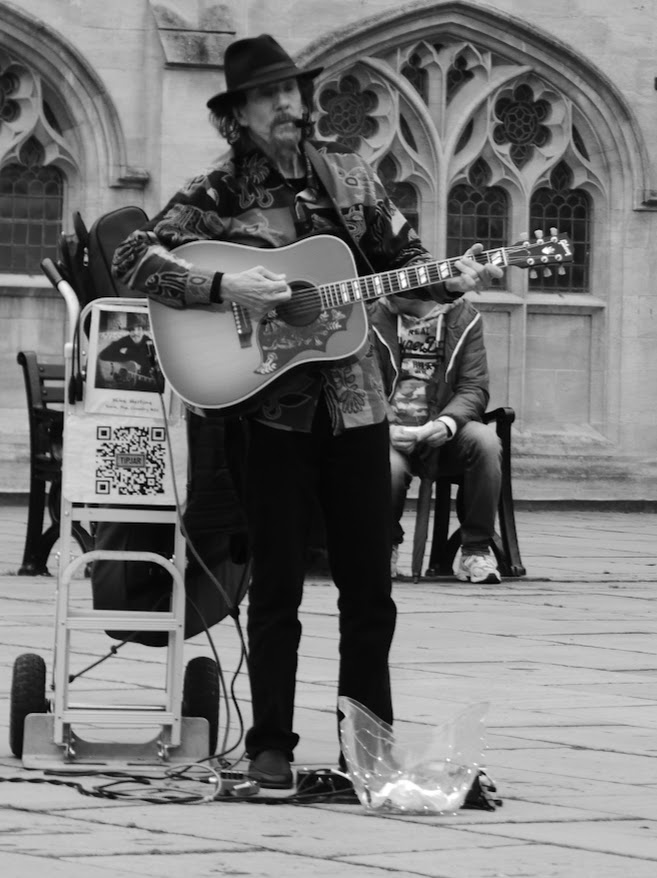
Of course some instrumentalists out in the street are trying to earn a living. Here are buskers in Ripon and Bath.
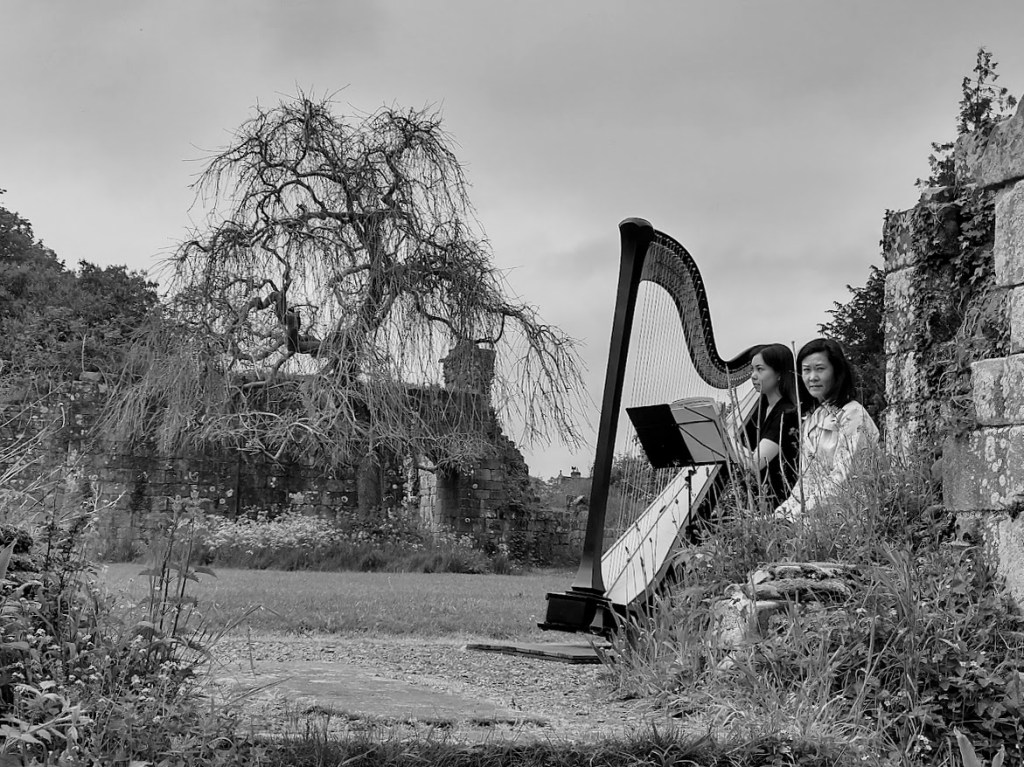
And a harpist playing at a friend’s wedding in the grounds of the ruined Abbey at Jervaulx ….
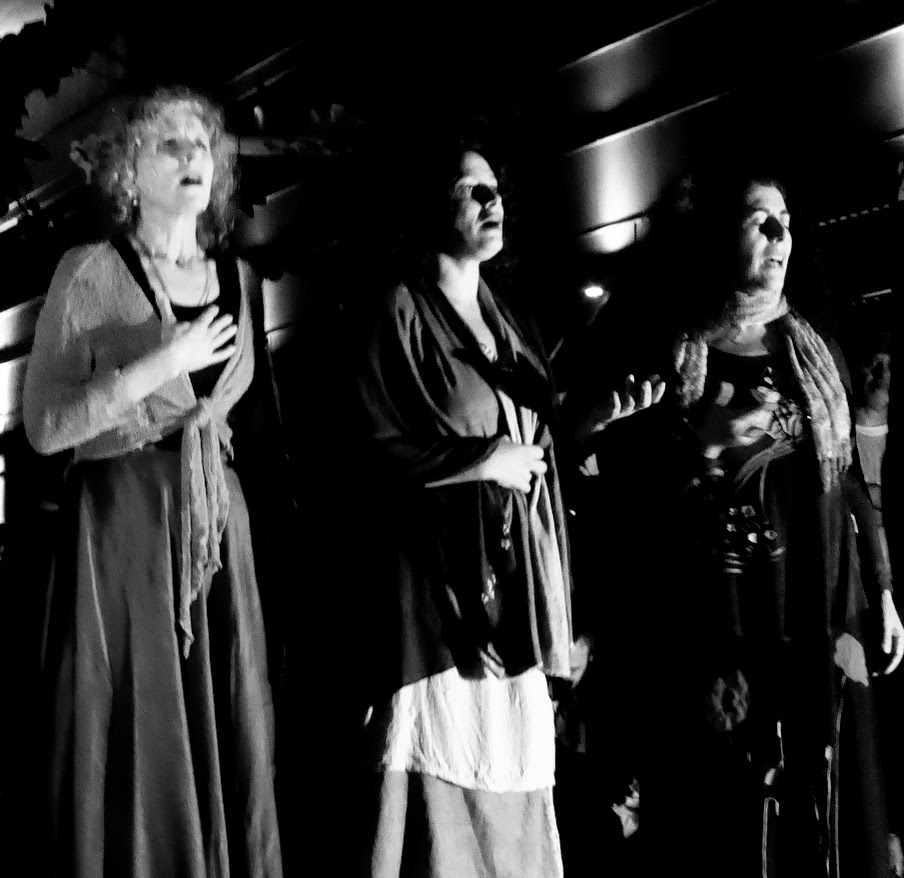
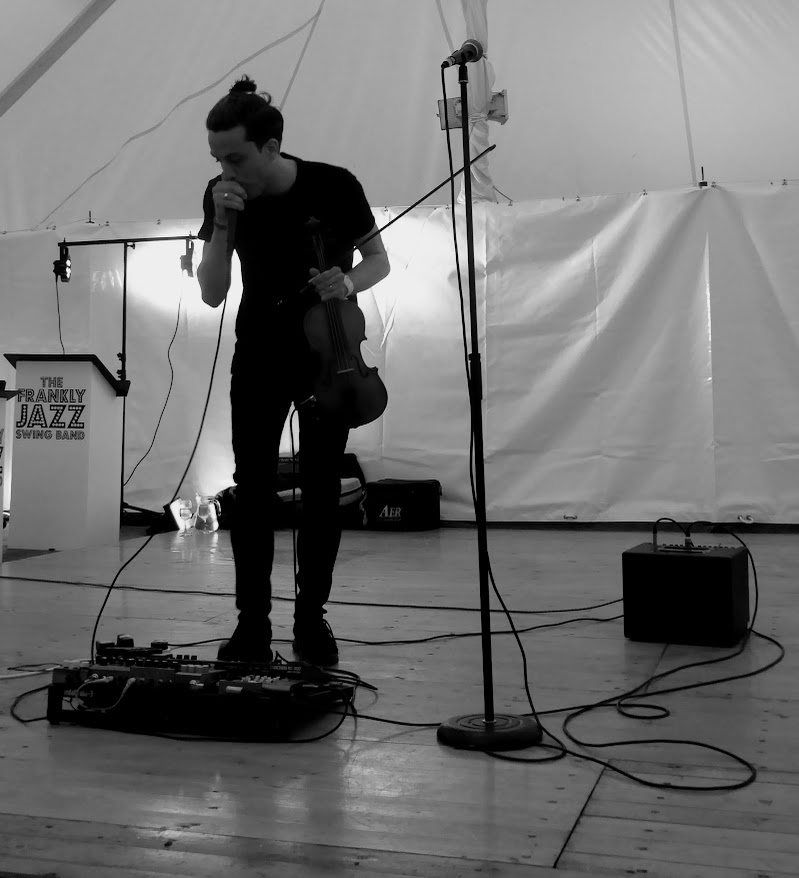
Here are singers in Seville, relying simply on the beauty of their voices; and a singer-instrumentalist, heavily dependent on a supply of electricity to produce a sound.
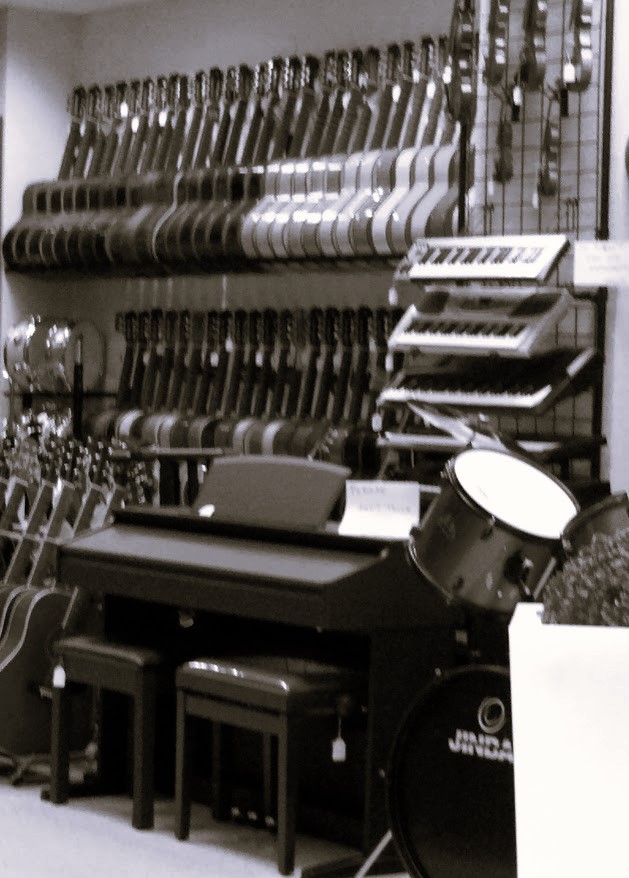
Of course, first you have to have your instrument. Here’s a music shop in Málaga.
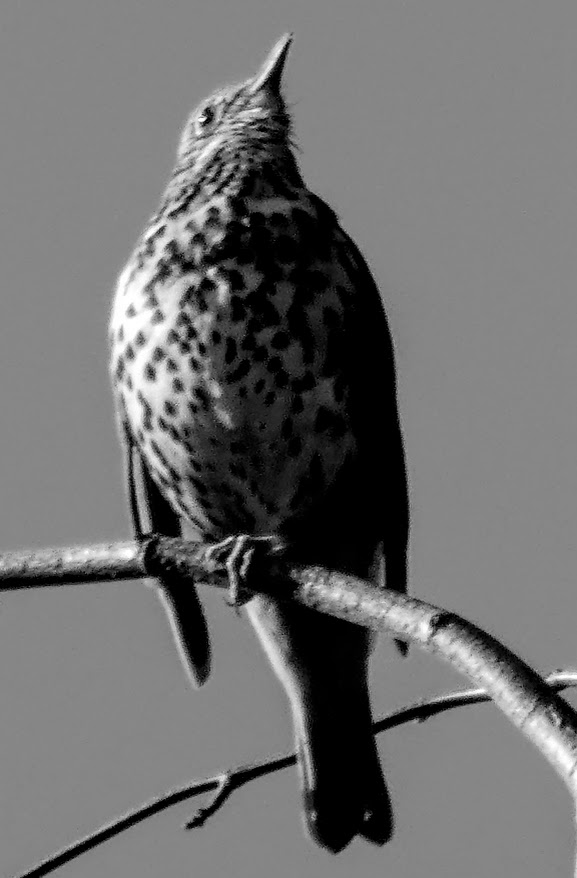
This thrush is a musician from the natural world. He commandeers a high branch here, spring after spring, and simply sings his heart out from early morning to early evening, almost without stopping. I wish you could hear him.
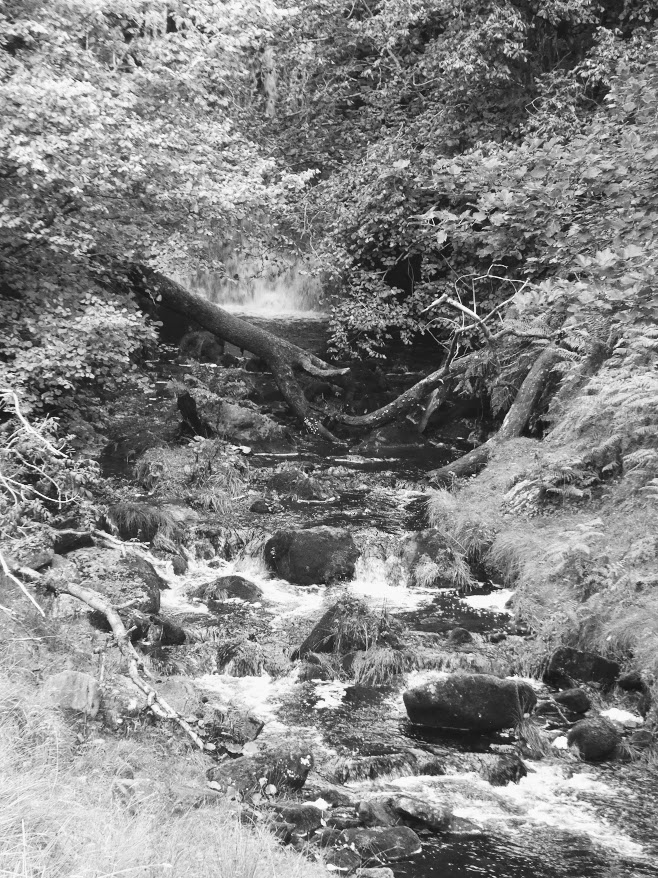
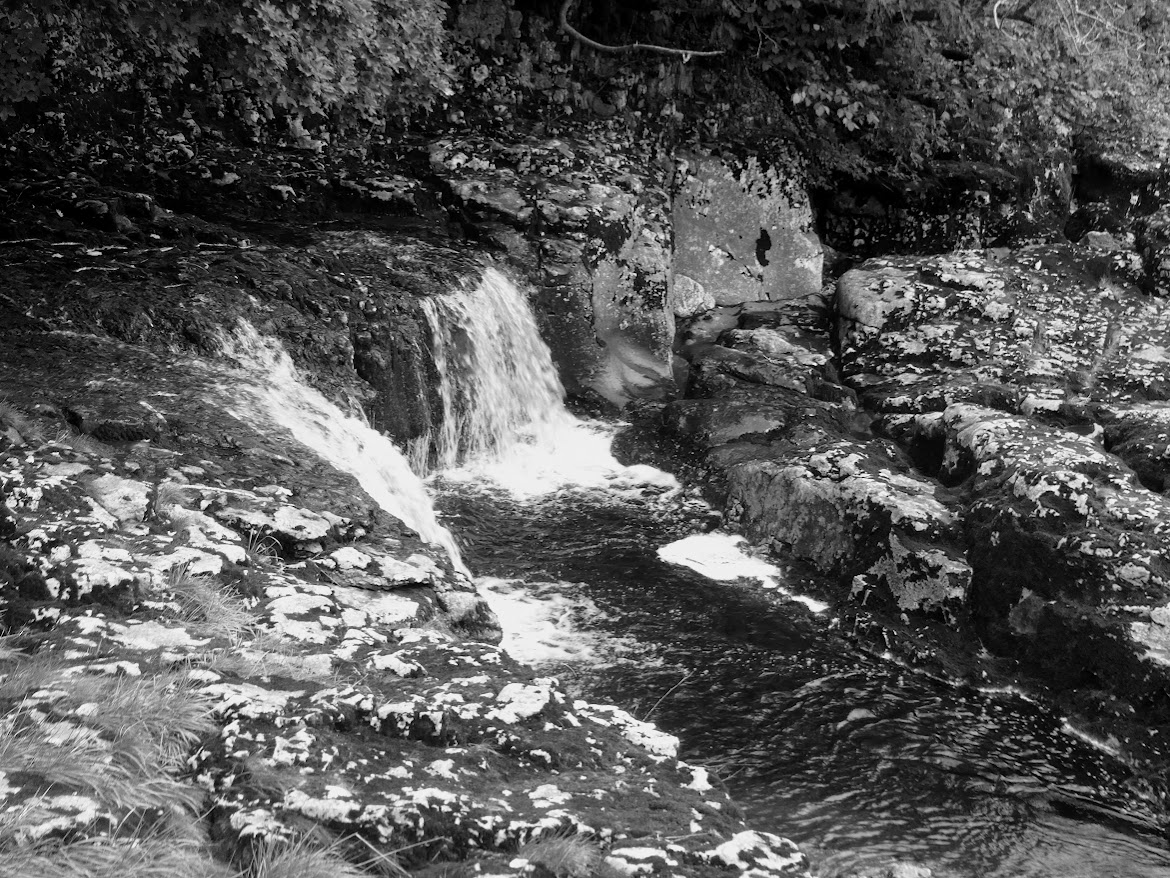
And while we’re in the Great Outdoors, is there anything more musical than a tinkling and plashing stream, tumbling tunefully over rocks?
Please do join in with your own musical offerings. And link back both to this post, and to Leanne’s site too, here.
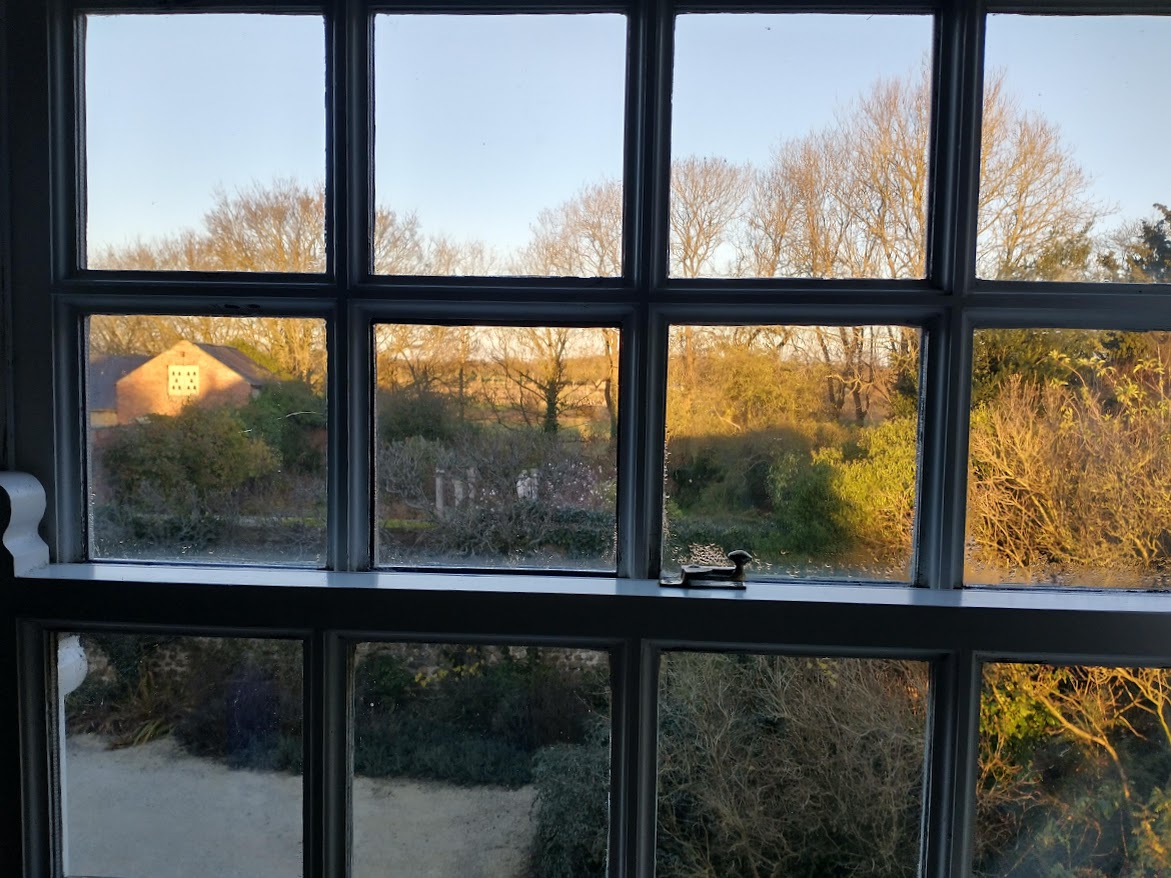
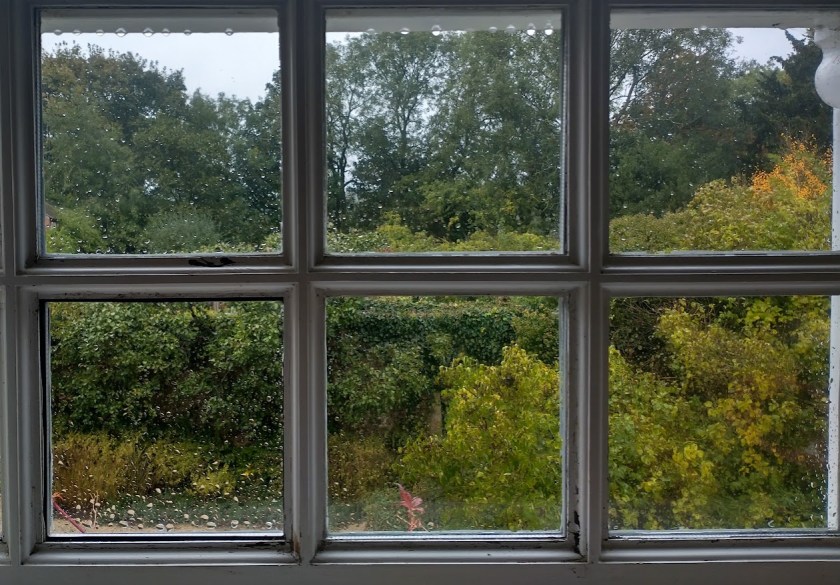
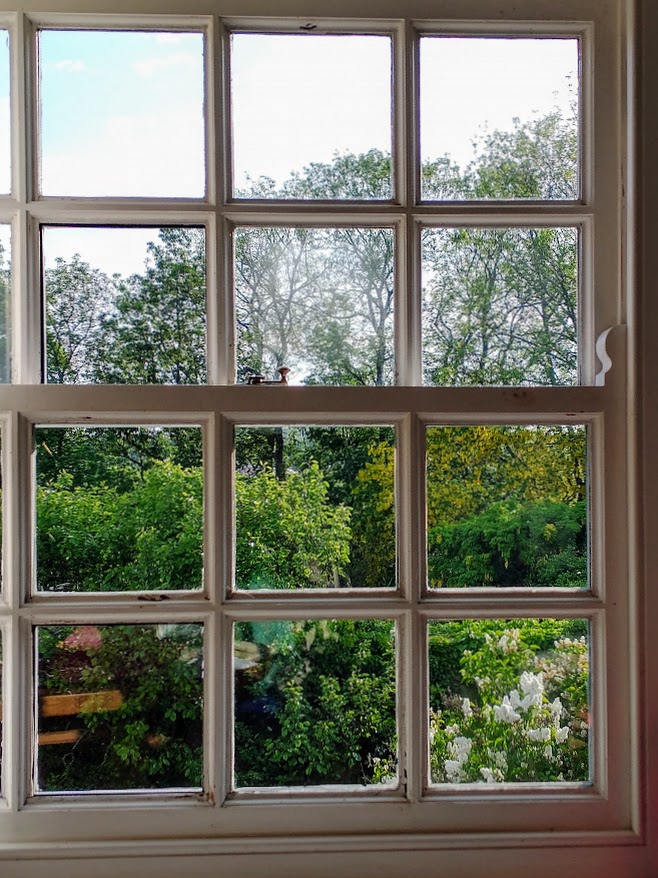
I am sitting at the kitchen table and looking out of the window. This is where I measure the changes of season; decide on what the day’s weather will bring; enjoy the fuchsia, pink and grey tones of the winter sunrise and examine the spiders’ webs that lace our small window panes at this time of year.
A frequent sight in October – or other times of year too.
In the middle distance is a line of trees. Now they’re newly stark for winter. A few weeks ago we observed them daily as the leaves turned first yellow, then tawny, chestnut and rust. Slowly the leaves started to fall. Then as November raged in, the wind snatched at them until finally last week, a storm bad-temperedly tore at the final tatters and flung them to the ground.
The view – sometimes – in January.
In Spring, it will all be reversed. At first, perhaps in earliest April, a citric haze on the trees will tell us that the buds are bursting, and will change daily, as the once-visible twigs and branches gradually leaf up, and disappear from view.
During that time though, while the branches are still visible, there’s plenty of action. Birds are home-hunting, prospecting for that perfect spot for a nest. Then there’s frenetic activity in the still-bareish trees as crows and wood pigeons flap back and forth, bringing twigs, feathers, moss, constructing untidy structures that despite their appearance are obviously sturdy enough – they’re still there now, high in the top branches. The smaller birds are more discreet, and though they build in the bushes and foliage nearer the house, we rarely see their nests. No, not even those of the sparrows, who cheep frenetically in the ivy below the window from the first moment they choose a site there, until the last fledgling has flown the nest.
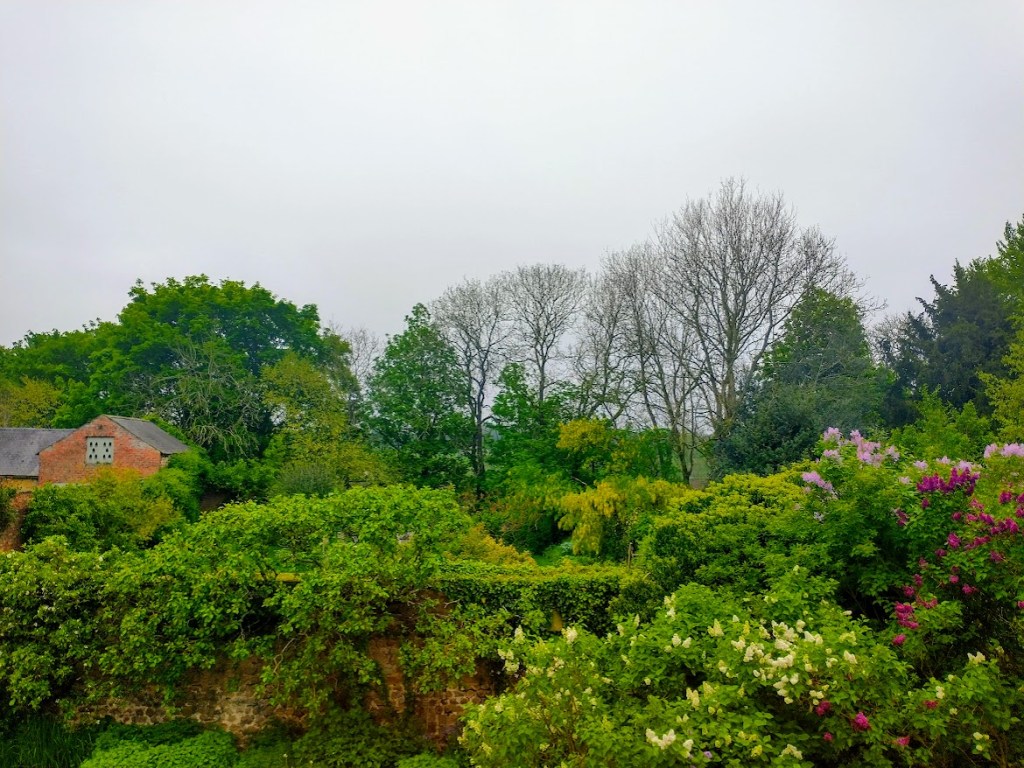
The view in May
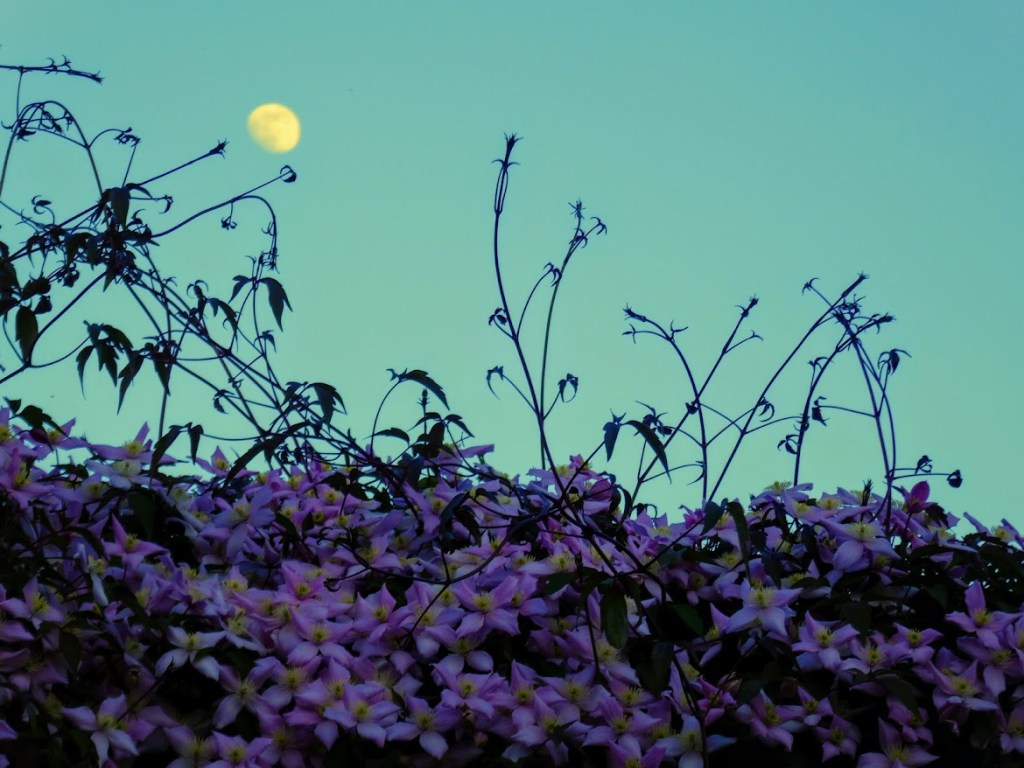
Nearer is the brick wall of our landlord’s walled garden. This is where a line of pear trees grows, with, in early summer, pink clematis scrambling through.
The clematis atop the wall one early evening in May.
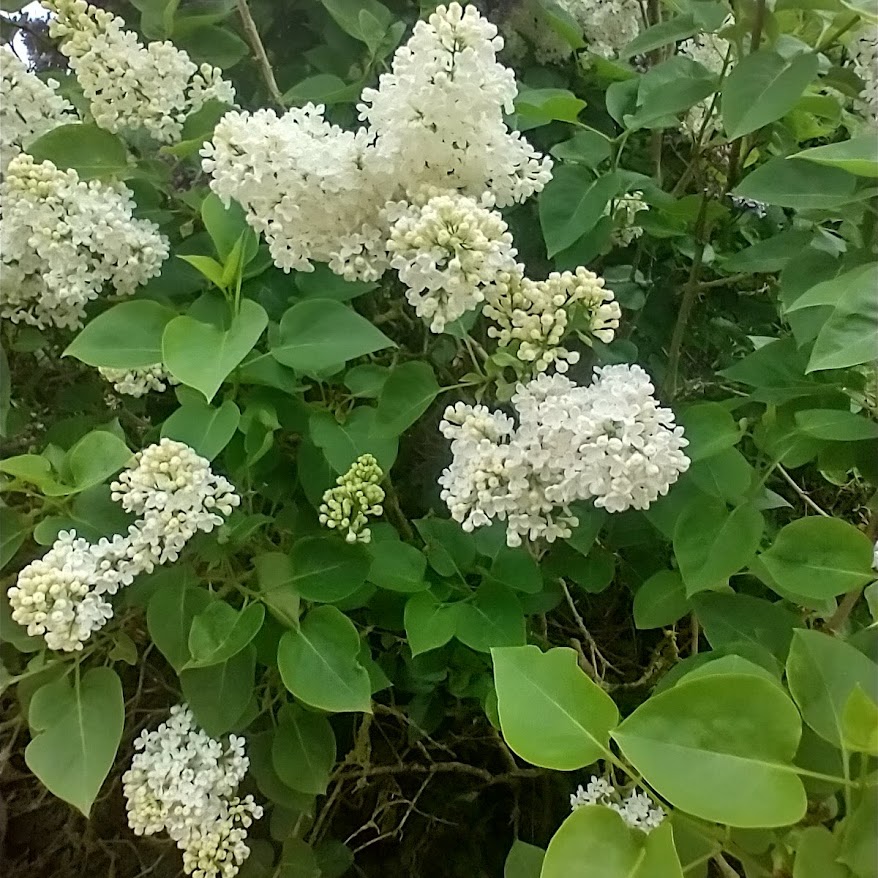
Next to them are three lilac trees. One is purple, one mauve, and the third one white. For two weeks only – in May – they flower, riotously, casting bloom after scented bloom skywards. After that they die sulkily, and look quite ugly for weeks. It doesn’t pay to be away in May and return in June.
Glancing upwards, there are often skeins of geese on flying missions between one neighbourhood lake and another, or in the summer (though less and less frequently these days), swooping and shrieking patrols of swifts.
I can show you neither geese nor swifts, but I can show you a cheeky squirrel who commandeered the window ledge one afternoon in September
So many sights and sounds to enjoy, so much action in the scenes just beyond our window panes. Never a week goes by without one of us saying to the other ‘Aren’t we lucky to be here? How could we ever move away?’
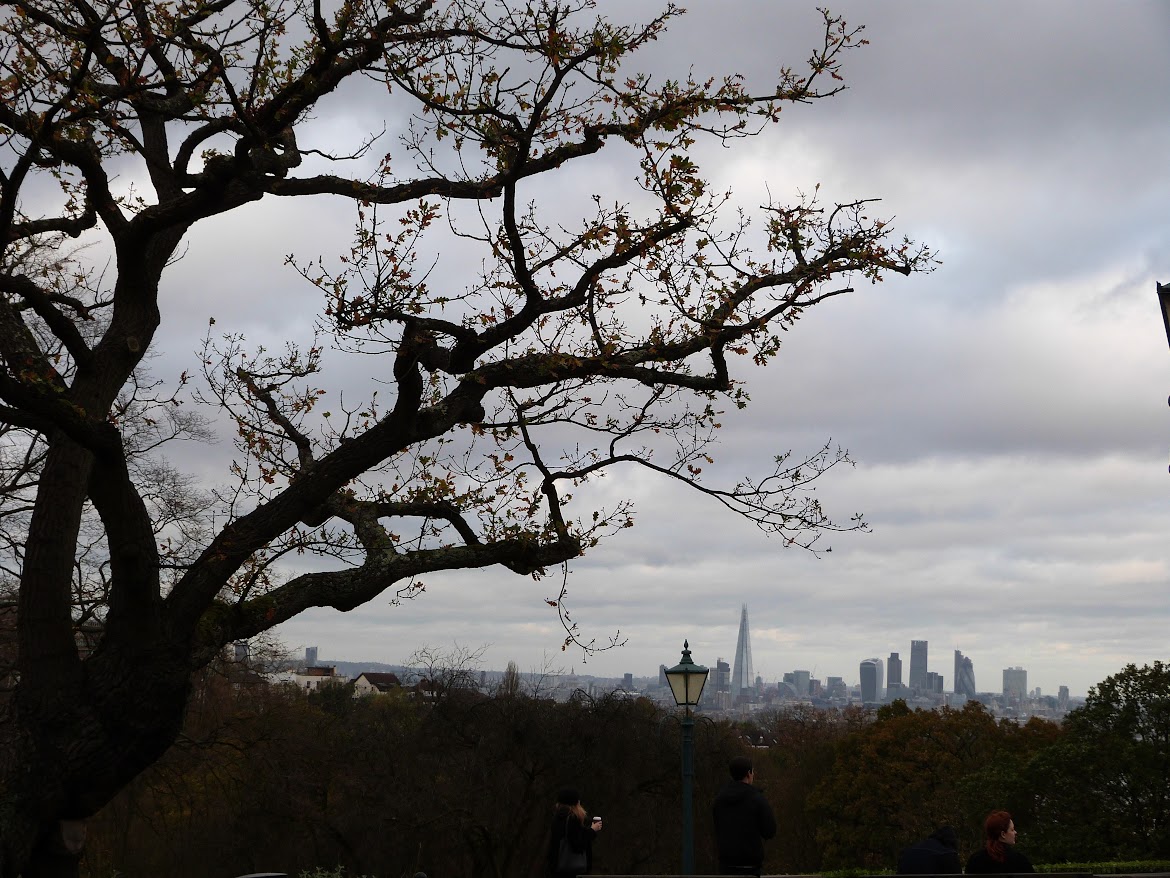
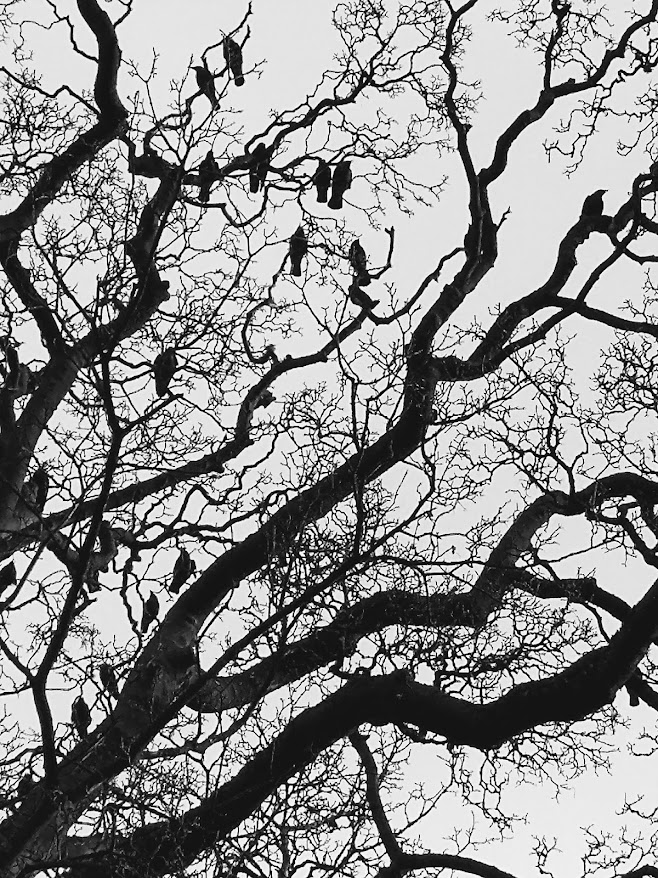
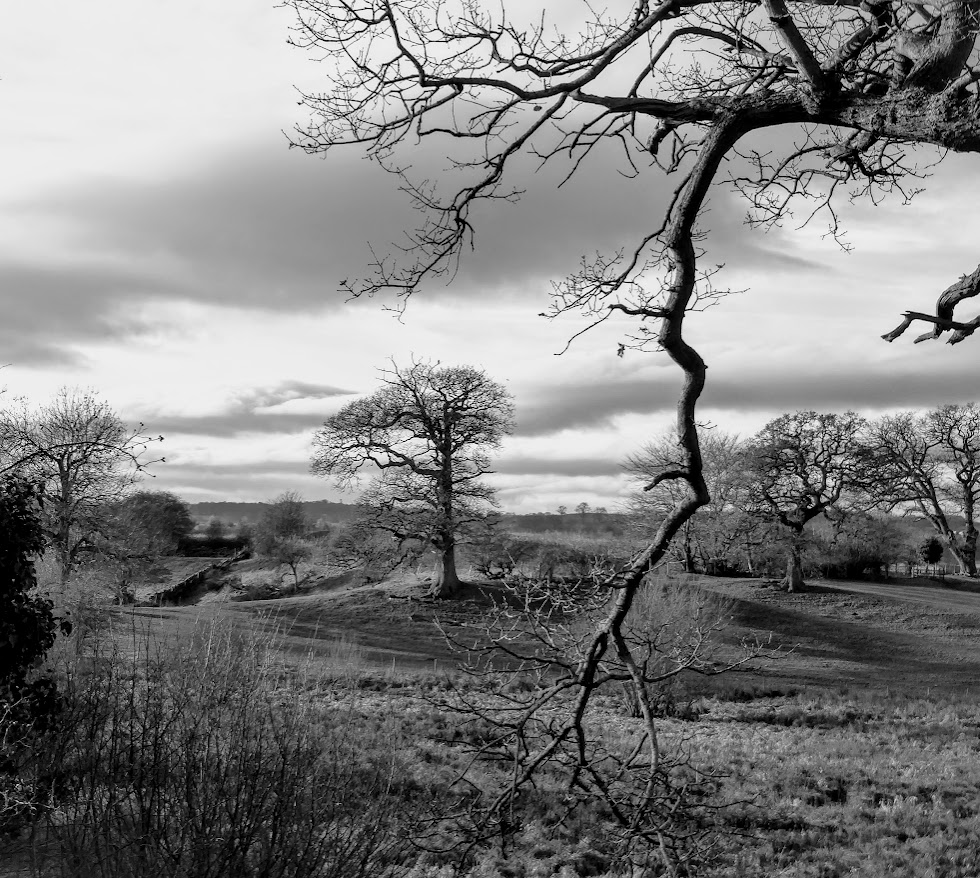
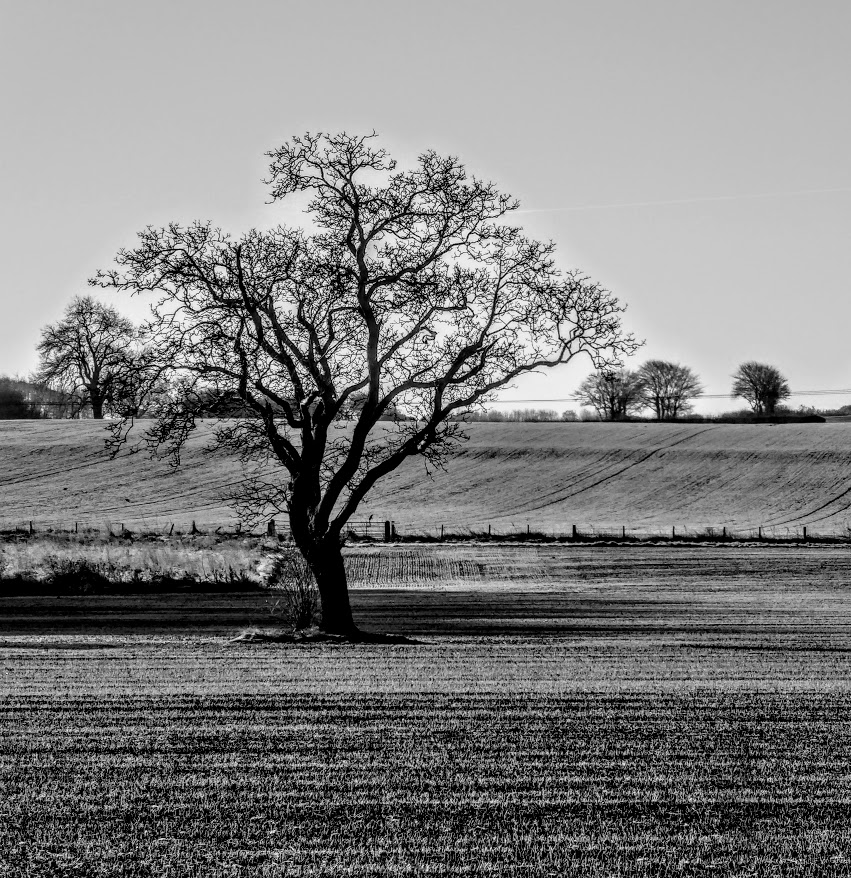
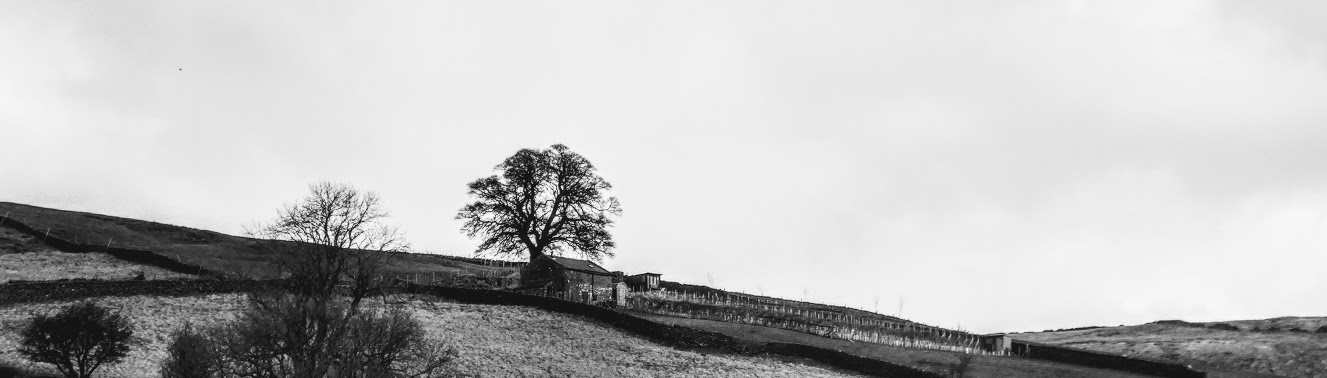
This week is perhaps the first one in which winter trees came into their own here in North Yorkshire. Recent high winds have snatched the very last scraggy leaves from their boughs, and now their austere skeletons are revealed in all their – often handsome – characterfulness. Here’s a small selection for Leanne’s Monochrome Madness. The header image, taken in Horniman Gardens, Forest Hill is not a true monochrome, but I’ve left it just as it is, to remind us that winter days – in London especially – can be black and white indeed. It’s the only image here not from North Yorkshire, or as we might call it today, The Frozen North.
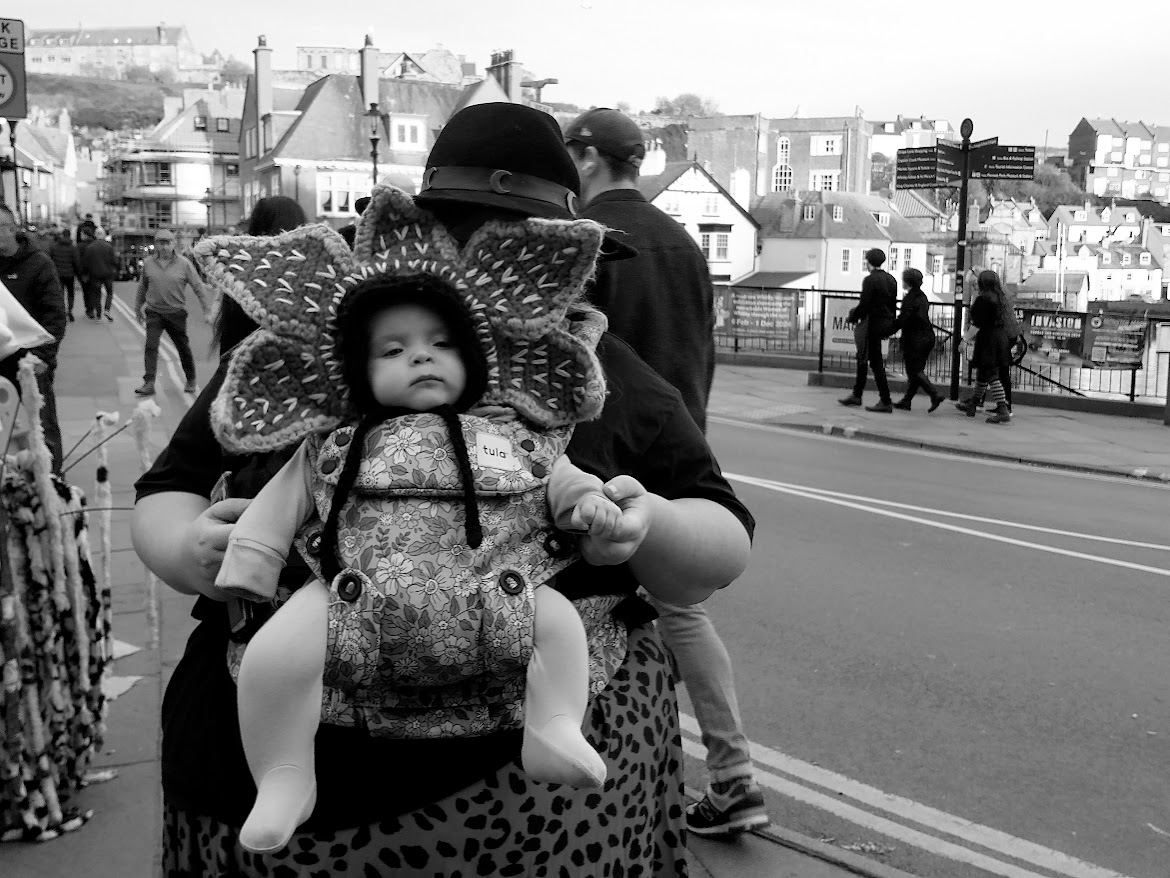
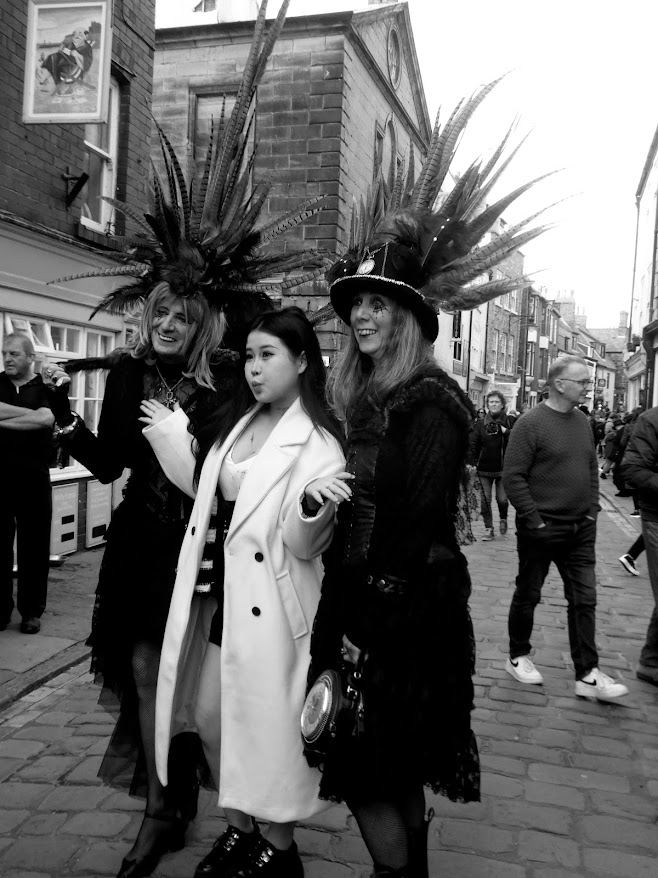
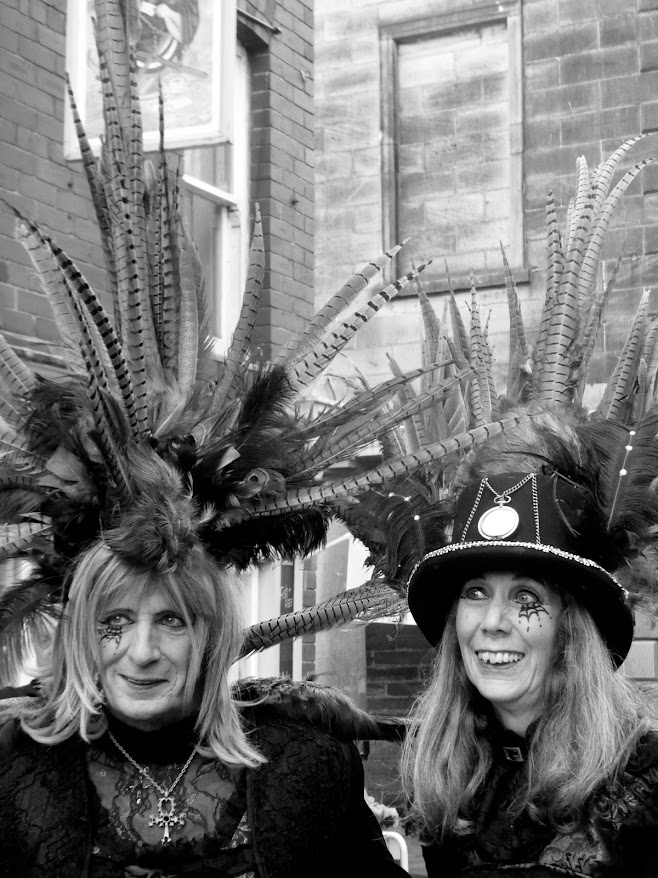
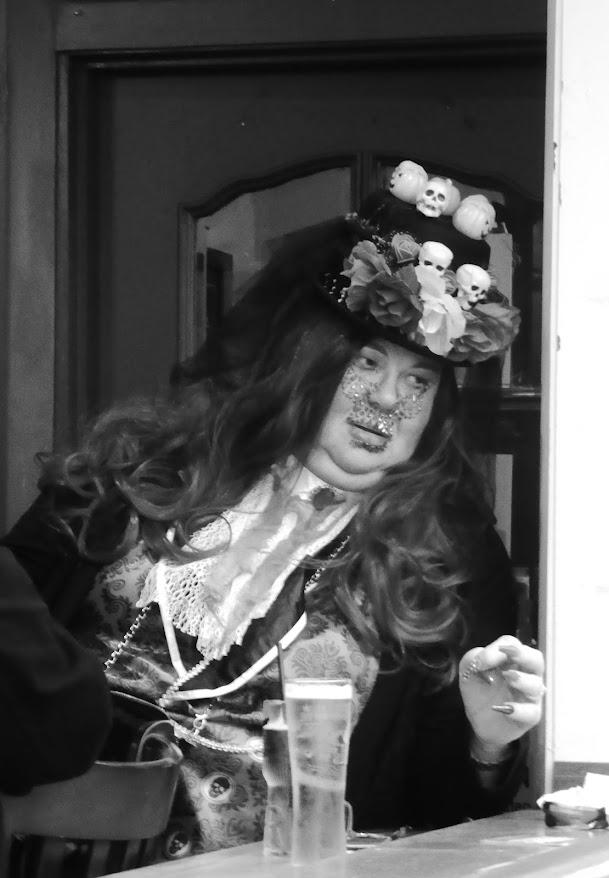
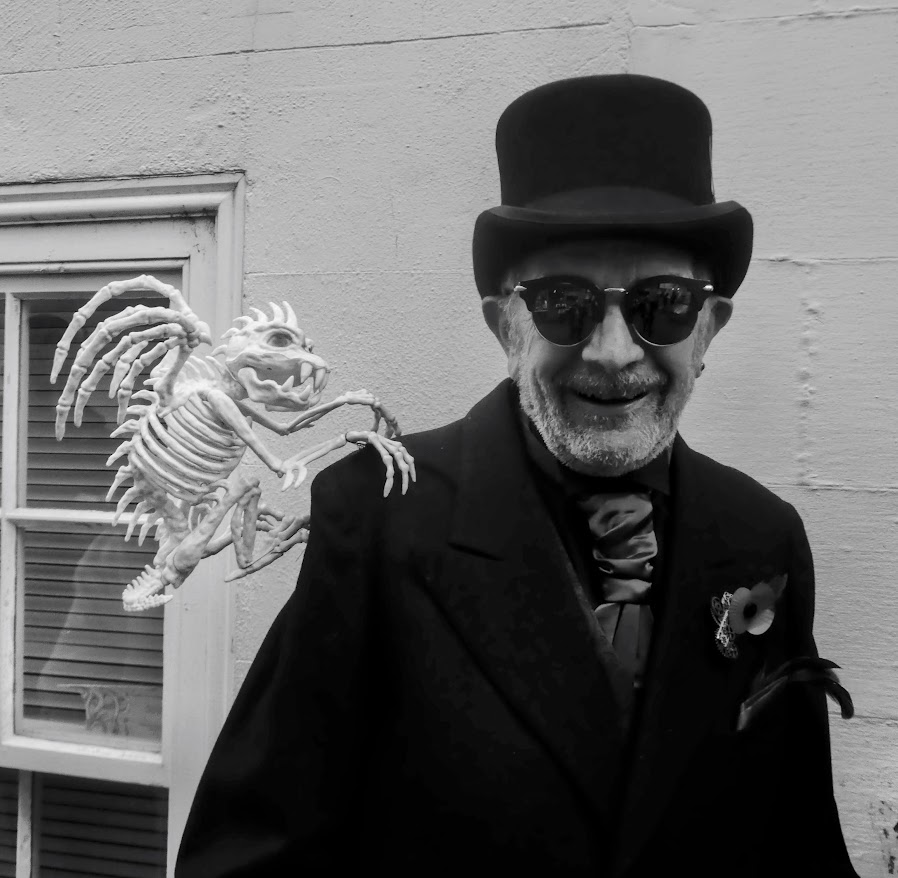
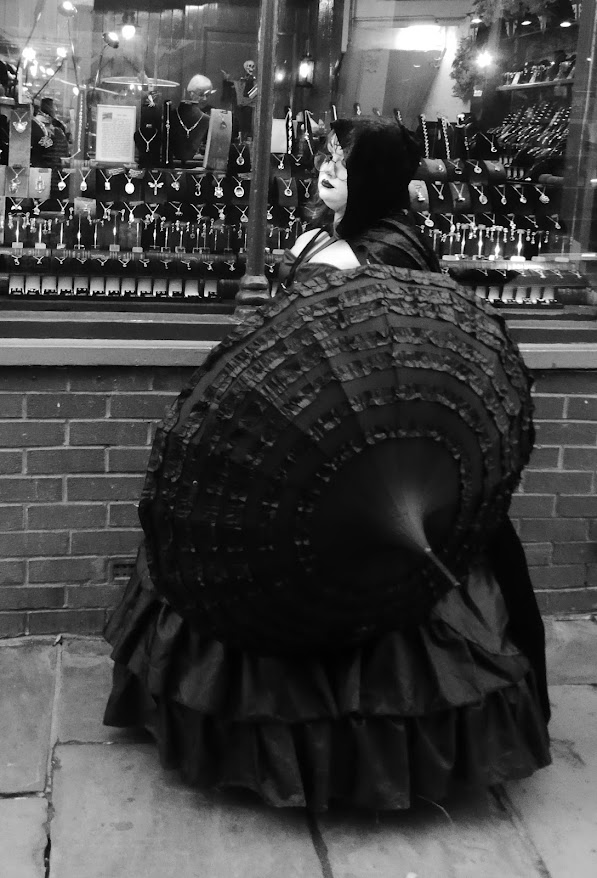
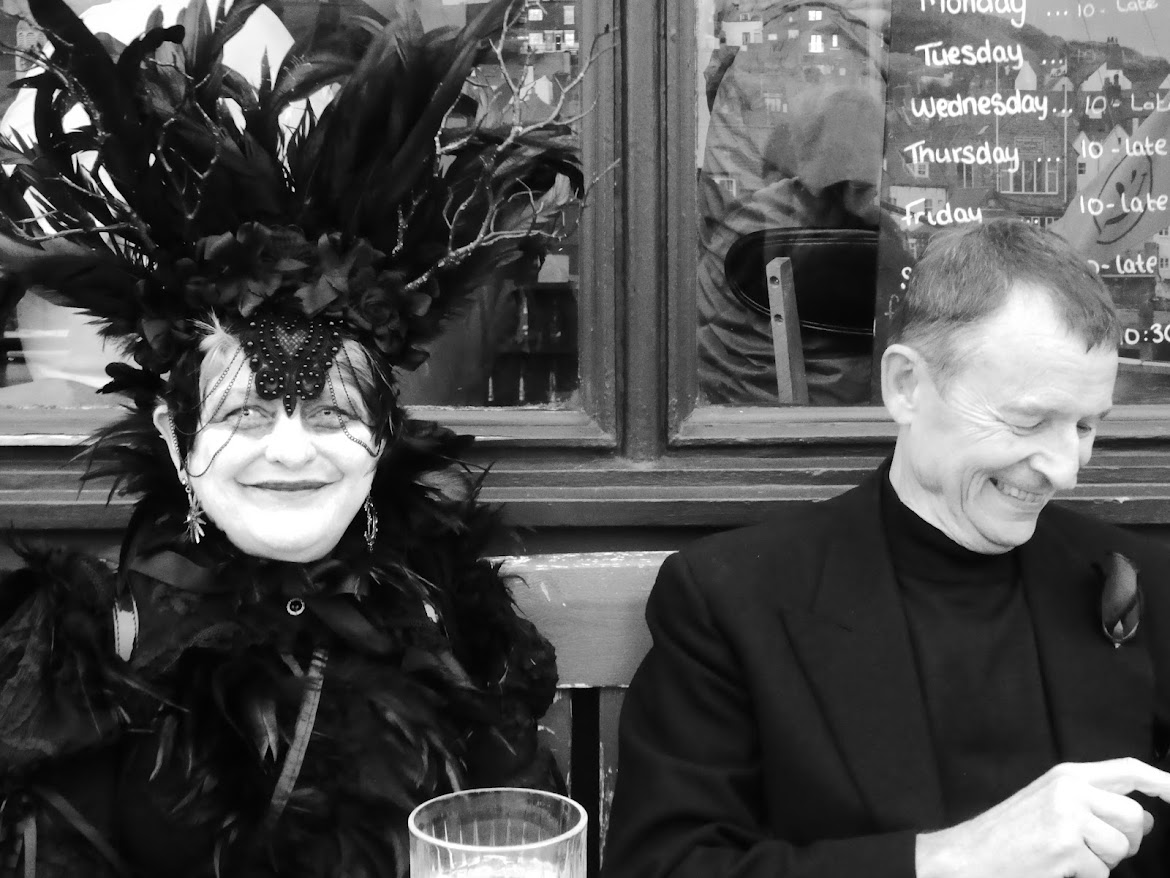
So on Friday, I went along with friends from Masham Photographic Club to be an unashamed paparazza. The atmosphere was upbeat and friendly, and those who’d gone to so much trouble to find their costumes and dress up actively sought out opportunities to have their picture taken. There was even a baby … and the oldest were well into their eighties. I felt distinctly underdessed in my workaday trousers and jacket.
An excellent day was had by all: especially after a large plate of tasty fish and chips.
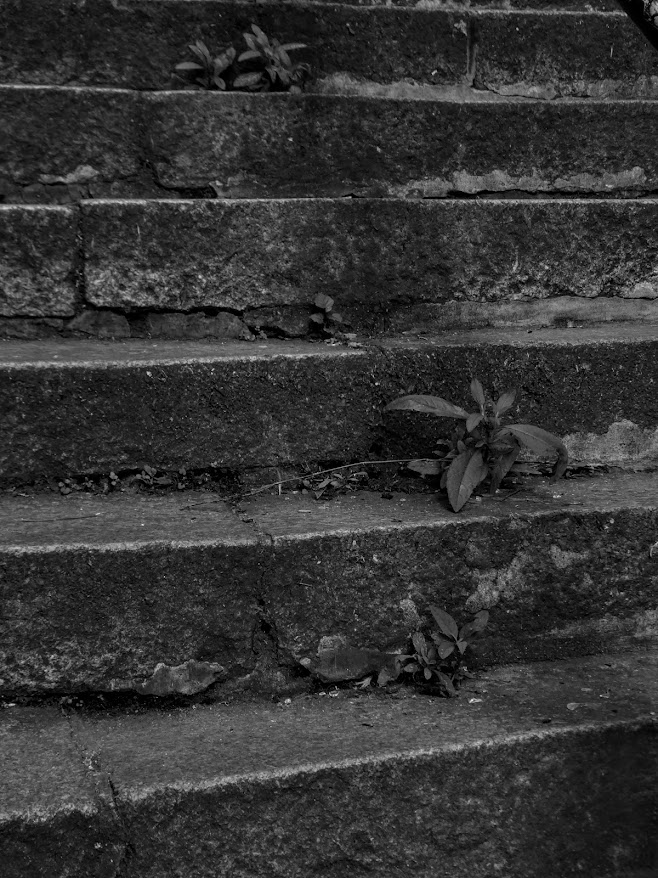
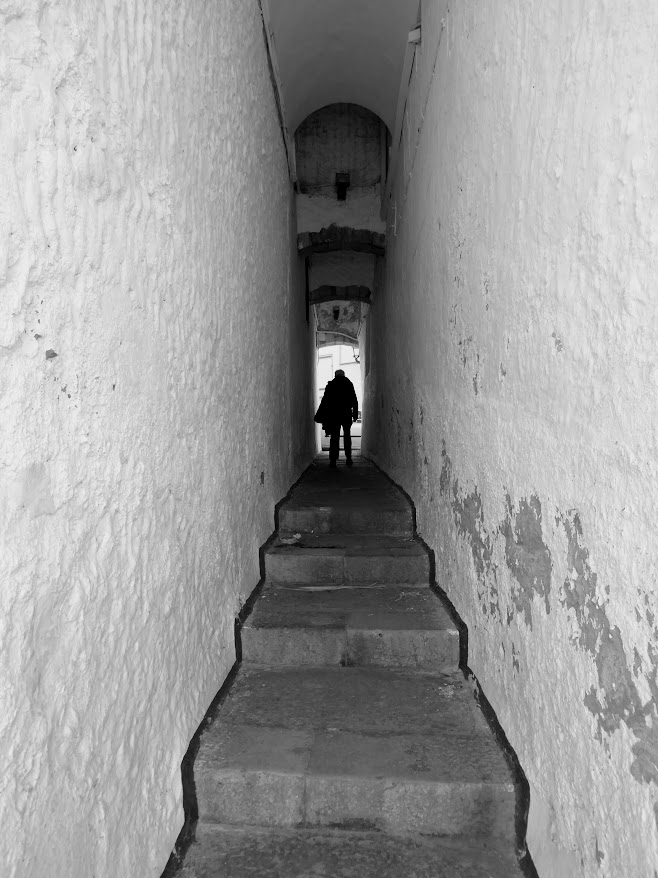
This week’s Monochrome Madness theme is proposed by Aletta of nowathome: and she’s chosen Steps or Stairs. It’s an interesting idea, and one where I could have chosen the grand and elegant staircases gracing the finest palaces and country houses of the rich, titled or famous.
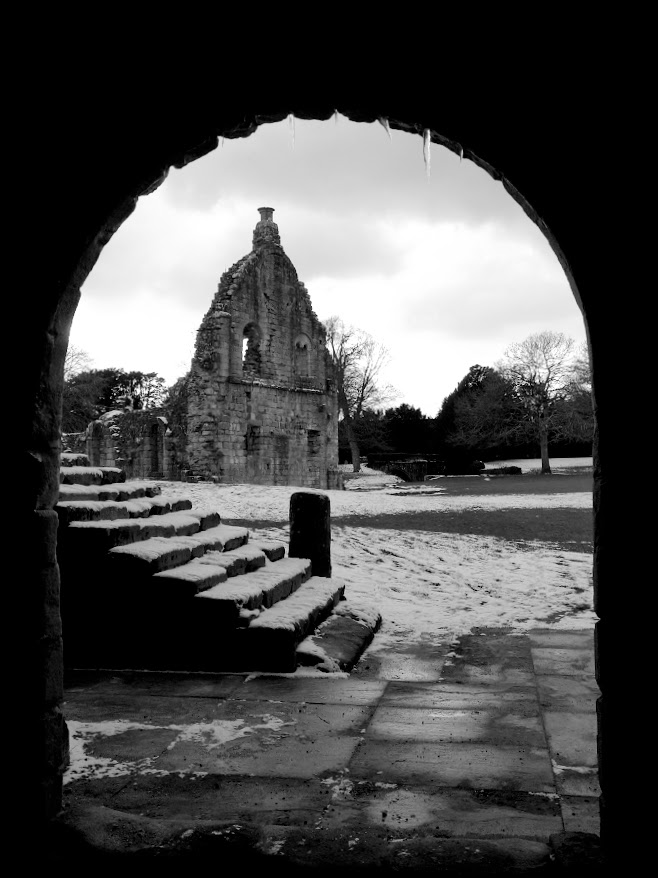
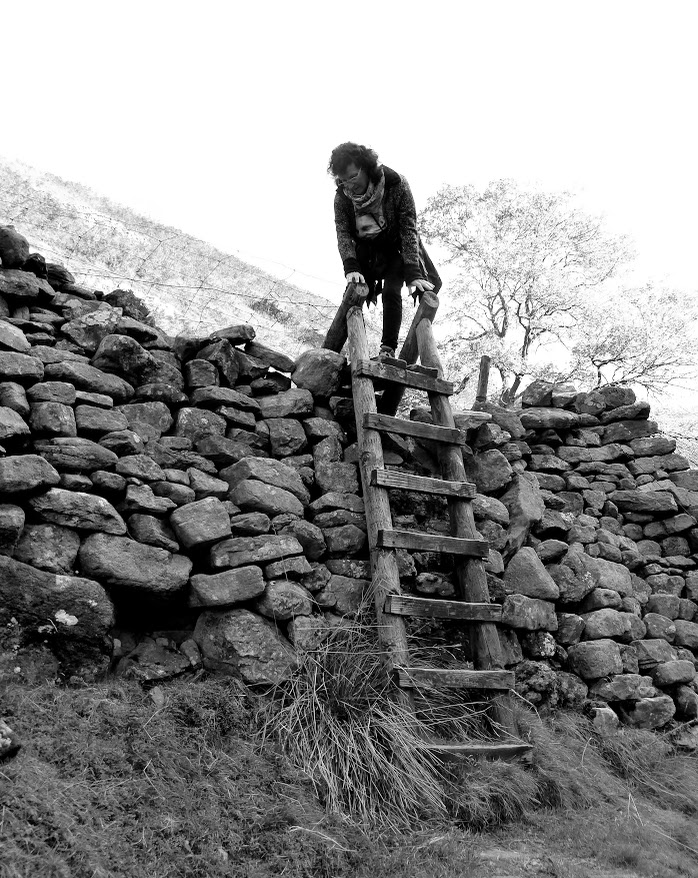
Instead I’ve chosen the steps trodden by ordinary folk on their daily round in Barcelona (featured photo), Newcastle and Sitges; or by monks engaged in their spiritual duties at Fountains Abbey; or by a hiker, needing to nip over a few drystone walls on her several mile journey from A to B.
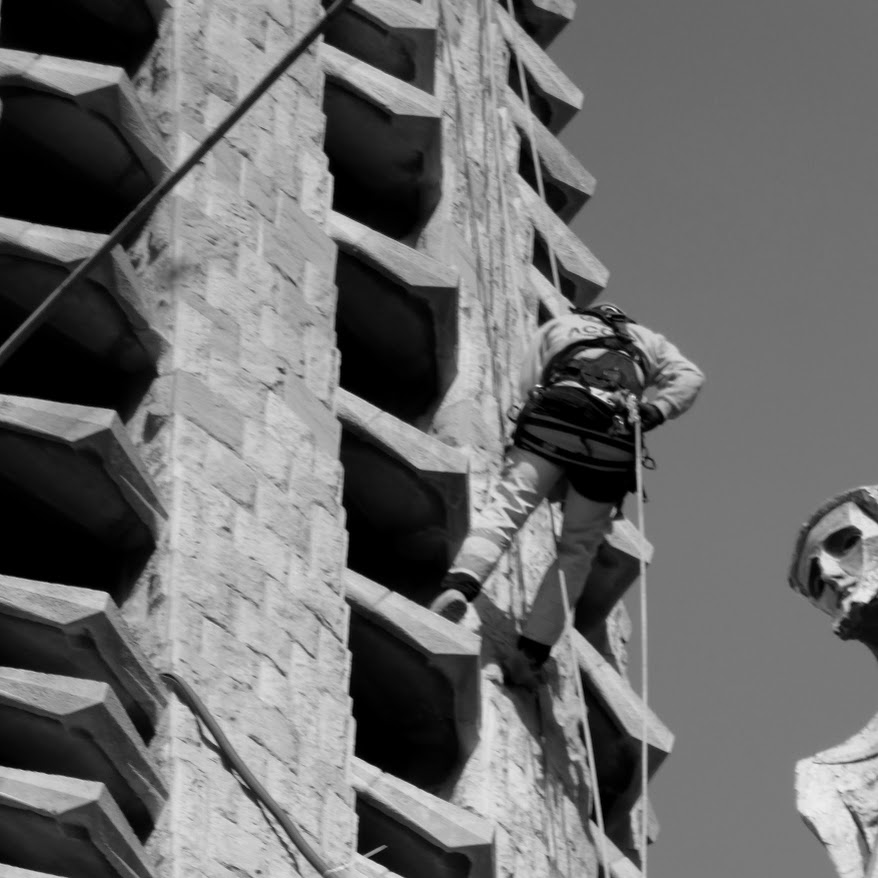
Or there’s the worker helping construct la Sagrada Familia in Barcelona. It might be one of the most famous buildings in Europe, but shinning about its heights looking for footholds is just part of his 9 – 5, every working day.
Works conttinues at La Sagrada Familia, Barcelona
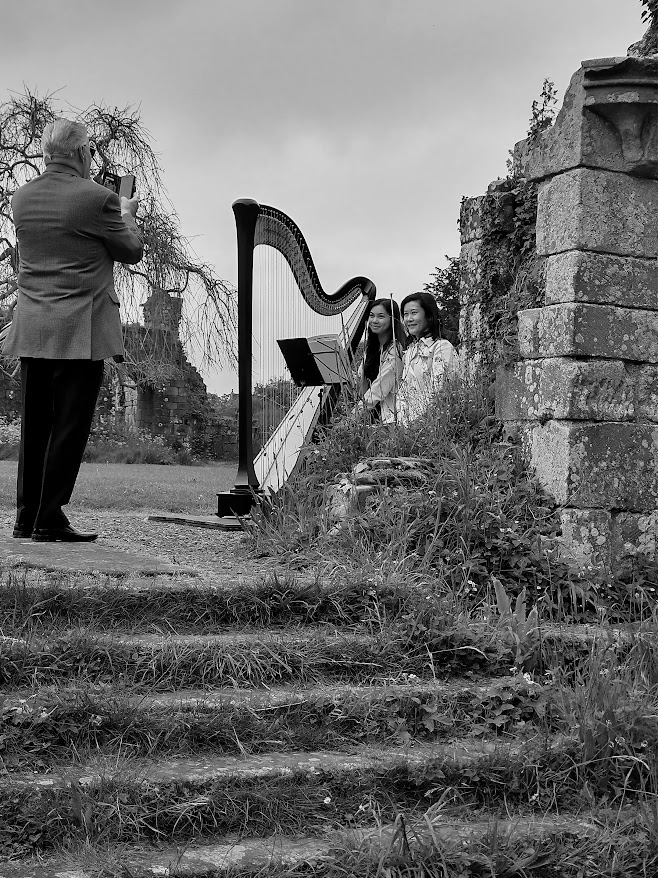
And I’ll leave you with one little treat. A harpist at Jervaulx Abbey this summer, playing at the wedding of some good friends of ours. She was working, even if the rest of us weren’t.
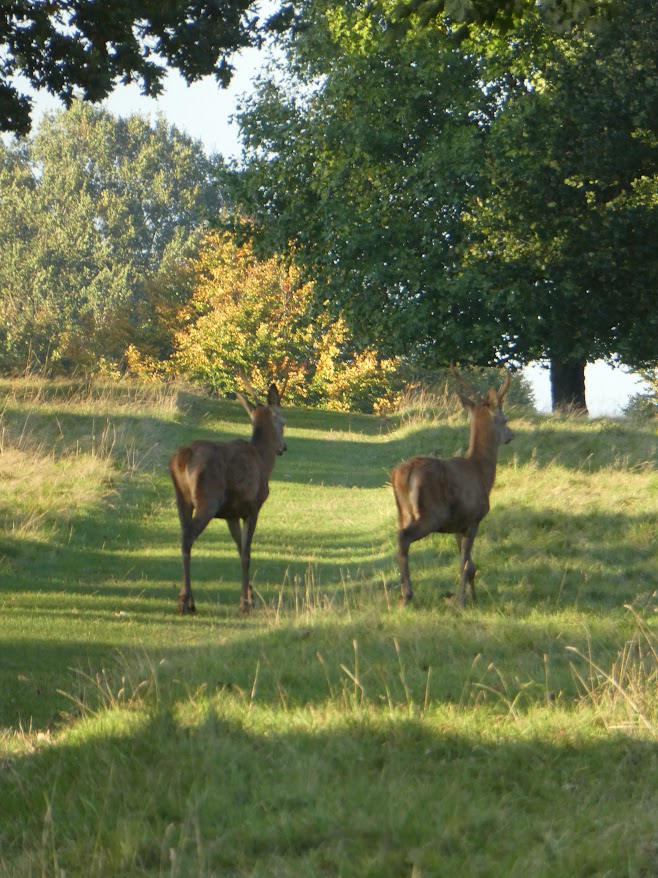
On Friday afternoon, I was back on duty in the deer park at Studley Royal. This time as a sheep dog. Two of my colleagues were leading interested members of the public on a walk round Studley Royal at a time of day when deer tend to be more active. I was there to make sure nobody got left behind: and to enjoy this particularly lovely autumn afternoon.
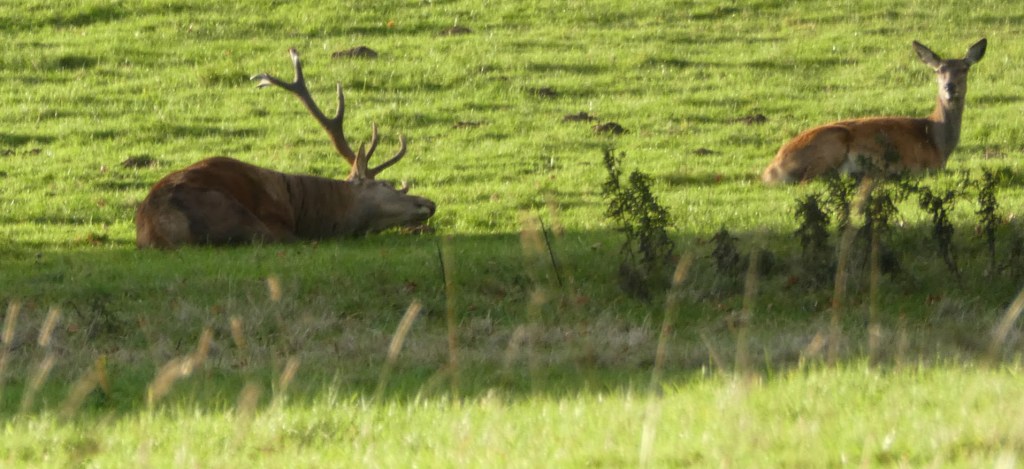
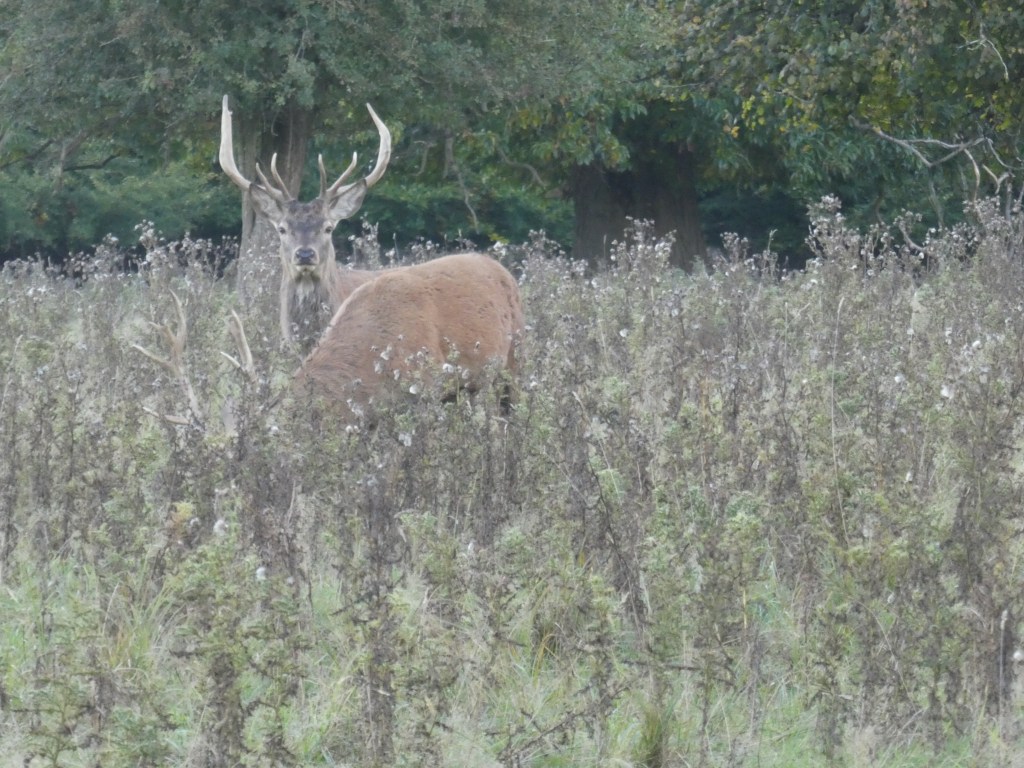
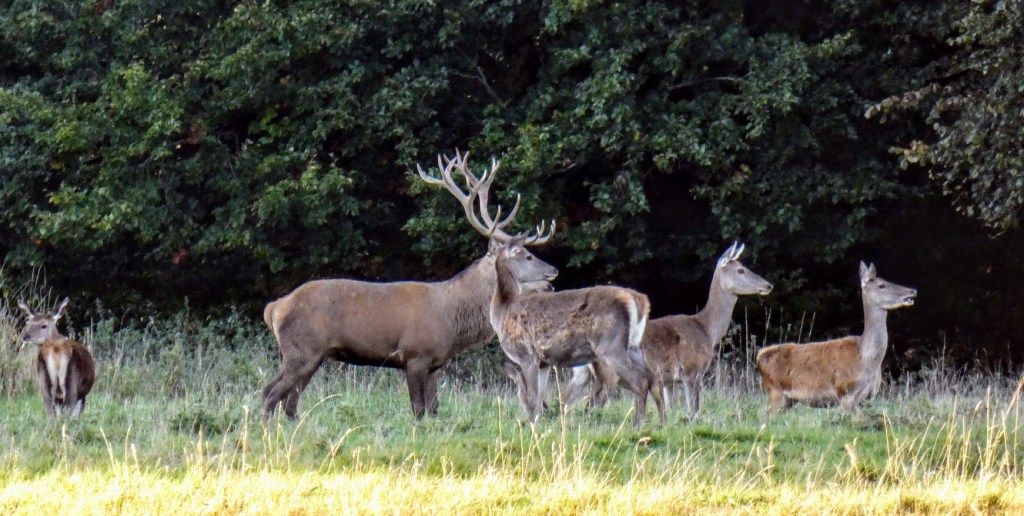
Red deer are rutting. The stags are collecting themselves a harem so they can breed the next generation. They roar loudly to attract females, and to deter other males from seducing ‘their’ does. If necessary they’ll fight – noisily – with those heavy antlers. We saw harems, which included a few males who, though they had antlers, were too young and inexperienced to have a hope of breeding ths year. It’s a hard life being Top Stag.
Top Stag has a rest.
We saw a stag chasing females on whom it had Breeding Ideas. Mainly, they lost the race, but a couple of does succumbed – briefly and reluctantly – to being impregnated. The act is so brief – no pictures. Anyway, who wants to be a voyeur?
Sika deer, originally from China, are not even thinking about the rut yet. They’re handsome creatures, with simpler antlers than the red deer. We spotted them in smallish groups, but here are a couple of stags.
Sika stags grazing
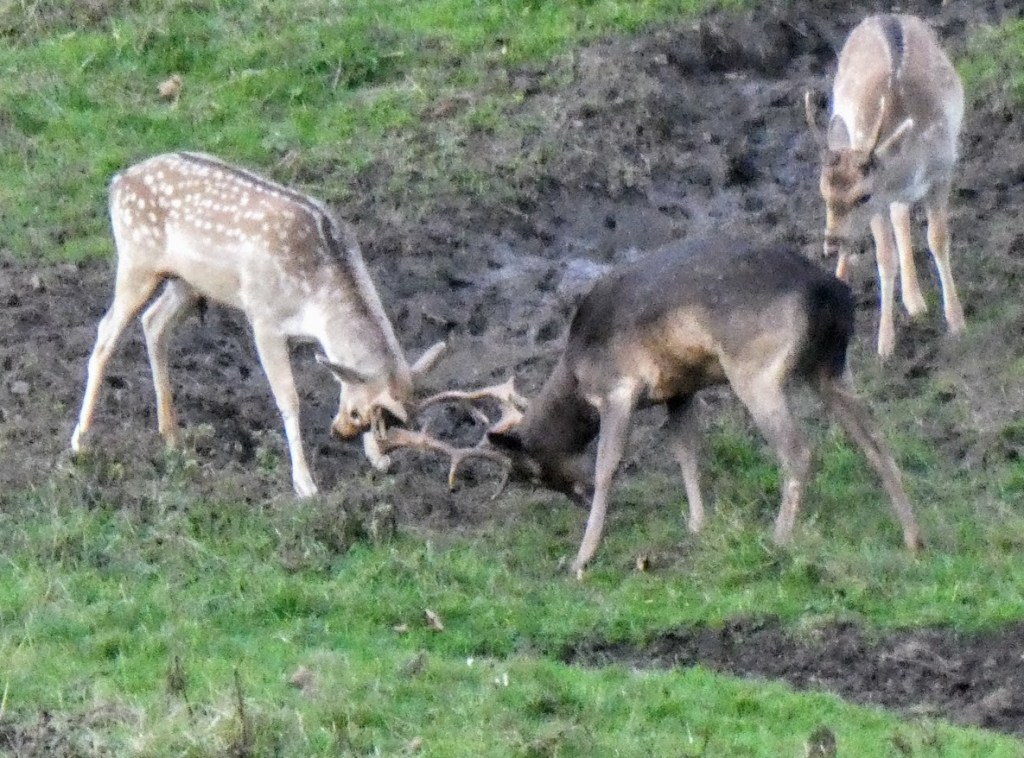
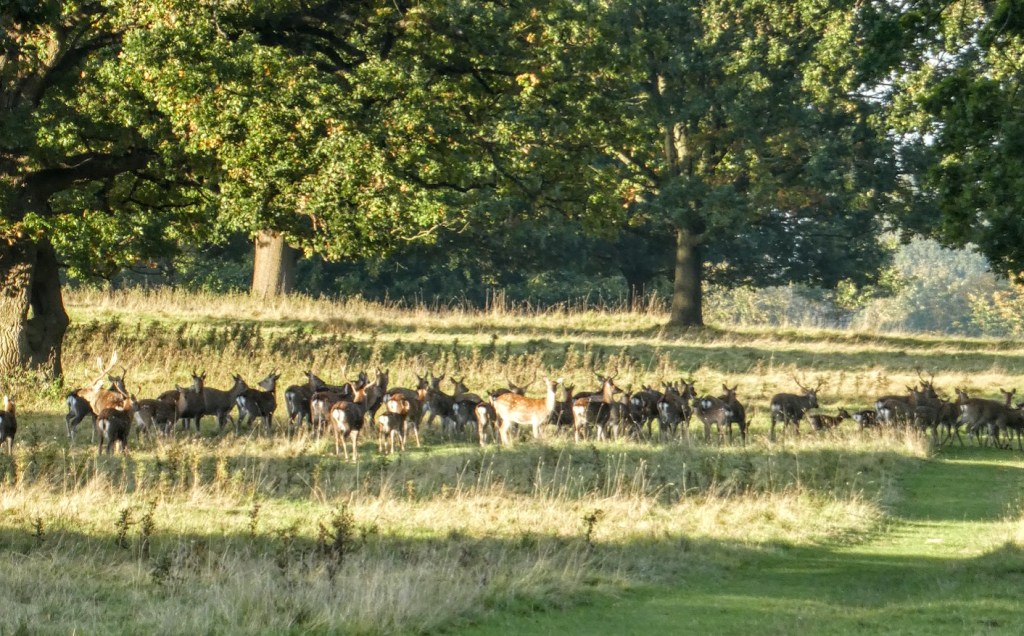
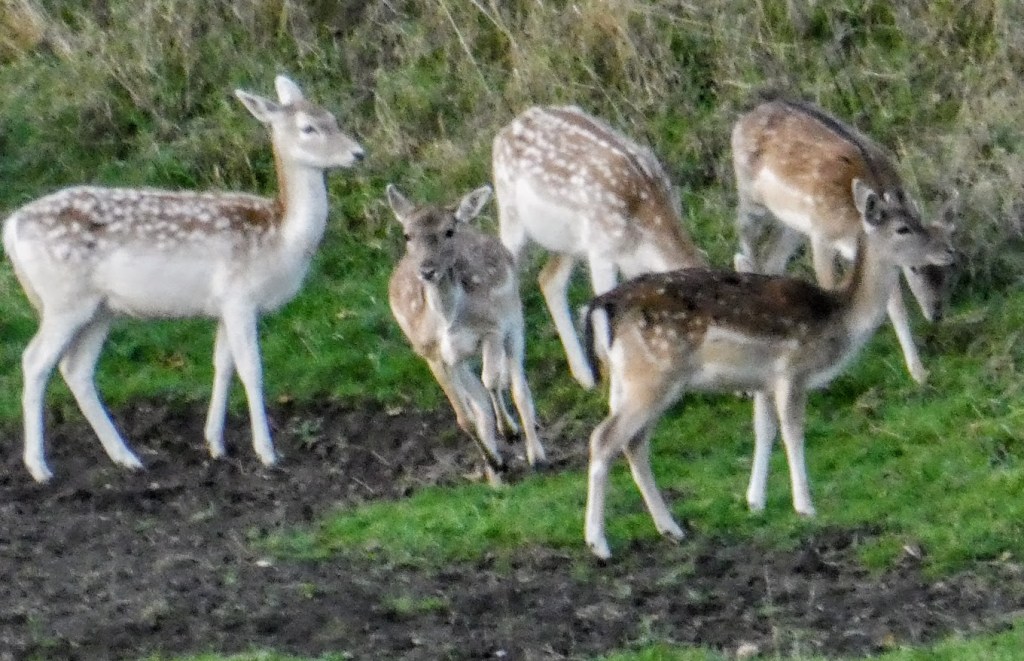
Fallow deer – living on this site since the 1600s -are only just beginning to think about the rutting season. We saw two young bucks practising: heads down, their antlers clacked and clattered noisily together. No harm done. They’ve no chace of a harem this year.
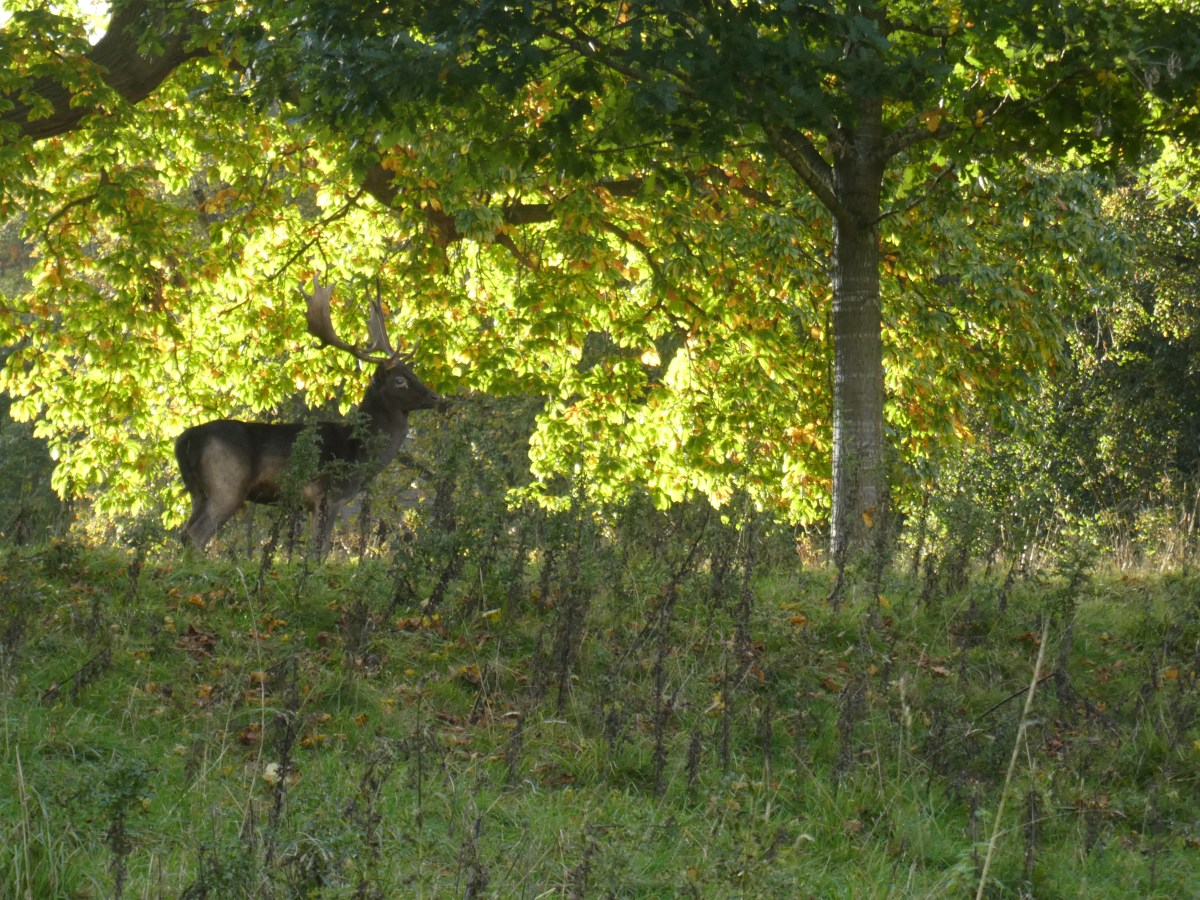
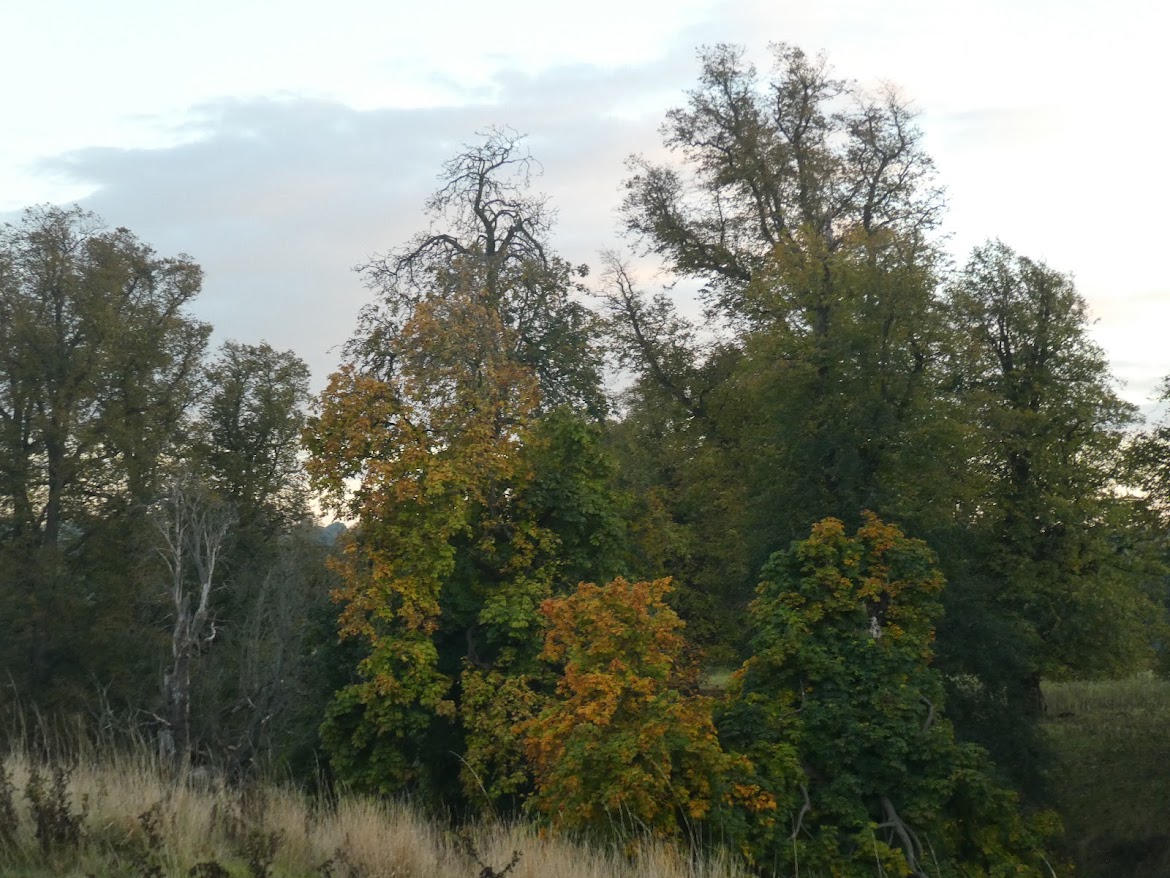
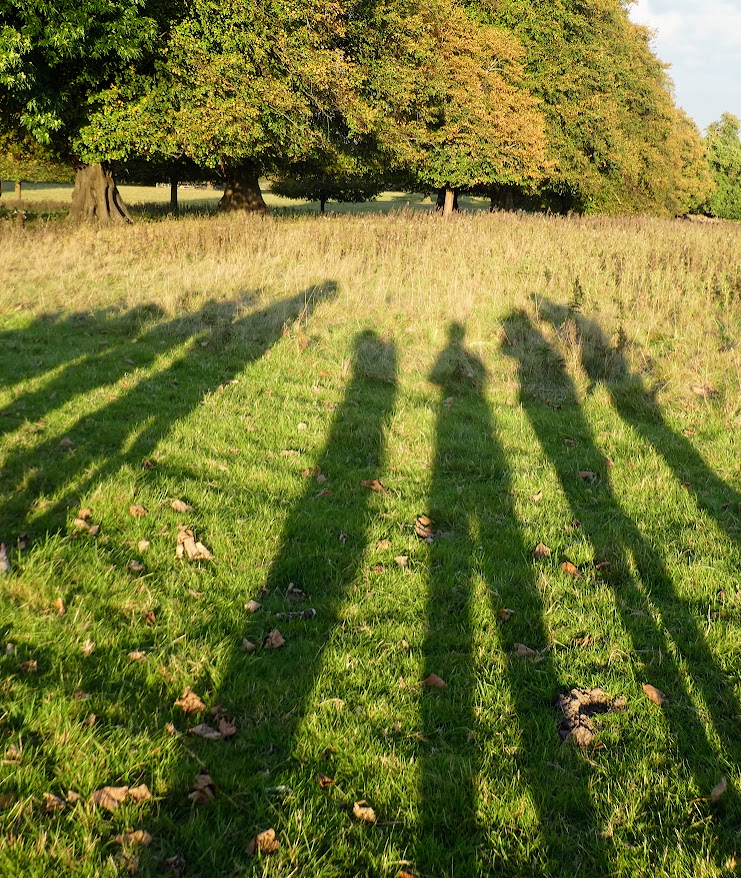
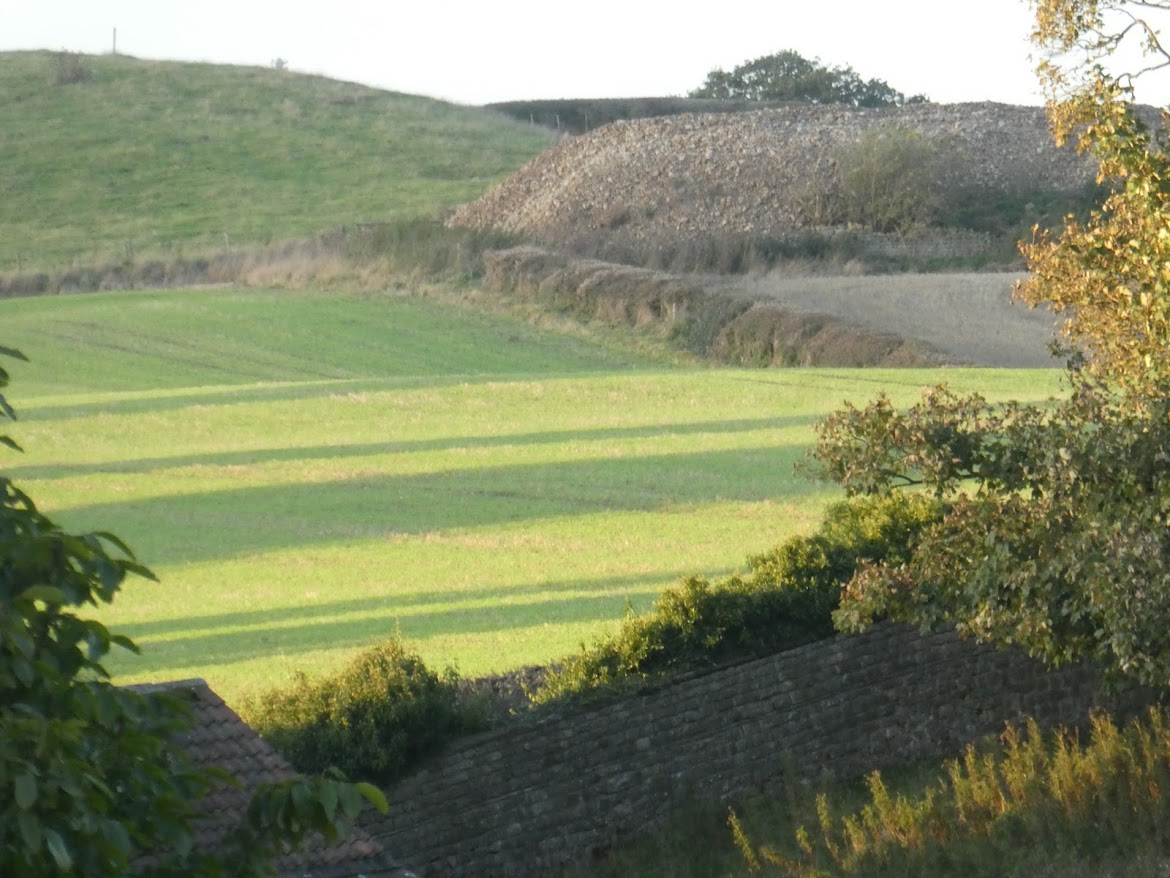
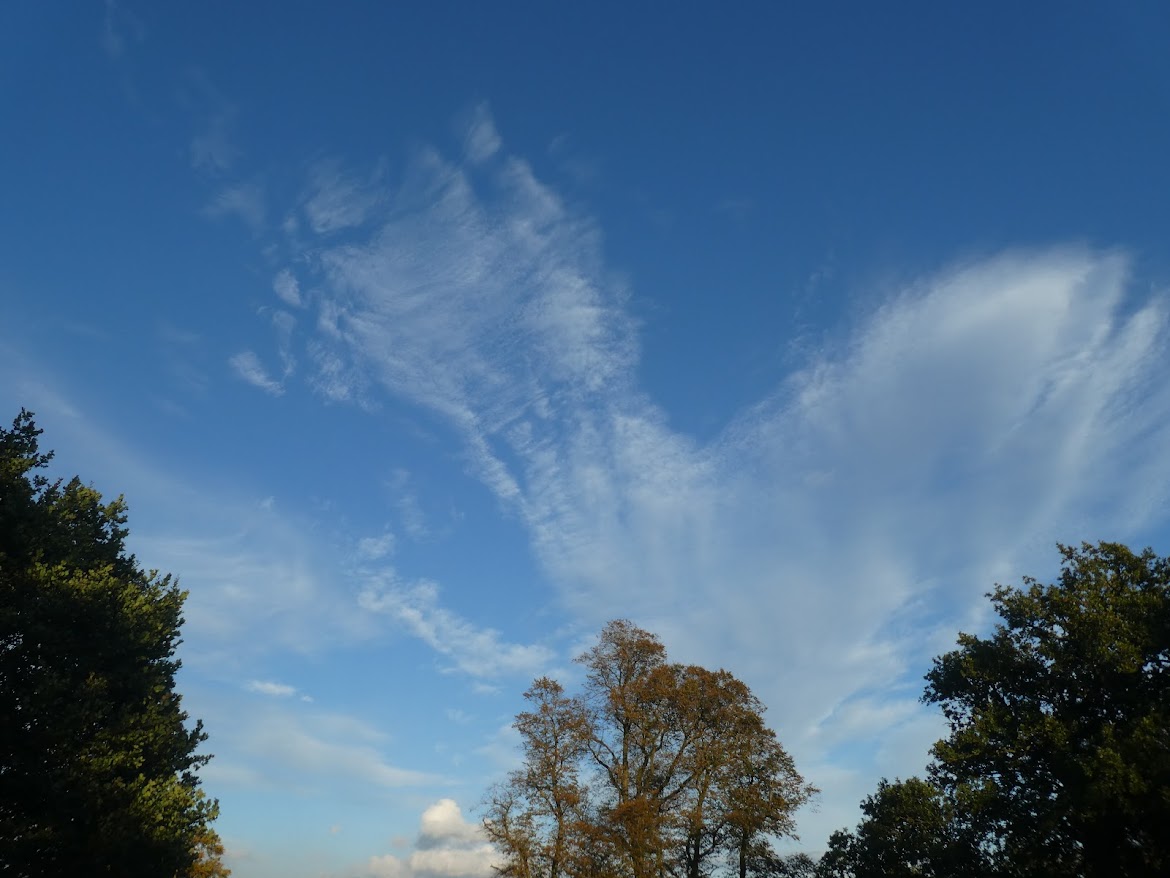
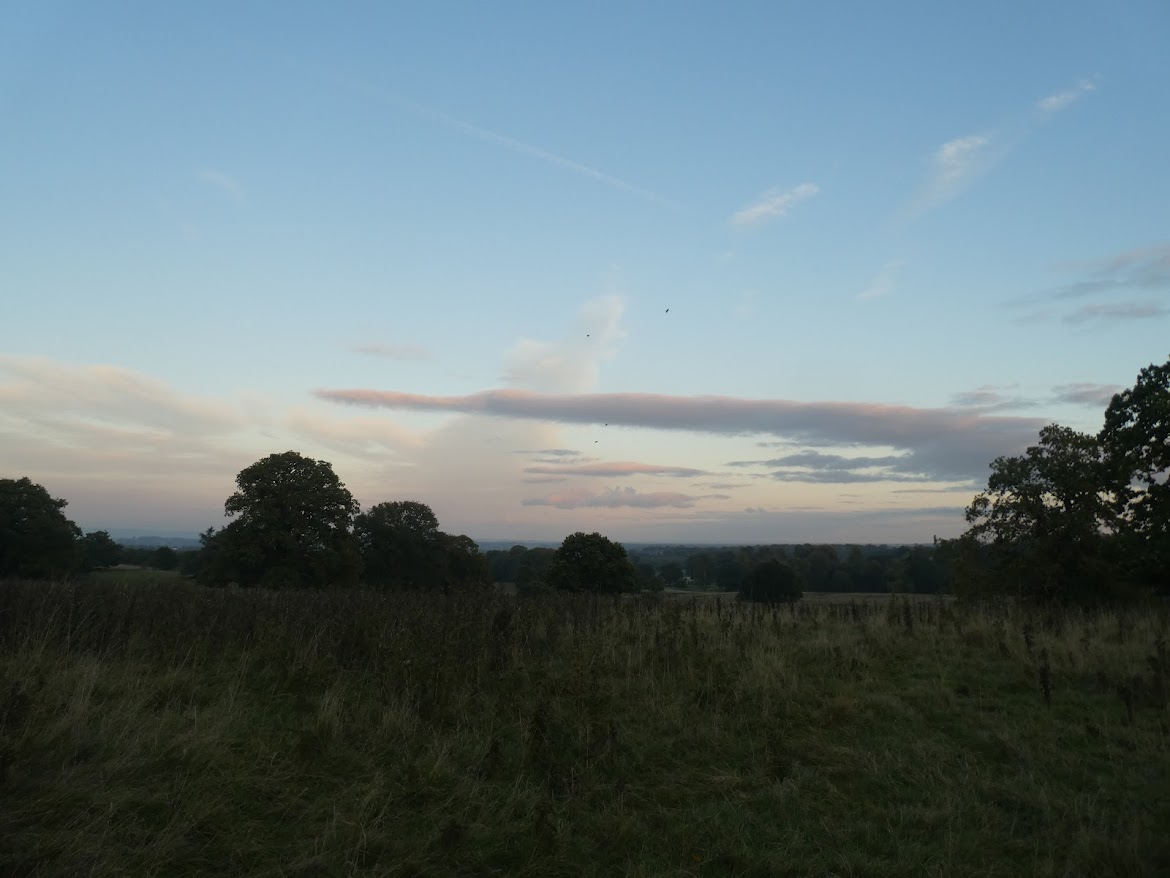
But our walk was’t just about the deer. We enjoyed the trees, just now decking themselves in autumn finery. We relished the afternoon shadows, striping the fields: and enjoyed seeing long-legged versions of ouselves as we deer-stalked. And sky too, streaked with evening colours as the sun began to set.
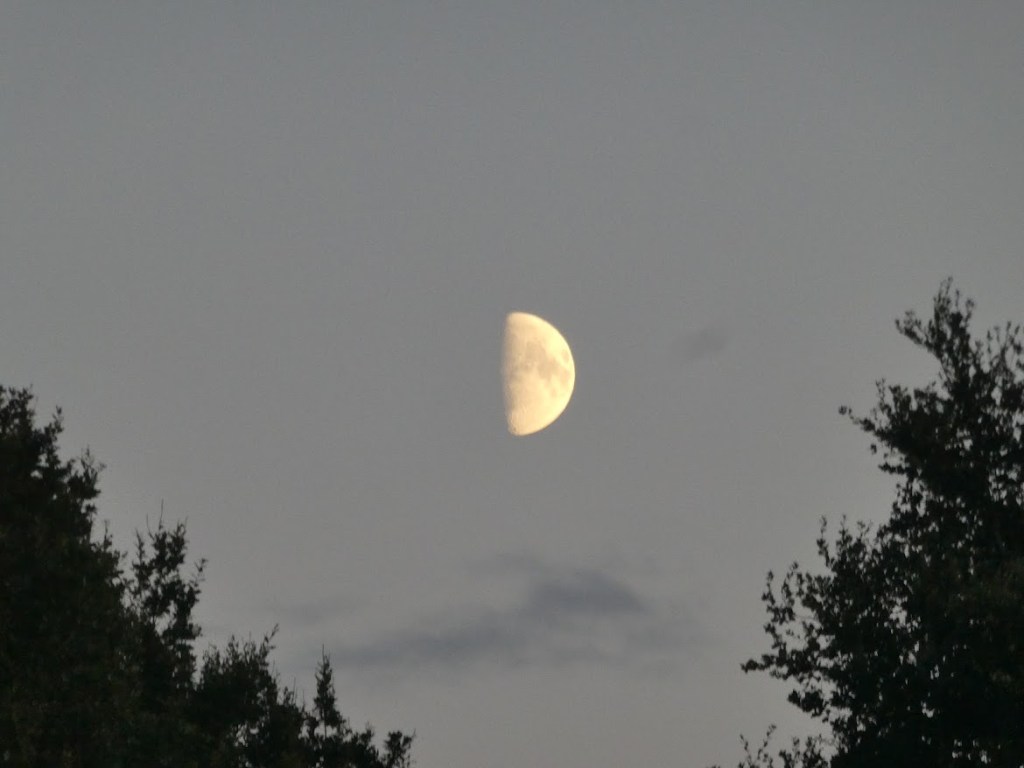
As we finished our walk, and dusk was indeed beginning to fall, the moon was rising between the trees. A fitting finish.
A few last images. The quality isn’t great, because my camera was on Zoom on a high setting. But they record memories of a happy autumn afternoon.
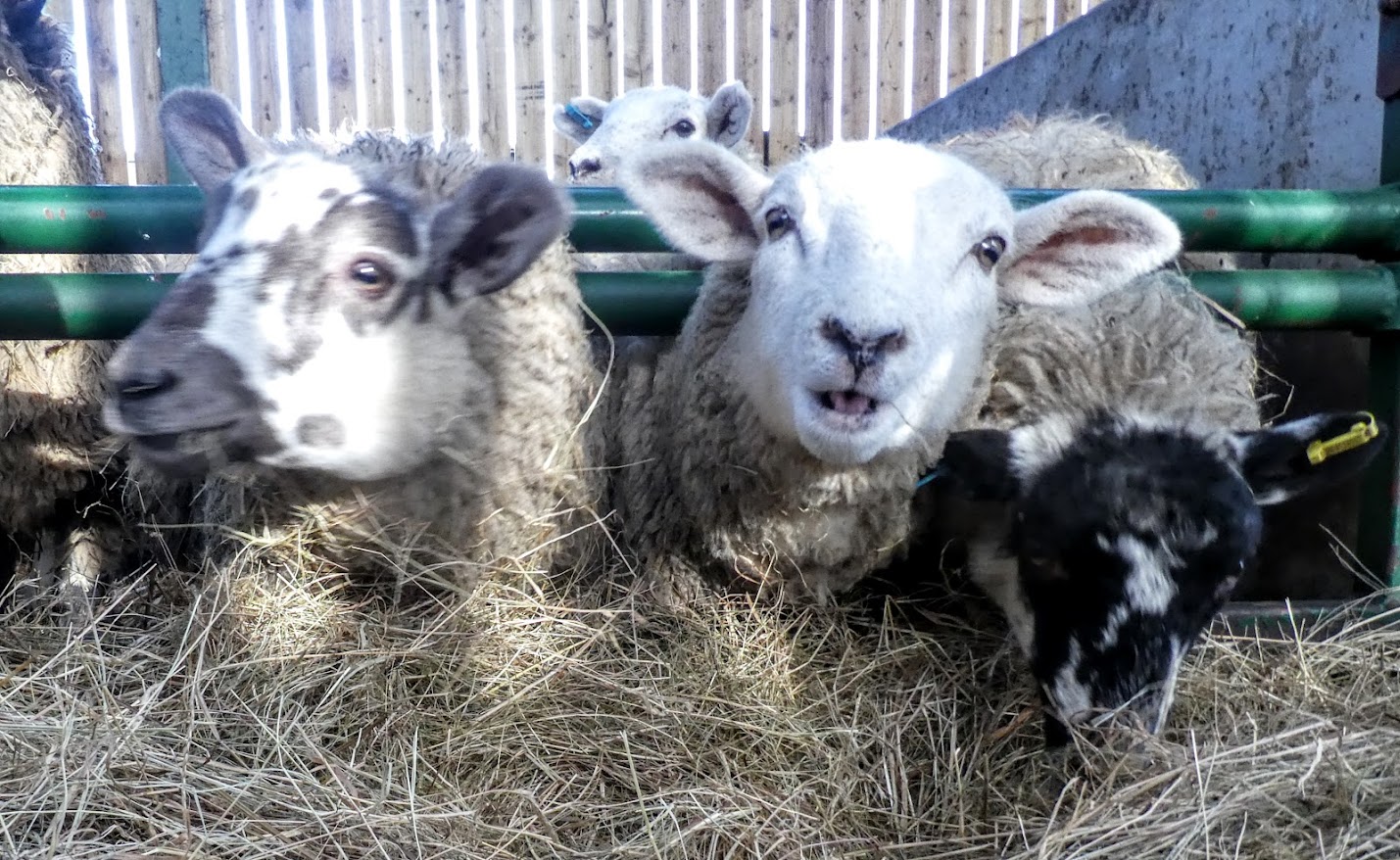
It was Masham Sheep Fair at the weekend, so my camera and my phone worked overtime. More another day- maybe.
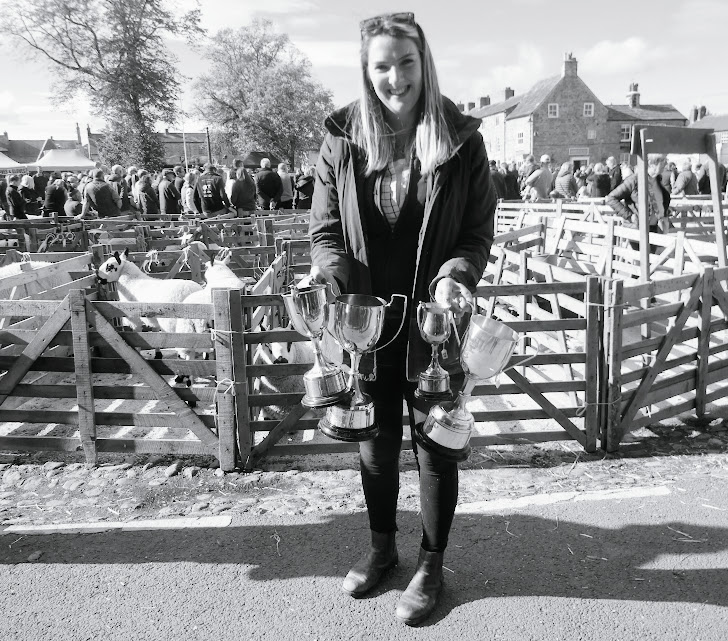
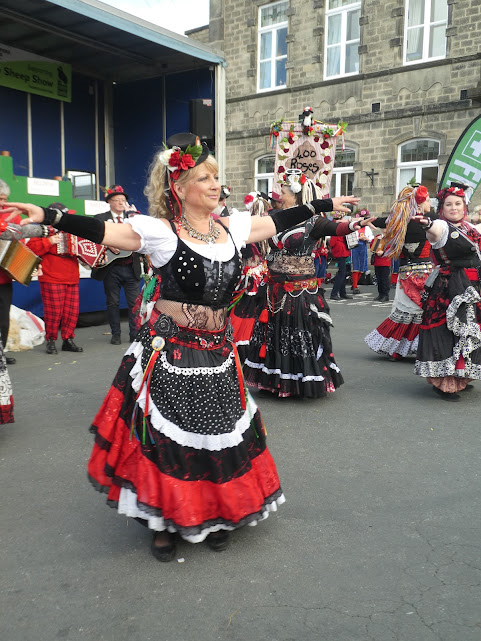
My feature photo – from my camera – is appropriate: one happy farmer at the end of the day displaying all the cups she’d won. The one below is from my phone, and shows my favourite 400 Roses taking to the floor – well, the town square.















You must be logged in to post a comment.