Tea and Coffee Cups I Have Known

Monochrome Madness this week has us hunting down everyday objects. I thought it might be fun to showcase some of the teacups and coffee cups I have met round and about. I’ll start off with my feature photo. Once, in Granada, at a bar with a friend, we found our different choices meant that we were served our coffee in the manner of the Three Bears -Baby Bear, Mummy Bear, and Daddy Bear.

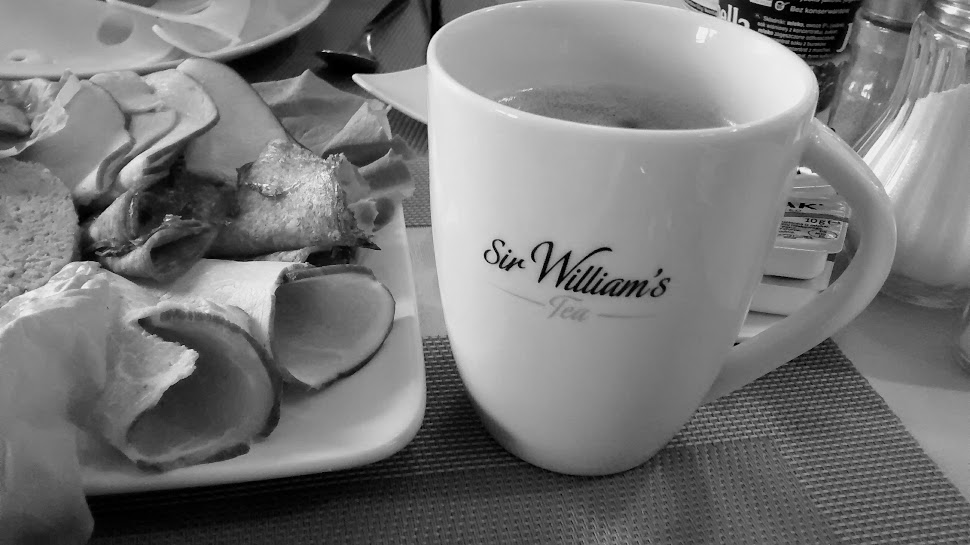
Poland next, and our breakfast in Gdansk. Sir William gets himself about, all over Europe. But not as far as I know, in the UK.

Granddaughter-in-Spain is too young for coffee. Hot chocolate is her tipple of choice. With predictable results.

After a busy morning of child care, let’s go for something more elegant. A good olden-days afternoon tea, courtesy of the Wensleydale Railway. Trundle in a leisurely fashion through the North Yorkshire countryside whilst enjoying tea elegantly served with dainty scones and cakes on a tiered cake stand. Earl Grey or Darjeeling, Madam?

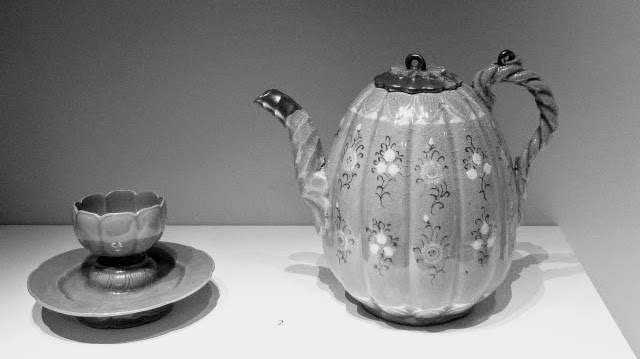
If fine china is your thing, you should visit the National Museum of Korea in Seoul. Here you can find delicate tableware like this – extraordinarily from the 12th Century – getting on for 1000 years ago …

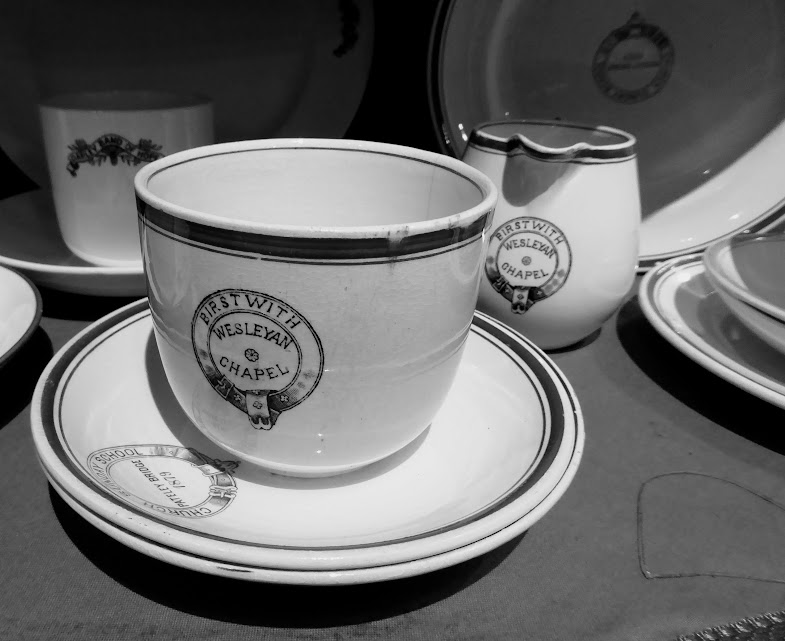
And if museums are your thing, you should visit the much more homely Nidderdale Museum in Pateley Bridge. Here you’ll find tableware from local churches. Yes, almost every church used to have their very own tea and dinner services for those all-important social gatherings.

Another display, this time from the annual Marmalade Festival near Penrith.

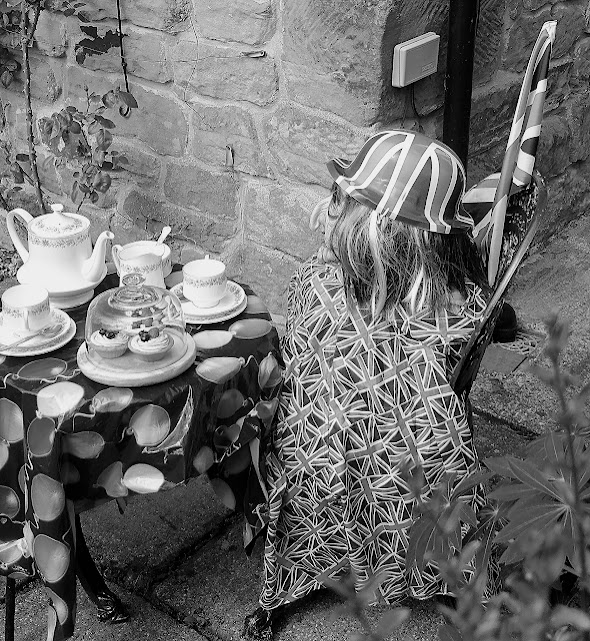
Finally, that newly-so-British tradition of the Scarecrow Festival. This one’s from last year’s village fete at Kirkby Malzeard, our village-next-door.

So, Sarah of Travels with Me, who’s prompted this week’s challenge for Leanne’s Monochrome Madness: here’s a slice of life from those so-important moments of down-time. No high class photos here. Quite simply high-class memories.

A Townie’s Jaunt to the Countryside

You live in a town – maybe even a big city. And on a nice Sunday afternoon, you fancy a ride out to the country to see what you can see. What do you want to find?

Maybe a barn, or even better barns, dotted round the pastureland.

In Yorkshire, or ‘up north’ at any rate, a drystone wall wouldn’t go amiss.

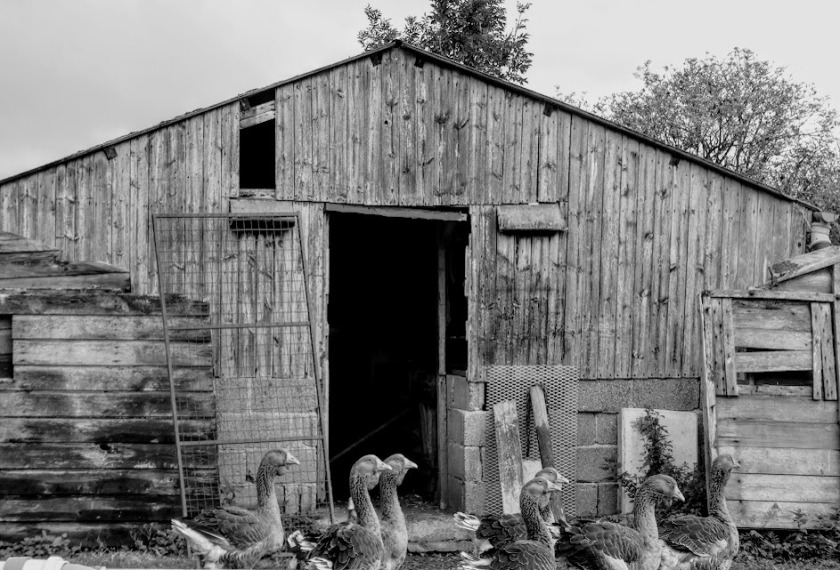
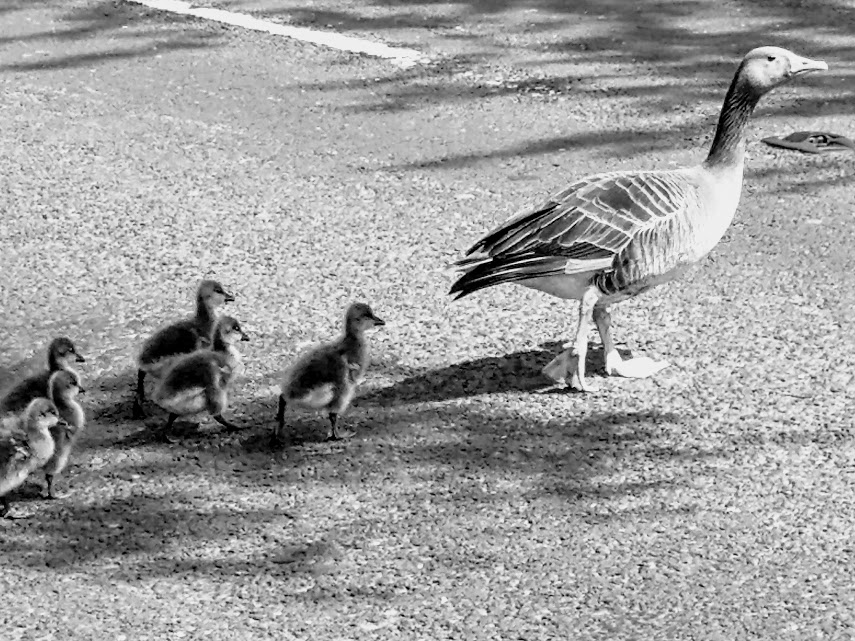
You have to see a flock of sheep, a few cows. A gaggle of geese too maybe?

And a farmer at work – yes, even on a Sunday …

And a rusting old tractor in a tumbledown barn?

And you need to drive along ‘the rolling English road‘, made, according to GK Chesterton, by ‘the rolling English drunkard‘.

And to make your day complete, just before you head back to town and all mod cons, you’d quite like to have to grind to a halt on the road because…

For Leanne’s Monochrome Madness: Outside the city and into the country.

Water in Motion?

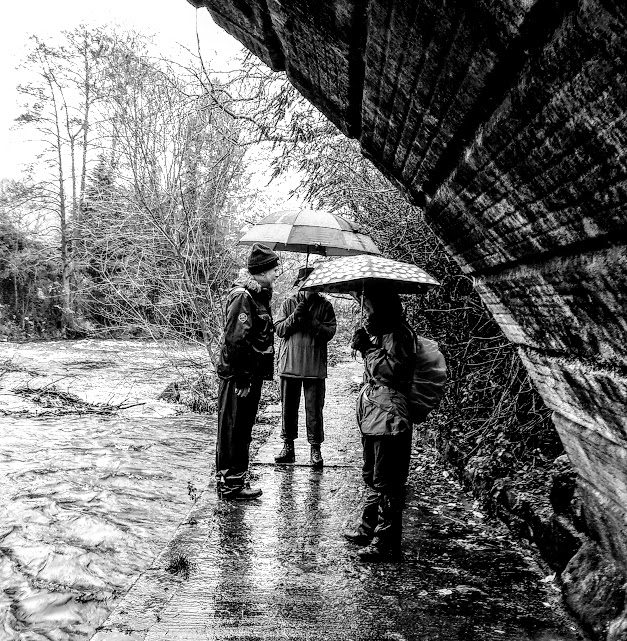
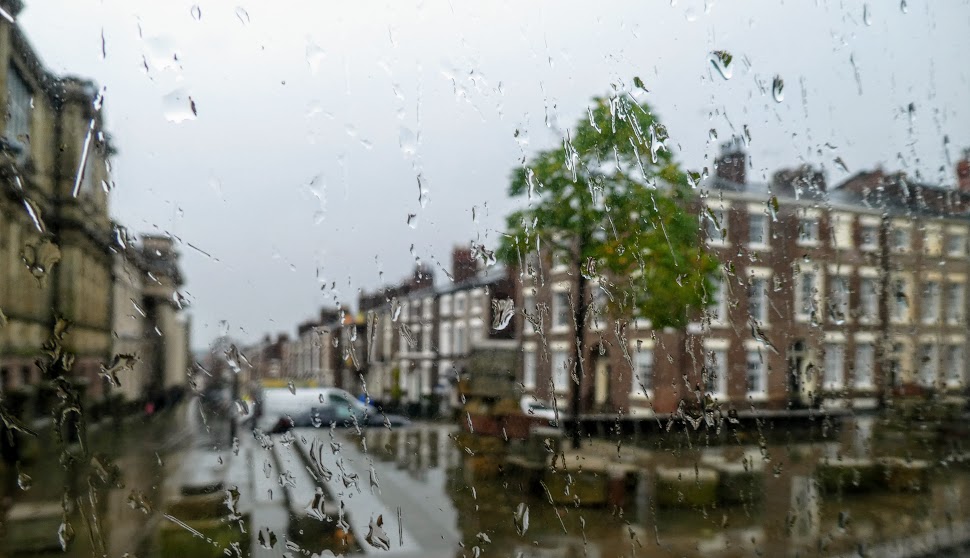
You want water in motion, Sofia, for your Lens-Artist Challenge? You’ve come to the right place. We speak of little else in England this year. Look at this.

A dismal moment sheltering by the River Skell in Ripon.

Or this, taken through the windows of Christ the King Cathedral, Liverpool.

A (typical?) view of Liverpool.

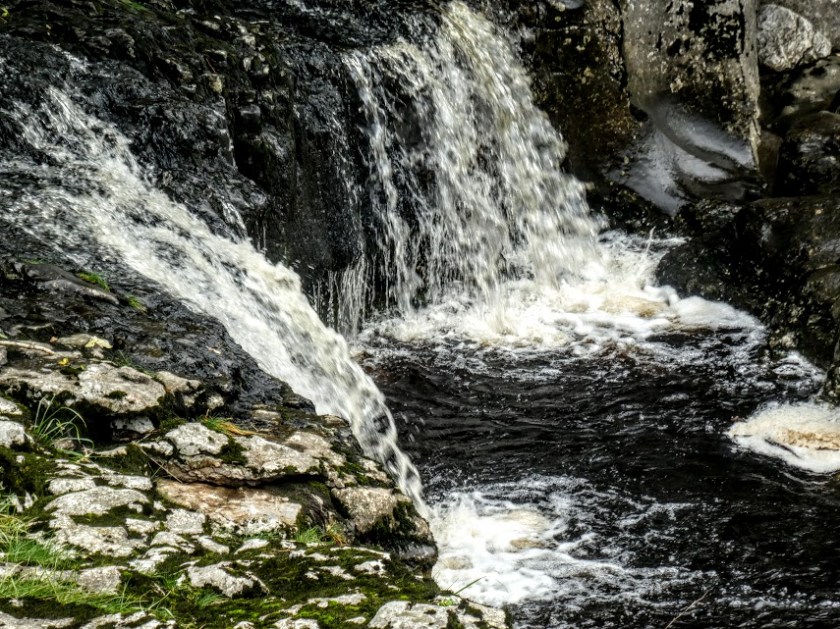
But without this rain, we wouldn’t have those glorious tumbling riverside views: these are both from Yorkshire: I’m focussing on England for this post – it seems appropriate.

The River Wharfe at Grassington
The River Ure at Redmire Force.

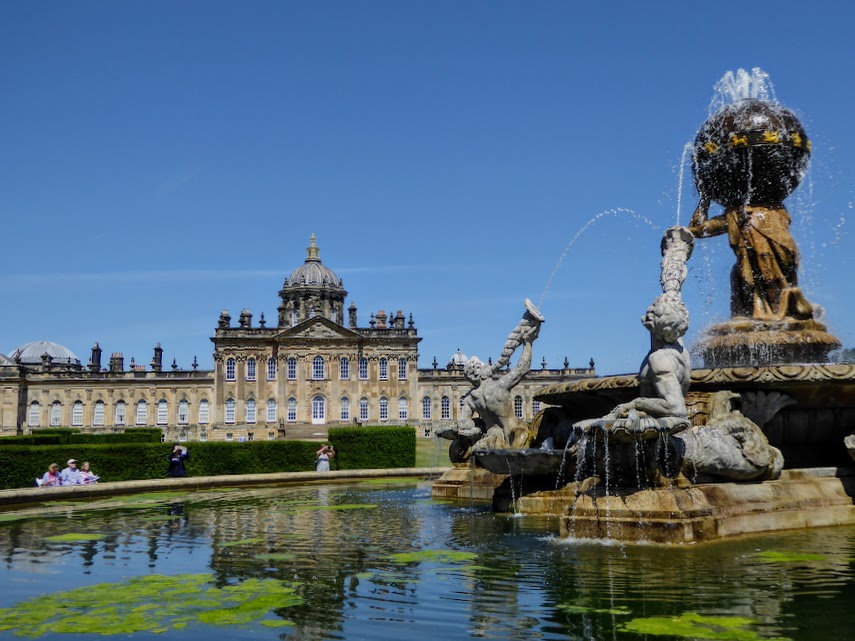
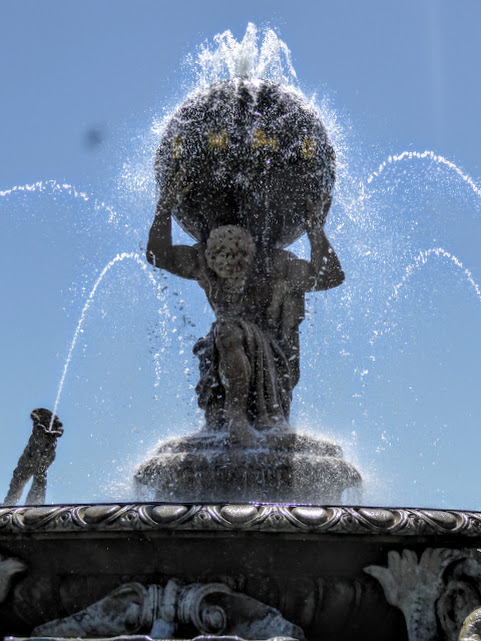
Water’s playful too: especially in the hands of a sculptor. Here’s Atlas with his sea gods at Castle Howard, Yorkshire. A fuller image is shown as the featured photo.

Atlas , Castle Howard

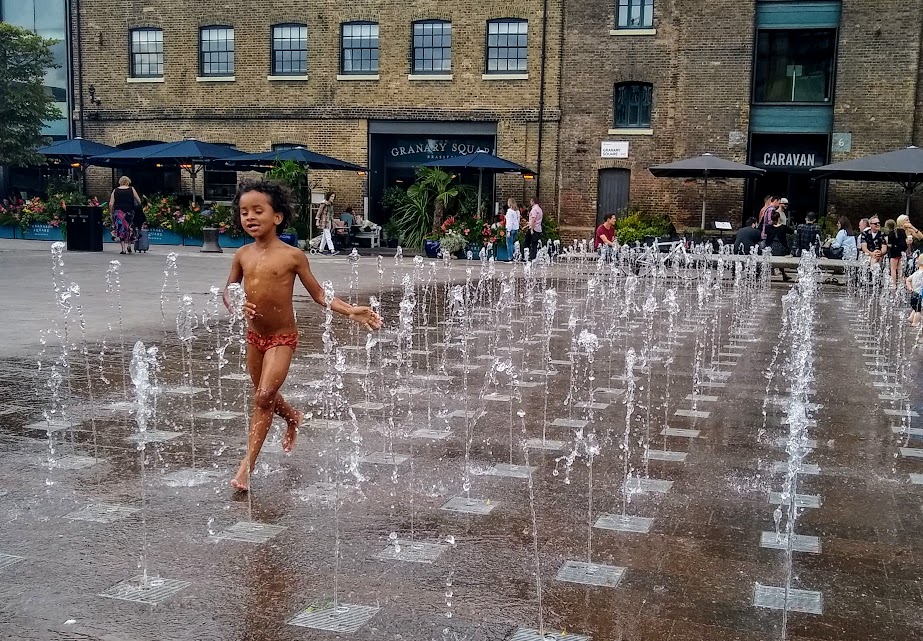
And a child in Granary Square, London is certainly having fun.

Fountain, Granary Square, Kings Cross London.

But we’ll conclude with a more typical London view, overlooking the River Thames.

The River Thames passing through central London.

The Biggest Easter Egg You’ll See This Year?
Almost anyone who visits Harrogate considers that taking morning coffee or afternoon tea at Betty’s is part of the deal. This iconic part of the town has been here since 1919, and has the reputation of being thoroughly civilised, with the highest standards. Whatever you choose to eat or drink will be delicious, and elegantly served. But it’ll cost you.

Something else that could cost you is the egg that forms a traditional part of its display every Easter. It weighs in at over 5 kg. but could be yours for £375. You can read all about it here.

For Brian’s Last on the Card

Caution! People at Work

People photos. That’s Tina’s Lens-Artist Challenge #292. This is difficult. I’m only just learning to be less shy about making snapshots of innocent strangers, with or without their permission. One way or another though, people at work is an easier ask, so I’m off to see who we can find doing just that.

We’ll start at the second biggest fish market in the world: Jagalchi Fish Market, Busan, South Korea. Here’s someone who’s probably been filleting fish for decades. She could probably do it with her eyes closed.

An experienced ajumma at the fish market

Here are some workers who have a head for heights: Window cleaners in Warsaw; a telephone engineer in Wensleydale; and two workmen doing something useful at a Thames-side structure.

This auto-rickshaw driver isn’t working at the moment. He’s proud to have taken a very green, very-jetlagged-but-too-wired-to-sleep English tourist (me) on an informative two hour whistle-stop tour of Bengalaru, and is cheerfully posing for a photo.

My first friend in Bengalaru: the rickshaw driver who took me on a tour of the city

Here’s a different kind of job. Most Brits have heard of Clare Balding, radio and tv presenter. One of her jobs is presenting a BBC Radio 4 programme, ‘Ramblings’ about the joys of walking. A few years ago, two friends and I had the pleasure and privilege of walking part of the Nidderdale way with her. You can read all about it here. And here Clare is describing the scene before her, as her producer and sound recordist Lucy saves her every word on that muff-on-a-stick while we hover in the background.

Clare and Lucy on the Nidderdale Way

Not all work is paid of course. Every year, sheep farmers from all over the north of England and beyond gather for Masham Sheep Fair, to show their sheep off at their very best. Some of the keenest contestants for honours are under ten, the farmers of the future. But the featured photo shows someone who is paid – very little I suspect – for his work: A herdsman in Albania, constantly moving his herd of sheep and a few goats in quest of lush pasture.

Waiting for their sheep to be judged, two young contestants.

But over in India, you could be working with different animals -elephants, perhaps at Dubare Elephant Camp. You might be washing them in the river, or cooking their next meal of jaggery, millet and vegetation.

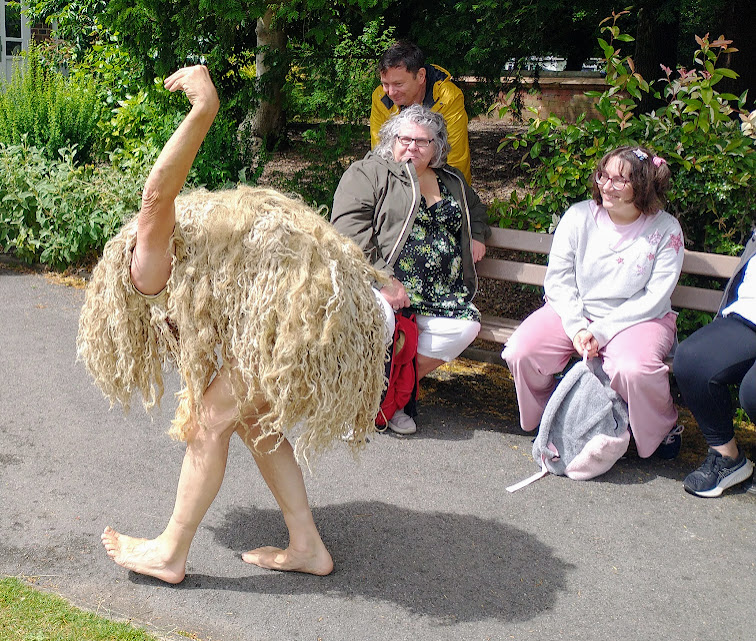
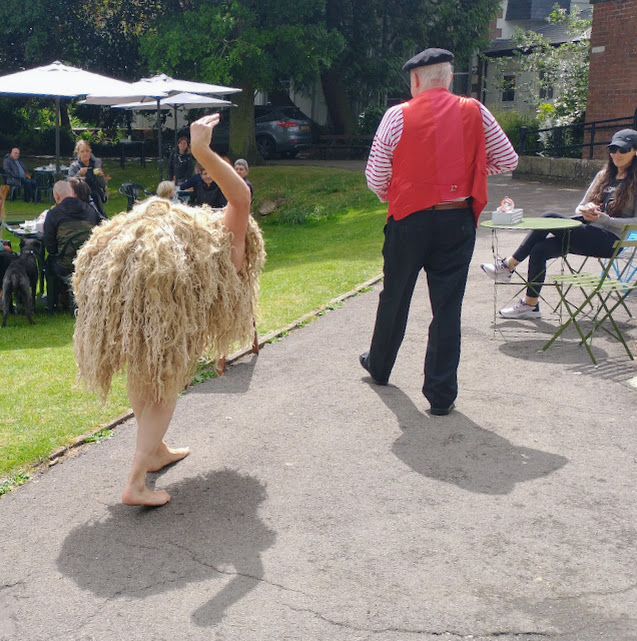
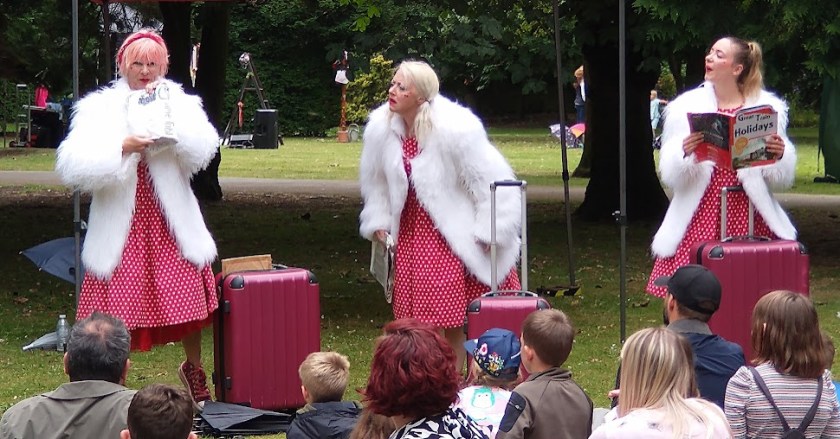
You might be a waiter. Here are two French ones. Only they’re not really French, or serving at table. They earn a crust as actors – in this case at Ripon’s annual Theatre Festival.

Zey kept ze crowds amused at Ripon Theatre Festival

Or you might be a slave. A willing one. At half term, my grandson was taken on – for half an hour only – to be enslaved to a Viking master who turned out to be extremely personable, and even helped him with some of his tasks, such as wood turning. Well, it was part of York’s annual Jorvik Viking Festival.

Children can be good at working for free – unless you want them to tidy their room. Catch ’em while you can.

Castles to build …

Monday Portraits from a Sunday Walk

Nidderdale: the first day totally without rain in I can’t remember how long. Our walk was punctuated with encounters with animals, from Highland cattle who seemed to have strayed south, to llamas whose forebears were definitely immigrants, via horses and – of course, since it’s now officially spring -newborn lambs.

Monday Portrait.

Textured Monochrome

This week for the Lens-Artist Challenge, John invites us to focus on the tools we consider when taking photographs: Shape, Form, Texture, and Light.

Sarah of Travel with Me fame (You don’t follow her? Why not?) decided to focus on texture alone in her role as Guest Presenter for Leanne’s Monochrome Madness . I’ve decided to follow her excellent example.

I often like to use monochrome to ‘describe’ texture. It seems to highlight shape, form and – er- yes, texture to advantage, with no colour to distract the eye.

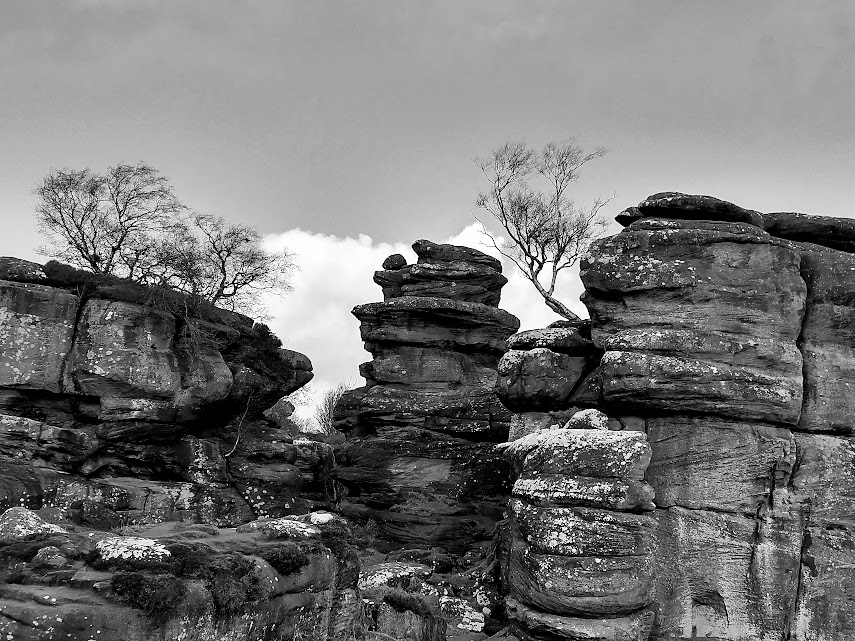
In fact my featured photo of nearby Brimham Rocks is changed very little by the use of monochrome. The sky was a bright azure blue that day, with whiteish clouds. Realistically, grey is so much more authentic this year.

Let’s stay with the natural world, and go to Mossyard Bay in Dumfries and Galloway, to inspect the rocks there, and a sheltered pool as the tide goes out.

Mossyard Bay …
… and a pool receding as the tide recedes

We’ll stay by the sea, but in Arenys de Mar in Spain this time. A rusting chain, a decaying lump of concrete in the fishing port.

A tired chain in an even more exhausted lump of concrete, Arenys de Mar

More man-made creations, battered by wind and weather. A has-been saint awaits repair in the stone mason’s yard at Rheims Cathedral.

A fatigued saint, Rheims.

And here’s a characterful shuttered window that’s lived a long life in a village in the Hérault, France.

A village house in the Hérault 

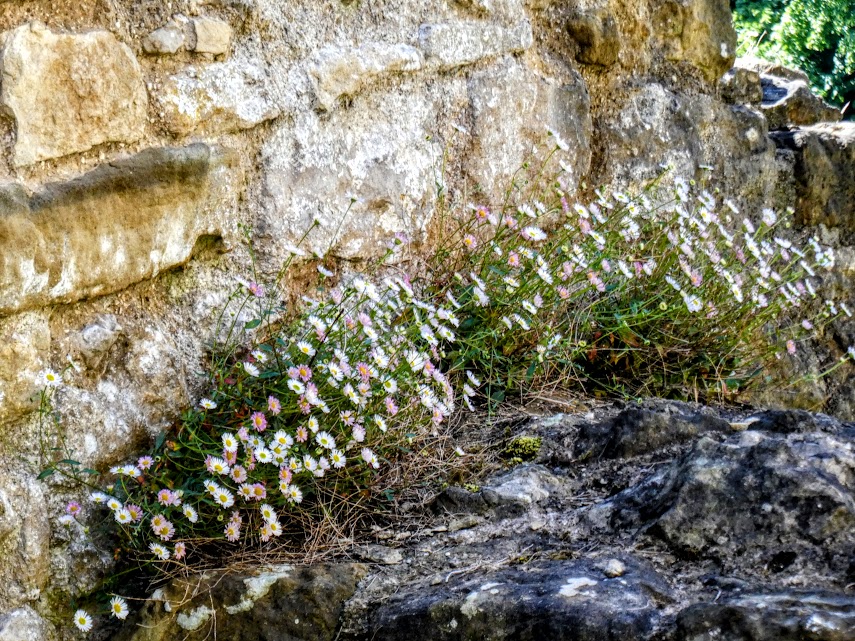
An English country garden, complete with bee.

Eryngium finds favour with a bee.

… an icy puddle …

A locally frozen puddle.

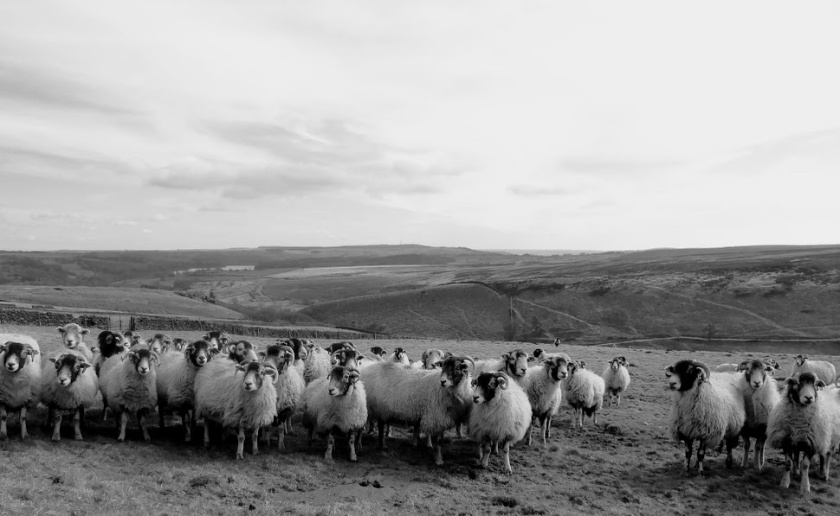
And let’s leave you with that most Yorkshire of animals, a sheep: happy to show off a magnificent fleece, magnificent horns.

A winning exhibit as Masham Sheep Fair.

A Window on a Vet’s World

This is a window designed in honour of a vet – James Herriott. He (under his real name of James Alfred Wight) made his name by writing a whole series of books about being a young vet in Darrowby (actually Thirsk) visiting farms and their animals hither and yon in the Yorkshire Dales from the 1930s onwards. If you don’t know his books, you may know one of the TV series going out under the name of All Creatures Great and Small: 1978 & 2020, as apparently they’re doing the rounds the world over.

Well, there’s a museum in Thirsk as well – World of James Herriott – occupying the house he and his family lived and worked in all those years ago. And it has a window celebrating the landscape that formed the backdrop to his work. Here it is as the featured photo. And here is a bit of a collage of the backdrop to the working week of any Yorkshire vet, then and now. Except I haven’t got a picture of the White Horse at Kilburn featured in the window. About 170 years ago, it was cut into the landscape to emulate the chalk hill figures of southern England, and Herriott, like all the rest of us, would see it often as he drove round and about the area.

If you’re in the area and want a good family-friendly destination, the museum is highly recommended. You’ll come away with all the older family members saying ‘I remember those’, as they peer at tea-cosies, mangles and a thoroughly ancient car (Gumdrop, anyone?), bemused by the vetinary equipment, and entertained by the quizzes and activities in the children’s gallery. You too can insert your arm into a cow’s rear end to deliver a reluctant calf.

And for a bit of context, here’s a view from a window in the museum.

Monday Window

Whatever the Weather

Whether the weather be cold,
Or whether the weather be hot,
We'll weather the weather
Whatever the weather,
Whether we like it or not!

Traditional

I thought I’d put together Anne’s Lens-Artist Challenge #286 – Weather – with the aid of children’s rhymes.

Rain, rain, go away,
Come again another day.
Rain, rain, go to Spain,
Never show your face again!
Traditional
A shot taken not in England, but in Bavaria, Germany

It’s not just children who’d willingly sing this these days. In the UK it’s rained pretty much constantly all this year. But in Spain, they’d cheerfully take some of our surplus. In Catalonia, in mid-winter, the reservoirs are a mere 16% full, and water-use restrictions are in place.

When the wind is in the east
'tis neither good for man nor beast.
When the wind is in the north,
the skilful fisher goes not forth.
When the wind is in the south,
it blows the bait in the fishes' mouth.
When the wind is in the west,
then 'tis at the very best.
Traditional
A particularly windy May morning near home.
The fog comes
on little cat feet.

It sits looking
over harbour and city
on silent haunches
and then moves on.
Carl Sandburg

I can’t claim that Carl Sandburg’s is a children’s rhyme. I couldn’t think of one. Can you?
Fog slowly lifting near Burnsall, Wharfedale
The north wind doth blow,
and we shall have snow,
and what will the robin do then, poor thing?
He'll sit in a barn,
and keep himself warm,
and hide his head under his wing, poor thing!
Traditional.
The field-just-down-the-road one January.

This hardly-there snow is pretty typical of wintry conditions in England. And I know that a robin lives pretty close by: this field almost qualifies as my back yard.

The robin -just-down-the-road, not in January
Red and yellow and pink and green,
purple and orange and blue:
I can sing a rainbow,
sing a rainbow,
sing a rainbow too.
Arthur Hamilton

All three of my children used to sing this one – often – at assembly in primary school. I wonder if it’s still going strong?

Lofthouse in Nidderdale, North Yorkshire.

So that’s it. Oh, hang on, I’ve forgotten something. Sunshine. Well, I would, wouldn’t I? It’s February in England, and famously sunless. Let’s show British sunlight, rather than the full-on sun of the holiday of our dreams.

It’s September. The schools have gone back, so here is a sunny beach, gloriously (almost) empty in Filey, North Yorkshire

And most children can sing the less-than-traditional The Sun Has Got His Hat On by Noel Gay. So let’s leave you with this cheery version.