A quick look at shadows, the enigmatic feelings of mystery they can sometimes produce.
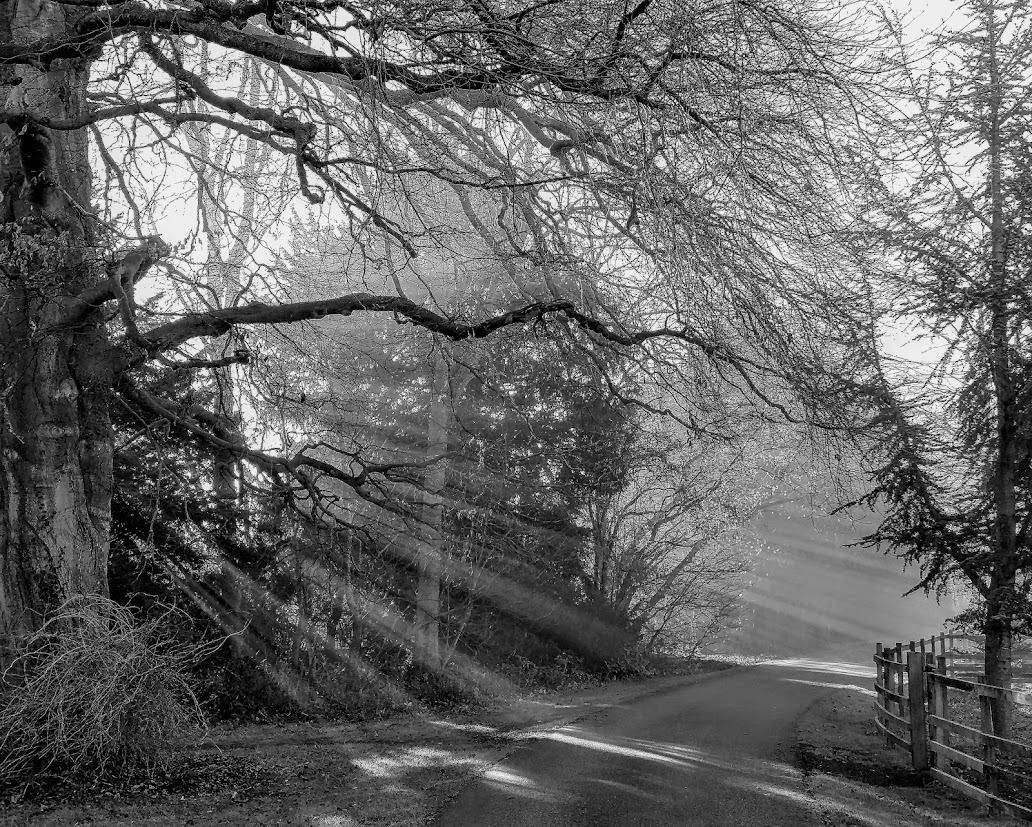
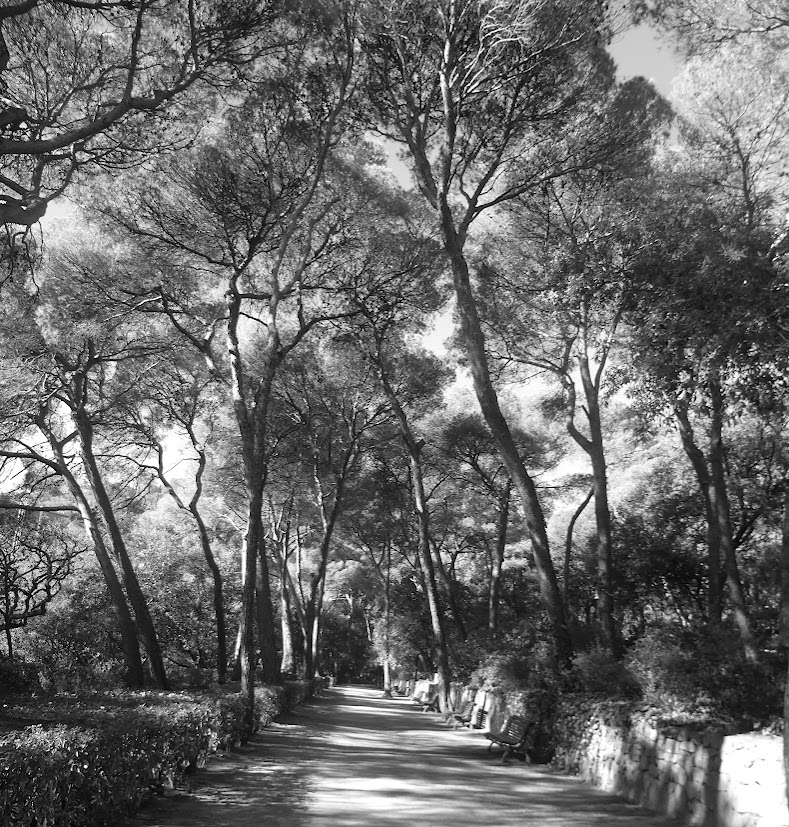
The featured photo shows the early morning sun, somewhere near here. No mystery perhaps. More a feeling of unknown promise in the day ahead. And below, this quiet photo from Laberint d’Horta in Barcelona reminds me of a morning I spent there discovering , hidden amongst the trees, apparently ancient statuary.
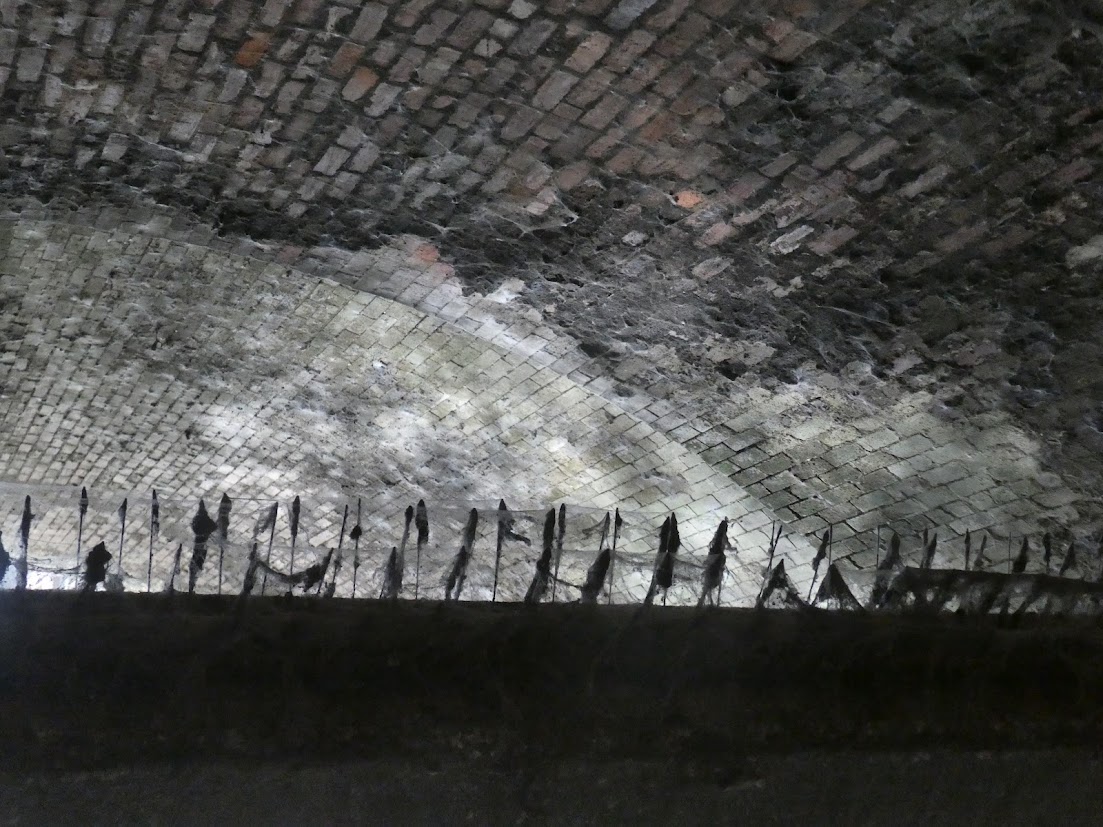
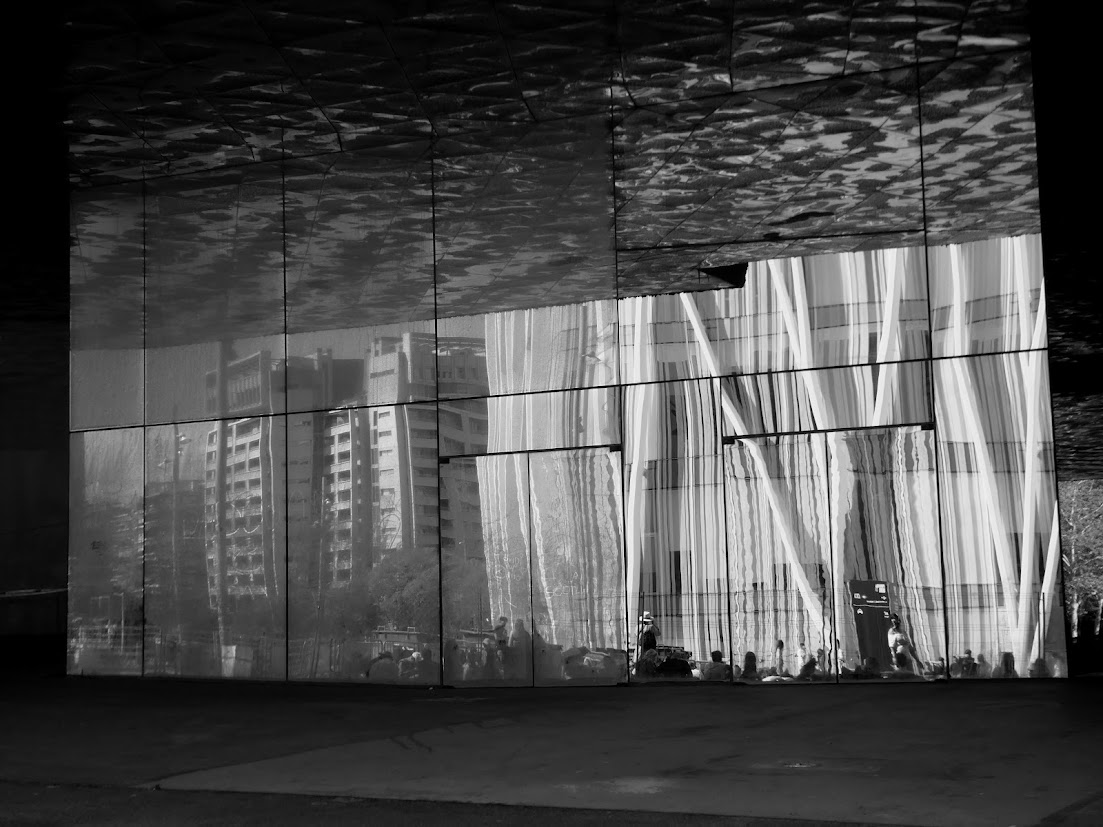
Two urban photos: one from the once gritty underside of Leeds, suggesting its dirty and industrial past, the other from a up-to-the-minute quarter of Barcelona. I like the hard-to-decipher shadows on the textured overhanging roof.
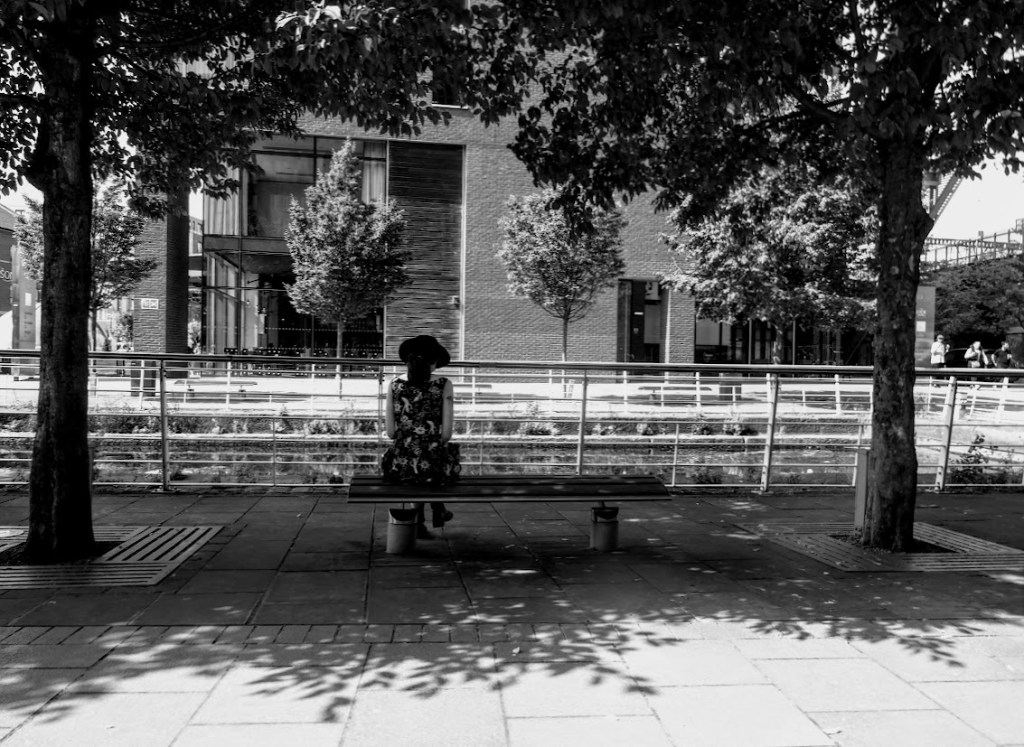
And lastly, another from canal-side Leeds. Someone should write a story about this young woman sitting contemplatively beneath the shadows of the trees.
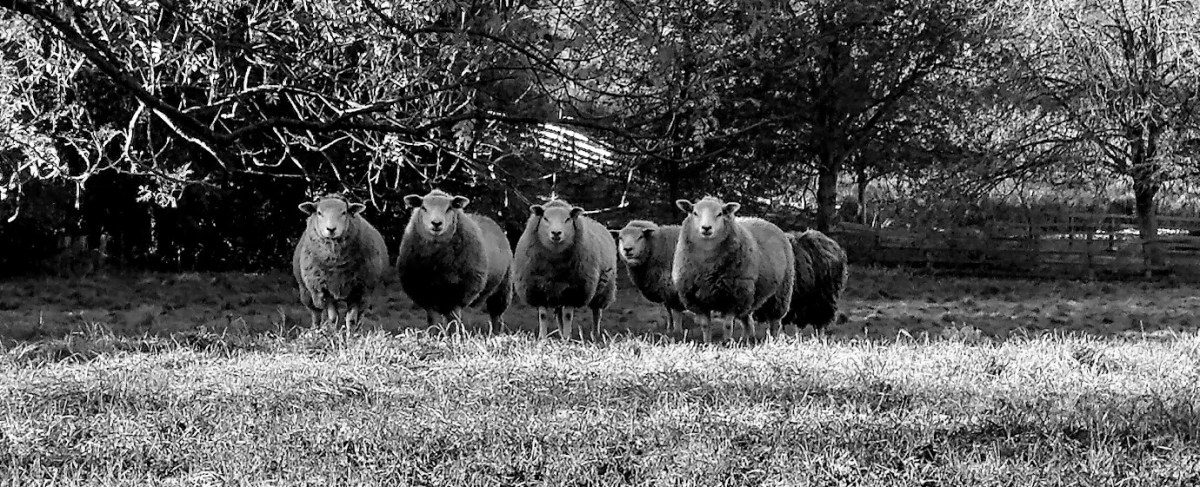
This week, for Monochrome Madness, Leanne asks us to stay in our home patch and show us what we can find within 10 km of our home. Well. I’m sorry Leanne, but frankly, one kilometre is as far as I can stretch today, and I may not even go that far. Let’s see. Have you met our next door neighbours? They’re in the featured photo.
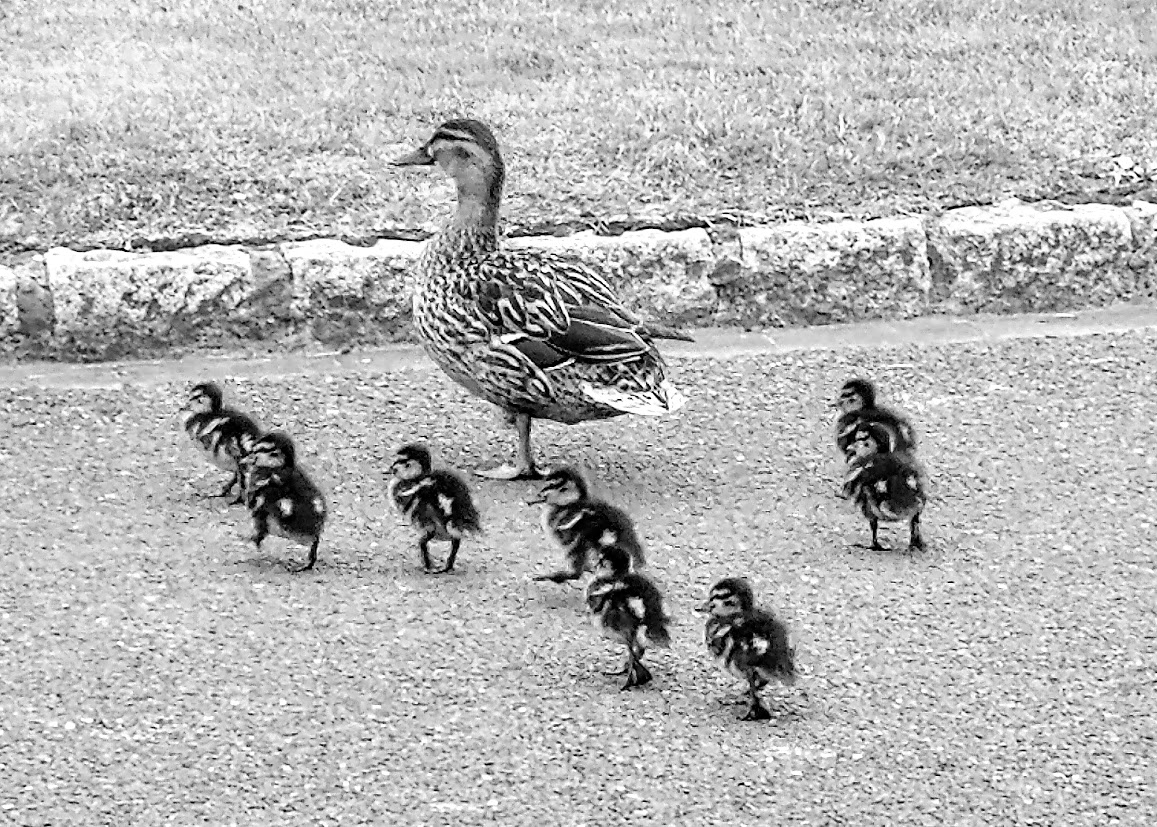
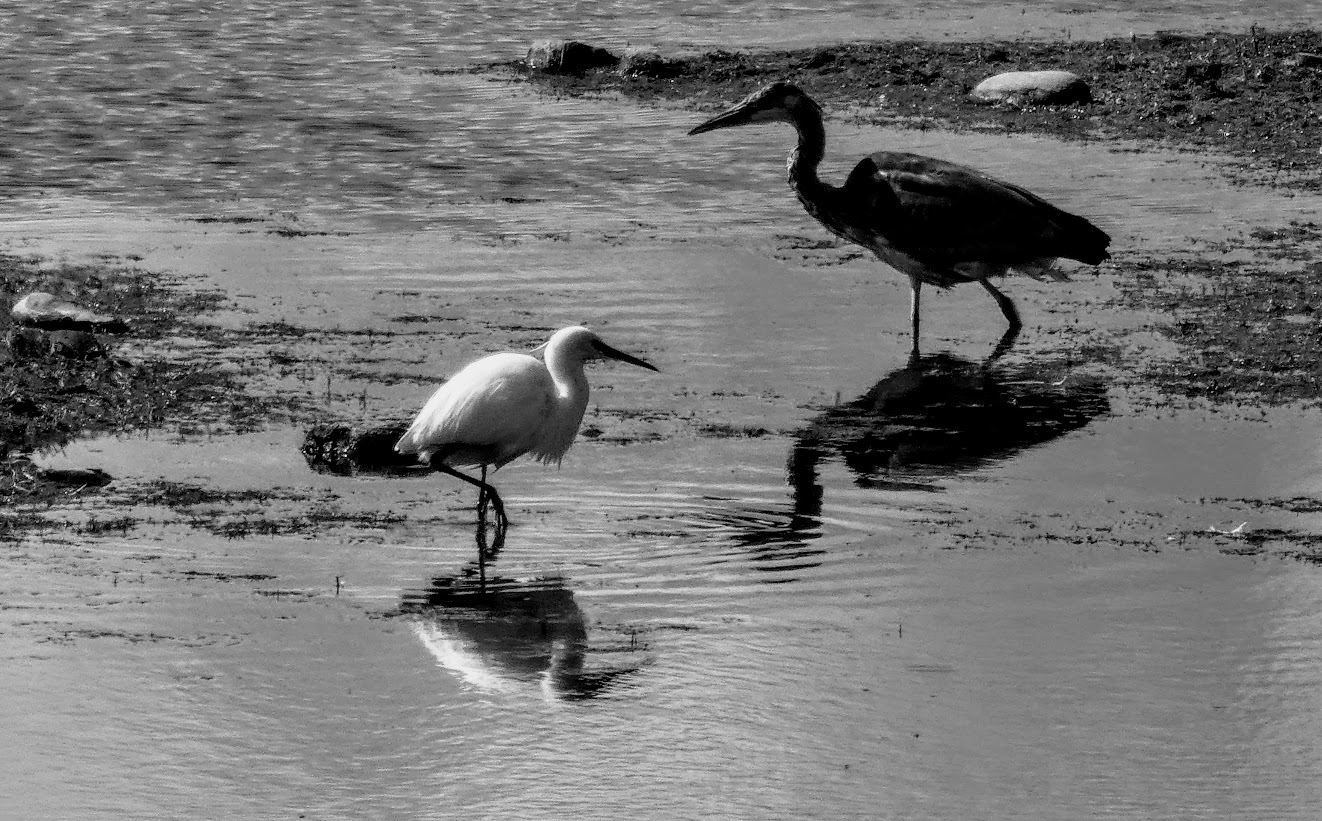
We’re a bit light on neighbours generally. You might find these characters:
They’re from the local ponds – quite honestly the heron and egret come from just a little further up the road- but not much more distant.
Even nearer than the ponds is the River Ure.
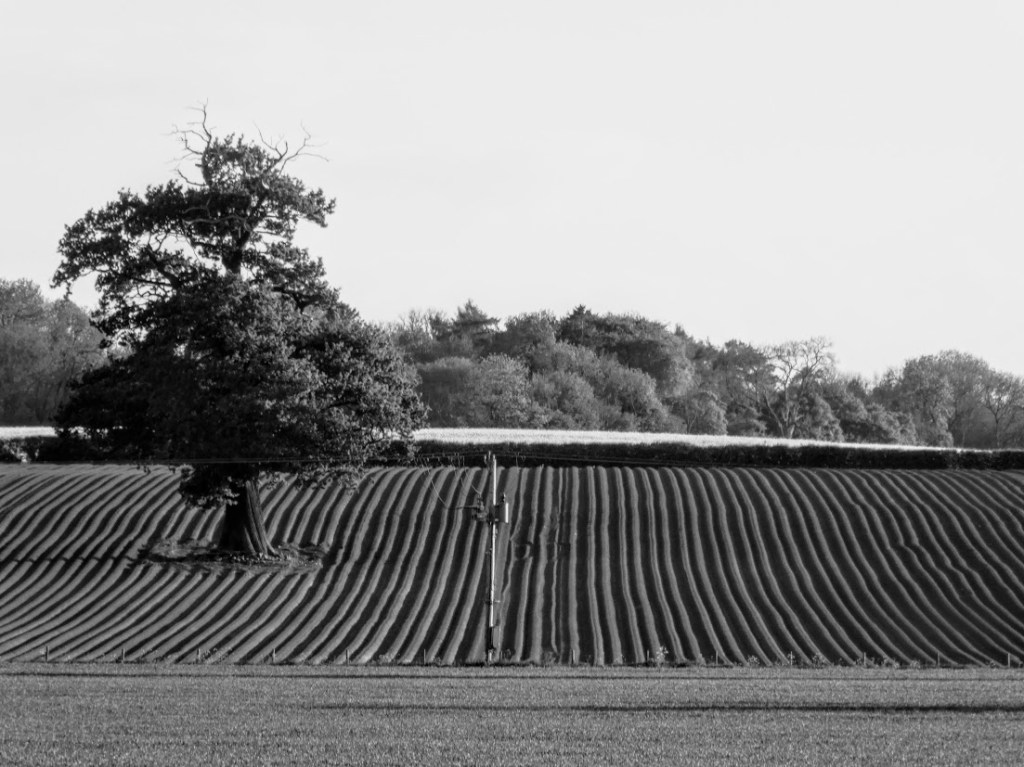
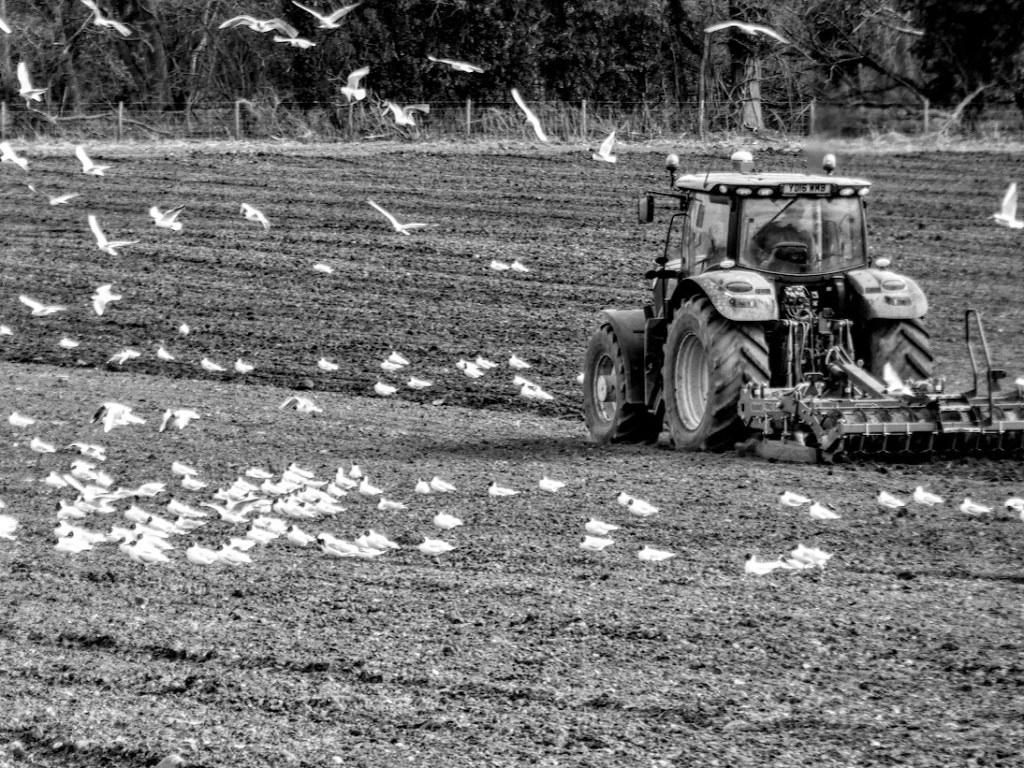
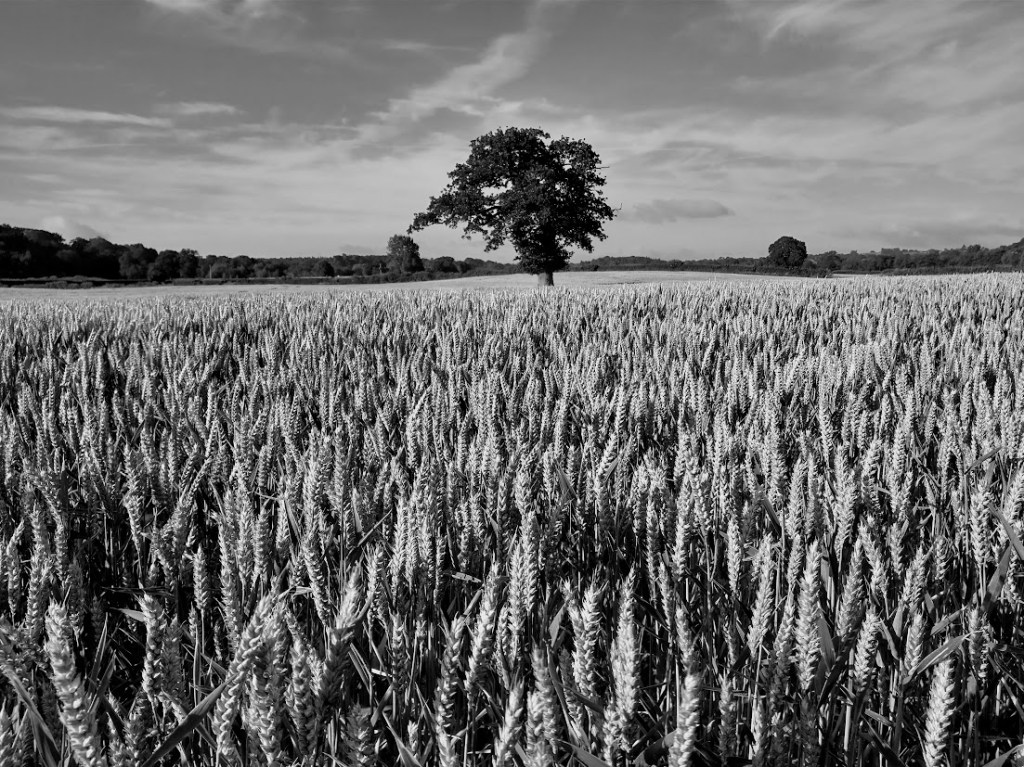
Go the other way from the house, and it’s fields and crops…
WinterSpringSummer
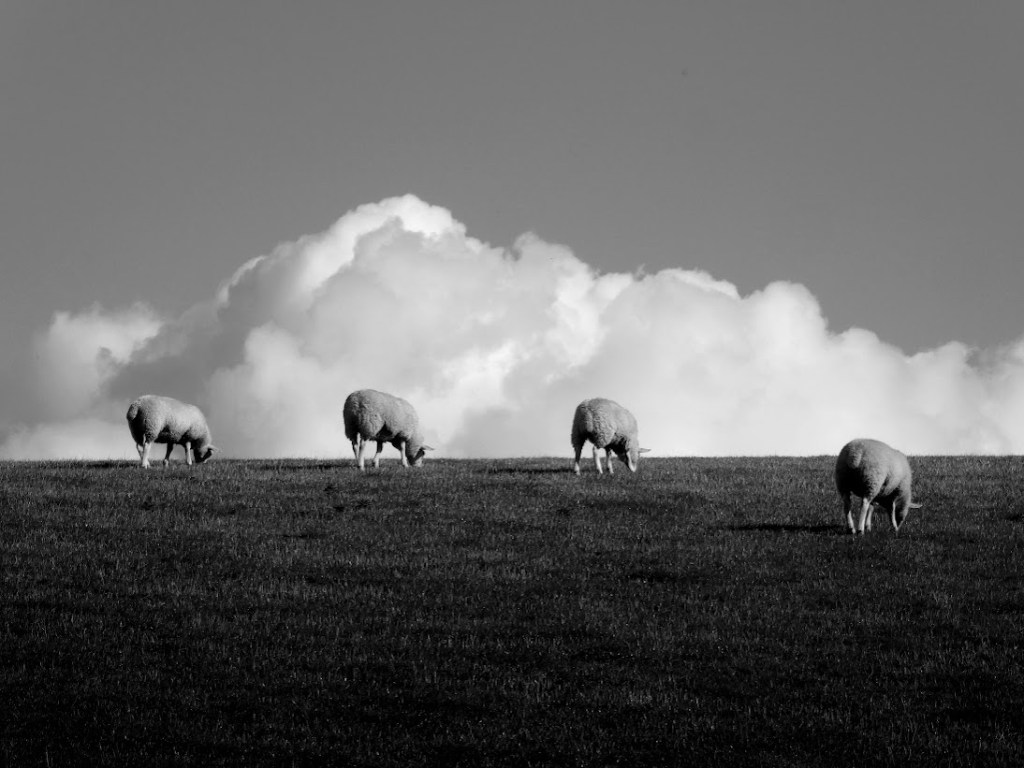
… and more sheep …
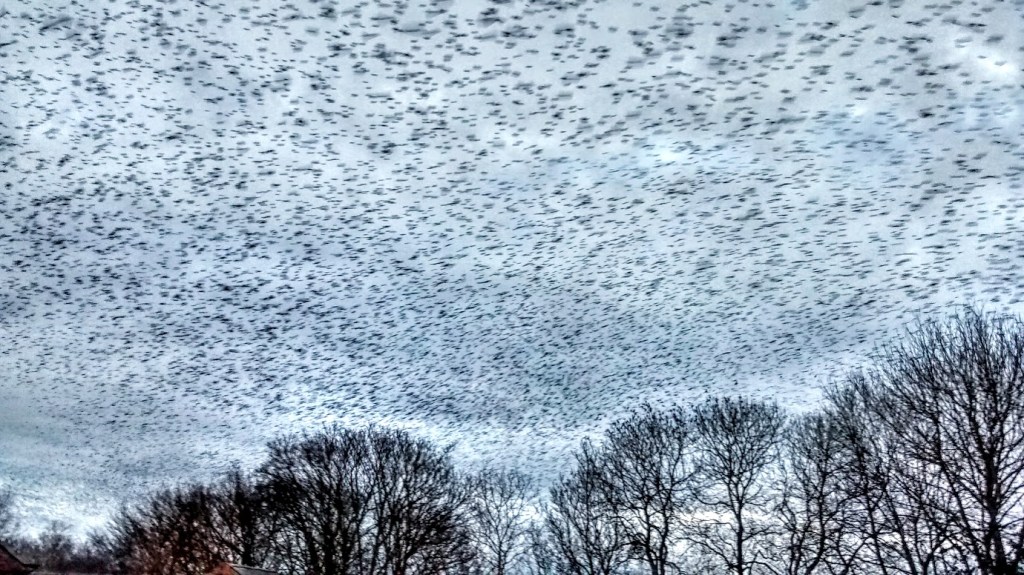
But please don’t think our life lacks drama. On Monday evening we were unexpectedly treated to a starling murmuration at the bottom of the garden. At dusk, starlings in their hundreds – perhaps thousands – swirled above us, eddying back and forth, cacophanously landing as one on the trees, which bowed under their weight, before they took off again to wheel and turn above us. Then some signal, known only to them, indicated that they should disappear and roost in the nearby reed beds. They never seem to come to the same place twice, so they weren’t here on Tuesday, and they won’t come tonight.
This is just as the shot emerged from the camera – a natural monochrome.
So that was our drama for the week. Just an everyday story of country folk.
For this week’s Lens Artist Challenge, Beth asks us to show shots of what has astonished us, and takes her inspiration from this short poem by Mary Oliver.
For some reason, my mind was drawn back to Lockdown. For us, Daily Exercise was one of the pleasures of that peculiar time. Country dwellers, we could range freely over our home patch without meeting a soul. And here, it happened to be a wonderful spring, where plants, birds and all life could flourish in balmy temperatures and just the right amount of rain.
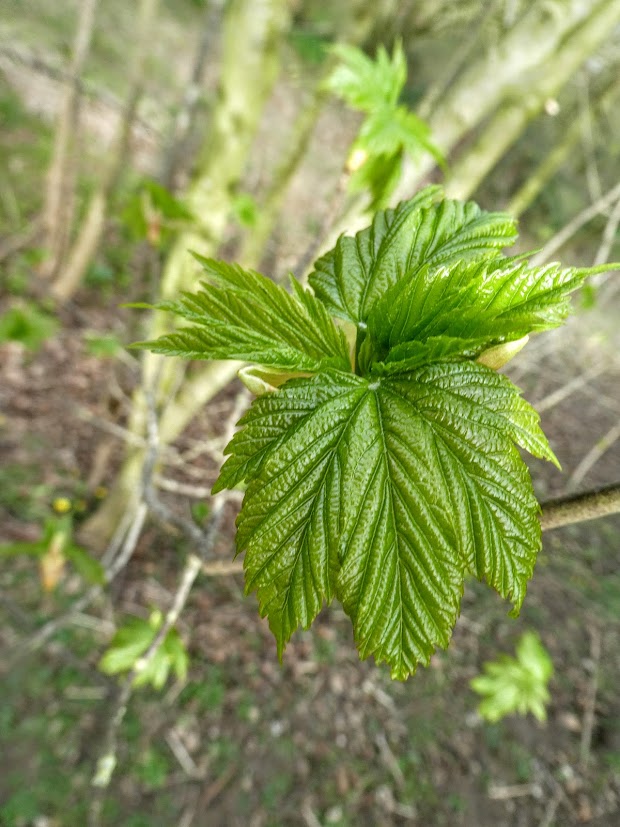
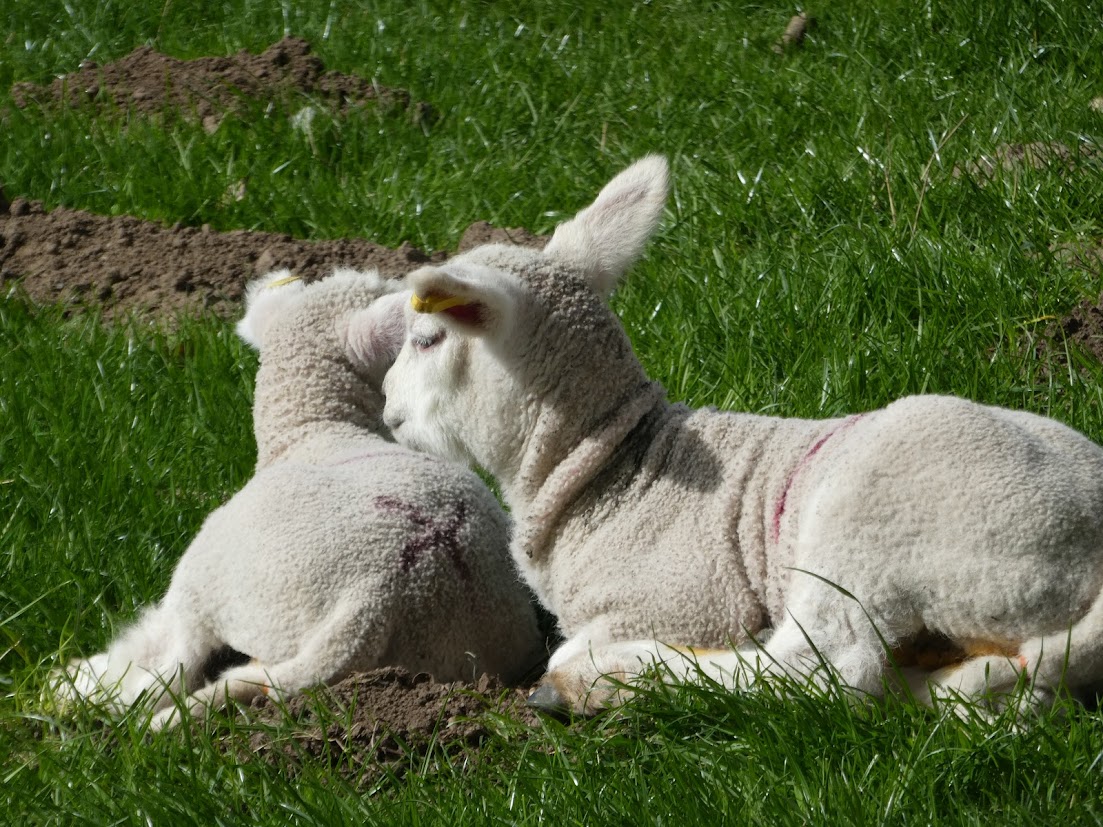
Walking by myself down deserted paths – M was exploring on his bike – I discovered Wonder and Astonishment anew. Day by day, I could watch leaves unfurl from tightly-bound buds; flowers appear; lambs totter their first hesitant steps.
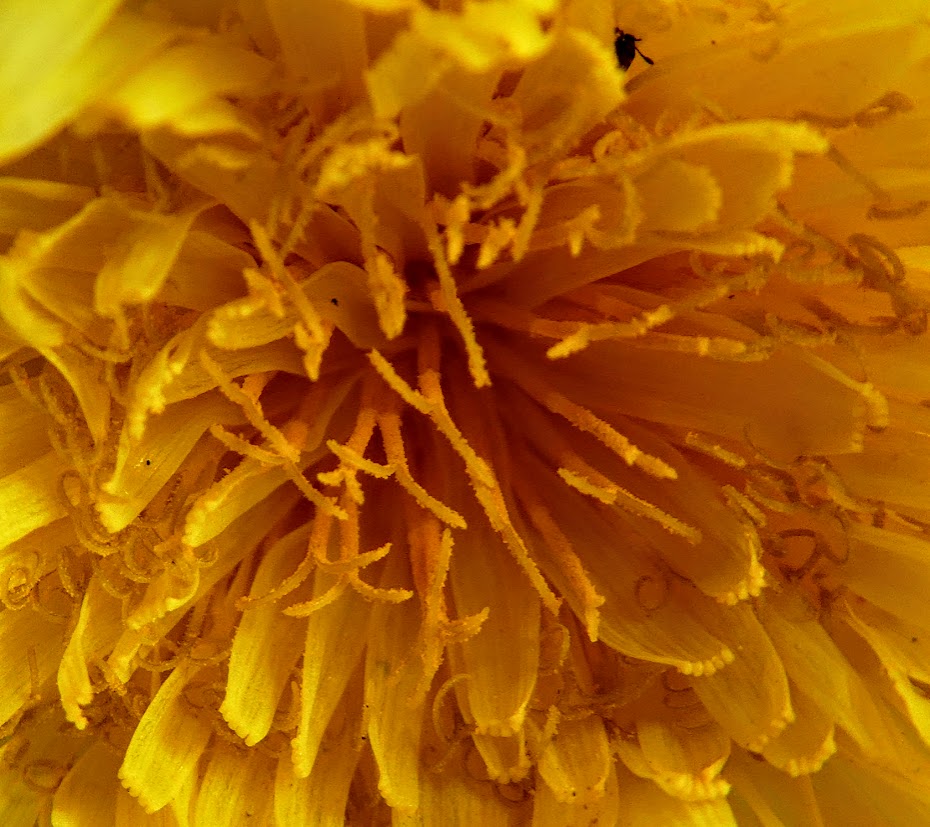
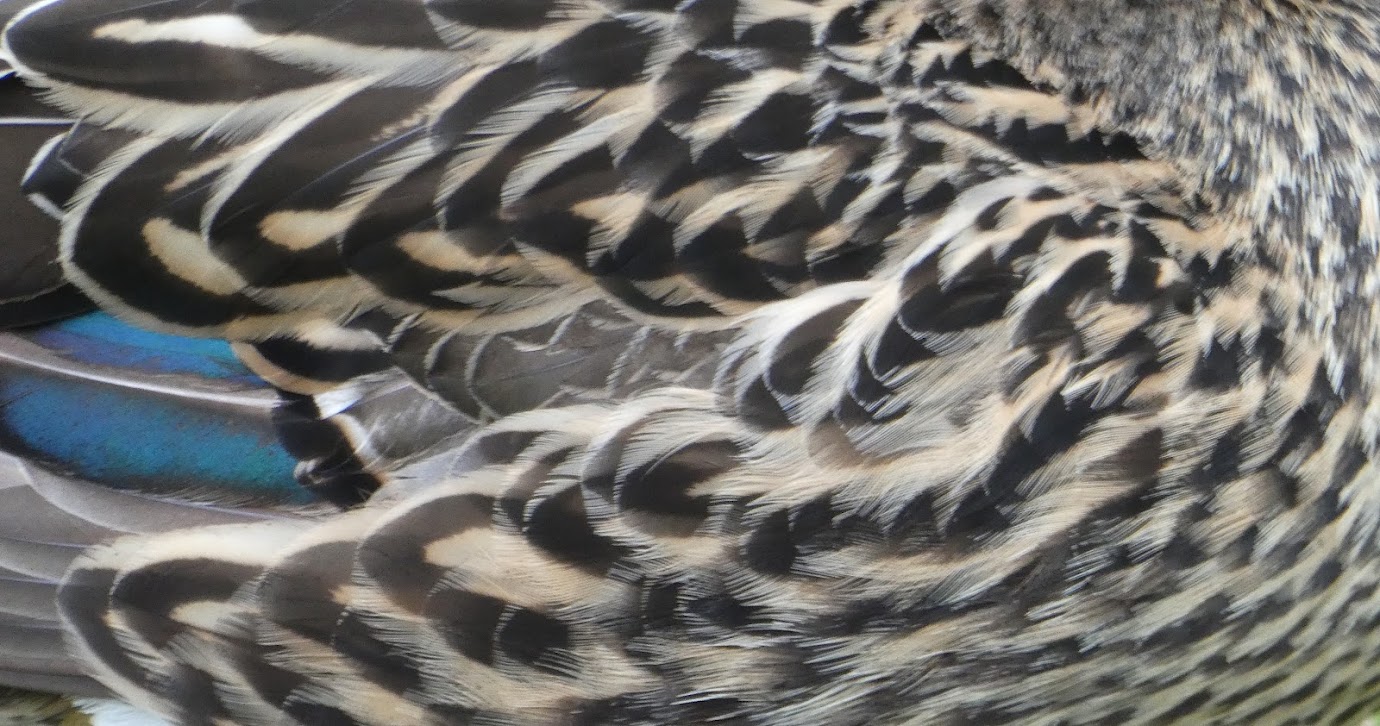
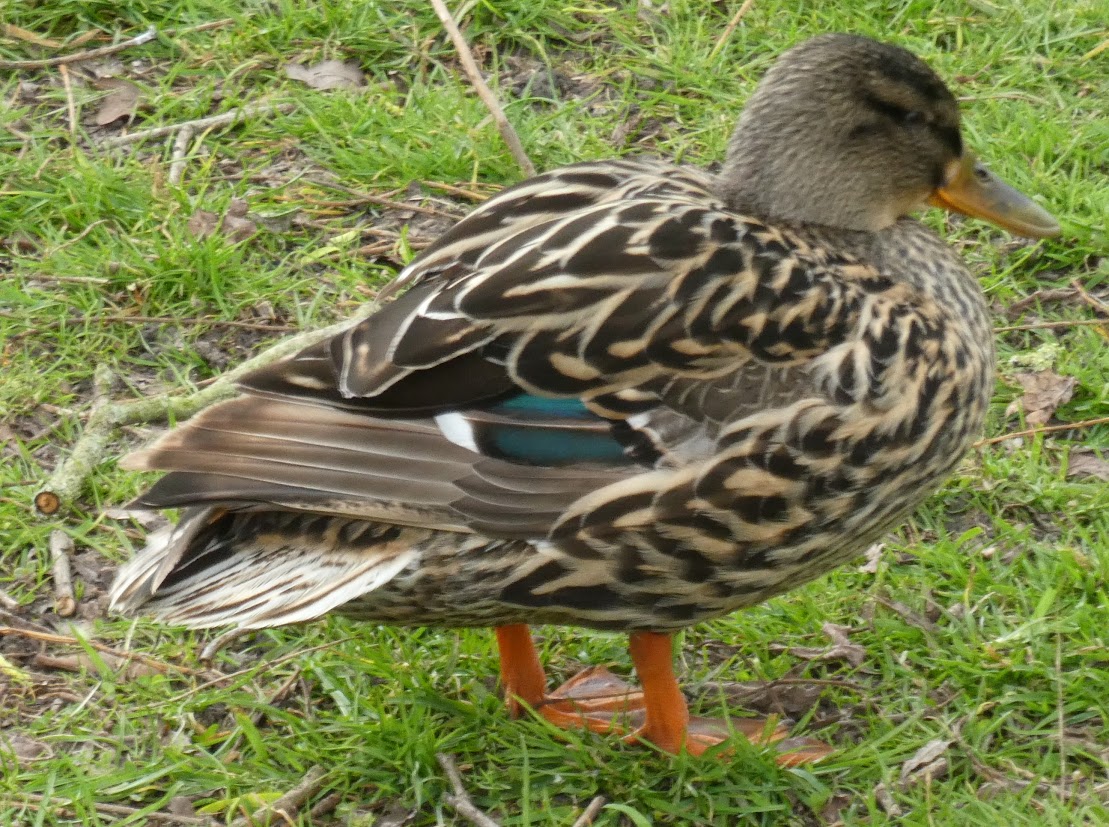
I had the leisure to enjoy the intricately-designed feathers of a common-or-garden mallard, or the complexity of dandelion petals.
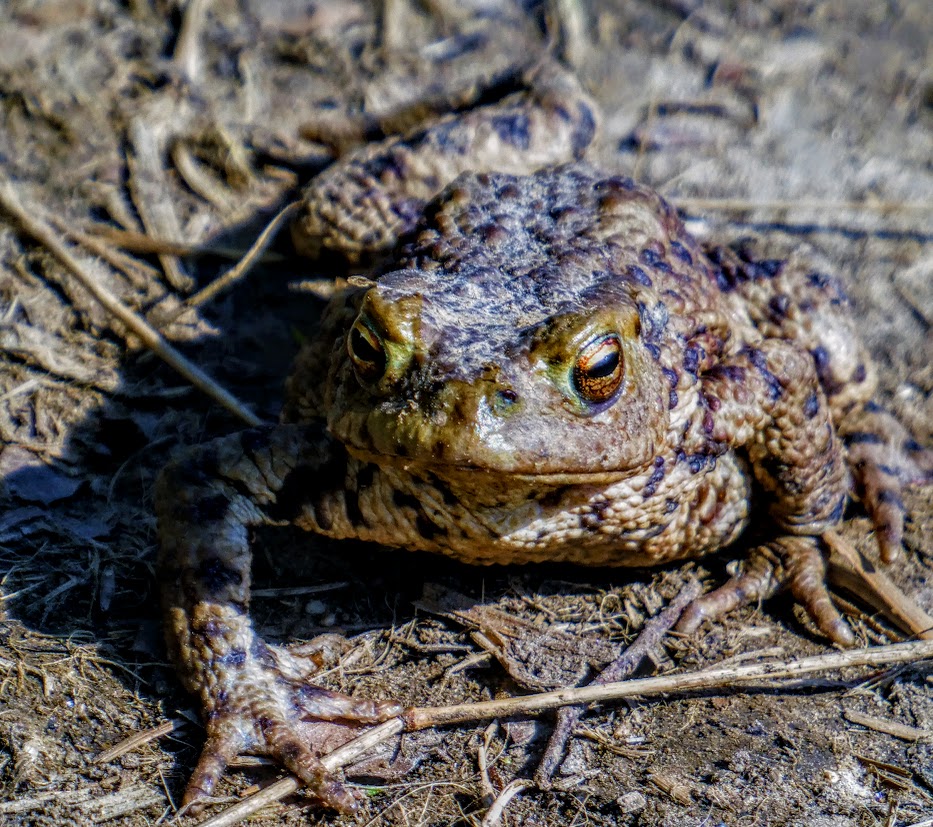
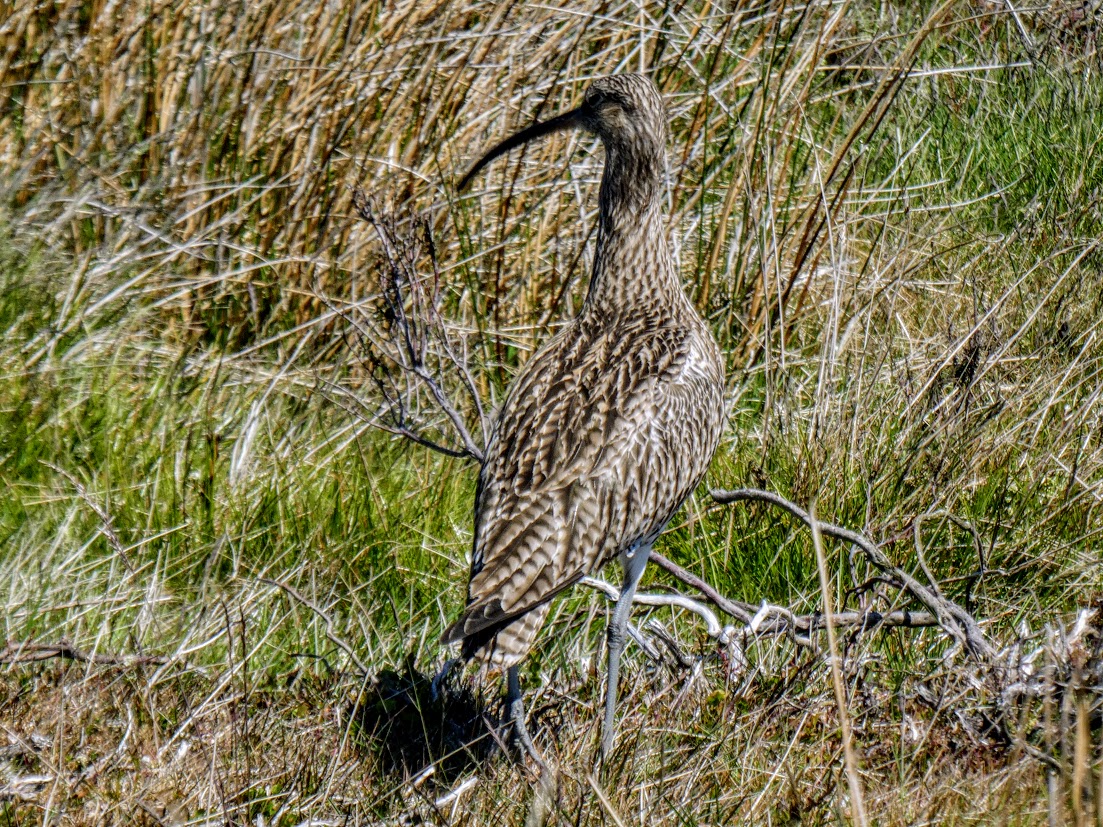
Best of all, creatures we rarely saw close up crossed my path. Who expects to stumble by a toad on a riverside stroll? Or, best of all, come across shy curlews nesting within a foot of a normally well-used road across the moors.
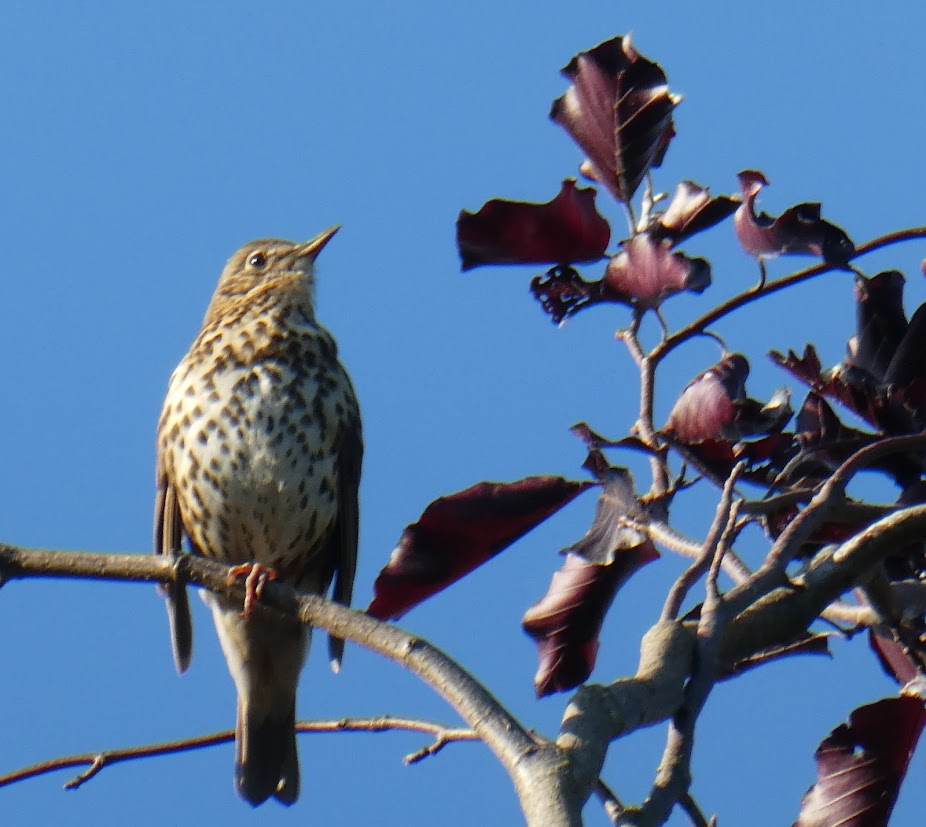
Skies, undefaced by plane trails seemed more multi-faceted and interesting. And back home, day after day, hour after hour, from dawn until darkness, this thrush gave an apparently unending performance with almost no breaks.
Such a time of loneliness, grief and isolation for many remains in my memory a period of joy in the rediscovery of the astonishment offered by the countryside just outside our front door.
Rebecca of Bookish Beck fame has a monthly challenge – Love your Library. She uses her own post to tell us what she has read, what she is reading, what she gave up on or never even started, and what she’ll read next. That’s what I’ll do too.
But first. Why do I love my library? Well, I’m lucky. Our County Council still prioritises books. It’s not often that we have a week when no new stock comes into our branch. New releases; books that have won some literary prize; works in translation; books from small indie publishers; old favourites and non-fiction of all kinds all get a look in.
These days, our libraries run on a mixture of professional staff and volunteers: some smaller libraries are entirely volunteer-run. And I’m a volunteer at our local, bigger library. I love it. First of all, it’s easy to get first dibs on new stock. But the tasks are varied. Processing books from other libraries requested by our own readers. Sending copies of books we stock to other libraries who’ve requested them. Helping the public with queries about books; parking; local clubs; photocopying …. And shelving. Always shelving. But that’s OK. Being shallow, I often judge a book by its cover, and I rarely get through a morning without finding something appetising to borrow. To go with the dozen or more I usually have on reserve.
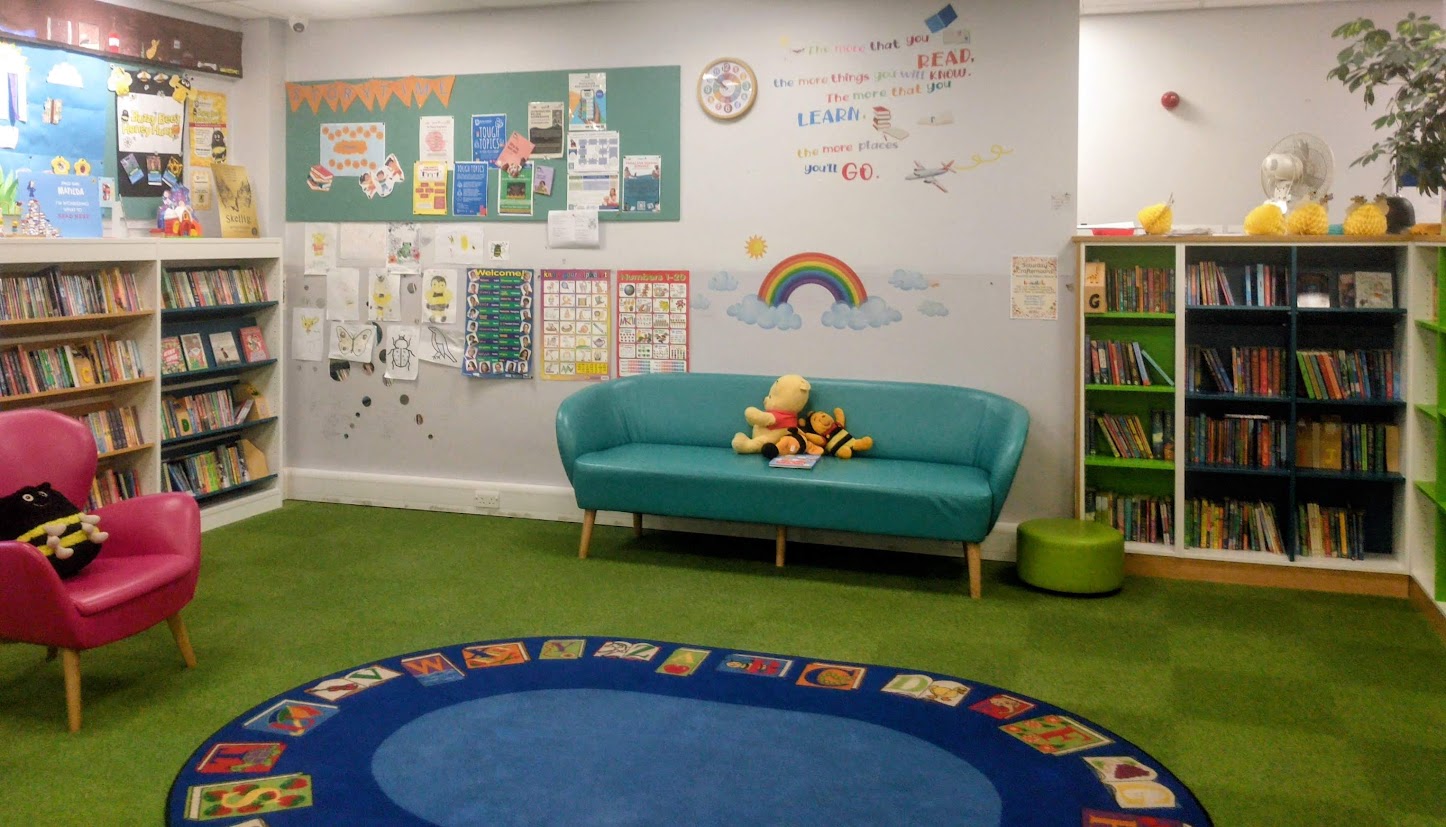
And anyway, on the morning I usually volunteer there’s a pre-school music group in the children’s section, and I’ll find myself singing along (strictly to myself) to ‘Hola! A todos aqui‘, or ‘Row, row, row your boat‘, as I wander round with my book trolley, shelving. Friends turn up to change their books. We have a quick chat. The morning passes quickly.
So. What have I read during November? Normally I’ll do a mini-review, but this post is quite long enough already, so star-ratings will have to do.
Magpie Murders: Anthony Horowitz ⭐⭐
Carte Blanche: Carlo Lucarelli (Translated by Michael Reynolds) ⭐⭐⭐⭐*
Peace on the Western Front: Mattia Signorini (Translated by Vicki Satlow) ⭐⭐⭐*
A Station on the Path to Somewhere Better:Benjamin Wood ⭐⭐⭐⭐
The Rich People Have Gone Away: Regina Porter ⭐⭐⭐
The Dinner Party: Viola van de Sandt ⭐⭐⭐
The Frozen River: Ariel Lawhon ⭐⭐⭐⭐
Run Me to Earth: Paul Yoon⭐⭐⭐⭐
The Penelopiad: Margaret Atwood ⭐⭐⭐⭐⭐*
The Wax Child: Olga Ravn (Translated by Martin Aitken) ⭐⭐⭐⭐⭐*
The Silver Book: Olivia Laing ⭐⭐⭐⭐
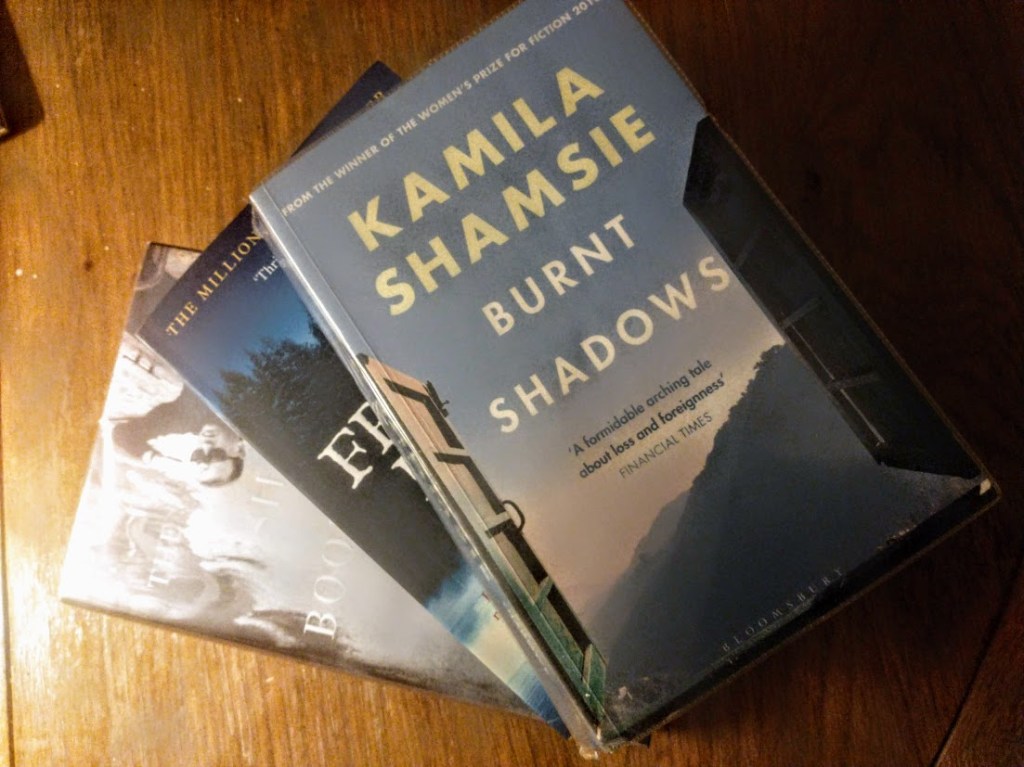
Burnt Shadows: Kamila Shamsie ⭐⭐⭐⭐⭐
Before you say that seems a lot, remember that 4 (marked *) are novellas, and therefore short, reviewed here. But you’re right. This has been a book-heavy month.
Borrowed and yet to be read, or currently being read:
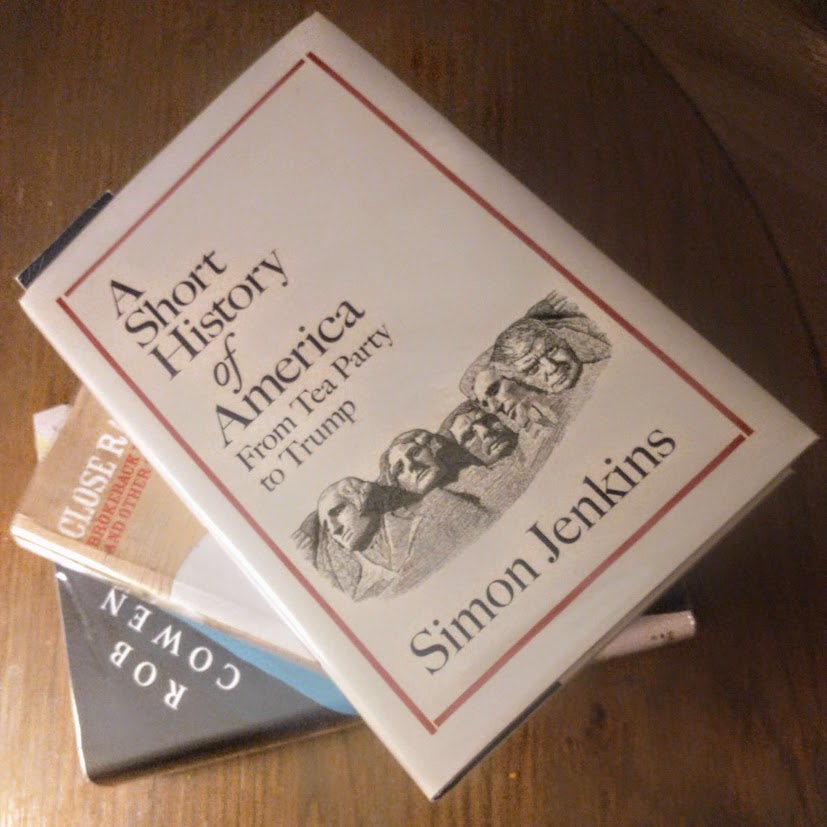
A Short History of America: from Tea Party to Trump: Simon Jenkins
Reward System: Jem Calder
Close Range: Wyoming Stories: Annie Proulx
The North Road: Rob Cowen
As I have nine books on reserve, it’s possible some of the already-borrowed books may end up unread. You can never tell. Some books I reserve come straight away. Some take so long I’d forgotten I’d reserved them. One hasn’t even been published yet!
I DID abandon a couple of books, but I forgot to note them down, and they went out of my head the second they got back to the library.
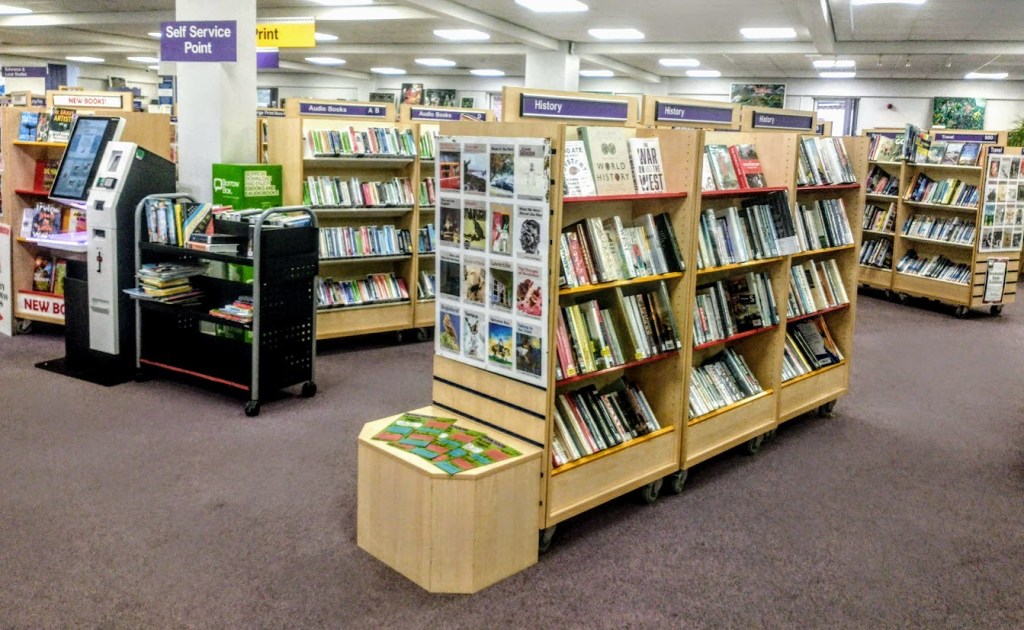
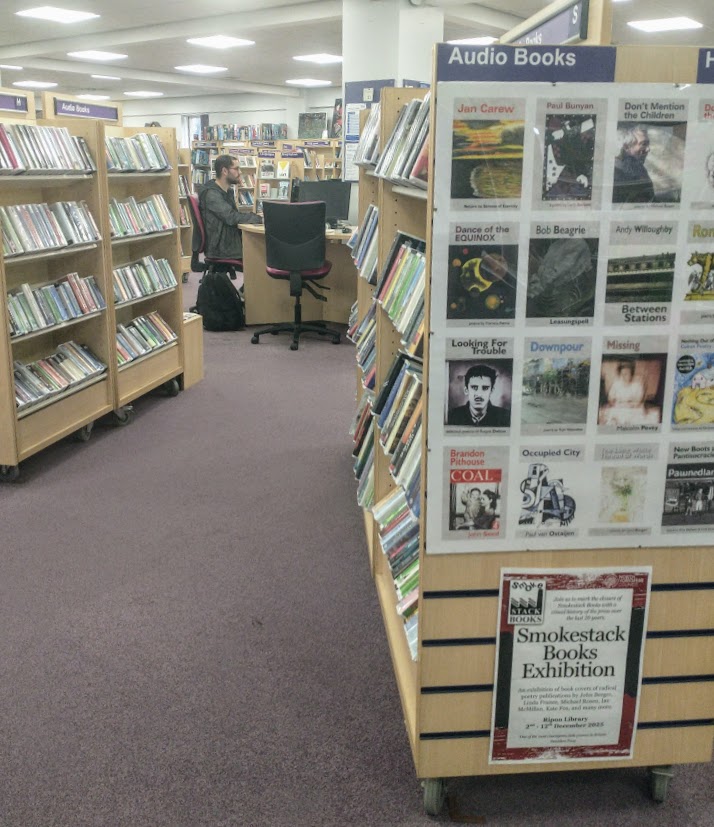
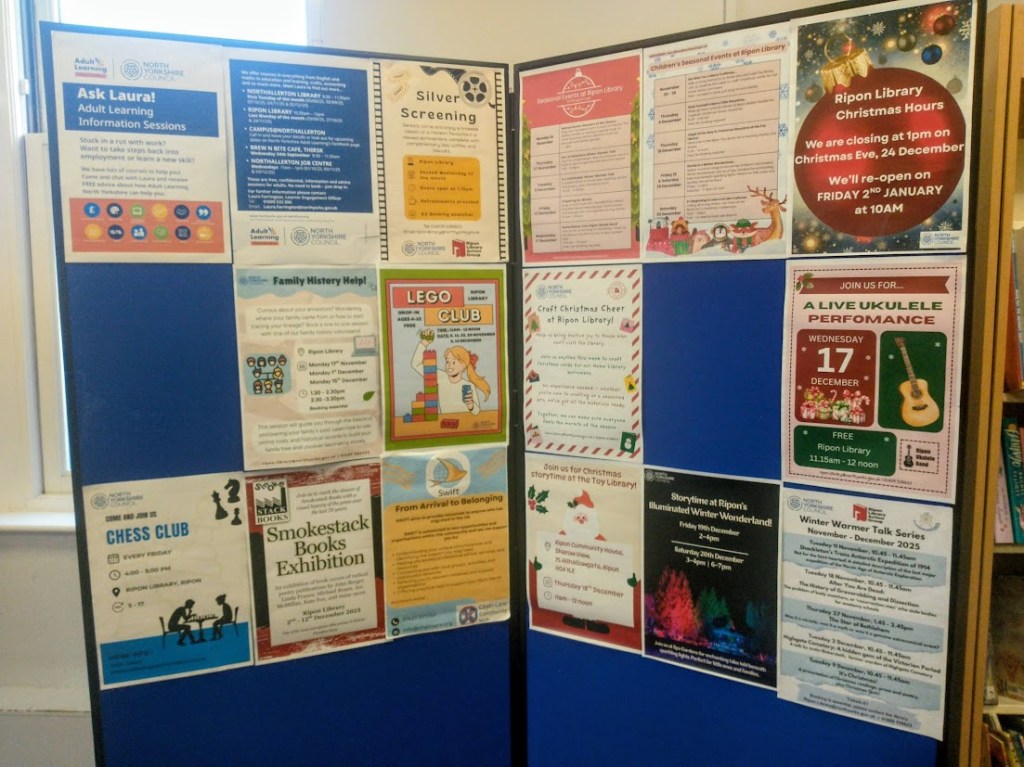
So that’s my month in books … and in my library. I took most of the shots in the minutes before the library opened, in order not to ruffle any feathers. Actually, it’s well-used and should look rather more peopled. But at least nobody’s been upset by being photographed on a bad-hair day.
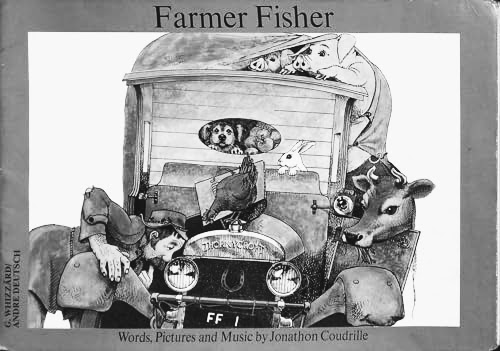
One of the first picture books to come into the house – oh gosh – more than 45 years ago, delighted all three of my children, and the adults who read it with them. It’s still sought after, this early edition, but you’ll have to shell out about £25 to get a copy. The book was Farmer Fisher.
Farmer Fisher had a fine fat truck.
You couldn't see the colour for the farmyard muck.
In the front was a rabbit and a chicken and a duck -
On the way to market.
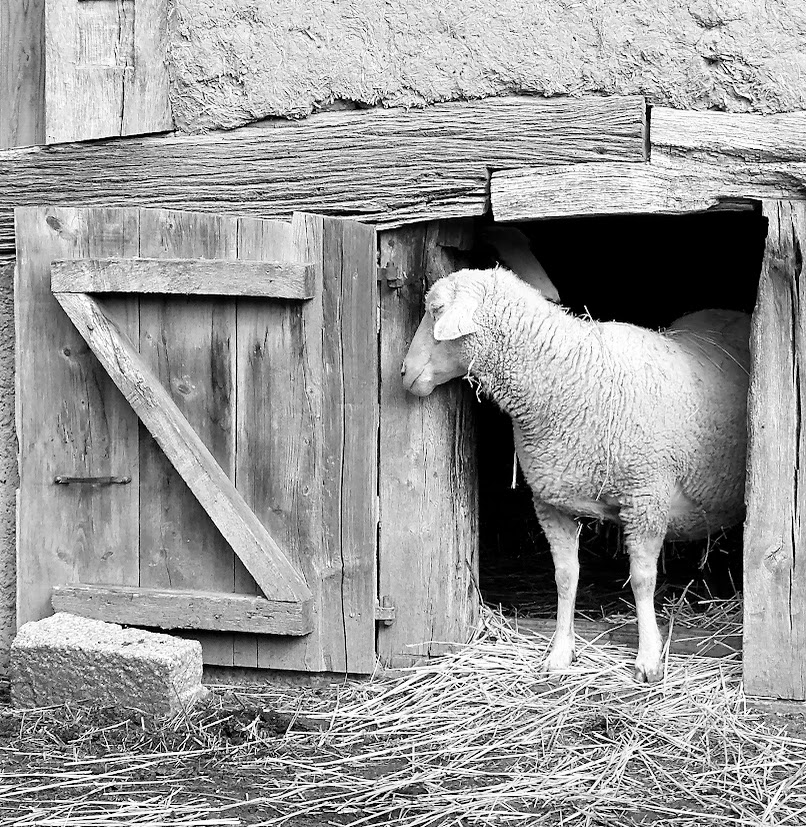
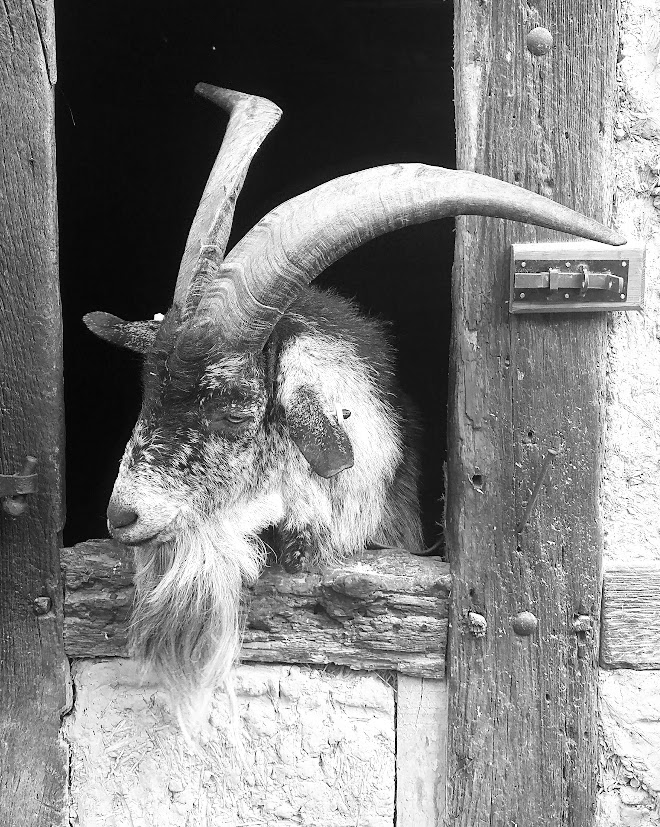
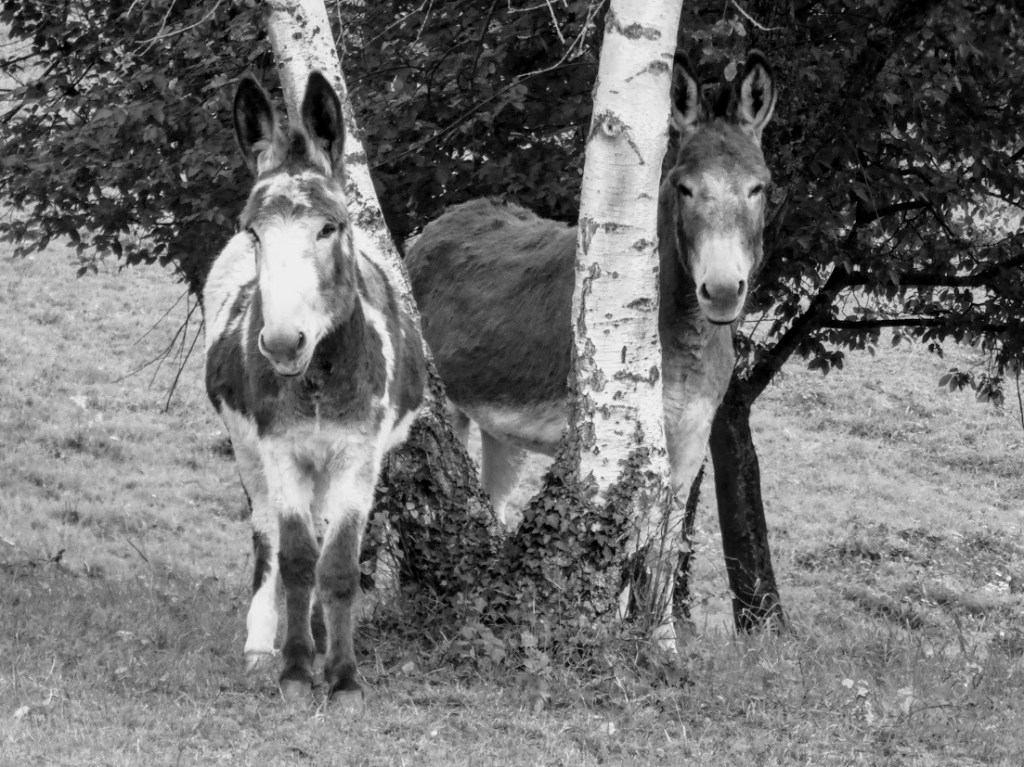
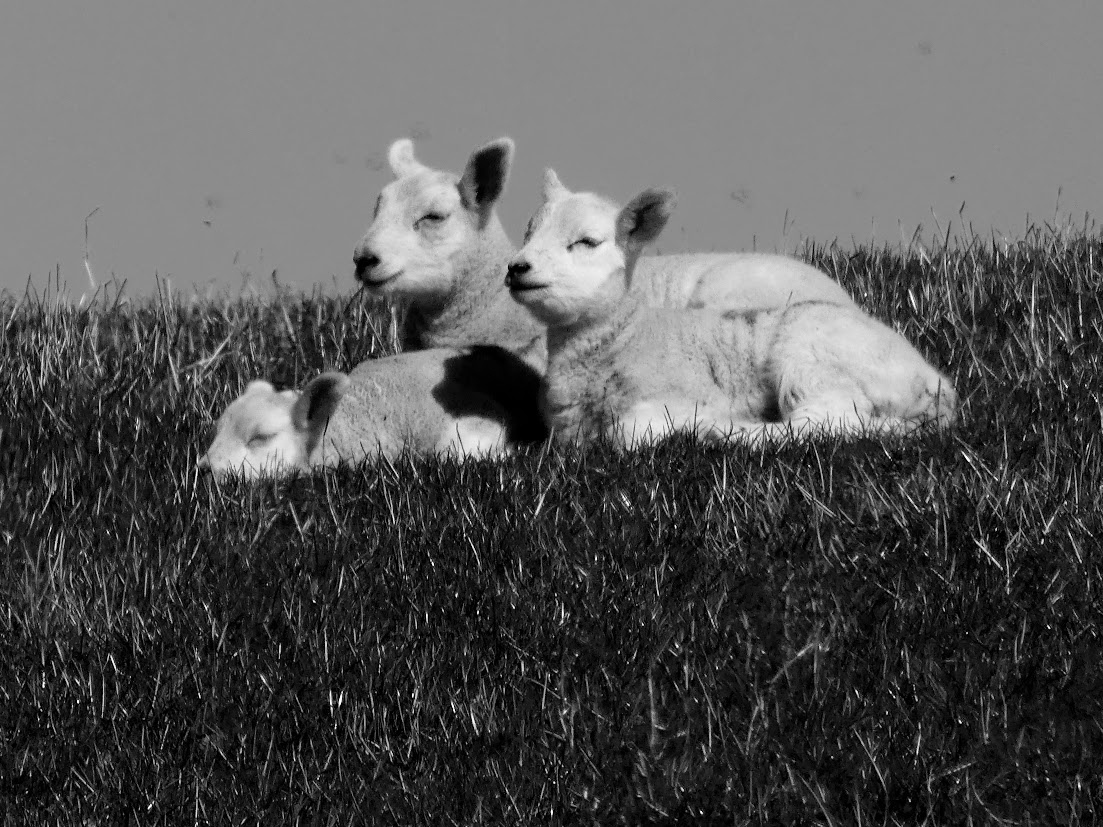
Well. I won’t be showing you a rabbit. I haven’t got a shot of one. Or a chicken. Or a duck. Elke, for this week’s Monochrome Madness would like us to show farmyard animals, so I’m sticking to four legged examples.
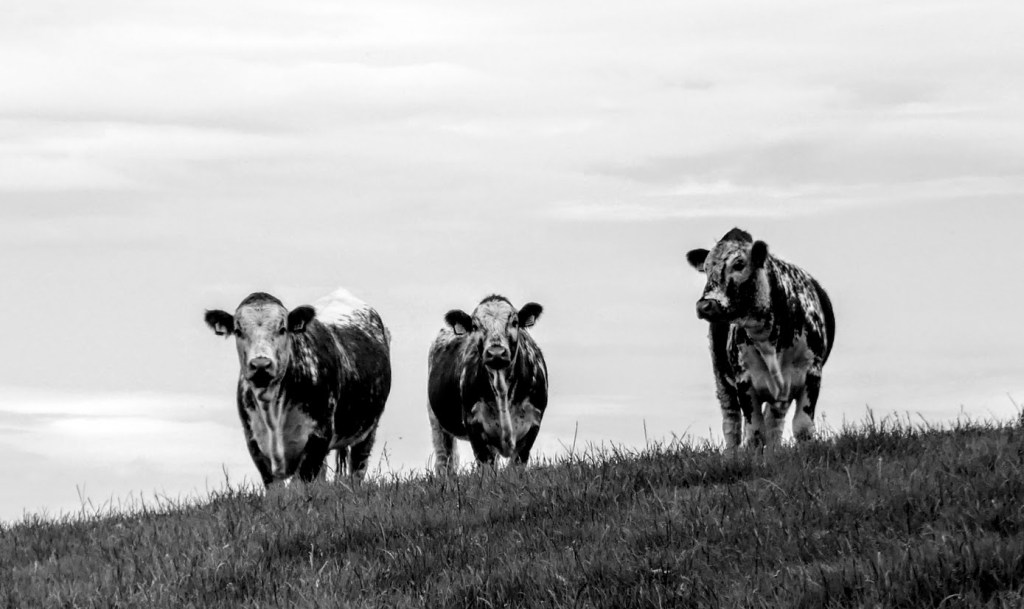
Like cows …
… and sheep …
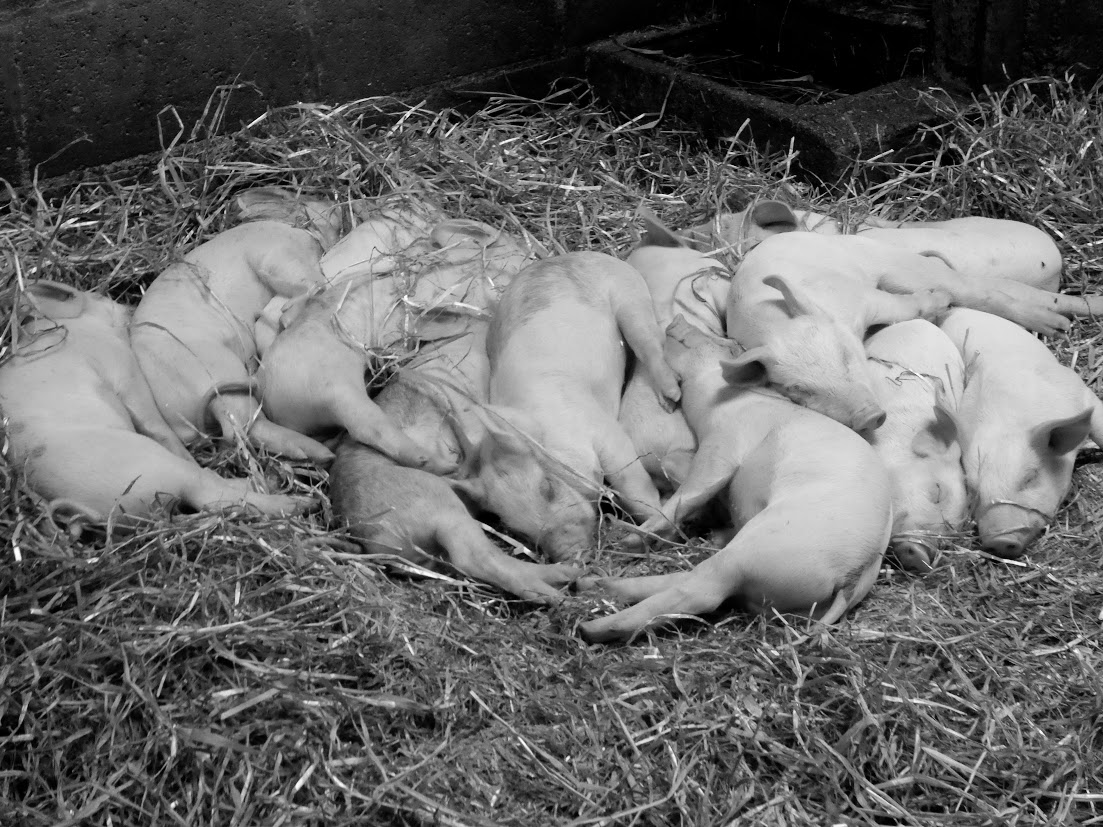
… and pigs …
… and a goat …
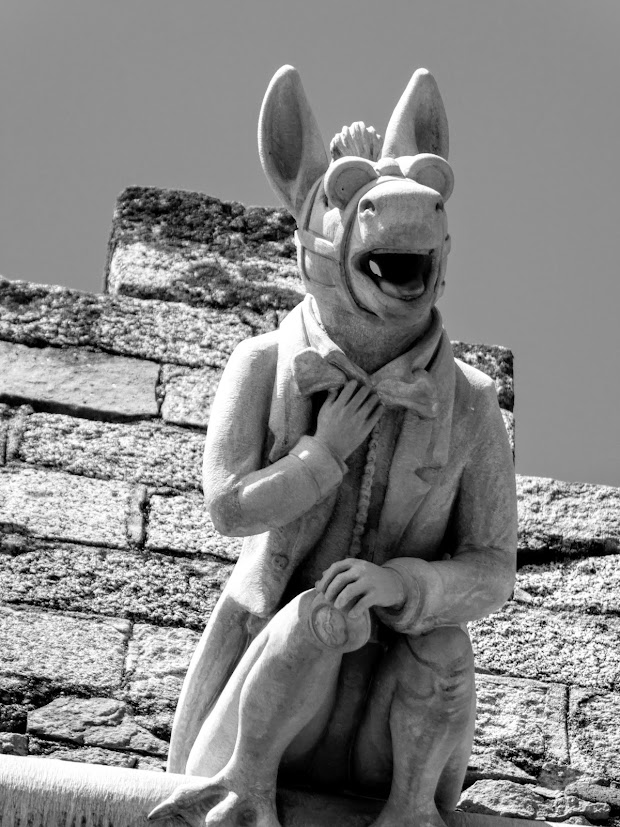
… and not forgetting donkeys. Not useful, but easy to love.
And here’s a little library of livestock to finish with.
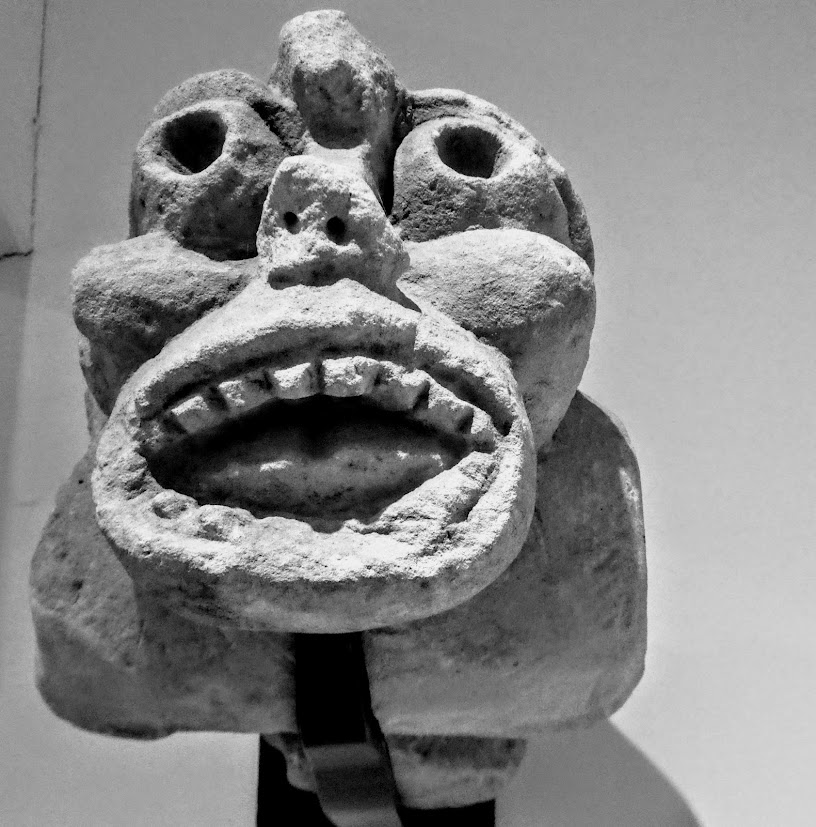
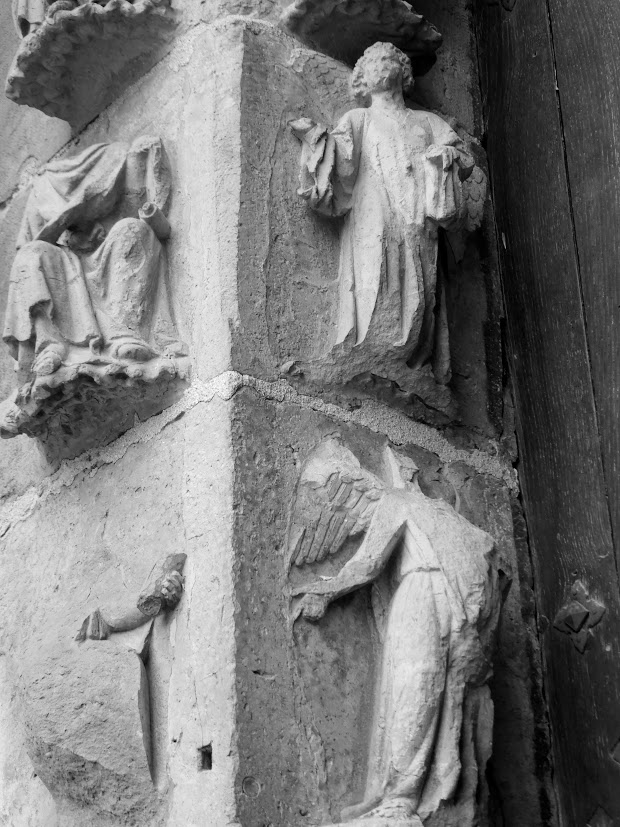
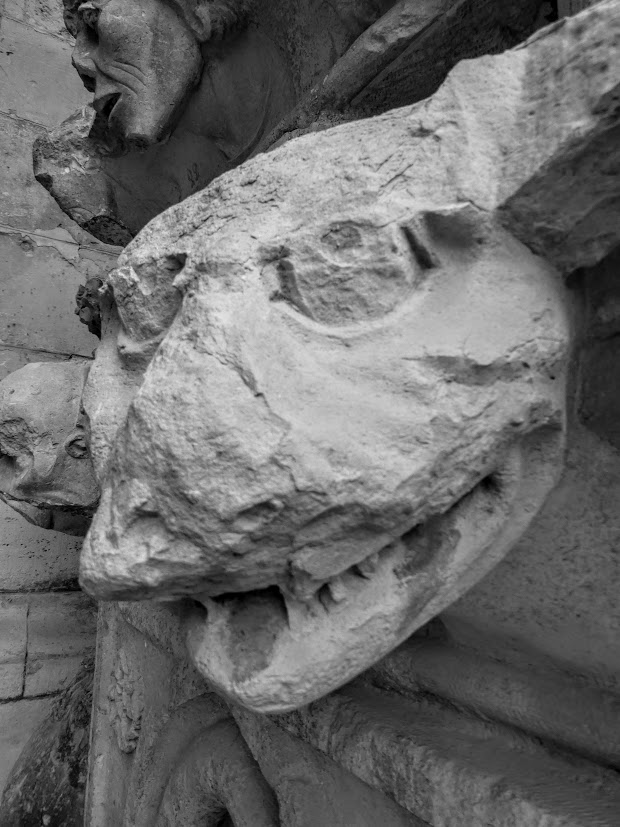
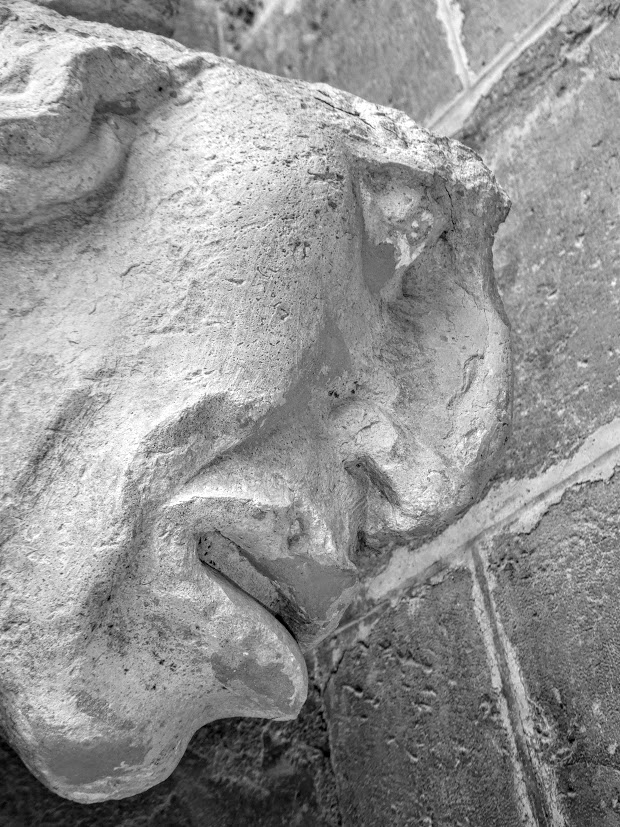
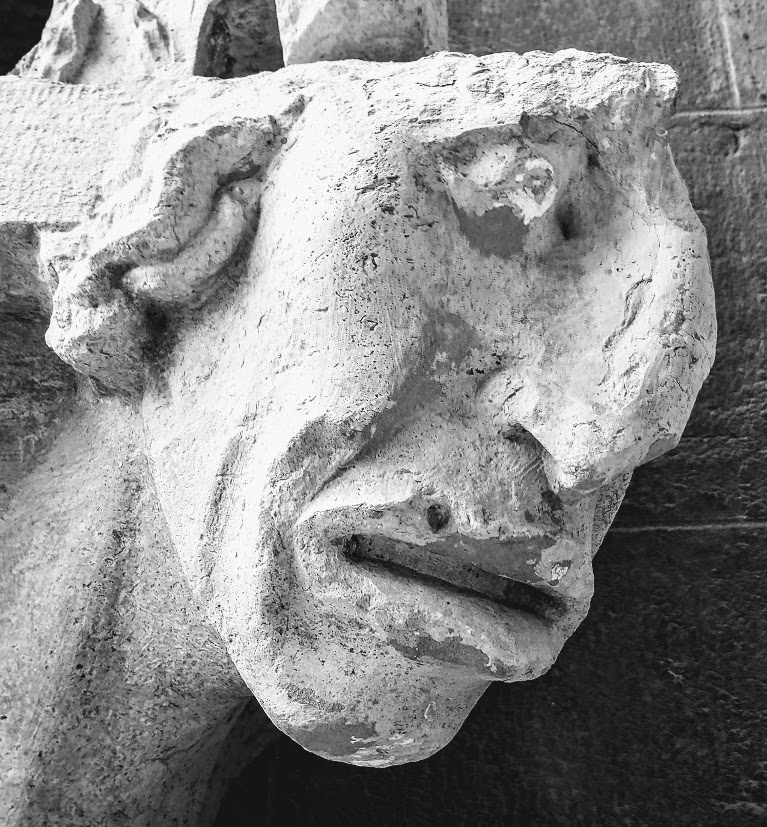
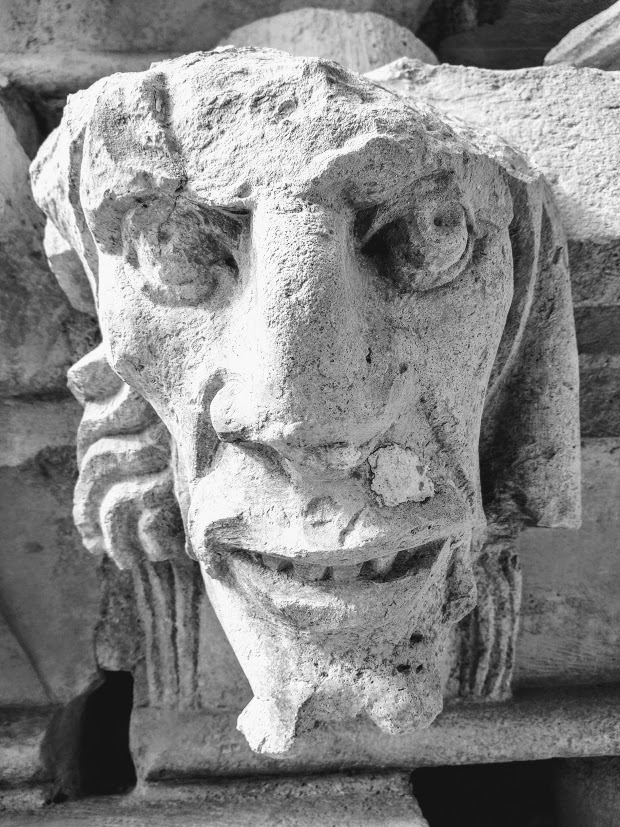
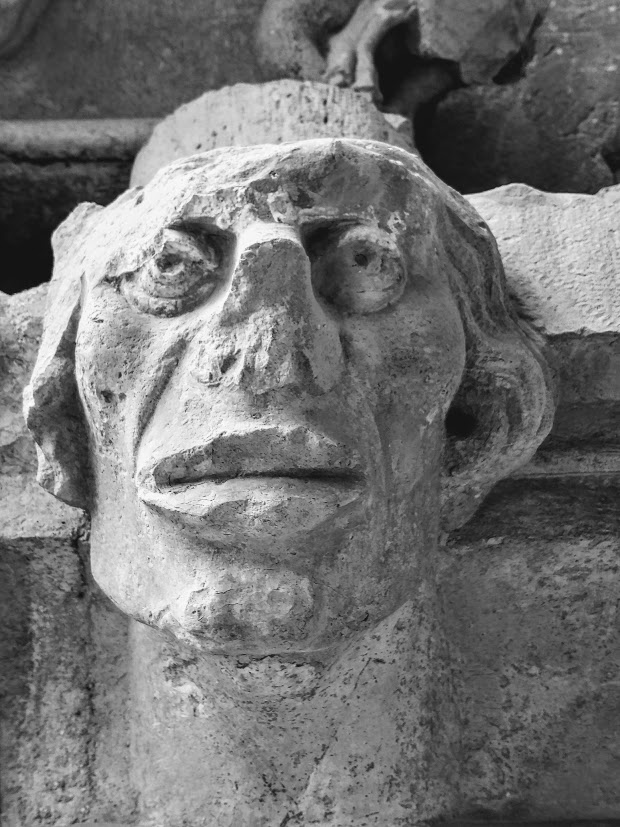
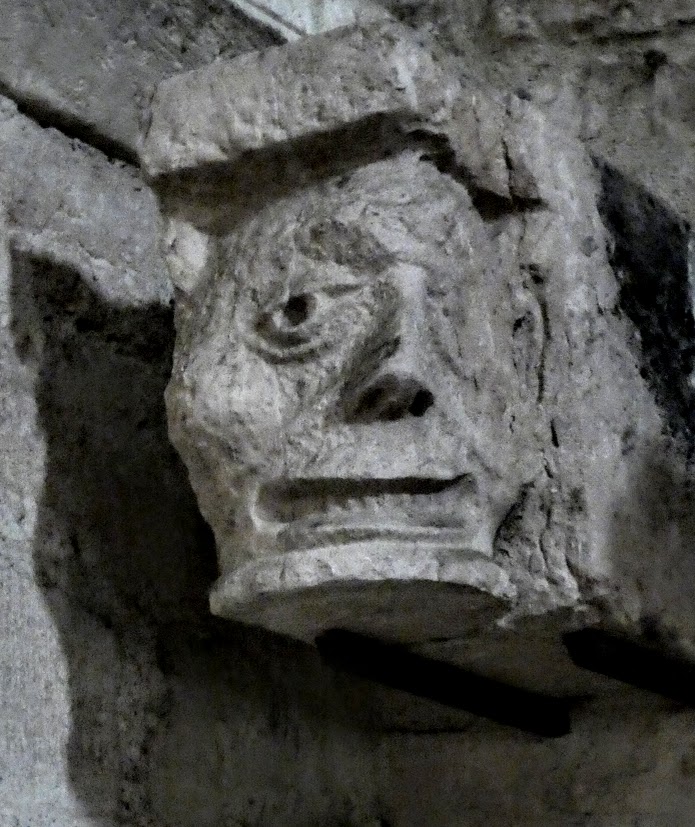
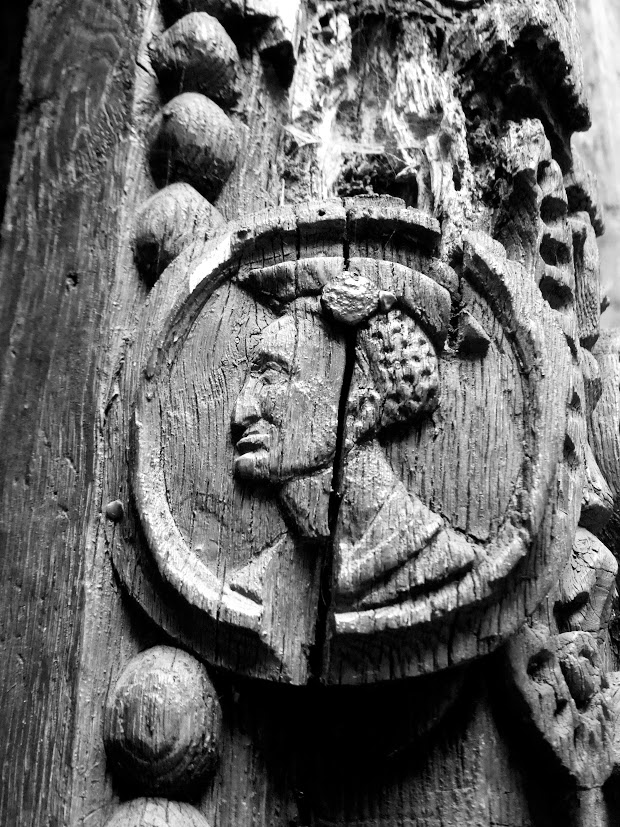
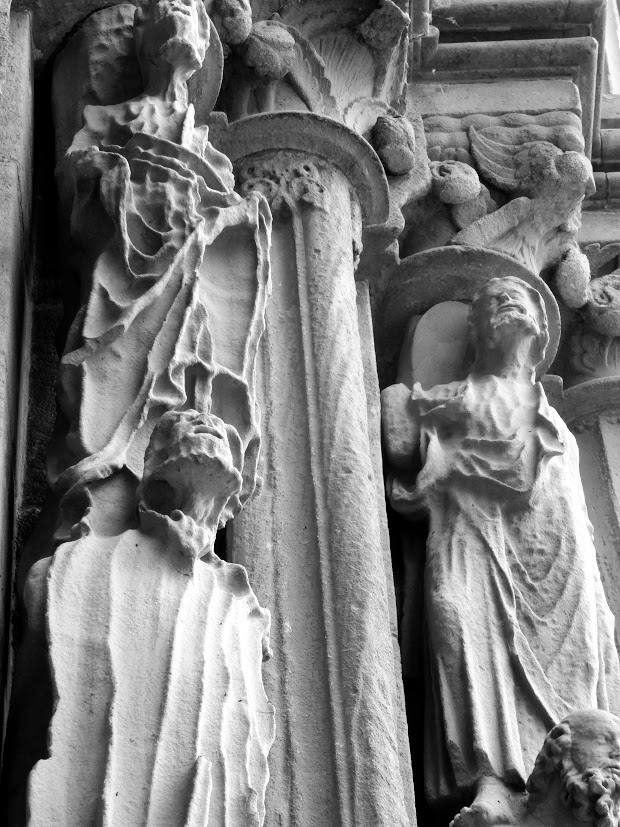
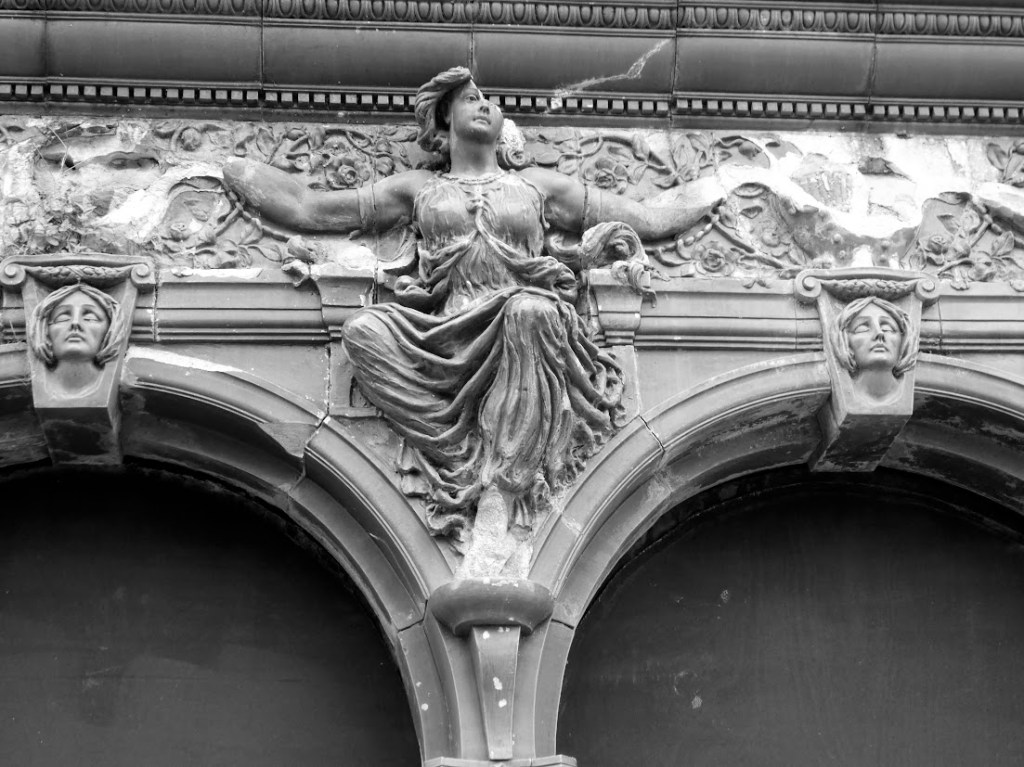
Today, for Leanne’s Monochrome Madness, Sarah of Travel with Me invites us to photograph ruins. I could so easily take you (yet again) to my favourite ruined abbeys: Fountains Abbey, Jervaulx, or Rievaulx. But Sarah herself has shown Fountains Abbey off in her post. I could take you to ruins all over this country and beyond. Instead, I thought that I’d show you not buildings, but their statues, often ruined by weather, by warfare, or quite simply the passage of time.
Best start in Rievaulx though, where carvings in its museum gave me the idea.
Off to North Eastern France, where the churches and cathedrals of Rheims, Laon and Tournus (to name but a few) have all mightily suffered from the weather eating into into the local limestone from which these were built.
And in Troyes, wooden buildings have taken a weather-beating too.
A church in Bamberg has suffered mightily from having been contructed from limestone.
But even more recent buildings have been ruined a bit. Come to Hartlepool with me.
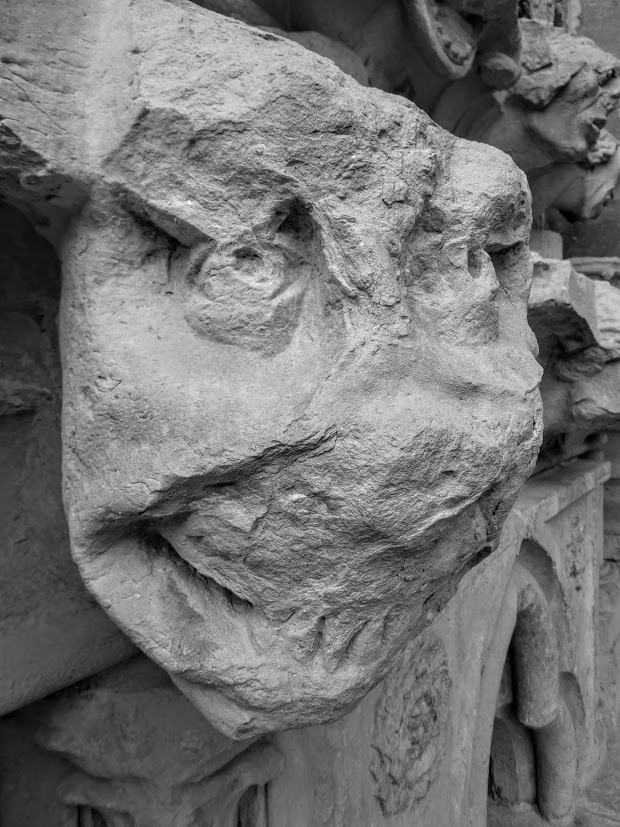
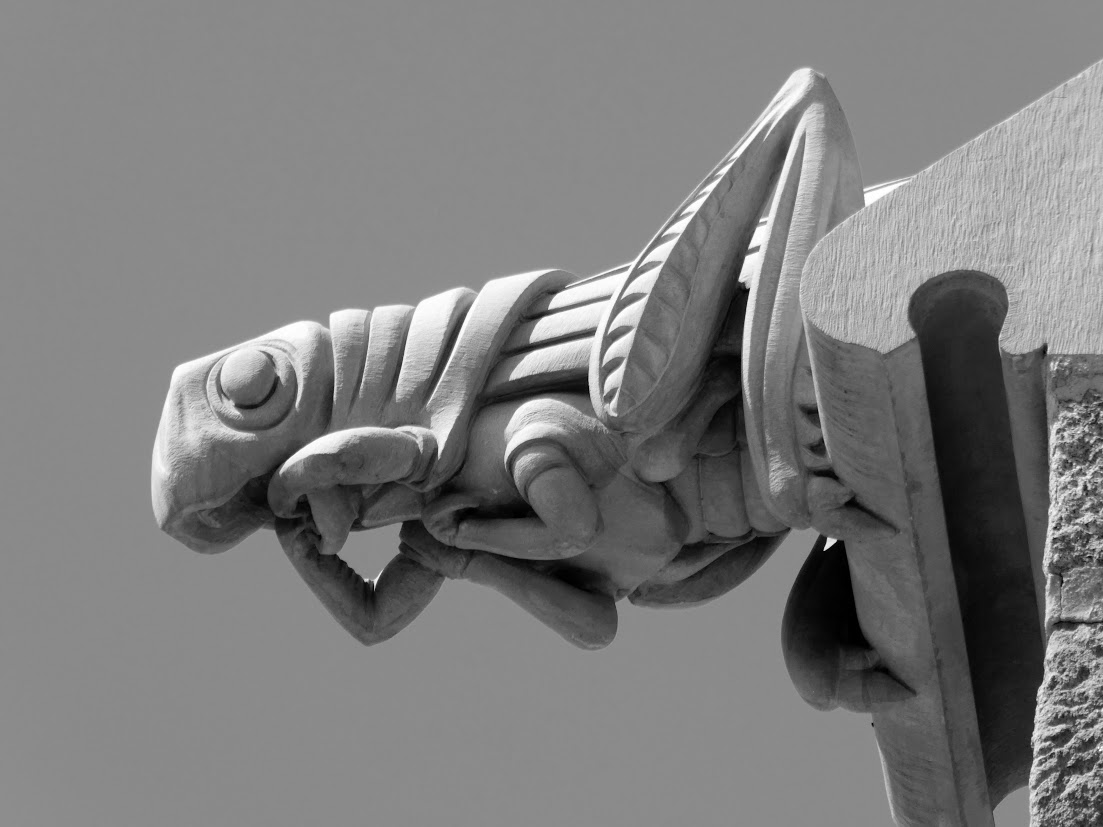
Let’s finish off by disobeying the challenge completely, at Sant Julia church, in Argentona, Catalonia. Its gargoyles were so ruined they pulled them down. And replaced them. Like this.
By the time you read this we will be at least half way down England, in transit for eastern France – Alsace. So you won’t get prompt responses to any comments I’m afraid, as we shan’t finish travelling till Friday. But I will send a postcard before the weekend is out!
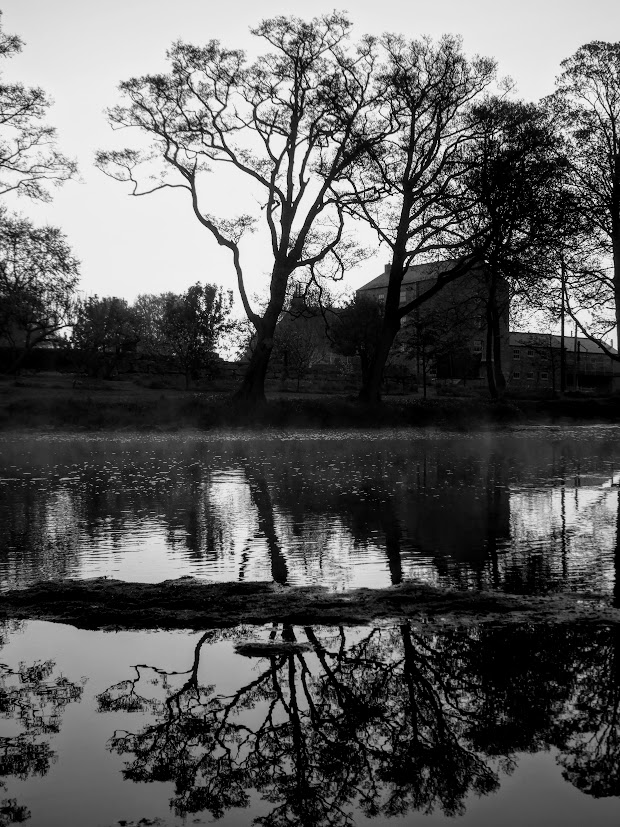
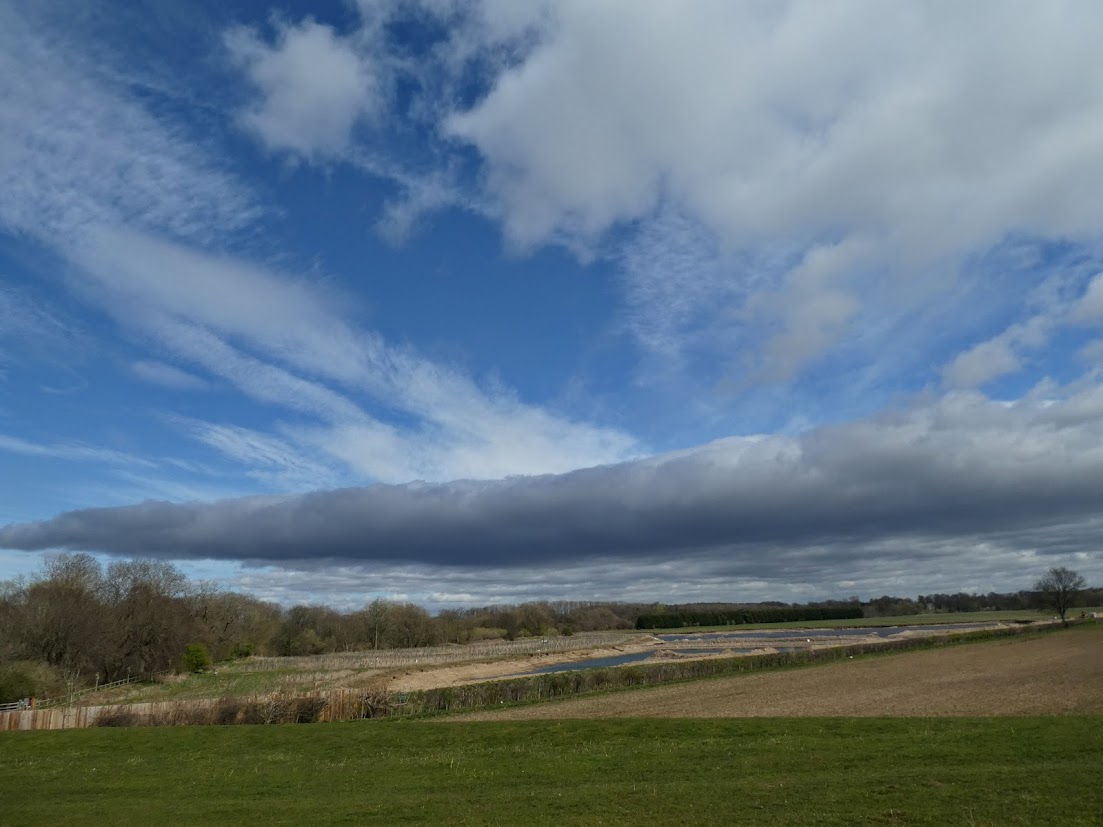
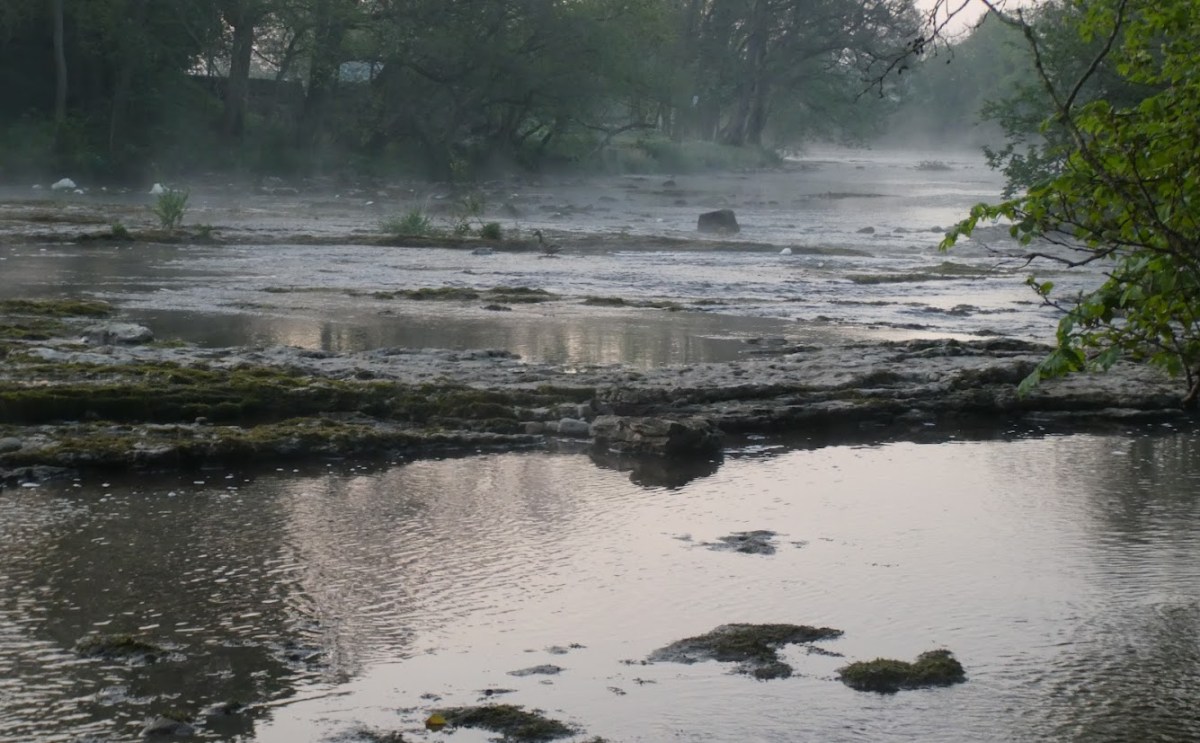
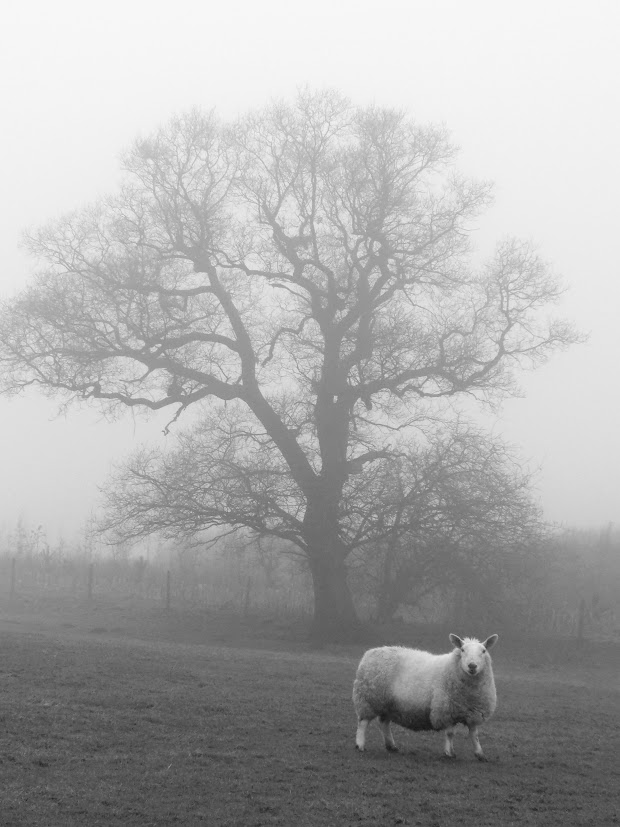
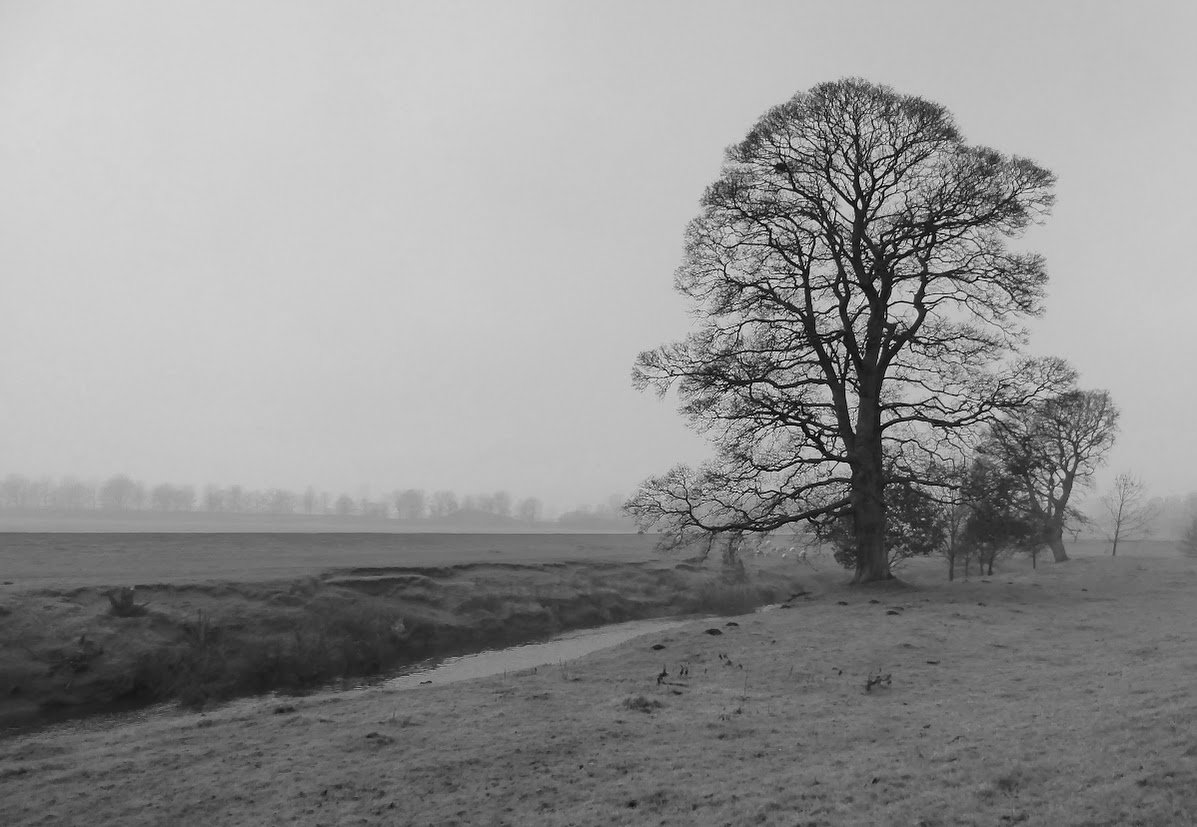
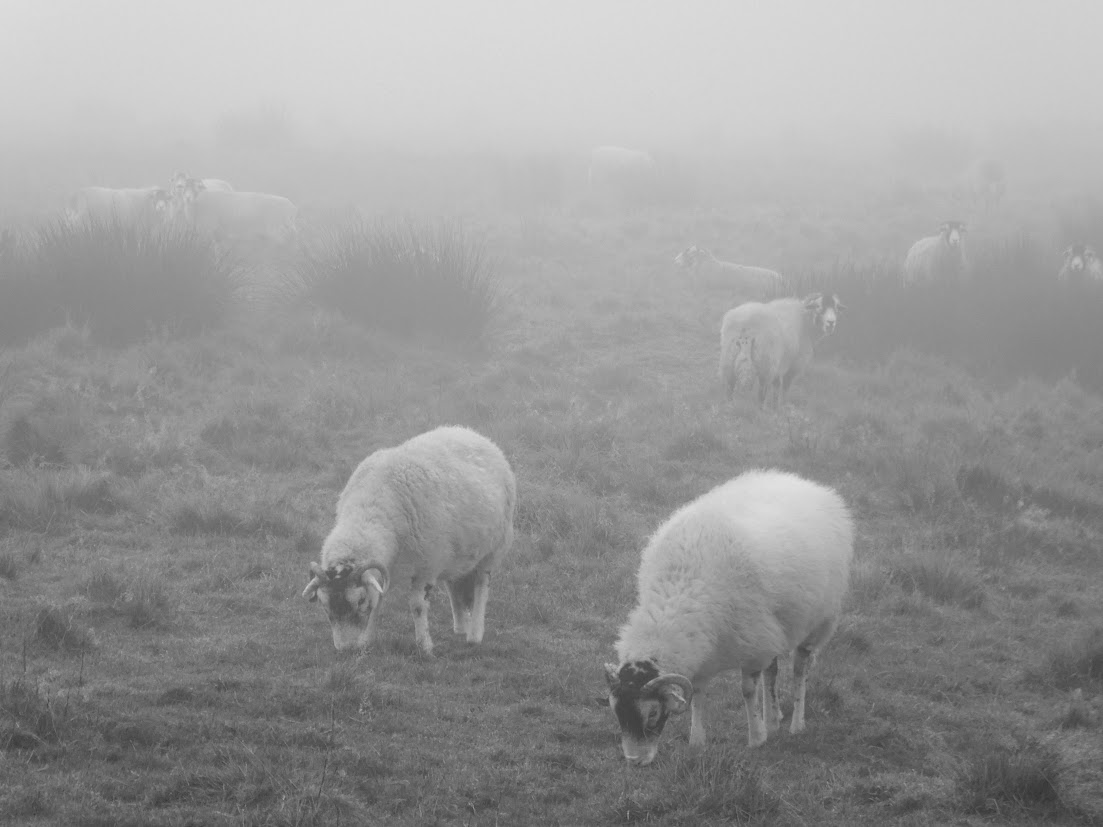
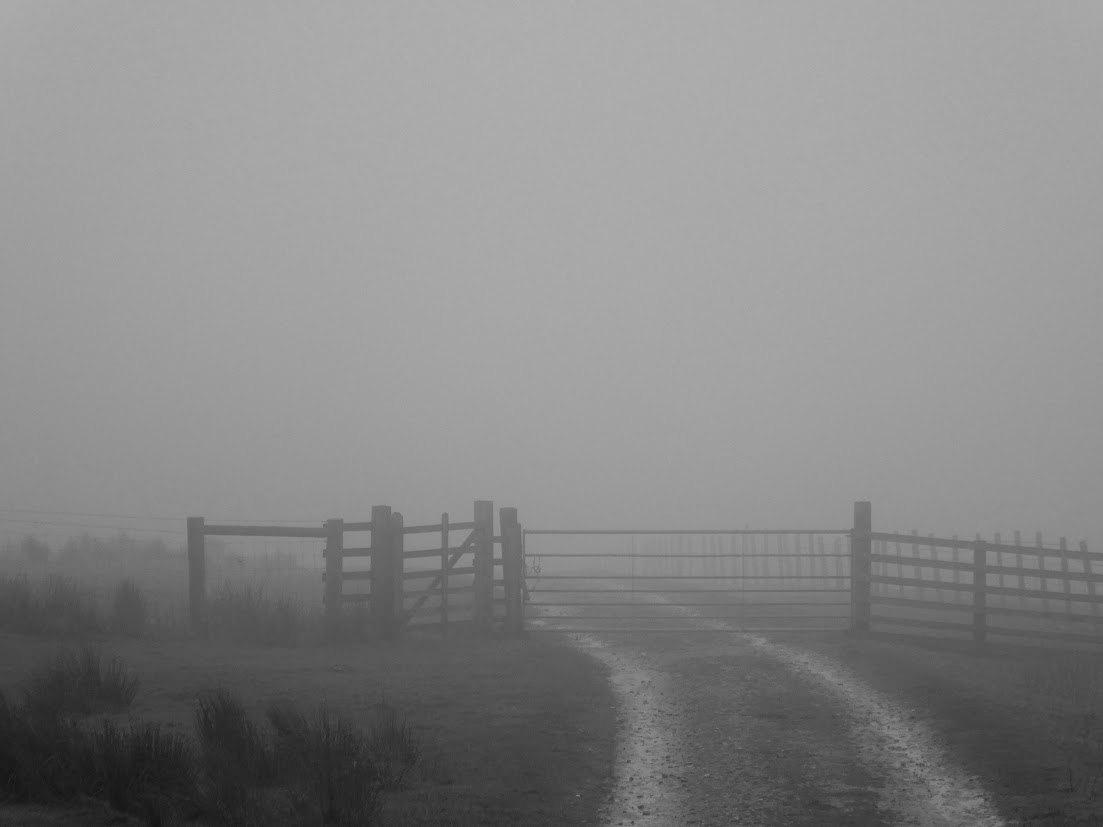
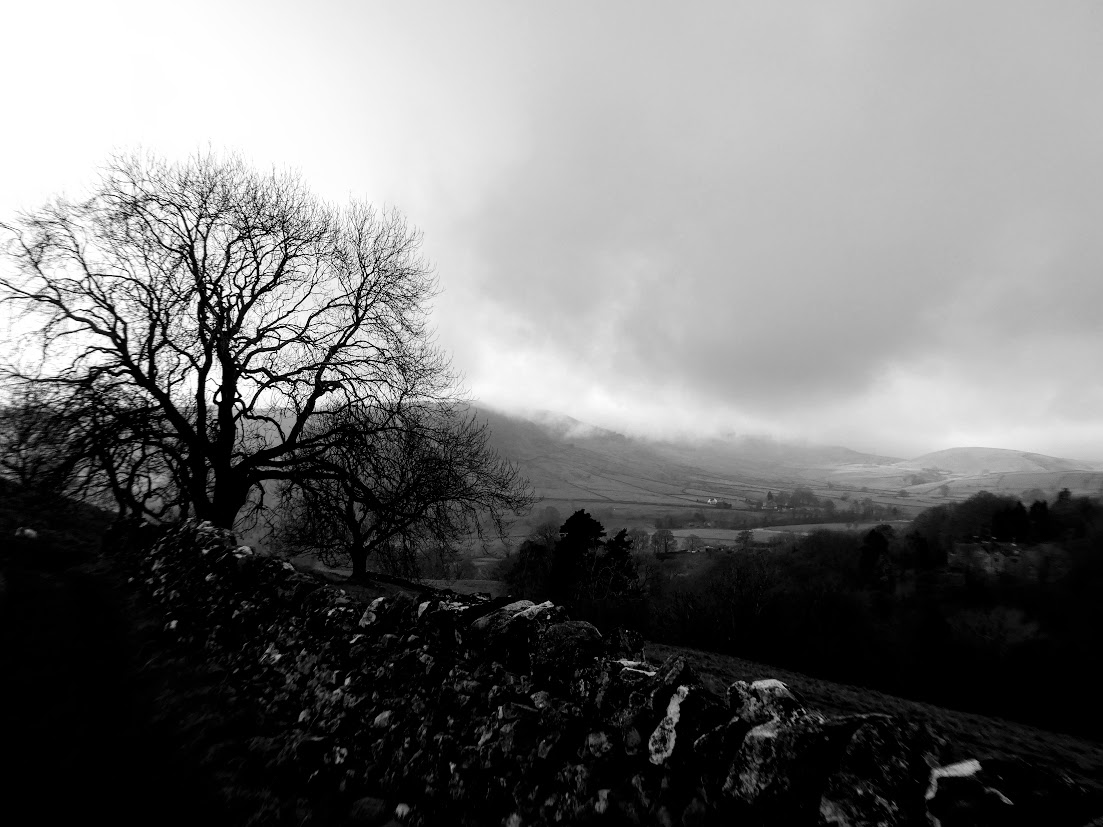
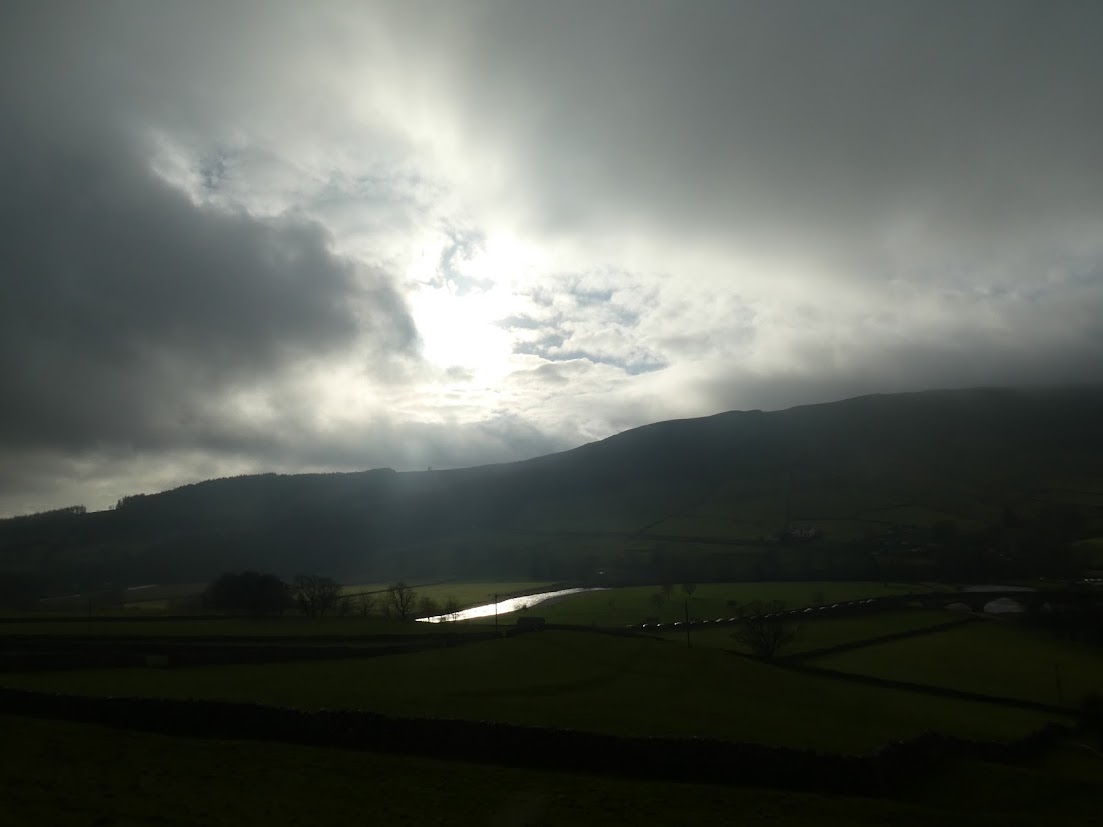
Ours is a land of rivers. Nearby, the Ure, the Skell and the Laver all course through Ripon, and the Ripon Canal peacefully splices the town in two. Local gravel pits end their working lives transformed into watery nature reserves. We’re approaching the time of year when, because of the surrounding water, morning mists envelop the landscape. I relish those early hours when quiet descends with the mist, muffling sound, slowing us down and encouraging us to savour these peaceful moments.
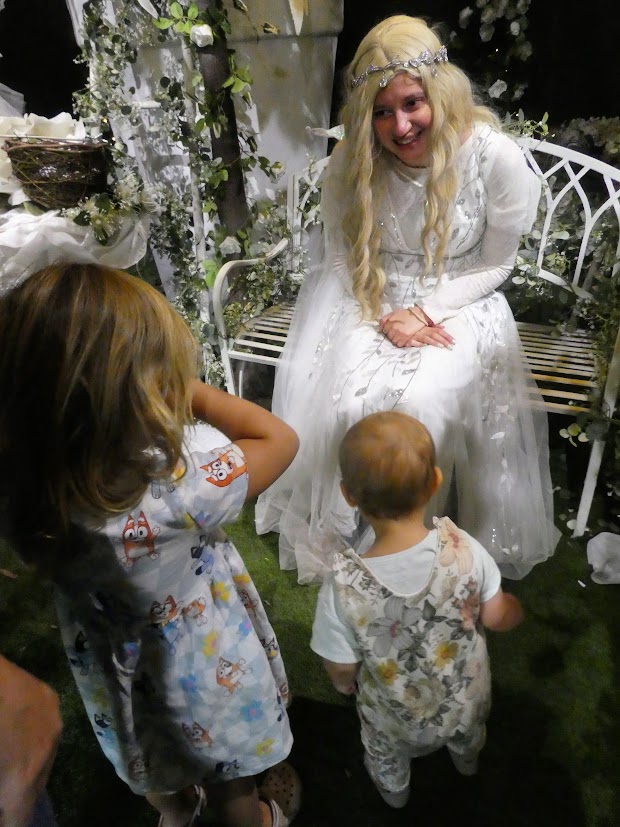
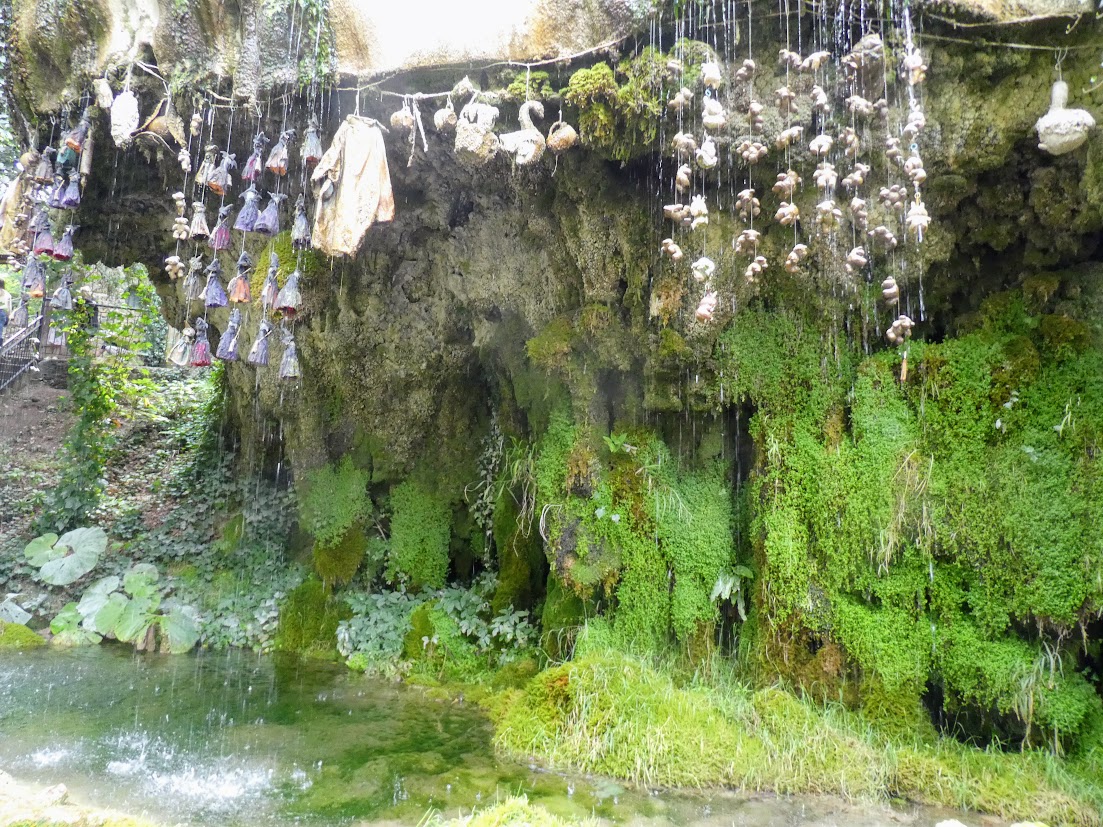
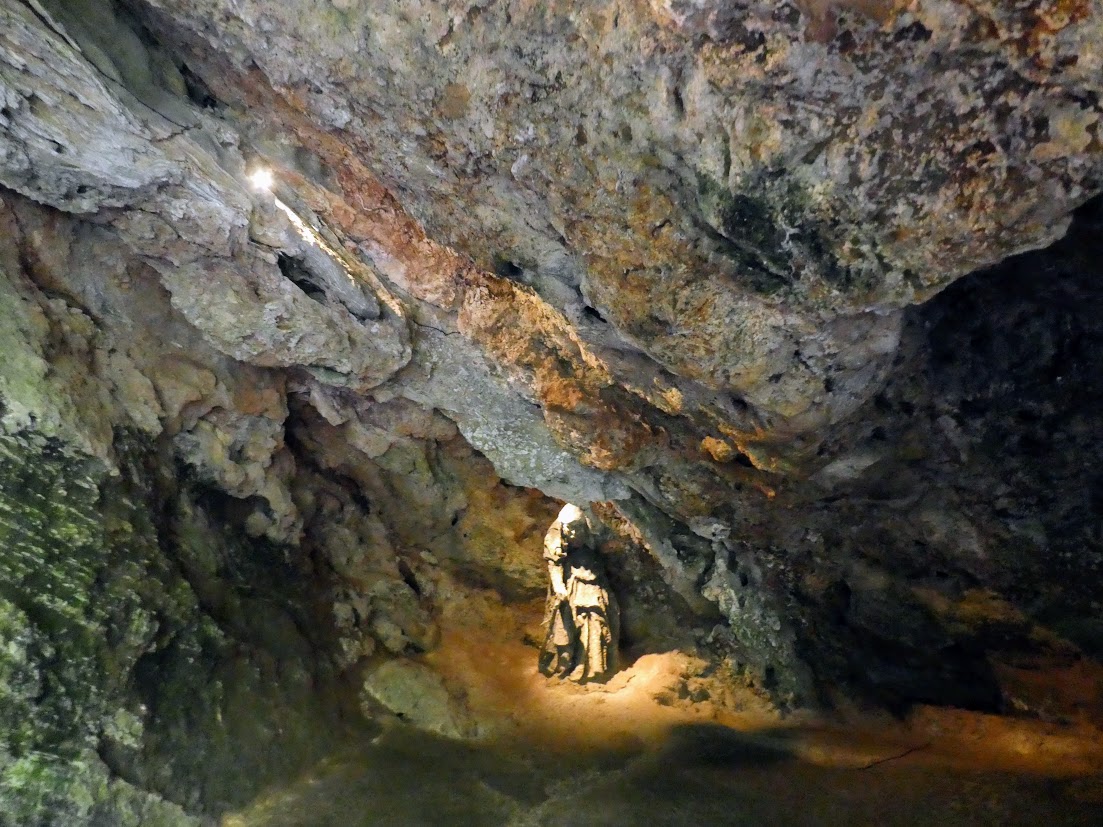
Last Sunday, my Spanish grandaughters went to fairyland. Actually, they went to Mother Shipton’s Cave. This long-established tourist site is where, back in the 1500s, a woman we now know as Mother Shipton apparently prophesied many things which came to pass, such as the Great Fire of London, and the invention of the iron ship. It’s also where you’ll find a source of water which petrifies into stone any objects left long enough beneath the roof of the cave from whence the water drips: calcified teddy bear anyone?
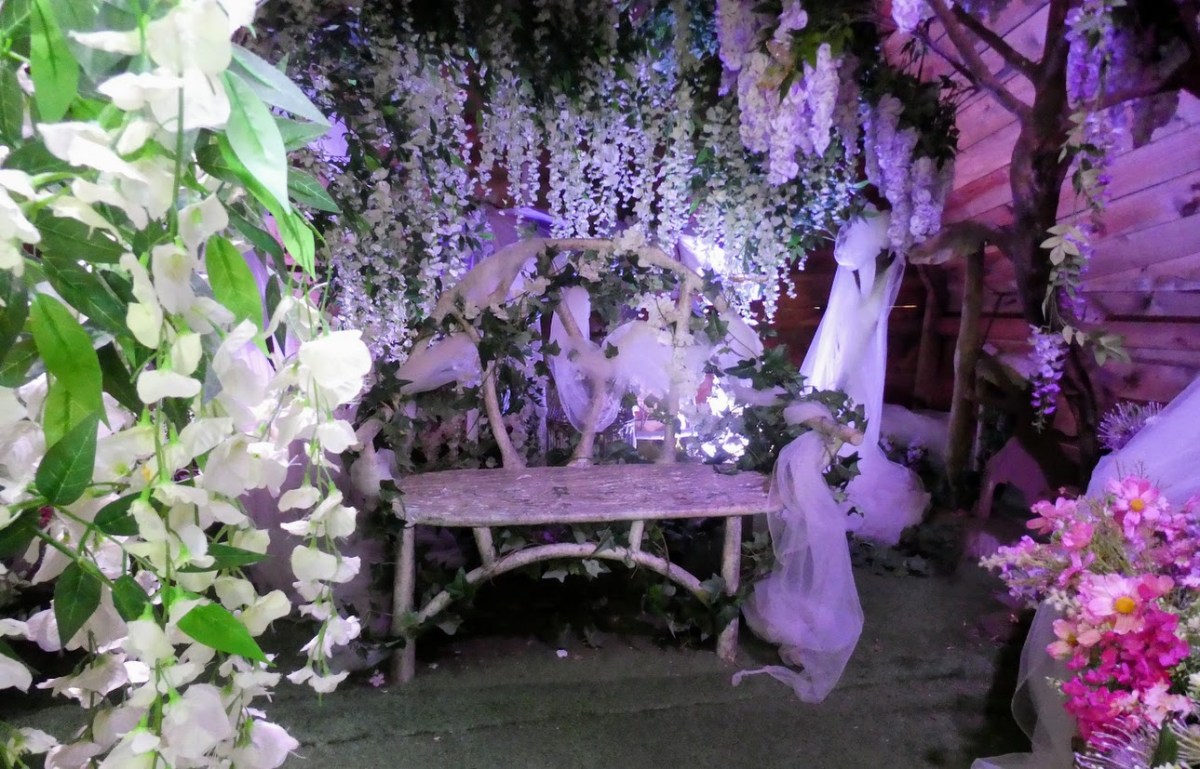
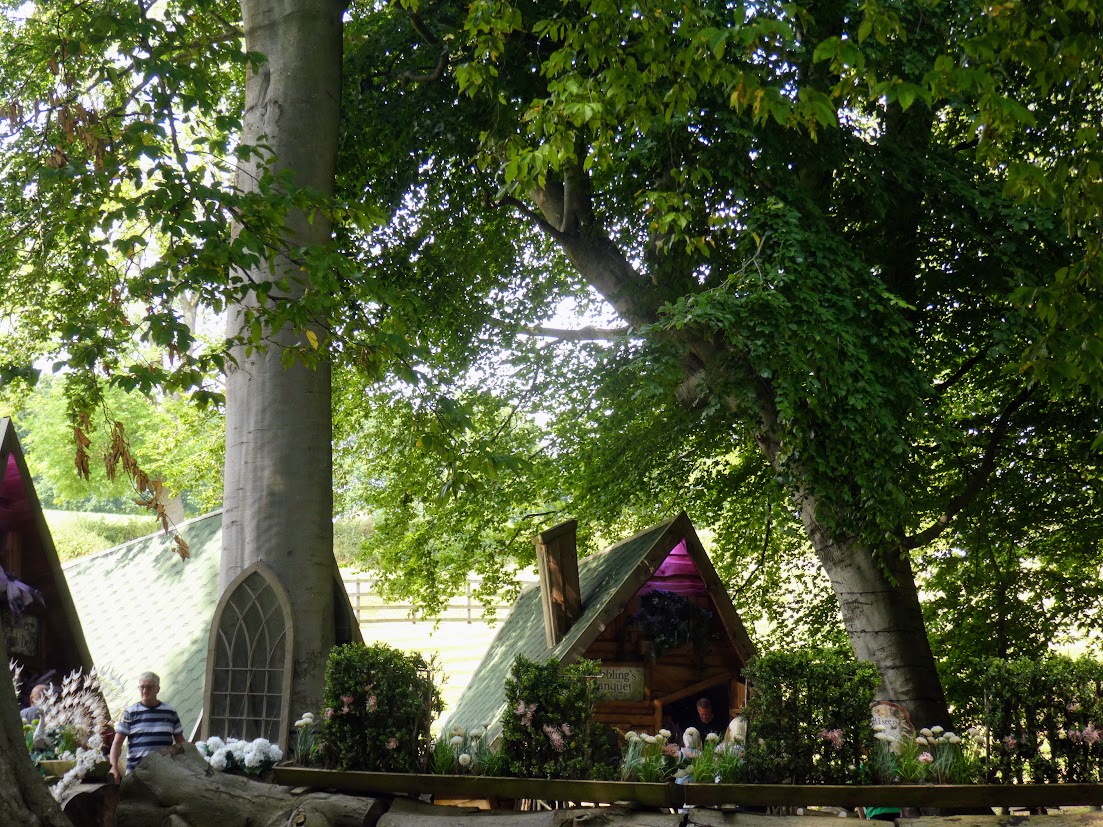
These days the paying public expects more, so this season, the woodland surrounding the cave has been transformed into a fairyland of exactly the kind beloved by small children. Anaïs and Olivia were entranced, especially when they met a real live fairy, all the way from Greece.
My featured photo is of a bench much favoured for sitting on by would-be fairies. The remaining shots are from other parts of the site.
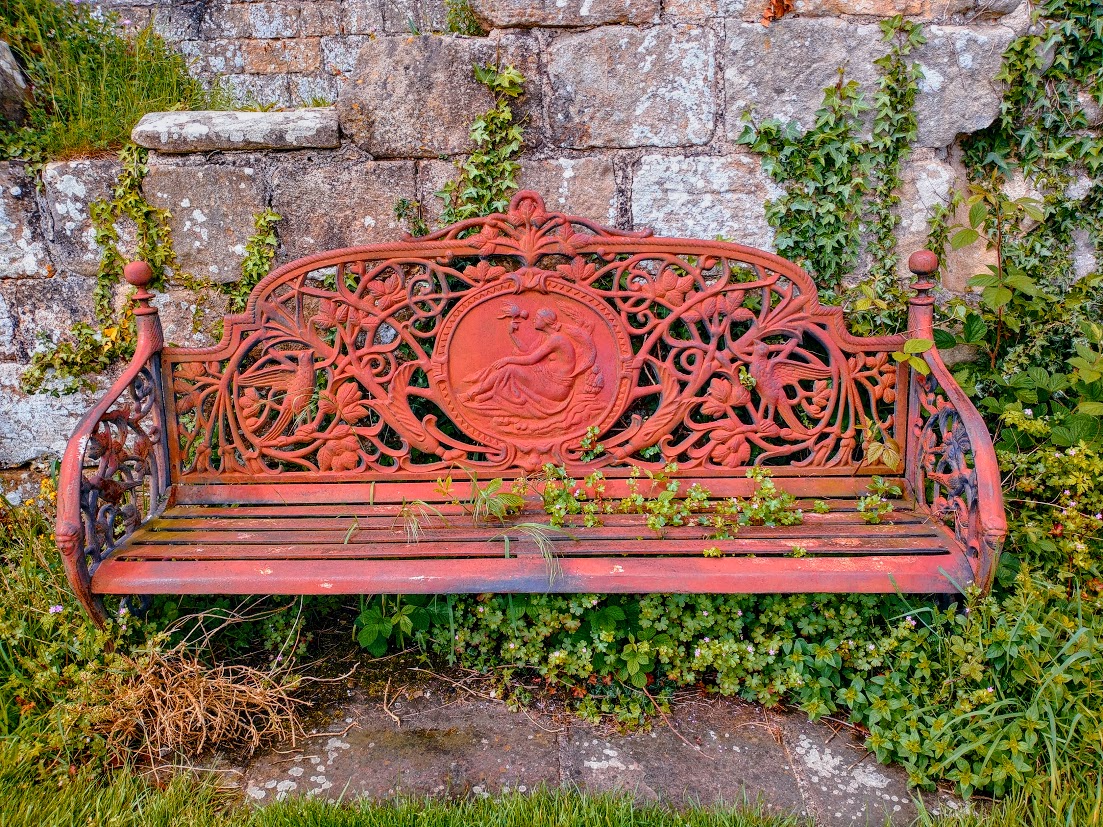
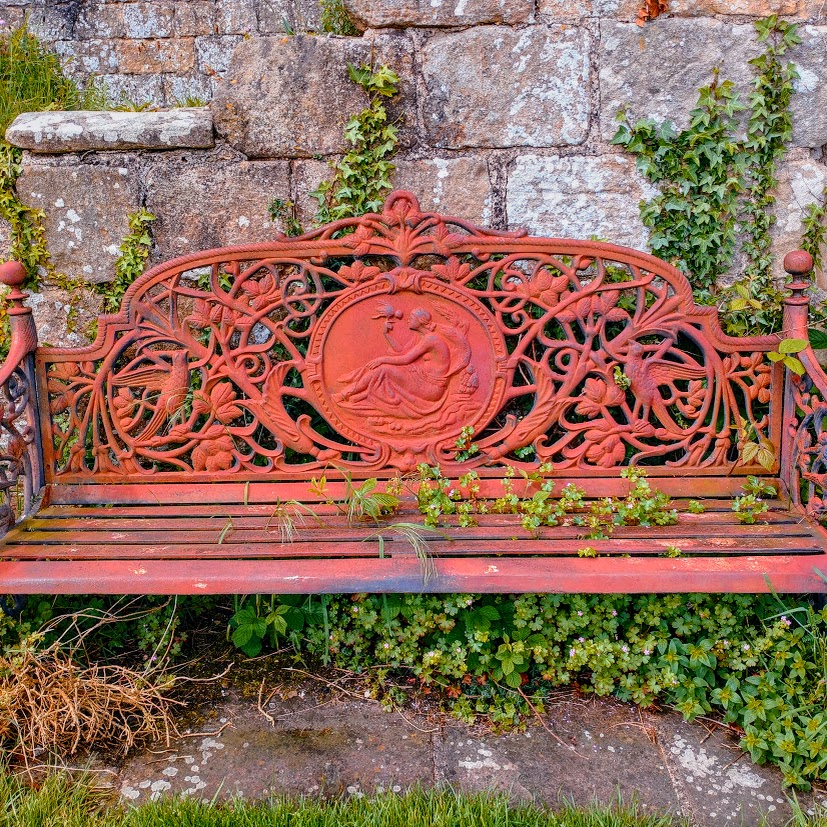
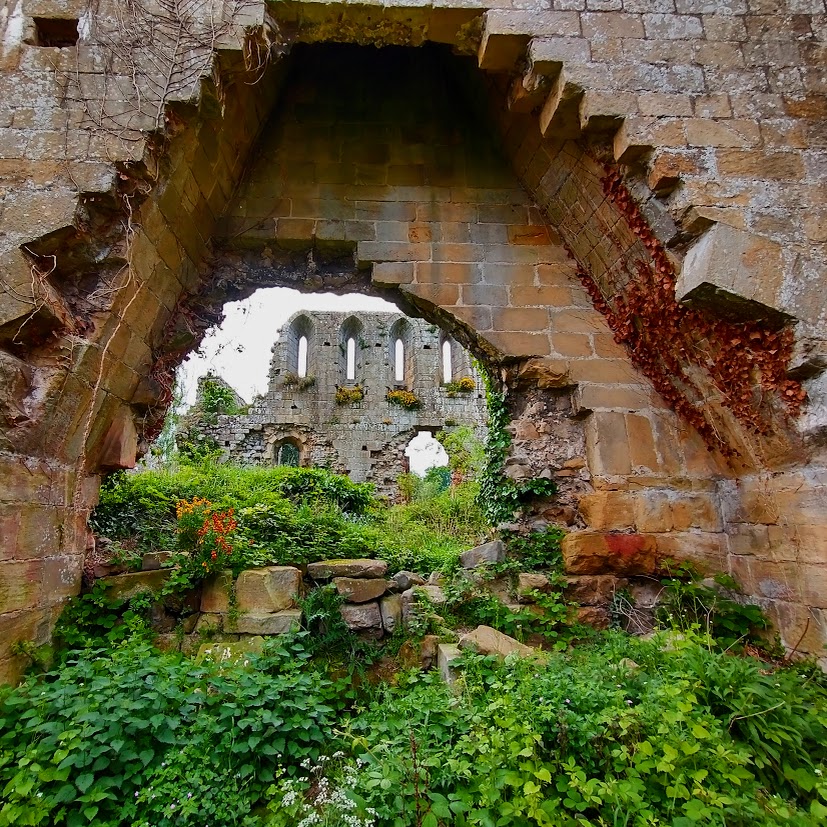
This rusting wreck is multi-tasking today. It’s lived a blameless and long life in the ruins of Jervaulx Abbey, offering views of the Dales and what’s left of the Abbey in the long years since Henry VIII had it made unfit for purpose during the Dissolution of the Monasteries.
Today though, it’s doing a tour of duty for Becky’s #Simply Red; for Jude’s Bench Challenge; and for Debbie’s One Word Sunday. It’s a little dishonest, as I’ve had to tinker a bit to make it Simply Red. Don’t tell the ghosts of those monks who once called this place home.
I’ve even managed a tweaked shot of part of the Abbey looking a little red too.






You must be logged in to post a comment.