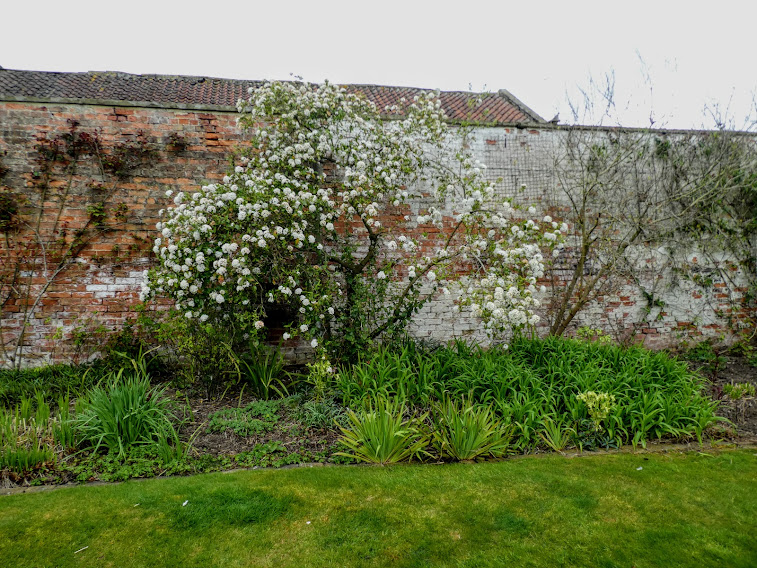
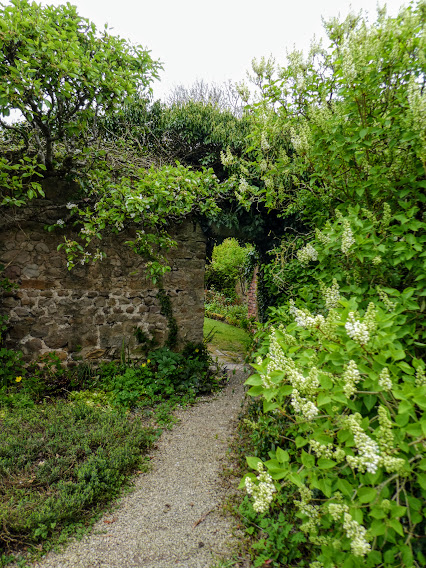
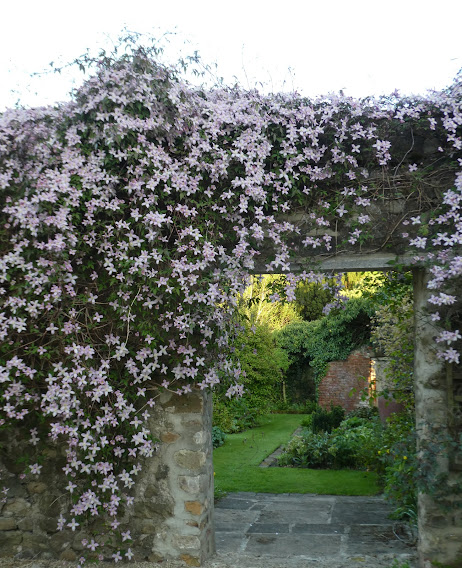
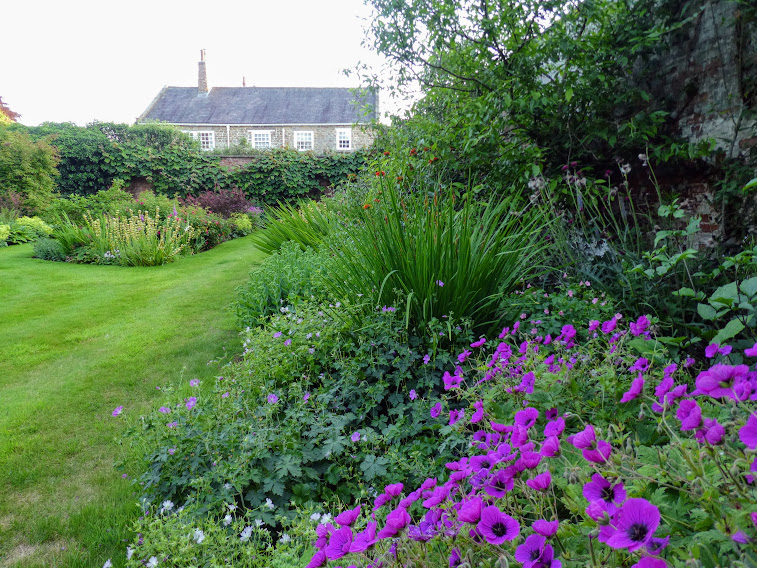
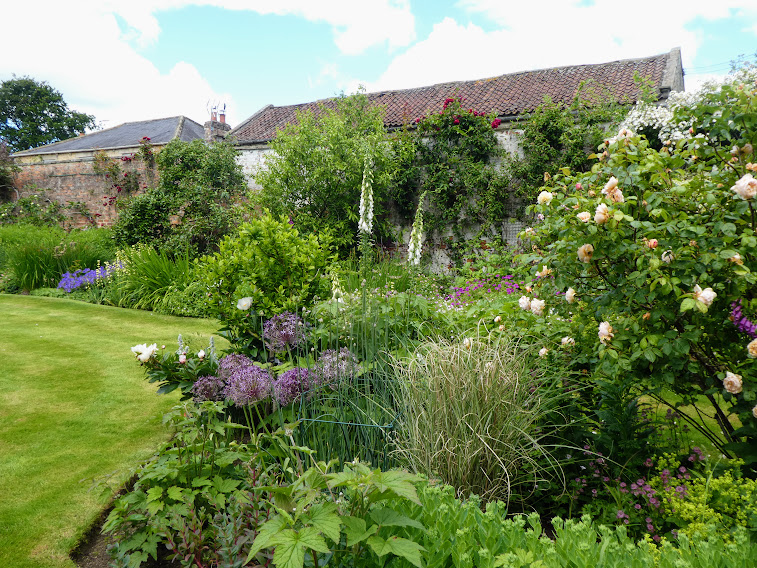
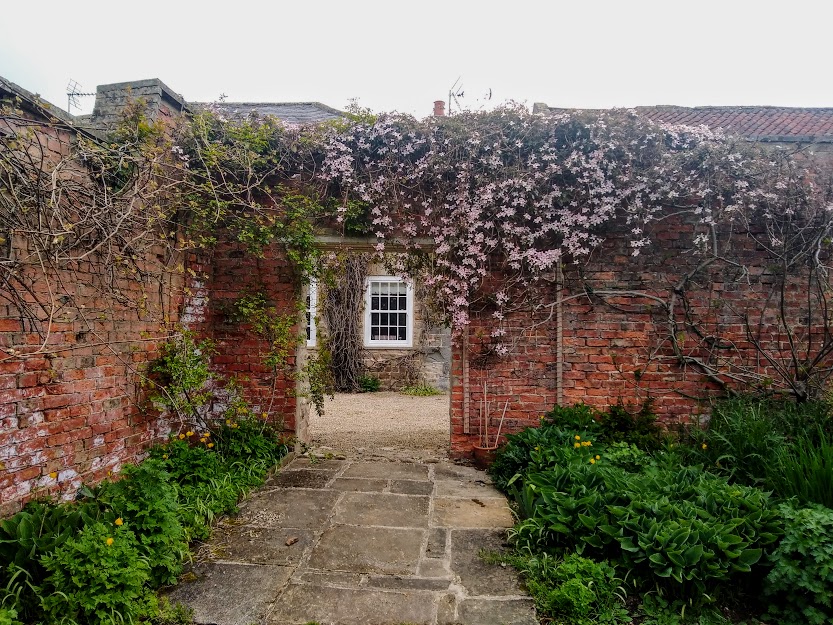
What’s your haven of peace? … asks Denzil, for this week’s Nature Photo Challenge. I don’t have to stop and think. I look out of the kitchen window, and there it is. The walled garden. It’s not ours – it belongs to our landlords. But they are eager to share it, and as they have more garden here, this space is often ours, and ours alone.
It’s a quiet place. Unless you count the birds: trilling, warbling, cooing, admonishing, singing. From our point of view, they’re often at their most tunefully loquacious in the early evening, when we’ll just go out there with a glass of something and enjoy their concert ahead of an evening meal.
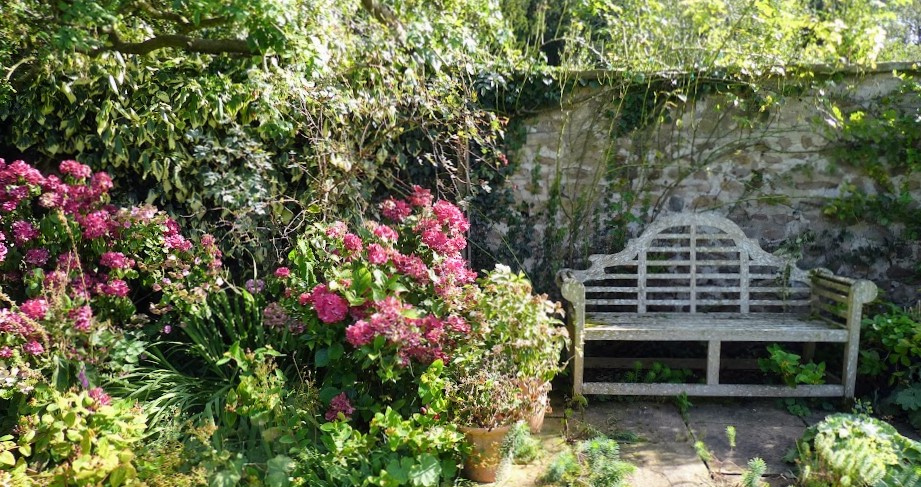
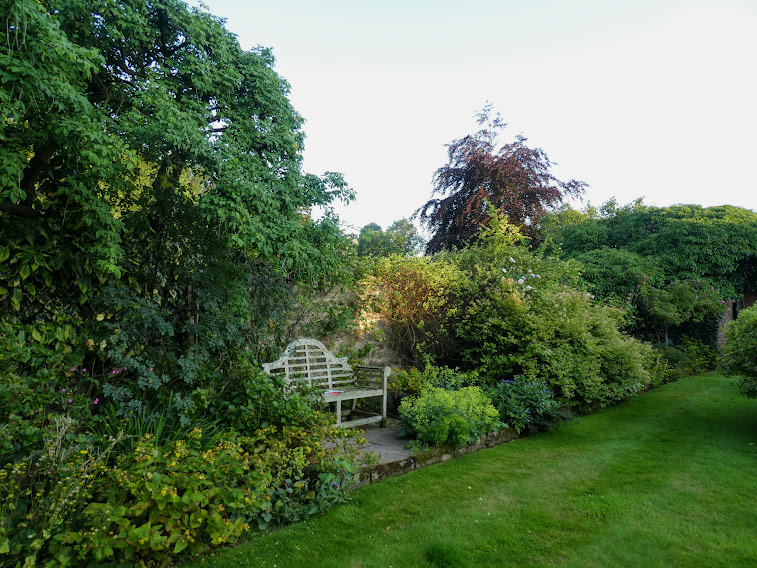
That garden seat in the header photo is the place where I’ll go for a while in the afternoon, perhaps with a good book. It’s an ideal vantage point for butterfly-watching too.
Sometimes we feel it’s only right that we should do our bit towards maintaining this special space, so we wander about doing some weeding (leaving the nettles well alone for those butterflies).
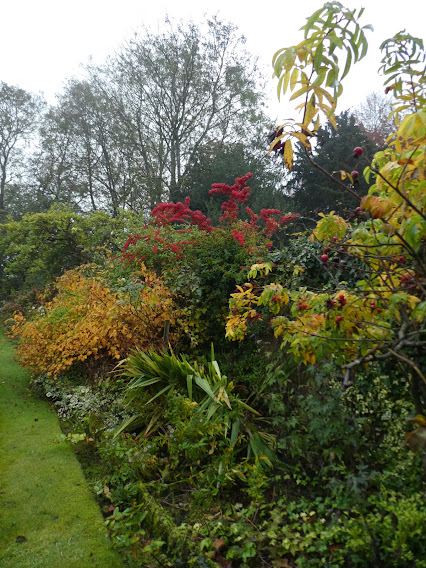
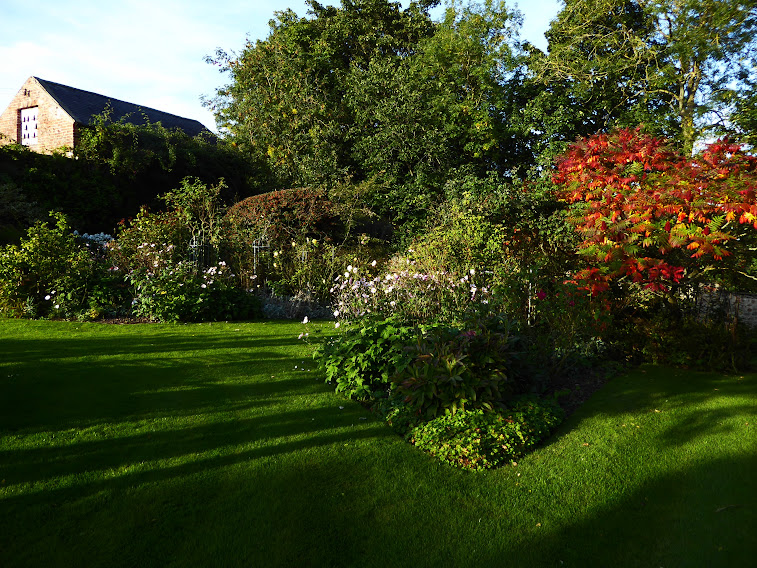
We enjoy watching the seasons pass here too: from the first snowdrops and hellebores of winter, to the springtime tulips and daffodils, through to the abundance of summer and the rich russet and burnished tones of autumn.
Amy has invited us to thumb through our archives for this week’s Lens-Artists Challenge #250 and choose skyscapes and clouds. I’ve found it impossible to be dispassionate about this. There’s something about these images that’s so bound up with memories that I can’t distinguish good photos from the merely ordinary. I’m transported to that place, that time, that set of souvenirs.
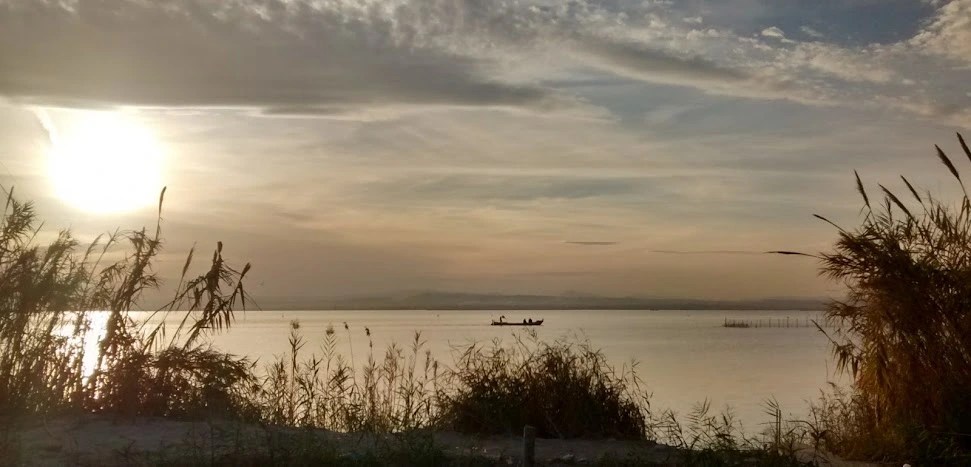
Take my header photo, for instance, which I’ve posted before, more than once. It takes me immediately to that special day when I was part of an evening boat trip quietly floating through the lagoons of l’Albufera near Valencia, while birds made their final flights as the sun settled below the horizon. It’s a memory which will never leave me, whether the photo is a winner or not.
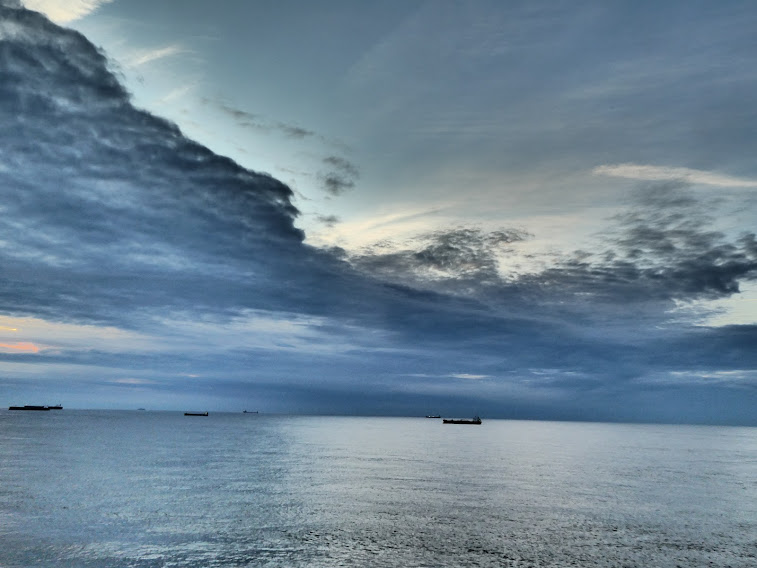
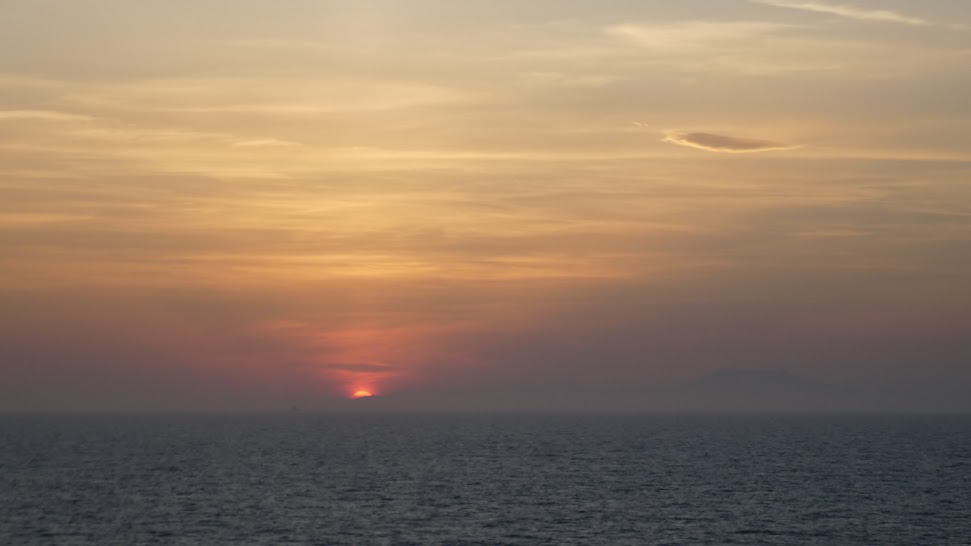
Longish sea trips to the continent bring memories of languidly looking at cloudscapes from early morning till nightfall as our ship smoothly purrs towards its destination. Here’s one …
… or this…
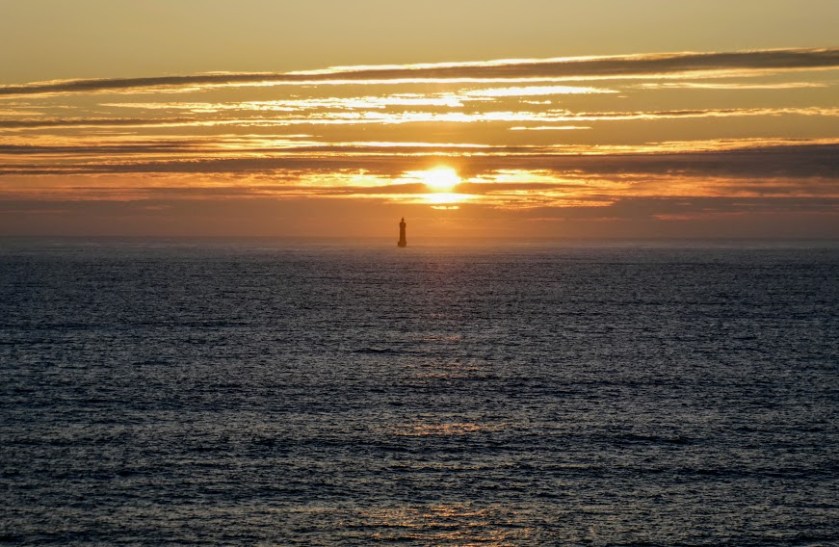
Or there are those memories of January days in Cádiz. An unmissable part of our routine was to head to the beach at dusk to watch the sun slowly disappear into the sea.
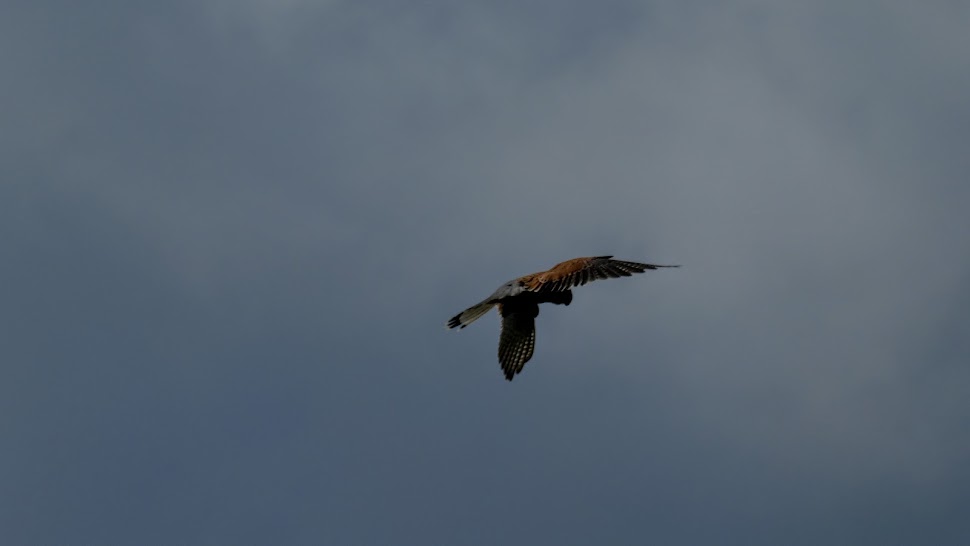
This shot, from our time in the Balkans shows that a slightly neutral skyscape can be a perfect backdrop for a questing bird of prey. And this was a holiday of birdsong, wild flowers – and memories of a still wild landscape.
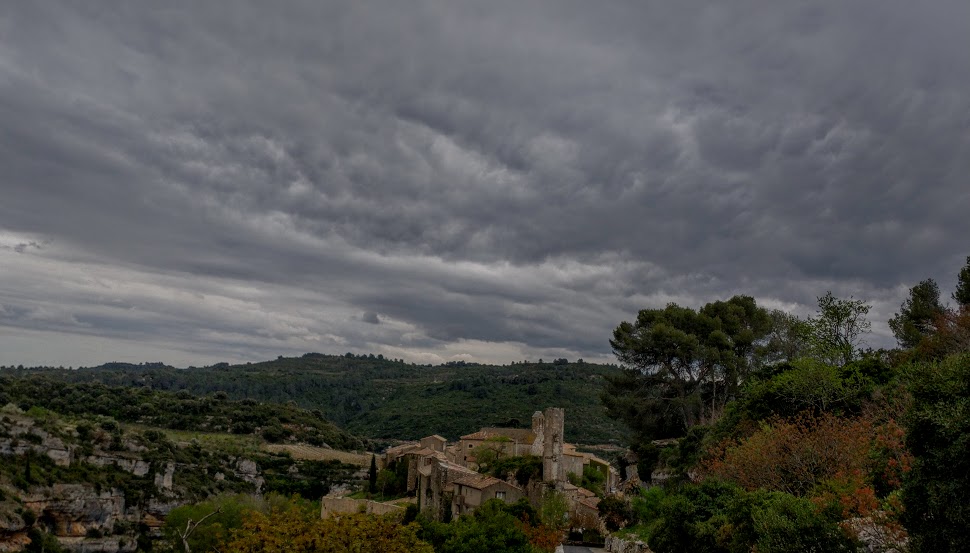
A quick visit to France, to the Minervois for a moody sky. This was a trip just a few weeks ago, when on the same day as this shot was taken, we saw tiny daffodils sheltering from the brisk wind.
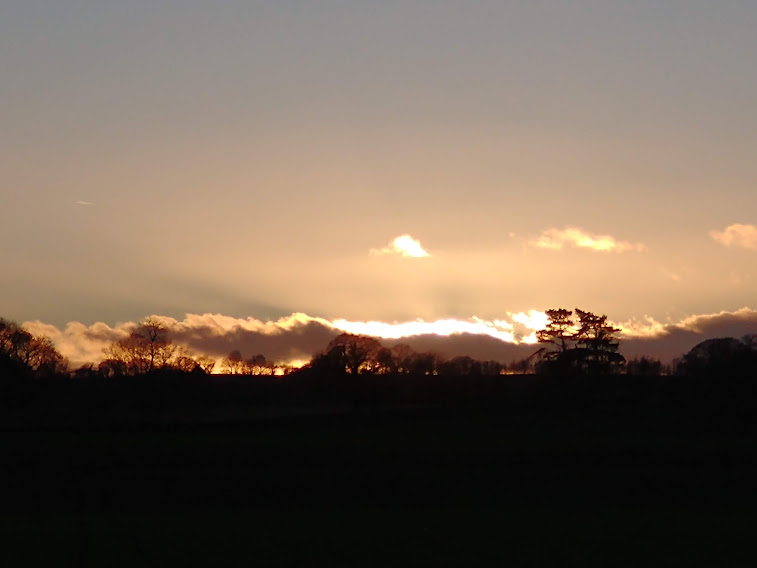
I can’t leave this post without a local shot, taken as we walked a habitual path alongside our River Ure.
Sunday. A day that promised sunshine, maybe showers. A day to get out of the house somewhere a little more distant and explore.
My friend Sandra and I picked Boltby. It’s on the edge of the North York Moors, but fertile farming country, transected by rippling streams and glades of trees. Before setting out, we found a wonky-lozenge-shaped network of paths that would take us to another village – Felixkirk – in time for lunch before returning us, wonkily – to Boltby on the other side of the lozenge.
The feature photo shows how the walk started. Honestly, it wasn’t as grey as it appears. Just moodily misty: a warning that it might – just might – rain. It didn’t.
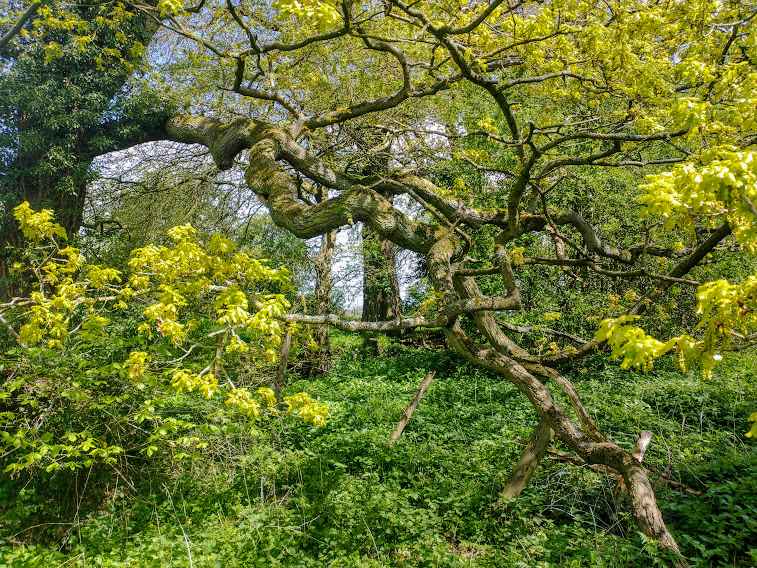
Instead, we enjoyed noticing how the gnarled and characterful trees were at last springing into leaf: bright and sappy.
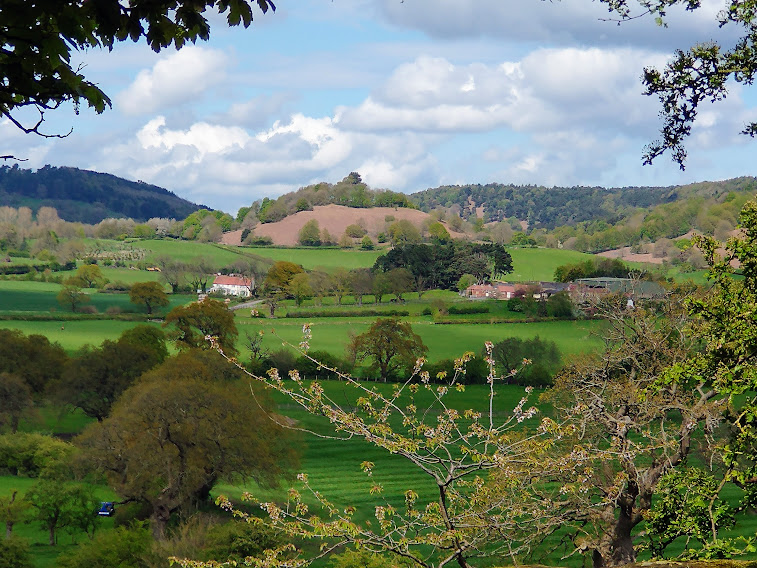
Our feet bounced along on the springy (though wet) turf, and we made good progress until we hit a series of stream-crossings. I should have taken photos of the battered little bridges, in once case so falling-apart that we forded the waters instead. We should have recorded evidence of stiles so past their use-by date that they swivelled and see-sawed as we tried to use them. We soldiered on. By now the mists were gone, the sun was out, and this was the scene.
Then Felixkirk. We sat with our sandwiches on the village green and enjoyed watching the villagers strolling towards the village hall with offerings of scones, sausage rolls and cakes of all kinds ahead of an afternoon dedicated to celebrating Saturday’s Coronation.
After lunch, the walk became more open, with long-distance views. We were on the home straits, with one more village – Thirlby – in our sights.
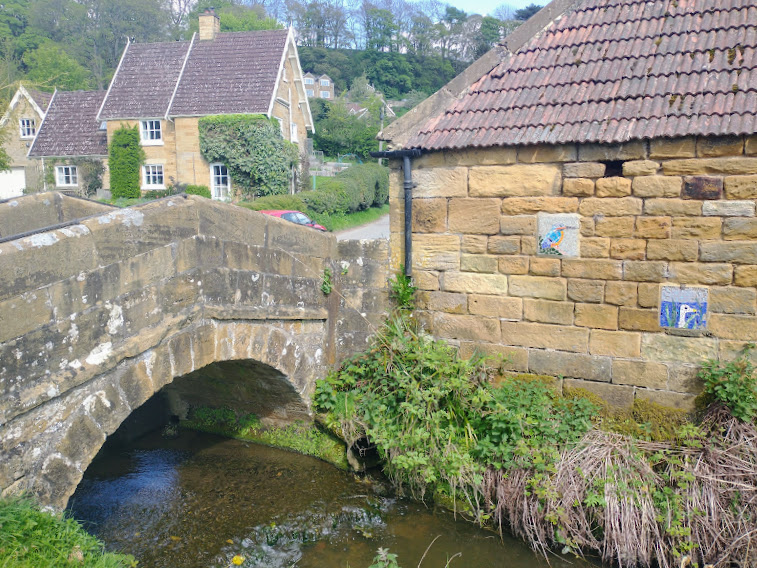
Then finally – back to Boltby, with a spot of bad planning: a hill at the very end, just after crossing its ancient pack-horse bridge.
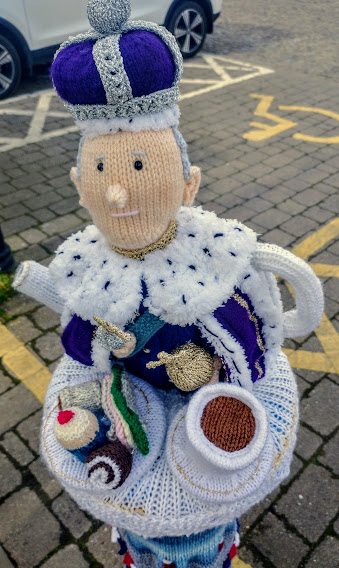
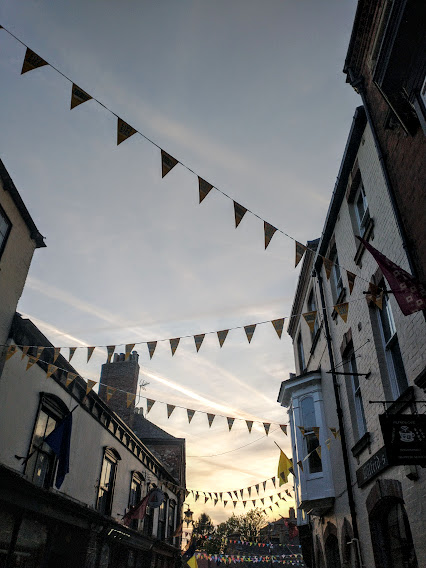
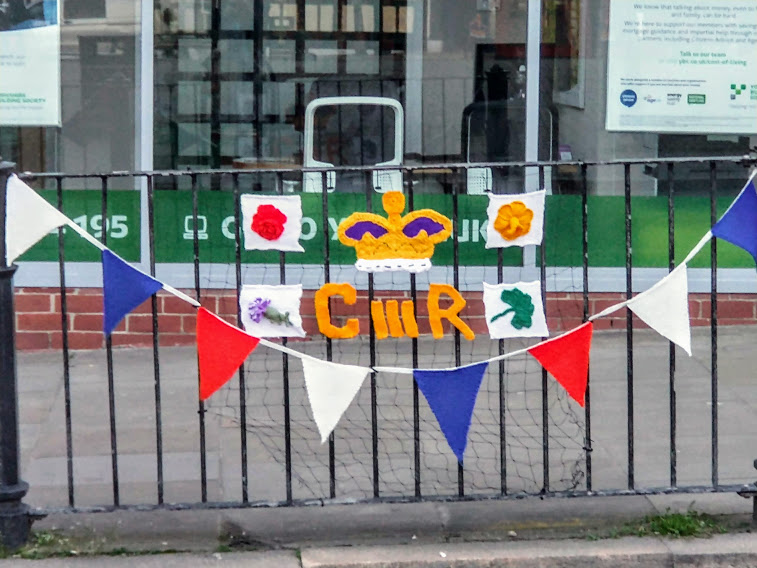
But Boltby has no teashop. To Thirsk then – after four o’clock. All tea shops closed. So instead, we bought ginger beer, and sat on the market square enjoying the Coronation yarn bombing. At least King Charles had his cup of tea. And cake.
Here’s the walk we did. In our opinion (that of Sandra’s app anyway) it was just shy of 10 miles. A good day out.
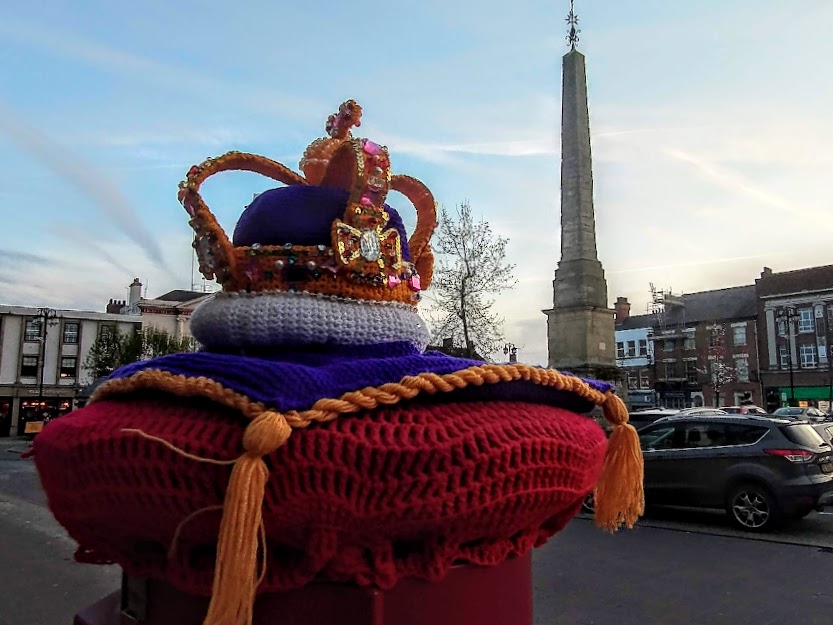
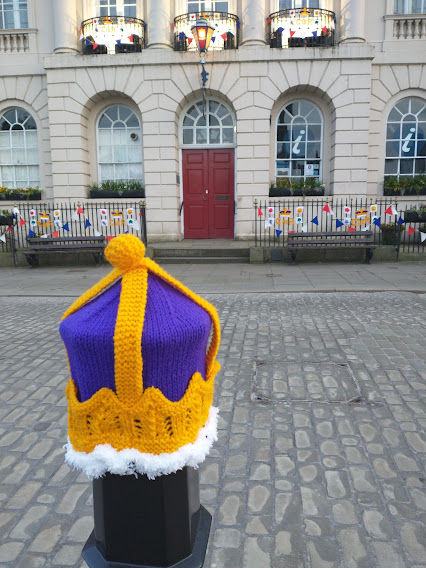
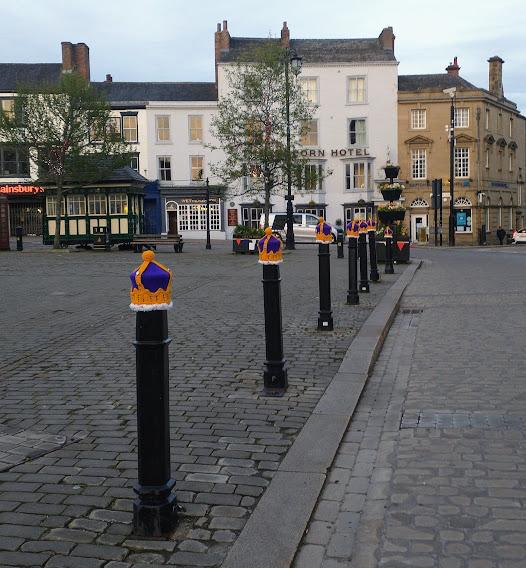
It’s only 8.05 a.m., and even on a music station like Radio 3 there’s no escape from unremitting Coronation fever. Before I go and hide, I’ll share images I took the other evening in Ripon, which has chosen to celebrate by yarn bombing the city centre.
While I was in town, the cathedral bell-ringers were practising for today. Can’t beat English bell-ringing.
Ripon Cathedral bell-ringers
Ripon’s not alone. Nearby Thirsk seems to have gone whimsical, rather than respectful. I think we’ll have to pop along and see for ourselves.
This amateur snapshot-ist has just joined a photographic club, and it’s been a smart move. Although the group has got its share of real talent, members are just as welcoming to those of us who bumble about in the shallow end. There are talks from well-travelled and accomplished photographers: but in between, there are workshops. Last week, a member shared his enthusiasm and lots of tips for monochrome photography, and left me with the resolve to keep my camera strictly on black and white for at least a week or two.
So now I’ve got a bit of a job: This week’s Lens-Artists Challenge is all about Spring. Spring – that season when colour returns after the sombre tones of winter, with bright yellow daffodils, celandines and marsh marigolds; the soft pink of blossoms; vivid grassy greens from leaves that push through the ground or from the swelling buds on twiggy branches, and newly-blue skies. And I’ve gone and made monochrome my rule-of-the-day.
It didn’t help that Sunday was a bit cold, rather grey, somewhat windy and really not very spring like. But rules are rules, even if they’re totally self-imposed. Here we go …
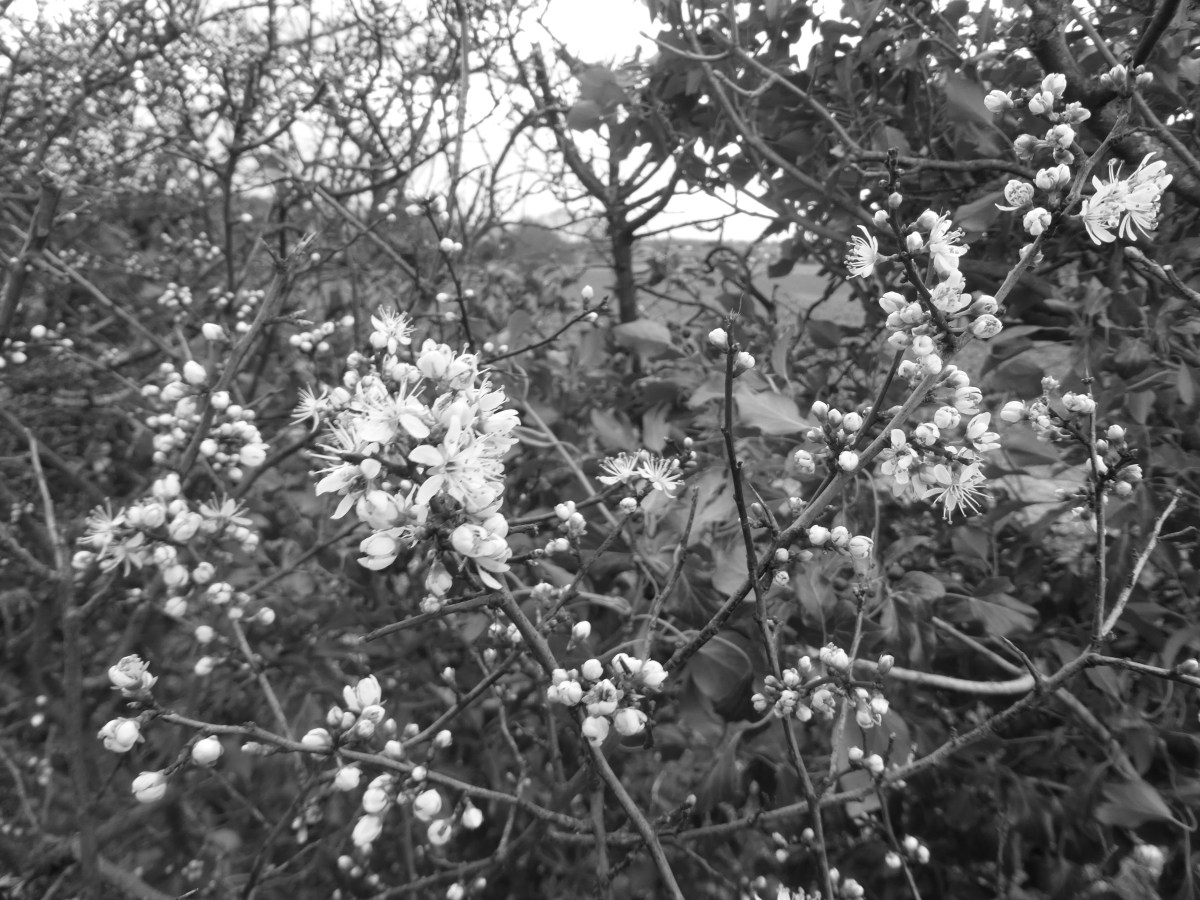
Out of the back door, guarded by spring-time pots, along the lane, edged with tree-blossom, still-wintry trees, and passing a bank of white violets .
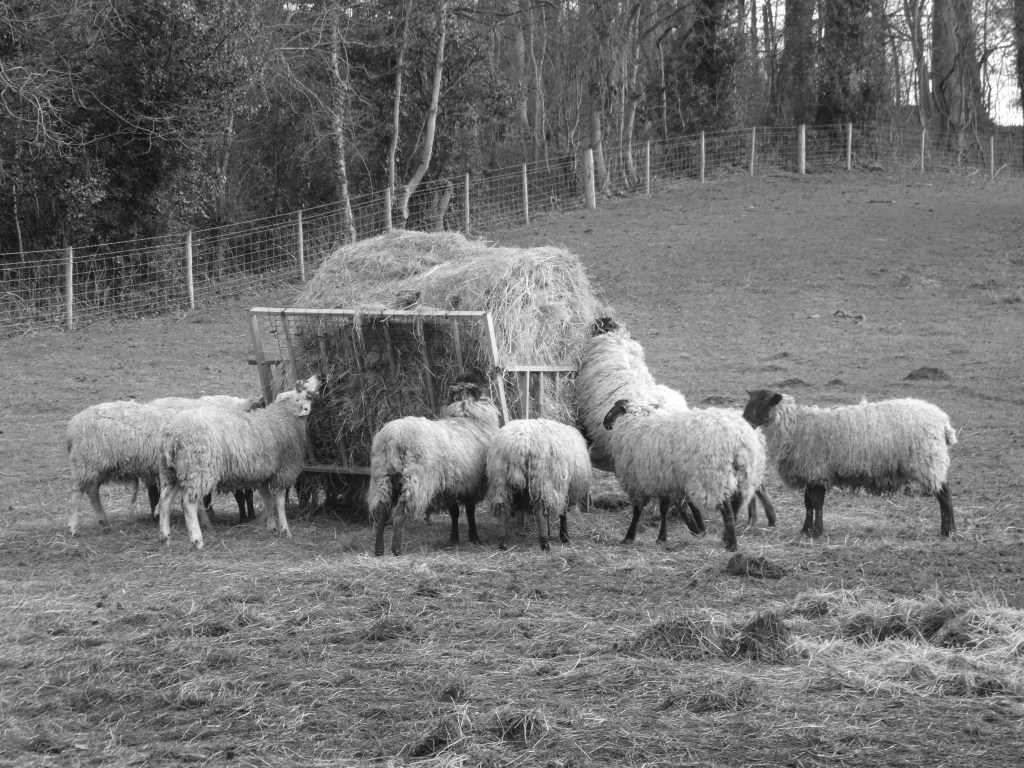
The sheep know it’s too early to lamb here. They’re still relying on winter feed.
I wander through the grounds of Old Sleningford Hall, and then along the river bank. There’s twisted hazel thinking of bursting its buds, young wild garlic.
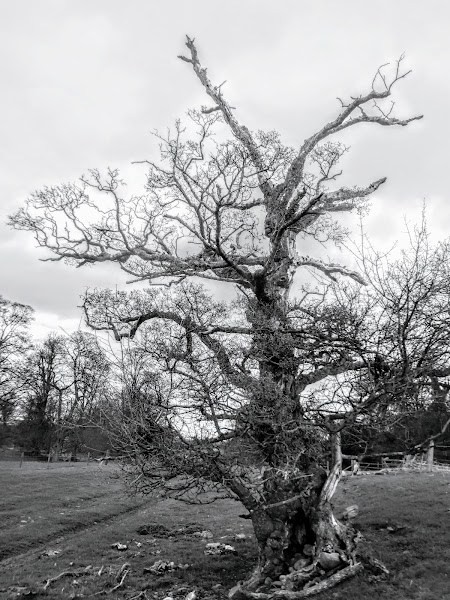
Nearly home. How does this ancient tree, almost completely hollow, continue to live, to sprout new growth?
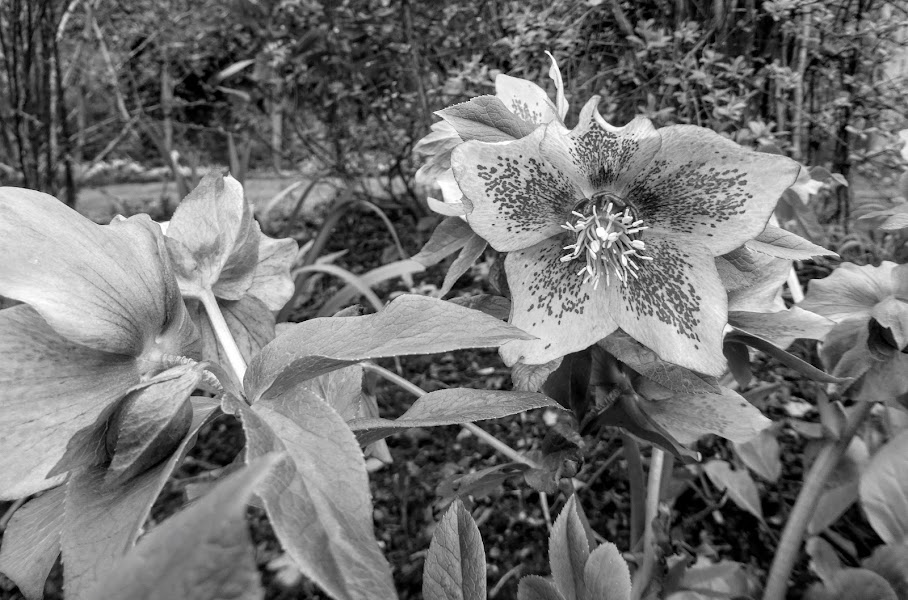
Back in the garden. The hellebores are – apart from the daffodils – making the best showing. We’ll end our walk by enjoying those.
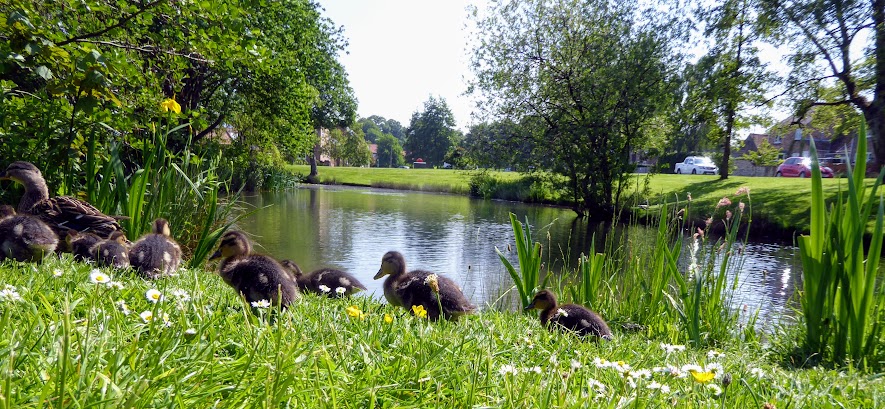
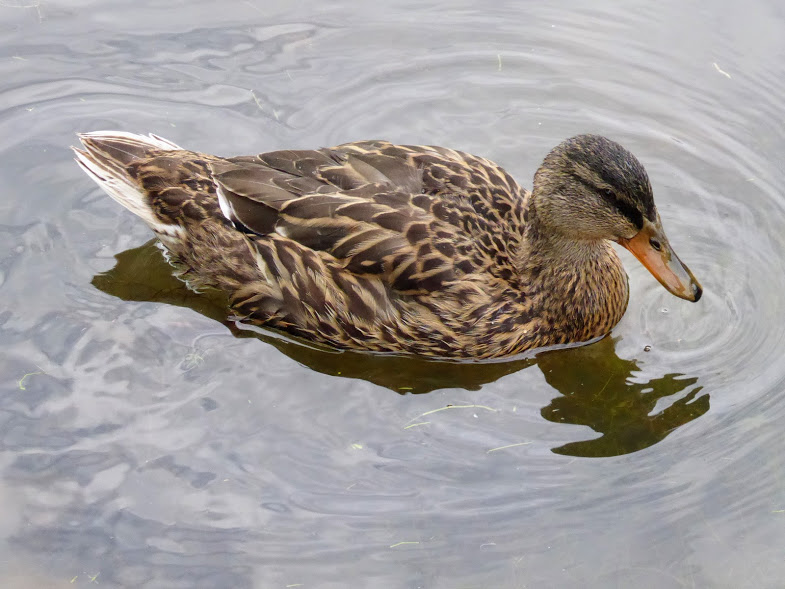
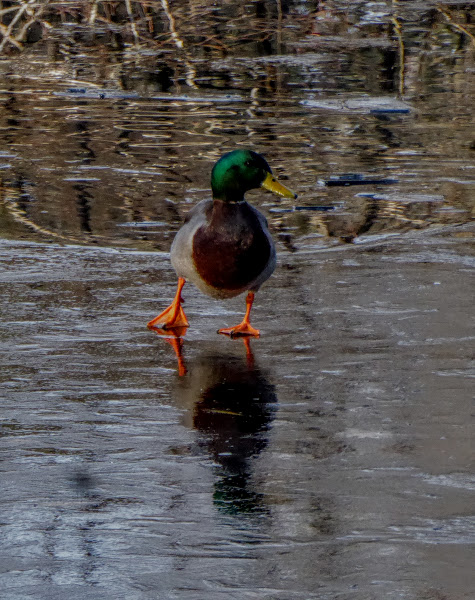
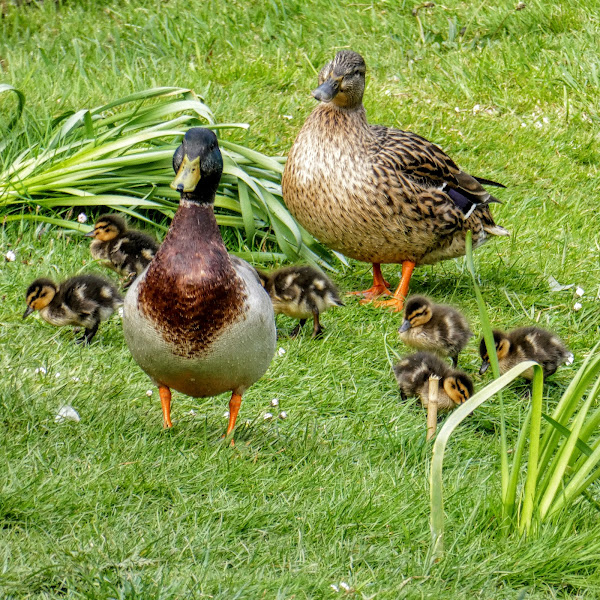
We’re lucky. Our village has not just one, but three village ponds. It’s home to a variety of geese, to coots and moorhens … and to any number of mallards. Males seem to outnumber females. Most days in the spring and summer the laddish drakes – if they’re not lazing around on the grass – like so many teenage boys, mob the younger females in a rather aimless and half-hearted fashion.
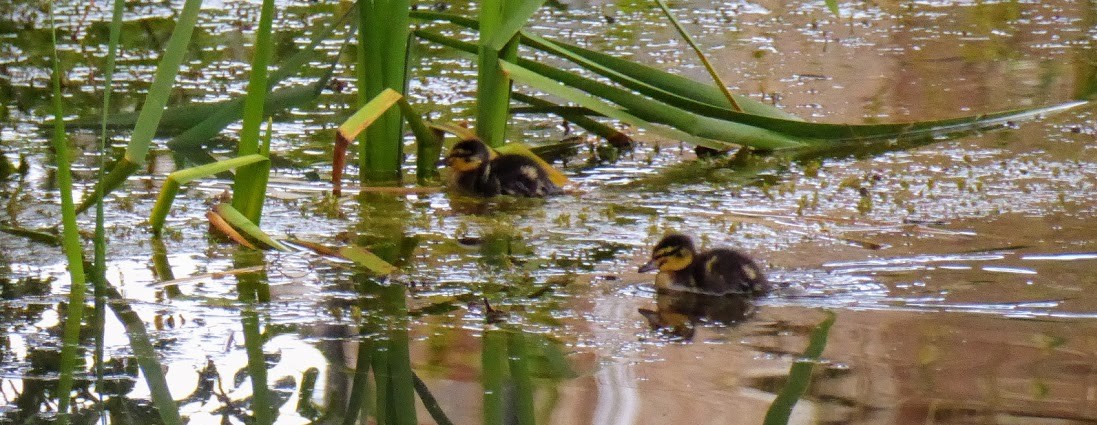
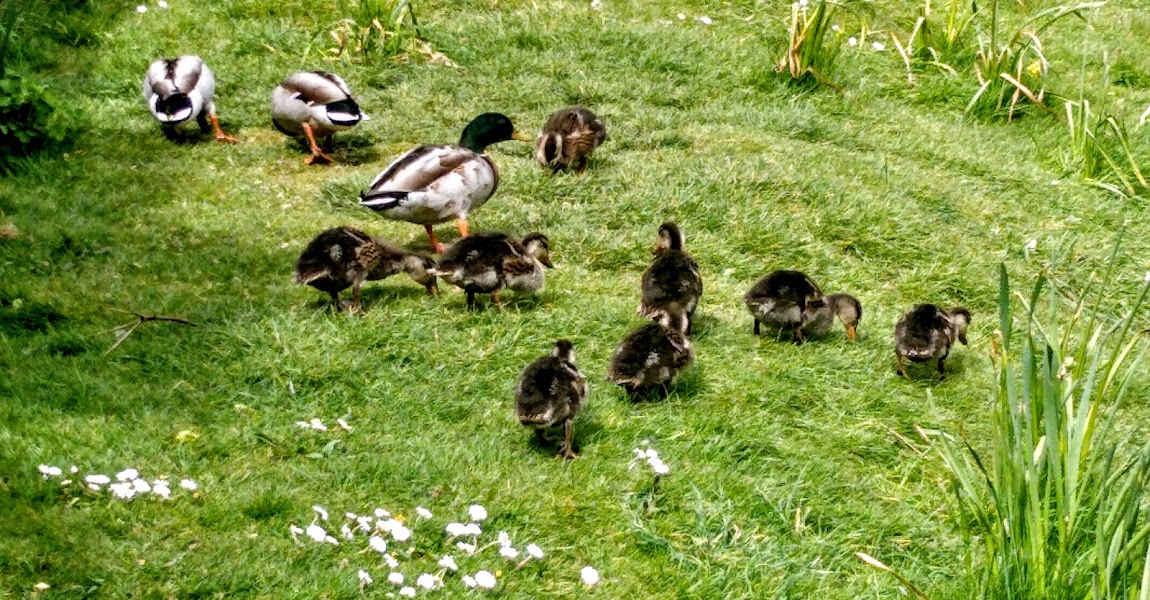
We’re nearly at the time of year when ducklings will hatch and charm us all. The ponds are on both sides of the main-ish road that splices the village in two: the mother ducks march their broods back and forth, confident that traffic – yes even huge and heavy municipal dustbin lorries – will instantly grind to a halt to let the young family cross.
Nevertheless, few broods grow intact to adulthood. Jealous mallards despatch ducklings not their own. Geese kill them. Foxes take them to feed their own young. Herons visit. And despite the care most drivers take, there are traffic accidents. We often wonder what happened to the brood that Malcolm spotted one day on a lane near here: a mother duck leading fourteen – yes fourteen – ducklings along the road.
This week’s Lens-Artists Challenge #137 invites us to bring softness to our shots. What Bren – who set the challenge – means, is that she’d like us to enjoy playing with effects – available in various software packages – to enhance our photos. The trouble is, I don’t really enjoy doing this. I often crop my shots, I may adjust the light, then I’m done.I admire the results that other people get, but I don’t hanker after doing it for myself. I rely on the weather or light conditions to do the job for me .
So as it’s Flashback Friday, I’ve dug out a walk from 2020 which began, unexpectedly, in thick fog. It didn’t end in thick fog. so if that’s what you’re looking for, stop reading when you get to the lunch stop.But then go straight to the end, because I couldn’t resist adding another 2020 photo, taking during Lockdown, when I’d sometimes get up at about 5.30 to enjoy the sunrise.
If you’re reading because, like Jo of Jo’s Monday Walk fame, you enjoy a good walk, feel free to carry on till you get to the end.
Fog and mist, cloud and sun
Weather forecast. Cold, but bright and sunny. That sounded perfect for a walk in Wharfedale. Starting and finishing at the forbiddingly-named Grimwith Reservoir, and taking a fine circular route to and from Burnsall would give us extensive panoramas over the hills of the Yorkshire Dales.
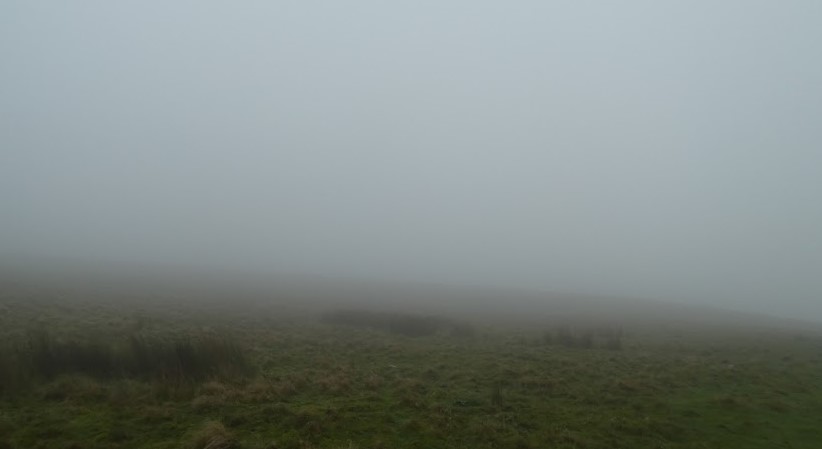
Except that on the way there, an impenetrable curtain of fog descended. To walk? Or not to walk? My friend and I had both made the effort to get there. So we’d walk.
And for nearly an hour, this was our landscape. No hills, no dales, but just the occasional gate, or tussocky grass, or – sometimes – sheep.
Then – suddenly it seemed – this.
The sky lightened and brightened, and the countryside we’d come to see developed before our eyes like those Polaroid photos that once seemed so exciting.
Soon we were at Burnsall, our half-way mark. A hearty yomp up hill brought us to a bench, where we saw in turn black skies, grey skies, blue skies: and views, always with the village below us.
Our lunch time views of Wharfedale, the River Wharfe glinting below, a few curious sheep, and Burnsall.
After lunch, a further climb, and then level walking back to where we’d begun our day. But this time we had the views we’d come to see, and at the end, the quiet tints of the reservoir.
It hard turned out that this walk, so unpromising to begin with, had become memorable, as the heavy mist added another dimension to familiar territory, and gave a special beauty to the landscape.
And here is my Optional Extra …
Taken in June 2020, as the mist from the river sweeps over the fields at sunrise.
We’ve had a lot of misty-moisty mornings lately, and I turned this photo up when looking for soft-focus shots for this week’s Lens-Artists Photo Challenge. This isn’t for that challenge: I just thought this hardy creature deserved her five minutes of fame as a Monday Portrait.
It’s a mere 18 months or so since I reblogged my post about Beltane, but I’m doing so again because it fits so well with my last post celebrating Thornborough Henges.
Beltane at ‘The Stonehenge of the North’
May 1st 2016
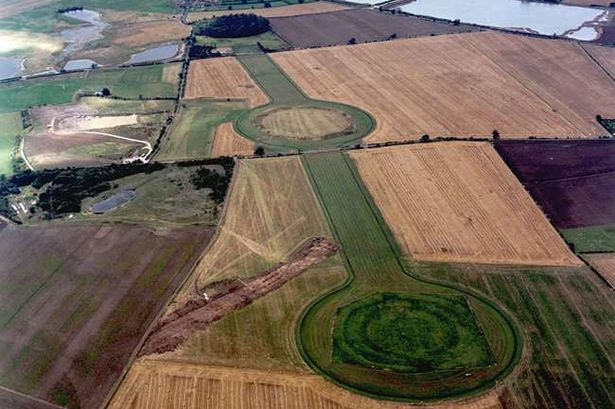
Not much further than a mile from us as the crow flies lies Thornborough Henge. It’s a prehistoric monument consisting of three giant circular earthworks. Constructed 5000 years ago by the first Neolithic (New Stone Age) farmers, it was probably an enclosure for their ritual gatherings. The Henges became an important centre in Britain for pilgrimage and trade, although its exact purpose still remains a mystery.
It sends shivers down my spine to think that this ancient piece of our history lies just a short walk from our home.
An ariel view of Thornborough Henges (photo courtesy of Historic England)
We can visit it any time we choose, simply to tramp round and try to imagine it in its heyday, and we’ll have the place to ourselves. Not on May Day though. Today is the Gaelic feast of Beltane, half way between the spring and summer solstices. It’s a day to mark the beginning of summer. Sadly, today is very cold, rather windy and a bit wet.
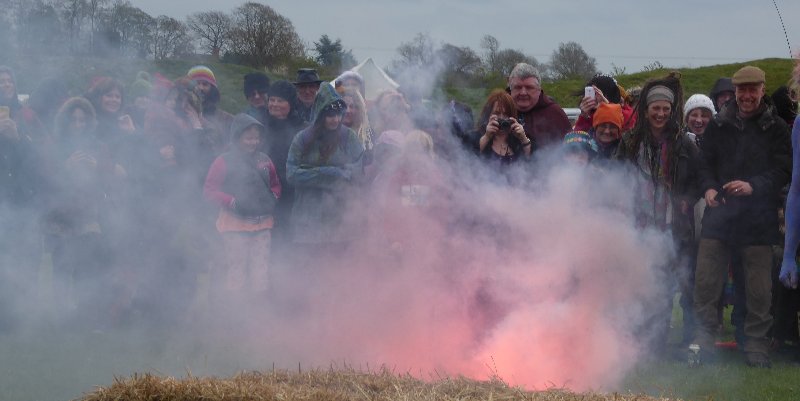
Back in pre-historic times, rituals were held on this day to protect the cattle, crops and people, and to encourage growth. Bonfires, deemed to have protective powers, were lit. For many centuries these practices died out. But nowadays, at sites like Thornborough, pagans, Wiccans, New-Agers and lovers of history and tradition gather once more to celebrate the renewal of life and growth.
Today I was there too. For an hour at least, for the opening ceremony. Brrr! It was cold.
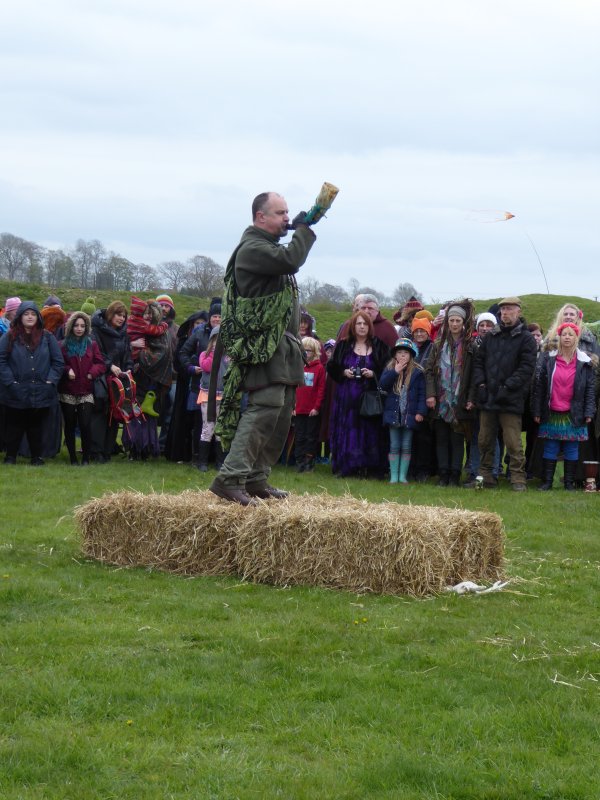
The Green Man and his horn.
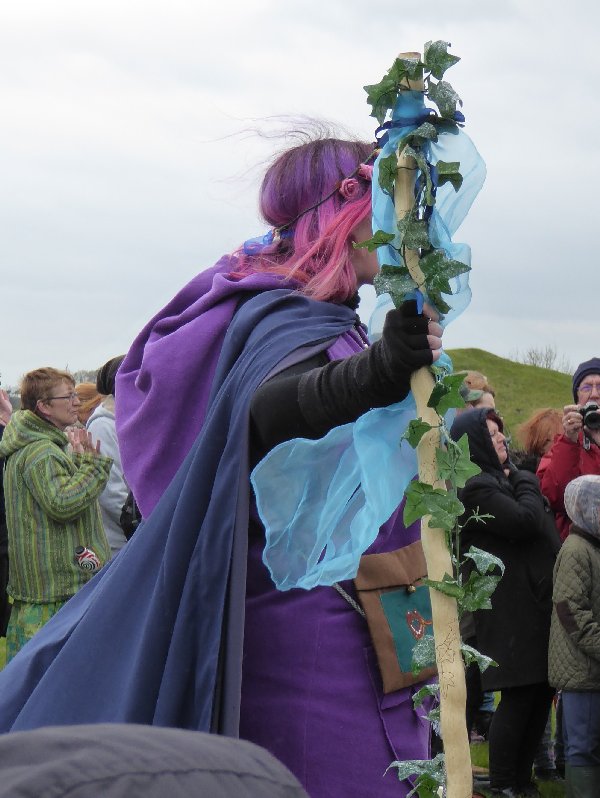
I was strangely moved. The Green Man, representing rebirth and the cycle of growth was our Master of Ceremonies. He invited us all to join hands, whether friends or strangers, in fellowship, and shout out three times the invocation to new life. We hailed Brigantia, Celtic goddess of Northern England. Then at his bidding and as he sounded his horn, we turned to the east and welcomed the summer rains. We turned south to welcome the sun (who was coyly absent today), to the west to welcome summer winds, and to the north where the wolves apparently are.
Welcoming the West Wind.
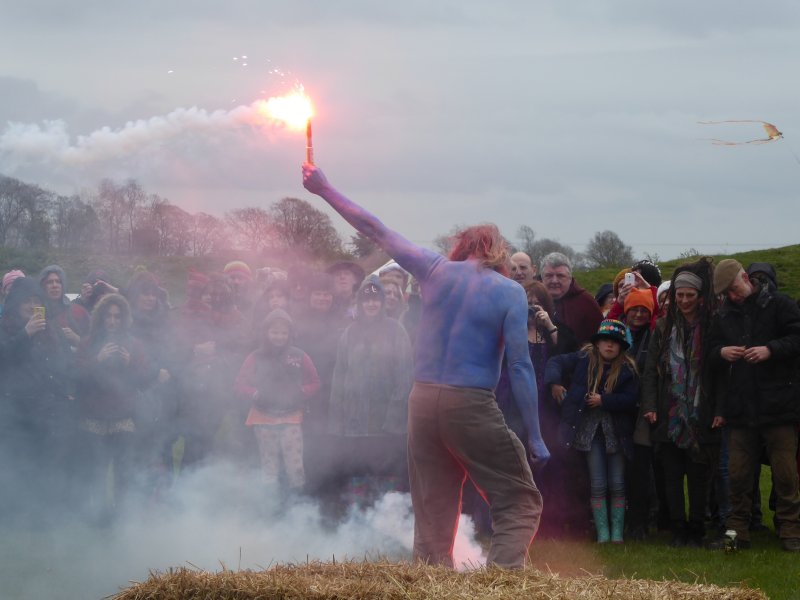
Then a man, naked from the waist upwards save for his covering of woad-coloured paint, leapt among us bearing the flaming torches which would offer us all protection over the coming months.
Protective flames.
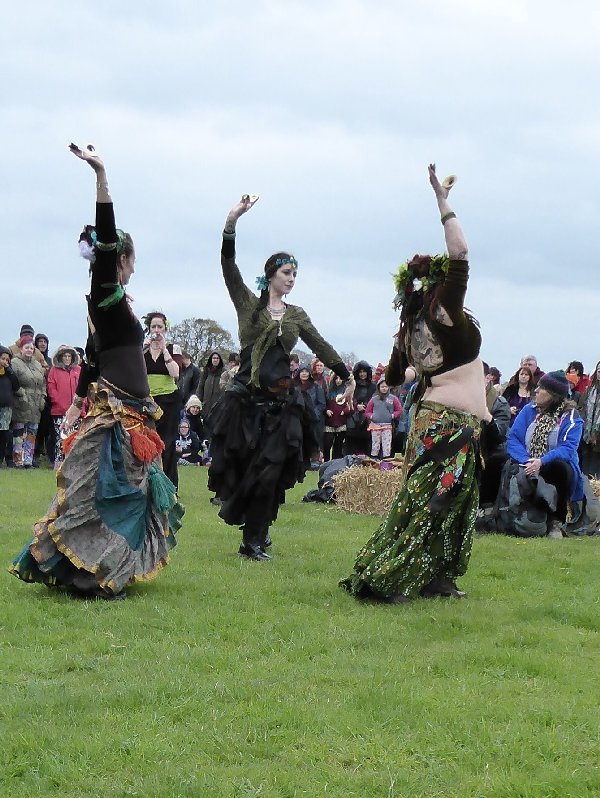
And that was the ceremony over. Dancers entertained us. They seemed to me to owe much to flamenco and to middle-eastern belly dancing traditions, but we all cheered them on with enthusiasm.
I shan’t be there this year for the closing ceremony. I’m still thawing out. But weather permitting, I’ll certainly go along next year. Will you come along too?
We haven’t been along since: cold May Days, Covid – all the usual tired excuses. But we definitely should make the effort this year.















You must be logged in to post a comment.