Postcards from Catalonia

We’ve just got back from our weekend on the other side of the Pyrénées, and I’ve decided to post these ‘postcards’ to show a few happy days in Sant Cugat del Vallès, the very attractive town where Emily is now working; the not-Hallowe’en-but- la Castañada festivities; and a relaxing weekend.

Eating and drinking were important.  Straight away, as we drove across the mist and rain shrouded Pyrénées from France, there was a decision to be made. Lunch on this side of the border?  You can’t get fed much later than 12.30 here.  Or wait till Spain?  Nothing there is open much before 2.00 p.m.

We arrived in Catalonia just in time for la Castañada. Instead of Hallowe’en, they commemorate All Souls’ Tide. Roasted chestnuts are sold wrapped in cones of newspaper with roasted sweet potatoes and peddled from impromptu stalls, or by excited groups of children.  Panellets are mashed potato, sugar syrup and ground almonds – maybe cocoa or dried fruits too, rolled in pine nuts and briefly baked till the nuts turn golden. It sounds odd, but they’re delicious accompanied by a shot of strong black coffee.

Coffee shops, with tables outside so you can enjoy the late October heat seem to be in every street, and we adjusted our bodies to Spain’s very different rhythms. Food generally seems cheaper in Spain.  A pleasant pause for breakfast, after taking the children to school, after shopping or work, or just because it’s a nice idea and the sun is shining is an affordable treat, and cafés don’t seem to struggle for custom.  Nor do lunch-stops.  As in France, the 3 course lunch with wine and coffee is on offer in most restaurants, but cheaper here.  And it’s a leisurely affair.  We found ourselves spending an hour or two every day that we were there over the lunch table, eating, talking and simply people-watching.

Shopping seems less anonymous too.  Whether in St. Cugat, or city-centre Barcelona, greengrocers and grocers, wine merchants and bakers – especially bakers – all seemed to be doing brisk business.  The out-of-town supermarkets are there alright, but so far, they don’t seem to have won.

So here are my postcards.  Have a glance at them over a lazy cup of coffee.
This slideshow requires JavaScript.

Season of pumpkins and mellow fruitfulness

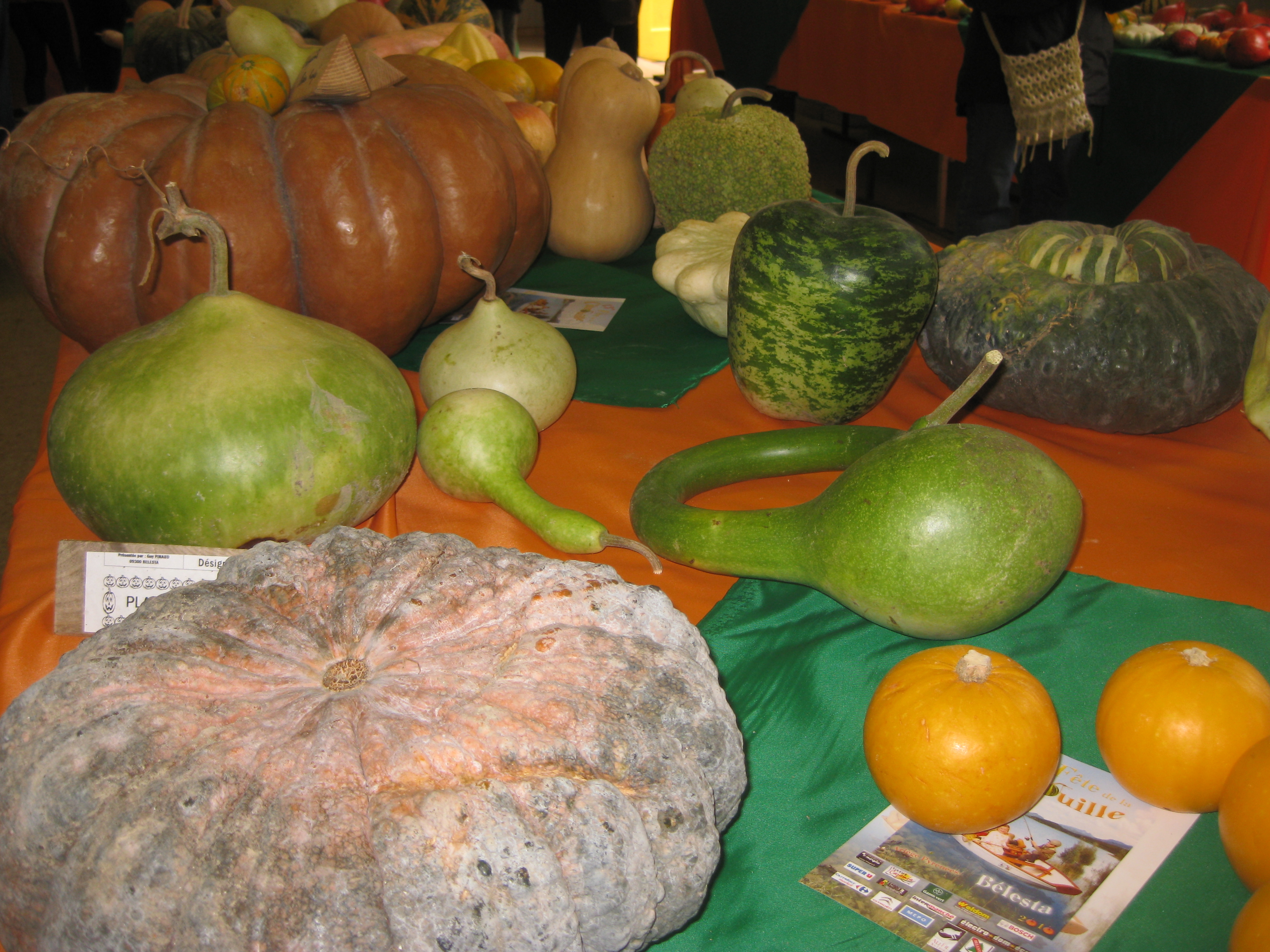
A few pumpkins on display last year at Belesta’s annual Fête de la Citrouille

Go to any veg. stall on a French market just now, and there’ll be at least one giant pumpkin.  The stall holder will sell you a portion if you like, using a hefty cleaver to wrest a kilo or so of orange flesh from this magnificent vegetable.  The market’s probably got at least one stall devoted to nothing but pumpkins: Turk’s head, musque de Provence, butternut, red kuri, rouge vif d’Etampes………

It’s not so very long ago in England that I’d be doing the rounds of all the supermarkets, the day after Hallowe’en, gathering up the last few Jack o’Lantern pumpkins at bargain-basement prices.

Jack o’Lantern dressed up for Hallowe’en

They’d been stocked for everyone to make their scarey Hallowe’en pumpkin faces with and that was all.

Hardly anybody used them to cook with (presumably not even the many Americans who live in Harrogate, with their apparent love of pumpkin pie), and Hallowe’en over, the unsold ones would be junked.

Hugh Fearnley-Whittingstall et al have put paid to that, and now the English love pumpkins as much as the French always have.

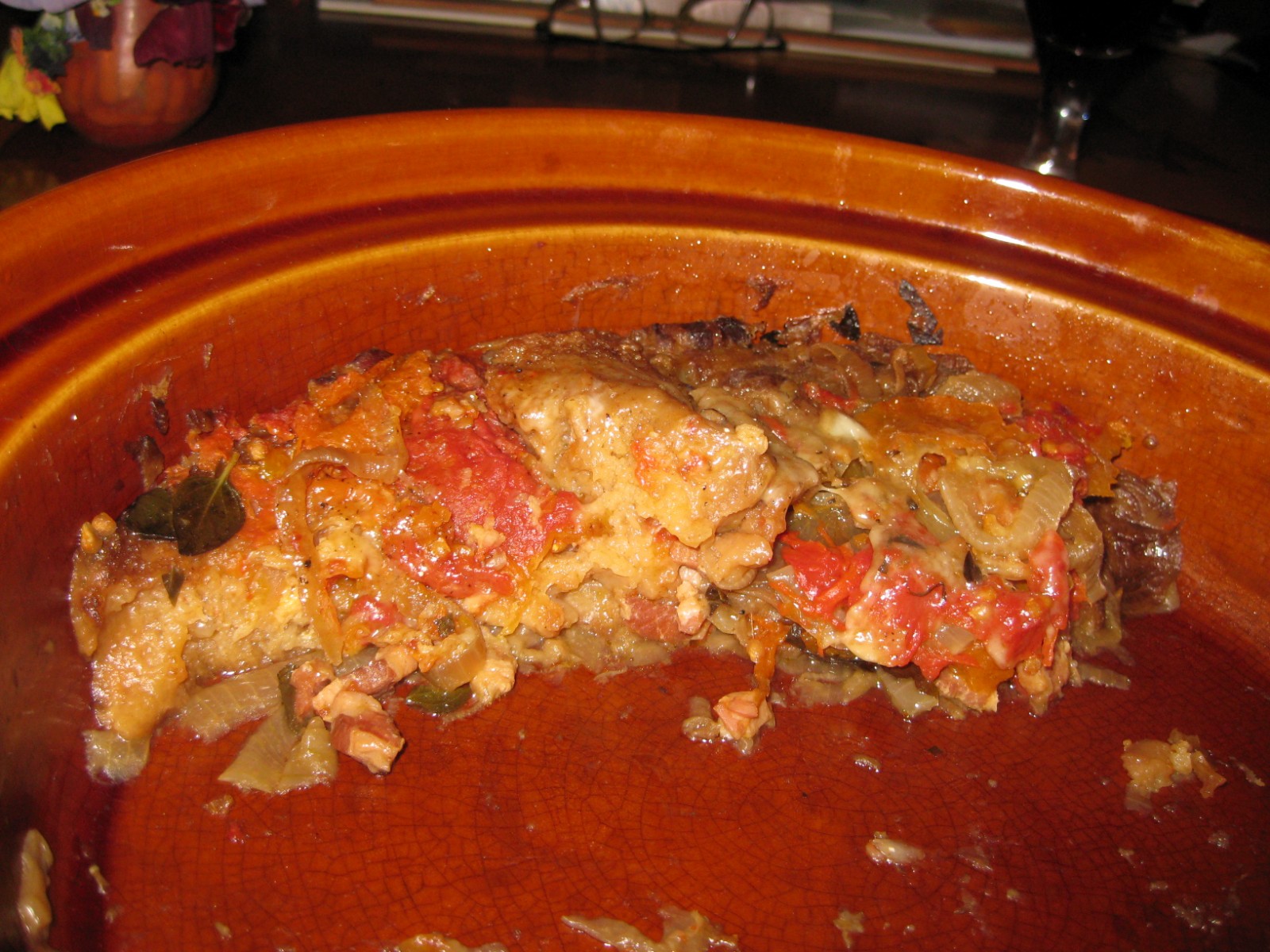
Here’s an easy and long-established soupy stew from round these parts (though I learned about it from Nigel Slater) to warm you up after a chilly day in the Great Winter Outdoors.

Hmm. We made short work of that.

When we first tasted it, we thought it nice enough, not earth-shattering though. It’s grown on us, and now we think it’s comfort food par excellence: especially those pillows of bread, soaked in scalding hot flavoursome juices.

Garbure Catalane

Toast thick slices of bread- preferably sourdough, and layer them up in a casserole or slow cooker with fried onions, garlic, marjoram, sliced skinned tomatoes, and thin slices of pumpkin.  Top the dish up with seasoned water and olive oil and bake for an hour or two in a slow oven (or most of the day in a slow cooker).  Take the lid off the dish for the last half hour or so and return to the oven with a crust of grated cheeses (parmesan is good to include in the mix, as it provides a welcome crispiness) for the last half hour or so.  Or grill for a few minutes if you’ve been using a slow cooker.

School dinners

I often stop outside the local primary schools in Lavelanet and Laroque as I pass by, to read the week’s menus posted on the notice board: I think I’d really like an invitation to eat there at midday.  There’s always an entrée, a main dish, a pudding and cheese or fruit, and it often sounds quite appetising stuff: roast turkey with sauce forestière, chicken wings à la dijonnais, stuffed tomatoes, velouté de legumes…..

But today I was horrified.  What am I to make of the British Day they’re planning one day next month?

Betteraves* et raisins

Fish stick

Petits pois à l’anglaise

Crème anglaise

Crumble.

*beetroot

Apart from the crumble, the latest must-eat pudding in France, it all looks pretty dire.  What exactly is this beetroot dish they’re starting with?  Google doesn’t have a clue.  No wonder the French think we English don’t have any good food.

Beetrooot waiting for a good recipe to come along

The Little HelpX Book of Recipes

Marc and Vicki commandeer the kitchen

Our wonderful HelpXers, Vicki and Marc, enjoyed spending time in the kitchen. They cooked and cooked and made memorable meals: here are just three.

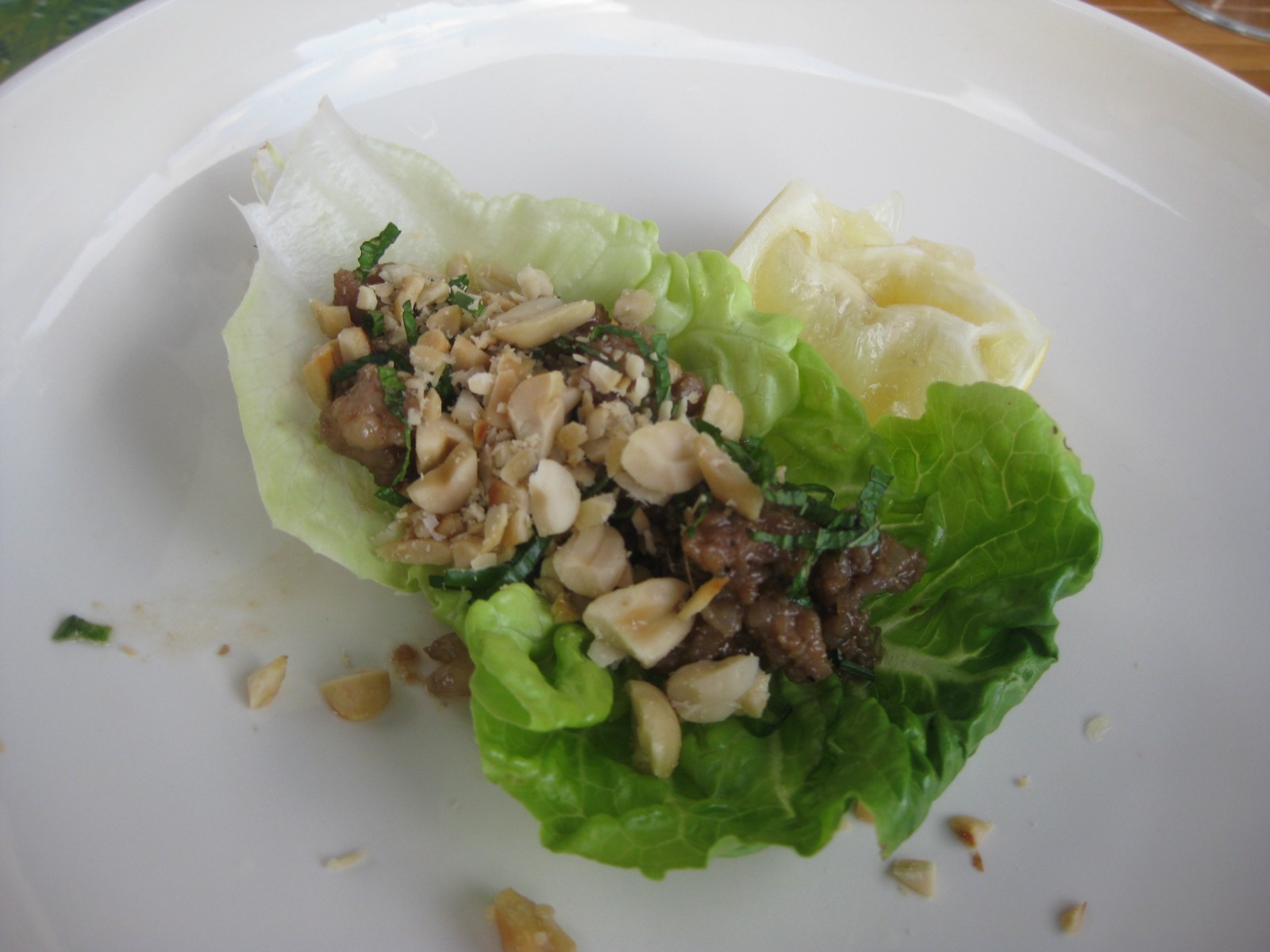
Vicki was keen to introduce us to this Chinese dish.  It’s fun to eat: use lettuce ‘wrapping’ to make your own pork parcels up, then garnish them with what you fancy from the bits and bobs on the side.

Sang choy bow

1 tbsp sunflower oil

Large piece fresh ginger, peeled and grated

2 cloves of garlic, crushed

2 red chillies , deseeded and finely sliced

500g minced pork

85 g light brown sugar

2 tbsp fish sauce

Juice from 1 lime

2  finely shredded lime leaves

Mix of lettuce leaves

Large handful mint and coriander leaves, very roughly chopped

handful toasted peanuts , roughly chopped

2 shallots finely sliced into rings shallots

1 lime, cut into wedges

Heat the oil in a large frying pan. Fry the ginger, garlic and chillies for 1 min. Add the mince, then cook on a high heat until golden brown, breaking it up with a wooden spoon as you go. Sprinkle over the brown sugar, fish sauce, lime juice and shredded lime leaves, then cook everything down until sticky.

Tip the mince into a serving bowl, then serve with a bowl of lettuce leaves for wrapping the mince in; the herbs, shallots and peanuts for scattering over; and the lime wedges for squeezing.

Sang choy bow: a little lettuce parcel just waiting to be eaten

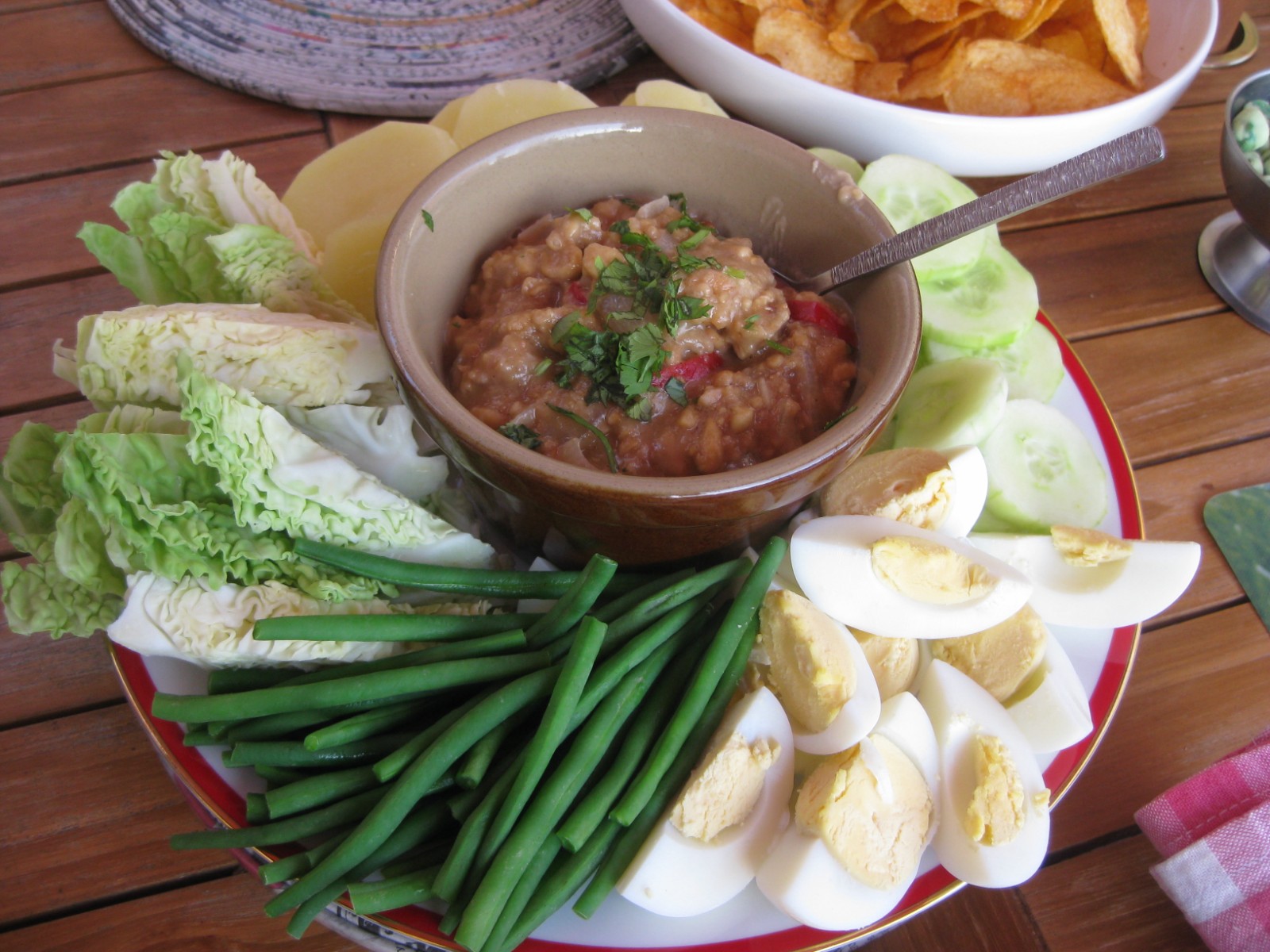
On their last evening, the night of the ‘Asian tapas-Smörgåsbord’ , Marc introduced us to the Vietnamese answer to crudités, Gado gado.  I wasn’t watching while he was cooking, and I forgot to get his recipe from him, so … Marc, if you’re reading … is this version OK?

Gado gado consists of a plate of various raw or lightly cooked vegetables to dunk into a peanut  sauce.  Marc served raw cabbage and cucumber, lightly steamed potato slices and french beans, and quartered hard-boiled eggs.

Peanut Dipping Sauce (Sambal Kacang)
3-4 cloves garlic, peeled

1 fresh green chili chopped, (use 1/2 for milder sauce, or leave it out)

Salt

200 g  roughly crushed peanuts

1 teaspoon brown sugar

2 tablespoon lime juice

450ml hot water

Place the garlic cloves, green chili and salt in a mortar and pestle and pound into a paste.

In a small bowl, add the garlic paste, crushed peanuts, sugar and lime juice. Pour in hot water a little at a time, while whisking the peanut butter. Stop pouring the hot water when the peanut butter forms a smooth, dippable sauce. You may not need to use all of the hot water.

Taste the peanut sauce and adjust salt, sugar and lime juice if needed. Serve with your selection of vegetable crudités

Gado gado

Vicki found this recipe in my copy of Dennis Cotter’ s ‘Paradiso Seasons’, a wonderful vegetarian cookbook.  If you explore the web, you’ll find he’s tweaked this recipe several times.  The original is pretty damn’ good.

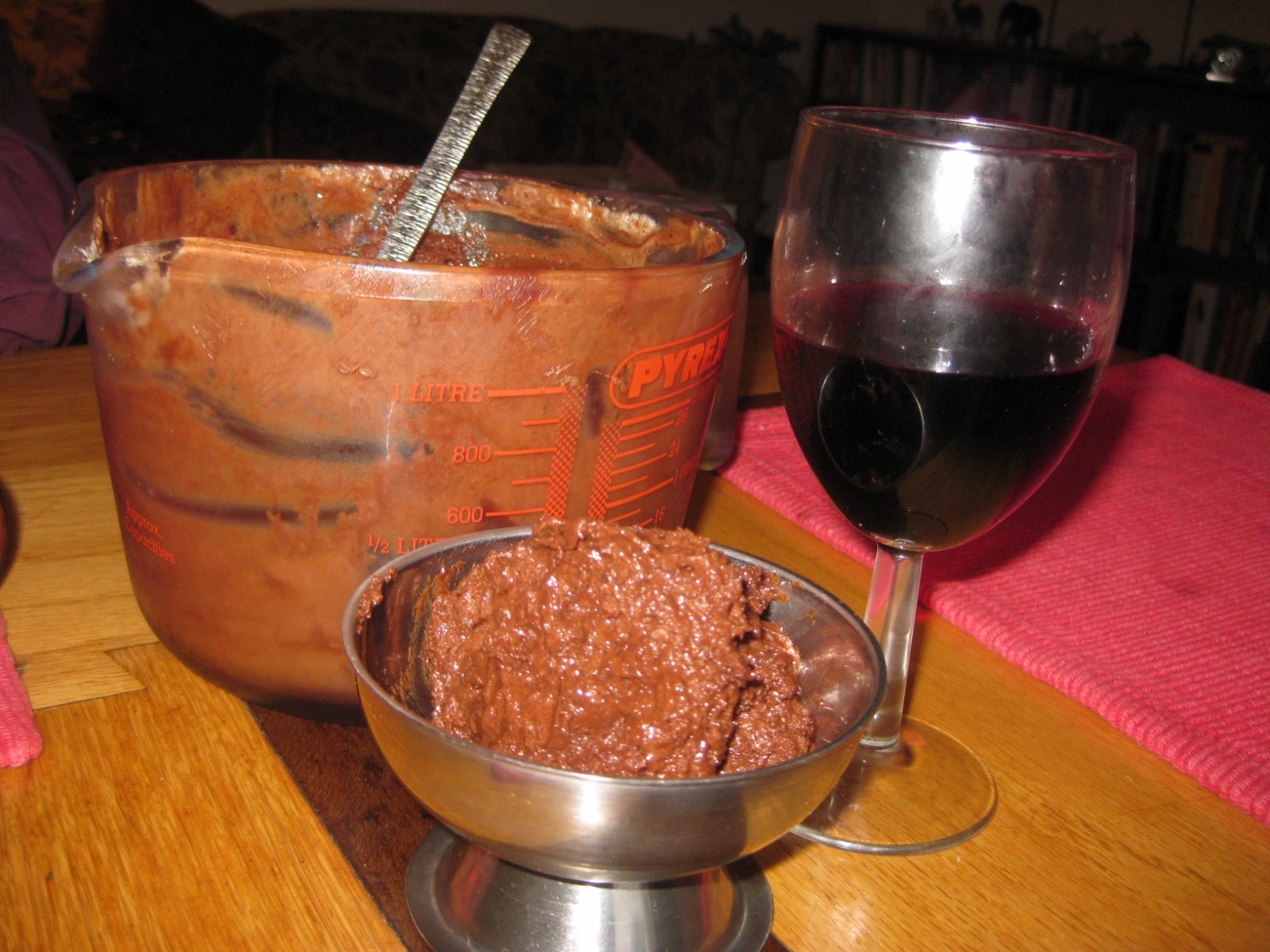
Chocolate-olive oil mousse

 150g. good dark chocolate

140 ml. olive oil

4 eggs separated

125 g. golden caster sugar

(1 tbspn. Cointreau or other orange liqueur)

Pinch salt

In a bowl over a pan of simmering water, melt the chocolate and slowly stir in the olive oil.  Beat the egg yolks with half the sugar until pale and fluffy.  Stir in the chocolate oil mix (and Cointreau if used).  Whisk the eggs with a pinch of salt until stiff, then continue whisking while adding the remaining sugar gradually in small batches.  Fold the egg white mixture and put the mousse into the fridge to chill for at least four hours.  It has a strong structure, and will easily keep overnight (but not if you taste it first…….)

It scarcely mattered that this chocolate mousse wasn't prettily presented: it disappeared rather quickly

Here we go round the blackberry bush…

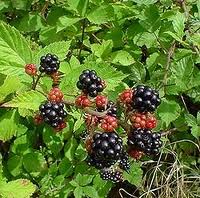
I’m so chuffed to be in England for the blackberry season.  Ariègeois blackberries baked in the hot sun are sweet, characterless and make a rather dull jam.  But then who goes to southern France to go blackberrying?

So yesterday I went out, meandered down a few nearby lanes, and came back with a bowl filled with large glossy, juicy, sweet and yet tart berries, a stained T shirt and fingers stuffed with tiny spines and tingling from nettle stings.  I was very happy.

I set my berries to simmer down with the early apples from Jonet and Richard’s tree, and then…. only then, remembered I had neither a  jelly bag nor a cache of jam jars ready waiting for the next stage.  Oddly, I do have a preserving pan.

So it’s been the moment for a little ingenuity.  An old clean T shirt ripped up made a jelly bag, and this morning we’ve been piling our toast with a week’s ration of marmalade, decanting apricot jam into a bowl, and scraping clean an almost-finished jar of honey.  So far so good.  But what happens when I need to make the next lot?

Flour power

Returning from England to France, there’s generally a bag or two of various kinds of flour in the luggage.  ‘What?’ I hear you grumble.  ‘That woman who’s always banging on about buying local? The one who’s got no time for the English abroad who can’t exist without their mug of builder’s tea and a custard cream?’  Yes.  That’s me.  Guilty as charged.

Melting Moments

But the thing is, when in France, I sometimes have a happy hour or two baking English goodies – Melting Moments, Gingernuts, Marmalade Loaf Cake, that sort of thing – with or for French friends.  And as I discovered the other week, French flour is simply not right for the job.  Not better, not worse, just different.

I’d run out of my own supplies, so I nipped out and got a bag of good quality baking flour (because even more than in England, it’s important to buy the right type of flour for the job).  And my tried and trusted favourites turned out all wrong. Ginger biscuits, instead of being satisfyingly chewy, with a solid crunch between the teeth, were sandy and brittle.  Marmalade loaf cake, though light, was close-textured and almost crumbly.  It was so disappointing.  The answer, it seems, lies in the gluten content.  The average French flour is ‘softer’, and has a lower gluten content than the average English flour.

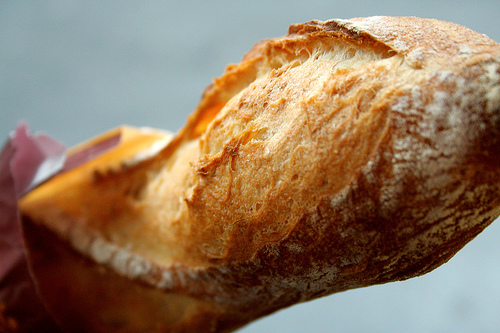
French baguette

So is it surprising that superior French bakers in England, such as Dumouchel, where my daughter used to work on Saturdays, send over to Normandy for supplies of authentic French flour?  Or that the average French stick, bought from the average English baker, in no way resembles its chewy French antecedent, the baguette.

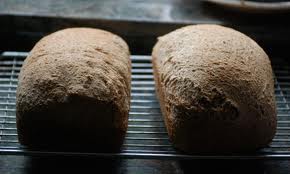
English wholemeal loaves, fresh out of the oven

On this visit to England, I’m appreciating the softer crust and slightly moister qualities of a well-made wholemeal loaf, just as over in France, I enjoy the the crustiness of crisply baked French bread.  Best to accept, I think, that both countries produce fine bakers and cake makers.  But neither could do a fine job using the flour preferred by the other.

If you want an introduction to some of the many flours on offer to the keen baker, Dan Lepard’s site is a good place to start

The tale of the cherries and the peach

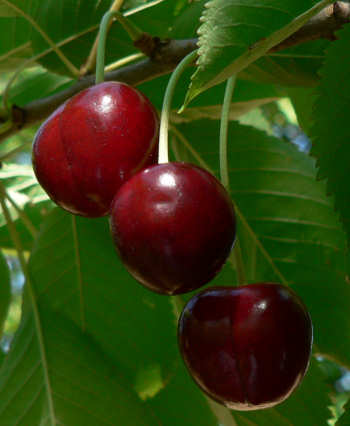
While we were in England in May, Léonce wrote and said the local cherry harvest had been and gone.  The fruit, thanks to the early heat wave, was wizened, dry, and had peaked far too early.  We wrung our hands in displeasure at having missed the offerings from the two mighty cherry trees in our garden, and tried to forget about it.

On Tuesday, when we got back to Laroque, I went to the garden.  And there were our trees, branches grazing the ground with the weight of their fruit.  I started to pick.  Five minutes later, it was raining.  Stair rods.  I scuttled home with some treasured cherries.

Wednesday morning dawned clear after a rainy night, and straight after breakfast we were up at the garden with buckets, eager to pick all that lovely fruit.  Almost every single cherry had turned mouldy overnight.  We managed to pick a few, half a bucketful.  But back at home, they didn’t stand up to close inspection and we had to discard almost all of them.  So that was that.

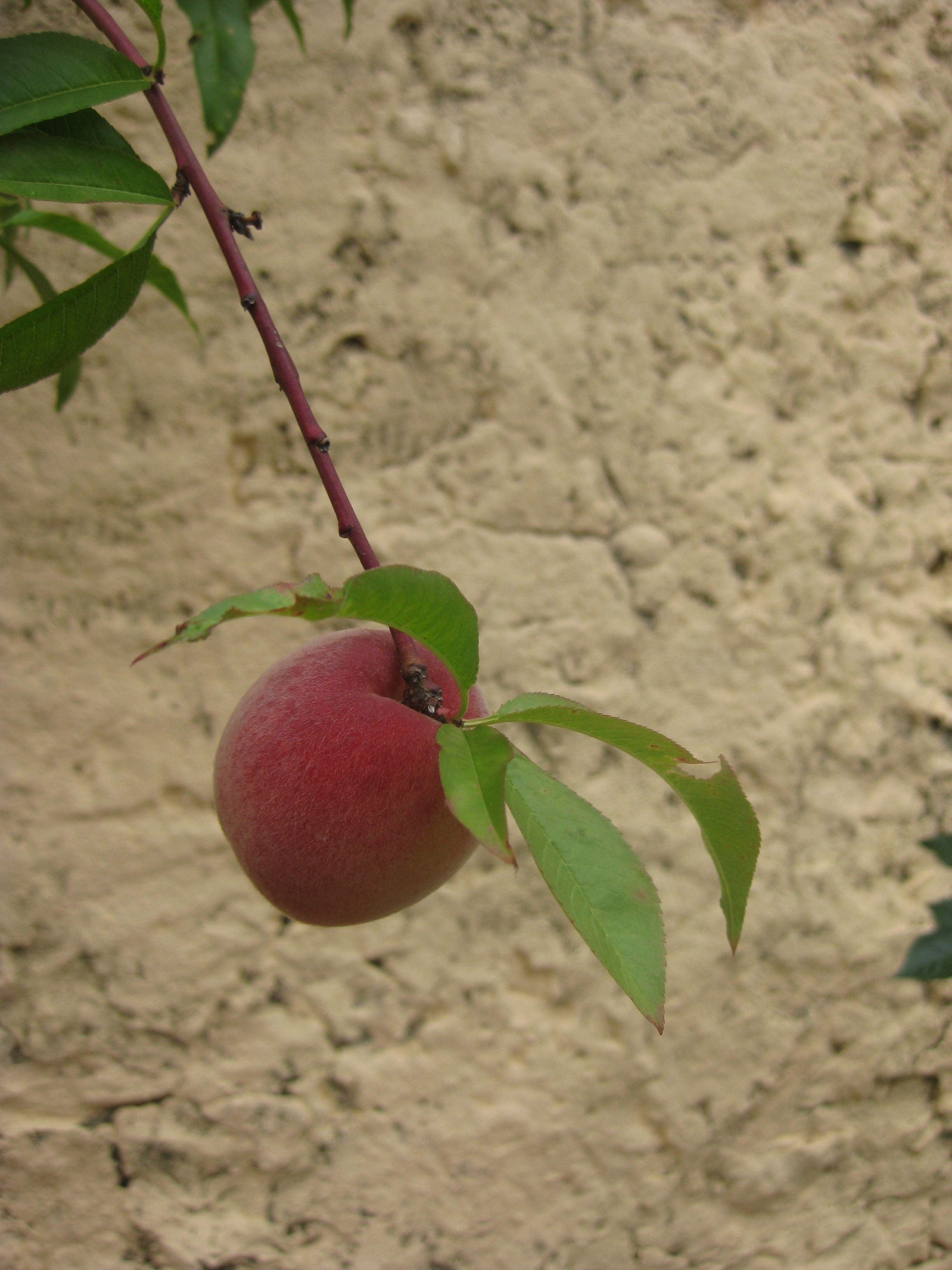
Now for the good news.  In early spring, we bought a peach tree.  We planted it. It prospered.  It flowered.  To give it the best start in life, so the tree would give its energy to putting down roots rather than nourishing its fruits, we removed every single blossom.  Or so we thought.

When we went out to see our little tree on our return, this is what we found.

We ought to pick it and throw it away I suppose, but we haven’t the heart.  Come and visit us in August, and you might get a bite of our very first home-grown peach

A quick peek at Algeria

Last November, I joined L’Assocation Découverte Terres Lointaines, and wrote about it here.  This month, I’m really involved, up to the neck, because next week, at the library in Lavelenet, we’re taking over, and bringing Algeria to town. More later, then. But for now, have a look at some of our more relaxing moments during our preparations.

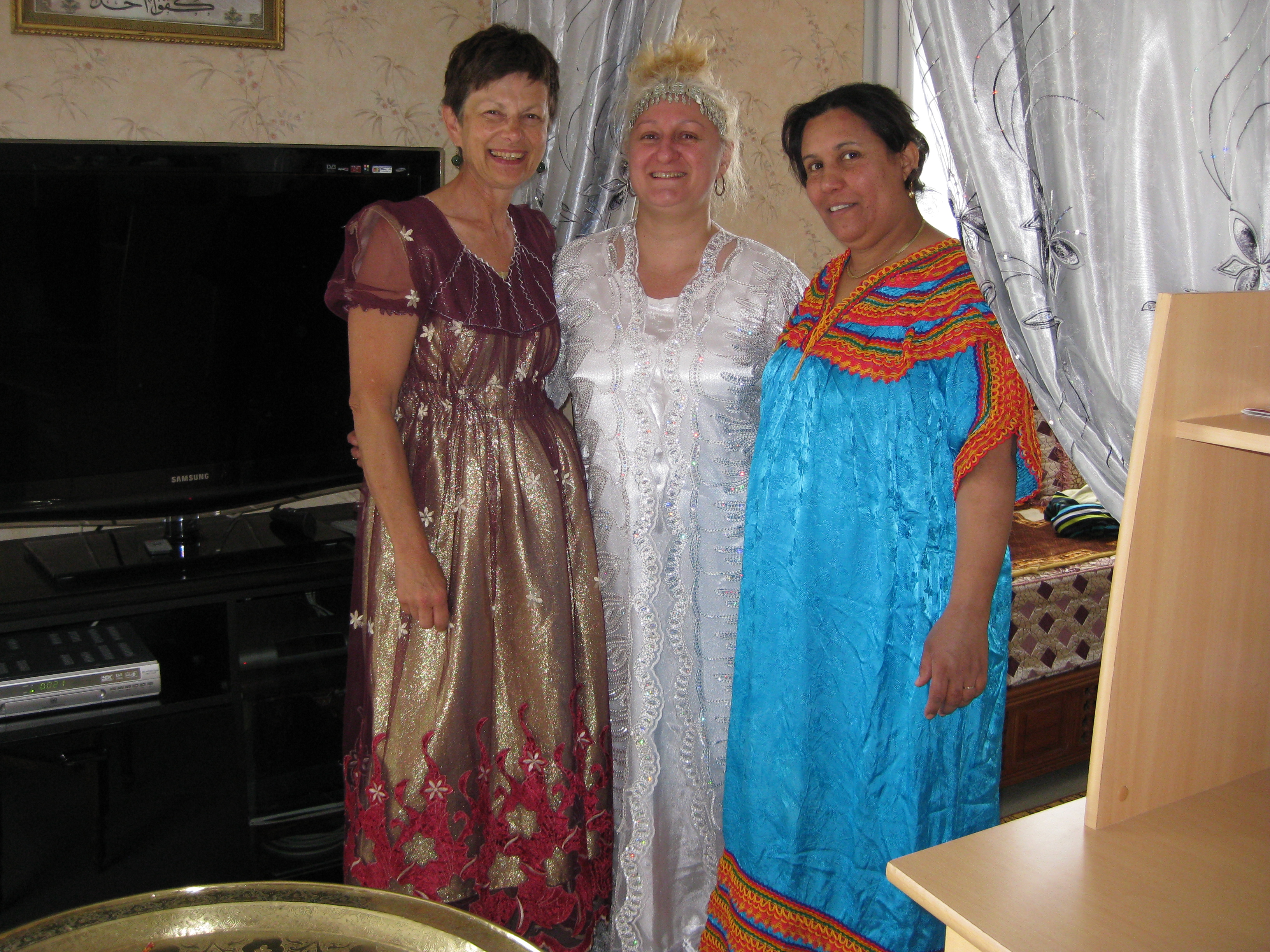
Were from England, Brazil, Algeria: but the clothes are all from Algeria

On Friday afternoon, Nadia invited us round and got out a tantalising bundle of her traditional Algerian clothes, many dating from the time of her wedding, for us to try on ahead of next week. Here’s what some of us eventually chose, after we’d struggled in and out of dresses each prettier than the last, elaborately embroidered, beaded and sequinned.  Just as well you can’t see us pirouetting around our workaday tee shirts and trousers discarded on the floor.

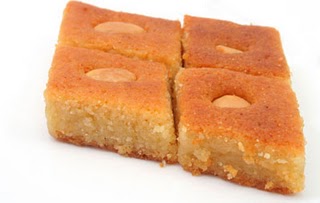
Before that, we’d been busy baking, selecting recipes to make for some of next week’s sessions.  Here’s my favourite, Basbousa.  Like most recipes from the area, quantities are expressed in volume rather than weight.

Basbousa

  • 2 cups fine semolina
  • 1 teaspoon baking powder
  • ½ teaspoon bicarbonate of soda
  • ½ cup unsalted butter
  • 1 cup sugar
  • 2 eggs
  • ½ cup water
  • about 20 blanched split almonds
  • 2 cups caster sugar
  • 1 cup water
  • Tablespoon of orange flower water or the juice of 1 lemon

Preheat the oven to 180°C, gas mark 4. Grease a rectangular cake tin, about 8” x 12”.

Sieve together the semolina, baking powder and bicarbonate of soda. Set aside.

Beat the butter and sugar together until creamy. Stir in the eggs with a little semolina to prevent curdling. Mix in ½ cup of water. Stir the sifted semolina in and beat until you have a smooth batter. Pour into the prepared cake tin. Score diagonal lines across the top of the cake creating diamond shapes. Place an almond in each diamond. Bake for about 30 minutes or until the cake is firm and golden.

Meanwhile place the caster sugar in a small saucepan with 1 cup of water. Heat gently until the sugar has dissolved then add the orange flower water or juice of the lemon and bring to the boil. Boil for about 10 minutes or until syrupy.

When the cake is removed from the oven, gently spoon the syrup over it. You may not need all the syrup: stop spooning when the cake has absorbed all it can. Allow to cool in the tin before turning out and serving sliced into diamonds.

When I tested the recipe at home, I had no orange flower water, so used lemon juice.  Nadia said it wasn’t traditional…..but she liked it anyway.  It’s sweet, simple, and keeps well.  Worth having in the cake tin.

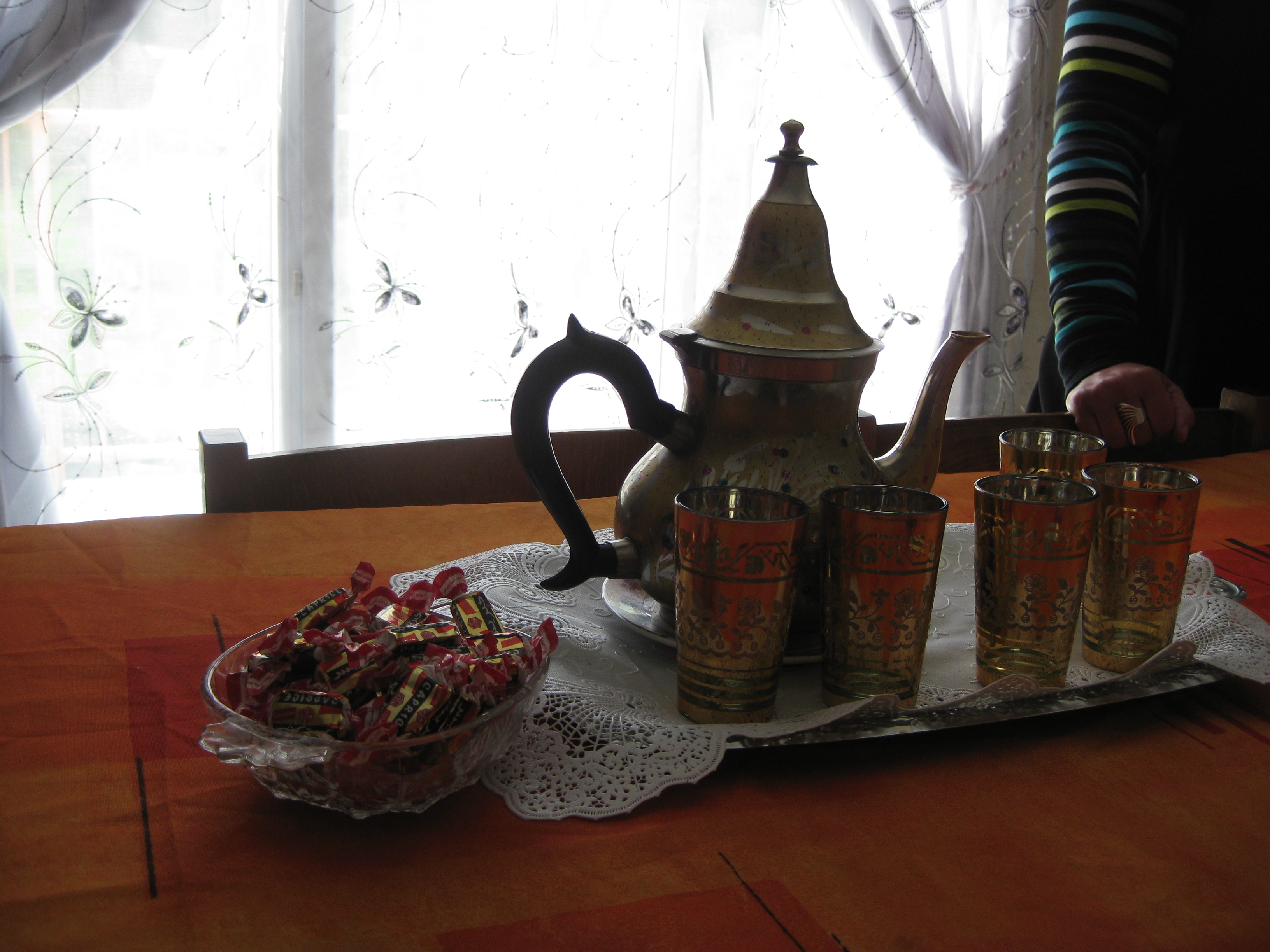
Nadia serves mint tea the traditional way, from this elegant pot in small decorated glasses

Food for free

In the UK, Richard Mabey’s the original, and still the best known proponent of foraging for good things to eat in the countryside.  Here in our patch of France, it’s Stéphane Martineau, and we spent yesterday afternoon with him, strolling down the lanes near Roquefort les Cascades, nibbling at petals, leaves and roots.

It was a free afternoon organised by Alptis, who provide us with the health insurance we need to complement the state-provided health service, and we enrolled as soon as the invitation came through the post.

Stéphane encouraged us to look carefully at each plant, at how it’s structured, what it feels like, what the crushed leaves smell like.  That afternoon, we found leaves that reminded us of mushroom, garlic, mint, cloves….

We began to understand how welcome the new spring growth must have been to villagers over the centuries.  After months and months of bland beans and turnips, the tasty bitterness of black bindweed, eaten raw or lightly cooked like asparagus must have been a real treat.  Its other name is l’asperge aux femmes battues – battered wives’ asparagus, because it’s also good at relieving bruising and swelling.

At this time of year, before many of the plants have flowered, and growth is young and fresh, there are so many tasty additions to the salad bowl.  Garlic mustard has both leaves and flowers to offer.  Hedge woundwort has nettle like leaves and a slight mushroomy odour.  Primula gives a pleasantly bitter taste so use it sparingly, and creeping Charlie  makes a lively addition to a salad, or an unusual addition to soup or lasagne.

Nettles are of course the kings of country flowers, packed with vitamins, minerals and even proteins.  They can be eaten raw (with a thick and tasty dressing) lightly cooked, or included in sauces and stews and baking.  Fermented, they make an all-round fertiliser, and gardeners dig them into the ground too, to enrich the soil.

We found plants to cure warts, substitutes for aspirin and for the cloves that we’re supposed to tuck next to a throbbing tooth.  We even learnt that horsetail, just as it first thrusts above the ground, makes a good mineral-tasting asparagus substitute. Failing that, once it’s matured, a big bunch tied together is a good pan scourer.

Just one plant was completely new to me: purple toothwort.  It’s a mauve parasitic plant, looking rather like a small clutch of rhodedendrons in bud, and modestly hidden under grasses at the foot of trees.

I’ve got pages of notes about plants I plan to look out for and try: using only a few specimens from each patch, of course, and just taking  a few of the very youngest leaves, as instructed.
Just before we all headed off home, we shared a foraged snack which Stéphane had prepared earlier.  Nettle blinis, Douglas fir cordial, various jams and jellies.  Good stuff, this food for free.

This slideshow requires JavaScript.