World Book Day…. UK version

Today’s World Book Day.  I couldn’t understand why there seemed to be no sight of it here in France.  It turns out we Brits are out of step.  Celebrations in the UK are over a month ahead of everyone else’s.  April 23rd may be World Book day for everyone else, but it’s also Saint George’s day, and he’s England’s patron saint.  Apparently he does dragons, not books.

It was the Spanish who first decided to celebrate books and reading on April 23rd, as a way of honouring Miguel de Cervantes, who died on that day.  UNESCO made the connection that Shakespeare, as well as other writers, died or were born on the same day as Cervantes, and a world-wide festival was born.

Children have the most fun on World Book Day, whenever it’s held. Here are my grandchildren off to school this morning.  They had to turn up as a character in a book….. so please meet Harry Potter, and Mr. Willy Wonka.

Ben and Alex in character for the day

Books are often centre-stage in school all day and there are free books to be had for most lucky children

So many of my best memories of the children’s childhood centre round the books they enjoyed.  That first winter of my daughter Elinor’s life was one of those once-in-a decade toughies.  We were marooned in our house up an icy and snow-covered steep slope on one of Sheffield’s seven hills (‘just like Rome’). It was unthinkable to set foot outside with an unwieldy pram and a tottering toddler. But unable to do the daily round, or see friends, my then two year old son Thomas, my new baby and I simply cuddled up on the sofa. I read with him, and breast fed my daughter for hours at a time. I’d never have chosen such a harsh winter with all its limitations, but it remains one of the golden periods of my life.

Then, as now, the books we favoured had the rhythms and cadences, the witty and lively illustrations of authors like Quentin Blake.

Blake’s Mr Magnolia remained a family friend from the day his story was published in 1980 through the pre-school years of all three of my children.  Any of us will recite his story to you at the least provocation.
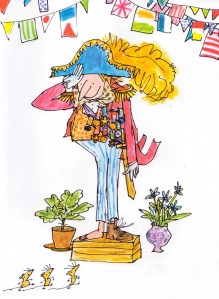
Meet Mr. Magnolia.  See?  He has only one boot.
Meet Mr. Magnolia. See? He has only one boot.

‘Mr. Magnolia has only one boot.

He has an old trumpet that goes rooty-toot

And two lovely sisters who play on the flute,

But Mr. Magnolia has only one boot.

In his pond live a frog and a toad and a newt……’

Young children now are privileged to have world-class illustrators and fine writers available to them for the price of a paperback, or the use of a library ticket.  I’ve just had a high old time remembering old favourites loved by the whole family– Shirley Hughes’ Alfie, Rosemary Wells’ Noisy Norah, Nita Sowter’s Maisie Middleton, Roald Dahl’s heroes (Charlie of Chocolate factory fame) and anti-heroes (The Enormous Crocodile and of course the Twits).  Make friends with any of these characters by the time you’re three years old, and with any luck, you’re hooked on reading for life.  That’s what World Book Day’s for.

Alfie, his friend Bernard and a good book

Christmas on the High Street

Verzeille&decoDec2012 033It was 5 years ago when we were first in Laroque round about Christmas time.  There were no signs of its coming until well into December, and we thought it wonderful: no decorations, no adverts, merchandise or muzak,  just a bustle of festive activity from about two or three weeks beforehand.

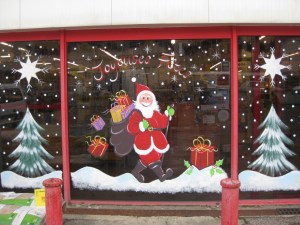
The first signs, as in England, were in the shops.  Unlike England however, most shopkeepers didn’t usually buy tinsel, baubles, and several packs of cotton wool to introduce a Christmas theme into their window display.  Instead they had a seasonal design applied directly to the window.  We once saw a scene-painter busily decorating a local window, and wondered what he did the rest of the year.  Shops in small town high streets like Laroque’s would all be unified by being the same but different.  The same folksy interpretations of Christmas motifs, the same limited palettes of white, red, greens and yellows.  Some would choose scenes of reindeer amongst the Christmas tree forests, others Father Christmas,  snowmen, or radiant candles.

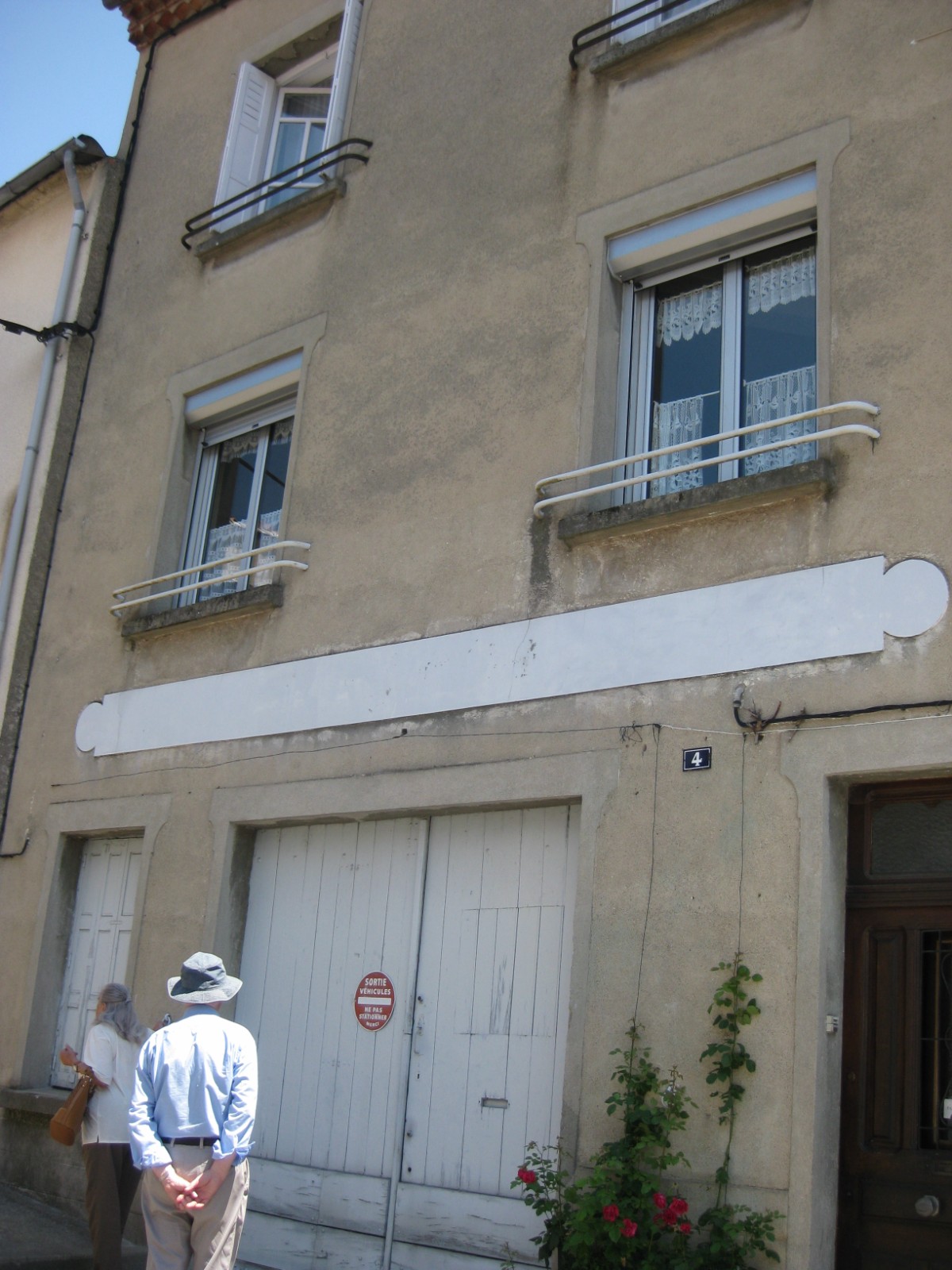
Garage in Laroque
Garage in Laroque

Five years on, hardly any shopkeepers are keeping up this tradition.  They’re decorating their shops, but in their own way: dressing up their window display with baubles, snowflakes and Santa Claus figures.  They’re nicely done too, but I miss the particularly French idea, which I’ve seen nowhere else.

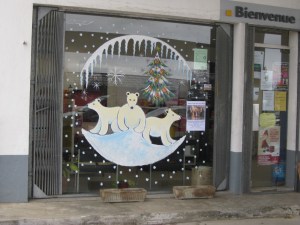
Here are the few traditional window scenes I’ve been able to find this year.  Maybe next year even these will be part of the past.

A baker's shop in Laroque
A baker’s shop in Laroque

Olympic Fever?

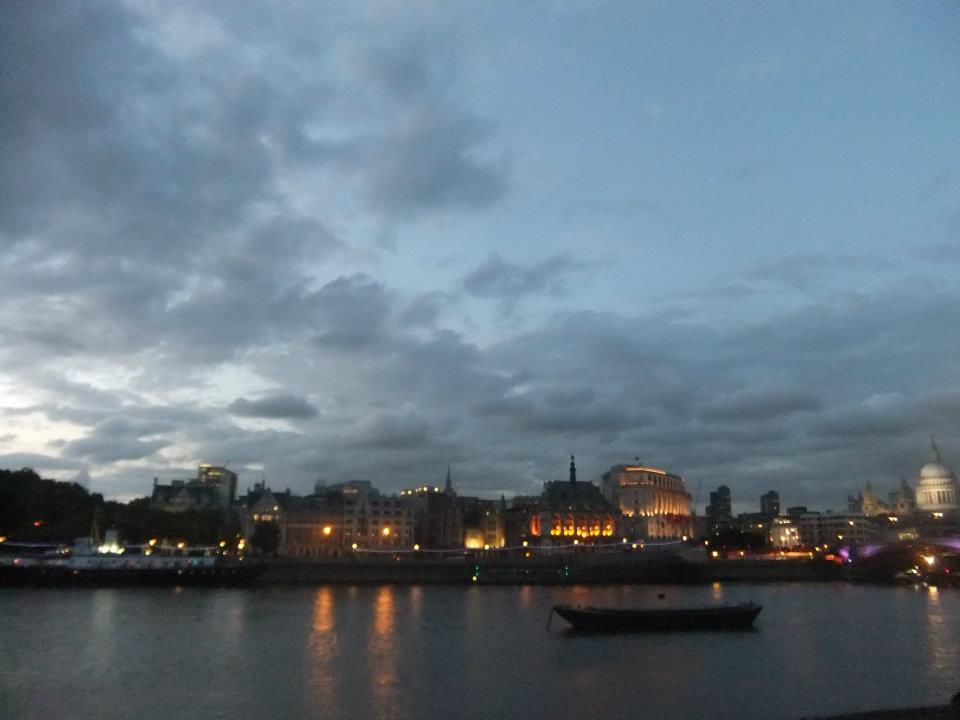
The Thames at sundown

A fortnight ago, our local paper, La Dépêche du Midi had ‘Londres, capitale du monde!’ as its banner headline.  The story was, of course, the Olympics.  We’re unaccustomed to this particular paper taking much notice of anything that occurs outside south-west France, but ‘les  JO’ (Jeux Olympiques) have been big news.

Not as much as in England though. When we arrived in the UK, we were unprepared for Olympic Fever.  Red white and blue banners and flags hang from houses.  Shops have Olympic-themed window displays, and if you want to buy mugs, some paper napkins, or fancy a new cushion, you’d better want them plastered with the Union Flag.

Across the Thames: a view of St. Paul’s Cathedral

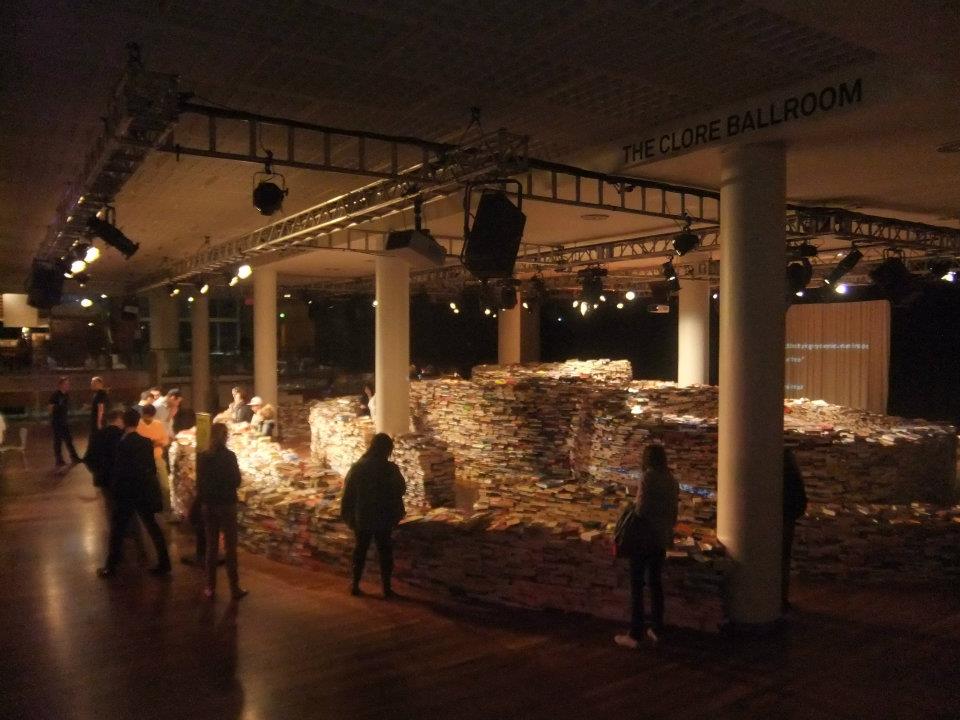
Still, we enjoyed staying with Tom and Sarah in Olympic-happy London, and spent an evening round the South Bank area.  Eat near Borough Market and you’re sure of a tasty meal cooked with decent ingredients: the convivial and cheery atmosphere comes free.  Wander along from there to the Festival Hall, and you’ll be in the company of Olympic visitors from just about every country you can think of, as well as locals, just out to enjoy being alongside the Thames and all that this particular stretch of river offers.  Tate Modern and the Globe weren’t open for business at that time of the evening, but there’s still plenty to see.  The National Theatre has a slightly zany pop-up bar, the Propstore, furnished with props from popular productions.  We were aMAZEd by the book maze we found in the South Bank Centre, constructed from some 250,000 books, most of which we found we wanted to read, if we hadn’t already.

The aMAZEing maze of books

And as part of the Festival of Britain retrospective, there was a retro-funfair with fearsomely-clanking roller-coaster as well as all the rides of a traditional 50’s fair.

As night fell, we simply mooched along the Thames-side nightscape.  We felt lucky to be there and  lucky to have shared, if not as excited sports spectators, London’s Olympic August.

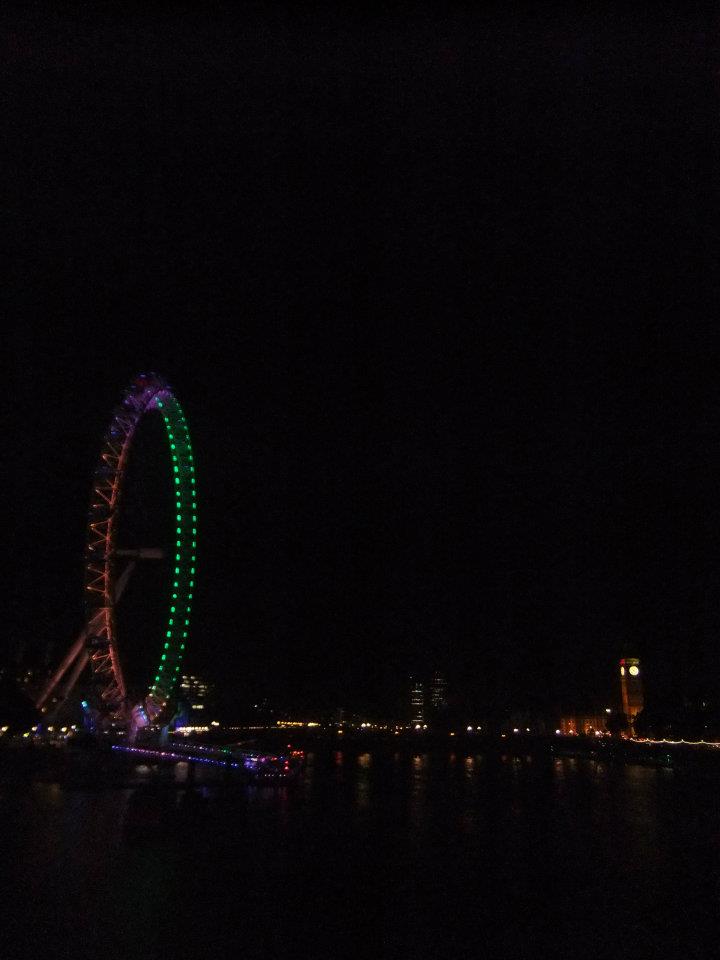
Nightfall over the London Eye

“Why, Sir, you find no man, at all intellectual, who is willing to leave London. No, Sir, when a man is tired of London, he is tired of life; for there is in London all that life can afford.”
— Samuel Johnson

Once upon a time, in Benac….. Le Cami des Encantats

Today we visited Benac, one of those  small and almost picture-postcard-pretty  villages outside Foix.  I think it’s unlikely that too many horny-handed sons and daughters of toil live there these days.  Too many freshly painted facades and cheery boxes of geraniums at the windows. Too many sleek and highly-polished cars.

But once upon a time it was a busy working community. For the last few years, every summer the villagers here and in nearby hamlets arrange carefully constructed and dressed figures into appropriate corners of both village and countryside.  These figures celebrate the way of life that persisted here – and throughout France – for centuries, and only died out some time after the First World War.  They call the paths you follow to hunt out all these scenes Le Cami des Encantats: Occitan for something like the Enchanted Pathways.  Come with me and take a look.

A Mediaeval picnic

Montségur in the morning mist

Saturday morning dawned damp and misty. This was fine by the 100 or so walkers who gathered bright and early in Lavelanet for the annual Marche du Tisserand. The walk, organised by the town’s Musée du Textile, celebrates the ancient ‘chemin pavé’ used by the cloth workers who lived in Montségur and walked this path to bring their produce down to Lavelanet to be sold. Saturday’s walk, the 27th, was for fun, and nobody would have had more than a light rucksack to carry. The full three hour trek (6 hours both ways of course), steep and stony at times, when laden with goods to sell one way and perhaps provisions for the household the other must have been a slightly different matter.

This time too, there were goodies at the top for the walkers as they finished their ascent. The mayor of Montségur was there with an aperitif for everyone, and we at Découverte de Terres Lointaines were there too, with a mediaeval picnic we’d been preparing .

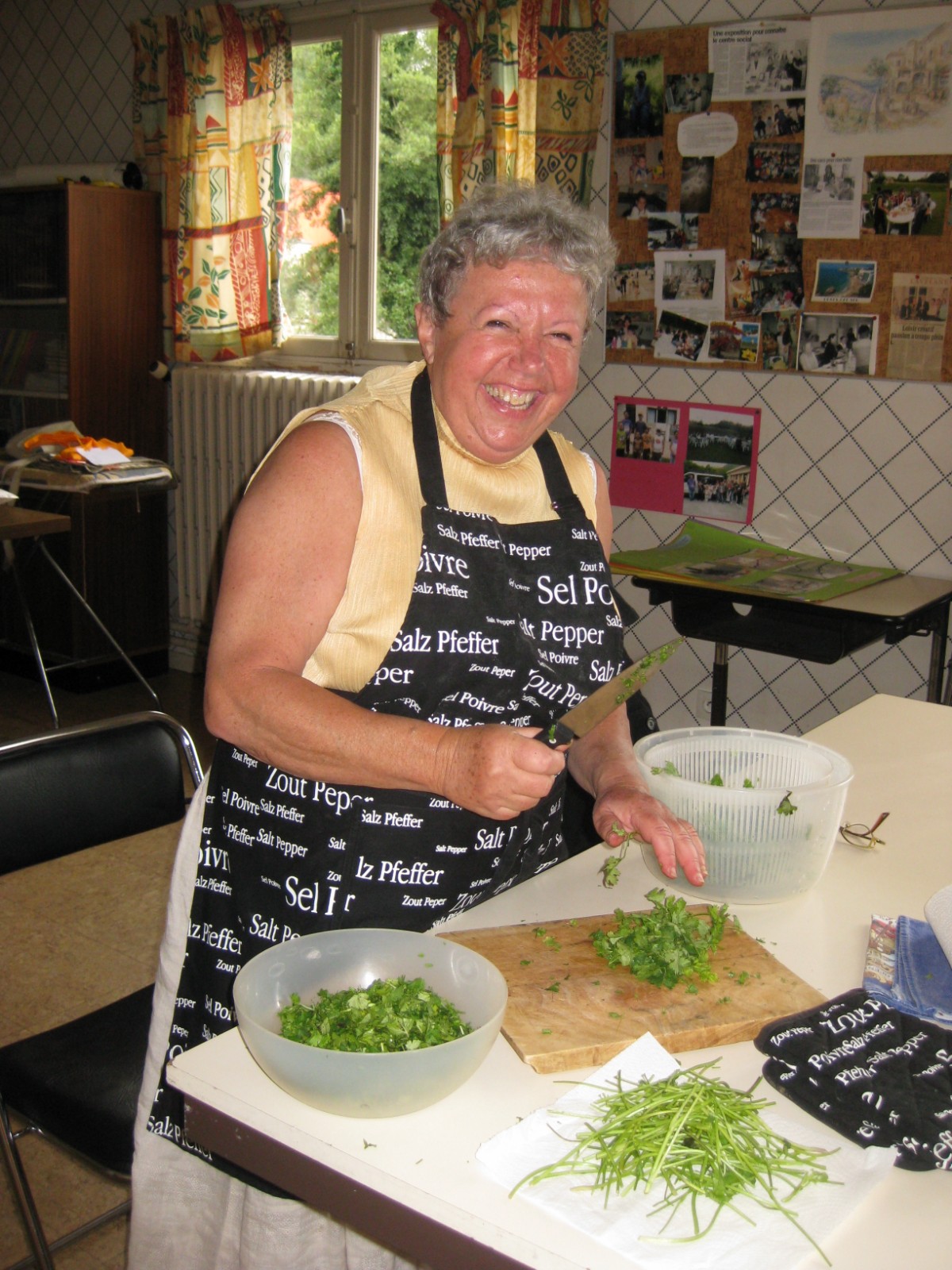
Who knew chopping coriander could be such fun?

The cooking took several days, but the research, with the help of the Museum at Montségur, took weeks of researching, testing, tasting, rejecting, trying again… Still, eating’s always fun

Though curious, the walkers were suspicious too. What would a mediaeval picnic be like? Heavy, probably, with mountains of flatulence-inducing beans. Tasteless too maybe.

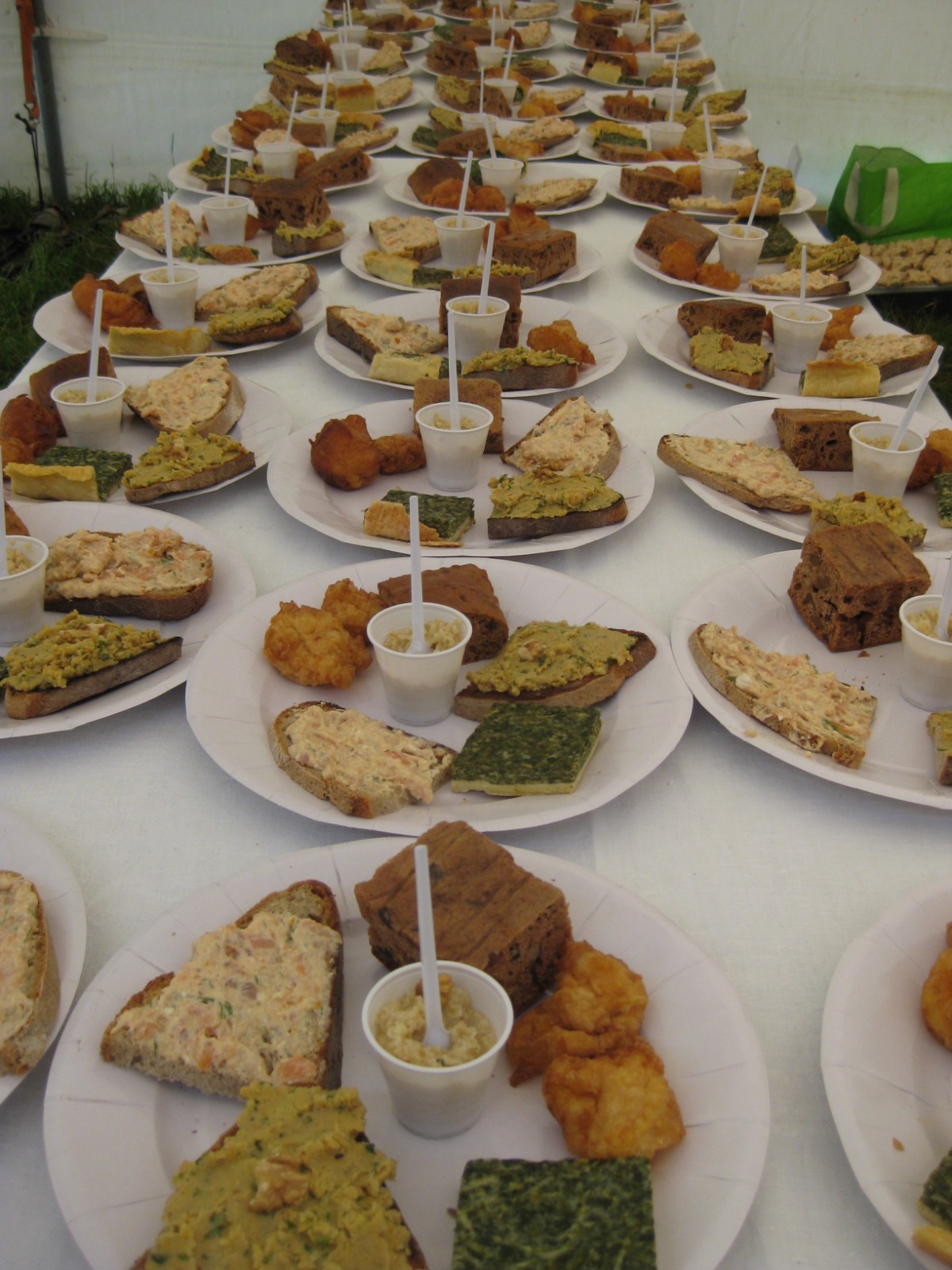
What a surprise then. Here’s the menu:

Spinach tart with lardons: we could have used nettles or any of a whole range of herbs, but settled on the more widely available vegetable option.

Poichichade: this herby chick pea paté, which we served on hunks of organic wholemeal bread, is a close cousin of hummus, but without the tahini. It went down well.

Broussade:  star of the show! A very tasty mix of smoked fish and curd cheeses. This really is one for anybody’s dinner table. Simple too. Recipe below.

Pets de nonne: basically deep fried choux pastry, puffy and light. Here’s the story. Back in the Middle Ages, the bishop of Tours was visiting the Abbey of Marmoutiers to bless a relic. Whilst preparing a meal in his honour, a novice let fly an unfortunate noise of the kind familiar to those of us who’ve eaten far too many beans. To cover her embarrassment, she busied herself dropping the choux paste she’d been making into some handy cooking oil so that it sizzled loudly. The pets de nonne were born.

Fromentée sucrée:  cracked wheat cooked with milk and honey. If you like rice pudding, you’d like this too

Gâteau de fruits secs:  a rich and heavily fruited pain d’epices style cake.

Just before the walkers arrived: The picnic on its thoroughly modern paper plates.

The congratulations when they came – and they came in quantity – were tinted with some astonishment:  ‘It was so good. We never expected it to be so tasty! Well done’.

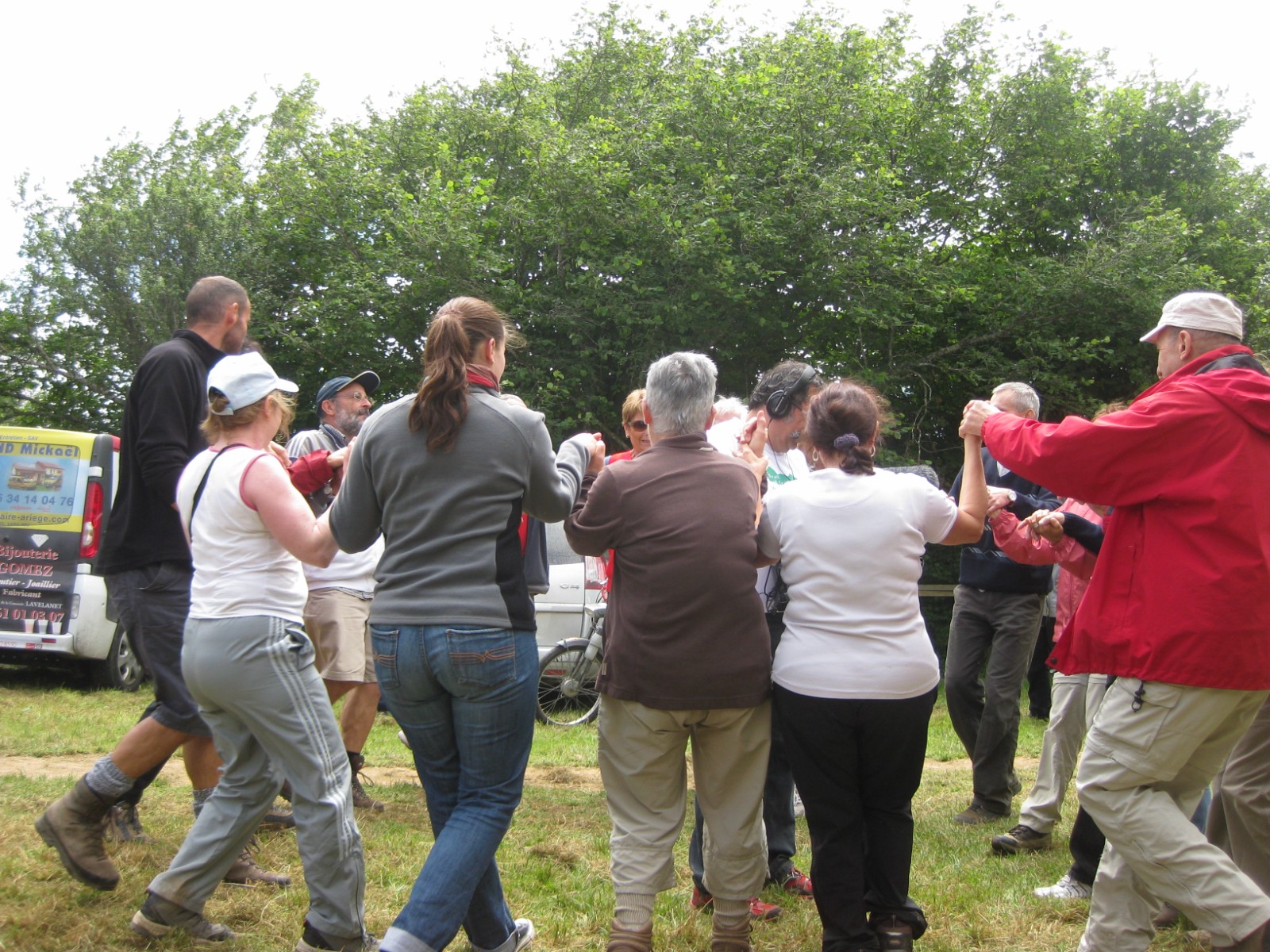
But after eating, drinking and lots of talking, it was time to dance. Zingazanga had been playing loudly throughout the meal, but they turned their attention to teaching us simple steps and dances from centuries ago. Even I with my two left feet joined in.

Let the dancing begin

Broussade

Ingredients
• A quantity of as many varieties of smoked fish as you can decently lay your hands on: we used smoked salmon, herring and haddock.
• A more-or less equal quantity of brousse. This is a curd cheese made from the milk of sheep, goats or cows. A mixture would be ideal, and failing that, any soft curd cheese.

Broussade in the making

• Paprika
• Chopped dill
• Seasoning.

Process half the fish coarsely, and finely chop the rest. Mix with the other ingredients. That’s all. Enjoy with some good bread and a probably thoroughly un-mediaeval green salad.

Once upon a time there was a town…

We thought we knew Laroque. An afternoon’s walk round town with local historian Paul Garrigues as part of this weekend’s Journées du Patrimoine has convinced us otherwise.

The bridge near our house is modern and slightly re-sited. But we had no idea that the main road it’s on, leading to one the busiest roads in the Ariège, the D625 to Lavelanet, used not to exist. To go to Lavelanet, you used to go straight up the hill, and down back-street Rue des Pas Perdus.

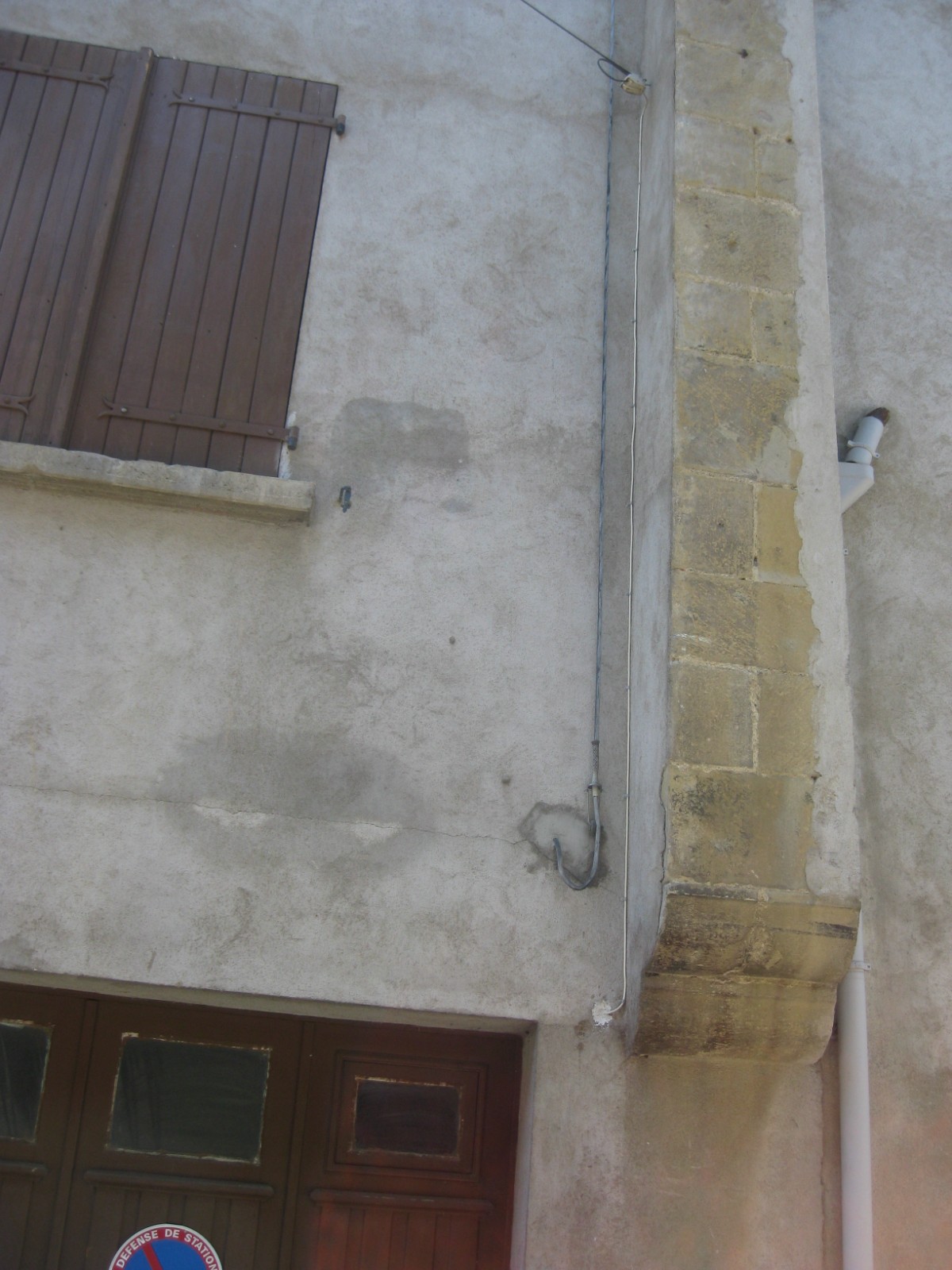
To those in the know, evidence of the former town gates

And here you’d go through one of the town gates. Using this path day after day to reach our garden, we’d never noticed the buttressing that indicated the former presence of these gates. Nor did we suspect that the narrow road and path which is now a way-marked walker’s route which passes past our garden, down to the River Touyre was once a busy thoroughfare. You follow the river to the former railway line, where you turn right and take a shady tree-lined route barred to anything more technical than a bicycle through the next village, Dreuilhe, and on into Lavelanet. Quite different from the lorry-van-and-busy-commuter route now in operation.

Once upon a time the main road to Lavelanet. Now the path past our garden.

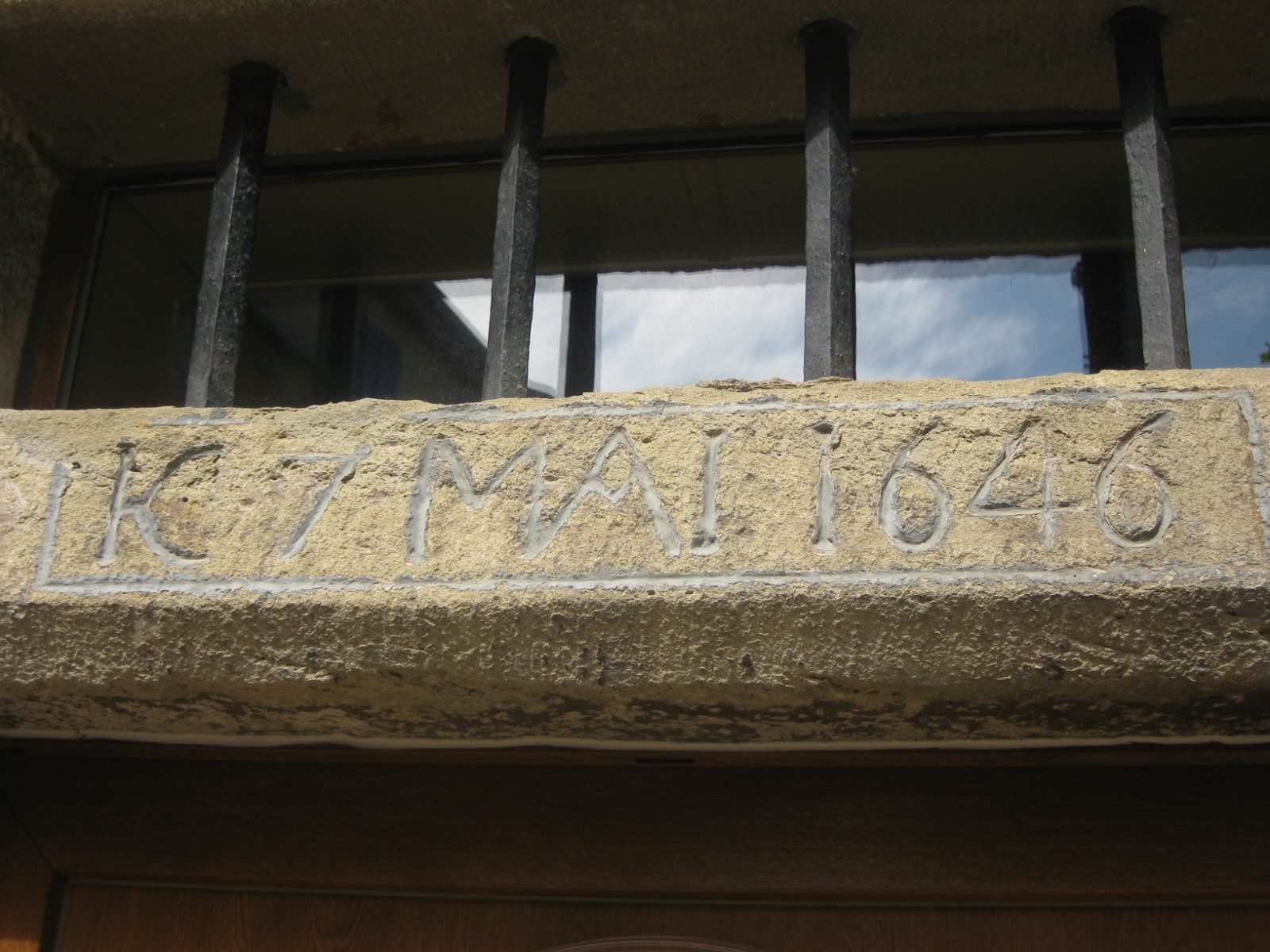
We knew our town is an old one. It’s not uncommon to pass houses whose door lintels are inscribed with a date from the 17th century.

A nearby house announces its d.o.b.

What we didn’t know was that in the old town itself, there are no buildings at all from before this time. This is because every single dwelling was destroyed during the French Wars of Religion (1562 – 1598). The crisis was so grave the King permitted the townspeople an amnesty from paying taxes for several years to give them a chance to rebuild.

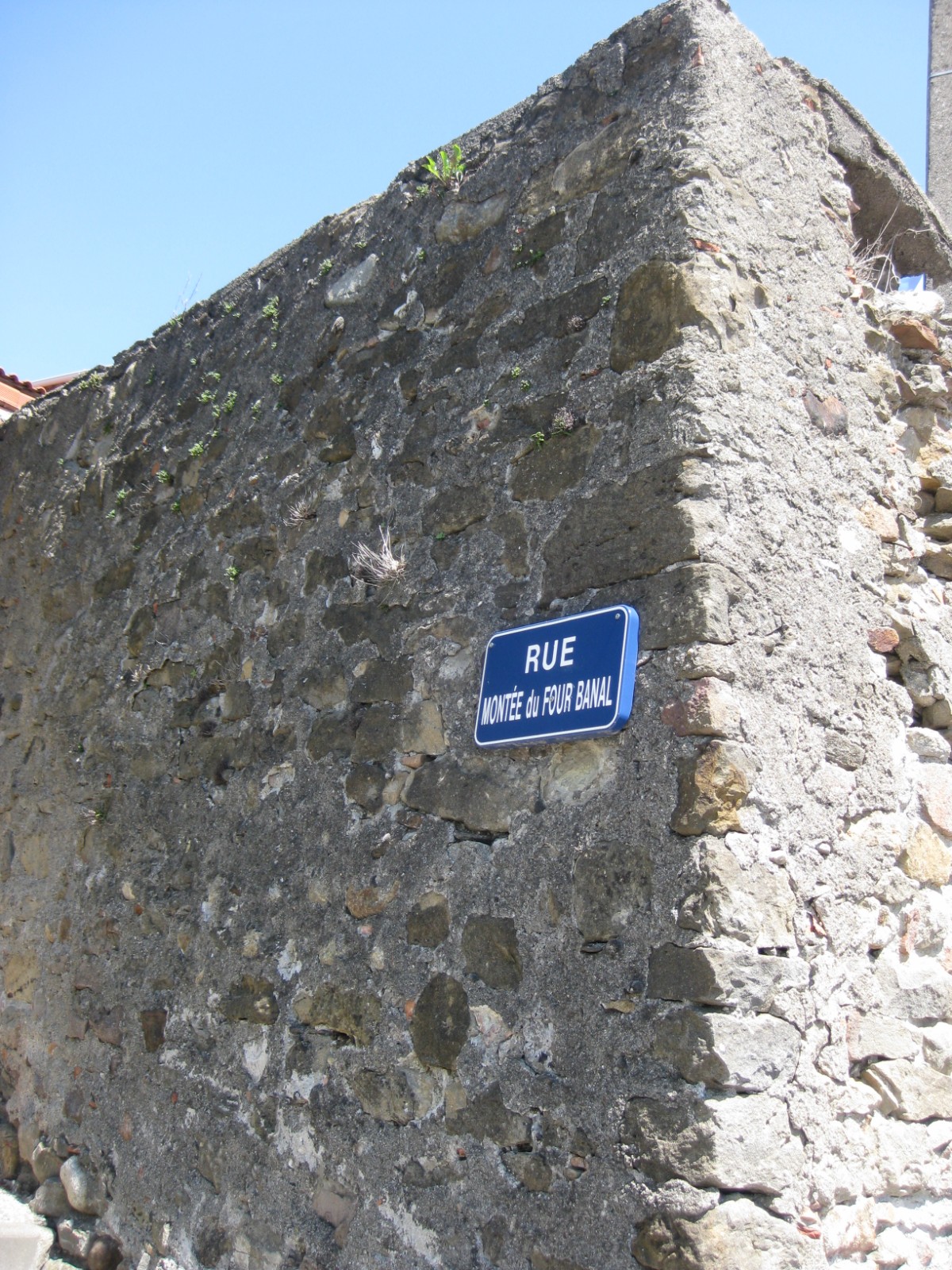
But before all that was …. the Women’s Revolt.  Back in the 16th century, the women of the town would bring their bread to be cooked at the Four Banal, the site of which lives on today as a street name.

Rue Montée du Four Banal: the sign’s fixed to remnants of the old town wall

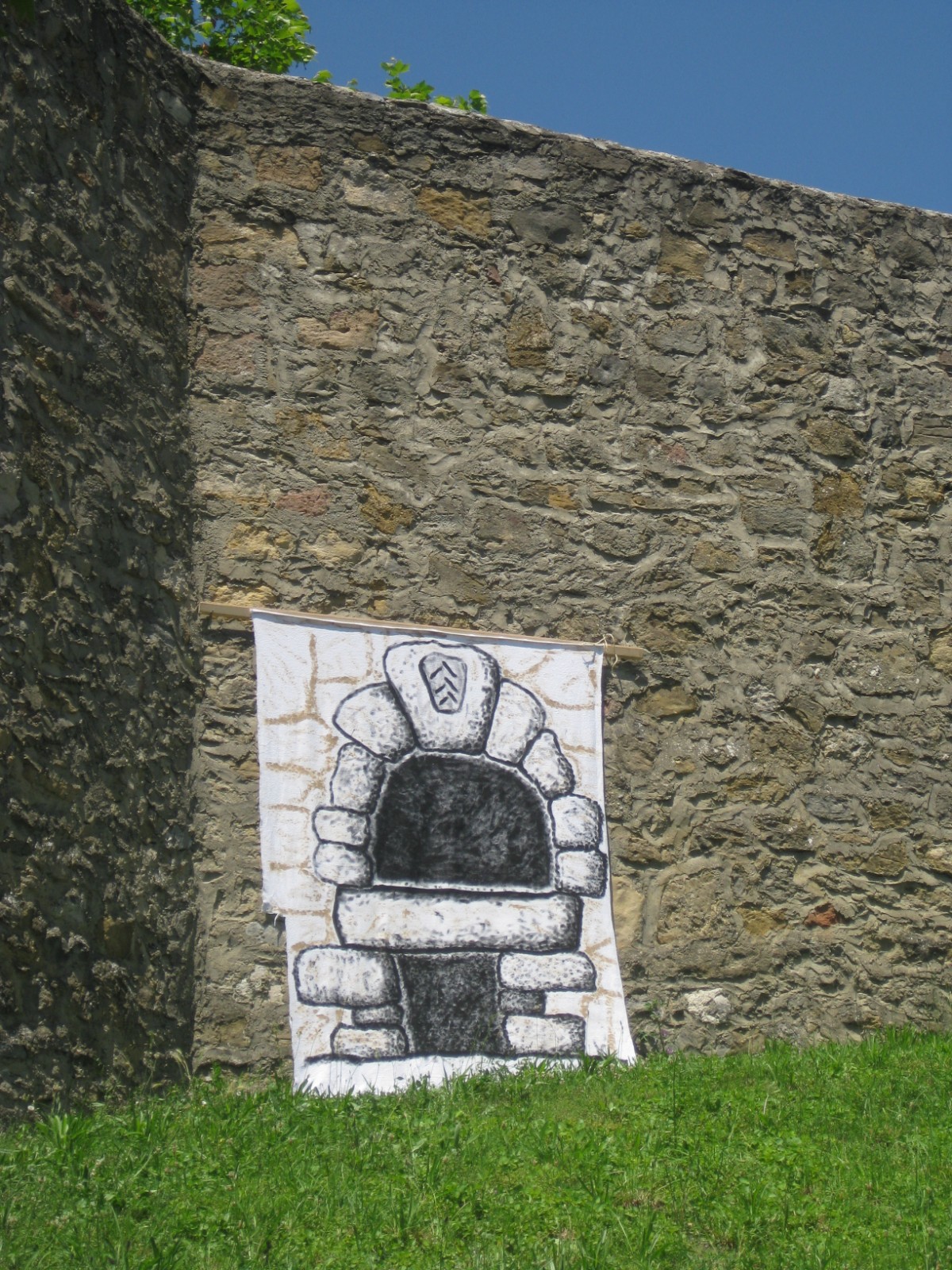
They paid the local lord to manage this service and the lord paid a baker. Who decided to exact his own charges too – one loaf in every 20. When the women’s angry protests were ignored, some 80 women held a somewhat violent demonstration, and followed up by taking their bread to nearby Esclagne and La Bastide to be baked. It all ended up in an enquiry directed from Carcassonne. Result? It was the baker himself who was found to be at fault: his taxes were illegal, but it was the lord who had to reimburse the women. For their part the women were forbidden to have their bread baked elsewhere. The Four Banal itself is by yet another former town gate, and traces of the old town wall still exist.

Perhaps the Four Banal looked like this?

It was during this period too that several streams ran through the town, forced into culverts between the houses, with little wooden bridges built over. They were useful to all the artisans involved in various aspects of the textile industry and other trades.  Can you imagine the smells you’d have had to endure if you were unlucky enough to live in the same street as the tanner?

More recently, in the late 19th and early 20th centuries, Laroque was a prosperous commercial centre for its then more than 4000 inhabitants (2000 now) and the workers who flocked from a wide area to work in the textile mills. There were three cafés in the market square alone, as well as an hotel. Three abattoirs too, to serve the needs of all the butchers – one was in what’s now our garage. And shops of every description in what are now entirely residential streets. Then as now there was a huge social mix. One fine house, now down on its luck, was built for a successful surgeon and his banker son.

Once a surgeon’s house: now increasingly shabby

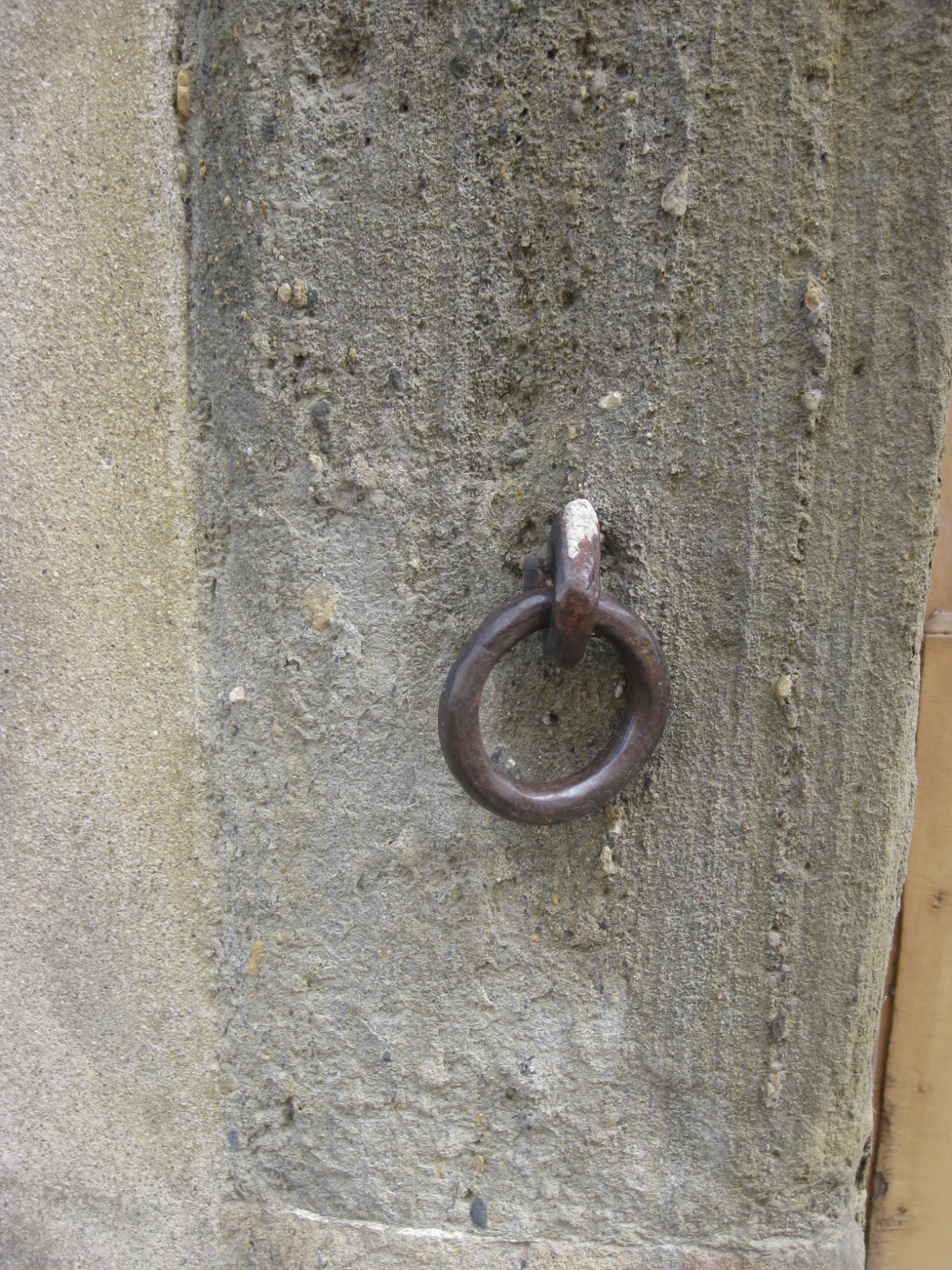
So now we’ll keep our eyes open, and perhaps notice those clues of former commercial activity: a ring set in a wall perhaps, for a trader delivering stock to tie up his horse or donkey, as well as the more obvious painted-over shop signs. I-Spy for residents.

I-Spy a delivery man’s tethering ring

I-Spy a shop front: one of the several vintners in town

Fiesta in Sabadell

We’ve just come back from a weekend with Emily.  Every time we go to see her in Barcelona we’ve stayed somewhere different.  But now we’ve cracked it. Sabadell does it for us.

The accommodation was the first thing that went well: an art deco factory converted into a smart and well-priced hotel, the Arrahona,  not too far from the town centre.

Discontent, even in Sabadell

We liked Sabadell itself straight away.  It’s not Barcelona: there’s not a tourist in sight.  And that’s one of its attractions after the hurly burly and stimulation of a day spent sight-seeing.  We had feared Sabadell might be a bit down-at-heel and depressing, because it is, like many towns in our part of the Ariège, a place whose glory days as a centre of the textile industry are long over.  It seems to have successfully reinvented itself however, and despite Spain’s present undoubted economic problems, Sabadell and some of the surrounding towns like the one where Emily works, Sant Cugat del Vallès, seem to be in some protective bubble.  The bars and restaurants are full, shops are functioning and selling well-made and desirable goods, and this weekend at least, all seemed well with the world.

Drummers prepare the way for the devils

Because on Saturday and Sunday Sabadell had a festival. We’ve struggled to find out why.  It doesn’t seem to have been for Corpus Christi, which provided nearby Sitges with an excuse to carpet the streets in flower petal pictures.  It looks as if perhaps it was just an excuse for the inhabitants to dust off the drums, unpack the ‘gigantes’ – papier maché heads surmounting giant bodies, dig out the costumes, order the fireworks and have a good time.

We happened upon part of the festival by accident on Saturday night when we found hordes of people gathered in the main town square.  Quantities of drummers in red costumes – adults and children – kept up a regular and stimulating rhythm to warn of the approach of whirling dancing devils whose horns disgorged sparks, flames and loud bangs.  These demons leaped in frenzied groups round the church and through the back streets until their ammunition ran out.

Devils run amok near the church

And then, as darkness fell, the crowds who had been watching wandered off to one of the dozens of restaurants in town and sat in large friendly groups at outside tables, laughing and chatting about the evening’s events.

We didn’t find out till later that the festival was happening all the following day too.  We caught up with things again in the evening when children dressed as dragons, dogs and mythical creatures took pride of place in the central square.

Child? Or dragon?

Showers of golden sparks spun into the crowd as the children wheeled and pranced through their routines.  It turned out though that this was the Grand Finale.  Market stalls were beginning to pack up.  The ‘gigantes’ were shrouded in dust sheets and slid ingloriously into workmen’s vans, and once again the crowds finished off the evening in the bars and restaurants.

One of the ‘gigantes’ waits to be bundled off home

The main Rambla had been closed off to traffic, and it seemed as if the entire town’s population was enjoying strolling around, settling occasionally for a drink or some food with friends or family.

A perfect way to end the day: a meal with friends at an outside table in one of the town’s restaurants

We’d chosen to stay in Sabadell because it was near enough to Emily, and seemed to have a hotel that would meet our needs.  We didn’t expect that being there would be such a positive and enjoyable part of our short holiday.  We’d like to go back and explore it again

The Rambla, the main street in Sabadell, taken over by pleasure seekers, just for the weekend

À la Chandeleur, l’hiver cesse ou reprend vigueur

It’s La Chandeleur, Fête de la Lumière today.  You might know it as Candlemas, and if you’re English, you’ve probably not given it a thought, or even knew it existed.
Here in France, you’ll certainly know all about it.  If you’re Catholic, you’ll remember the day as the one in which the Virgin Mary was purified after giving birth, and Jesus himself was presented at the Temple.
Catholic or not, the French eat a lot of crêpes today.  Apparently,  whilst making them, it’s traditional to hold a coin in your writing hand and a pan in the other, and flip the crêpe into the air. If you manage to catch the pancake in the pan, your family will be prosperous for the rest of the year.  It’s exactly half way though the official winter season, in any case.  Pancakes perhaps look a little like the sun, so they stand in for the sun – ‘la lumière’.

Winter sunlight looking like a crêpe?

More important than eating however, is seeing what Winter is thinking. He pays the day a lot of attention. He has decisions to make.  On this day, Winter will either pack his bags and disappear till the end of Autumn, or he’ll settle in, and make his presence thoroughly felt for quite a few more weeks.  Hence the expression:
À la Chandeleur, l’hiver cesse ou reprend vigueur
At Candlemas, winter ends or strengthens.
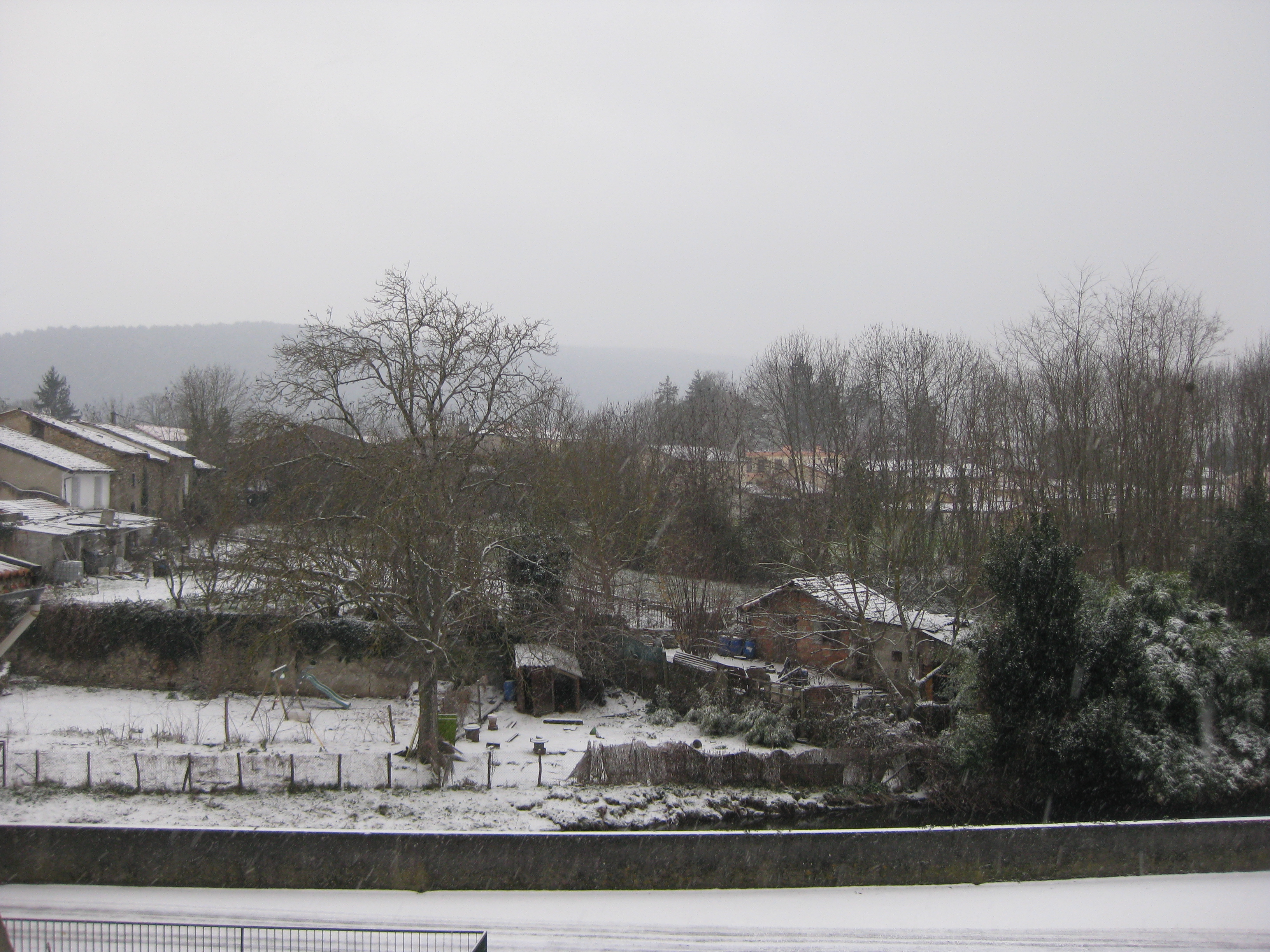
It looks pretty much as though he’s decided though.  Today the temperatures plunge from a high of minus 3, to a low of minus 10 (and feeling like minus 16), and the ten day forecast is worse.  Tomorrow, for example, it promises to be minus 9 at 10.00 a.m. and feel like minus 16.
It’s quite nice not to have to wait till Shrove Tuesday for the first pancakes of the year though.  Even better that we can be snug indoors today and hope for Winter to knock off duty.

View from the roof terrace at 8.00 a.m. It looks as though Winter’s really made up his mind

Season’s Greetings?

Round about now, most people in England will be gearing up to Christmas cards.  They probably bought them a while back and are in the middle of sending them right now.  To all their friends and relations.

It’s not like that here.  People do send them, but not on anything like the same scale, so there are no cheap-and-cheerful boxes stacked up, or whole aisles given up to displays, or mail-order charity cards.  And they tend to send them later too – often between Christmas and New Year.  English people here who like to keep up with their English card-sending traditions need to get organised with supplies from the UK or English outlets in France.

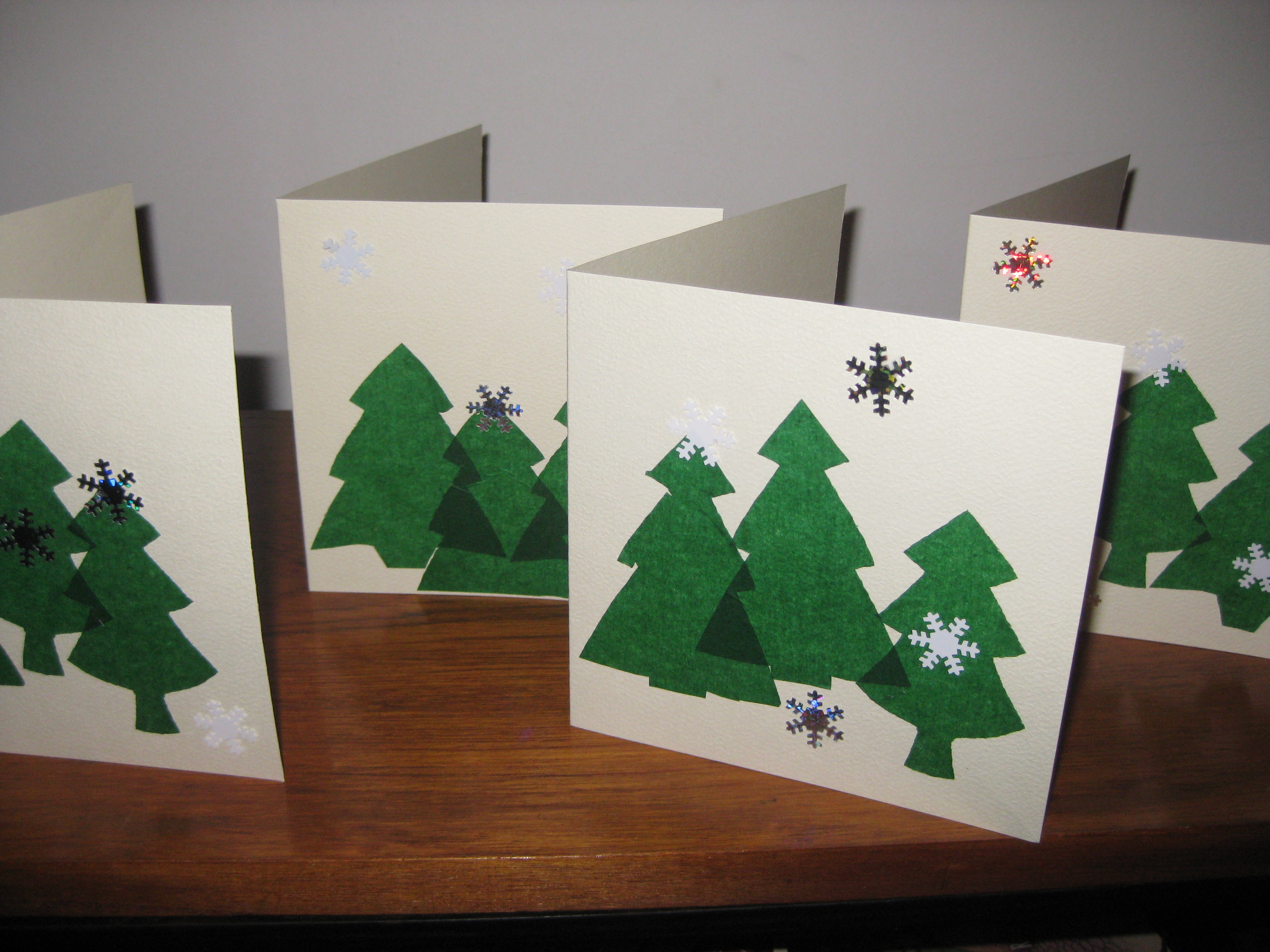
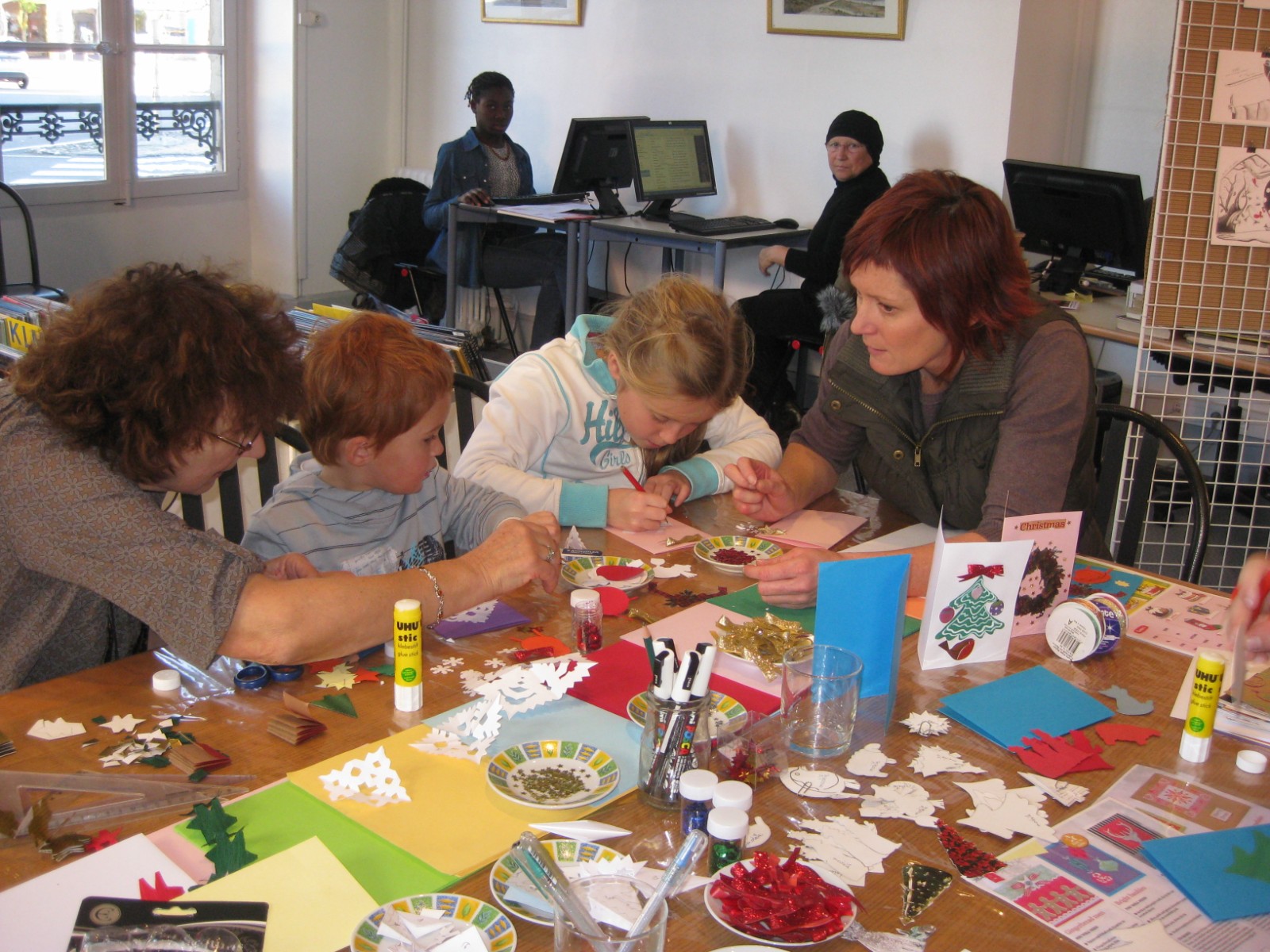
Christmas card production line

For years and years I made my own.  Then e-cards, with a donation to charity, seemed the way to go, and so that’s what we do now.  But I miss those hours spent with scissors and glue and sequins and paints and multi-coloured card, with the radio on in the background.  So I make a batch anyhow, and those few friends who aren’t on email get a homespun card as they always have done.  And I send them to French friends too – even the ones on email – because they seem to appreciate this further evidence that we English, though clearly barking mad, are quite nice with it

The runaway hit of ‘The Story of Christmas’ in Lavelanet library which I posted about last week, has been the chance to make Christmas cards in the English manner.  Children and adults alike have hunkered down in the library and considered the craft items on offer before turning their minds to creating a selection of cards for all the special people in their lives.  I wonder if they’ll acquire the habit, and do the same thing next year?

Hard at work to produce the perfect card