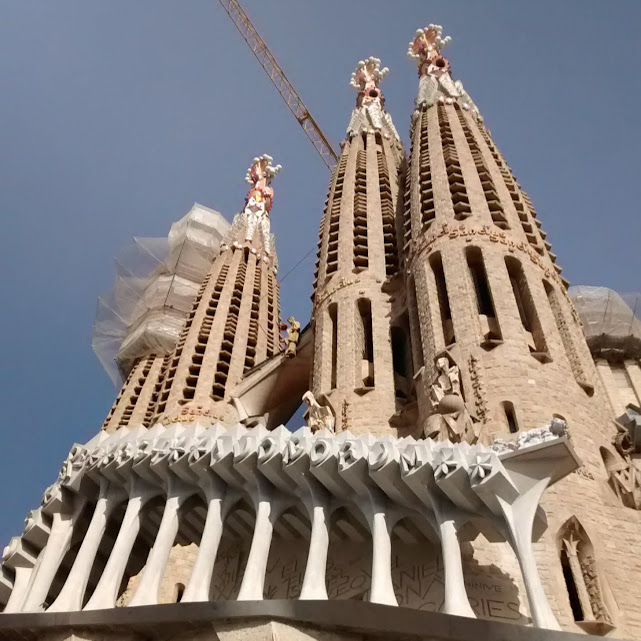
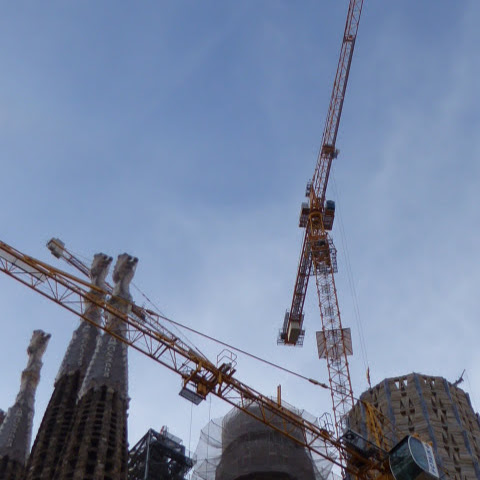
Everybody knows that Antoni Gaudí’s La Sagrada Familia is the oldest new church in (probably) the world. Begun in 1882, it may finally be finished in 2026. Promises, promises. It’s certainly been burgeoning for years.
The header photo, taken from the flat where Emily’s partner Miquel once lived shows how this monumental edifice dominates the skyline in a city where so many modern buildings scrape the sky.
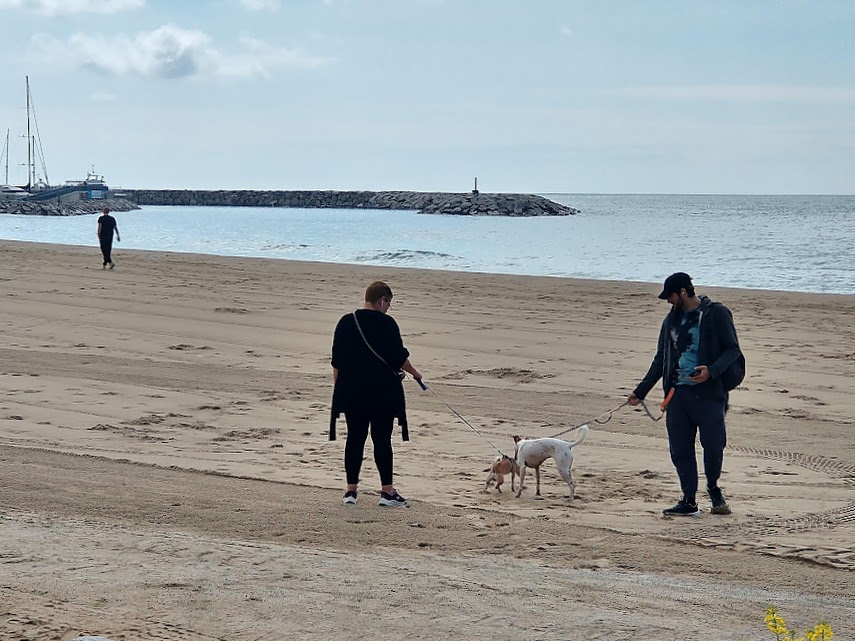
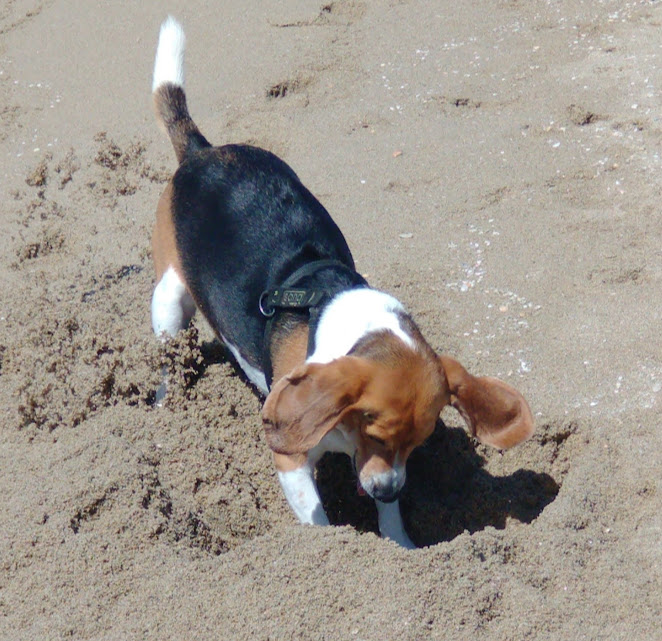
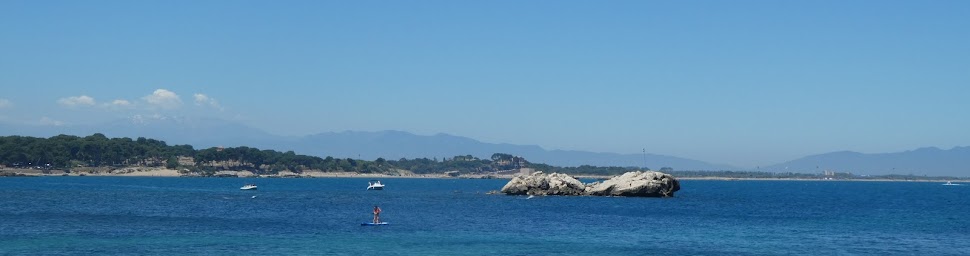
The sea is greedily consuming the beaches of the Maresme coast, Catalonia. So here in Premià de Mar, the council is building a series of groynes going out into the sea to prevent the sand being swept away and to encourage it to creep back to the shore.
Paula, who blogs at Lost in Translation, offers each month a different set of five words to illustrate. Look at this month’s: sabulous; brimming; guarding; berthing and bight. Interesting, aren’t they? I bet you had to haul the dictionary out for one, maybe two of them.
It was bight that caught my eye. It actually means …
But it doesn’t mean that to me. Like so many Brits, I’m a devotee of the Shipping Forecast, that four-times-daily forecast to anyone out at sea within reach of the British coast. The coastal waters are divided into zones, each evocatively named.
I’m not out at sea, dicing with the elements: I’m a rotten sailor anyway. But I can be soothed by the predictable poetic rhythms of the regular broadcast. Do watch this explanatory video. It’ll take up under two minutes of your life.
It’s so much a part of my life, I even have a cushion showing many of the much-loved names.
… and there you’ll have spotted it. German Bight. So that’s what Bight means to me. Ships at sea, their crew always ready, four times a day, to tune into that most necessary programme.
It seems only right then, that my four remaining photos should have been taken on the sea, or at any rate by the sea. Here they are …
This beach at Alnmouth, Northumberland is pretty sabulous, I’d say.
The Mediterranean is brimming at the moment: so much so that it’s slopped over the sands and is stealing the beaches of the Maresme coast in Catalonia. Diggers and excavators are fighting back, building groynes to inhibit the relentless march of the sea.
Just another day at work for this lifeguard, guarding the safety of Sunday swimmers at Premià de Mar.
Berthing at the fishing port of Arenys de Mar, Catalonia, before another night of fishing at sea.
This week for the Lens-Artist Challenge, John invites us to focus on the tools we consider when taking photographs: Shape, Form, Texture, and Light.
Sarah of Travel with Me fame (You don’t follow her? Why not?) decided to focus on texture alone in her role as Guest Presenter for Leanne’s Monochrome Madness . I’ve decided to follow her excellent example.
I often like to use monochrome to ‘describe’ texture. It seems to highlight shape, form and – er- yes, texture to advantage, with no colour to distract the eye.
In fact my featured photo of nearby Brimham Rocks is changed very little by the use of monochrome. The sky was a bright azure blue that day, with whiteish clouds. Realistically, grey is so much more authentic this year.
Let’s stay with the natural world, and go to Mossyard Bay in Dumfries and Galloway, to inspect the rocks there, and a sheltered pool as the tide goes out.
Mossyard Bay …… and a pool receding as the tide recedes
We’ll stay by the sea, but in Arenys de Mar in Spain this time. A rusting chain, a decaying lump of concrete in the fishing port.
A tired chain in an even more exhausted lump of concrete, Arenys de Mar
More man-made creations, battered by wind and weather. A has-been saint awaits repair in the stone mason’s yard at Rheims Cathedral.
A fatigued saint, Rheims.
And here’s a characterful shuttered window that’s lived a long life in a village in the Hérault, France.
A village house in the Hérault
An English country garden, complete with bee.
Eryngium finds favour with a bee.
… an icy puddle …
A locally frozen puddle.
And let’s leave you with that most Yorkshire of animals, a sheep: happy to show off a magnificent fleece, magnificent horns.
In this week’s Lens Artists Challenge, Donna of Wind Kisses fame urges us to show images that make us hear the sounds issuing from them.
I immediately thought of the fields round here, when during the spring and summer, the backdrop to a walk is often the quiet susurration of crops swaying in the breeze. Or maybe this image here shows a brisker noise as the breeze becomes instead a hearty wind.
Birdsong is the backdrop to any country walk. But instead of images of birds trilling their hearts out, I’m showing you two shots from times when I was a major source of irritation. ‘Don’t you even THINK of harming my babies’, hissed the graylag goose.
‘Don’t you even THINK of harming my babies’ screamed the Arctic Tern. What do you mean, I haven’t got the wings entirely in shot? I was in fear of my life here.
Ours is a riverside landscape here, and especially now in winter, the waters chatter rhythmically over rocks and gravel.
Let’s go into town. Any town. There’s bound to be something going on. Maybe someone has dragged a piano out into the street.
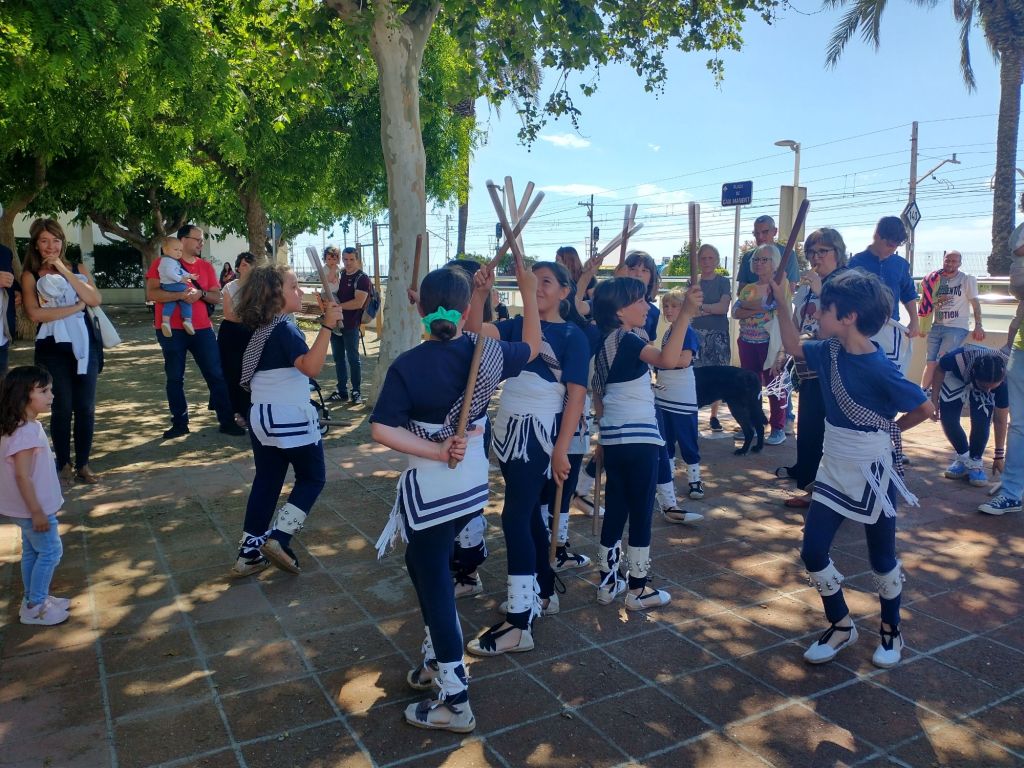
Maybe there are Morris dancers out and about. And Morris dancers don’t have to be men these days …
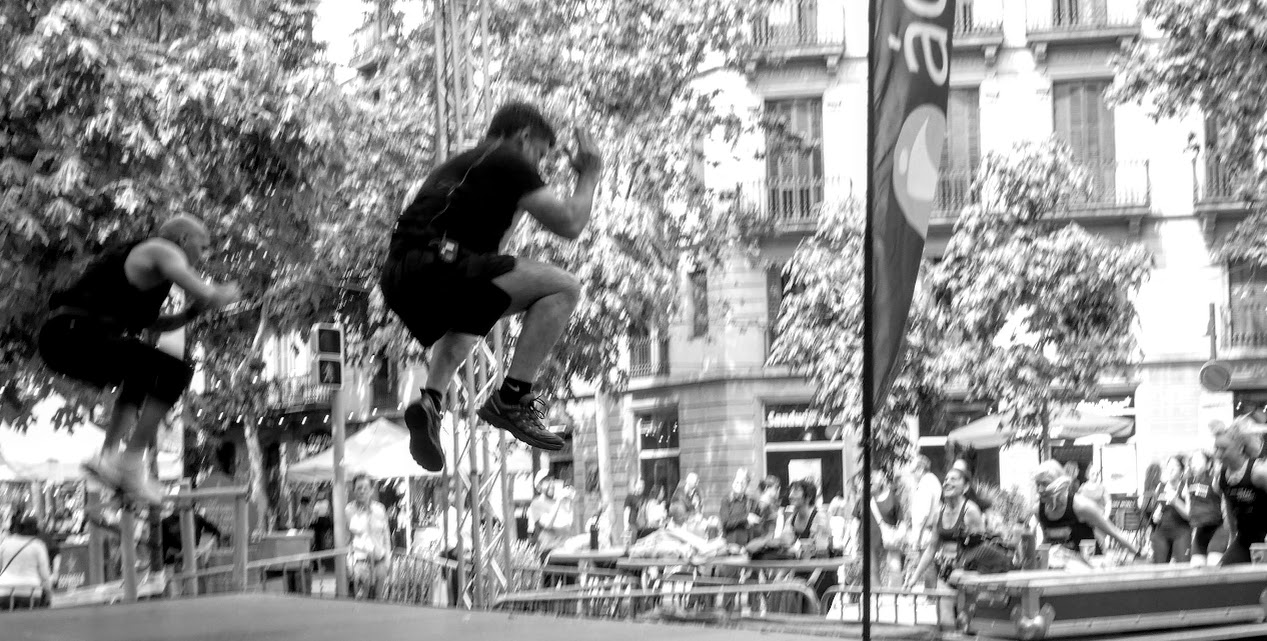
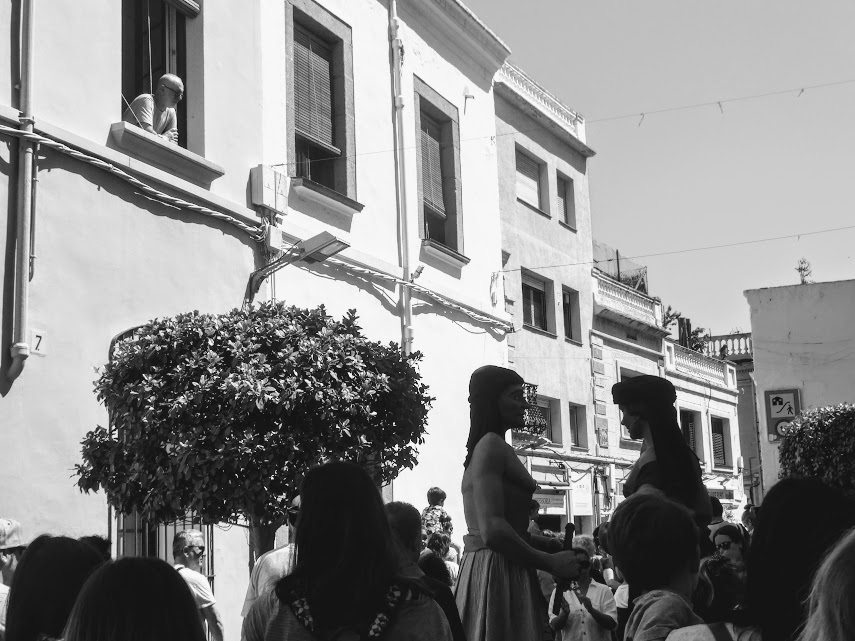
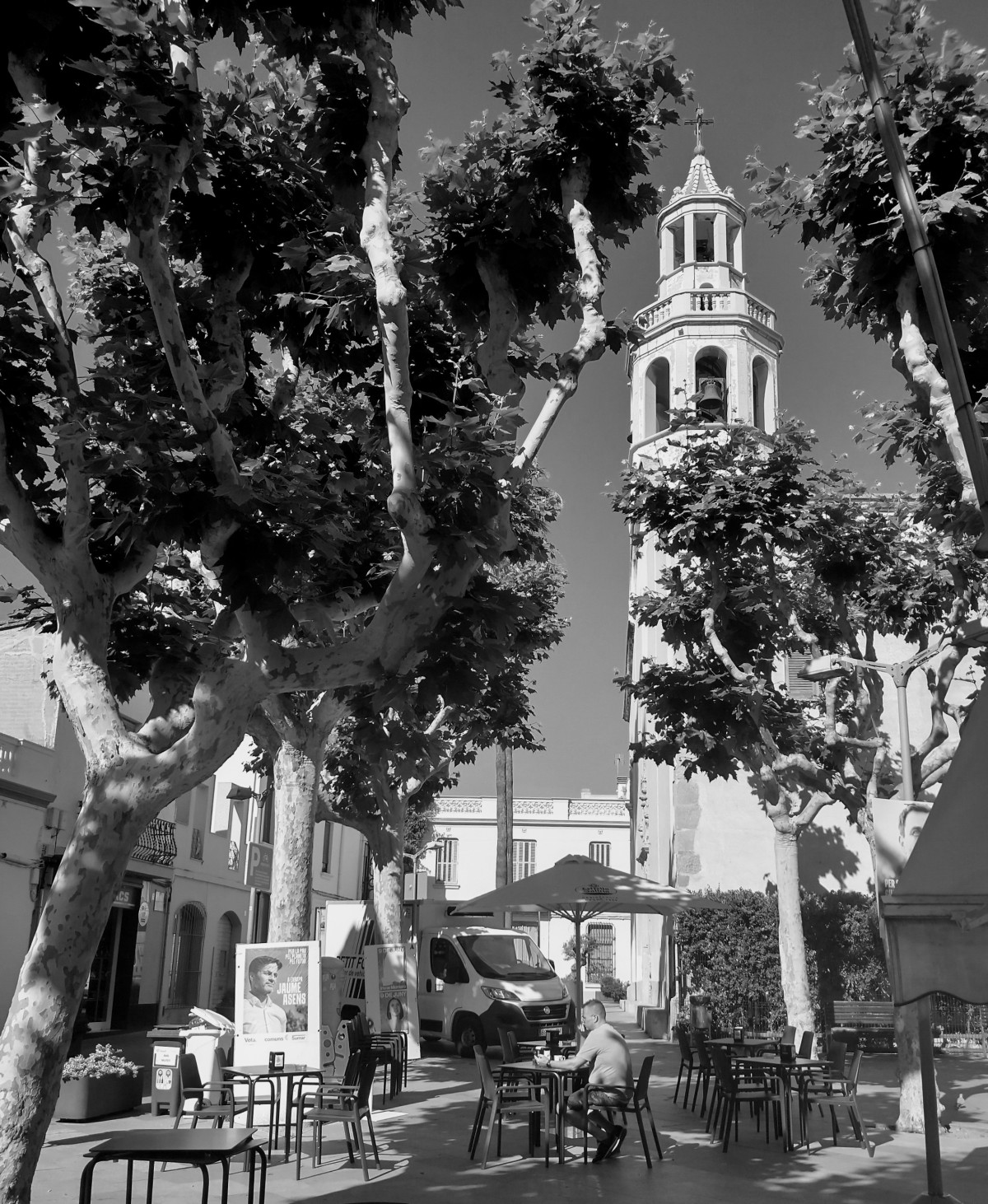
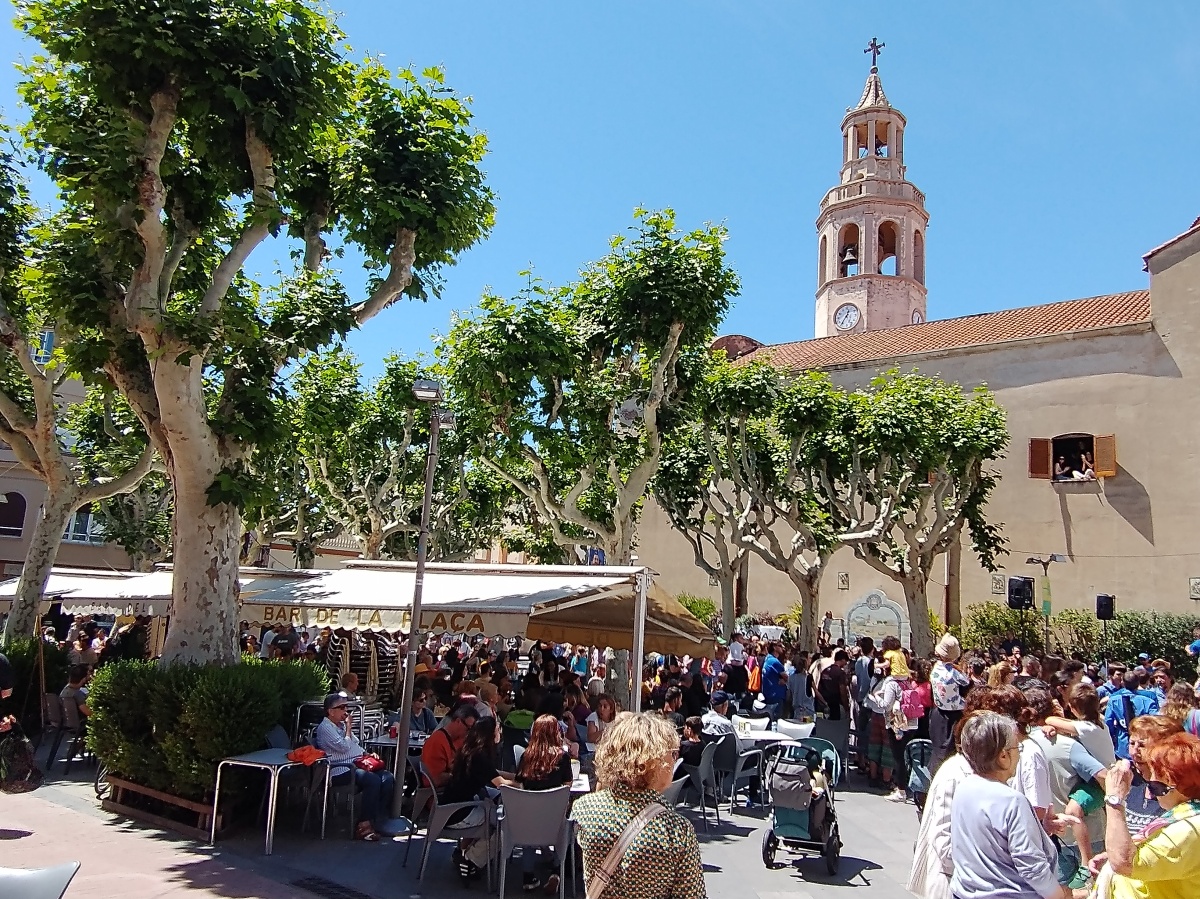
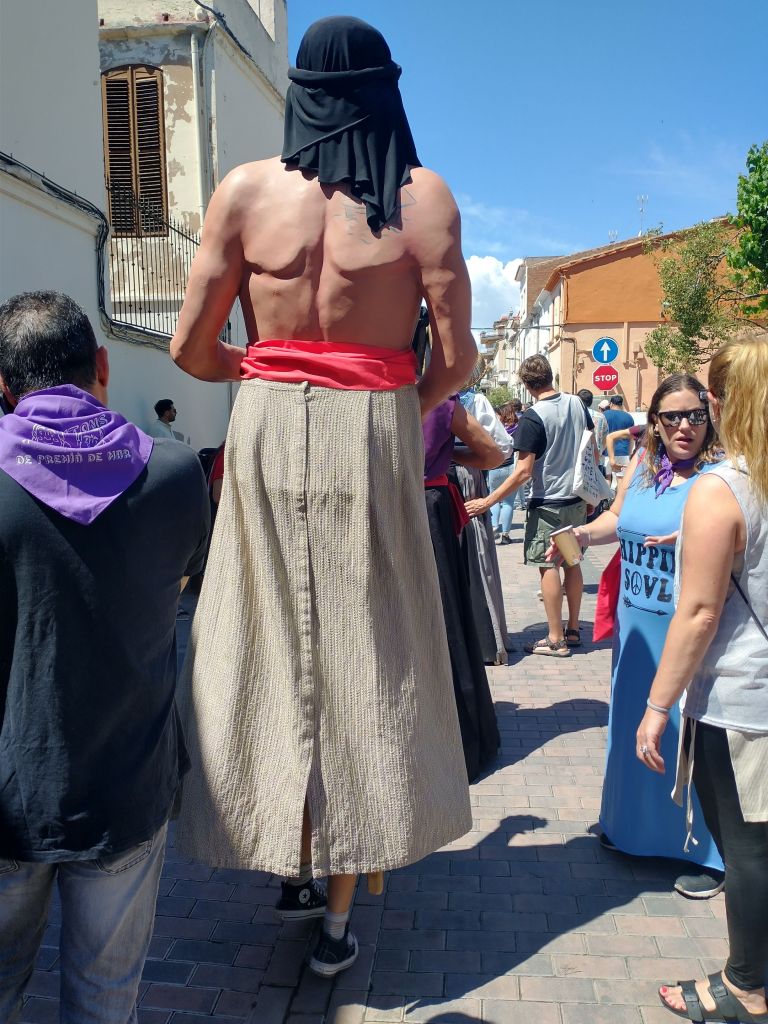
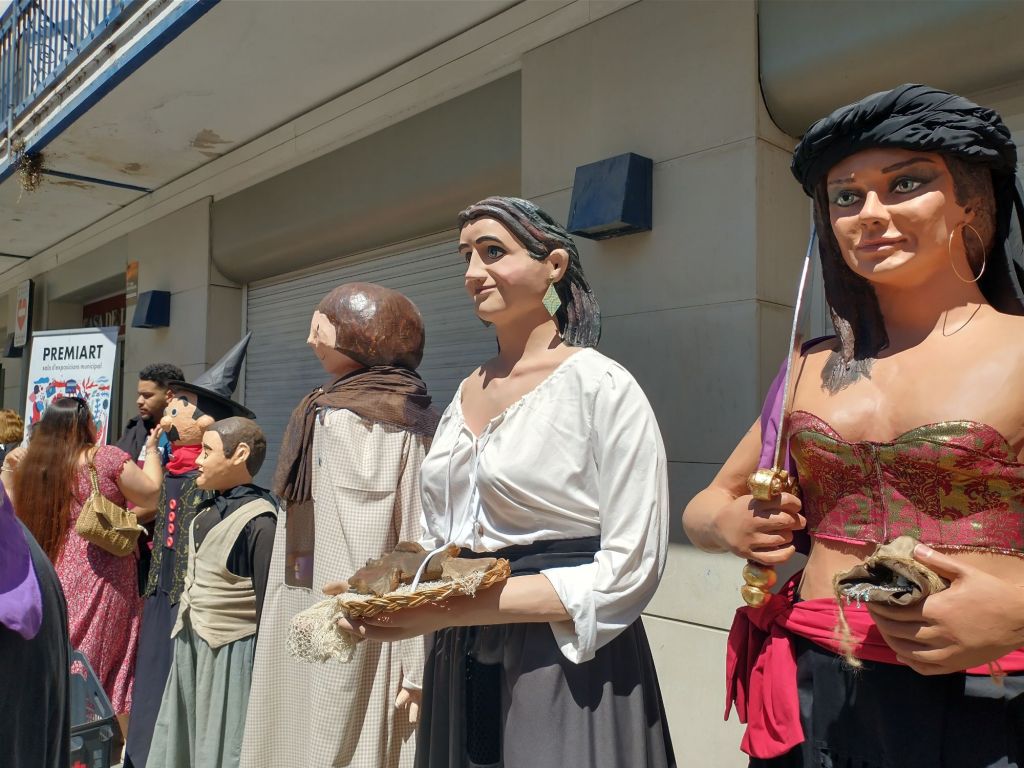
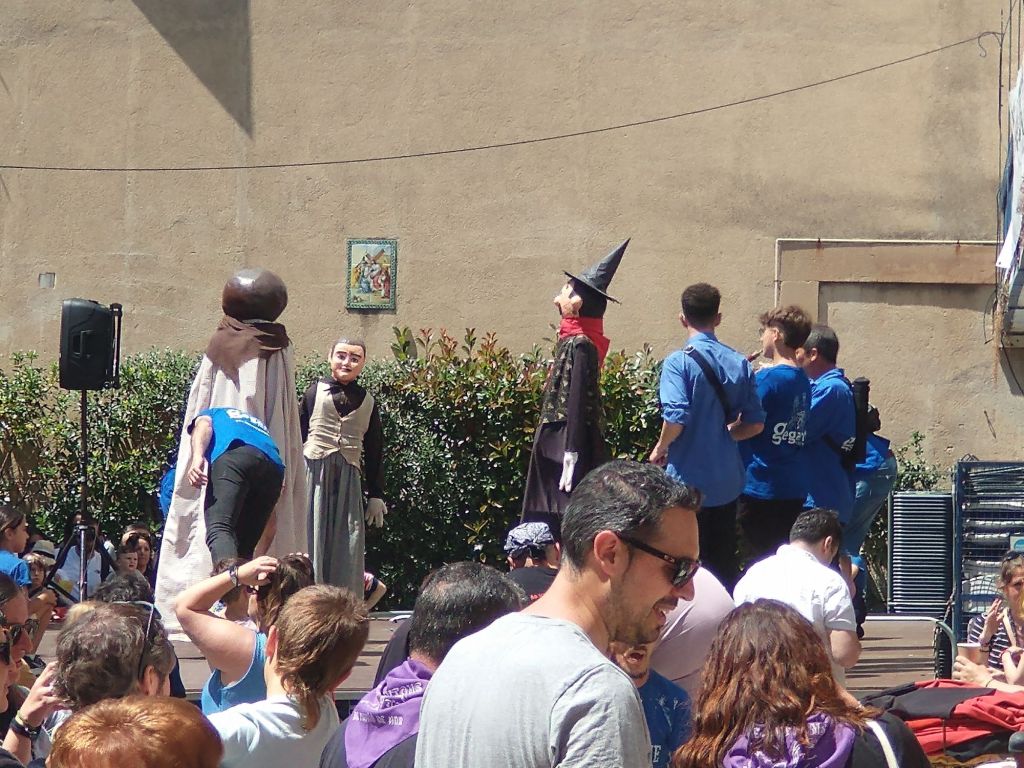
There might be dancing in the street in Catalonia …
…. or celebrations of Chuseok in South Korea, with insistent drum beating .
But bah gum, I’m a Yorkshire lass, and I can’t close without a rousing melody from a fine brass band. You’ll find another image in the featured photo.
Most of us living in Britain know something about the model villages built by philanthropic industrialists in the 19th century. With the advent of the Industrial Revolution, workers poured in from the countryside to a filthy urban environment. They found, alongside work for long hours in the newly-established factories, hastily built, crowded, poor quality housing with no facilities.
Some philanthropic factory owners decided to do things differently. Robert Owen built New Lanark for his miners. Titus Salt built Saltaire near Bradford for his textile workers. William Lever, 1st Viscount Leverhulme built Port Sunlight for his soap workers. And so on. All these communities offered decent, usually terraced housing with a small amount of outside space. There was a shop, a school, an institute for adult learners, a health-care facility of some kind, certainly a church. There was not however, a pub, or anywhere where alcohol was sold. Workers at the time often drowned out the reality of their miserable lives by drinking, and those philanthropists wanted a different life for their workers, whether they liked it or not.
So we were interested to visit Colonia Güell when we found out about it. It’s a similar set up in a manufacturing area, Santa Coloma de Cervelló, just outside Barcelona. Spain’s industrial revolution came later than ours: but in 1890, industrialist Eusebio Güell realised that if he wanted to attract workers from Barcelona to the factory he was building on his country estate – an essentially rural area – he would have to provide housing. And like his British counterparts, he wanted to do The Right Thing.
Eusebio Güell didn’t just want to have any old housing. He sought out the best architects of the day, disciples of the Modernista movement: the ideas behind Art Nouveau found particularly vibrant expression in Catalonia. More details here.
He provided decent housing for both workers and professionals in spacious streets, the factory itself of course, a theatre, a doctor’s surgery, a school. The school however was for boys only. In many ways it was progressive, teaching foreign languages as well as the three Rs. But girls had to make do with being taught embroidery and other manual skills that would make them dextrous with machinery when they went to work later on. Nuns at the convent taught them, and also provided a nursery so that mothers could return to work soon after they had given birth.
Ca l’Espinal, the Factory Manager’s HouseA detail from Ca l’EspinalThe schoolhouse, linked by an aerial tunnel to the schoolmaster’s quartersCa Ordal: three farming families lived here, supplying much of the fresh food needed in the community
Of course there was a church. And in 1898 Eusebio Güell commissioned the young Antonio Gaudí to design and build it. Had it been finished, this church would have been as ambitious a project as Gaudí ‘s still not quite finished Sagrada Familia. Two naves, lower and upper! Towers! A central 40 foot dome!
The building was begun, but in 1914 the Güell family decided to stop funding the project and Gaudí turned his back on it with only the lower nave completed, now known as the crypt. It was consecrated in 1915. I found it difficult to photograph, but here is a miscellany of shots from the inside and outside of an astonishing building.
During the Spanish Civil War, the mill was collectivised and run by its workers. After the war it was sold back to the Güell family, who sold it on again. Its days were numbered. The textile industry in Europe was collapsing and the factory ceased production in 1973. The factory itself was sold off piecemeal, and the houses to their residents. The settlement was in danger of losing its identity. But in 1990 the Colonia Güell was declared a ‘Heritage of Cultural Interest’ by the Spanish government and the protection of some of its most relevant buildings was established. Nowadays it’s an ordinary working community with an extraordinary history.
We enjoyed walking round and exploring. Sadly, we couldn’t see the factory. On Sunday its current many and various component businesses are shut, the gate to the site barred.
It’s not the easiest place to reach from Barcelona without a car, and as these things are apt to change, I won’t include public transport options. But we’re so glad to have visited, and will go again.
I haven’t done the Lens Artist Challenge for weeks, what with the busyness of being a granny to the latest granddaughter near Barcelona. But this week, Egidio proposes Warm Colours.
Well, Barcelona is warm at the moment. Here is a photo I snatched on 26th January – January! – of a young girl perfectly adequately dressed for the season.
And of course the weather is not what this challenge is necessarily about. But maybe a bit of fun played out against a hotel wall painted a vibrant shade of coral, on a balmy winter’s day, will not be too much of a cop-out.
Here are vignettes of three snippets of lives lived on the balcony of Hotel Catalonia Catedral, near – of course – the cathedral in Barcelona.
And here is a scene from our bedroom, taken at the beginning – or the end – of the day. Which? Only you can decide.
You must be logged in to post a comment.