We’re going on a Treasure Hunt

Well, this week, in all this rain, Tina’s sending us out on a Treasure Hunt for the Lens-Artists Photo Challenge #219. Here’s what she wants us to look out for …

A pet … , that’s going to be the dalmatian, Brian, who used to take Ellie, and sometimes us, for walks

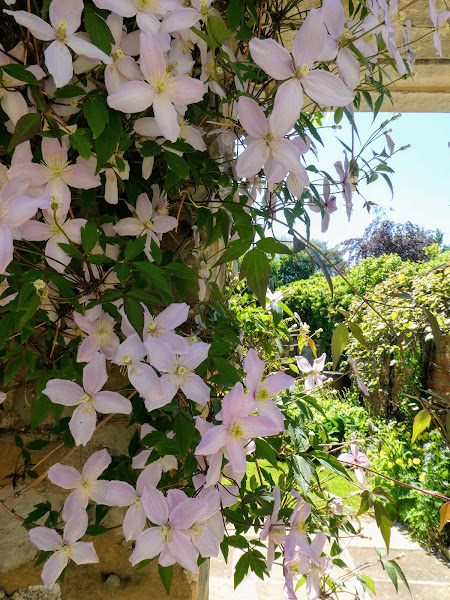
The moon or the sun. I’m going for the moon, gently rising above the clematis crawling up the garden wall.

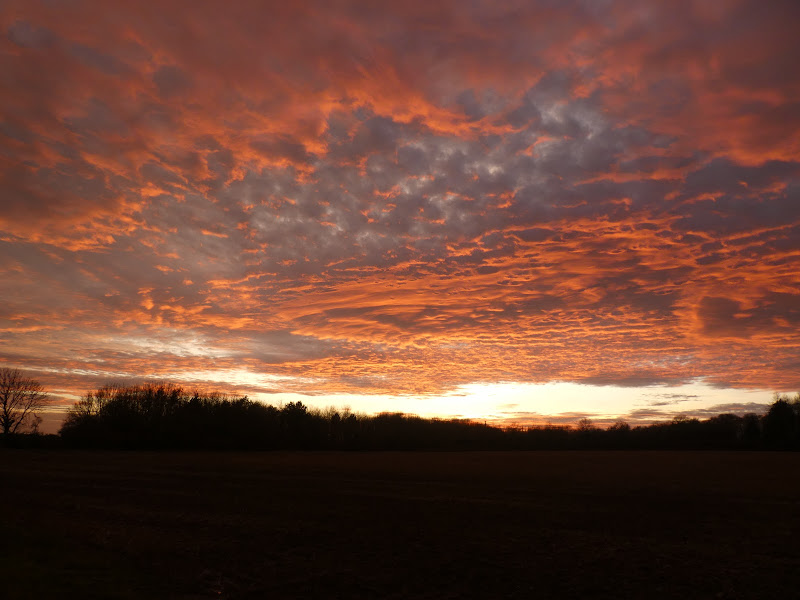
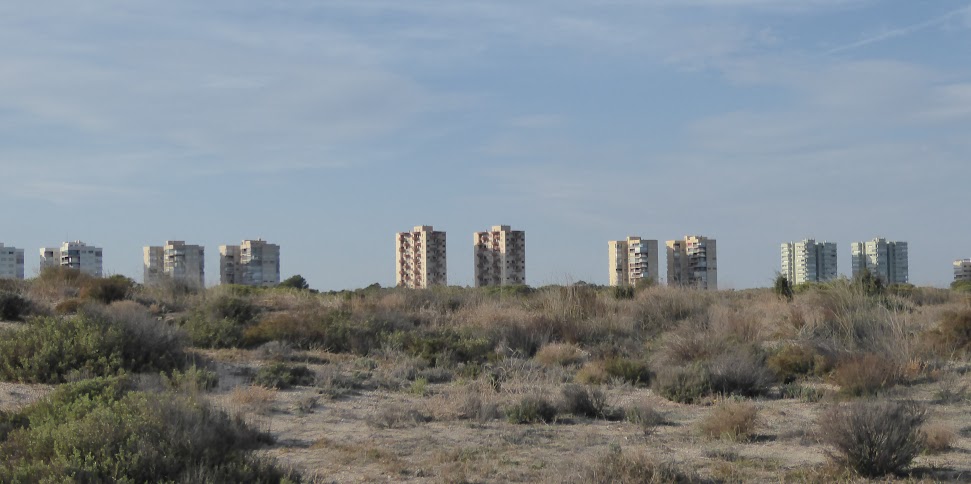
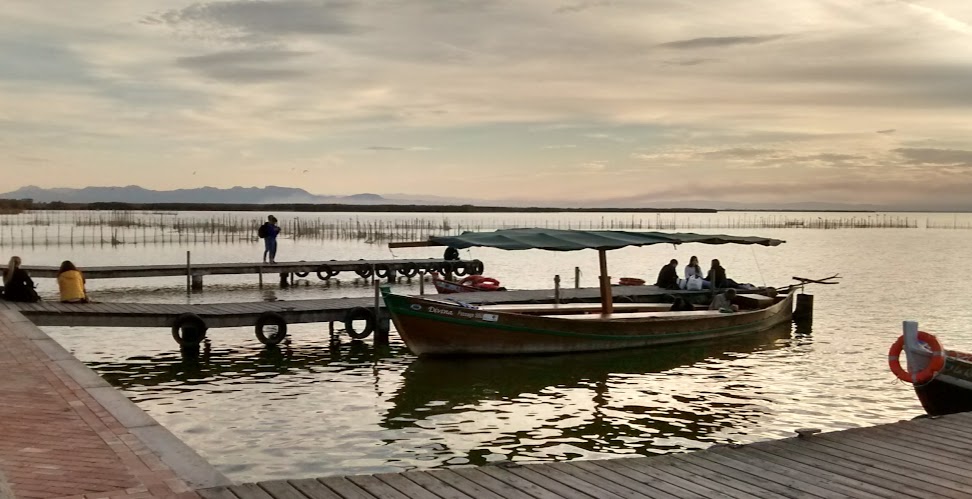
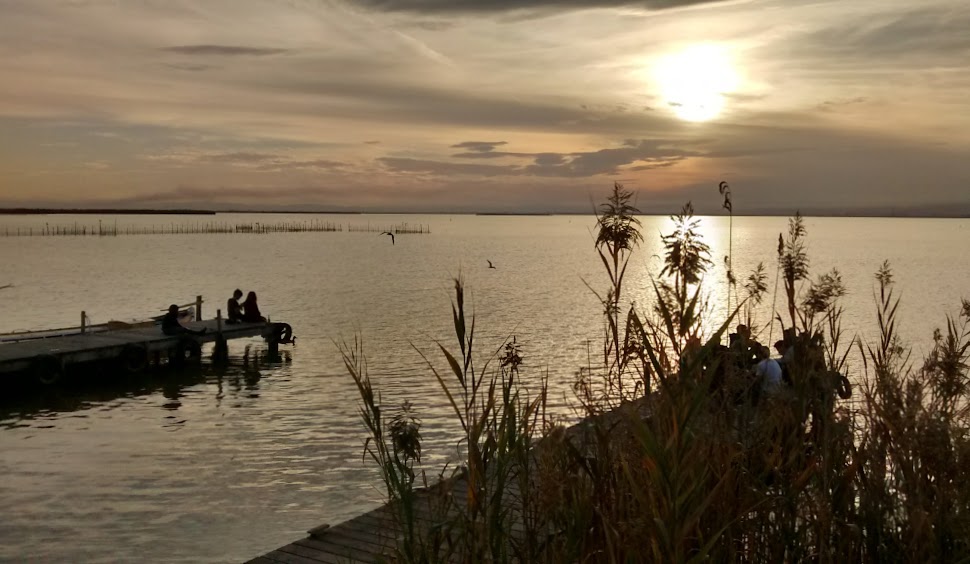
Clouds? We’ll choose an evening in l’Albufera, near Valencia.

A reflection. My favourite shot was taken in Strasbourg. Not in the fabulous old city centre, but on a piece of waste ground near a municipal car park.

A child? Well, I think I’ll keep the family out of this, and instead go for two girls in Pondicherry, making their way to school.

Schoolgirls

An umbrella? I’ve got several here, pressed into service at a friend’s wedding a couple of years ago. Well, as the French say: ‘Mariage pluvieux, mariage heureux’.

A truck. This shot was taken in a lorry park in Les Hayons in France at 5 o’clock in the morning, just before the truckers got on the road.

Autumn foliage. Any child will tell you that autumn foliage is best on the ground, where you can have a satisfactory walk kicking your way through it.

And the inner child is always looking for something interesting to find on a walk. Here are two things: a discarded blackbird’s egg, and a toadstool of the kind beloved by fairies and elves everywhere.

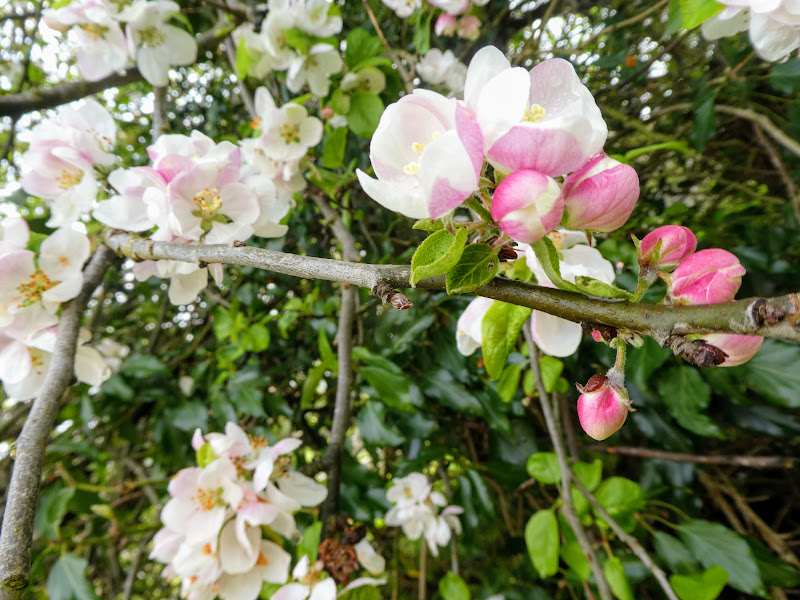
Just to wrap things up, and remind us that The Rainy Season has arrived, and not before time, I’ll pop a few raindrops into the featured photo.

Six Degrees of Separation: From a Scandal to a Great Fire

On the first Saturday of every month, a book is chosen as a starting point and linked to six other books to form a chain. Readers and bloggers are invited to join in by creating their own ‘chain’ leading from the selected book.

Kate: Six Degrees of Separation

The starter book for this month’s chain is Zoë Heller’s Notes on a Scandal.  Despite its being in many ways the shocking story of an affair between a teacher and her pupil, the book is in many ways memorable for having been narrated by a fellow teacher, who proves to be an unreliable narrator.

So I looked for another unreliable narrator, and found one in Matt Haig’s The Midnight Library.  So much hype surrounded this book. And it is immensely readable. But this story of a young woman who gets the opportunity, through being transported to a magical library in the moments before she commits suicide morphs into an entertaining and – yes- thought-provoking manual to help her re-evaluate her life and its disappointments, and to explore some of the paths that might-have-been, in some ways disappoints. Of course her alternative lives, lasting only a few days each, aren’t going to work out since she isn’t given a back-story and knowledge of the participants. In the end I felt I was being given a parable of how to improve on living the life I have been given. And it didn’t quite live up to what I’ve come to expect of Matt Haigh.

Libraries for the next link then: let’s go to Barcelona in 1945.  Carlos Ruiz Zafón’s The Shadow of the Wind revolves around the mysteries of a little known author, Julian Carax.   The main protagonist, Daniel, stumbles across him in a secret library of literature called the Cemetery of Forgotten books. From there it develops into a story of good versus evil; driven by jealousy and shrouded in the unknown.

I’m all in favour of staying in Barcelona, armed with a copy of Robert HughesBarcelona.  This is a wonderful book, which tells Barcelona’s story through the last two thousand years – though its main focus is the last thousand. Hughes’ area of expertise is art and architecture, but in order to tell the story of Barcelona’s cultural past and present, he has painted a vivid picture of the city’s political and social past. Highly readable, this is a book so densely packed with information that it definitely merits a second, perhaps a third reading as an introduction to the history of this fascinating city.

From Barcelona to Florence, another city I know well. Still Life by Sarah Winman is largely set there.  A charming, uplifting book, about the power of loving friendships and community. It begins in Tuscany in WWII with a British soldier, Ulysses, and continues to London’s East End where Ulysses was brought up. An unexpected legacy takes Ulysses back to Tuscany, to live in Florence, where, little by little, his London friends and relations fetch up too. Over the three decades in which this novel takes place, these individuals and his new friends in Florence all live and work together as some large extended family. Florence – not tourist Florence – but a living, working, vibrant community – is star of the show, and since I lived there too for a year, not long after the 1966 floods which feature in the book, I took this story to my heart.

Another book where a city is centre stage, albeit an 18th century version of the city, is Andrew Miller’s Pure, set in Paris.  Jean-Baptiste Baratte, a well qualified yet naïve young engineer, is sent to oversee the removal of the many thousands of bodies from the cemetery of Les Innocents in Paris, some 4 years before the French Revolution.  Miller conjures a vivid picture of the daily round in this little part of eighteenth century Paris: the smells, whether of sour breath or rotting vegetables or a dusty church; and of a world about to change, in the destruction of the cemetery and church which has for so long been at the heart of the community Baratte finds himself in. Violence and death are ever present.  Unsettled by the narrative, the reader is left with an impression of a world about to change, a world which is already changing in ways its citizens cannot comprehend. Uncertainty is what draws the reader in.

A capital city in time of trouble is portrayed in The Ashes of London, by Andrew Taylor.  What did I enjoy about this book? The picture it evoked of London life in the immediate aftermath of the Great Fire of London. What didn’t I enjoy? The over complex plot, and the flimsy characterisation. The book is peopled by ‘goodies’ and ‘baddies’, and we know for sure which are which. I’m not minded to read the follow-up book, but I found the description of London at this difficult moment evocative and convincing.

How did we get from a modern comprehensive school to seventeenth century London?  As chains go, it’s a bit unlikely.  Let’s see if next month, when we start with a cookery book, Jamie Oliver’s The Naked Chef, is a little more convincing.

Attention! Sheep Dogs at Work!

I promised you an account of a Sheep Dog Demonstration after our visit to Masham Sheep Fair. Maybe you’ve amused yourselves wondering which sheep would get hustled and herded into pens as each dog did her work. Big and super-woolly? Lean and super-curly? Well, neither …

The field behind the church was roped in such a way that we spectators gathered round the edges, so we could look at the arena, scattered with wooden gates and obstacles, traffic cones, a play-tunnel, and in the far corner, a sheep pen. We spotted two sheep dogs, panting eagerly beside their trailer.

Their trainer, a farmer from Cumbria, took centre stage and introduced her dogs, each of whom would perform in turn. But where were the sheep? Not here at all it turned out. The dogs would be herding … first geese …

… who went between gates, round obstacles, round again…and into the pen …

… then ducks ..

… round obstacles, over the bridge and wheee! Down the chute and into a paddling pool (I missed the photo opportunity there), in and out the traffic cones and into the pen …

.. and finally, ducklings …

The ducklings await their moment on stage.

Through the gates, round the field. Then … can you see the ducklings scuttling down the play tunnel? The sheepdog’s about to follow them. Then, no pen for them. Just back into that big grey hutch.

I love to watch sheep dogs at work. They are so eager to get the job done, and done well. And on the whole, the creatures they chivvy seem happy enough. They put up with it anyway. A happy half hour.

Monday portraits from Masham

Yesterday, we went to Masham. Here were gathered sheep: dozens of sheep; hundreds of sheep, from every corner of North Yorkshire and beyond. They were all to be put through their paces and judged on whatever esoteric characteristics sheep are judged on, hoping to be awarded rosettes – even cups – as evidence of their good breeding and upbringing. We went early, and talked to owners, many of whom were keen to save rarer breeds from dying out: dying out because their meat is too slow-growing, maybe too flavourful for the mass market. And, as we discover round here every year at shearing time, the wool they provide is no longer a passport to wealth, or at any rate a steady income, but quite simply a drain on the farmer’s budget as there are shearers to be paid. With some exceptions, only traditional spinners, weavers and knitters seek out traditional wool.

Now then, hands up if you thought a sheep was just a sheep.

Or that wool was – quite simply – wool.

Here’s judging taking place ..

And they start ’em young here. There were classes for Young Handlers, and even an Under Fives category …

Wool, anybody?

We had to go to the Sheep Dog Demonstration, of course. But that’s worth a post all on its own. To be continued …

when the dying speak, they cannot lie

In 2020, my lockdown treat to myself was Hilary Mantel’s The Mirror and the Light, the final instalment in her trilogy charting the rise and fall of Thomas Cromwell. Yesterday, Mantel’s death was announced. This post by Brian D Butler of Travel Between the Pages seems to me a fine tribute to her writing, and an introduction to it for anyone who hasn’t yet read any of her work.

Brian D. Butler's avatarTravel Between The Pages

I was sad to read of the passing of the great English author Hilary Mantel. Here in the colonies we became acquainted with her powerful prose through the Wolf Hall trilogy. I thought that I would share this piece from Hilary Mantel’s essay “Blot, Erase, Delete,” published in Index on Censorship, Vol. 45, Issue 3, 2016.

It has always been axiomatic that when the dying speak, they cannot lie. I knew a man whose mother told him, as she lay dying, who his real father was: like a woman in a Victorian melodrama. She might as well have climbed out of bed and kicked his feet from under him. The truth was far too late to do him any good, and just in time to plunge him into misery and confusion and the complex grief of a double loss. Some truths have a sell-by date. Some should not be uttered…

View original post 218 more words

Midweek Monochrome of Mossyard

Google photos has a happy habit of reminding me of what I was up to this day one year, two years, three years (and so on) ago. Today it pointed out that in 2020, just after the worst of Lockdown was over, we escaped briefly to Dumfries and Galloway in Scotland. And there we discovered Mossyard Bay.

Let’s take a virtual trip: there’s not a fairground ride, amusement arcade or kiss-me-quick hat in sight.  There’s not even a chippie.  Just us, the rocky shore, and the sea, advancing or retreating with the tide. Happy memories, translated into monochrome.
For Bren’s Mid-Week Monochrome #106, and as suggested by Sarah, of Travel with Me fame. Bren herself takes us to the Nidd Gorge, my back yard when I lived in Harrogate: while Sarah, for her post, is in her favourite city, Paris.

‘Make Do and Mend’

Some of you know that I – theoretically – have another blog besides this one, called Notes on a Family. I say ‘theoretically’, because I haven’t posted for ages, and I should. It details parts of my family’s history, as well as vignettes about growing up as one of the immediate post-war generation, This post, from December 2016 seems particularly apposite at a time when it’s rarely been more necessary to avoid rampant consumerism.

Notes on a Family

‘Make do and mend’

The excesses of Christmas have got me thinking about my childhood, as part of the post war ‘make do and mend’ generation.

Even without rationing being a day-to-day part of my early years, we’d have been a thrifty family.  My mother was a clergyman’s daughter, and priests were notoriously underpaid until quite recently.  They also tended to live in large vicarages which were fine buildings, but hard to maintain and harder to heat.  ‘Making do and mending’ was a core part of her life from her earliest days.

My father was a notoriously poor provider and I can’t remember a time when my parents got on well.  My mother did the housekeeping and bill-paying on her income alone.  She was a teacher, but until 1961, female teachers were paid less than their male counterparts.  Admittedly, there was  almost no job available to her that would have paid her on the same scale as a male colleague, but the assumption was that it was men who brought home the bacon. (As a little aside, my mother once failed to get a teaching post, because she referred to it during her interview as ‘a job’.  Her interviewer regarded her frostily.  ‘Miss Barton, teaching is not a job.  It is a profession, a calling’.)

I was brought up with the following skills:

Darning:.  I’m still not good at sewing, but I’m a dab hand at darning gaping holes in socks.  Though actually I don’t do it any more. Even stockings got darned in those days (tights still didn’t exist).

Here are some of the contents of my sewing box. I rarely use any of these things (stocking darning thread, anyone?) but I couldn’t get rid of any of it.

Turning sheets ‘sides to middle’: when sheets wear thin in the middle, they’re split in half and rejoined with the edges towards the centre.  I used to help with the cutting and tacking.

Preparing cheap cuts of meat: the meats  we bought during my childhood were tougher, often bony cuts requiring long slow cooking – breast of lamb; oxtail; pigs’ heads to be transformed into brawn; skirt of beef – all helped to go further by the addition of lots of root vegetables to the pot.

Cheap cuts of pork (image from Farms not Factories)

Hand-making clothes: my mother made most of my clothes, though she wasn’t a natural.  I used to help her, but I was even less gifted, and preferred choosing the cloth, and Butterick or Simplicity patterns, and pinning the pattern pieces to the cloth.  I lost interest after that.

Some of the instructions from a Butterick’s pattern. I remember the occasional despair in interpreting these.

Taking shoes to be mended: shoes had to last.  As there was a tiny cobbler’s shop near our house, I was usually the one that would take our shoes to be soled and heeled.  With growing feet, I was the only one to get new footwear fairly regularly.  And it was taken for granted that shoes would be polished every single day.  I still do clean and shine my shoes – fairly often.

Baking: it was inconceivable that we would ever buy biscuits or cakes, though that was more to do with our preference for good food.  Shop cakes and biscuits were pretty dire in those days.  Some of my earliest memories involve cake mixing – always by hand, never with a fork or spoon – with the delicious pay-back at the end of ‘licking the bowl out’.  Why do we ever cook cakes?  That raw mixture clinging to the sides of the bowl is so much more appetising.

Saving anything that might have a future use:

  • That includes string – to be carefully unknotted, wound tightly and stored.
  • Gift wrapping paper: presents had to be carefully unwrapped, and the paper it came in smoothed out and ironed later.  I still do this.  It drives my daughter mad. (Update: September 2022: I read the other day that the late Queen also did this. If it was good enough for her …)
  • Saving tiny portions of food left over from a meal.  I still do this too.  My son-in-law used to say that it was so I could have a clear out a few days later and throw the stuff out then.  He might sometimes have had a point.

The soup pot: usually those left overs formed the basis of a soup.  Now, as then, there’s usually soup on the go in this house.  Usually it’s based on those vegetables lurking in the crisper that really need to be used up, or something else that’s too small to make a meal in its own right. Normally known as ‘old boot soup’.

Soap: this was bought a few months ahead of its being needed, so that it could be stored in the airing cupboard, where it would dry out, and therefore last longer. I still do this.

Though I’m no longer as thrifty as my upbringing demanded, ‘make do and mend’ is a core part of me still.  As I think it should be.

The feature photo shows my grandfather; my grandmother; my mother and her younger brother; and me, and is the banner image for Notes from a Family.