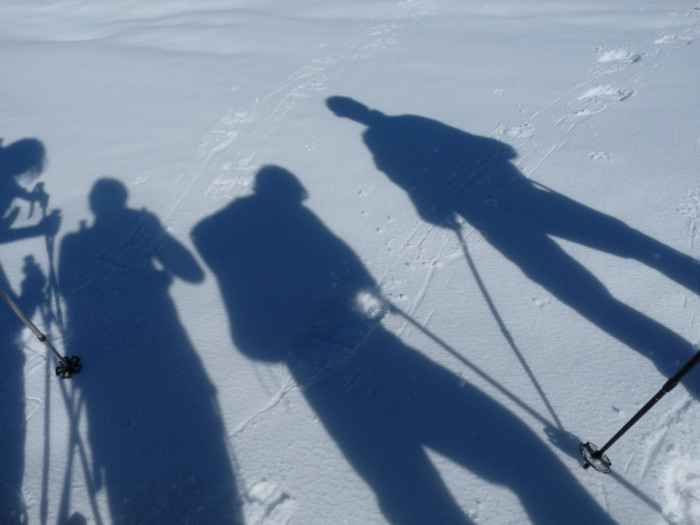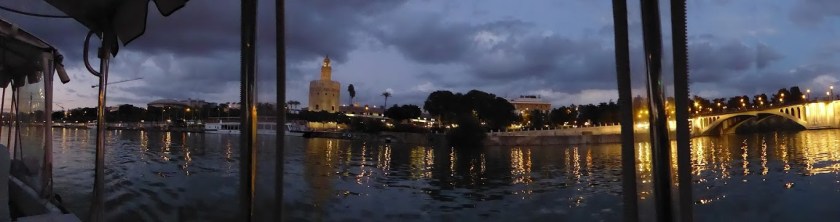
Here we go again. Apparently WordPress doesn’t support my sort of smartphone, so I have to post via email. This is my first attempt. Fingers crossed. I think I feel rather like these people battling along the river Ure this afternoon against the current. It’s all a bit of a struggle.
Author: margaret21
British summer time: the final days
We’re more than half way through August. It ought to be high summer, but autumn’s on its way. As we walked down the road yesterday, a few crisp brown leaves blew across our path. Mornings start later, night comes sooner. The combine harvesters trundling round the fields seem almost to have completed their work. The shops are full of neat school uniforms and bright pencil cases ready for the new academic year.
Before it’s too late, here are some summer time views, from Moelfre in Anglesey. And because it’s British Summer time, the sea isn’t always blue and nor is the sky. But that’s fine: we expect that here in the UK.
The Devil’s journey from Ireland to Stiperstones.

Shropshire’s one of England’s forgotten counties, and full of secret landscapes for the lucky traveller to discover. We found a few ourselves this week, when visiting ex-Riponian friends Hatti and Paul.

They took us on a walk along one of those characteristic long, narrow scenic ridges which offer easy walking, and wonderful long distance views to east and to west. So there we were, rambling from Wentnor to Bridges along the ridge for a rather good pub lunch, and then back to Wentnor along the valley floor.
To the right of us was the Long Mynd, a gently sloping plateau. To the left, and higher above us were the more rugged Stiperstones. Both hillsides were covered with an intensely purple carpet of flowering heather.
You’ll want to know how the ridge of Stiperstones came to be covered with an untidy tumbling of large and rugged boulders.

It was the devil who dropped them there. He’d once noticed an old crone carrying her eggs to market by holding them before her, nursing them in her apron. That was the way to do it! That was how he carried a large bundle of rocks all the way from Ireland to Shropshire, where he planned to drop them in the valley called Hell’s Gutter. It was heavy work, and he sat for a rest at the very top of Stiperstones on a rock known since that day as the Devil’s Chair.
As he stood up again, his apron strings snapped. Out those rocks tumbled, all over the ridge. He didn’t bother to pick them up. They’re there to this day.

Climatologists and geologists have a different explanation, more credible but less fun. If you get the chance, go to Shropshire, savour its varied and delightful landscape, and decide for yourself.
Welsh as she is spoke
Wales is only along just to the left of England. We don’t need a passport to get here. And I’ve visited quite often. But until this time, never been so aware of the Welsh language. It’s not just that all signage comes first in Welsh, then English. But people – ordinary, everyday sort of people speak it – all the time. I hadn’t really realised that this is a living language, a day-to-day reality for many many people, and not one simply preserved by well-meaning traditionalists and academics, in the way that Occitan seems to be encouraged in parts of France and elsewhere. I wish I could understand more than ‘dim parcio’ (‘no parking’).
Hir fyw y gwahaniaeth. (‘Vive la difference!’ to you. And you can’t say that in English, either)

Of course this isn’t written on my smartphone. I tried. I’m allowed to comment on other WP bloggers’ posts by being logged into my account, but if I try to post myself, it continues to say I can’t be verified. Oh grrr.
Parys Mountain
Once, a century ago, Parys Mountain was alive with people: men, women and children hacking deep clefts and canyons into the earth, in search of copper-bearing rock. Now the area is bleak, desolate, abandoned. The poisoned sulphurous soil supports little but odd clumps of hardy heather. Yet this large site, with just a single set of abandoned winding gear, a single ruined mill is strangely beautiful, and we fell under its atmospheric spell.

PS. This post was written on a borrowed laptop. As far as my phone goes, I can access my WordPress site, write and illustrate a post, then it tells me I can’t publish, as I don’t exist.
PPS. To add insult to injury, the borrowed laptop automatically spellchecked ‘Parys’ to ‘Paris’. Grrr
Life of Brian 2

Ellie and Brian have joined us for two days only. Time for Brian to see the sea. He does like ‘to be beside the seaside, beside the sea’.
Olympic Fever?
Two posts in quick successsion. Sorry. But this one is topical now, although I first posted it exactly four years ago. And it made me sad. And cross.
Four years ago, England was in the grip of Olympic Fever, and we were in London, sharing all the optimism and the feel-good factor with Londoners from every possible cultural background. Today seems so different. The country seems suffused in post-Brexit economic gloom, post-Brexit immigrant antipathy, often towards citizens who’ve lived here thirty years. Only the headlines from the Daily Express and the Daily Mail promote the fiction that all is well, and all will continue to be well. It’s all very depressing.
A fortnight ago, our local paper, La Dépêche du Midi had ‘Londres, capitale du monde!’ as its banner headline. The story was, of course, the Olympics. We’re unaccustomed to this particular paper taking much notice of anything that occurs outside south-west France, but ‘les JO’ (Jeux Olympiques) have been big news.
Not as much as in England though. When we arrived in the UK, we were unprepared for Olympic Fever. Red white and blue banners and flags hang from houses. Shops have Olympic-themed window displays, and if you want to buy mugs, some paper napkins, or fancy a new cushion, you’d better want them plastered with the Union Flag.
Across the Thames: a view of St. Paul’s Cathedral
Still, we enjoyed staying with Tom and Sarah in Olympic-happy London, and spent an evening round the South Bank area. Eat near Borough Market and you’re sure of a tasty…
View original post 239 more words
Smartphone virgin

That’s me. Was I the last person in England not to have a smartphone constantly about my person? No, actually that’s Malcolm, and he’ll never have one.
Once, some years ago, Ellie and Phil gave us each a cast-off iPhone. We gave them a go, hesitantly and suspiciously, decided they were far, far too difficult, and thrust them in the back of a drawer. And continued quite happily to use our outmoded mobiles to phone and text – though we often forgot to take them with us as we simply didn’t use them often enough.
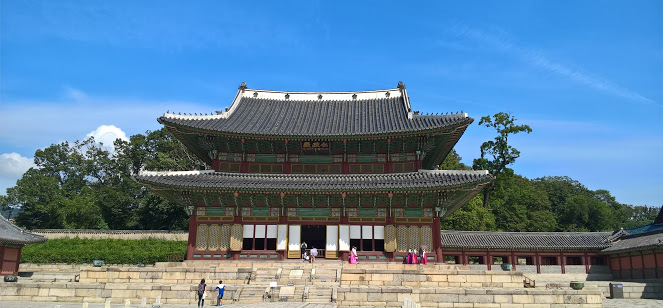
Now though it’s different. This trip to Korea. Perhaps it would be useful to have some connectivity in order to check travel details, get tourist information, stay in touch with Emily … and even post occasionally on my blog.
Ellie to the rescue again. She’d got herself a simple back-up smartphone in case her iPhone, which in her case is a business essential, ever let her down. She decided in the end she didn’t need it, and gave it to me.
This time I was motivated to Get To Grips. But it was terrifying. Icons appeared randomly on screen, and just as randomly disappeared again. I couldn’t even work out how to start a text off. Various patient people (all young, obviously) sat me down, and kindly and carefully explained – at least twice – what to do. And then explained again, three days later.
Slowly I made progress, though I wasn’t convinced I’d ever really be able to use it when it really might matter.
But then, on Thursday, I had a breakthrough. I loaded an app. All by myself. It was the WordPress app. So this week, when we have a holiday with the twins in Anglesey, I’m going to have a go at doing a simple post – a line of text and a photo maybe. I hope I’ll be fine. I shall have two eleven year old techies with me after all, and their affectionate if patronising contempt for my inabilities to cope with all this technology knows no bounds. Who knows? I may even return from our holiday with a wind-borne tan and feeling really rather tech-savvy.

Free cycling

I was volunteering at Fountains Abbey and Studley Royal yesterday evening. I wasn’t sure I wanted to be there. It was raining – and how – as I drove there, and the evening looked very unpromising.
A small team of us were there to make an evening’s Family Bike Ride round the Abbey and Studley Royal grounds run smoothly. Apparently I was going to be stuck near the Temple of Piety and Moon Ponds preventing riders from disappearing up into a woodland path, with only my two-way radio for company. I hadn’t even got an umbrella. Anyway, who would bother to turn out with their families, and all the family bikes, to trundle round Fountains Abbey in the rain?

I was wrong. Of course. The rain stopped. Families turned up, and lots of them. At first though, I had many minutes of peace to stand and absorb the views of the very special Georgian water garden. I spent time enjoying the company of a new family of coots: I suspect the three little spherical balls of fluff I saw with their solicitous parents had hatched that very day.

And then the bike riders came. There were confident teenagers relishing the chance to get up speed in this tranquil setting. There were primary-aged children enjoying family time with their parents. There were little ones, able to wobble along on their bikes, their parents confident that they were utterly safe from passing traffic. Open Country, a local charity working to help people with disabilities access the countryside had brought along a team and several tandems.
Some people went round the circuit once, some twice, a few as many as five times. I took lots of photos with lots of cameras for family souvenirs of the evening. Sadly, I hadn’t brought my own camera. These not-at-all impressive photos are taken with my camera phone.
I’ll volunteer again sometime for this event. But not next time. Next time I’ll want to be there with my own family, trundling around this very special site with my own grandchilden (first though, I’ll have to learn not to fall off a bike).

Balsam bashing
What were they thinking, those Victorians?
During the 19th century, travelling botanists brought seeds of all kinds back from their exotic travels and often gave them to curious gardeners, who would try out these novelties as fashion-statements. In 1839, Himalayan Balsam was introduced and became Quite The Thing. It was so invasive (yes, we know) that it was great for making a huge and spectacular pink display at the back of the garden.
Then there was a certain Miss Welch, who in 1948 was so enamoured of the plant that she took seeds from her home in Sheffield and scattered them all over the place on the Isle of Wight. Or Mrs Norris of Camberley in Surrey who broadcast seeds far and wide, not only in Surrey, but in Ireland, France and Spain, and offered seeds to anyone who would accept them.

Now, apart from a few bee-keepers who recognise that their bees adore its nectar, nobody has a good word for this wretched plant. It marches along river banks and masses into surrounding woodland. It smothers any other species it meets on its relentless progress. It projects its seeds (800 per plant) by entertainingly popping open its seed pods and projecting them several metres away. It’s a bully.
And bullies have to be stopped in their tracks. All over England and beyond at this time of year you’ll find bands of Army Cadets, boy scouts, environmental groups, country lovers and villagers gathering in their local Himalayan Balsam Problem Spot to do battle with this tyrannical species.
We were part of one such band this morning. Our local nature reserve, High Batts, is practically our backyard. It’s a fantastically diverse small habitat for a whole range of birds, plants and other wildlife, and the River Ure courses through it. To the delight of Himalayan Balsam, which chokes the river banks before trying to spread itself all over the reserve. Today, a gang of us got on our dirtiest clothes, found protective gloves, and marched off to show the stuff we meant business. One of our number strimmed the worst affected areas, and the rest of us pulled out plant after plant after plant by its roots, until our hands were sore and our backs ached. I used to think breaking the flower heads off was enough. But no. These plants are many-headed hydras. Wound them and they’ll simply sprout forth ever stronger.
Army cadets and other volunteers had worked hard before us. Others will need to continue another day. But we did a pretty good job. And we were rewarded with elevenses of pork pie and three kinds of home-made cake, and the sight of those exclusively pink-flowered zones restored to satisfying diversity . Definitely worthwhile then.


You must be logged in to post a comment.