Snapshot Saturday: from Pyrenees to Pennines via books, a cup of coffee,a skein of geese …. and an elephant

The WordPress photo challenge this week is ‘Beloved’.

I don’t think the humans in my life whom I love would be happy for me to plaster their images all over the blogosphere.  I have no pets, beloved or otherwise.  So I’ll have to look a little further.

Here’s a little miscellany of images, beloved images:

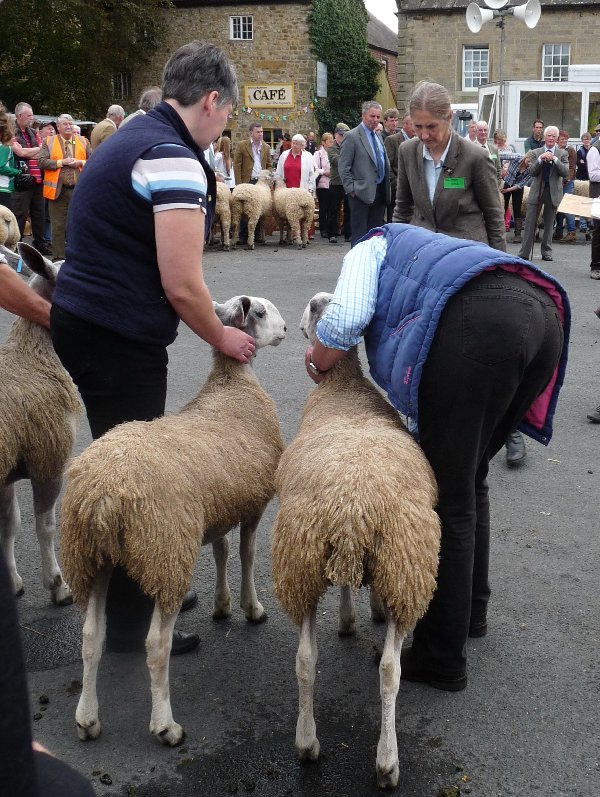
  • The Yorkshire Dales, whose rolling hills, bisected by ancient drystone  walls I missed so much during our years in France.
  • The Pyrenees, from their richly flowered springtime meadows through to winter, when their rocky slopes are covered in deep snow, and which I now miss every single day.  I’ll miss the shared picnics on our walks together, when our French friends pooled resources, and we ate everybody’s offerings of home-cured sausage, local cheeses, bread, home-baked cakes together with wine and somebody’s grandfather’s very special eau de vie.
  • Springtime daffodils.  Every year I go into deep mourning when they wither, die and finally become untidy heaps of dying leaves.  I’m happier now as they thrust their sheathed stems through the hard soil, promising to flower soon- but not quite yet.
  • There are books: I need a pile beside my bed to get me through the night.
  • A single, perfect cup of coffee from Bean and Bud in Harrogate.
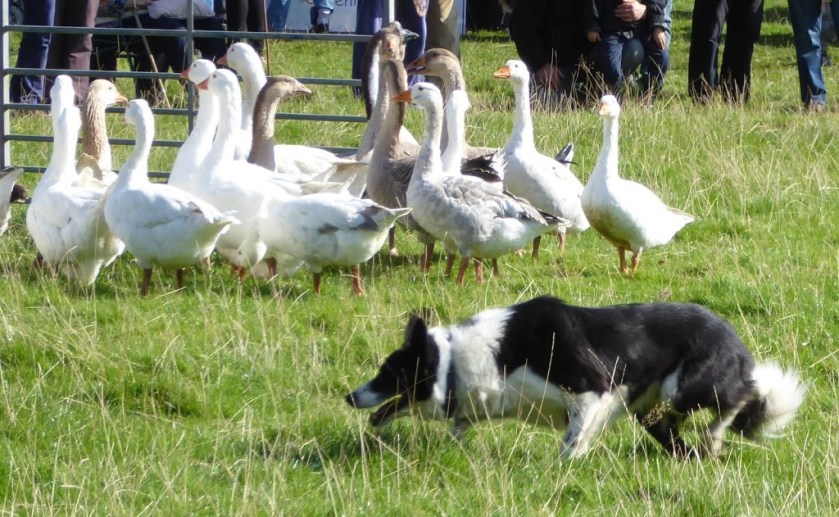
  • Skeins of geese flying overhead mark the seasons here, and I love their haunting, raucous cries.
  • And so on….

I’ll end though with this.  I wasn’t beloved of this elephant in Kumbakonam,  Tamil Nadu, who was only doing his job when I visited him ten years ago on my Indian Adventure.  But I felt beloved and very special when he raised his trunk and brought it down upon my shoulder – his very distinctive way of blessing me.

Elephant in the temple of Adi Kumbeswarar, Kumbakonam, ready to give me his blessing.

Click on any image to see a slideshow of the photos, full-size.

Getting ready for Christmas 2020

Every autumn we gather sloes from the hedgerows.  Every autumn we make sloe gin, and lay it down for the Christmas of the following year.  And every Christmas, we find ourselves sampling some of the hooch we made a mere three months previously.

With so little willpower at our command, what on earth has persuaded us to save a few bitter oranges from our annual marmalade making bonanza to concoct Seville orange gin this January?  This recipe by Maria Dernikos admonishes us to make it, and leave well alone for three whole years.  Good Lord, we might be dead by then.

Ready for action with gin and oranges.

It’s dead easy.  All it needs is gin, the thinly pared zest from a few Seville oranges, a couple of cloves and lots of sugar.  Bottle the lot, put in a cool dark place, and agitate daily till the sugar has dissolved.

After that, I think our only option is to try to forget all about it.  And perhaps we could remember it just one month shy of the three-year requirement, and drink a small glass of it on Christmas Day 2020.

PS.  With the juice from the pared Seville oranges, I made Seville orange curd.  This recipe is a bit sweet for my taste so I added some lemon juice.  Thanks Hugh Fearnley-Whittingstall!


Snapshot Saturday: Sitges – perfect holiday resort, plastic litter depot, or public housing for parakeets

Last month, as faithful readers know, we had a day in Sitges.  It was perfect.  The sun shone, the sea sparkled, and we sauntered along its clean wide sandy beaches.

All was not as it seemed though.  In just five minutes, from the apparently uncontaminated sands, we recovered these:  mainly plastic straws and bottle tops, many disintegrating into the shards and  fragments now wreaking such havoc in our oceans.  And this is a ‘clean’ beach.  

On a happier note, here’s a parakeet in a palm tree.  The high prices of housing in this fashionable holiday destination don’t worry him.  He has all he needs to build a home simply by fossicking around among the palm trees’ tall fronds.

In response (sort of) to this week’s WordPress challenge, Variations on a theme.

Chili is the new carrot

If you’ve got snow, and a toddler in tow, you’ve got to have a snowman. If the day is cold, and the snow hard and crisp, best make it a small one.
Tom made William a mini-snowman on Sunday. How to finish him off though? Beech mast for eyes, sticks for arms, with the almost-final touch of William’s spurned mittens – so far so good.

But our dwarf snowman was far too diminutive to have a stonking great carrot for a nose. We used a chili instead.

Which lasted exactly two minutes. Poppy, the dog next door, came to remove it. Dog lovers everywhere will be relieved to read that she decided not to eat it.

Later that day, the rain came and washed everything away. By then, William and his mum and dad were back in London. Our snowman hadn’t lasted long enough to set a trend.

Undiscovered Barcelona: the textile town of Sants

Plot the story of my life through the places I’ve lived, and you can see a  theme.  Textile towns.

I went to university in Manchester, sometimes known as Cottonopolis because of the cotton industry that thrived there throughout the 19th century.

One of the  cities at the forefront of the cloth-making industrial revolution – wool and flax in this case – was Leeds.  I’ve lived there too.

Then in France, we lived in Laroque d’Olmes, a town whose prosperity depended on the woollen textile trade, snatched from it in the twentieth century as wool lost out to more modern fibres which were in any case increasingly manufactured in Asia.

And last week, in Barcelona, we stayed in Sants.  In the 19th century this area, like so many others in Catalonia, turned out the cotton-printed calicoes so popular in Paris at the time.  It was a busy industrial town that only became part of Barcelona towards the end of the 19th century.  Now much of its industrial past has been re-purposed or flattened.  Here’s the Parc de l’España Industrial – once an enormous textile mill.

We loved being here.  Though so near one of Barcelona’s main stations it’s assertively non-touristy.  People live, work, shop and enjoy themselves without having to tussle for space with a whole lot of trippers rubbernecking their way along the crowded thoroughfares.

We don’t want tourist apartments here!

Our street had everything from a fish restaurant (choose your own fish from the marble slab), an alternative book shop, a handy mini-mart, a design studio to – inevitably – several bars.

Every morning we did as the Catalans do before they set off for office, market or shop and had breakfast in one of them.  I developed a passion for wholewheat croissants, which are light, flaky and utterly delicious.

Breakfast in our bakery of choice, appropriately called CroisSants.

Neighbourhood restaurants made few concessions to Spaniards, let alone foreigners, displaying their menus in Catalan: this is a separatist area.

We shopped in the independent shops (the only surrender to globalisation that we could find in the entire area was a solitary Burger King: it was refreshingly under-populated) and sauntered round its two thriving markets.  We’ll be back.


Click on any image to see it full size.

Snapshot Saturday: Weathered by the sun in Alicante

Our Spanish holiday ended in Alicante, some 550 km from Barcelona, and was all to do with our flight home.  Don’t ask.

My second impression of Alicante, and Malcolm’s first, was that it’s a lovely town.  It’s suffered a bit in English eyes from its proximity to Benidorm, the British home of sun, sand, sangria and sex (and that’s probably a bit unfair too).  Actually, it’s a fairly wealthy town, a historic Mediterranean port, and strolling round its historic centre, and along its seafront and esplanades was a pleasant experience.

I struggled to find much that was weathered, for this week’s WordPress Photo challenge, but here is a nicely picturesque house above the old town, and a slightly sun-battered detail from the Basilica de Santa Maria.

My other snapshots (click on any of them to see a slideshow) display a busy, prosperous town which we’ll happily return to.  Especially if we can enjoy lunch outside in temperatures of 17 degrees in the middle of January.

The sea, the sea … in Barcelona

Another bright sunny day, so the seashore beckoned again – in Barcelona this time.

First though, we visited the Museu Marítim, located in the impressive Drassanes Reials, the mediaeval shipyard dating originally from the 13th century.  It was remodelled time and again till the 18th century, when it fell out of use.

Our main memory of this engaging and beautifully curated museum is of the impressively reconstructed galley ship the Galera Reyal of 1568, and all the instruments, arms, ordnance and documents associated with such a warship. 

What about this? Thirty oars each side, each manned by four slaves. These men toiled for hours and hours each day, shackled to the same spot for the entire voyage. They worked, ate and slept here, puddled in their own excrement. A ship such as theirs could never surprise the enemy. The smell preceded it by several knots. The exquisite ornamentation of this vessel, rich in symbolism, loses some of its allure against this background.

The whole of the dockyard area is rich in history. Here are just a few pictures, and from the more recently developed Port Vell.

Sitges: a day at the seaside

Top tourist tip. Visit Sitges, as we just have, on a bright day in January. You’ll have the place almost to yourself.

We last visited a few years ago, when Emily took us to see the Corpus Christi Flower Festival in June. We could barely move for other people doing exactly the same thing.

Today was different. We mooched round enjoying the narrow streets of the old town, the Modernista buildings, and the wide sunny beach. I even paddled. Malcolm didn’t. 

A tasty tapas lunch was in a quiet bar in a quiet park. It was the perfect antidote to busy Barcelona, a mere half hour train journey away.