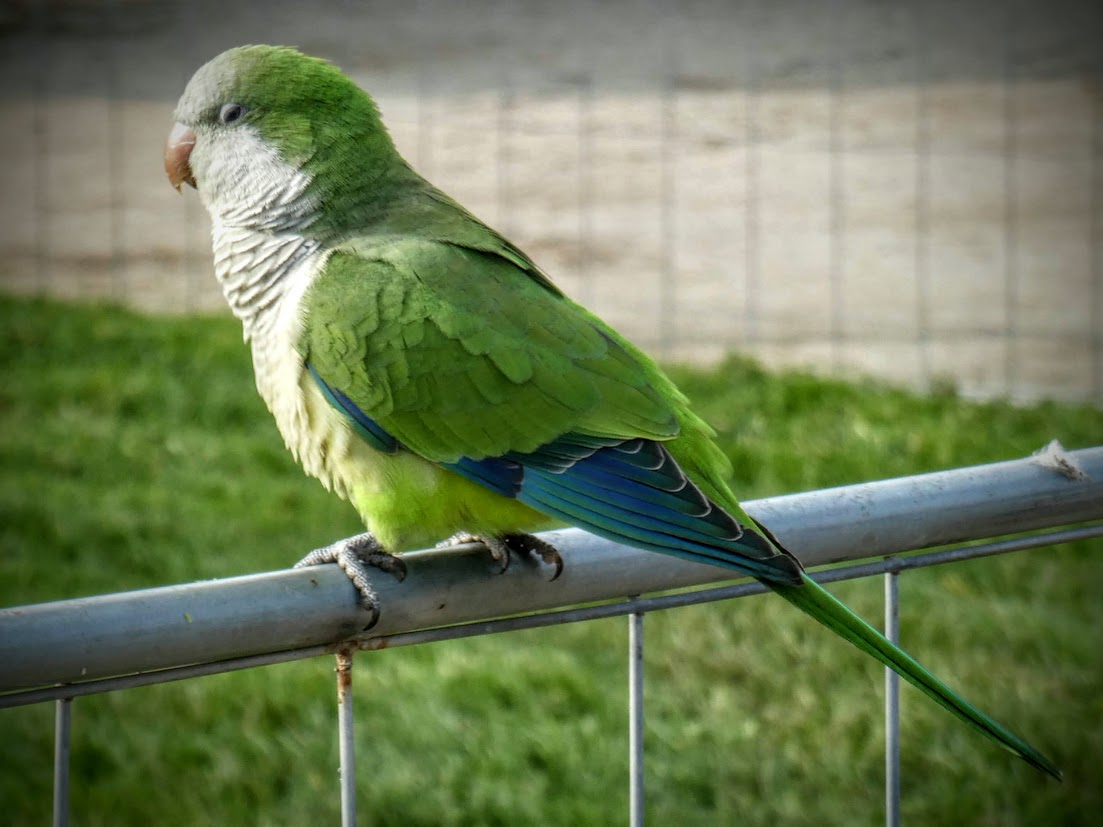
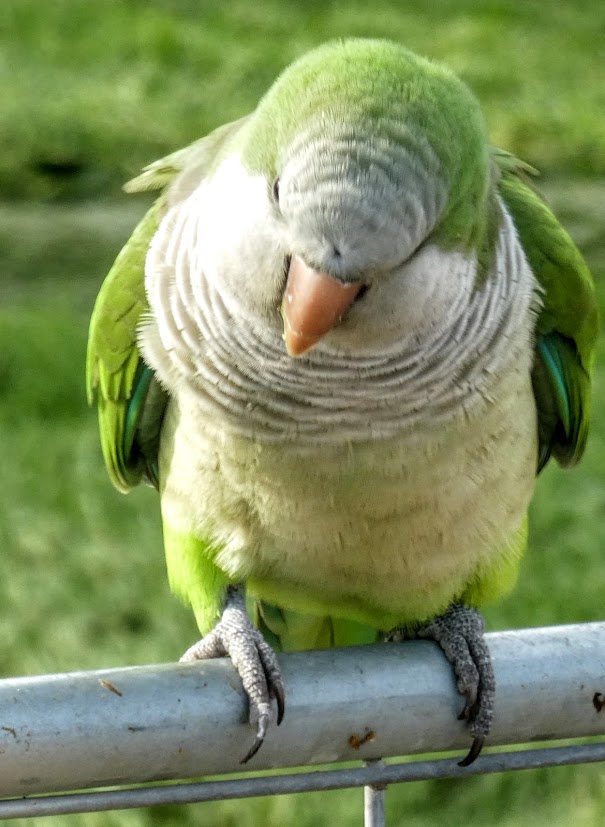
The parakeets that live round and about Ciutadella Park in Barcelona are opportunists. They know that all they have to do is hang around tourists, looking winsome, and the next meal will appear. If they’re lucky, maybe specially purchased nuts and seeds from equally opportunist street vendors. Otherwise, croissant crumbs and biscuits. They don’t seem fussy.
These last three weeks, when we go to Spain – as we do every January – to catch up with the Catalan family and dodge the English winter, have not gone according to plan. The weather was just as awful in Spain as it apparently was in England, and all those named storms spread themselves liberally about, making sure nobody was spared. So our plan to have a final week driving home in a leisurely fashion, exploring Spanish towns we haven’t so far visited just got junked. We stayed on with the family and cleared out cupboards for them.
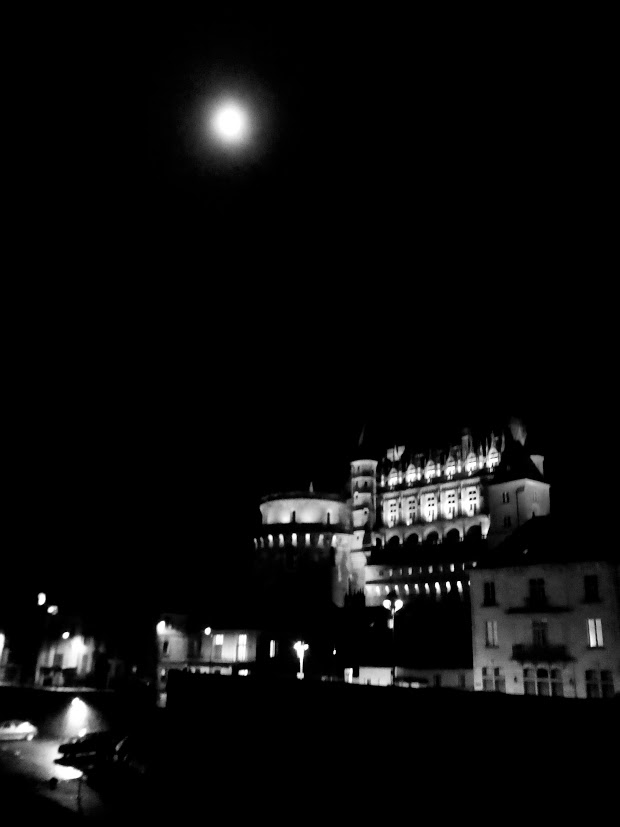
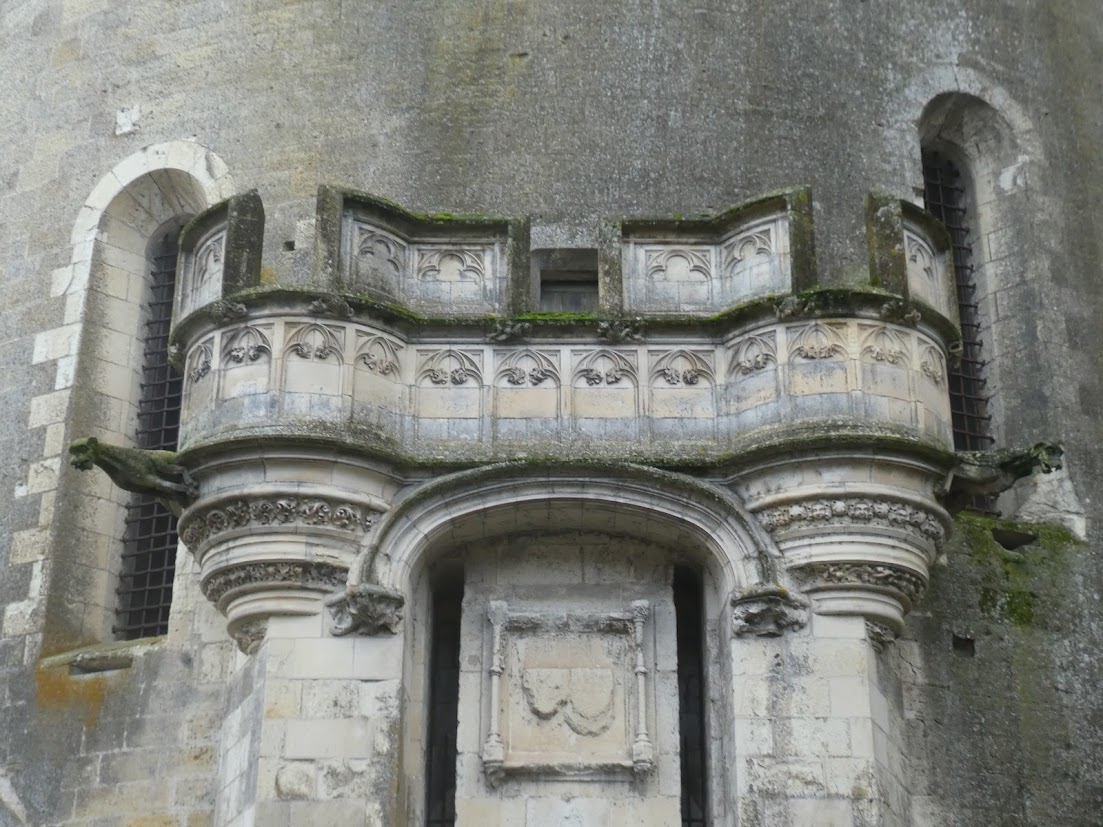
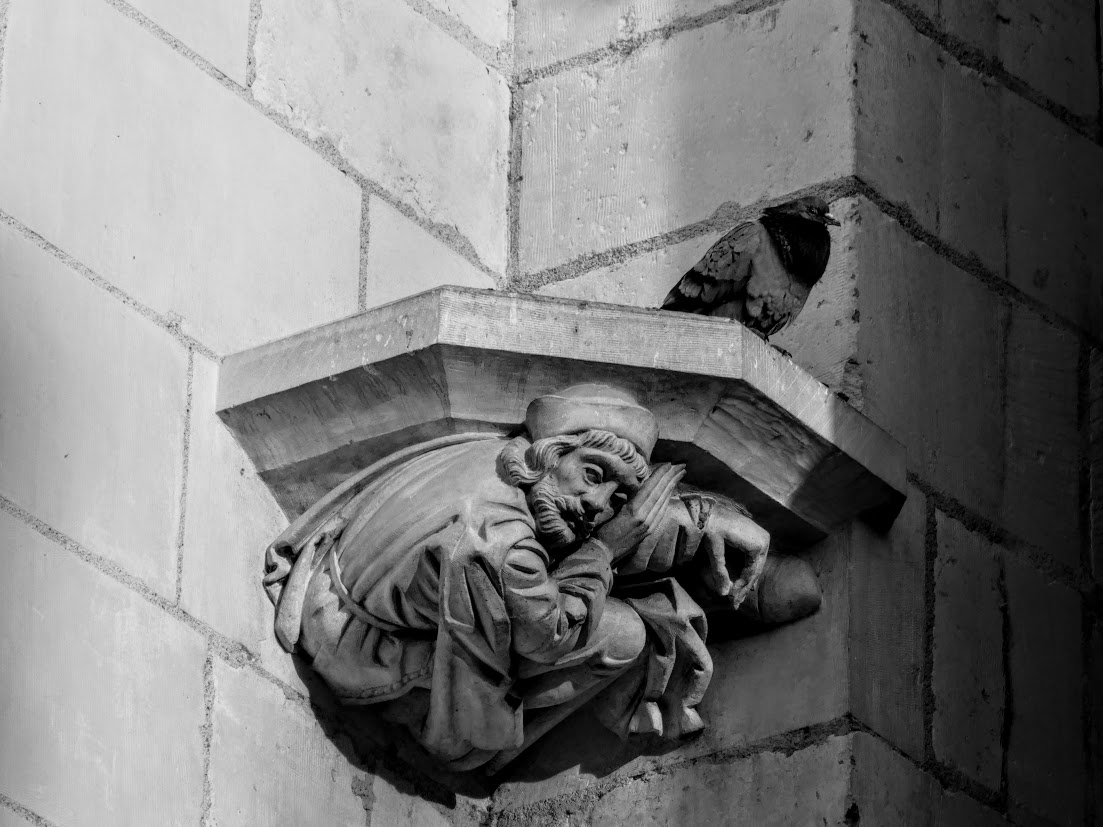
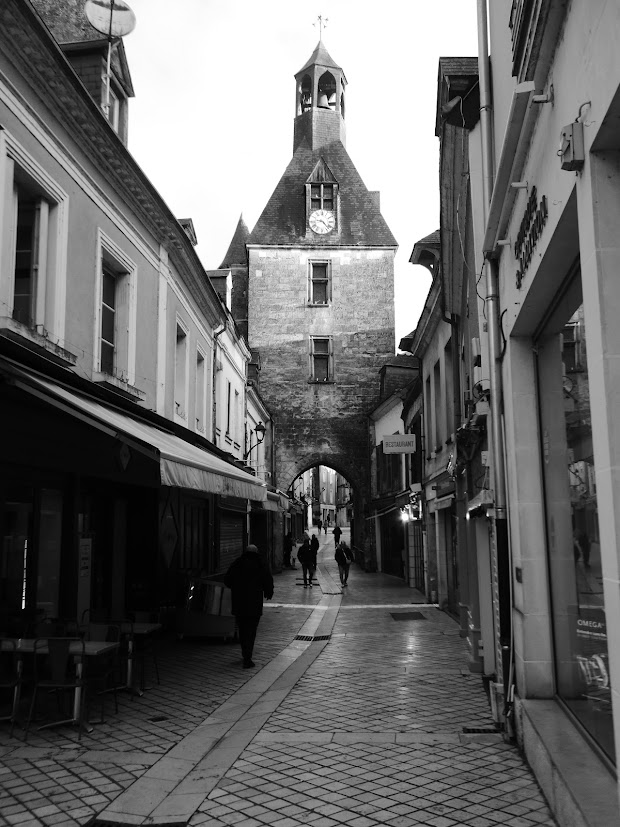
You’ve seen what the drive home was like. Here are a few shots from our very last stop-over, in Amboise, a charming historic town on the River Loire with a glorious Royal Château. It managed not to rain, but goodness, it was cold! We’ve promised ourselves we’ll go back, when the weather’s kinder, and when we haven’t got a ferry to catch later in the day. Here’s a taster:
Here are three shots of the Château: well, one’s of a perching pigeon really, and one of the town gates. The featured photo is of the Château too, dominating the riverscape as night fell and the full moon pierced the misty night sky.
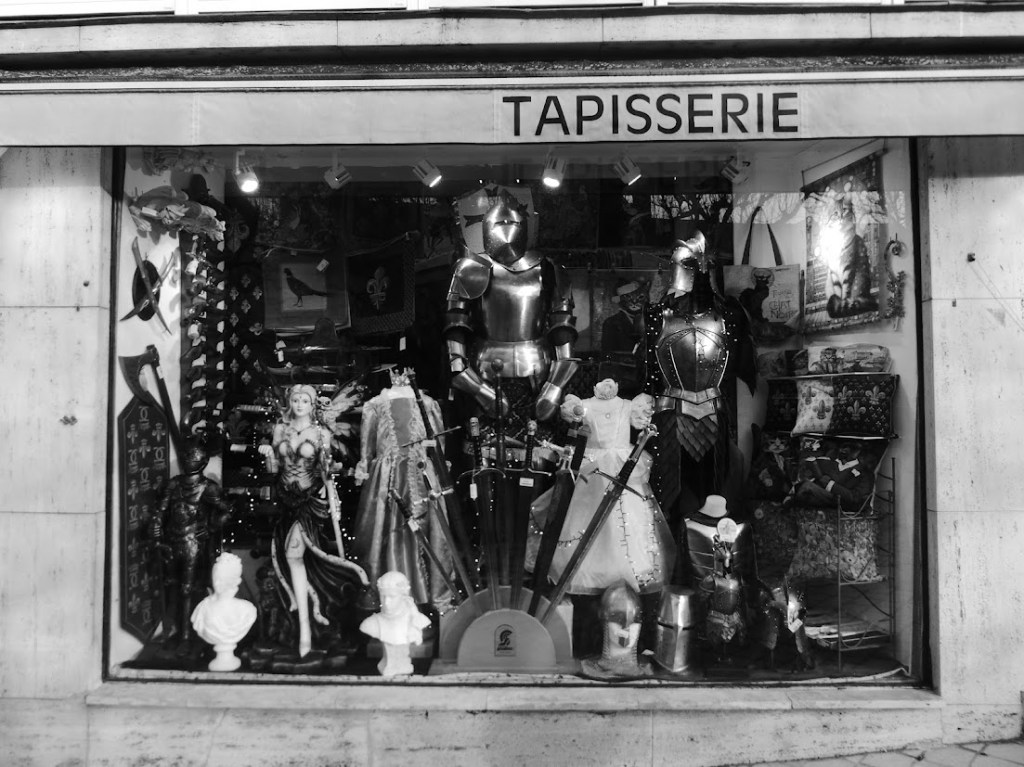
In my shallow way though, I’m also going to show you a window display that caught our eye. It’s just the kind of shop you need if you require a suit of armour, a sword or two, or some sexy underwear for a half-sized doll.
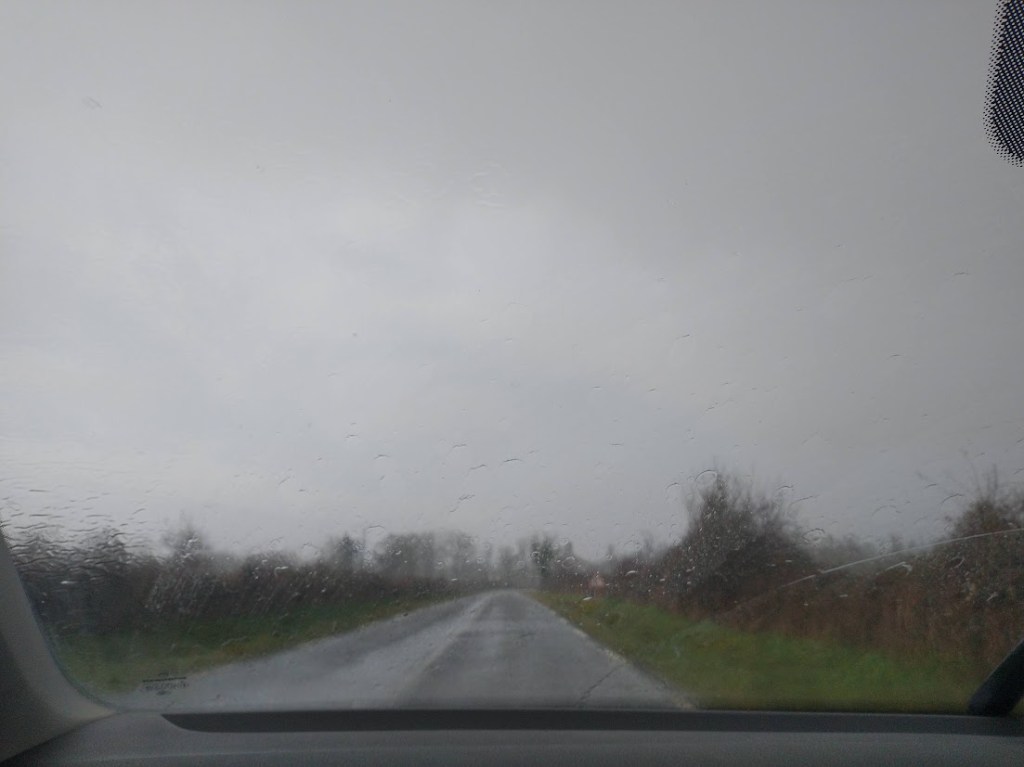
We’re back in England after our three weeks with the Spanish branch of the family. Identikit weather, in Spain, travelling back through France and here in the UK. Wet. Rather cold.
As my last two photos of the month show. Here we are driving through France …
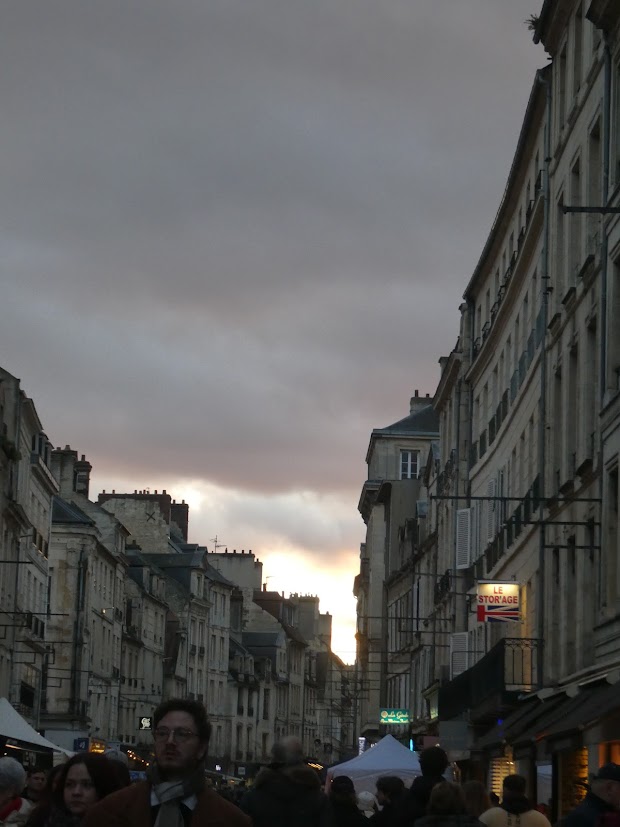
That’s a shot from my phone. My camera tells a similar story. Our last afternoon in France was in Caen, where it was largely … raining. As the sun set, the rain went briefly away, so here’s sundown over a street busy with its late-in-the-day market.
Premià de Dalt is Premià de Mar’s slightly posher sister, just up the hill from here. It has an older town centre, with a church dating from the 10th century, and tantalising views of the sea far below. And a population of only 10,000.
I went to explore by myself on Friday. Malcolm wasn’t feeling so good, and that very night, Emily and I were due to fall victim to a thoroughly nasty sickness bug. It’s been that sort of holiday. Weather (i), transport limitations (ii) and ill- health (iii) have all been conspiring against us. (i) is about to hit again, (ii) are still with us, and (iii) is still afflicting Malcolm.
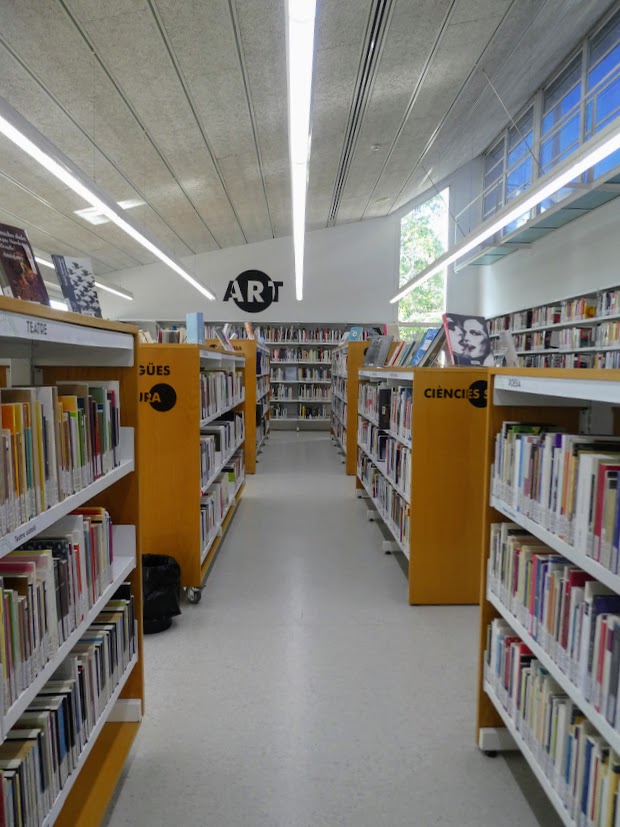
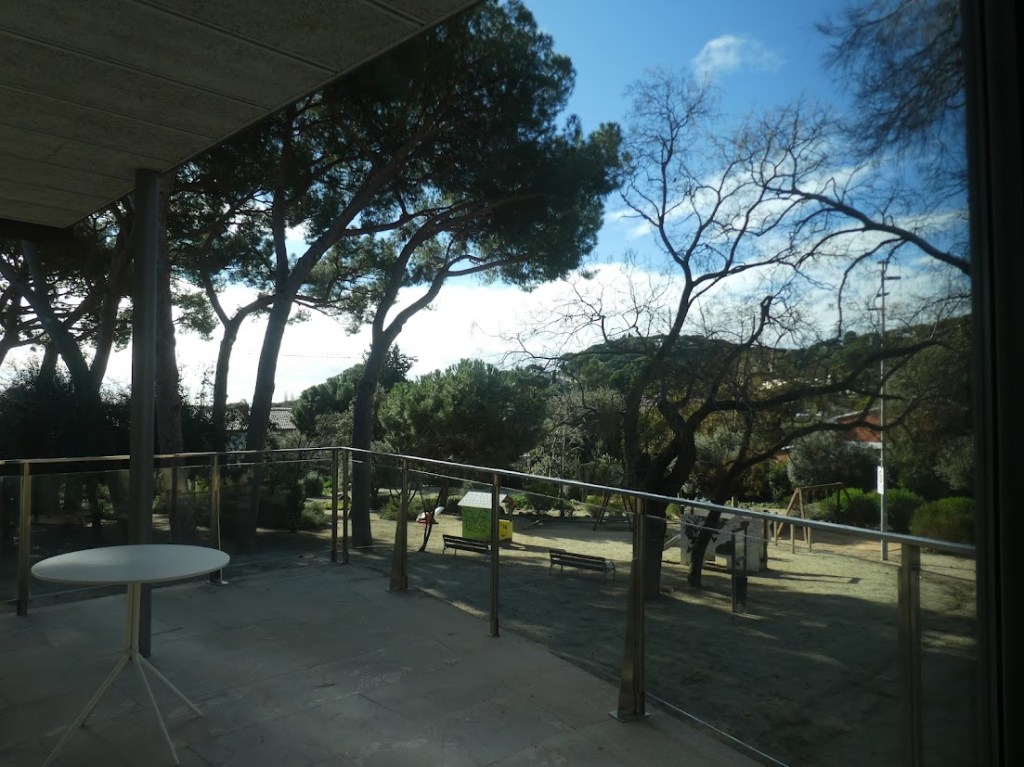
One of my discoveries was the town’s library. I was impressed. It’s situated by a local park, and there’s a large balcony with tables and chairs so you can read or study there in the fresh air.
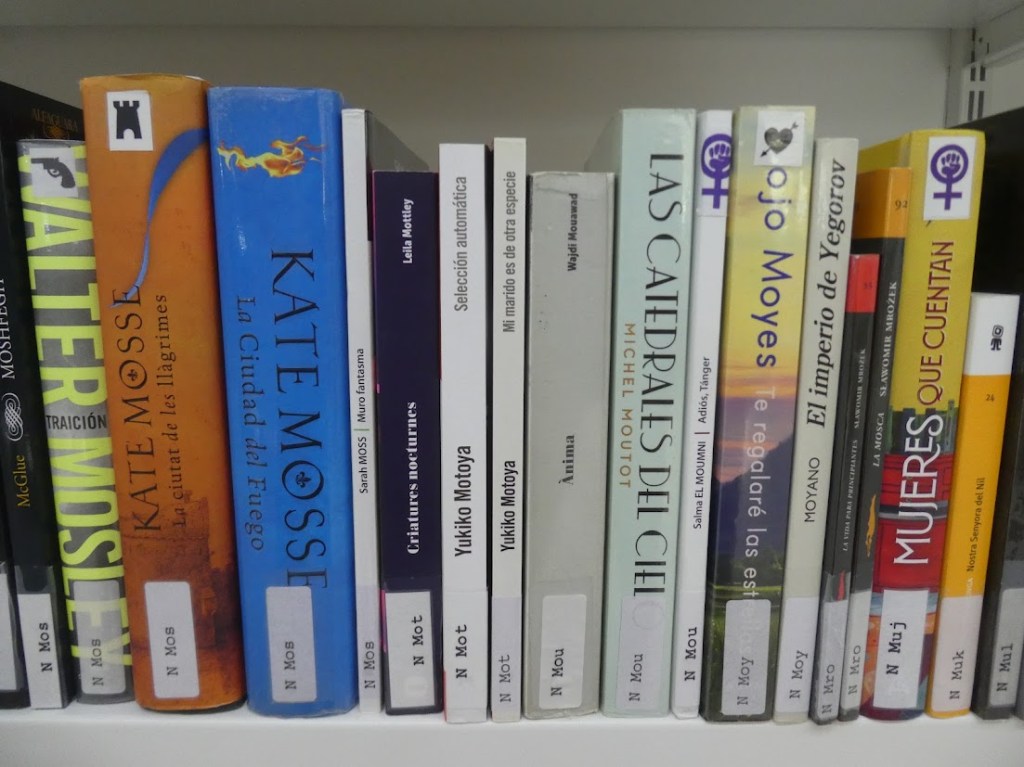
It’s well-stocked.
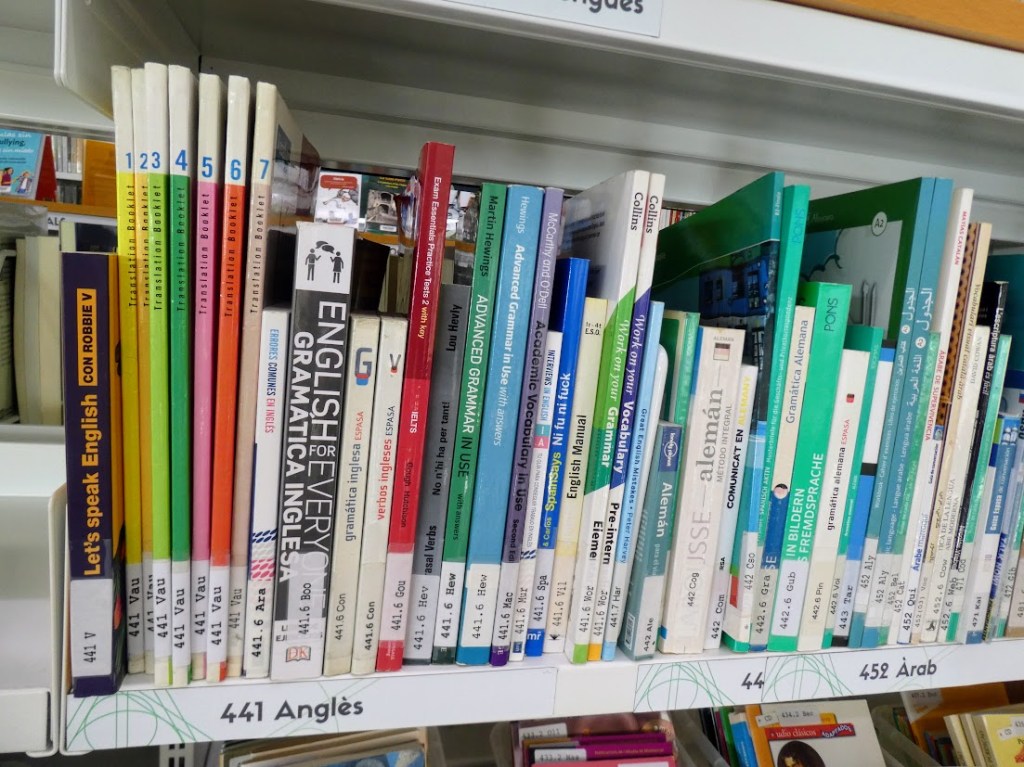
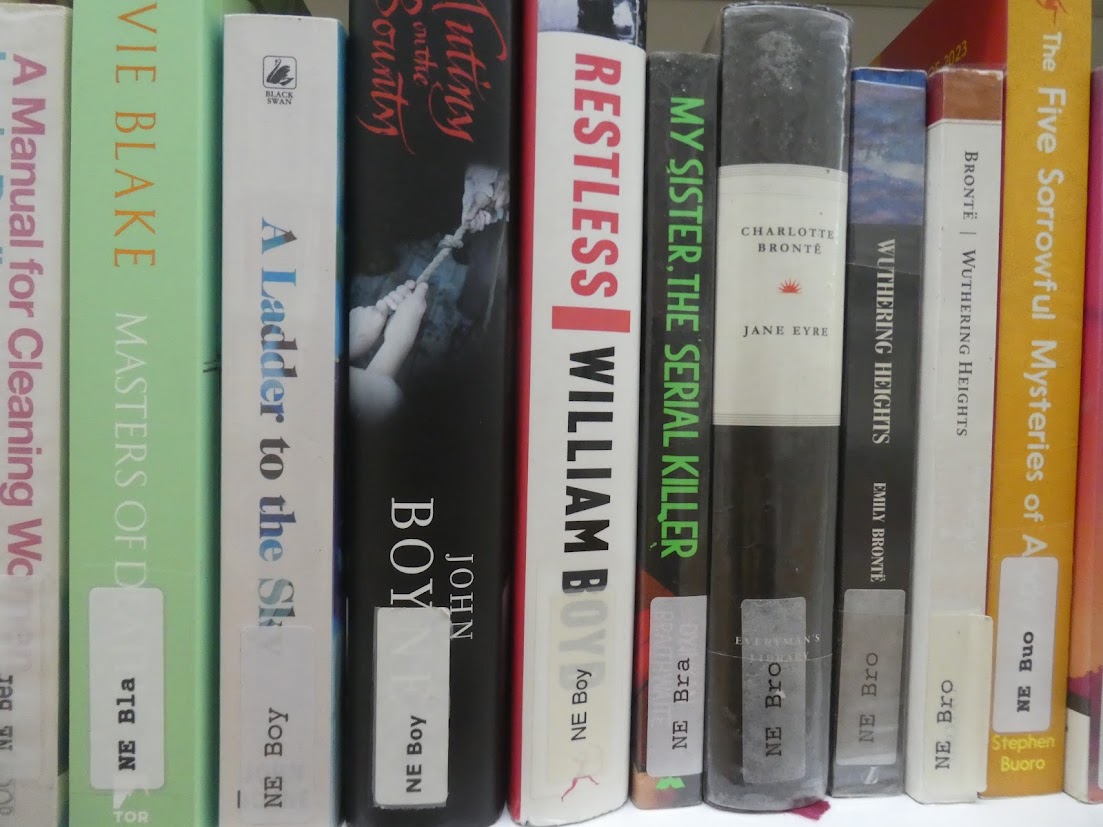
Here are the books available if you’re studying English:
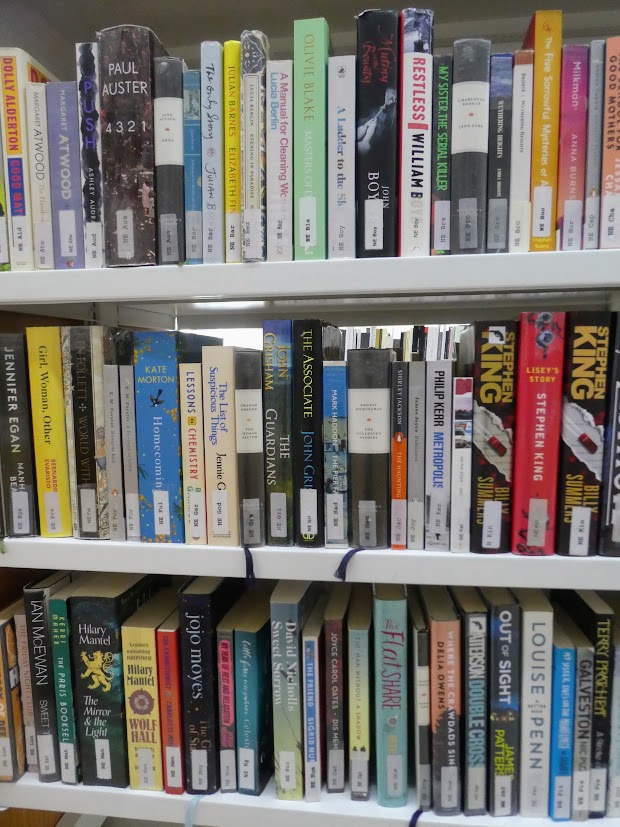
… or just reading in English. There were about 100 books to choose from – the old classics and up-to-the-minute reading choices.
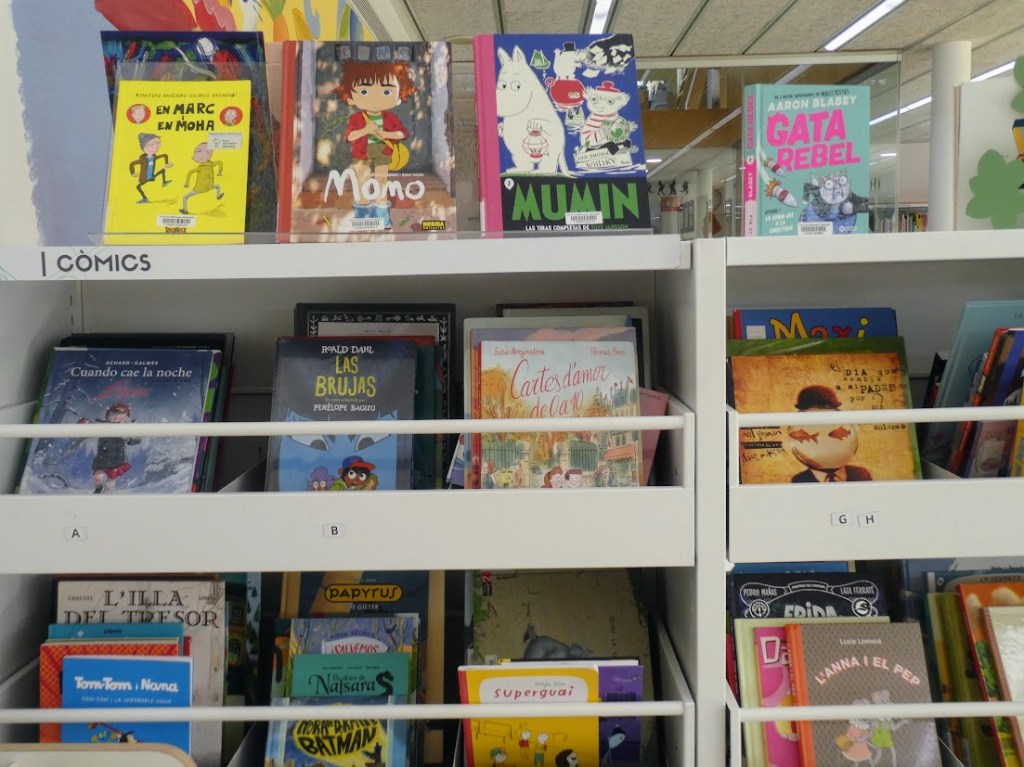
I couldn’t take photos of the study area or the children’s library without expressly seeking permission from those using the spaces. So here’s a display from the chidren’s area.
The feel is very different from a British community library. When I’m ‘on duty’ in our local one, we talk about our tasks together in normal speaking voices, chat with friends who come to exchange their books, and take little notice as the children in the Junior Library enjoy a noisy morning music session or listen to stories on certain mornings of the week. Here in Spain are notices encouraging silence, in the way I remember from my childhood. I’m happy with both.
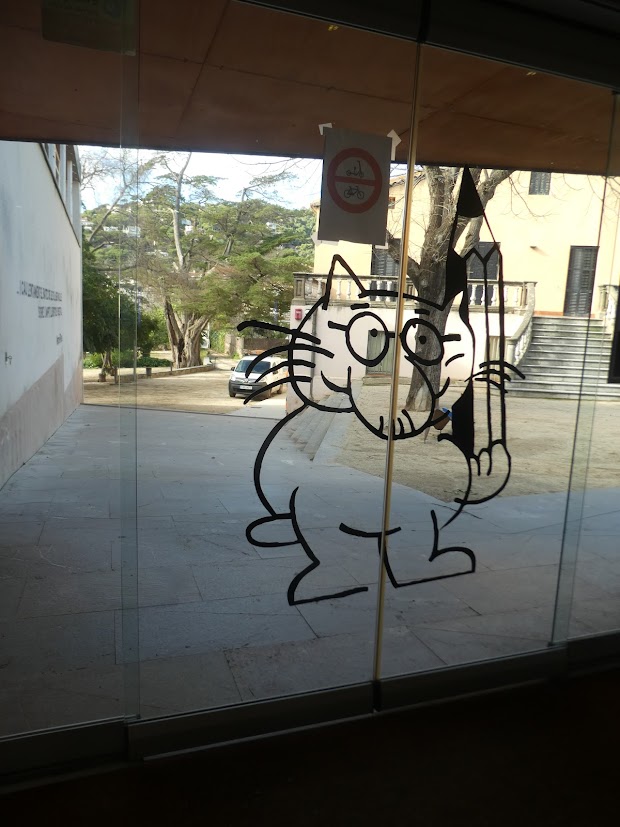
But in case it all sounds a bit serious to you. Here’s the fellow who welcomes you into the library, then shepherds you out.
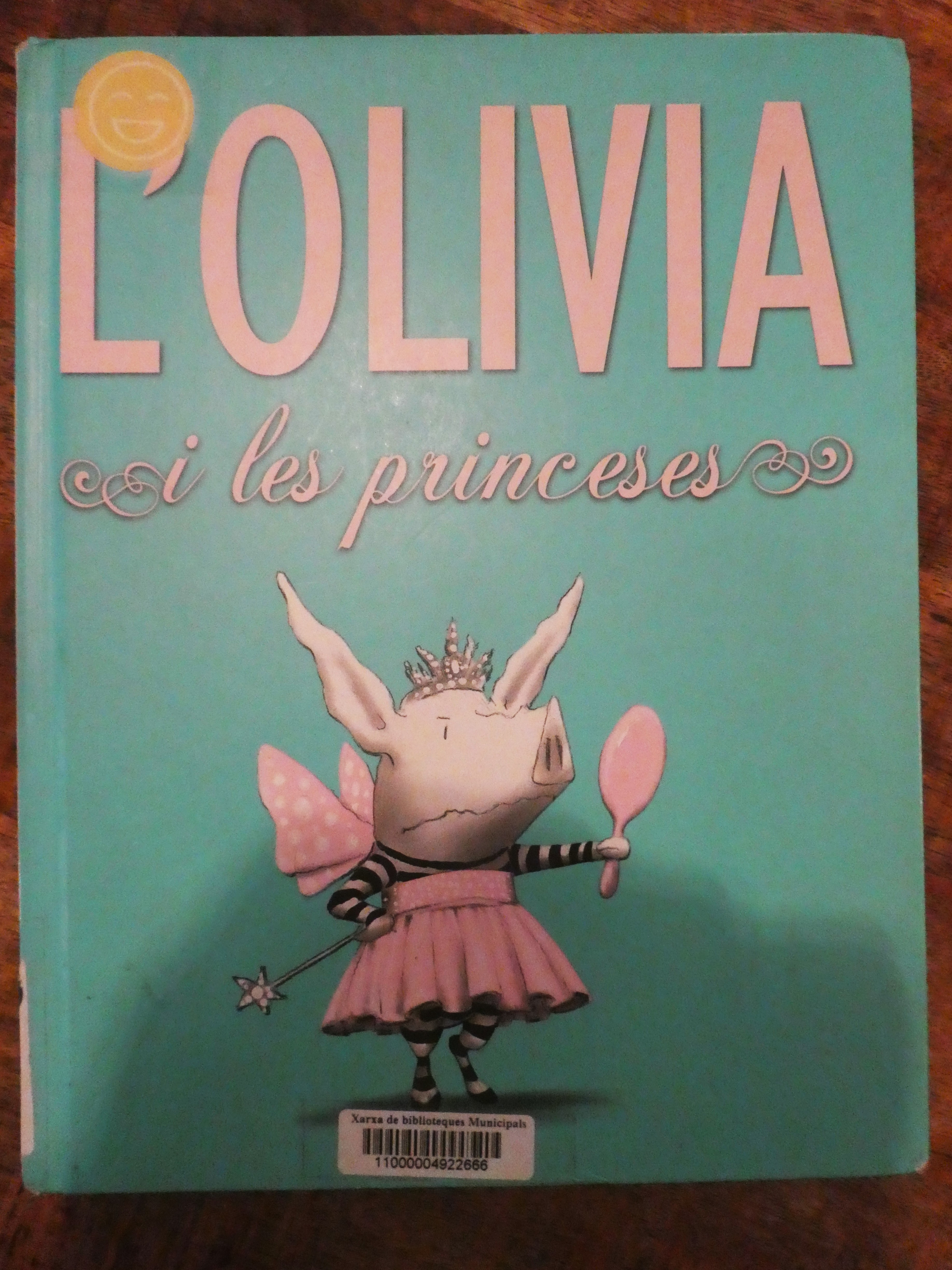
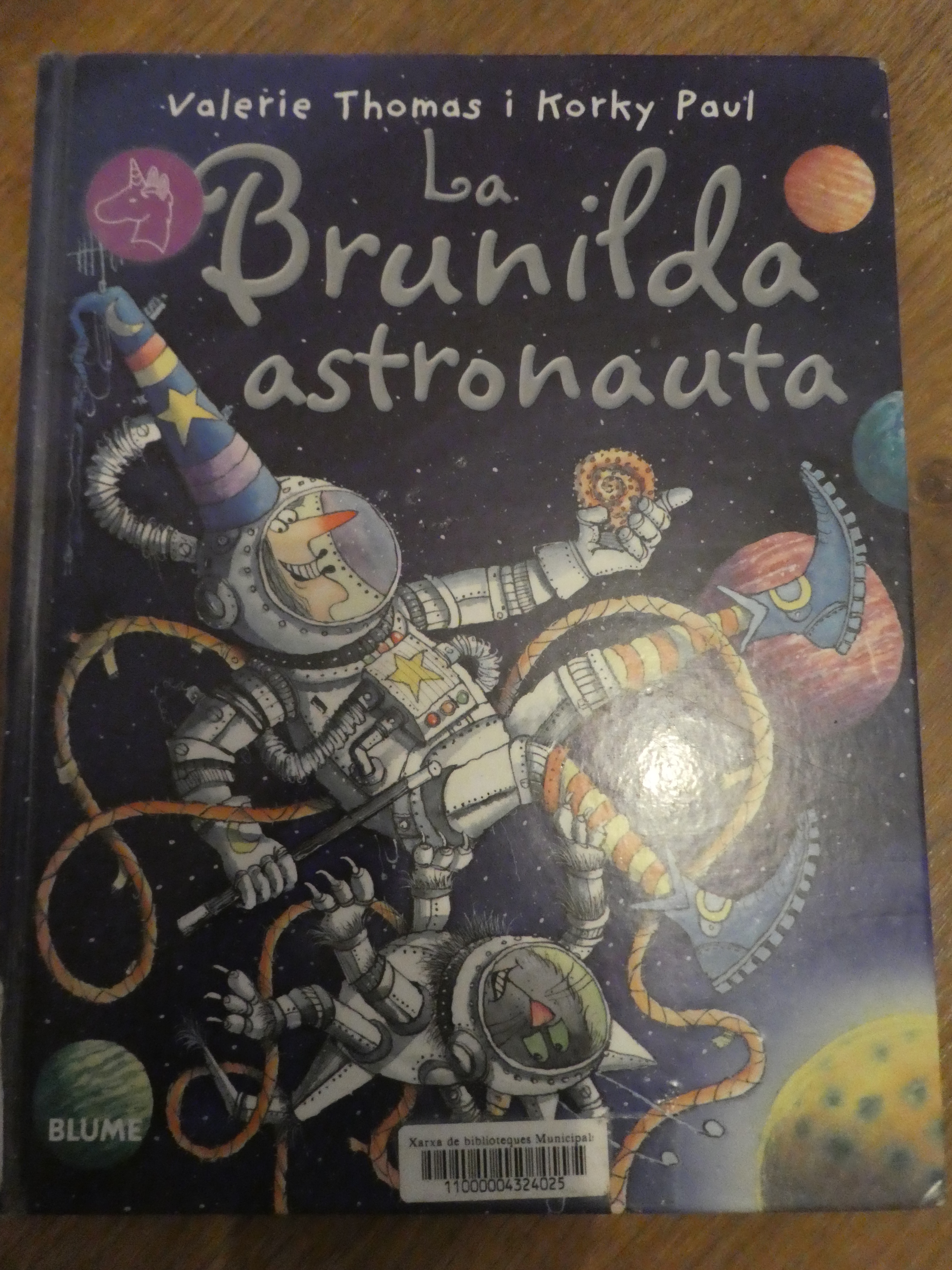
Meanwhile, on her way home from work, Emily had popped into their local library to get books for the children.
Who knew that Winnie the Witch would be called Brunhilda in Catalan? Or that she would be so popular for so long? My children, all parents themselves, enjoyed her books decades ago.
I’ll hold over my own reading choices. They’ll keep.
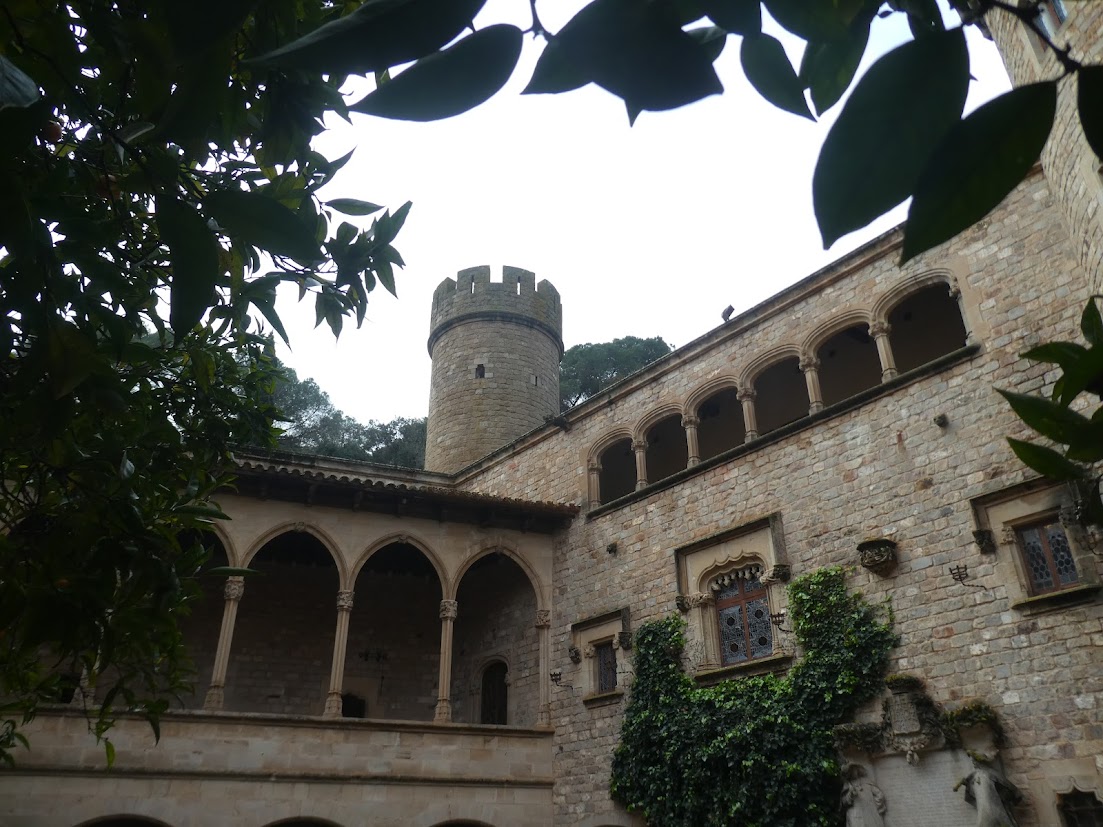
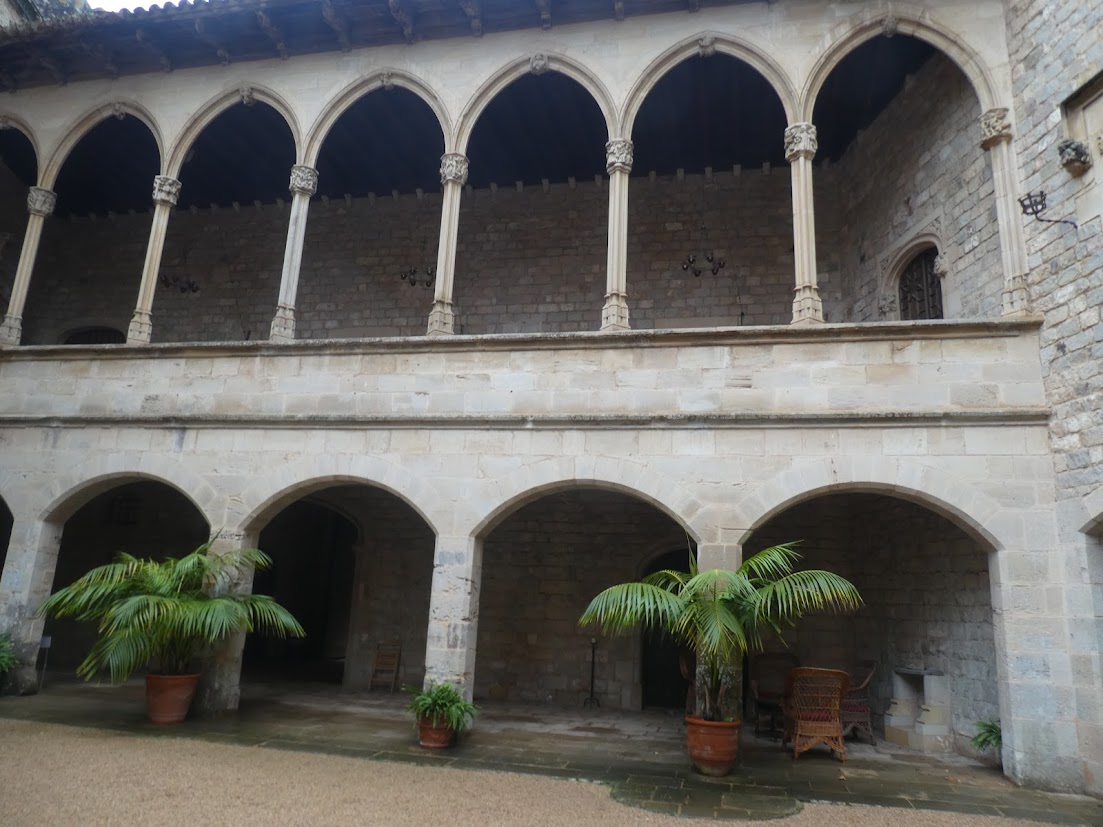
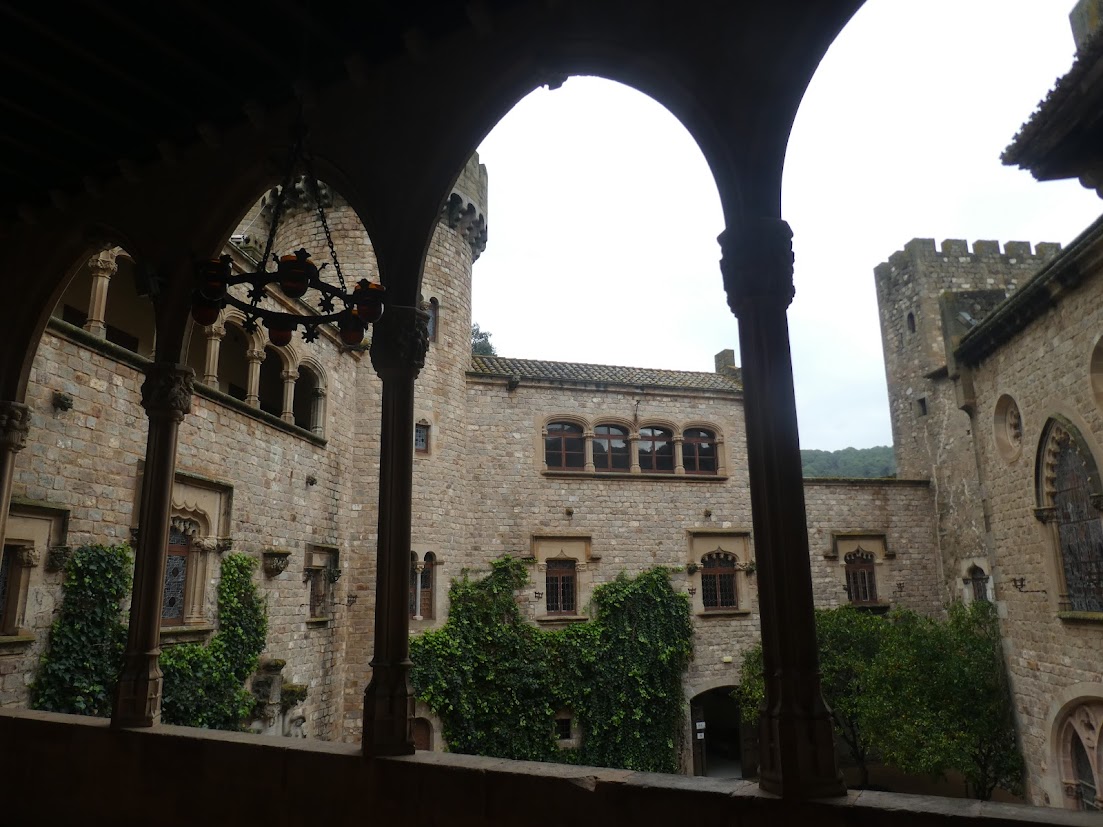
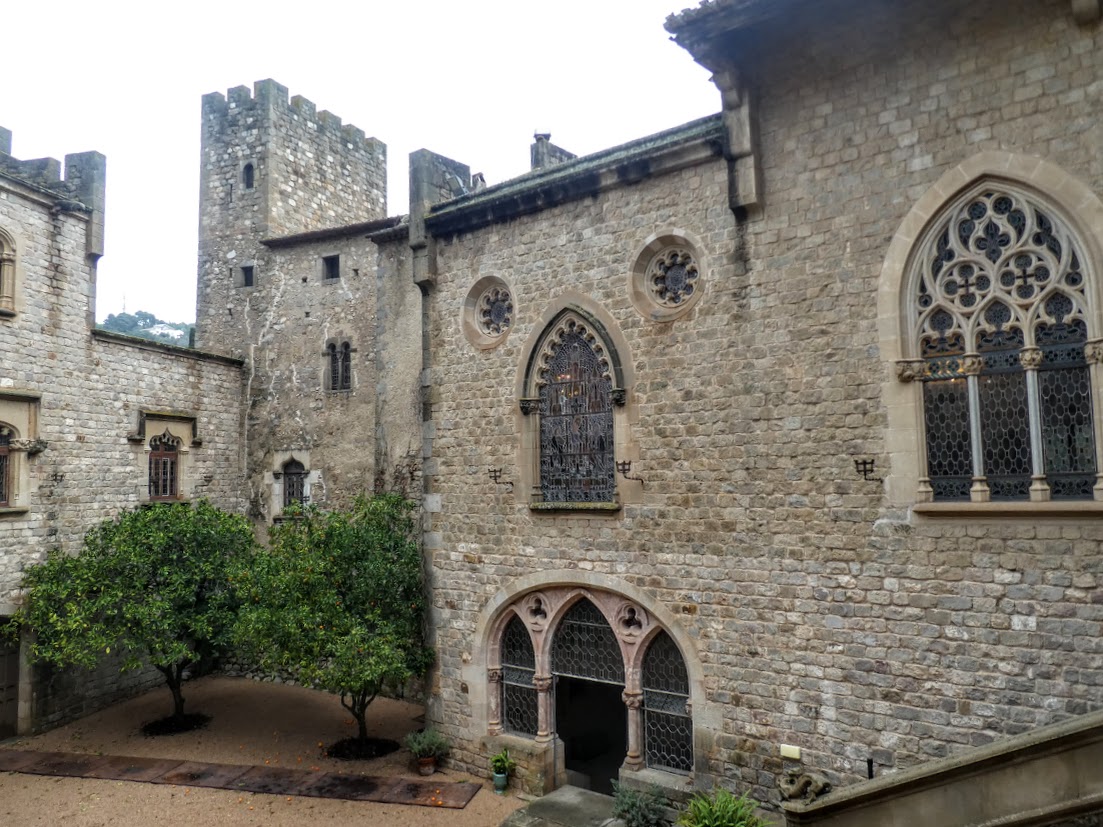
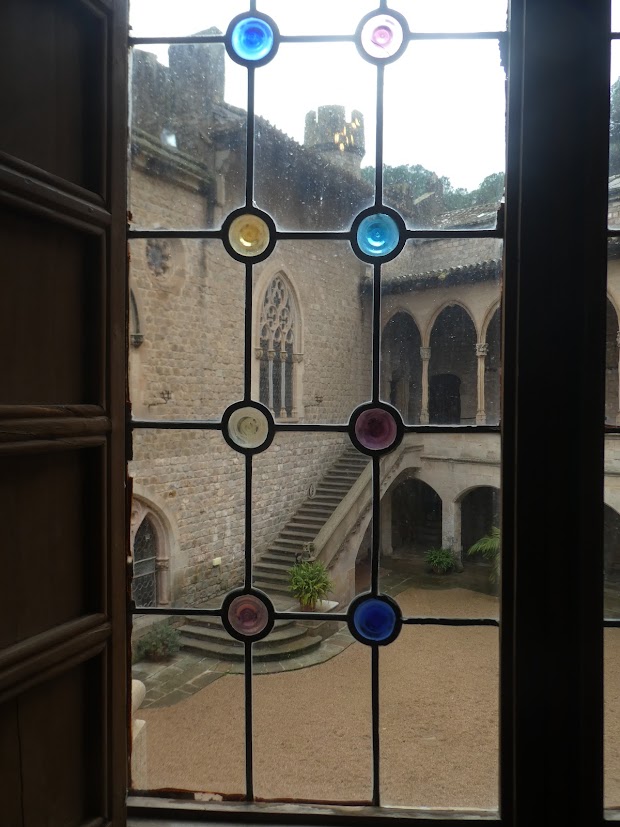
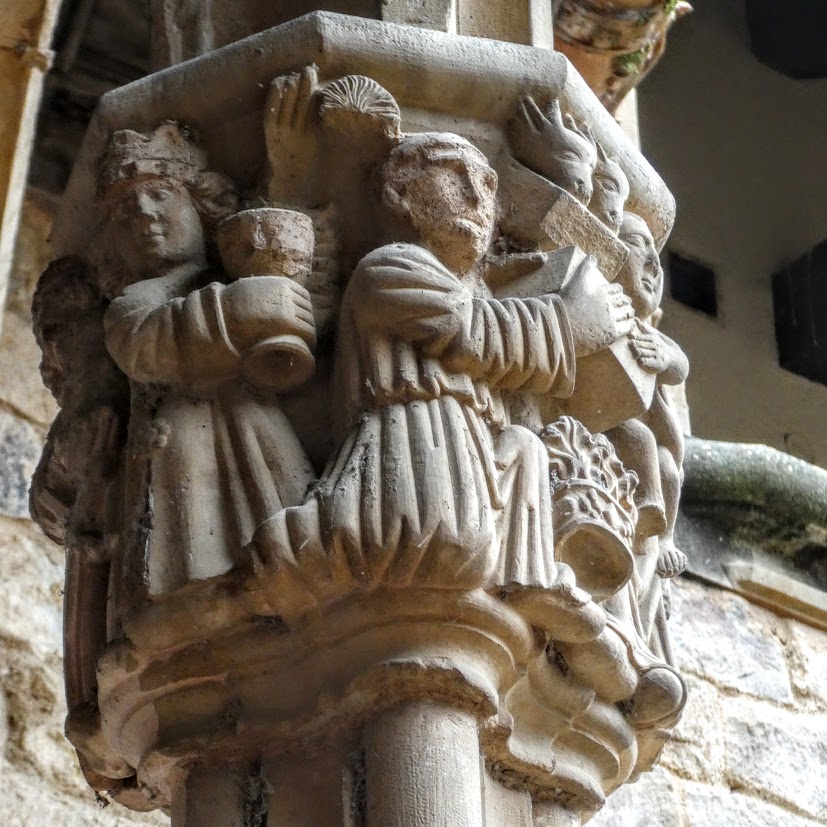
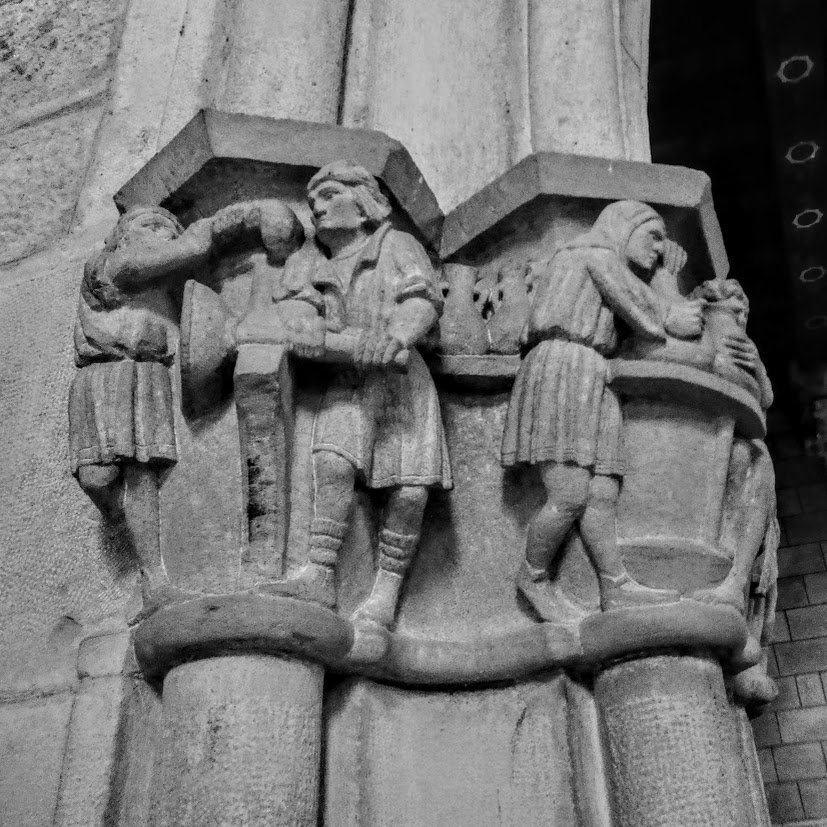
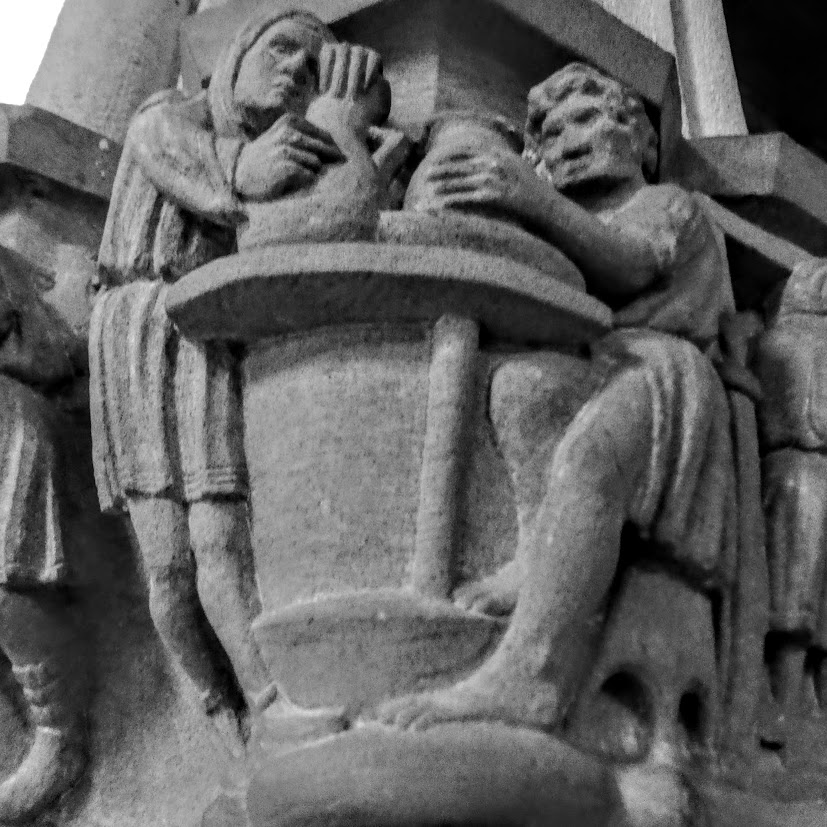
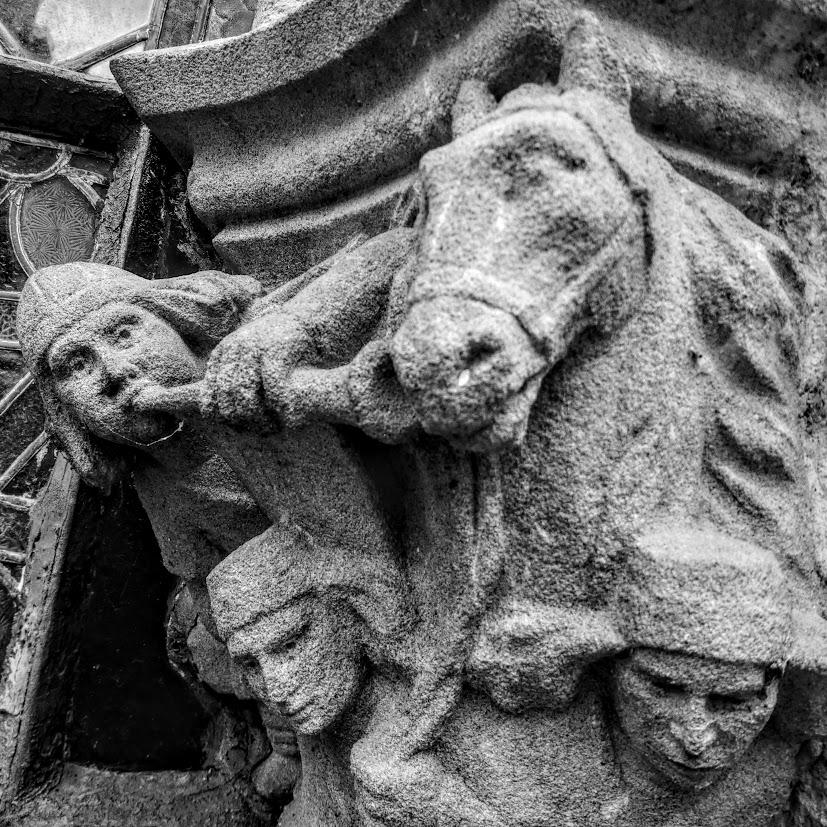
Castell de Santa Florentina has its roots as a 11th century fortified farmhouse, built on the ruins of a Roman villa to defend the area of Canet de Mar against pirates. It evolved into a proper castle-that-looks-like-a -castle-with-turrets in the 14th century.
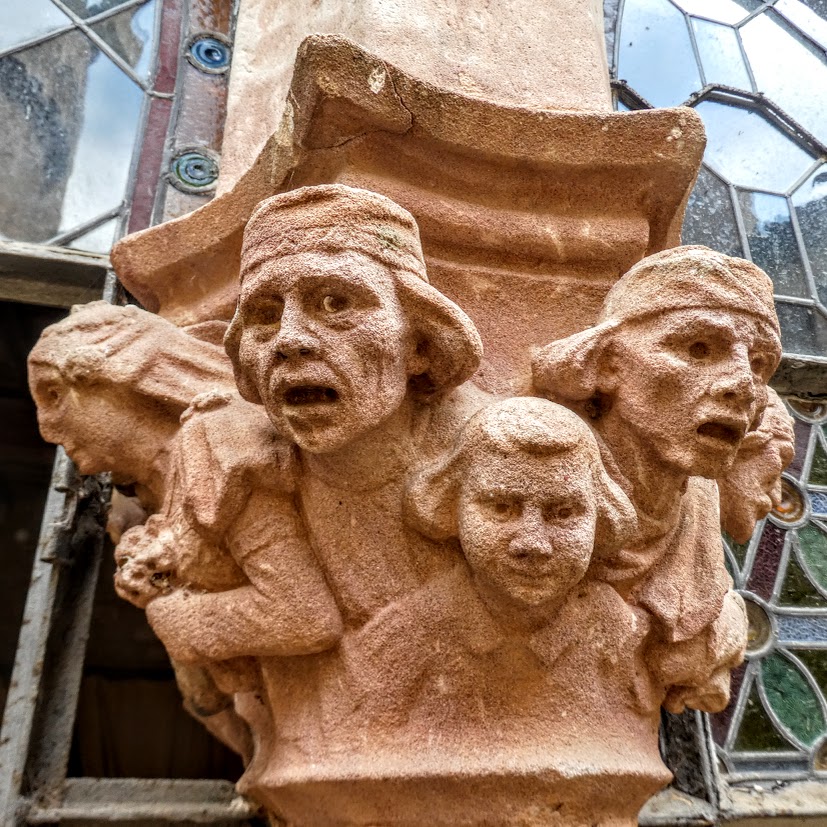
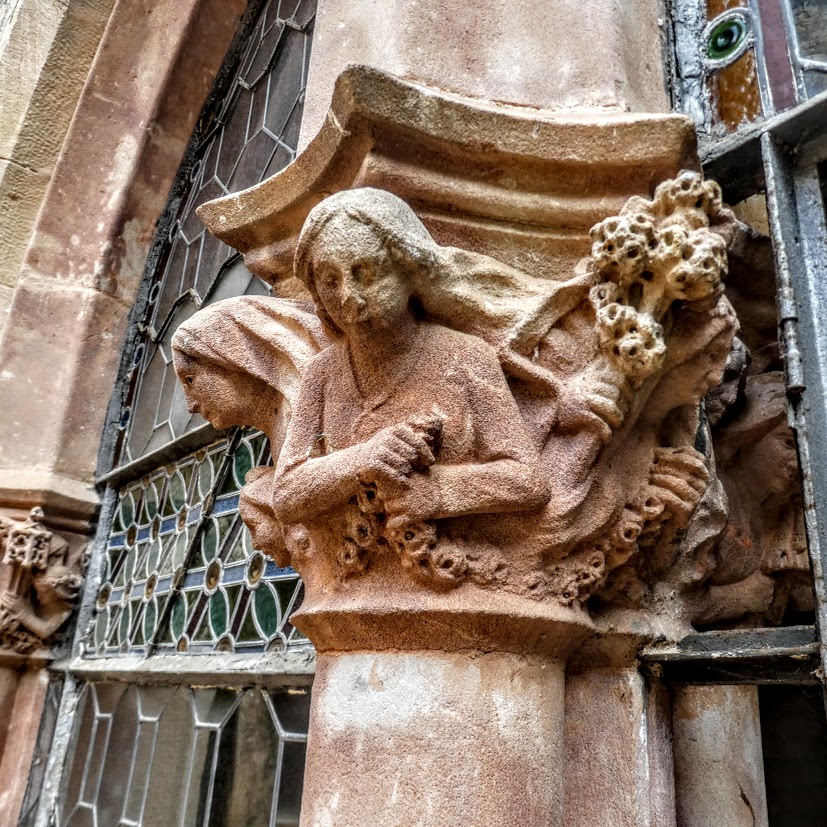
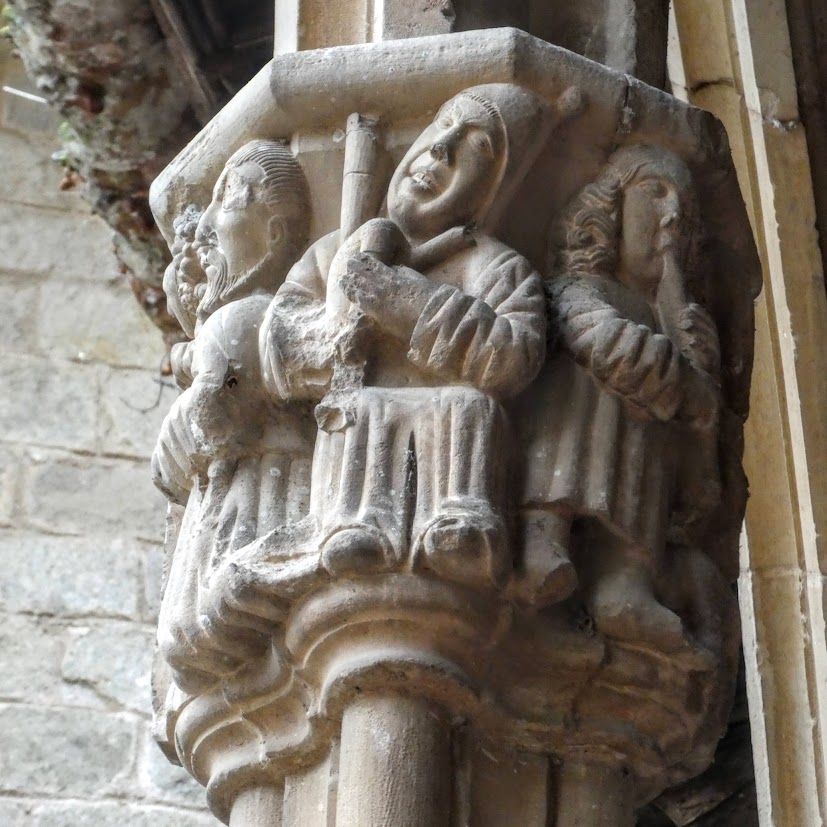
And that’s how it pretty much stayed until the end of the 19th century, when noted Catalan modernist architect Lluís Domènech i Montaner, who was related to the then owner Ramon de Montaner, came and put his own stamp on the building, employing a team of like-minded craftsmen and sculptors. We Brits would probably recognise the style as being somewhat pre-Raphaelite: a rather romanticised Gothic vibe.
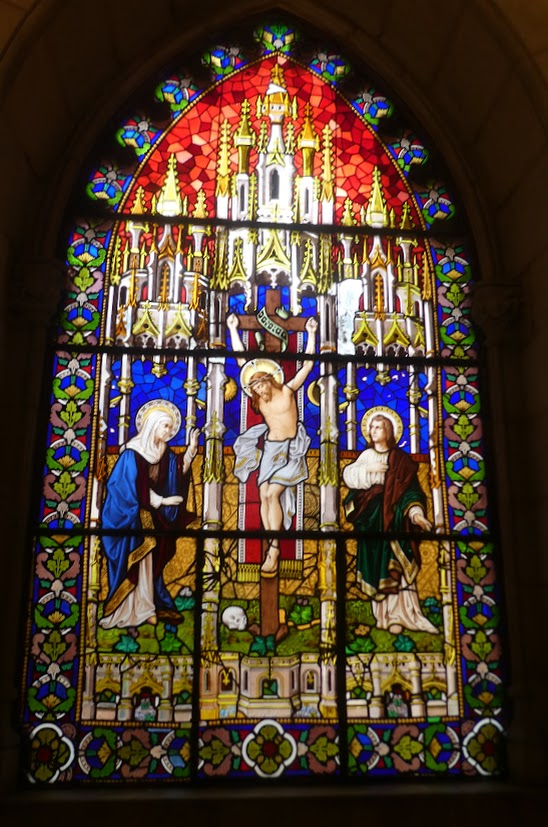
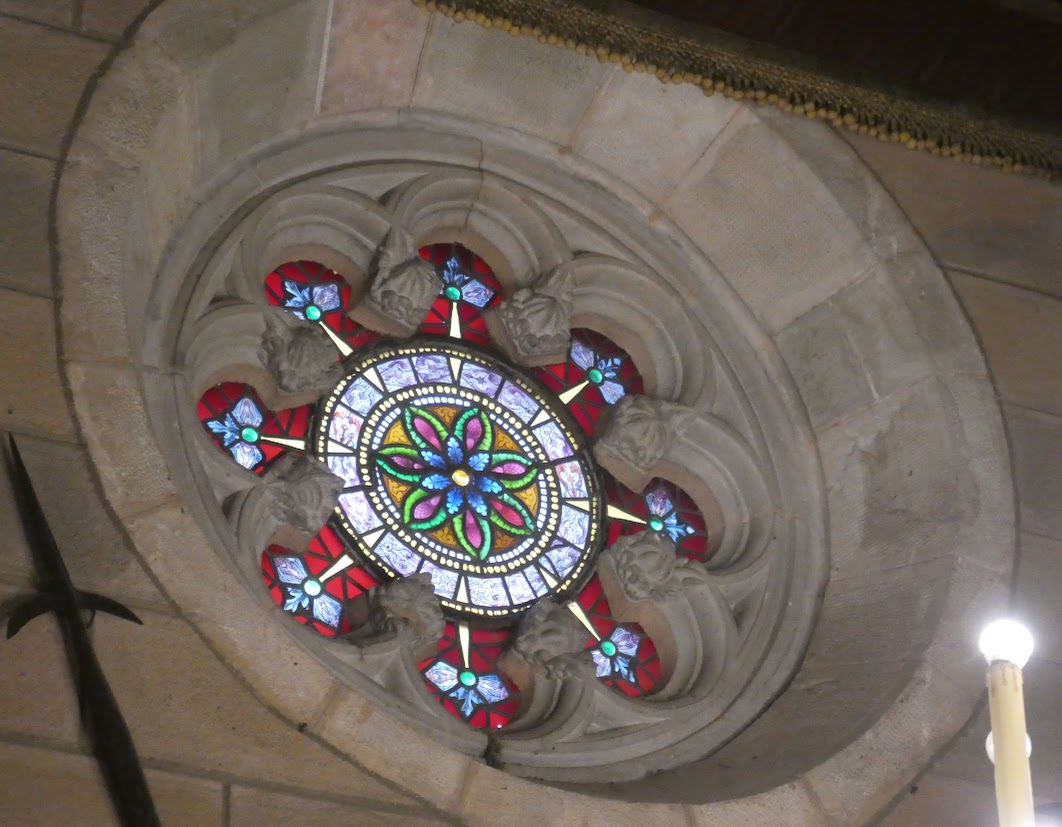
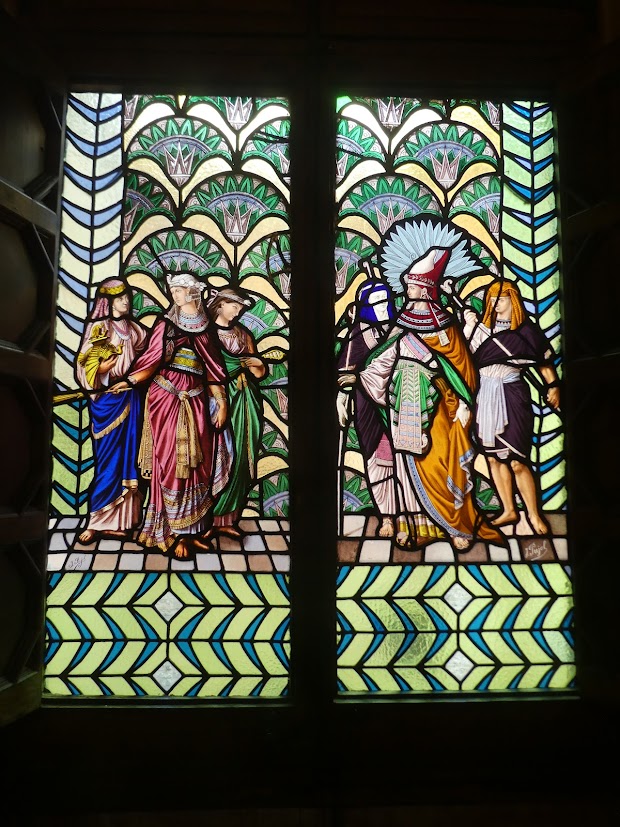
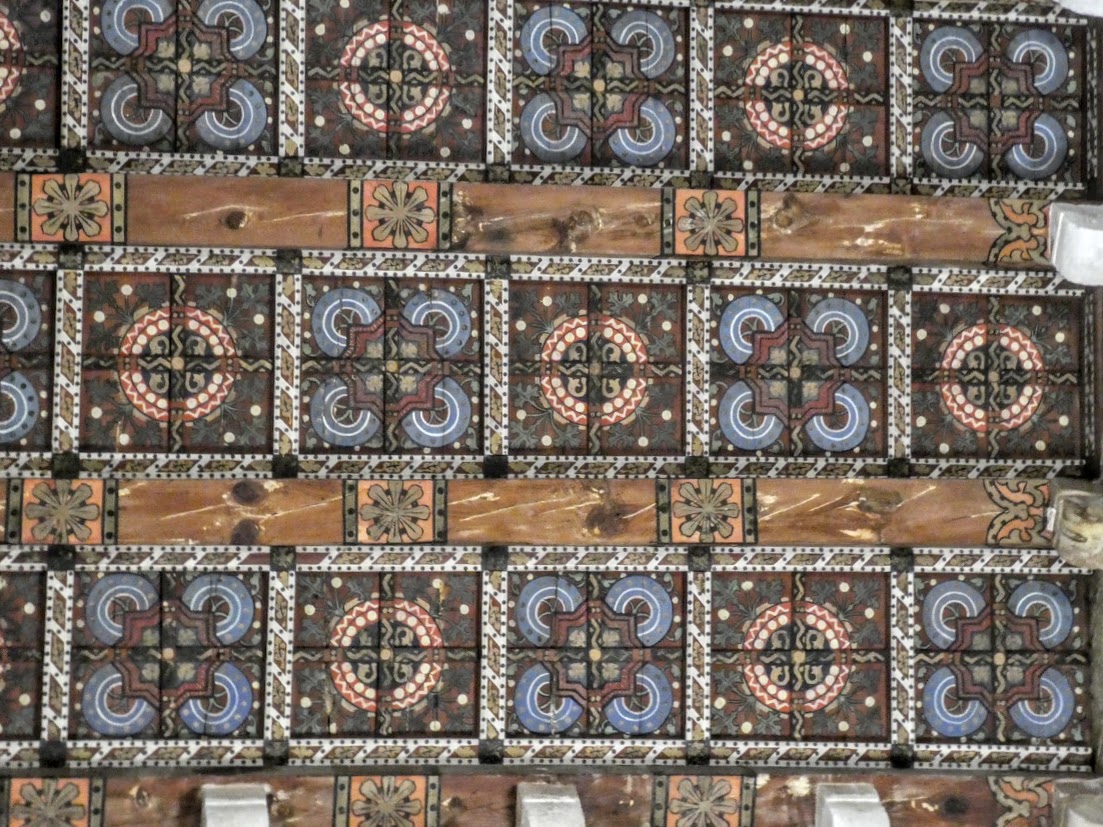
We went there yesterday. It was a bit unexpected. The route to the castle was an overgrown, muddy and pot-holed track to which our poor car strongly objected. The gate to the castle grounds was unprepossessing, firmly locked, and we and our two fellow would-be visitors wondered whether the place would open in time for our booked visit – or at all. It did: and our initial doubts were soon replaced as we wandered round this glorious building with its stained glass, ornate ironwork, fine ceilings and sculptures, harmoniously blending with the existing Gothic structure.
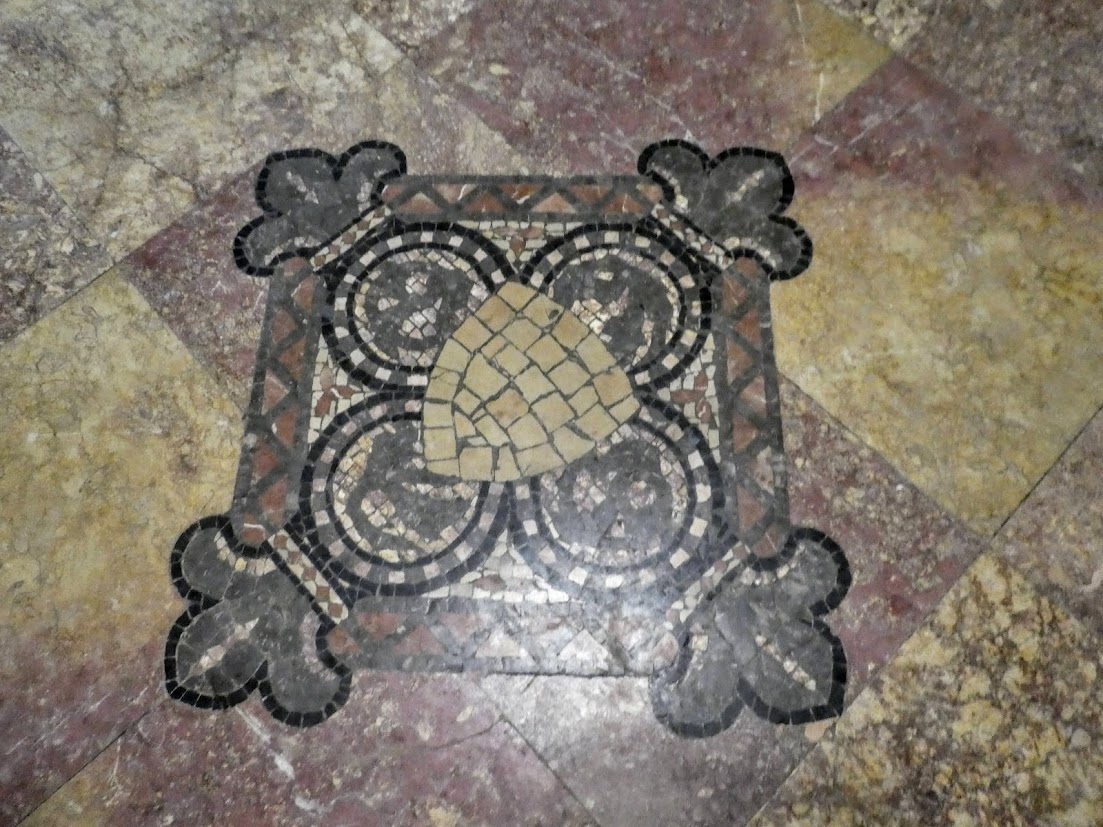
It’s beyond me to give you a structured and informative tour. Why don’t you just enjoy some of the details that we spotted and lingered over in the time we spent there?
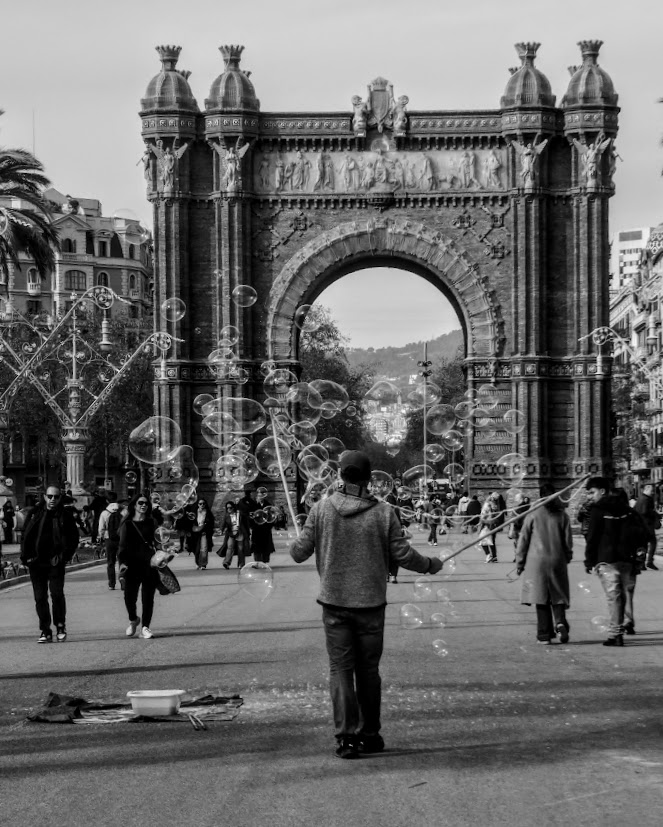
Arc de Triomf is slap-bang in Tourist Central in Barcelona. It is nevertheless a part of the city I enjoy, because it’s spacious enough never to feel crowded, and is near one of the city’s green lungs, Parc de la Ciutadella with its tropical garden the Umbracle, and its winter garden – the Hivernacle.
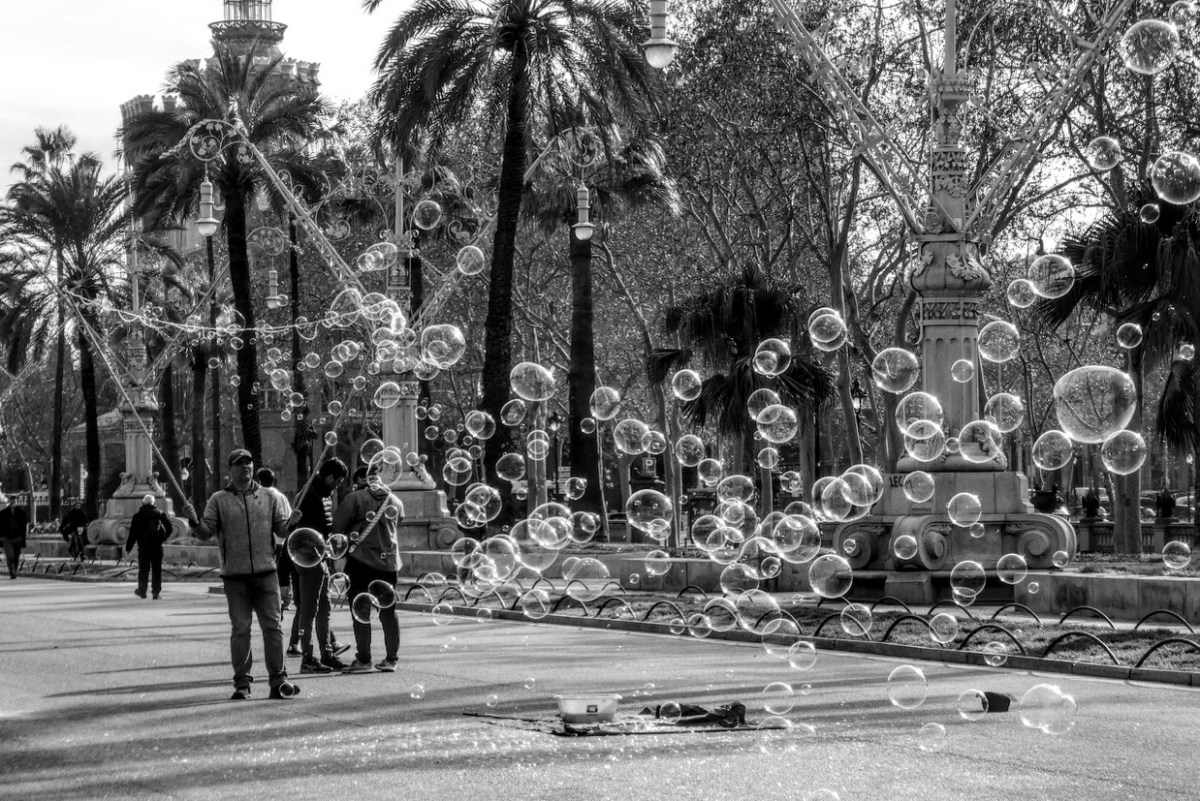
Parakeets sit around waiting to be fed, and street entertainers ply their trade. The other day, it was a man floating bevies of bubbles into the skies.
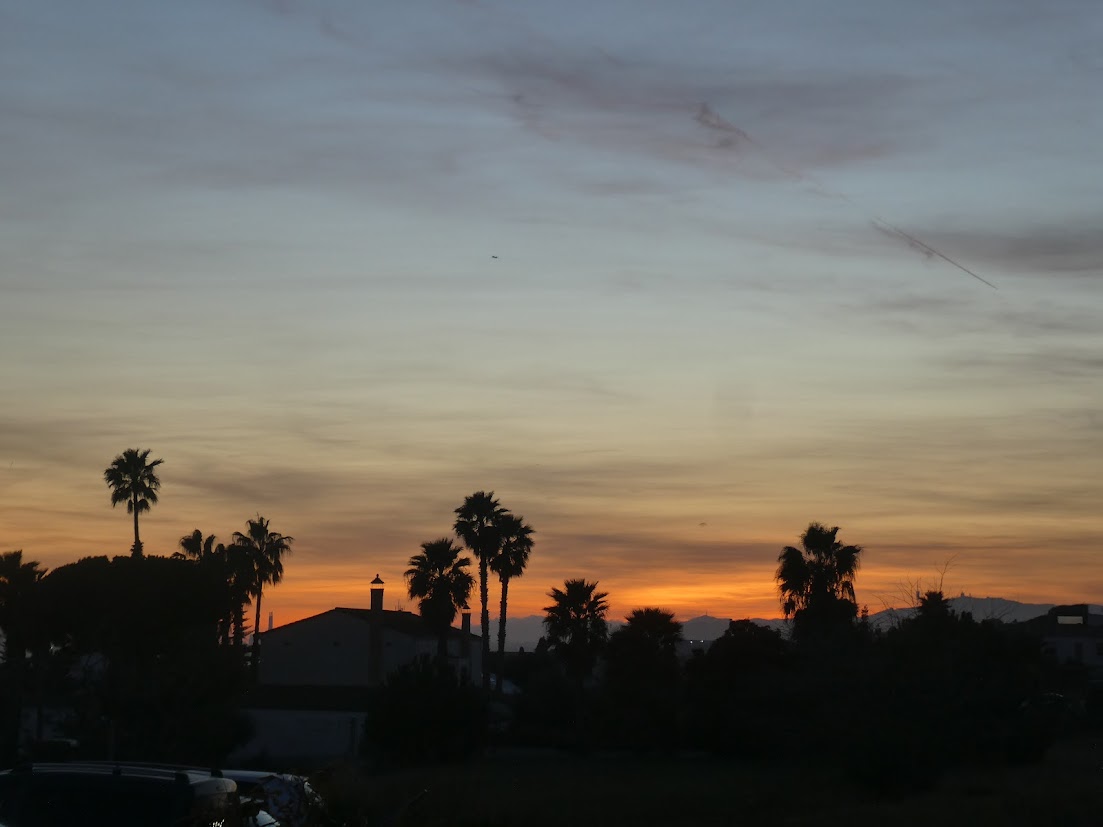
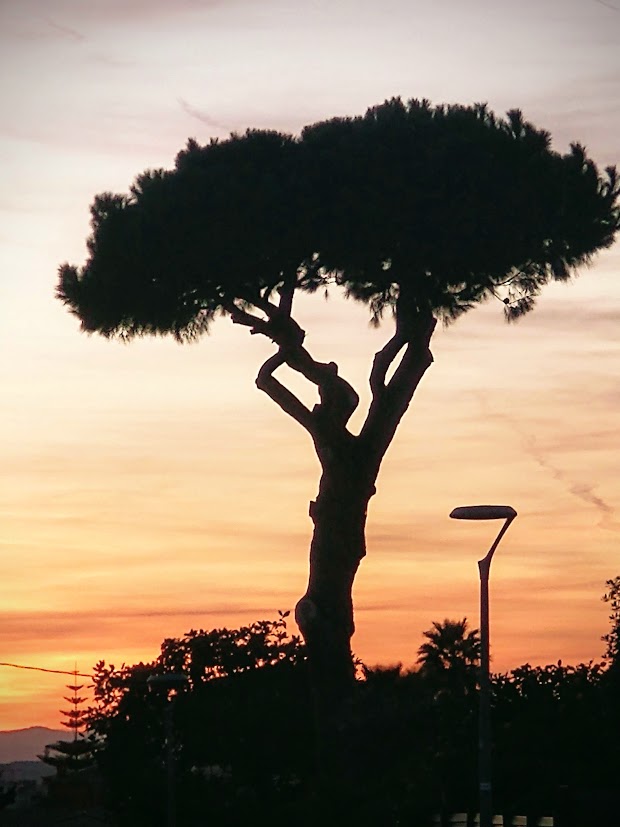
One of our duties here in Spain is The School Run – or maybe just part of it. Leave the house and turn right, and there’s school, under ten minutes away. Leave the house and turn left, and there’s nursery, just over 10 minutes away. So in the afternoon it’s school (finishes 4.30), then nursery (finishes 5.00 o’clock). As we wander home from nursery, the sun is setting, and these are our views.





 From Pyrenees to Pennines
You must be logged in to post a comment.