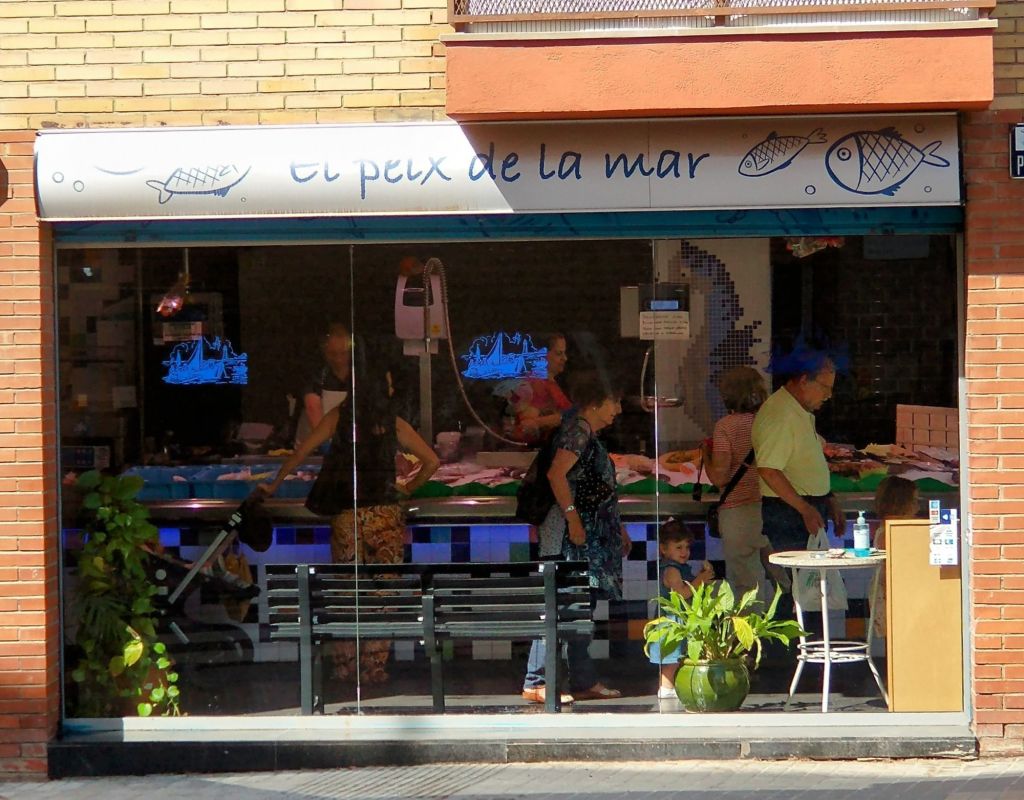
Catalans eat a lot of fish. So here in Premià, a local fishmonger has provided a bench for those times when the queue is long and irksome.
For Jude’s Bench Challenge
Bench Challenge Anniversary
Catalans eat a lot of fish. So here in Premià, a local fishmonger has provided a bench for those times when the queue is long and irksome.
For Jude’s Bench Challenge
Bench Challenge Anniversary
Here’s a post which I wrote fifteen years ago, when we lived in France. At the time, it pointed up the difference between bread-buying in England, where bread had too often become an industrial product, and the more home-spun approach we appreciated in our small French town. Now however, artisan bakers in England are two a penny. Their stuff is good, but when we want to frighten ourselves to death, we comment to eack other ‘What WOULD our mothers have said at handing over just shy of £5 for a loaf of bread?’ That’s was Malcolm’s dad’s entire weekly earnings. No wonder I’ve taken to making my own.
25th February 2010
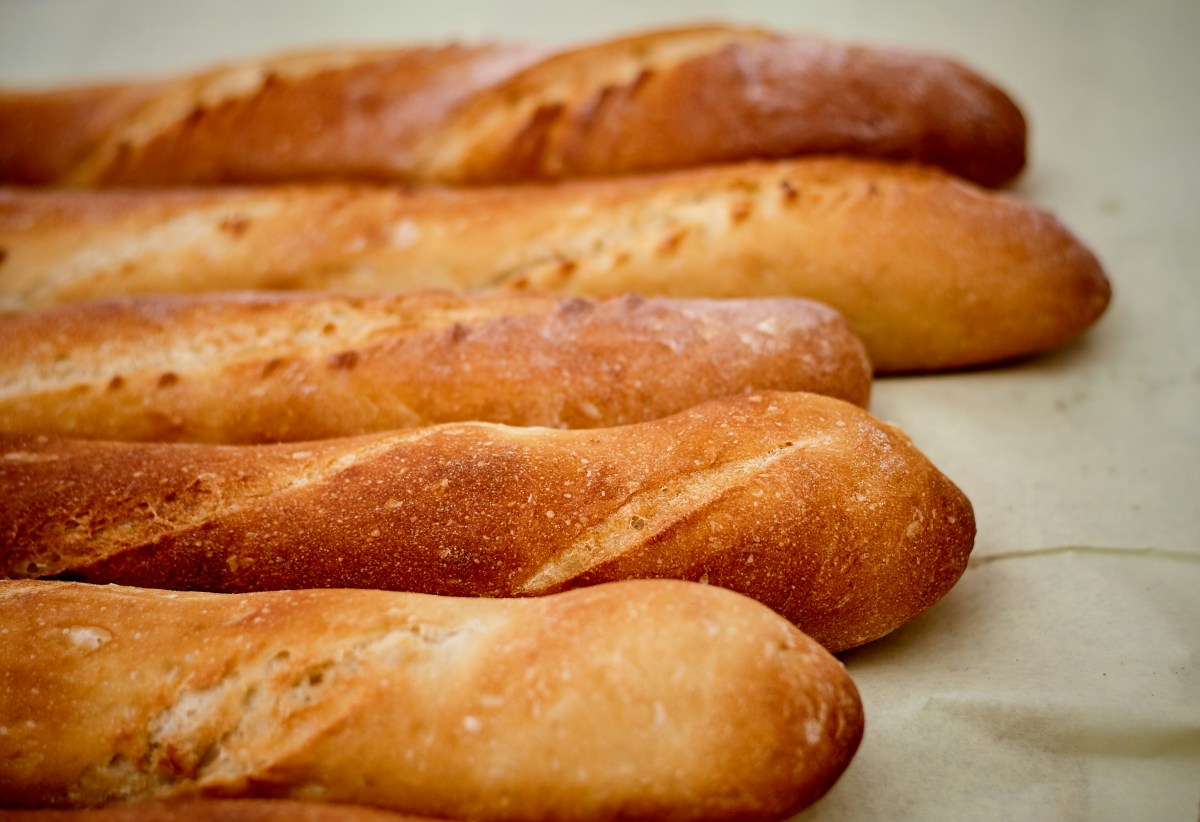
How could they? I mean, what ARE they playing at? All last week, and most of this, the baker’s shop down the road has been closed. Instead of rising at 2.00 a.m. to get busy making baguettes, flutes, ficelles, baguettes a l’ancienne, flutes tradition, pain noir, chocolatines, croissants and so on and so on, our bakers have chosen to lie in till – ooh, 7 o’clock perhaps – and then spend the day catching up with their families – the children are on half term.
It’s a family business, our baker’s shop. M & Mme Fonquernie owned it, and now, although officially they’ve retired, they help out all the time. M. Fonquernie is the one who drives his little white van round the local villages which have no shops, delivering bread. Their two sons have now taken over the day-to-day baking. One is responsible for all those loaves, while the other specialises in patisserie. Their wives divide the work of running the shop between them with Mme Fonquernie Senior’s help.

So our morning routine has been disrupted. First thing each day, one of us usually walks down the road to get our favourite pain noir, hot and crisp still from the oven. The other day, the baker forgot the salt. The bread wasn’t half so nice, but I rather liked this very human error. It proved that our loaves are still ‘artisanale’, rather than being churned out by some computer-assisted machine. There’s generally someone in the shop to chat to, or to walk back along the street with, and so neither of us looks on getting the bread in as a chore.
We’re lucky, I suppose, that there are three bakers in town. Last week, we went to the shops at Castellanes to the baker there. No pain noir at this shop, so we chose their unbleached white. The small one’s a slender baguette shape – an Ariegeoise (female) – but buy the larger butch version, and you must ask for an Ariegeois (male).
But then what happened? A notice appeared in the shop: from Sunday, they too would be closed for a holiday. So for a few days this week, we have to patronise shop number three. Everybody moans ‘C’est pain industriel ça’. It’s true. It comes all the way from Lavelanet, from a bakery which has three shops. That’s mass production, and it shows. Roll on Thursday, when the Fonquernie family re-opens its shop doors.

And here’s a short scene from the baker’s about 18 months later, exposing the use of the most useful word there is in French …
7th September 2011
Here’s what happened at the baker’s this morning. Translations appear in brackets.
Me: Oh! Isn’t the pain bio ready yet?
Madame: Voilà! (Nope. Quite right)
Me: So if I call in after 9, you’ll have some? Could you please save me a loaf?
Madame: Voilà! (Yes, and yes). Would you like to pay now, then it’ll be all done and dusted?
Me: Voilà! (Makes sense. I’ll do that)
By the way, I was all grottily dressed in my oldest paint-spattered, holes-in-the-knee-ready-to-face-a-morning’s-tiling gear. This is Laroque after all: no shame in working clothes here.
Madame: You’re looking very chic today, if I may say so.
Me: Voilà! (And don’t I know it).
Why bother to learn more French? Voilà donc!

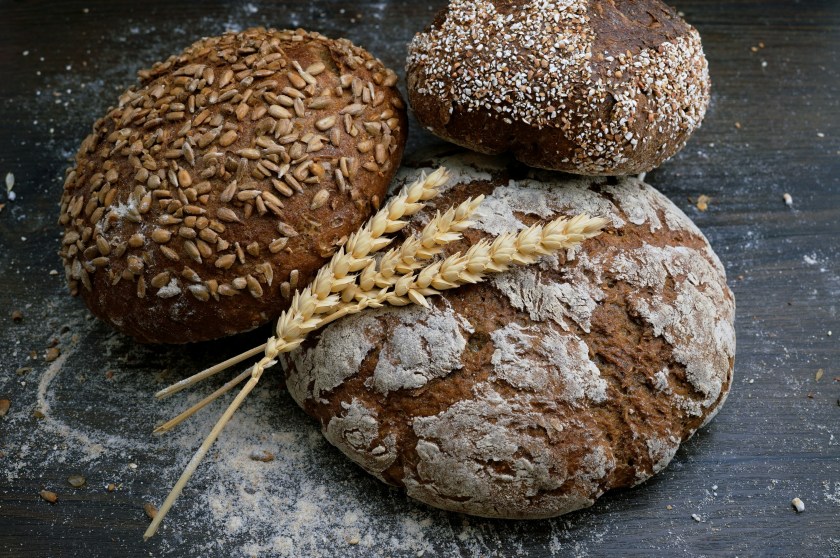
Only the photo of Mme Fonquernie is my own. The rest come courtesy of Unsplash, and are (reading from top to bottom) by Sergio Artze; Wesual and Markus Spiske.
That’s what the old saying says: ‘Eat breakfast like a king; lunch like a prince and dinner like a pauper’. In other words, make the first meal of the day your best. And it’s easy enough with a bakery like this just down the road: easy to renew your energy and begin the day – even on Sunday!

For Becky’s #SquaresRenew.
There are dozens of quotations about shopping, and most of them don’t fit me. I can’t agree with Marilyn Monroe – ‘Happiness is not in money, but in shopping.’ nor with the words from a film I haven’t seen, Confessions of a Shopaholic: ‘When I shop, the world gets better.’ I’m more with Franklin Jones: ‘A bargain is something you can’t use at a price you can’t resist.’ My title quotation is by AJ Lee.
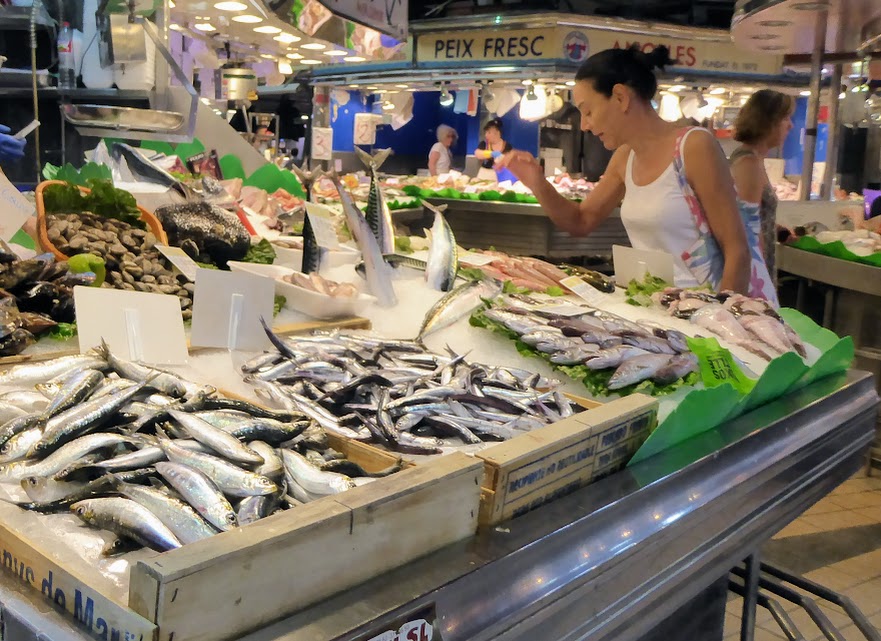
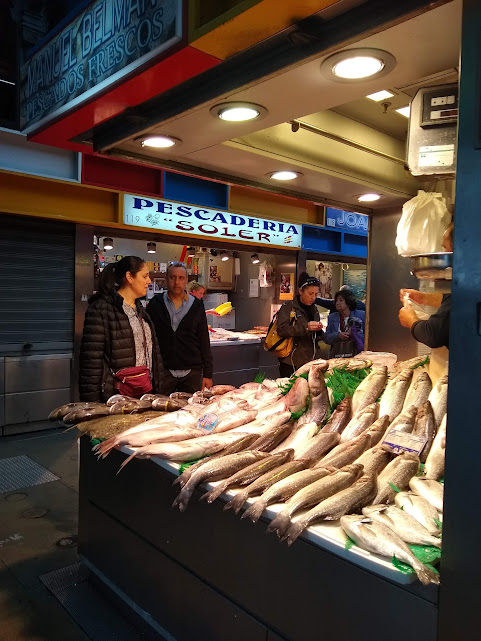
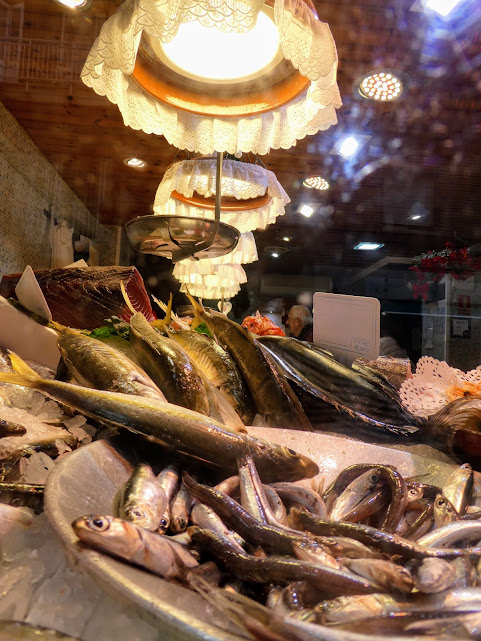
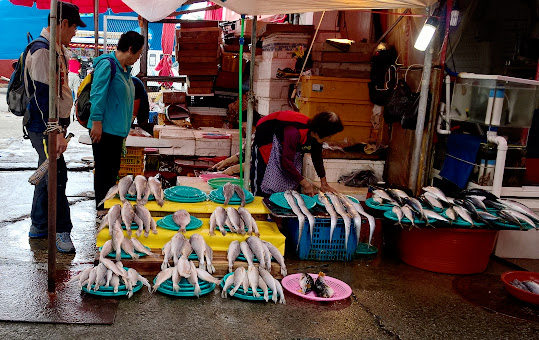
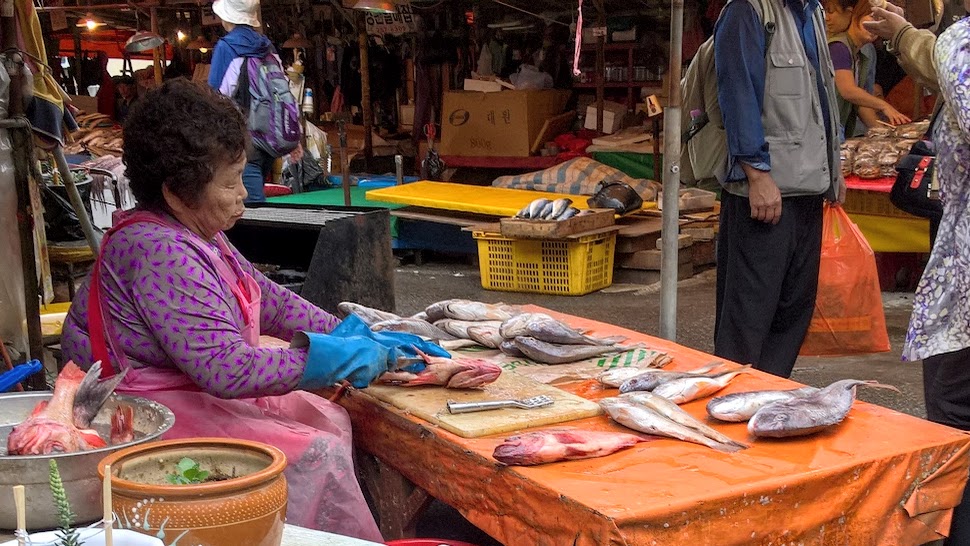
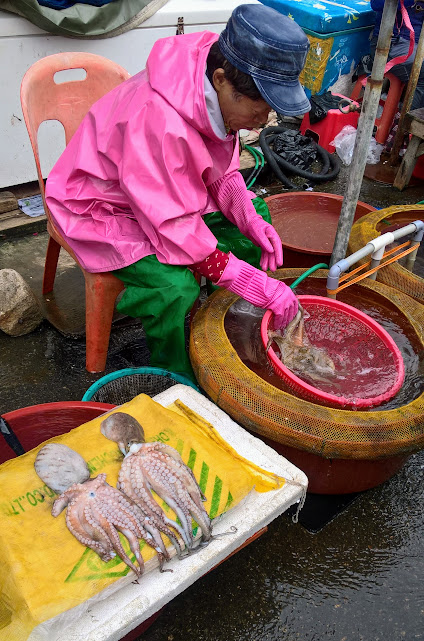
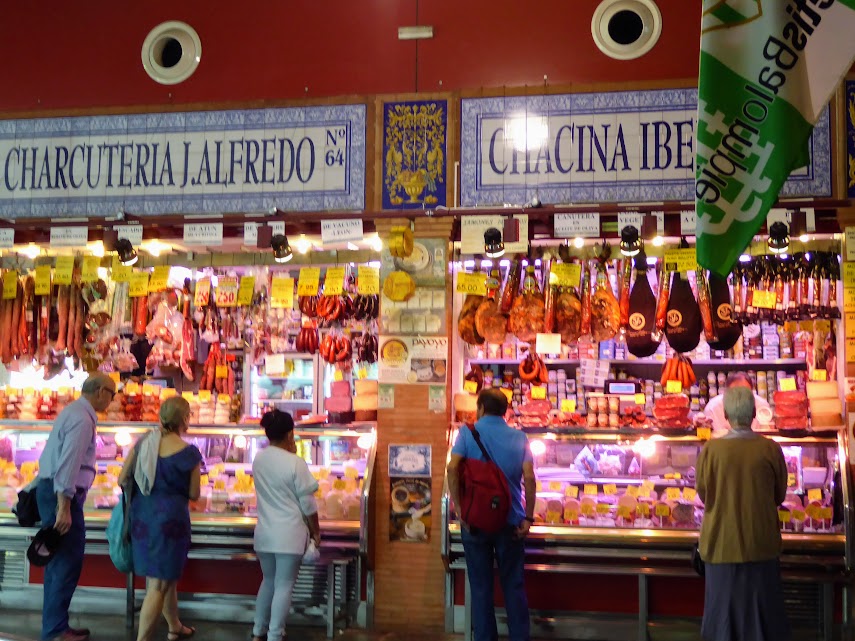
I make an exception though with food shopping- especially abroad, and especially in markets. And even more especially in fish markets. In this country, we seem hardly to extend our reach beyond cod, plaice and haddock, with tuna and salmon as well these days – and even those may be tinned . So a visit to a fish market in Europe or Asia is a revelation. Here are some shots taken in Spain and South Korea, where they seem to catch enough daily to empty the oceans.
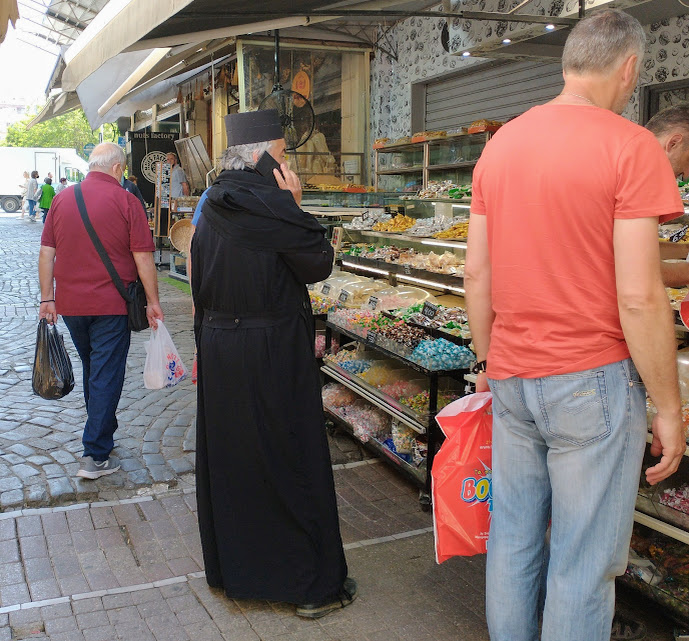
Fruit and veg and groceries seem more interesting in a sunny spot: especially if a fellow customer in Thessaloniki is a Greek Orthodox priest busy on his mobile phone.
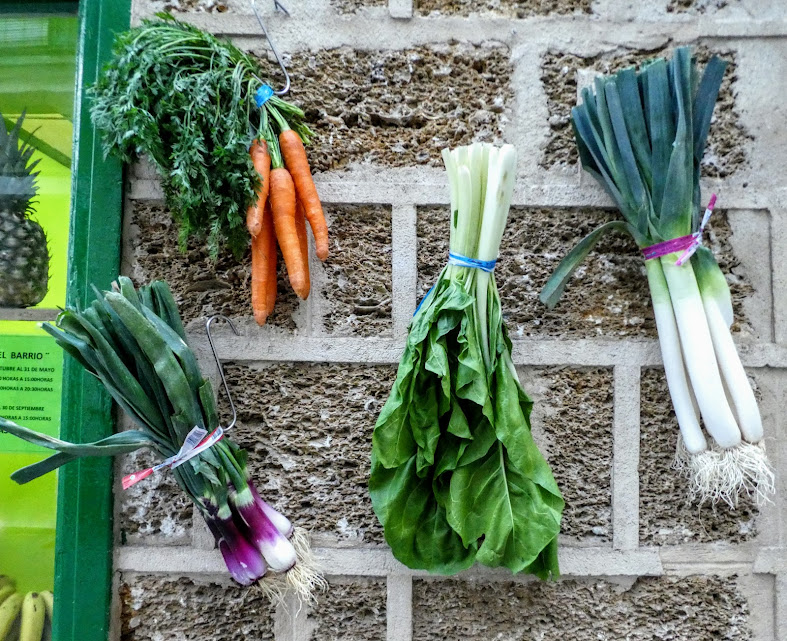
Or if the shopkeeper has made a point of announcing his wares in a very original way, as here in Cádiz.
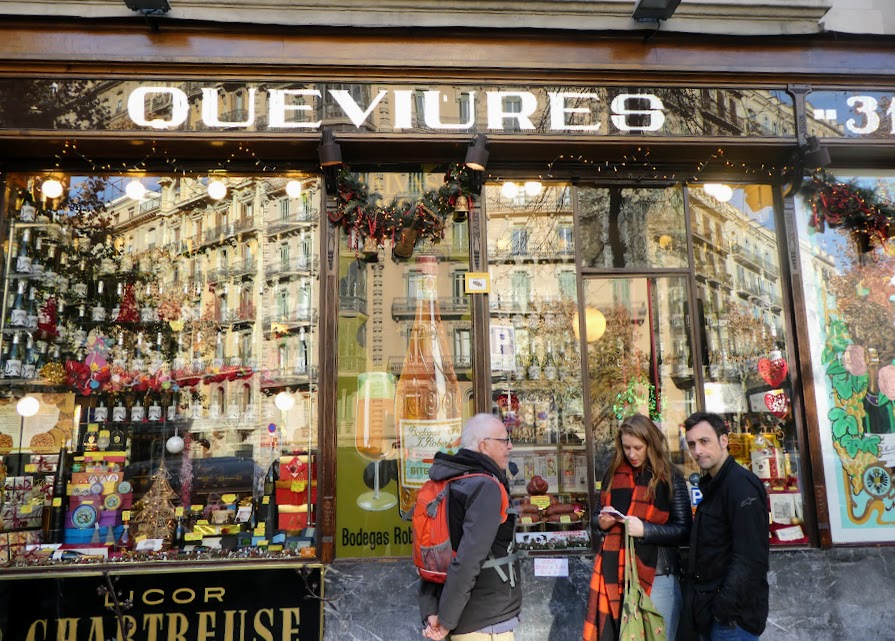
Some shops are so handsome they simply invite browsing. This shop in Barcelona, Queviures, is thinking of charging an entrance fee to those who mumble ‘just looking‘. And look – you get a view of the street behind in the window reflections – for free.
Here’s another – in Newcastle this time – also providing a view of the street it was in.
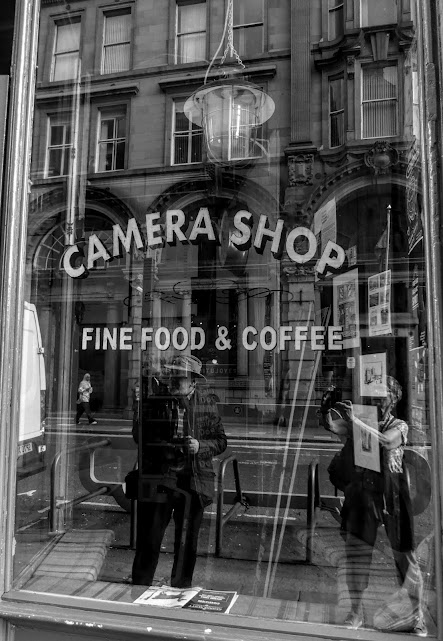
It’s no longer a camera shop. But that day, it wasn’t selling fine food and coffee either. But we had fun photographing it for free.
No clothes shops here. I’ve shopped for clothing exclusively in charity shops for five or six years now – yes, even for my outfit as mother-of-the-bride. And I didn’t look like a bag lady. So I’ve been told. I therefore have no shots of elegant and fashionable clothes emporia. Just this. Once upon a time, this mannequin was the clothes horse for many a stylish window display in Málaga. Her glory days are over.
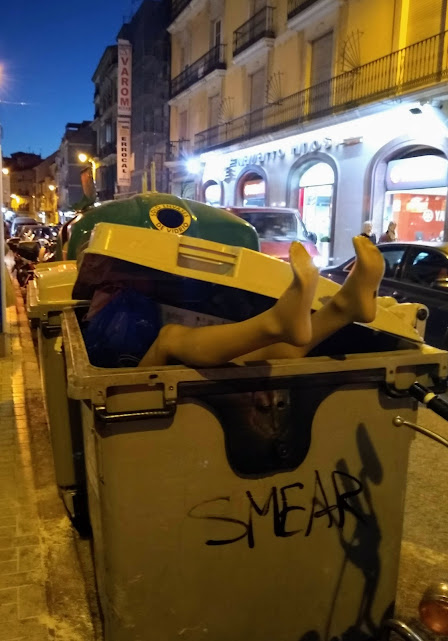
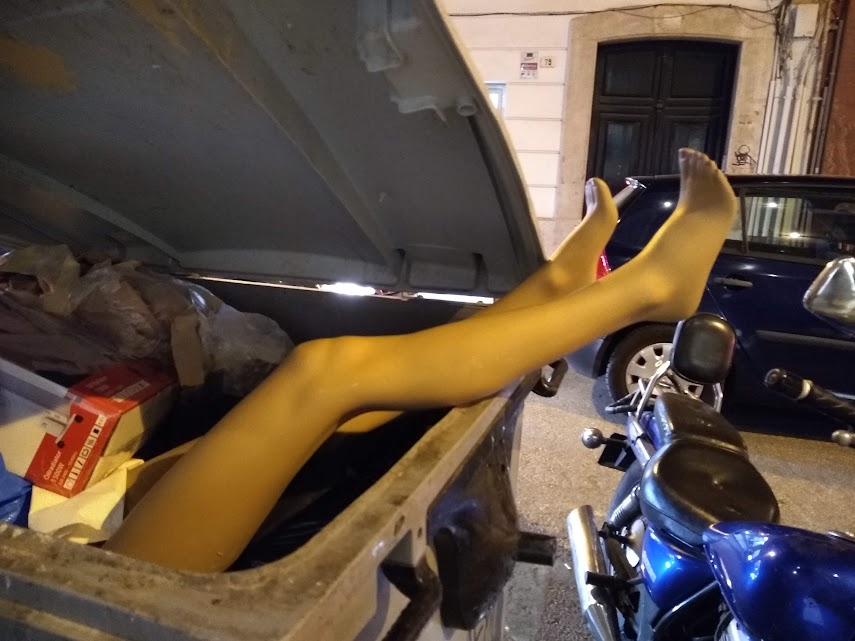
Despite my lack of enthusiasm for retail therapy, I’ve thoroughly enjoyed strolling round markets and shops at home and abroad for Ritva’s Lens-Artist Challenge #288. I’ll never be keen to shop-till-I-drop, but ‘you can always find something you want‘ (Sophie Amurosa). Especially if it’s edible.
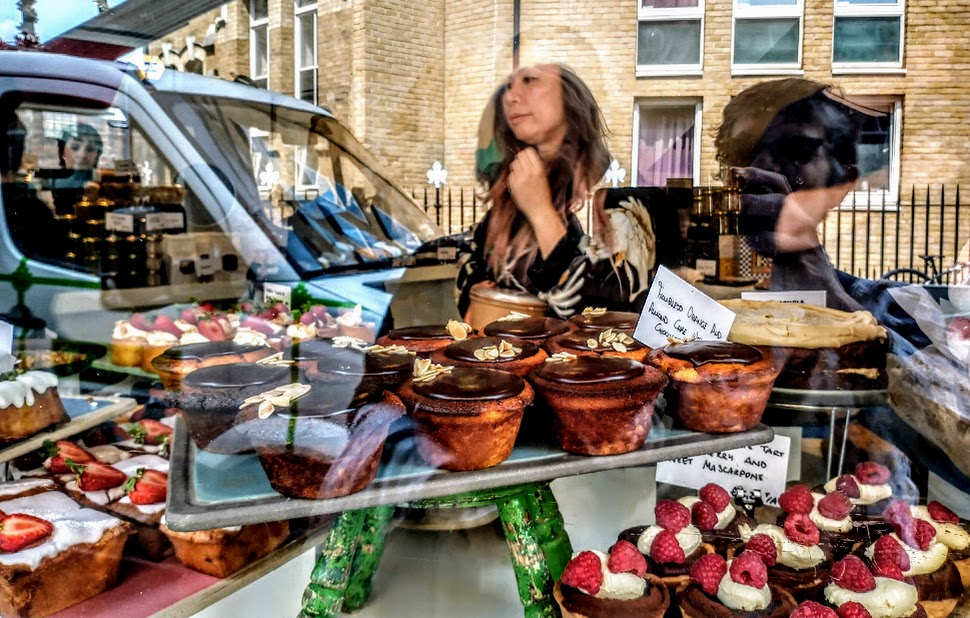
My featured photo is from the indoor market in Seville.
Just before winter kicks in and we all hunker down, let’s have a trip to the shops, and spot a few windows.
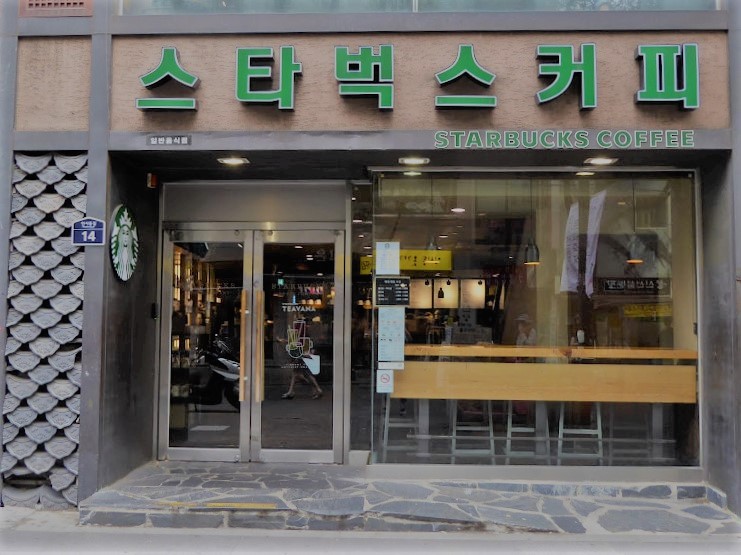
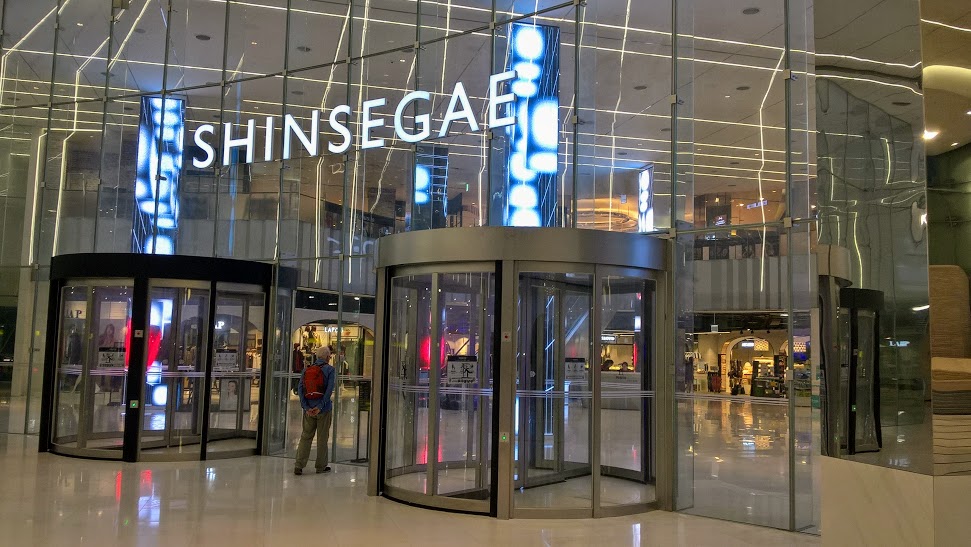
Are there enough windows here for you, in the featured photo, at the entrance to one of South Korea’s bigger shopping complexes? Once we’ve looked round, it’ll be time for a coffee: who knew that Starbucks had spread its reach so far? Not that we actually went inside here – independent coffee shops for us, every time.
Let’s come back to England now, and stay local, in Ripon. We’ll pop into our favourite bakery, then saunter along to the pie shop. In both cases, reflections will offer us views of the street too.
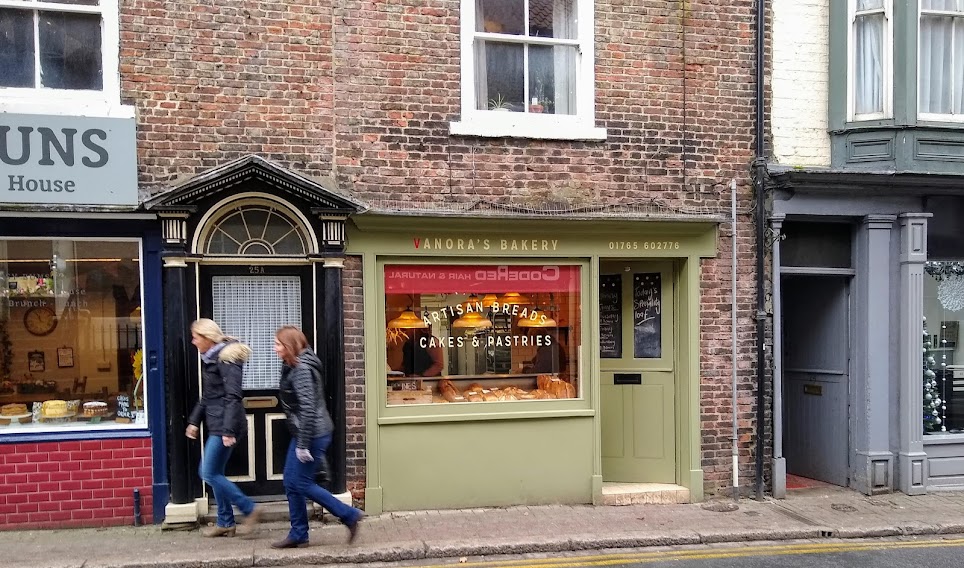
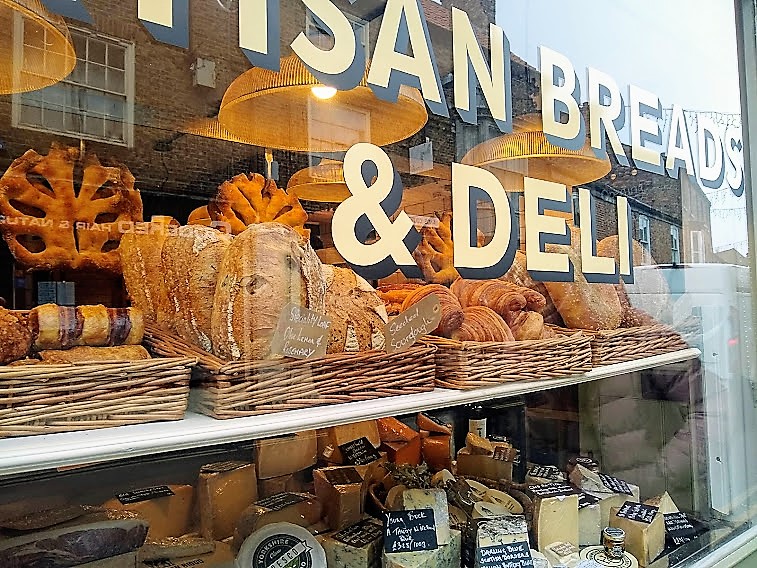
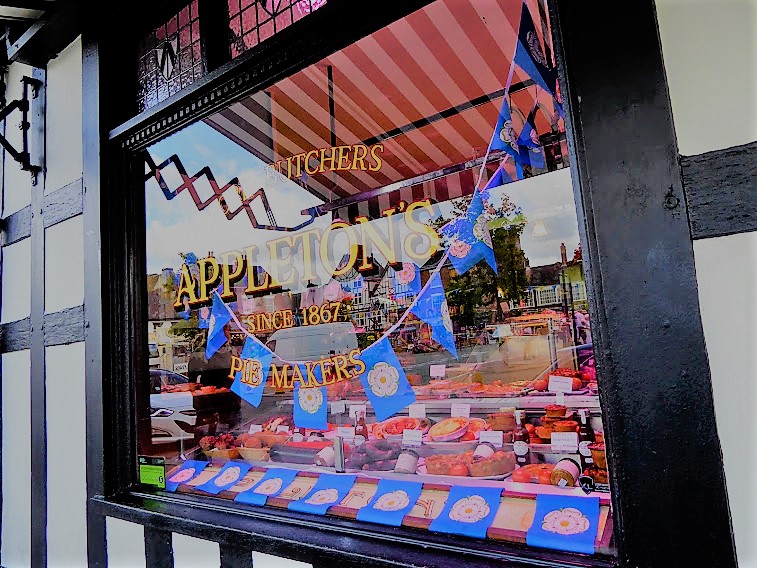
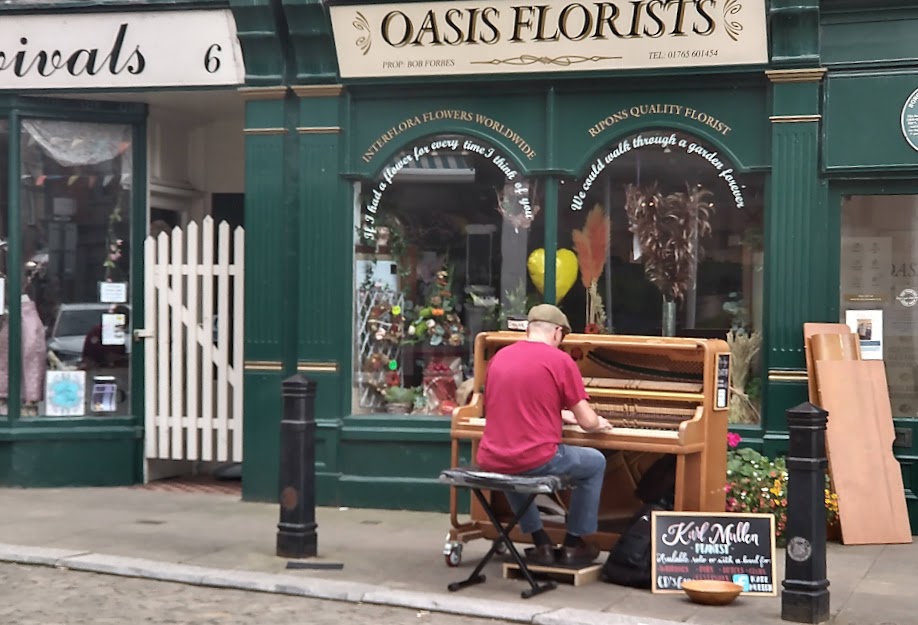
Let’s go to Kirkgate, and more independent shops: You’ll get a mood-improving slogan at Karma, and if you’re lucky, live music to cheer you along.
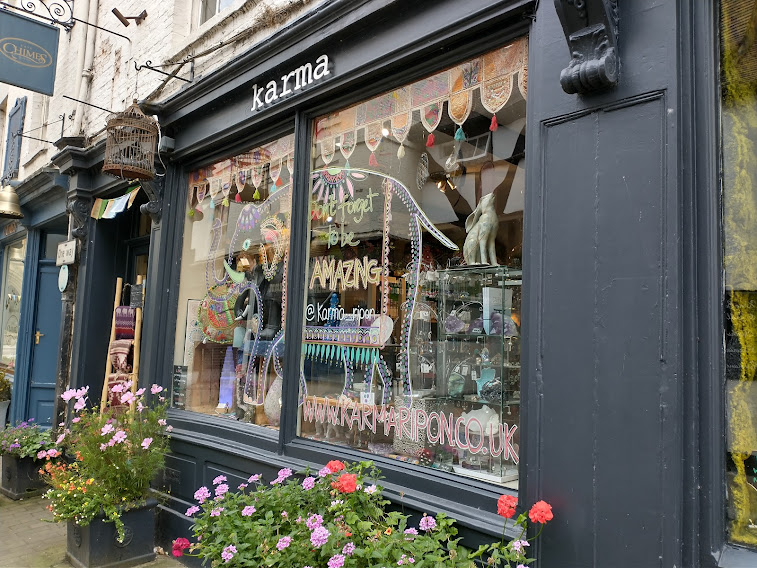
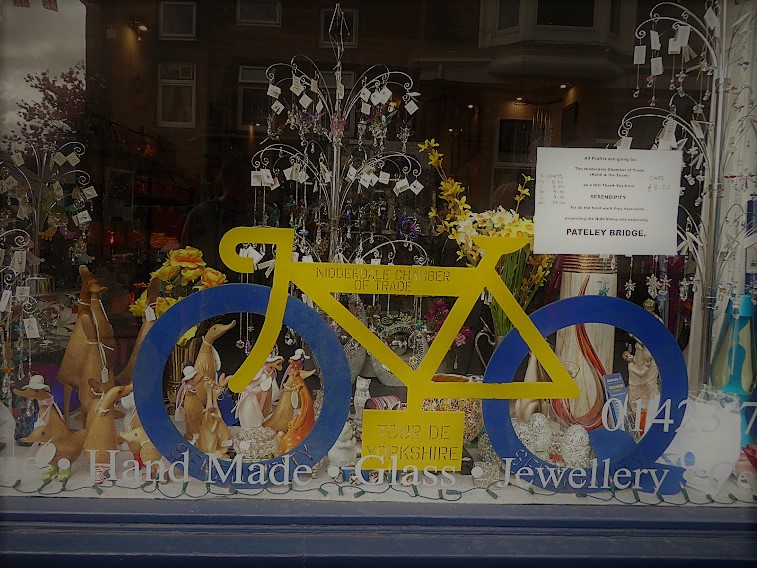
A few miles away is Pateley Bridge. I wonder if the shops there still have the displays they had when the Tour de Yorkshire was in town?
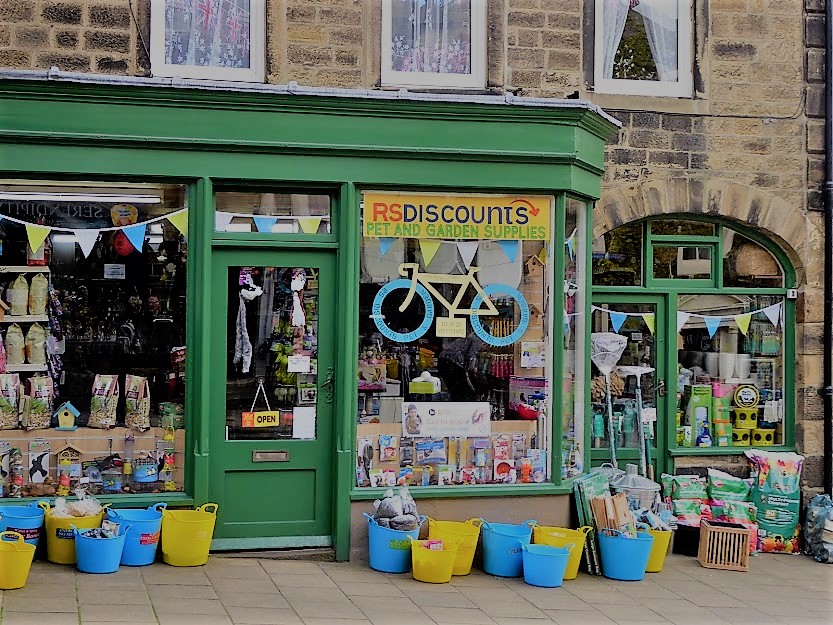
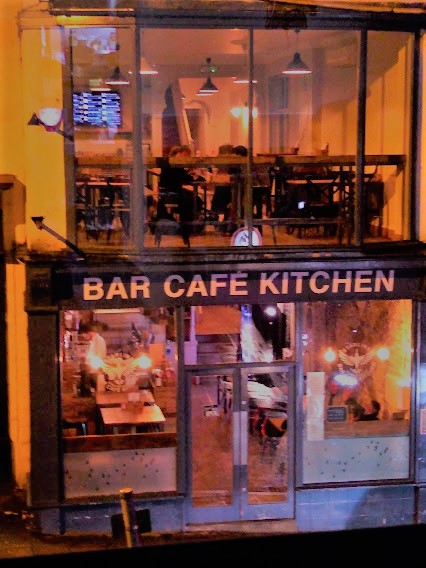
We’ll finish off by going to Harrogate. From behind other shop windows, we can get a snapshot of Starlings, the bar where we could finish our day with a drink and a very tasty pizza.
Thanks for coming along!

Last week the visit to my London primary school way back sixty years ago seemed to go down quite well, so today for Fandango’s Flashback Friday, we’ll go back to that era again, to the post I wrote in 2016. But this time, we’ll go shopping.
In 1953, my family moved from Yorkshire to London. At first we lived in Earl’s Court. In the years following WWII, it was where Polish immigrants congregated and lived, so that’s probably how we ended up in this busy, grubby, cosmopolitan area.

It had shops – exotic shops to country hicks like us. There was an Express Dairy, a supermarket, one of the earliest of its kind. Rummaging round on the shelves, my mother found unknown surprises such as yoghurt. It was thin, acidic, an improbable shade of pink and none of us liked it. Not even my father. Yet my father taught my mother to set out soup bowls of milk to sour and eat as a cold, refreshing soup. It was a part of his Polish heritage.
She found chinese gooseberries. We didn’t like those either. These days we call them kiwi fruit and realise the ones we had bought must have been rancid and fermenting.

Now let’s go on to Tachbrook Street Market. That’s where we mainly shopped, once we’d moved to Victoria. I loved it. It was a whole community of shopping streets and market stalls. Even though I didn’t then drink coffee, I loved to pass the coffee blenders’ shop, and smell the rich aromas drifting through the door as the coffee beans gently roasted and toasted on giant metal grates.

I remember the neighbourhood Italian restaurant. We didn’t have the money to eat there, but I could see through the window and watch as waiters wielded those giant pepper grinders they seemed to like so much.

We’d pass the neighbourhood grocery store – ‘Home and Colonial’ . I seem to remember we actually got our groceries in Sainsbury’s. There was a Tesco store, a very early example of a supermarket. We didn’t shop there (‘Supermarkets won’t catch on’ opined my mother).

There was a MacFisheries. I was fascinated by the glistening fish laid out on the marble counters of the open shopfront and watched as my mother’s choice for the day was expertly de-boned and filleted in seconds.

There were fruit and vegetable stalls. I loved to hoard the richly decorated tissue papers that protected each orange, each tangerine. Occasionally, in late summer, my mother would buy us a peach each, as an exotic treat.

Once I got to be about eight or so, I’d be sent off to Apple’s the Hardware Store to buy a gallon of paraffin (Aladdin pink, as opposed to Esso blue) to feed our paraffin heaters. There was Mr. Apple himself, with his bristly grey moustache and his grubby brown overalls. The paraffin glugged out of its storage tank into our can. I’d count out the money, then I’d struggle home, the heavy can banging against my shins, the contents splashing my socks, along the street, and across the busy Vauxhall Bridge Road.

Because my father was Polish, we did quite a bit of shopping at the delicatessen near Buckingham Palace Road.
Here were thin sticks of kabanos, the drier the better. Nobody but me ate this at school, and my friends assured me it was donkey meat. There was Polish boiling ring – a horseshoe shaped sausage that was my favourite meal, boiled and served simply with mashed potato and cabbage. Sauerkraut of course, and bigos. The plain cookery of 1950s Britain was largely unknown to me apart from school dinners, but that’s a whole other story.

Besides Polish foods, we’d often have pasta or risotto or wienerschnitzel. Oh – apart from two things. On Saturdays, my mother always bought a pint of brown shrimps from the above-mentioned MacFisheries. Saturday tea times would see us all sitting round the table with a pile of brown bread and butter, peeling those fiddly shrimps. And she was very partial to a kipper too.
I can’t leave out ordinary grocery shopping though. We went to Sainsbury’s in Victoria because it had fresher, better goods according to my mother. It wasn’t a supermarket. We’d go into the shop, with its brightly-tiled floor, and there, to left and right were the counters. Dry goods, dairy products, bacon and ham… and so on.

Young women, their hair concealed under net caps, skilfully wielded wooden butter pats to reduce great slabs of butter into manageable half-pound portions.. Others bagged up sugar into dark blue ‘sugar paper’ bags. There was always a man at the bacon slicer, turning a lethal looking metal disc to slice bacon and ham according to the customer’s particular requirements (Thin? Thick? Gammon rasher?) .
There were glass-topped tins of biscuits – digestives, custard creams, Lincolns, nice, arrowroot…..: these were sold loose. People on a restricted budget would choose a mixed bag of broken ones. My mother regarded all of these with disdain. We made our own.
And when it was time to pay, we’d find that all our receipts, from each counter we’d visited, would have arrived at a small wooden kiosk near the centre of the store. An efficient type would add it all up, we’d pay her ( it was always a ‘her’) and we’d go off with our groceries.
The scenes played out here are so clear in my mind, but I can’t find a single image to support them. Not one. Can anybody help?
One thing we never had to buy at the shops was milk. That was delivered, every single day including Christmas Day, in glass bottles which we rinsed out and returned, on an electric-powered milk float something like this….

I remember our shopping trips fondly. They were time-consuming, certainly. But the rich variety of a morning walking from shop to stall to shop again was quite a highlight in my week.
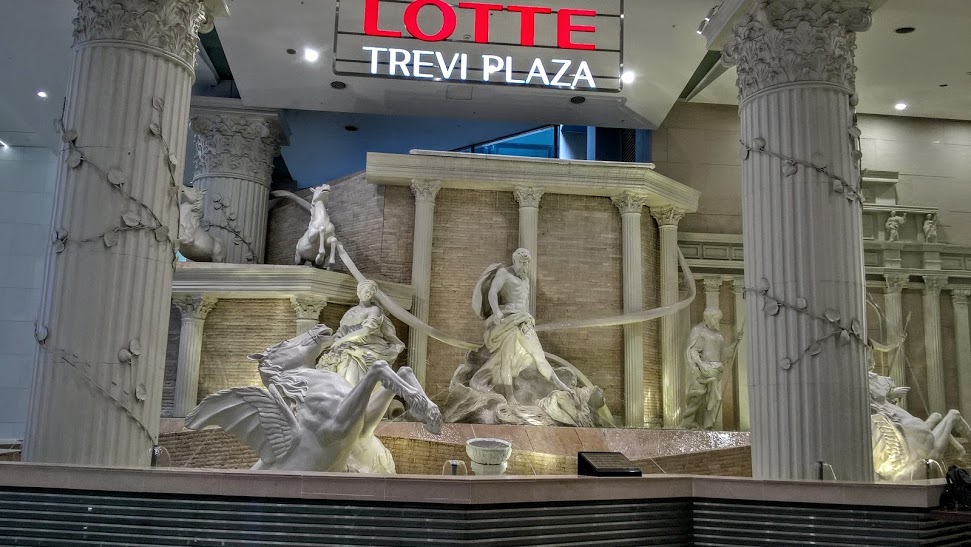
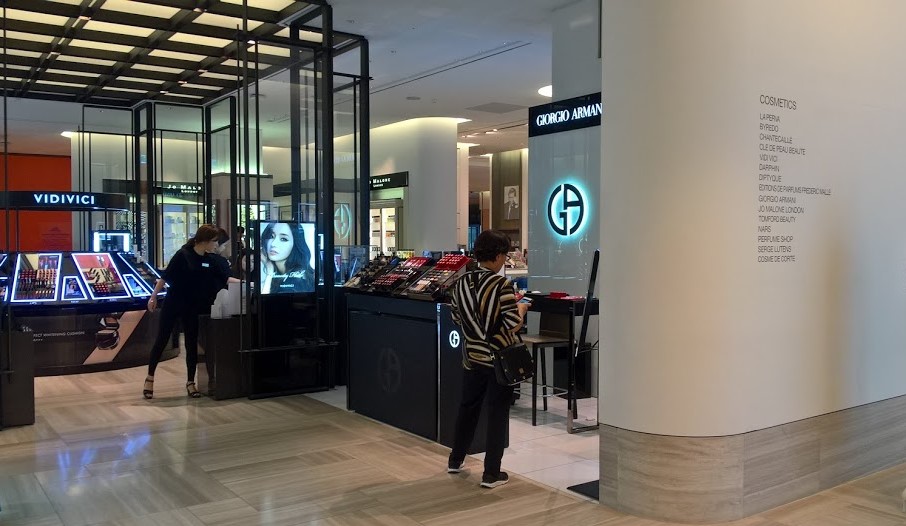
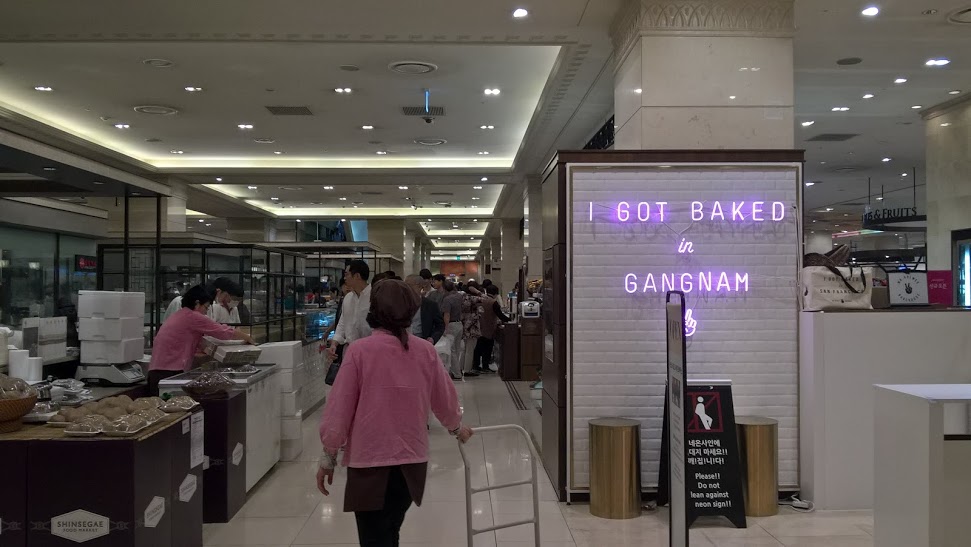
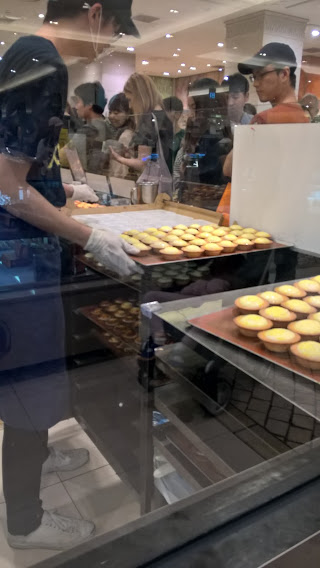
Last Monday in South Korea we went shopping for string, elastic bands and spam – oh, and books.. Today we’ll go instead to one of the large shopping centres – Shinsegae in Seoul maybe (where I was astonished to find a branch of Waitrose) or Lotte Trevi (yes really) in Busan. We could spend the day there, strolling around the sleek and elegant displays. Maybe we’ll stay for lunch in the food hall, and choose from the many outlets featuring foods from around the world, though particularly from the Far East. Out of town shopping centres like these are popular, as in Europe, but the average city shopping street is busy from morning till late into the evening too, with young people toting large carrier bags full of new clothes . ‘Shop till you drop’ seems to be the motto.




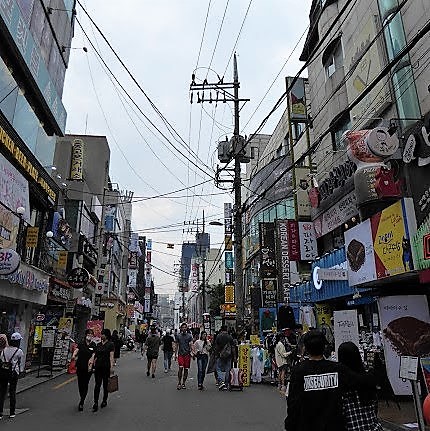


Click on any image to view full size.
When I was a small girl in London food was a big part of my life. I don’t mean eating, but shopping for food and cooking it – I’d made my first Christmas cake when I was four after all. It’s possible I had some help. And I certainly licked the bowl.
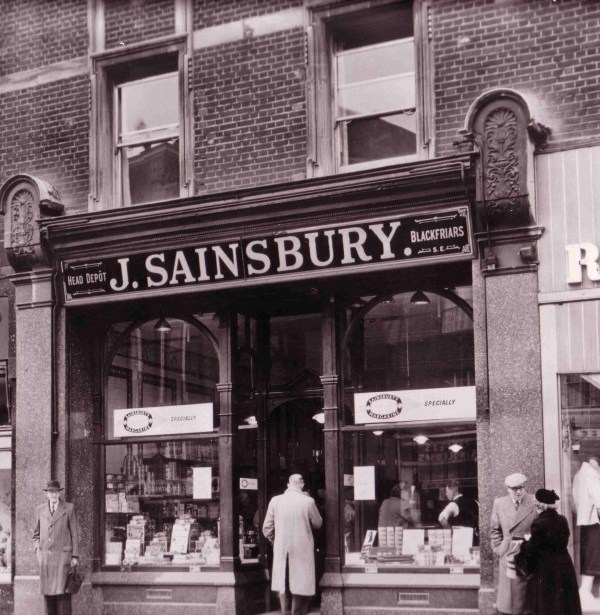
Because my mother taught all week, weekends meant a Saturday morning trip to Sainsbury’s in Victoria. I would watch as the shop girls reduced large yellow slabs of butter to half pound blocks using large wooden butter paddles – look, we still have some domestic-sized ones –
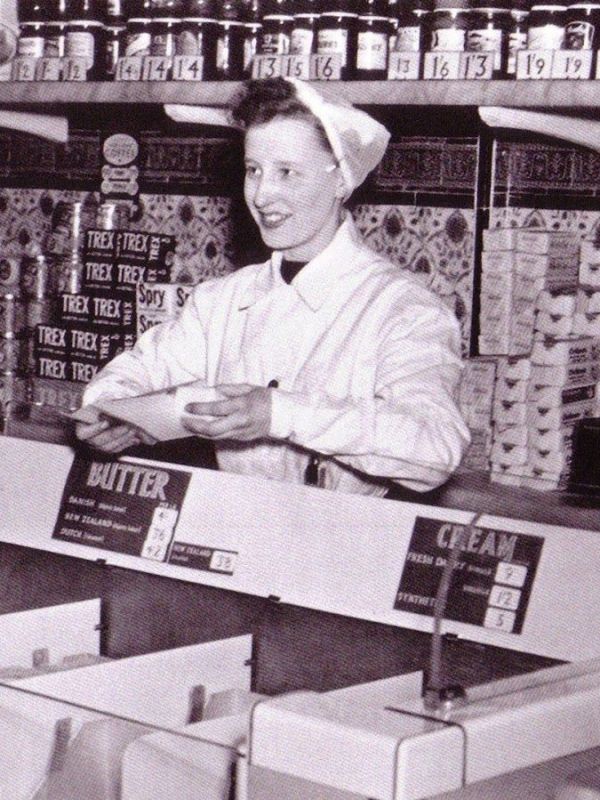
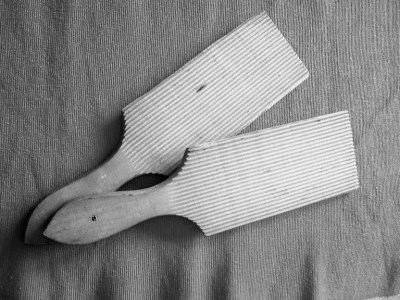 while others weighed sugar into dark blue paper bags. I looked on impressed as the man on the bacon counter turned the whining, shining wheel of his slicing machine – ‘Thick or thin madam?’. After she’d bought all we needed, my mother joined the queue for the cashier’s window and fumbled in her purse to find the right change.
It was the greengrocer’s stall on the market next. I liked collecting the decorated tissue squares that oranges and tangerines were wrapped in.
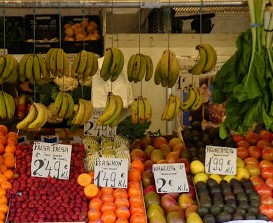
I liked helping to choose the weekly vegetables, and learnt when to expect the different apples coming into season. Discoveries came first, even before the autumn term started. Then James Grieve, Worcester Pearmain, Laxtons (Supreme and Superb), and round about Bonfire Night, the brown-skinned Russett. Oranges and tangerines were for Christmas time. I always hoped that there might be enough money left to buy a seasonal treat – perhaps a single peach.


Best of all was the delicatessen. This shop wasn’t at all the preserve of the moneyed middle classes, reviving holiday memories by buying exotic food stuffs. Instead it was a refuge for the stateless, rather rudderless foreign populations of shabby 1950s Britain. There were huge numbers of Poles who’d served out the war in the UK – my father was one; Italian ex POWs; Hungarian Jews – all the flotsam of Europe.
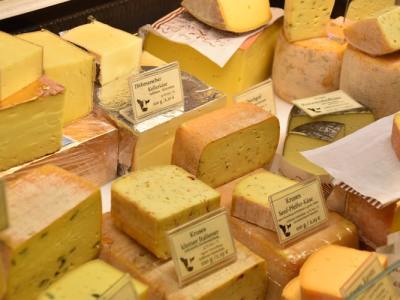
Here we’d buy Polish boiling ring, cooked simply in water and eaten with buttery mashed potatoes and sauerkraut or cabbage. I loved the wizened dried sticks of kabanos, a thin sausage that my school friends assured me was made from donkey meat. There was Polish rye bread, speckled with caraway. It was at the delicatessen that my mother learnt about pasta. We started eating spaghetti bolognese in about 1954, long before it became a British standard. We bought Samsoe from Denmark which makes the best toasted cheese in the whole world. My school friends found our food odd. That was alright. I found theirs odd too.
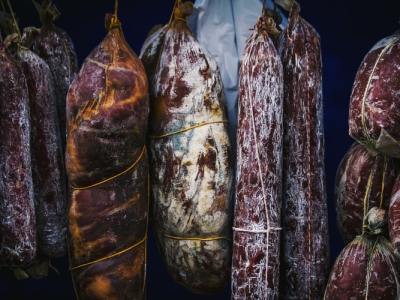
Very occasionally on Saturday afternoon we would catch the tube all the way to Trafalgar Square and walk into Soho and the Italian store there. Those impossibly long packets of spaghetti! Those solid piles of Italian sausage: pink fat-studded mortadella; Neapolitan salamis the colour of dried blood! A great wheel of parmesan from which some cheery Italian with lots of smiles but little English would hack crumbly fragrant slices with a seriously stout and heavy knife! Aromatic roasted coffee beans clattered into special scales used for nothing but weighing coffee! And Italian voices, laughing, chatting, shouting and thoroughly at home. I don’t think we ever bought a great deal here. We were there for a spot of sensory overload, and a few small treats.

Many of my childhood memories centre around preparing the food that we bought. But that’s a story for another day.
“To travel is to discover that everyone is wrong about other countries.”
Aldous Huxley
To travel is certainly to discover. If I told you that we were off to start the day at an animal sanctuary, followed by a picnic, followed by a spot of local shopping, you might imagine our spending an hour or two with distressed dogs or donkeys, maybe some homeless hedgehogs. Then you’d picture us with a pack of sandwiches, maybe sharing a bag of crisps and some Jammie Dodgers, perhaps on a park bench, or dodging the cow pats in a country field. Then you’d suppose we’d nipped into Sainbury or Tesco on the way home.
But this is my Indian Adventure, so you would be wrong. Our animal sanctuary was Dubare Elephant Camp. This is where elephants who’ve had a long career working transporting logs for the Karnataka Forest Department go to live out their retirement years.

We watched them enjoying their daily bath in the River Cauvery. One elephant needs maybe three young men to bathe them: good tough scrubbing brushes required to give that hard leathery skin a good old scratch.


We were in time for their breakfast. There was a cookhouse where an appetising mixture of jaggery (a dark brown palm sugar), millet and vegetation was boiled up and formed into giant balls of nourishment. Just because they ate it daily didn’t stop them finding it delicious.


That was it really. But we had to set off for our picnic in any case. With some difficulty, we waded through paddy fields, where the young rice plants were an impossibly citric green, vivid and vibrant. And there, at the end of our walk, was the River Cauvery: a perfect scene from a travel documentary: tall palm trees, knotted and intricate tree roots, little islands among the fast-flowing waters.


We were glad to climb into our costumes and plunge into the river – muddy, but otherwise clean. There was quite a current, and I wasn’t strong enough to swim the width of the wide river, so stayed close in to the banks.


And then it was time for our picnic: something special, this. Staff from our host’s residence clanked down the hill with great metal cans yoked over their shoulders: rice; sambal; a wonderful bitter curry made out of some dark green leaf also used to de-worm children; chicken curry; a sour and bitter sticky chutney; curds; and a gorgeous buttered cabbage curry. It truly was a memorable feast.


On our way home, we stopped off at our local town, Madikeri, to do some bits and bobs of shopping – get our photos onto CDs in the days when memory cards didn’t have much capacity, buy sandals, that sort of thing.


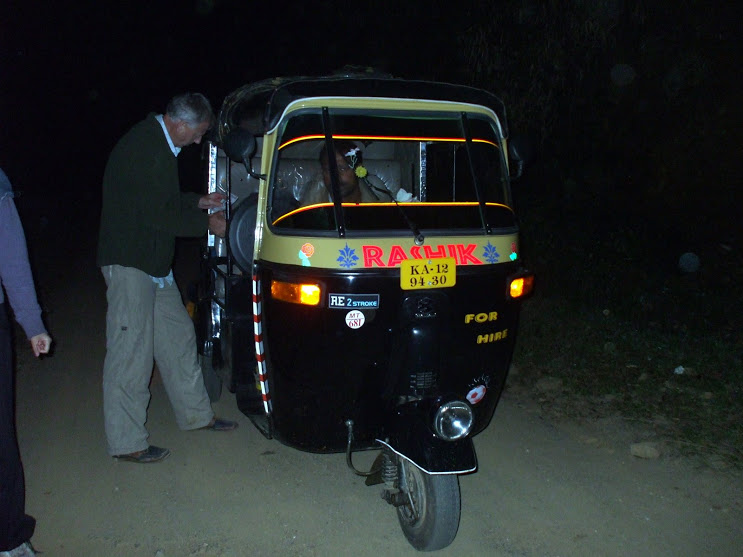
Oddly, I took few photos here, but I’ve used others from later in the trip, because with their rows of tiny shops, Indian shopping streets are standard in their own way. No M&S, Boots and Costa certainly, but there’s still a certain uniformity in the small shop fronts with goods stacked and hanging outside, and pedestrians, bullocks and auto rickshaws all jockeying for position in the crowded streets. Here’s the auto rickshaw that four of us (and our driver of course) contrived to travel home in after our trip…
I wasn’t so much wrong about India as didn’t have a clue.
My contribution to Debbie’s challenge, inspired by the quotation at the beginning.


We’ve just come back from a Saturday morning strolling round Richmond market. It’s a pity for Richmond that our most recent Saturday-strolling-round-market experiences date from our days in the Ariège. The Saturday morning market in Saint Girons is an incomparable experience which Richmond couldn’t match.
Saint Girons has fewer than 7000 residents, but it’s the administrative centre of the Couserans, and the centre of gravity not only for its own inhabitants, but for townspeople, villagers and farmers for miles around. Saturday is the day they come to stock up on fresh fruits and vegetables, charcuterie, cheeses, dried fruits, hardware and haberdashery, plants for the potager, and to link up with friends and neighbours over a coffee or a beer in a local bar. Saturday is a day when they might themselves be stallholders. Among the joys of the market is the pleasure of finding small stalls selling just a small selection of say, goats’ cheeses, produced that very week by a ‘petit producteur’, or asparagus picked no more than 24 hours before, and only available for a few short weeks in April or early May, or home-produced charcuterie, or mushrooms and fungi foraged from the woodlands and meadows round and about. There’ll usually be a crowd surrounding these specialised stalls, which may not be there every week, or in every season, because they can only put in an appearance when they have enough good things to sell. And the market sprawls between two squares, along the banks of the river, and up a couple of other streets. You won’t get away in a hurry.
Compare Richmond in Yorkshire. It too is the main town in its region, Richmondshire, and only a little larger than Saint Girons: it has somewhat more than 8000 inhabitants. But its market barely extends beyond the handsome market square. There are several good greengrocery stalls, an excellent fish stall, which is well-known throughout the region, others selling home-produced sausages and other prepared meat products, and plant stalls with herbs, bedding plants, bulbs and seeds. Best of all is the wonderful cheese van, ‘The Cheesey Grin’, whose knowledgeable, enthusiastic and cheerful owner has the best variety of cheeses from Britain and Europe, from small producers, brought out for sale when at its very best, that we’ve seen in quite a long time. But that’s all. You can be done and dusted in 15 minutes. I fear that markets, or at least the ones local to us, are in decline. Ripon too has noticeably fewer stalls of any kind than was the case only a very few years ago, and a smaller number of stalls selling well-produced or sourced local food. Still, small shops selling these things seem slowly to be on the way up, so perhaps we’re exchanging one kind of market for another. Perhaps it’s not a death knell. As a French friend of ours said recently, ‘I don’t hope so.’




 From Pyrenees to Pennines
You must be logged in to post a comment.