What to do with a Hallowe’en pumpkin

Hallowe’en.  Pumpkin season.  Every fruit and veg stall in the markets here will have  red kuri, ‘le butternut’, or acorn squash at the very least, and there are those dedicated to selling nothing but the rich variety of squash, pumpkin and gourd you can grow here.  Kalba gave me this butternut squash some 3 weeks ago, grown in their own garden.

The butternut makes a bid to take over the fridge

It weighs in at more than 7 kilos.  More than a stone!  We’ve been chomping our way through it, but see how much remains.  What’s worse: Malcolm has just owned up to not caring for pumpkin very much.  How could he not like it?  That comforting sweetness works so well with the saltiness of bacon, the heat and colour of chillies and oriental spices, or the fatty unctuousness of cheap cuts of meat and sausages.  Well, his loss.  Here are two of my current favourite dishes, both courtesy of Nigel Slater, from Tender, Volume 1, you may not be surprised to hear.

A recent BBC photo of Nigel Slater

Pumpkin laksa

Nigel says this is for a cold night.  Well, it is.  But it’s also a fine thing to dish up on a hot day after a gruelling few hours physical labour.  It looks complicated, but it isn’t.  Take a deep breath and read it slowly: tackle the pumpkin, then the spice paste; the rest just falls into place.

Ingredients

350g. pumpkin, unskinned

coriander and mint leaves to finish.

For the spice paste:

red bird’s eye chillies, 3-4

garlic- 2 cloves

ginger, a thumb sized lump

lemongrass, 2 plump stalks

coriander roots, 5 or 6 coriander leaves, a handful

sesame oil, 2 tablespoons

For the soup:

chicken or vegetable stock, 600ml

coconut milk, 400ml

nam pla (thai fish sauce), 2 tablespoons

tamari, 1-2 tablespoons, to taste

the juice of a lime

100g dried noodles, cooked as per packet and drained.

  • Peel and seed the pumpkin and cut the flesh into large chunks. Cook in a steamer or a metal colander balanced over a pan of boiling water until tender. remove from the heat.
  • For the spice paste, remove the stalks from the chillies, peel the garlic, peel and roughly chop the ginger and lemongrass. Put them all into a food processor with the coriander roots and leaves and sesame oil and blitz until you have a rough paste.
  • Get a large, deep pan hot and add the spice paste.  Fry for a minute, then stir in the stock and the coconut milk and bring to the boil.  Allow to simmer for seven to ten minutes, then stir in the nam pla, tamari, lime juice, pumpkin and the cooked and drained noodles.  Simmer briefly, add the coriander and mint noodles over the top, and serve in deep bowls.

And now for something completely different…..

Pumpkin and Apple fry-up:

either to accompany a meaty supper, or as a main dish in its own right.

Ingredients

a little butter

80g. fatty bacon

medium onion

650g. pumpkin flesh

400g. apples (Nigel says a desert variety.  Mine were very tart, and I thought all the better for it)

a lemon

caraway seeds, a pinch

  • Melt a slice of butter in a shallow pan, cut the bacon into short strips and let them colour lightly in the butter.
  • Peel and roughly chop the onion, add to the pan and allow to cook with the bacon until translucent but not browned.
  • Cut the pumpkin flesh into manageable pieces and add to the pan, turning from time to time till golden in patches and almost tender.
  • Core and roughly chop the apples, but don’t peel them. Stir them into the pan and leave to putter gently until they are on the verge of collapse. Avoid stirring too much, which is likely to mash the softening pumpkin.
  • Finely grate the zest from the lemon and add it to the pan with the juice, the caraway seeds and a little salt.

    But wait! Isn’t this what pumpkins are supposed to be for? My son obviously thinks so, and took this photo to prove it. Though he’s a dab hand at cooking too.

PS.  Some of you have been asking about Danger Mouse.  Well.  He’s not a mouse – too big, too cuddly.  He’s not a hamster, as we at one point thought.  Long tail.  He’s not a dormouse.  Wrong sort of tail.  And he’s not a rat.  Too small, too cuddly.  However, he’s continuing to be part of life here.  He rises at about 8.30 p.m. and organises his furniture behind the skirting boards, shoving stuff about quite noisily.  Then he knocks off and has a nap till we’ve gone to bed.  During the night he dismantles  the latest humane trap, and eats the bait.  In the small hours he may come and scurry round the floorboards under the bedroom.  Then he goes to bed until the next night.  If he ever goes, I think I shall miss him.
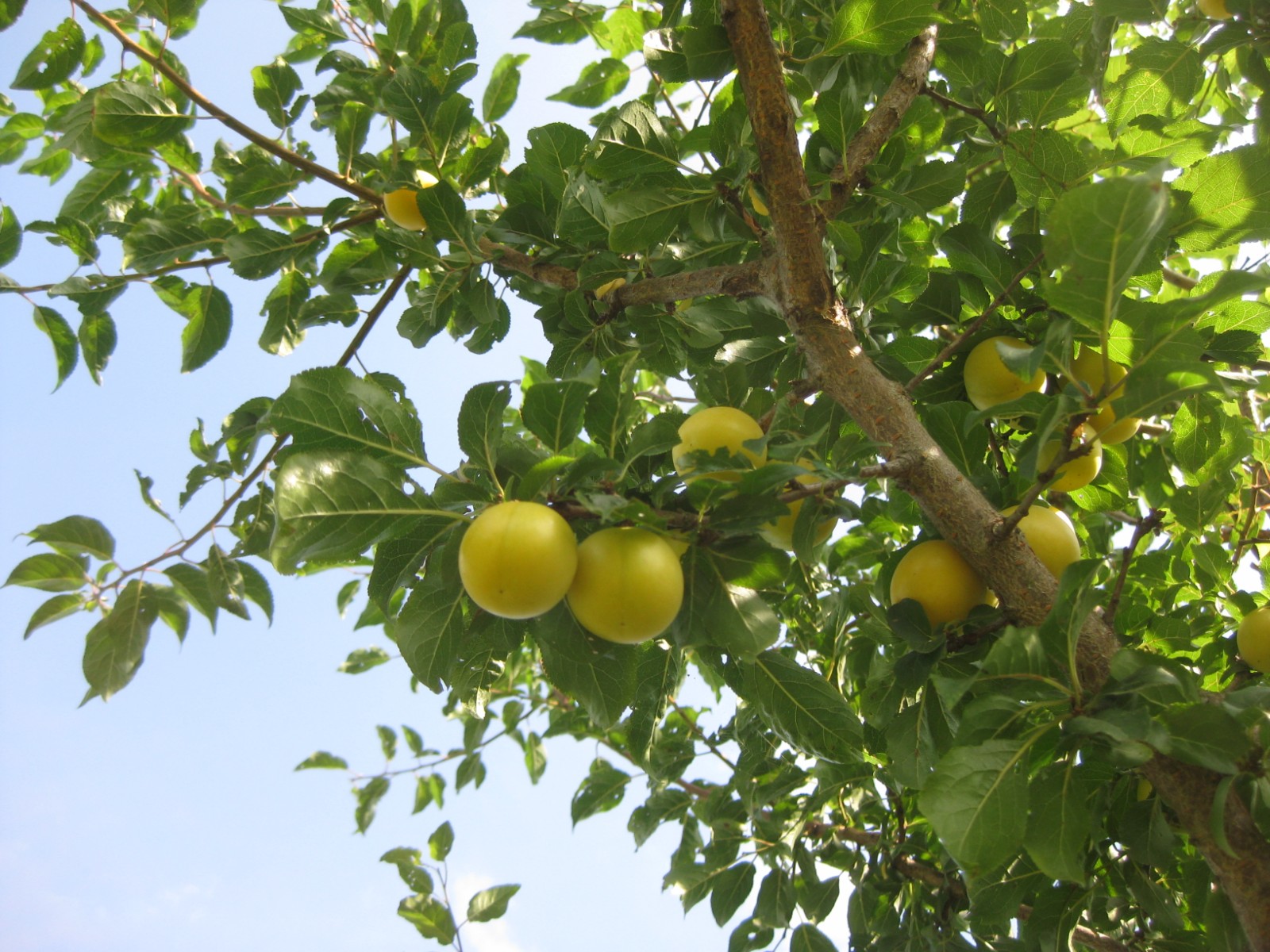
Au cas où ….you find some mirabelles

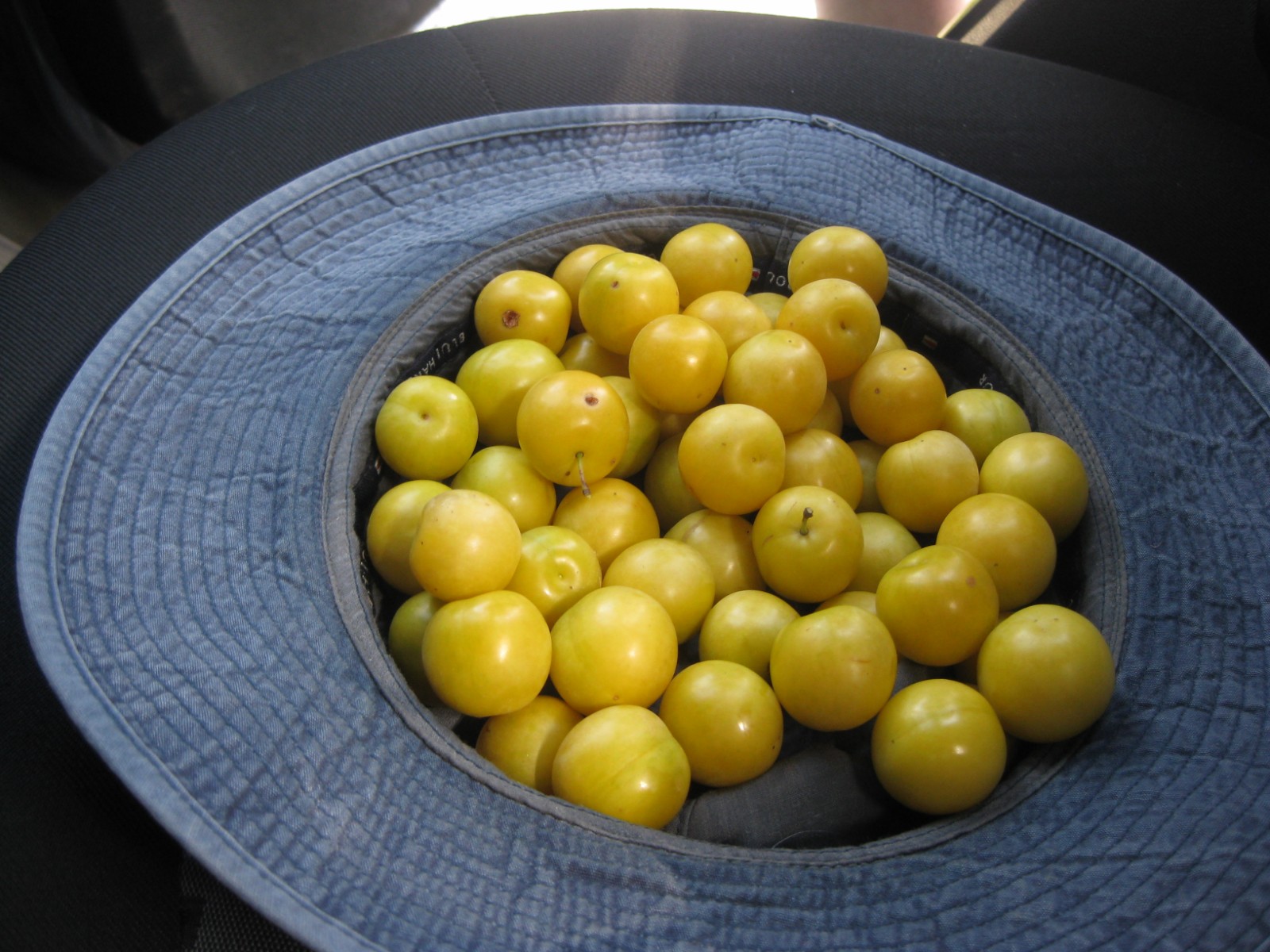
Mirabelles…there for the taking

I’ve written about the au cas où bag before: that little shopping bag or some such that you tuck into your pocket before any walk, au cas où you find something worth harvesting or talking home.  It was as well we had that bag yesterday.  Walking in the fields above Laroque, we found 2 mirabelle trees, their tiny juicy fruits just turning to golden ripeness.  We harvested what we could, and came home.

Then we remembered the trees we’d seen one previous year on the road between us and Léran.  We went home for another bag and hunted out those mirabelle trees lining the route.

Hundreds of plums, thousands of plums, millions and billions and trillions of plums – to misquote that much loved picture book by Wanda Gagabout rather a lot of cats.  Reader, we picked them – some of them anyway.  We came home.  And this is what we made.  With a few of them, anyway.

Bag not big enough? Find a hat.

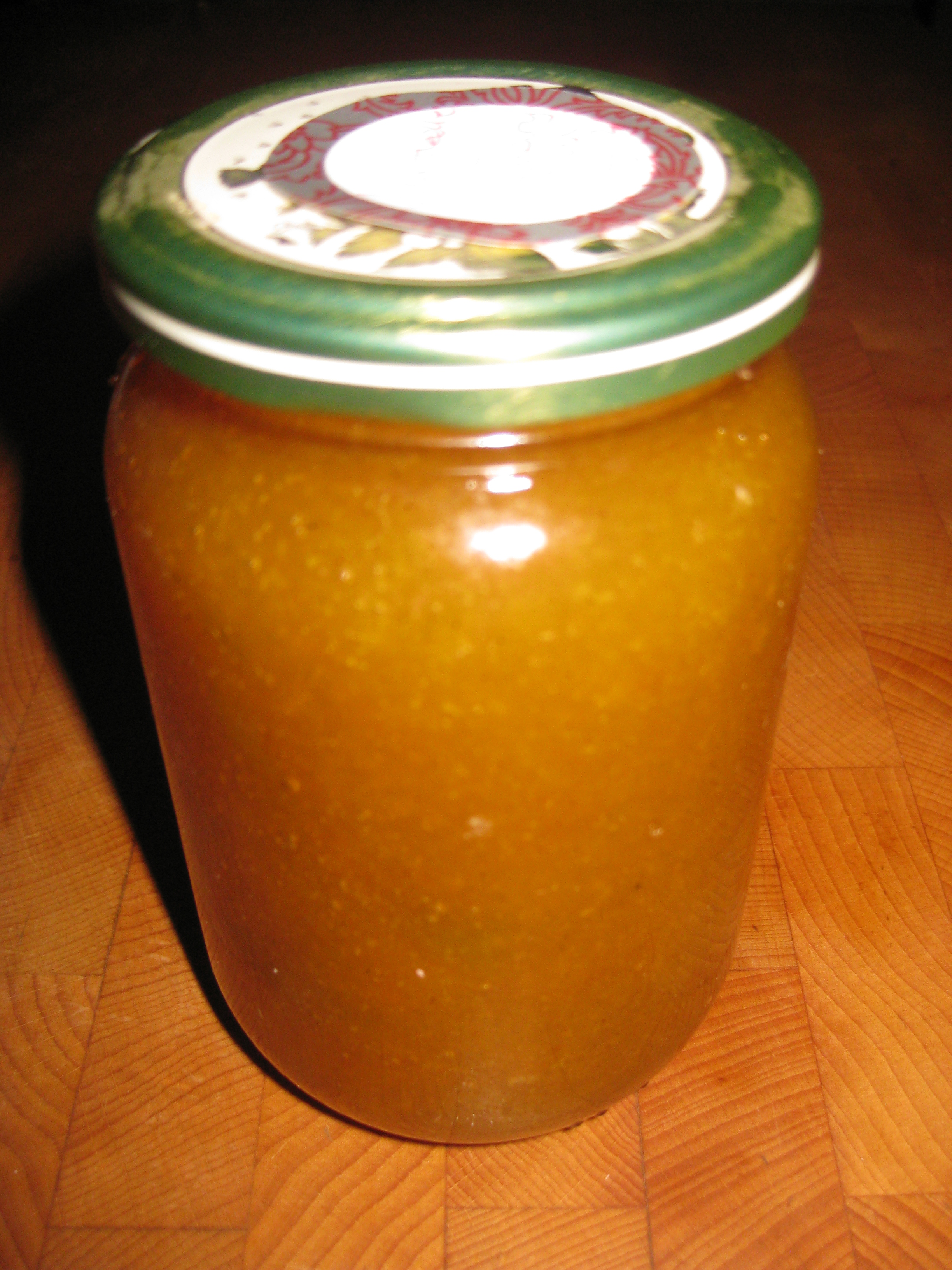
Mirabelle and Rosemary Jam

I kg mirabelles

400g high-pectin sugar, or add pectin powder according to pack instructions to granulated sugar.

4 rosemary sprigs, each approx 5 cm long

1/2 vanilla pod.

Directions:

  • Put mirabelles, sugar, rosemary and vanilla pod in a preserving pan and bring slowly to the boil, so the plums have chance to release their juices.
  • Simmer briskly for about 7 minutes.  It’s not necessary to bring it to jam setting temperature as the pectin will do its work, and it’s a fresh flavour you’re aiming for. But the jam won’t keep long outside the fridge.
  • Take from heat and remove rosemary sprigs and vanilla pod.  This is important.  If you leave the herb in, the jam will taste medicinal. The hint of rosemary should remain elusive, and just add that extra Mediterranean je ne sais quoi
  • This is the bad bit.  You could have halved the plums before you started and removed the stones then.  But I think it’s marginally easier to fish them out now.  Only marginally though.  The choice is yours……
  • Add vanilla seeds from the pod and mix.
  • Fill your ready-prepared jars.

A Mediaeval picnic

Montségur in the morning mist

Saturday morning dawned damp and misty. This was fine by the 100 or so walkers who gathered bright and early in Lavelanet for the annual Marche du Tisserand. The walk, organised by the town’s Musée du Textile, celebrates the ancient ‘chemin pavé’ used by the cloth workers who lived in Montségur and walked this path to bring their produce down to Lavelanet to be sold. Saturday’s walk, the 27th, was for fun, and nobody would have had more than a light rucksack to carry. The full three hour trek (6 hours both ways of course), steep and stony at times, when laden with goods to sell one way and perhaps provisions for the household the other must have been a slightly different matter.

This time too, there were goodies at the top for the walkers as they finished their ascent. The mayor of Montségur was there with an aperitif for everyone, and we at Découverte de Terres Lointaines were there too, with a mediaeval picnic we’d been preparing .

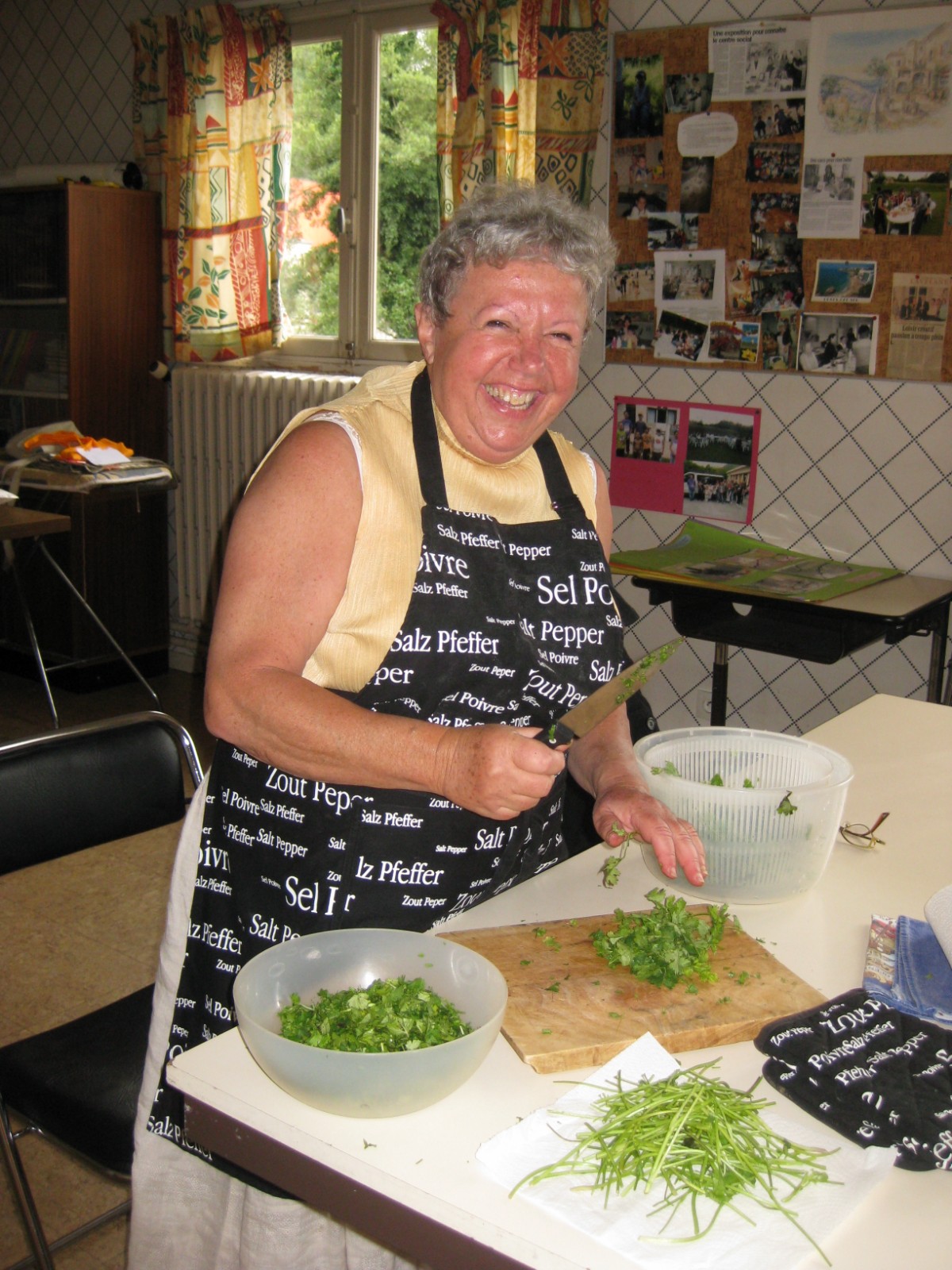
Who knew chopping coriander could be such fun?

The cooking took several days, but the research, with the help of the Museum at Montségur, took weeks of researching, testing, tasting, rejecting, trying again… Still, eating’s always fun

Though curious, the walkers were suspicious too. What would a mediaeval picnic be like? Heavy, probably, with mountains of flatulence-inducing beans. Tasteless too maybe.

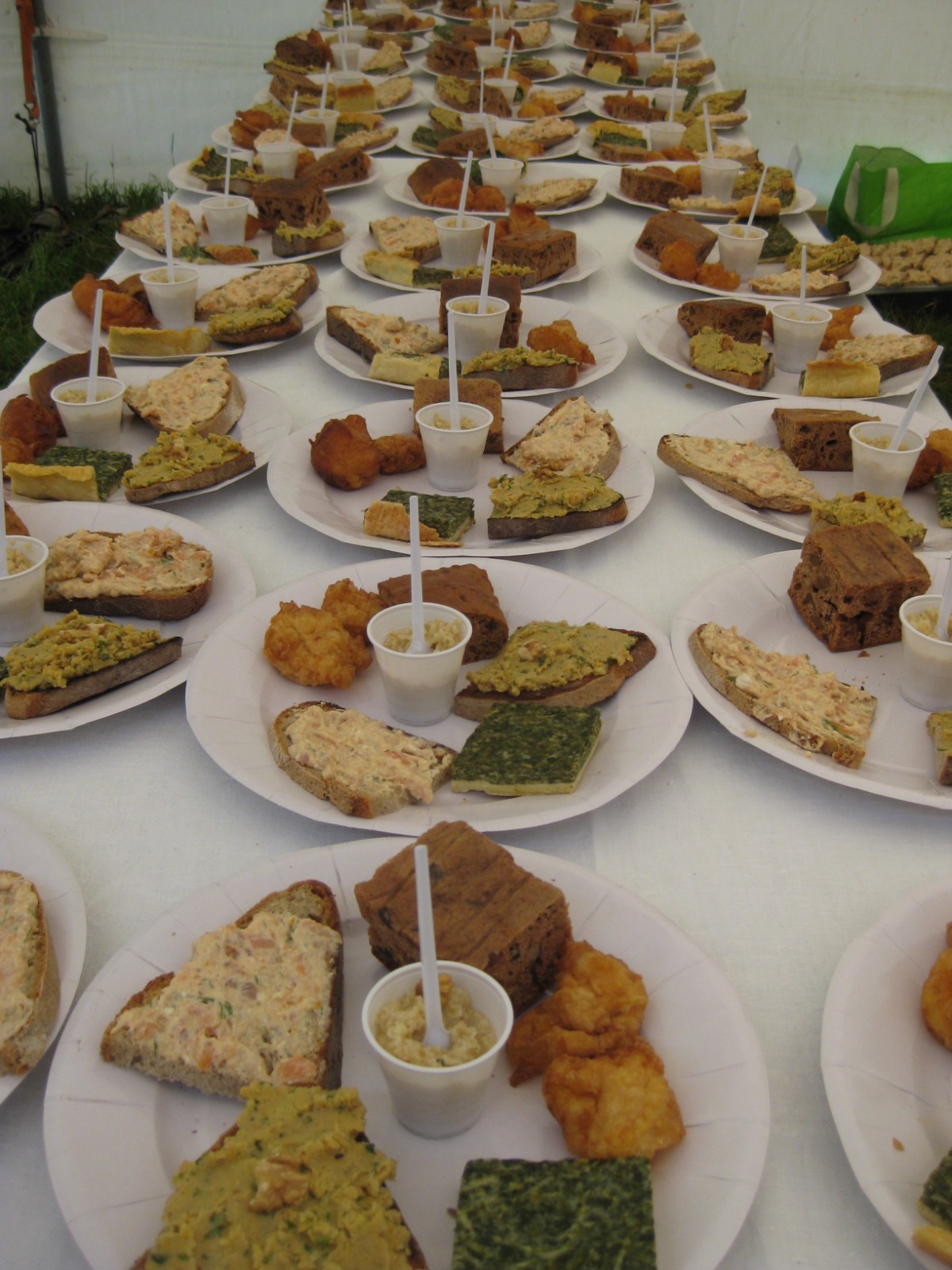
What a surprise then. Here’s the menu:

Spinach tart with lardons: we could have used nettles or any of a whole range of herbs, but settled on the more widely available vegetable option.

Poichichade: this herby chick pea paté, which we served on hunks of organic wholemeal bread, is a close cousin of hummus, but without the tahini. It went down well.

Broussade:  star of the show! A very tasty mix of smoked fish and curd cheeses. This really is one for anybody’s dinner table. Simple too. Recipe below.

Pets de nonne: basically deep fried choux pastry, puffy and light. Here’s the story. Back in the Middle Ages, the bishop of Tours was visiting the Abbey of Marmoutiers to bless a relic. Whilst preparing a meal in his honour, a novice let fly an unfortunate noise of the kind familiar to those of us who’ve eaten far too many beans. To cover her embarrassment, she busied herself dropping the choux paste she’d been making into some handy cooking oil so that it sizzled loudly. The pets de nonne were born.

Fromentée sucrée:  cracked wheat cooked with milk and honey. If you like rice pudding, you’d like this too

Gâteau de fruits secs:  a rich and heavily fruited pain d’epices style cake.

Just before the walkers arrived: The picnic on its thoroughly modern paper plates.

The congratulations when they came – and they came in quantity – were tinted with some astonishment:  ‘It was so good. We never expected it to be so tasty! Well done’.

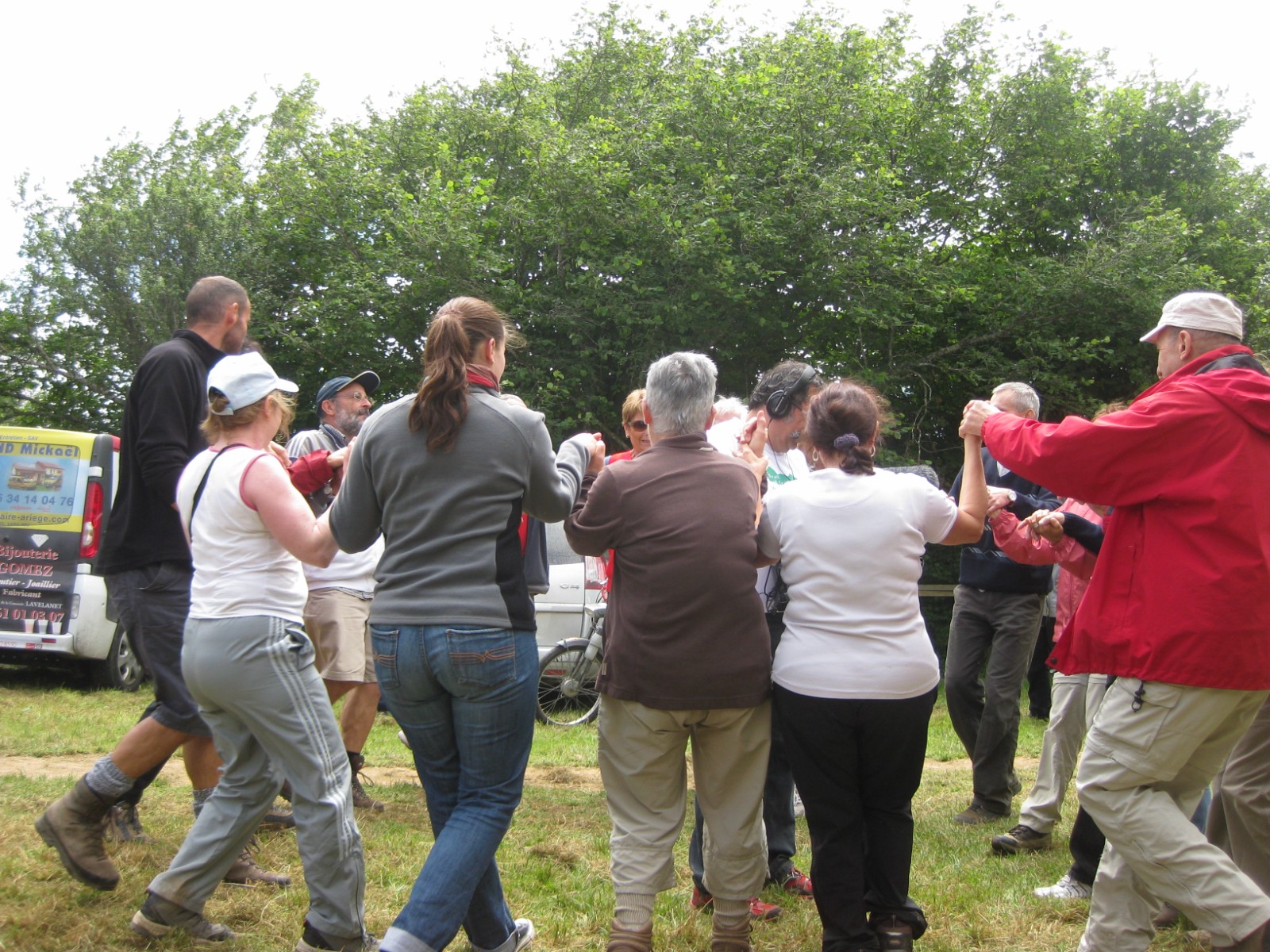
But after eating, drinking and lots of talking, it was time to dance. Zingazanga had been playing loudly throughout the meal, but they turned their attention to teaching us simple steps and dances from centuries ago. Even I with my two left feet joined in.

Let the dancing begin

Broussade

Ingredients
• A quantity of as many varieties of smoked fish as you can decently lay your hands on: we used smoked salmon, herring and haddock.
• A more-or less equal quantity of brousse. This is a curd cheese made from the milk of sheep, goats or cows. A mixture would be ideal, and failing that, any soft curd cheese.

Broussade in the making

• Paprika
• Chopped dill
• Seasoning.

Process half the fish coarsely, and finely chop the rest. Mix with the other ingredients. That’s all. Enjoy with some good bread and a probably thoroughly un-mediaeval green salad.

Posh squash

Fetch up at our friend Peta’s on a summers day, and she’ll have thrust a cool glass of sophisticated, refreshing and home-made elderflower cordial into your hand before you’ve even had time to admire the garden.  Somehow, I’ve never got round to making it myself …. before this year.

Which is silly, because it’s too easy, and you can make several bottles of concentrated cordial for the price of a bag of sugar and a couple of lemons.  Oh, and a small amount of citric acid.  And there’s the rub.  I had a small pack left over from some project in England.  It’s all gone and now I’m trying to replace it.  Every chemist I’ve spoken here to has narrowed his or her eyes suspiciously and offered to order me half a kilo to arrive next week.  What CAN they think I’m up to?

Here’s Sophie Grigson’s recipe:

 Ingredients

20 heads of elderflower, well shaken to remove any insects

1.8 kg. granulated sugar

1.2 litres water

2 unwaxed lemons

75 g. citric acid.

Method.

  • Heat the water and sugar to boiling point and stir till the sugar has dissolved.
  • Meanwhile pare the zest of the lemons in wide strips and put into a bowl with the elderflowers.
  • Slice the lemons, discard the ends and add the slices to the bowl.
  • Pour over the boiling syrup and add the citric acid.
  • Cover with a cloth and leave at room temperature for 24 hours.
  • Next day, strain the cordial through a muslin-lined sieve, and pour into thoroughly clean bottles.  And it’s done.

And if you explore this link, you’ll find lots of ideas for using it.


Apricot jam

There’s been discontent in the house.  No jam to go with the  fresh bread and coffee at breakfast time.  At this time of year, you can’t expect either the hedgerows or the market place to produce any suitable ingredients, so what to do?  Then I remembered my mother’s solution to winter jam crises, and a good one too.  Dried apricot jam.

I remember that she used to use those dark, rich yet slightly tart and chewy fruits that needed long soaking and cooking to soften them, though I always used to prefer to eat them as they were.  Jam recipes recommend them still, but just you try buying them, even on Lavalanet market.  It’s all the plump pale soft style these days.  I was afraid these would deliver a slightly wishy-washy and anaemic jam so I added a few spices to the mix.  And here’s what I made:

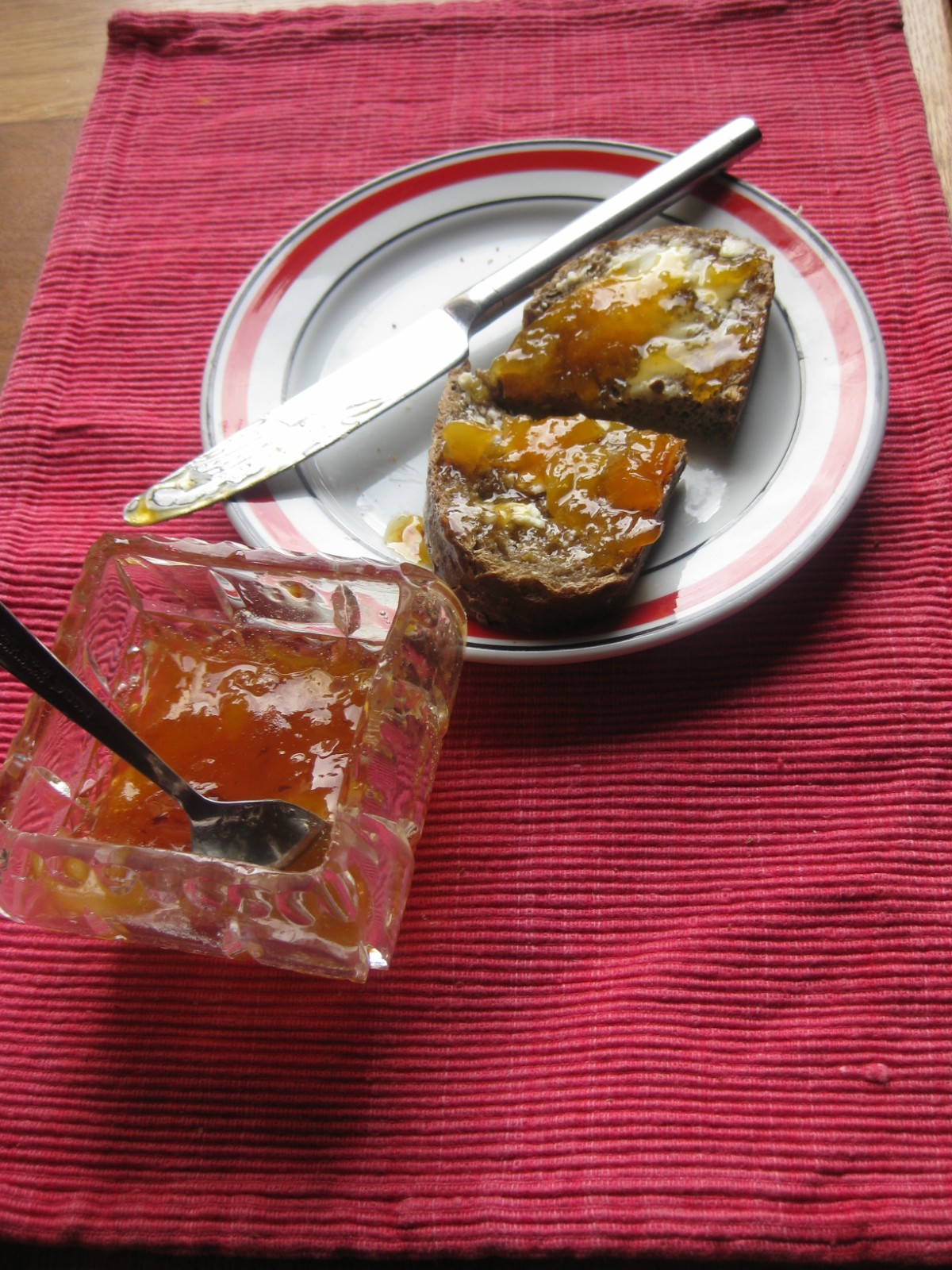
Breakfast sorted.

Dried apricot jam

  • 500g dried apricots
  • 1 cinnamon stick
  • Seeds from 3 cardamom pods
  • A chunk of peeled fresh ginger
  • 500g caster sugar
  • A large lemon

Place apricots in a large bowl, cover with a litre of water and soak overnight.

Use a potato peeler to peel the zest thinly from the lemon: chop the zest into fine pieces.

Roughly chop the apricots, put them and the soaking liquid in a large pan with spices, bring to the boil, then reduce heat to low and simmer for 15 minutes. Add sugar and the juice from the lemon, and return mixture to a slow boil until jam setting point is reached (105 degrees C).  Remove the ginger chunk (I ate it).  Pour jam into about 3 sterilised jars.

The Great French Bake Off

I’ve just had The Best afternoon.

Over at Découverte Terres Lointaines, we realised that Fun was sometimes in short supply.  Often busy getting the next event together, with deadlines to meet and crises to overcome, we weren’t getting together and having time sharing our skills for the simple pleasure that brings.

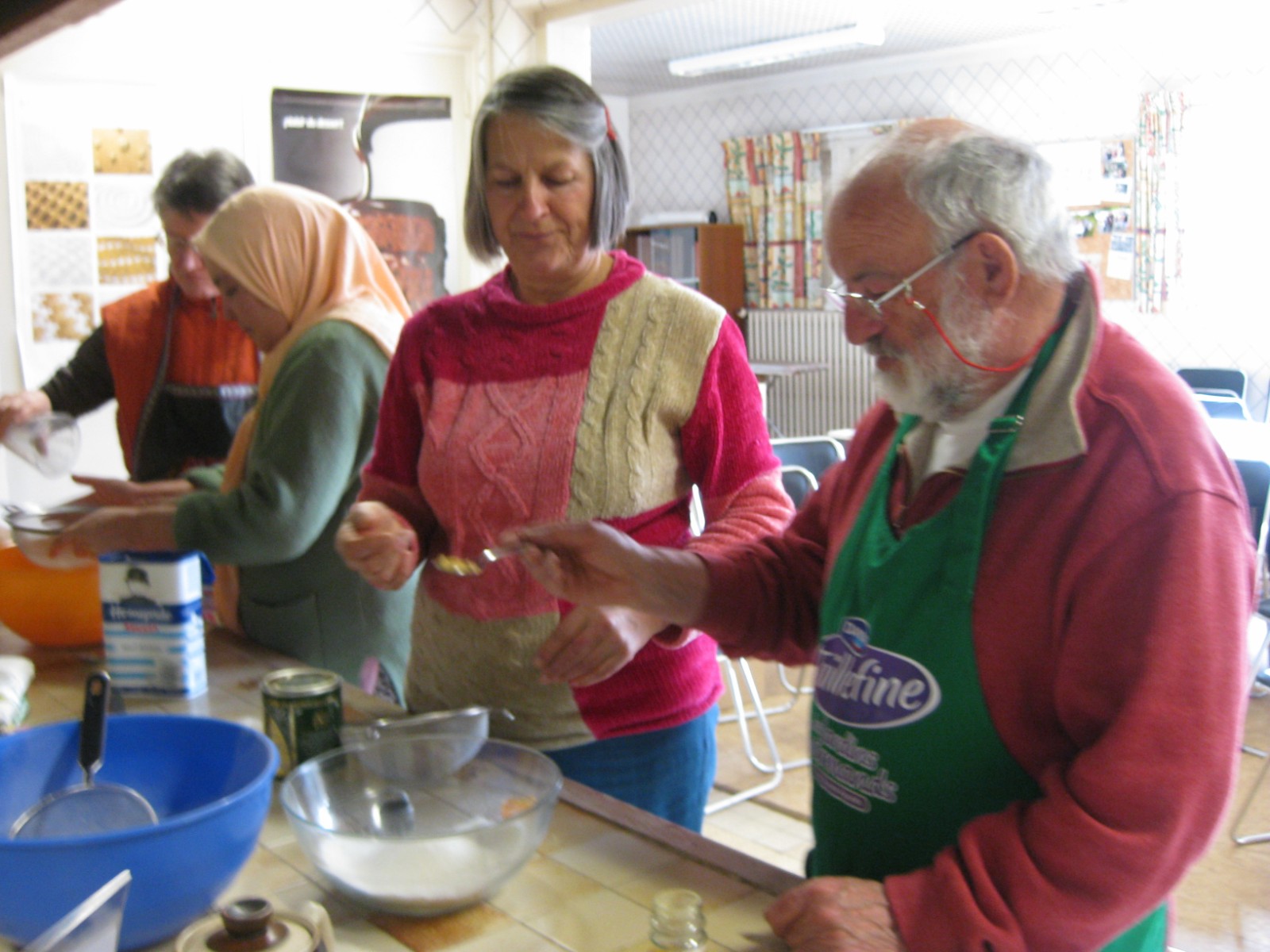
So this afternoon, we had our first atelier to do just that.  We did a little publicity and attracted five women and one brave man, who came along to the CAF (Social Services.  Sort of) with their pinnies to cook.

The work we’re doing this year is on England, Yorkshire in particular, so I was put in charge of the session: though Sylvia did the work of producing a recipe booklet for each participant. What to choose?  In the end I settled for scones, which are unknown here, and crunchy ginger nuts.  Both start with the same technique – rubbing flour and butter together- but end up quite different from each other.  Both are inexpensive and quick to prepare.

Getting stuck into ginger nuts
Everyone rolled up their sleeves, weighed, stirred, mixed, rolled out, organised what they’d made onto baking trays….and waited while the ovens did their work.

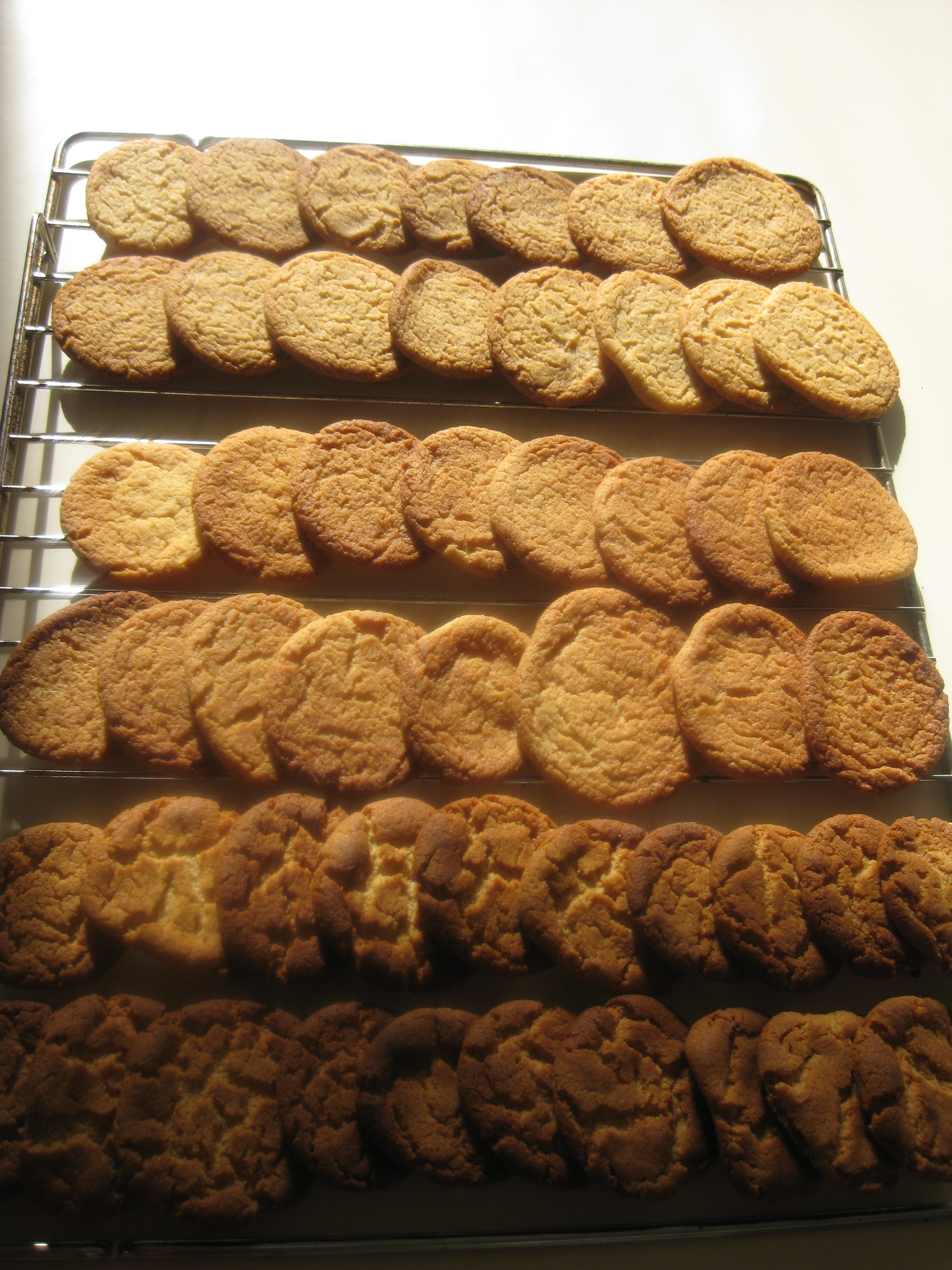
Astonishing to see how identical ingredients prepared identically by different hands, with different ovens varied so much.  Some ginger nuts had crunchy crackled crusts, others were smoother, crisper.  Some scones were domed, others, equally well-risen, were flatter on top.

3 cooking squads, 3 sets of biscuits

So we all had to try everybody else’s over – of course – a nice cup of tea. Lots of discussion and constructive criticism (‘Did you add salt to yours?  Which do you think is better?  With?  Without?’).  The scones were a hit, though not everyone chose to have either butter or jam.  The ginger nuts went down well too.

Everyone declared they’d had fun.  Plenty of time to cook, to share, to talk and laugh and eventually sit and eat what we’d made with new friends. We’ve all said we’d like to come and do it again.  Soon.

Puzzled by the title? It’s an allusion to a series which has apparently been popular back in the UK: The Great British Bake Off

Comfort cooking: Snow 4

I’m getting a bad case of cabin fever at the moment.  The snow is turning to hard packed ice and/or slush and is not much fun to walk on.  We’re not getting out much. So I’ve turned to comfort cooking.

About a week ago, my favourite food blogger, David Lebovitz wrote about his take on that wonderfully decadent Italian treat, Panforte.  Two days after that, Kalba’s blog dropped into my in-box.  She’d been tweaking his recipe whilst hiding from the snow on her side of the Ariège.  Today it was my turn- and here’s my tweaked recipe

  • 40g unsweetened cocoa powder, plus extra for dusting the tin
  • 200g chopped toasted nuts- I used the hazelnuts I gathered with some friends early last Autumn, and the last of my walnuts
  • 100g chopped dried prunes
  • 110g flour
  • 200g chopped candied orange peel
  • 1 tablespoon ground cinnamon
  • 2 teaspoons ground ginger
  • 1 1/2 teaspoons freshly ground black pepper
  • 1/2 teaspoon ground red chilli
  • 1/2 teaspoon mixed spice 
  • A pinch of freshly grated nutmeg
  • 85g dark chocolate, chopped
  • 200g sugar
  • 210g clear honey

Preheat the oven to 165ºC.

Line the bottom of a 22cm springform tin with parchment paper. Dust the inside, including the sides, with cocoa powder.

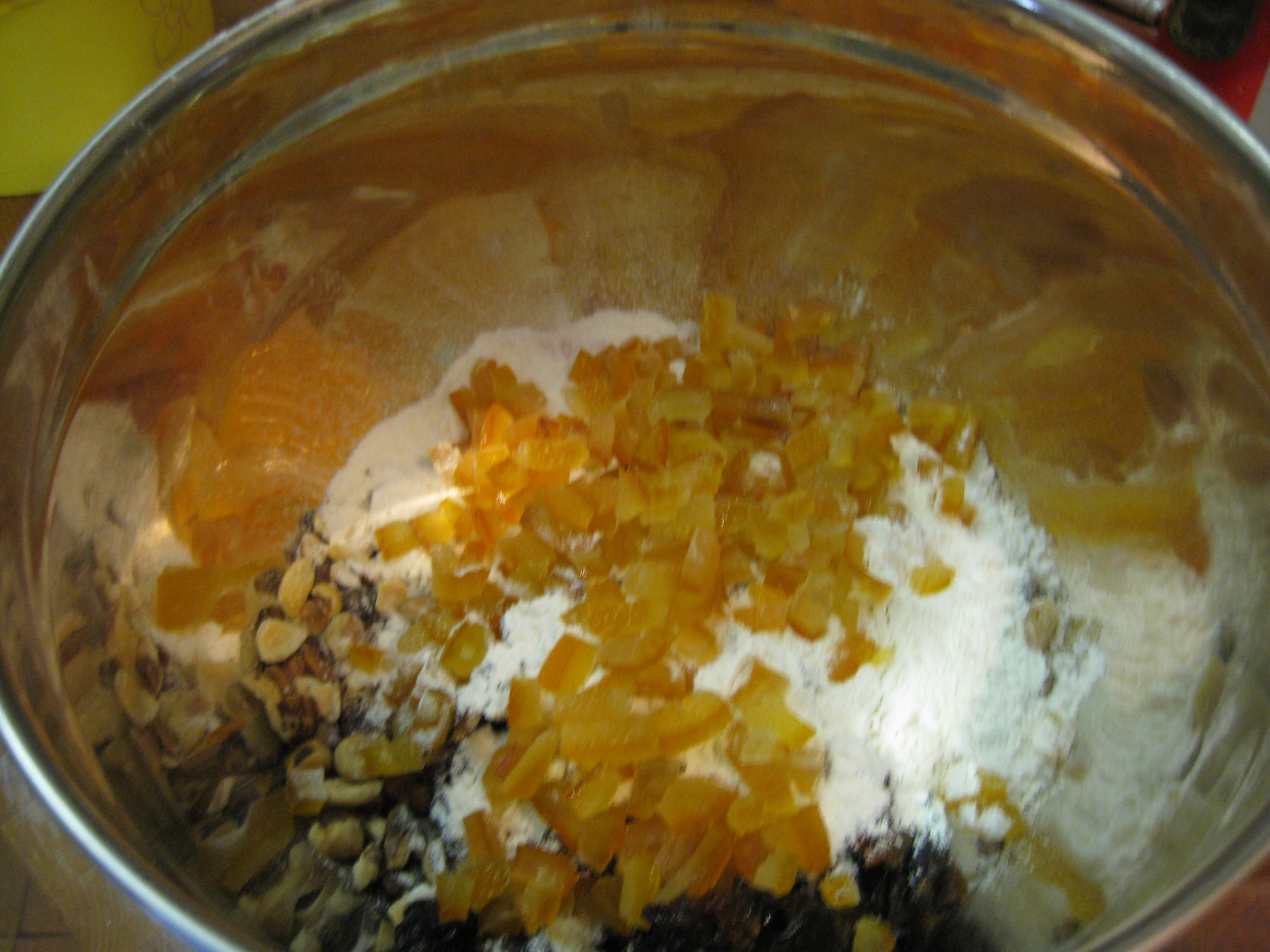
In a large bowl, mix together the cocoa powder, dried fruit, nuts, flour, candied peel, cinnamon, ginger, black pepper, mixed spice, and red chilli.

Melt the chocolate in a small bowl set over a pan of simmering water. Remove from heat and stir it into the nut mixture.

Gently heat the sugar and honey to 115ºC.

Pour the hot honey syrup over the nut mixture and immediately stir it all well to mix. Scrape the batter into the prepared pan and smooth the top.

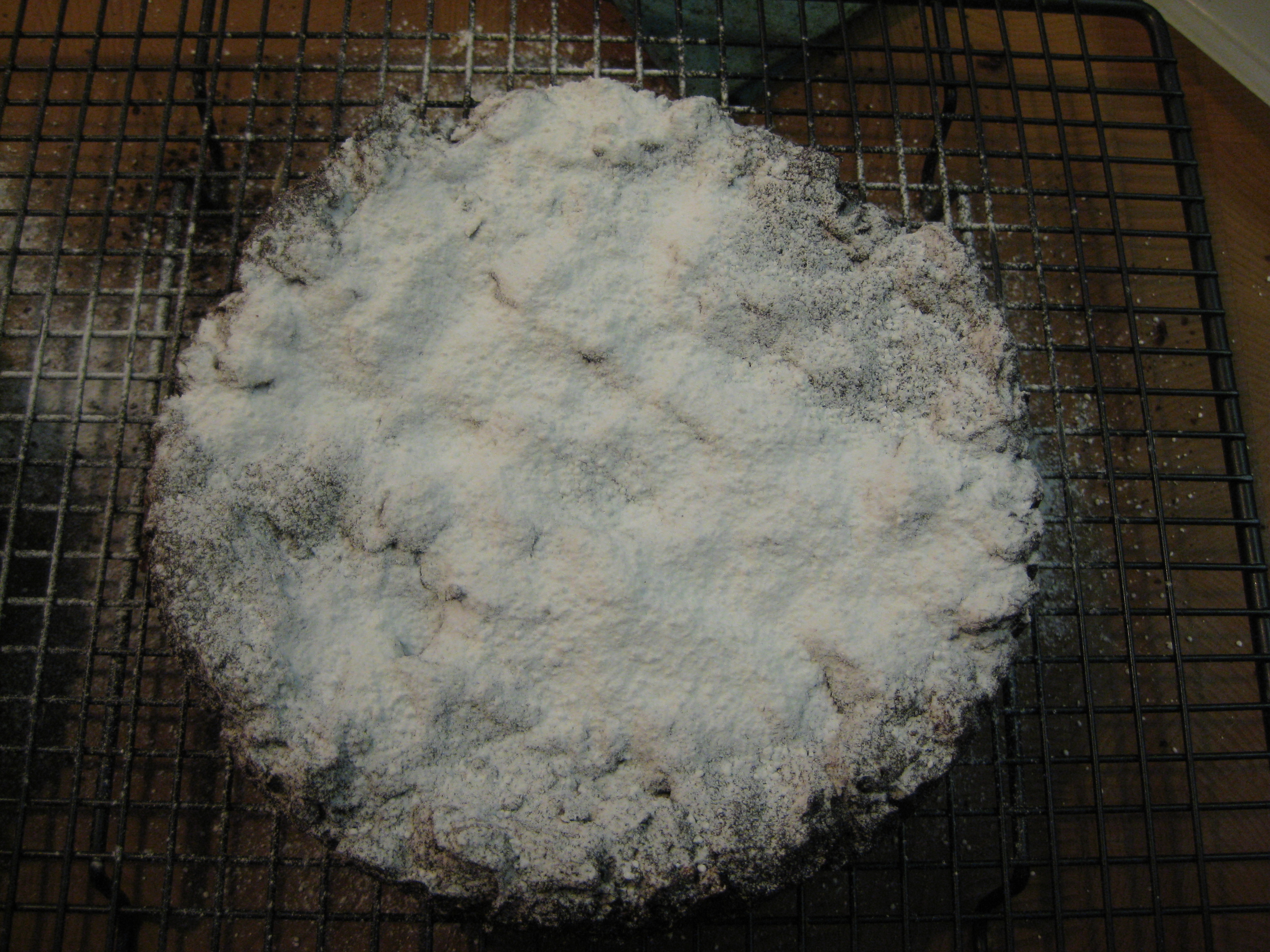
Bake the panforte for 30-35 minutes; the centre will feel soft, like just-baked custard, and if you touch it, your finger will come away clean when it’s done. Let it cool in the tin on a wire rack for 15 minutes, then run a knife around the edge to loosen it. Remove the springform carefully, let cool completely, and dust generously with icing sugar.

The panforte's on its way

So why have I changed things? For my usual reason of being short of an ingredient or two of course.  I’d run out of dried apricots.  Well, what’s wrong with prunes then? No candied lemon peel?  I used the last of the orange peel.

Entirely untypically, I decided I’d get in a muddle if I didn’t weigh out all the ingredients and put them neatly beside the mixing bowl in dinky little dishes ready for the off, in the manner of Delia Smith and TV cooks everywhere.  We both weighed, chopped, melted things and  mixed. The panforte safely in the oven, we started tidying up, and then I found….the dish of cocoa powder.

Unlike those TV chefs, I whipped the panforte out of the oven, dumped the mixture in a bowl with the cocoa, mixed it up, and shoved it back in the tin, and then into the oven again.  I think I got away with it…..

Can't eat it yet

The thing is, Malcolm’s always said he doesn’t care for panforte.  That’s why I made him a treat of his own this morning.  But this afternoon, we both squabbled over who could lick the scrapings from the bottom of the panforte bowl.  He liked it.  We both more than liked it.

We can’t try the finished article yet though. Several days waiting time for the flavours to marry together is recommended.  We’ll have to do our best to ignore the box sitting in the pantry.

So what did I make for Malcolm?  Well, tidying up my recipe collection, I found Dan Lepard’s recipe for Sesame Ginger Halva.  Like the Panforte, it’s perfect with a shot of strong black coffee.  Unlike the panforte, you can eat it immediately, and it’s a comforting pick-me-up on a snowy day.

  • 250g tahini
  • 100g stem ginger, strained from its syrup
  • 200g caster sugar
  • 50ml water
  • 50g of the syrup

Spoon the tahini and the oil separated from it into a bowl and beat with an electric hand whisk until it is smooth and emulsified.

Chop the ginger into ½cm cubes. Line the base of a 2lb loaf tin or similar with a buttered sheet of foil.

A crumby photo of a crumbly treat

Place the sugar, water and 50g syrup from the stem ginger in a saucepan and bring to the boil. Simmer for 5-10 minutes until a drop of the toffee hardens when popped into a glass of cold water, and can be squeezed with the fingers into a soft ball.  This step’s tricky.  Because there’s so little syrup, the heat increases rapidly.  Just do your best: if it gets too hot, the halva will be crumbly rather than creamy, but who cares?

Next, add the ginger cubes and remove from the heat and add the tahini. Beat until the mixture thickens, then tip into the foil-lined tin. Cut into squares when warm.

Just one tip, while you’re reading this: do as the spellchecker does, and substitute ‘pianoforte’ for ‘panforte’ every time the word occurs.  It makes for interesting reading

Azinat

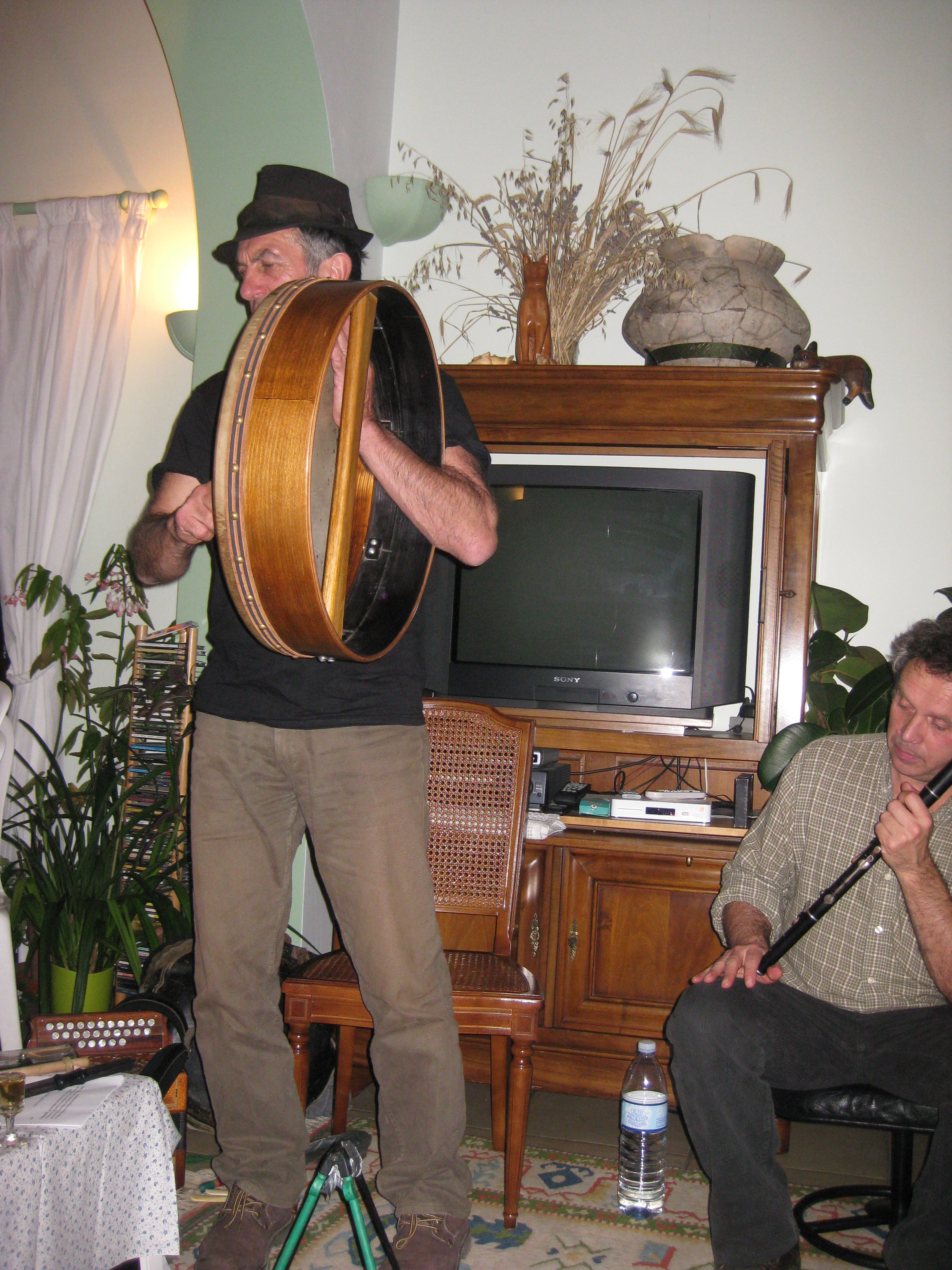
Bertrand and his bodhran

It’s town-twinning time again.  Our Breton friends were here in Laroque for a few days, and a Good Time Was Had By All.  It’s hard to describe the simple pleasure of this weekend.  Re-discovering the region through Breton eyes and getting to know our northern friends a bit better: getting to know our Laroquais friends and acquaintances better too: music – lots of it – thanks to the talented and eclectic musicians who always form part of the group – a singer and bodhran player, a flautist and a keyboard player: and shared eating, lots of it.

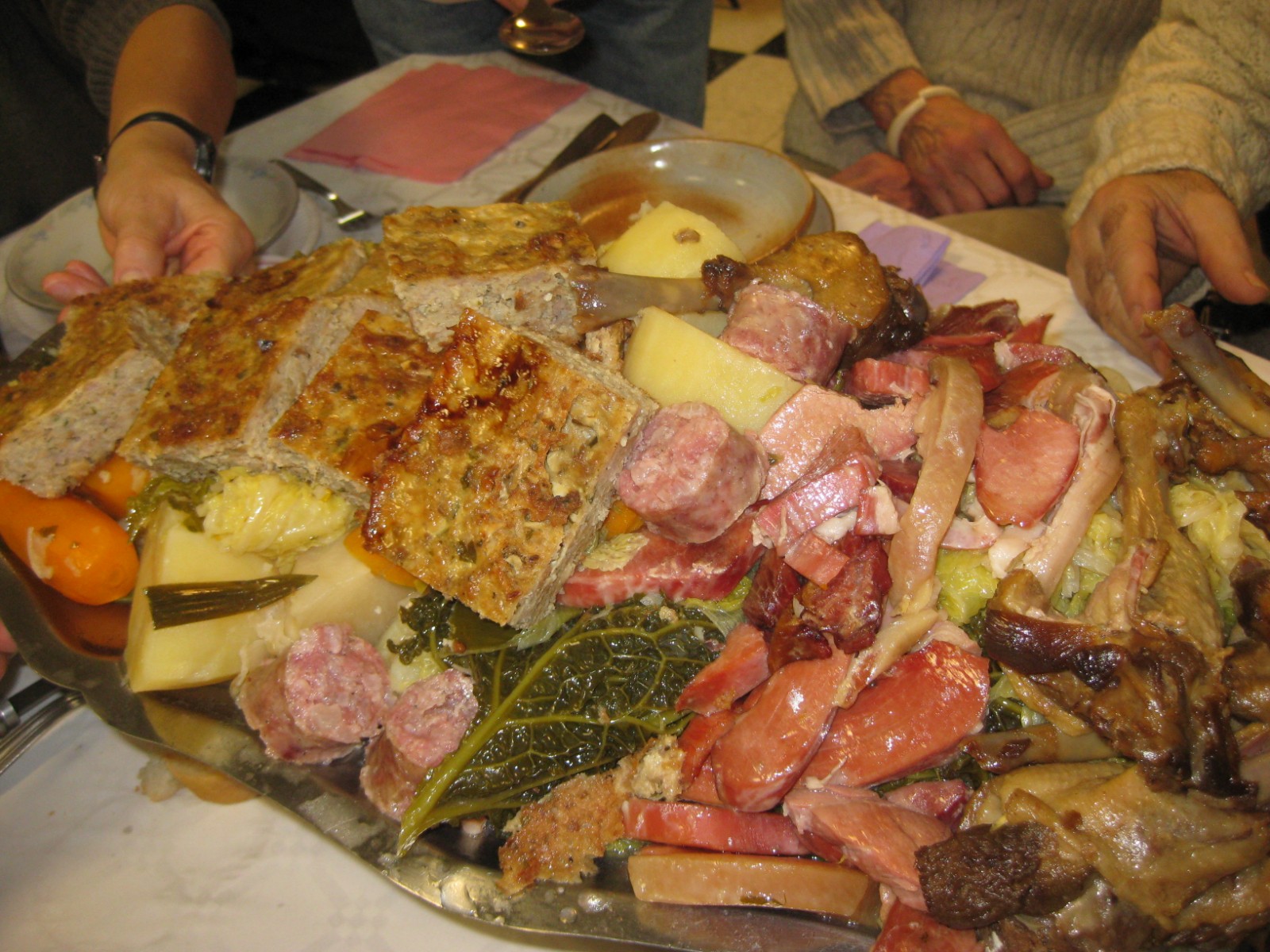
If you still think France is the land of sophisticated and fine dining, you’ve yet to discover the Ariège.  People lived close to the land, they were out with their stock, working the fields, or keeping the textile industry alive and successful.  Busy women put a pot of food on the fire in the morning and expected it to look after itself till hungry workers came in demanding nourishment.  And they were likely to get azinat.  Azinat with rouzolle.  That’s what about 80 of us sat down to on Saturday night,

I suggested it was a dish that was more than a bit troublesome to prepare.  Joscelyne, in her 70’s and a life-long Ariègeoise was having none of it.

‘No, it’s easy!  Take a large cabbage and blanch it for 5 minutes.  Meanwhile, chop your onions or leeks, carrots and any root vegetables you fancy, and sauté them gently.  Add some slices of belly pork, some sausages, a couple of bay leaves and the cabbage.  Throw in a couple of litres of water and simmer gently for at least a couple of hours.

Now throw in some large chunks of potato, some dried sausage, and the duck leg confit (these are portions of duck which have been preserved by salting the meat and cooking it slowly in its own fats) which you’ve browned gently in a frying pan to remove the excess fat, and continue to cook gently for another half hour or so.

Meanwhile, make the rouzolle.  Mix together chunky sausage meat, some chopped fatty bacon, eggs, milk, a couple of slices of bread, chives, parsley, garlic.  Form into a flat cake and fry on both sides.’

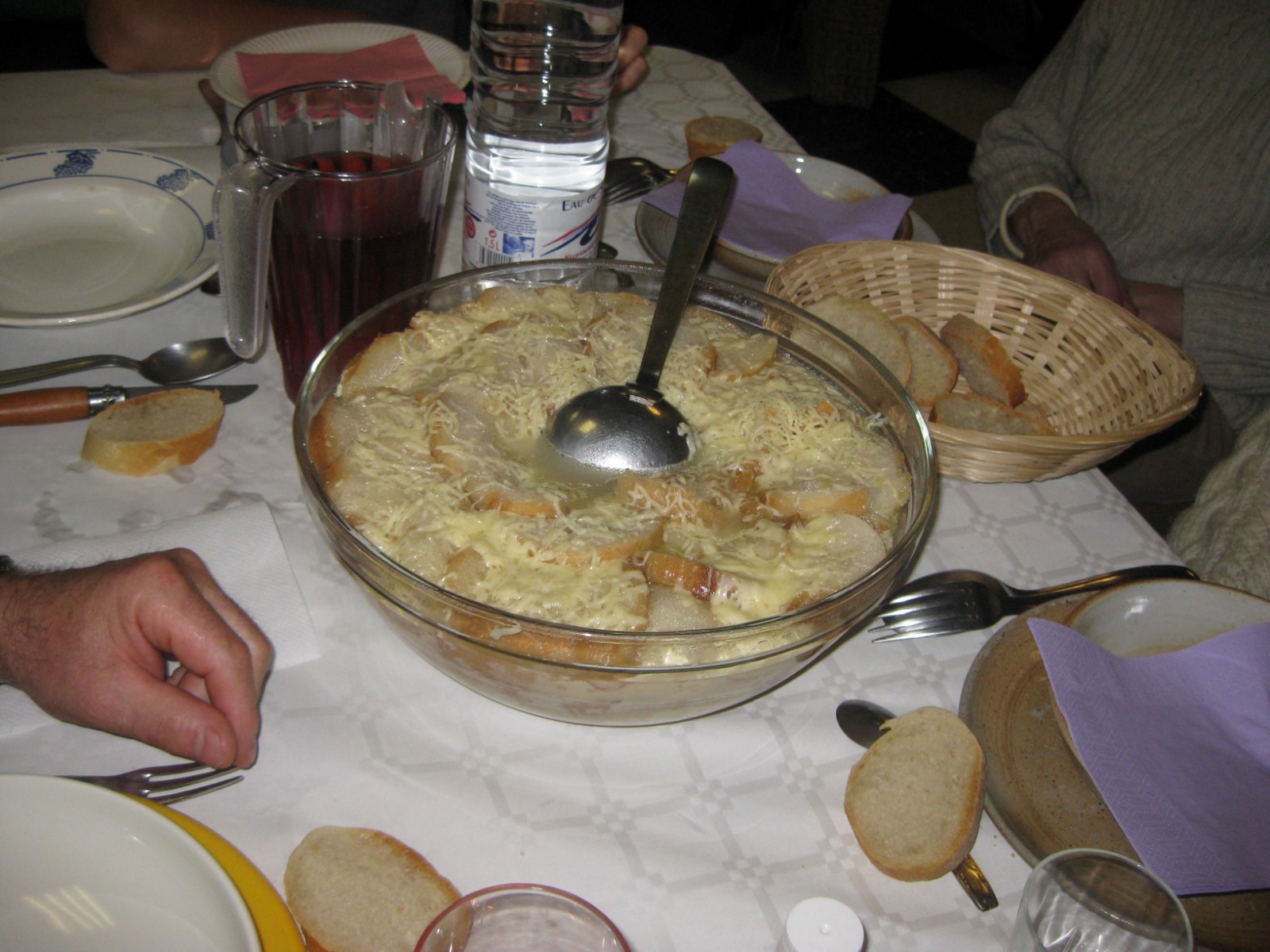
According to Joscelyne, the hungry family would have as their lunch the bouillon from the dish, poured over slices of bread generously sprinkled with grated cheese.  Cheap, filling and nourishing.

The deliciously soggy bouillon

Dinner, at the end of the day, would be all the meats and vegetables.

Azinat

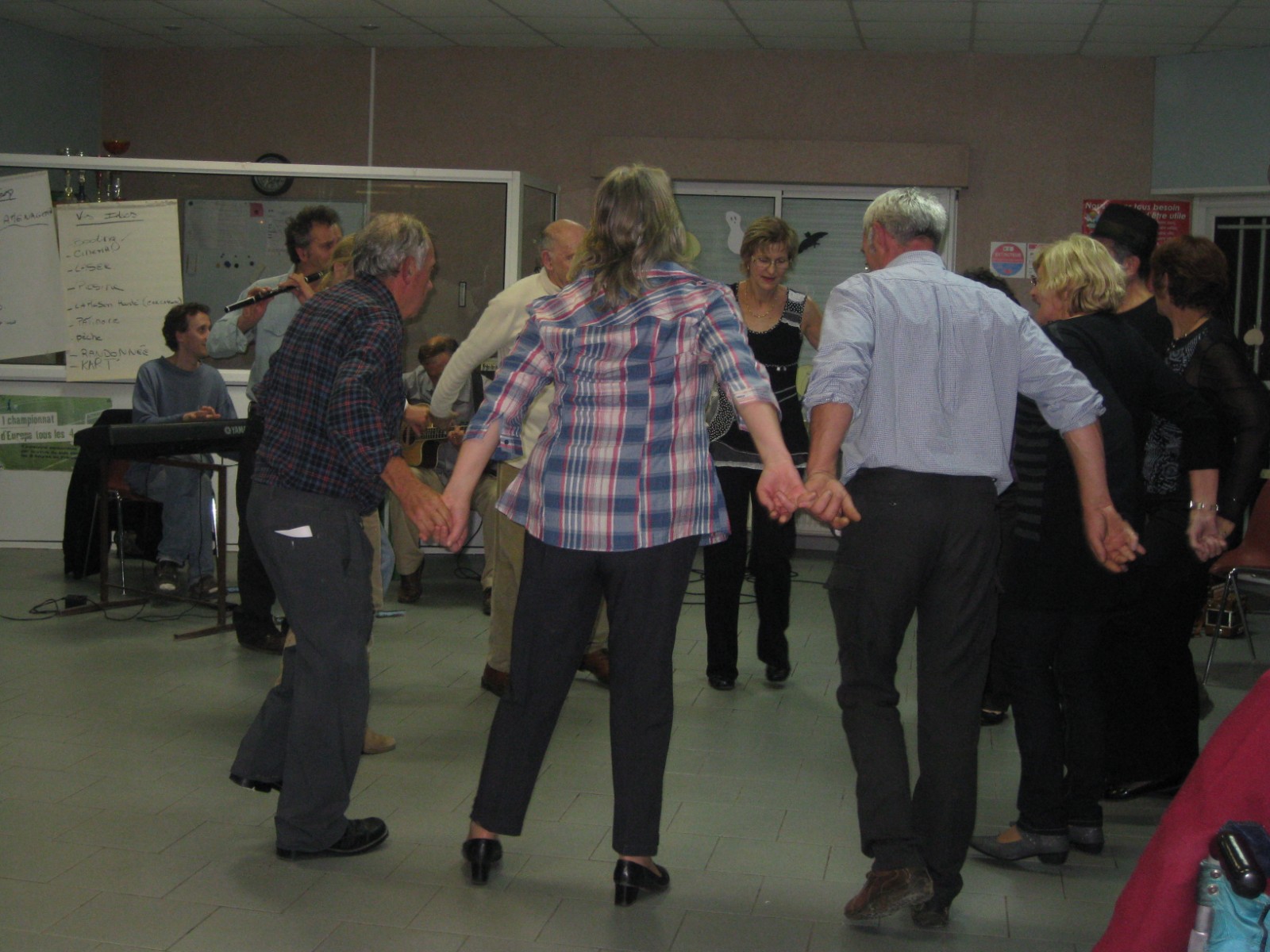
That evening, we sat down to the soup, followed by the meats.  Followed by cheese.  Followed by croustade, the Ariègeois answer to apple pie.  Followed by membrillo – quince paste – and coffee.  Followed by an energetic evening of Breton dancing.  We needed to burn off those calories.

It took a while to get us all on the floor. But we all made it eventually. Even me.

Season of pumpkins and mellow fruitfulness

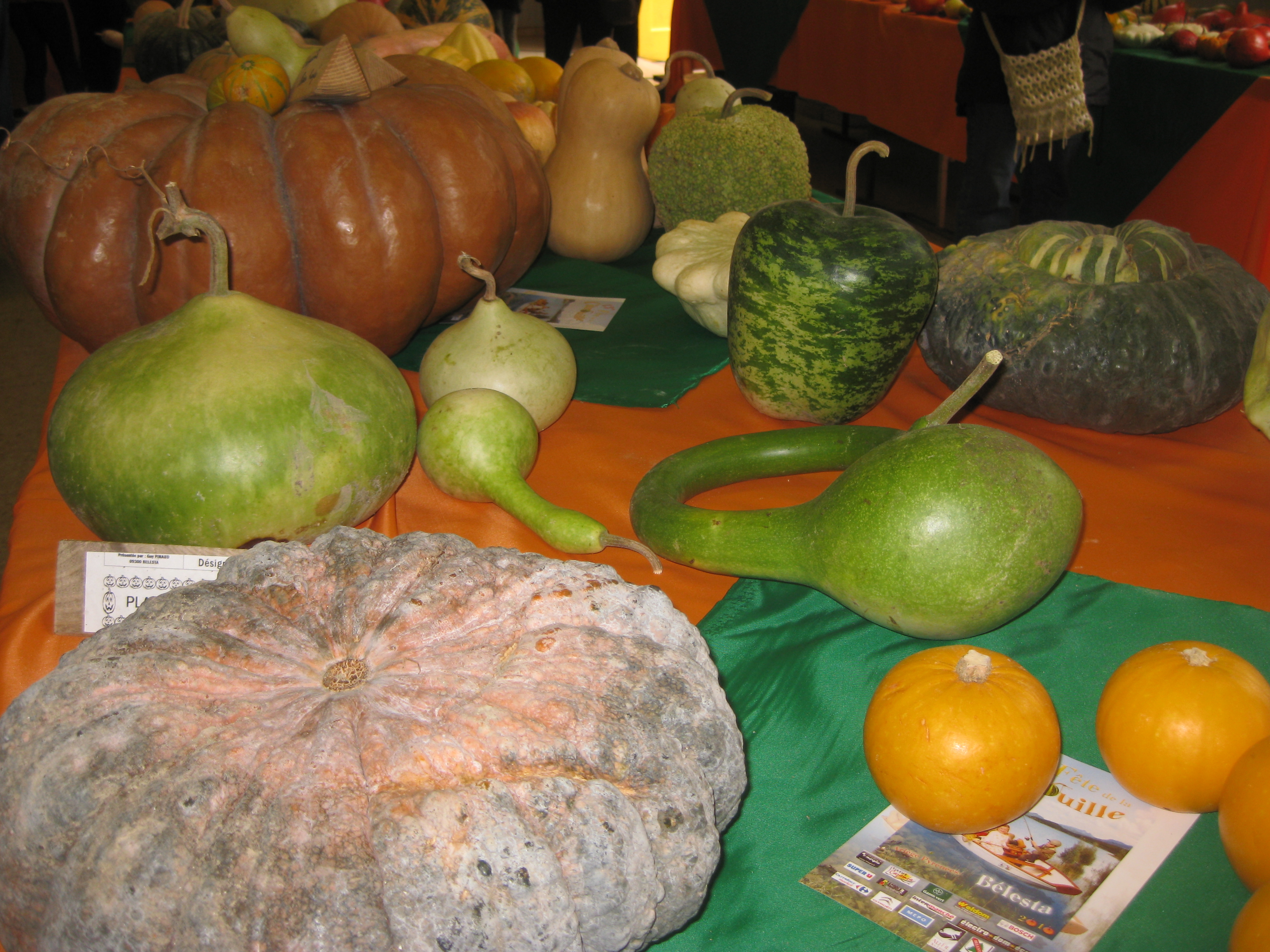
A few pumpkins on display last year at Belesta’s annual Fête de la Citrouille

Go to any veg. stall on a French market just now, and there’ll be at least one giant pumpkin.  The stall holder will sell you a portion if you like, using a hefty cleaver to wrest a kilo or so of orange flesh from this magnificent vegetable.  The market’s probably got at least one stall devoted to nothing but pumpkins: Turk’s head, musque de Provence, butternut, red kuri, rouge vif d’Etampes………

It’s not so very long ago in England that I’d be doing the rounds of all the supermarkets, the day after Hallowe’en, gathering up the last few Jack o’Lantern pumpkins at bargain-basement prices.

Jack o’Lantern dressed up for Hallowe’en

They’d been stocked for everyone to make their scarey Hallowe’en pumpkin faces with and that was all.

Hardly anybody used them to cook with (presumably not even the many Americans who live in Harrogate, with their apparent love of pumpkin pie), and Hallowe’en over, the unsold ones would be junked.

Hugh Fearnley-Whittingstall et al have put paid to that, and now the English love pumpkins as much as the French always have.

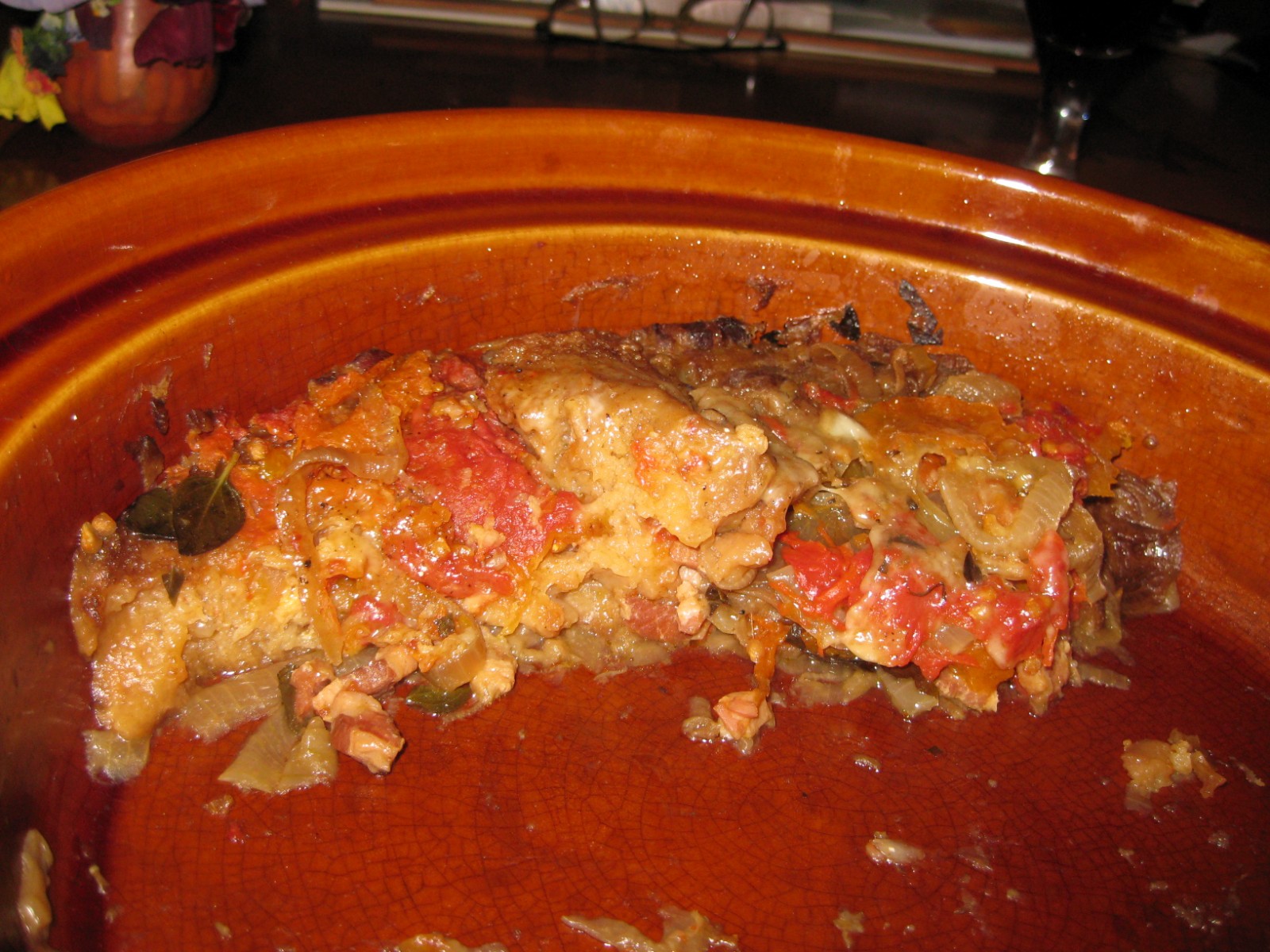
Here’s an easy and long-established soupy stew from round these parts (though I learned about it from Nigel Slater) to warm you up after a chilly day in the Great Winter Outdoors.

Hmm. We made short work of that.

When we first tasted it, we thought it nice enough, not earth-shattering though. It’s grown on us, and now we think it’s comfort food par excellence: especially those pillows of bread, soaked in scalding hot flavoursome juices.

Garbure Catalane

Toast thick slices of bread- preferably sourdough, and layer them up in a casserole or slow cooker with fried onions, garlic, marjoram, sliced skinned tomatoes, and thin slices of pumpkin.  Top the dish up with seasoned water and olive oil and bake for an hour or two in a slow oven (or most of the day in a slow cooker).  Take the lid off the dish for the last half hour or so and return to the oven with a crust of grated cheeses (parmesan is good to include in the mix, as it provides a welcome crispiness) for the last half hour or so.  Or grill for a few minutes if you’ve been using a slow cooker.

The Little HelpX Book of Recipes

Marc and Vicki commandeer the kitchen

Our wonderful HelpXers, Vicki and Marc, enjoyed spending time in the kitchen. They cooked and cooked and made memorable meals: here are just three.

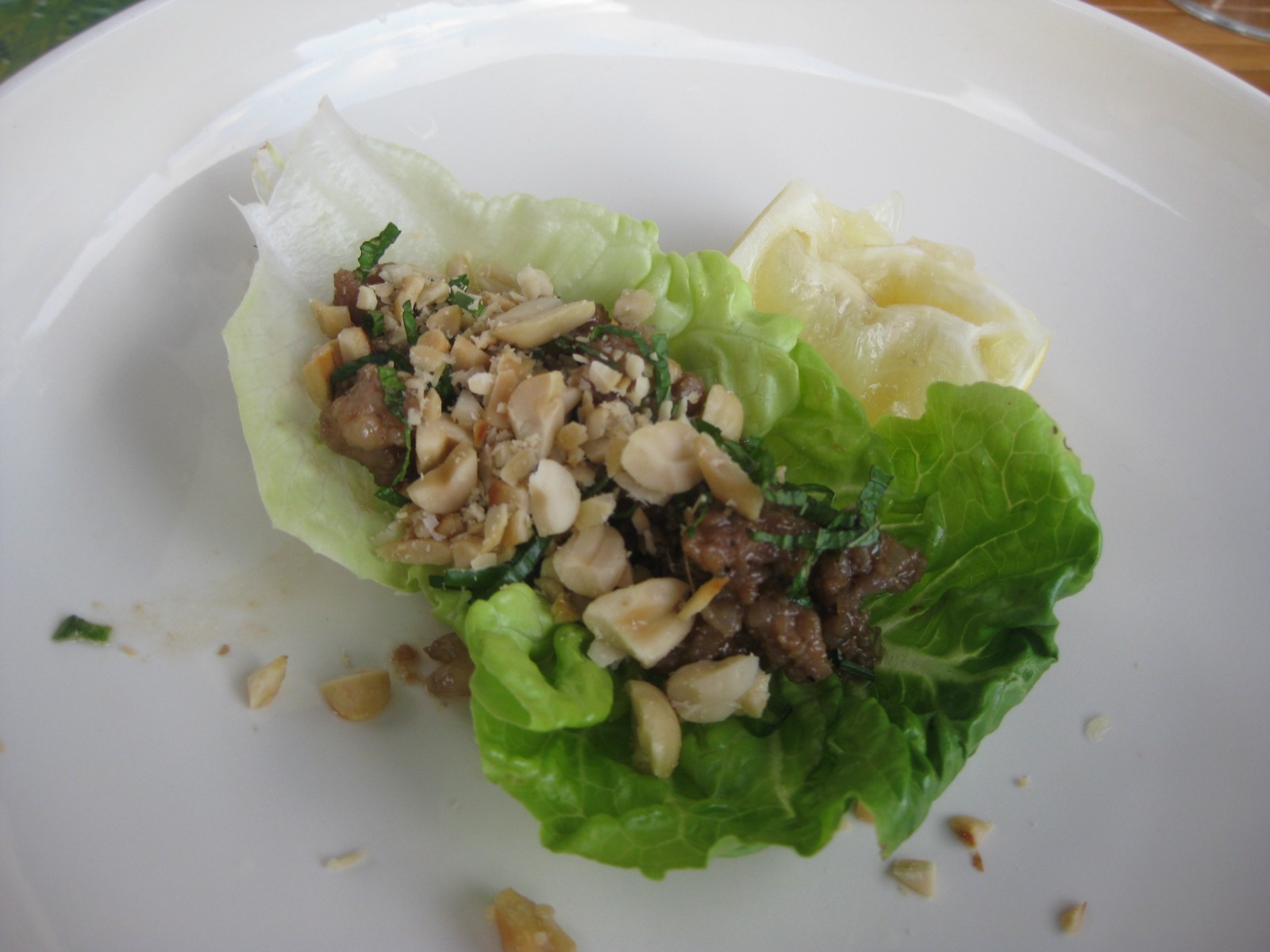
Vicki was keen to introduce us to this Chinese dish.  It’s fun to eat: use lettuce ‘wrapping’ to make your own pork parcels up, then garnish them with what you fancy from the bits and bobs on the side.

Sang choy bow

1 tbsp sunflower oil

Large piece fresh ginger, peeled and grated

2 cloves of garlic, crushed

2 red chillies , deseeded and finely sliced

500g minced pork

85 g light brown sugar

2 tbsp fish sauce

Juice from 1 lime

2  finely shredded lime leaves

Mix of lettuce leaves

Large handful mint and coriander leaves, very roughly chopped

handful toasted peanuts , roughly chopped

2 shallots finely sliced into rings shallots

1 lime, cut into wedges

Heat the oil in a large frying pan. Fry the ginger, garlic and chillies for 1 min. Add the mince, then cook on a high heat until golden brown, breaking it up with a wooden spoon as you go. Sprinkle over the brown sugar, fish sauce, lime juice and shredded lime leaves, then cook everything down until sticky.

Tip the mince into a serving bowl, then serve with a bowl of lettuce leaves for wrapping the mince in; the herbs, shallots and peanuts for scattering over; and the lime wedges for squeezing.

Sang choy bow: a little lettuce parcel just waiting to be eaten

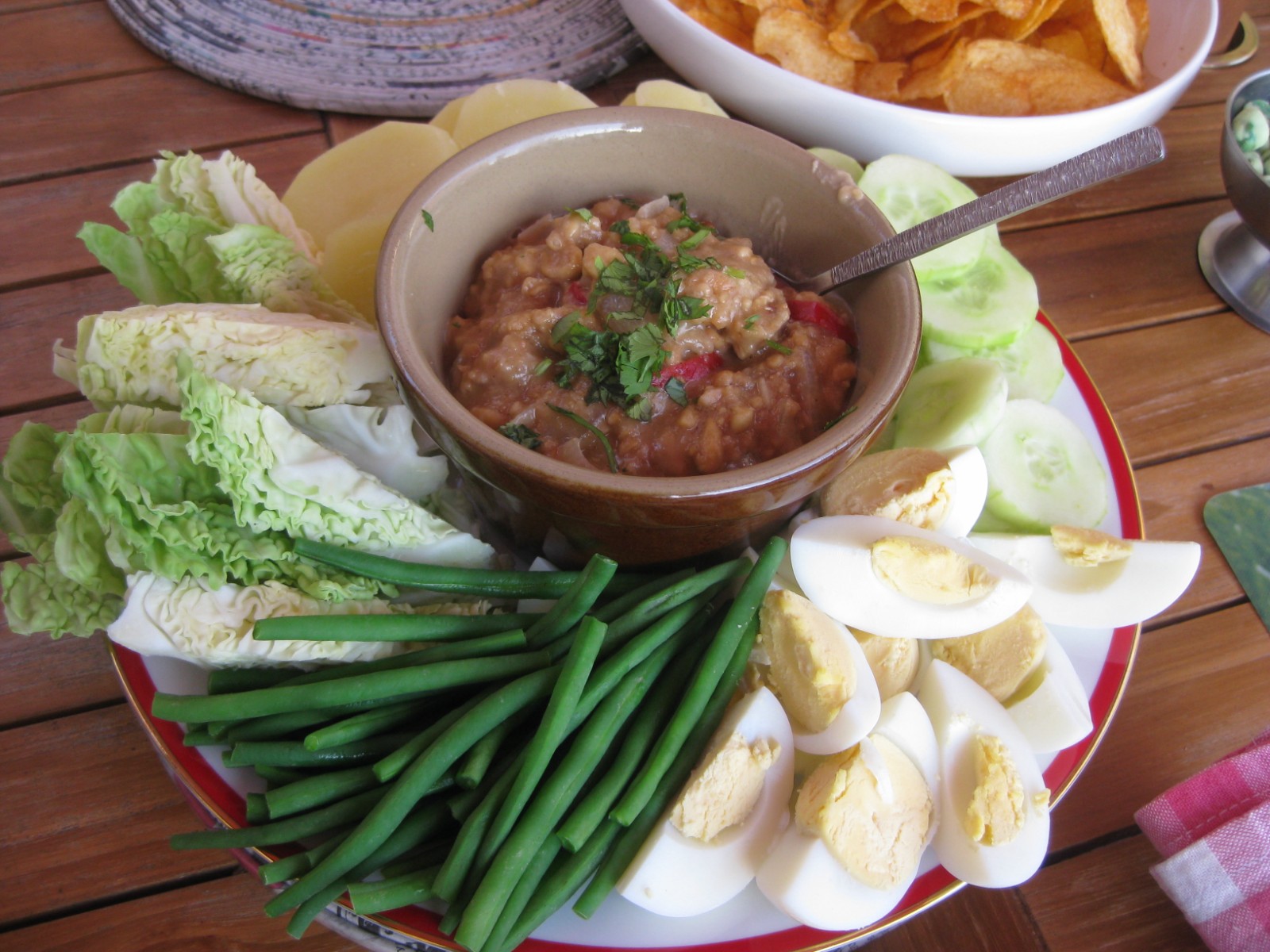
On their last evening, the night of the ‘Asian tapas-Smörgåsbord’ , Marc introduced us to the Vietnamese answer to crudités, Gado gado.  I wasn’t watching while he was cooking, and I forgot to get his recipe from him, so … Marc, if you’re reading … is this version OK?

Gado gado consists of a plate of various raw or lightly cooked vegetables to dunk into a peanut  sauce.  Marc served raw cabbage and cucumber, lightly steamed potato slices and french beans, and quartered hard-boiled eggs.

Peanut Dipping Sauce (Sambal Kacang)
3-4 cloves garlic, peeled

1 fresh green chili chopped, (use 1/2 for milder sauce, or leave it out)

Salt

200 g  roughly crushed peanuts

1 teaspoon brown sugar

2 tablespoon lime juice

450ml hot water

Place the garlic cloves, green chili and salt in a mortar and pestle and pound into a paste.

In a small bowl, add the garlic paste, crushed peanuts, sugar and lime juice. Pour in hot water a little at a time, while whisking the peanut butter. Stop pouring the hot water when the peanut butter forms a smooth, dippable sauce. You may not need to use all of the hot water.

Taste the peanut sauce and adjust salt, sugar and lime juice if needed. Serve with your selection of vegetable crudités

Gado gado

Vicki found this recipe in my copy of Dennis Cotter’ s ‘Paradiso Seasons’, a wonderful vegetarian cookbook.  If you explore the web, you’ll find he’s tweaked this recipe several times.  The original is pretty damn’ good.

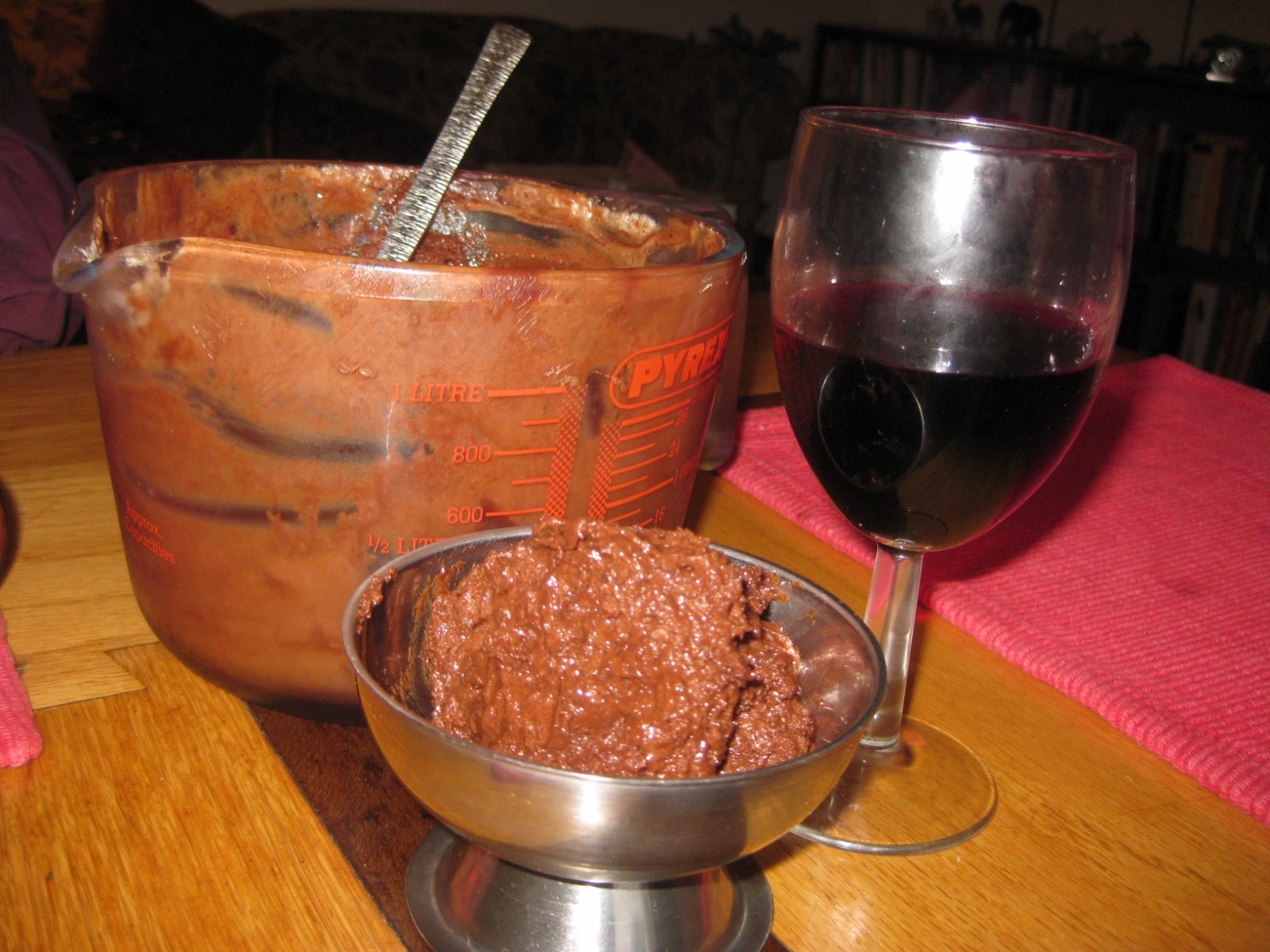
Chocolate-olive oil mousse

 150g. good dark chocolate

140 ml. olive oil

4 eggs separated

125 g. golden caster sugar

(1 tbspn. Cointreau or other orange liqueur)

Pinch salt

In a bowl over a pan of simmering water, melt the chocolate and slowly stir in the olive oil.  Beat the egg yolks with half the sugar until pale and fluffy.  Stir in the chocolate oil mix (and Cointreau if used).  Whisk the eggs with a pinch of salt until stiff, then continue whisking while adding the remaining sugar gradually in small batches.  Fold the egg white mixture and put the mousse into the fridge to chill for at least four hours.  It has a strong structure, and will easily keep overnight (but not if you taste it first…….)

It scarcely mattered that this chocolate mousse wasn't prettily presented: it disappeared rather quickly