My flight home from Barcelona the other day was remarkable for two reasons. For one, I had a window seat; and for two, the earth below was visible almost every mile of the way. Here’s the story of a journey.
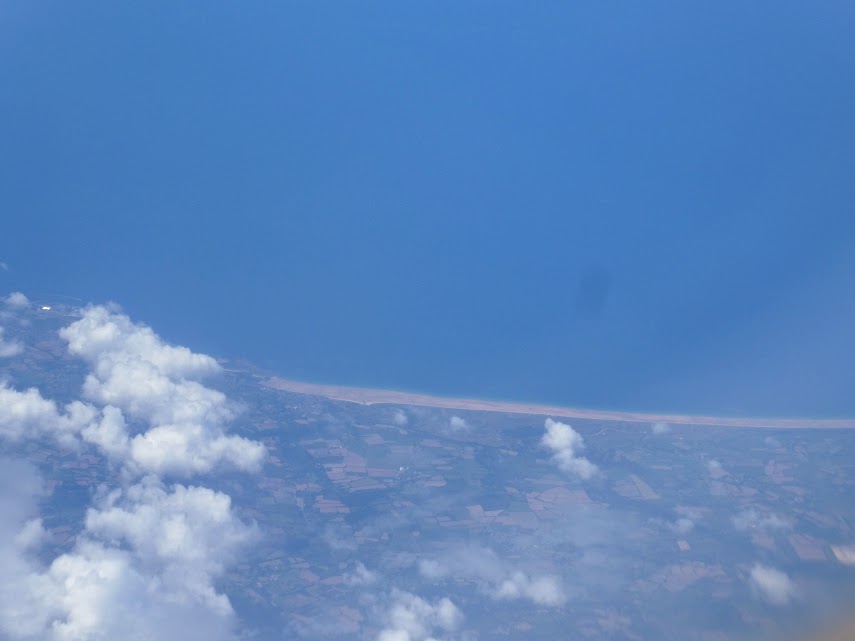
A small port just south of Barcelona.Arid fields.The foothills of the Pyrenees.The Pyrenees, still snow-capped in places.Rural France.We hugged the coast throughout almost all the French part of our flight.Reaching England …… and cloud cover.Manchester almost in sight.
Oh, and here’s an eleventh photo, from terra firma: alongside the (static) travelator at Manchester Airport.
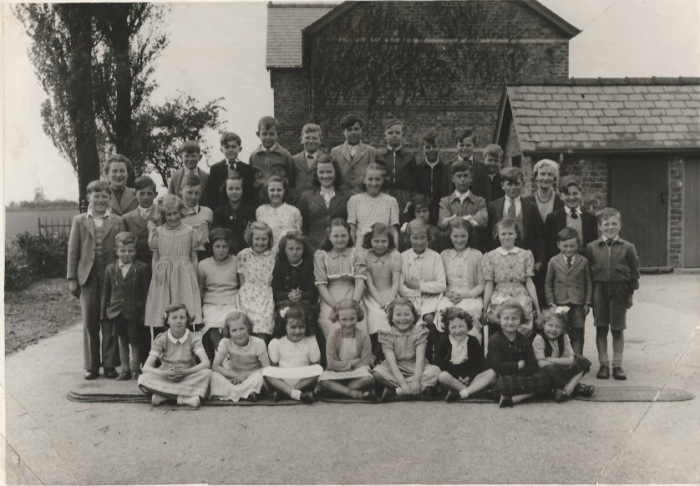
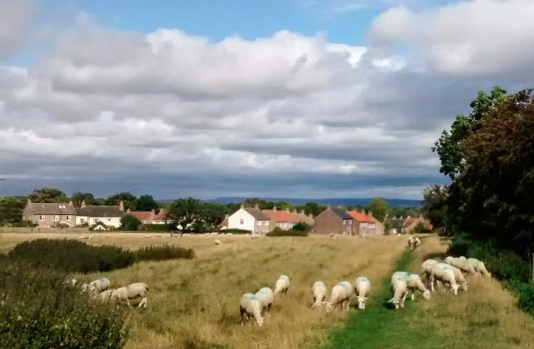
My life has come full circle. Many of my earliest memories come from Sandhutton, current population 260, where my mother was head teacher of a two-teacher school which educated all the village children between five and fifteen years old. These days I visit the village weekly – it’s less than ten miles away. The school no longer exists, but my Spanish teacher lives there.
There we are. Sandhutton School, c.1951, just before I started there.
When I was five, my life changed a bit. We went to live in London (current population 8.13 million).
A trip down the Thames: nearly at Westminster now.
I was a student in Manchester (538,000). Then I went on to live in Portsmouth, in Wakefield, in Sheffield, in Leeds: all cities numbering their citizens in the tens,or even hundreds of thousands. I loved city life. I relished the opportunities only a city could usually offer, and the diverse populations living in them.
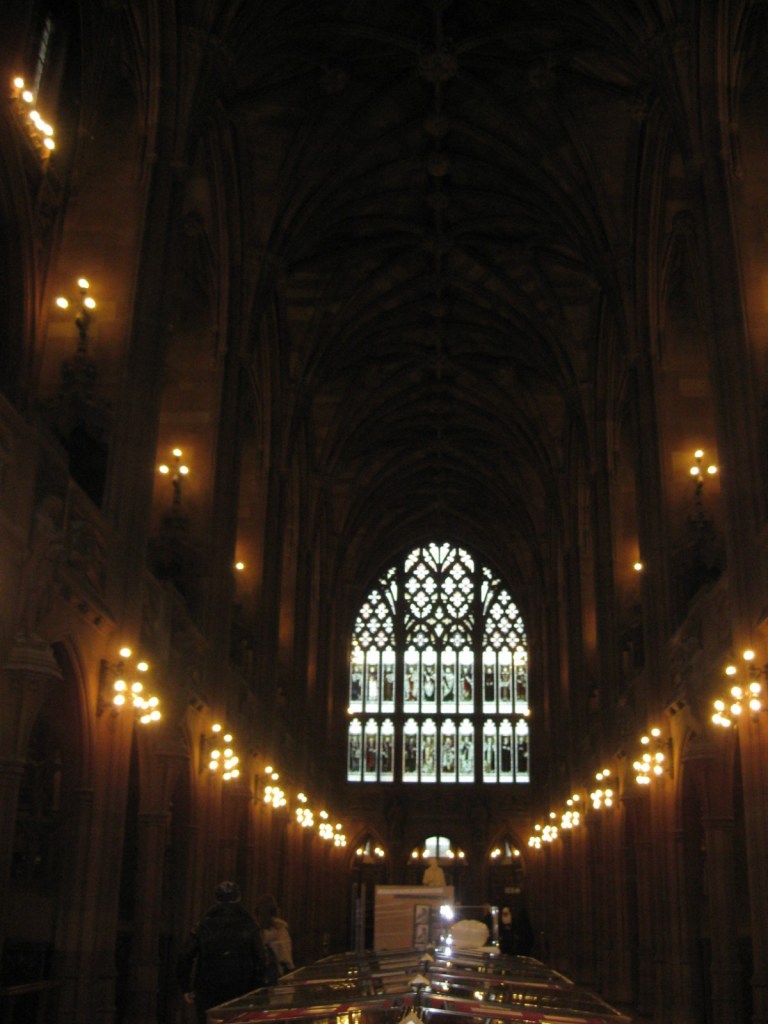
One of my favourite places in Manchester: The John Rylands Library. Who wouldn’t feel a real scholar in these surroundings?
Thornton’s Arcade in Leeds.
No, just …don’t. A shoe shop in Leeds.
When we moved to Harrogate, some twenty years ago, I announced we were moving to a small town. A mere 75,000 people lived there.
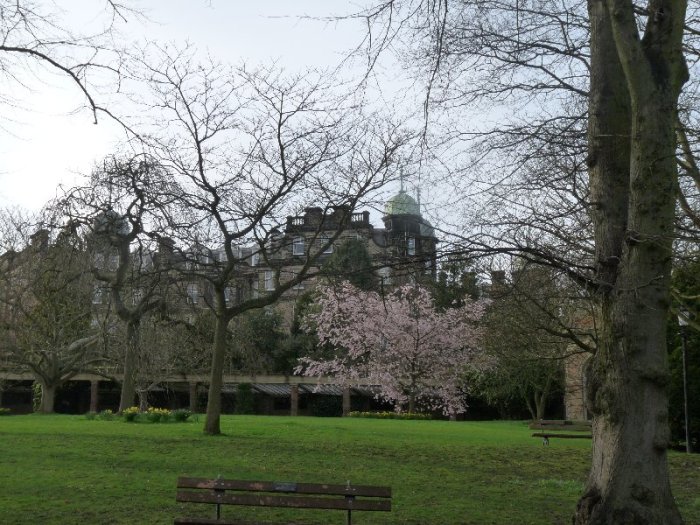
Harrogate: one of its many open spaces: the Valley Gardens.
But that was before we went to France. Laroque d’Olmes has a population of some 2,000 people, and its county town, Foix, has only 10,000. We came to appreciate small town life: its neighbourliness and our sense of belonging – the space to appreciate the countryside and mountains beyond.
The street near the church in Laroque, with the Pyrenees in the distance.
When we came back to England, that small town of Harrogate suddenly seemed horribly large, traffic-infested and in every way untenable, despite its green spaces and lively community life. So here we are in North Stainley, population 730.
In fact we’re not even in the village, but in a little enclave just outside, with that walled garden I showed you last week. Population 8. It’s perfect.
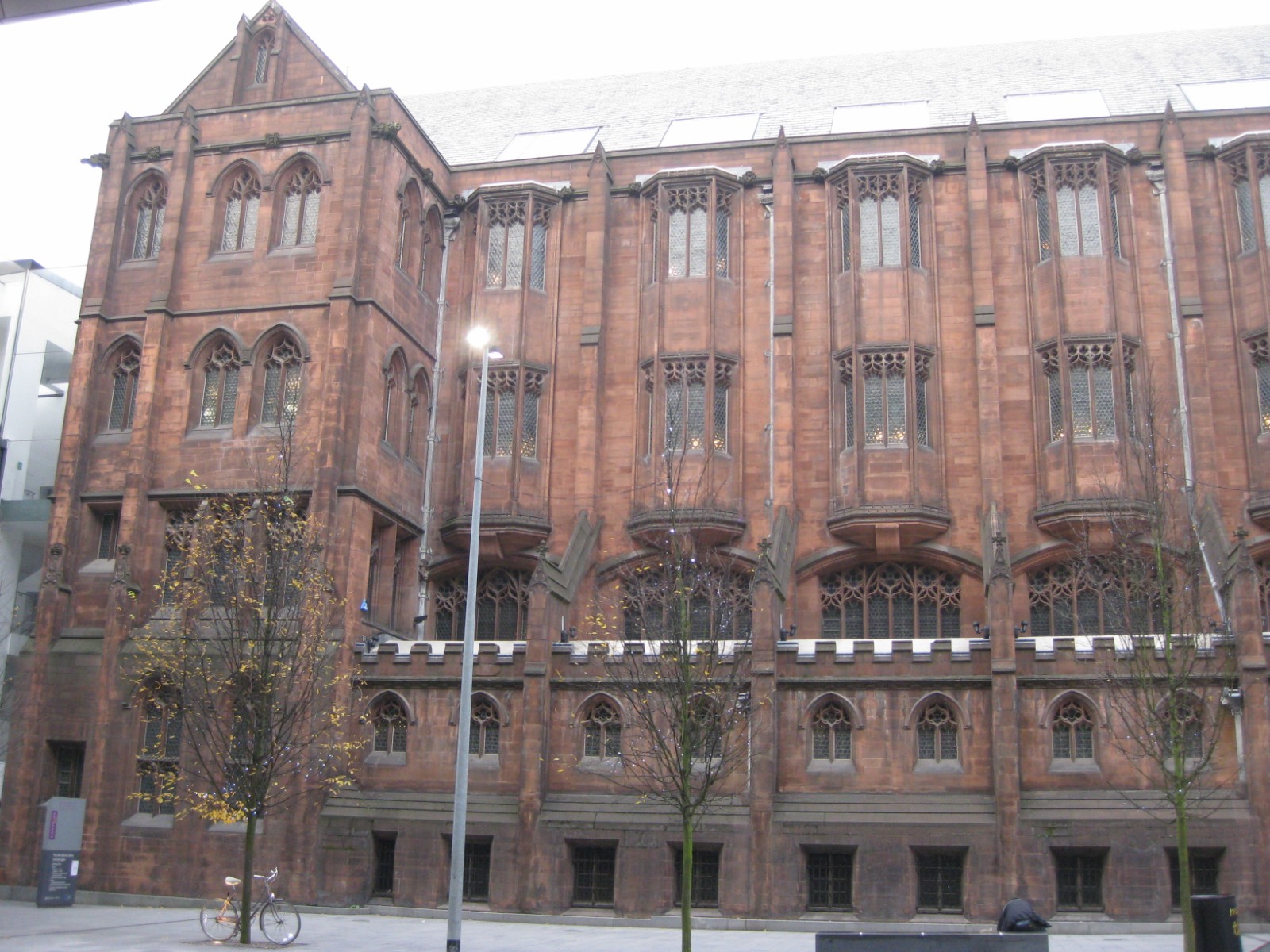
Before we came back to France at the weekend, I wanted a day in Manchester, where I was at University more than 40 years ago. It was a city people at that time seemed to love or hate. I loved it then, and I still do. It’s buzzy and busy, with galleries, music, shops, and a bravura display of civic Victorian architecture down every city centre street.
Outside John Rylands library
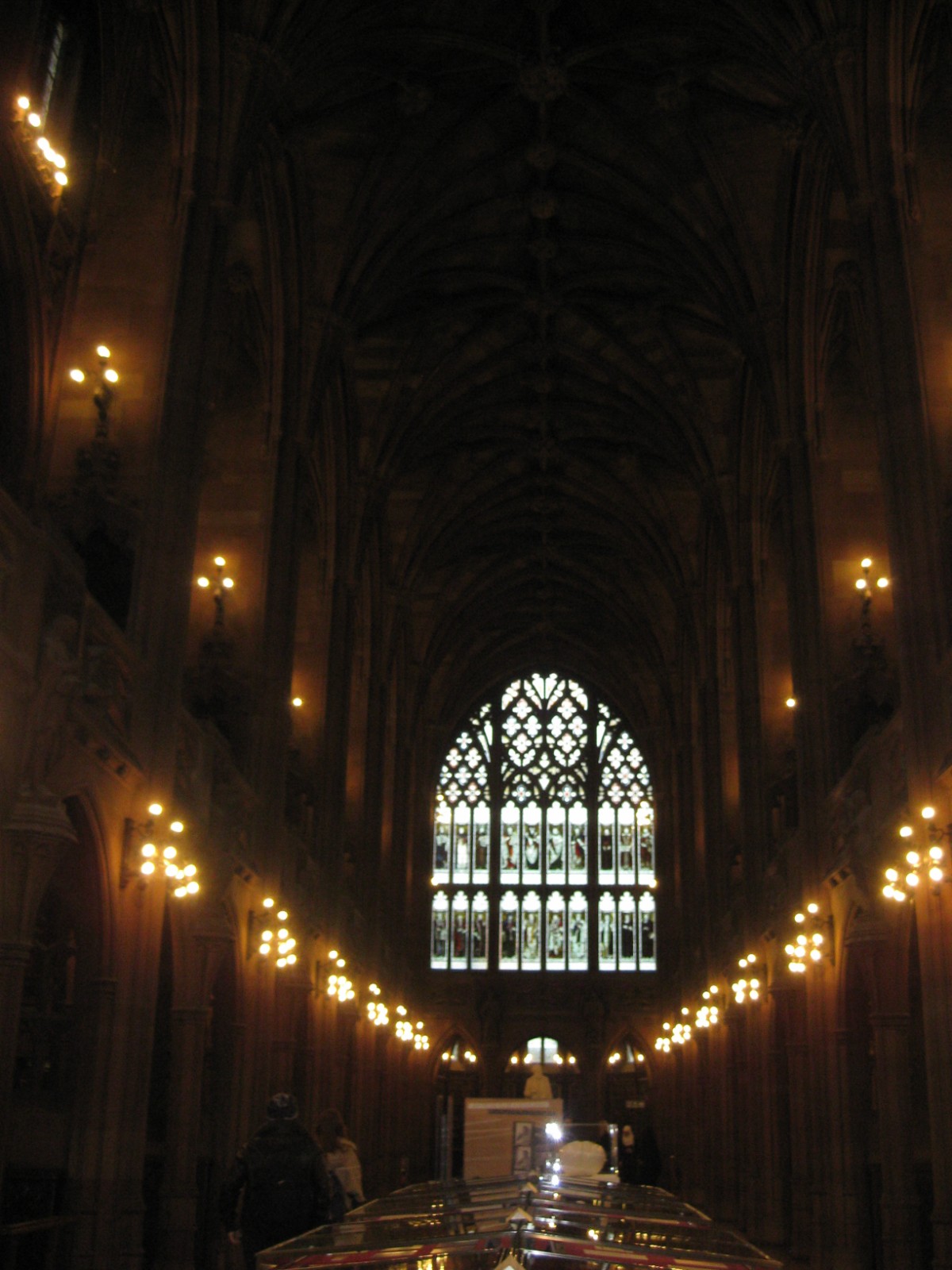
I had a particular memory I wanted to share with Malcolm. The John Rylands Library. I used to go there to write an essay or prepare for a seminar on those days when I wanted to pretend to some kind of scholarship that in truth was never part of my make-up. The building was a celebration of Victorian Gothic architecture at its finest, with wonderful plaster tracery on the walls, splendid fan-vaulted ceilings, and shelf after shelf of ancient leather-bound books. Seated in some darkened alcove, surrounded by the particular smell of the place – beeswax polish mixed with dusty books, I would work away for an hour or two, convincing myself, if nobody else, that I was getting down to the serious matter of studying in an industrious and creative manner. Few other people would be there: there were no distractions other than the quiet beauty of the building itself. The place was built for scholarship.
The reading room where I pretended to write essays.
It was built in the 1890’s by Enriqueta Rylands in memory of her husband John. Although his origins were humble, he became Manchester’s first multi-millionaire, making his fortune in the textile industry as a cotton manufacturer. At first, the library collection was modest, but over the years, has come to hold works of world-class importance: everything from the earliest known New Testament text, on papyrus, to medieval illustrated manuscripts, a Gutenberg bible, and the personal papers of the likes of Elizabeth Gaskell.
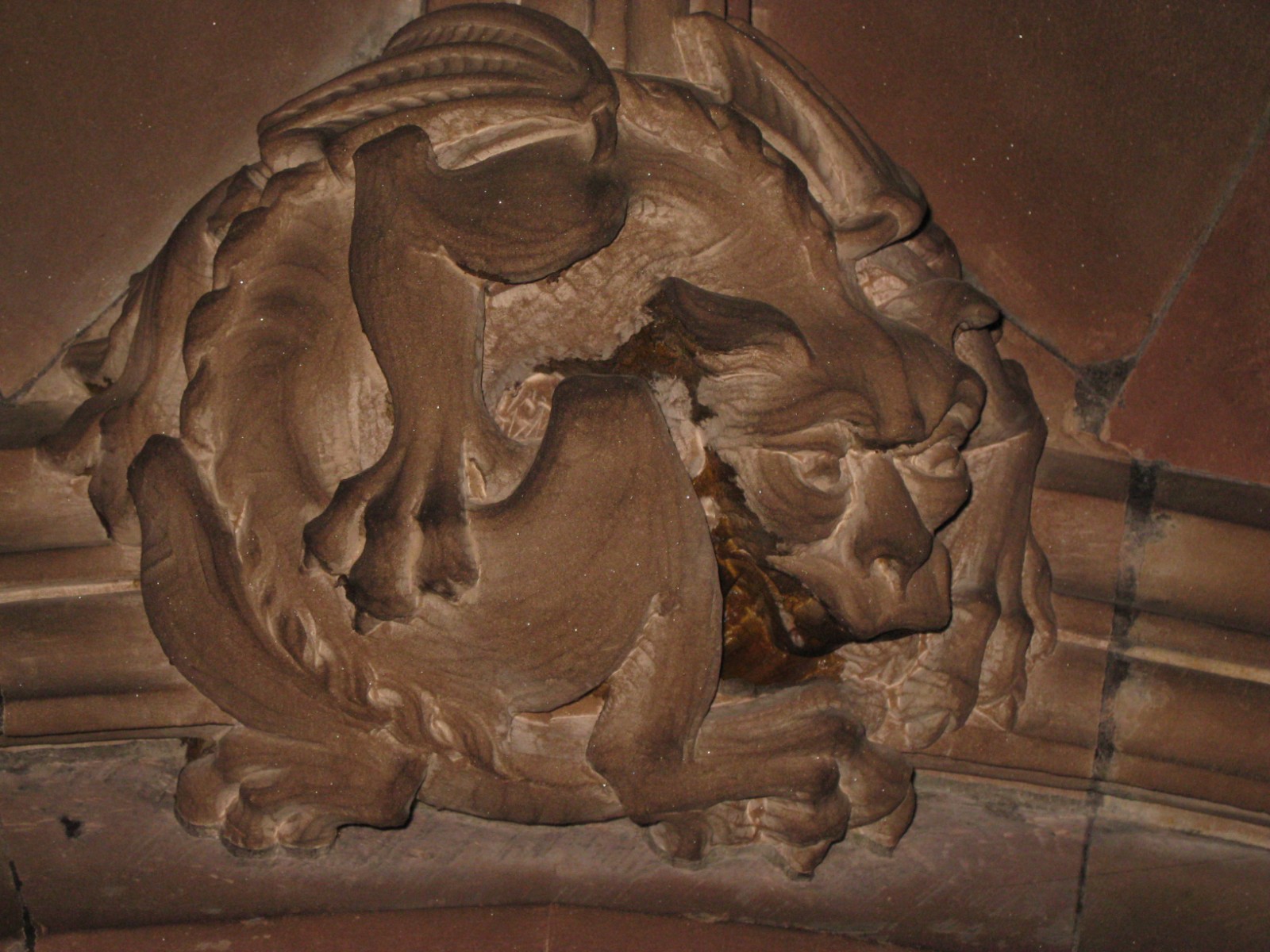
One of dozens of different fantastical creatures forming the roof bosses
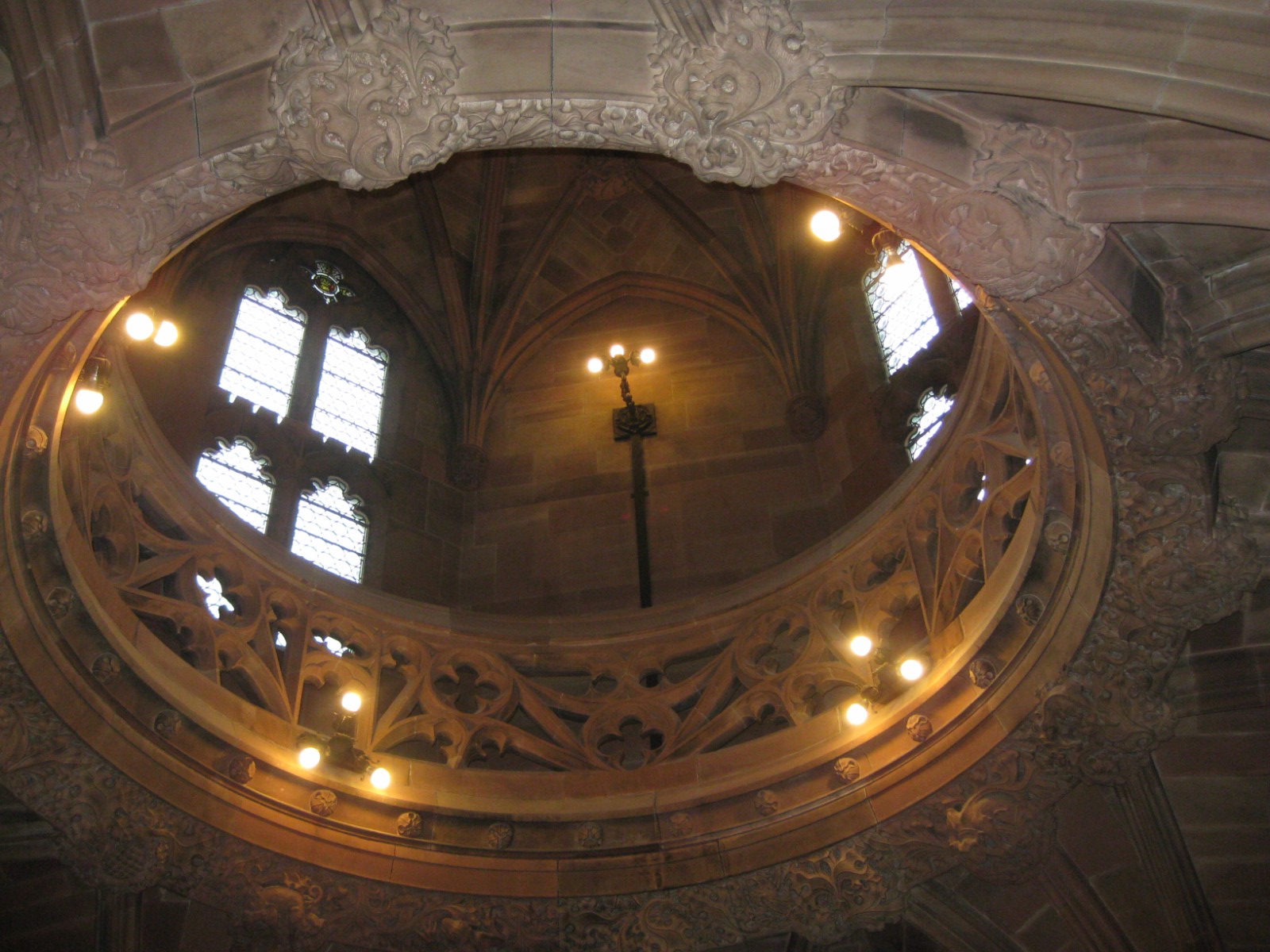
I’m not qualified to comment on the early air conditioning systems, or the electricity originally generated on site. I simply enjoy the richly patterned stained glass, the sumptuous woodwork, the dragons encircling ceiling bosses, and the sandstones in which the building is constructed, which range from soft pink to a rich dull red.
An upward glance whilst on a staircase
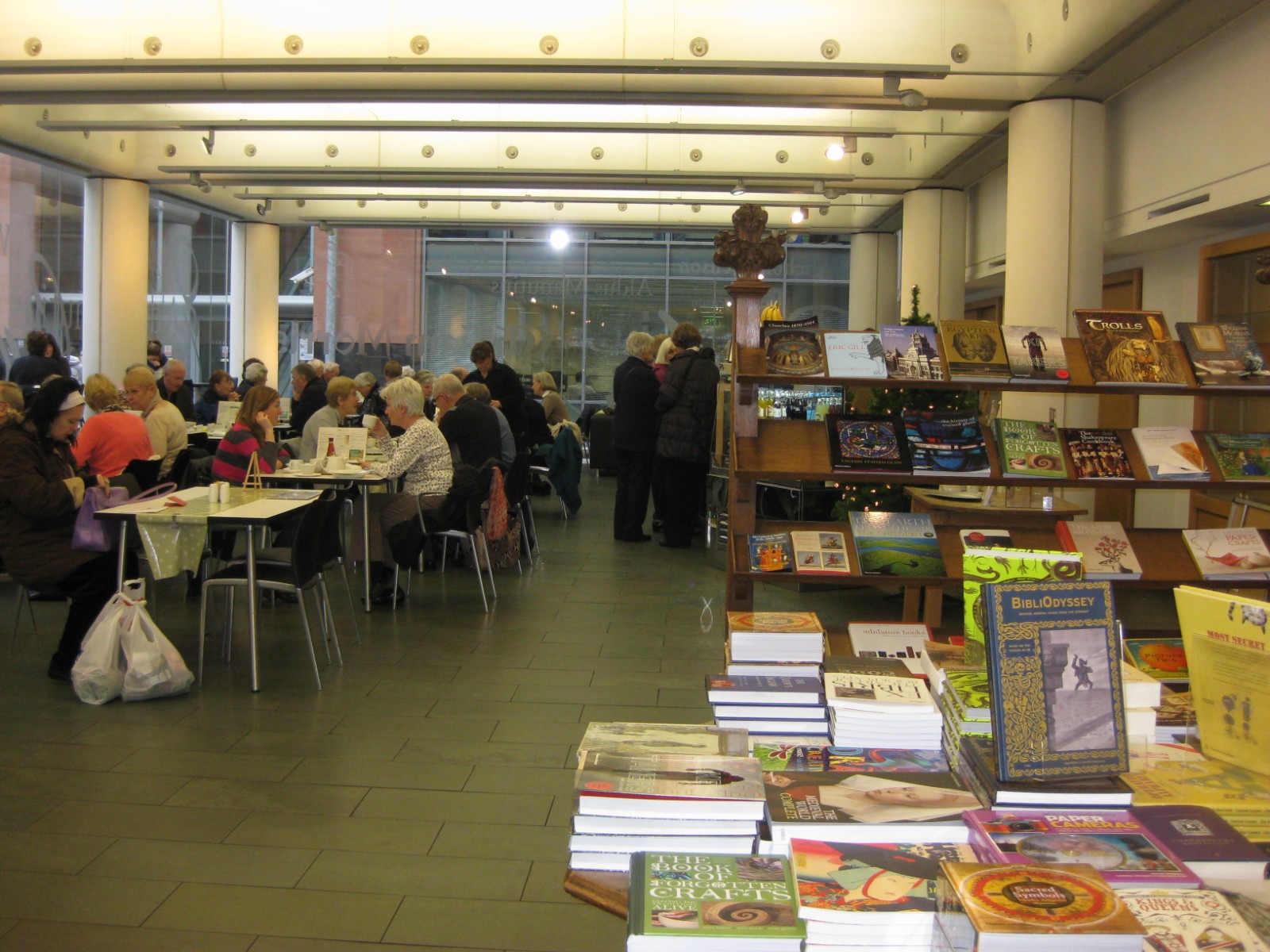
Back in the ‘60’s, I’d work till I got hungry, thirsty, or both. Last week, we discovered that these days I’d have no excuse to leave, because there’s a modern extension sensitively joined to the side of the building. This houses Café Rylands, where we had our lunch, made from locally sourced produce; a bookshop which, though small, presented us with fascinating choices, from architecture and design books to children’s stories; and an almost irresistible gift-shop. It has an energetic and exciting programme of educational events, and I wished we could have signed up for some of them.
Café Rylands and the book shop
When I was a student in Manchester, the library was little known outside academic circles. Now it’s a different story. John Rylands Library has been made Manchester’s ‘Large Visitor Attraction of the Year’ at the city’s annual tourism awards. You could spend happy hours here, exploring the building itself, the exhibits, and making frequent sorties to the coffee shop for a relaxing break and browse through the papers. And apart from your spending money, it’s all free.
Drop a coin or two into the donation box, and the automaton will go through its paces










 From Pyrenees to Pennines
You must be logged in to post a comment.