The long ‘Goodbye’

We’ve been wondering for a while how to commemorate our leaving Laroque.  Not long now: we’re working towards mid-March.  We thought some kind of party, but with weather so uncertain, some friends away in February or early March,  the house gradually being more and more unpicked, and with no obvious alternative such as a village hall or room-above-the-pub, it was all a bit of a puzzle.

Then the walking group here in Laroque stole our thunder.  Subtle hints came our way, and we understood that we were at all costs to keep Friday evening free.  We realised that food was involved – of course, c’est la France – but other than that, were left pretty much in the dark.

Finally, the invitation became more specific.  We were to present ourselves at the restaurant up the hill, Table d’Angèle, at quarter to eight, and don’t be late.  So we did.  And there were 22 of our friends, our companions on Sunday and many other days of the week, ready to greet us as we came through the door.

Democracy was abandoned for the evening.  Choose where to sit?  Not a chance. We were instructed to do as we were told, and ushered to the centre seats, the places of honour.  So different from our very first community meal in the same restaurant, when we were pretty new to Laroque.  People then were wary, wondering how hard it would be to cope with talking to their new English neighbours. This time, we were all  laughing as we sat down together.  It was a  fine meal, entirely cooked and served by the immensely hard-working two-person team of Obé (named after Obélix of Asterix fame) and his wife.

We took our time.  There was plenty to eat, and lots to talk about, but finally, we took our last mouthfuls.  The evening was not, it seemed, drawing to a close.  Yvette stood up, a parcel in her hand.  It was this book:

Repas4

They’d chosen it because they knew it would remind us of our home here.  But they thought that it linked too with our Yorkshire home, as the textile industries play such an important part in the history of both areas.

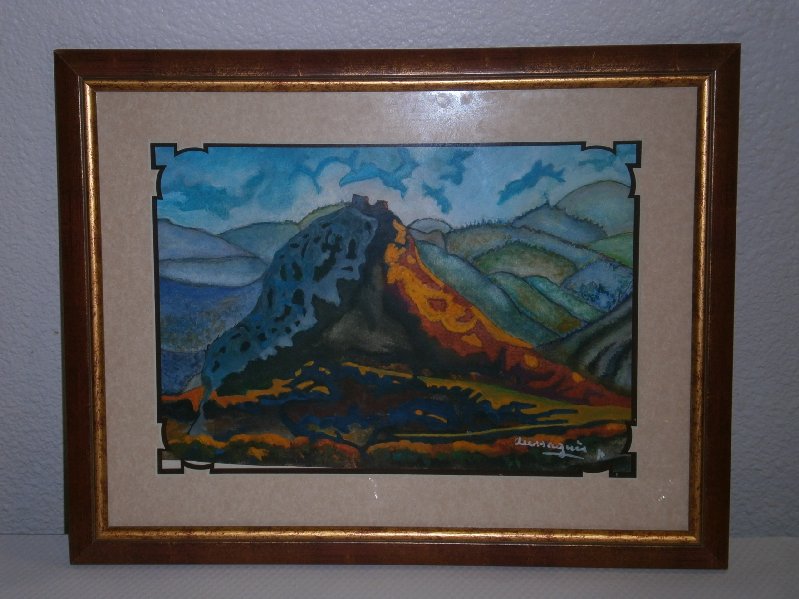
Then Henri stood up.  In his retirement he’s become a keen amateur painter, and his latest piece was done with us in mind.  Montségur, local landmark and place of pilgrimage.  Here it is: he’s presented it to us, and it will always have a place on a wall in our home, wherever we live in the future.Repas14
Henri had another trick up his sleeve too.  He produced a large jar of ‘confiture de vieux garçon’.  Not much jam about this.  It was  jar of red fruits macerated for several months in sugar and alcohol to spoon into a glass to both eat and drink.
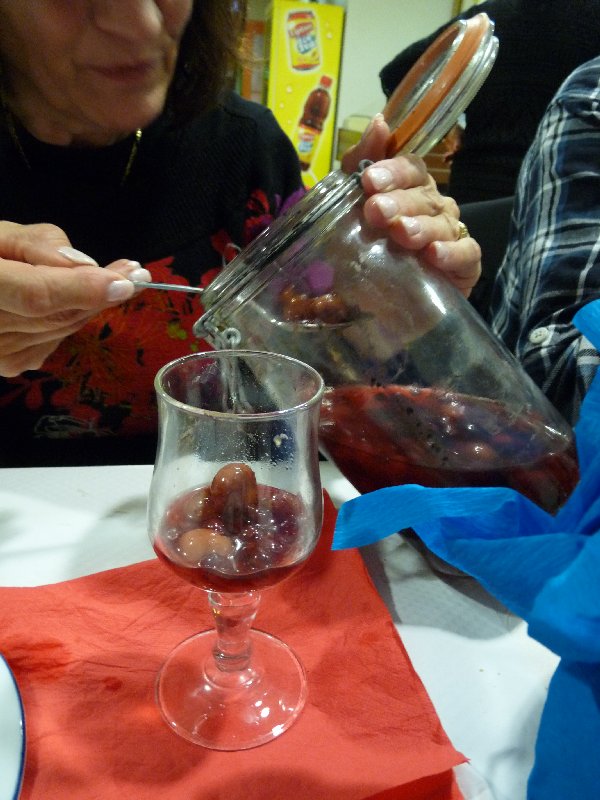
'Confiture de vieux garçon'
‘Confiture de vieux garçon’

We put a jar of Seville orange marmalade for each guest at the meal (hence that ‘marmalade factory’) round the table, with instructions on how best to enjoy it.  We continued drinking, talking, laughing.  Somewhere in among, Malcolm made an emotional speech.  Blanquette de Limoux finished off the meal, and eventually, slowly, the evening drew to its close.

Such a memorable evening.  We’re touched beyond measure to have been so welcomed in Laroque, and that our friends chose to mark our departure with such careful planning and generosity.  It’s unthinkable not to come back, and often.  We’ve insisted too that they must all plan a visit to come and discover Yorkshire.  Like the Ariège, it’s splendid walking country.

Thanks , Jaques and Yvette, for most of the photos.  Mine seemed not to cut the mustard this time.  Too busy having a good time I suppose

Striding into the new year

I’ve been in a difficult mood all week.  This down-sizing malarkey isn’t suiting me at all.  Though I haven’t been down to the tip yet to excavate for my lost goods, it can only be a matter of time.  I gave some books to a friend this morning, books dating from my student days, then took them back from him.  ‘I will give them to you’, I promised, ‘but I just need a bit more time’.  I haven’t read those books in 40 years.  But I might.

So to distract myself, every afternoon this week I’ve set off on my self-imposed challenge.  I want to see how many more short walks, each lasting two to three hours I can discover setting off from the house.  We know such a lot already: at least four different ways to get to and from Léran, two to La Bastide sur l’Hers and several other shorter ones in the same direction.  Walks to and from Dreuilhe, Lavelanet, Regat, Tabre, Aigues-Vives, Campredon, Patato (yes, really), Fajou…..

The area we’ve explored least lies westwards from Laroque.  There’s a small and charming village called Esclagne about two and a half kilometres away as the crow flies.  I reckoned I could find any number of ways to get there and back, and so far this week I’ve come up with three – and that’s not counting the road, obviously.

French maps (I need to whisper this, in case anybody French is listening) are not a patch on our UK Ordnance Survey maps, mainly because they’re hopelessly out of date. Paths peter out, if you can find them in the first place, because as in England, not all farmers welcome ramblers.  Yesterday I scrambled under several barbed wire fences, and several more electric ones.  Waymarking tends to be unreliable too.  The path along the ridge leading from Laroque to la Bastide offers no possibility of going wrong.  There’s a cliff-edge on one side, and thick woodland on the other.  Nevertheless, it has trusty yellow waymarks painted on trees or rocks every few yards.  But get yourself into territory where there are multiple five-lane-ends, or a couple of tracks that might or might not have been made by resident deer, boar and badgers, and you’re abandoned to your fate.

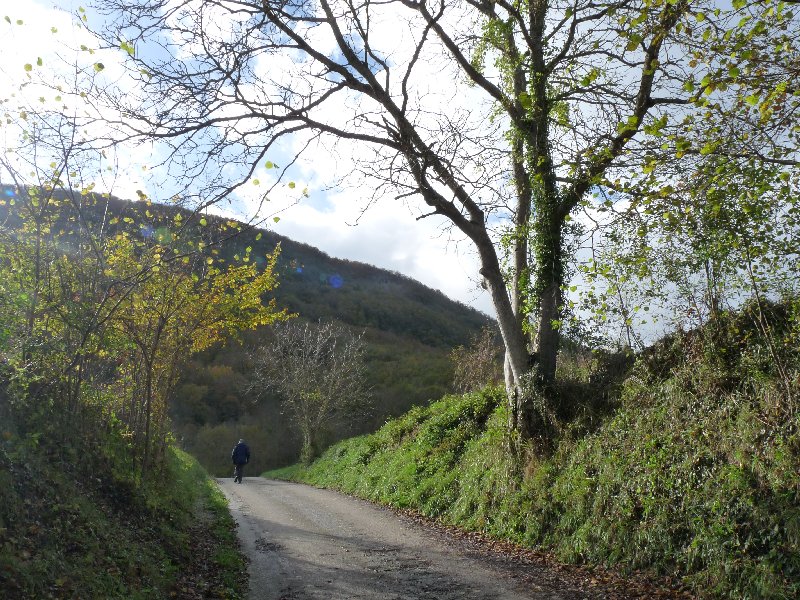
Still, Esclagne is mounted  attractively on a hill top.  You can see it once you’re in the area, and if you haven’t managed to track down a suitable path, all you have to do is choose fields with not-too-cruel fencing, not too boggy, no bulls in sight, and walk.  It’s a chance to come upon herons startled from their familiar deserted feeding ground, make friends with affectionate donkeys, or simply enjoy the views.

Esclagne has some 115 inhabitants.    Even such a tiny village qualifies for a mayor and town council, a town hall, and a community notice board filled with all kinds of official pronouncements.  The inhabitants are no longer dominated by farmers and agricultural labourers, but townies looking for a peaceful retirement.  Unlike their British counterparts, they are not resented.  They haven’t priced the country folk out of suitable housing.  There’s been enough and to spare since the first world war, which emptied the villages of their menfolk.  Those who weren’t killed often didn’t return, preferring to make an easier living up in the more prosperous north.  Still, it’s not a lively village.  There are almost no children living here.  I did spot a traffic hazard though: a busy group of hens all foraging around the traffic signs warning of (a) a 30 k.p.h speed limit and (b) speed bumps.

So that was Esclagne.  I consulted the map, found yet another path worth exploring, and after 10 minutes or so found myself dumped once more at the edge of a wire-fenced stubbly field.  Never mind. I could see Laroque ahead of me at the bottom of the hill.  Just point myself in the right general direction and head home.  Another successful walk.

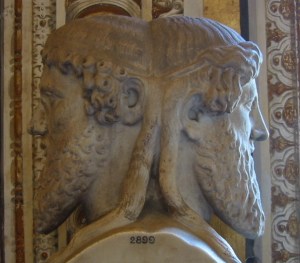
Janus


Janus in the Vatican: an image from Wikipedia

We’ve all heard of Janus, the Roman god of beginnings, endings and transitions.  He’s the one with two faces: the grizzled lived-in one looks back towards the past, while on the other side of his head is the younger version, looking with optimism and hope to the future.  He puts himself about at this time of year, and indeed gives his name to January.

He’s been putting more energy at the moment however, into clambering inside our heads, mine and Malcolm’s.  He’s got us at our own game, as we look both forwards and backwards at every moment

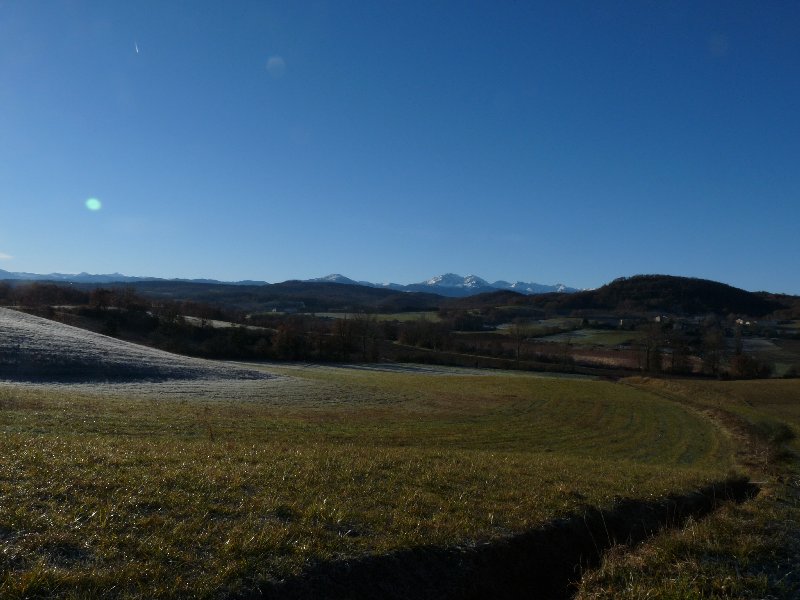
The grizzled half of my head is fully occupied in reminiscence.  It doesn’t even try to understand why anyone would want to look at a  future in England.  It thinks about our walks, particularly our Sunday walks with our Laroque friends. What scenery!  However characterful, green and lovely English scenery might be, nowhere is going to provide the snowy summits of the Pyrenees as a backdrop to every walk.  And there’s something about those midday picnics too which I’m not expecting to see repeated at an English walker’s lunch spot.  The aperitif that gets handed round, the bottle or two of wine,  two or three home-made cakes, coffee and digestif…..  And last Sunday, a mid-December Sunday, it was so warm that one of our number  stripped off his tee-shirt to get the sun on his back.

The Pyrenees: always there.  The constant backdrop round here
The Pyrenees: always there. The constant backdrop round here

The grizzled half of my head realises that tomorrow’s concert with the choir will be my last one ever and makes sure that my eyes mist over and my throat constricts as I try to follow the music.  It points out that those summer evenings spent in our back yard over a leisurely meal and  glass of wine are now things of the past.  Those moments with friends, those trips to explore, discover and re-discover the area we’ve called home these last few years area are all but over.  Grizzled Janus is holding all the cards when he’s in the mood.  He knows very well that we’re finding it tough to say ‘Goodbye’ to all this.

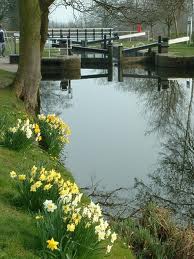
Ripon Canal in spring (Nigel Homer, geograph.org.uk via Wikimedia Commons)

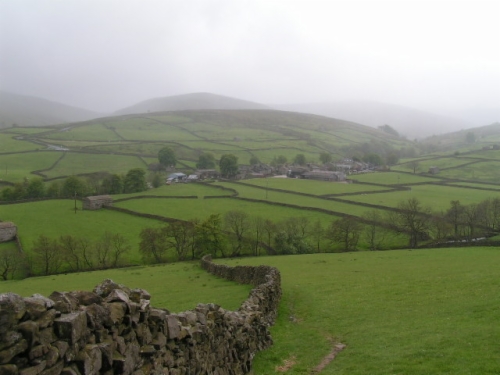
But Janus has two equally potent faces.  The young version is optimistic and cheerful.  He points out that we’ve never fancied growing old, much less infirm in France, and this is the moment to get involved in life in Ripon,  a community where we already feel comfortable, but where there is so much more still to discover.  Much of what we most appreciate in France is available to us there too: wonderful walking scenery and an active community that welcomes people who want to join in.  Theatre and concerts will be within easy reach and we’ll be able to mix small-town life with easy access to bigger towns too.  And do you know what? I’m going to appreciate those English summers, if not the winters so much.  I can’t be doing with those days when the temperature is in the high 30s: and I used to be a sun-worshipper.  It’ll be good to return to speaking English and to understand most cultural references : though I expect we’re dreadfully out of touch.

Thwaite in the Yorkshire Dales  (David Dunford, geograph.org.uk. via Wikimedia Commons)
Thwaite in the Yorkshire Dales (David Dunford, geograph.org.uk. via Wikimedia Commons)

Dear two-faced Janus, you’re a terribly mixed up sort of chap.  We expect to be terribly mixed up too.  We made a decision, and we believe it’s the right one.  But we don’t think  we’re going to get through the next few months without periods of excitement, periods of mourning, periods of confusion.  Often all on the same day.  It’s probably all going to be a bit exhausting….. and it might end in tears.

The winter playground up the road

Our Thursday walking friends opted for a day with raquettes today: snowshoes.  Earlier this year, I’d vowed never to indulge in this particular form of masochism again.  So we didn’t.

But the idea of walking near crisp white snow, with views from the clear air of a mountain top across to wooded slopes cloaked in snow, and as-yet uncloaked valley bottoms, appealed.  We’d pop up to Mont d’Olmes.  That would do the trick.  It’s the nearest place round here for winter sports, so maybe we could watch some of the action, and sit down for a bit clutching a strong shot of coffee or a mug of hot chocolate.

That was the theory.  We always forget how far away our friendly neighbourhood mountain really is.  Once you turn off the main drag to follow the road that goes only to Mont d’Olmes, you still have 8 miles of climbing to do.  Soon the sides of the road were boundaried by walls of snow, while the rocky mountain sides to which the road clings were home to packs of giant icicles and glassy pillars of ice, and still we drove on upwards.

And then we dumped the car.  As discussed, we weren’t equipped with snow shoes,  so we chose to finish our climb using the road.  We passed the chalets hired out to holiday-makers, all clearly shut up, the stairways to their doors still buried deep in the snow.  The only people we saw were tradesman in the area to do running repairs or make improvements for the hardly-started season.

And then there we were.  Mont d’Olmes The Resort.  Like most ski stations that aren’t really up and running, it was just a bit depressing.  It’s focussed on a few shops and a hotel that look exactly like a suburban ’60’s shopping centre.  And nothing was open: not even a single bar.  A few snow buggies were zipping around, their drivers busy with routine cleaning and maintenance.  The slopes themselves were scoured with the tracks left by weekend skiers.  There even were a couple of skiers.  But they had to manage without benefit of ski-lifts or any of the other infrastructure that would have made their day out less labour intensive.

Great views though.  White sparkling mountain sides above, more sparsely covered rocky crags below, and a shockingly blue sky.  And we had the place almost to ourselves.  It’ll be a different story at the weekend.  The car parks will be full, the bars, shops and restaurants busy, and above all the slopes will be crowded with hundreds of locals enjoying their very own neighbourhood winter playground.  Unlike us, they’ll be joining traffic jams on the way both up and down the mountains.  We got what we needed.  A decent walk in the sharp cold air, some deep-and-crisp-and-uneven snow, snowy peaks outlined against a clear sky, and a bit of peace.

Down among the dusty archives

Laroque d'Olmes' town insignia
Laroque d’Olmes’ town insignia

Like every commune in France – apart from those who’ve lost everything in flood, fire or time of war – Laroque has shelves, yards and yards of them, of municipal archives.   In the main these are bound volumes of directives from central government relating to the Ariège.  There are also endless files of copies of forms relating to hatches, matches and despatches, licenses for liquor, permission to drive carriages, horseless or otherwise, toll roads, road improvements, land sales, local disasters such as landslip and flooding, records of meetings, residency requests, paperwork relating to shops, artisans, workmen an apprentices, immigrants….  all human life is here.  That’s before you realise there are bundles of engravings, daguerreotypes, photographs…..

They aren’t indexed.

Laroque’s Commission du Patrimoine, of which I am an enthusiastic but fairly useless member (I have no Tales of the Oldest Inhabitant, no competence to research French documents, no skills in artefact restoration or in industrial archaeology) has realised this situation must change.

An early job is to trawl through the central government volumes, which date from the early 18th century, and extract any information relating to Laroque.  I can help here.  It’s a question of skimming these volumes for relevant entries.

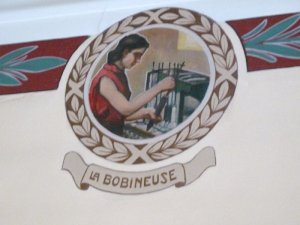
A bobbin worker immortalised in Laroque's Council Chamber
A bobbin worker immortalised in Laroque’s Council Chamber

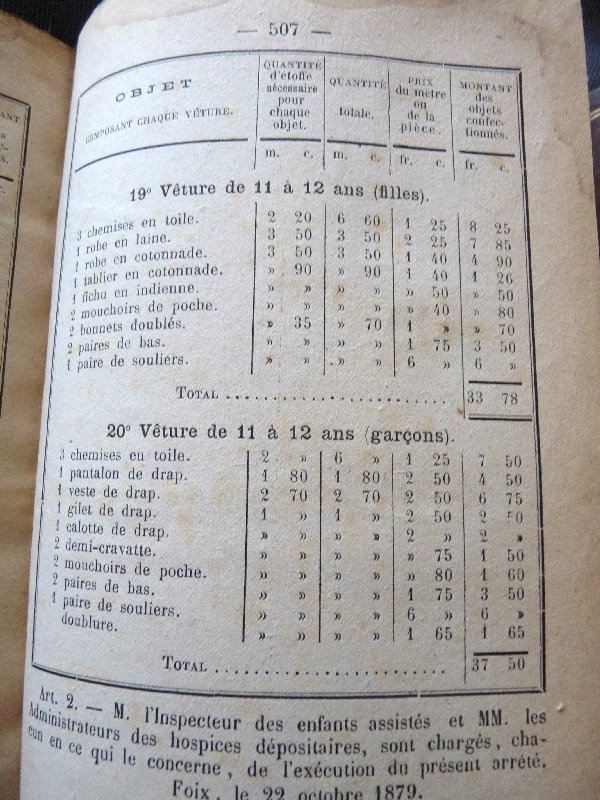
Three of us sat down on Friday morning in the old Council Chamber of the Mairie, with its wall decorations showing noted politicians and industrialists, as well as allusions to the all-important textile industry.  We had dusty piles of leather-bound volumes on the table in front of us.  We turned to. It was fairly dry repetitive work, so we kept each other amused by reading out things that caught our eye.  There were tales of Mayors drummed out of office (not from Laroque, no of course not) for inappropriate drunkenness.  There were the lists of clothes to be supplied to those children raised in institutions, and the money made available for the care of each child.

An infant from 1 day to 9 months old needs:3 blouses, 2 vests, 6 (6 only?) nappies, 3 swaddling blankets, 2 baby's bonnets, a woollen dress and 2 bootees.
An infant from 1 day to 9 months old needs:3 blouses, 2 vests, 6 (6 only?) nappies, 3 swaddling blankets, 2 baby’s bonnets, a woollen dress and 2 bootees.
11-12 year old girl: 3 cloth blouses, woollen coat, cotton coat, cotton apron, cap, 2 pocket handkerchiefs, 2 lined caps, 2 pairs stockings, 1 pair shoes. 11-12 year old boy: 3 cloth shirts, 1 pair trousers, 1 vest, 1 waistcoat, 2 ties, 2 pocket handkerchiefs, 2 pairs stockings, 1 pair lined shoes.  After 12, they made their own way in the world
11-12 year old girl: 3 cloth blouses, woollen coat, cotton coat, cotton apron, cap, 2 pocket handkerchiefs, 2 lined caps, 2 pairs stockings, 1 pair shoes. 11-12 year old boy: 3 cloth shirts, 1 pair trousers, 1 vest, 1 waistcoat, 2 ties, 2 pocket handkerchiefs, 2 pairs stockings, 1 pair lined shoes. After 12, they made their own way in the world

I was intrigued to learn that there was in the 19th century, a single training school  in the Pas-de-Calais in the north of France for would-be shepherds.  Why would you spare your 16-year-old son to go to the other end of France, at some expense, to acquire his training (though there were no fees), when he could be back at home learning on the job?  There was a similar mining school in the east of France.

A demanding clothing list for the shepherds' school: 8 new shirts, 8 pairs of stockings or socks, 2 cravats, 8 handkerchiefs, 5 blouses, 2 pairs winter trousers, 3 pairs summer trousers, 2 waistcoats, 3 woollen jumpers, 2 new pairs shoes, 2 pairs clogs and liners.  The shcool did the laundry though.
A demanding clothing list for the shepherds’ school: 8 new shirts, 8 pairs of stockings or socks, 2 cravats, 8 handkerchiefs, 5 blouses, 2 pairs winter trousers, 3 pairs summer trousers, 2 waistcoats, 3 woollen jumpers, 2 new pairs shoes, 2 pairs clogs and liners. The school did the laundry though.

We were good though.  We completed our self-appointed tasks.  We found Laroque mentioned throughout the 18th and 19th centuries, as all other communes, in connection with, for example:

  • understanding its precise obligations to maintain communal roads and paths.
  • submitting to standardised checks to ensure fair weights and measures were being applied locally.
  • submitting returns showing who had joined the army, and in what capacity.
  • We learned where the nearest doctors, midwives (‘sage-femmes‘) and pharmacists to Laroque were.

Despite moments of tedium, this was a fascinating morning.  I was privileged to inspect these old records, and to gain a little more understanding of life during this period, and an appreciation of just how far the long arm of the state, whether imperial or republican, extended.

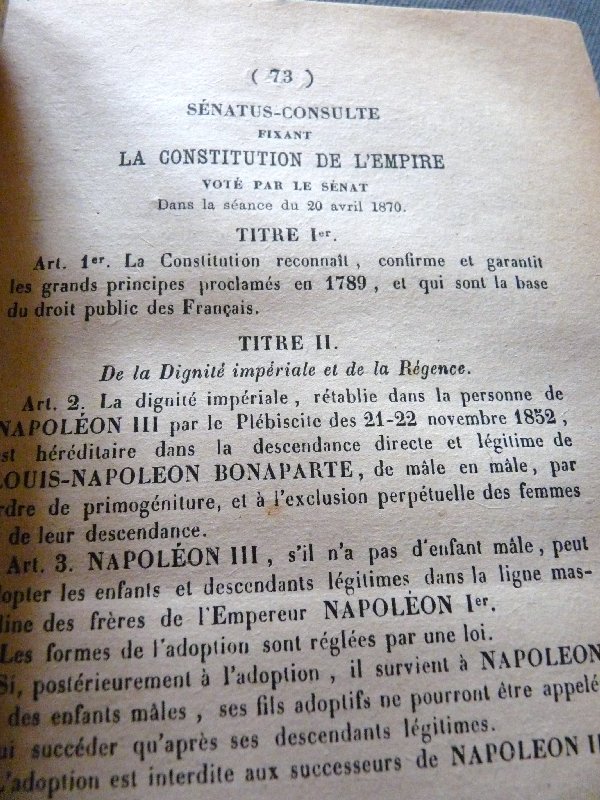
Directives from the Empire in 1870 about fishing, recruitment to the national guard, ...er...mayflies, and billhooks
Directives from the Empire in 1870 about fishing, recruitment to the national guard, …er…mayflies, and billhooks
Imperial constitution and rights of succession

Country mouse

We were Christmas shopping in Toulouse yesterday.  A day in this, the fourth largest city in France, is always a treat.  It’s affectionately known as ‘la ville rose’, because of the predominant building material, a deep pink brick.  Elegant long tall terraces of town houses, public buildings, hidden courtyards wait to be discovered and re-discovered on every visit.  We have so much more still to find and explore.  There are fabulous churches and museums, wonderful and often quirky independent shops, appetising restaurants and bars to suit every budget and taste.  The River Garonne and the Canal du Midi pass though the city offering a feeling of space and fresh air.

And yet…..

By about half past three, we’re footsore, weary and confused like Aesop’s poor dear Country Mouse who decided the simple, yet safe country life was preferable to the riches and dangers of life in the city.  We want to go home.

A couple of more recent Pearly Kings

I was always a city girl.  Raised in London, I had a childhood enriched by Sunday afternoons at the Natural History Museum or frenetically pushing buttons at the Science Museum.  We’d go to watch the Changing of the Guard at Horseguards Parade, nose round hidden corners of the city, still scarred in those days by the aftermath of wartime bombing.  We’d go on our weekly shop to Sainsbury’s:  not a supermarket then but an old-fashioned grocery store, with young assistants bagging up sugar in thick blue – er – sugar paper, or expertly using wooden butter pats to carve up large yellow blocks of butter.  If we were lucky, there would be a Pearly King and Queen outside collecting for some charity.

It was Manchester for my university years.  I loved those proud dark red Victorian buildings celebrating the city’s 19th century status as Cottonopolis, as well as the more understated areas once populated by the workers and managers of those cotton mills, but developed during my time there as Student Central.  I loved the buzz of city life, the buzz of 60’s student life.

Then it was Portsmouth.  Then Wakefield, and Sheffield, and Leeds.  City life meant living with up to 750,00 neighbours.  And I thrived on it.  I never felt too far from wide open spaces, yet a short bus ride brought me theatres, cinemas, exhibitions, shops, choices of schools for my children.  When we moved in 1997 to Harrogate, with a mere 75, 000 inhabitants, it felt small.

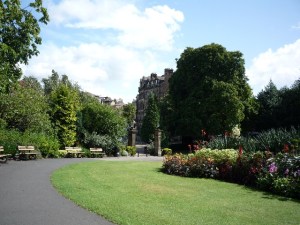
This is the Valley Gardens in Harrogate.  I must say it doesn't look too crowded
This is the Valley Gardens in Harrogate. I must say it doesn’t look too crowded

Then we came to the Ariège, to Laroque, population just over 2,000.  The largest town in the whole area is Pamiers, with a mere 19,000 inhabitants.  How could we still think of Harrogate as really rather tiny?    So we needed to change the way we saw things.  We’re accustomed now to at least recognising most of the people whom we see round and about.  We enjoy the fact that we count many people in the community as friends, and that we all turn up to the same events.  We relish the space, the more relaxed pace of life, the sense of belonging that we have here.

These are the kind of traffic conditions we've got used to
These are the kind of traffic conditions we’ve got used to

Now, as we plan our return to England, the idea of the clogged roads of the Harrogate rush hour is unattractive, the busy streets unappealing. Ripon, where we more recently lived is much more like it: 14,000 people.  But we ask ourselves – is even a town this size too big and scary for Country Mice?  Should we continue as we’ve started?   Perhaps we should look at Galphay, Gargrave, Greenhow or Grewelthorpe, average populations about 400?  Or Masham, about 1,250? All of these are near our centre of gravity, Ripon.

So much to think about.  But wherever we end up,  we’ll still want the odd sortie to The Big City.  Toulouse hasn’t seen the back of us yet.

Photos 4, 5, 6 0f the Toulouse series; the Pearly Kings and Harrogate’s Valley Gardens courtesy of Wikimedia Commons

An announcement

The church on the hill that is Laroque's main landmark
The church on the hill that is Laroque’s main landmark

I wonder what you’ll think when you read this?  Will you be as surprised as you would be if you heard that the couple down the road, the ones who always seemed to be such a great team, always doing things together, are getting divorced?    Or maybe you won’t be.  Let’s see.

We’re leaving.  Selling up.  Returning to England.  We’ve loved it here – we love it still.  We believe we’ve made friends for life: we’ve had unforgettable times.

But in the end, the call of family and England itself was just too insistent.  Throughout our time here (seven years full-time)  I’ve had recurring bouts of home-sickness which Malcolm never understood until very recently, when he too got suddenly and painfully afflicted.  We realised we don’t want to grow old here.  I don’t want to find visiting family more of a circus than it already is: I don’t want to miss out any longer on my grandchildren growing up.  So it’s time to go, whilst we’re still young enough to re-establish our English roots.

In many ways it’s an odd time to choose.  The house has developed from the unappetising near-hovel that we bought (but which, oddly, was love at first sight:  why?) to a comfortable and spacious dwelling with a pretty nice large back courtyard where we spend all our time in summer.  We’ve only just finished the en suite bathroom,  for goodness’ sake.

Before……

This slideshow requires JavaScript.

And after……

This slideshow requires JavaScript.

This last week we’ve been talking to estate agents, and realising that in tough times we’ll certainly have to use one – the French still usually prefer word-of-mouth and adverts in ‘Le Bon Coin’.

We’ll certainly be here till March: maybe longer.  A lot depends on whether the house sells.  And because the next move in England will be, we hope, the last one, we need to get it right.  So a temporary pied à terre near Ripon seems quite on the cards at first.  We’ve already started looking.

Don’t jump ship yet!  There’s still quite a few months to go on sharing our Life in Laroque.  And as for the next phase – who knows?

Cabin fever.

The rainy season still hasn’t stopped. It’s rained every day for over a fortnight now, except for one.  That was Friday, the day it snowed.  I had to come back from nearby Villeneuve d’Olmes at nearly midnight that day, driving at a stately 12 miles an hour along newly – and deeply – snow-covered roads.  The last bit was easy enough though.  I followed a snow plough.

So Sunday’s all-day walk was abandoned yet again.  There was heavy rain again this morning.  Nobody was leaving home except to collect the daily bread.  We had a back-up plan, we members of the walking group,  to begin walking at 1 o’clock if the morning’s weather was poor.  By 11.45, with the skies still black and full of rain we were all ‘phoning each other to say ‘No thanks.  Count me out’.

Except that at quarter to one, it stopped raining.  I decided after all to make a break for it (Malcolm stayed in front of the fire).  Maryse arrived at the usual rendezvous too, then Annick and Michel turned up.  Then Jean-Charles, Danielle and Marcel.  We’d all got cabin fever and we’d walk come what may.  We had three rain-free hours.  No country paths for us today: all sodden.  Strictly road-walking.  Snowy fields, snowy views across to the Plantaurel, a small lake, forest paths.  We had our ‘pause café’ at Fajou, with its 400 year old oak, and an apple tree just waiting for us to collect its windfalls.  Still no rain.  Still an hour’s walk to do though, so we didn’t stop for long, and continued onwards, enjoying the familiar landscape in its new white winter clothing

Back home, refreshed after a shower and a cup of tea, I leaned over to draw the curtains.  Of course I glanced out of the window.  You’ve guessed.  It was raining again

‘Rain, rain, go to Spain….’

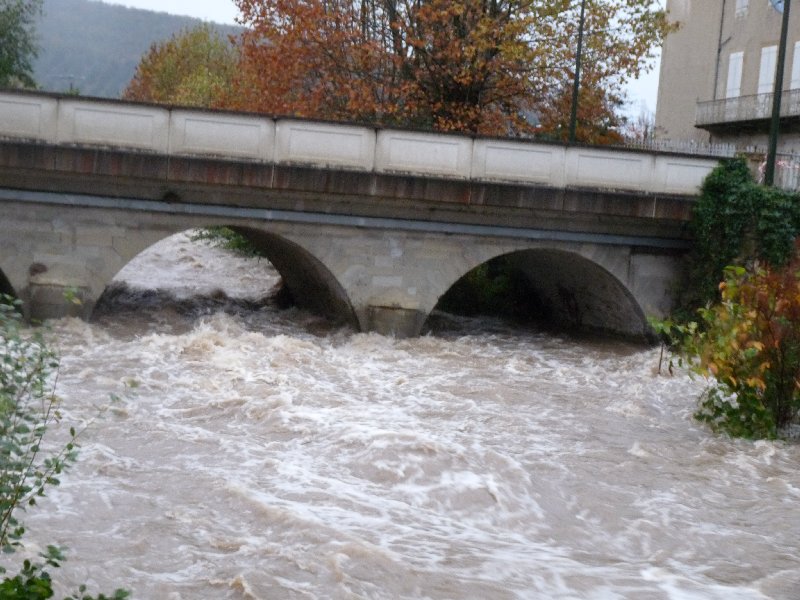
Bridge over the River Touyre

I think we’ve had enough.  When I last posted  – three days ago – we’d already had a week of rain.  It’s barely stopped since.  During the night, we can hear dull thudding as the roof tiles take another sodden pounding.  We get up in the morning, raise the shutters, and immediately the rain batters the windows.  Going for the breakfast loaf, usually a good way to begin the day, seems unattractive.  We make a comforting pan of porridge instead.  And so the day wears on.  We go out when we have to, but there’s no pleasure to be had in scurrying down the street, heads down, coats spattered by any passing car.  And I don’t know when we’ll ever have a country walk again.  The fields are waterlogged, the paths sticky and slippery with thick deep mud.

This was the River Touyre this morning at 9 o’clock.  In summer it’s a mere stream, idly meandering over the pebbles and stones which line its route.  In spring and autumn it’s hardly any deeper, but we’ll spend languid moments watching the trout as they glide serenely in the clear water , constantly on the look out for their next snack.

Today the water was brown, angry, tearing rapidly over the stones which we could hear clattering beneath.  It had risen about three feet, covering the grassy banks and invading the garden of the hens who live opposite.  They cowered  indignantly beside their huts, unwilling to get their feet wet or risk being swept away.

Snow is forecast tomorrow….

Winter meets Autumn head on

Eight days ago:  lunch outside in thin tee shirts: a garden umbrella protected us from the bright hot sun.

Seven, six, five, four, three, two, days ago.  Rain.  Rain.  More rain.  Heavy, chilly gusts choking the streets and drains with fallen leaves.  More rain.

One day ago.  Snow.  The first snow – and in advance of the first winter frost too.  Not a lot, but enough to rest heavily on fading garden plants, weighing down leaves and bowing stems.

This morning, we knew we’d need to get out early to beat the rain, which was threatening yet again.  I didn’t take my camera because I thought the mountains would be shrouded in foggy mist.  They weren’t.  The lower peaks, and even the much lower hills of the Plantaurel peeked through a thin layer of snow that dusted trees and painted the rocky and grassy slopes a severe white.  I dashed back for my camera.  Five minutes? Ten?  Long enough for the misty clouds to drop down and dump themselves on the snowy hilltops like squashy berets, hiding them from view.

And then, straight away, the rain again.  That’s what we’ve had all day, streaming along the gutters, making splashy garden puddles, dripping incessantly from the trees and down our necks as we walk underneath.  I continued my early morning walk regardless though, and caught what may be the last few days of Autumn colour, though little enough of the snow, which is there somewhere, under those bonnets of mist and cloud.