I rather enjoyed re-visiting India via my blog the other week. So I went and dug out the diary I faithfully kept. The events it describes have never yet seen the light of day. For the first ten days I was with the group of people my ex-brother-in-law had put together, to explore aspects of rural Indian life, focussing on small producers working in traditional and organic ways. We had no internet access during that period.
I’ve decided to share my diary with you. This will take several Fridays. I’m pleased that I kept such a detailed record of a piece of personal history, and of a country I’d never visited. I wonder how dated this account would seem to the current traveller?
BASIL
Not a particularly early start, so time to try to book journeys onwards, exchange travellers’ cheques etc. Then the bus. The outskirts of Mysore soon became dusty towns, and in the countryside beyond, stalky straw-like crops were laid down in thick piles for us to drive over and thereby help in the winnowing process.
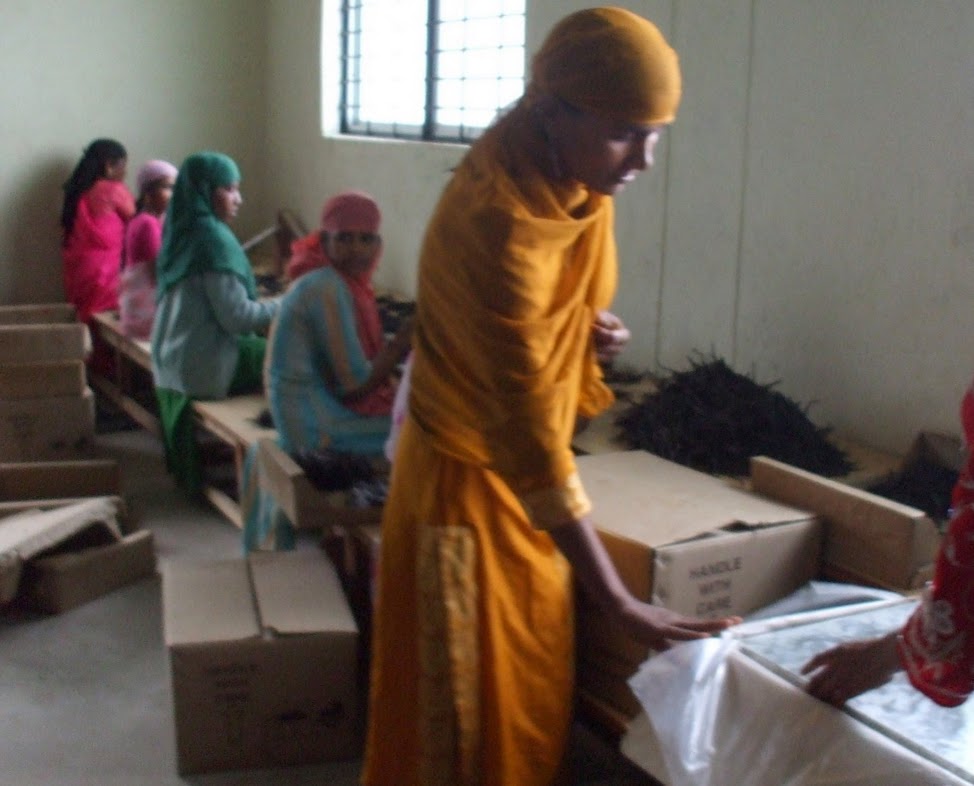
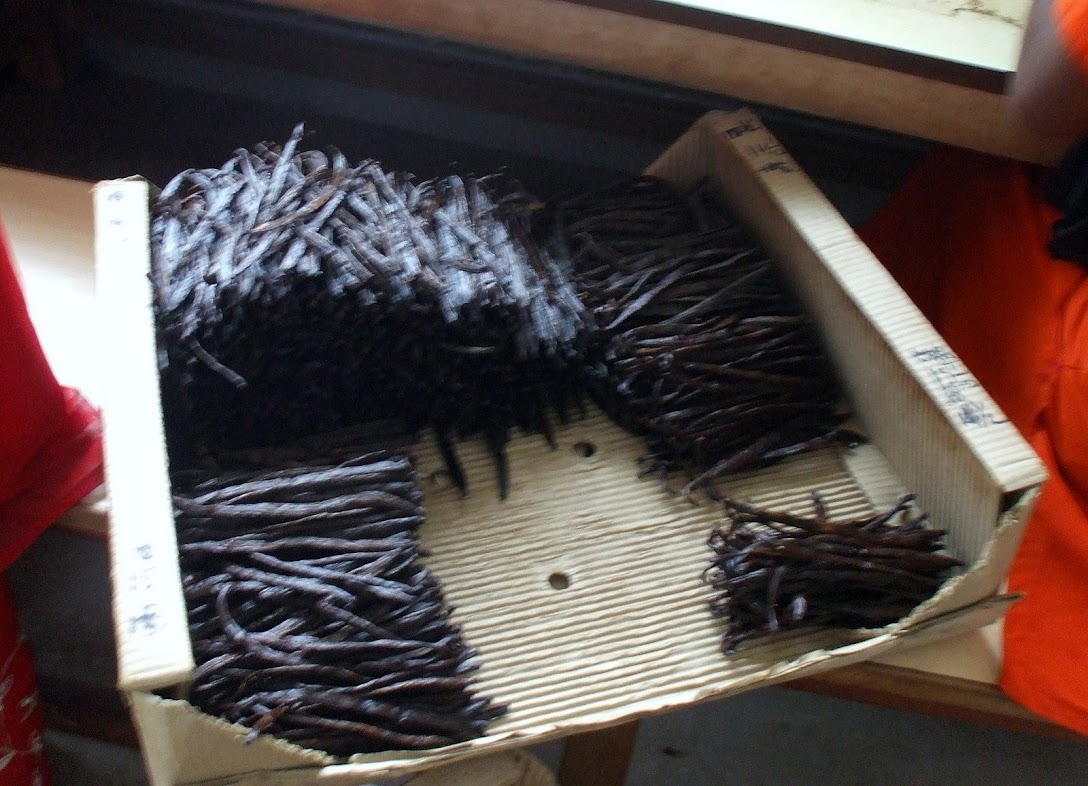
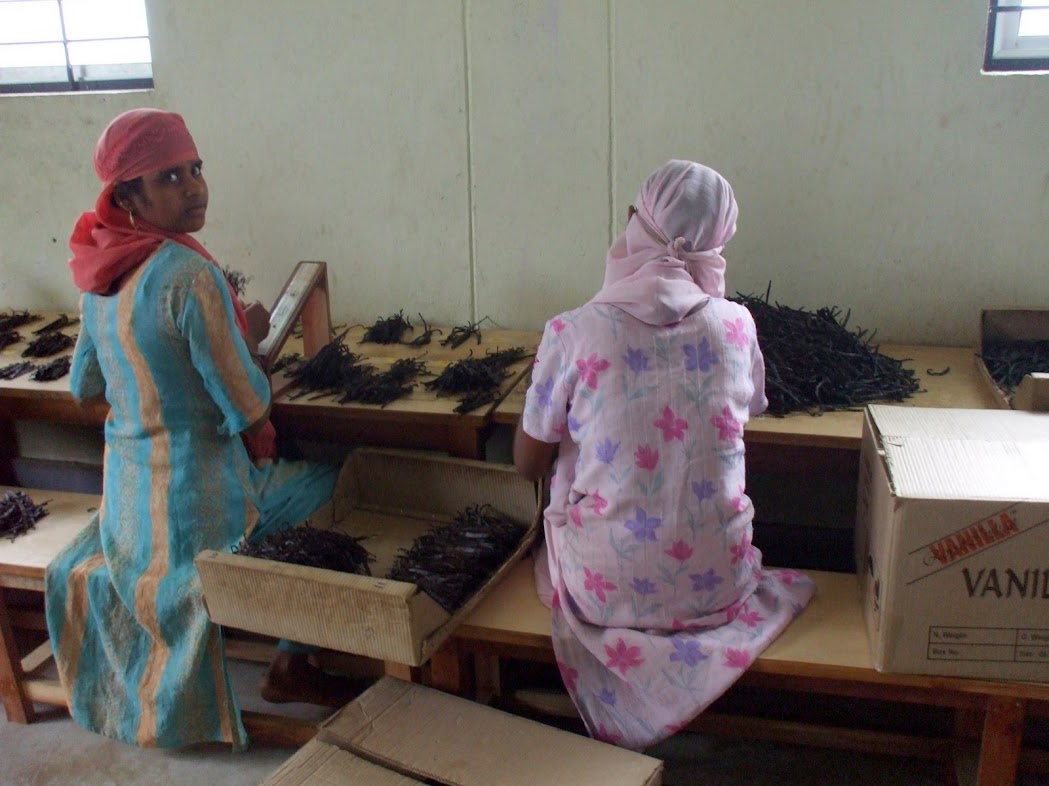
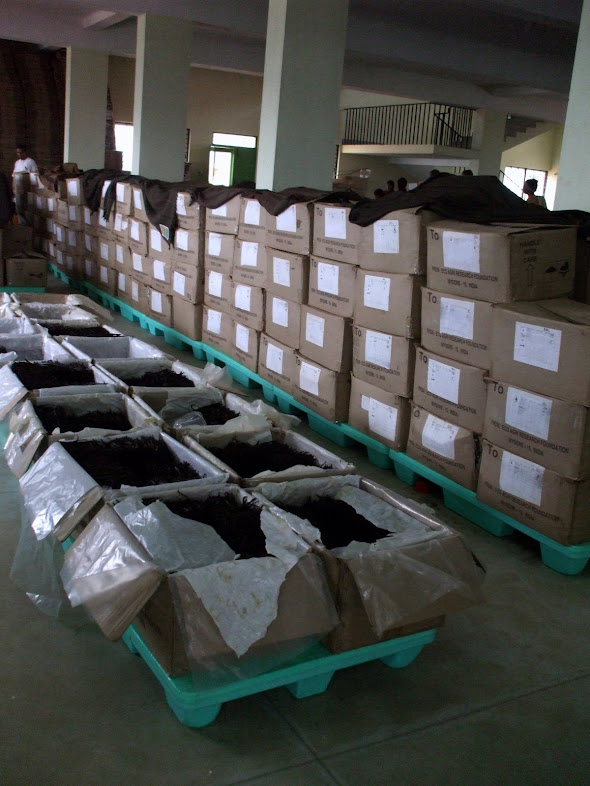
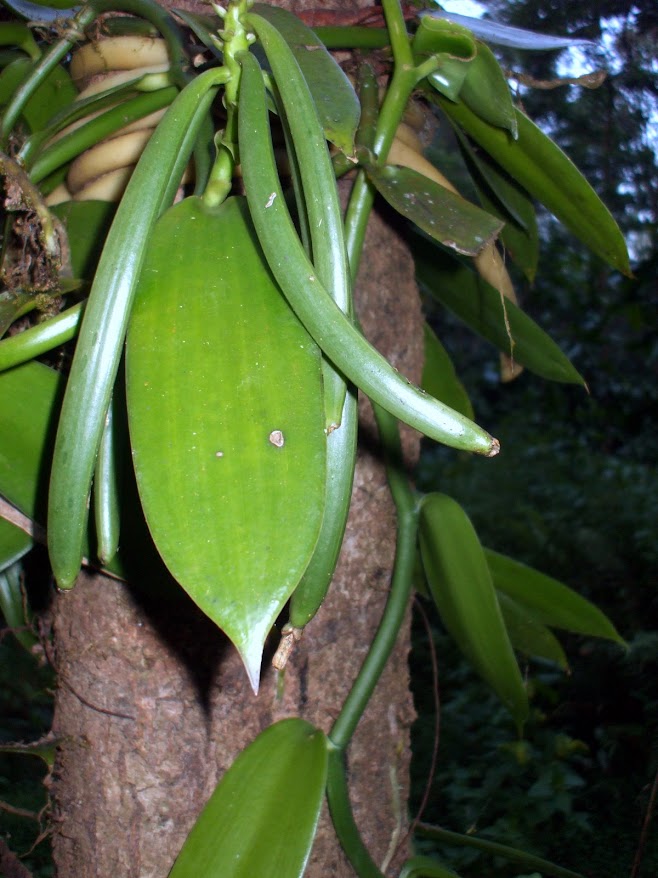
BASIL exists to promote biodynamic farming, investing heavily in teaching small farmers. They were very convincing about their techniques of using cowhorn etc and certainly have fine results. They showed us a film which went on far too long, and then, as we’ve come to expect, offered us a wonderful lunch. Discussion afterwards, then a tour of the farm and the vanilla packaging works. A whole shed full of vanilla pods, many being quality and size-graded by a band of women.
A lazy late afternoon, then an auto-rickshaw to Simon’s choice of restaurant, Park Lane Hotel, which I found noisy and not much fun. Until sundry Indian families all took a shine to this strange group of English and tried to make friends, asking our names and pinching our cheeks. M took photos of the event. Oh, on the way there, Simon and C’s rickshaw got seriously lost, and had to be guided home via Simon’s mobile and the man at the gate.
I rather enjoyed re-visiting India via my blog the other week. So I went and dug out the diary I faithfully kept. The events it describes have never yet seen the light of day. For the first ten days I was with the group of people my ex-brother-in-law had put together, to explore aspects of rural Indian life, focussing on small producers working in traditional and organic ways. We had no internet access during that period.
I’ve decided to share my diary with you. This will take several Fridays. I’m pleased that I kept such a detailed record of a piece of personal history, and of a country I’d never visited. I wonder how dated this account would seem to the current traveller?
Kracadawna
Sunday 18th February
But at 5.00 a.m. there was a great hammering at the door anyway. I lay in bed for 20 minutes, then thought I’d get up for a walk.I wandered down to reception, and found the jungle lot still waiting. So I joined them.
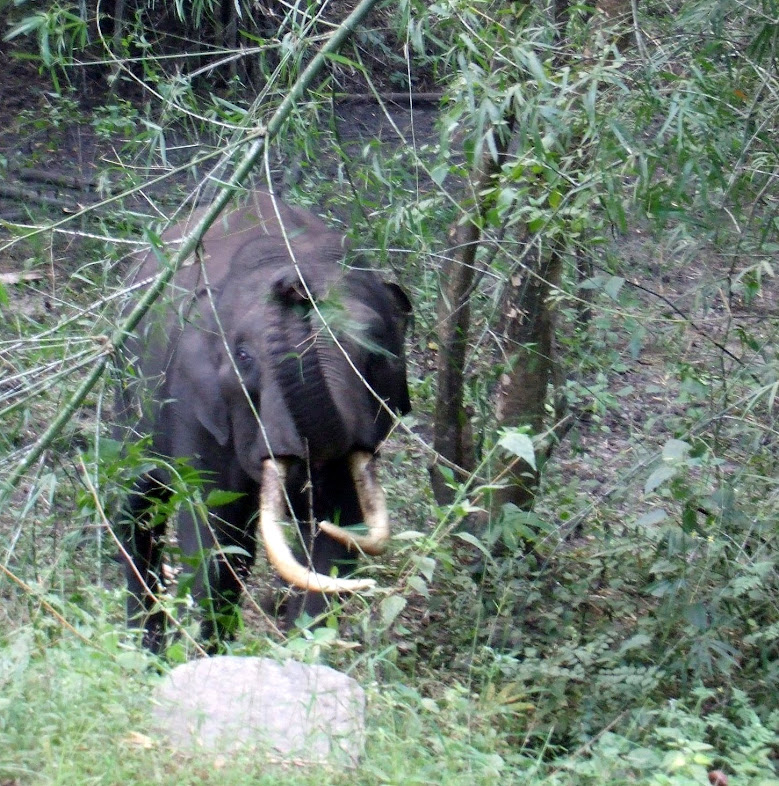
Much bounding around in the jeep off-road, but we saw a young elephant delicately feeding from young leaves, two mongooses haring across the road, a herd of bison, warthogs, and so many spotted deer we became quite blasé.
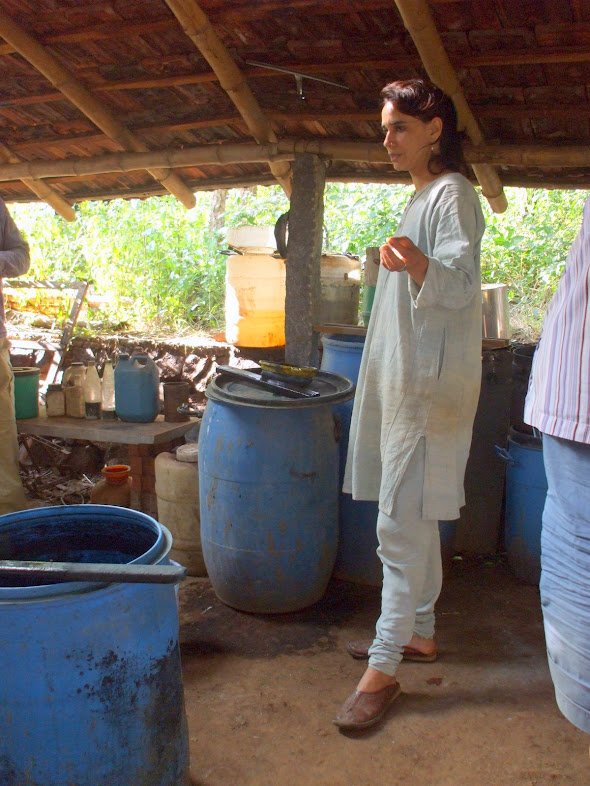
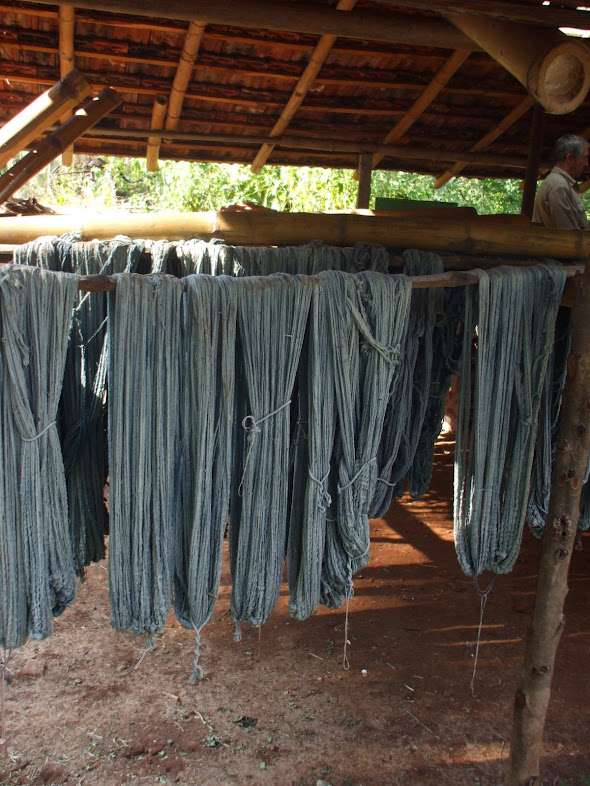
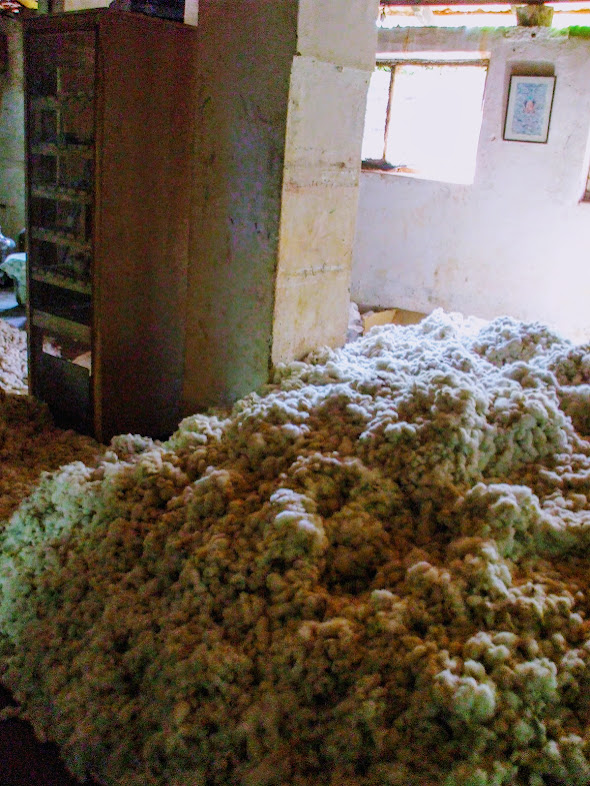
The main point of the day was to visit Kracadawna organic farm. What a place! The couple, Julie (Indo-American) and Vivek met at university, and decided, against parental opposition, to realise their dream and to farm. They’ve built it up with their two sons and daughter (home educated), and now farm a rich variety of crops, from fruit and veg. to spices and cotton. They are virtually self-supporting: what they sell is not fresh produce, but manufactured in some way. Julie makes wonderful jams, chutneys and preserves. She’s researched traditional plant dyes. They produce their own cotton, hand-dye it and with a small team of local women, produce quality organic garments. Sadly, I couldn’t find anything I wanted – they have little left so late in the season.
They farm biodynamically, and after all their scepticism are thoroughly convinced of the results.
A completely stunning lunch – bright crisp salads, greenish hummus, a great red rice dish, lots of chutneys and veg. dishes and a milky red-tail millet pudding.
Then a hairy – and I mean hairy – drive into Mysore and the Green Hotel, and a room each. Quiet evening, and to bed …
My featured photo shows the family cat we saw that day. Unusual, eh?
I rather enjoyed re-visiting India via my blog the other week. So I went and dug out the diary I faithfully kept. The events it describes have never yet seen the light of day. For the first ten days I was with the group of people my ex-brother-in-law had put together, to explore aspects of rural Indian life, focussing on small producers working in traditional and organic ways. We had no internet access during that period.
I’ve decided to share my diary with you. This will take several Fridays. I’m pleased that I kept such a detailed record of a piece of personal history, and of a country I’d never visited. I wonder how dated this account would seem to the current traveller?
Last Day at the Rainforest Retreat
Wednesday 14th November
Dhosas with potato curry and scrambled egg Indian style (i.e. spicy) for breakfast. Then off with Ravi and Nak for the Ridge Walk. This involved serious climbing through the rainforest till we rose above it to the hilltops with pasture, bracken and smaller foliage plats. Wonderfully bright acid green paddy fields below – such a contrast with the darker green of the plantation trees. One or two cattle here too. More of the same, passing a few settlements on the way down……
….. Later, M, C, L I had a few jobs to do in town so we had a lift in. We enjoyed pootling around. I left an answerphone message for Malcolm and spent Rs60 on a hat (about 54 pence). We bought chocolates for Sujata and A (Cadbury’s, made in Poona and unavailable in England) and waited and waited for our photos to be downloaded.
…and waht you can buy there
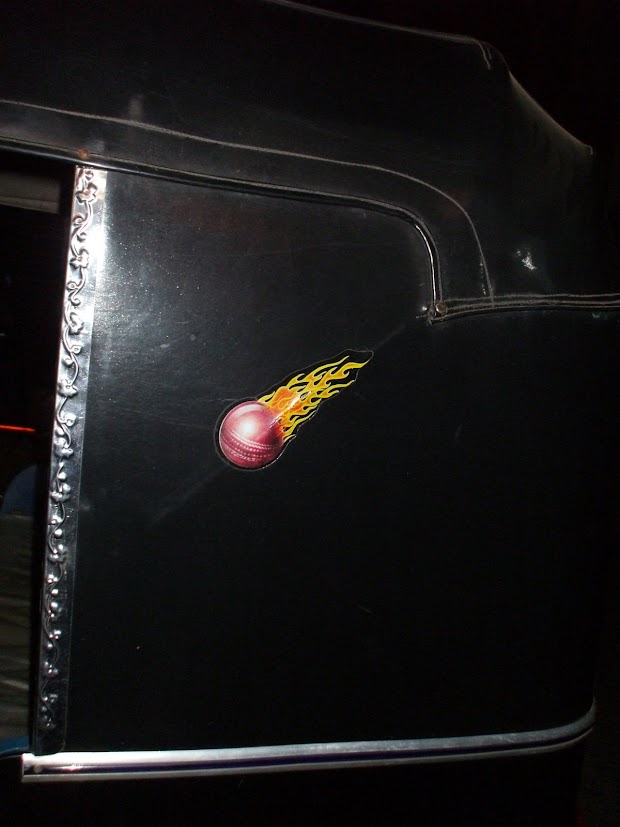
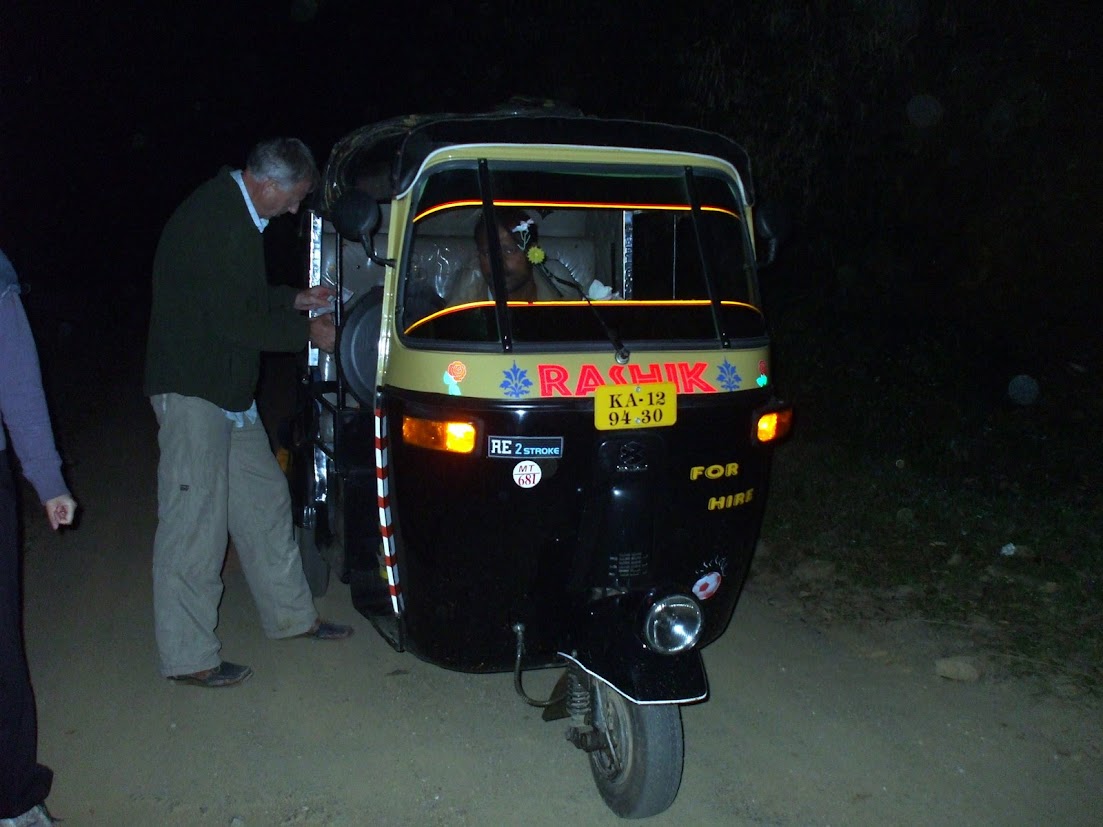
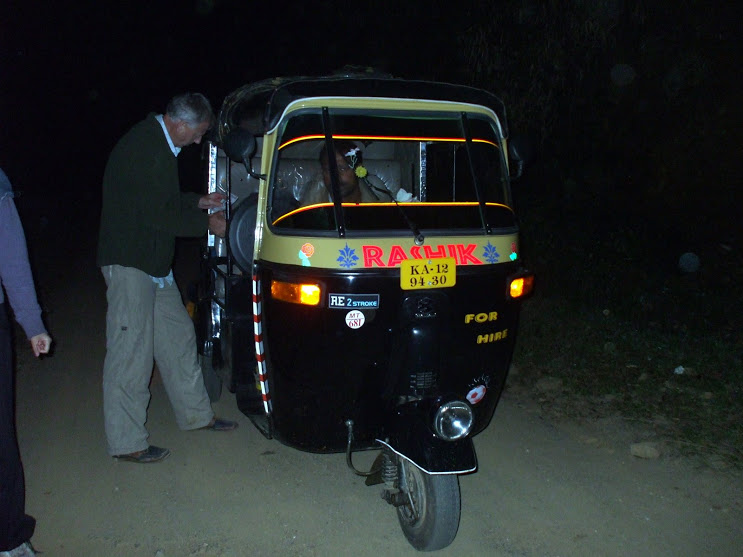
It was dark by now, and we started to worry we wouldn’t be back for 8.00 and our farewell dinner, but M made friends with someone in a shop who took my letter which I’d found no postbox for, and got us an auto-rickshaw. Well! Health and Safety need not apply. 4 of us plus luggage somehow squeezed in with L on M’s knee and all of us bulging out all over. We admired the artificial flowers decorating the driver’s dashboard while M negotiated the price (Rs 150 – £1.35 – for a 10 km. ride) and off we hurtled, through puddles and over potholes (easier perhaps in a rick, with its smaller wheelbase) only grinding to a halt once.
Home just in time to make the journey up the hill to S&A’s house where we sat round a bonfire with A’s blues music in the background, eating dish after dish of all kinds of curry. Ludwig was there too. Home by 10.30, looking at a sky fuller by far of stars than we can ever manage in light-polluted Europe.
I rather enjoyed re-visiting India via my blog the other week. So I went and dug out the diary I faithfully kept. The events it describes have never yet seen the light of day. For the first ten days I was with the group of people my ex-brother-in-law had put together, to explore aspects of rural Indian life, focussing on small producers working in traditional and organic ways. We had no internet access during that period.
I’ve decided to share my diary with you. This will take several Fridays. I’m pleased that I kept such a detailed record of a piece of personal history, and of a country I’d never visited. I wonder how dated this account would seem to the current traveller?
Tea Plantation Day
18th November 2007
Tea Plantation day! We set off later than we should have – who knows why? Led by Ravi, who pointed out vine snakes, trees, all sorts. We were VERY late at Ludwig’s and he had to go out soon. I was pretty annoyed, and I suspect L was too. He’s German, but has lived and worked here for many years.
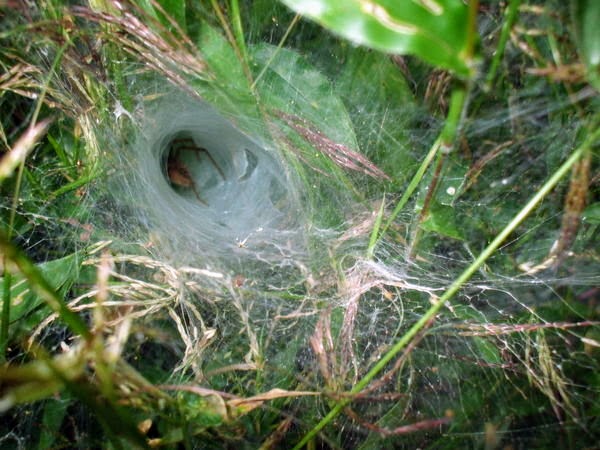
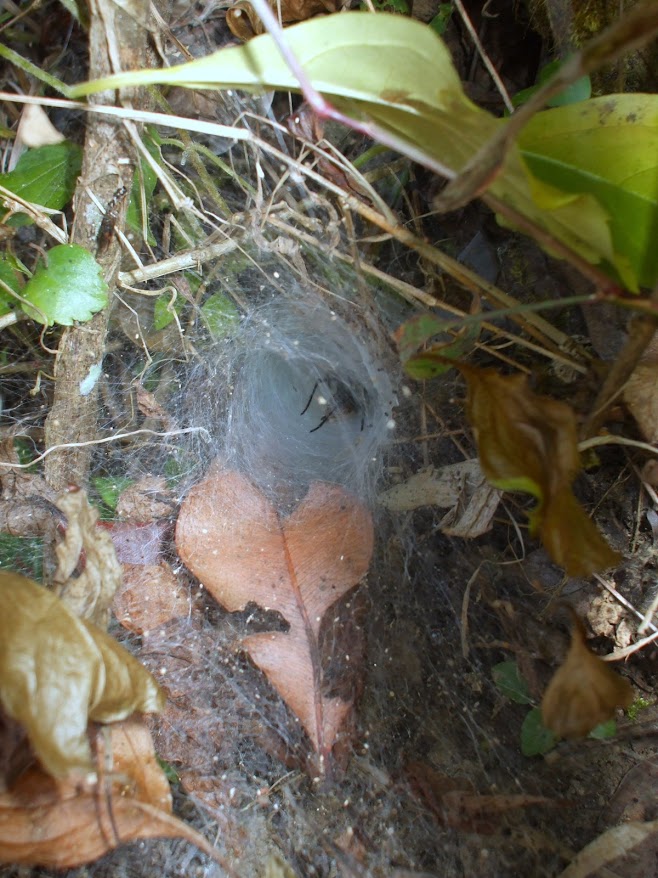
Vine snakeTunnel spider
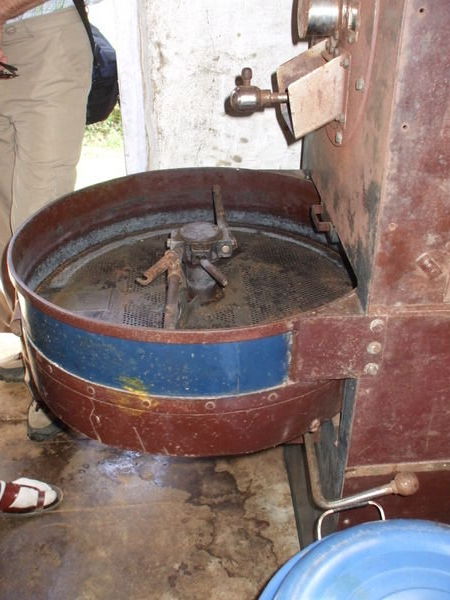
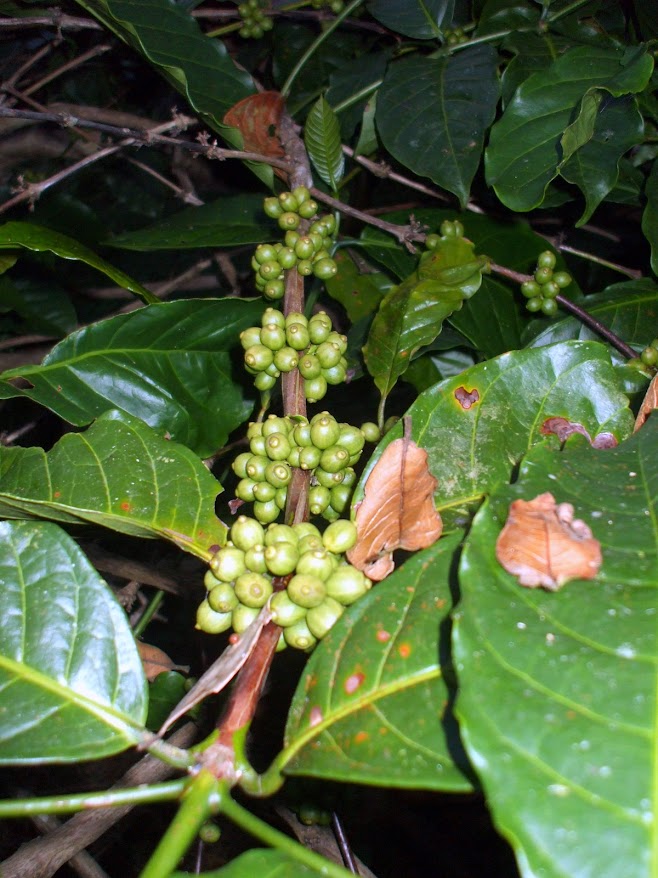
Still, he showed us the coffee production process: collect beans, dry them, rub off ‘cherry’ coating (big producers wash this off – superior, but expensive), winnow, size-grade by riddling and store till roasting. His roasting machine, powered by gas, is the sort you still see from time to time.
A coffee roaster, just like the ones that used to be common in England
We were shown the tea sheds, but that, it seemed, was that, apart from seeing the tea-picking, then seeing a Hindu temple. Ludwig offered that we could see tea processing in the afternoon and I accepted straight away, and so did C and M. L offered a simple lunch.
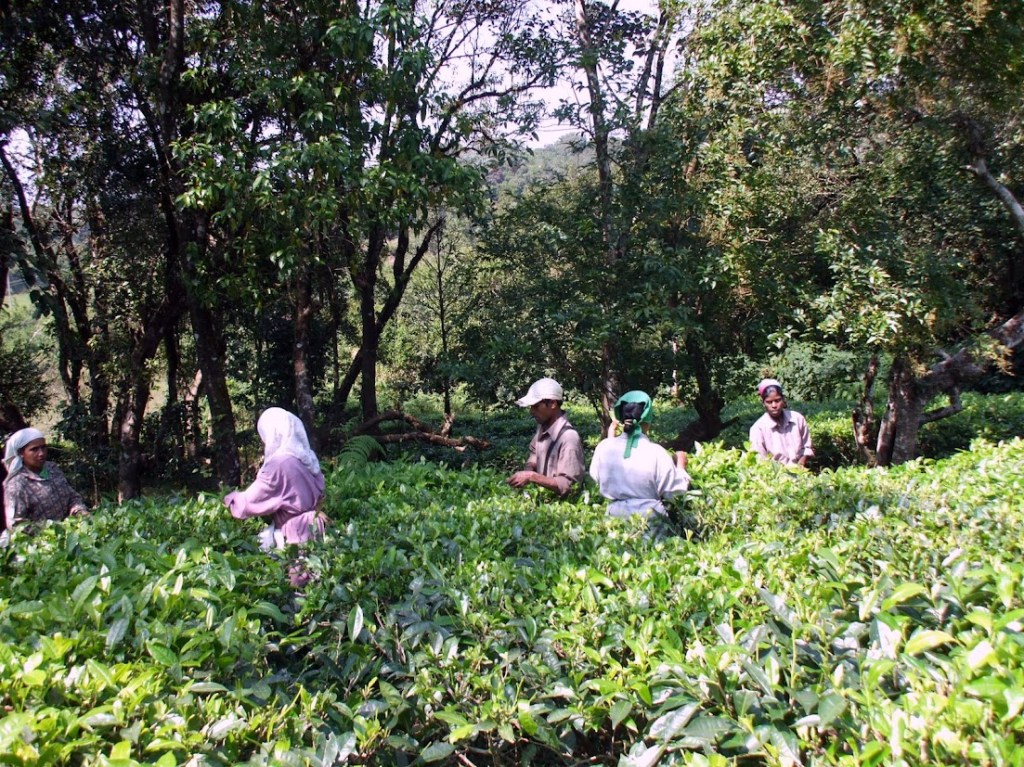
Tea production is not well-established here, so the pickers don’t have the experience of those in other areas. When we saw the workers, we were surprised to see them take more than the first couple of leaves, and it proved we were right – this batch will only be fit for lower-grade tea.
Picking tea
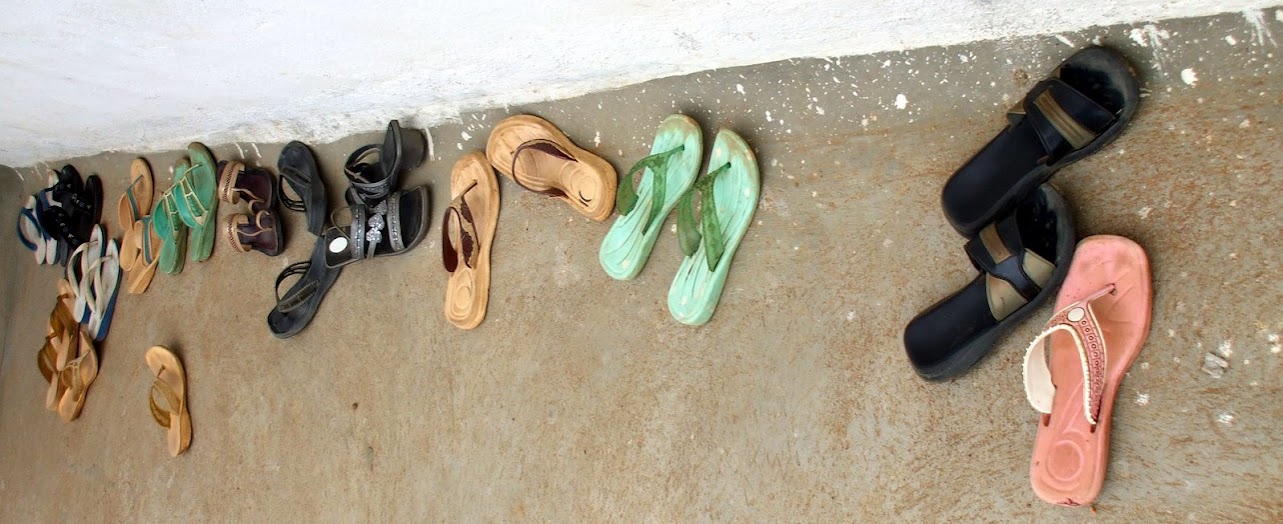
Then along another long walk to see the Sacred Grove and Temple. It’s been long neglected, but its bright colours are still evident. We had to approach, shoeless, via a long green passageway which was apparently the established home of a crew of leeches (which we found out about the hard way).
On the way back, Ci felt ill, so we stopped at a village shop for refreshments, and to phone for a taxi for her. After that, our paths divided. The others went home, and M, C and I returned to Ludwig’s. He was out, but had arranged a simple lunch which we ate at one of his guest lodges (he’s currently building another, out of mud bricks).
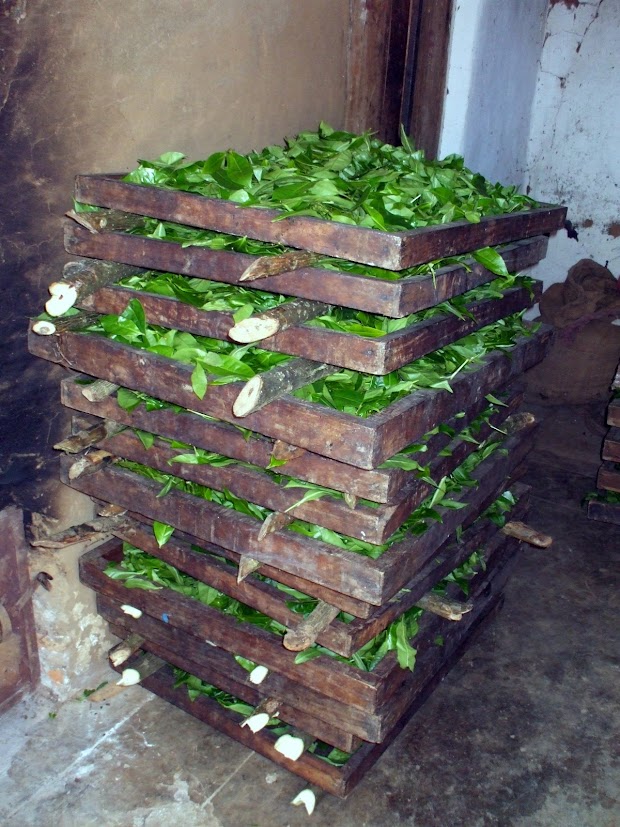
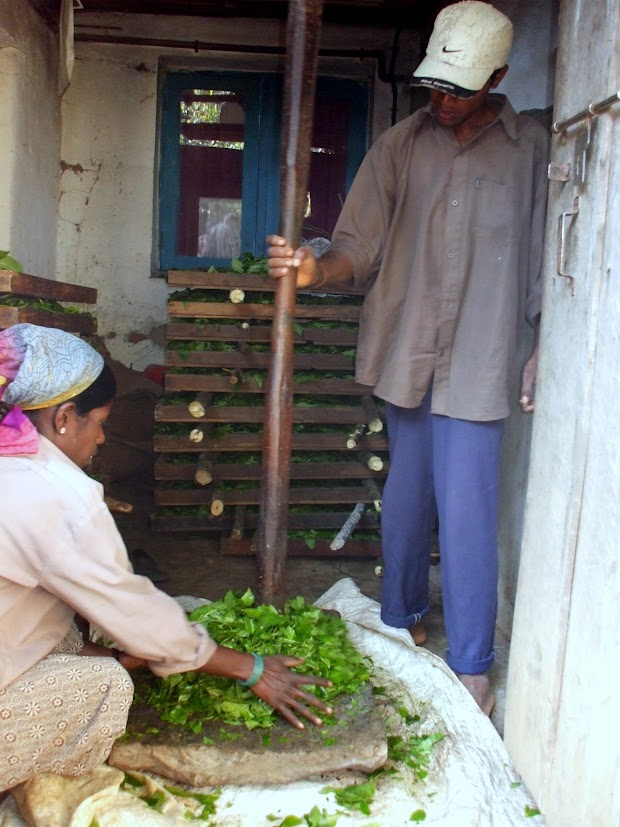
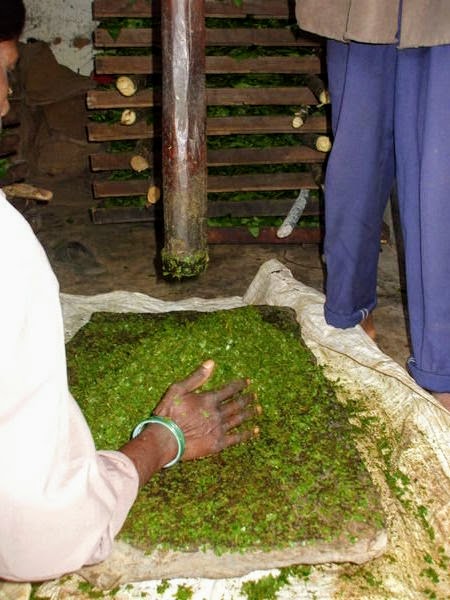
After that, the women began work on the tea leaves. For green tea, you steam the leaves briefly. This arrests the fermentation process. Then the leaves are pounded – this doesn’t take long – till they become shredded.
Steaming the tea leaves
For conventional tea, the leaves are first dried – only for an hour or two, before the pounding process. This is long and hard, and involves a huge three and a half foot long pestle, and the woman at the mortar beneath constantly moving the material from the edges to the centre. Then the mixture is dried.
There is enough of a local market for this organic tea to make it viable for Ludwig to employ ten people all the year round. They also work in his paddy field and care for his cattle. Typically, workers in larger plantations are only employed seasonally. Ludwig doesn’t own his farm: as a non-Indian, he can’t, but he has an Indian sponsor from whom he rents it.
A view from Ludwig’s Golden Mist Plantation
On our way home we saw egrets, parakeets and various birds we couldn’t identify, as well as lots of frogs. Hornbills too.
Oh yes! In the afternoon, while talking to L, we suddenly heard the cicadas in the trees. The noise grew and grew, reaching a crescendo so loud we had to raise our voices: then as suddenly died down. Extraordinary. This YouTube video gives some idea of it.
I rather enjoyed re-visiting India via my blog last week. So I went and dug out the diary I faithfully kept. The events it describes have never yet seen the light of day. For the first ten days I was with the group of people my ex-brother-in-law had put together, to explore aspects of rural Indian life, focussing on small producers working in traditional and organic ways. We had no internet access during that period.
I’ve decided to share my diary with you. This may take a few Fridays. Bear with me. I suppose I’m pleased that I kept such a detailed record of a piece of personal history, and of a country I’d never visited. I wonder how dated this account would seem to the current traveller?
Bangalore to The Rainforest Retreat
Saturday 10th November 2007
Here I am, sitting outside our bungalow at The Rainforest Retreat. It’s 6.40 p.m., pitch dark: and about half an hour ago, the chorus began. I just lay down outside and listened. All those forest sounds – I don’t know what they are, but it’s like some complex symphony. Suddenly, one group of creatures will become silent, and others will chip in with their own song. Many multiple groups of course, who suddenly go diminuendo, only to be succeeded by a group of quite different creatures, or an individual bird, or whatever …
It’s been quite a day. For my part, I hiked all the way to Simon’s hotel, and it WAS a hike, where we shared breakfast. His hotel was so not-me. Lots of flamboyantly dressed flunkeys and a big help-yourself buffet, but no nice people making piles of idli, just for me.
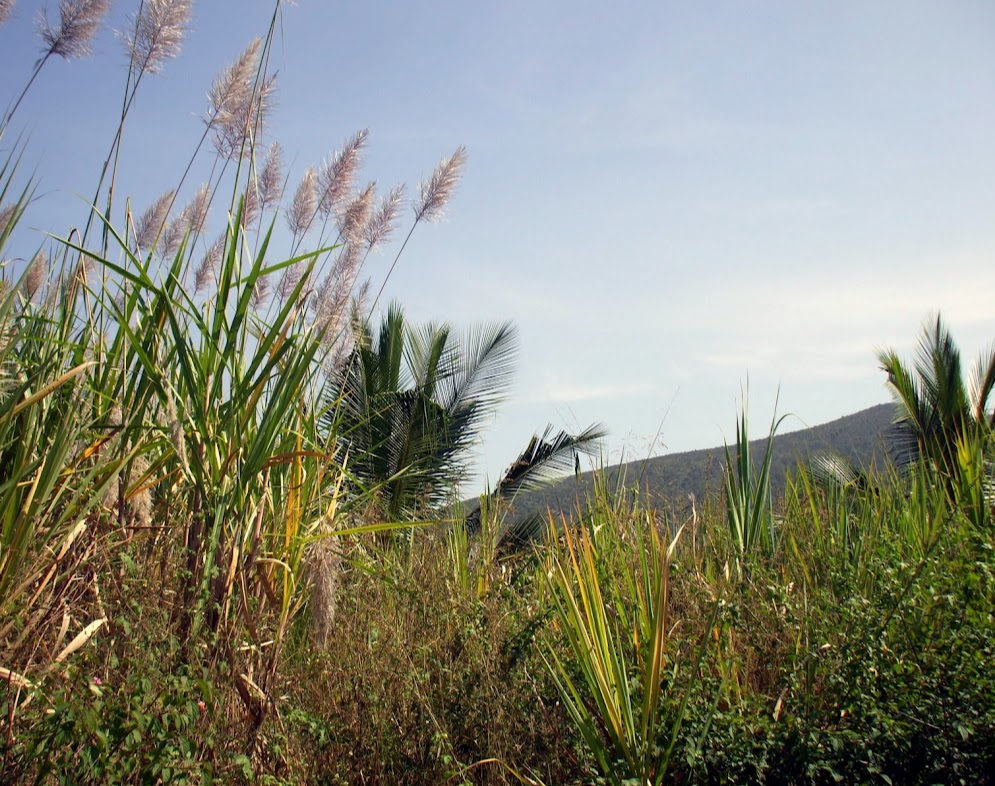
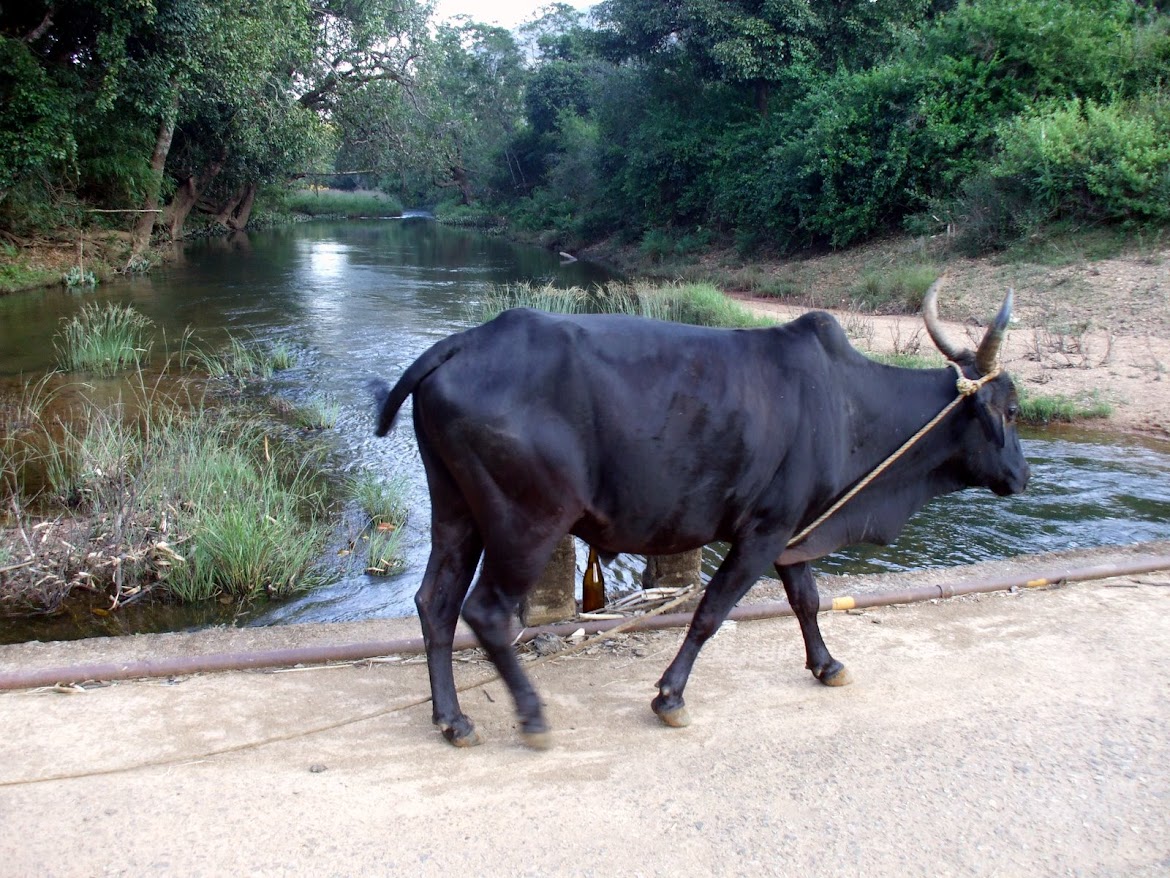
Then into the mini-bus. Bangalore seemed to go on for ages, and even when I had definitively stopped, roadside settlements and shops went on and on. Village shops are a mystery to me. Even very small settlements have coffee shops, ‘bakery’ shops and a whole raft of others too. The landscape became more rural though. Palms; sugar cane; more and more working bullocks, yoked often; goats; sheep; cows …
Lunch outside Mysore, rather early – a large vegetable thali and a glorious salt lassi.
After lunch, the climb began and the roads deteriorated, and Indian driving came into its own – overtake on a bend? Why not? Honk and honk till the car in front gives way? Certainly. It won’t give way actually, so you will pass it on the other side instead. Oddly, we came to think of this as fairly safe. For all their bluster, the drivers are careful.
Pepper plantations, coffee plantations, rice in the early stages of growth. And still the villages came, some with very large markets which only prolonged hiking got us through. Tropical rainforest scenery … and finally we arrived.
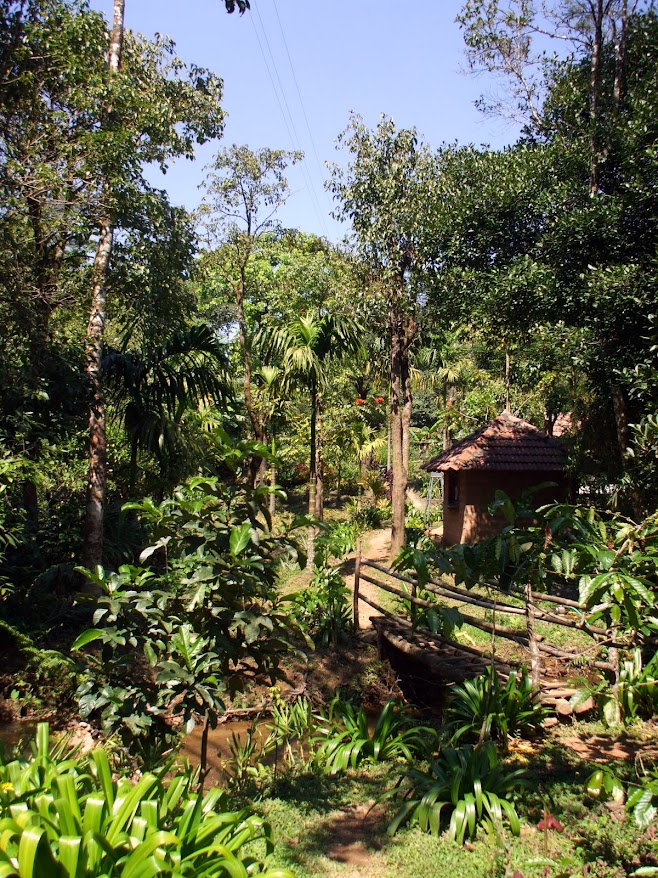
Here we are in the middle of the forest. Our bungalows – I have one with C and M – are set amongst it all, as are their crops: small crops of beans etc. and others such as vanilla set among the forest trees. I went for a wander by myself, listening to the exotic forest sounds. Communal supper outside – all meals are taken in a shelter outside our bungalow. And so to bed. By the way, I forgot, Unpacking, I moved my rucksack, and a noisy clockwork toy sprang out. Only it wasn’t. It was an angry and upset hawkmoth, and it chattered angrily all the time we were evicting it.
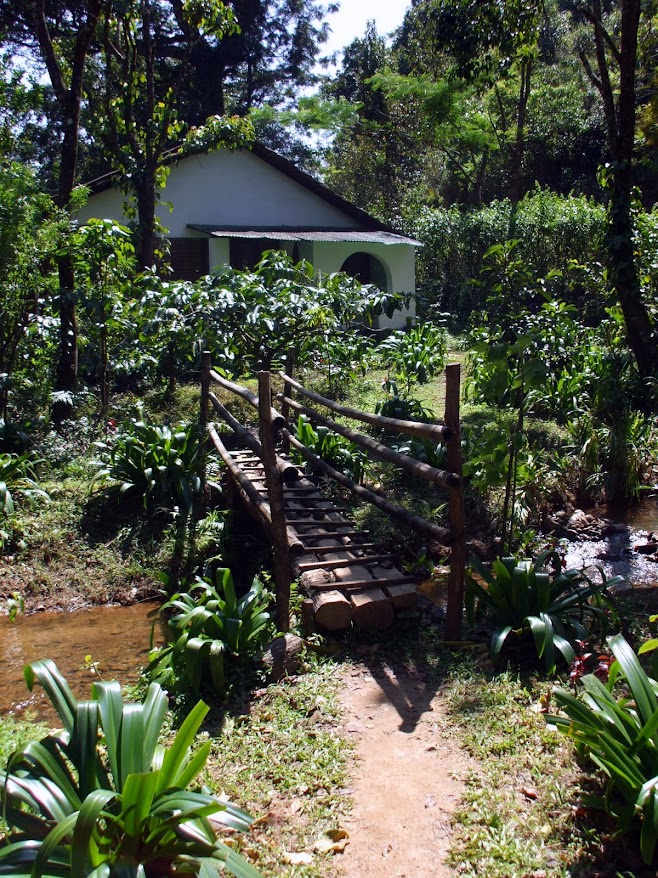
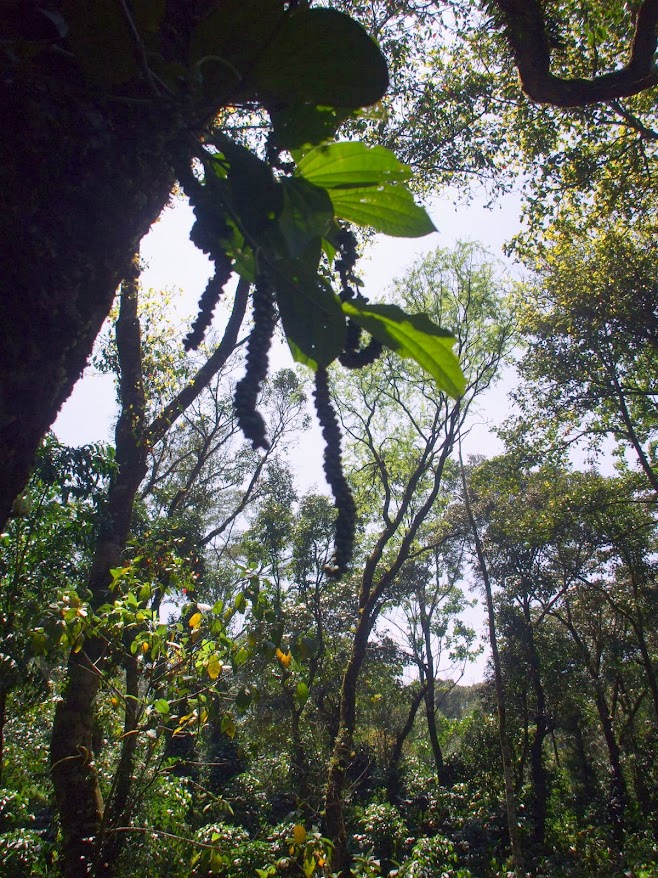
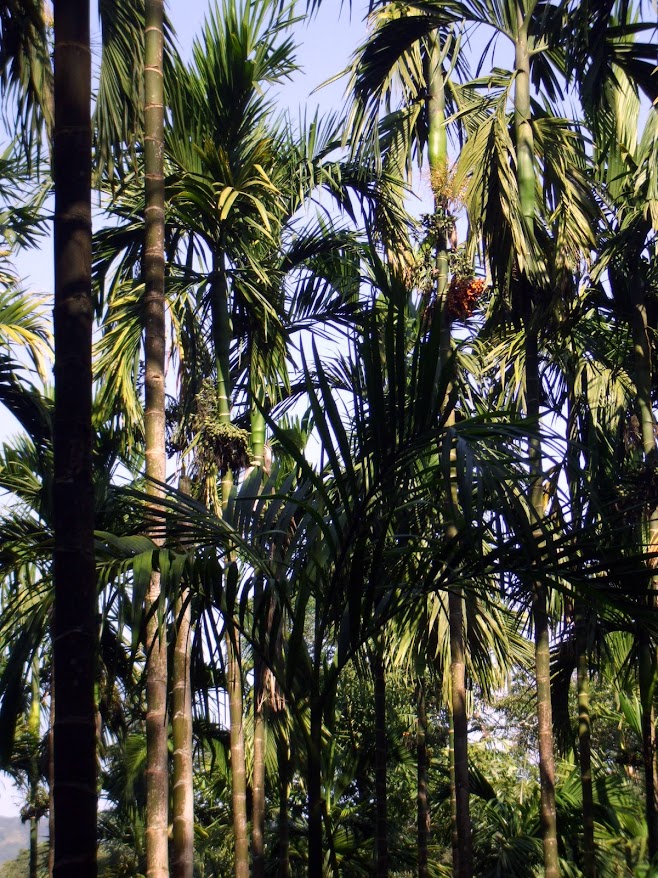
My next days’s account is of exploring the estate and surrounding neighbourhood, so I’ll let my photos do the talking.
Just two extractsfrom my diary for that day …
We enjoyed munching fresh cardamoms, the ‘cherry’ round the coffee beans (sweet and refreshing – civet cats like them too), clove leaves, as well as looking at pepper(spice kind) plants, vanilla, pineapple plants, and all the organic produce they’re responsible for.
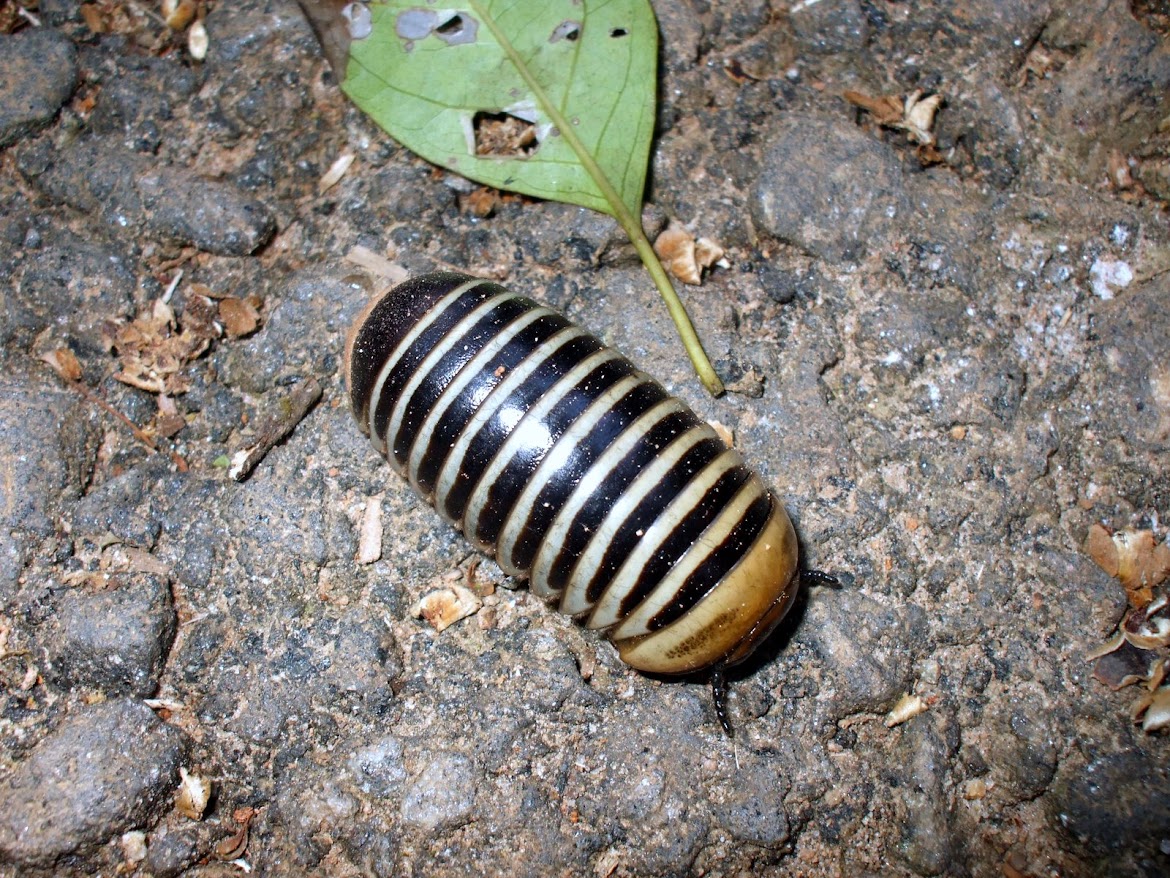
Sights on our afternoon walk: a massive millipede; a land crab; an aeriel ant’s nest; a palm whose juice in the morning is given to young children. By noon it’s like beer, and by evening it’ll do your head in it’s so potent.
Here is a link to the Rainforest Retreat. It’s clearly under different ownership now, and much more developed than in the early days when we visited. Though from this year they no longer cater for short term visitors. But it retains its interest in sustainability, biodiversity and organic practices.
“To travel is to discover that everyone is wrong about other countries.”
Aldous Huxley
To travel is certainly to discover. If I told you that we were off to start the day at an animal sanctuary, followed by a picnic, followed by a spot of local shopping, you might imagine our spending an hour or two with distressed dogs or donkeys, maybe some homeless hedgehogs. Then you’d picture us with a pack of sandwiches, maybe sharing a bag of crisps and some Jammie Dodgers, perhaps on a park bench, or dodging the cow pats in a country field. Then you’d suppose we’d nipped into Sainbury or Tesco on the way home.
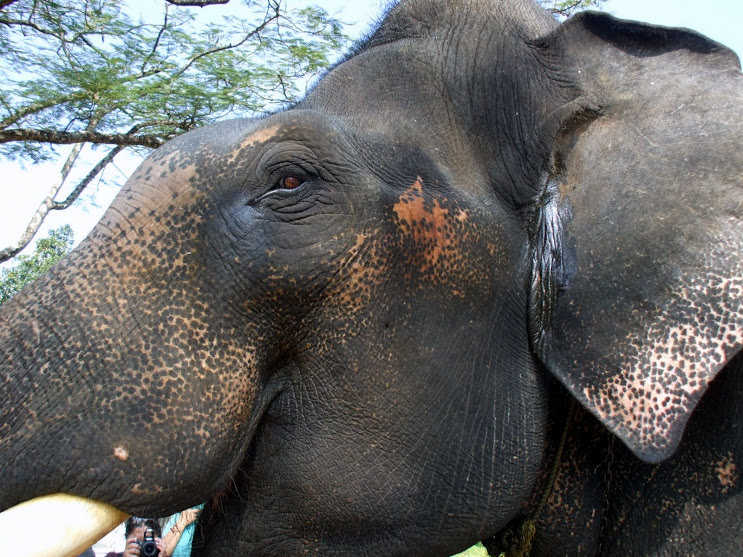
But this is my Indian Adventure, so you would be wrong. Our animal sanctuary was Dubare Elephant Camp. This is where elephants who’ve had a long career working transporting logs for the Karnataka Forest Department go to live out their retirement years.
We watched them enjoying their daily bath in the River Cauvery. One elephant needs maybe three young men to bathe them: good tough scrubbing brushes required to give that hard leathery skin a good old scratch.
Look for the trunk poking above the water!
We were in time for their breakfast. There was a cookhouse where an appetising mixture of jaggery (a dark brown palm sugar), millet and vegetation was boiled up and formed into giant balls of nourishment. Just because they ate it daily didn’t stop them finding it delicious.
Making breakfast for the elephants
That was it really. But we had to set off for our picnic in any case. With some difficulty, we waded through paddy fields, where the young rice plants were an impossibly citric green, vivid and vibrant. And there, at the end of our walk, was the River Cauvery: a perfect scene from a travel documentary: tall palm trees, knotted and intricate tree roots, little islands among the fast-flowing waters.
Off for a picnic
Paddy fields
The walk back home
River Cauvery
We were glad to climb into our costumes and plunge into the river – muddy, but otherwise clean. There was quite a current, and I wasn’t strong enough to swim the width of the wide river, so stayed close in to the banks.
Simon swimming
And then it was time for our picnic: something special, this. Staff from our host’s residence clanked down the hill with great metal cans yoked over their shoulders: rice; sambal; a wonderful bitter curry made out of some dark green leaf also used to de-worm children; chicken curry; a sour and bitter sticky chutney; curds; and a gorgeous buttered cabbage curry. It truly was a memorable feast.
The picnic arrives
On our way home, we stopped off at our local town, Madikeri, to do some bits and bobs of shopping – get our photos onto CDs in the days when memory cards didn’t have much capacity, buy sandals, that sort of thing.
Oddly, I took few photos here, but I’ve used others from later in the trip, because with their rows of tiny shops, Indian shopping streets are standard in their own way. No M&S, Boots and Costa certainly, but there’s still a certain uniformity in the small shop fronts with goods stacked and hanging outside, and pedestrians, bullocks and auto rickshaws all jockeying for position in the crowded streets. Here’s the auto rickshaw that four of us (and our driver of course) contrived to travel home in after our trip…
The rickshaw that somehow got four passengers and a driver back home on a ten mile journey on a bumpy road.
I wasn’t so much wrong about India as didn’t have a clue.
My contribution to Debbie’s challenge, inspired by the quotation at the beginning.
You’ve had a taste of my long-gone-month-long stay in India. From here to here. But I’ve not been entirely honest with you. I told you it was a holiday I took alone. That’s largely true. But for just over a week, right at the beginning, I was part of a small experimental tour put together by my ex-brother-in-law Simon. An Organic Adventure. About eight of us travelled through rural Karnataka and Kerala, looking at local ventures into organic and sustainable agriculture. If that sounds dull … well, you can’t have been there.
I have stories to tell. But it was the wildlife that always remains in my mind … even urban wildlife is so very different from good old English pigeons and magpies. In Bangalore it was wheeling and circling eagles. In Mysore it was enormous fruit bats coming out at nightfall, to find food; and by day there were the gossiping bovva- boy hornbills.
And in rural Karnataka it was frogs. We could see them constantly in the ponds near our lodgings, burping away by day and by night . The only thing that shifted them one morning was a rat snake, slithering around and looking for breakfast .
I used to go outside as darkness fell at 6 o’clock and listen. A complex symphony played out. First, a group of frogs would start their chorus, the noise intensifying until gradually becoming quieter again: then others would take over with their own ever-swelling sound. Crescendo … diminuendo. All through the night. Quite wonderful.
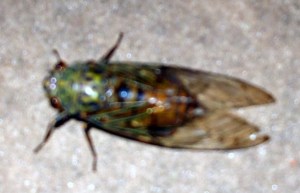
One day at a tea plantation at the edge of the woods (another story for another day) we suddenly – and I do mean quite suddenly – heard cicadas in the trees. From low beginnings the sound grew and grew, peaking at a crescendo so loud we had to raise our voices to make ourselves heard.. Then, just as suddenly , it died smoothly away to nothing.
My favourite sound? This. Every morning. Just as dawn broke, a whistling thrush – just the one – broke into song. It sounded just like some contented man, hands in pockets, ambling slowly down the street, whistling happily and aimlessly. And it made me happy too, every time.
And on our very first night in the rainforest, as I was unpacking, a whirring, clattering clockwork toy appeared from behind my rucksack. Only it wasn’t a clockwork toy. It was a very cross hawkmoth, complaining vociferously about being disturbed.
The cross and out-of-focus hawkmoth who chattered and clattered round our room.
Then there was our stop off in Nagarhole National Park with its snowy-headed Brahminy kites, its kingfishers and eagles: its bison, its warthogs, its spotted deer, its mongooses and – of course – its elephants.
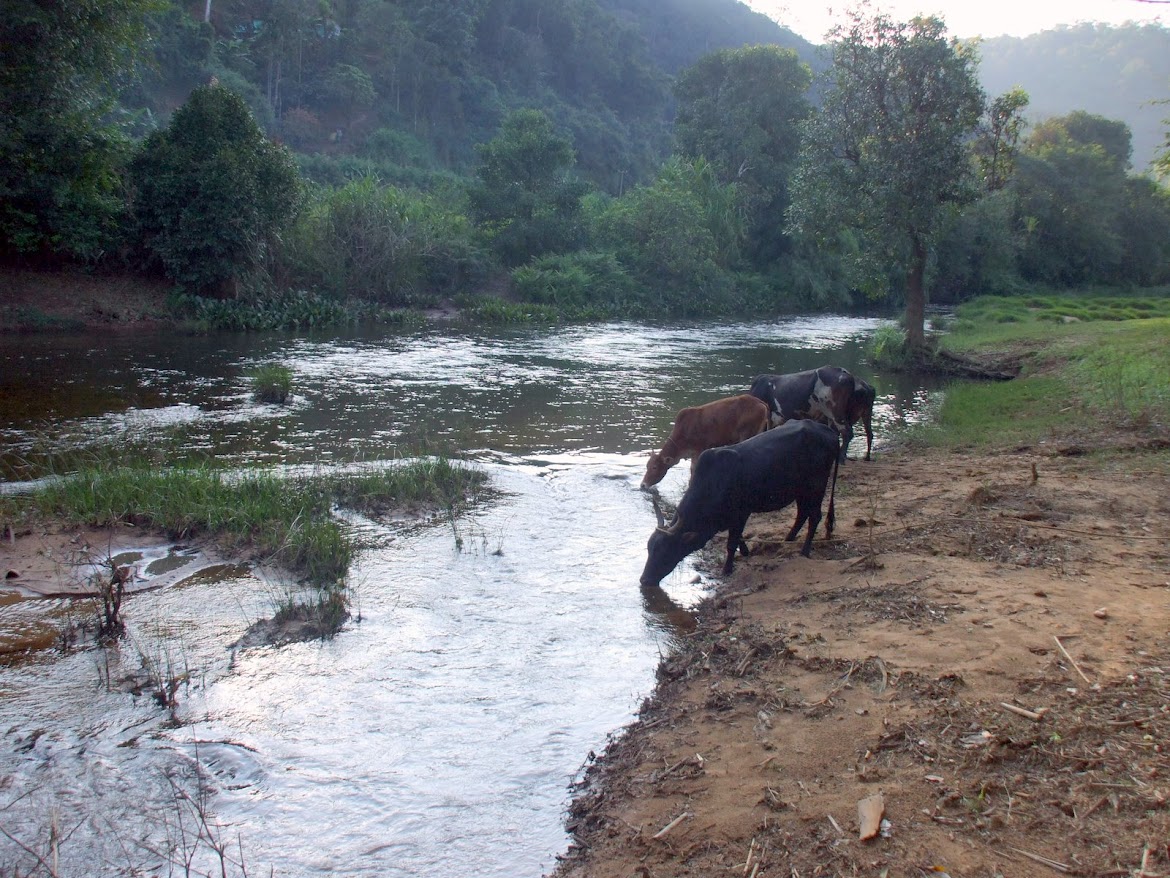
But more than these I remember the simpler pleasures: watching cattle egrets on the backs of cattle, benefitting from the insect life that definitely did not benefit the cattle. Glimpsing a water snake surging across a placid pond. Going on a trek across the empty paths of the Western Ghats, spotting vine snakes, parakeets, macaques, rufous-bellied eagles…. and for some of our unfortunate team – not me for some reason – leeches, which left angry red welts behind when they’d loosened their grip.
No hornbill was going to wait around for me to take a snapshot. I saw no cicadas. I wasn’t clever enough to snap a Brahminy kite or an eagle. So my pictures don’t match the text. It’s just too bad. I can enjoy both and I hope you can too: souvenirs of memorable rural India. Tales of what we actually did there are for another day.
Eagles fly above Bangalore
Rainforest
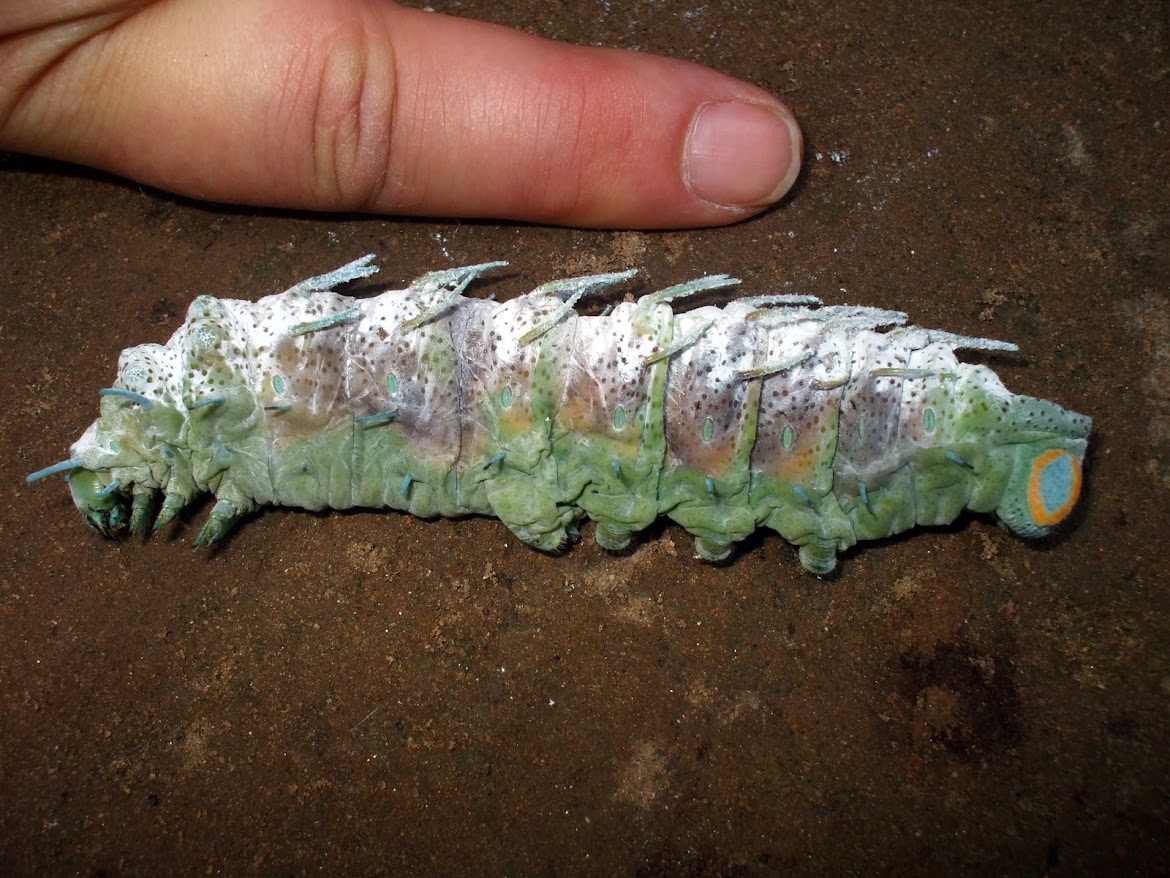
Caterpillar
Millipede
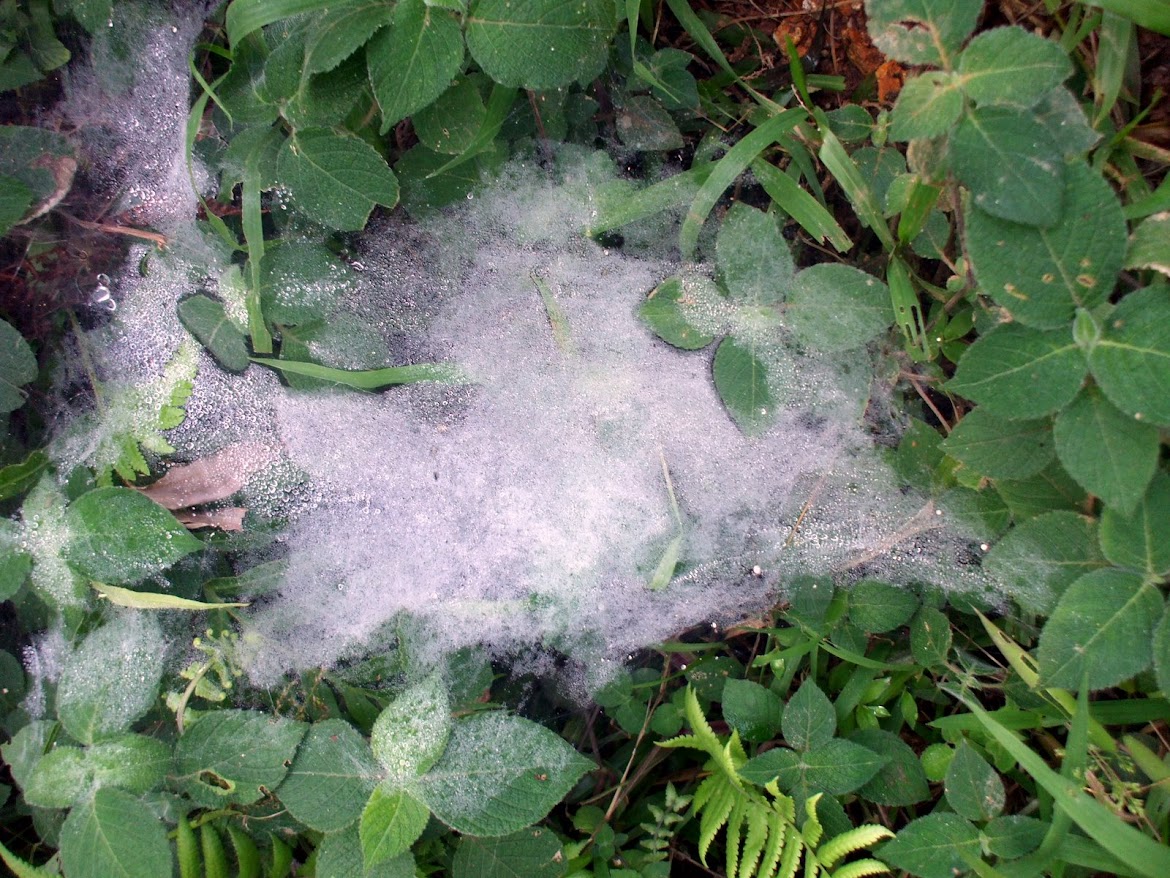
More spider’s webs
Sunset by the river
The only gecko I ever saw in India
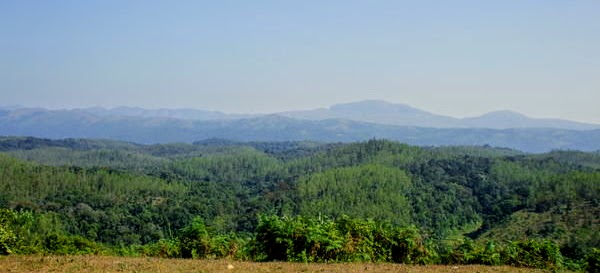
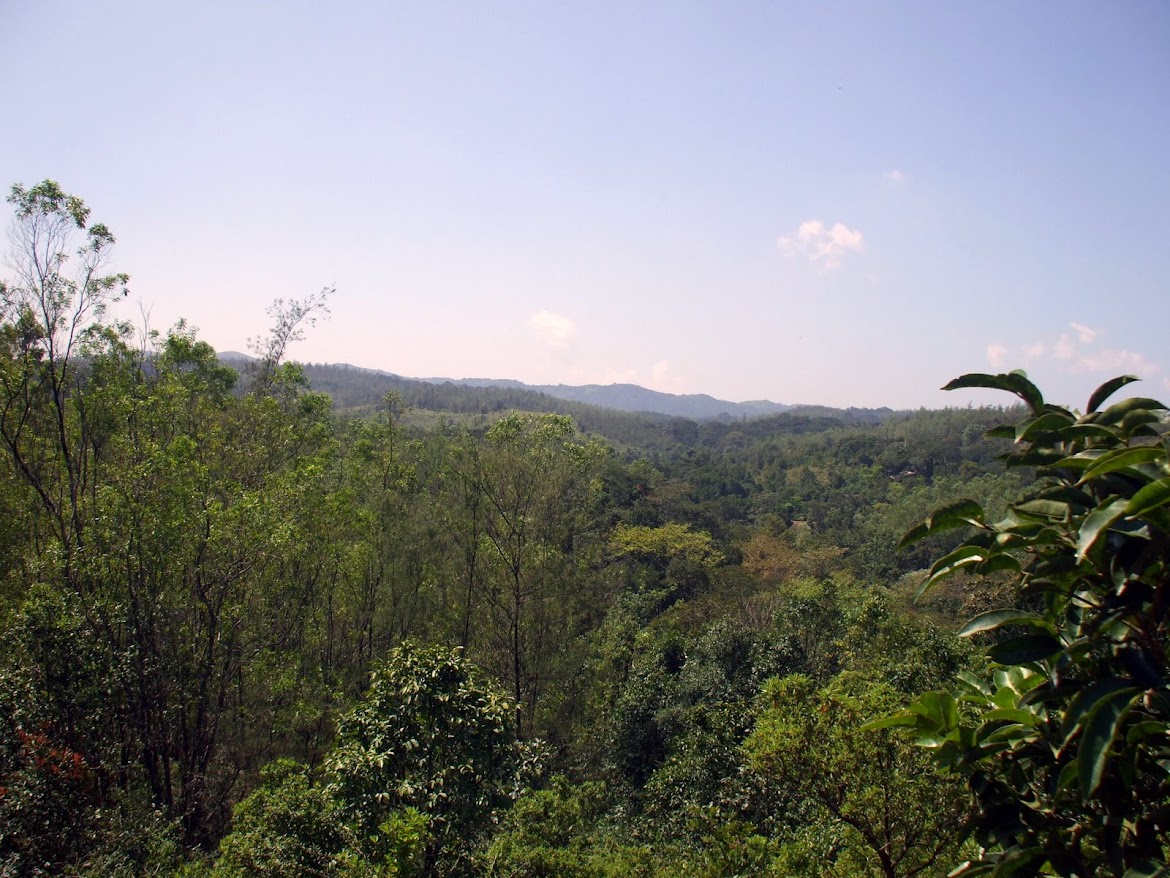
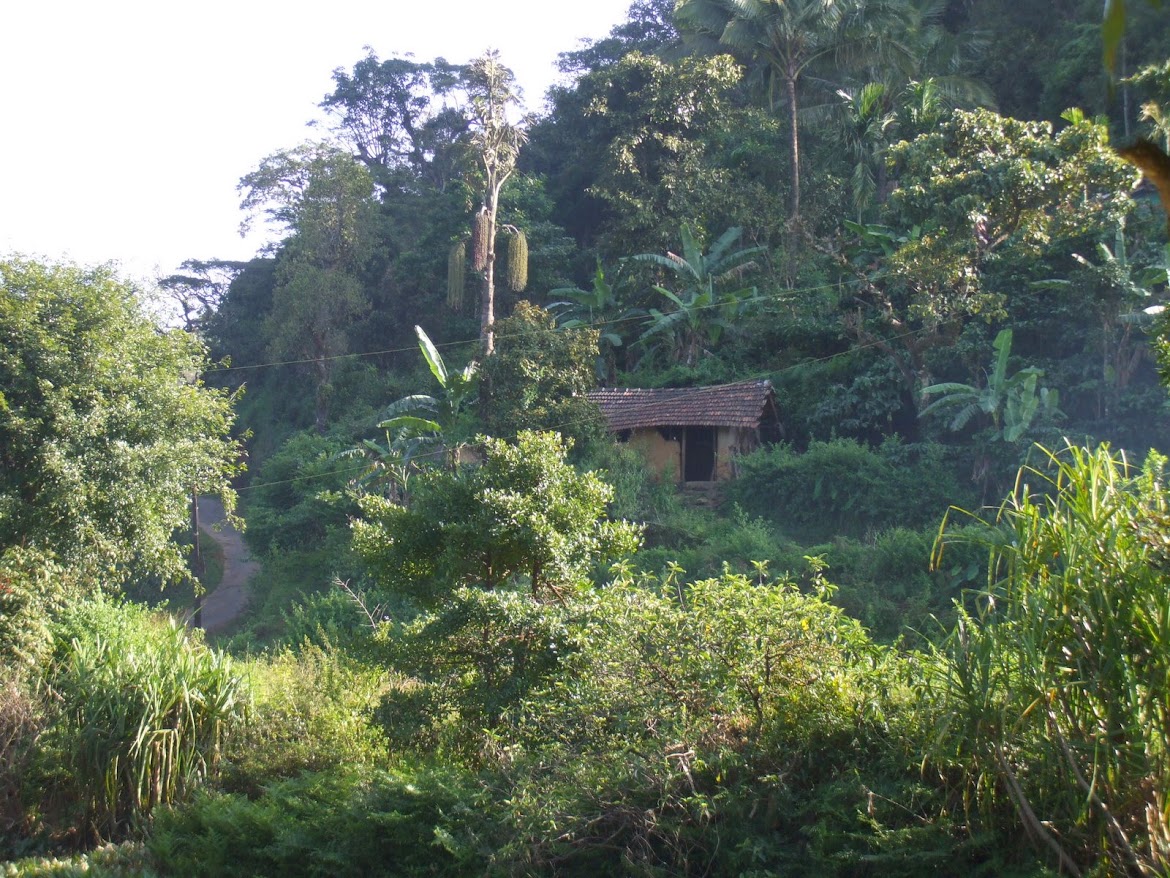
The Western Ghats
Frog
The strangler fig climbs up the host tree: then strangles the tree to death.





















 From Pyrenees to Pennines
You must be logged in to post a comment.