A quick peek at Algeria

Last November, I joined L’Assocation Découverte Terres Lointaines, and wrote about it here.  This month, I’m really involved, up to the neck, because next week, at the library in Lavelenet, we’re taking over, and bringing Algeria to town. More later, then. But for now, have a look at some of our more relaxing moments during our preparations.
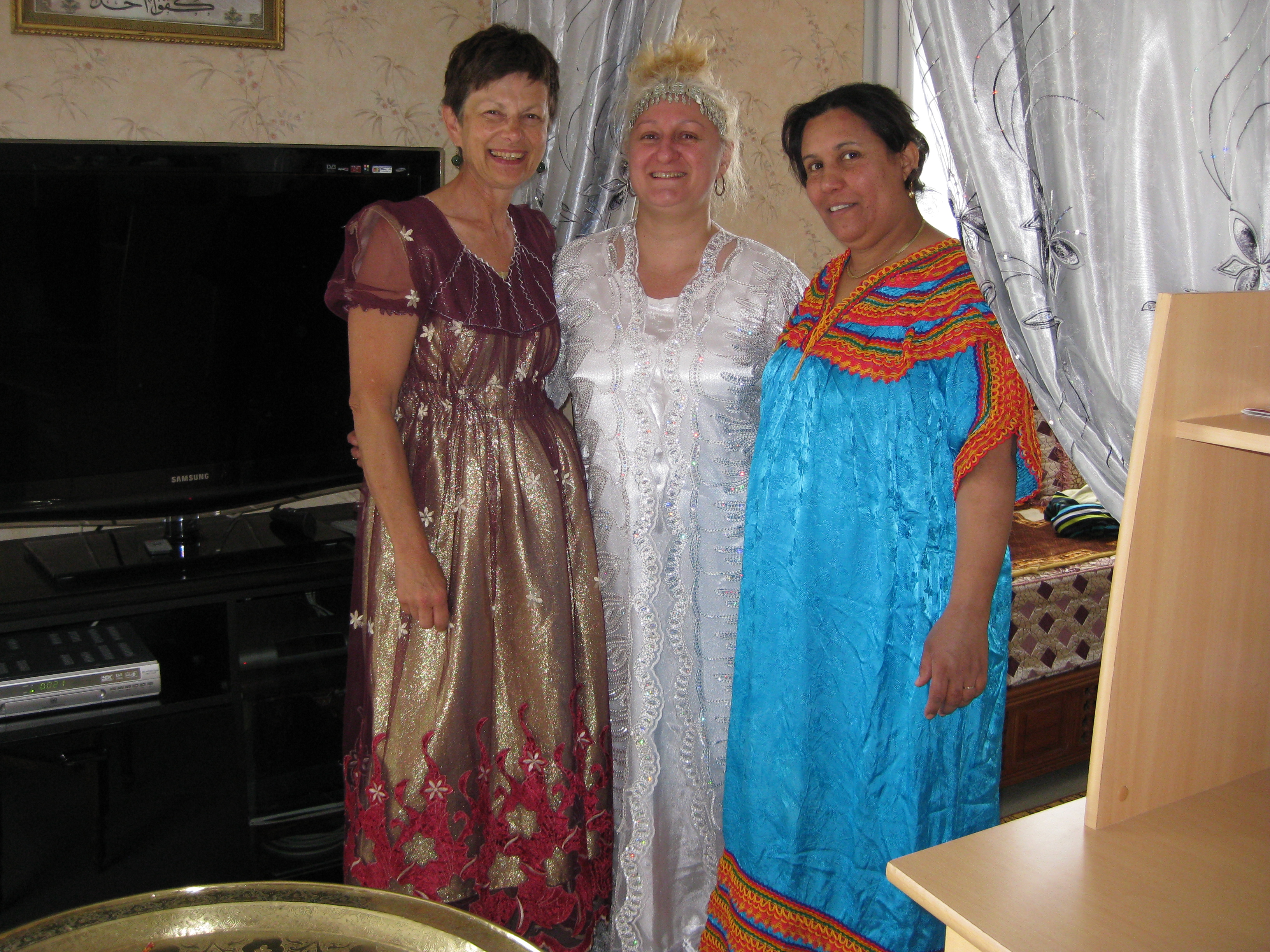
Were from England, Brazil, Algeria: but the clothes are all from Algeria

On Friday afternoon, Nadia invited us round and got out a tantalising bundle of her traditional Algerian clothes, many dating from the time of her wedding, for us to try on ahead of next week. Here’s what some of us eventually chose, after we’d struggled in and out of dresses each prettier than the last, elaborately embroidered, beaded and sequinned.  Just as well you can’t see us pirouetting around our workaday tee shirts and trousers discarded on the floor.

Before that, we’d been busy baking, selecting recipes to make for some of next week’s sessions.  Here’s my favourite, Basbousa.  Like most recipes from the area, quantities are expressed in volume rather than weight.

Basbousa

  • 2 cups fine semolina
  • 1 teaspoon baking powder
  • ½ teaspoon bicarbonate of soda
  • ½ cup unsalted butter
  • 1 cup sugar
  • 2 eggs
  • ½ cup water
  • about 20 blanched split almonds
  • 2 cups caster sugar
  • 1 cup water
  • Tablespoon of orange flower water or the juice of 1 lemon

Preheat the oven to 180°C, gas mark 4. Grease a rectangular cake tin, about 8” x 12”.

Sieve together the semolina, baking powder and bicarbonate of soda. Set aside.

Beat the butter and sugar together until creamy. Stir in the eggs with a little semolina to prevent curdling. Mix in ½ cup of water. Stir the sifted semolina in and beat until you have a smooth batter. Pour into the prepared cake tin. Score diagonal lines across the top of the cake creating diamond shapes. Place an almond in each diamond. Bake for about 30 minutes or until the cake is firm and golden.

Meanwhile place the caster sugar in a small saucepan with 1 cup of water. Heat gently until the sugar has dissolved then add the orange flower water or juice of the lemon and bring to the boil. Boil for about 10 minutes or until syrupy.

When the cake is removed from the oven, gently spoon the syrup over it. You may not need all the syrup: stop spooning when the cake has absorbed all it can. Allow to cool in the tin before turning out and serving sliced into diamonds.
When I tested the recipe at home, I had no orange flower water, so used lemon juice.  Nadia said it wasn’t traditional…..but she liked it anyway.  It’s sweet, simple, and keeps well.  Worth having in the cake tin.
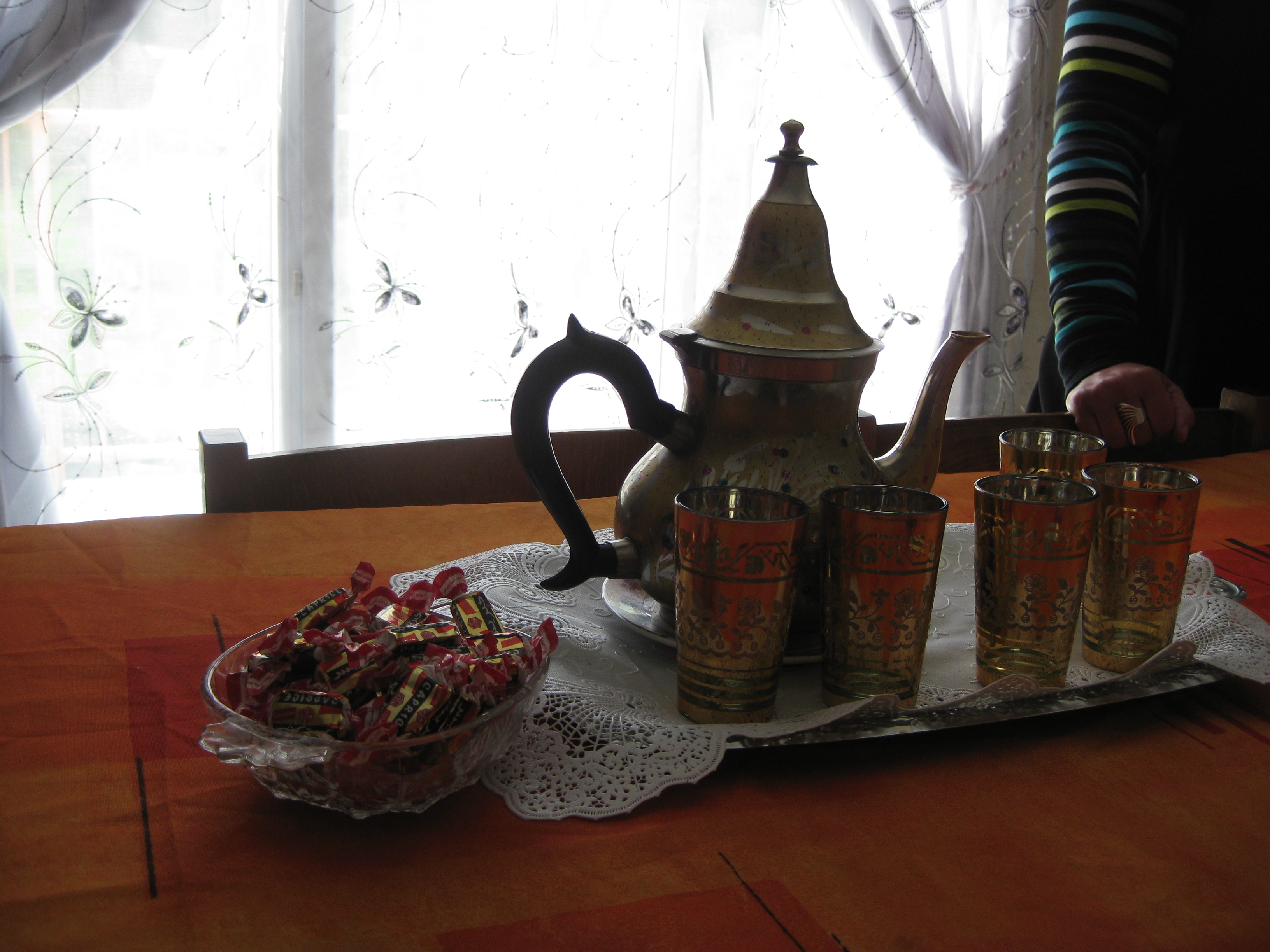
Nadia serves mint tea the traditional way, from this elegant pot in small decorated glasses

Food for free

In the UK, Richard Mabey’s the original, and still the best known proponent of foraging for good things to eat in the countryside.  Here in our patch of France, it’s Stéphane Martineau, and we spent yesterday afternoon with him, strolling down the lanes near Roquefort les Cascades, nibbling at petals, leaves and roots.

It was a free afternoon organised by Alptis, who provide us with the health insurance we need to complement the state-provided health service, and we enrolled as soon as the invitation came through the post.

Stéphane encouraged us to look carefully at each plant, at how it’s structured, what it feels like, what the crushed leaves smell like.  That afternoon, we found leaves that reminded us of mushroom, garlic, mint, cloves….

We began to understand how welcome the new spring growth must have been to villagers over the centuries.  After months and months of bland beans and turnips, the tasty bitterness of black bindweed, eaten raw or lightly cooked like asparagus must have been a real treat.  Its other name is l’asperge aux femmes battues – battered wives’ asparagus, because it’s also good at relieving bruising and swelling.

At this time of year, before many of the plants have flowered, and growth is young and fresh, there are so many tasty additions to the salad bowl.  Garlic mustard has both leaves and flowers to offer.  Hedge woundwort has nettle like leaves and a slight mushroomy odour.  Primula gives a pleasantly bitter taste so use it sparingly, and creeping Charlie  makes a lively addition to a salad, or an unusual addition to soup or lasagne.

Nettles are of course the kings of country flowers, packed with vitamins, minerals and even proteins.  They can be eaten raw (with a thick and tasty dressing) lightly cooked, or included in sauces and stews and baking.  Fermented, they make an all-round fertiliser, and gardeners dig them into the ground too, to enrich the soil.

We found plants to cure warts, substitutes for aspirin and for the cloves that we’re supposed to tuck next to a throbbing tooth.  We even learnt that horsetail, just as it first thrusts above the ground, makes a good mineral-tasting asparagus substitute. Failing that, once it’s matured, a big bunch tied together is a good pan scourer.

Just one plant was completely new to me: purple toothwort.  It’s a mauve parasitic plant, looking rather like a small clutch of rhodedendrons in bud, and modestly hidden under grasses at the foot of trees.

I’ve got pages of notes about plants I plan to look out for and try: using only a few specimens from each patch, of course, and just taking  a few of the very youngest leaves, as instructed.
Just before we all headed off home, we shared a foraged snack which Stéphane had prepared earlier.  Nettle blinis, Douglas fir cordial, various jams and jellies.  Good stuff, this food for free.

This slideshow requires JavaScript.

Le P’tit Marché d’Is@

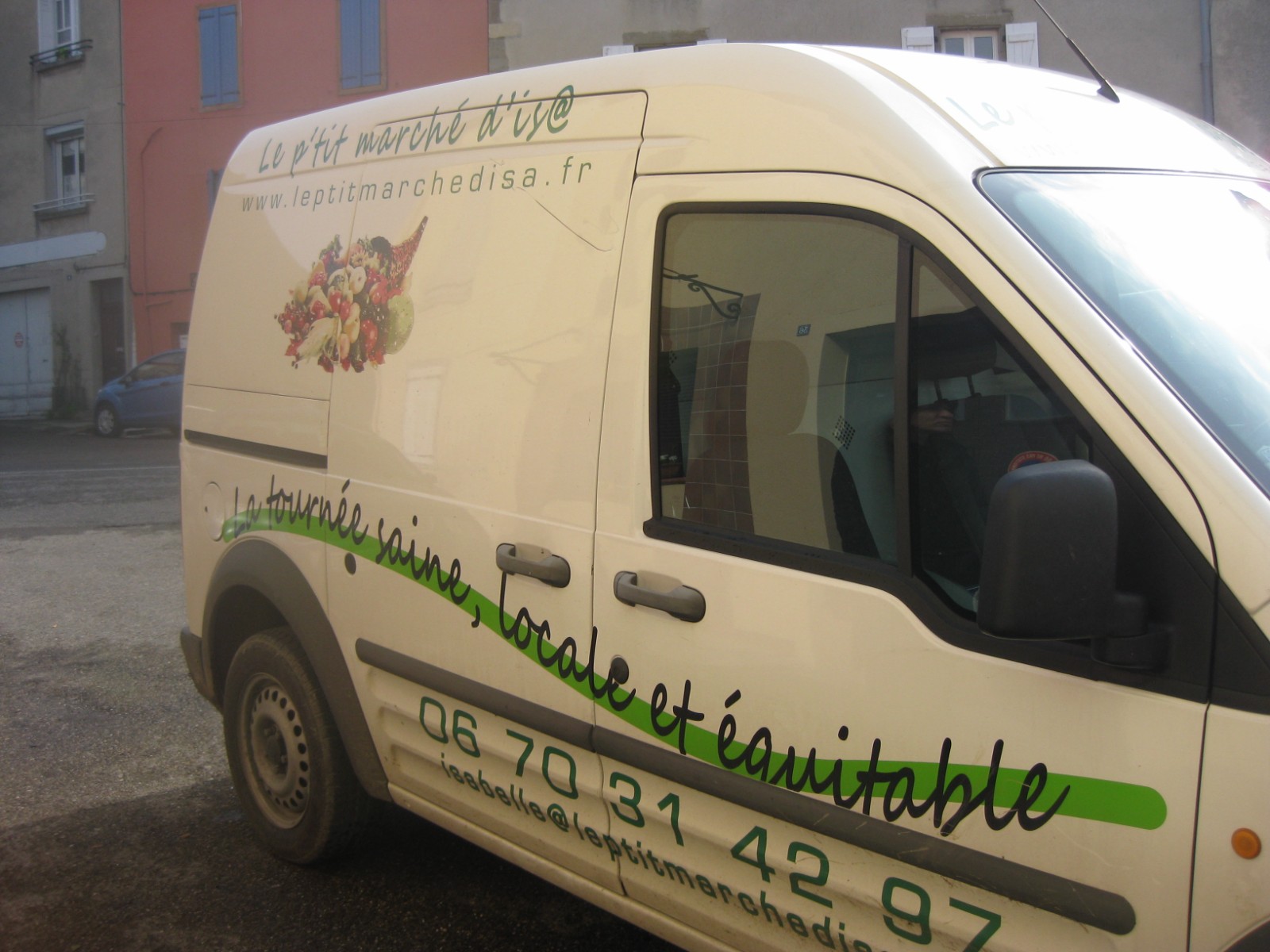
If you live within the long oval that has Mirepoix at the top, and Tarascon at the bottom, you might be lucky enough to get your fruit and veg. from Le P’tit Marché d’Is@ – Isabelle’s Little Market.

Isabelle, a young woman from Montferrier, has recently started a vegbox and grocery business, and it really is ‘the business’.   My memories of veg.boxes a few years ago in England are of worthy offerings that always included rather more soil-encrusted swedes than anybody could reasonably want.

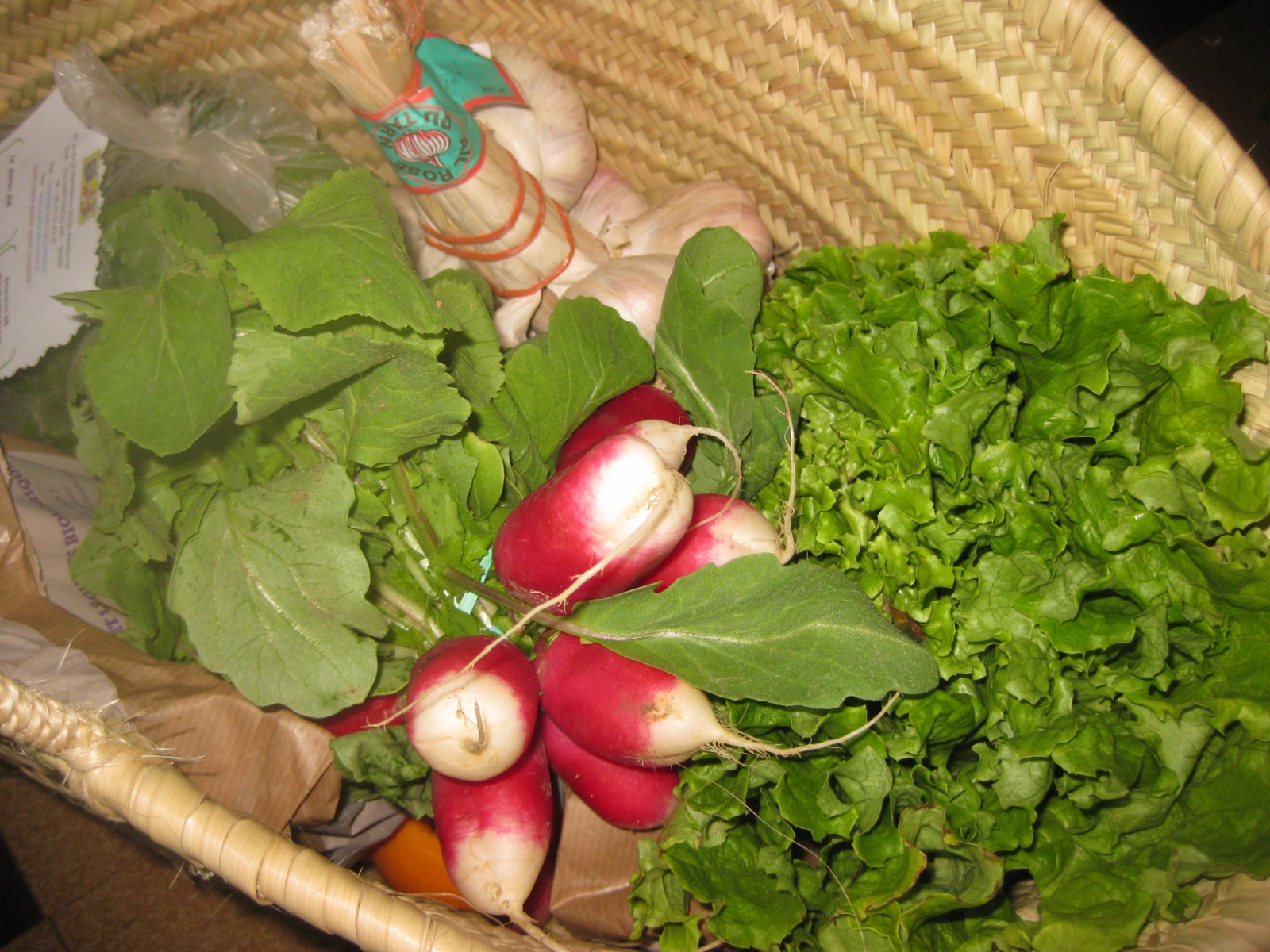
My panier, last week

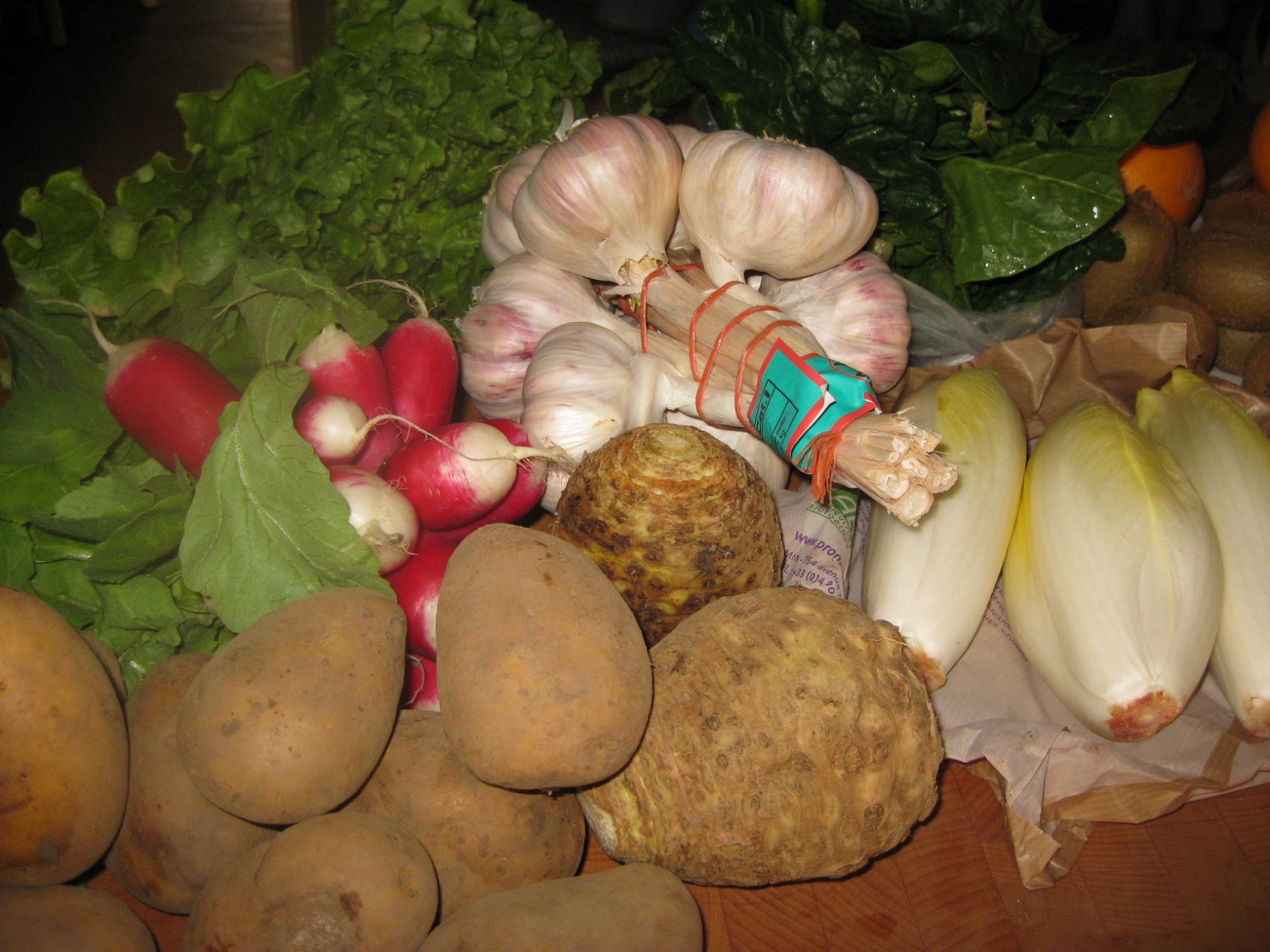
This isn’t like that. Her fruit and vegetables are organic or Agriculture Raisonnée, (limited use of drugs, fertilisers etc. permitted, within strict guidelines) all locally sourced: this week’s panier included potatoes, carrots, radish, celeriac, cabbage, spinach, chicory, lettuce, kiwi fruit, oranges and apples, all organic, and squeaky fresh. Last week’s, apart from the basics of potatoes, carrots and apples, was quite different.

Sorting out the shopping

Besides this, she’ll sell individual quantities of various fruit and veg , and she also has other lines. Poultry, pork, dairy products including various Ariégeois cheeses and yoghourts, all from farms no more than a few miles away.   Groceries include wonderful organic flour from a mill near here, pasta, beers, and from slightly farther afield in the Pyrénées Orientales, oils, dried fruits, nuts,tapenades etc.

Just arrived and ready to deliver

It’s very simple: you order by Monday midday for delivery later in the week.

Now I really look forward to 11 o’clock on Thursday mornings when her little white van swings into the parking space outside our house, and she cheerily hands over her bulging panier of shopping for us to unpack and plan the menus for the next few days (she even has a recipe idea or two tucked in the bottom of the basket). It even beats market shopping.  AND it’s made me feel not quite so unhappy about deciding not to grow my own vegetables this year.

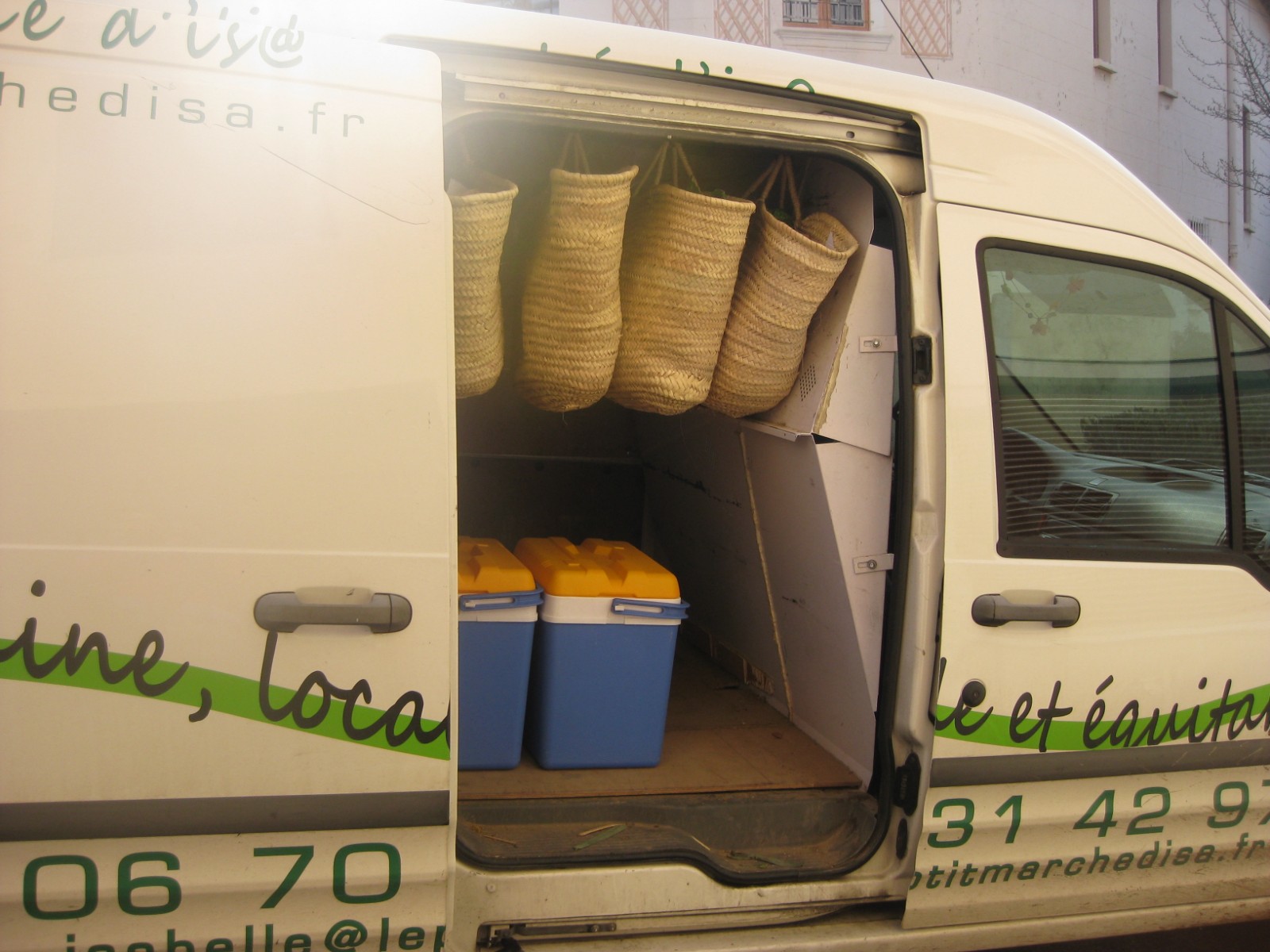
Her morning's work all lined up in the van
Isabelle's morning's work all lined up in the van

One lump or two?

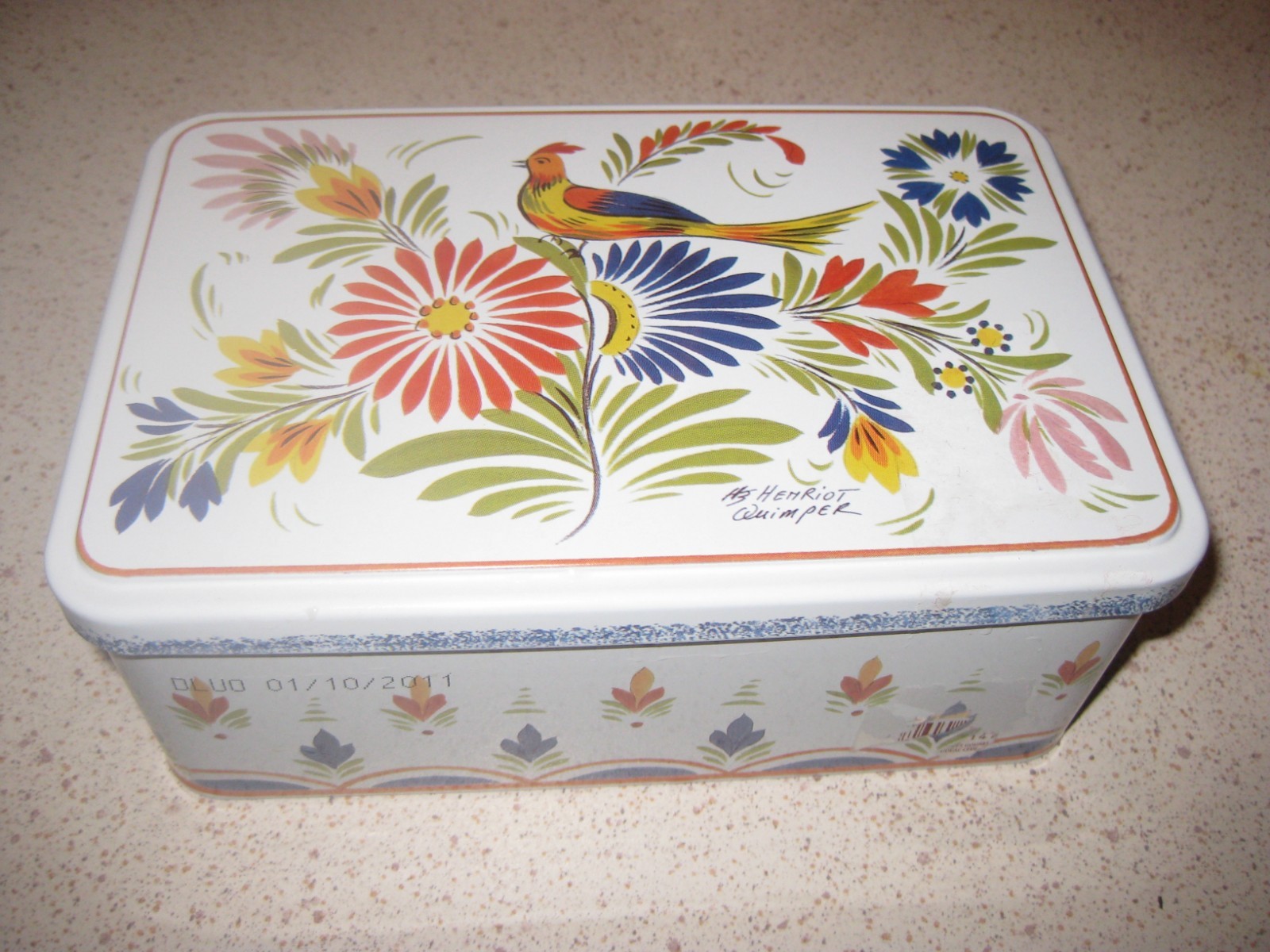
Enfin! We are at last a real proper French household.    Pop round to us for a mid morning break these days (as Henri often does) and you’ll get coffee (freshly brewed in a cafetière of course.  Small cups.  No milk offered) and the sugar on the side will no longer be in a dinky English sugar bowl or –  even worse – bag.

Certainly not.  We have invested, as any French householder should, in a pretty box specially designed to hold the rectangular cardboard boxes of sugar lumps on sale in any old grocer’s or supermarket. C’est normale.

Marmalade: the bitter facts

Forget politics.  Here in the UK, the news story that really means something to any right-thinking English man and woman is that marmalade sales are falling.  The reason though, according to most commentators, is that many of us prefer to make our own.  I do.

Over the last few years, I’ve been so glad to have come across Jane Grigson’s recipe, which gets me out of the whole business of hacking mounds of tough raw orange peel into marmalade sized chunks.  It delivers a tasty sweet and bitter marmalade which beats anything you’ll meet on the grocer’s shelf

Our house, now a temple to magnolia paint and packing cases, is currently innocent of recipe books.  Somehow I contrived to find my preserving pan the other day, and make her marmalade, or something  jolly like it, from memory.  Impressive, huh?

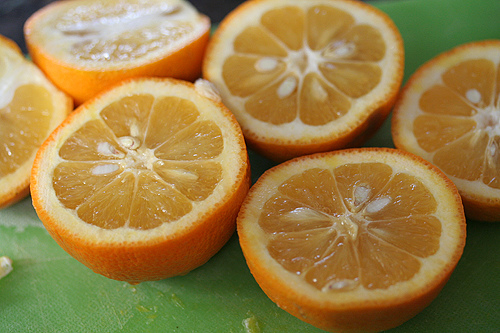
I kg. seville oranges (about 10 fruits)

1 lemon

3.4 litres water

2 kg. granulated sugar, or half granulated, half light muscovado.

Scrub the seville oranges and the lemon, and place in a large pan with the water.  Bring to the boil and simmer till the fruit is soft – maybe an hour or so.  Allow to cool.  Cut the oranges in half, scoop out the flesh and pips and reserve in a large muslin square.  Chop the skin as thick or as thin as you chose – it’s so easy now the skin is soft.

Tie the muslin with its contents into a bag, and put it, with the orange peel, remaining water (about a third will have evaporated) and sugar, into a preserving pan.  Bring the mixture slowly to the boil, so that the sugar dissolves, then cook rapidly till setting point is reached (I can’t manage without my jam thermometer, but that’s pathetic.  Most people seem happy enough to test for the setting point by putting a spoonful of marmalade onto a cold saucer, and seeing if it crinkles as you push your finger through the cooled mixture).

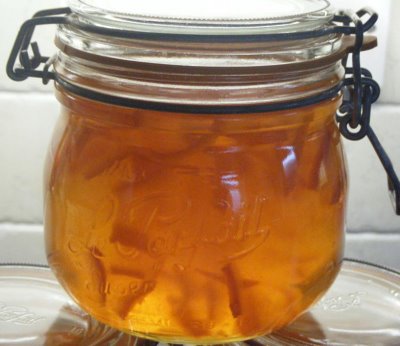
Allow the mixture to sit for about 15 minutes before pouring into sterilised jam jars.  Makes 6-7 jars

Down at the Greasy Spoon

No stay in England is complete without a visit to a Greasy Spoon.  Hot, crowded, cheerful,  and full of burly men stolidly chewing their way through mountainous piles of chips, bacon and sausage, the average transport caff is not the place for fine dining.  But the good ones are worth a visit, and today, we visited the Bridge Cafe at Apperley Bridge, on the way over to Bolton to see the boys.

It was only quarter to twelve, but we needed an early break after a hard morning shifting furniture, skidding up and down our impossibly icy street, lugging huge bags of books and discarded household items to the charity shop, visiting the Letting Agent, scouring Bradford’s Asian shops for essential supplies of Indian spices that are hard to get in France.  After that, what better than a hot plate of comfort food washed down with a huge mug of tea?

Yes, quarter to twelve.  But the place was already crowded with joiners, truckers, shoppers, pensioners.  Most were having the all-day breakfast.

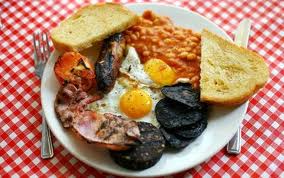
This is what you get if you order the small one: £3.80

2 slices bacon, 1 sausage, 1 egg, beans, tomatoes, toast, fried bread, tea.

Some had gone for the Full Breakfast: 2 slices bacon, 2 sausages, 2 eggs, spam, black pudding, mushrooms, hash browns, beans, tomatoes, fried bread, toast and tea or coffee.

Nope, not a chance that we could cope with that: poached eggs on toast was more like it.

A quick flick through the daily papers provided – tabloids of course, broadsheets need not apply – a quick chat to the owners ( Italian?  Lithuanian? We couldn’t agree), and we were off, sustained for an afternoon of meeting 5 year old twins as they came out of school, to enjoy the rest of their action-packed day

Découverte Terres Lointaines

Nobody could call our nearest town, Lavelanet, a hub of multi-culturalism. But neither is it an Ariegeois ghetto. Of course, as in most French towns, there’s a big Maghrébin presence: inhabitants of the former French colonies of Tunisia, Morocco and Algeria. There are significant numbers of people of Spanish origin: their families probably came over in the Spanish Civil War. Dunno how so many Portuguese got here, but in addition there are Swiss, Belgians, Roumanians, Brazilians, Vietnamese, Chinese, Argentinians, Australians, Germans, Dutch…..ooh, and a few English of course.

Recently, I got to know two local women, Sylvia and Noëlle. Some time ago they, together with another friend Nadia, had come up with the idea of bringing together women from some of these countries to share their cultural heritage, particularly through the medium of cooking. The idea got bigger. Over the last 18 months or so, they’ve developed themselves as an official voluntary group, ‘Association “Découverte Terres Lointaines”‘.  They and their ‘benevoles’ (volunteers) have animated cookery workshops in schools, old people’s homes, youth clubs, centres for people with various disabilities. They’ve raised money for these activities by selling foods from all over the world, which they’ve prepared,   at local festivals.  But why stop at recipes?  We all have a culture to share – children’s stories to tell, songs to sing, our daily lives ‘back home’ to compare, and all this too is included in the mix.  Recently, I’ve joined in some of their activities.

It’s got a bit more formalized now. There’s a bit of a special focus now on a particular country in any one year. This year it was Quebec (OK, it’s a province, not a country.   But it DOES have a very distinctive voice within Canada), and next year it’ll be Algeria.

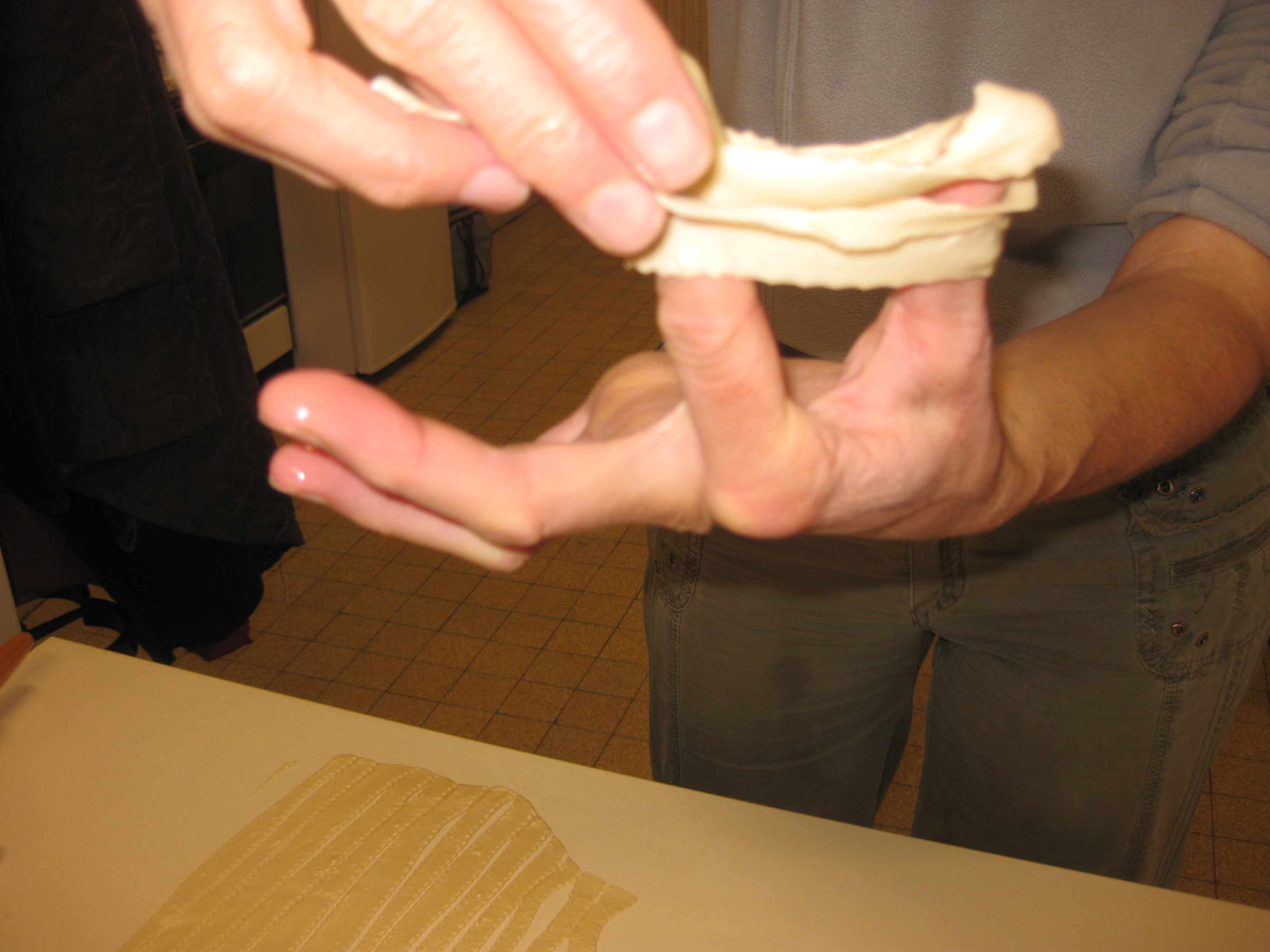
Nadia makes the dough for her Algerian sweetmeats

Last week was a first though. We were invited to provide an International Buffet at a multi-services training day being laid on by the Mairie. At various points in the days leading up to it, we got together in the kitchen of the Family Centre (CAF), and helped each other cook.

Then Sylvia winds the dough strips into little 'birds nests'....

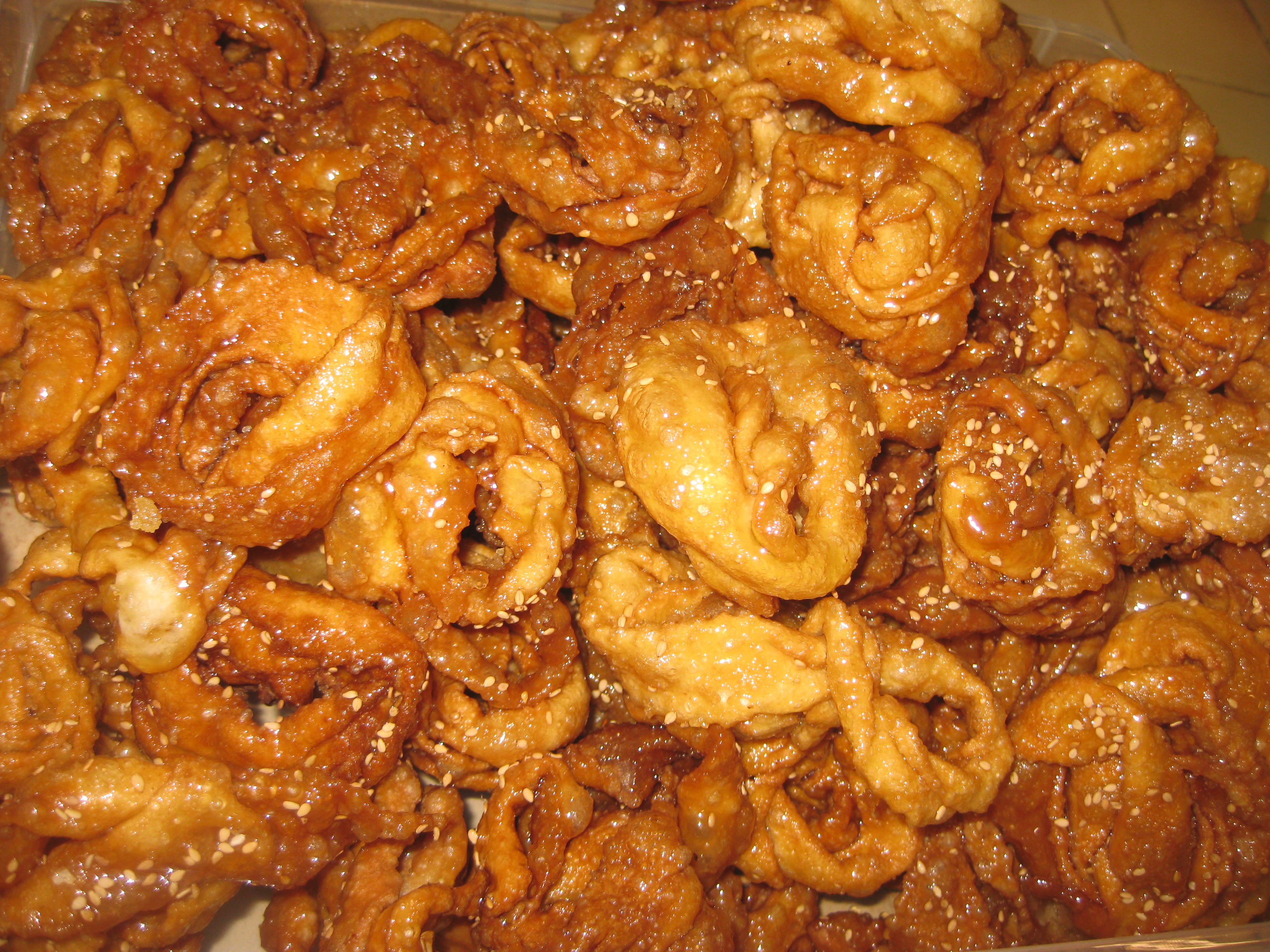
Nadia showed us how to prepare Algerian grivvech: thinly rolled dough cut into strips and wound into jumbled little nests before being deep fried and doused in honey and sesame seeds. There were Quebecois dishes, guacamole topped toasts, and treats from around the world.

...the deep fried, sticky, delicious result.

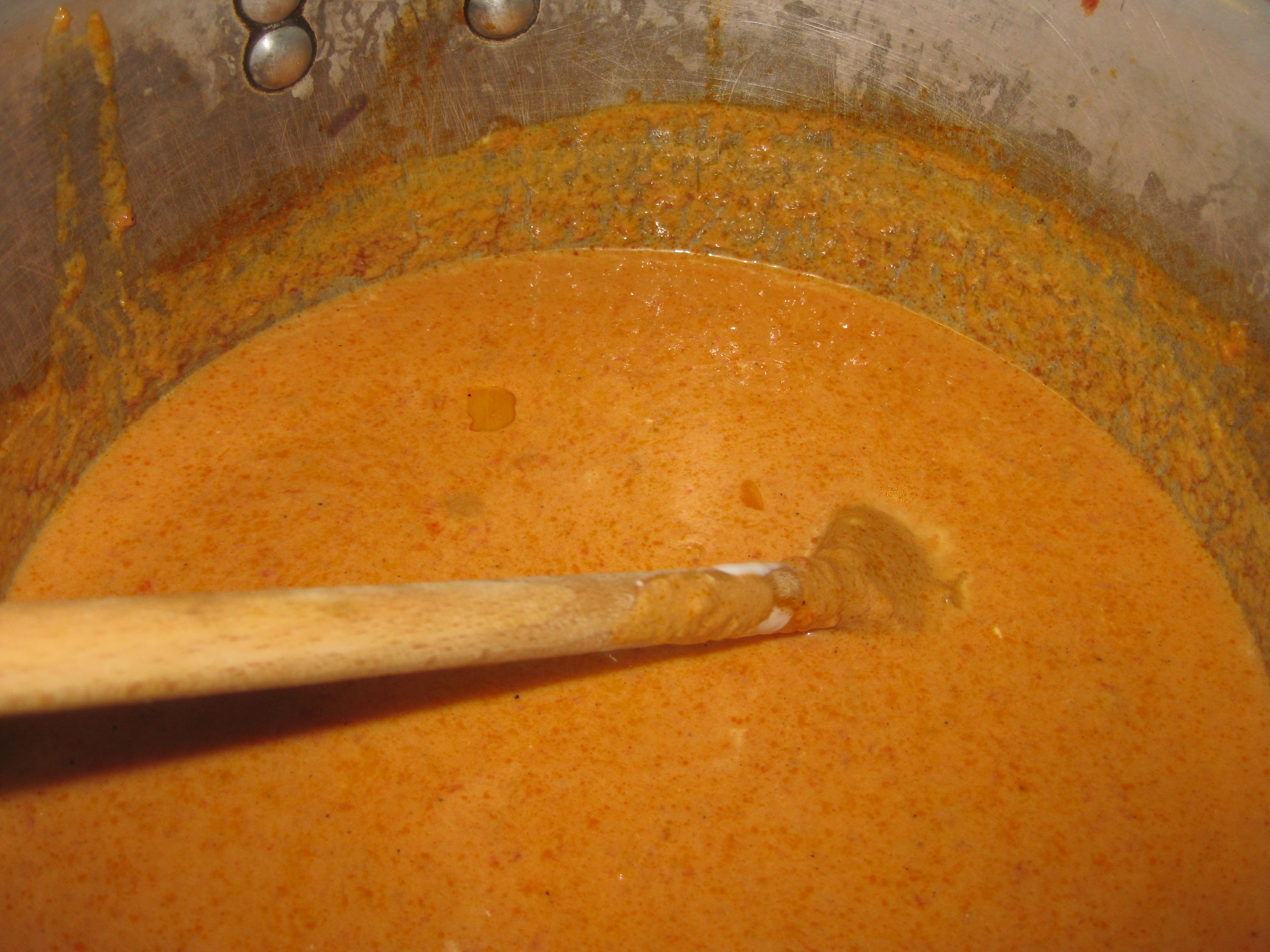
Best of all was the unlikely sounding tomato and banana soup from Brazil.  Do try it: recipe below.

What could I contribute as an English finger-food? I thought long about this, and came up with Scotch eggs (thanks, Kalba, again). You need to know that here in France, sticky tape, as in England, is known by a trade name. Not ‘Sellotape’, but ‘Scotch’. So Sylvia’s eyes darkened in puzzlement when I suggested these Scotch eggs. ‘Sellotape eggs? What on earth….?’

And what fun it all was.  I can and do open recipe books to try out dishes from any and every continent.  But it’s not half so exciting as working with women from Algeria, Brazil, Roumania, wherever, as they talk you through the techniques they’ve known for years and years, and stand over you and make you practice and redo things till you jolly well get it right.

I'm NEVER deep-frying 30 Scotch eggs again

Anyway, here are my photos of the preparations for a successful lunch. We could have taken any number of repeat bookings, but for the time being, the organisation will maintain its ‘benevole’ status, and not venture into the hard realities of developing a business.

Brazilian Tomato and banana soup

Soup just cooked and ready to go

Ingredients

I onion

I tbspn rapeseed oil

Large bottle of passata

5 ripe bananas

1.5 l. bouillon

Small carton cream

3 tsp. curry powder

1 tsp. cayenne

Gently cook the onion in the oil.  Meanwhile, remove the black central thread which you may never previously have noticed and any seeds from within the peeled bananas, and mash thoroughly.  Add the passata to the onion, together with the spices and cook gently .  Add the mashed banana and continue cooking.  Add cream, reheat gently, and serve

Something delicious, down in the woods

A friend brought us some mushrooms yesterday.  I’m not going to tell you which friend.  And I shan’t tell you where he found them either.  He was ranging about in the woods, snaffling mushrooms.  If the forest ranger or a landowner had caught him because he’d strayed onto private land, they could have fined him.  150 Euros.  And the friend who was with him, another 150 euros. It’s a lot to pay for half a pound of mushrooms, but everyone does it.

Nobody however, wants to kill the goose that lays the golden egg, and most people, like our friend, pick carefully and respectfully so that mushrooms will still be growing there tomorrow, and the next day, and for as many years as there are people wanting to eat them.

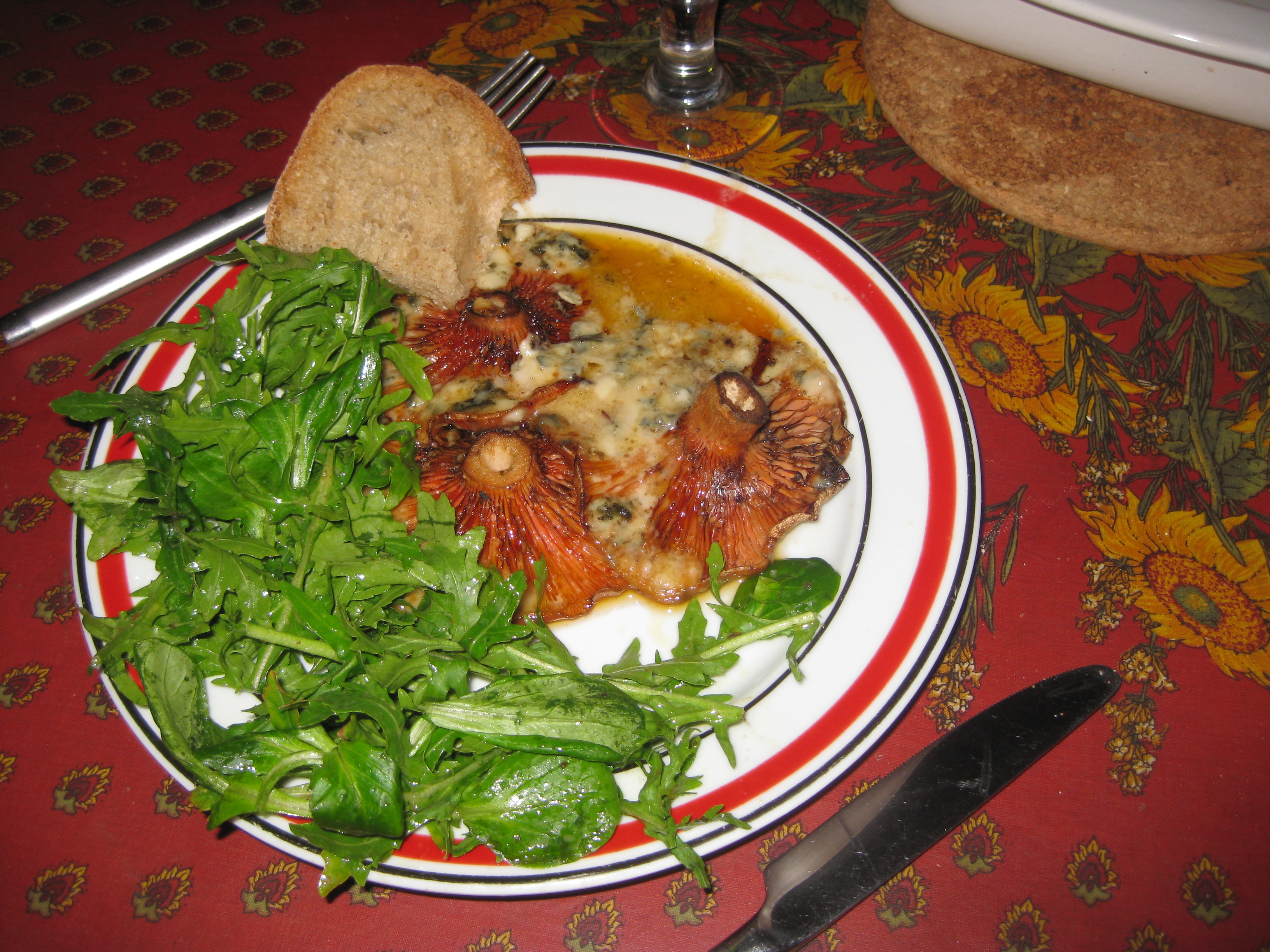
The ones he brought us are lactaire delicieux – saffron milk caps. I know they exist in England, because Googling produces a score of recipes from the UK, but I’ve never seen them there.

In fact they’re native to this part of the world, both in France and Spain, and live in the acidic soil under Mediterranean pine trees.  They’re yellowy orange, and exude orangey milk when broken or cooked.  Roughly handled, they develop a scary green stain.  But that doesn’t mean they’re poisonous. Anything but.

Here’s what he suggested we do with them.

You’ll need at least 2 or 3 large ones each.  They’re often small though, so you may need more. Clean them by brushing them gently and lay them cap side down in a shallow buttered oven dish.  Cover generously with knobs of butter and Roquefort cheese – 4 parts cheese to one part butter.  Grill till the cheese is melted and the mushrooms cooked.  Serve with lots of crusty bread to mop up the juices, and a green salad.

If he brings any more, or if we’re lucky enough to find some ourselves, I’ll be Googling again, because there are any number of simple ideas, just waiting to be tried and enjoyed.

Cook’s Corner

Back in England last week, I picked up the latest Waitrose magazine, always good for a few recipes.  And here’s something I found….

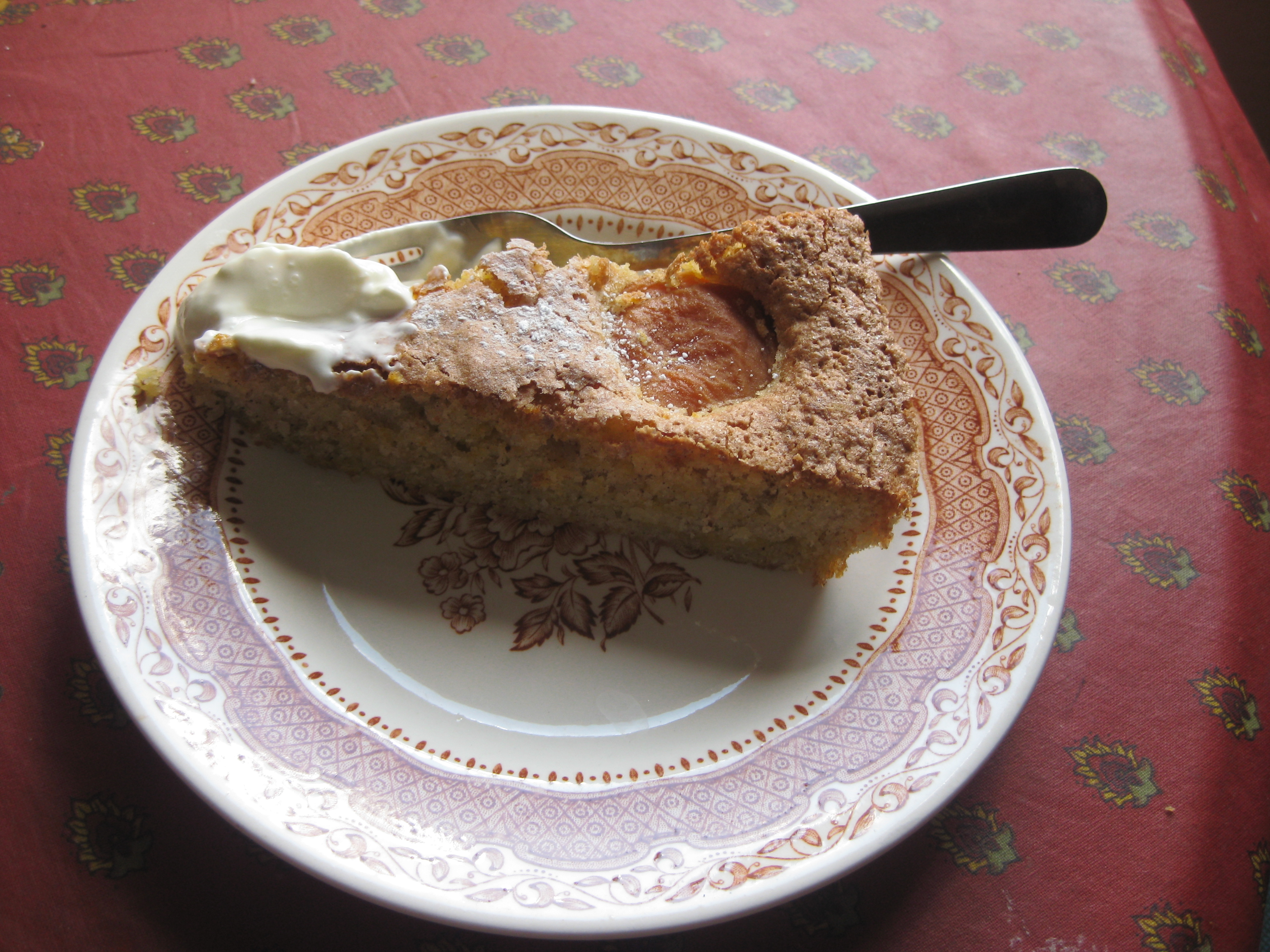
Sunken Apricot and Almond Cake

3 medium free-range eggs

180 g. caster sugar

200g. butternut squash, peeled and finely grated.

1 tsp. almond essence (I used a slonk of amaretto instead)

60g.white rice flour

200 g. ground almonds

2 tsp. mixed spice

2 tsp. baking powder

¼ tsp. salt

240g. canned apricot halves, drained, or if you’re lucky enough to have home bottled apricots, as I have, use those.

Icing sugar for dusting.

1. Preheat the oven to 180degrees C/gas mark 4

2. Lightly grease ten 8cm. x 5cm. deep loose-bottomed tart tins with oil.  I didn’t have enough, so I made just one 28cm. tart.

3. Whisk the eggs and sugar for 4 minutes till pale and fluffy.  Add the butternut squash and almond essence, and whisk briefly to combine.

4. Add the ground almonds, spice, baking powder and salt, mixing until well combined.

5. Pour the mixture into the tin(s) and either place 2 apricot halves in each, or arrange the apricots onto the top of the large tart.  Bake in the centre of the oven for 35 minutes, or till cooked.

6. Remove from the oven and gently ease the cake(s) away from the sides of the tin.  Allow to stand a few minutes before dusting with icing sugar.

Eat warm, cold, with or without cream, crème fraîche……

Do try it.  It might not be the cheapest cake in the world, but it’s certainly good, whether you choose to serve it as a pudding or a tea-time treat.

Well, we DID have it as a tea time treat, so by the time it came to the evening meal, we needed simpler fare.

I don’t know where I first heard this recipe, but I remembered it yesterday because we’d spent an hour or so sorting and shelling our haul of walnuts from all the trees nearby that are shedding nuts faster than anyone can gather them.

A Very Un-Italian Pesto

A handful of walnuts, crushed

A handful of parsley, finely chopped

A cob of parmesan, grated

A clove or so of garlic, crushed

A big glug of olive oil.

Combine the ingredients to a coarse paste, and add to a dish of pasta

A Miller’s Tale

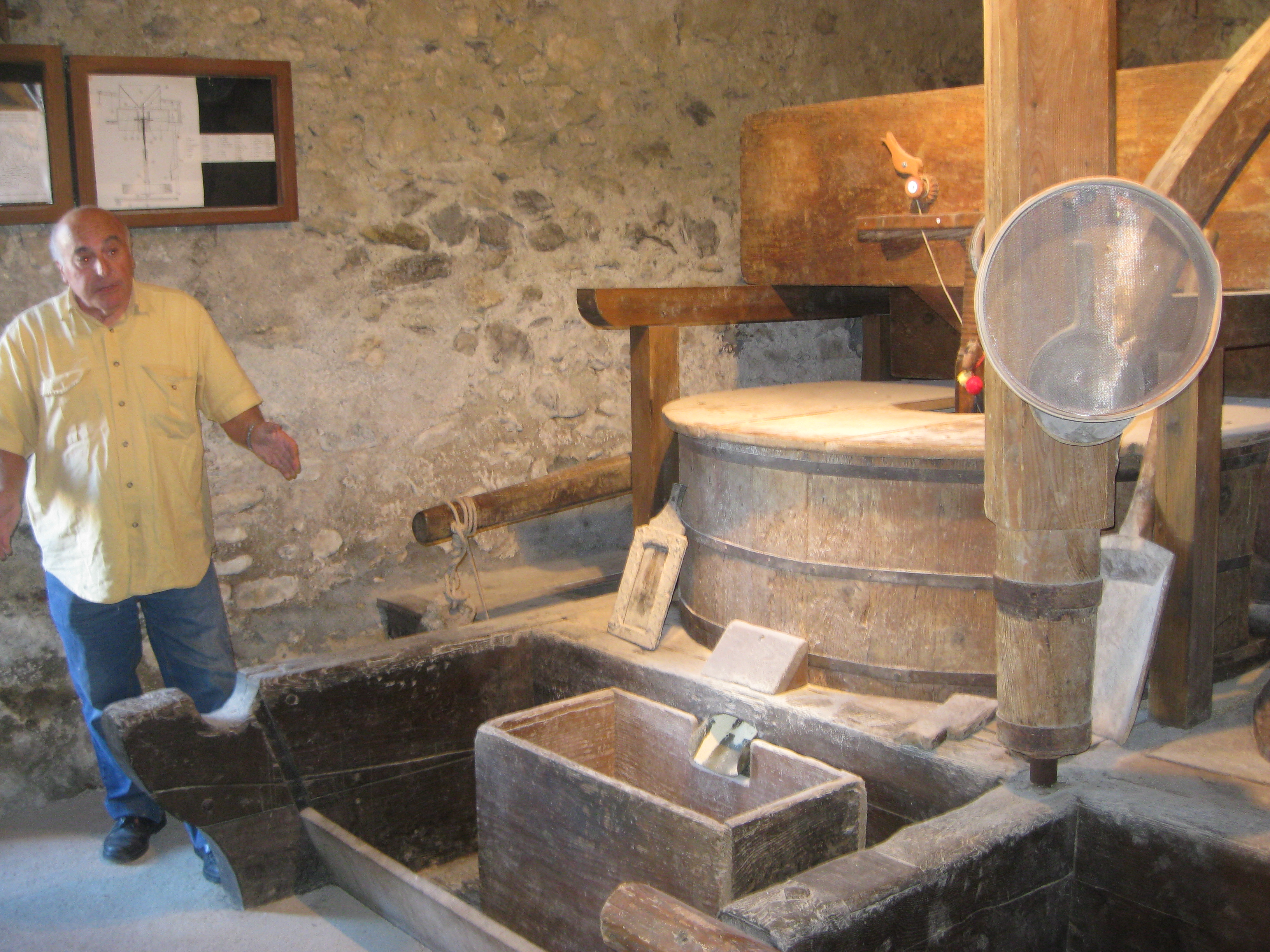
M. Moulin demonstrates his mill in action. The stream and water wheeel are beneath the floor

Readers in Europe probably noticed that European Heritage Days were held about three weeks ago. These usually give the chance for Buildings-With-A-Past which aren’t normally open to the public to dust themselves down, smarten themselves up, and take a bow.

Round here there was the labyrinth at Mirepoix Cathedral, three local Romanesque churches, a château at Belesta which is being restored, as a labour of love by the two who bought it.  And, and and….so much to see, so little publicity for some of them.

A chance conversation led us to a hamlet called Éspine, to see the ancient mill there.  It had been in the family of the current owner for generations – until current owner’s dad sold it.  This did not go down well.  Son managed eventually to buy it back again, and has restored it with love and real enthusiasm.

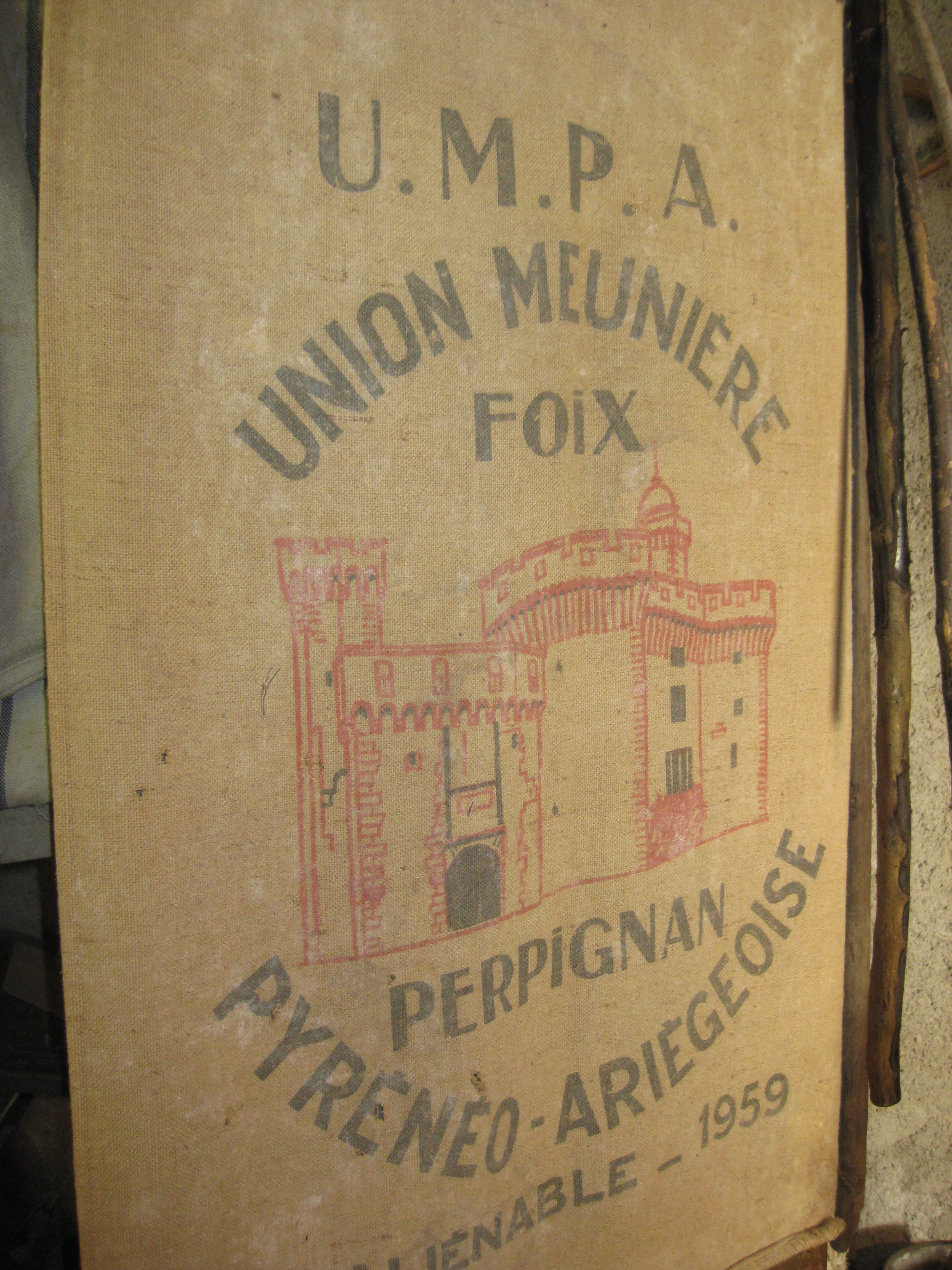
A flour sack from his collection

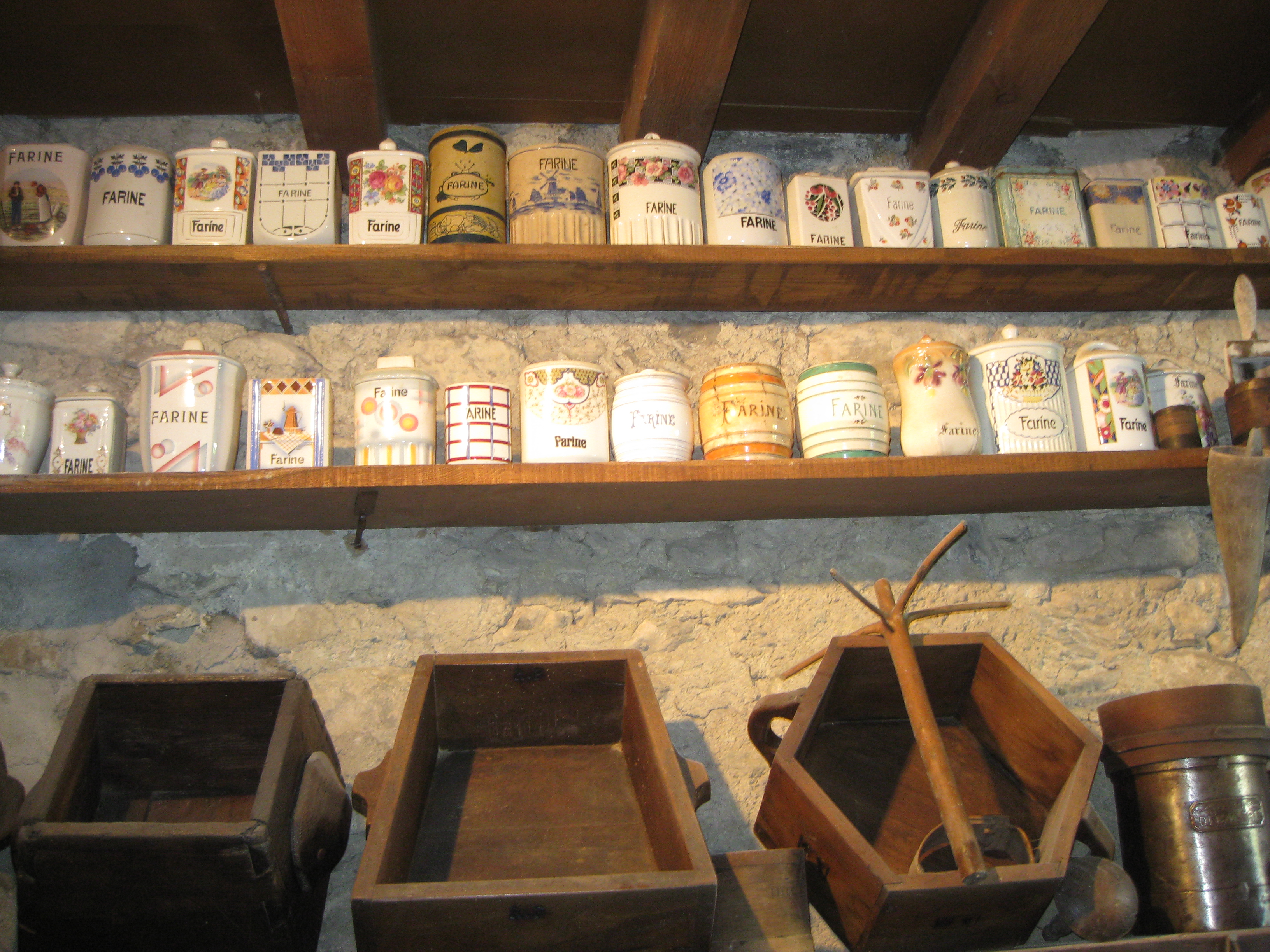
If he ever thought about having such a thing as a mission statement, it would without a doubt be ‘Passionate about Flour Mills’.  Monsieur – I don’t know his name – let’s call him M. Moulin, danced between mill race and flour sacks and ancient machinery and quirky collections of flour canisters, generating a hitherto unrealised ardour for milling among his many visitors.

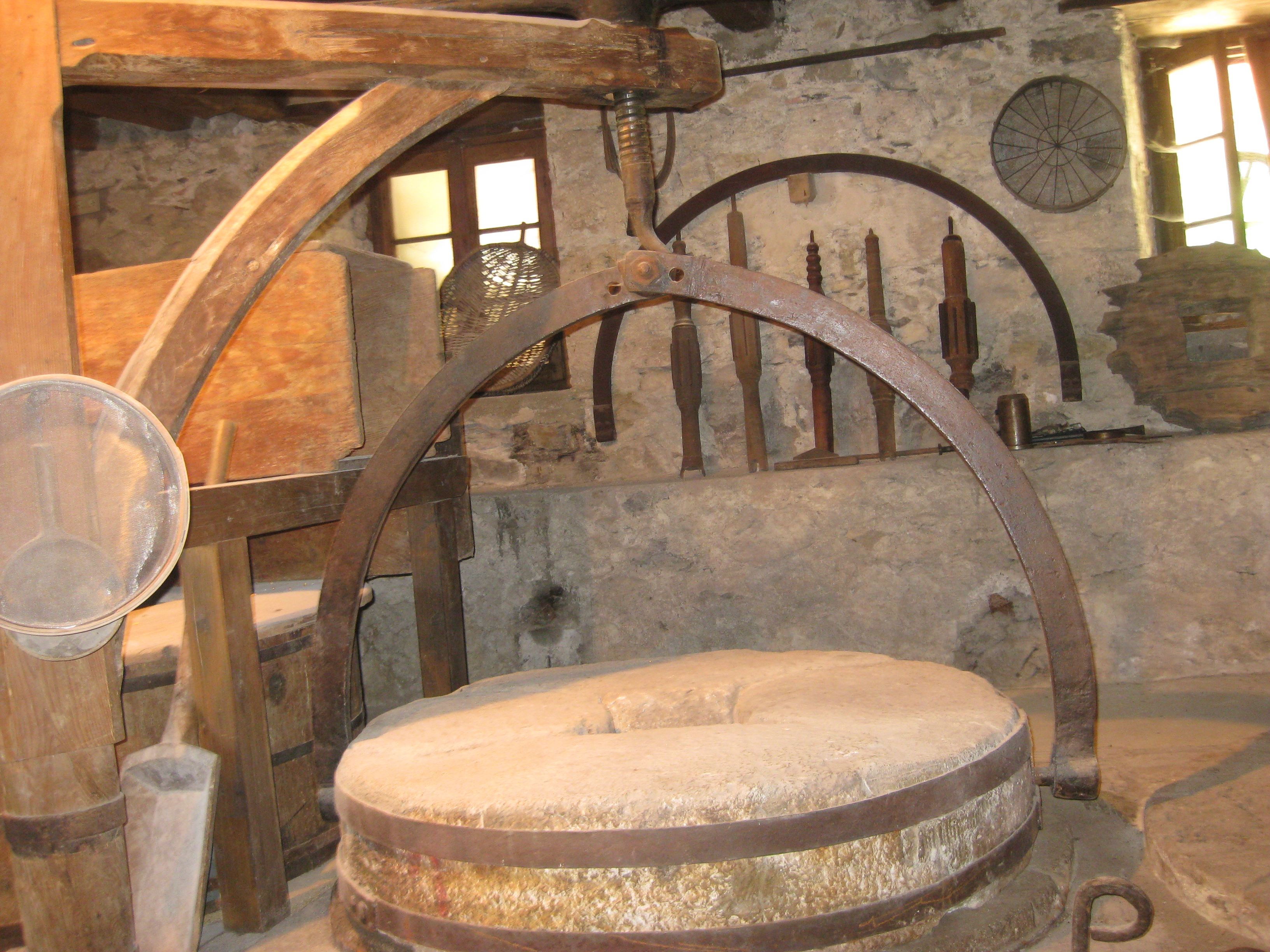
3 grindstones. When they wear down, they have to be turned over and re-etched

You wouldn’t know it was a mill.  It looks like a stone house built over a stream.  The mill-wheel’s underneath, using the stream’s fast-flowing energy. M. Moulin showed us a map of all the mills existing at the time that Napoleon had a sort of mill-census taken.  There were thousands. One mill served the needs of about 300 people.  Villagers would come in several times a week to have small quantities of grain milled, so it was the hub of the community, the place to gossip and catch up while waiting for your flour.

His collection of flour canisters

Something odd though, something no scholar has been able to provide an explanation for.  South of a line drawn through France from Bordeaux to Lyon, the mills were the wheel-under-the-mill type.  North of this notional line, it was the mill-with-vertical-wheel-in-the-water, or the windmill-with-sail that we’re familiar with.  M. Moulin reckoned that this was because the southerners were superior engineers: their type is harder to make.  The twinkle in his eye told us he knew this might not always be true.

Early last century, 3 principal flour firms started to dominate the market.  They bought up the small mills and closed them, concentrating milling in large industrial settings.  Another strand of village life disappeared.  At least at Éspine, the building remains for us all to enjoy