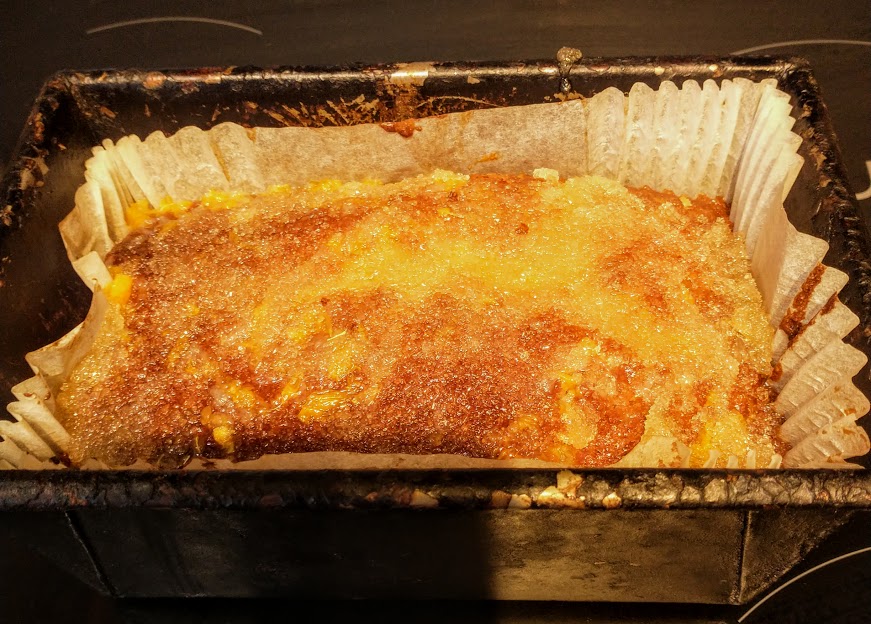
Oh … er … I’m quite out of the habit. Nobody’s been round for tea of coffee for a year now. Haven’t you heard that there’s a pandemic on? Still, a Virtual Gathering, to which all of my blogging pals are cordially invited: could I manage that? Let’s see. An old favourite might be best for a cake. Lemon drizzle maybe. It’s one of those cakes we all seem to have a recipe for if we bake at all. These days I use about half the recommended amount of sugar both in the cake itself, and in the lemon drizzle topping. Nobody seems to notice. I also usually bake with wholemeal spelt flour rather than with common-or-garden plain white. So you could even pretend this cake is the healthy option. I’ll pop it on a plate in a minute. Or maybe you’d like a cashew-nut butter cookie? Would you prefer tea or coffee? I warn you now, everyone says my tea’s dreadful. Since I rarely drink the stuff, I can’t tell the difference between gnat’s pee and Builder’s Brew.
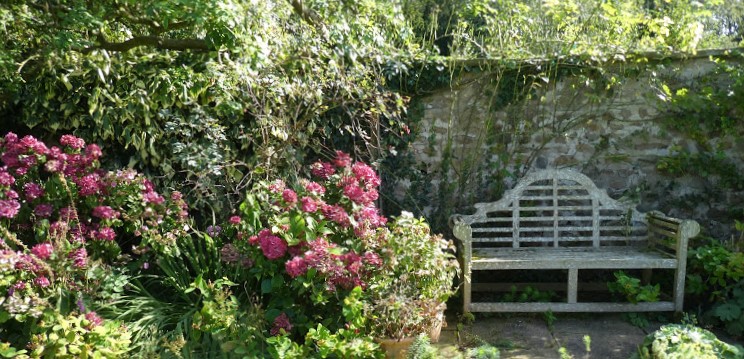
Um. Where could I sit you all? Luckily it’s a nice day, so let’s go into the garden, where we can do Social Distancing. Could you carry a tray out for me please?
I wrote this post in September 2016, during our visit to Korea. I thought it could have another outing for Just One Person around the World,
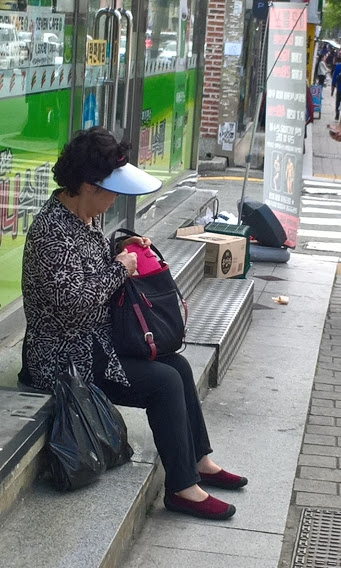
You’re young, female and Korean. Perhaps you’re a student, a worker, even a mother. You’re slim, stylish, beautiful, have enviably flawless skin, and shiny long dark straight hair. Just like all your friends.
One night however, you go to bed, and you wake up in the morning as an ajumma, an auntie, an older woman. You’ve shrunk four inches, your hair is shorter, perhaps even curly. You’ll put on nice comfy trousers and no longer remain silent on bus rides: in fact putting the world to rights with your fellow ajummas is what you like best Most importantly, you’ll wear your badge of office. This is a quite enormous visor, worn to protect your skin from damaging rays from the sun. You won’t go out without one.
There is no half way house that I can see. You’re young. Or you’re an ajumma. That’s it.
Who doesn’t enjoy a bit of window shopping? And perhaps particularly in parts of South Korea, which can offer a few differences from the high streets that many of us are used to. Let’s start in Busan. in Bosu-Dong Book Street (보수동 책방골목 문화관). There are books, and only books on offer – but of little use if you’re as slow as me in decoding hangul script.
Browsing in 보수동 책방골목 문화관
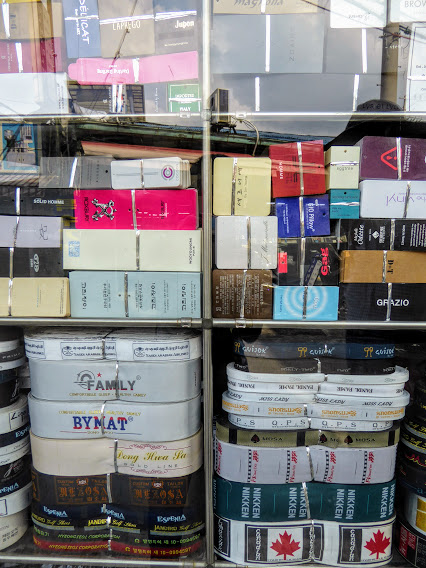
On our first day in South Korea, in Seoul, jet lagged and in need of a gentle day of orientation, we mooched round the markets area. And we found not only whole shops, but whole streets dedicated to shops selling just one product: it might be string. It might be elastic bands, or electric cables, or empty cardboard boxes to be filled with other products. or even gift-packs of a product beloved of Koreans since American soldiers had been part of their lives during the the Korean War – spam. We arrived in time for Chuseok, the festival that’s the time for families to get together and exchange gifts, as we do at Christmas – though historically, Chuseok was more of a Harvest Festival. Trust me, the perfect present for your granny is some gift-wrapped spam. And jumbled in among these workaday products are streets of jewellers’ shops. Come window shopping with me.
That man making his choices from among the books on offer is Just One Person from around the World, enjoying browsing and deciding whether or not to buy, just as we all do, wherever we live.
I am an occasional contributor to the Bird Weekly Photo Challenge: and this week’s appealed. Birds that eat fish as their primary diet. Well, I have images of gannets, gulls and guillemots. I have puffins, though not a single photo features one with a beak crammed with sand eels.
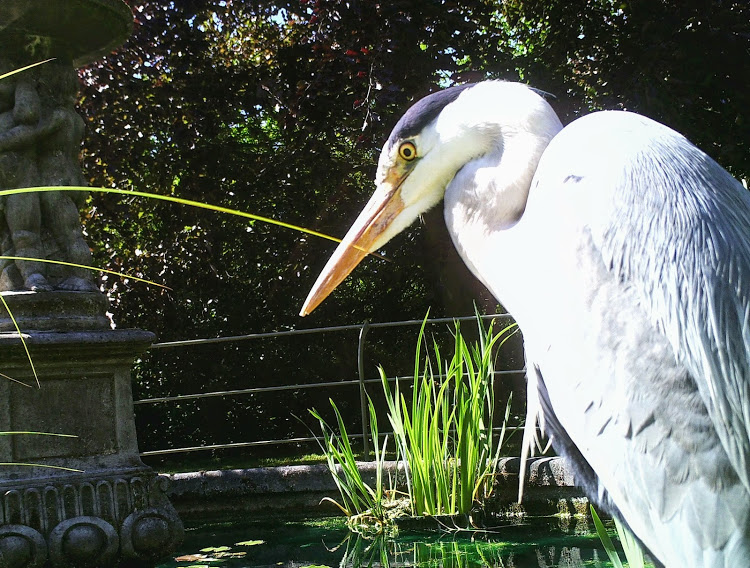
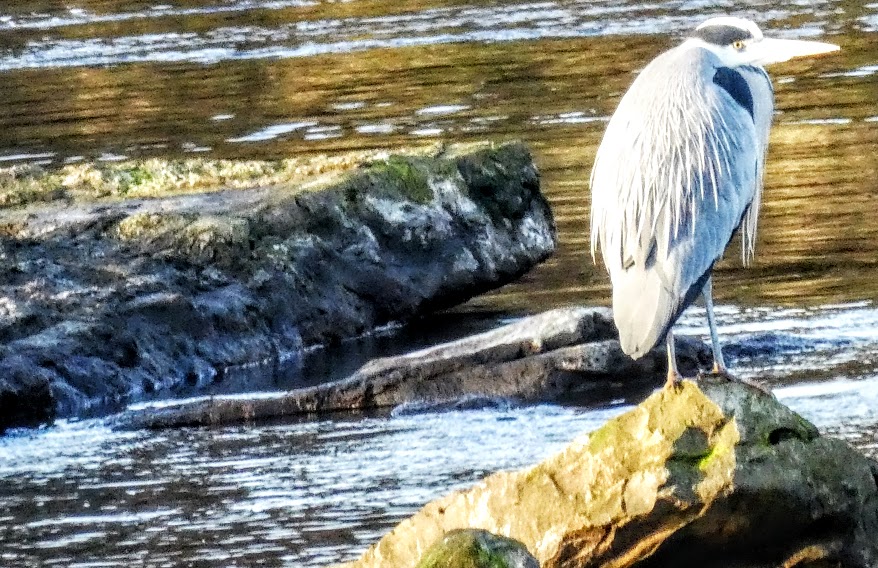
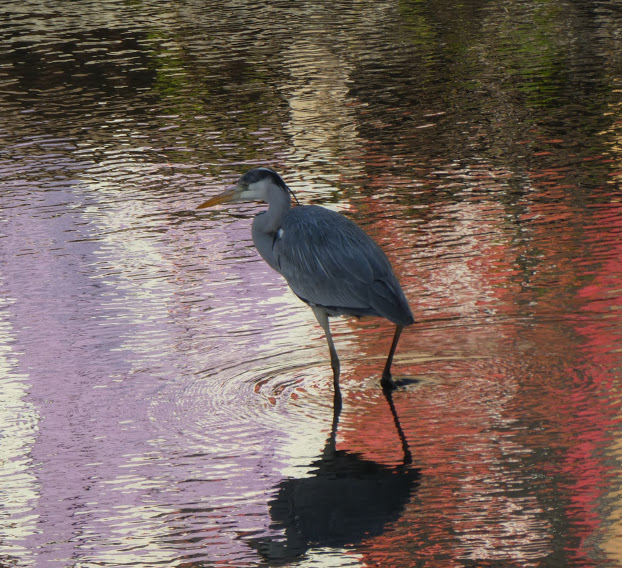
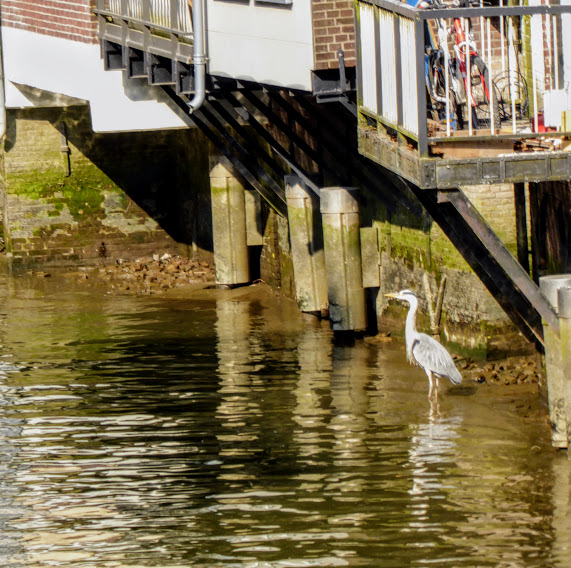
But the fish-eater I love the most is the bird I so often see snaffling goldfish from our landlord’s pond: or as I walk the banks of our neighbourhood River Ure : the one I spot as I hang over the sides of bridges and boats in Spain: the one fishing in among the townhouses of Dordrecht, the Netherlands: the one in my featured photo who was flying down the canal-side in Busan South Korea. It’s the heron, the grey heron.
Sneaking goldfish from our landlord’s garden pond.
Just a few hundred metres from our house, fishing on the Ure.
Parque Natural de la Albufera, Valencia
Evening on the River Guadalquivir, Córdoba.
Dordrecht, the Netherlands
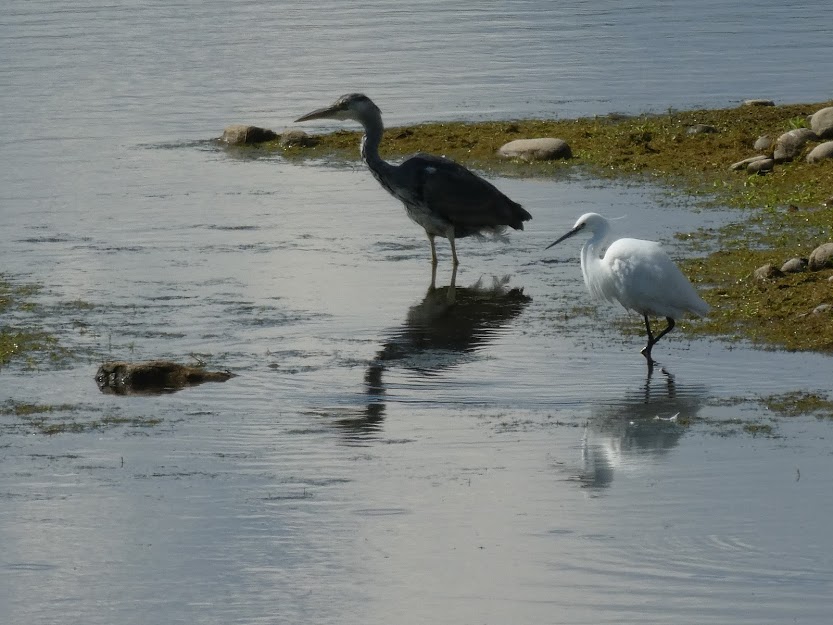
With an egret companion on Nosterfield Nature Reserve, North Yorkshire
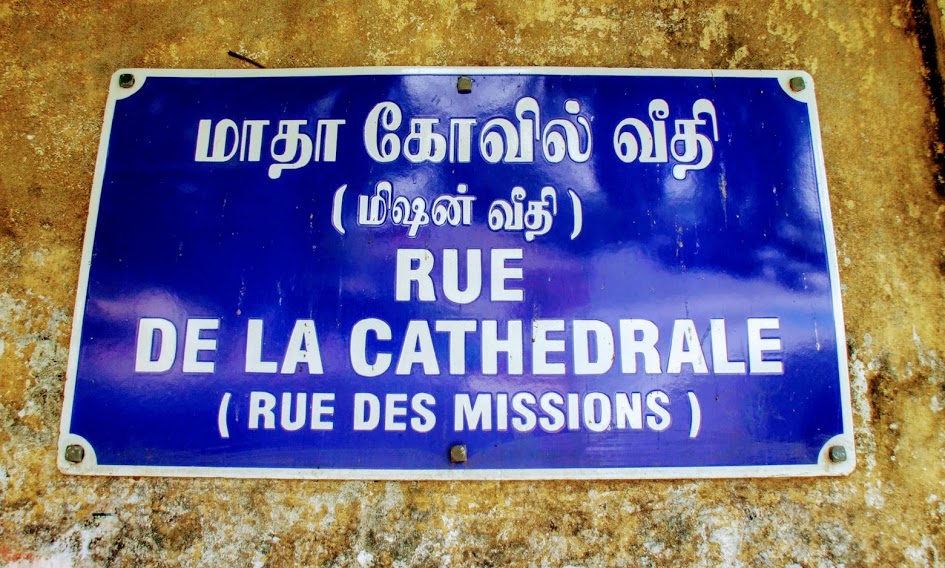
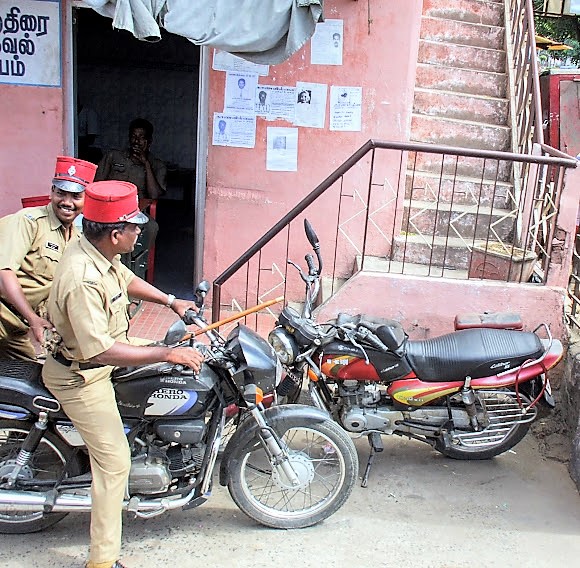
My last sortie to India for the present shows just a few souvenirs of Pondicherry as it looked when it was part of France’s colonial empire. Those days are long gone. Only the older inhabitants were taught in French-medium schools. These days, as throughout India, English is the first foreign language taught. But policeman still look reassuringly French in style, wearing a smart kepi: a military hat with horizontal peak.
Pondicherry Police
Lycée Francais, Pondicherry
Dept of Public Works, Pondicherry
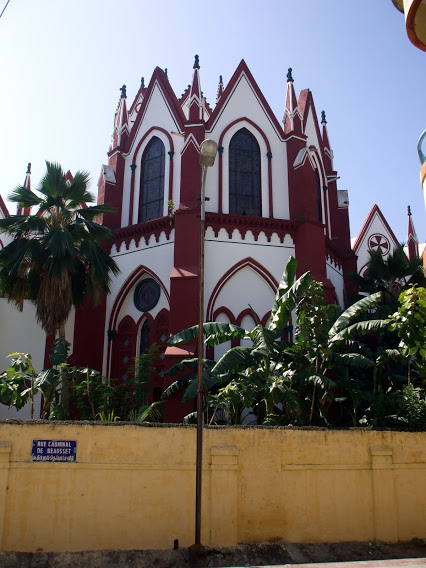
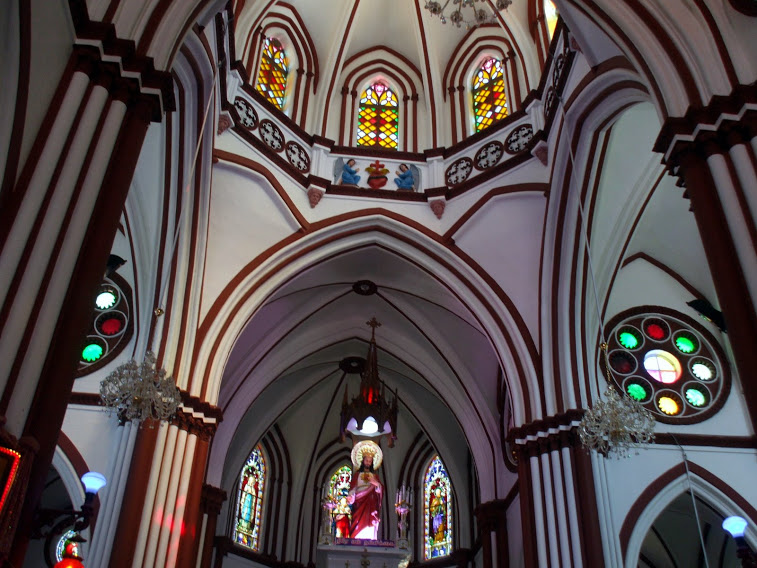
And while the Basilica of the Sacred Heart of Jesus (Basilique du Sacré-Cœur de Jésus de Pondichéry), at the end of the street where my hotel was, might look European-inspired rather than specifically French, it was the then Archbishop, and two parish priests, all French, who were responsible for its inception in 1895.
Well, this is awkward. Just One Person from around the World is supposed to feature a single person in the main photo. But a second policeman got himself into the frame here Never mind. The school entrance features just one security guard, the Department of Public Works just one visitor. I may just get away with it.
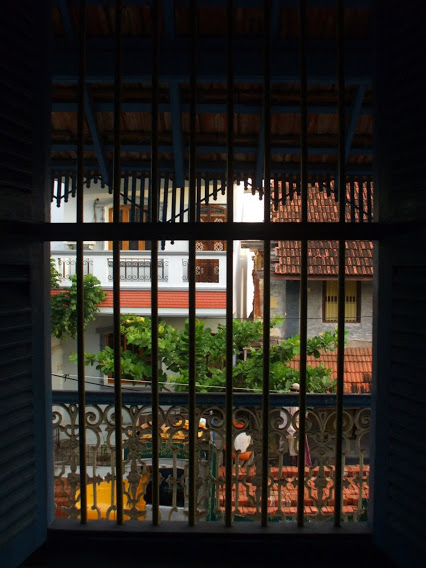
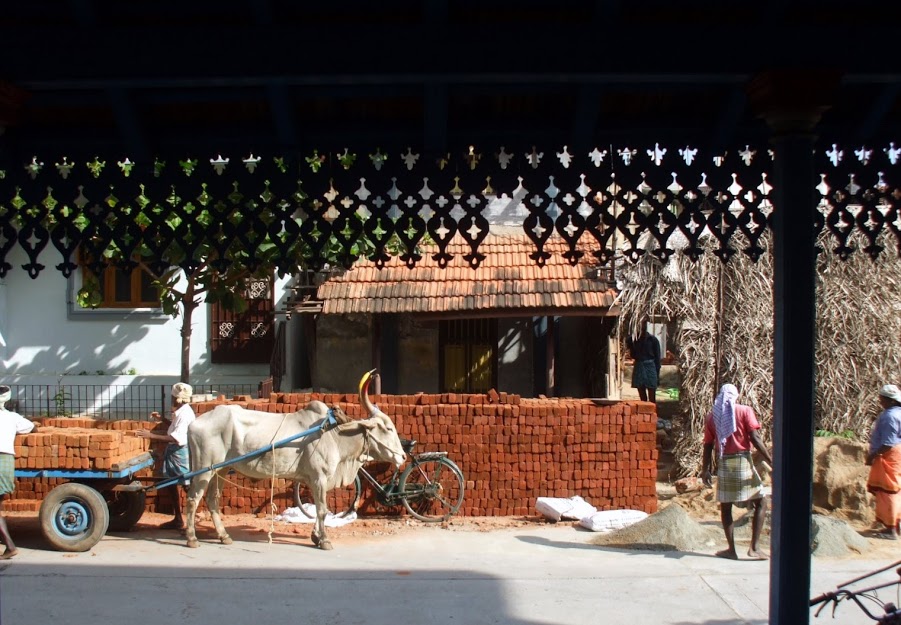
Those builders hard at work just beyond my hotel room in Pondicherry weren’t the only slice of life I saw through my window there. The featured photo shows the view I had just after midnight every night (I told you I didn’t sleep), My camera – or the way I handled it anyway – wasn’t good at night-time vision, but I like the dream-like quality of this scene.
Can you see a group of five women – four of them in blue, seated in the road? Until just before I took this shot, they’d been busily sweeping all the streets round and about, equipped only with short brooms of the kind that witches in western fairy tales normally use . They made cheerful conversation, calling to each other so they could hear and be heard. Now though, it was time for a break, and the women simply sat down and rested in the road, their voices falling to a rippling murmur of chatter and laughter.
This intimate moment, sharing something with these women who were certainly unaware they were being observed, remains one of my treasured memories of India. These women, I’m sure, had little enough, and yet their easy relaxed movements suggested contentment with what their lives gave them. And above them is a washing line. All that day’s washing was blue, apparently.
Here are the windows through which I observed the scene.
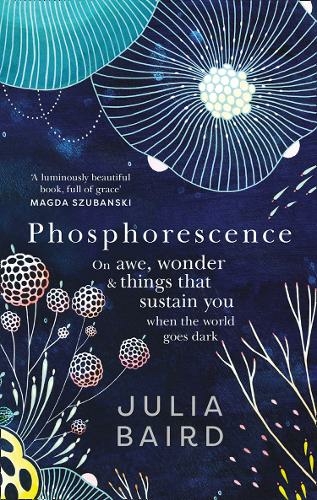
I haven’t yet read the book which starts this month’sSix Degrees of Separation chain for the very good reason that it hasn’t been released in the UK yet. However, Phosphorescence, by Julia Baird is apparently about finding grace and awe in the ordinary and in the world around us.
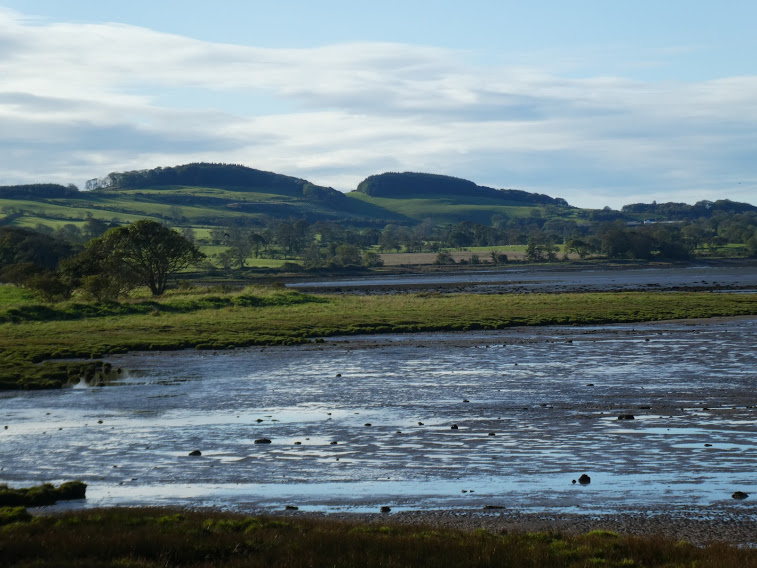
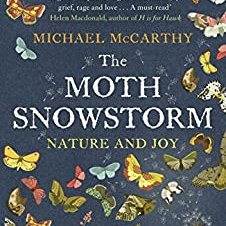
So I’ll start with Michael McCarthy’s Moth Snowstorm: Nature and Joy. How to describe this book? It’s part nature writing, part memoire, part polemic, and a powerful and affecting read. The book first got under my skin when defining ‘joy’, which McCarthy sums up as a moment of true happiness, with a spiritual, selfless, outward looking dimension. McCarthy’s first experience of joy was as a boy, learning to love the landscape and wildlife of the Dee Estuary. His nature writing is richly observed, pictorial, highly sensory. He is angry at the galloping pace of destruction of so many species and habitats. He demands that we observe too, and experience joy in our own ways as we explore the natural world.
Not the Dee Estuary, but the view from Mutehill, Kirkkudbright.
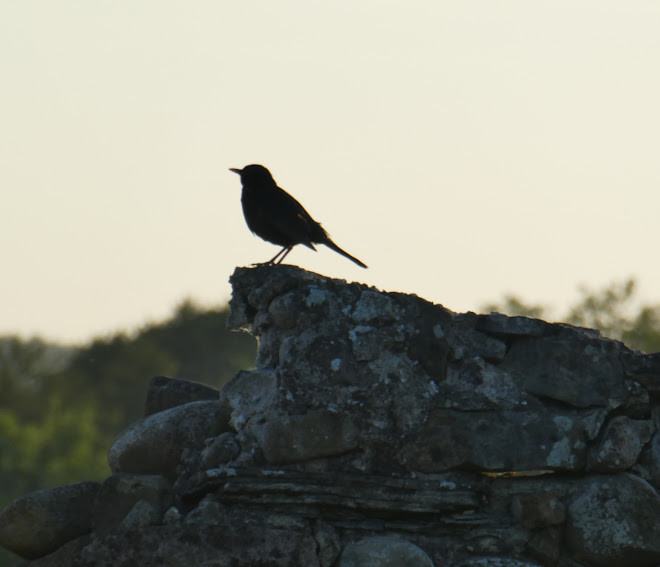
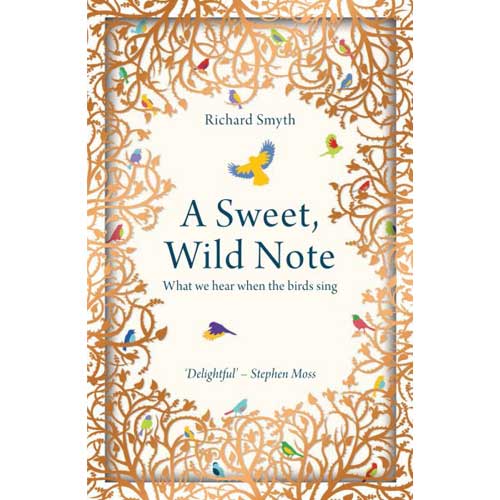
Richard Smyth’s A Sweet Wild Note: What we Hear when the Birds Sing is a delightful, idiosyncratic and fascinating book about the place of bird song in our lives. Smyth is a wry, self-deprecating writer who draws not only on his own experience, but on music – all kinds of music from every period, on literature, on social history, on science, on previous students and lovers of birds, on landscape, to develop this entertaining yet well-researched read.
A blackbird singing at West Tanfield one summer evening.
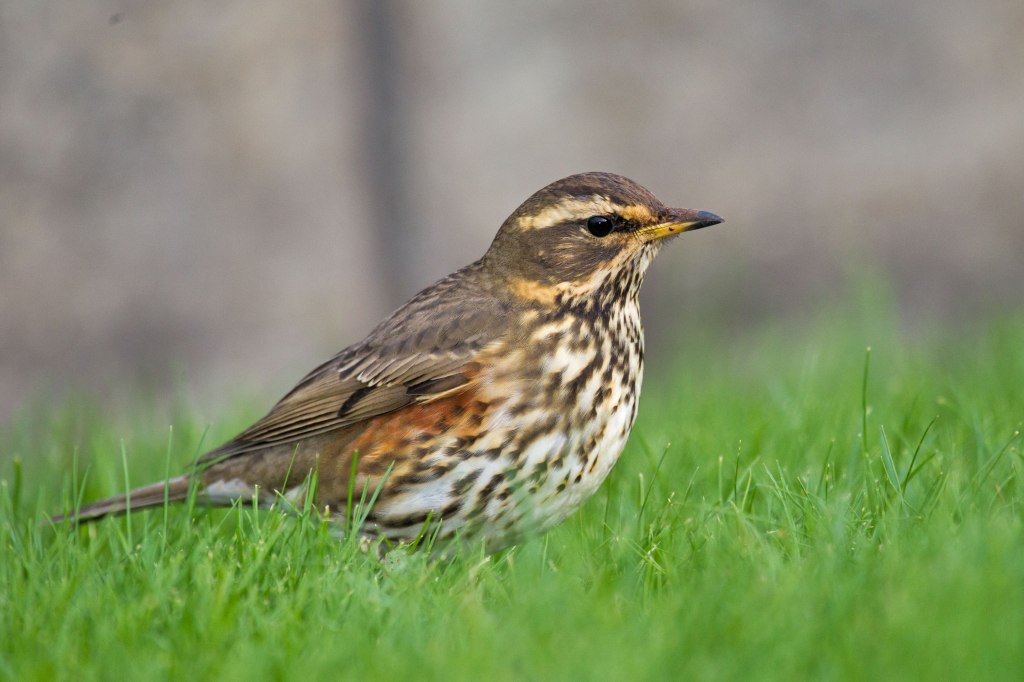
This leads me to my only nod to fiction this month: Helen Humphreys’ The Evening Chorus. I picked this book from the library shelf on a whim. What a gem. Inspired by, though not based on three true events, this lyrically told story sees the war and its aftermath from the perspective of three people, each intimately bound in each other’s lives, but ultimately dealing with what confronts them in their own way, alone. It begins with James in his German POW camp, finding solace in his intimate record of the lives of the birds, the redwings he can just about see from the camp confines. There is Rose, his wife in an English village; Enid, his sister, living and working in London. Constance, Rose’s difficult mother … and the POW camp’s Kommandant. All have their roles in this story in which the actual horrors of war have no place, but which illustrates vividly its power to alter lives, to constrain, and yet to offer hope too.
Redwing: Andreaa Treple, Wikimedia Commons.
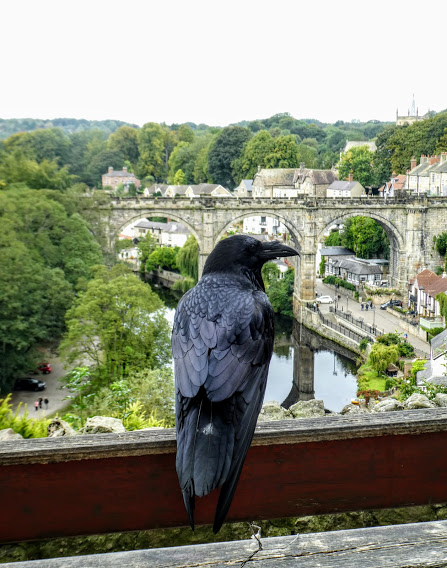
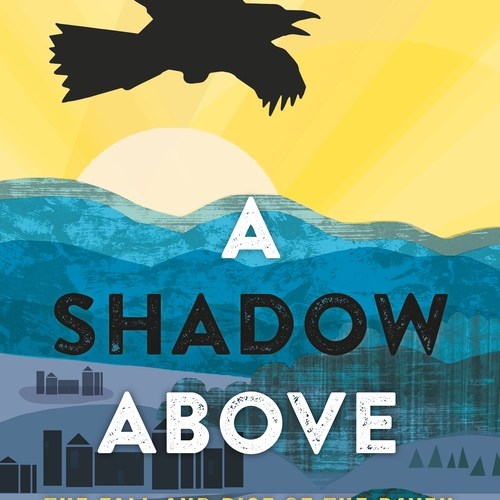
From redwings to ravens: A Shadow Above: The Fall and Rise of the Raven, by Joe Shute. Shute loves ravens. I loved this book. Part natural history, part history, part an exploration of the many legends that this bird has fostered, part investigative journalism, part personal history, this is an engaging, immersive read that goes a long way towards explaining why ravens have a special place in our history, and that of many other nations – even giving many locations their place name. It’s beautifully, often poetically written (though it could have had a better proof-reader) as well as being informative. I finished this book with an increased respect for an intelligent, fascinating bird, besides understanding why it inspires fear and loathing in almost equal measure.
A hand-reared raven guarding Knaresborough Castle in North Yorkshire.
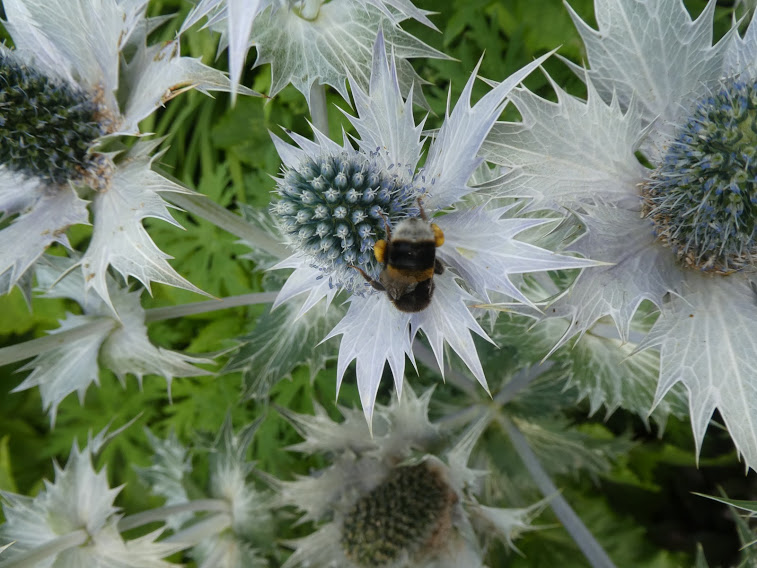
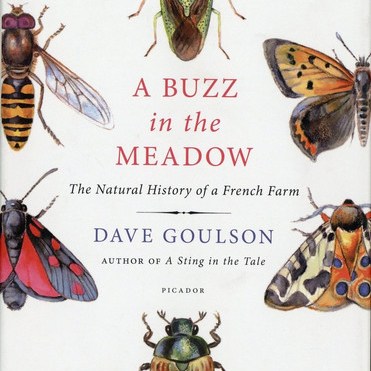
And now from birds to bugs: A Buzz in the Meadow: The Natural History of a French Farm by Dave Goulson. This book is a delight from beginning to end. The catalyst for writing it is Goulson’s home in the Charente, bought so he could provide home, in the form of an extensive meadow, to a huge variety of wildlife, specifically insects. This is no Aga saga of a Brit in France, but a mixture of reminiscence, hard scientific fact, vivid stories of his own experiments and research, and the work of others. It’s a page turner and a tale well told with humour, and an eye for the telling detail. I’m no scientist, but I was absorbed from start to finish.
A buzz in the garden at Beningborough Hall, North Yorkshire.
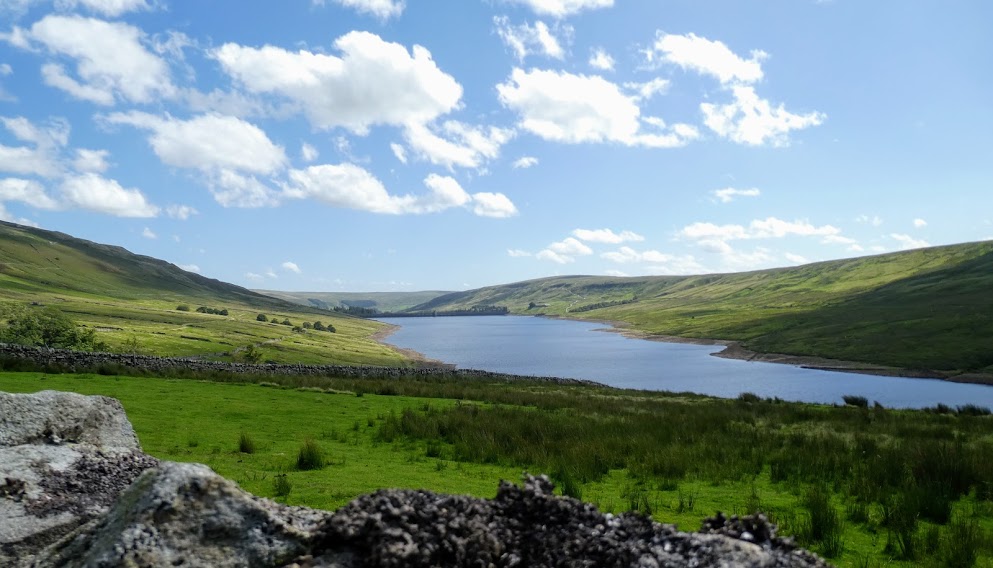
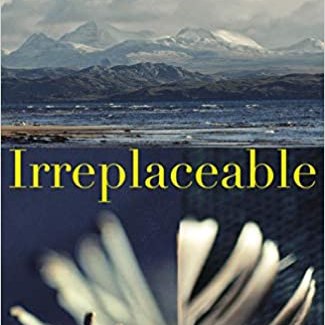
My last book is Irreplaceable: the Fight to Save our Wild Places, by Julian Hoffman. An important book, lyrically written, about our disappearing habitats. Hoffman has travelled the world in search of such places. But whether it’s an Indonesian island with exotic flora and fauna, or a London allotment, the message is the same. Once the habitat has gone, it’s gone. He describes such losses eloquently and movingly. Ultimately though, there is hope. And this hope is vested in ordinary people who care about the piece of the planet that they live on, and who campaign, and simply roll their sleeves up and do whatever is practically necessary to ensure the continuing diversity and richness of the area they know and cherish so well. Some are educated scientists or campaigners, but more are simply citizens, doing what they can to ensure the continued future of the habitat they love. Read this book.
The quite-wild-enough landscape of Angram, North Yorkshire
I didn’t expect to produce a non-fiction bonanza about the natural world, but here we are. If you never normally choose books like these, I urge you to give any one of these titles a try. They’re each as absorbing as any good work of fiction, and they all tell stories that are important for us, and for the planet.
In India, Pondicherry was one of my must-visit destinations. In was a French colonial settlement till 1954, and still has a well-preserved French quarter, with French-style colonial villas and characterful tree-lined streets. I stayed in one of these – a charming guest house called Le Rêve Bleu.
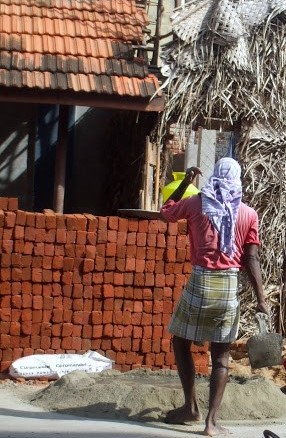
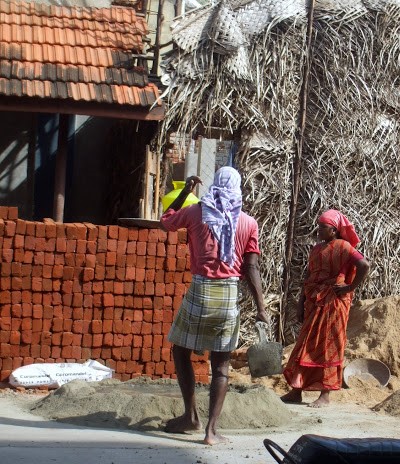
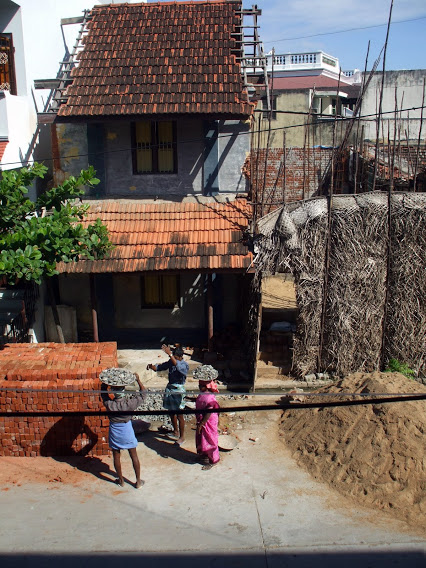
My room looked out over a building site. Was I dismayed? Not at all. Look at these scenes of builders – at least half of them women – at work from 6.30 every morning. I’d long been woken up by then, by the daily Muslim Call to Prayer, announced over a very loud tannoy system at about half past five,
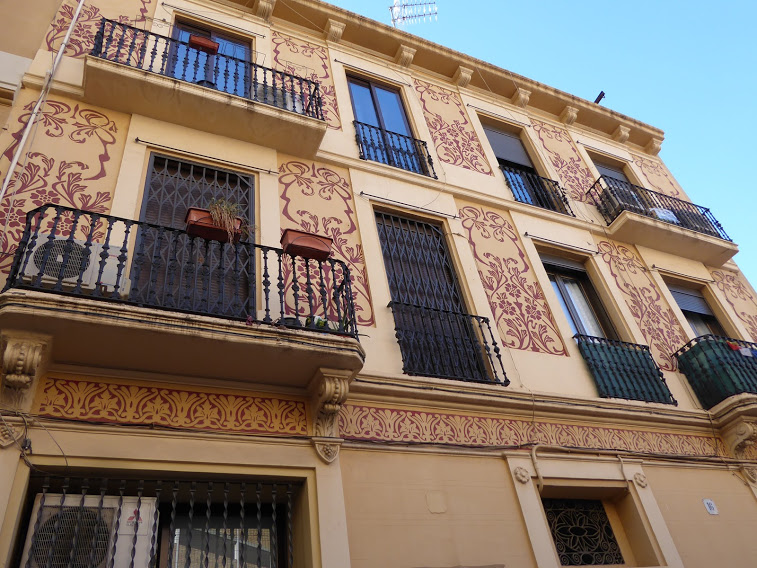
About three years ago, we were in Sants, Barcelona. The flat where Emily and Miquel then lived was too small to accommodate us for too prolonged a stay, so an apartment in Sants it was – a part of the city we didn’t knw at all, but came to like a lot.
Once a village, by the nineteenth century it was industrialised – the textile industry – and home to Barcelona’s biggest textile factory. Now it’s home to Barcelona’s biggest station and travel interchange.
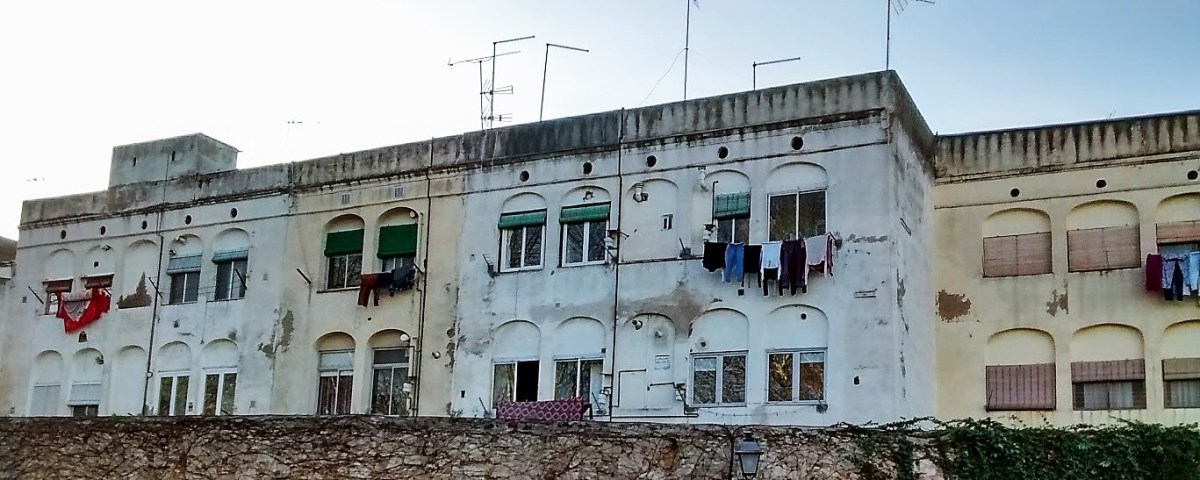
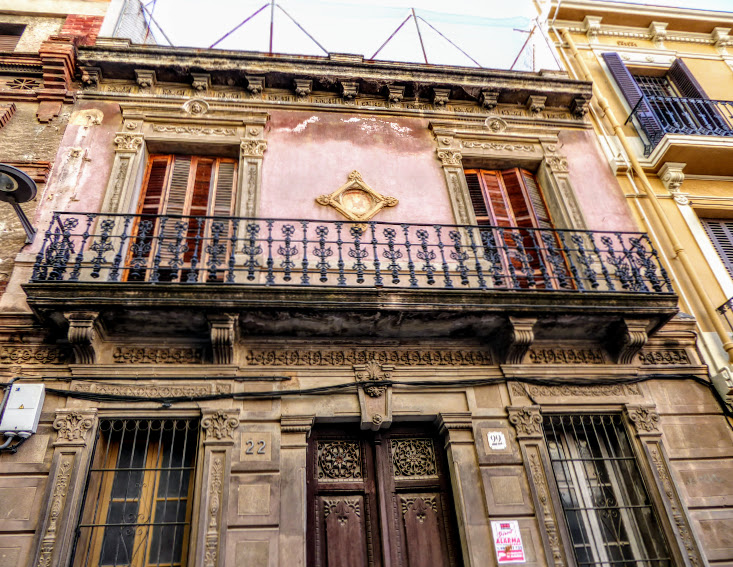
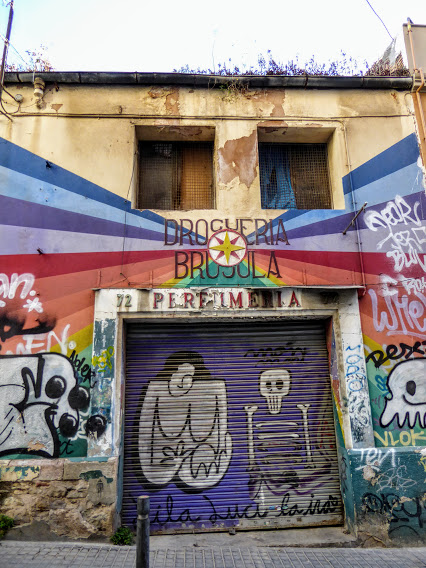
For us though, it was simply a busy working community, full of independent shops, a market, housing old and new. Let’s go and walk the streets for a while, and admire the often elegant windows. And as the feature photo shows, there’s washing. There’s always washing to hang out.
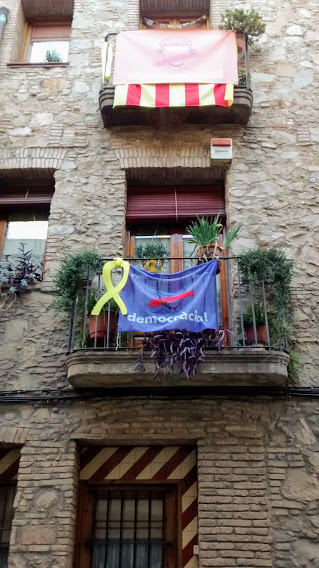
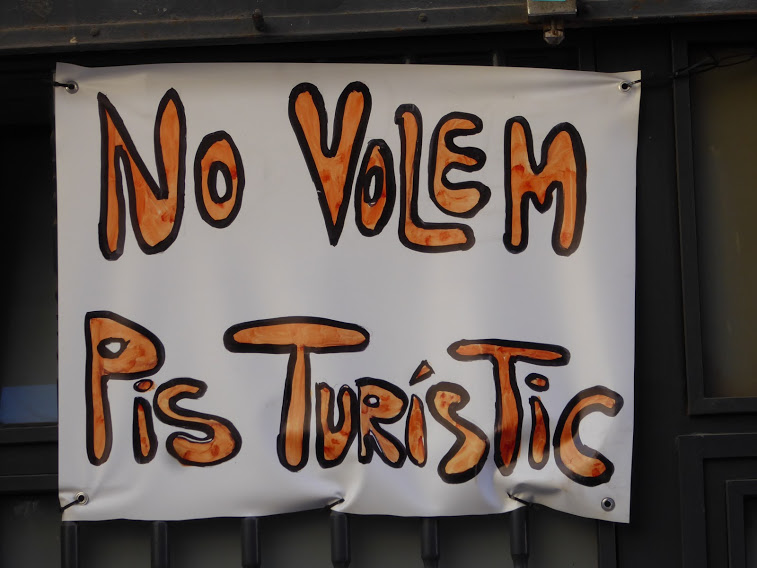
It’s an assertively independista part of the city: hence the Catalan flags and yellow ribbons. And they don’t welcome the destruction of their community by tourists that come and go. So we did our best to spend in neighbourhood shops bars and restaurants, and also hoped that, since we’re all-but Catalan in-laws now (and now, even Spanish grandparents), we might pass muster.






















 From Pyrenees to Pennines
You must be logged in to post a comment.