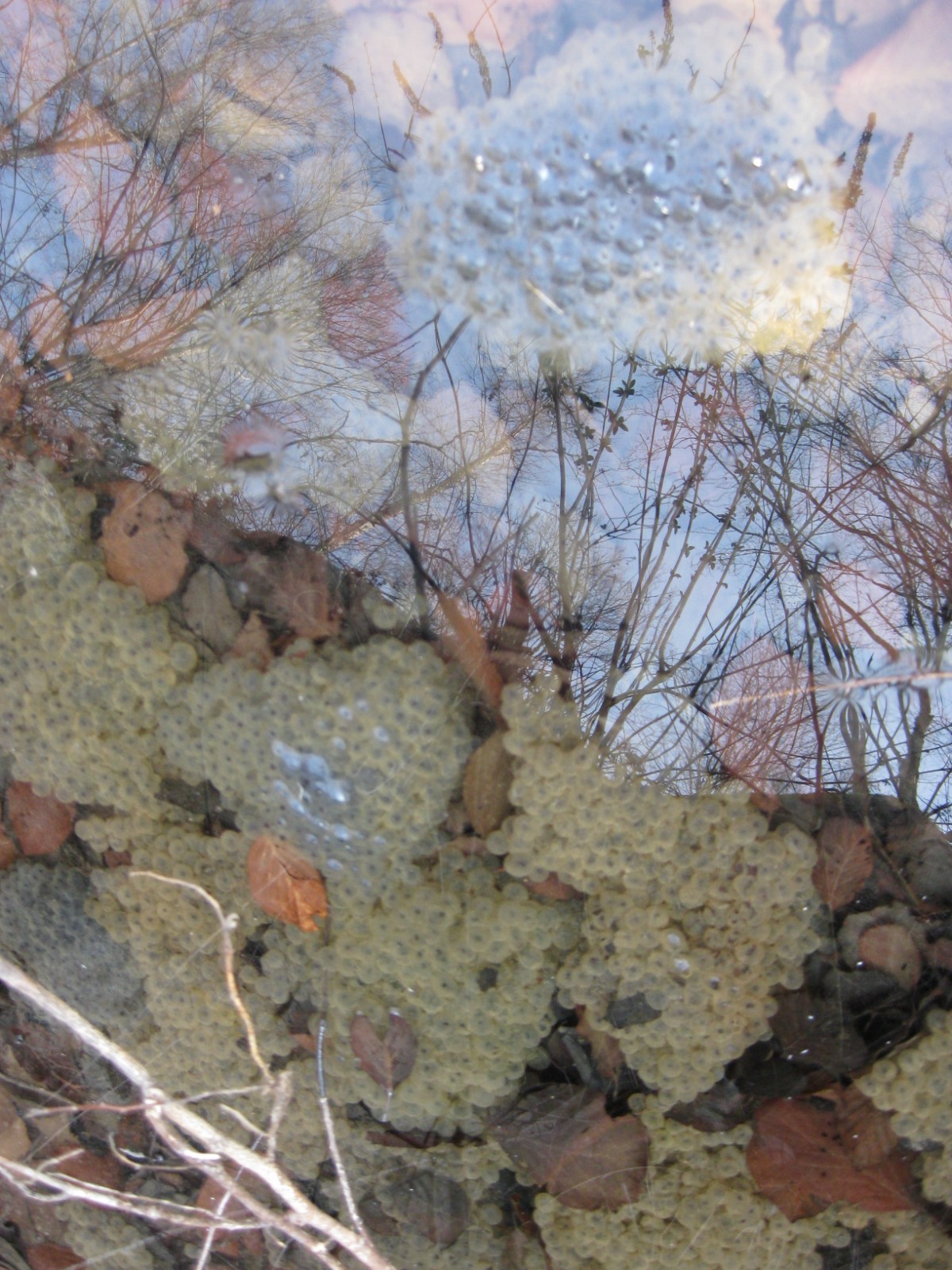
Rencontre des chorales

Our Chorale at Laroque’s best friend is the Chorale at Mirepoix.  The Écoles de Musique in each town are best friends too, working together and running some joint classes and performances.

The chorales and other classes get together at least once every season to enjoy singing and playing for and with each other for an evening.  The public’s invited, and comes in encouragingly large numbers.
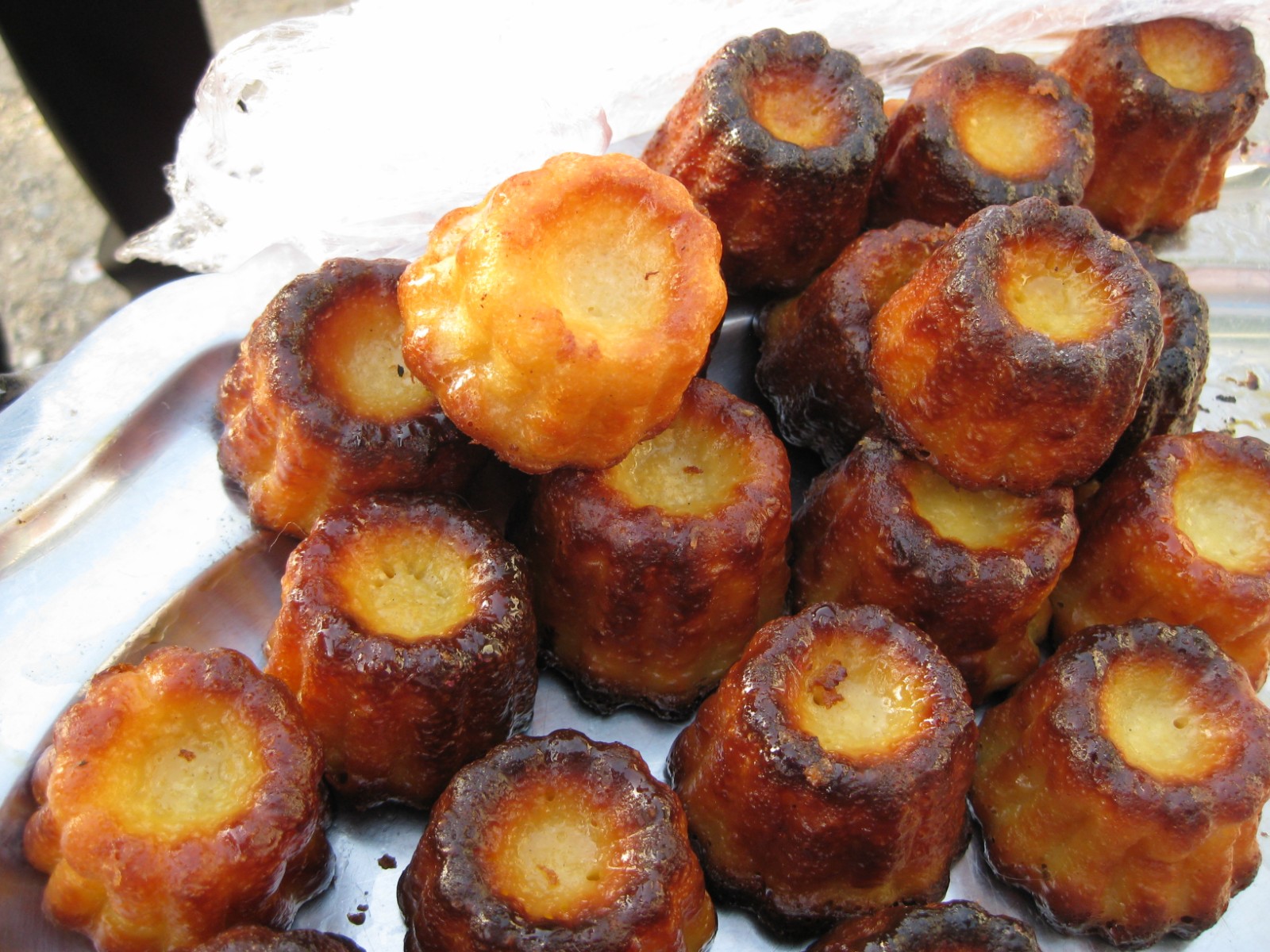
Those cannelés….

Last Friday, all the singers started wandering in shortly after 6, carrying carefully prepared dishes of buffet food.  The instructions were to bring no more than 6 portions, but nobody took any notice of that.  Robert from Laroque had made a pile of his deliciously chewy signature cannelés, Mirepoix’s William (yup, William’s a perfectly good French name) produced meringues, Mercedes’ plate was full of the cold meats and pâtés they make their charcuterie….and so on.

The rehearsal started, and was less a question of running through the songs than organising the logistics of moving around the dozens of us involved: Mirepoix’s orchestra, their children’s choir, the adult choirs from both towns.  It had to be done to a time-table, because nobody wanted to hurry over eating that buffet or sinking some wine.  ‘Don’t drink too much alcohol beforehand!’ urged Vanessa, our director ‘It’s bad for your singing voice’. I didn’t see anyone taking very much notice. ’Well really’, said Robert ‘How can you possibly eat cheese without a glass of wine to help it down?’

It had been more than 30 degrees for much of the day, so nobody wanted to come back indoors after the meal.  But we opened the windows, finished our preparations, and the audience drifted in for….oh, well before 9.10 for a 9.00 start.
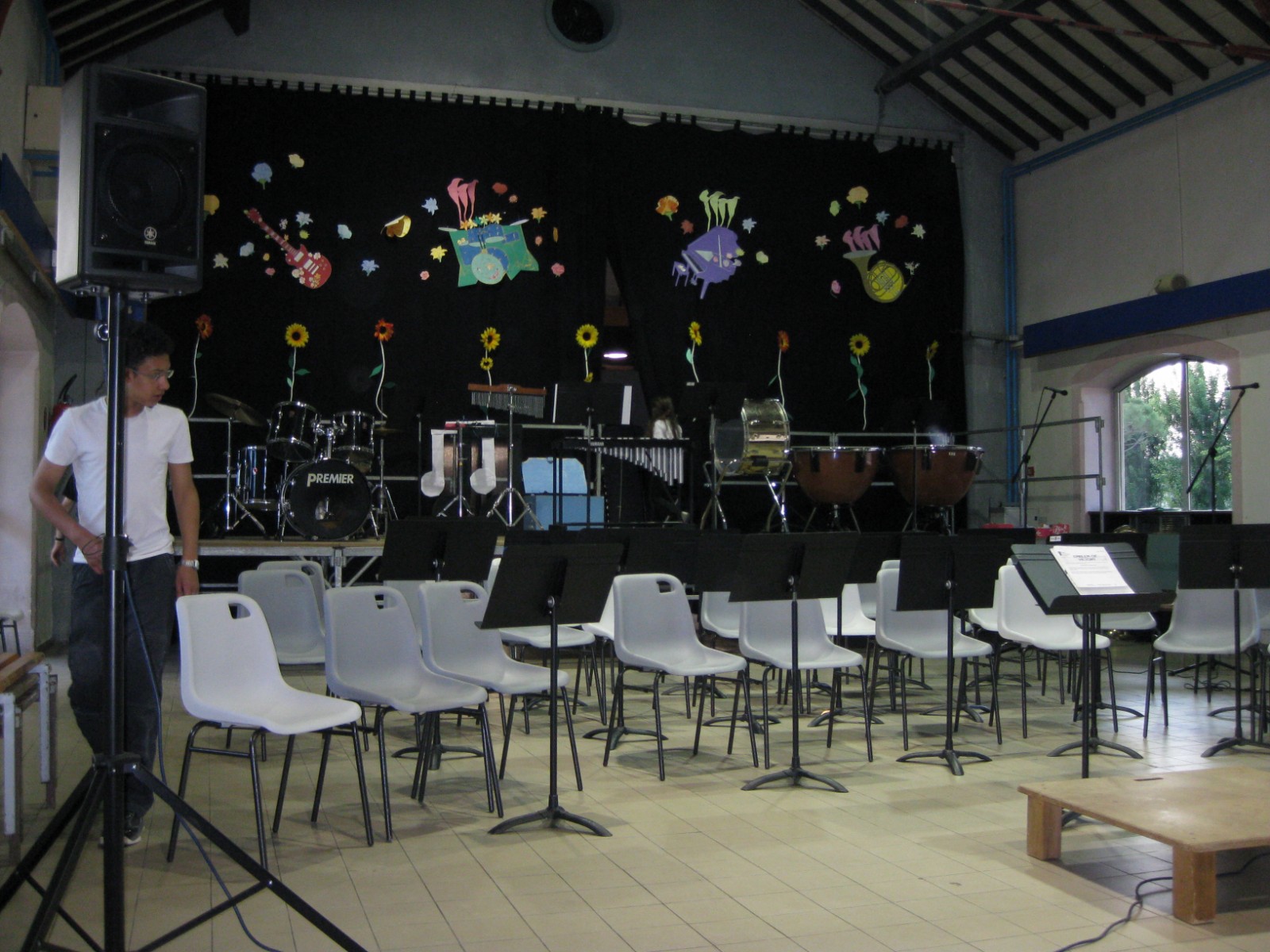
Almost ready to start

The orchestra started things off.  Lots of percussion. All good stuff. I’m always a soft touch for children singing: these were well-rehearsed and sang with verve and enthusiasm.  Joined by the Mirepoix adult choir, they belted out numbers that were old favourites to the French audience and unknown to Malcolm and me.

And then it was our turn.  Our repertoire is a catholic one.  We sang everything from Henry VIII’s Pastime with Good Company (en français bien sûr) and Moon River (en français bien sûr) to old favourites (if you’re French that is) like Mon Amant de Saint Jean.
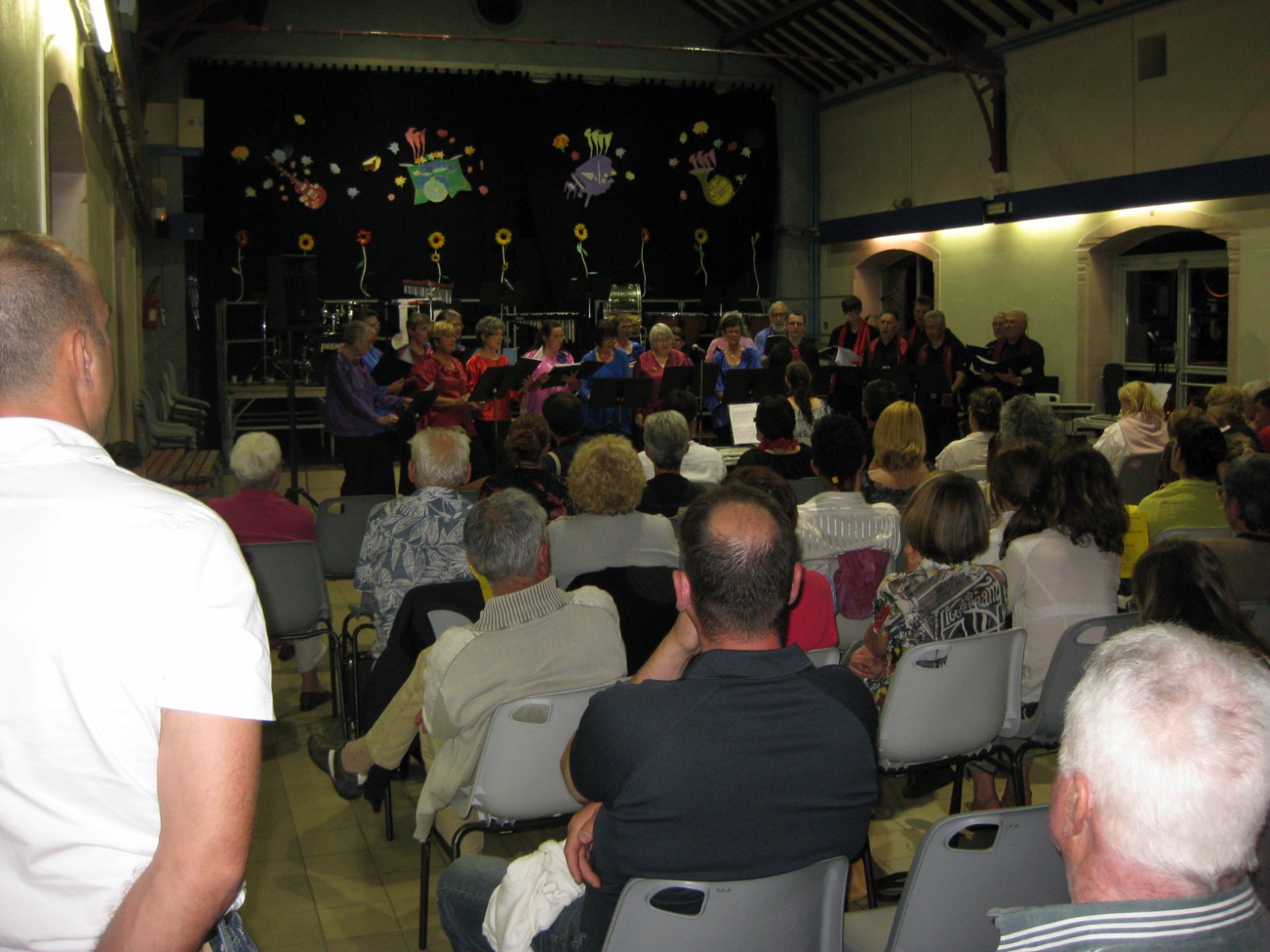
The Chorale de Laroque d’Olmes takes the stage

Nearly the end. Time for all the singers to join together for two final numbers.  A few weeks ago, Mireille had spent half an afternoon explaining one of them, Mistral Gagnant, to me.  It features a man singing to his daughter and the allusions to a host of sweets that form no part of my own youth – carambars, minthos and the mistrals gagnants themselves, had left me totally baffled, though not the rest of the audience.

In true French tradition, we couldn’t leave without doing an encore or two.  In true French tradition, we couldn’t leave – nobody could – without sharing the pot d’amitié.  A glass of something, a chance to meet and talk to friends: the perfect way to end a busy evening
Four seasons for the price of one

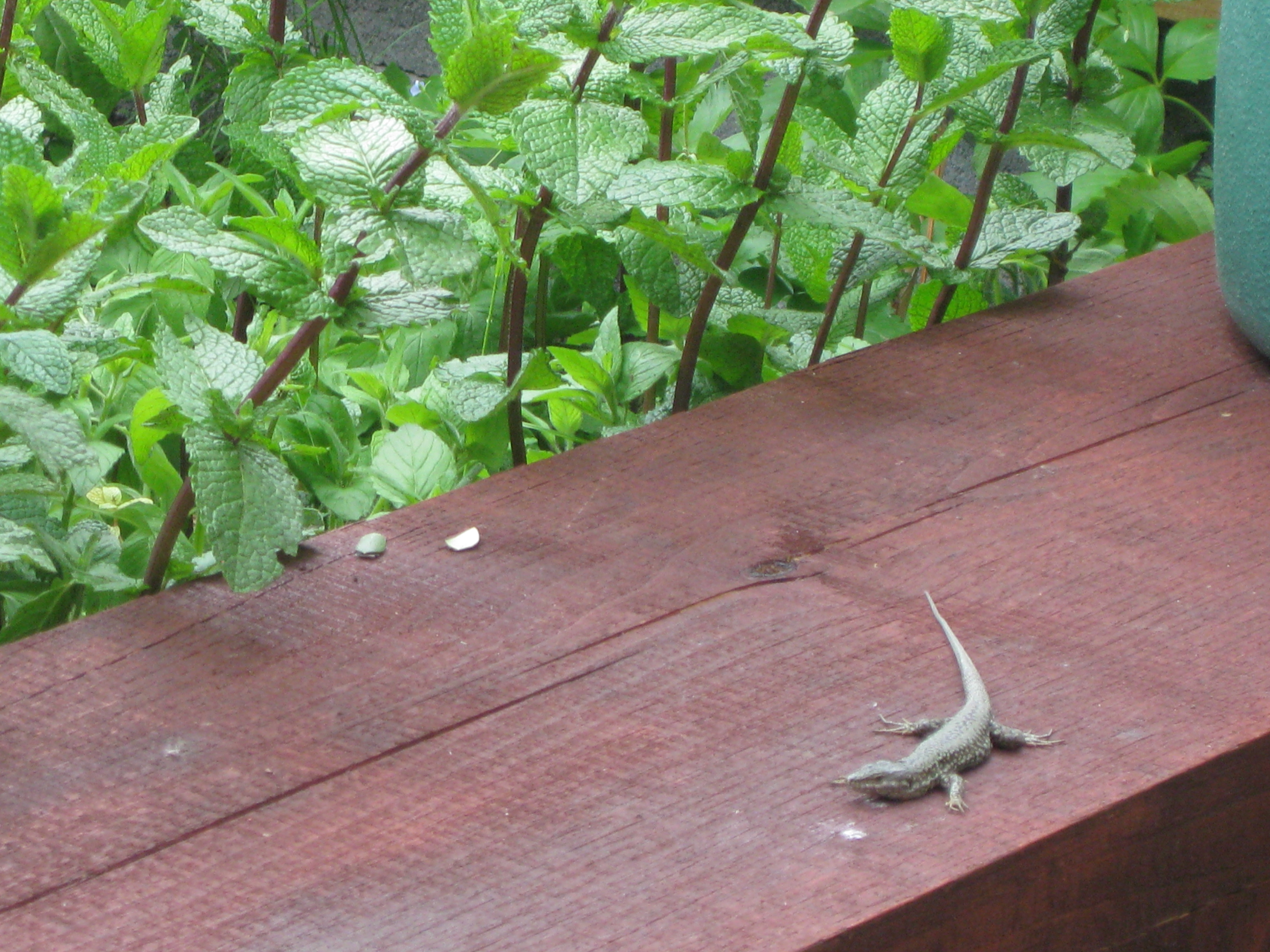
A lizard hopes summer’s on its way

I’m writing this in Laroque.  I have the feeling that whether you’re reading this in France, England, elsewhere in Europe or even in more far-flung places you’ll be sharing something of the same experience.

Get up in the morning and peek though the shutters.  Perhaps it’s raining.  Perhaps not.  But whatever: it won’t last.  We’re getting used to having all 4 seasons – several times – in the course of a single day.

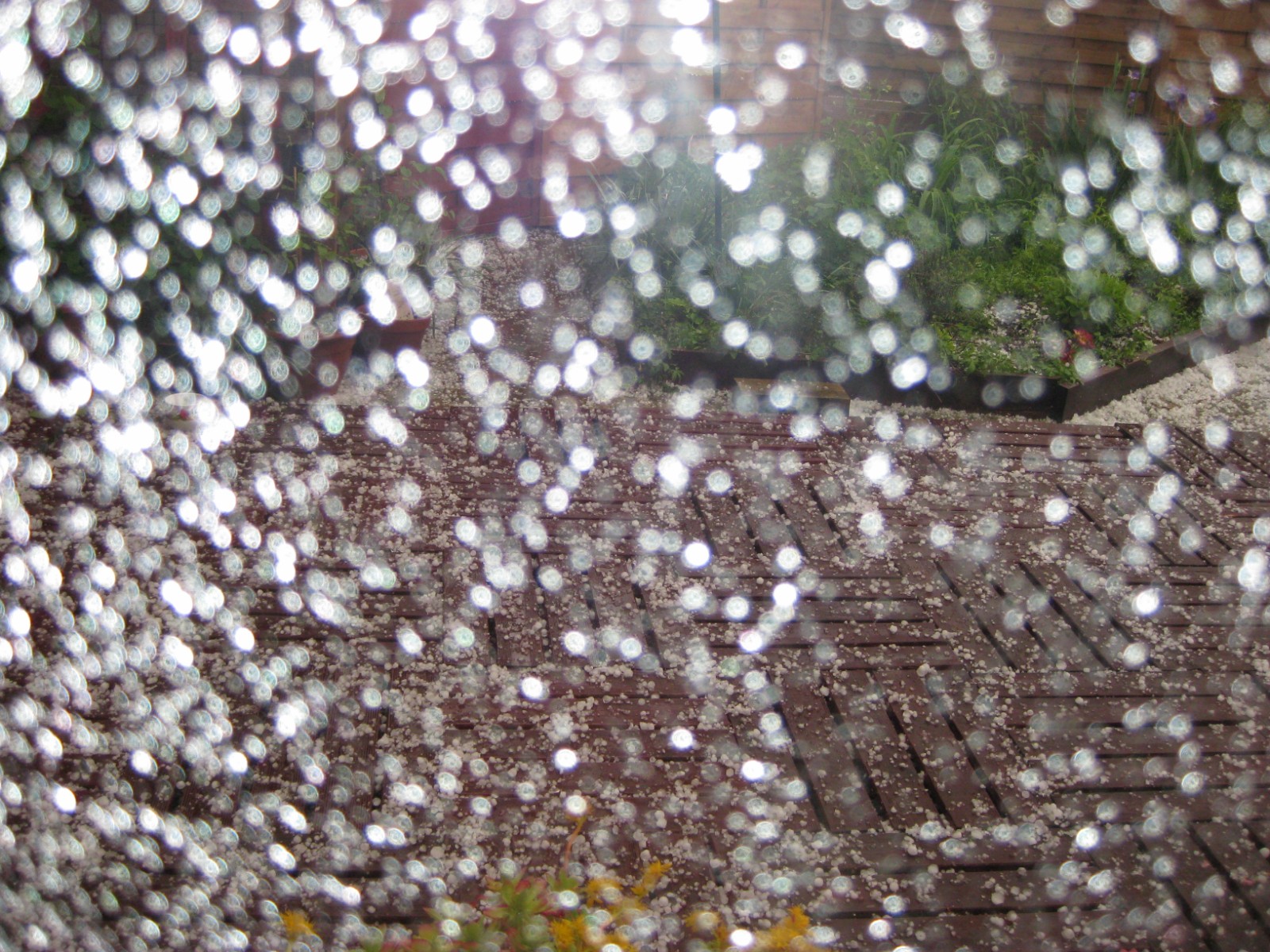
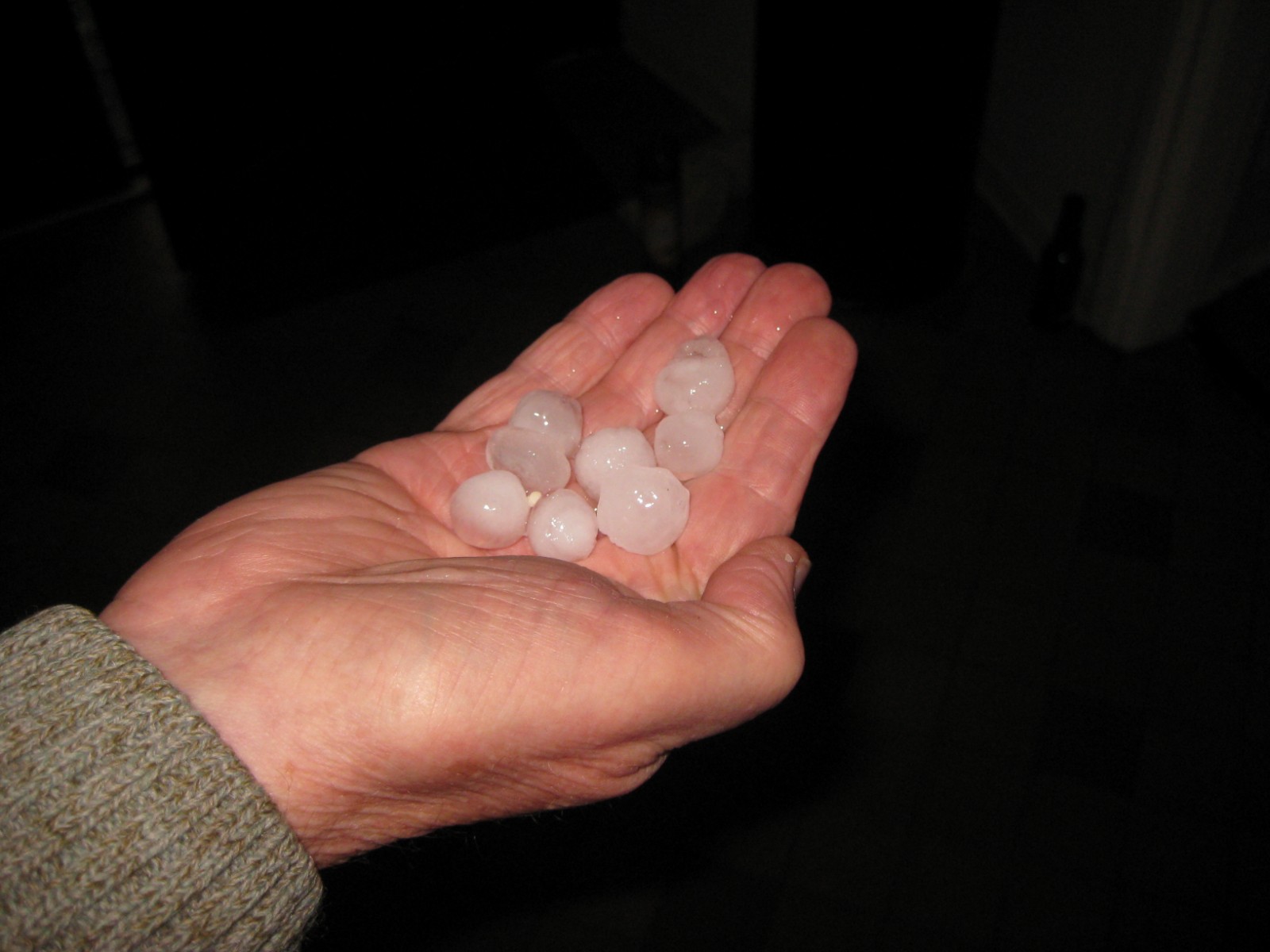
The other day, blazing sunshine and a brilliantly clear blue sky brought the lizards out and had us stripping down to our T shirts.  Minutes later we were reaching for fleece jackets and shortly after that we had to scurry indoors….a hail storm.  And what a storm! Hail stones as big as Maltesers flung themselves noisily against the shutters and scythed down young leaves and shoots in the garden.

May hailstorm

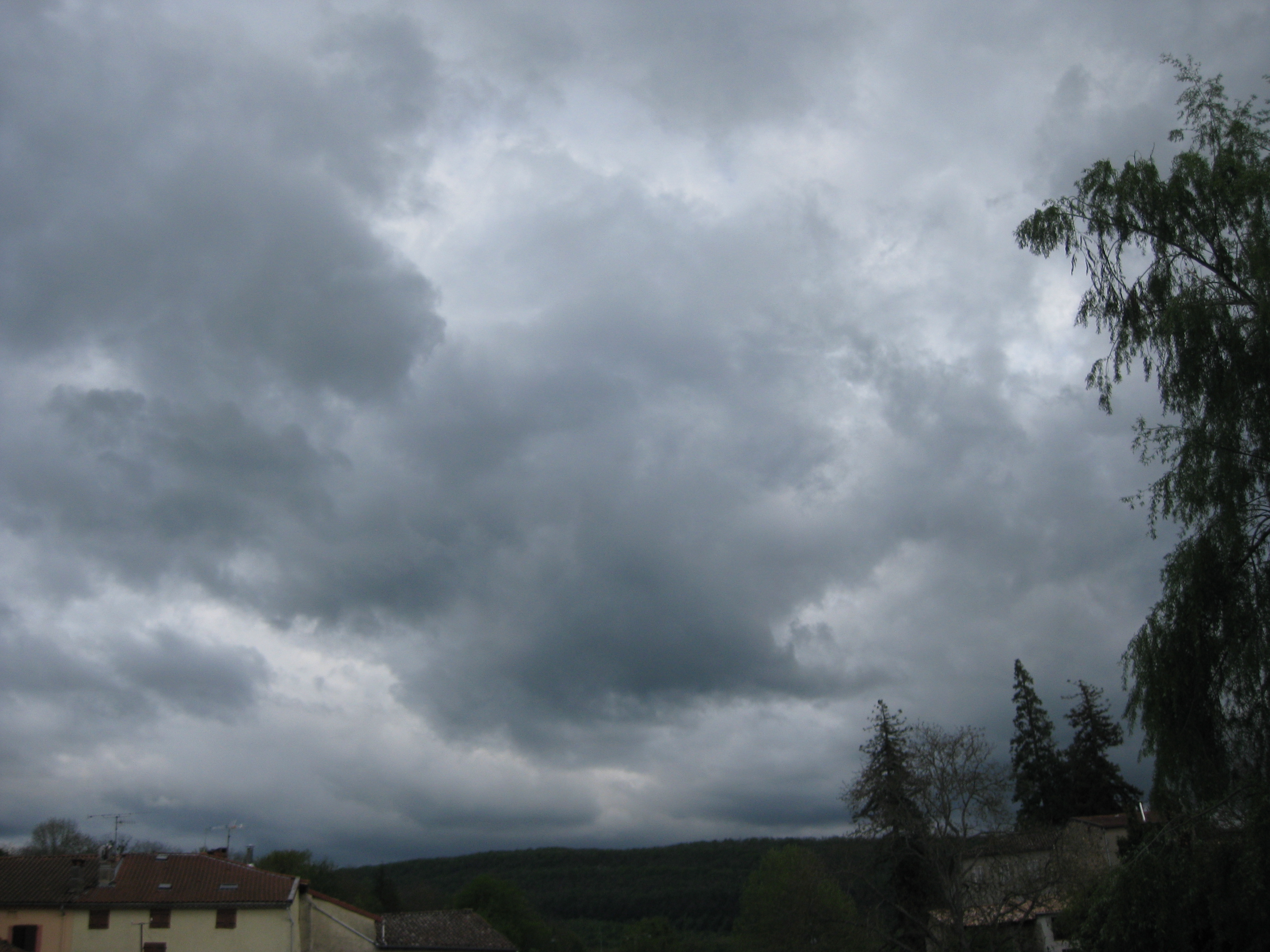
At other moments puffy white cumulus meandered across the sky and minutes later angry violent gusts of wind tugged sullen heavy grey clouds into view.  But this time two years ago, we had snow in May, lots of it.  Let’s hope summer will arrive soon, as it did that year.

Laroque cloudscape, looking southwards
Laroque cloudscape, looking northwards

Gracious aires

One of the pleasures of motorway driving in France is the chance to have a sustained break in one of the aires, or service areas.  Not the run-of-the-mill petrol station plus eatery and shop. They have those too.  As in England, they offer the chance to eat indifferent food at over-the-odds prices, and to spend a small fortune if you’ve been unlucky enough to need to tank up there.

No, in France, roughly every other service area is all but unserviced.  There are parking spaces, toilets, a telephone, and not much else: nowhere to spend money, in any case.  There may be a children’s play space set among trees, and perhaps picnic benches.  And that is their charm.  They’re generously sized areas, set well away from traffic noise, and offer a real chance to get away from the stress of a long drive with a relaxing walk in the woods or a picnic in the shade.

Perhaps my favourite is on the southbound carriageway of the A20 in the Limousin.  I first stopped by chance at L’Aire de la Coulerouze when I was driving down alone to Laroque a few years ago.

Earlier that day, I had picked up the makings of a picnic at the market at Levroux.  I’d got bread, and a young goats’ cheese.  I’d bought fresh apple juice from some nuns who had a stall, and an apricot producer had sold me a couple each of every apricot variety he grew so I could have my own personal taste-test session.

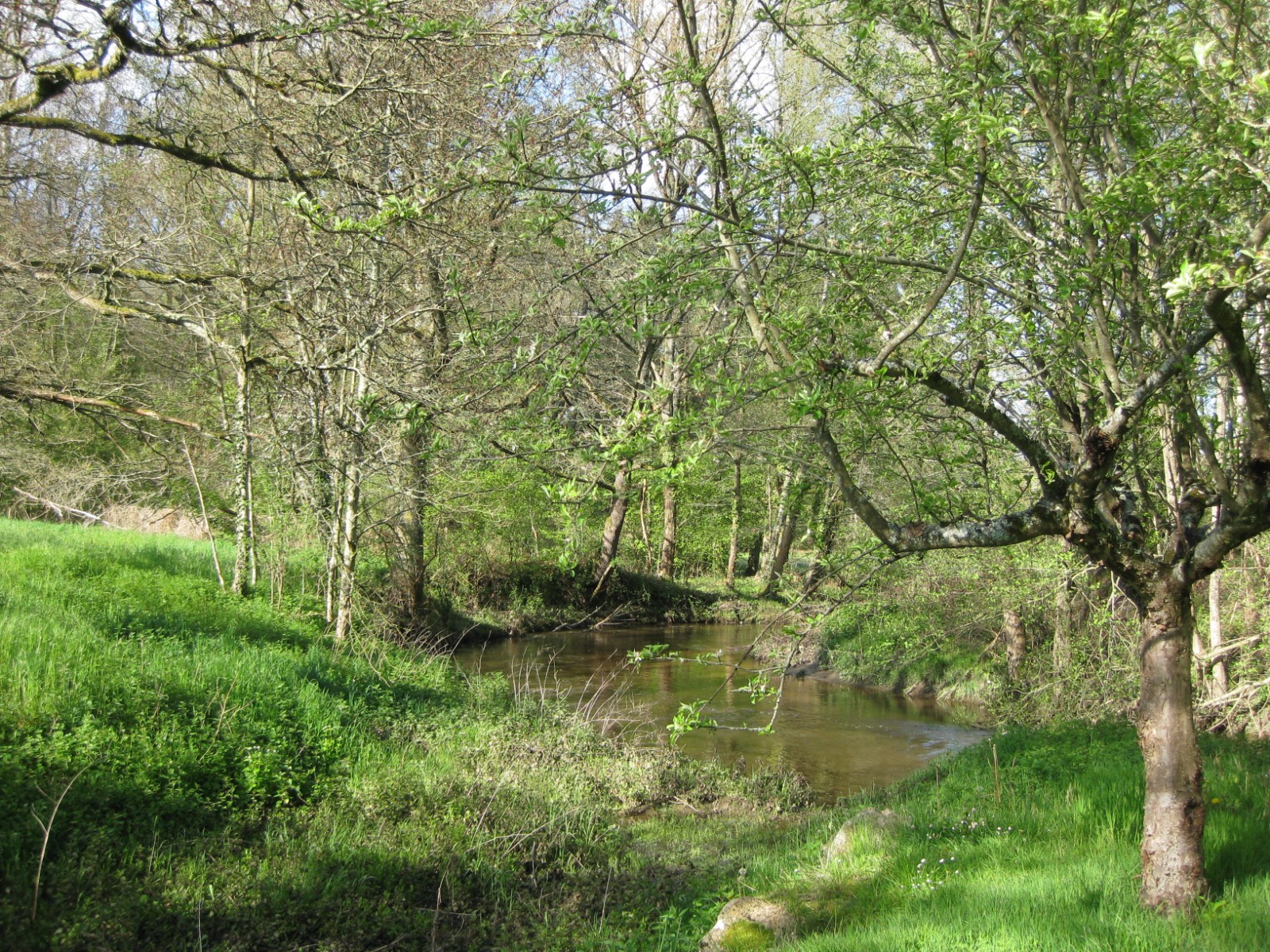
Down by the riverside at Coulerouze

At Coulerouze, I found picnic tables and was about to settle myself down when I noticed wooden steps leading downwards.  There at the bottom was a bridge over a small river all but encircling a small wooded glade, with a single bench under an apple tree.  The only sounds were the birds singing, and the river tumbling along its path.  I spread out my lunch and relaxed.   Afterwards, I found there was a path.

The signpost to the path

It took me first of all along the river, and then along fields and hedgerows.  The walk wasn’t a long one, but it was all I needed to forget the many miles I’d already driven that day, and the four or five hours driving that still awaited.

Not all these aires are quite so special.  There are some horrors near Rouen.  But find a good one, and it’ll become a treasured destination, somewhere to aim for with pleasure on a long day’s driving.

The campaign for a President

During the British General Election we were in France, and kept up to date with the campaign via the French media, with particular thanks to British pundits and MPs with a command of the French language.

During this French Presidential campaign, we’ve been in England.  After the first round of voting last Sunday, a French friend helpfully sent me the results, as she feared statistics of this kind wouldn’t be considered newsworthy in dear old Blighty.

Actually, she needn’t have worried.  I’ve been surprised at how thoroughly the French elections have so far been covered.  The broadsheets, and both radio and television could be relied on to have some slant on the campaign every day.  Much of the discussion has revolved round how the Franco-German alliance would fare if Angela Merkel has to forge a relationship with Hollande rather than Sarkozy.  Other articled focussed on how, for many voters, it was perhaps more a question of who to vote against, rather than who to vote for.

Since Sunday’s first-round vote, after which it became clear that the Front National under the leadership of Marine le Pen had mopped up getting on for a fifth of the vote, the spotlight has changed to the rise of the far right throughout Europe.  Le Pen herself has been the subject of examinations of her career to date, and Sunday’s Observer also carried a double-page spread on François Hollande, as he’s so far a pretty much unknown quantity here.

Hollande's double-page spread in Sunday's Observer

I’ve appreciated this coverage, as it’s been a little hard to get to grips with all the issues in France itself, as the media assumes a basic understanding of the major parties and alliances which we don’t necessarily have.  But we’ll be back there by the time of the second round of voting, and will have a first-hand view of France as it wakes up on May 7th either to a new Socialist president, or, as seems less likely, another dose of Sarkozy.  So far, in our left-leaning corner of France, we haven’t met anyone who’ll admit to ever having voted for him.  In fact the two main candidates of the left, socialist Hollande and far-left Mélenchon knocked Sarkozy into 3rd place in our own commune of Laroque d’Olmes

Sarko - on the way out?

Bluebell woods

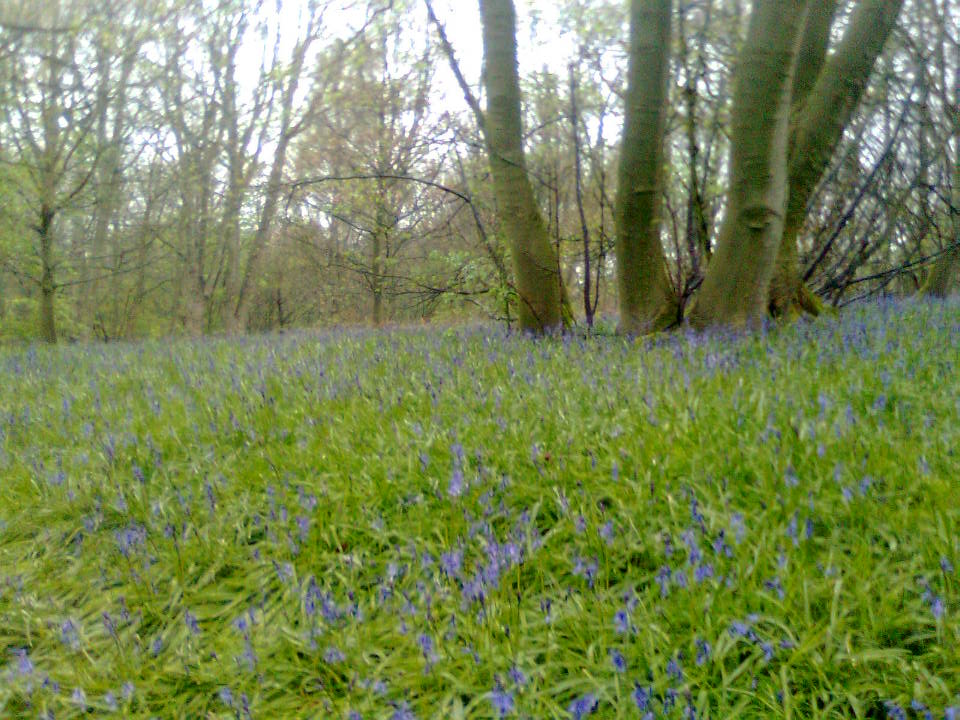
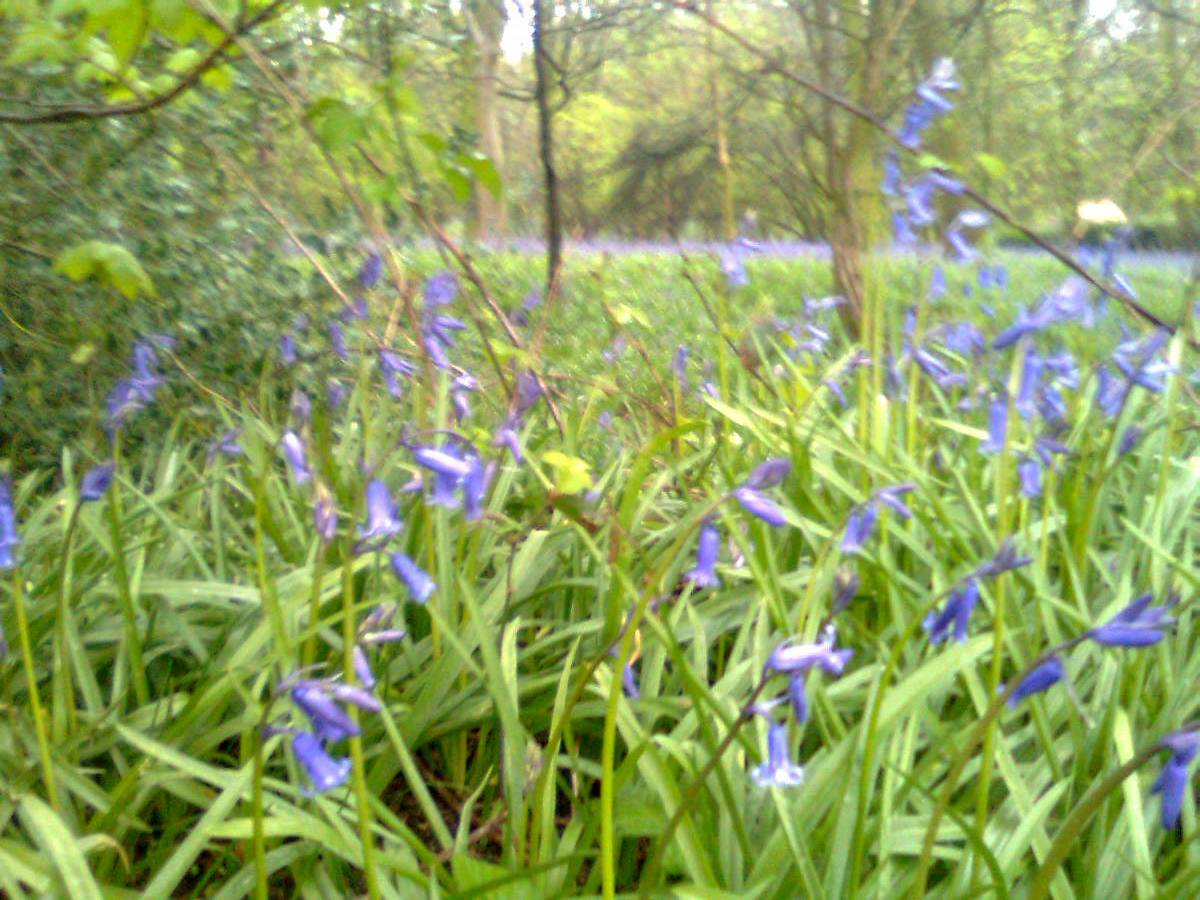
Bluebell woods at Ripley, North Yorkshire

I was ticked off this week by a Laroque friend in an email conversation.  I’d been waxing lyrical about the woods here in the UK which are starting to be carpeted in that rich blue which indicates that bluebells are in flower.  She pointed out, rightly, that she has a clump in her own garden.  I can’t deny it of course.  But I’m still delighted to have been in England long enough to catch this very special sight of bluebells flowering in such profusion that the whole woodland floor becomes an almost violet-blue which no camera ever seems able to capture accurately.

Bluebells near Ripley
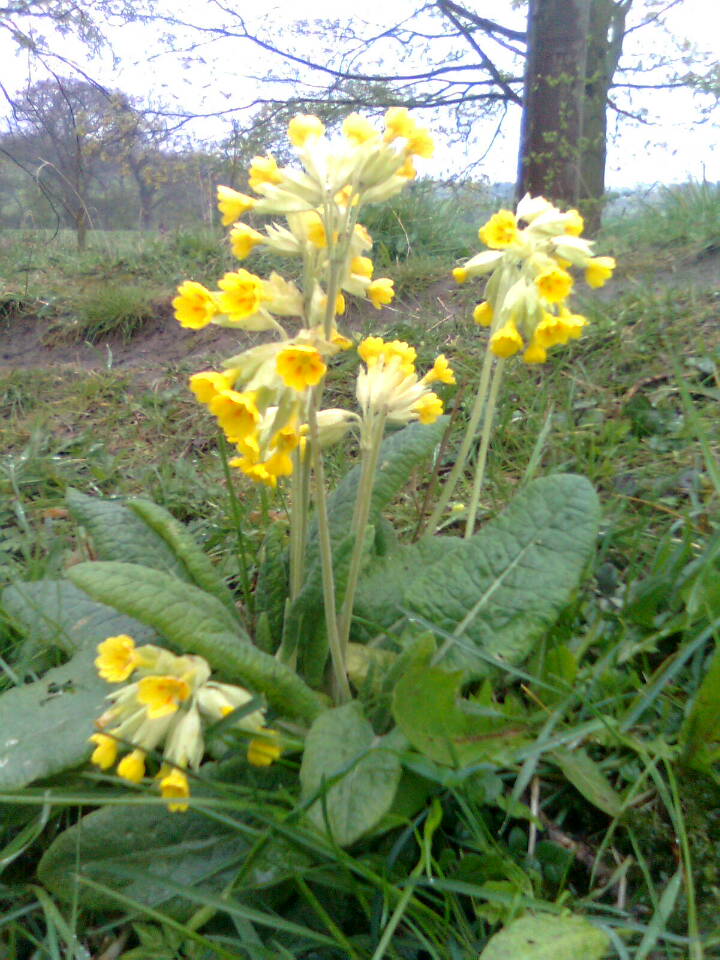
There was room for a few cowslips too

Their presence apparently is a sign of ancient woodland.  Adapted to this territory, the young shoots are good at piercing thick leaf mould before the deciduous leaves of the woodland canopy close in late spring.  They’re native to Atlantic Europe: apparently somewhere between 25 – 50 % of all common bluebells are found here in the UK.  That’s an astonishing statistic for our small island, since the bluebell can be found in so many other parts of Europe, and has been introduced to many parts of the United States as well.

It’s a shame it’s turned rainy and a bit cold.  We need the rain, and lots of it.  But there’s something very special about a walk in the woods at this time of year, with the mild sunshine penetrating through the newly-leaved branches to reveal the bluebells as they march unhindered as far as the eye can see.

An image sent to the BBC 'PM' programme last year during bluebell season

A country childhood

We went to Thirsk, our next nearest market town this week, to the cinema.  Nothing remarkable about that – to anyone but me.

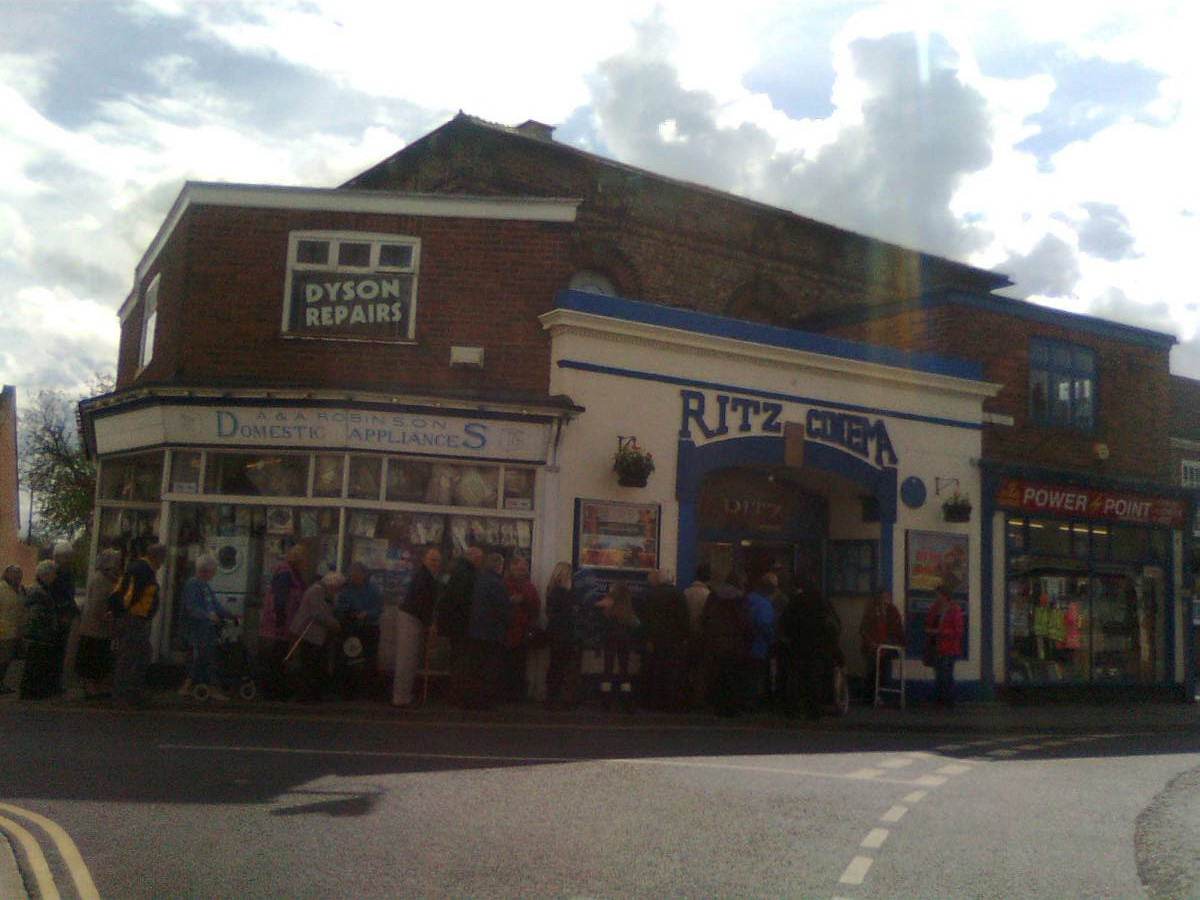
The Ritz: and the queues waiting to see the film

I last went to the Ritz almost exactly 60 years ago, my very first visit to this, or any other cinema. I’d gone with the whole school – about 40 of us – to see the newsreel showing the Queen’s coronation.  I remember queuing with all my classmates, quietly and slightly over-awed, outside this vast building and going up dark stairs to an even darker and cavernous auditorium.  I remember the excitement of seeing that screen, so large it filled our entire view, with its flickering black and white images of the Queen’s horse-drawn carriage processing with regiments of  bearskin-helmeted soldiers marching before her.  But I can’t remember how we got there or how we got back: yet it must have been quite an expedition from our village school in Sandhutton, some 2-3 miles away, normally connected to Thirsk only by a twice-weekly bus.

So it was quite a shock the other day to discover that the Ritz is far from palatial in size.  In these days of the multi-plex, it has room for only one screen.  It feels small, intimate and cosily shabby, much loved by its team of volunteers of a certain age.

As part of our day out, we simply had to visit Sandhutton, the village where I’d spent several years and begun my school career.  It looked much the same as I’d remembered it.  There was the endearingly small parish church (I remember cathedral-like proportions) at one end of the village green, the pub at the other: it’s like a stage set for the Archers.  Nowadays, the farm labourers who were our near neighbours seem thin on the ground.  We called in at the village shop and found it selling an eclectic collection of fine wines, decent cheeses and craft-bakery cakes rather than more workaday essentials.

And my school, originally outside the village, but now joined to it by a street of modern housing, has become a community hall.

The school at Sandhutton

Back in the early 1950’s, my mother was head of a two-teacher school, and we lived in the school house behind.  Now it’s a handsome family dwelling.  It always was, but it looks as though the privy is no longer at the bottom of the garden.  Nor is the school’s row of outdoor toilets still in use.

The school had two classes.  I was in the one for 5 – 8 year olds.  Our teacher was Miss Burnett, and a recently found photo confirms that she was  slender, white-haired and elderly.  The high point of the day for the little ones was when we gathered round the school wireless to listen to that day’s broadcast of ‘Listen with Mother’.  That same wireless broadcast ‘Music and Movement’ twice a week, and we pushed our desks to one side to prance around pretending to be storm-tossed trees, nymphs or dragons.

Sandhutton Board School, built 1892

My mother had the 9 – 15 year olds. Those who passed their 11+ could go off to Grammar School.  Few passed, and none went to the Grammar School in any case, as they were expected to leave school at 15 and get farm work.  There were days designated as holidays from school when the older children went potato-picking.

And in those post-war vitamin C starved days, we would have whole afternoons when the entire school would go rosehip-gathering for the syrup producers such as Delrosa. Expert pickers could aspire to a tin badge for their efforts, but we 5 year olds had no hope of this exciting prize and our work went unrewarded.

I wasn’t at Sandhutton school for very long.  My father was Polish, and like many of his countrymen had fled to Britain and joined the RAF during the war.  Unable to find a job locally afterwards, despite his degree and excellent English, he’d gone to London.   When he found work, he sent for us.  London became my home until I left school.

My father’s work turned into his life-long business.  My mother was able to return to her preferred option, teaching Classics in a Grammar School.  And I tried to keep my head above water in a large inner-city primary school with as many children in a single class as we’d had in the whole of Sandhutton school: oh, and to lose my northern accent pdq.

Daffodil time

On the road from Ripon to Harrogate

I had a very pressing reason for wanting to come back to England for a few weeks.  I couldn’t wait for April, much less May.  The March heat wave made me worry that already I might be too late: I needed to see daffodils.

Of course the French have daffodils in their gardens too. Well, some people do.  You can even find them, delicate and lemon-hued up in the woods.  But nothing to compare with our English exuberance.

Here, regiments of daffodils march down the edges of inner-city dual carriageways.  Swathes of them along the verges announce the entrance to almost every town.  Shopping centres have great tubs full.  Gardens, whether tiny gravelled spaces in front of town terraces, cottage style plots, or more extensive lawned affairs, all boast generous clumps of brilliant yellow trumpets swaying in the breeze.

From the top of the bus passing through Ripley

Nothing else makes me so aware that winter’s on the way out.  Not the blossom slowly unfurling on the trees, nor the spears of green thrusting through the soil and moss on every country walk, and in every garden.  Of course I love these too.  But for me, nothing but those bright assertive confident flowers can state quite so definitely – even defiantly – ‘Spring is here!’

The Old College, Ripon

On the path of Cathar shepherds

Montaillou

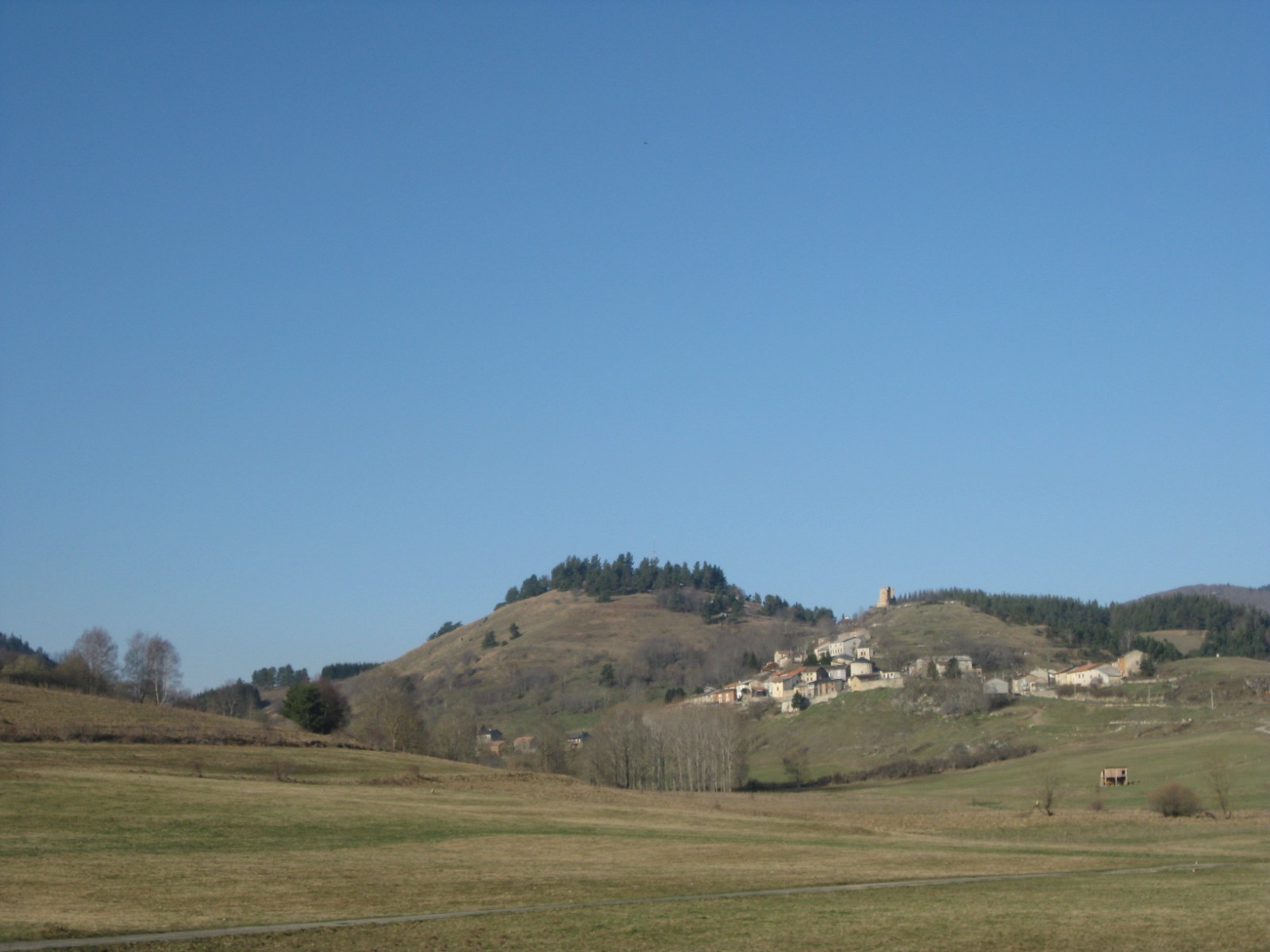
Yesterday we walked through Montaillou.  It might seem a tiny and unremarkable village now, but it’s the place that’s maybe done most to contribute to our understanding of turn-of-the-14th century village life in the Languedoc when religious strife between the Catholics and the Cathars was at its height.  This is a big subject: it deserves more than passing mention: a future blog maybe.

I’d read le Roy Ladurie’s book on Montaillou more than 30 years ago,and never dreamed that I might one day live in what the tourist offices are pleased to call ‘Cathar Country’.  So it was the shepherds of Montaillou I was thinking of as we began our Sunday walk.  They would come to the annual fair at Laroque d’Olmes, a good 40 km from where they lived.  They would drive their flocks long distances for good pasture, and as national boundaries meant little in these mountain zones, their fellow shepherds whom they met in their travels would sometimes be Spanish.

Blossom and snow

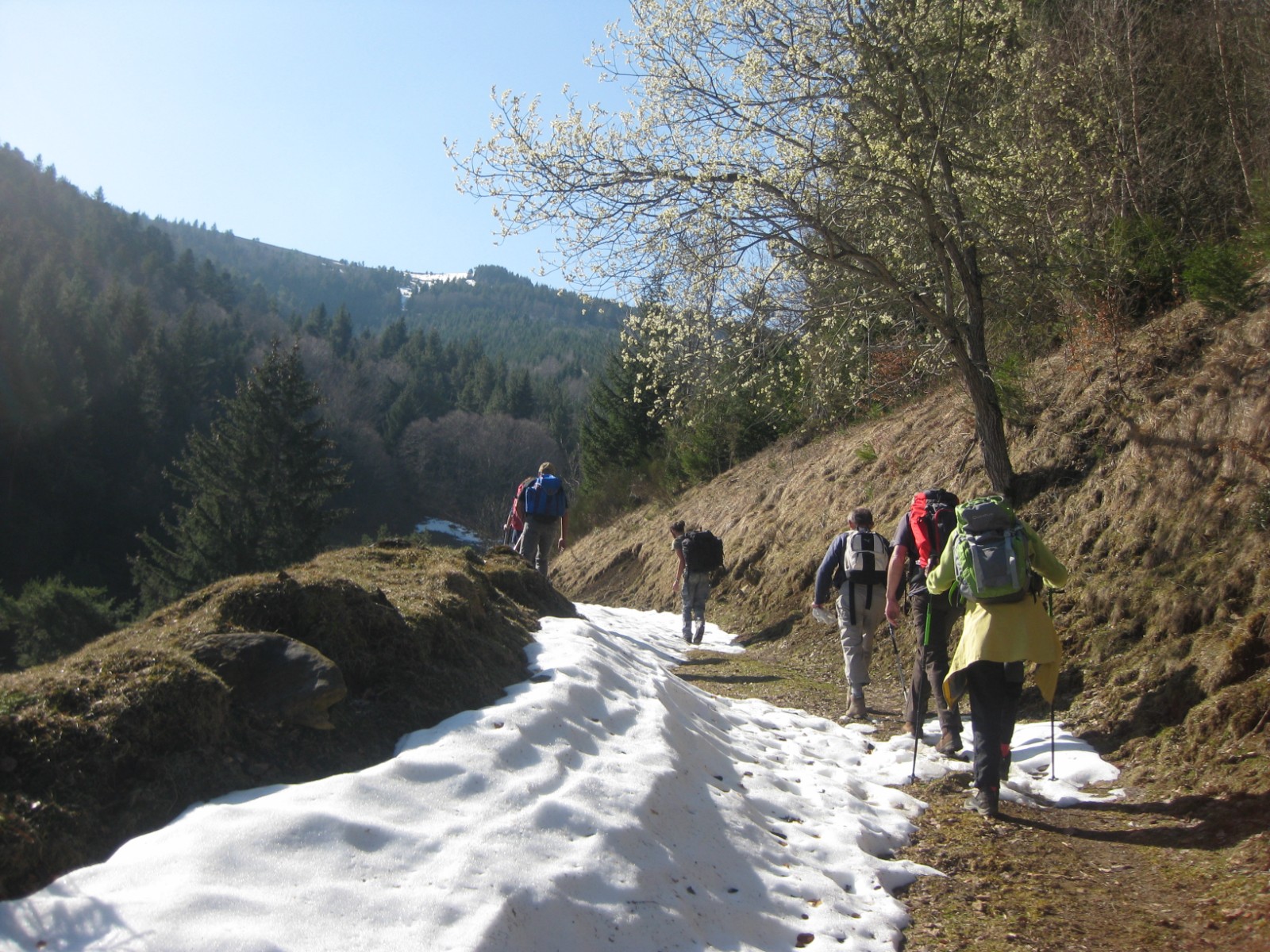
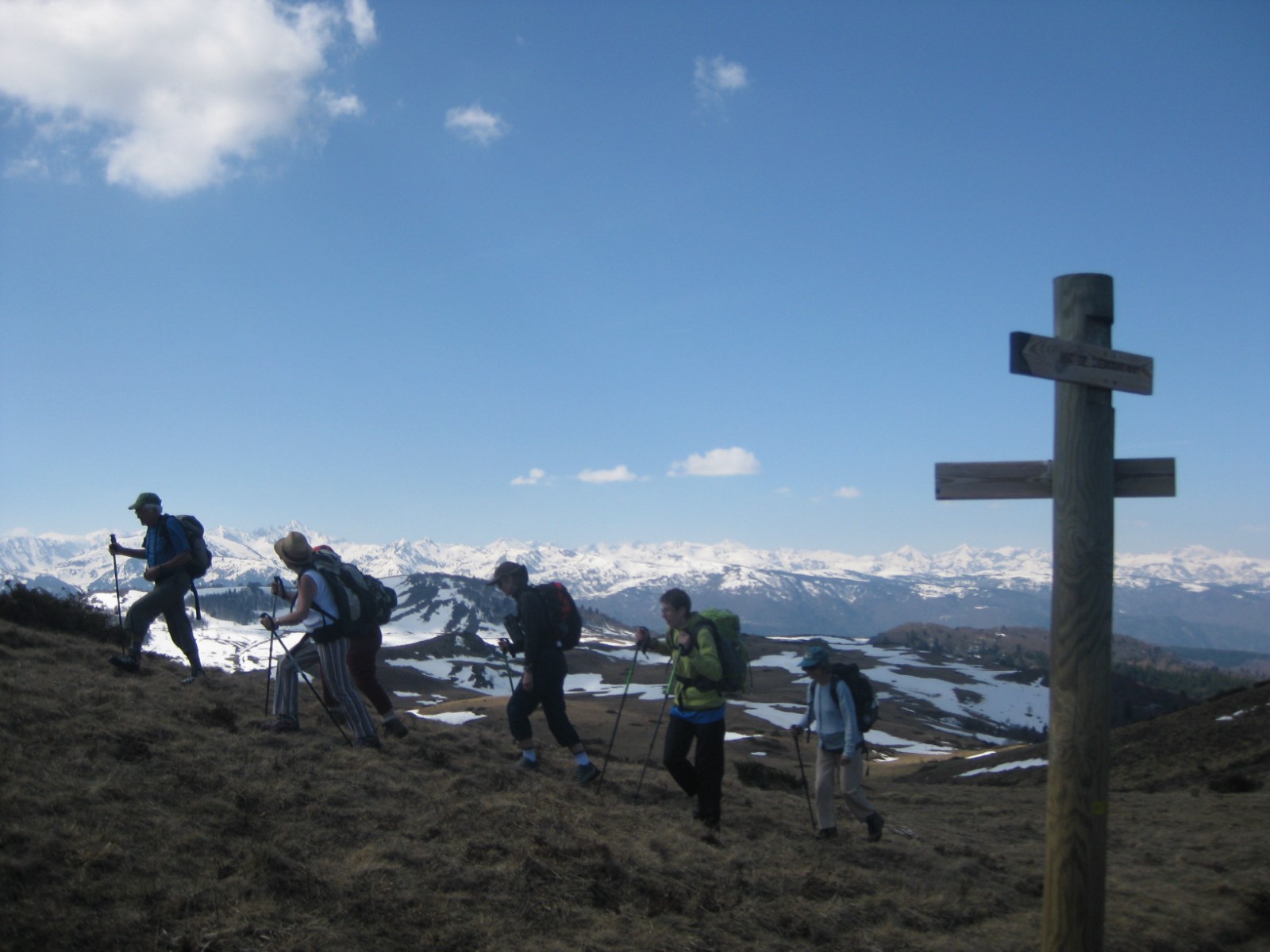
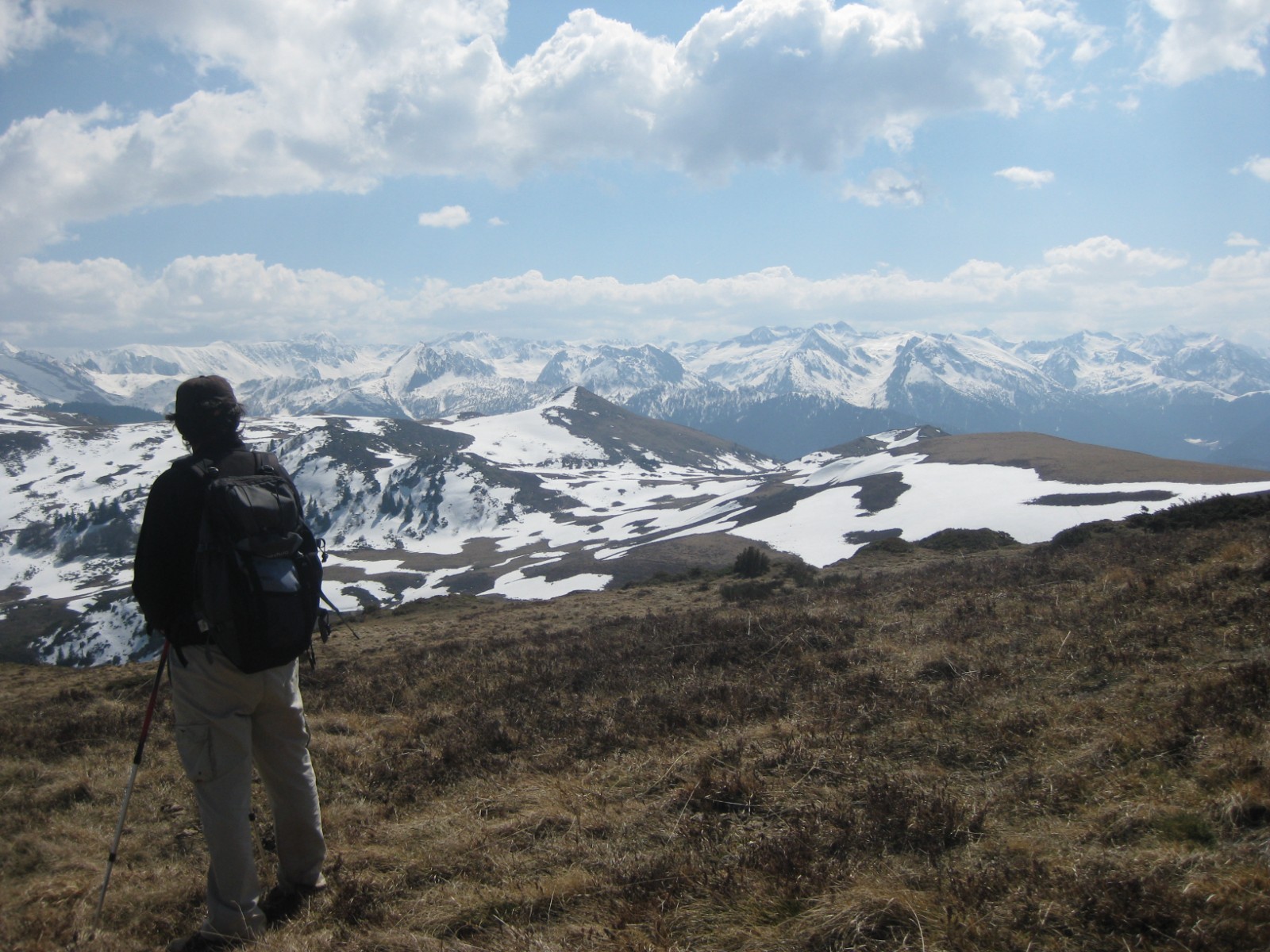
We too were climbing out of Montaillou.  The paths seemed unchanged through the centuries – short springy turf with early spring flowers pushing through. Pale pink and white blossoms busting open.  Narrow streams cutting deep channels through the turf.  Thick forest climbing the slopes.  Patches of snow made the going a bit tough from time to time.  It was warm and sunny, the slopes were steep and sometimes hard-going

Those peaks appear

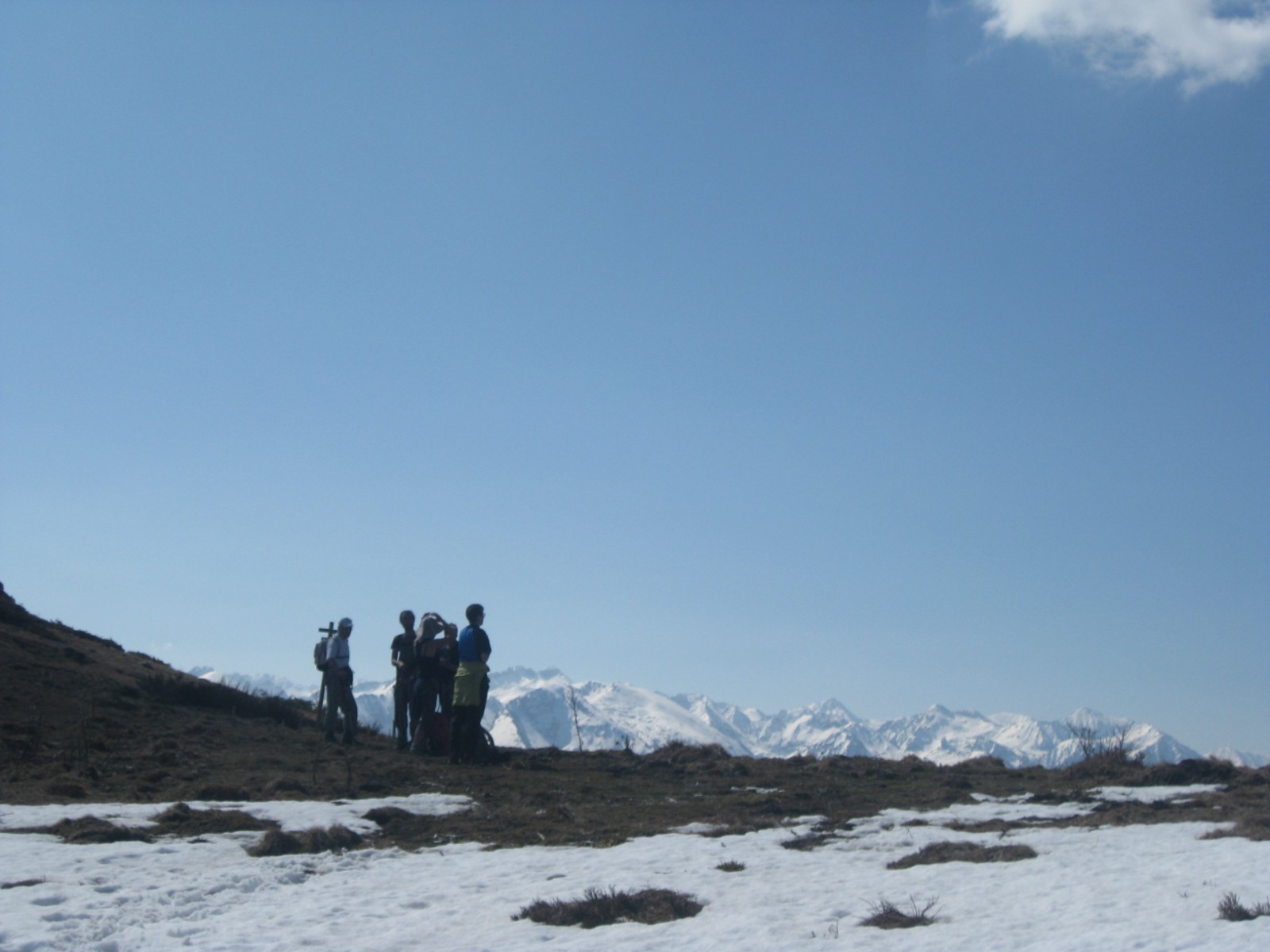
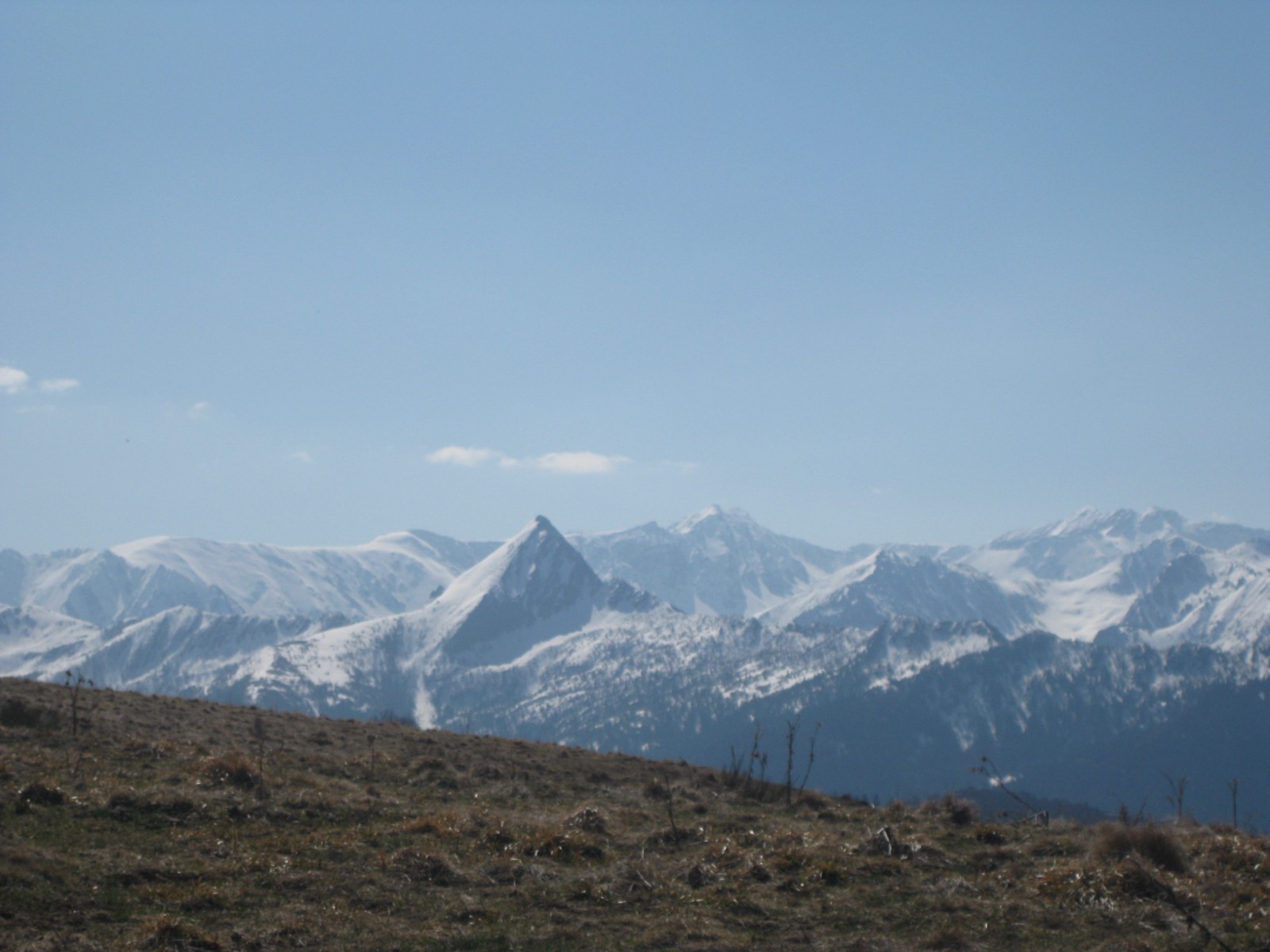
Then suddenly…suddenly, and so unexpectedly, we reached the top of our first climb.  Around us, to east, south and west were the snow-covered peaks of the Pyrenees, glistening white against the blue sky.  Above us, skylarks called and swooped.  Later, Danielle remarked that she felt as if at that moment she’d received a special gift: that perfect view, the clean clear air, the singing birds which were the only sounds.  She voiced, I think, what we all felt.
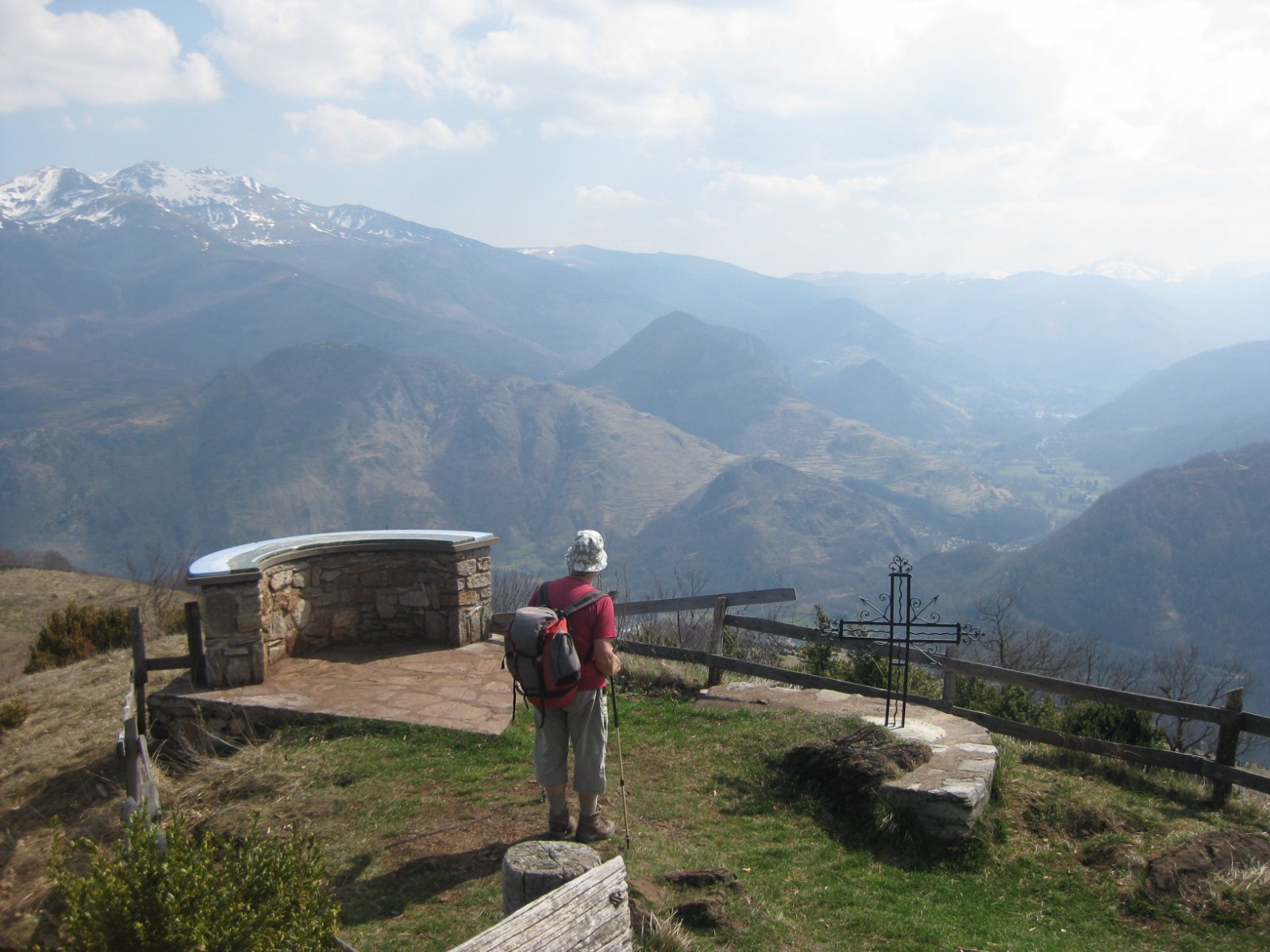
A few of those unending peaks
We keep walking
More distant peaks

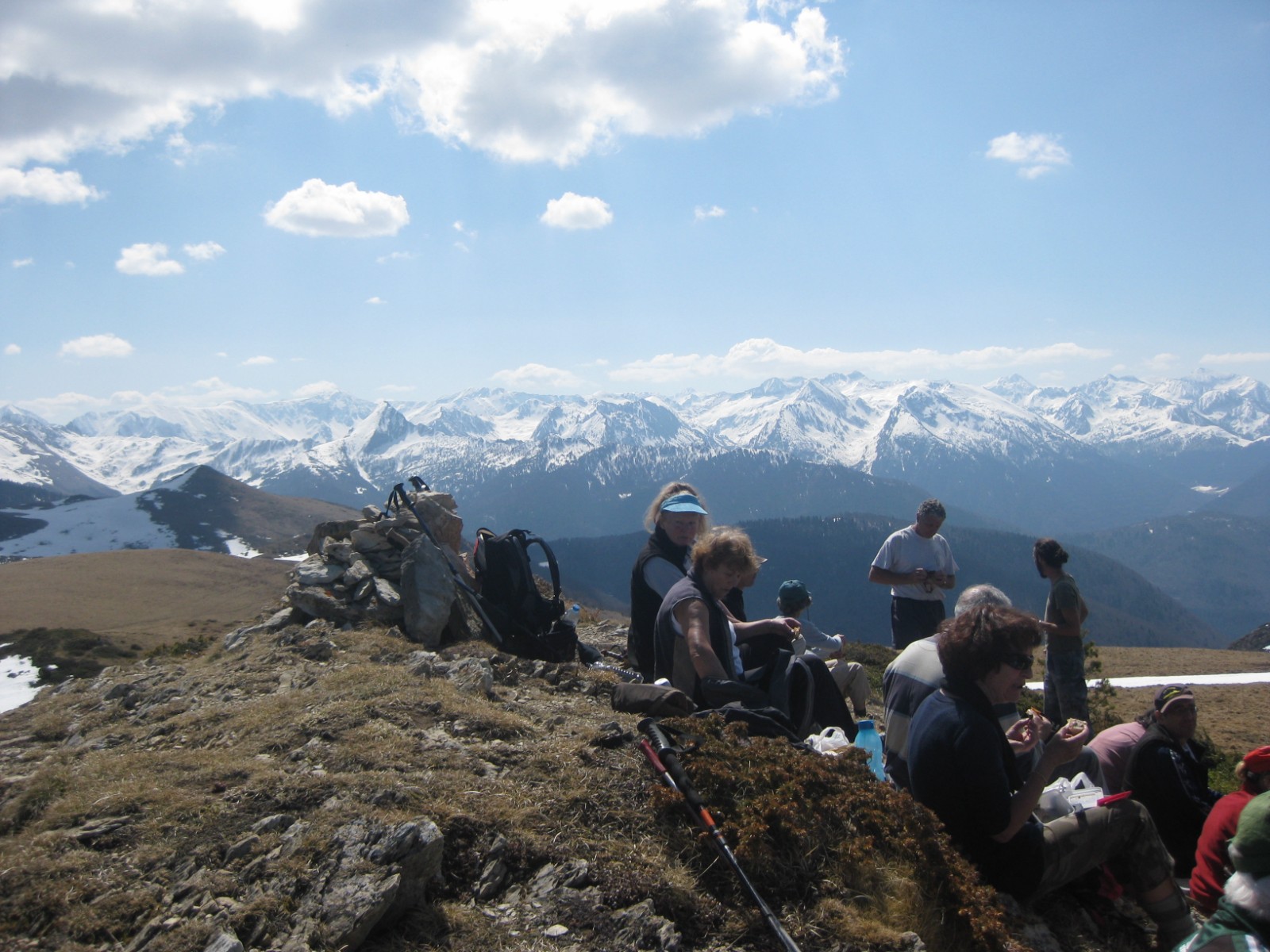
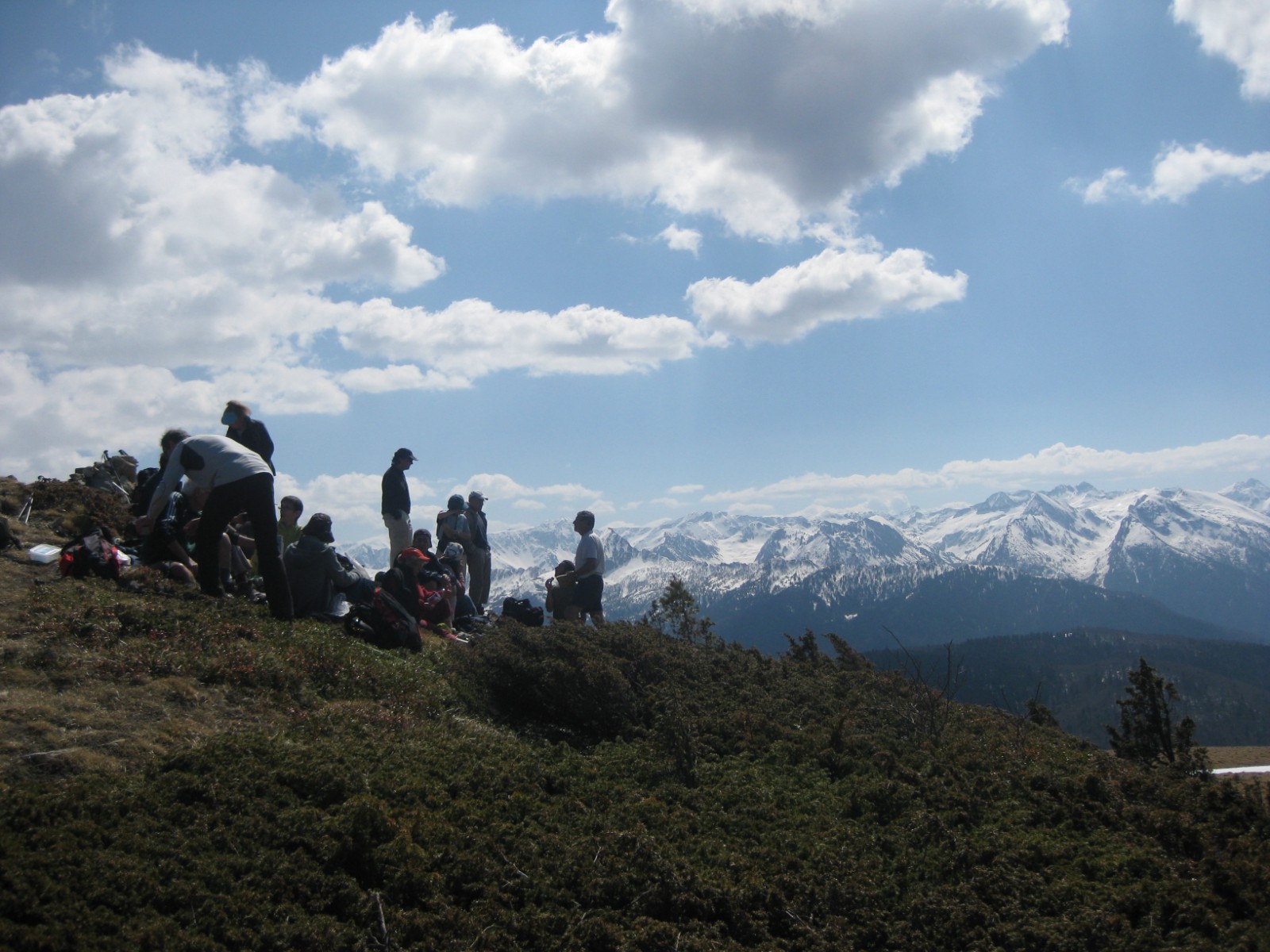
We hadn’t reached our highest point: we climbed onwards, always with those snow capped mountains at our side.  And then we were on top: handy rocks provided seats and shelves and we unwrapped and shared our lunches, lingering in the sun, drinking in the views for well over an hour.

Picnic spot

The afternoon walk begins

Soon after lunch, we turned our back on the snowy mountains.  As we faced the hotter, drier Pyrénées Orientales, the equally high peaks there weren’t covered in white.  Our path was downwards now, and soon we had to pass the ski station above Camurac.  Built long after those years when snow could be relied upon throughout the winter, it was an area of scalped earth, snow machines and all-but-redundant chair lifts.  My Montaillou shepherds certainly wouldn’t have recognised it.

The walk draws to a close

But then it was forested paths again, open pasture and spring flowers.  We finished the walk passing a collection of horses, Thelwell style ponies, and appropriately for Palm Sunday, a couple of friendly donkeys.  A good day.

Pilgrims for a day

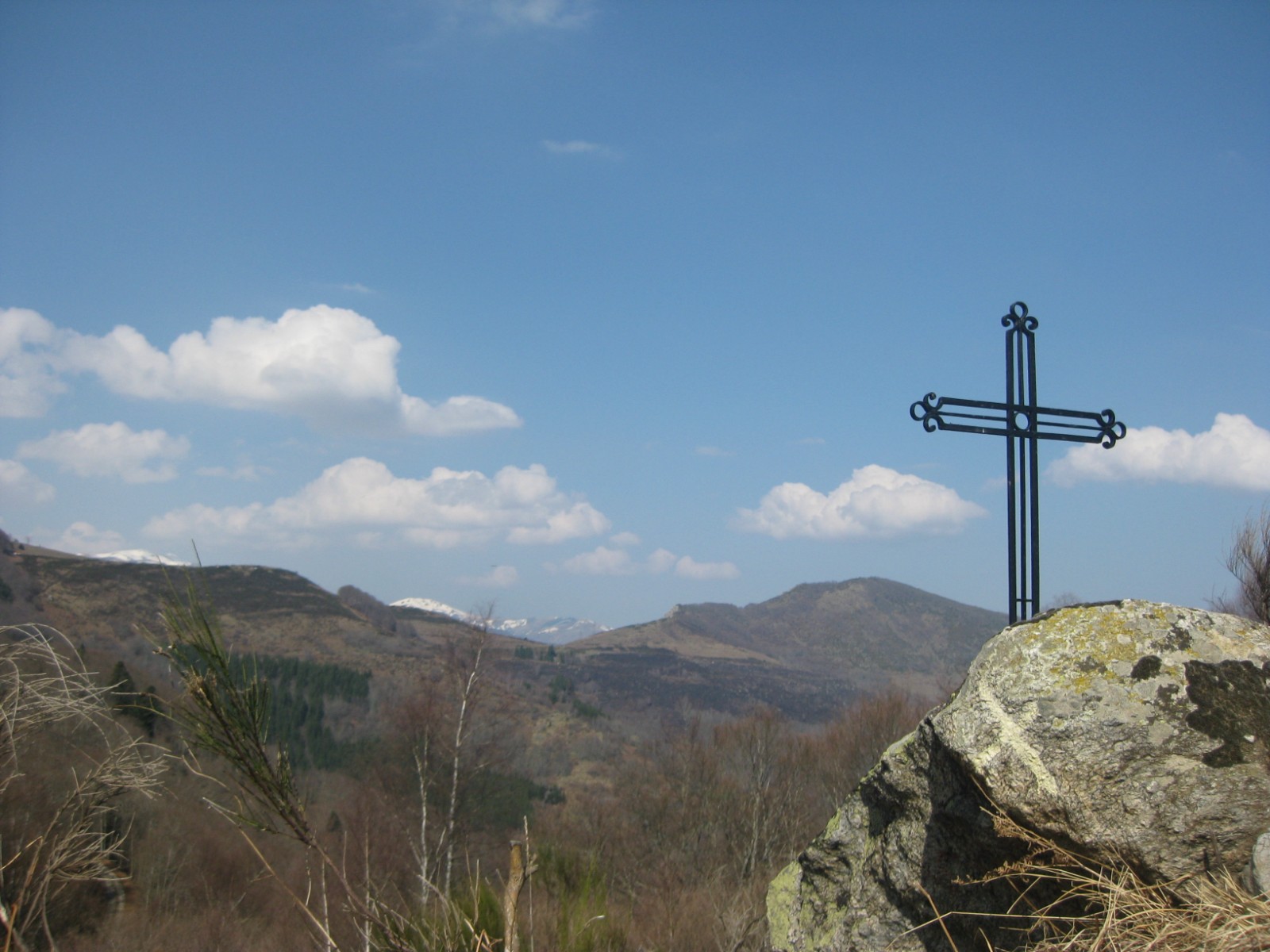
Such crosses - nearly all different - marked our route

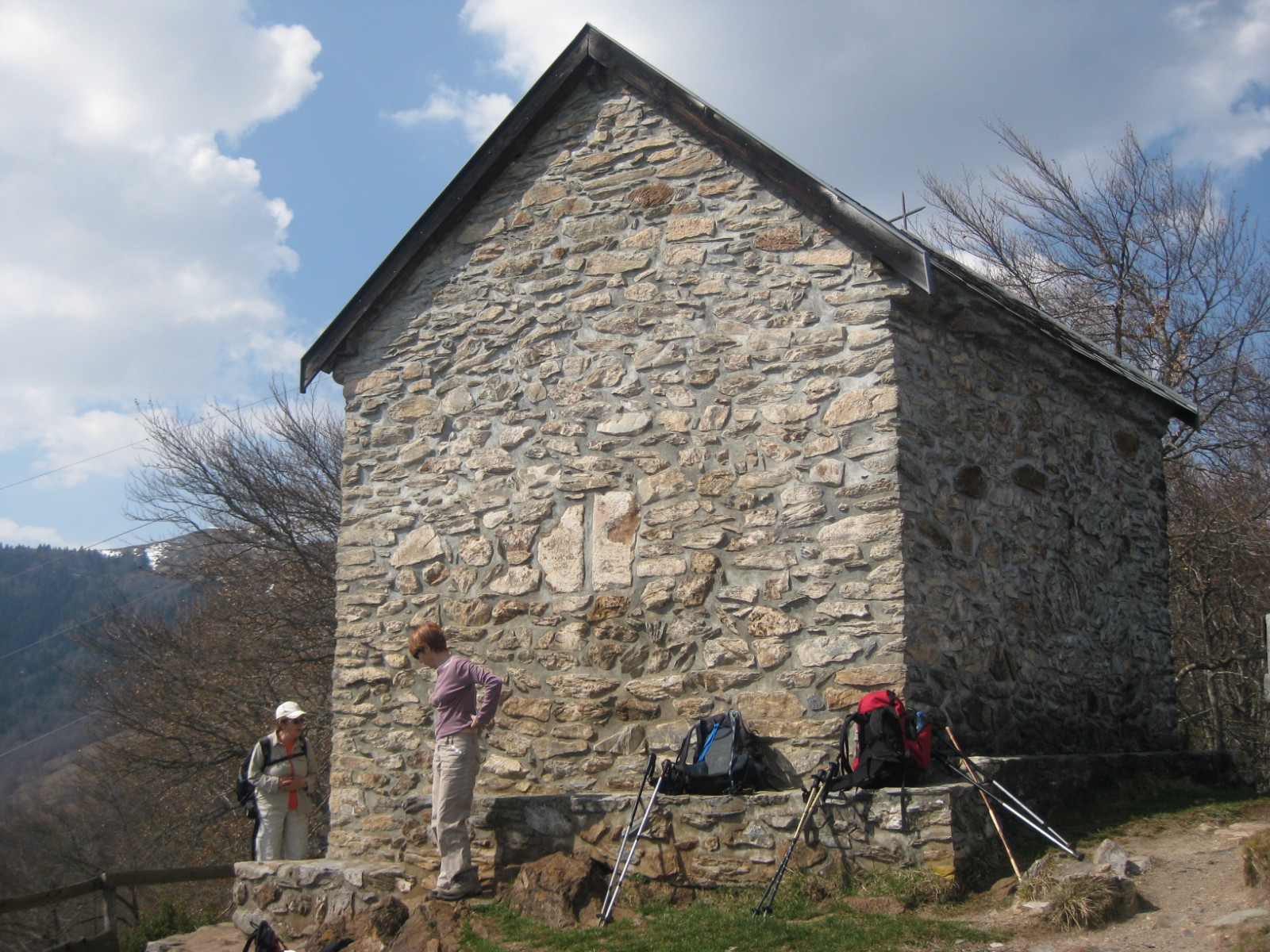
Our walk today was to the Chapelle de Saint Barthélemy, high in the Vallée d’Ax, beyond Tarascon.  We quickly realised we were on a pilgrimage route – our path was marked by decorative iron crosses.  But none of us knew why.  Now I know, and it’s a grisly story.

Back in 1854, cholera hit the area.  It’s hard to see how it spread in such a thinly populated region, where every settlement is surrounded by forest, fields and pasture.  Our drive up to the little village of Larnat, where we parked to begin our walk, was up and up a long single track road characterised by an unending series of hairpin bends – and no villages or farms on the way once we’d left the lower slopes.  The road to Larcat is up a similarly tortuous route. But despite this, cholera did arrive in the area, and when it struck, the people of Larcat didn’t hesitate to massacre the poor family responsible.  In time, the few survivors built a tiny chapel at the summit, dedicated to Saint Barthélemy, and promised an annual pilgrimage.  This chapel is a very simple windowless structure.  Some garden sheds are bigger.  It enjoys splendid views in every direction, and provided the perfect lunch-spot.

We arrive at the Chapelle de Saint Barthélemy
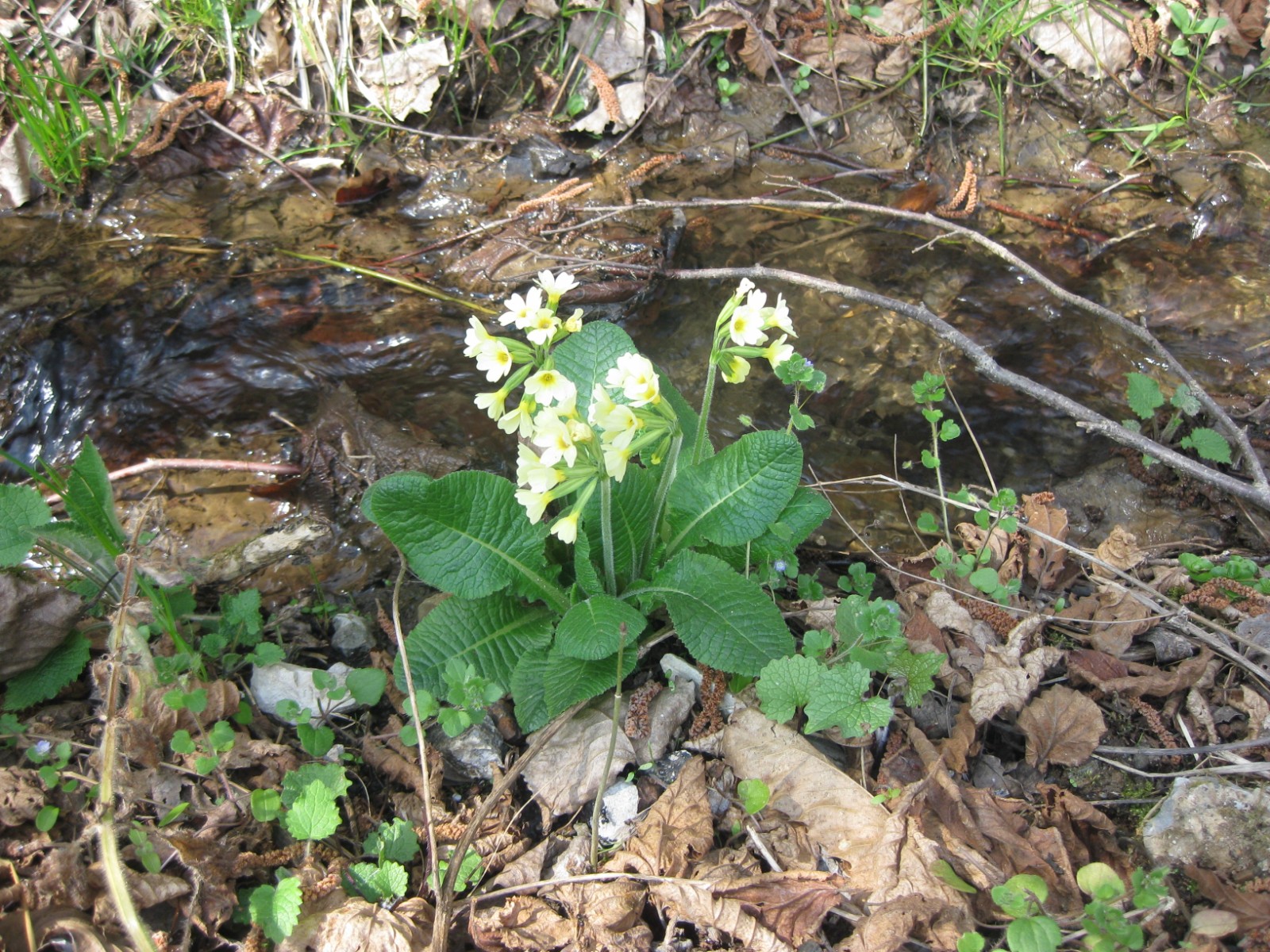
Cowslips en route

Ignorant of the bloody events that had caused the chapel to be built, we had a pretty easy feel-good walk.  The slope upwards was a gradual one, through forest tracks, emerging eventually onto an airy path commanding view of the mountains which surrounded us.  We had time to enjoy the emerging spring flowers –chiefly wood anemones and cowslips – and spotted several clumps of frogspawn.

Frogspawn en route

Did I know, Jean-Claude wondered, that when he was younger, it was quite common to see men staggering back from a country walk with hessian sacks stuffed not with the potatoes for which they were originally intended, but frogs destined for the market and then the dinner table?  I didn’t, and was glad to hear frogs are now protected and it’s illegal.  Apparently, though I’ve never seen them on the menu, frogs are still eaten.  Now however, they’re imported from China.

They certainly weren’t on offer today.  As usual, the day finished with tea and cake: much more welcome.

One of the views from the chapel

M et Mme Bibendum

Bibendum himself, or Michelin Man.

We want a job.  Not any old job.  We want a job that equips us with a Michelin book of maps, a decent lunch allowance, money for petrol, and a green felt tip pen.  We don’t even expect to be paid.

What we want to do is become Michelin Inspectors.  Not of Michelin starred restaurants – though perhaps they could send us to dine in one from time to time.  No, we want to inspect all their ‘green roads’, the ones they regard as especially scenic and maybe worth a detour.  And we want to make suggestions of our own,

The D6 for instance, from just outside Mirepoix to Castelnaudary.  How could that not be a green road?  The route twists and turns, echoing the contours of the wonderful rolling hillsides, with the most majestic of the peaks that the Pyrenees can offer as a distant backdrop.

The roads round Castelnaudary, all innocent of green route status

Or the D625, which brings you back from Castelnaudary another way.  Compared with those, some of the highways in the centre of France which are rated green are rather dull.  ‘Huh! Officially pretty?’ we snort, as we drive along the endless D 976 near Romorantin.

Really, they should give the job to us.  We know a route that’s worth a detour when we see it.  And we’re both pretty handy with a green felt tip pen.

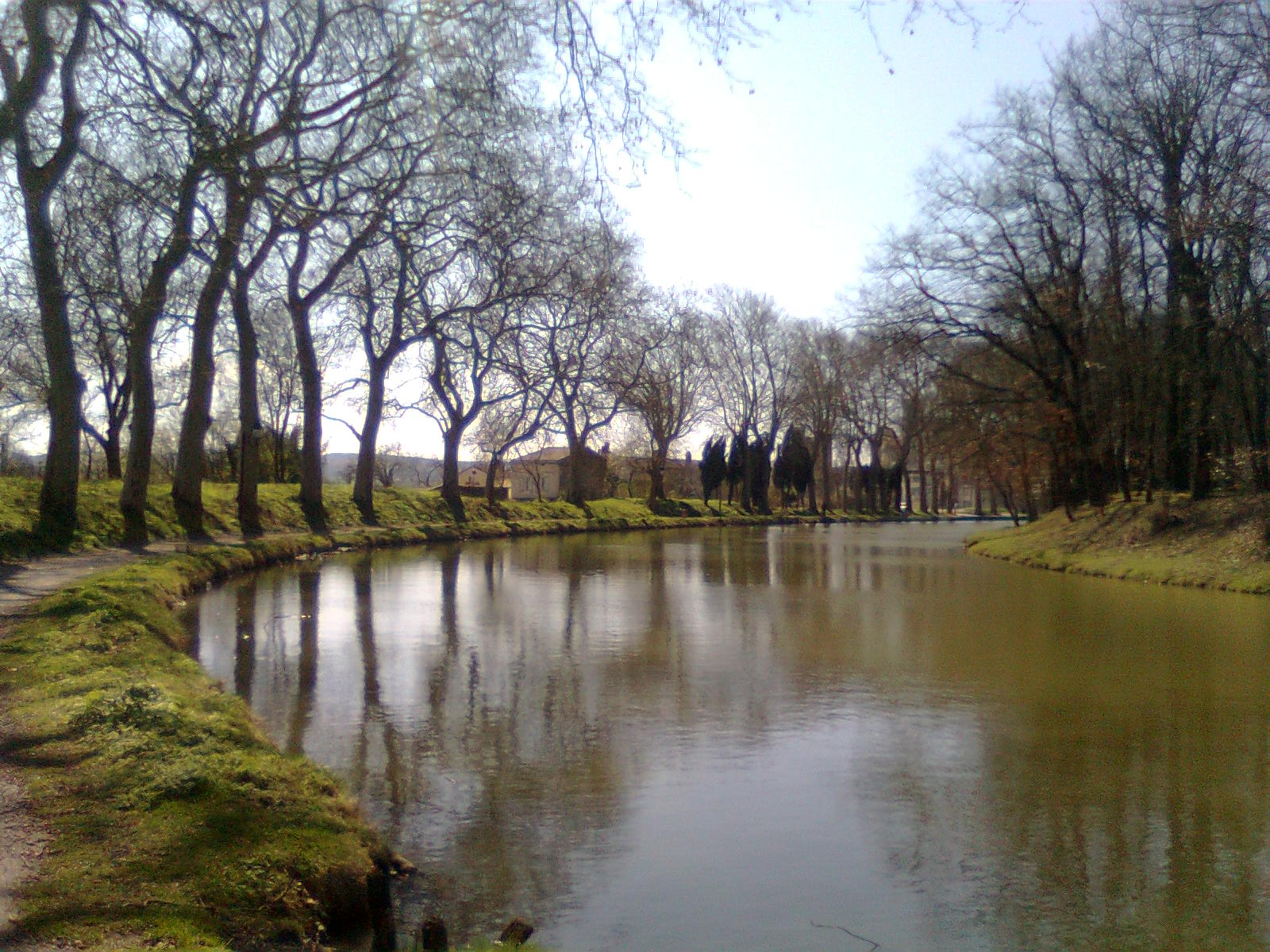
By the way, I forgot to take my camera with me on Friday when we drove along the above-mentioned D6 and the D625.  Please accept a view of the Canal du Midi in Castelnaudary itself in lieu.