Olympic Fever?

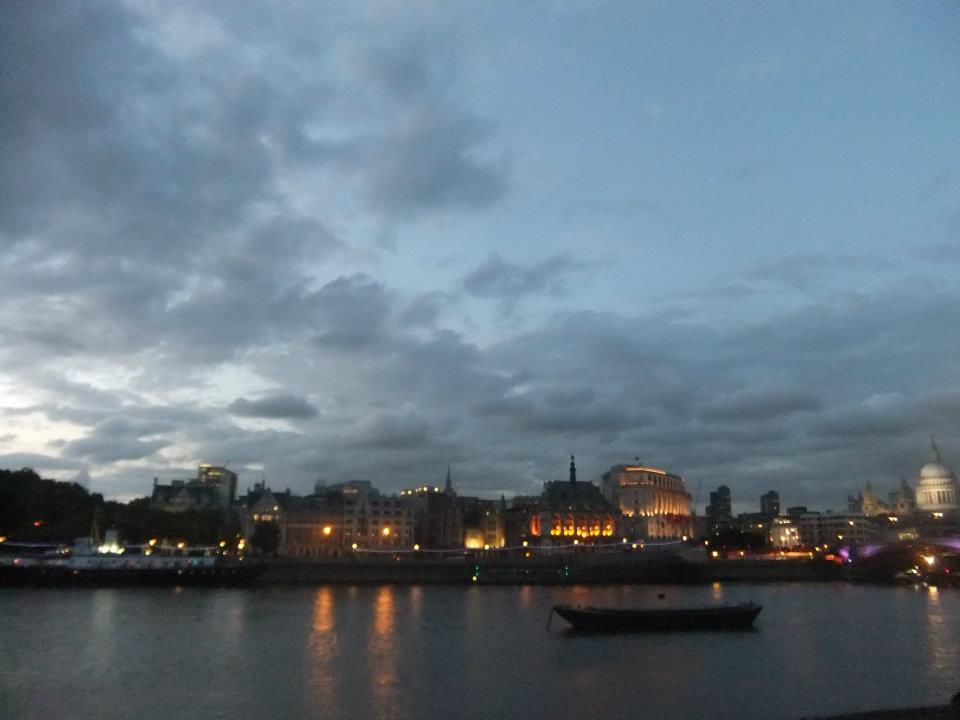
The Thames at sundown

A fortnight ago, our local paper, La Dépêche du Midi had ‘Londres, capitale du monde!’ as its banner headline.  The story was, of course, the Olympics.  We’re unaccustomed to this particular paper taking much notice of anything that occurs outside south-west France, but ‘les  JO’ (Jeux Olympiques) have been big news.

Not as much as in England though. When we arrived in the UK, we were unprepared for Olympic Fever.  Red white and blue banners and flags hang from houses.  Shops have Olympic-themed window displays, and if you want to buy mugs, some paper napkins, or fancy a new cushion, you’d better want them plastered with the Union Flag.

Across the Thames: a view of St. Paul’s Cathedral

Still, we enjoyed staying with Tom and Sarah in Olympic-happy London, and spent an evening round the South Bank area.  Eat near Borough Market and you’re sure of a tasty meal cooked with decent ingredients: the convivial and cheery atmosphere comes free.  Wander along from there to the Festival Hall, and you’ll be in the company of Olympic visitors from just about every country you can think of, as well as locals, just out to enjoy being alongside the Thames and all that this particular stretch of river offers.  Tate Modern and the Globe weren’t open for business at that time of the evening, but there’s still plenty to see.  The National Theatre has a slightly zany pop-up bar, the Propstore, furnished with props from popular productions.  We were aMAZEd by the book maze we found in the South Bank Centre, constructed from some 250,000 books, most of which we found we wanted to read, if we hadn’t already.
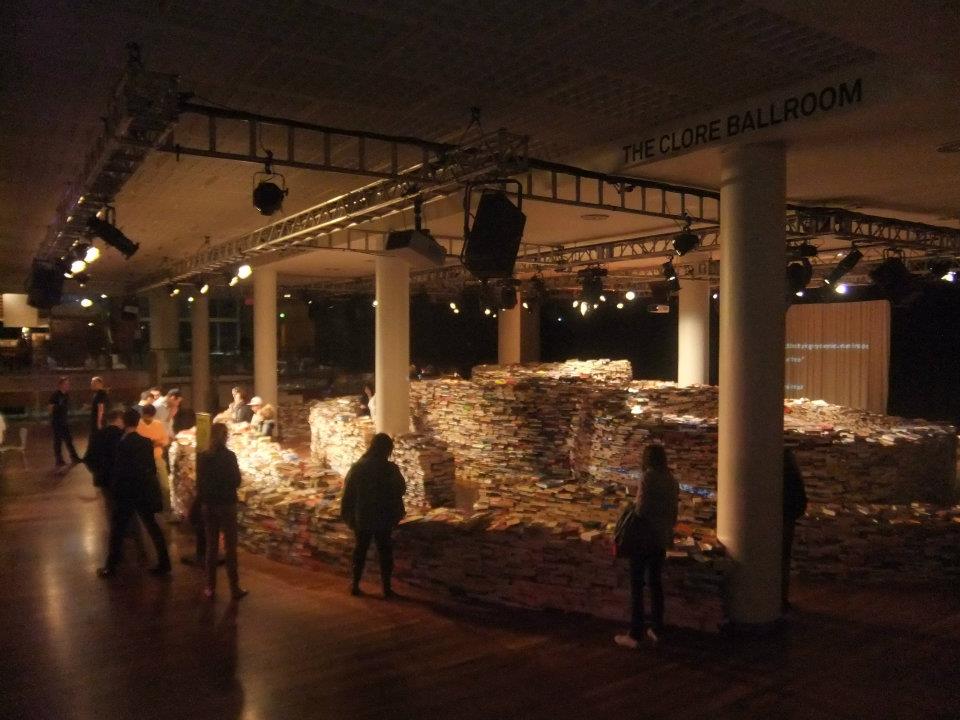
The aMAZEing maze of books

And as part of the Festival of Britain retrospective, there was a retro-funfair with fearsomely-clanking roller-coaster as well as all the rides of a traditional 50’s fair.

As night fell, we simply mooched along the Thames-side nightscape.  We felt lucky to be there and  lucky to have shared, if not as excited sports spectators, London’s Olympic August.

Nightfall over the London Eye

“Why, Sir, you find no man, at all intellectual, who is willing to leave London. No, Sir, when a man is tired of London, he is tired of life; for there is in London all that life can afford.”
— Samuel Johnson
Au cas où ….you find some mirabelles

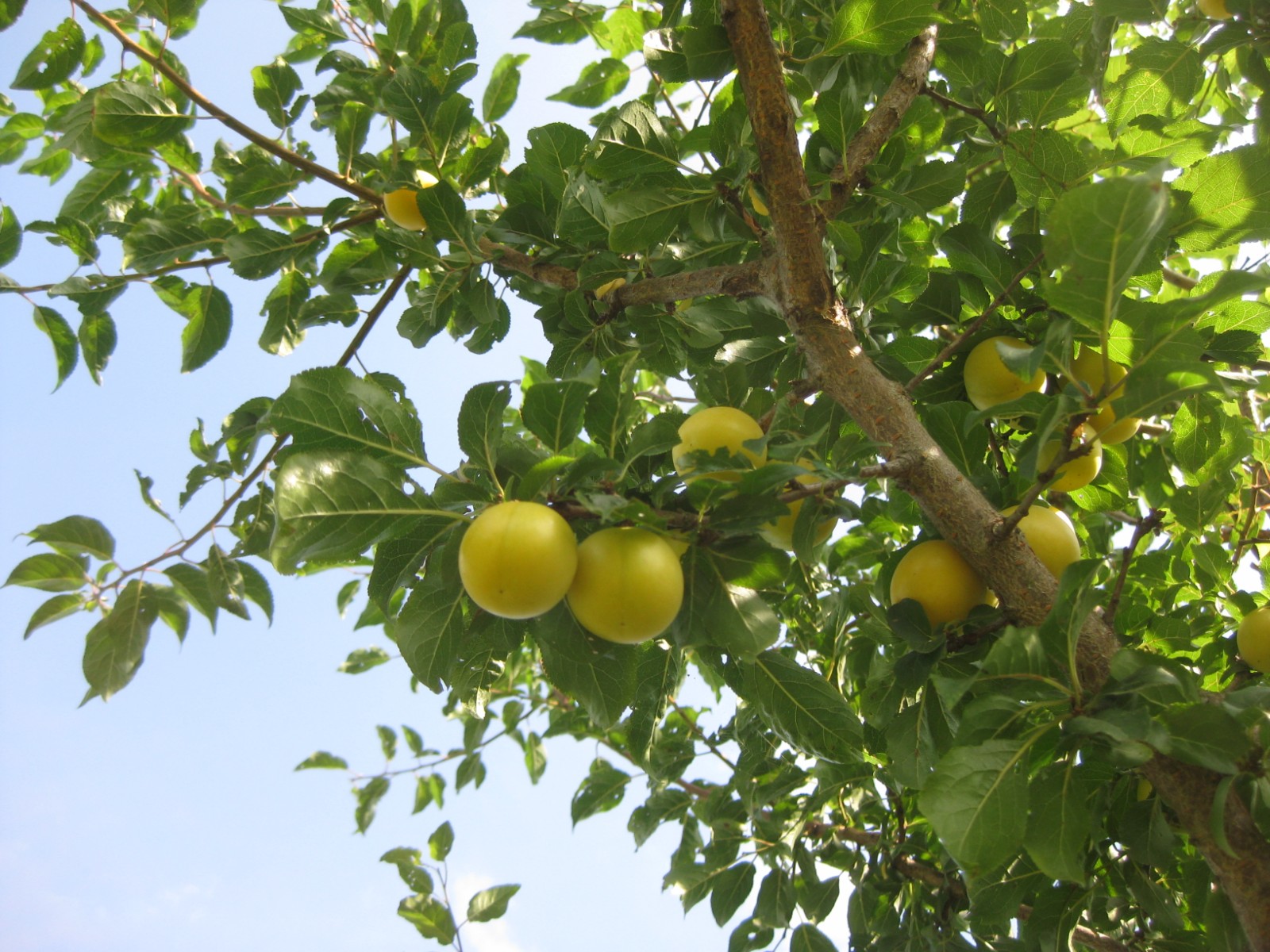
Mirabelles…there for the taking

I’ve written about the au cas où bag before: that little shopping bag or some such that you tuck into your pocket before any walk, au cas où you find something worth harvesting or talking home.  It was as well we had that bag yesterday.  Walking in the fields above Laroque, we found 2 mirabelle trees, their tiny juicy fruits just turning to golden ripeness.  We harvested what we could, and came home.

Then we remembered the trees we’d seen one previous year on the road between us and Léran.  We went home for another bag and hunted out those mirabelle trees lining the route.

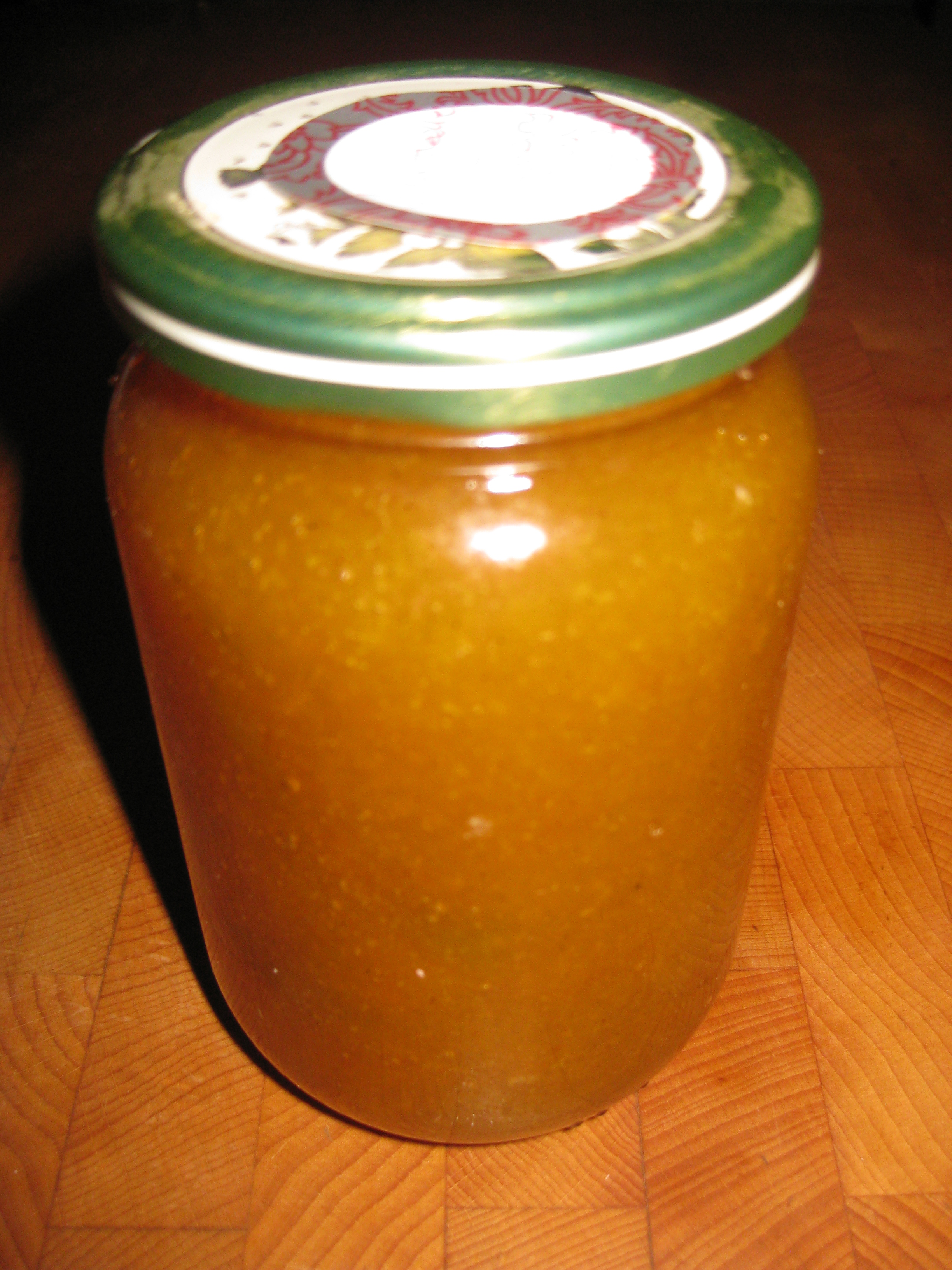
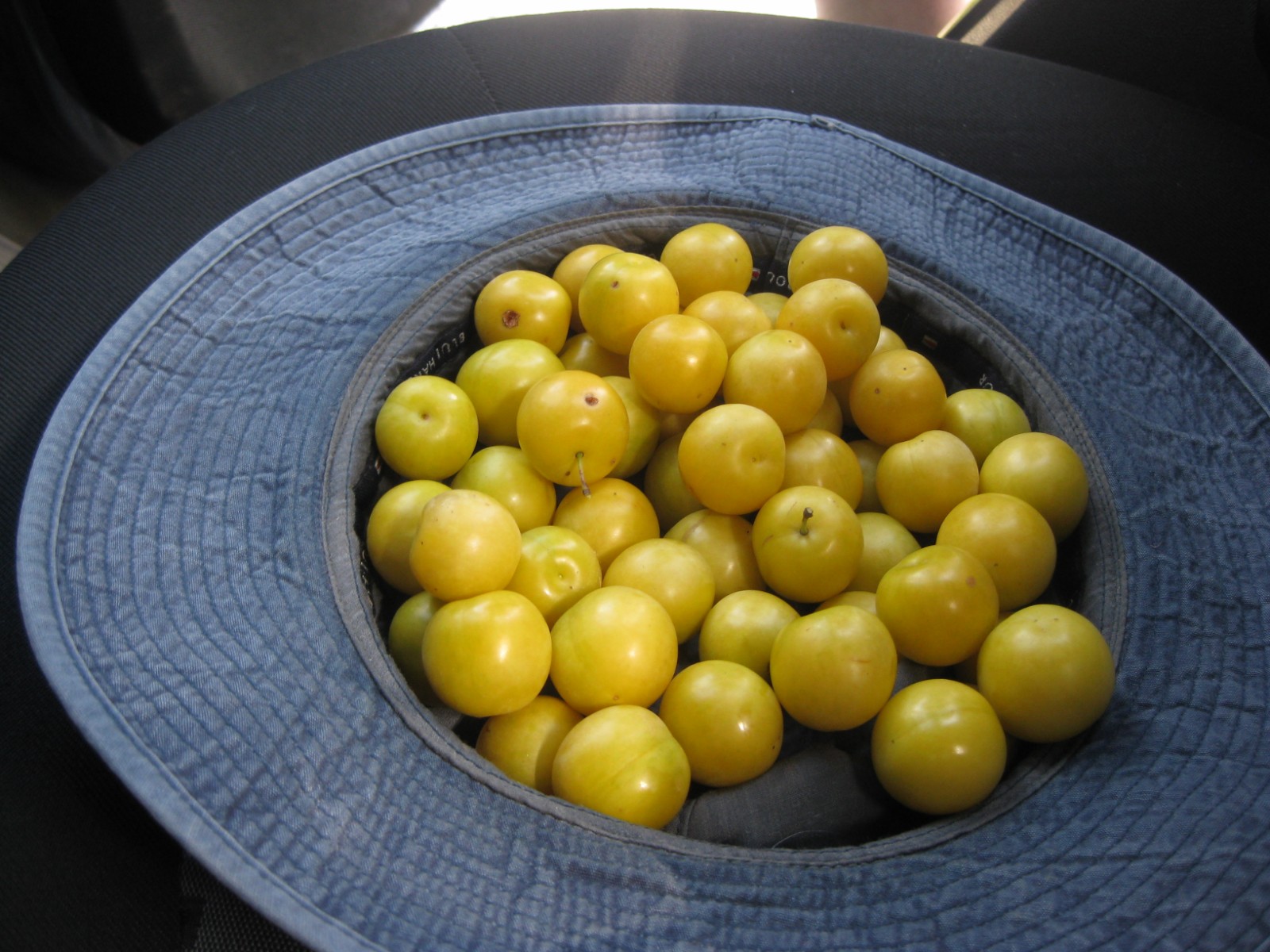
Hundreds of plums, thousands of plums, millions and billions and trillions of plums – to misquote that much loved picture book by Wanda Gagabout rather a lot of cats.  Reader, we picked them – some of them anyway.  We came home.  And this is what we made.  With a few of them, anyway.

Bag not big enough? Find a hat.

Mirabelle and Rosemary Jam

I kg mirabelles

400g high-pectin sugar, or add pectin powder according to pack instructions to granulated sugar.

4 rosemary sprigs, each approx 5 cm long

1/2 vanilla pod.

Directions:

  • Put mirabelles, sugar, rosemary and vanilla pod in a preserving pan and bring slowly to the boil, so the plums have chance to release their juices.
  • Simmer briskly for about 7 minutes.  It’s not necessary to bring it to jam setting temperature as the pectin will do its work, and it’s a fresh flavour you’re aiming for. But the jam won’t keep long outside the fridge.
  • Take from heat and remove rosemary sprigs and vanilla pod.  This is important.  If you leave the herb in, the jam will taste medicinal. The hint of rosemary should remain elusive, and just add that extra Mediterranean je ne sais quoi
  • This is the bad bit.  You could have halved the plums before you started and removed the stones then.  But I think it’s marginally easier to fish them out now.  Only marginally though.  The choice is yours……
  • Add vanilla seeds from the pod and mix.
  • Fill your ready-prepared jars.

Once upon a time, in Benac….. Le Cami des Encantats

Today we visited Benac, one of those  small and almost picture-postcard-pretty  villages outside Foix.  I think it’s unlikely that too many horny-handed sons and daughters of toil live there these days.  Too many freshly painted facades and cheery boxes of geraniums at the windows. Too many sleek and highly-polished cars.

But once upon a time it was a busy working community. For the last few years, every summer the villagers here and in nearby hamlets arrange carefully constructed and dressed figures into appropriate corners of both village and countryside.  These figures celebrate the way of life that persisted here – and throughout France – for centuries, and only died out some time after the First World War.  They call the paths you follow to hunt out all these scenes Le Cami des Encantats: Occitan for something like the Enchanted Pathways.  Come with me and take a look.

A Mediaeval picnic

Montségur in the morning mist

Saturday morning dawned damp and misty. This was fine by the 100 or so walkers who gathered bright and early in Lavelanet for the annual Marche du Tisserand. The walk, organised by the town’s Musée du Textile, celebrates the ancient ‘chemin pavé’ used by the cloth workers who lived in Montségur and walked this path to bring their produce down to Lavelanet to be sold. Saturday’s walk, the 27th, was for fun, and nobody would have had more than a light rucksack to carry. The full three hour trek (6 hours both ways of course), steep and stony at times, when laden with goods to sell one way and perhaps provisions for the household the other must have been a slightly different matter.

This time too, there were goodies at the top for the walkers as they finished their ascent. The mayor of Montségur was there with an aperitif for everyone, and we at Découverte de Terres Lointaines were there too, with a mediaeval picnic we’d been preparing .

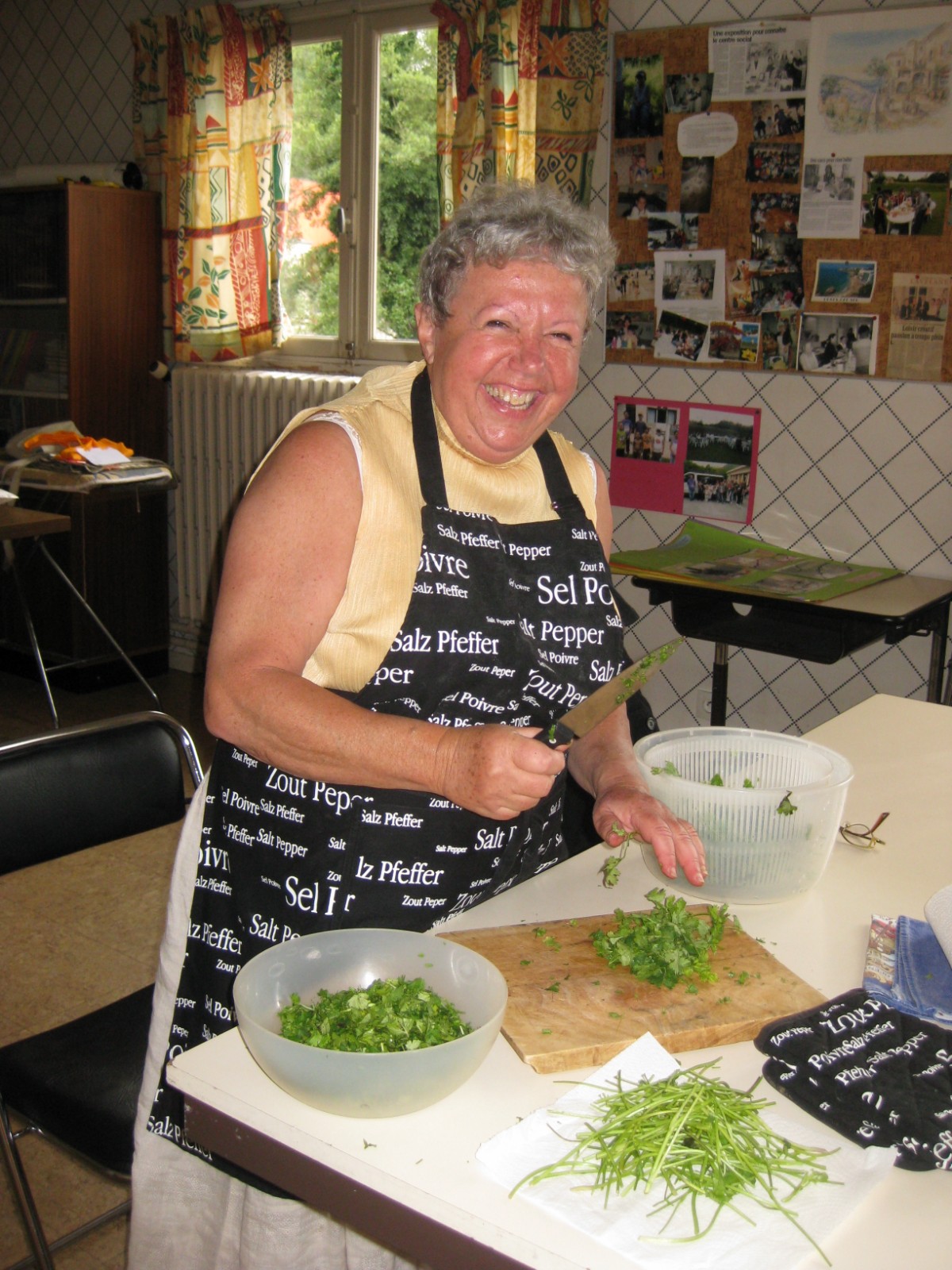
Who knew chopping coriander could be such fun?

The cooking took several days, but the research, with the help of the Museum at Montségur, took weeks of researching, testing, tasting, rejecting, trying again… Still, eating’s always fun

Though curious, the walkers were suspicious too. What would a mediaeval picnic be like? Heavy, probably, with mountains of flatulence-inducing beans. Tasteless too maybe.

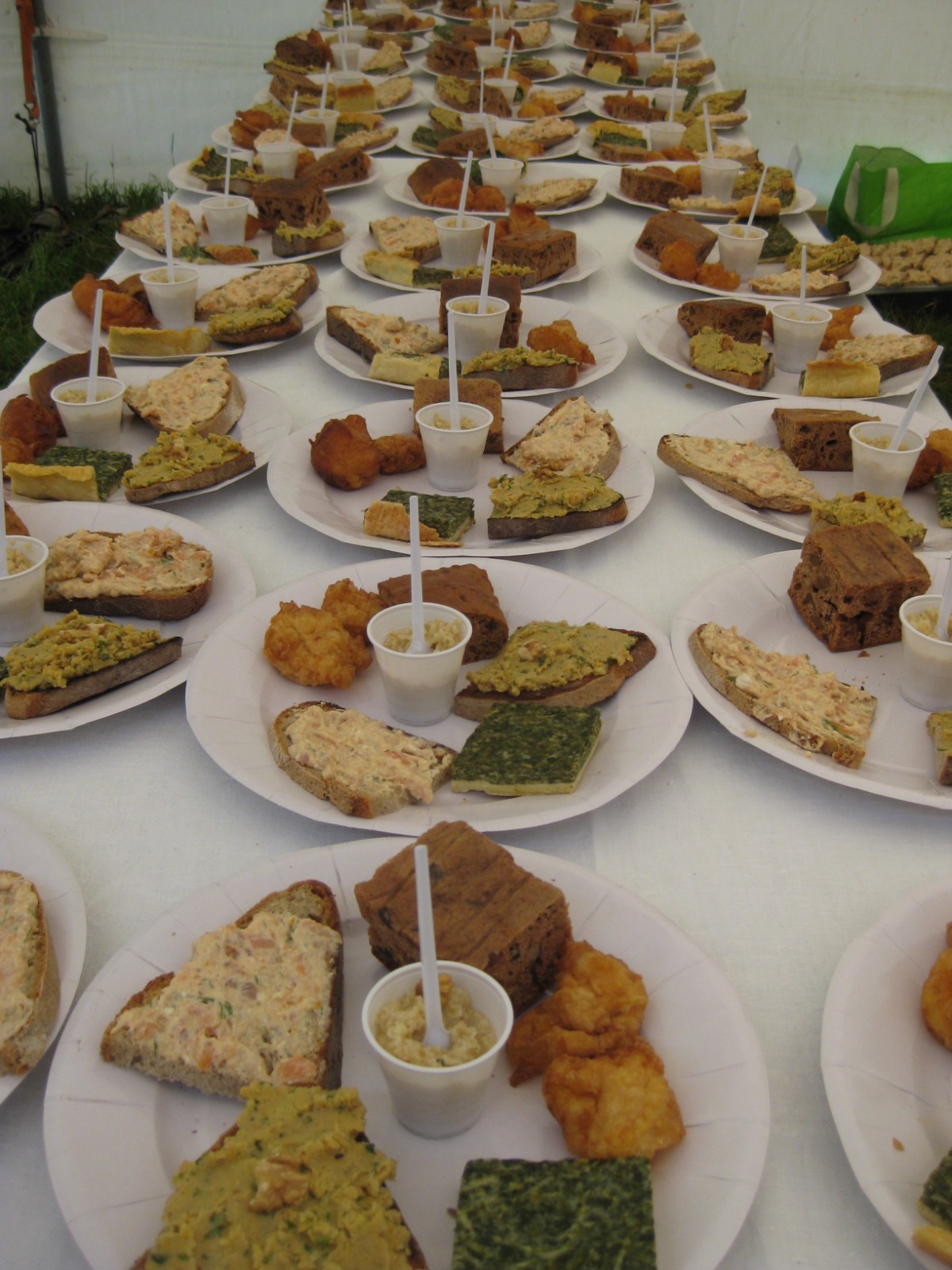
What a surprise then. Here’s the menu:

Spinach tart with lardons: we could have used nettles or any of a whole range of herbs, but settled on the more widely available vegetable option.

Poichichade: this herby chick pea paté, which we served on hunks of organic wholemeal bread, is a close cousin of hummus, but without the tahini. It went down well.

Broussade:  star of the show! A very tasty mix of smoked fish and curd cheeses. This really is one for anybody’s dinner table. Simple too. Recipe below.

Pets de nonne: basically deep fried choux pastry, puffy and light. Here’s the story. Back in the Middle Ages, the bishop of Tours was visiting the Abbey of Marmoutiers to bless a relic. Whilst preparing a meal in his honour, a novice let fly an unfortunate noise of the kind familiar to those of us who’ve eaten far too many beans. To cover her embarrassment, she busied herself dropping the choux paste she’d been making into some handy cooking oil so that it sizzled loudly. The pets de nonne were born.

Fromentée sucrée:  cracked wheat cooked with milk and honey. If you like rice pudding, you’d like this too

Gâteau de fruits secs:  a rich and heavily fruited pain d’epices style cake.

Just before the walkers arrived: The picnic on its thoroughly modern paper plates.

The congratulations when they came – and they came in quantity – were tinted with some astonishment:  ‘It was so good. We never expected it to be so tasty! Well done’.

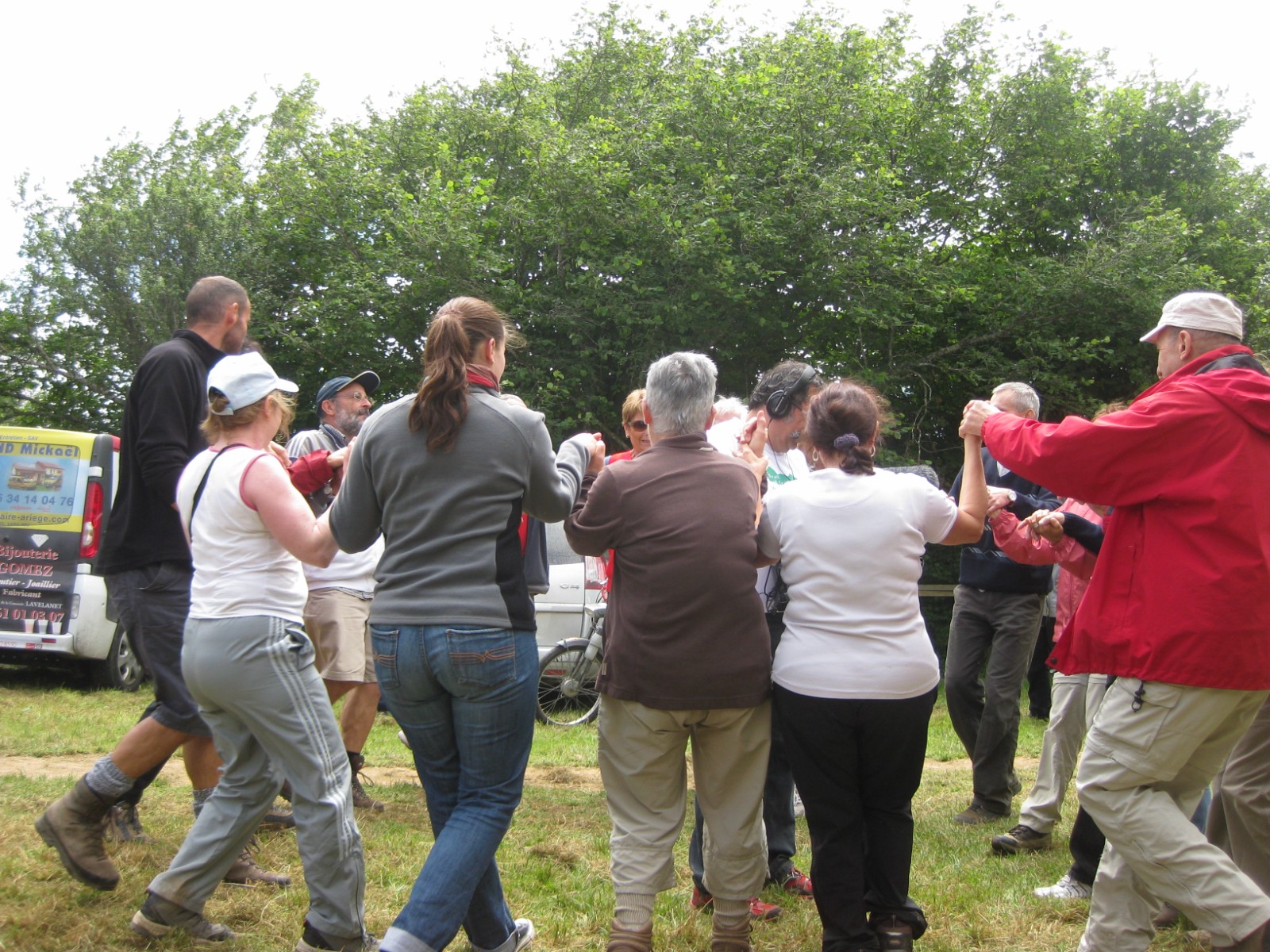
But after eating, drinking and lots of talking, it was time to dance. Zingazanga had been playing loudly throughout the meal, but they turned their attention to teaching us simple steps and dances from centuries ago. Even I with my two left feet joined in.

Let the dancing begin

Broussade

Ingredients
• A quantity of as many varieties of smoked fish as you can decently lay your hands on: we used smoked salmon, herring and haddock.
• A more-or less equal quantity of brousse. This is a curd cheese made from the milk of sheep, goats or cows. A mixture would be ideal, and failing that, any soft curd cheese.

Broussade in the making

• Paprika
• Chopped dill
• Seasoning.

Process half the fish coarsely, and finely chop the rest. Mix with the other ingredients. That’s all. Enjoy with some good bread and a probably thoroughly un-mediaeval green salad.

A long day: Team UK (Laroque branch) support the Tour de France

The Tour de France 2012 hit Laroque on the Limoux – Foix stage on Sunday 15th July. It was a long day…. and that was just for the supporters.

Thanks Sue, thanks Tom for the use of all your photos.

The Tour de France: a dilemma

La Boulangerie Fonquernie at Laroque prepares for the arrival of the Tour de France

We have a few of the family here staying with us.  They claim that they want to see us.  They’ve mentioned walking in and near the mountains.  They certainly want good food and wine – lots of it – whether here at home or in one of the restaurants in the patch.

Really though, they’ve chosen this weekend with some care.  It’s the one when the Tour de France whizzes past our house.

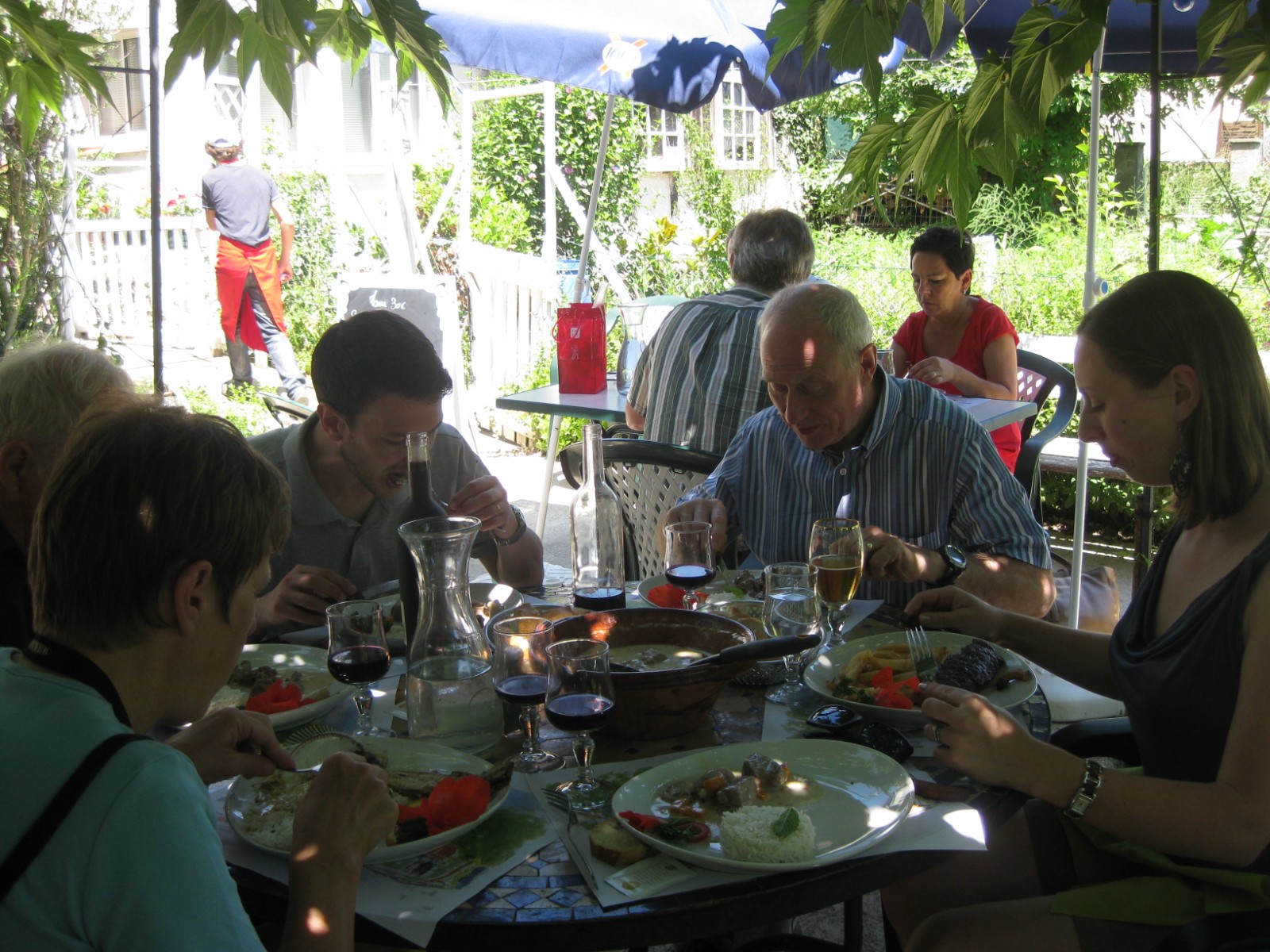
Today then has been a day of careful research in advance of Sunday’s ‘fly past’.  There was a planning meeting at a nearby restaurant, ‘La Maison’, over copious and varied hors d’oeuvres, blanquette d’agneau and bavarois de framboises to decide what we should choose as our vantage point for the action.

We’ll have the planning meeting after we’ve got outside this little lot

Then there was the walk.  This followed the Voie Verte between us and la Bastide sur l’Hers, and closely hugs the route the cyclists will take; and the ridge path between la Bastide and home, which peers down over the same road.  Where to choose to watch?

We’d thought of the land occupied by the old station.  A film crew has moved in for the duration.  We considered looking up towards the race from the old railway line itself.  Too far away.

And the ridge, which we’d thought the perfect answer, turns out not to be.  Certainly we could see many hundreds of metres of road at once, but at a distance that means that we’d be doing no better than sitting at home in front of the TV.

We’ve decided against watching from here.

In the end, we’ll be staying put.  We want to see the riders close up, smell the sweat, and absorb the atmosphere.  There are still decisions to be made.  Upstairs in one of the bedrooms?  If so, which one?  Downstairs on the street, where we’ll be nearer still?

Shall we ham it up and decorate the house in Union flags, and hang banners reading ‘Go Wiggins’ out of the window?  So many decisions, so little time.

The painful death of a door

The good life? Not with all that DIY to do

You probably thought we’d finished with all that house renovation stuff.  Perhaps you imagine us out there in our fully finished yard, sipping a chilled white wine as we wonder how to fill the long hours between lunch and dinner.  It’s not quite like that.

The bathroom renovation involves tearing down heavy, impossibly unbreakable layers of concrete which some ham-fisted type many years ago slapped thickly onto every surface, floor to ceiling.  It certainly held the tiling in place, as well as fixing irrevocably all the ancient plumbing.  It has to go, though two powerful drills have already given up on the task.  When we finally manage it – and we almost have – it’ll replaced by some decent insulation, a new surface and tiling.  But it’s so frustrating, that any displacement activity will distract us.

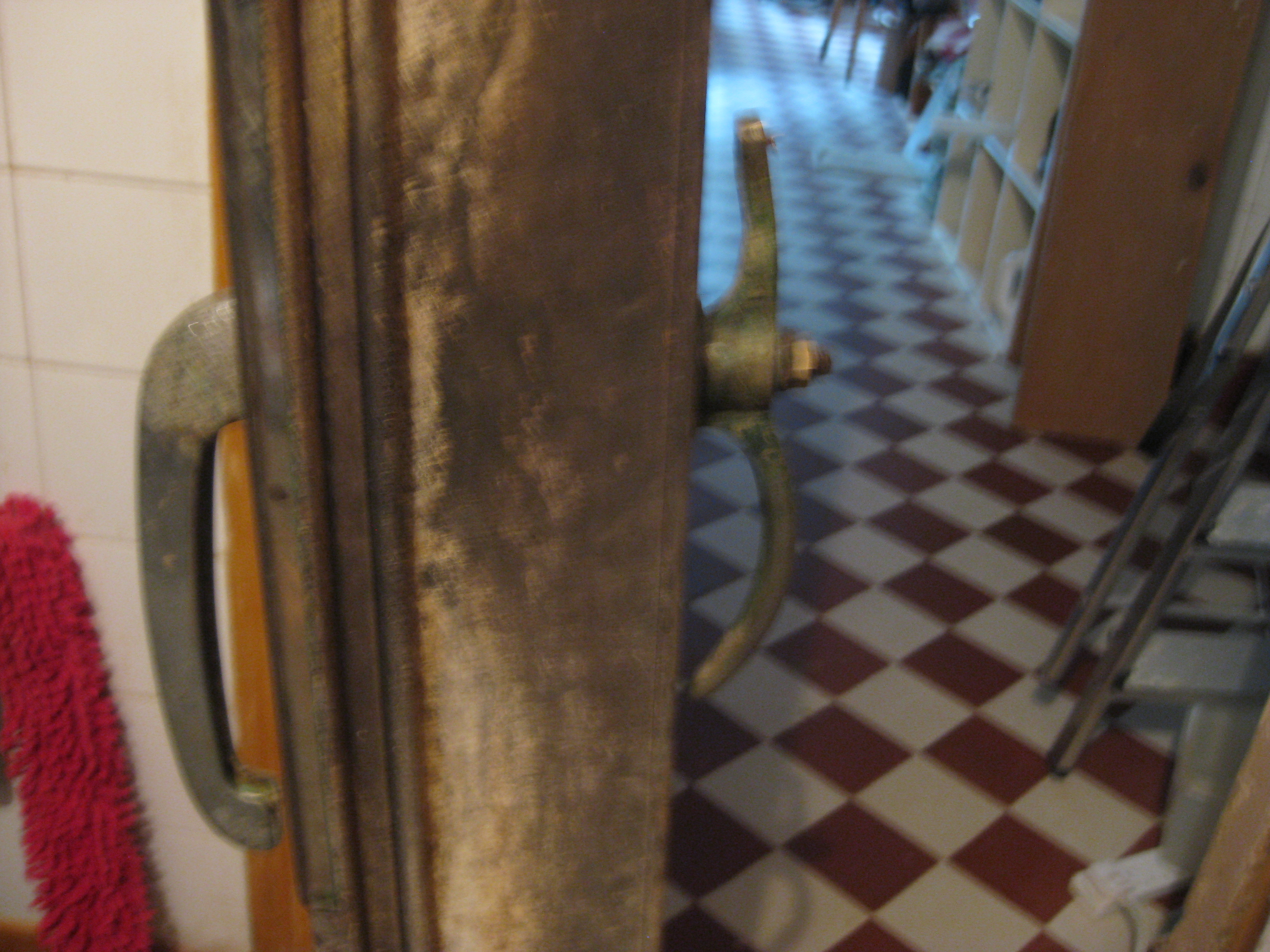
On Monday, for instance, for no reason other than it seemed a good idea, we set about removing one of the doors into the old cold rooms in the former butcher’s shop.  Now it’s become a store room, the space simply doesn’t need to be protected by a fortress-like door 13 cm. thick, with chunky prison-grade hinges, and heavy door handles some 20 cm. long.
Not many of us require a door so sturdy, handles so stout and strong

Wooden doors, thickly insulated and finished off with a heavy sheet of protective asbestos (aagh!)  are not easy to manoeuvre.  Screws, in position maybe 50 years and probably held in place by crusty layers of congealed blood and pig fat don’t respond well to gentle teasing by a screwdriver.  We togged up in steel-capped boots and wrestled.

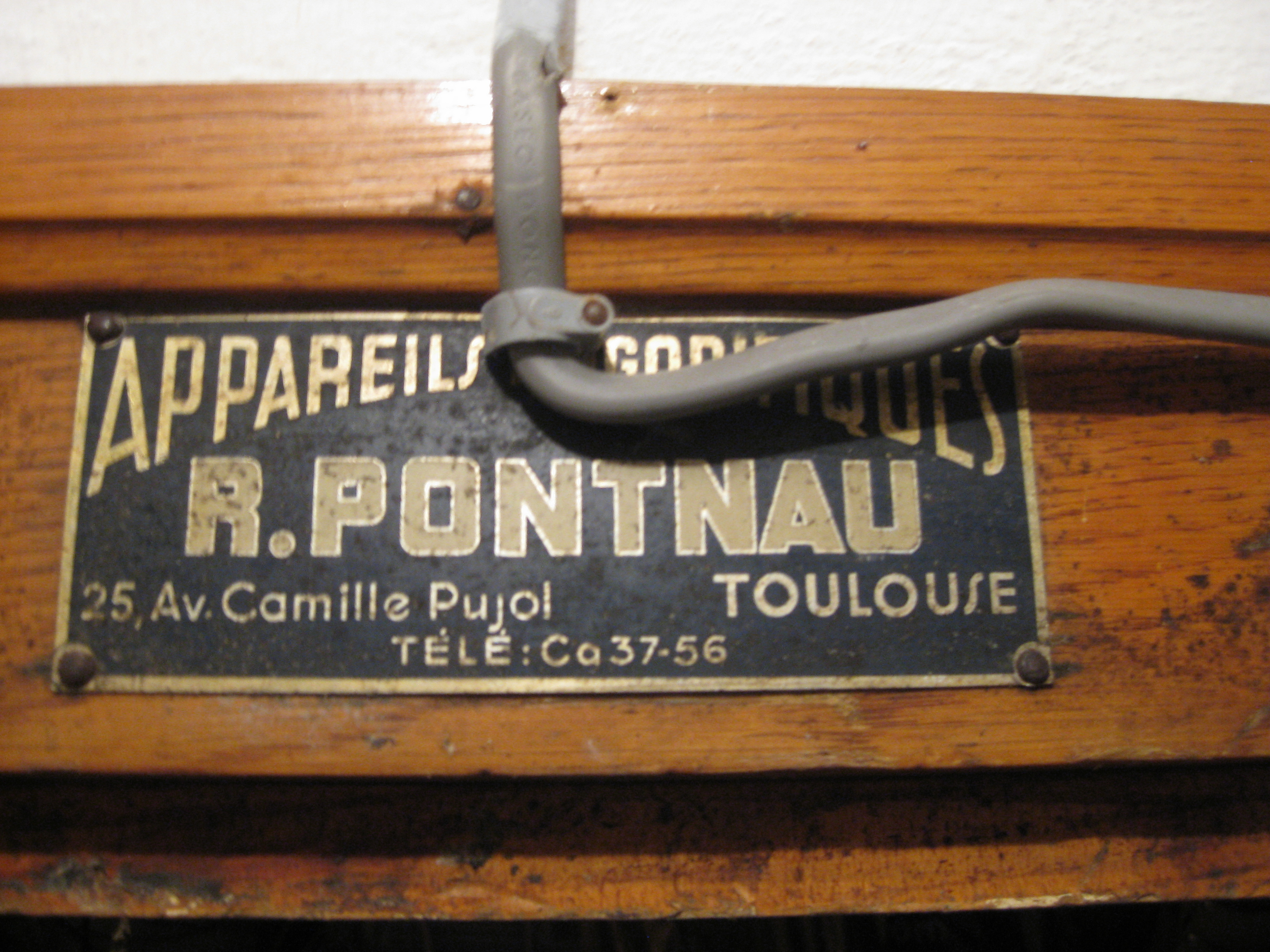
I wonder when Toulouse phone numbers were last only 4 digits long?

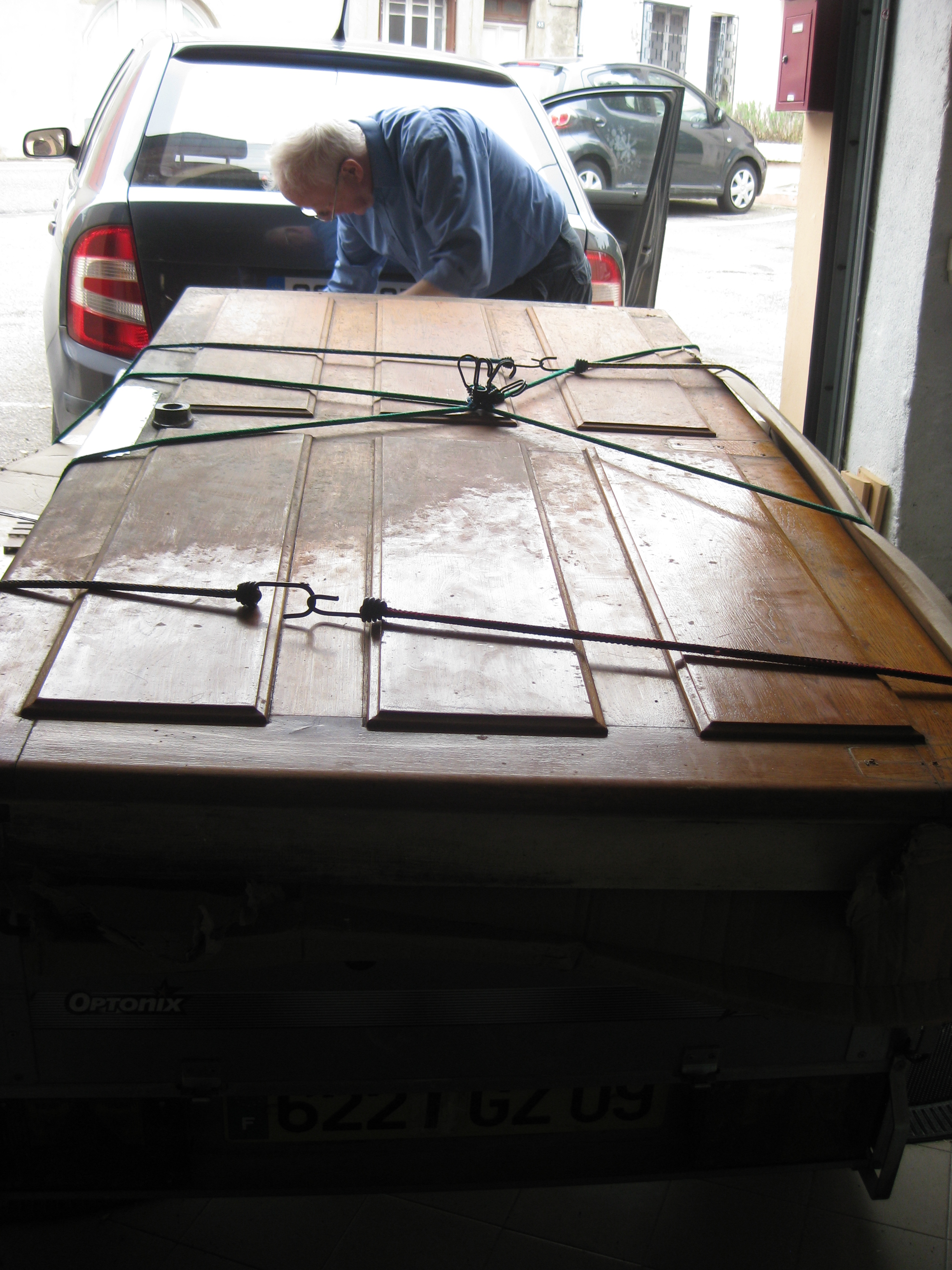
And eventually won.  Then the asbestos back of the door had to come off.  The tip won’t take asbestos, and the dangerous substances depot won’t take wood.  Finally, using thick and sturdy planks,  we had to lever the door onto the trailer and trundle off to the tip.  It’s gone.

Off to the tip. Shame really, it’s quite a handsome door

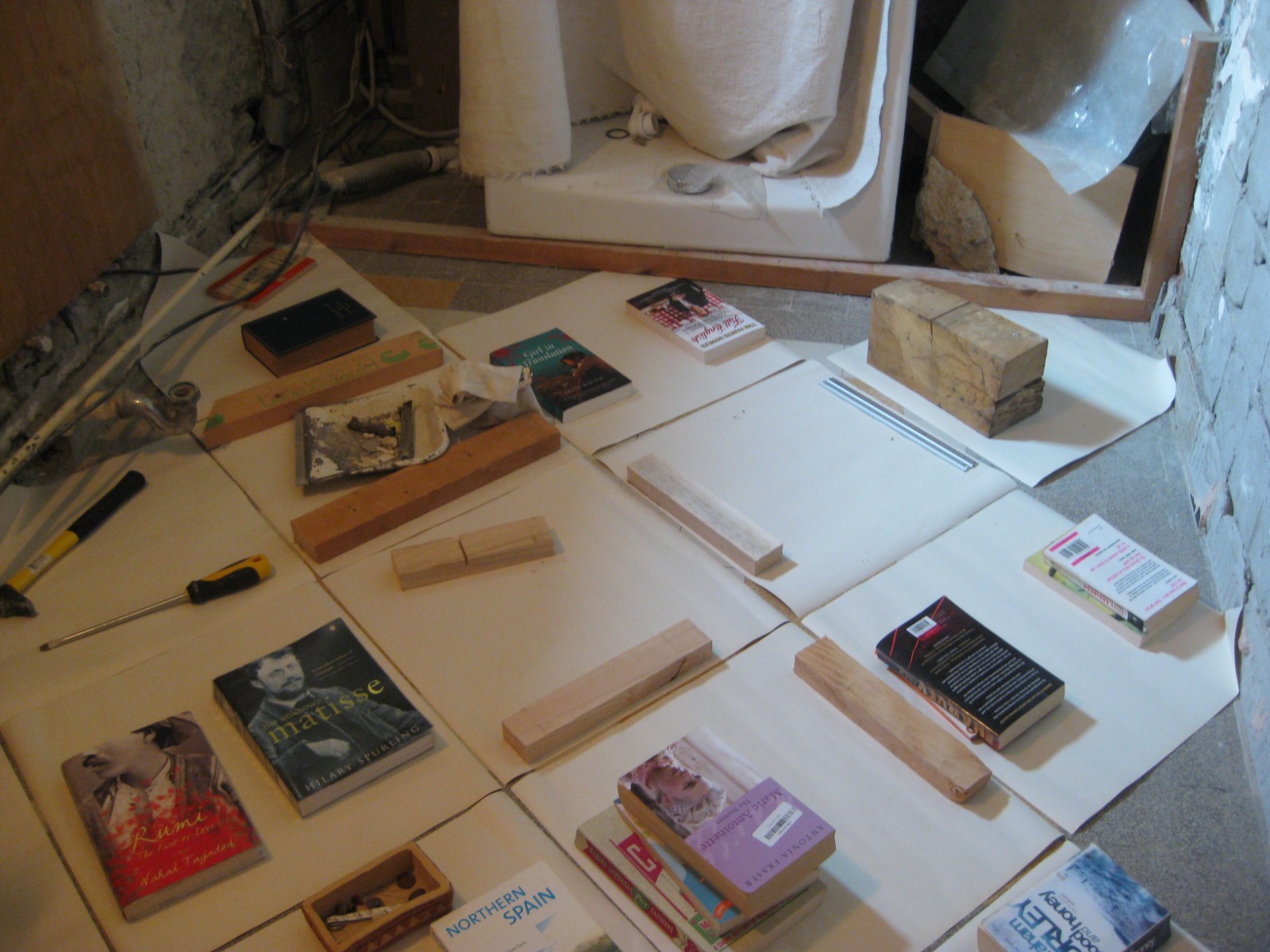
And so it was back to the bathroom yesterday.  If you pride yourself on your DIY standards, stop reading now.  Yes, that includes you Kalba and Sharon.  Here is a picture of how we’ve worked out where the floor tiling should go.  Lots of paper cut-outs, held in place by the contents of a book case.  Well, when you’ve got an odd-shaped room, with not a straight wall in sight, what else to do?

How-not-to-do-bathroom-tiling

Entendre cordiale: Blue Lake again

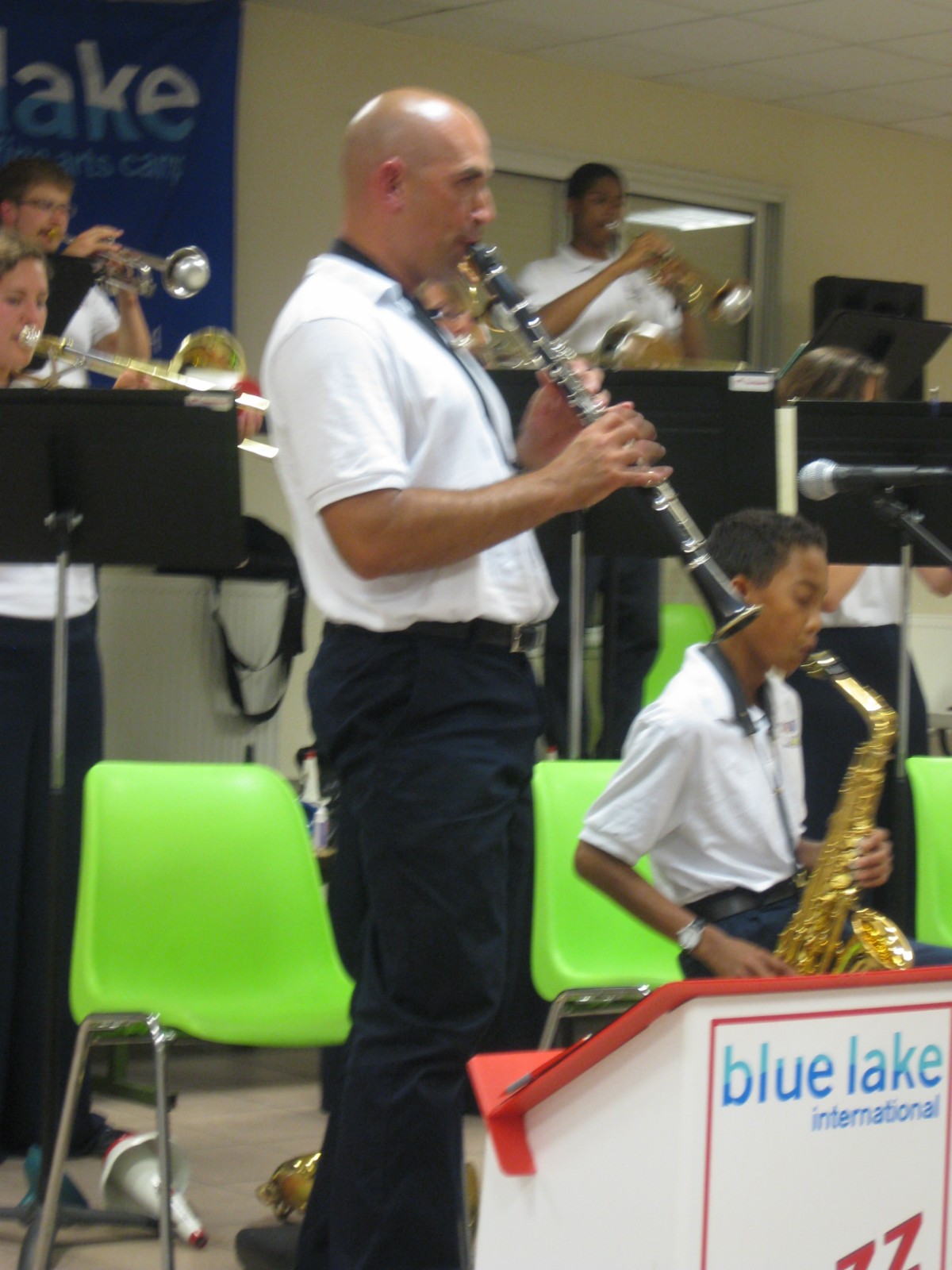
It’s been Blue Lake time again: that time of year when for 3 years now, we at Laroque have come to expect great entertainment from the musicians of the Blue Lake Fine Arts Camp in Michigan, USA, as well as some music from our own LDO Big Band.

This year, we welcomed a slightly different group from previous years – the International Jazz Band.  Mostly still in their teens, these players have been selected for the European tour not only because they’re good at what they do, but they’re hungry to become even better.  They want to seize the opportunity to spend time in cultures other than their own, and to perform in locations throughout parts of Europe, from prestigious concert halls and cathedrals, to smaller town venues like ours.

At the end of last night’s concert, the band’s conductor and group director Bill MacFarlin, spoke of how these chances for young Americans to travel and make music was a real opportunity to foster international friendship and understanding.

We’ve been watching that at work over the last 3 days.  The Blue Lake team, 17 of them, arrived in sunshine to a big welcome group in the Municipal Park.

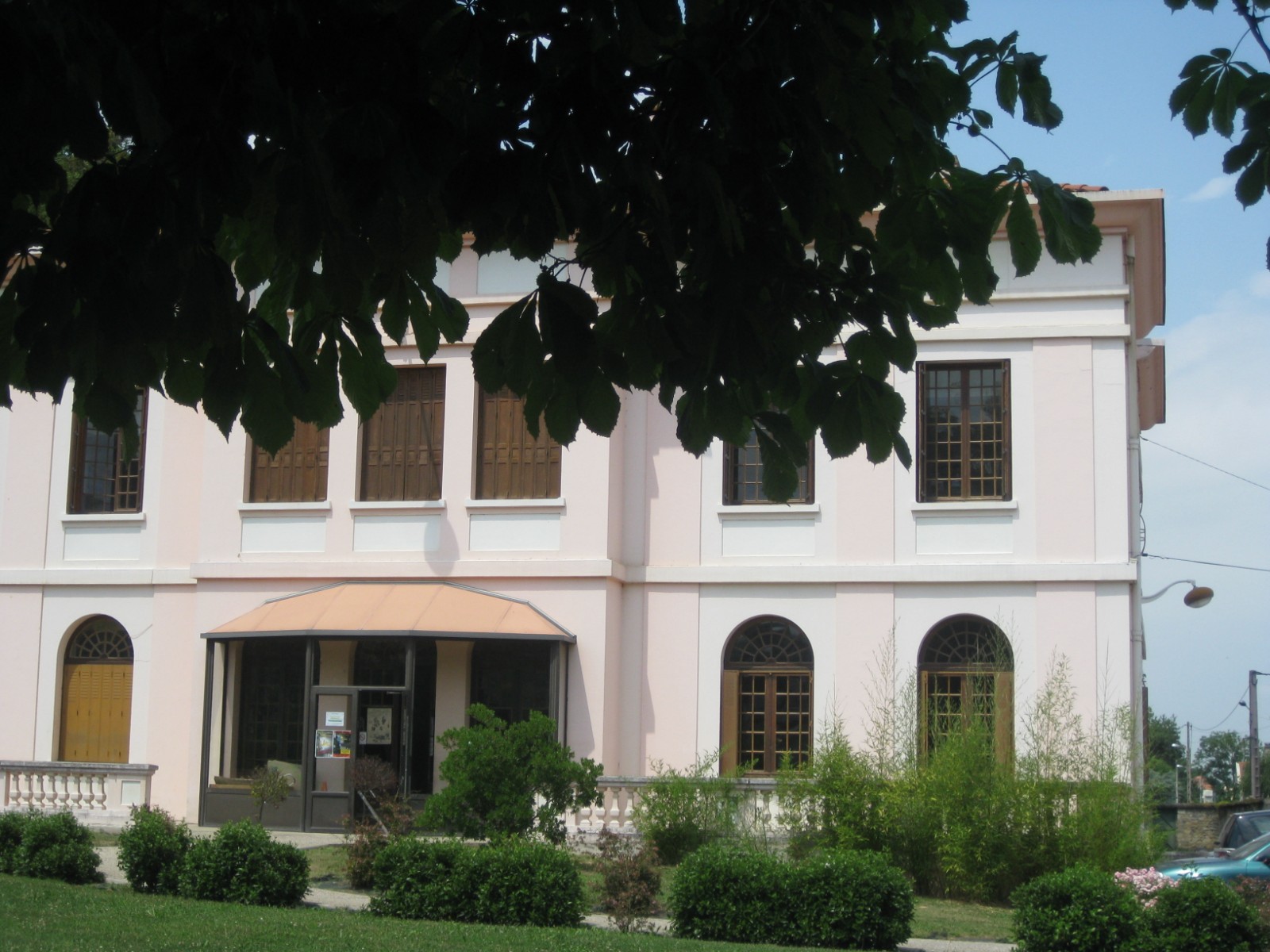
Our School of Music’s housed here in the château. I took this shot just before everyone arrived

The event went well, but it was easy to see the Americans and French weren’t mixing much – it was too hard to communicate: Malcolm’s and my interpreting skills were much in demand (Not that we’re much good.  I listened to our French head honcho, Michel Alvarez, and carefully interpreted it to Bill McFarlin.  Bill raised an eyebrow. ‘Do you realise’, he said ‘that you’ve just said all that entirely in French?’).

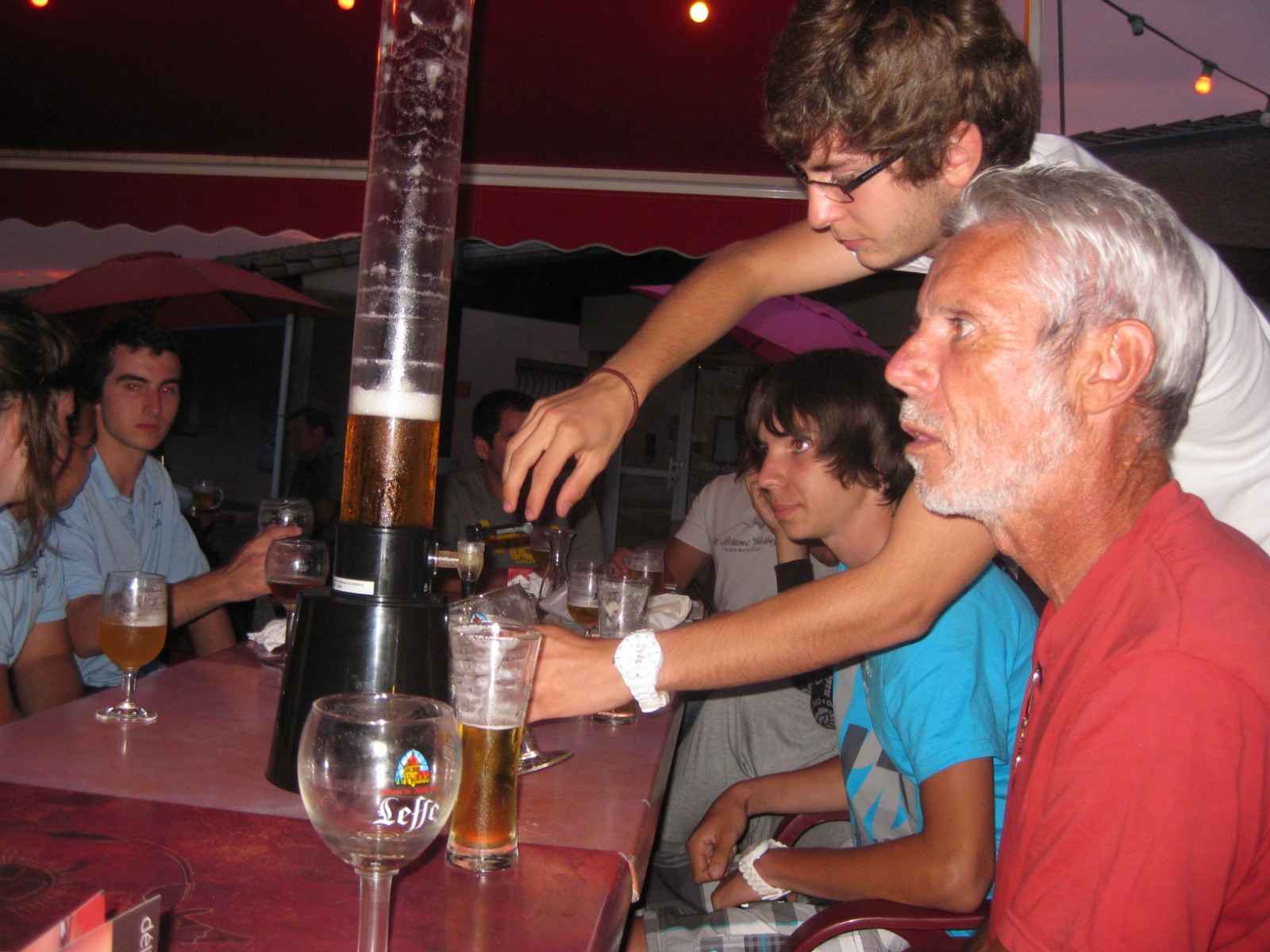
A giraffe of beer

Later, down at the bar with older students and members of LDO Big Band it got a lot easier.  The giraffe of beer may have helped.

Lucas Munce – with a clarinet this time

It was next day that real change took place. First of all, there was a Master Class, with Lucas Munce, acclaimed as a saxophonist back in the US (AND for his clarinet and flute  playing too), and Parker Grant, a young jazz pianist also gaining recognition.  After a slow start, the need to exchange musical knowledge overcame shyness and the language barrier.

Then after a shared meal it was time to rehearse.  Towards the end of the evening, members of the French and American bands sat together to practise the pieces they planned to play together to conclude Fridays’ concert.  It was wonderful to witness them, heads together as they pored over their shared scores, animatedly and enthusiastically discussing  their music.  Their mutual comprehension of each other’s tongues seemed to have moved up a gear, but above all they now had a shared language – music.

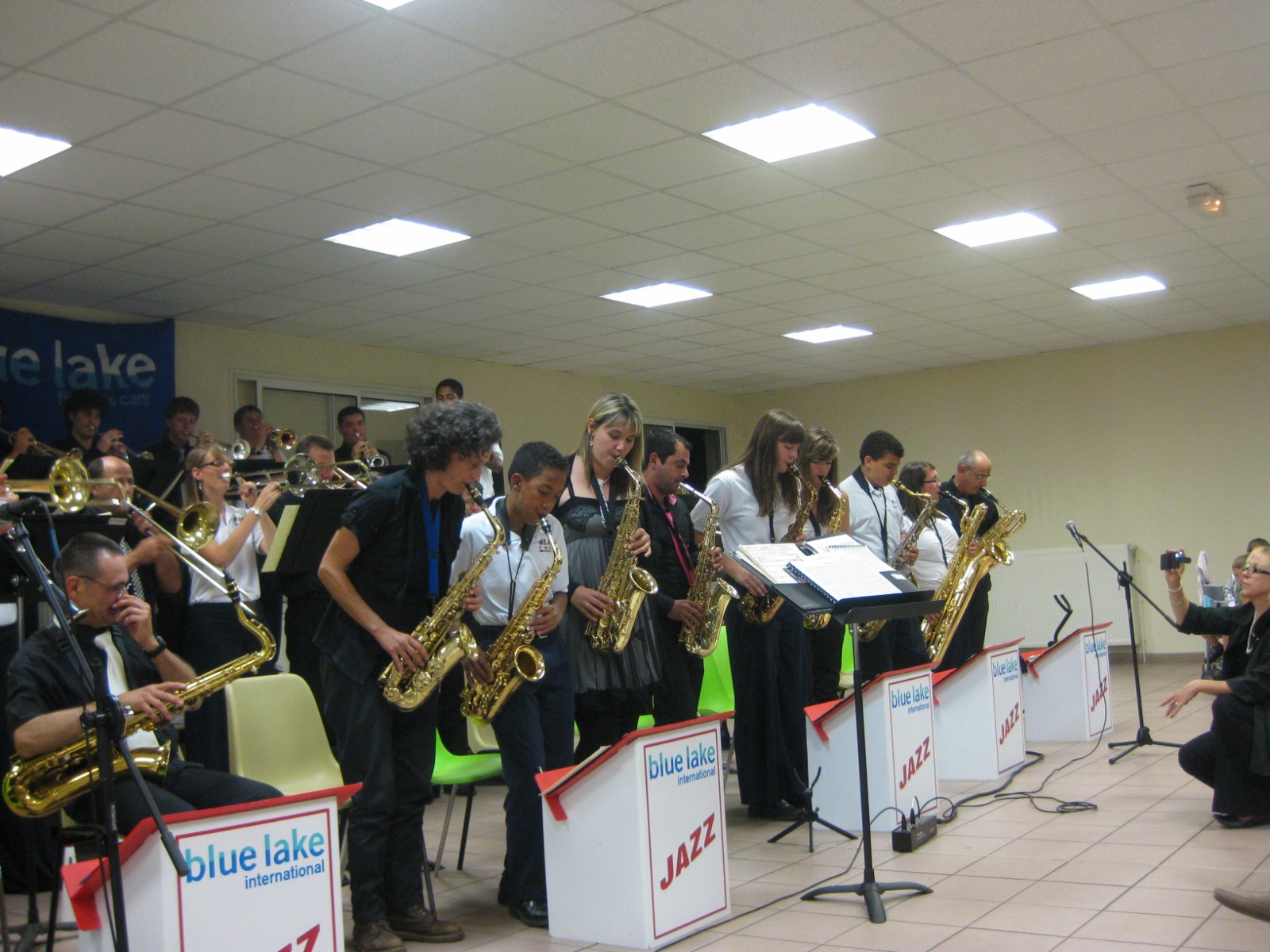
Blue lake International Jazz Band and LDO Big Band at rehearsal

By the time Friday’s concert came, these musicians were friends.  They greeted each other affectionately and settled down to listen to each other’s performances with relish.  When they had to squeeze themselves together for those final numbers, placing themselves alternately American/French, they were confident to give the music their all.  They loved it.  The audience loved it.

Blue Lake and LDO saxophonists share the moment at Friday’s concert

At the moment of parting, there were hugs and all round and quite a few sniffles too.  As ambassadors for their country, Blue Lake do a pretty fine job.

L’Ariégeoise & le Mountagnole: a very sticky moment

L’Ariégeoise comes to town

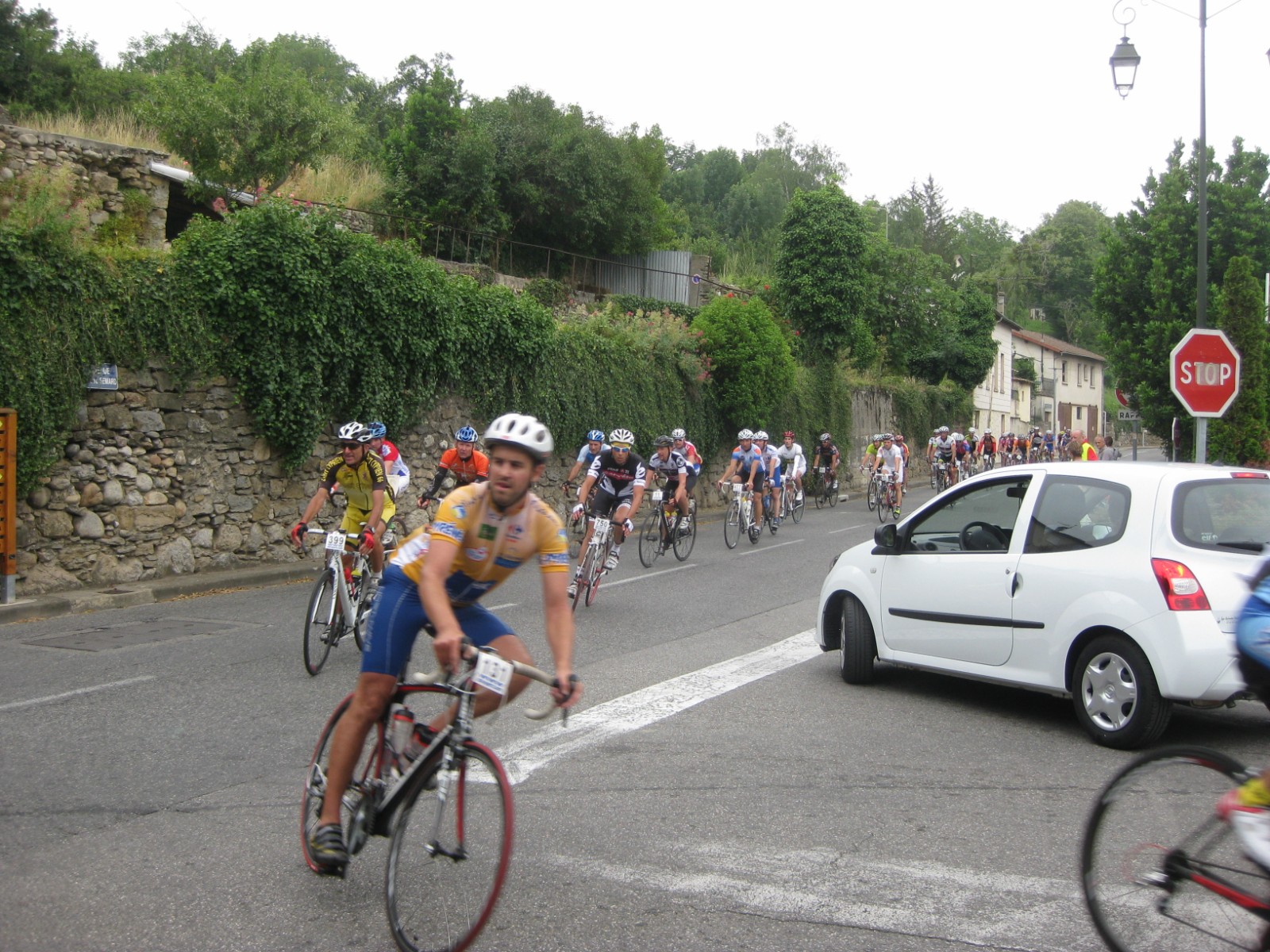
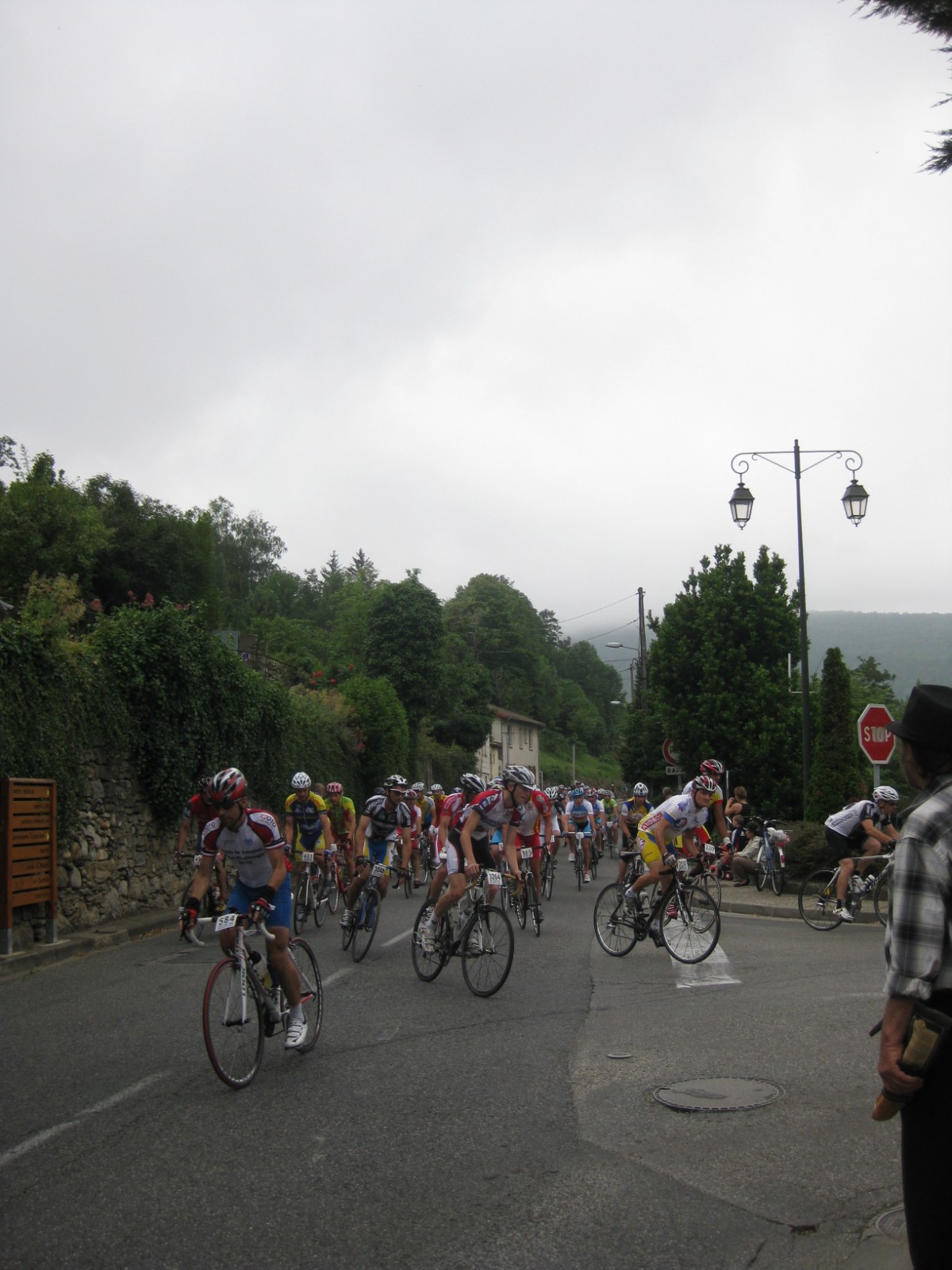
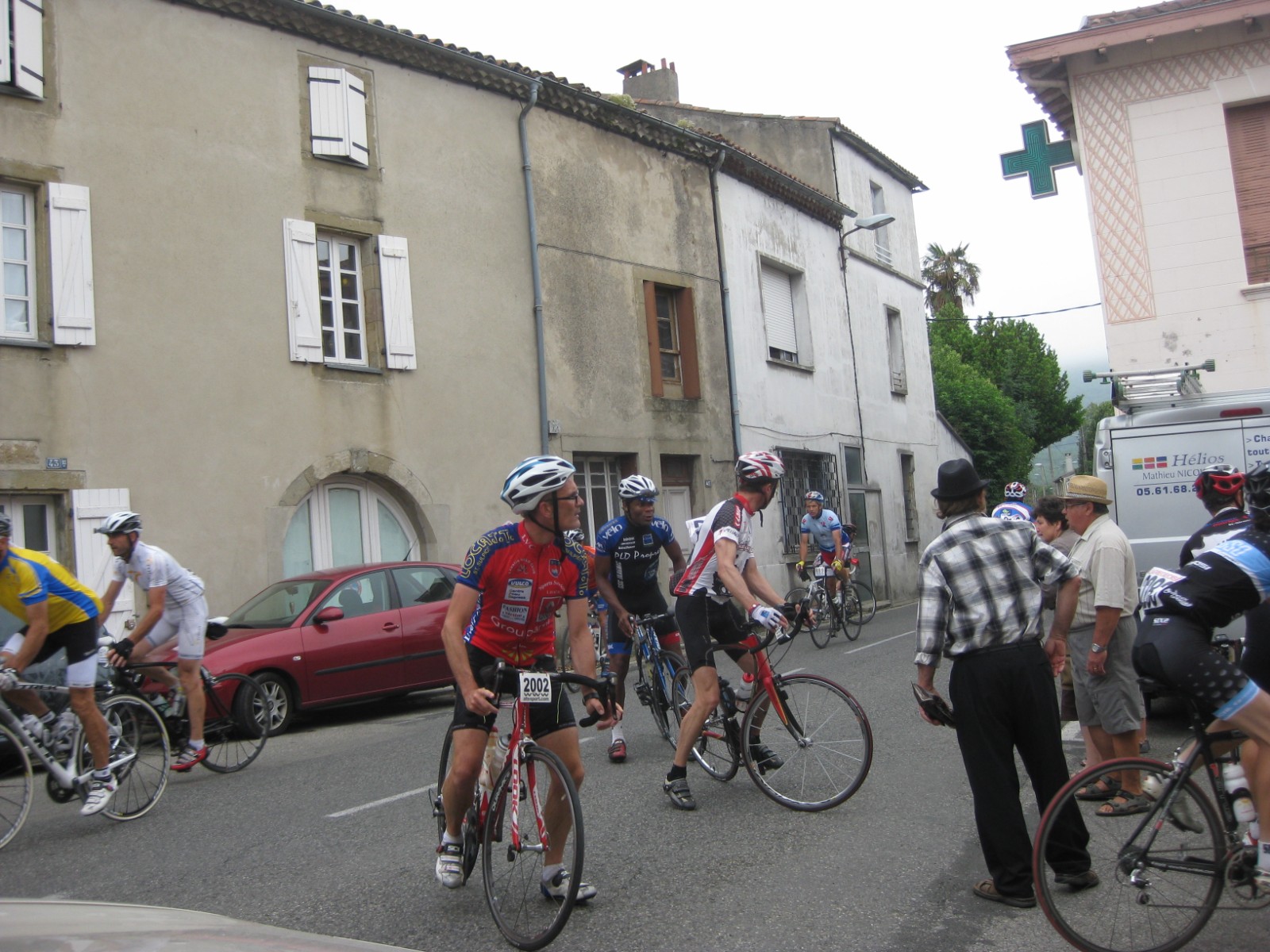
If you live in a small town like ours, you look for excitement where you can.  Today,  lAriégeoise passed our house.  This is a cycle race organised just before the Tour de France every year in our department.  Unlike the Tour itself, you can choose which of three races to join.  The truly serious do lAriégeoise itself: 160 km, with 3430 metres of climbing to do. The fairly serious do Le Mountagnole, 117.400 km, 2569m climb.  And the ones who are frankly playing at it do the Passejade, a mere 68.5 km, with a 745m. climb.

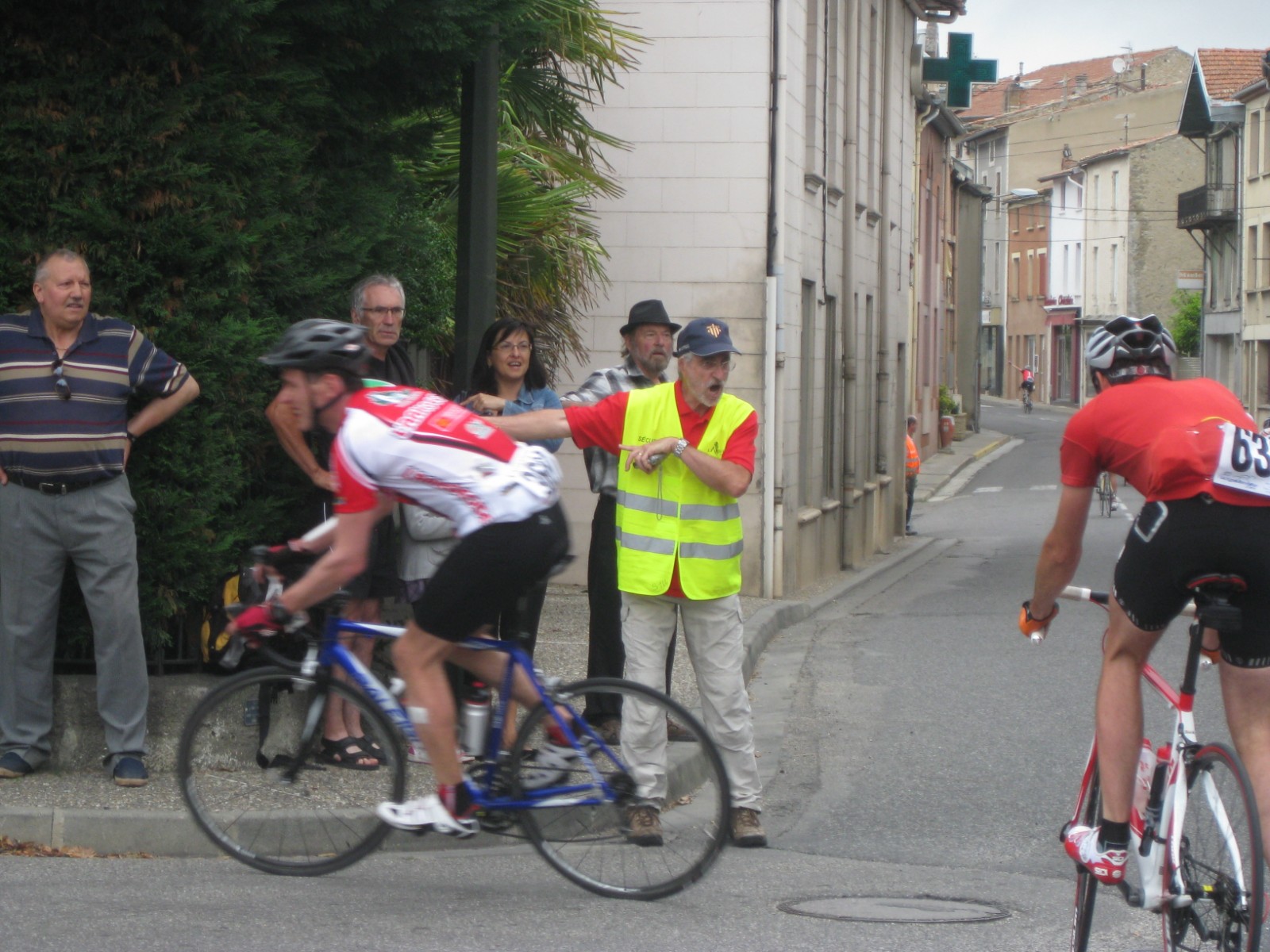
The two first groups were due to cycle through Laroque, and we locals were ready at 10 o’clock, lining the streets to cheer them on.  L’Ariégeoise marshals with Stop-Go batons in red and green strutted about importantly, directing the traffic, stopping and diverting cars as necessary.

The first cohort arrived, swished at speed past our house…and was gone.

Seconds later, some of them did a hasty U-turn and cycled back again, turned right across the bridge and picked up speed in a different direction.  What could be going on?

The parting of the ways

It turned out that l’Ariégeoises and the Mountagnoles, who until then had been sharing a route, parted company here.  The Mountagnoles had no special marshals, and when the time came, with heads down and intent only on completing their circuit in record time, they followed the l’Ariégeoise pack.  And some l’Ariégeoises followed the Mountagnoles pack.

Erm…..should we be here?

With nothing but their batons and booming voices to help them, l’Ariégeoise marshals tried to sort the sheep from the goats and send everyone on the correct path.  But it was hopeless.  More and more cyclists went wrong, and the area round the bridge became a clutter of wheeling tumbling bikes and their confused riders.  Some of them were amused.  Others not.  ‘Merde!’, ‘putain!’ and worse coloured the air as they saw their hard-won average speeds taking a turn for the worse.

A marshal tries to hold things together

I recorded some of the juicier moments and uploaded a short video to YouTube.  Why don’t you have a look?

‘I am the lizard king. I can do anything.’ *

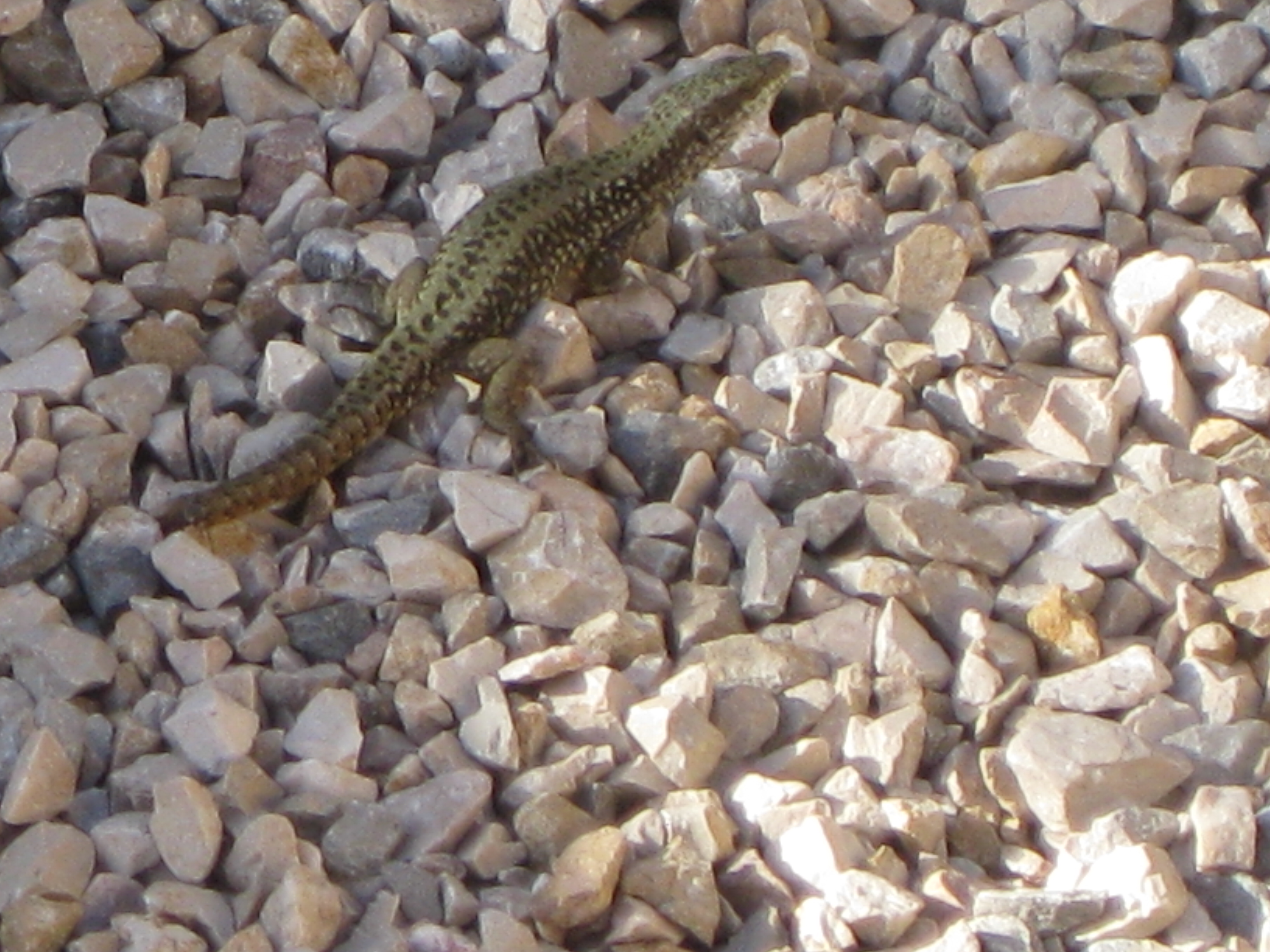
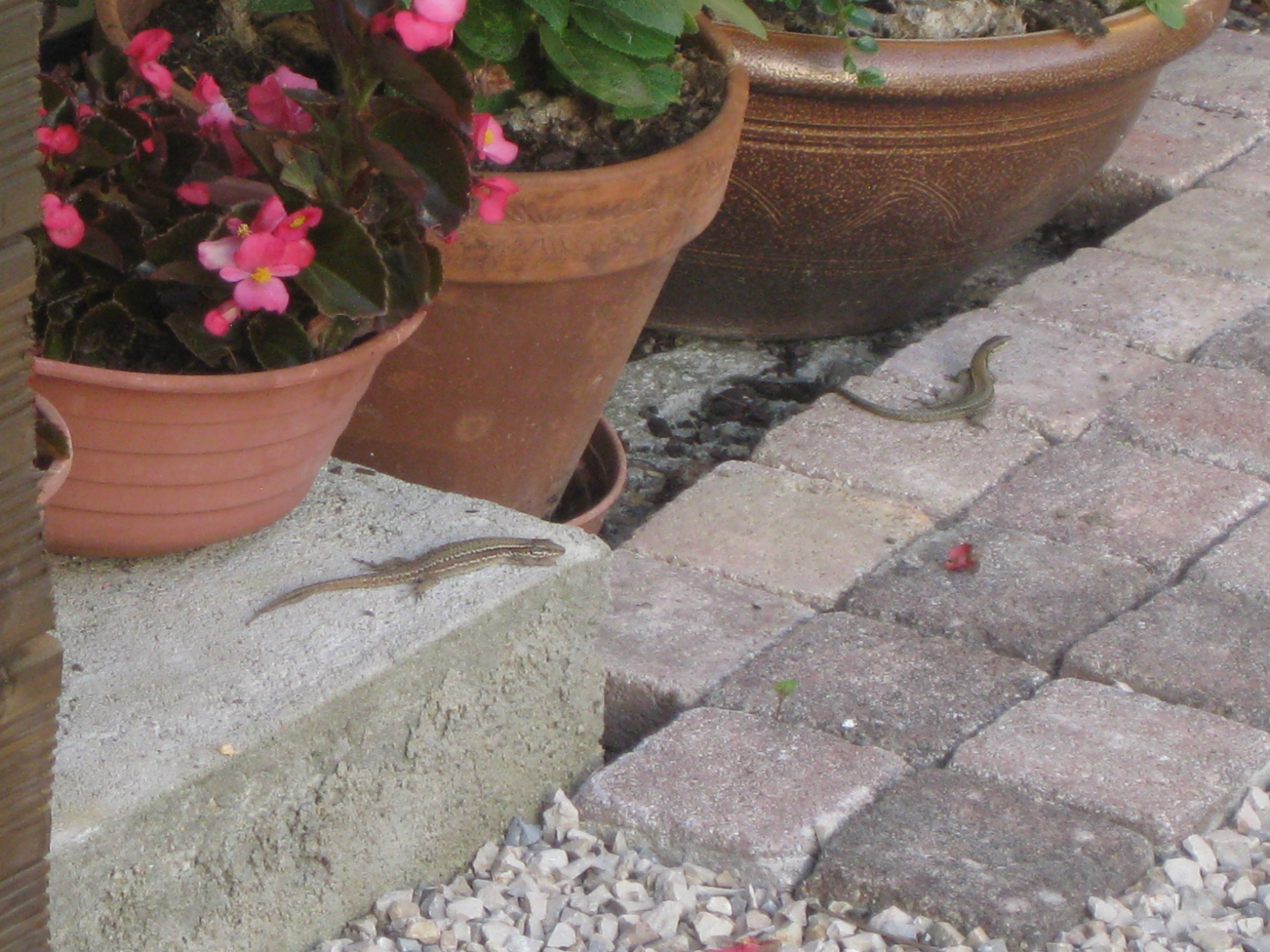
Summer’s arrived: well, this week anyway.  So from before breakfast until long after the evening meal we’re spending as much time as we can out in the garden.  And we have plenty of company.  Lizards.  Common wall lizards, podarcis muralis.  They are indeed spectacularly common here.  We have no idea exactly where they live, but there are plenty who call our garden ‘home’.  We’re beginning to get to know a few.

Easily the most identifiable is Ms. Forktail, she of the two tails.  She’s the only one we’ve been able to sex conclusively as well, because we caught her ‘in flagrante’ with Mr. Big behind the gas bottles recently.  And then the next day she was making eyes at a younger, lither specimen, and the day after that it was someone else.  She’s lowering the moral tone of our back yard.

Longstump

Then there’s Longstump, who’s lost a tiny portion of tail, and Mr. Stumpy, who hasn’t got one at all, though it seems not to bother him.  Redthroat has a patch of crimson under her chin.  There are several youngsters who zip around with enthusiasm and incredible speed.

In fact they all divide their time between sitting motionless for many minutes on end, and suddenly accelerating, at top speed and usually for no apparent reason, from one end of the garden to the other, or vertically up the wall that supports our young wisteria. On hot days like this  (36 degrees and counting) they’ll seem to be waving at us.  Really they’re just cooling a foot, sizzled on the hot wood or concrete.  Sometimes you’ll see them chomping their way through some insect they’ve hunted, but often they’ll step carelessly and without interest over an ant or other miniature creepy-crawly in their path.

Happy hour for Longstump

Mainly they ignore one another, but sometimes there are tussles.  These may end with an uneasy standoff, or with the two concerned knotted briefly together in what could scarcely be described as an act of love.

We could spend hours watching them, and sometimes we do.  But there is still a bathroom to build, a workroom to fit out, and a pergola to design.  The kings and queens of the yard have no such worries.  They can do anything: they choose not to.

‘Our’ lizards on their personal sun-loungers

*Jim Morrison, 2008