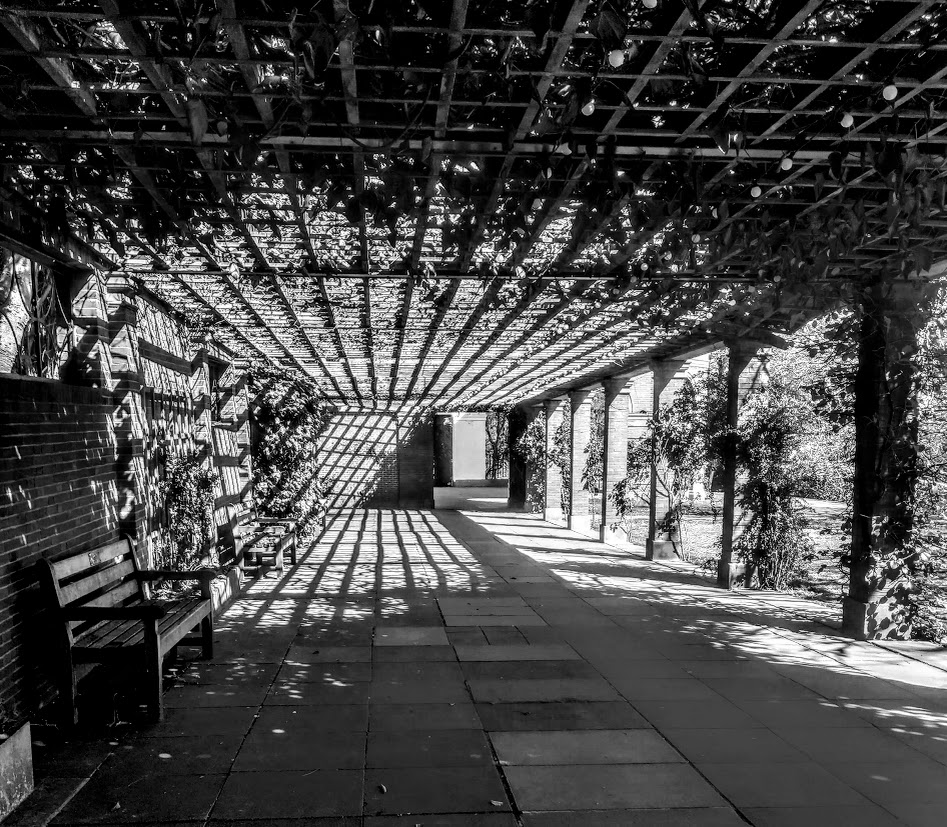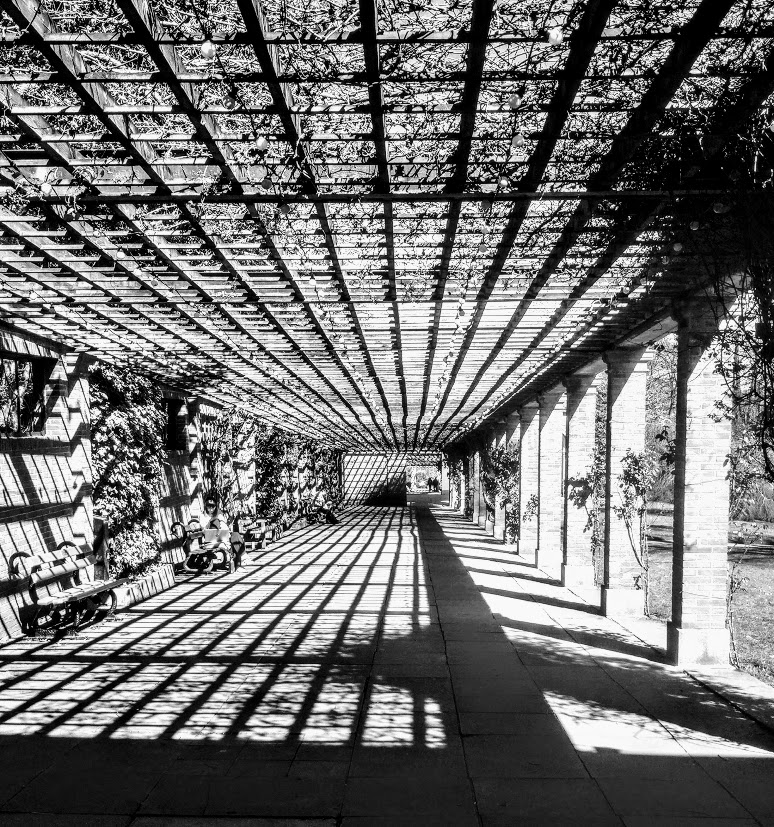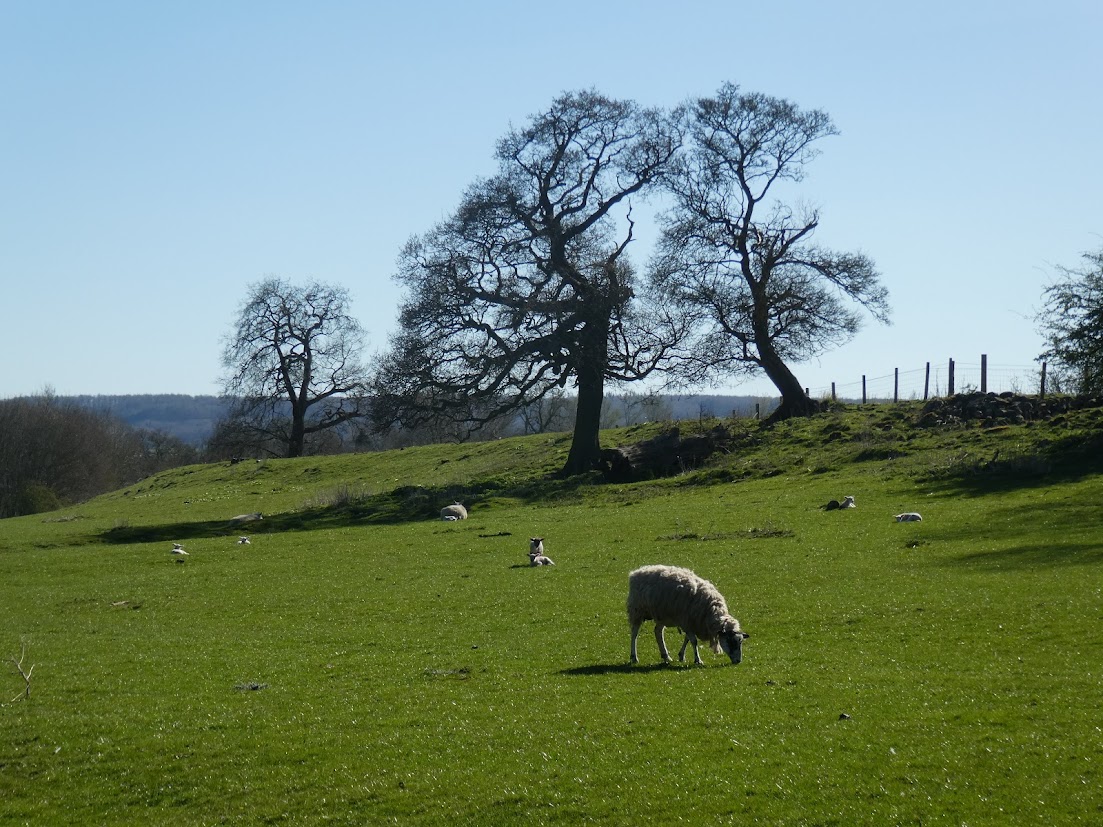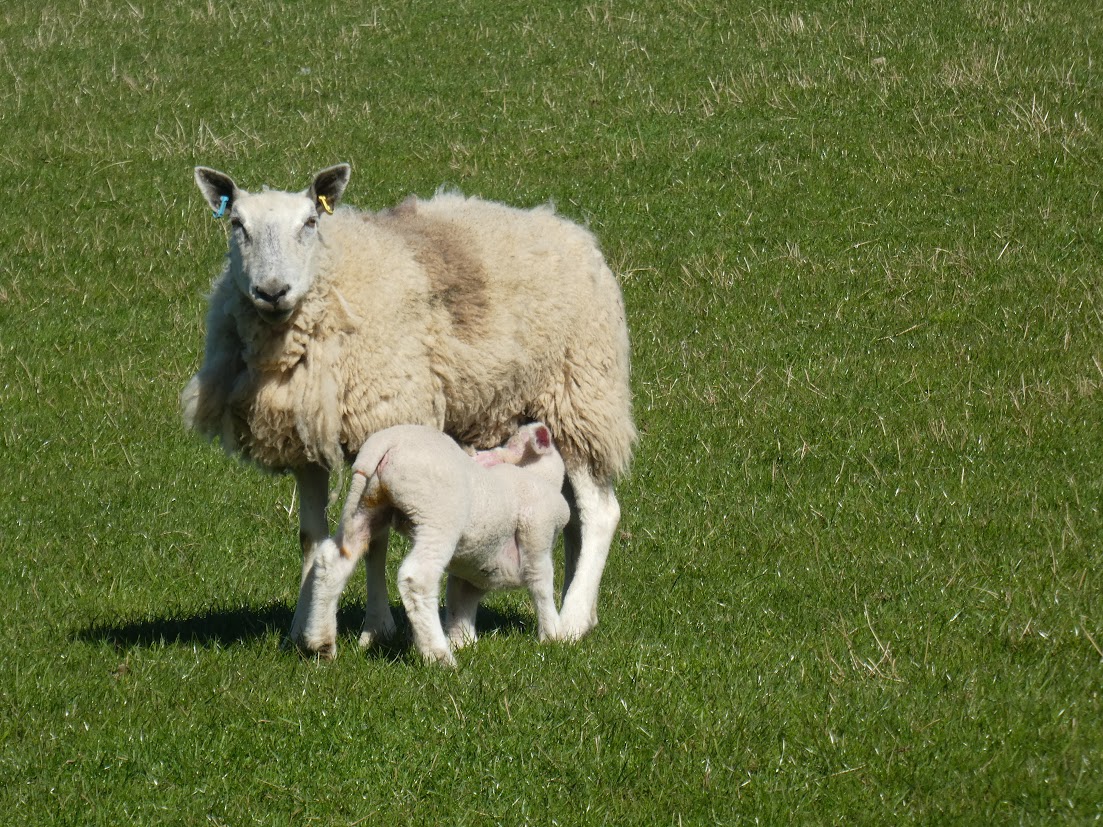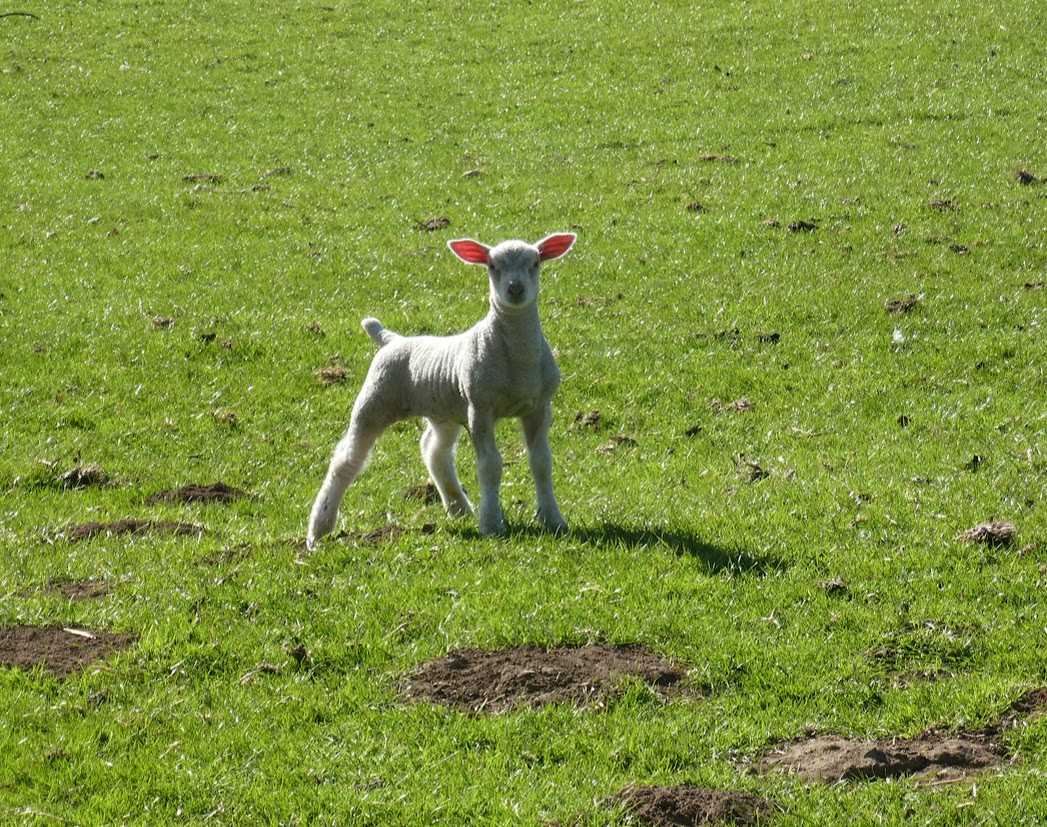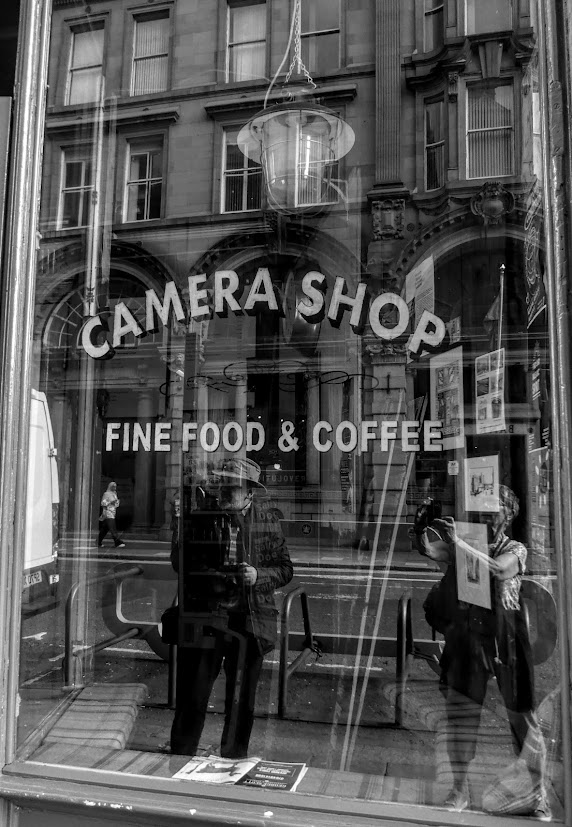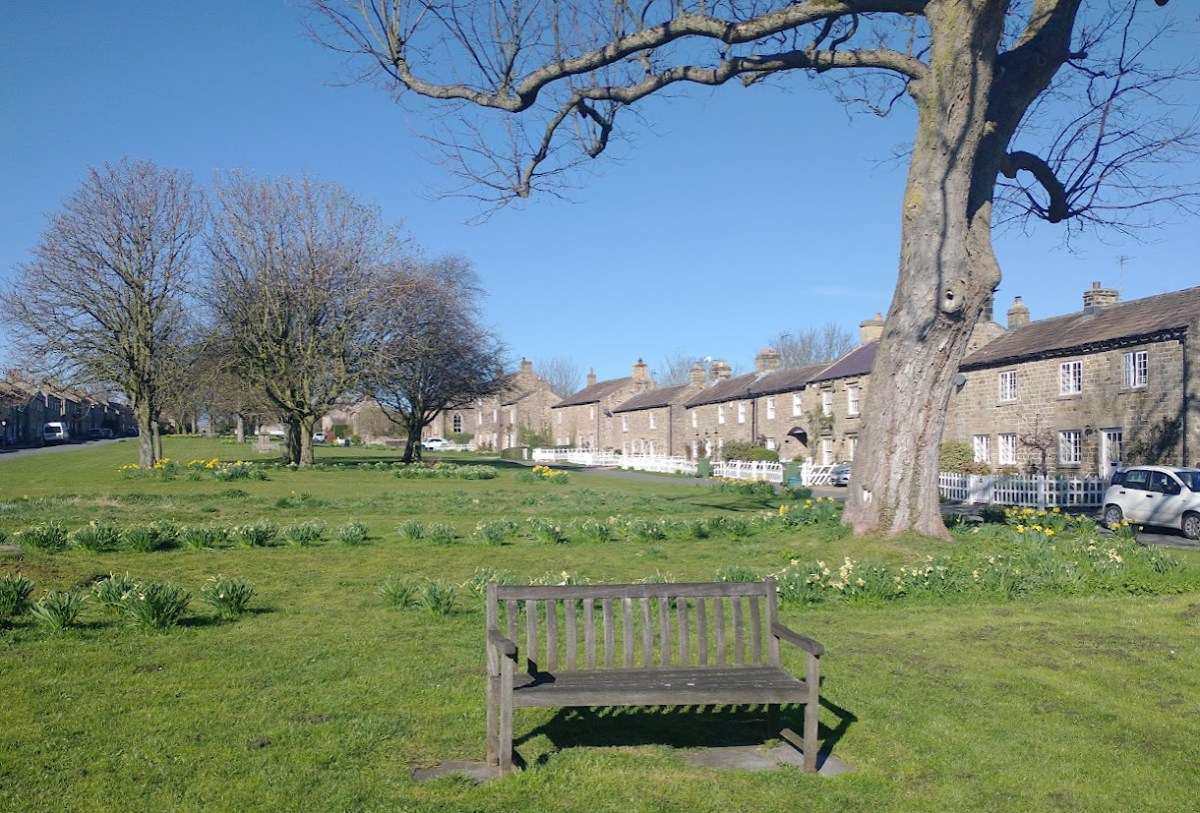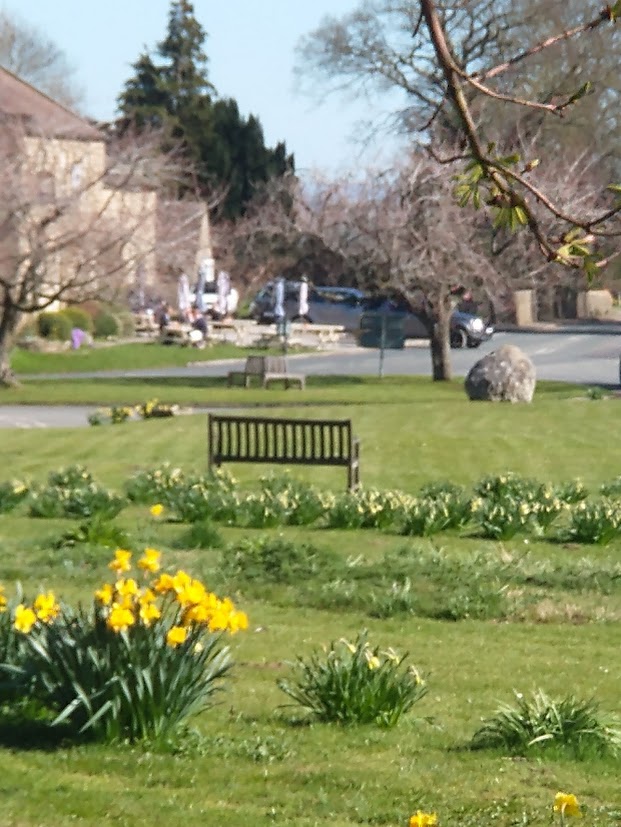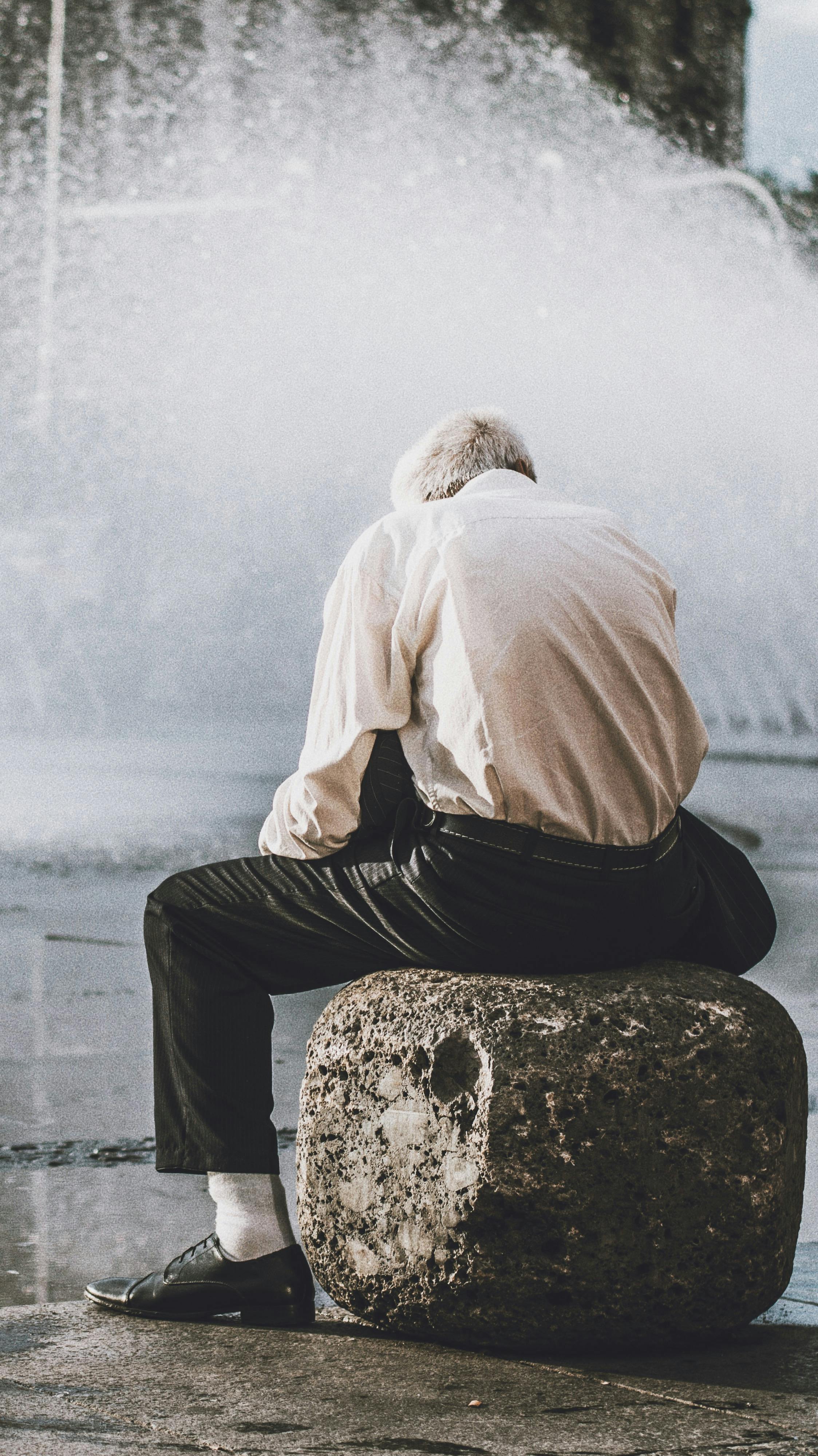
That sheep is helping raise awareness of – and funds for – St. Oswald’s Hospice. I think the chap on the bench doesn’t know what to make of it.
For Jude’s Bench Challenge.
And Debbie’s One Word Sunday: Monotone.

That sheep is helping raise awareness of – and funds for – St. Oswald’s Hospice. I think the chap on the bench doesn’t know what to make of it.
For Jude’s Bench Challenge.
And Debbie’s One Word Sunday: Monotone.
I retired in 2007. Almost immediately, two life-changing events took place. First we moved lock, stock and barrel to southern France, and then only a couple of months after that, I went to India – by myself- apart from just over a week at the beginning when I was eased in by travelling in a small group tour of the more rural parts of Karnataka and Kerala. I even bought my first decent-ish camera for the trip.
Both those events meant I wanted to keep in touch with family and friends back in England, and frequent letters or emails to each one of them wasn’t feasible. The answer? A blog. I barely knew what a blog was, and was fairly technically inept. So I chose a platform that looked as if it might meet my needs: Travel Blog. And that’s where I stayed for our early days in France and my Great Indian Adventure. I’ve just looked at it now, for perhaps the first time in ten years, and discovered French posts I’d quite forgotten about. Eventually I moved, first to Blogger, which I didn’t like, and then to WordPress. For all I moan about its technical glitches, it’s here I’ve formed real bonds with bloggers all over the world (you know who you are!), and made more casual links with dozens more. Blogging has proved to be the positive face of screen-time for me, and the only bit of Social Media I engage with.
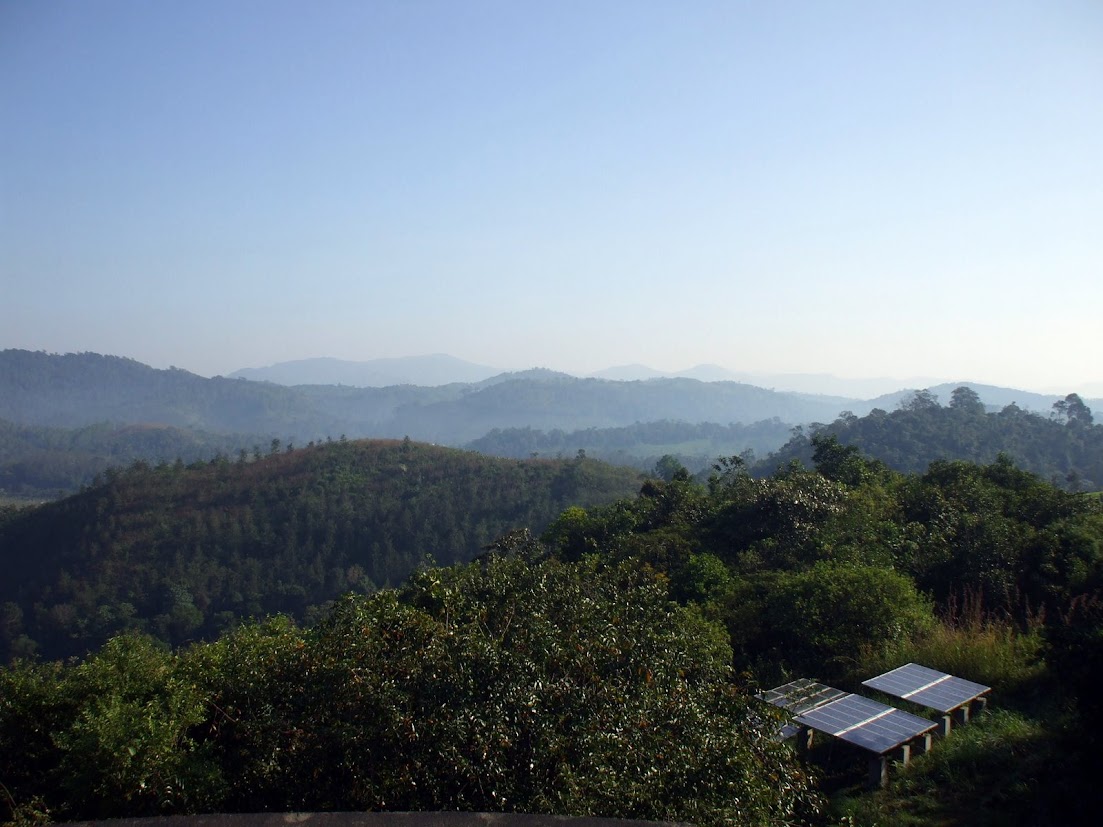
But hey! This is supposed to be a Lens-Artists Challenge post, delivered this week by Anne – photos obligatory. So here is part of my first blog post from India, typed on an ancient computer with not-always-effective keys in an internet cafe (remember those?) on 9th November 2007. I didn’t manage to post photos that day. So now I’ll include within my post the ones that should have formed part of it. I was even more of a newbie with a camera in those days.
…with no photos attached. Bangalore may be IT Central if you’re in the know, and I’m not. These are not good Internet centres I’m finding!
Still, life is very good. I arrived at 4.30 yesterday morning, just as you lot in the UK were tucking yourselves up. And that’s how I lost a night’s sleep. Way too excited to sleep all day. Bangalore for me vacillates between being stimulating beyond belief, and, er, overstimulating.


I loved arriving early. The dawn was breaking, and dawn chorus Bangalore style was a series of exultant yelps and squawks from various unidentified birds of the large variety. My hotel, luckily, is in a quiet corner, and I can tell you there aren’t many of those here. From early till late, all you can hear is the irritated honking of horns as auto-rickshaws, motorbikes, laden bicycles, flash cars, very unflash buses, occasional random cows, all jostle for the same space (today, in an auto rickshaw, I counted 6 vehicles, ours was one of them, lined up across the lanes designed for 2. I’ve learned to jay walk with the best of them. There is no alternative. Really, there isn’t. Despite the warning posters saying how many people have died in the last year on the roads, and the slightly lower number of fatalities. Eh?
I’m converted to Indian breakfasts. Up on the roof terrace of my hotel, I enjoyed their crispy rice pancakes which, because they’re cooked in a curved pan, puddle into a soft light sponge in the centre. 2 spicy dipping sauces, one based on coconut, the other lentils, and the undivided attention of 3 members of staff…this by the way is only a mid-range hotel, nothing fancy at all.

Other early impressions: dozens of women beautifully dressed in saris, in the early morning, crouching in the already busy roads, sweeping and sweeping with handle-less brooms.
Cows tethered to lamp posts on busy junctions, eating the weeds round the lamp posts.
Security guards at virtually every building. Not I’m sure because of a crime wave, but because labour is cheap.
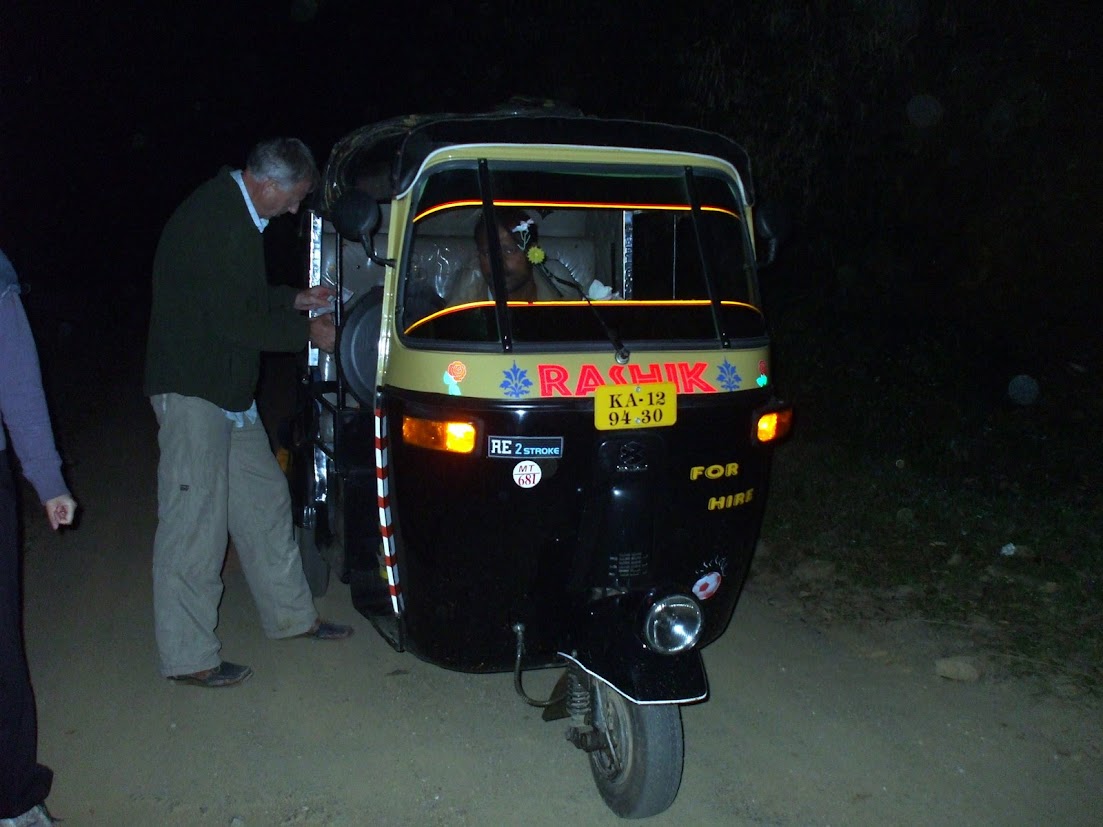
Only time to tell you about part of yesterday. When I finally set off with the intention of exploring for the morning, I hadn’t gone too far when I was picked up by an auto rickshaw driver. Well, he could see ‘Arrived from England this morning’ tattooed across my forehead, I’m sure. He offered to show me round for Rs. 10. I didn’t believe it then, and nor did it happen, but I WAS exhausted and it wasn’t an unattractive proposition. It was such fun! He proved an amiable guide, whose English, while obviously hugely better than my Kannada, often led to mutual incomprehension.

Still, he hared round a variety of sites (‘This is my Parliament building. This is my national bird. This is my Rajah’s Palace’, which I found quite endearing). He waited while I ‘did’ Bengalaru Palace, one of the homes of the Rajah Wodeyar. As the Lonely Planet says, you are personally shown round by an aged retainer who is rather keener to show you fly-blown pictures of the royal family than the quirky furniture and fittings. Seedy but fun. And it’s not often you see cows grazing in royal gardens. My new friend gave me his number and urged me to ring him whenever I wanted a rickshaw. I greatly enjoyed this ramshackle mode of transport. He’s had his rick 15 years, and I see no reason why he won’t have it 15 more.
Let’s see if I can include a photo or two next time. You may have to wait for ‘My Holiday Snaps’ when I come back.


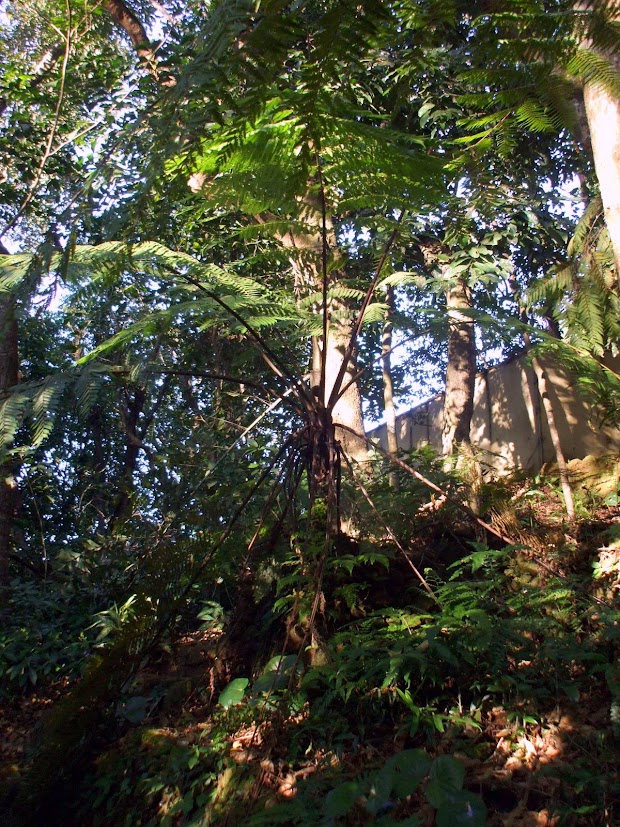
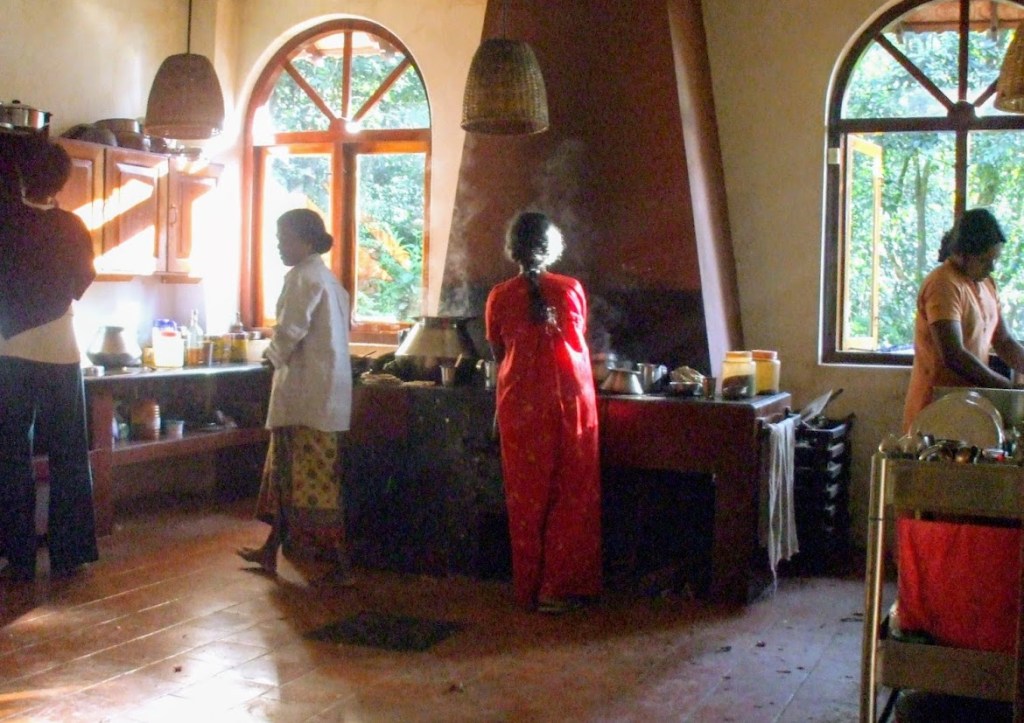
Street scenes from my first day.
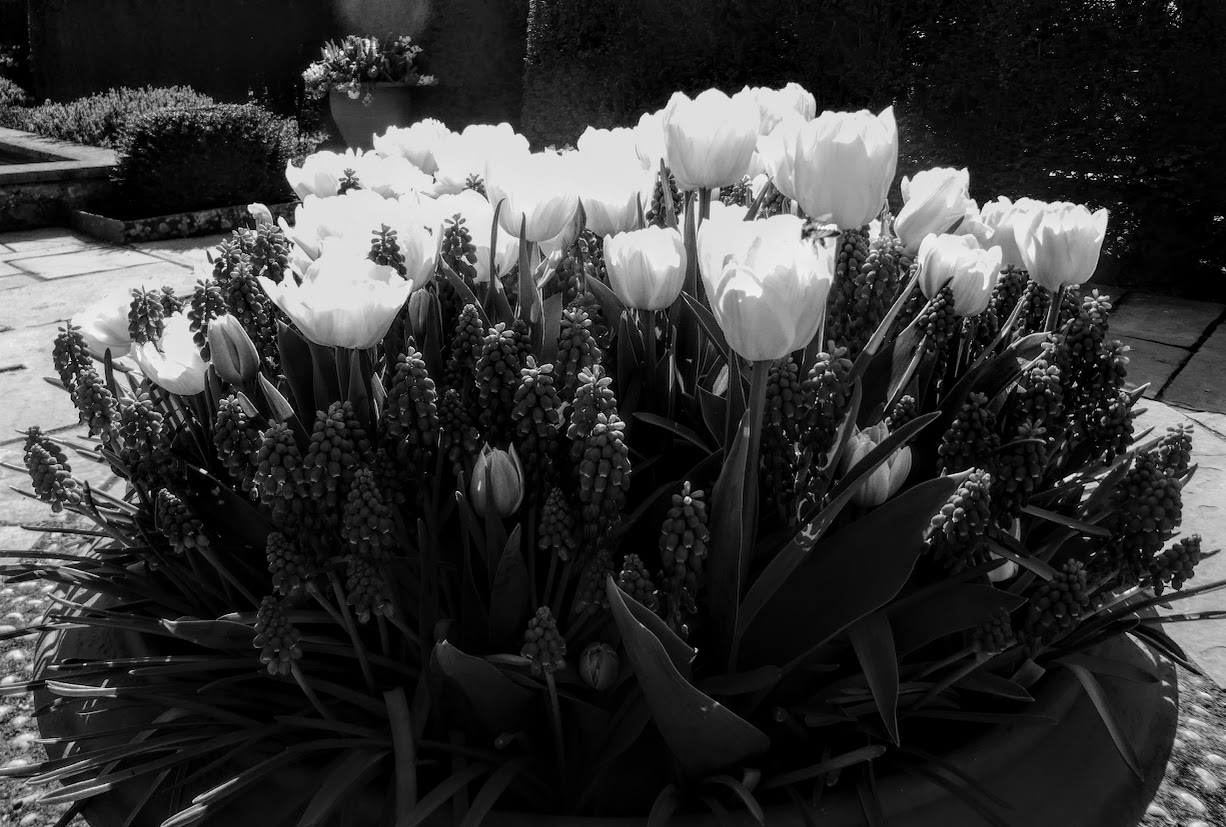
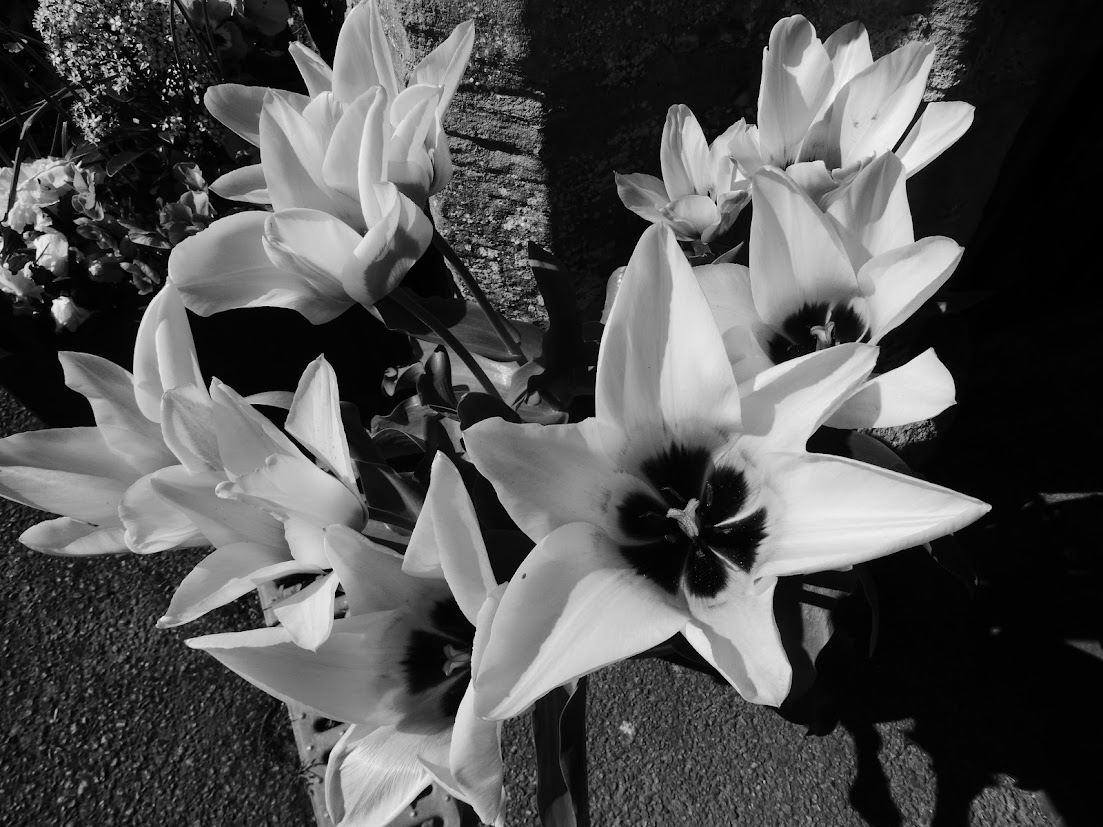
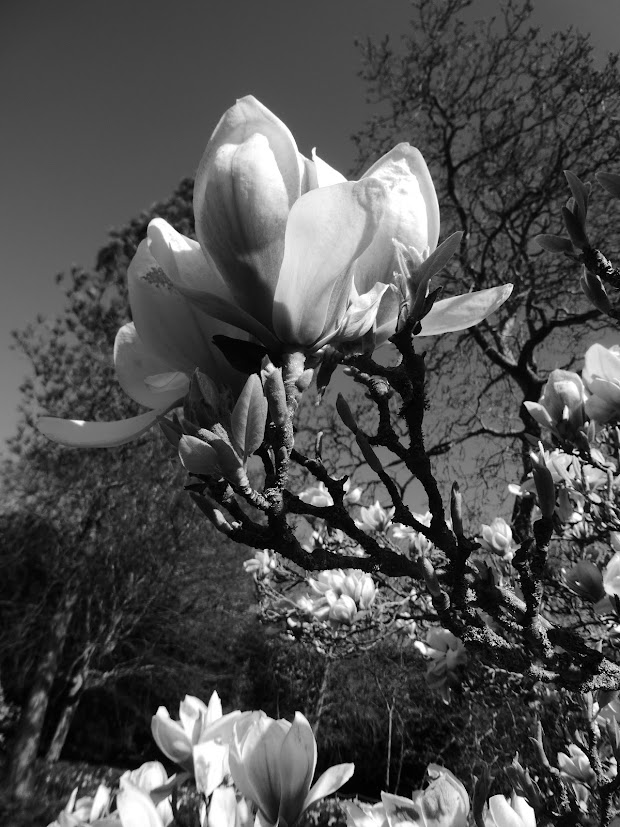
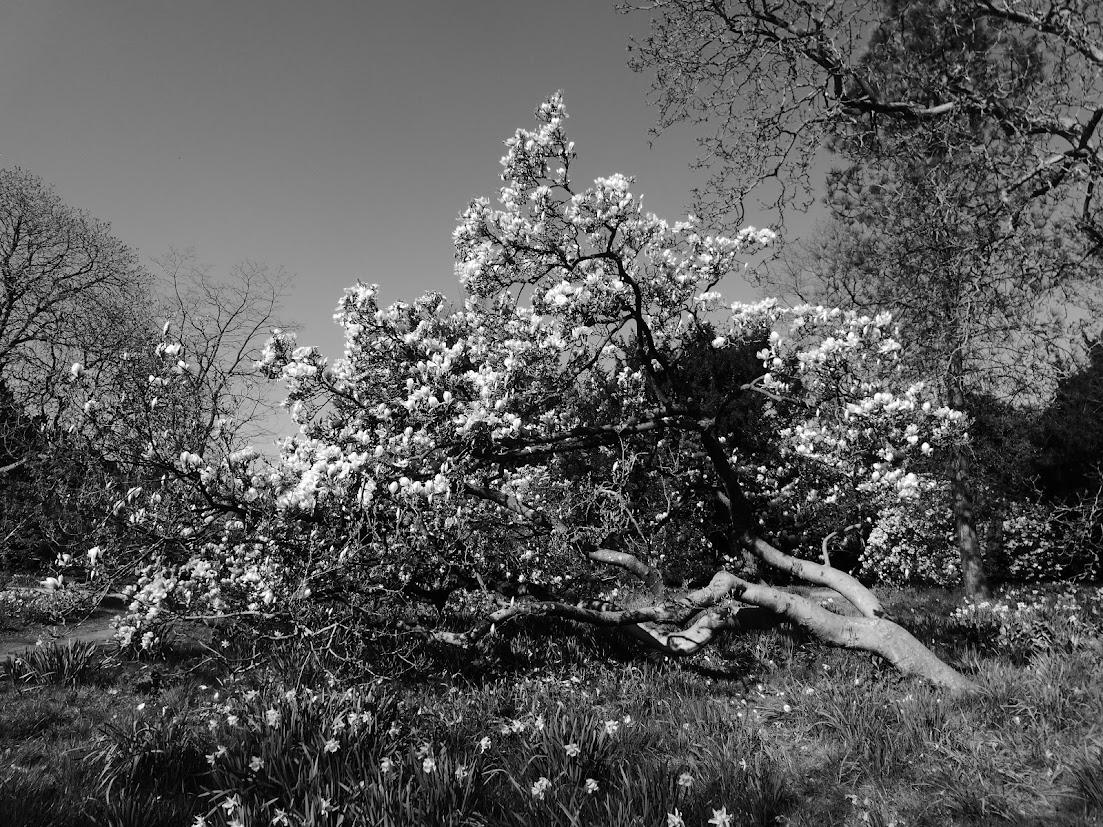
Even though over the last few days the weather has reverted to winter chill with a vengeance, I think it’s definitely the week that Spring has Sprung. The daffodils have suddenly burst forth into golden glory. The grass is lusher. Dandelion and daisies crowd the verges. Spring announces itself in an explosion of colour, in contast to the muted browns and greys of winter with its dull skies and overabundance of mud.
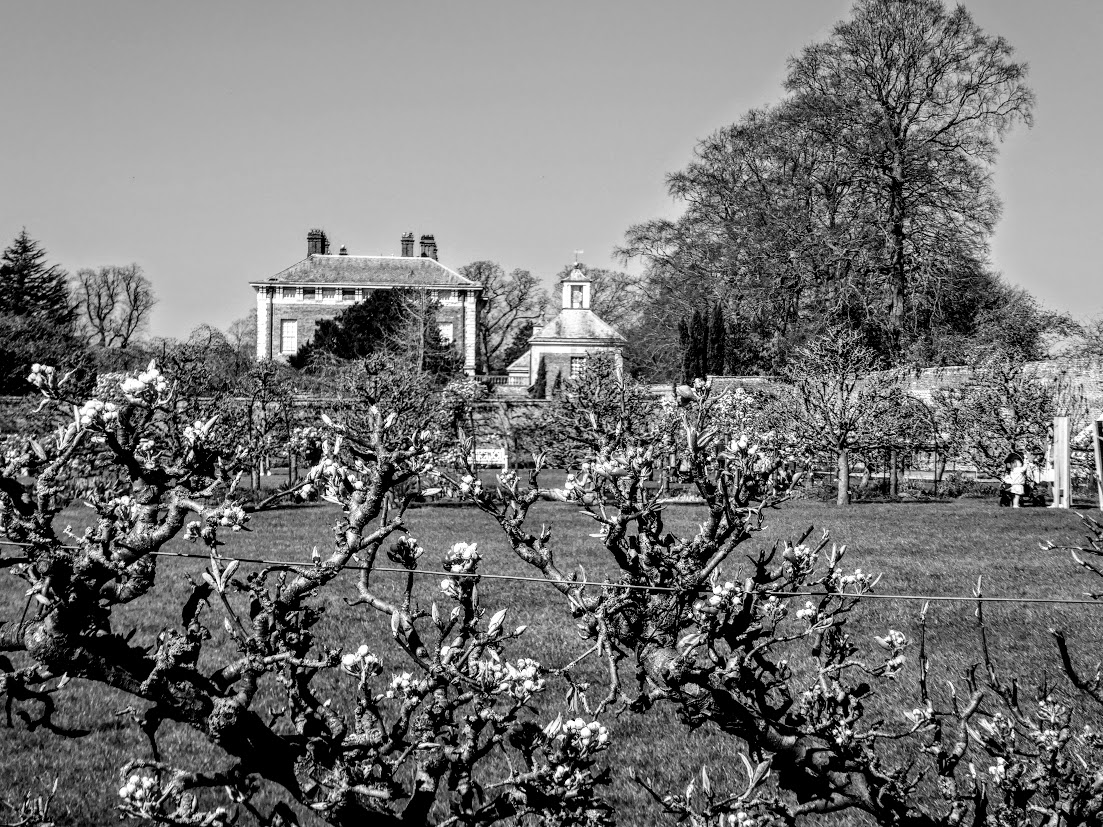
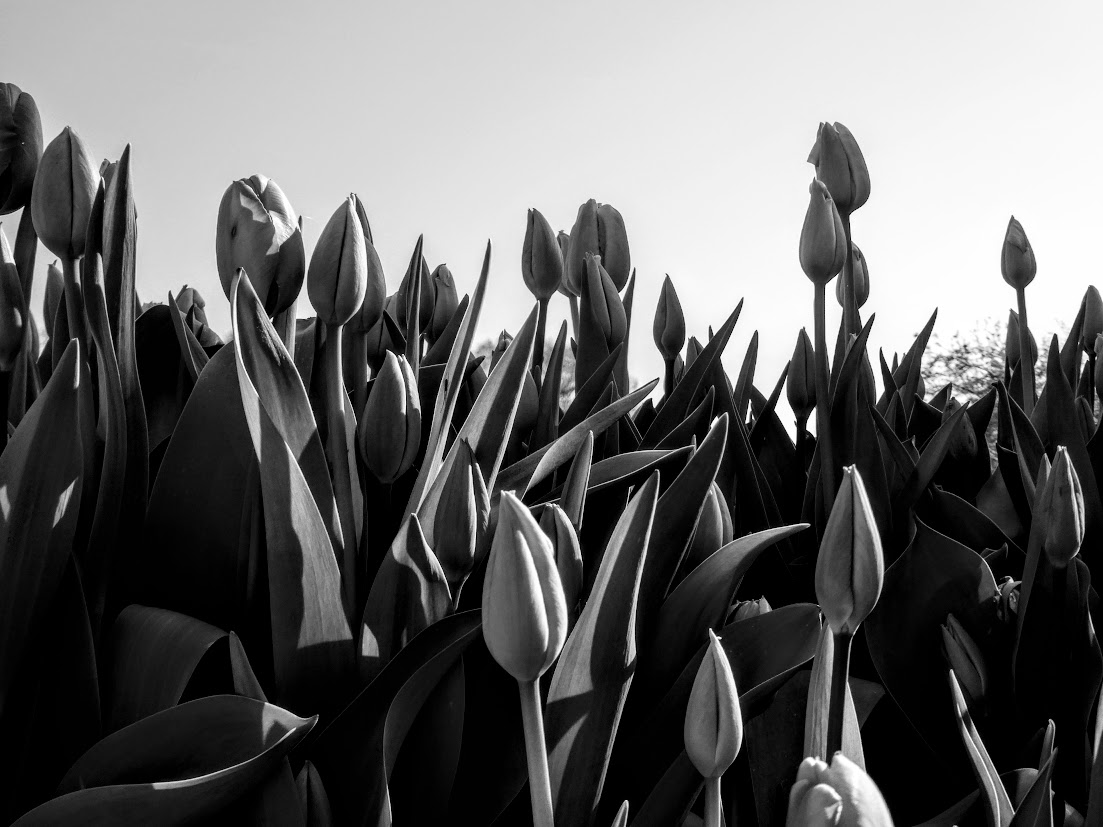
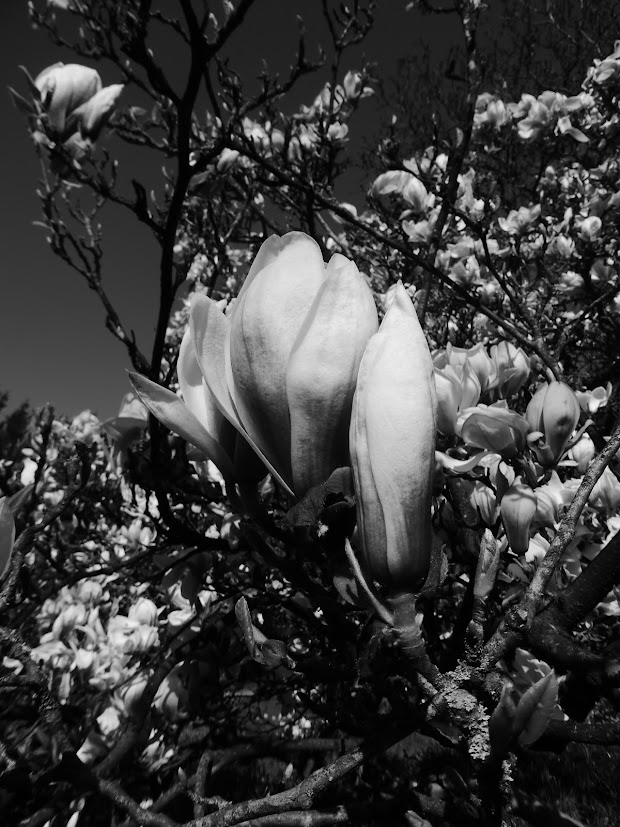
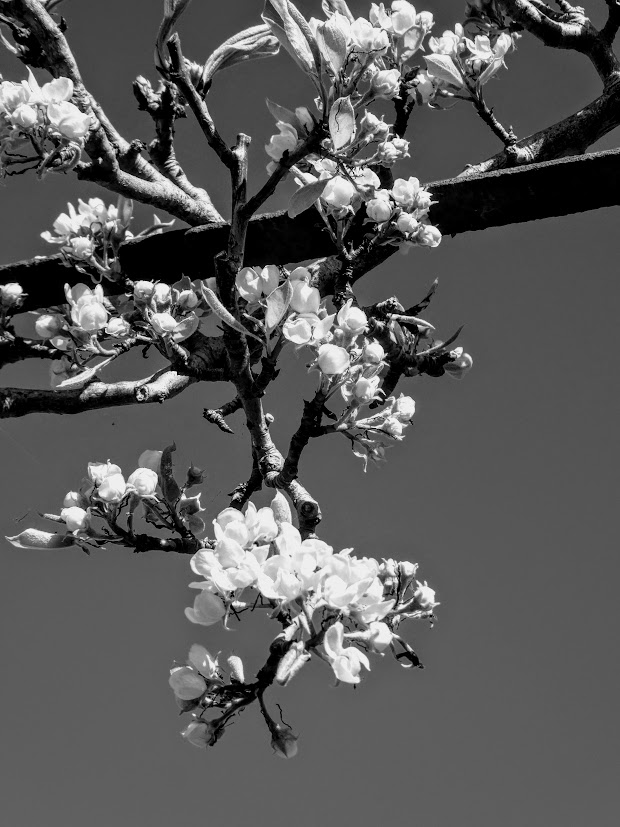
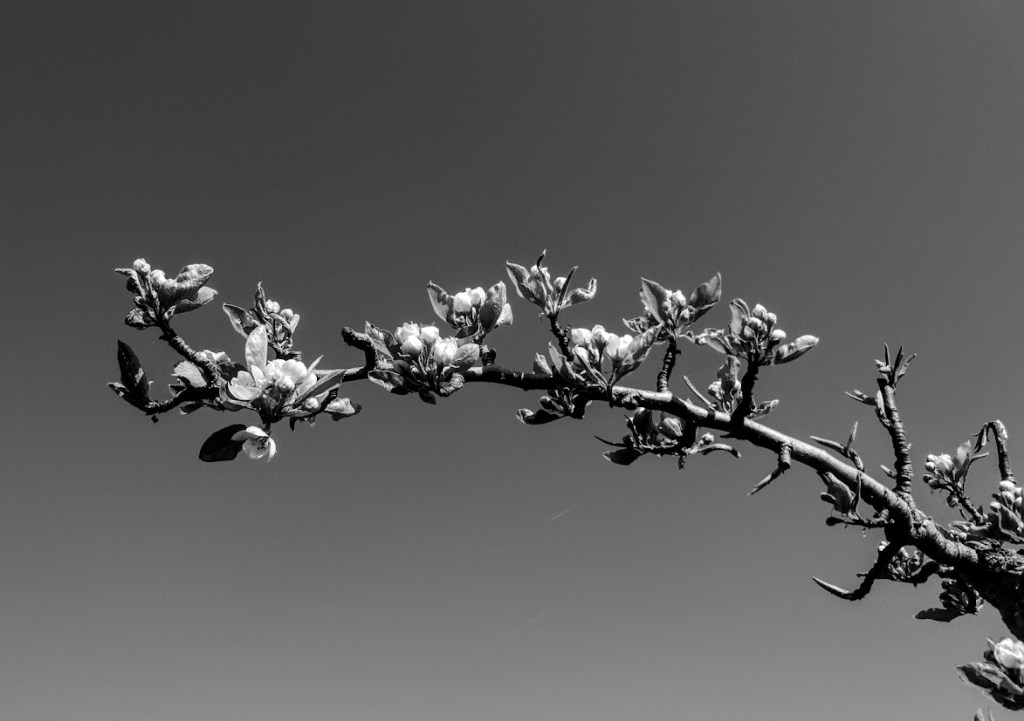
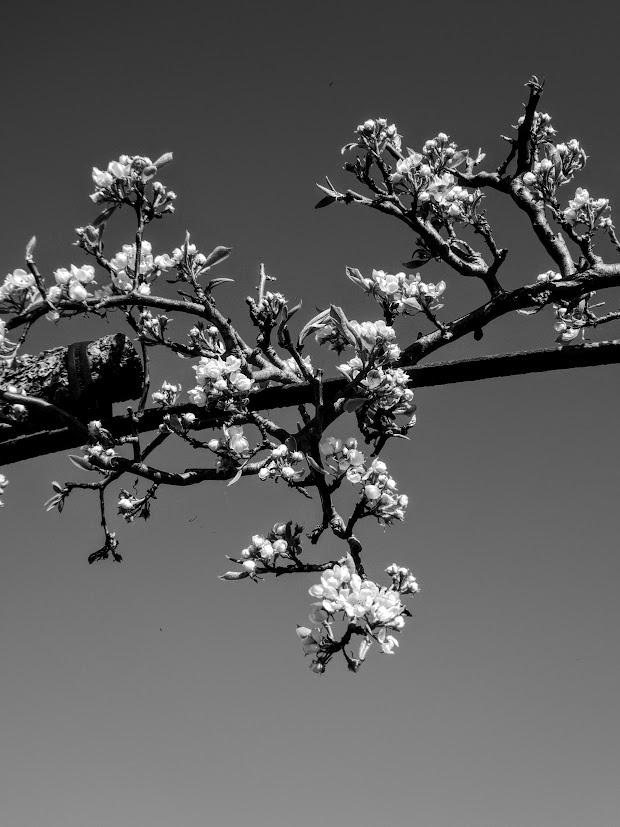
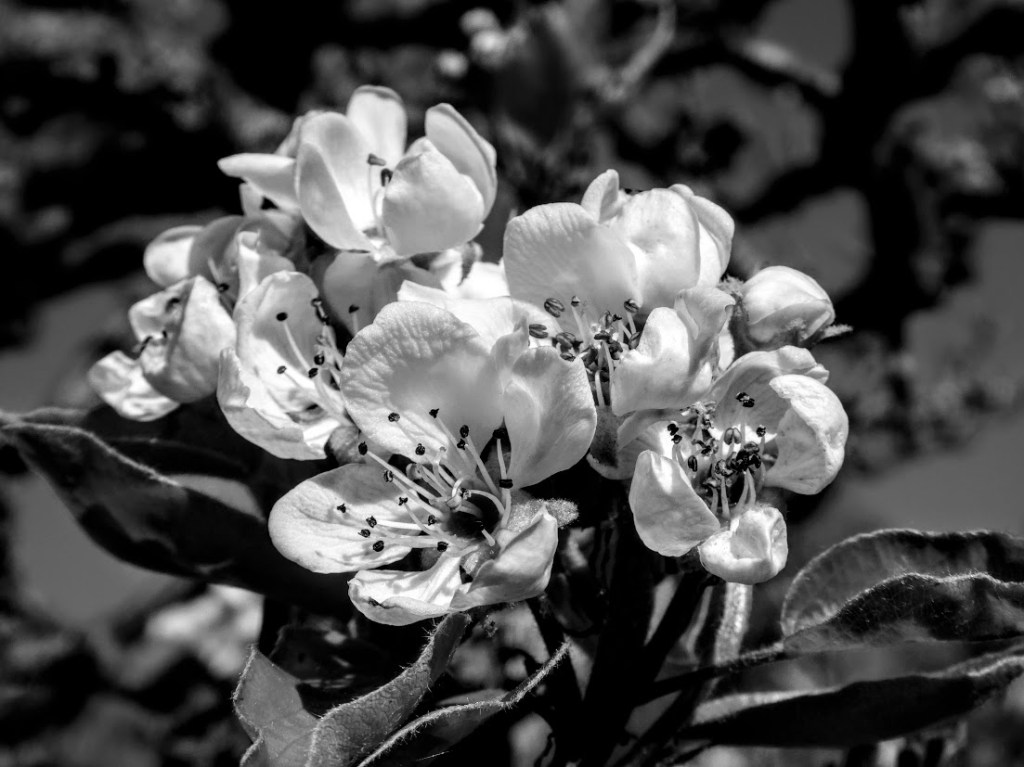
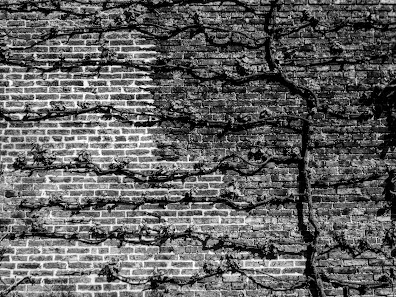
So is there even any point in ‘doing’ spring in monochrome? I thought I’d find out, and chose four images where it’s not just spring flowers telling the story, because they’re complementing the buildings they grow near.


Part of my own difficulty is that I don’t enjoy tinkering with photos. What comes out of the camera either works, or it doesn’t, and then I’ll junk it. At most I’ll level the picture up, maybe lightly crop it, even – slightly – fiddle with brightness. So my translations into monochrome are crude at best. If I want monochrome – and I’m increasingly choosing it over colour – I’ll shoot in black and white. And perhaps follow up with a further version in colour. I admire those photographers who use editing tools with discretion, so what we see is the original shot – just enhanced in subtle ways. I’m less keen on dramatic editing. But in a diary that is already over-full, I guess I don’t feel like giving this particular skill the time it needs to learn to do it well.
I’ll finish with Fountains Abbey as it is now, its grounds carpeted in daffodils. Black and white as my featured photo, and – my much preferred version here – in the above-mentioned Glorious Technicolor.

For Leanne’s Monochrome Madness
Next door to us is a field with six sheep. They’re not part of a farm. They’re siblings, and each one belongs to somebody different in the village – don’t ask, haven’t a clue. They’ve taken to galloping up to me every time I pass, hoping for a snack. A couple of times a week they get lucky. A cabbage leaf or two. Some chunks of celeriac or carrot. Broad bean pods (yum!). They never fail to live in hope, sometimes as often as four times day. I call them my Fan Club.

Yesterday, out for a local walk, I passed another nearby field, with perhaps a hundred sheep. A few of them noticed me, and just like their sheepy cousins next door to us, they set up a baa-ing announcement. ‘Possible food alert! Come on guys!’ And every one of them turned towards me and galloped to see what I had. Which was nothing.

The baas turned to complaints, but still they followed me. Noisily.
On I walked. Oh look! Lambs! The first I’ve seen this year.

And my walk took me slap through the centre of their field. Lambs and mothers normally skitter away. But no. They followed me. They chased me.
I tried to video this thrilling event, but dropped my phone. So that tiny clip is all you’re getting.
I went on. I was quite relieved that the next field was filled with a young crop of winter wheat, silently doing its thing and taking no notice of me. And that’s how it went on. Another field of sheep. They ignored me. A riverside walk along the Ure which took no notice either, but prattled and chattered its way along to the next village. A quiet woodland path where snowdrops are slowly being succeeded by wild garlic and bluebell shoots pushing their way through the soil, preparing for a fine show next month. Then home, choosing the path that wouldn’t take me past our demanding sheepy neighbours.
For Jo’s Monday Walk.
PS. WordPress’s oh-so-helpful AI has suggested tags for this post. It recommends …. ‘Jesus’.
Poppy meant no harm. She was a placid and amiable dog. MiMi trusts nobody, least of all A Dog. Poppy (who sadly is no more) stood at a respectful distance, wondering what to do. MiMi took to the garden bench, arched her back, fluffed up her fur, and hissed. This scene went on for about twenty minutes, till Poppy got bored, and sloped off .

For Jude’s Bench Challenge.
I was sorry, when we left France, that we hadn’t made more than a couple of visits to its Basque Country. It’s such a different part of France, for all kinds of reasons, some of which may become apparent in this post I wrote – gosh – fourteen years ago.
March 10th 2011
This week was a first for us, when we made a quick visit to the Basque country (Euskal Herria), way over to the west . When we got there, there were no frontier posts, but we knew immediately that we’d arrived. Suddenly, houses, instead of being colour-washed in creams and beiges and ochres, or not at all, were all tidily painted white, every single one, with ox-blood coloured shutters and paintwork. Place names were in French and Basque, and quite a lot of other signage too.

But the thing is, despite all that, we thought we’d arrived in Yorkshire, or Lancashire, or somewhere in England at any rate. Softly rambling ranges of hills, so very green, and studded with sheep. Roads which preferred to ramble gently round the contours instead of going straight in the French style. Take away the Pyrénées in the background, their jagged peaks still white with fresh snow, add in a few drystone walls, and – voilà! – the Yorkshire Dales.

After all the hard work back at the house, we needed the peace of the countryside, so we’d chosen to stay at an Accueil Paysan farm. We knew that meant that we’d be welcomed into simple comfortable accommodation at the farmer’s house, and share a family meal with them in the evening. Always good value in all sorts of ways.

The welcoming committee in this case turned out to be six cheerily noisy pigs, a gang of chickens, and a sheep dog. The humans were no less friendly, and we settled in by exploring the small farm with its 30 or so cattle, and about 300 sheep. Sheep’s cheese is the big thing round here, and throughout the autumn and spring, when there’s plenty of milk, this family makes cheese every morning (far too early for us to be there, it turned out: all over by 7 o’clock) in their fine new cheese-production shed.

Our hosts are Basque speakers. Their children only learnt French when they went to school. Now that one of these children has a son of his own, he and his wife (who’s not a Basque speaker) have chosen to have the boy educated at one of the many Basque-medium schools, so that he will be among the 30% of Basques who are comfortable using their language. It’s an impenetrable and complex one. Its roots are a bit of a mystery, and certainly it’s not Indo-European. With French, Italian and Latin at our disposal, we can make a good stab at understanding Occitan, the language of our region, but Basque remains impenetrable to anyone who hasn’t been immersed in it.


The next day, we explored St. Jean Pied de Port. From before the time of the Romans, it’s been a market town, an important jumping off point for Spain. It’s been a garrison too, and an important stop-over for pilgrims on their way to Compostella. Now it’s a tourist centre too, for walkers in the region. It’s an attractive town, surrounded by ramparts. We pottered around, enjoying views from the ramparts, pilgrim-spotting, ancient doorways, and watching the river, before setting off for a leisurely journey home.


And next time we stay, we’ll make it much longer than 36 hours.

The featured photo is a view of St. Jean Pied de Port.
Chairs. That’s what Brian of Bushboy’s World fame, and host this week of Leanne’s Monochrome Madness wants us to get our cameras out for. And I’ve decided to show Chairs in the Service of Art
My first clutch of photos all come from Spain. A day out in Logroño, la Rioja, yielded some street sculpture featuring chairs and those who sit in them, whether alive or sculpted.


More recently, in Barcelona, I visited of of its newer museums, Museu de l’Art Prohibit – the Musem of Censored Art. It covers political, religious and sexual themes, and is not for the faint-hearted, but I found it fascinating and enlightening.
The first image here was exhibited at the Pamplona Festival in 1972 – a brave thing to do, as Spain was still in the grip of Franco’s dictatorship. This depicts one of Franco’s secret policemen.

The second is by the South Korean artists Kim Eun-Sung & Kim Seo-Kyung, and shows a Girl of Peace. It was exhibited as part of the Aichi Triennale 2019 in Japan, and received threats of attack for being anti-Japanese propaganda. The exhibition was closed but reactions against its censorship forced it to be reopened. This artwork has caused various diplomatic incidents between Japan and South Korea. For its creators, it is an icon of peace. There’s another view of it as my featured photo.

My final Spanish shot is of a chair (and the kitchen stove?) painted on a garage door in a back street in Seville.

Back in the UK, to visit Harewood House near Leeds, and show an image of a chair constructed by the Galvin Brothers specifically for the house’s Yellow Drawing Room – a place to sit, talk, reflect, share, remember. Created at the time of the death of Elizabeth II, this chair was intended as a sober reflection on her reign. Its design, featuring maturing crops as part of the backrest, references the transient and intangible.

Lastly, I’ll take you to Edinburgh, to the National Museum of Scotland. This is where we saw this chair. An astonishing chair. It began its life as a simple willow tree, but was obliged to convolute itself as it grew into the form of a chair by Gavin Munro. Do have a look at his website.

Well, this hasty tour has turned up quite a few different chairs. It’s perhaps the simplest ones that convey the most potent messages.
Spotted in the graveyard of the village parish church . At last! The poor crocuses have been firmly shut and shivering against the cold, but on the last day of February, they dared to be a little bolder.

And I can’t resist showing you the shot just before that one. We were busy making Seville Orange Gin last week. Steep the peel and sugar in gin now, and it’ll be ready in time for Christmas, or preferably the one after that. Even better the one afer that …
For Brian’s Last on the Card.


These belong to some of the dancers of 400 Roses.
A ‘brolly’ is British (and Australian?) slang for an umbrella.*
For Jude’s Bench Challenge.
On the first Saturday of every month, a book is chosen as a starting point and linked to six other books to form a chain. Readers and bloggers are invited to join in by creating their own ‘chain’ leading from the selected book.
Kate: Books are my Favourite and Best

Prophet Song, this month’s starter book by Paul Lynch was one of my winning reads of 2024. Here are the final sentences of the review I wrote about this book, set in the near future, in Ireland. ‘This story brought the reality of life in Syria, in Ukraine, in Palestine frighteningly into focus. The final pages should be required reading for the anti-asylum-seeker lobby.’


Which leads me to my first book, which though not about living in a war zone, is about asylum seekers and illegal immigration: Sunjeev Sahota‘s The Year of the Runaway. Three Indian migrant workers in Sheffield, one legally married to a young Indian woman from London for the sole purpose of obtaining a visa. Once obtained, divorce and freedom for them both . This is their story. The young married man is relatively privileged. Another is here on a student visa which forbids him to work. But how otherwise can he send money back to his family? The third is low-caste and lost his entire family in political riots. In England, they are equally vulnerable to poverty, violence, exploitation as they move from one squalid and back-breaking workplace to another, always inadequately housed and nourished, always looking over their shoulder for their illegal or precarious status to be uncovered. This is an important book, helping to uncover the lives of the would-be migrant who has few choices, whatever the level of privilege enjoyed back home. And a readable one too. No wonder it got shortlisted for The Man Booker Prize.


Now a book about other immigrants to England, in Caryl Phillips‘ Another Man in the Street. This is a book about loneliness. It’s about leaving your homeland and facing rejection and even hatred, It’s about Victor, who left Saint Kitts in the Windrush years as a young man, in order to better himself. It’s about Peter, a Jewish refugee from Central Europe. It’s about Ruth, who’s English and firstly Peter’s, then Victor’s lover: but who’s cut herself off from her South Yorkshire home and family in moving to London. And it’s about Lorna, Victor’s abandoned wife.who came with their son Leon to join him from Saint Kitts. It’s told in the first, second and third persons, and the narrative moves back and forth in time and place over a 40 year period between these characters: always lonely and largely friendless, failing to communicate even with those they live with. They are generally speaking meek, and in the shadow of their pasts. An unsettling, if thought-provoking read.


Living abroad can take many forms, as shown in Katie Kitamura‘s Intimacies. This is a novel about dislocation, in many forms. The unnamed narrator has just moved to The Hague from New York to take up a temporary job as interpreter at the international criminal court. Her father has died, her mother has returned to Singapore, and as the child of a diplomat, she has lived everywhere and anywhere. She is rootless, and wonders if she will find a home here. Her boyfriend, Adriaan turns out to be married ‘but not for much longer’. So many ‘ifs’ and uncertainties. Not one thing in her life is certain or permanent. She’s unable to plot a clear path to her future, or even decide if her current career path is for her. This book is compellingly, lucidly, yet sparely written, yet establishes an intimacy between the woman and her reader. I found this a memorable book which deserves a second reading.


What happens though, to an immigrant who returns to the place where she was born and raised? This is the story told in the sequel to Colm Tóibín‘s Brooklyn: Long Island. Eilis came from Ireland to New York to marry Italo-American Tony twenty years ago. With reservations she’s happy with her lot, but some shocking news lands as a bombshell, and she uses it as an excuse to go back to Ireland to celebrate her mother’s 80th birthday. The story continues from Eilis’ point of view, and also from that of her former best friend Nancy who is having a secret affair with Jim, the man Eilis once loved. And it’s also told from Jim’s standpoint too, All three are dealing with complicated and conflicting emotions. The plot moves slowly forward until the last 50 pages or so. Then it hurtles into a maelstrom of action and emotion, unresolved even by the last page of the book. Is a third novel in the offing?


And what happens if instead of living, however precariously, in a country that is not your own, you are instead quite literally, all at sea? That’s the story of Maurice and Maralyn by Sophie Elmhurst. This is an adventure that reads like pacey fiction. It’s actually a true story: a love story, a tale of endurance in unimaginable hardship. The core of this book is the account of the 118 days a couple, Maurice and Maralyn spent adrift in the Pacific on a life raft, bereft of – well – anything really. Certainly they had no way of communicating with the world beyond their tiny and unstable refuge. We learn the backstory of Maurice, isolated, shy, largely estranged from his family: and how he meets the more outgoing Maralyn, their relationship founded on their love of exploring the Great Outdoors. Of how they scrimp and save to build their own ship, planning to sail to New Zealand. They plan carefully, systematically, but an encounter with an injured sperm whale sinks their ship. It’s a tender portrait of an unconventional love affair, as well as a quite astonishing tale of survival against all the odds.


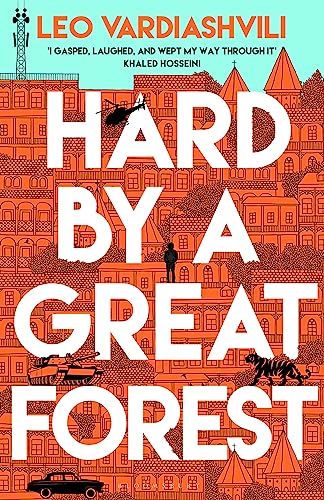
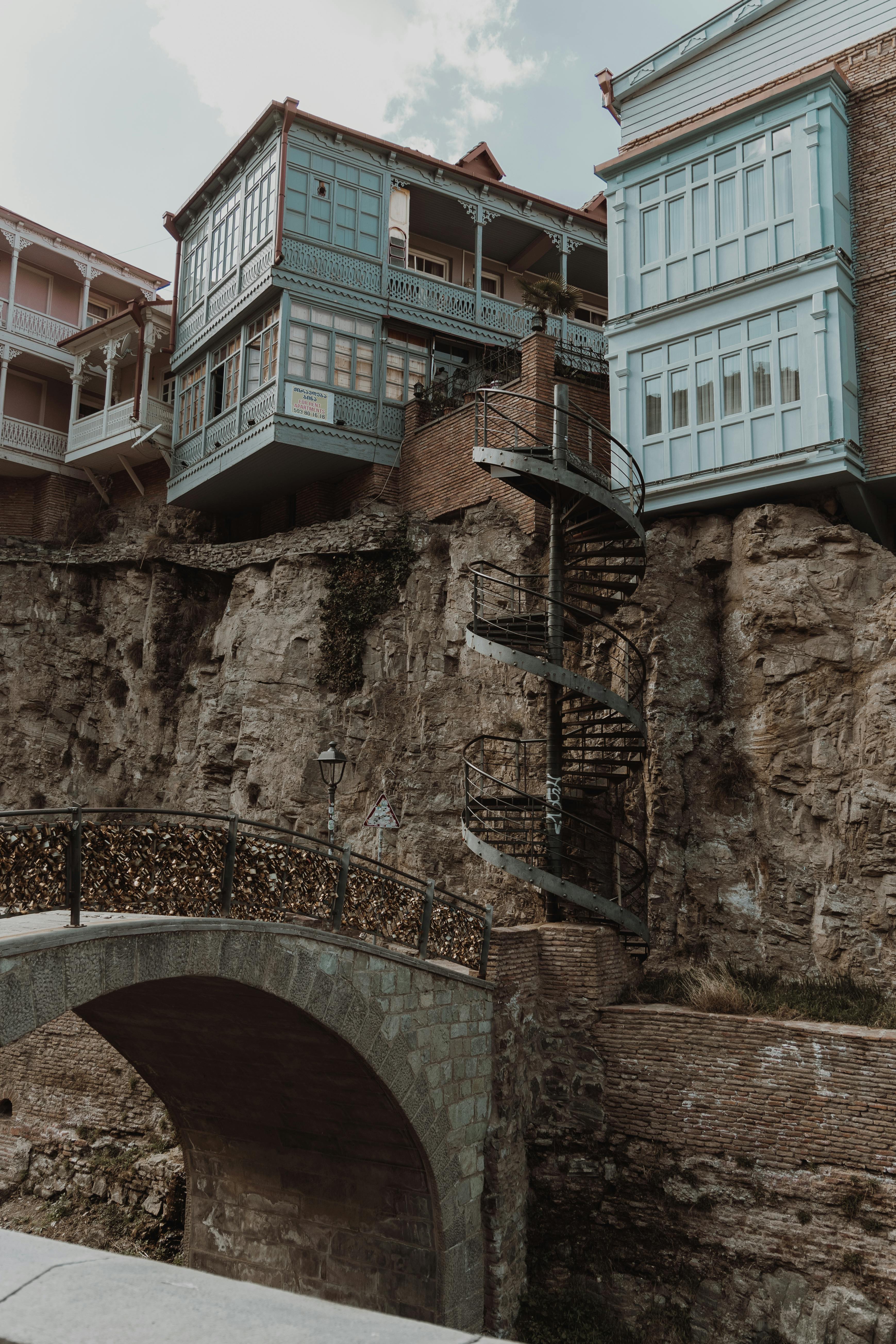
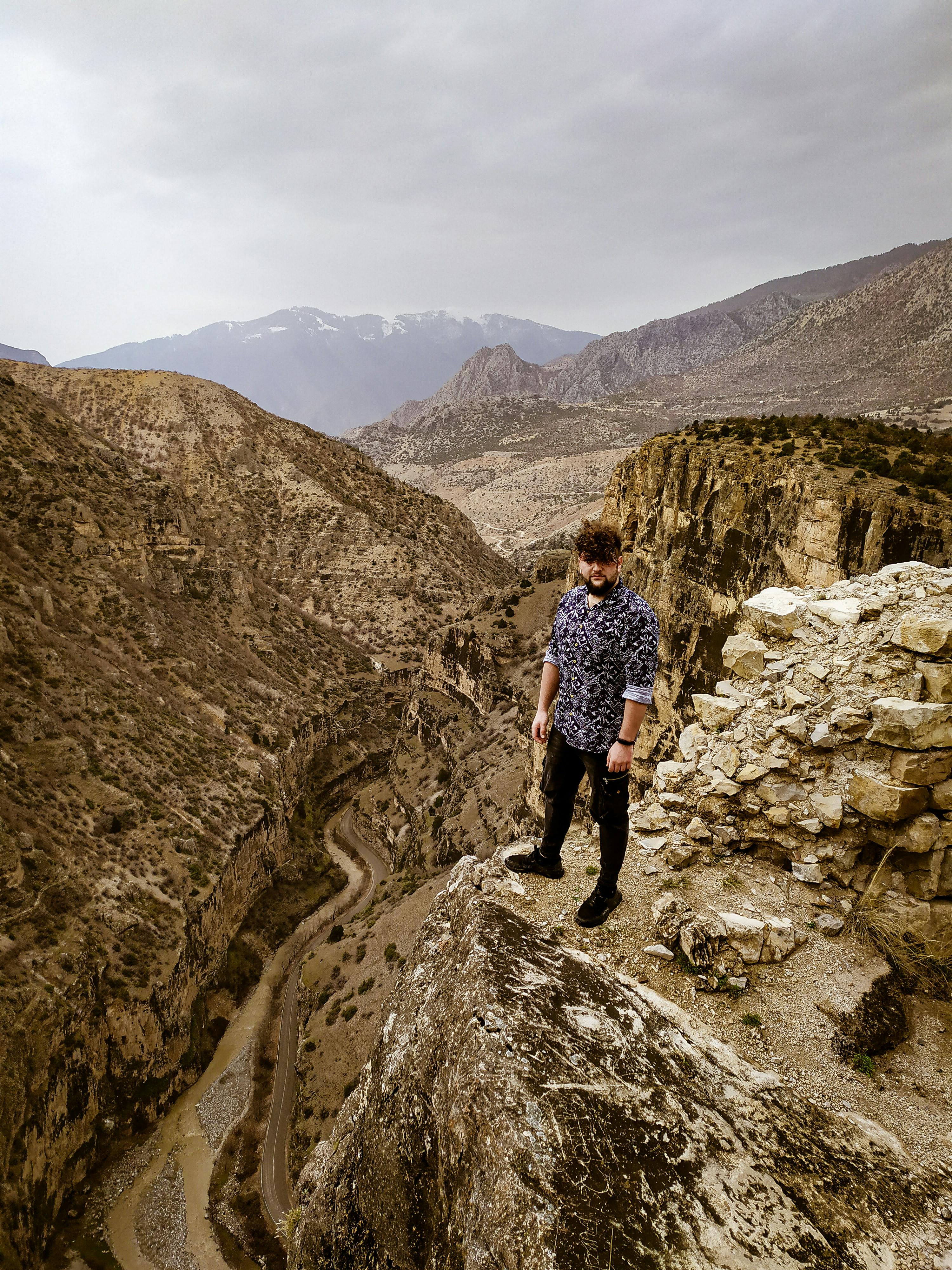
I’ll round off with a book I’ve yet to read: it’s our next choice for our book group. Leo Vardiashvili‘s Hard by a Great Forest. It seems to fit the theme I’ve established here, dealing as it does with Saba’s homecoming from London to Tbilisi, Georgia after more than twenty years away. Here’s what the Guardian says: ‘A compelling story about war, family separation and ambivalent homecoming … propelled by dark mysteries and offset by glorious shafts of humour.‘ I’m looking forward to this.
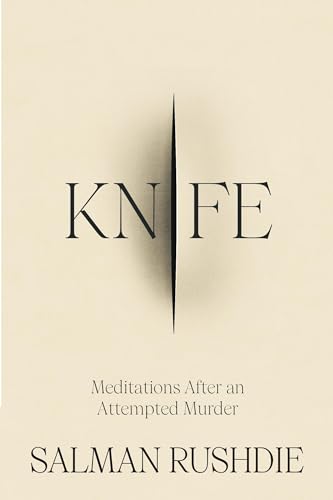
Perhaps it looks as if there aren’t too many laughs in my choices this month. Yet each one is leavened by lighter moments too. I wonder if next month’s starter will be too? It’s Salman Rushdie‘s memoir, Knife. I’ve reserved a copy from the library already.
The image accompanying Long Island is by Josh Miller, courtesy of Unsplash. The remaining images are my own.
You must be logged in to post a comment.