The weekly photo challenge posed by WordPress is taking a week off. I don’t have to. I thought I’d add to the piles of photos clogging up the internet showing snow. Snow in the garden, out by the lake, up a mountain, shutting down the motorways, whitening city streets ….
We woke up this morning to bitter cold. Minus One Celsius. This will make my American and Canadian readers laugh. Look at this post from my blogging friend Kerry. Where she wakes up it’s -32, and steam is rising from the frozen lake. She’d better not read this. Where she is, nobody ventures out, not even – especially not even – the cats.
This is snowy weather British style. Just a couple of inches. Just enough to snarl up the transport system and fill the airwaves with ‘Is your journey really necessary?’ type warnings. It’ll probably be gone tomorrow.
We are a horribly traditional couple, and no role model at all for our grandchildren. If it’s jobs round the house that need doing, Malcolm’s your man. He’s a very handy plumber, and spending the morning fiddling with the electrics presents him with no problems at all. He’s good at what he does. I’m not even any use as the gopher. I’ll bring him the wrong sort of screwdriver, and am apt to confuse hammers and mallets.
Cooking however is a different story. I’ll open the fridge and plan a meal round whatever catches my eye or needs using up. I read recipe books for fun, but rarely use them whilst actually cooking. Spending time in the kitchen is relaxing for me. Malcolm requires a detailed recipe, and if he finds we’re out of some minor ingredient, the planned-for dish is hastily abandoned. In advance of actually cooking, he carefully lines up, measures and weighs all he needs, just like Delia Smith used to do.
So this Christmas, I’ve given him a present designed to remove cooking-related stress. Here it is: a whole book of dishes needing only five ingredients, and top of the best-seller lists as well.
Jamie Oliver’s latest book.
Very meanly though, I’ve insisted that in return for the gift, he has to plan and cook a dish from it once a week.
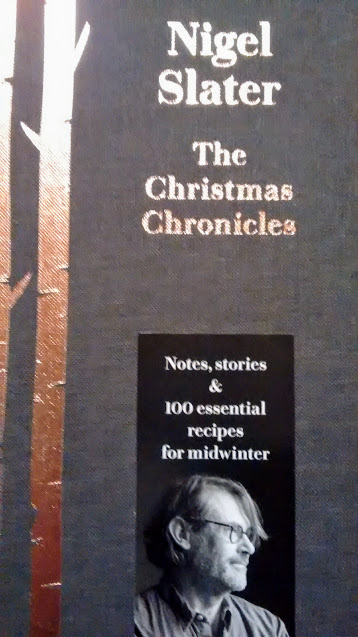
He says he’s up for the challenge. Happily, he hasn’t given me a D-I-Y book in return. No home deserves my botched attempts at repair and maintenance. Instead, he’s given me this: much more my cup of tea.
Malcolm says I ought to call this post ‘The Poisoned Chalice’. I think that’s a bit harsh.
For the last WordPress Photo Challenge of the year, we’ve been bidden to come up with our favourite shot of 2017. How to choose?
I was thinking of maybe reviewing the year, one month at a time: family moments, walks in the Dales, trips to Poland, Germany, France and Spain. Nope, it wasn’t working .
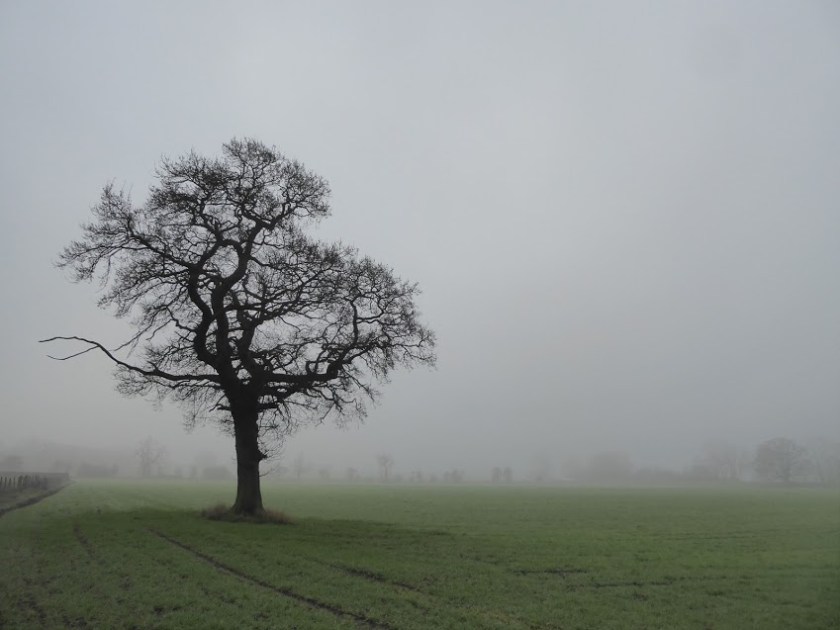
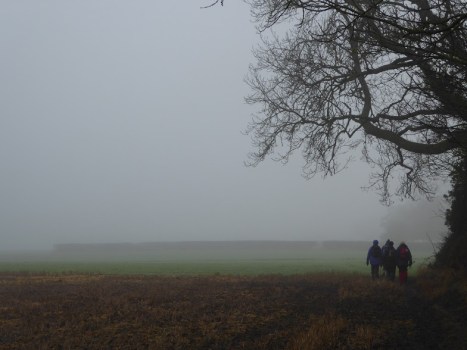
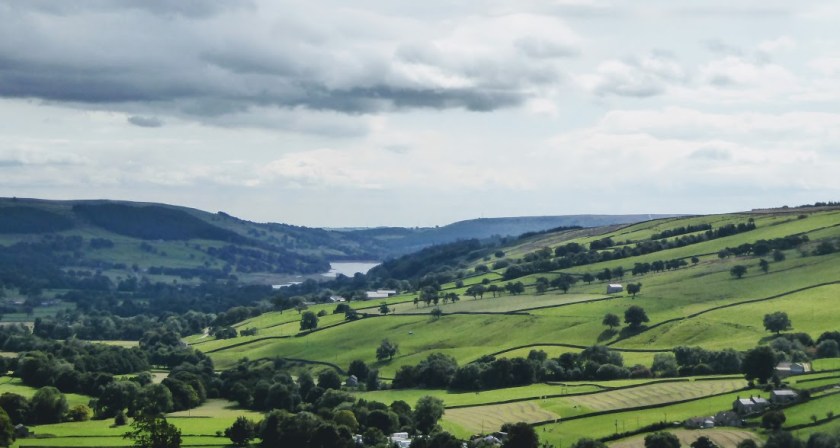
The shot that I found kept presenting itself was this one, taken on a chilly walk not so far from here almost a year ago. It chimes in with my somewhat gloomy feelings about the future: political uncertainty here, in Catalonia, in America, to name just three.
Not all was gloom though. Look! We were walking with friends. And in the end, the sun came out, and we were able to turn our backs on the damp unfriendly fog.
If only politics were so simple. Happy Christmas everyone.
Winter’s not been around in recent years, not really. Those crisp snowy days we all seem to remember from our childhood, those snowball fights, those Jack Frost patterns etched our bedroom windows, those chilblains – all seem to be ancient history.
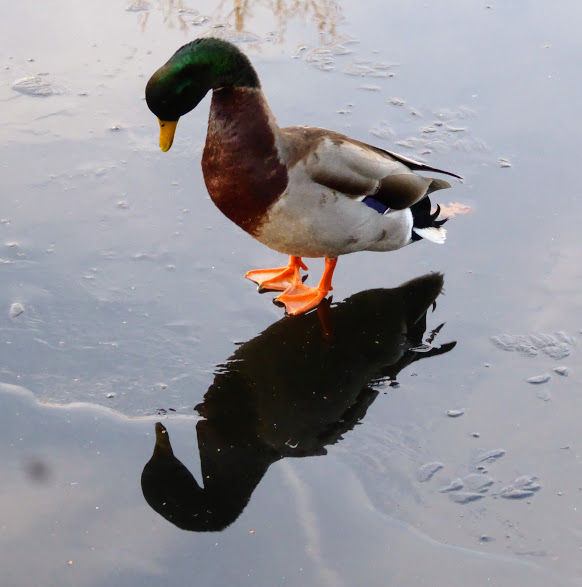
This week in London, where we had an early unofficial Christmas with William and family, winter arrived for one day only before becoming sunny and mild again. Look at these ducks and gulls in the local park, standing in puzzled uncertainty or ineptly skating on a frozen pond. One day only was quite enough for them.
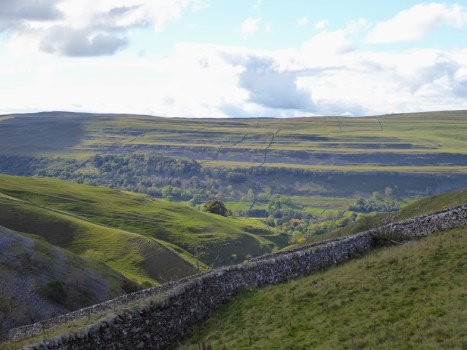
If you go walking in the Yorkshire Dales, you won’t avoid a few ups and downs. And not just the hills either. There’s a small matter of stiles to be climbed to get over all those drystone walls.
Near Kettlewell, Yorkshire.
This post is in response to this weeks WordPress Photo Challenge: Ascend
I’ve never told you about my Tuesday mornings, have I? Every other Tuesday, I’m in Ripon with Sheila and her Creative Writing Group. We have such fun. Today, for instance, having looked at how many genres of writing there are (dystopian novels, anybody? Memoirs? Epic verse?) we each wrote three sentences – just three – introducing the story of Cinderella. And then we did it again. And again.
I can’t take you to the panto (I wouldn’t anyway. Not a fan). But I can offer you my three versions of Cinderella, which neither Perrault nor the Brothers Grimm would recognise. Take your pick.
Cinderella Castle in Walt Disney World, Christmas 2007: Benjamin D Esham.
If you visit the town of Fantasienburg, be sure to visit the new museum dedicated to Cinderella’s Ugly Sisters. These two widely misunderstood figures from German mediaeval history have recently been reappraised. Evidence uncovered in previously unpublished documents found at the University of Würzfurt reveals a surprising story……..
or……
The court of the House of Grimm announced yesterday the death of King Charming at the age of 96. He died peacefully in his sleep. His reign was characterised by a rejection of the flamboyance shown by his father, in favour of the simple values espoused by his consort, Queen Cinderella……
Arthur Rackham’s 1919 illustration to CS Evan’s edition of ‘Cinderella’.
or ….
She seemed a slatternly young woman. Her hair was greasy, her clothes stained and worn, and her hands, with chipped dirty nails, were covered in calluses. The equerry regarded her with disdain and disapproval …..
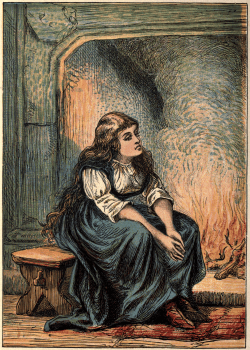
A fairly wholesome Cinderella, dating from 1865.
I might take one of these stories forward over Christmas. Which one?
This day three weeks ago, I was in Sagunt, near Valencia. When I wrote about it, I posted not a single photo, but promised you a few later. You’ll have to wait for the ones celebrating this fine city’s Roman, Moorish, Jewish and Civil War past. Today, you can see the cheeky dragon who’s roaring from the top of a perfectly ordinary drainpipe fixed to a perfectly ordinary house.
I’ll show you the cheeky cactus growing in the gutter of another perfectly well-appointed house nearby.
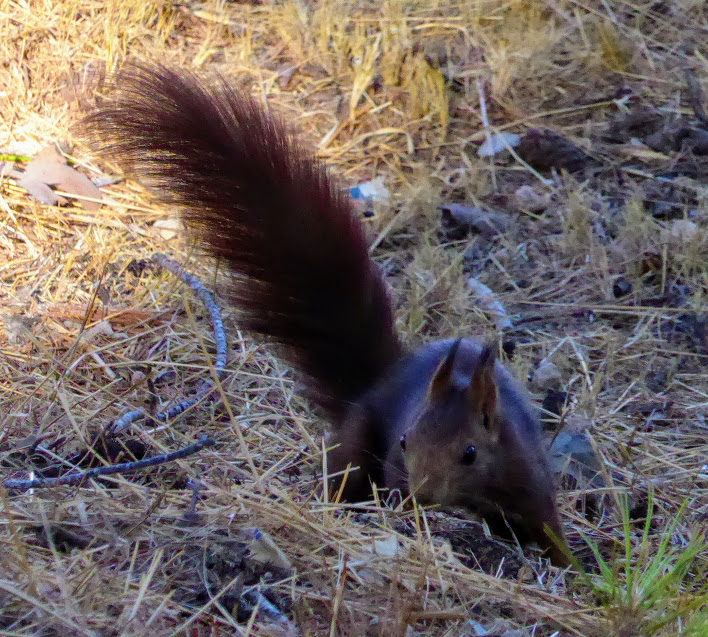
And you can see the cheeky red squirrel – so exciting to an English person used only to his pushy grey cousins – who declined to sit still and pose nicely while I fussed around turning on my camera.
This week’s WordPress photo challenge invites us to find cheeky photos.
Once upon a time – 1989 actually – two babies were born: a girl in England, a boy in Spain. They each had siblings more than ten years older than they were. They each went to school and did well, and in due course they went to University.
When they graduated, they wanted to train or work as teachers. The reality was that one of them could only find a job in a call centre, the other by working in a bar or restaurant It wasn’t what they wanted.
By chance, opportunity knocked. The English girl got the chance to work as a teaching assistant in Spain. The Spanish boy became an au pair in England. They worked and learnt hard, and within a year, both had found regular teaching posts.
Since then, five or six years have passed. The English girl speaks Spanish with ease. The Spanish boy is very comfortable speaking English. Their careers have developed nicely. Each considers the country that they ended up in, almost by chance, as home.
Have you guessed yet that the English child is my daughter Emily? The Spanish child is my new Spanish teacher Javi. If they wanted, it’s not impossible that they could swap the lives they’ve chosen by exchanging their jobs, their homes and their social lives with each other, and go back to their countries of birth. But they don’t want to. They’re settled, and feel enriched by the choices they’ve made. It’s called ‘Freedom of Movement’.
Oh, I say, WordPress Photo Challenge. That’s a bit much. ‘Serene’? I did that last week, under the heading of ‘Transformation’.
Still, you can’t keep a serene place down. And if l’Albufera as the sun was was setting good enough for last week’s post, it’s good enough this week too. Especially as I’ve exchanged enjoying the warmth in balmy Spain for shivering in temperature of 1 degree in gusty, snowy North Yorkshire.
This was a weekend of travel. Of packing up and leaving my temporary home in Valencia and catching a coach to Barcelona (there was some kind of disruption on the rail network which I was keen to avoid).
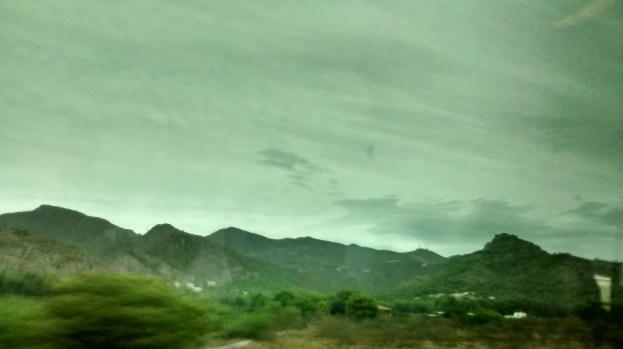
A view from the coach
I was a little anxious about Barcelona. Every day for a fortnight, I’d watched the evening news on TV with my hostess. Every day for a fortnight the situation in Catalonia had been top of the agenda, for a good twenty minutes or so. There were pictures of massed placards, of disaffected locals chuntering volubly into microphones, of city fountains running in Catalonia’s colour of yellow.
Yes! It’s time.
I arrived in a city where everyone was enjoying a normal sunny Saturday, Spanish style. There were flags and posters certainly, but mainly concentrated in various hotspots. Catalonia’s been keen on nationalist flags for years in any case. What was (not) going on? ‘You’ve been watching Telecinco?’ howled Emily and Miquel, leaving me in little doubt that this less-than-even-handed commercial channel is the Daily Mail of the Spanish airwaves.
I don’t feel qualified to comment on what’s going on in Catalonia. But it does seem an awful lot like Brexit. Nobody is going to be happy whatever happens. Families and friends are divided. Hatred is legitimised. It’s a mess.
Still, I was there just to catch up with Emily and Miquel before flying home. To join the crowds of locals enjoying the warm autumn weather, calling in for a drink at a bar every now and then, before later, much later, having a convivial meal in a thoroughly convivial restaurant.
Dancing in the street in Gràcia on Saturday evening.
On Sunday, a bit more of the same, with Miquel’s family this time, before flying back to a windy Leeds, where the temperature was a mere 23 degrees colder than it had been in Valencia in the middle of the week.
Barcelona skyline from Miquel and Emily’s flat, Can you spot la Sagrada Familia?
And this week? I’m doing as little as possible. Exhaustion has set in.

















You must be logged in to post a comment.