The I Spy Book Challenge

I  opened a new post from Bookish Beck‘s book-based blog.  She’d taken up a challenge, which she’d read about  here.  I’m hoping at least one of you may pick it up too and give it a go (I’m looking at you, Sandra...)

The idea is to take the list of twenty themes and find a book on your bookshelves that contains (either on the cover or in the title) an example in each category. You must have a separate book for all 20, be as creative as you want and do it within five minutes (or maybe a bit longer if you have too many books on too many overcrowded shelves, and you photograph them on the way).  The original challenge also contains the initials TBR, and it only later occurred to me that of course this means To Be Read.  So I’ve failed at the first hurdle, as I’ve read thirteen of my list.  Tough.

Food: Like Water for Chocolate: Laura Esquivel.  I still haven’t read this.  Put it on the TBR pile.
Transport: Stranger on a Train: Jenny Diski.  Am I going to read this?  You tell me.
Weapon: Where Poppies Blow: John Lewis Stempel  Not a weapon in the title or on the cover.  I think we can agree there were weapons involved in WWI.  This is a wonderful book putting the Great War in an entirely new context.

Animal: A Tiger in the Sand: Mark Cocker.  I love this man’s writing.  So I’ve enjoyed these essays.

Number: A Year in the Life of William Shakespeare: James Shapiro. Scholarly, readable social history.
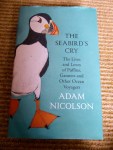
Something you read. The Seabird’s Cry: Adam Nicolson.  There’s a reason for choosing this.  My friend Penny gave me this.  My friend Penny introduced me to Becky’s blog.  Perfect. This is a wonderful book: nature writing at its best.
Body of water: Caught by the river.  A good anthology for dipping into.

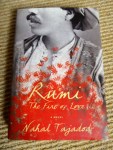
Product of fire: Rumi, the fire of love: Natal Tajerdod.  TBR.  
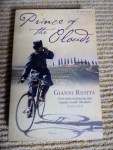
Royalty: Prince of the Clouds: Gianni Riolta.  I can’t remember if I’ve read this.  So I guess I haven’t.
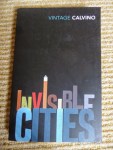
Architecture: Invisible Cities: Italo Calvino.  This wasn’t an easy read.  But it was short and stimulating.
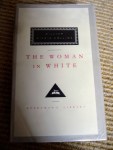
An item of clothing: Woman in White: Wilkie Collins.  It’s not an item of clothing.  But it is clothing.  And in my case, another TBR classic.
Family member: Daughter of Fortune: Isabel Allende.  How come I haven’t read this yet?

Time of day: How to stop time: Matt Haig.  A weird (in a good way!) and original time-travelling yarn.

Music: Music and Silence: Rose Tremain. I haven’t read this for years.  I know I enjoyed it.

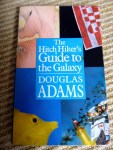
Paranormal being: Hitchhiker’s Guide to the Galaxy: Douglas Adams.  What would I have come up with if I hadn’t found this book that Tom must have left behind, all those years ago?  We used to listen on the radio together.
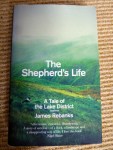
Occupation: The Shepherd’s Life: James Rebanks. A shepherd from a family whose occupation it’s been for generations.  This shepherd has been to Oxford.  He works for UNESCO. A realistic and illuminating  look at the realities of rural life in Cumbria.
Season: Hawthorn Time: Melissa Harrison.  A good story, with believable characters, with the countryside coming in at top spot.

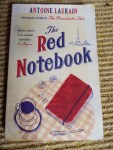
Colour: The Red Notebook: Antoine Laurain.  A vairy Frainch little mystery.
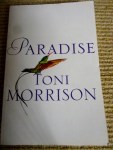
Celestial body: Paradise: Toni Morrison.  An eloquent, poetic though quite difficult book, read a long time ago now.
Something that grows: The Tulip: Anna Pavord.  Though not a tulip fan, I like Anna Pavord’s writing.  Fascinating stuff.
 

In which I graduate from the Universitat Pompeu Fabra, Barcelona

I’m lying of course.  Even I can’t do a degree in three weeks.  But ….. I have been a distance learner at this seat of learning, and I’ve loved it.  I’ve exchanged my 1970s student life, putting the world to rights in the refectory or the students’ union bar for on-line discussions with Anglophones with the hugest variety of life experience.  I’ve exchanged echoing lecture theatres for my own study, where the lecturer delivers his or her piece at exactly the hour that suits me, and repeats it on demand.  I’ve exchanged official reading lists for comments and suggestions from fellow students, based on newly discovered shared interests.

All this is thanks to FutureLearn.  They publicise courses on every subject you can think of, and lots that you can’t.  Some are paid-for courses right through to professional qualification or degree level.  But many of them are not. Universities in every continent run short free courses and they want us to be their students.  If only I’d seen Hanyang University’s Introduction to Korean before we went two years ago!

No matter.  What I saw a few weeks ago was this – Getting to know Catalonia: An introduction to the Catalan language , culture and society.  What timing!  Emily and Miquel are buying their first home together and Emily’s had promotion in her job in Barcelona.  Catalonia’s going to be part of our lives.

It didn’t begin well, and I whinged to Emily that I’d signed up to a piece of propaganda from the Catalan Independence movement (‘What did you expect’?).  In fact however, we’ve had an overview of economics, history, literature and the arts and popular culture and it’s a solid grounding for further study.

What’s made it has been the fellow-students.  I’m sure some people do what’s set in front of them and are happy to leave it at that. It’s probably all they have the time or inclination for.  For a hard core of us though, it’s our colleagues that have made the difference.  The civil servant in the Welsh office at the time when their bilingual policies were being developed; the Catalan who observed that there is no ‘standard’ Catalan, so in the media, do you use the language of the Balearics, the North West or the Central provinces, or even (who knew?) the Catalan spoken in Alghero, Sardinia ?  The Irish chipped in, and Swiss Germans, and other linguistic minority groups.  All this provoked lively discussions about language, and languages that have been suppressed (as Catalan was, unsuccessfully, and as Occitan was in France, largely successfully).  Every topic has had us helping each other out.  Most of us are woefully badly read in Catalan history and literature, so we share ideas about more accessible material.  Away from the lectures, the tutors barely show their faces, and that’s fine.  It is a free course after all, and we have proved that self-help works.  In just three weeks we’ve established a learning community where we have given something, and taken a lot, and are the richer for it.

I’ll be on the look out for my next free course from FutureLearn soon.

Every time I open the coursework, this is the image I see. An ariel view of a human tower in the making: Catalan cooperation at its finest.

Snapshot Saturday: the awakening garden

Originality has gone out of the window as I enter Day Twelve of the Great Coughing Virus.  I’ve found some pictures from last year’s much more clement spring.  This is a walk round and about the awakening garden, exactly a year ago.

This week’s WordPress photo challenge is ‘Awakening’.  Click on any image to view full size.

Spring: red, yellow, white or green?

I’m now on Day Nine of The Great British Coughing Virus, and as you may be unlucky enough to know, it ain’t fun. I’ve done nothing worth writing about, and my creativity quotient is at an all-time-low.  Instead, I thought I’d share with you the piece I wrote for my U3A Writing Group the other week, following the prompt ‘red’.

Spring: Red, yellow, white or green?

Spring is not red.  Spring is white, as the late snowdrops poke their heads above the frosty soil.  It’s yellow with primroses, daffodils and aconites: and later, laburnum and dandelions.  It’s fresh citrus green, with young tender grass and unfurling leaves.


Summer is red.  Summer is scarlet strawberries, velvet raspberries and glossy cherries.  It’s poppies among fields of wheat. It’s glowing noses and peeling shoulders on a crowded beach.  It’s roses and nasturtiums and salvia and geranium vying for space in the summer flower bed.

Autumn is red.  In autumn, leaves drop from the trees, turning from green to yellow and then to russet red as they reach the ground.  Crab apples glow on trees, and foragers like me gather them, and tumble them into a pan to simmer with sugar and spices to make a translucent ruby jelly for spreading on toast through the bleak winter months.  

Winter is red.  Bright berries poke out from beneath the sleek green leaves of the holly. Vermilion rose hips stand starkly on black branches, cheerfully  transforming barren twigs and colouring the winter landscape. There’s little Robin Redbreast, perching on a scarlet pillar box, and all those gaudy Christmas decorations.

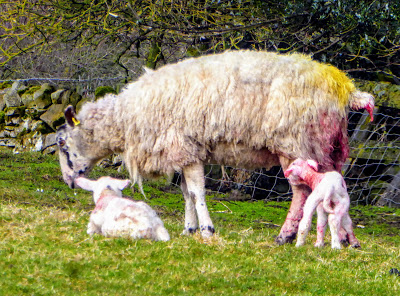
Spring is not red.  Or at least I didn’t think so, not until last week.  Here’s what I found on a walk across a Daleside farmland: a ewe, with two only-just-born lambs. Her babies were stained bright red with her blood, as she licked them clean.  Spring that day was a Red Letter Day, celebrating new life.

A ewe and her new lambs near West Witton, Wensleydale.

Snapshot Saturday: the happy bookworm

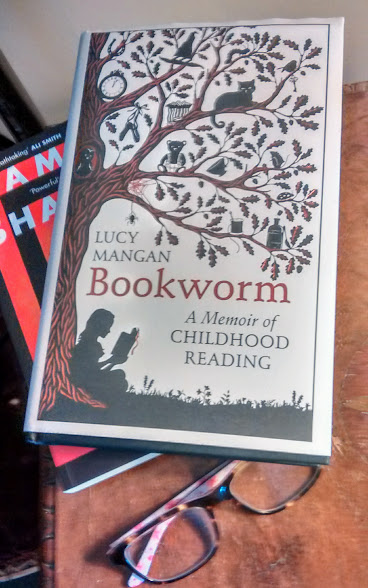
I’ve been smiling a lot this week, and it’s all thanks to Lucy Mangan, and her new book ‘Bookworm: a memoir of childhood reading’.

Bookworm. And underneath it, another excellent read. Any guesses?

I’d thought that as a child, I was bookworm too.  Compared with Lucy Mangan I wasn’t even trying.  She resented the time wasted in eating a meal, and as for playing with friends – she never even considered doing that.

Yes, I can remember that Christmas when I was 10, when I was given 19, yes NINETEEN paperbacks, and had finished the first one before we’d even cut into the Christmas cake.

I can remember the row when my father, getting up for a night-time toddle to the bathroom, found me happily reading my way through another installment of ‘Jennings and Darbishire‘ or ‘The Lion, the Witch and the Wardrobe‘.  Did it never occur to my parents to wonder how I could have got through a book a day any other way?

Lucy’s mother must be a few years older than me.  Lucy herself is only a couple of years older than Tom, and was brought up only a a mile or two away from where he lives now.

Because she was such a redoubtable reader, Lucy Mangan not only read the books that I enjoyed reading with Tom, Ellie and Emily, and now with grandchildren too: but she also discovered the treasures familiar to me as a child of the 1950’s.  I know she wrote this book just for me.

I was born before the Golden Age of the picture book.  Luckily my children weren’t.  ‘The Very Hungry Caterpillar’? Judith Kerr’s ‘Mog’ books?  Shirley Hughes?  Quentin Blake?  How had I managed without them?


I’ve wallowed this week in memories of ‘My Naughty Little Sister‘; ‘The Church Mice‘; John Burningham; Raymond Briggs; Roald Dahl; ‘The Secret Garden‘ and all those 19th century classics by – largely female – American authors.


You couldn’t keep the smile off my face if you tried.

This post is in response to this week’s WordPress photo challenge, ‘Smile’.  It’s a total cop out on my part.  I don’t think my photo of a book jacket is exactly rising to the occasion, do you?

Click on any image to view full size.

Very wet, Easter

Last year, my son Tom and Team London came to Yorkshire to enjoy Easter In The Country.  They saw lambs and ducklings and chickens and rabbits – all the kinds of creatures that the average London park is a little short of.

This year, they asked for more of the same.  Easter was early, so we knew that the ducklings probably wouldn’t appear.  We weren’t to know though that this year Easter would be very cold and extremely wet with hail slashing our cheeks, then sleet.

Tom and I did manage a walk up the lane to let William see the lambs.  That was when we got caught in a vicious hail storm.

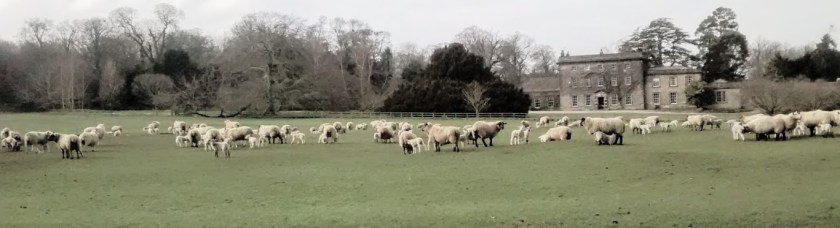
Lambing time at Sleningford Hall.

As last year though, it was our friends Gill and Dave and their family who saved the season.  William stroked their dogs and cuddled their cat Marmite (who used to be ours, before we went to France).  Grandson Jack came round, and the two little boys bonded immediately, hunting for the eggs and chocolate treats the Easter Bunny had left (inside: no self-respecting Easter Bunny wants to get chilled to the bone hiding eggs in the garden).

Hunting for a final few eggs.

Then it was time to visit Reggie the Shetland pony and his new friend Maple.  They were saddled up, the boys were equipped with riding helmets, and off they went for a ride.  Well, Jack did.  He had first mounted a horse when he was six weeks old so now he’s a pro, trotting and everything.  William lasted about two minutes.  Sitting on Maple’s back was one thing: wobbling about when she moved off quite another.  William preferred walking alongside.

Then it was pay-back time.  William was put to work barrowing horse manure from stable to manure heap.  There were eggs to be collected – he only smashed one.  Finally, he had to feed the hens.  And he got to keep the eggs he’d found – scrambled eggs for tea!

Memorable moments for a city child.  Thank you Gill, Dave, Becky, Andrew and Carly … and of course Jack … for a very special morning.

Click on any image to see full size.


Snapshot Saturday: The timeless drama of a sunset

I’ve shown these photos before.  I’ve even shown them in a previous WordPress Photo Challenge.  But I’ll never forget this February sunset from a few years ago in Laroque d’Olmes.  ‘Dramatic’ doesn’t seem an overstatement here.


This is my contribution to this week’s WordPress Photo Challenge inviting shots of a sunrise or sunset. Click on any image to view full size.

Landfill – zero

A day trip to Leeds might involve mooching round the ornate Victorian shopping arcades, a visit to Leeds City Art Gallery, or to one of the theatres. It might involve some serious retail therapy.

What it wouldn’t normally involve is Cross Green, an unlovely sprawling industrial estate to the south east of the city centre.  Acres of modern rectangular industrial buildings surround large wholesale markets, and any housing squeezes up into the north of the patch.

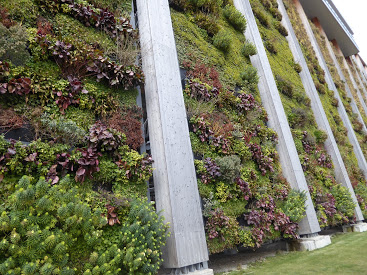
But Cross Green is home to one of Leeds’ most exciting new buildings.  Here, on its southern face is a striking living wall, one of the largest in Europe, providing biodiversity in an otherwise wholly man-made environment.

Leeds RERF’s Living Wall.

The building itself relies heavily on glass and elegant timber framing.  It’s something of an anachronism in a zone of modern concrete boxes.

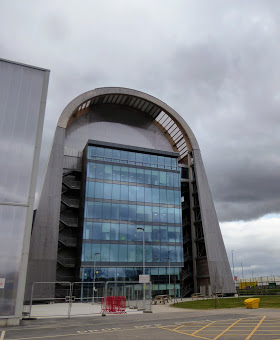
This is Leeds Recycling and Energy Recovery Facility.  

A scale model of Leeds RERF.

These days we’re all encouraged to recycle – glass, paper, tins, plastic, garden waste  – even, in some local authorities, food waste.  By rights, little should need to find its way into those black bags steadily filling every landfill site in the country.  But it does.

The advanced technology in this building aims to prevent that: and thanks to our friends Graham and Trish, we spent an afternoon finding out how.

We started out in one of the meeting rooms, looking through glass to watch a monstrous grab working with up to 6 tonnes per grab of shredded miscellaneous waste.  This was waste at the end of its journey, but still useful.


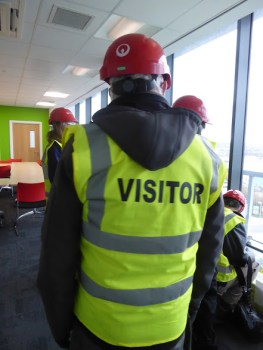
Come with us.  Put on the work boots they give you, the hi-viz jacket, the safety helmet and the goggles.  Come with us and we walk from point to point in this immense building.

Malcolm’s all togged up for the visit.

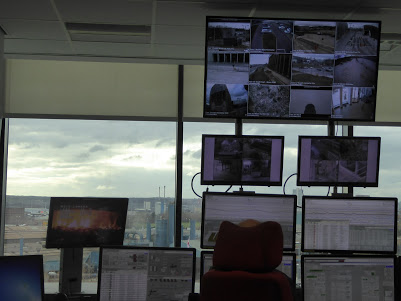
Here are the monitors which – er- monitor every part of the plant.  Look carefully and you’ll see flames on one of the screens.

Monitors at work.

This is an incinerator which burns the unrecoverable waste we had been looking at earlier, to produce heat.  The heat turns water into steam.  The steam powers a turbine.  The turbine generates about  13 MW of electricity – enough to supply the needs of 22,000 homes.  Emissions are carefully controlled, cleaned and captured, and the ash generated by this unimaginably hot bonfire is used as aggregate in road building.

Before that though, materials which could have been recycled earlier are extracted.  Paper and card are blown from the refuse.  Metals are fished out by magnets.  We couldn’t take pictures as we walked round the plant, so you’ll have to take my word for it.

There’s not really a market for the degraded paper which finds its way here.  But next time you take an egg from an egg box, or find yourself staring at a sick-bowl in hospital, or need to buy some paper-based animal bedding, you might be using something that started out in the RERF in Leeds.

I could blind you with facts and figures, but I think it’s enough to know that Leeds is helping to meet its ambitious zero-waste plans with projects such as this.  We, wherever we live, have an obligation to develop our own personal zero-waste strategies. Maybe you have a group you could join, like our own Plastic Free Ripon?  More of that in another post.

The entrance to Leeds RERF.

Click on any image to see it full size.

Leeds marches for Europe

We don’t do protest marches much.  Well, we did when we lived in France, obviously, because protesting is a way of life there.  Here?  Not so much.

But with Brexit only a year away, and with the intolerable consequences to our economy, our services, our multi-cultural and inclusive way of life becoming daily more apparent, we wanted to join the Leeds March for Europe, arranged in solidarity with events being held in Edinburgh, in Ipswich, in Exeter, in Pontypridd, in Maidenhead, in Ipswich and on the Isle of Wight.

Teresa May, Boris Johnson, Michael Gove and Nigel Farage lead the way.

We arrived.  We were initially disappointed.  There was a van, topped off with May, Johnson, Gove and Farage and a netball pitch sized banner waiting to lead things off, but were there really only enough people present to fill the Headrow in front of the Town Hall?

Setting off from Leeds Town Hall

Well, no as it turned out.  We set off with new-found friends from York, but soon dropped back to see the real size of the procession.  It went on …. and on.  We met people from every political party and none.  We met OAPs against Brexit.  We met Grannies against Brexit.  We met teenagers against Brexit. We joined in chants orchestrated from different parts of the route.  We met anti-Brexit groups from Hull, from Kent, from Sheffield, from….all over the place.  We were peaceful and good humoured and met surprisingly little heckling.

Back outside the town Hall, it was time for speeches.  We heard from politicians from every main party (well, not UKIP….) and cheered them all.  We heard from the impassioned and articulate young founders of OFOC!      (Our Future, Our Choice) some of whom hadn’t been able to vote in the  referendum, but will have to live with its consequences.  We heard from Joan Pons Laplana, a Spanish nurse who has worked in Britain for 17 years, who has a family here, and who no longer feels welcome. We heard from Elena Remigi, founder of Our Brexit Testimonies, from a young British research scientist who also feels her future threatened, and from Sue Wilson, leader of Bremain in Spain.  And we heard from The Big Names.  Prof. AC Grayling courteously and respectfully demolished the arguments on the placard held aloft by the sole courageous Brexiteer who had joined the rally.  Our own MEP Richard Corbett was as incisive and to the point as ever.  And Lord Adonis brought the whole affair to an energising  conclusion, working the crowd so that we all agreed, as we began to make our way home, that we each have a responsibility to work towards making sure that the disaster which is Brexit never actually takes place.


Click on any image to see it full size.

Snapshot Saturday: a murmuration of starlings

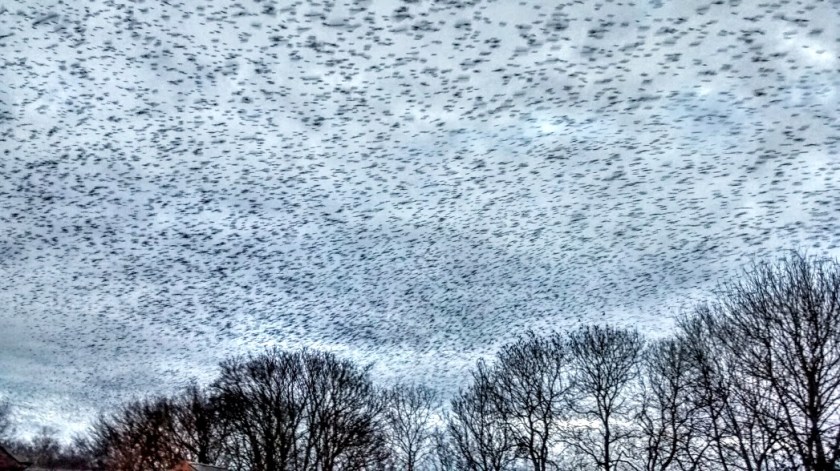
Last Monday, towards evening, the place to be was our home. We dashed from window to window, watching as dozens, then hundreds, then thousands of starlings descended on the trees round our house. They weighed down the branches, then in coordinated waves – responding to some urge we could not understand – they swept skywards, tearing across the garden, swooping, diving, before briefly settling again to repeat the performance again and again for a whole three-quarters of an hour, before finally disappearing to settle near the river for the night.

So near to our house, those mesmerising formations of groups of birds twisting and turning in harmony, as if in some graceful aerial dance weren’t so apparent as they are at a distance.  We were rewarded instead by seeing them at close quarters, rising, landing and  rising again from the trees near our house.

  A murmuration of starlings, especially for us.

Our car didn’t enjoy the display quite so much.

These photos are for this week’s WordPress photo challenge, Favourite Place. Click on any image to view full size