May is blue, white …. and yellow…..

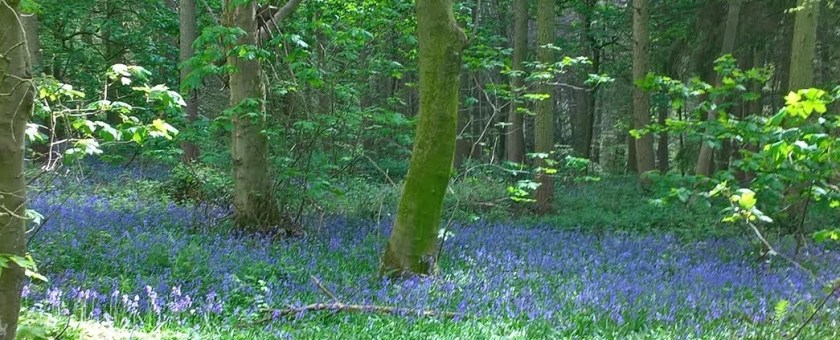
Bluebell woods at Rpley.

May is blue and white.  May is the month when bluebells thrust their heads above the leaf mould of an English woodland and carpet it with a hazy sea of blue.  It’s when forget-me-nots flower in every vacant spot of earth, and wriggle through the cracks in paving stones. It’s when bluish-purple wisteria scrambles across old brickwork, gently waving its blooms in the light spring breeze. It’s when the  sky is often reliably and cloudlessly blue on a sunny afternoon.

May is hawthorn time.  May is lilac time.  May sees late-flowering wild garlic give place to bluebells .  Daisies take over.    White petals from pear, apple and cherry trees swirl gently to the ground.  And white woolly lambs play king-of-the-castle and run races in the fields.  Round here, sheep-identification markings are blue.

There’s plenty of space for yellow too.  Anyone spotted any dandelions?

A field near Pateley Bridge.

This is my response to today’s Ragtag Challenge: May.

Click on any image to view it full size.

May Day

I find it sad that May Day isn’t really A Thing in the UK.  Even the early-in-the-month Bank Holiday is relegated to the first Monday of May, diluting its significance to that of merely a day off.

When we lived in France it was far more important.  It was a day off work of course, because it was the all important Fête du Travail. No shops (apart from bakers and neighbourhood shops, just for a few hours).  No garages. No newspapers.  Only essential workers turned up for duty.

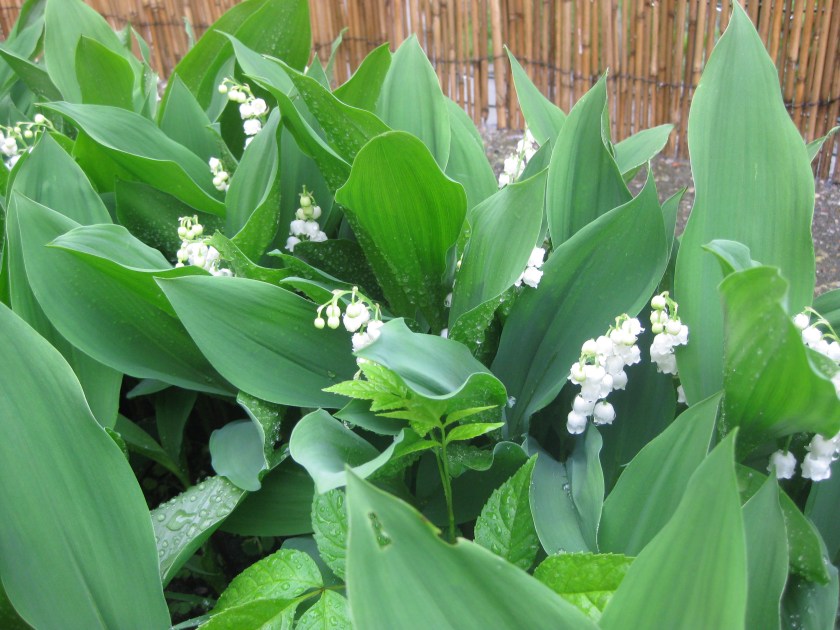
But the streets were quite busy, because May 1st is the day when everyone offers one another a traditional token of friendship and esteem – a sprig or two of lily of the valley, prettily presented.  In every village, every town, you’ll find people on street corners, outside the bakers’, at the cross roads, selling the flowers that they probably spent the previous day gathering and tying into pretty posies.  It’s the one day of the year when anyone who wants to can sell on the streets without a licence – so long as they’re selling only lilies of the valley (muguets).

I used to ask people the origin of this tradition.  Nobody knew.  ‘It’s simply to offer bonheur’, they shrugged.  But my friend Léonce had a couple of stories to tell.  We all know that lilies of the valley have a strong and lovely perfume.  The nightingale notices and smells them coming into flower on the first day of May, and this gives him the energy he needs to get into the woods and begin courting, nest building, and singing.  And those bell shaped flowers?  Well, they apparently surround the Heavenly Gates, where they come in handy by tinkling musically to announce the arrival of another soul from earth.

Lilies of the Valley in our garden in France, one rainy May Day.

Just to prove though that at least one place in England celebrates May Day:  here are the choristers of Magdalen College Oxford greeting the day at 6.00 a.m. as they do every year on this date.  And the whole of Oxford joins in the fun.

Identical?

I’ve never been much good at twiddling with the controls on my camera.  I even joined a photography course recently, in an effort to get to grips with apertures, shutter speeds and ISO controls.  But it just made my head hurt, and I reverted to ‘Automatic’ as my default modus operandi.  I decided I’m a snaphot-ist, not a photographer.

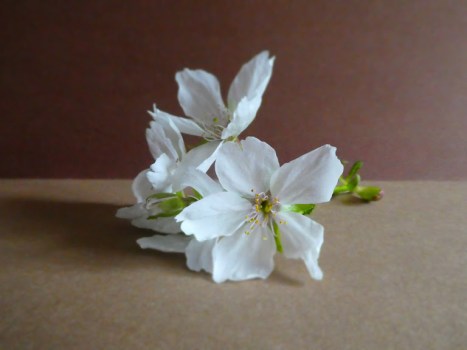
d having an hour to spare, I turned to the ‘palette’ settings and took an identical shot using every single one. Though I forgot to take one on ‘Automatic’, so the tale isn’t quite complete. Can’t do it now. This little twig of blossom (cherry?), a chance discovery found in the road, wilted in the night.

Which do you like best?  As ever, click on any image to see it full size.  They’re in strict alphabetical order – no favouritism here.

Bleach bypass.

This is my entry in today’s Ragtag Challenge: identical

Hello, Boobie Tuesday.

Another update from my daughter’s long and exceedingly difficult journey from young widow to cancer patient to reconstructed survivor. You may have noticed that the more normal her life becomes, the fewer the posts …. so let’s hope it’s an even longer wait till the next one…..

Fanny the Champion of the World's avatarFanny the Champion of the World

A friend recently remarked that you’re all so heavily invested in my story that it would be only fair to let you see a picture of the new knocker. She’s probably right. So, here’s the result of my trip to the Build-A-Boob Workshop back on that Tuesday in late February. I’m actually quite proud of it – and, simply from a surgical perspective, it IS pretty impressive (in comparison with the flat-chested butchery which was there before, anyway). Unless there’s a market for MastectomyPorn™ – which, to be fair, there probably is somewhere – I guess this is only interesting to those who really care. So, here you go.

This is the norkitecture. My DIEP/TRAM autologous breast reconstruction, should you care to Google it (though readers of a nervous disposition may wish to look away now). No implants whatsoever. What little tummy fat I had has now been re-sited into…

View original post 1,421 more words

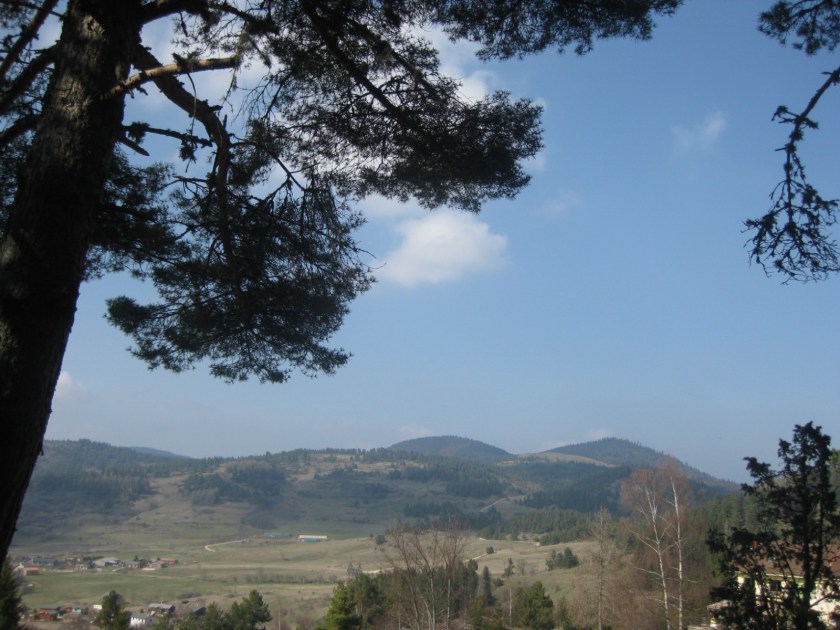
On the path of Cathar shepherds – revisited

This is the last entry in my re-blogging season.  I’ve enjoyed browsing through my memories: this was why I created my blog in the first place – as a diary and travel journal.  I think that I’ll continue to re-post, maybe once a month, to allow memories to resurface, and perhaps give them a fresh audience.

This particular walk is one we’ll never forget, ever.

2nd April 2012

On the path of Cathar shepherds

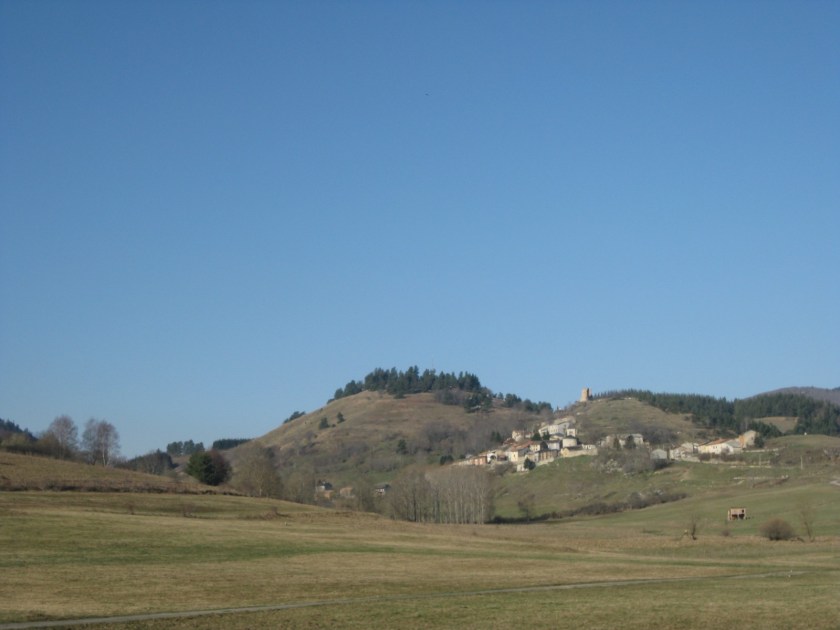
Yesterday we walked through Montaillou.  It might seem a tiny and unremarkable village now, but it’s the place that’s maybe done most to contribute to our understanding of turn-of-the-14th century village life in the Languedoc when religious strife between the Catholics and the Cathars was at its height.  This is a big subject: it deserves more than passing mention: a future blog maybe.

I’d read le Roy Ladurie’s book on Montaillou more than 30 years ago,and never dreamed that I might one day live in what the tourist offices are pleased to call ‘Cathar Country’.  So it was the shepherds of Montaillou I was thinking of as we began our Sunday walk.  They would come to the annual fair at Laroque d’Olmes, a good 40 km from where they lived.  They would drive their flocks long distances for good pasture, and as national boundaries meant little in these mountain zones, their fellow shepherds whom they met in their travels would sometimes be Spanish.

First view of Montaillou.

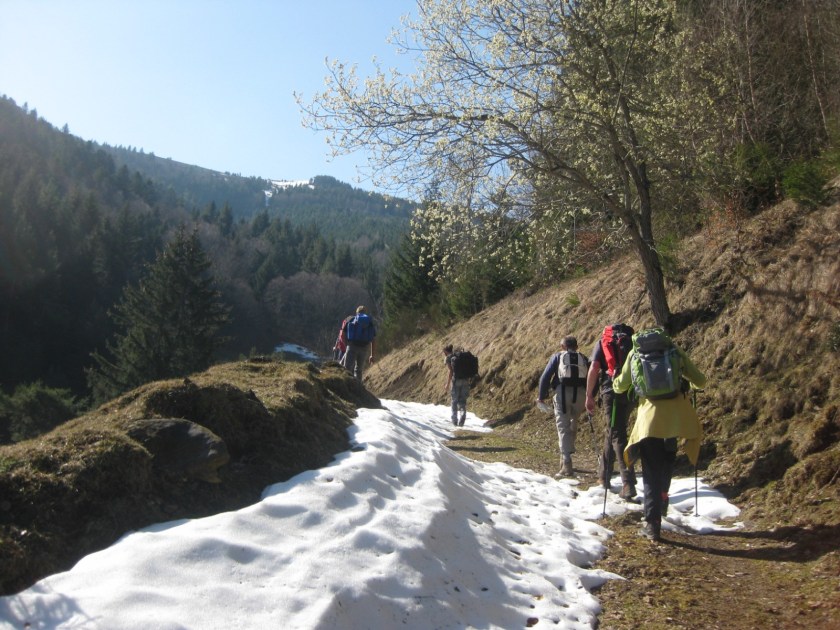
We too were climbing out of Montaillou.  The paths seemed unchanged through the centuries – short springy turf with early spring flowers pushing through. Pale pink and white blossoms busting open.  Narrow streams cutting deep channels through the turf.  Thick forest climbing the slopes.  Patches of snow made the going a bit tough from time to time.  It was warm and sunny, the slopes were steep and sometimes hard-going.

Ever upwards…and the snow’s still on the ground.

Then suddenly…suddenly, and so unexpectedly, we reached the top of our first climb.  Around us, to east, south and west were the snow-covered peaks of the Pyrenees, glistening white against the blue sky.  Above us, skylarks called and swooped.

Later, Danielle remarked that she felt as if at that moment she’d received a special gift: that perfect view, the clean clear air, the singing birds which were the only sounds.  She voiced, I think, what we all felt.

We hadn’t reached our highest point: we climbed onwards, always with those snow-capped mountains at our side.  And then we were on top: handy rocks provided seats and shelves and we unwrapped and shared our lunches, lingering in the sun, drinking in the views for well over an hour.

The perfect picnic spot.


Ready to start walking again.

Soon after lunch, we turned our back on the snowy mountains.  As we faced the hotter, drier Pyrénées Orientales, the equally high peaks there weren’t covered in white.  Our path was downwards now, and soon we had to pass the ski station above Camurac.  Built long after those years when snow could be relied upon throughout the winter, it was an area of scalped earth, snow machines and all-but-redundant chair lifts.  My Montaillou shepherds certainly wouldn’t have recognised it.

The walk draws to a close.

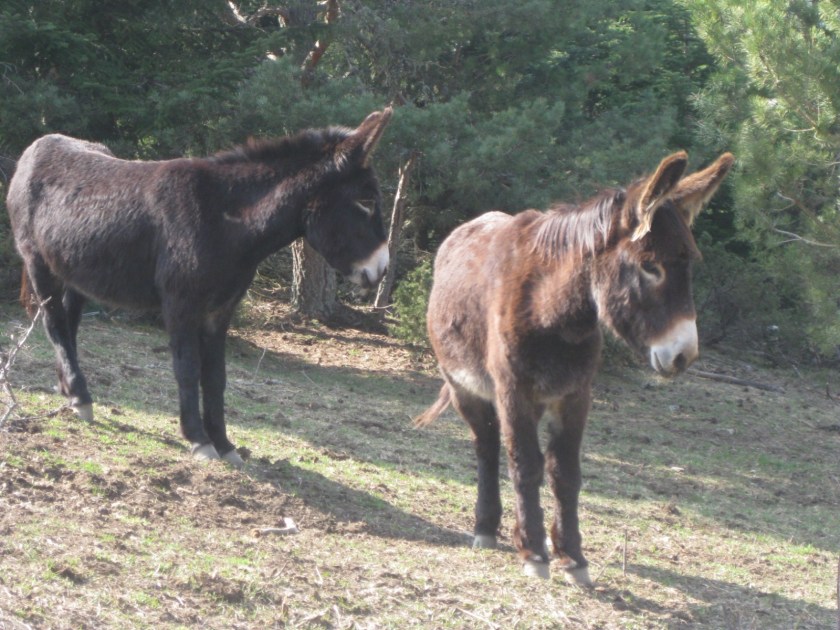
But then it was forested paths again, open pasture and spring flowers.  We finished the walk passing a collection of horses, Thelwell style ponies, and appropriately for Palm Sunday, a couple of friendly donkeys.  A good day.

Friendly donkeys.

Omelette de Pâques revisited

It’s Easter weekend.  For my continuing re-blogging festival, an Easter themed post seems in order.  Let’s try this one from 2010…..

April 2010

Omelette de Pâques

Come to the Ariège on Easter Monday, and you won’t be too far from a community omelette. Communes and clubs all over the department seek out their biggest frying pan, get hold of dozens of eggs, sugar and rum, to make this sweet confection to round off, with any luck, the first barbecue of the season. Why? Nobody in our walking group could tell me, and Google wasn’t much help, but it does seem to be an ancient tradition dating back to….ooh, 1973 at least.

Anyway, the Rando del’Aubo have made this an annual event for some years now. For the last couple, it’s been rainy and cold. Not this year though. Down at the bottom of the page, you’ll find a few pictures of our walk between La Pène, an Audois hamlet on a delightful small lake, and Monthaut, which is a hill….higher up. It was a great way to work up an appetite.

Because the weather was warm, sunny and spring-like, we relaxed at the lakeside after our walk, chatting and enjoying those woodsmokey smells of a barbecue coming to life. Apéros first: Muscat, suze, pernod, whisky…all the usual French tipples, with nibbles to stem our hunger. Then grilled pork, grilled Toulouse sausage, bread (and wine of course), Coulommiers cheese, vanilla or chocolate pudding. And then we still had to find room for the all-important omelette.

Since the beginning of time, it’s been Marie-Therèse’s ‘job’ (good French word, that) to make the omelette, and of course it all ended in noisy recriminations because there were too many cooks all muscling in, breaking eggs, beating eggs, heating the pan, greasing the pan, measuring the rum. Half the raw egg mixture tipped out onto the grass, and Etienne and Danielle dashed off to every farm they could find to buy another….. 4 dozen.

Finally, it was done. Really, this omelette is scrambled egg with lots of sugar chucked in at the end, and flambéed with rum. Once a year is quite enough.

It wasn’t the end of the party though. Oh no. We couldn’t go before downing glasses of Blanquette de Limoux, an Alpine eau-de-vie, then cups of coffee (with madeleines, in case we were still hungry). And as a final touch, Easter eggs.

We came away suntanned and rather full, at the end of an Easter Monday that was one of the first really hot and sunny days of the year. A taste of things to come?


My contribution to today’s Ragtag Challenge: egg.

And a Malcolm update:  He’s out of hospital now with lots of medication and check-up appointments.  Looking good!
Driving again…

Since  my reblogging of a seven-year-old post seemed to go down quite well at the weekend, I’ve decided to have a short season of re-blogged posts, mainly because time is at a premium, but also because I’m enjoying looking at these Blasts From the Past.  Malcolm’s doing alright – he’s been moved to James Cook Hospital, at the wrong end of the horrible A19.  Tests and possible treatment today.

In the end, choosing a post for today was easy.  My number one activity this last week has been driving.  To the hospital.  From the hospital.  And repeat.  How pleasant it would have been to have been able to make use of a Gracious Aire.

May 2012

Gracious aires

One of the pleasures of motorway driving in France is the chance to have a sustained break in one of the aires, or service areas.  Not the run-of-the-mill petrol station plus eatery and shop. They have those too.  As in England, they offer the chance to eat indifferent food at over-the-odds prices, and to spend a small fortune if you’ve been unlucky enough to need to tank up there.

No, in France, roughly every other service area is all but unserviced.  There are parking spaces, toilets, a telephone, and not much else: nowhere to spend money, in any case.  There may be a children’s play space set among trees, and perhaps picnic benches.  And that is their charm.  They’re generously sized areas, set well away from traffic noise, and offer a real chance to get away from the stress of a long drive with a relaxing walk in the woods or a picnic in the shade.

Perhaps my favourite is on the southbound carriageway of the A20 in the Limousin.  I first stopped by chance at L’Aire de la Coulerouze when I was driving down alone to Laroque a few years ago.

Earlier that day, I had picked up the makings of a picnic at the market at Levroux.  I’d got bread, and a young goats’ cheese.  I’d bought fresh apple juice from some nuns who had a stall, and an apricot producer had sold me a couple each of every apricot variety he grew so I could have my own personal taste-test session.

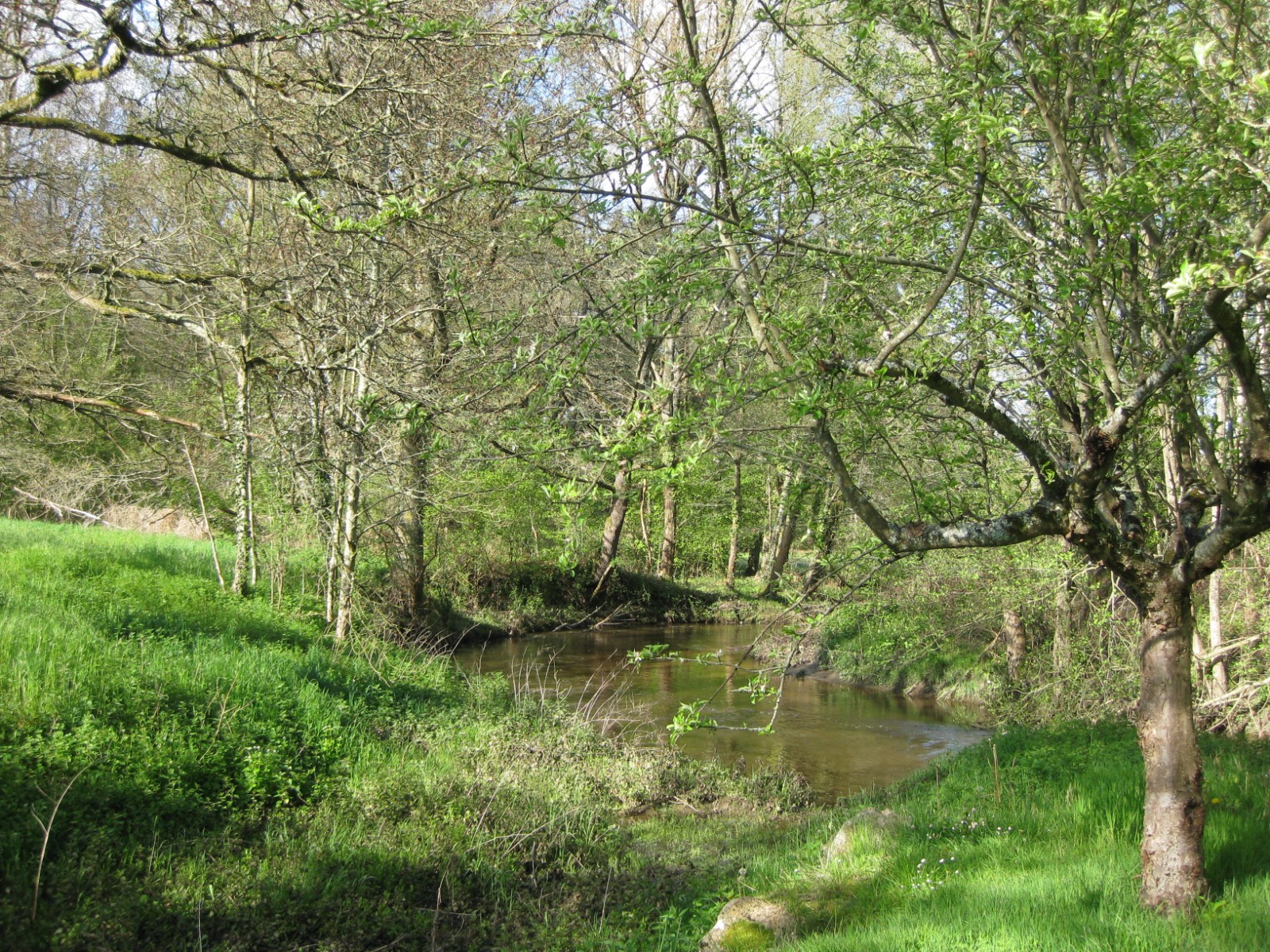
Down by the riverside at Coulerouze

At Coulerouze, I found picnic tables and was about to settle myself down when I noticed wooden steps leading downwards.  There at the bottom was a bridge over a small river all but encircling a small wooded glade, with a single bench under an apple tree.  The only sounds were the birds singing, and the river tumbling along its path.  I spread out my lunch and relaxed.   Afterwards, I found there was a path.

The signpost to the path

It took me first of all along the river, and then along fields and hedgerows.  The walk wasn’t a long one, but it was all I needed to forget the many miles I’d already driven that day, and the four or five hours driving that still awaited.

Not all these aires are quite so special.  There are some horrors near Rouen.  But find a good one, and it’ll become a treasured destination, somewhere to aim for with pleasure on a long day’s driving.

It feels almost impertinent to post a jolly little story from our time in France on a day when Paris, when France and the whole world is mourning the loss of Notre Dame de Paris.  My own sorrow is that, unbelievably, I’d never visited this cathedral.  And now I never can.


Les demoiselles de Caraybat, daffodils and gentians: revisited

This hasn’t been a week for writing for fun, as while I was having a good day in London on Monday, Malcolm ended up dialling 999, and is now in Harrogate Hospital after a heart attack. I wasn’t told until well on the way home, which may have been as well, as there was nothing I could have done. He’s awaiting transfer to the much bigger James Cook Hospital in Middlesbrough. But there’s every reason to assume that all will be well.

So I’ve picked out this post from six years ago, from our days in the French Pyrenees to re-blog. Who doesn’t love a good yarn, spring flowers and spectacular views? It cheered me up, anyway.

April 2013

Les demoiselles de Caraybat, daffodils and gentians

Once upon a time long ago in Caraybat, when times were hard, the men of this small village had to look far afield for work.  And they went to Spain, for the hay-making season.  Hawkers came to the village, and pedlars.  They found a village with no men.  They took advantage.  So did the women.

When the hay-making season was over, the men returned, and the women spied them returning over the distant mountains.  Suddenly ashamed and frightened, they fled to the hills.  God, in vengeful and Old Testament mood, was displeased.  As the women reached the summit, he turned each one of them to stone.  And there they are to this day, les demoiselles de Caraybat, a petrified reminder of a summer of sin.

A few of those demoiselles hide themselves behind the woodland trees

We remembered this legend yesterday when I took our Laroquais walking friends to Caraybat and the dolomies to discover those daffodils I’d been shown on Thursday.  I was quite chuffed that not a single one of them had previously known this special spot, and we had a pleasant hour up on the rocks, picnicking and enjoying the last days of the daffodil season.

We followed the walk I’d learnt about on Thursday, and then we finished our day by going to the plateau above Roquefixade to see the gentians there.

Gentians above Roquefixade

Sadly, it was by then rather cold and windy, and most of the gentians had sensibly folded their indigo skirts about their faces and tucked themselves away to wait for a sunny day.  We’ll wait too.  And when the sun comes out properly, we’ll be back.

The Great Yorkshire/Cornwall sing-off

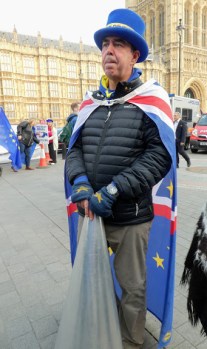
For a while now, Yorkshire for Europe groups have been getting down to London once a week to support Steve Bray of SODEM, and demonstrate peacefully outside Parliament. Week by week, the Great Yorkshire Songbook has evolved, featuring such memorable numbers as ‘We’re down from Yorkshire just to say…’ to the tune of -what else? ‘On Ilkley Moor baht ‘at’, and ‘Why, why why Theresa?’ to the tune of ‘Delilah’. Cornwall for Europe does much the same, but they have a great tradition of sea shanties to draw on for their songbook (‘What shall we do with this rotten Brexit?‘).

Adrian from North Yorkshire for Europe threw down the gauntlet to Cornwall. The Great Yorkshire/Cornwall sing-off. Challenge accepted.

Yorkshire comes to London.

On Monday, two coaches arrived in London. One from the north, stuffed not only with Remainers in good voice, but Yorkshire flags by the dozen, European flags, Union flags, placards, and Mark’s tuba. Oh, and seven students from Sheffield University, hitch-hiking to Transylvania for charity, via our demo. And a coach from the south-west, idem, except that they had black-and white Cornwall flags and placards, and a Cornish bagpipe instead of a tuba. And no students.

Cornwall and Yorkshire together.

And outside Parliament, we sang. We soon learnt each other’s songs, and we sang, sang, sang. Alistair Campbell came for a while with his bagpipes. Our MEP Richard Corbett came and joined in, so did Huddersfield MP Barry Sheerman, and Lib Dem Tom Brake, who brought chocolates too.

Richard Corbett joins the two choirs.

Steve Bray, that stalwart who protests all day and every day, whatever the weather joined in the fun, and was invited to judge the two choirs. ‘52% for one, and 48% for the other!’, suggested some wit in the crowd. Steve was far too polite, and suggested a draw. Team Yorkshire thought that Cornwall had the best tunes, and were more tuneful, but we were LOUDER.

Steve Bray. And his megaphone.
We were even joined by a suffragette….

And at 6 o’clock, we followed Steve’s daily tradition. We trooped after him and his mega-megaphone and bellowed People’s Vote slogans as loudly as possible across to the House where members were about their daily business. If you’d been watching the BBC 6 o’clock news at 6.11, you’d have seen us. And again at 10.00. A friend in Cardiff spotted us on the Welsh news.

Cornwall and Yorkshire united in protest.

During the day there were interviews with Norwegian radio and French TV (Arte is doing a full length documentary on Britain and Brexit, and have been filming in the area for 10 days).

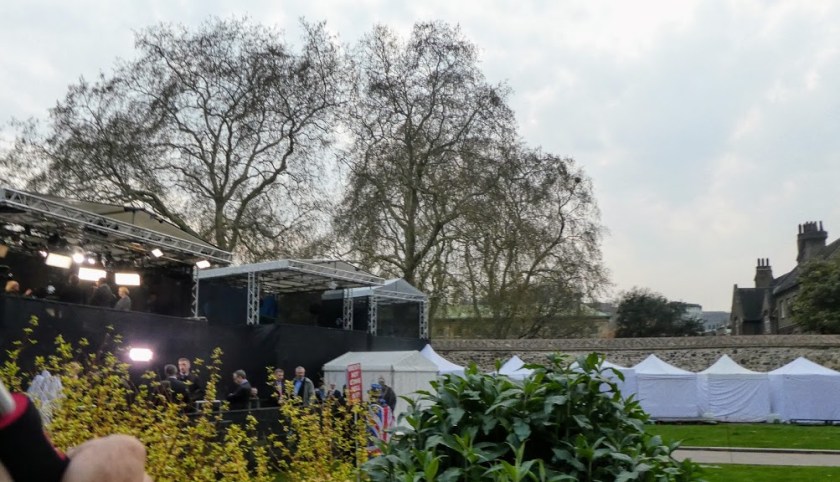
Just one more job to do before the long journey home. Get along to the press hub, and be there while Channel Four does its daily interviews on its 7 o’clock news. More flag waving, shouting and singing, and a bit of trespass onto the lawns with a placard by Steve Bray.

The press zone. Can you spot Steve Bray trespassing? Look for the placard.

We met Londoners, tourists, people from around Europe who’d made England their home and no longer feel as welcomed as they used to. We’ve had our photos taken, had discussions with dozens and dozens of passers-by. Does it make a difference? We don’t know. But we know we brought cheer to so many people who like us, hope that Brexit is not a Done Deal.

Ragtag Saturday: The Cleveland Coast

Older people like coach trips.  Allegedly.  They sit in a coach, gossip, have a nice cup of tea when they reach their destination, then they go home again.

On Thursday, fifteen people from Ripon U3A (Walkers’ Division) did exactly that.  Except that in between the gossip in the coach and the nice cup of tea, they fitted in an eight and a half mile walk along a section of the Cleveland Way.

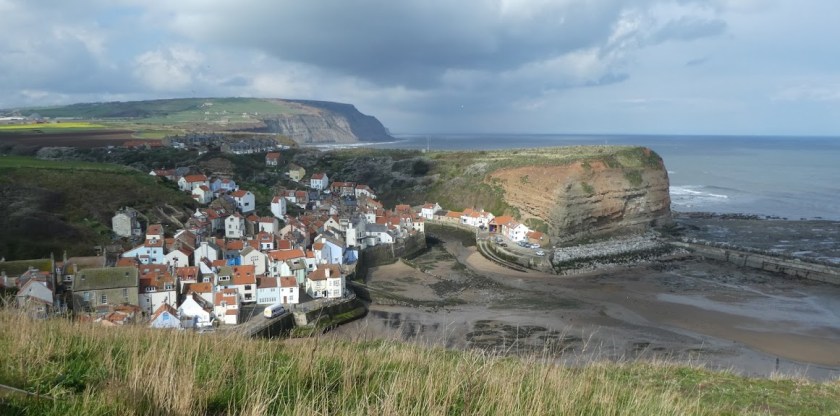
Staithes seen from the cliffs.

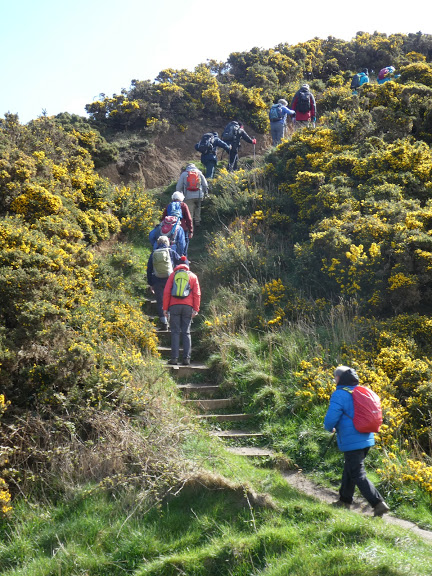
We started at Staithes, once a busy fishing port, now a picture-postcard-pretty holiday destination.  It nestles at the foot of imposing cliffs, and our walk began with a good hard yomp to get from sea-level to cliff top.  This was the first of several yomps up steep paths cut into the hillside at an unforgivingly steep gradient.

The first of several climbs – and not the hardest.

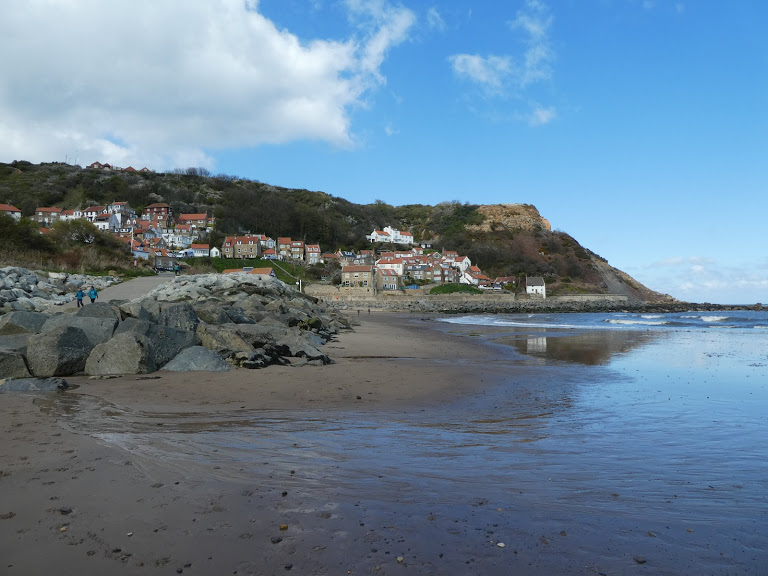
And what goes up must come down, as we discovered towards lunchtime at Runswick Bay, and later still at journey’s end in Sandsend.

Runswick Bay at low tide.

All this would have been arduous enough.  But there was a stiff breeze.  This developed, as the day wore on, into a searching wind: the sort that blows any attempt at conversation far out to sea, turns pockets inside out, and rips scarves from shoulders.  A few forays past farms offered slight shelter.

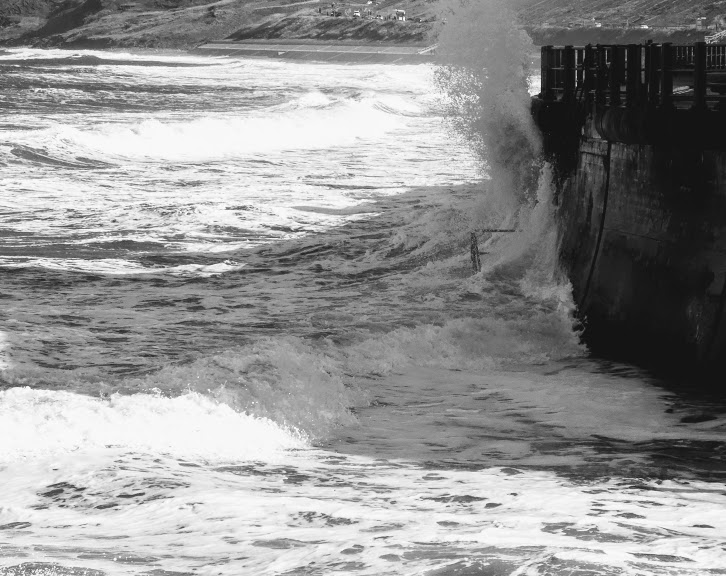
By the time we arrived in Sandsend, the wind was arguing with the sea too, which rose up, roaring and seething and hurling itself against the breakwaters.

Stormy seas at Sandsend.
The view across to Sandsend and Whitby.

Did we complain?  We did not.  This was scenic walking at its best.  Violets and primroses scattered our path, and striking barriers of yellow gorse imposed themselves between us and the cliff edge.

Eight and a half miles of this kind of treatment was just about enough though.  We were good and ready for tea and home-made cake at Wits End Cafe, and continued our gossip in the coach on the way home.

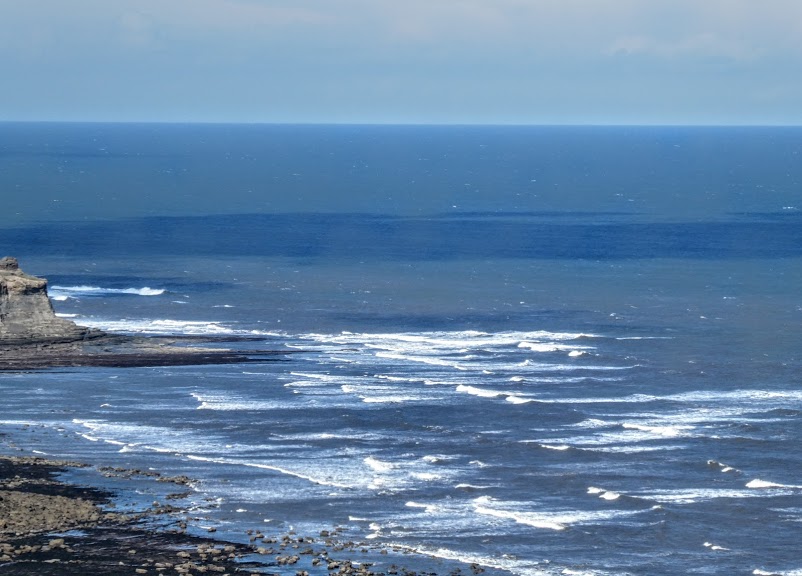
The sea: our constant companion for the day.

Here is my entry for today’s Ragtag prompt: Coast, and for Jo’s Monday Walk.  As ever, click on any image to see it full size.