Chairs. That’s what Brian of Bushboy’s World fame, and host this week of Leanne’s Monochrome Madness wants us to get our cameras out for. And I’ve decided to show Chairs in the Service of Art
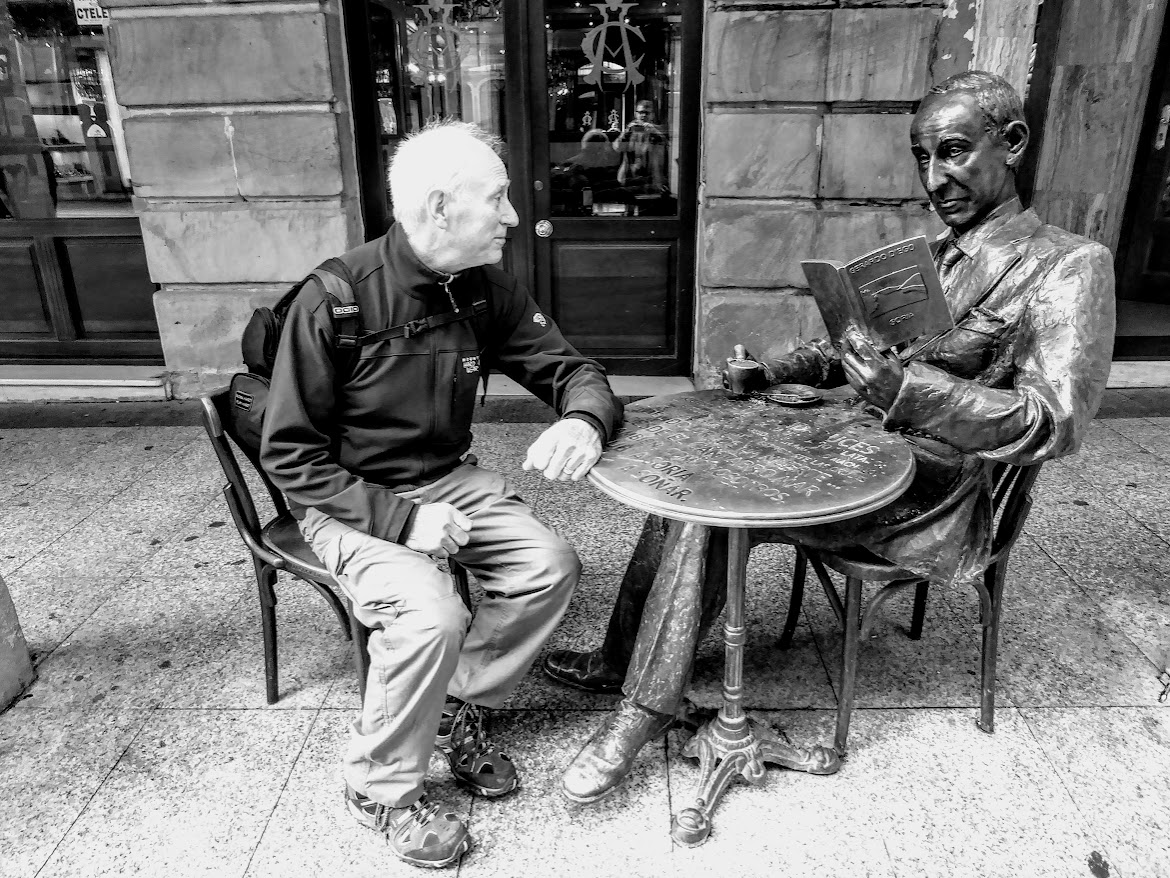
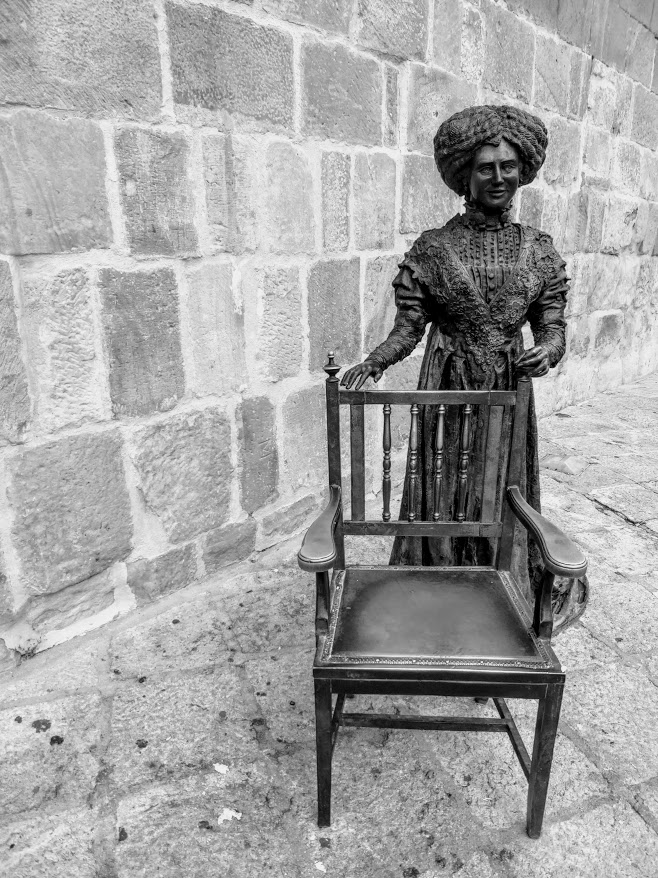
My first clutch of photos all come from Spain. A day out in Logroño, la Rioja, yielded some street sculpture featuring chairs and those who sit in them, whether alive or sculpted.
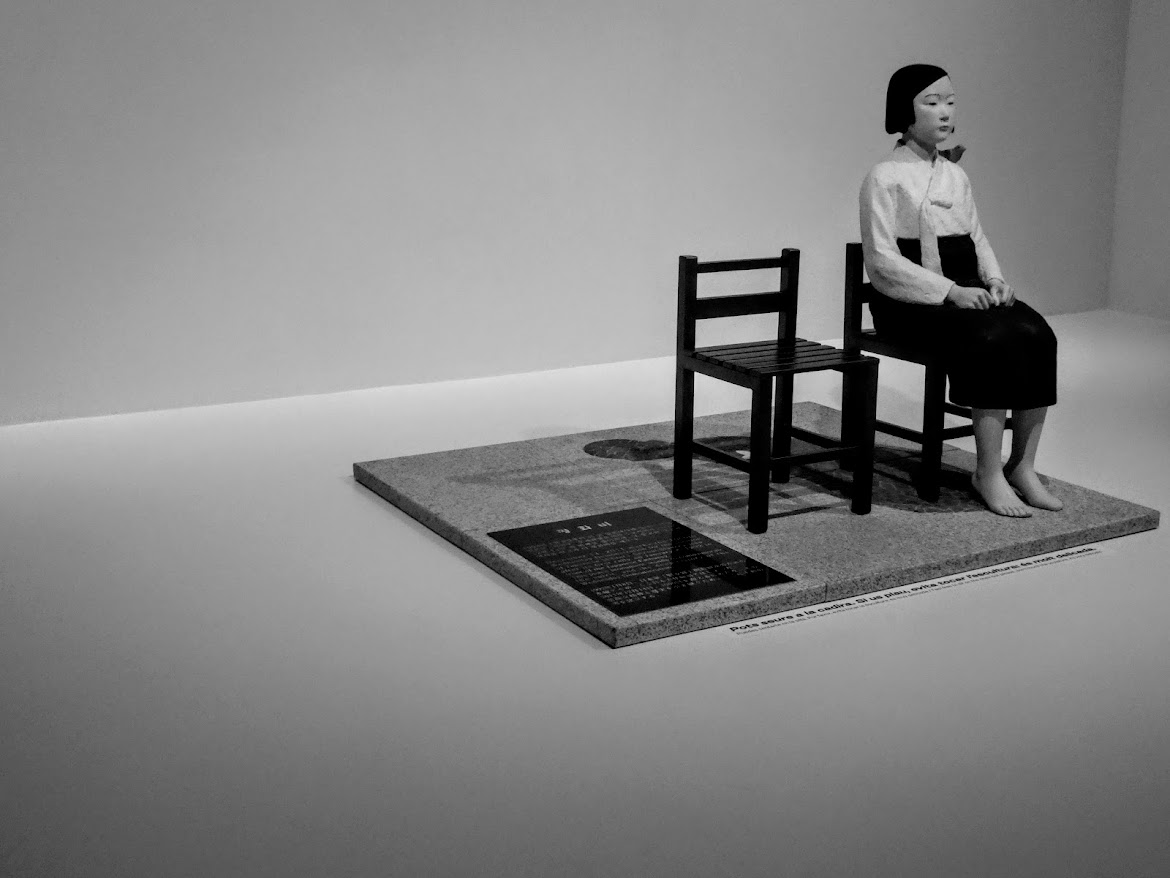
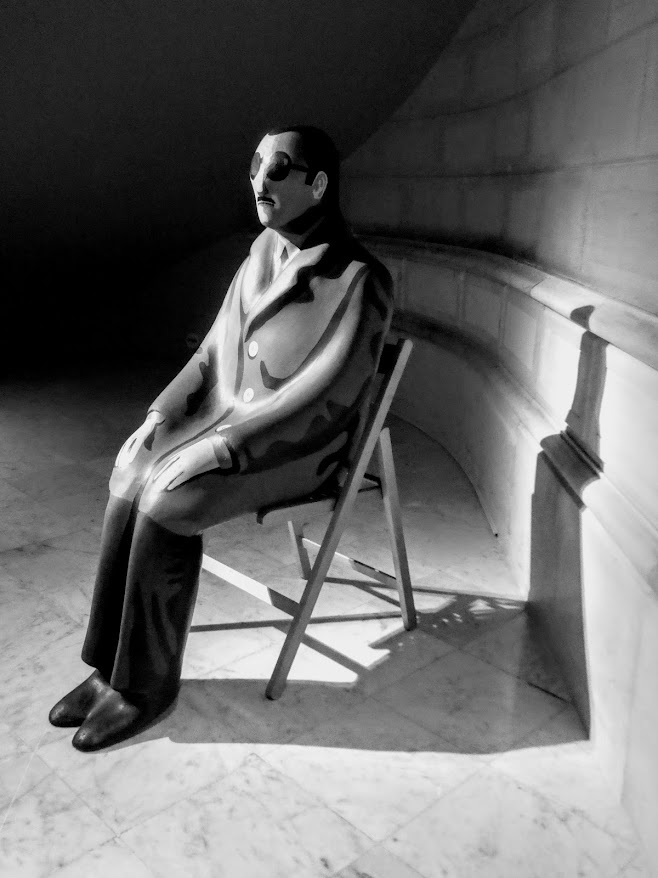
More recently, in Barcelona, I visited of of its newer museums, Museu de l’Art Prohibit – the Musem of Censored Art. It covers political, religious and sexual themes, and is not for the faint-hearted, but I found it fascinating and enlightening.
The first image here was exhibited at the Pamplona Festival in 1972 – a brave thing to do, as Spain was still in the grip of Franco’s dictatorship. This depicts one of Franco’s secret policemen.
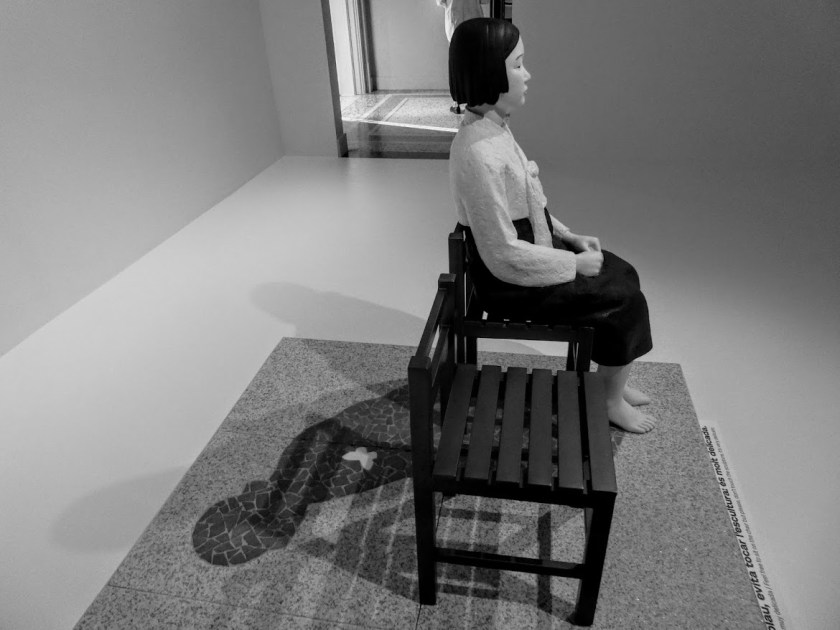
The second is by the South Korean artists Kim Eun-Sung & Kim Seo-Kyung, and shows a Girl of Peace. It was exhibited as part of the Aichi Triennale 2019 in Japan, and received threats of attack for being anti-Japanese propaganda. The exhibition was closed but reactions against its censorship forced it to be reopened. This artwork has caused various diplomatic incidents between Japan and South Korea. For its creators, it is an icon of peace. There’s another view of it as my featured photo.
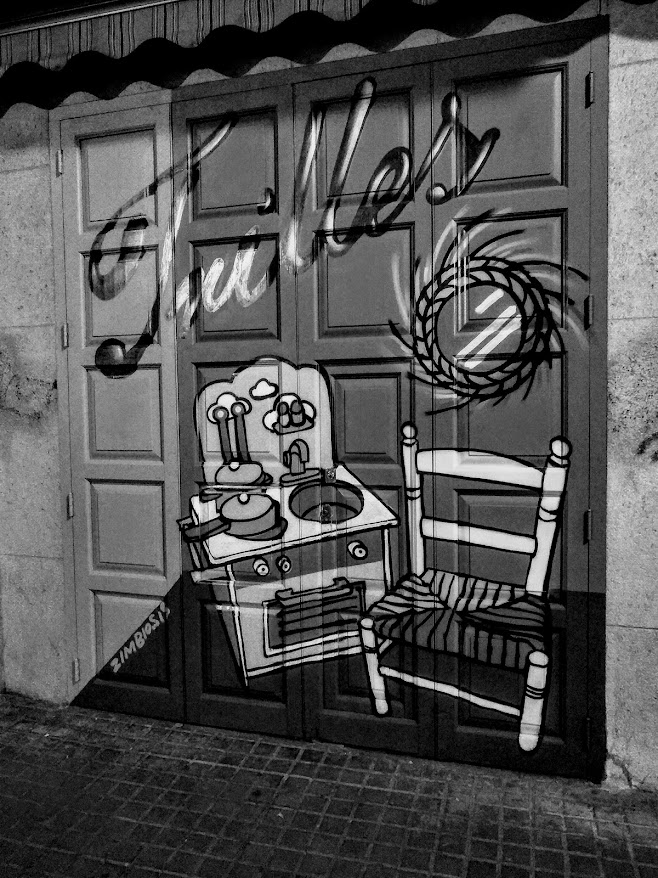
My final Spanish shot is of a chair (and the kitchen stove?) painted on a garage door in a back street in Seville.
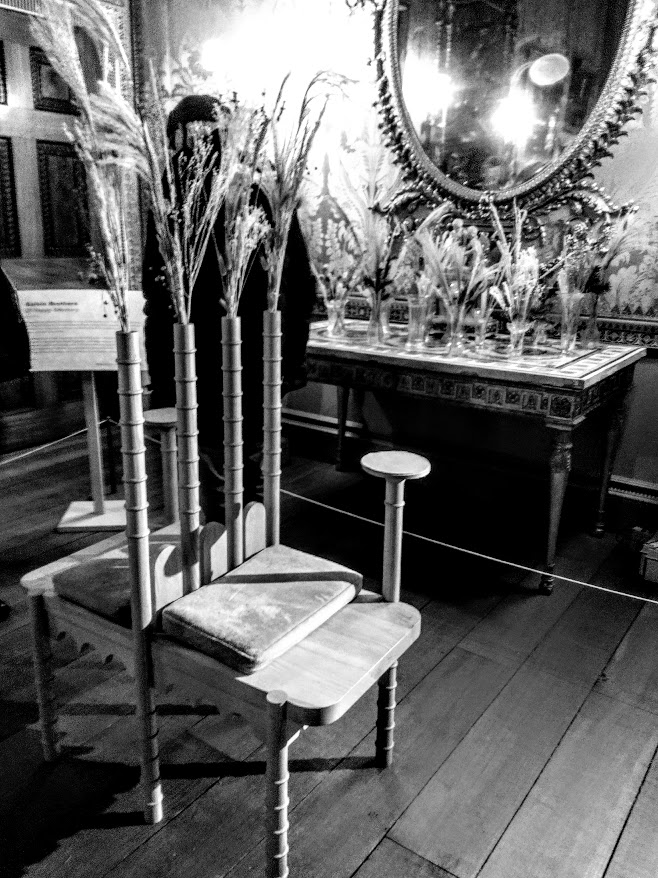
Back in the UK, to visit Harewood House near Leeds, and show an image of a chair constructed by the Galvin Brothers specifically for the house’s Yellow Drawing Room – a place to sit, talk, reflect, share, remember. Created at the time of the death of Elizabeth II, this chair was intended as a sober reflection on her reign. Its design, featuring maturing crops as part of the backrest, references the transient and intangible.
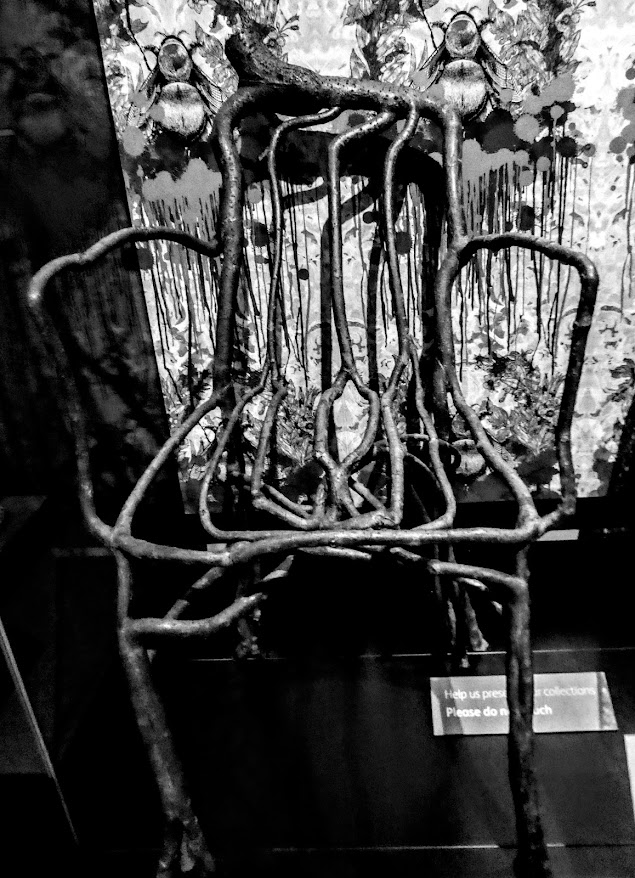
Lastly, I’ll take you to Edinburgh, to the National Museum of Scotland. This is where we saw this chair. An astonishing chair. It began its life as a simple willow tree, but was obliged to convolute itself as it grew into the form of a chair by Gavin Munro. Do have a look at his website.
Well, this hasty tour has turned up quite a few different chairs. It’s perhaps the simplest ones that convey the most potent messages.
Leeds is a Victorian industrial city that has vigorously embraced the 20th and 21st centuries. We’ll explore a tiny part of the central area, as we did with the London branch of the family at half term.
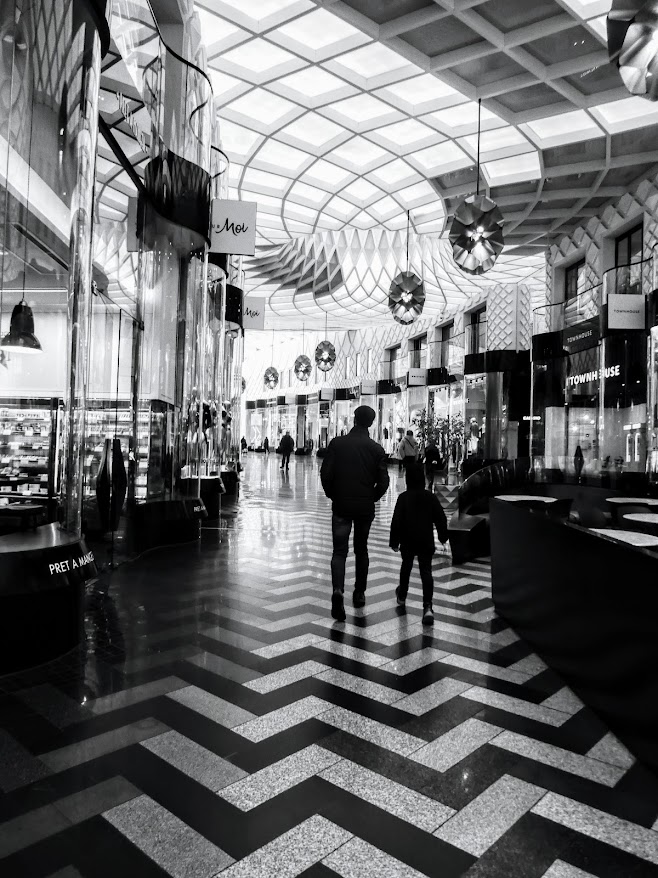
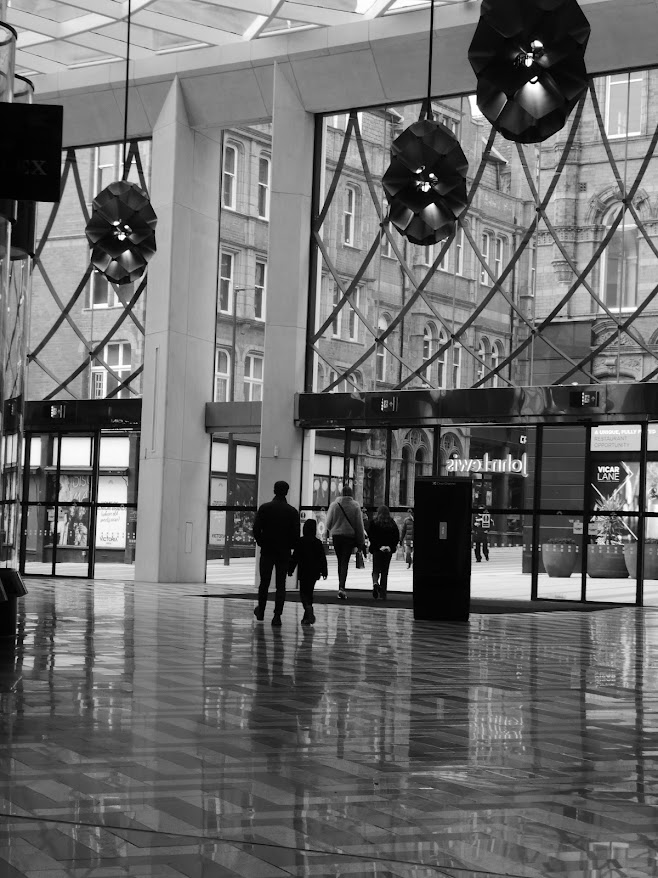
We’ll start in a modern shopping centre..,
… and wander through the late Victorian covered market, stopping at one of the fish stalls.
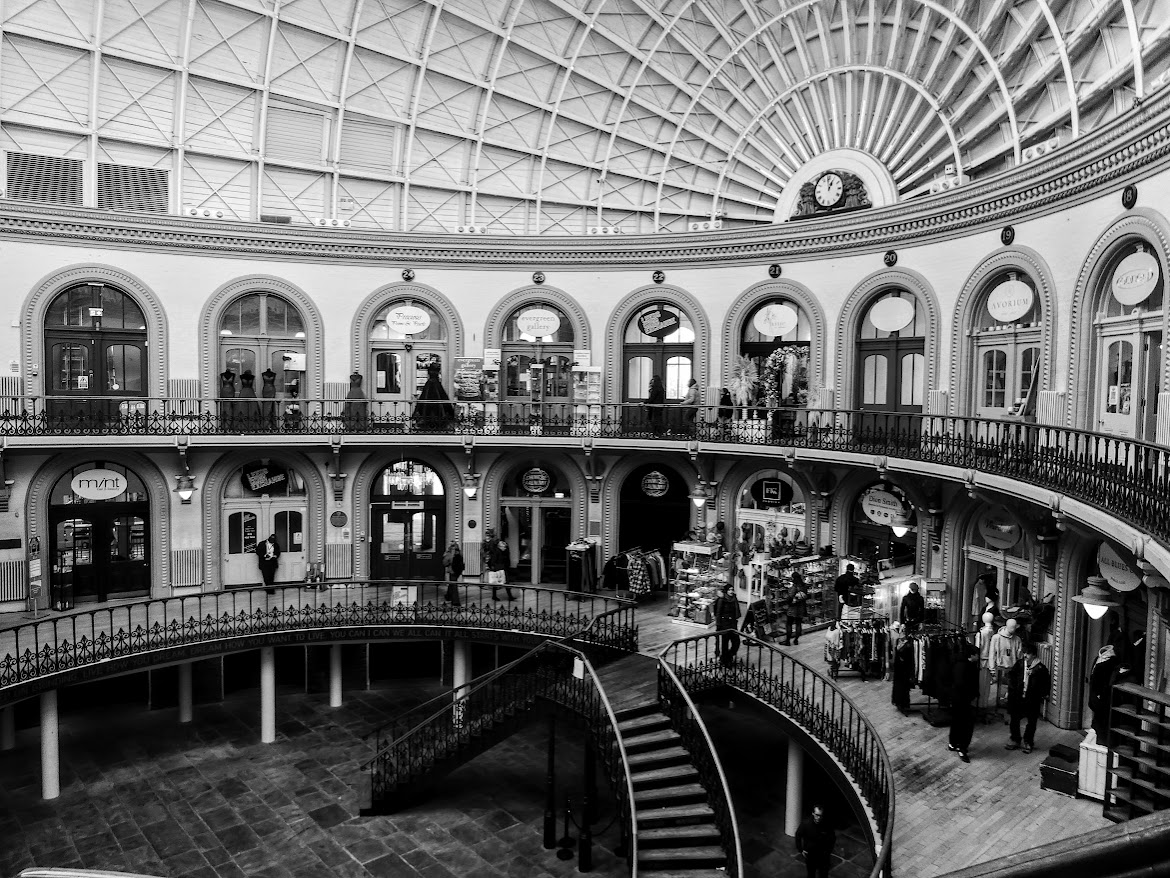
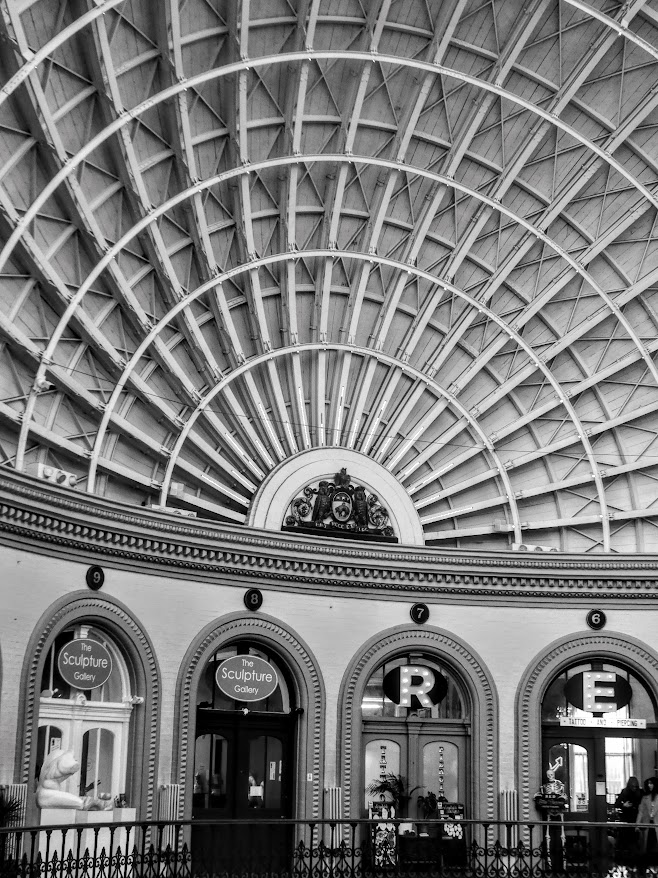
The Corn Exchange was built at much the same time as the market, to trade corn. These days it’s the home of independent vendors selling to those looking to while away a pleasant hour or two finding something out of the mainstream.
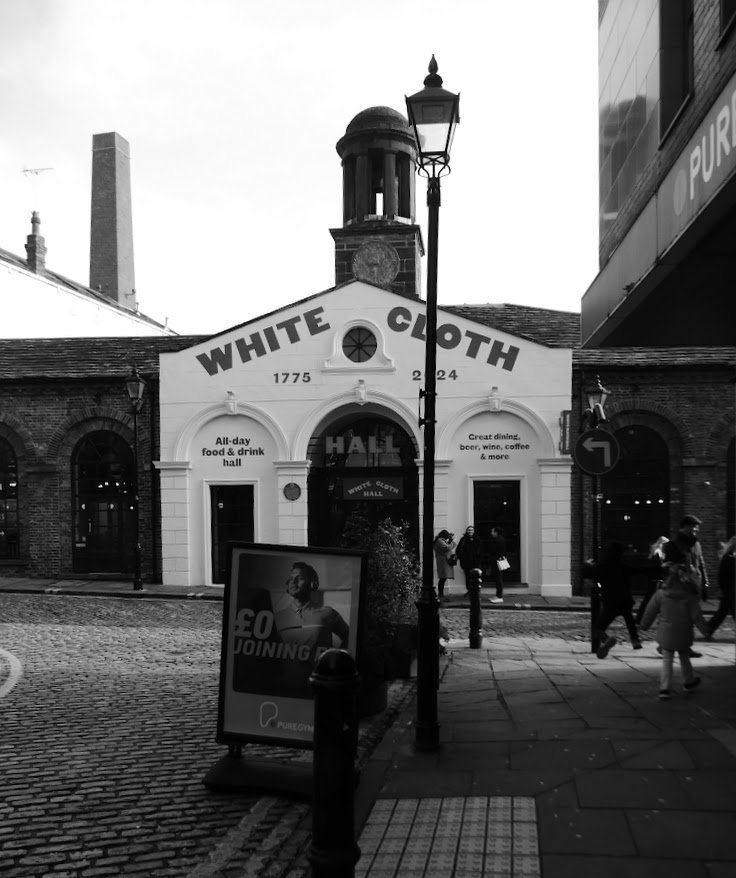
We’ll wander down some older streets …
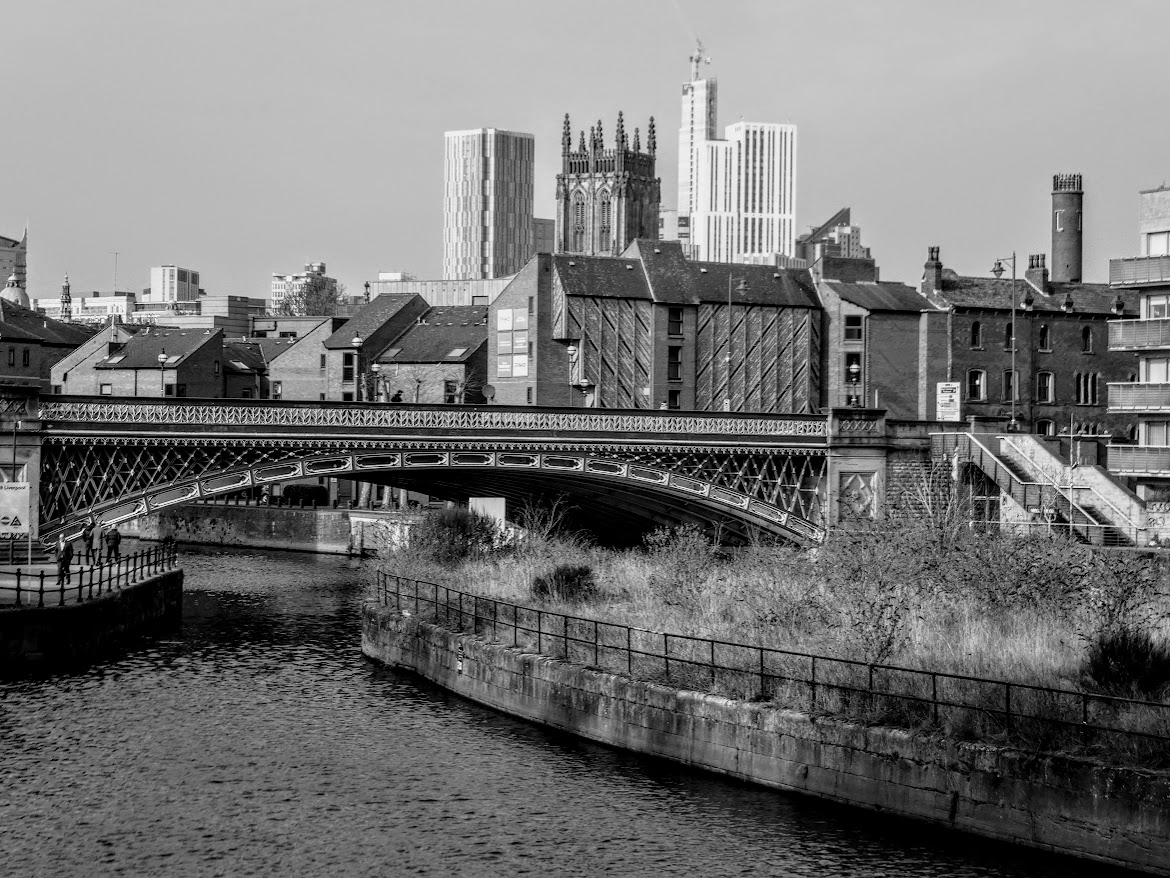
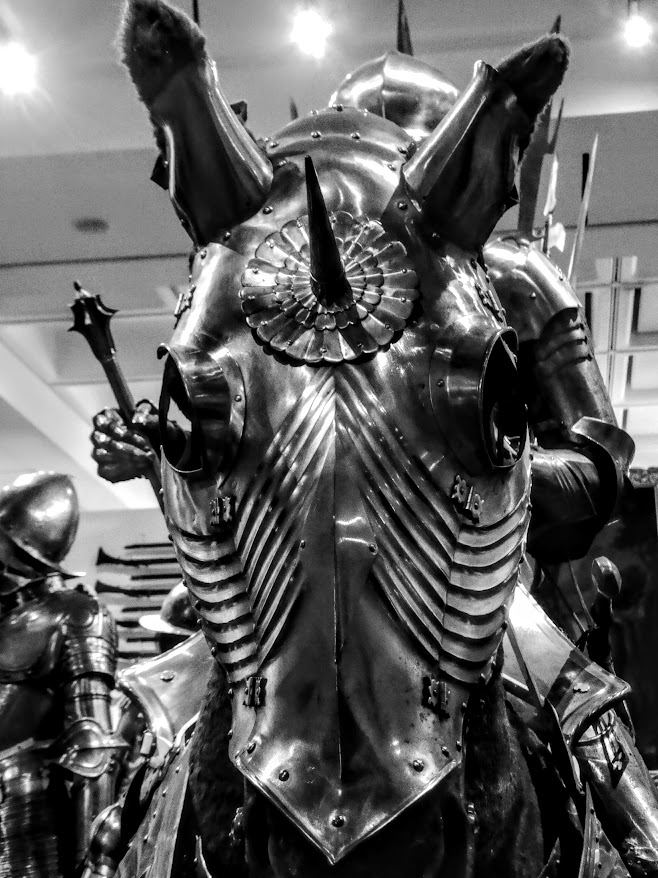
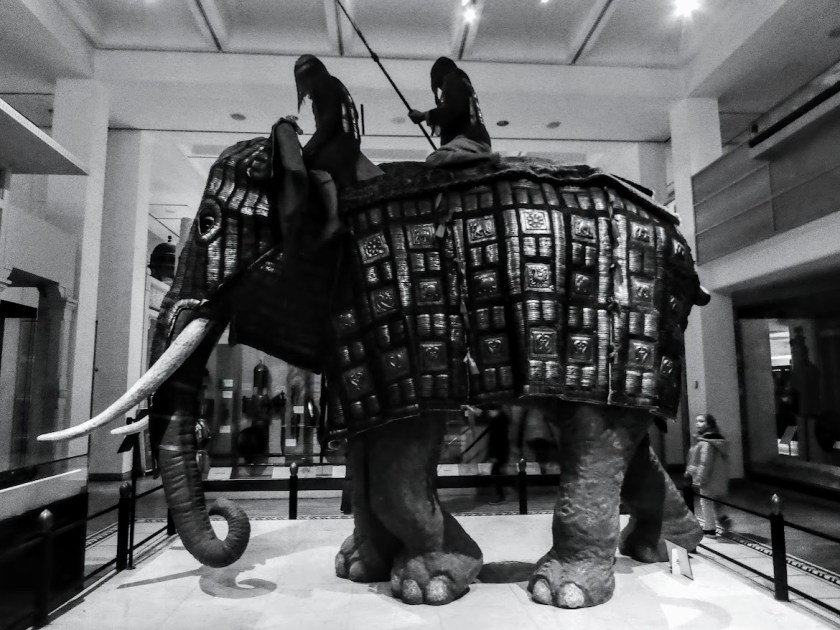
… then onto the newly developed banks of the River Aire. Industrial grot has been replaced by both student and up-market flats, and the featured photo shows the view of Leeds old and new. The Royal Armouries Museum was supposed to be our destination, but at half-term it was way too busy, so we didn’t stay long . Here’s a taster, showing that even horses and elephants can get togged up for war, and that swords never seem out of fashion.
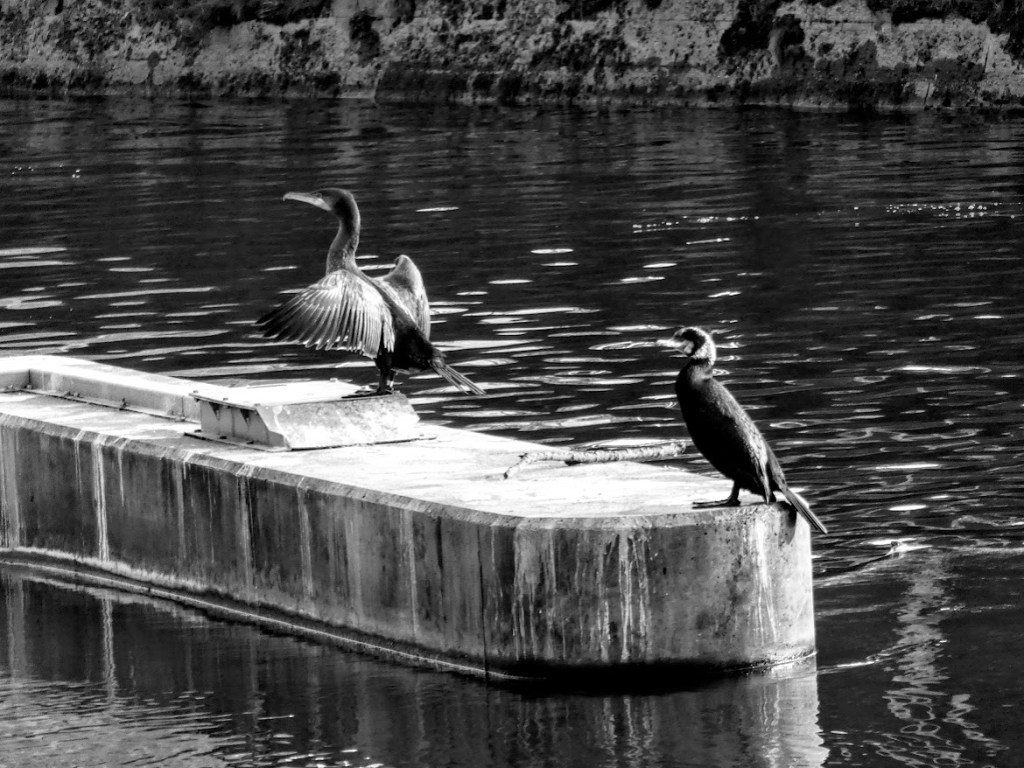
Tired now. We’ll wander back along the Aire, spotting a couple of cormorants on the way. That means there must be fish to be had these days. It was a filthy river in the bad old days.
We’ll be back another day. I hardly recognise the city I called home until about twenty five years ago.
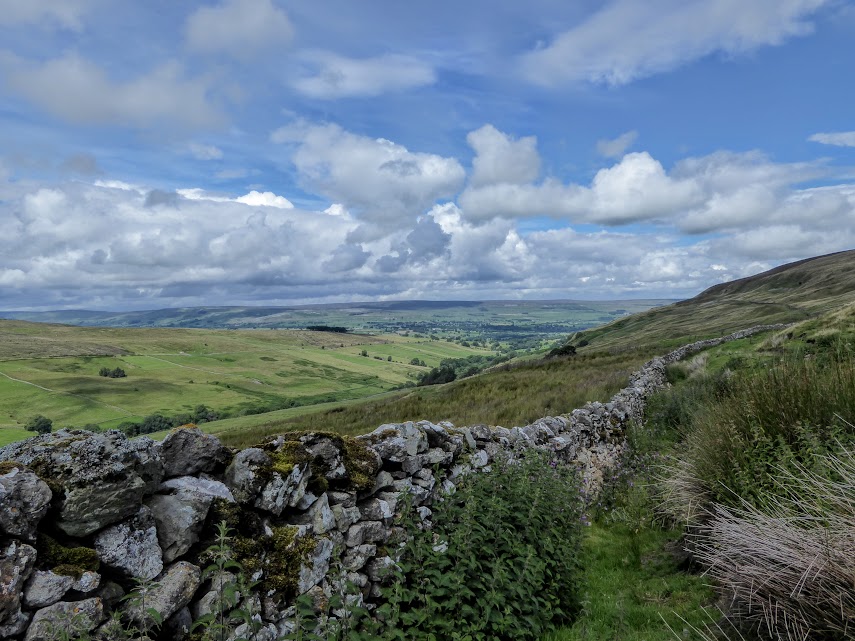
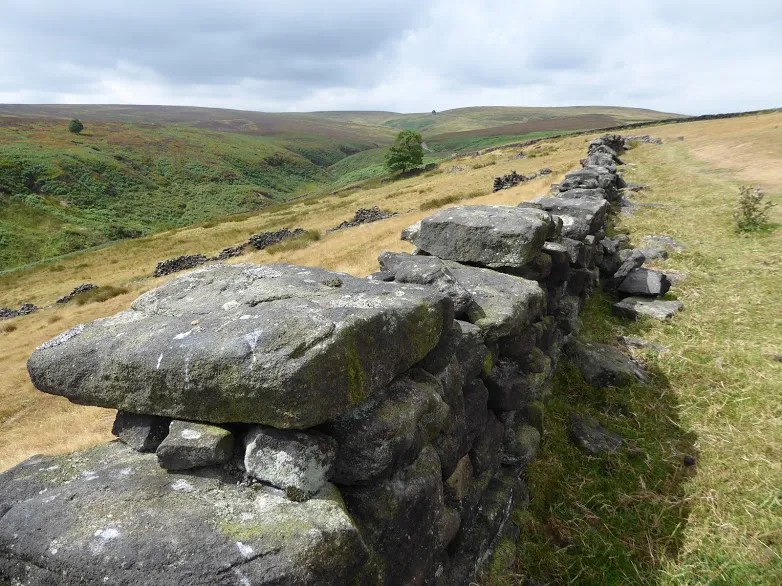
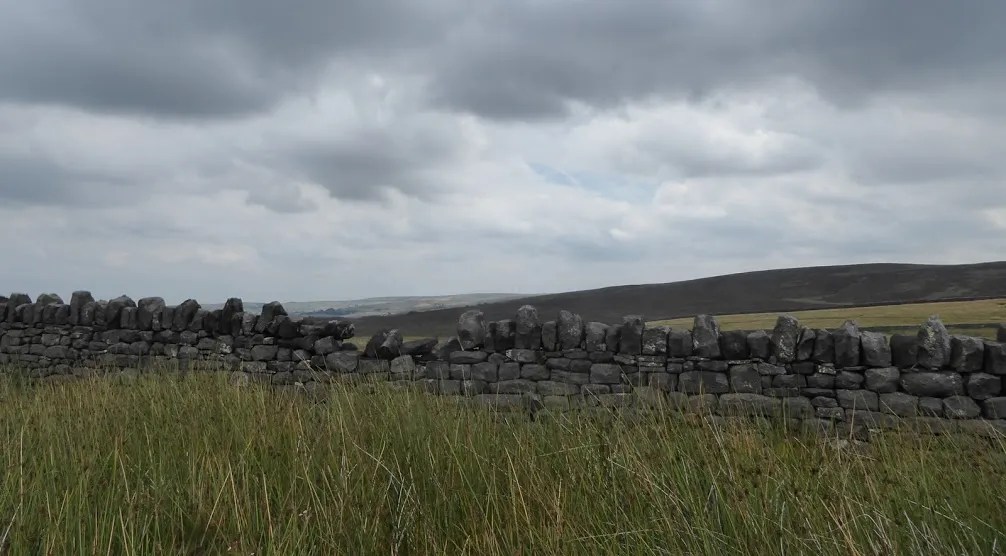
Today sees the last Square of the month, in which Becky has challenged us to find images celebrating Seven. I’ve chosen something quintessentially English. Yes, other drystone walls are available, but the sight of them marching across the landscape, identifying ancient field and pasture patterns is something I’ll always associate with a northern English landcape.
Thank you, Becky, for a month of fun and fellowship. And Squares.
This week, A Canadian blogging pal, Rebecca of Rebecca’s Reading Room reflected on re-reading Emily Brontë’s Wuthering Heights. It made me think of a post which I wrote six years ago, in which I described a walk in Emily’s footsteps. Now it’s not really playing fair to re-post something I published before for the Lens-Artists Challenge: Tourist Attractions Near and Far. But I’m going to do it anyway. How many walking routes does anyone know in the UK where the way-marking is in any language other than English? Here, they’re in Japanese. This wild and often unforgiving part if England has become an unlikely tourist Mecca for devotees of Brontë’s story of the passionate and tumultuous love affair between Heathcliff and Catherine Earnshaw.
Wuthering Heights
28th July 2018
Haworth: a charming village on the top of a high and steep hill, in an area of high, bleak and steep hills; home to the Brontë sisters and the surrounding moorland countryside of Wuthering Heights.
Cottages near Haworth. Cosy now: possibly less picturesque back in the Brontë’s time.
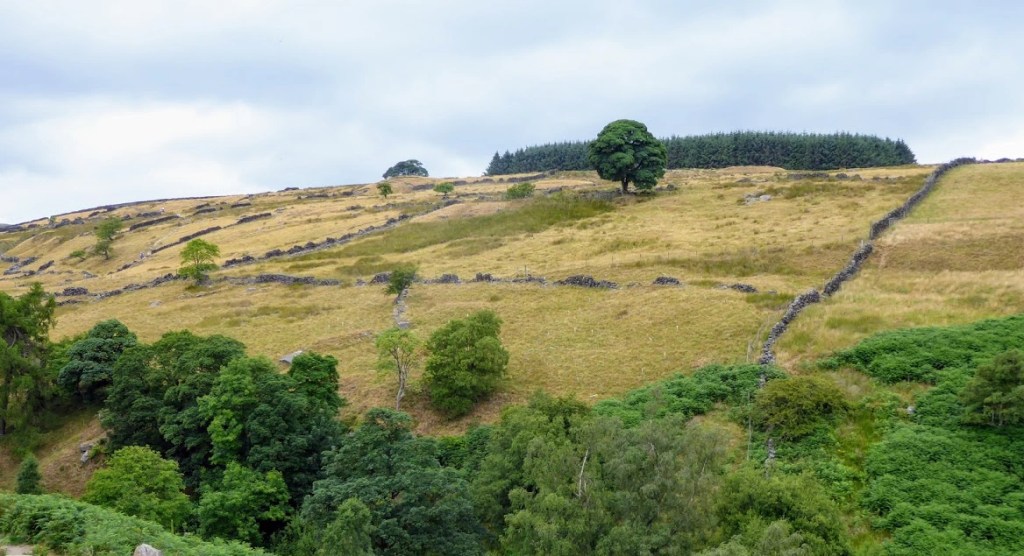
Everyone knows that you can expect ‘weather’ when you come here, whatever time of year you arrive. As you stumble along the church path to leave the village, slashing rain tumbling from sullen hostile skies needles your skin, slicks your hair to your face and saturates your clothes. As you set your face against the wild wind, your boots sink into the sodden peaty turf as you trudge onto the moor. If you dare to glance up, you see unending moorland before you: bleak, barren and bare, with sheep huddled against the dry stone walls which march across the landscape. This is Nature-in-the-Raw, and we expect no different.
I went there earlier this week. None of the above applied.
We are in Week Five of a heatwave. I doubt if either the Brontës or even Heathcliff himself had ever seen the like. Brittle coir matting now carpets the brooding moorland fells: and several weeks early, the heather is almost in flower, rich and purple. Yellowing grasses replace the dense green turf the sheep prefer, whispering and rustling in the light breeze.
Beyond Howarth, coir matting stands in for moorland turf.
There’s a little brook in the valley here. Angry peaty water jostling officiously along its path has been replaced by still, clear shallow pools.
The brook by Brontë bridge.
The Brontë sisters would cheerfully have paused here to rest, reflect and write a little. Then, like me, they would have slogged on, up the peat-and-stone pathway that leads upwards, ever upwards, towards Top Withens.
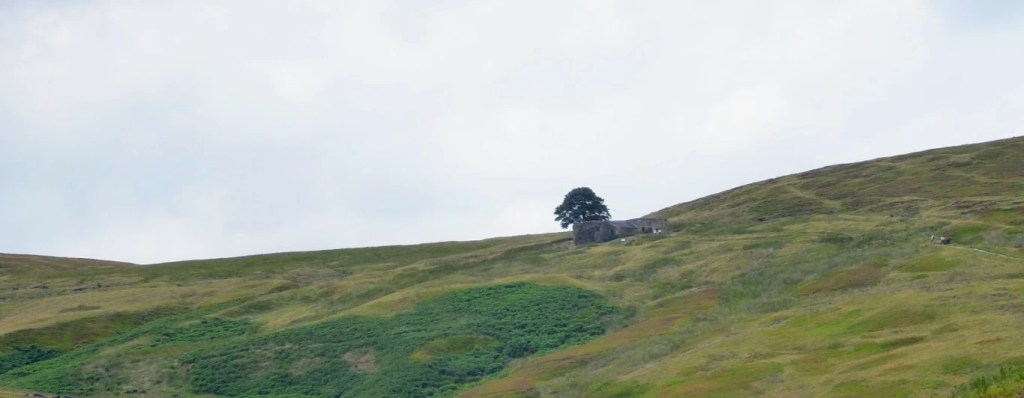
There’s Top Withens, up there. Beside that solitary tree.
Top Withens may have been the isolated upland farmhouse that Emily Brontë pictured Cathy Earnshaw and family living in when she wrote Wuthering Heights. It’s a ruin now, the roof torn off in a violent thunderstorm in the 1890s. Just as you’d expect.
It was the perfect picnic spot for me. The moorland stretched before me, its hillsides rhythmically rising and falling. The world was silent: not that silence in which there is no sound, but that of the living countryside: the low susuration of the swaying grasses; the humming of the wind in my ears; the occasional complaint of a bird sweeping overhead. Beyond the moorland, greener fields lay, chopped centuries ago into rough rectangles by drystone walls. Some held sheep, some cattle, others recently cut hay. The sun warmed my rocky seat, and I was perfectly content.
Except for the sky. The day was sultry, sweaty, but freshened by a soft breeze. I knew the sun might be chased away by gusty rain. Ash-grey clouds swelled and receded, revealing granite tones behind: and beyond that, cornflower blue once more. It was a signal. Haworth takes weather seriously. Never be tempted to climb these uplands without a very capable waterproof in your kit.
The moorland I saw this week was not the Brontë’s moorland. It’s been a little sanitised. There are helpful finger posts pointing the way at every junction, in English and … Japanese.
Top Withens or Top Withins? Take your pick. I don’t know which the Japanese choose.
The pathways the sisters trod are no longer springy peat tracks, or sticky muddy gullies. Instead, heavy slabs line the way, to prevent footfall damage to this fragile area from the hundreds of people who tramp these paths looking for the Real Brontë Experience.
My day was far too comfortable for that. I was not returning to a draughty parsonage with self-destructive brother Branwell to worry about. If you want to see the Brontë’s life through his eyes, read Robert Edric’s ‘Sanctuary’. You’ll be glad to get back to bustling tourist-destination Haworth for a nice cup of tea.
In this week’s Lens Artists Challenge, Donna of Wind Kisses fame urges us to show images that make us hear the sounds issuing from them.
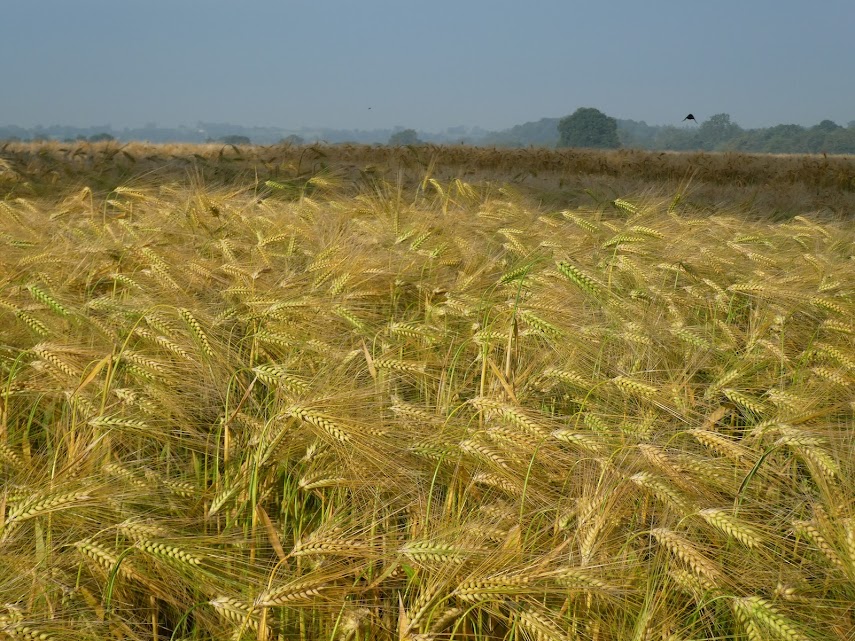
I immediately thought of the fields round here, when during the spring and summer, the backdrop to a walk is often the quiet susurration of crops swaying in the breeze. Or maybe this image here shows a brisker noise as the breeze becomes instead a hearty wind.
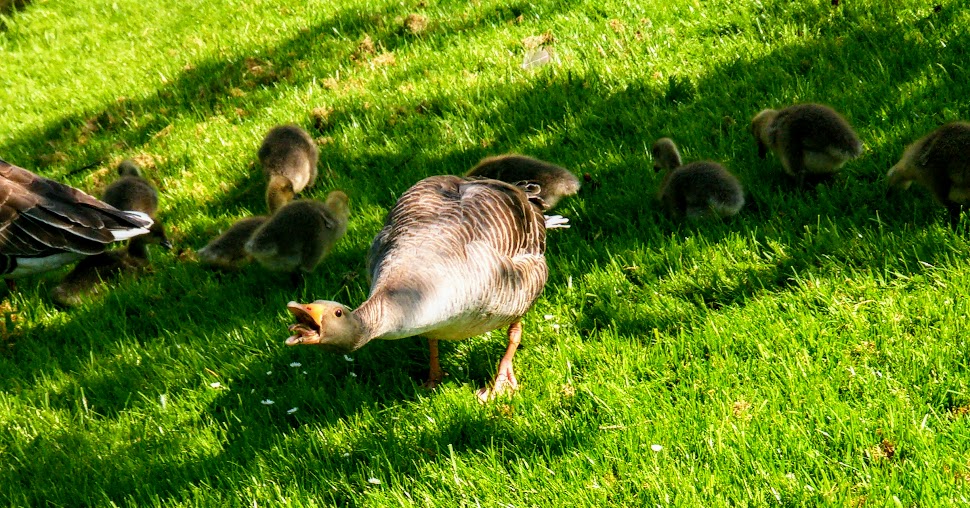
Birdsong is the backdrop to any country walk. But instead of images of birds trilling their hearts out, I’m showing you two shots from times when I was a major source of irritation. ‘Don’t you even THINK of harming my babies’, hissed the graylag goose.
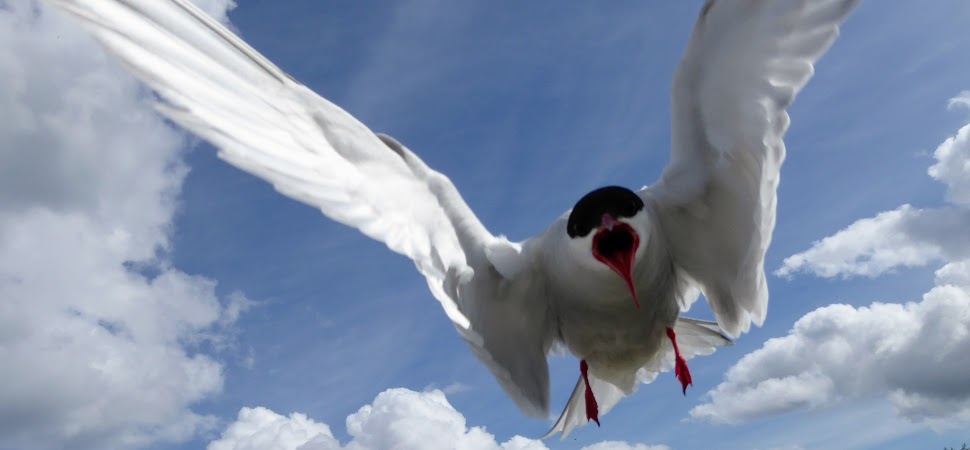
‘Don’t you even THINK of harming my babies’ screamed the Arctic Tern. What do you mean, I haven’t got the wings entirely in shot? I was in fear of my life here.
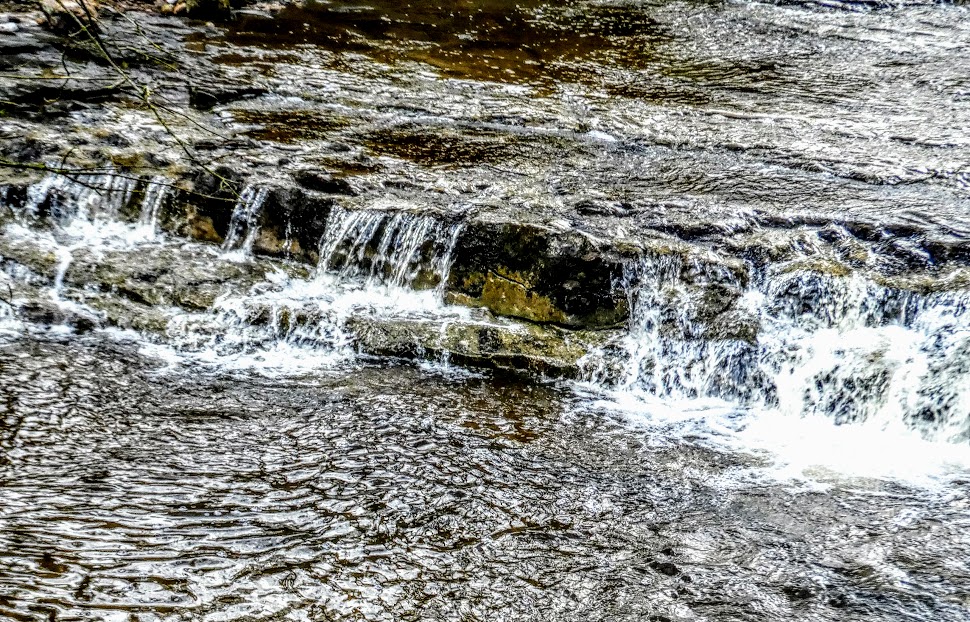
Ours is a riverside landscape here, and especially now in winter, the waters chatter rhythmically over rocks and gravel.
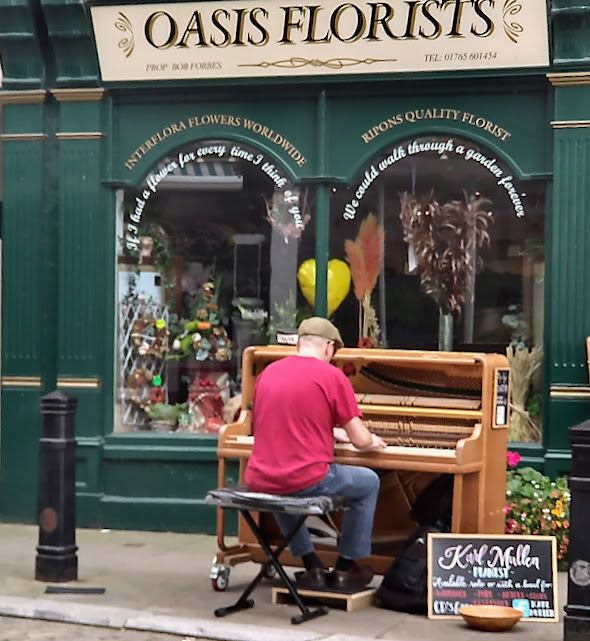
Let’s go into town. Any town. There’s bound to be something going on. Maybe someone has dragged a piano out into the street.
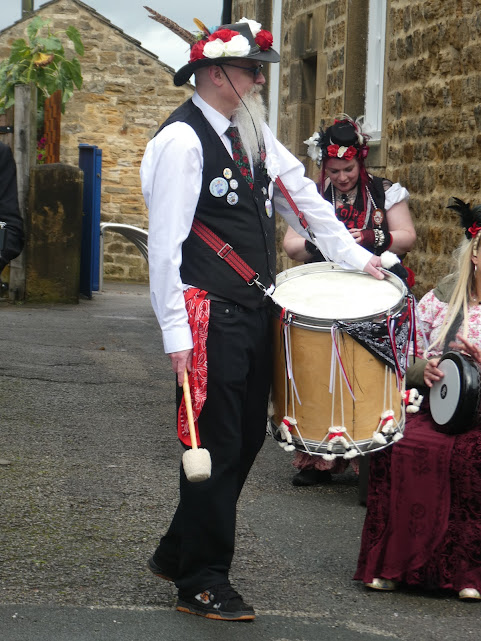
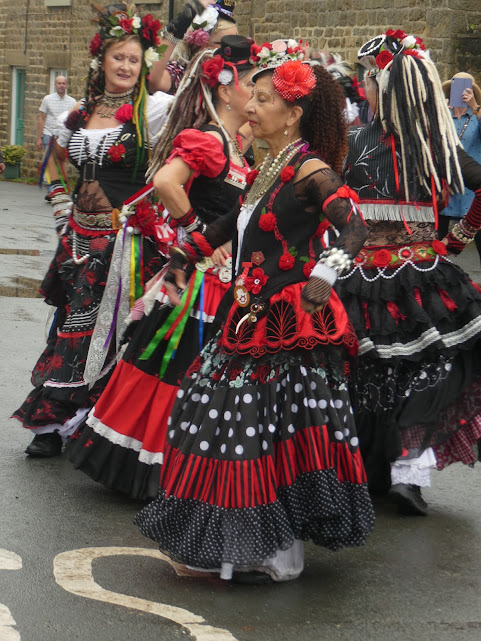
Maybe there are Morris dancers out and about. And Morris dancers don’t have to be men these days …
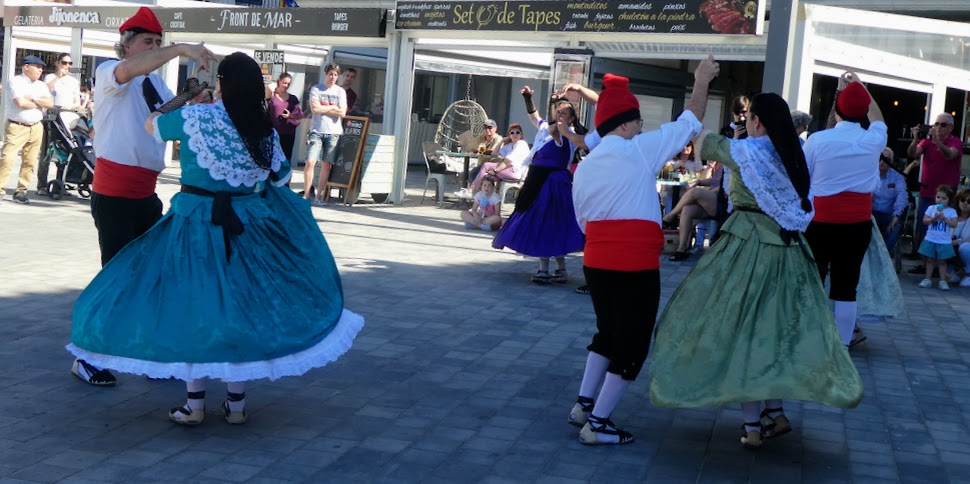
There might be dancing in the street in Catalonia …
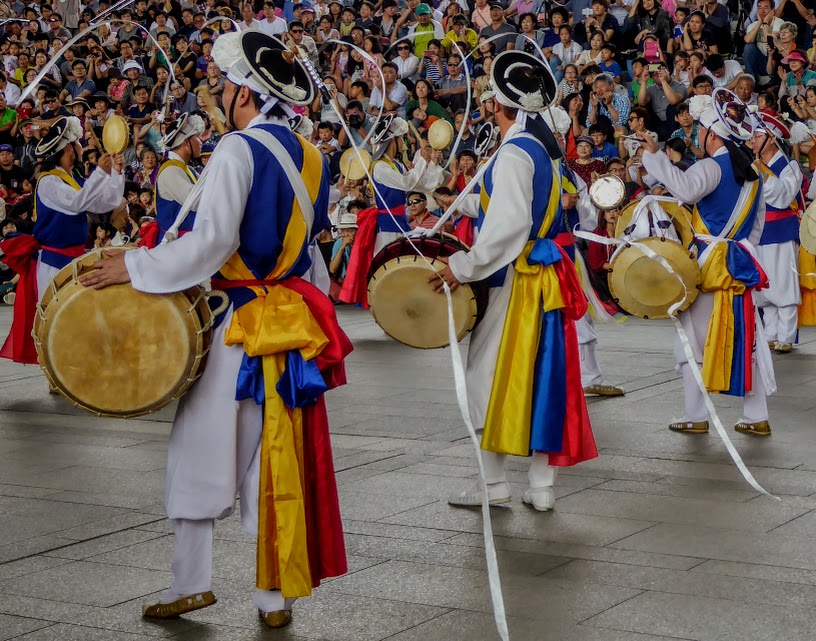
…. or celebrations of Chuseok in South Korea, with insistent drum beating .
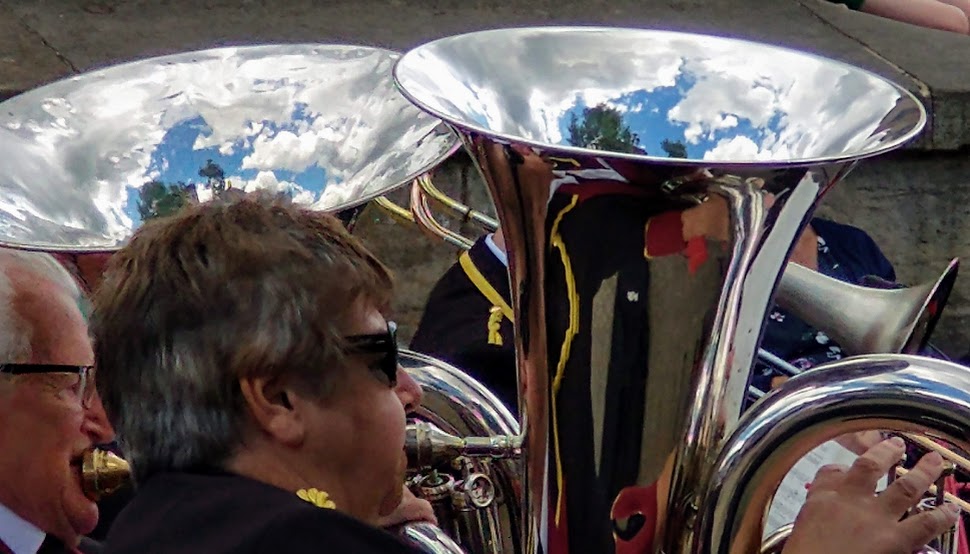
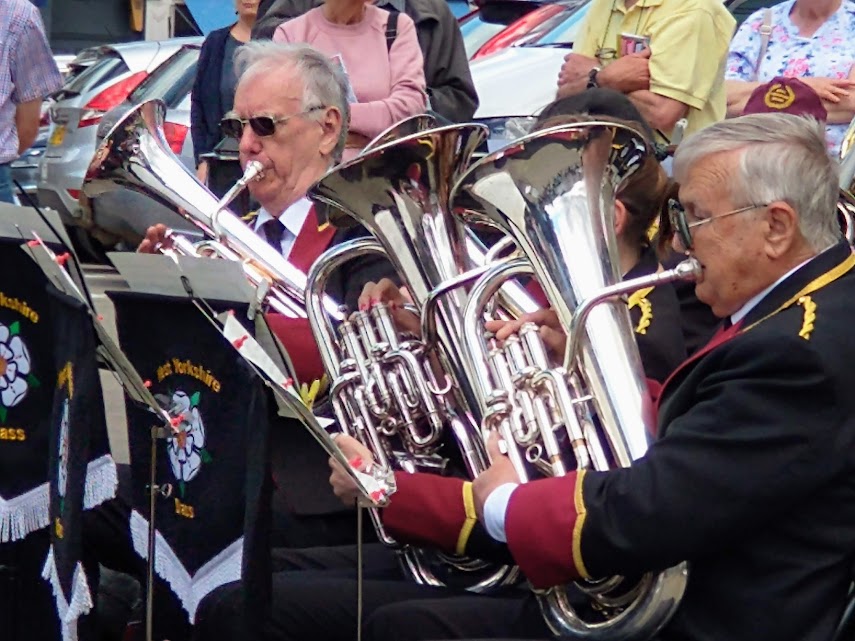
But bah gum, I’m a Yorkshire lass, and I can’t close without a rousing melody from a fine brass band. You’ll find another image in the featured photo.
Any Brit could finish this off for you, no trouble. But just in case you aren’t a Brit, and can’t, here are the words of this music hall song, now over a hundred years old.
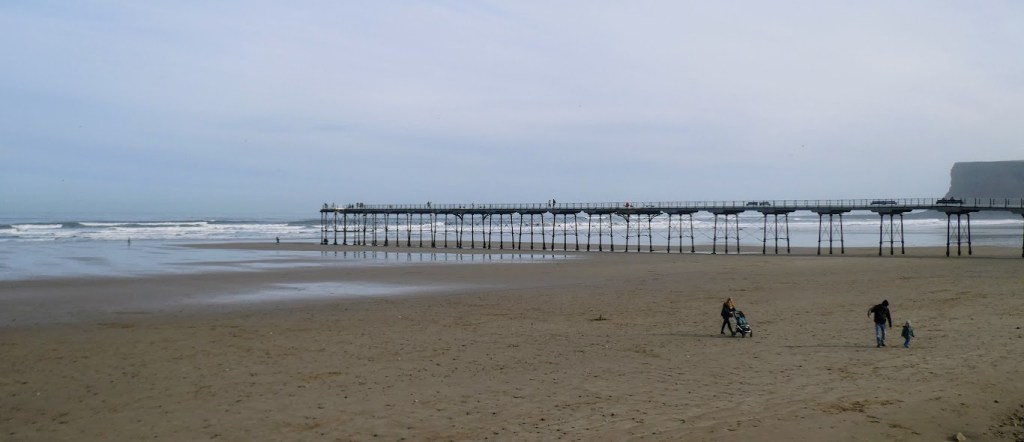
And last Monday, the seaside was where we went, for a suitably British day out. To Saltburn-by-the-Sea in fact: ex-smuggling centre, and a popular Victorian resort which still has a charmingly olde-worlde air.
There’s the sea itself. People-and-dog-watching…
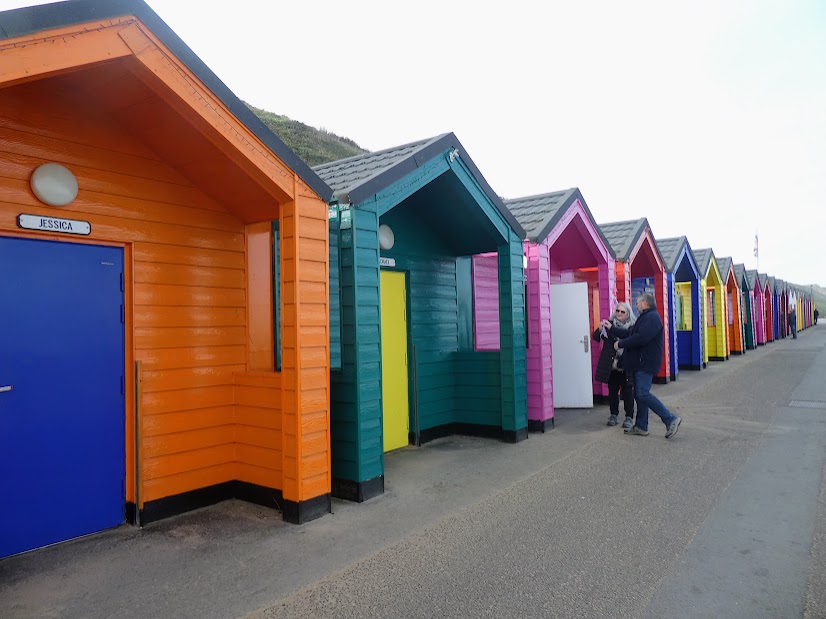
… beach huts …
… the all-important pier …
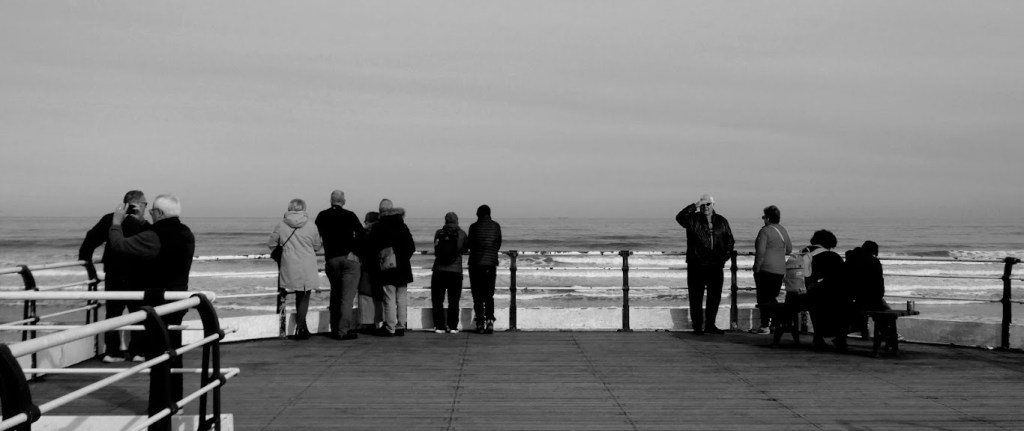
… which it’s obligatory to walk to the end of, to look at the sea again …
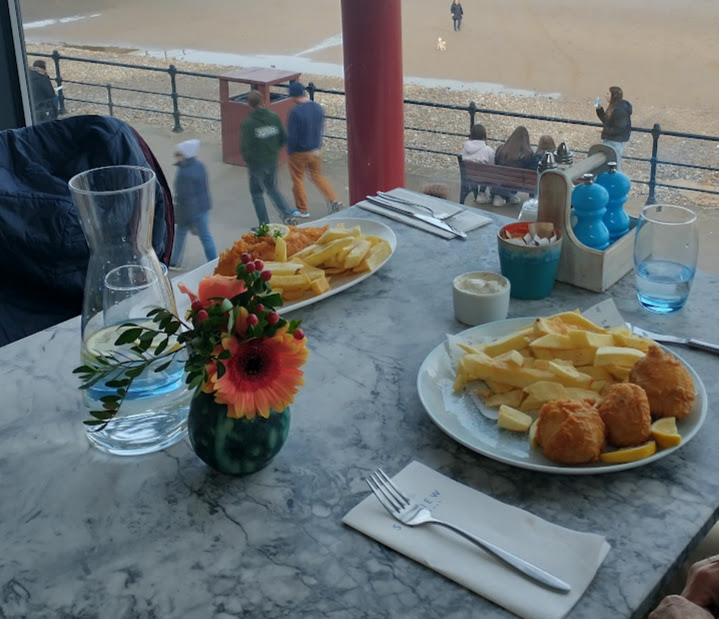
… the equally obligatory fish-and-chip lunch, preferably overlooking the sea …
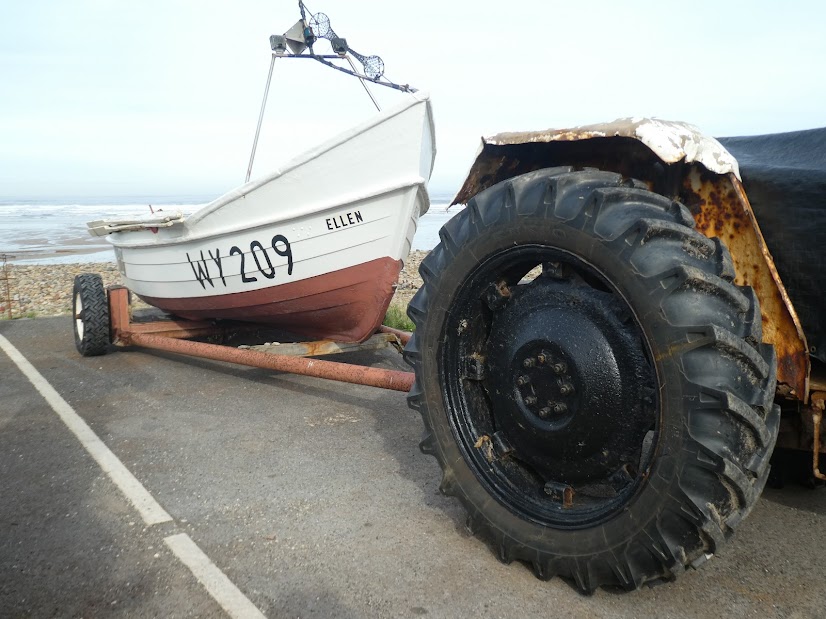
… the boats in the small harbour …
… and the header mops up the final necessary sights: two surf-board enthusiasts, and even one seagull.
Blogging pal Peter of Peter’s Pondering told me that after he’d read my last post, he’d enjoyed ten minutes with YouTube watching 400 Roses performing . I’ve missed a trick. I should have shown you myself. Here you are:
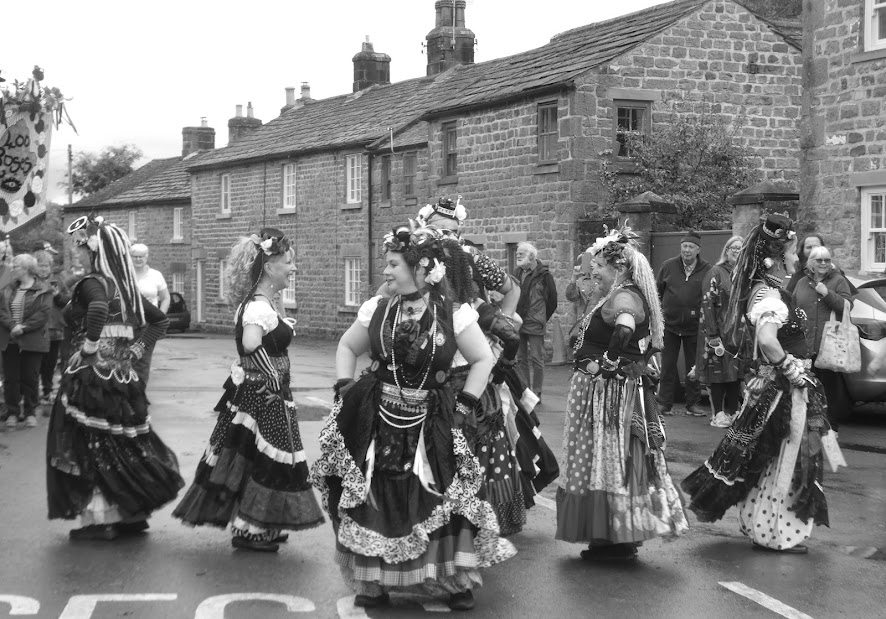
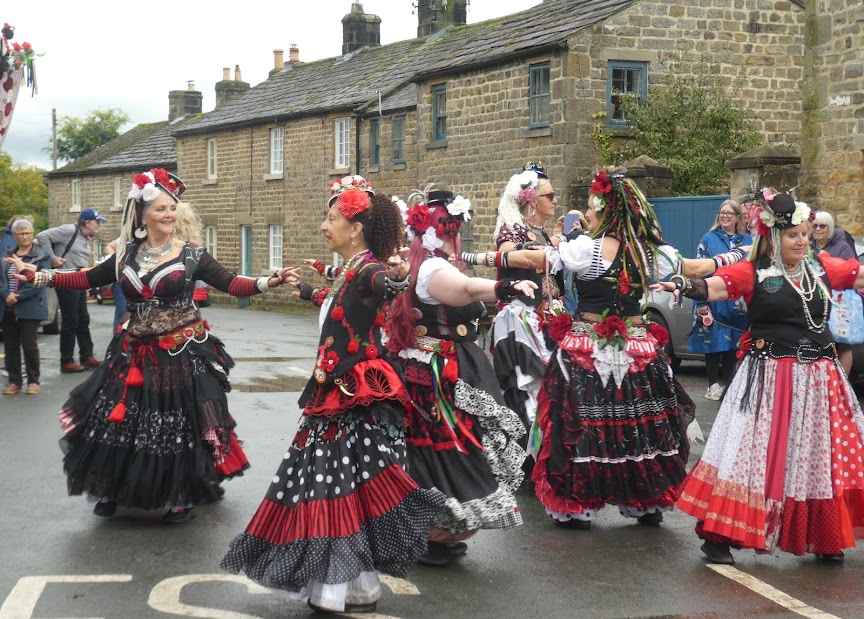
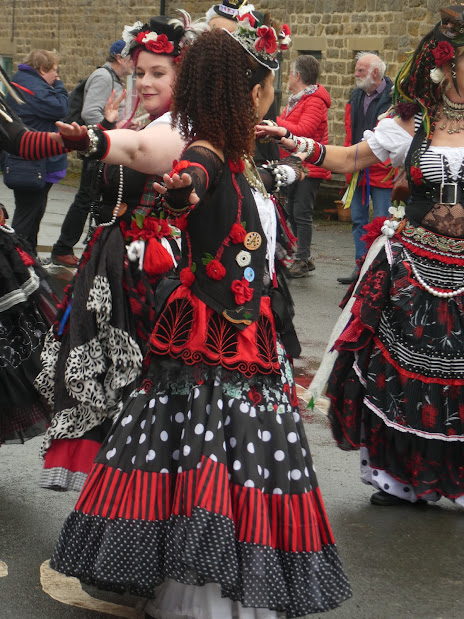
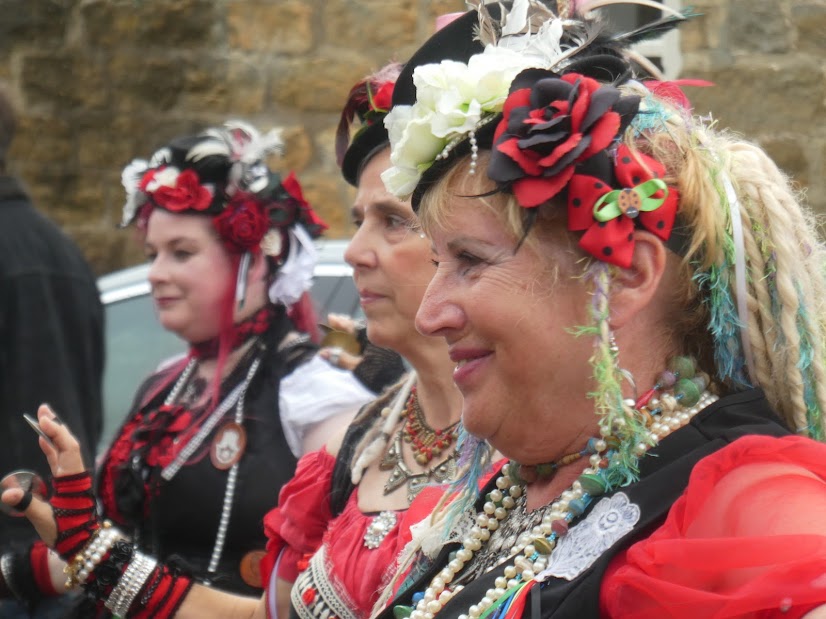
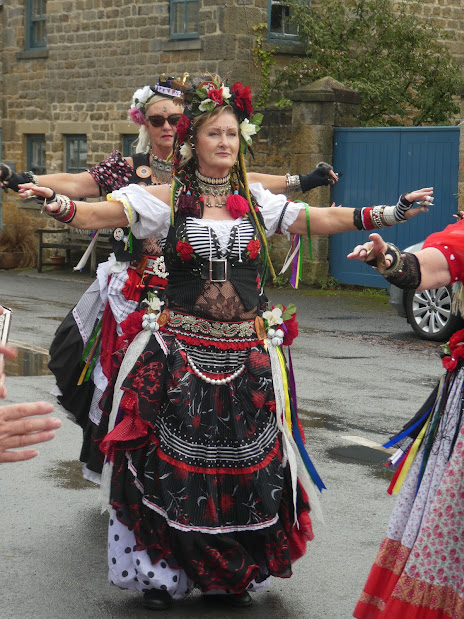
When I showed you all the fun to be had at Masham Sheep Fair in Monday’s post, I included a couple of shots of dancers. Dancers who really didn’t give of their best in black and white. These are the 400 Roses.
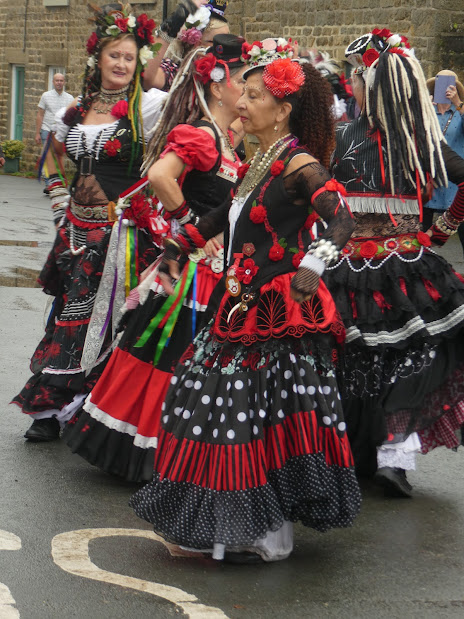
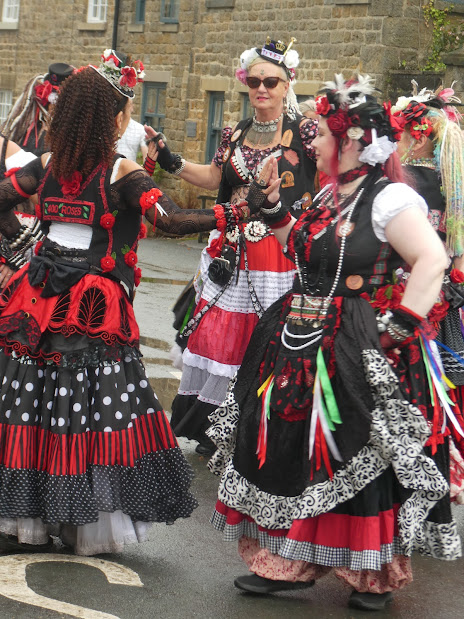
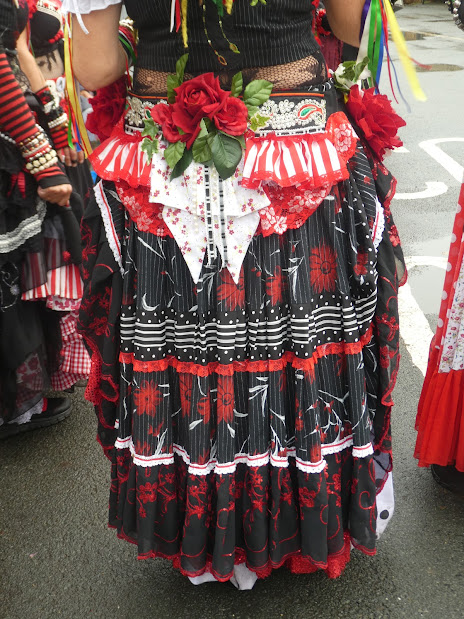
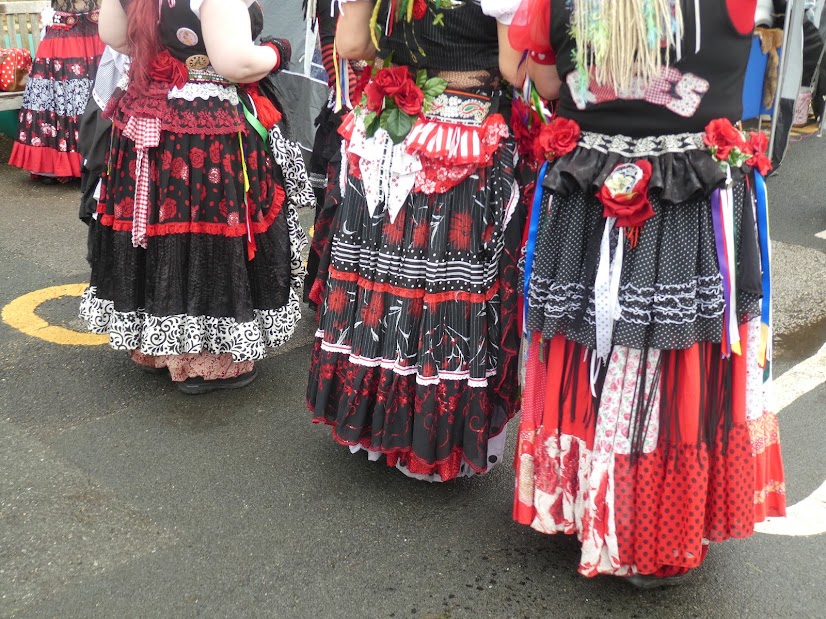
They’re a group of women dancers from West Yorkshire. They’re folk dancers. But it’s not as simple as that. They combine Morris dancing with – yes – belly dancing, with a nod perhaps to steampunk. Their gloriously extravagant red, black and white costumes feature – among other things – red and white roses to celebrate their Yorkshire and Lancashire origins . Those of you who are not from these parts may not know that the red rose is the symbol for Lancashire, the white rose, that of Yorkshire. The Red Roses are accompanied by their energetically engaging band t’Thorns. Come and have a look.
And a close-up of the skirts of their dresses, every one different.
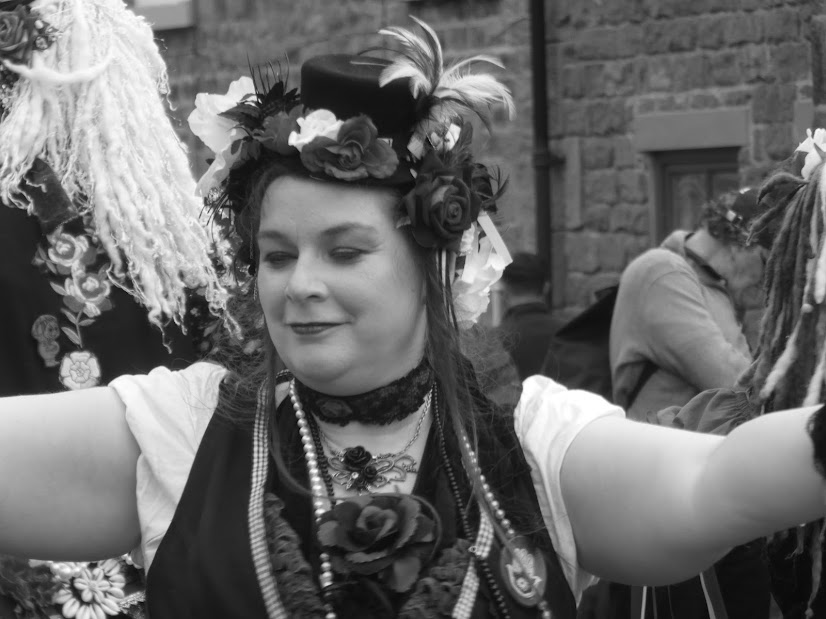
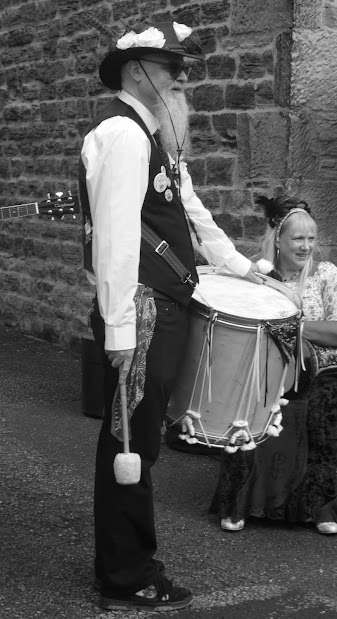
I couldn’t resist two black and white portraits though: one of a dancer, one of a bandsman.
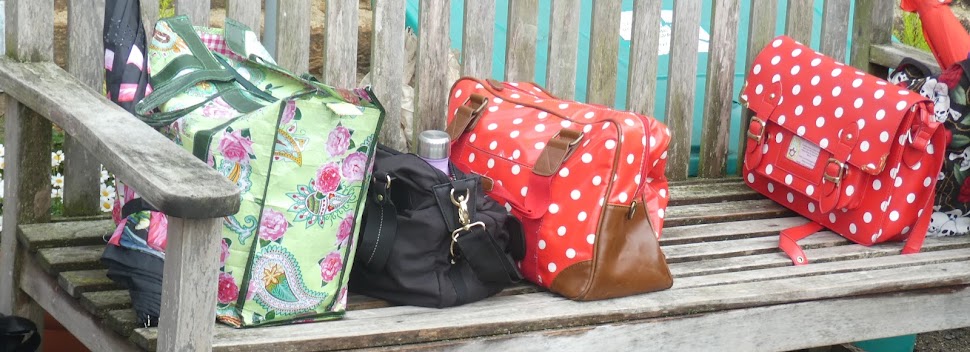
And even one of the cheerful bags that accompanied them to where they were dancing.
Thank you, 400 Roses. We’ll come and watch you now whenever we can. I think you enjoyed yourselves as much as we your audience did.
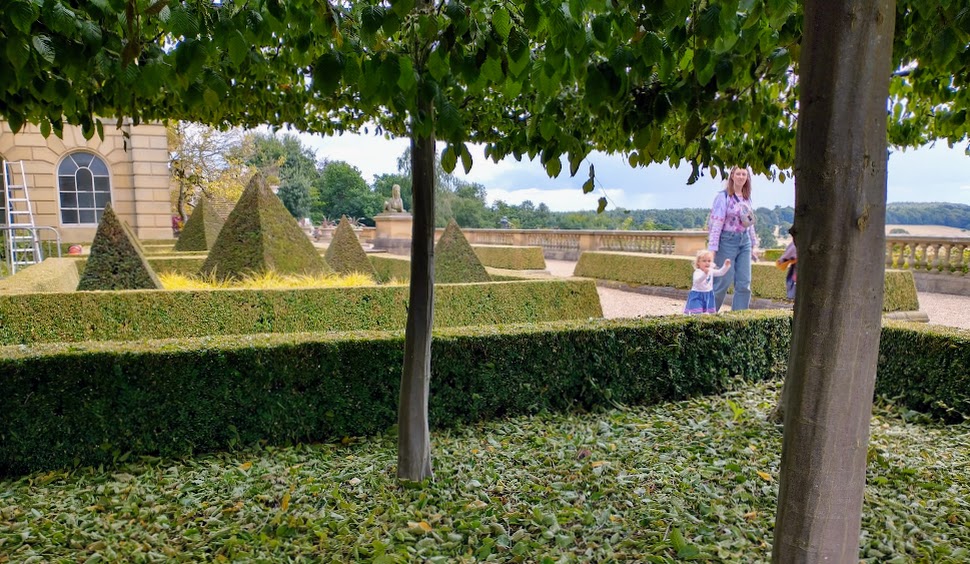
We were in the grounds of Harewood House the other day. Well, mainly we were in its adventure playground: we had our daughter and two year old granddaughter in tow. But we did walk through the formal outdoor areas near the house too, and we happened upon this hyper-geometric topiary garden.
I wondered if the quotation by Aleksandr Pushkin which forms the title of this post fitted the bill. A well-formed garden seems to me a thing of poetry. And this well-formed garden, which I was surprised to find I rather liked, is a thing of geometry too.
It’s the first time I’ve joined in Paula’s Words of Wisdom challenge, where she invites an image with a matching quotation. Let’s see if it cuts the mustard.
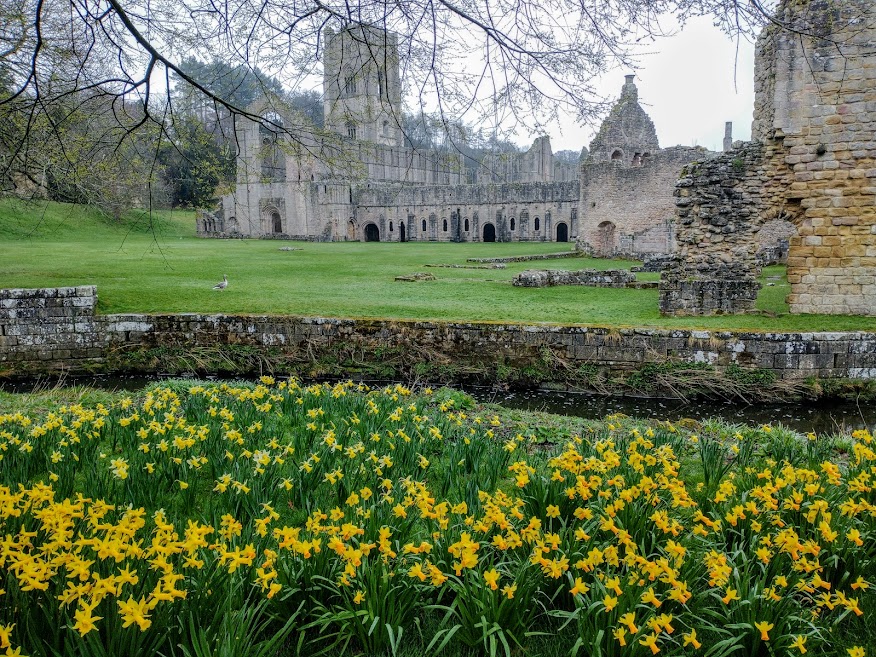
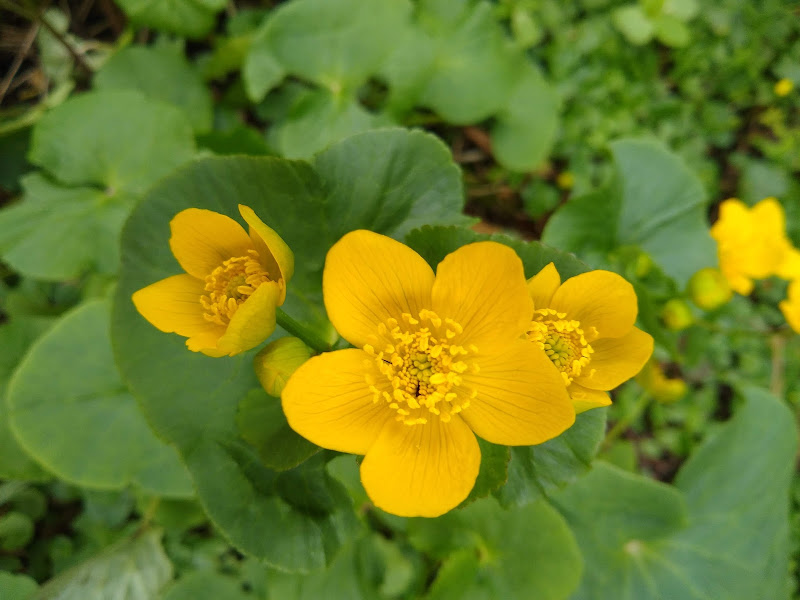
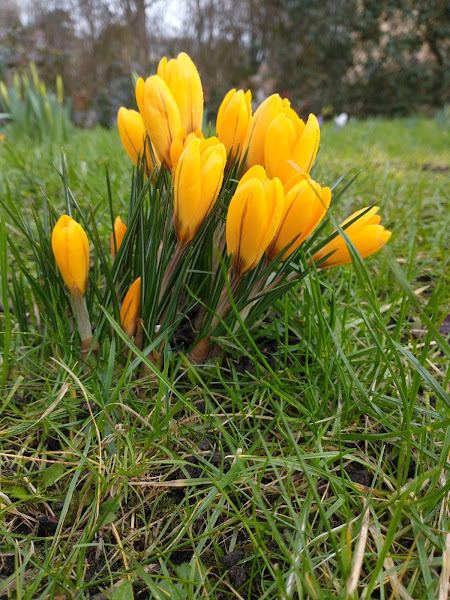
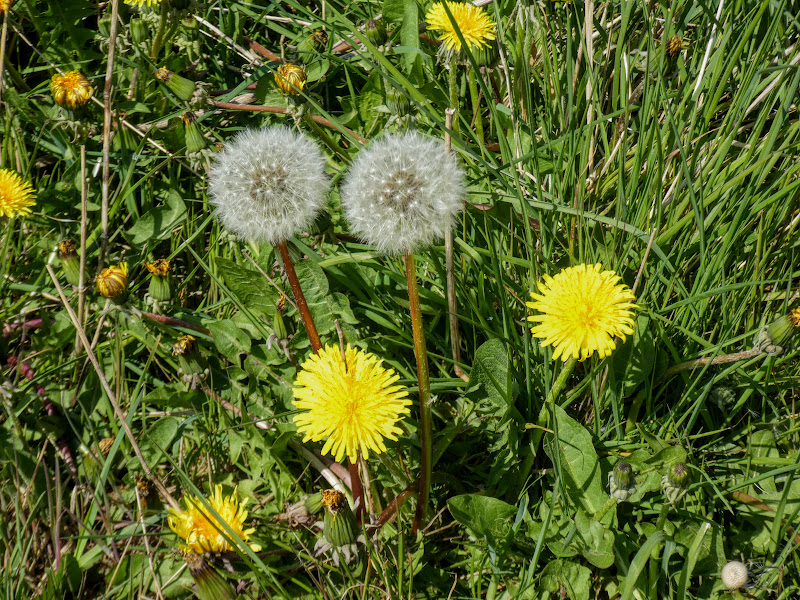
Last week, I offered you a monochrome spring day. Today, because Denzil’s Nature Photo Challenge also asks us to celebrate the spring, I’m going for colour. Just one colour though. What shouts ‘spring’ as cheerfully as the many flowers which emerge over these weeks in every shade of yellow? Look at Fountains Abbey in the header photograph – it’s just carpeted with sunny daffodils. But there’s more …














 From Pyrenees to Pennines
You must be logged in to post a comment.