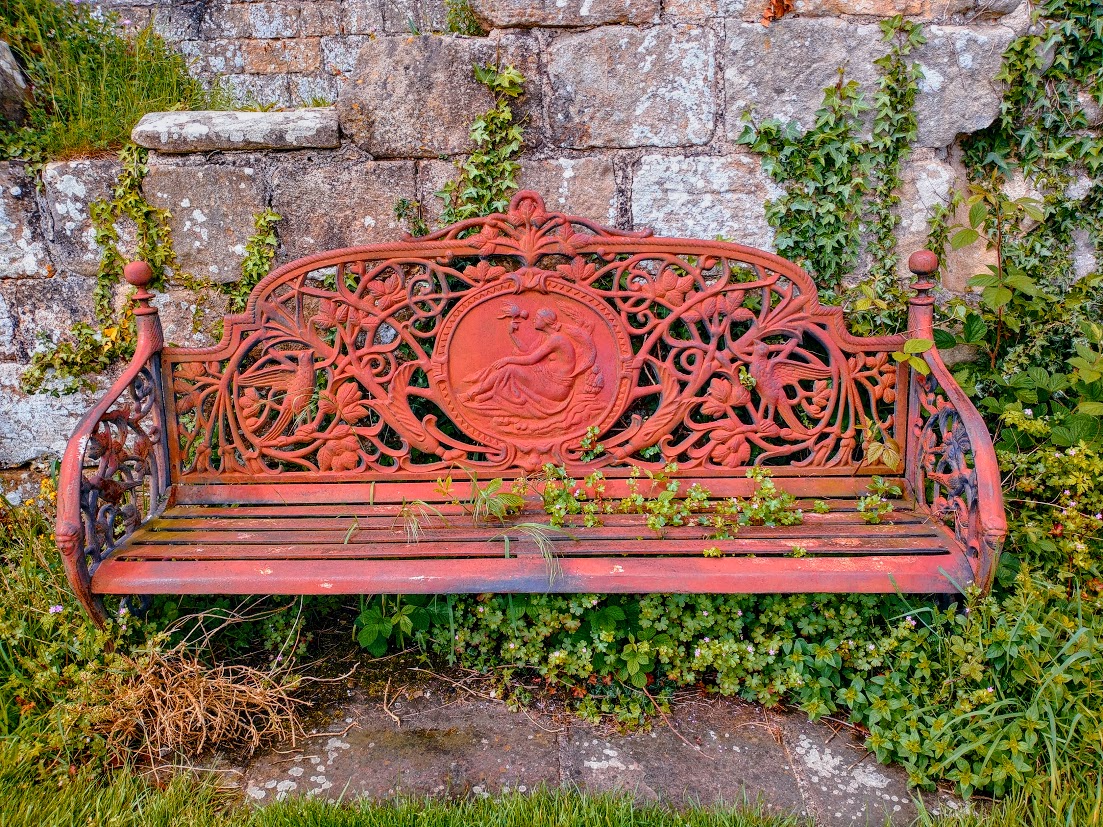
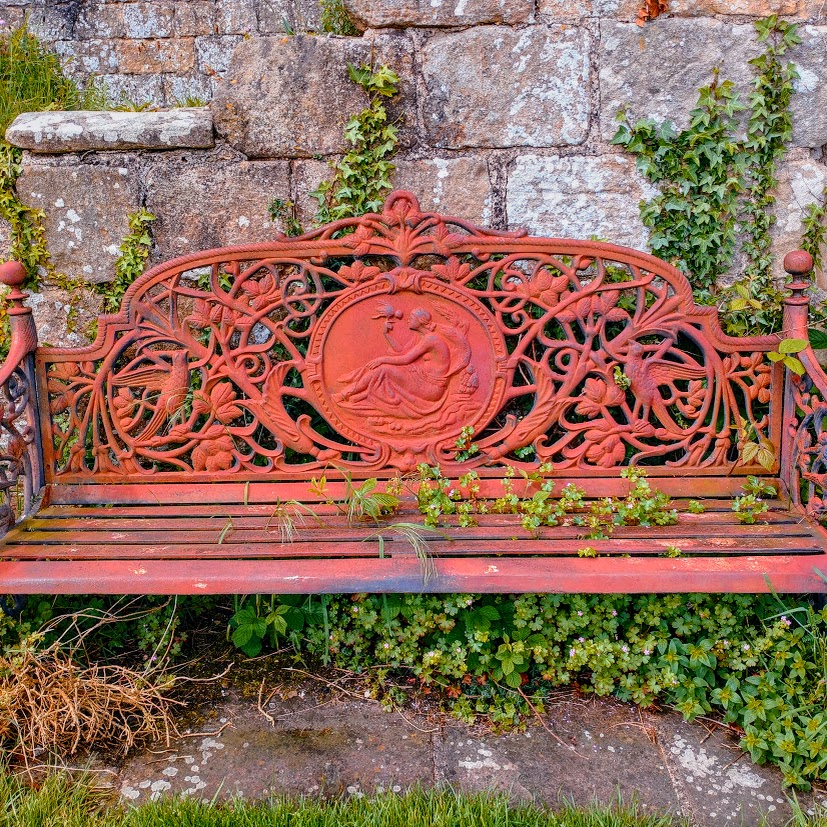
This rusting wreck is multi-tasking today. It’s lived a blameless and long life in the ruins of Jervaulx Abbey, offering views of the Dales and what’s left of the Abbey in the long years since Henry VIII had it made unfit for purpose during the Dissolution of the Monasteries.
Today though, it’s doing a tour of duty for Becky’s #Simply Red; for Jude’s Bench Challenge; and for Debbie’s One Word Sunday. It’s a little dishonest, as I’ve had to tinker a bit to make it Simply Red. Don’t tell the ghosts of those monks who once called this place home.
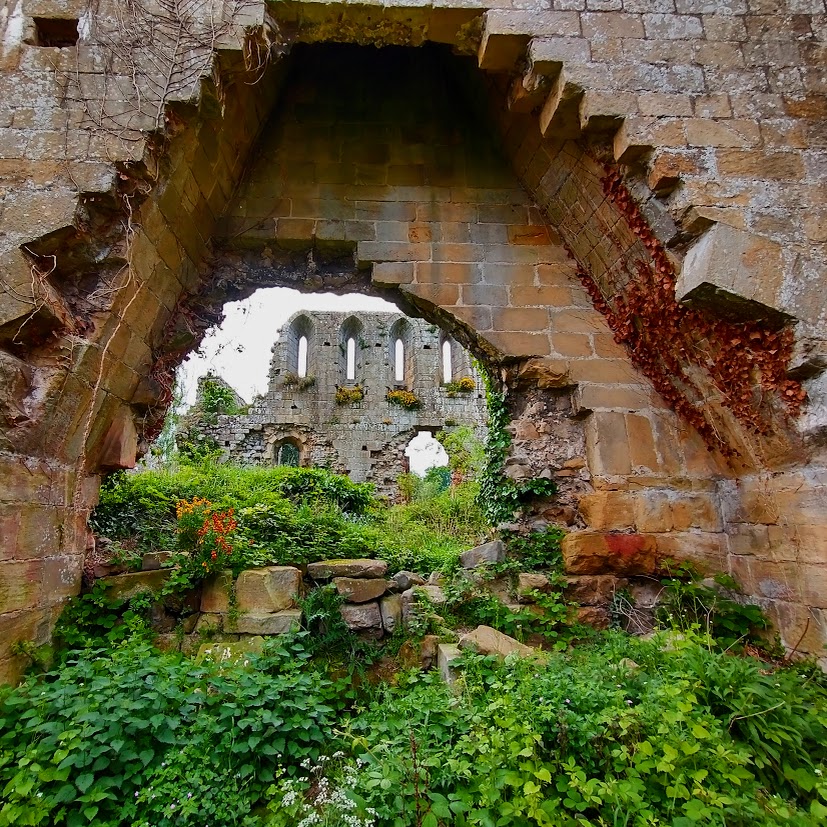
I’ve even managed a tweaked shot of part of the Abbey looking a little red too.
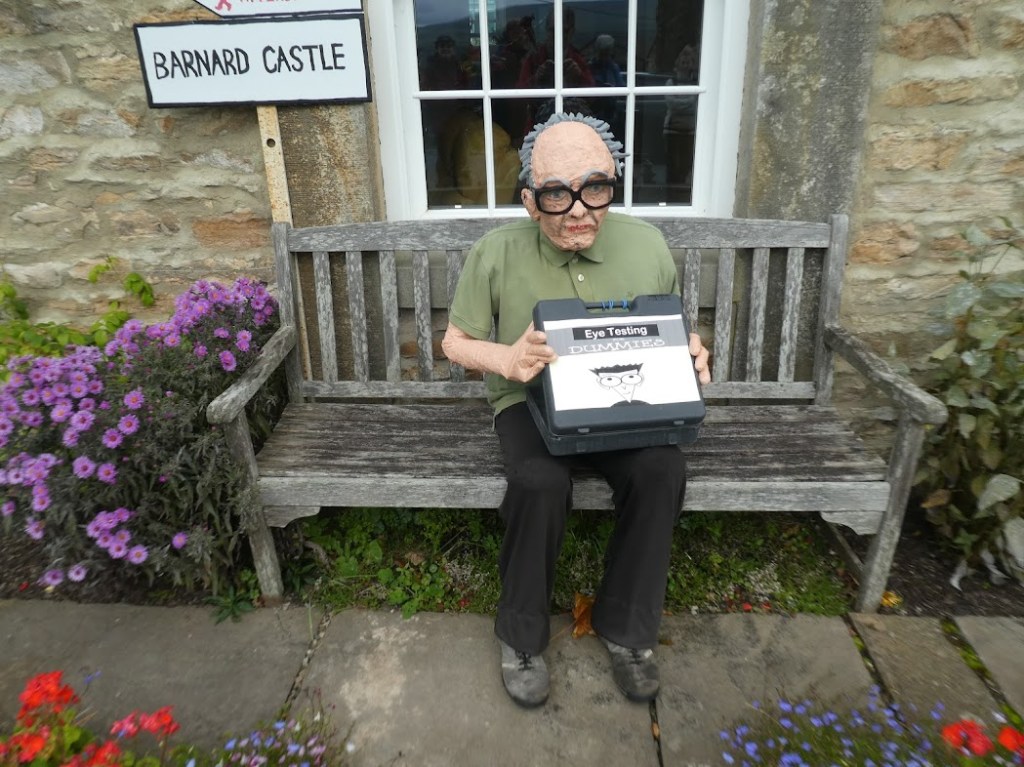
You’ll remember Lockdown. If you’re a Brit, you’ll remember the Dominic Cummings Scandal, when Boris Johnson’s senior adviser famously made a more than 50 mile round trip with his family to have an eye test. Dominic Cummings should NOT have gone to Specsavers …
He was widely ridiculed, and here’s just one example from Redmire in Wensleydale, spotted on a walk in that early period after Lockdown, when the world was slowly opening up again.
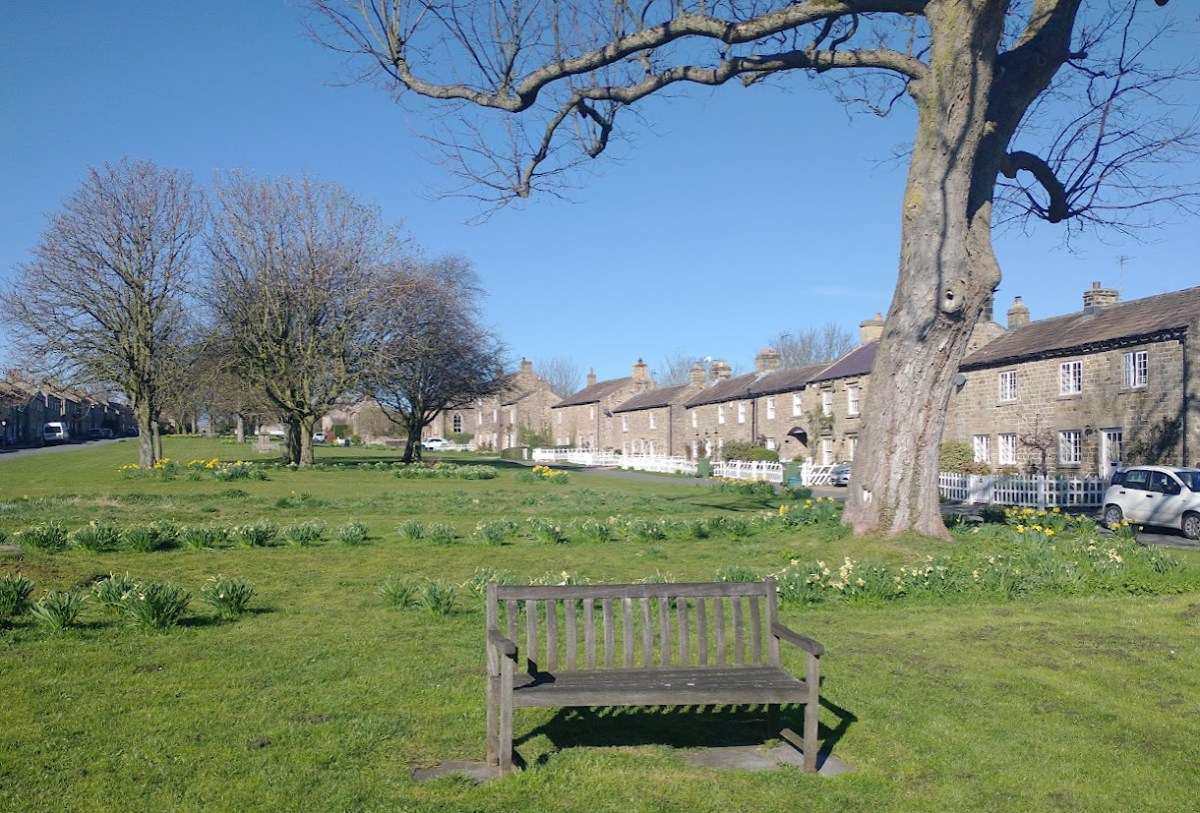
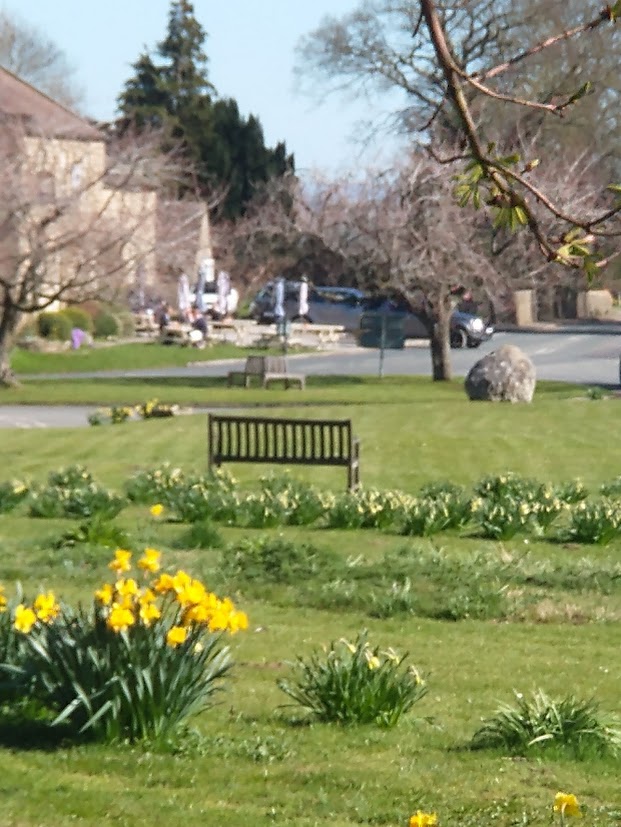
Out walking in Wensleydale the other day, we came upon this bench in East Witton. I thought it important to catalogue it, front and back, for Jude’s Bench Challenge.
Britain is one of the most nature-depleted countries on earth, according to the fourth State of Nature (SON) Report, the product of a collaboration of environmental NGOs, academic institutions and government agencies, including Natural England. Depressingly, England, Wales, Scotland and Northern Ireland are on the edge, as far as much of the natural world is concerned.
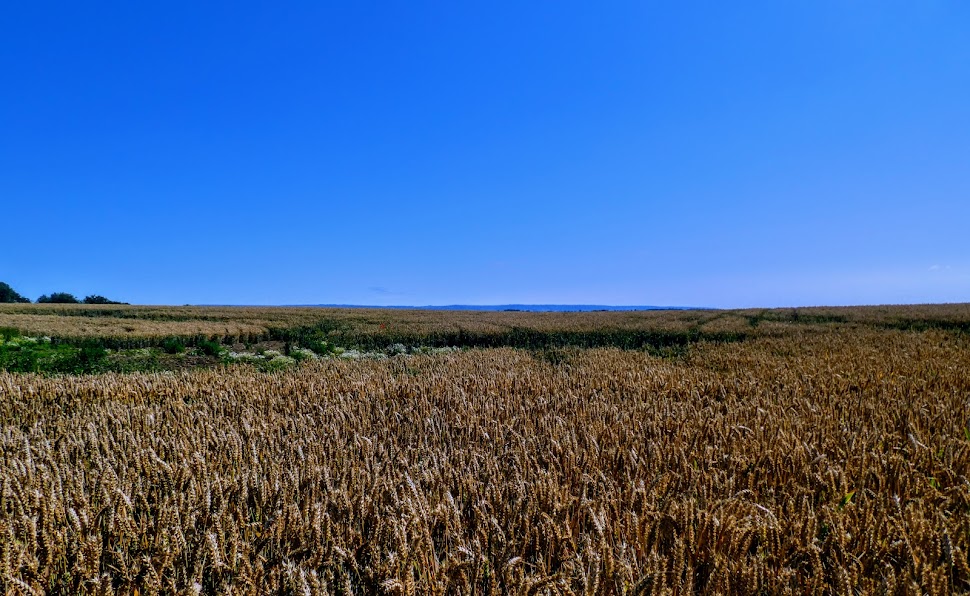
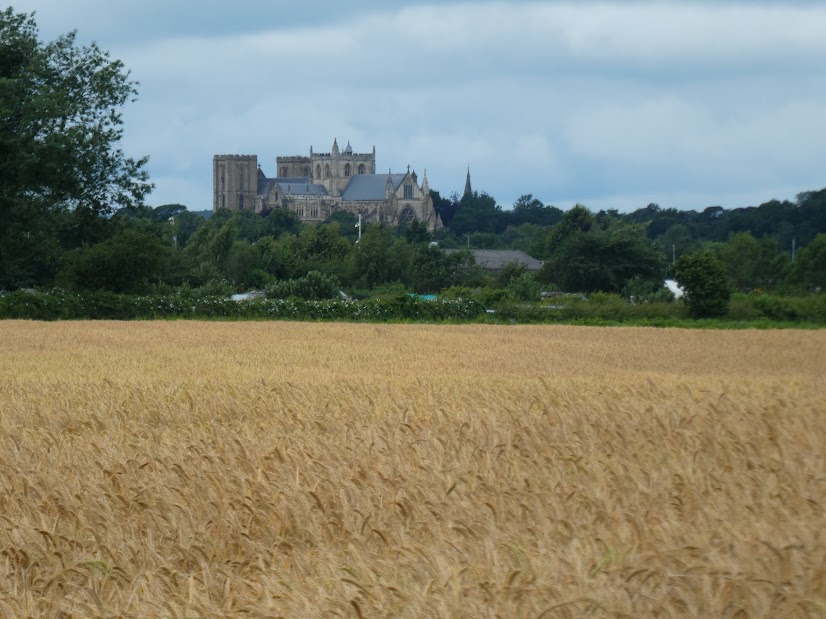
Look at the featured photo for instance, taken on one of those in-glorious-technicolor days of high summer, with an impossibly blue sky, and fields of golden wheat just waiting for harvest. It really shouldn’t be like that. There should be poppies, cornflowers, wild flowers in general poking their heads above the crop. There should be generous field margins and hedges, offering home, food and shelter to whole varieties of insects, small mammals and birds. Where can all this wildlife call home these days? Many of them are on the very edge of sustainability. Here’s another field, even nearer to home, equally mono-cultured.
Part of the Sanctuary Way path skirting the edges of Ripon.
These days grass grown for hay-making as winter feed is just that. Grass. Meadowland used to be so different, crammed with wildflowers that made much richer, more interesting fare for the cattle that rely on it as winter feed. And a mecca for insects : all-important bees among others – during its growing season. These days, it’s so rare that it’s not just meadowland, but a Site of Special Scientific Interest.
Rock House Farm, Lower Wensleydale, and one of its SSSI meadows.
The farms nearer to our house have chosen to make do with narrow jumbles of poppies squeezed into narrow field margins, or at the edge of paths.
Poppies find a quiet corner along a field in West Tanfield.
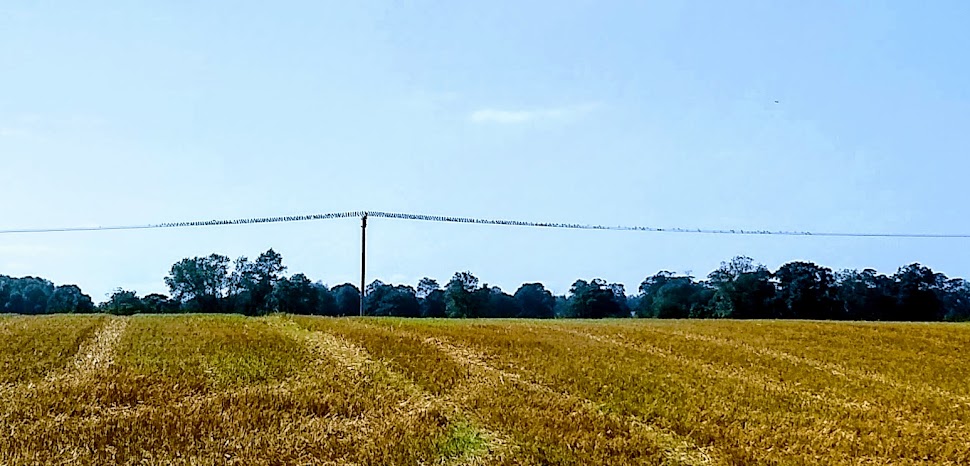
See these? These are swallows on a telegraph wire in mid-September one year recently, assembling prior to their big autumn migration. It didn’t happen this year. Swifts and swallows are on the edge of viability here, from habitat loss.
Waiting to depart on that journey to Africa
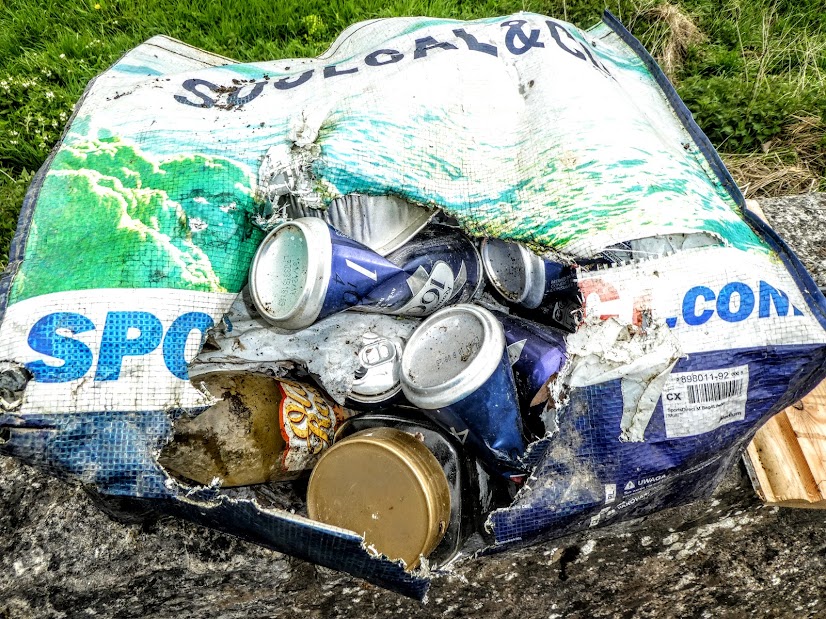
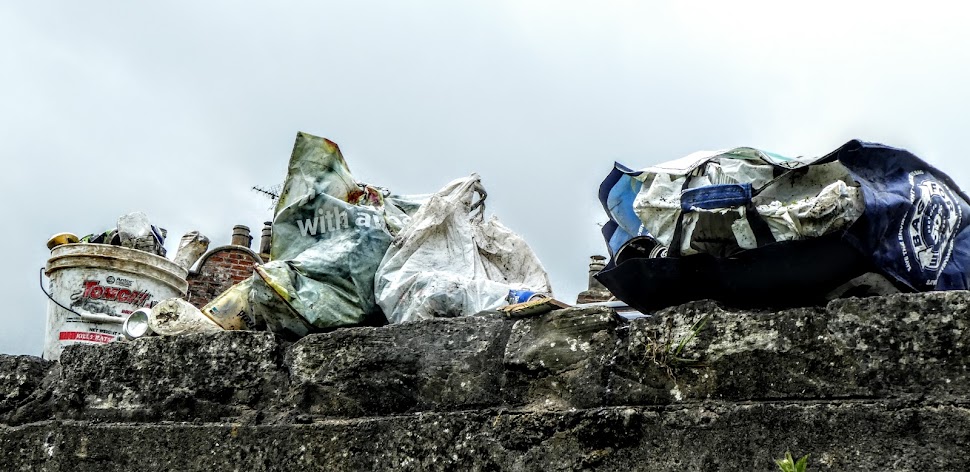
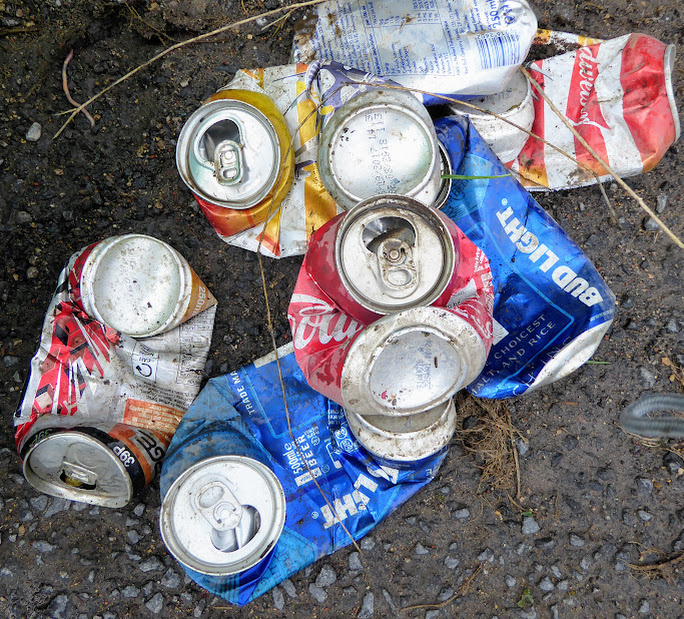
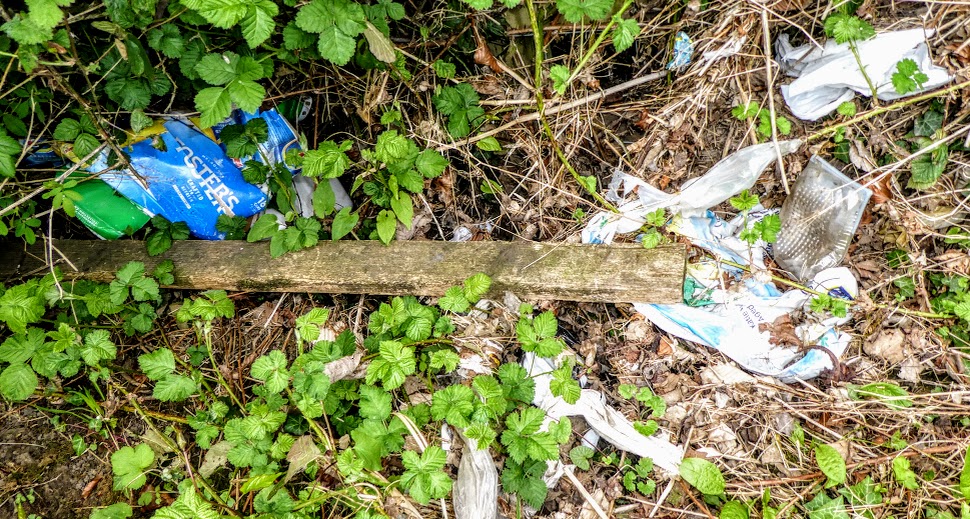
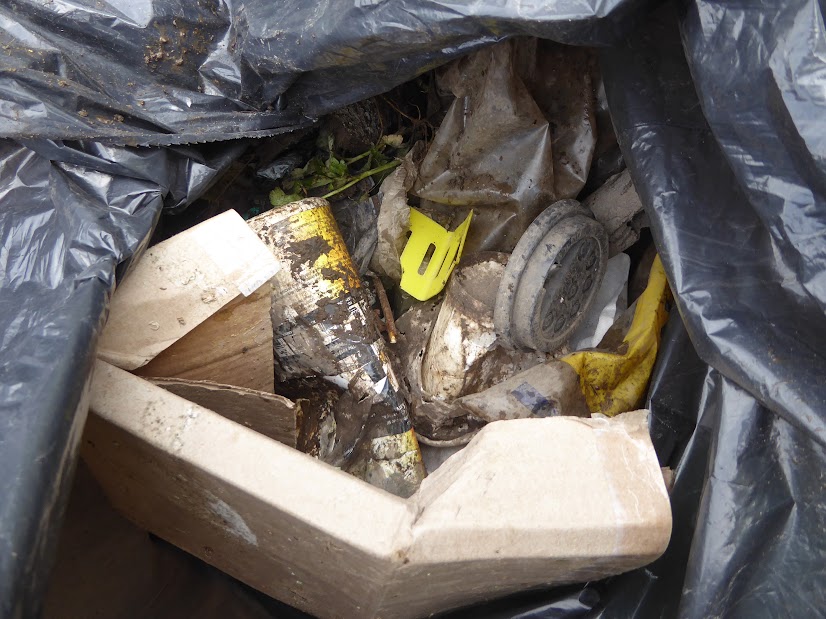
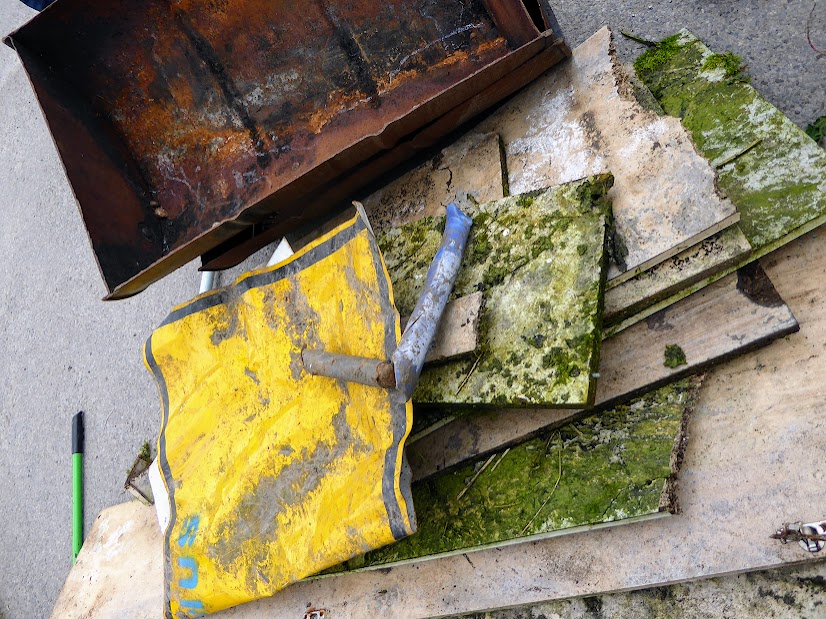
Let me show you something all-too common though, both in town and country. Litter. These images are hauls from litter-picks we’ve done not just in town centres, but down country lanes. Everything from a carelessly-tossed can to rather toxic rubble and waste illegally dumped in a hedge margin. Not just an eyesore, but habitat-damaging and a danger to the many small species that call such areas home.
This is meant to be a photo challenge, not a diatribe, so I’ll leave it there. There’s a lot more I could say, but I don’t have the images to support the argument. It’s for Patti’s Lens-Artists Challenge #269: On the edge. And it was inspired by Susan Rushton’s post for the same challenge. If you pop over and read it, you’ll see why.
We seem to have been to Castle Bolton quite often recently. It reminded me that shortly after we came back from France, one of our early walks was here. Maybe it’s time to revisit my blog post about it, to remind myself, if nobody else, about its history.
A CASTLE FIT FOR A CAPTIVE QUEEN
October 2014
We travelled the road in thick white mist, fearing a dank and gloomy day. But the higher we climbed, the more the mist fell away, and the brighter the sun shone.
Looking down over Wensleydale from Castle Bolton
As we began walking, Daphne shared some of the castle’s history with us. It has belonged to the Scrope family since the time it was built in the 14th century, and has always been admired for its high walls. It’s a proper castle, looking exactly like the ones you will have drawn when you were eight years old.
Bolton Castle
Tudor history is largely about the constant religious and temporal battles between the Catholic and the Protestant church, which Henry VIII had made the Established Church, with the king as its head: the Fidei Defensor – Defender of the Faith (unbelievably, Henry hung onto this title, awarded him in his pre-Protestant days by Pope Leo X, in recognition of his book Assertio Septem Sactramentorum which defends the supremacy of the pope). His son Edward briefly succeeded him, and then his daughter Elizabeth, and both were Protestants.
But Elizabeth’s rule was threatened by the Catholic Mary Queen of Scots, and she was held captive first at Carlisle Castle, then at Bolton. Here she was attended by 51 knights, servants and ladies-in-waiting, not all of whom could be accommodated in the castle itself. She also had cooks, grooms, a hairdresser, an embroiderer, an apothecary, a physician and a surgeon, while furnishings fit for a queen were borrowed from nearby Barnard Castle. She went hunting, learnt English – for she spoke only French, Scots and Latin – and spent time with local Catholics. She made an unsuccessful bid to escape from captivity. It’s said she climbed from an upstairs window in the castle, and fled on horseback past the nearby market town of Leyburn. It’s here she dropped her shawl and so was discovered and recaptured. And that is why, so they say, the long escarpment above the town, nowadays a playground for walkers and sightseers, is still called ‘The Shawl’.
As we enjoyed our history lesson, we passed a field of Wensleydale sheep. We very much admired their sultry fringes.
Wensleydale Sheep
And onwards. Autumn colours.
A completely pointless stile in the middle of a meadow.
Then Aysgarth Falls. What a wonderful lunch spot. The crashing waters made conversation quite impossible, but we sat enjoying the surging waters, the coppery leaves above our heads, and the all-encompassing percussion of the tumbling River Ure.
And then it was time to turn round and head back by a different route. Another great day’s walking, with an added history lesson.
But wait! This post was all for Fandango’s Flashback Friday, when we’re invited to dig up a Post From the Past. But Becky’s Past Squares demands a look at the past too: here’s Bolton Castle, square style:
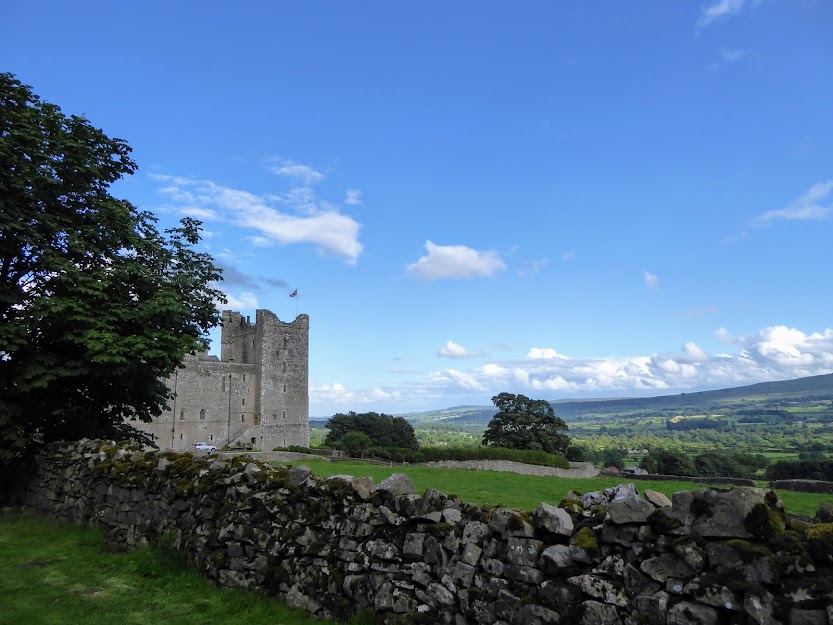
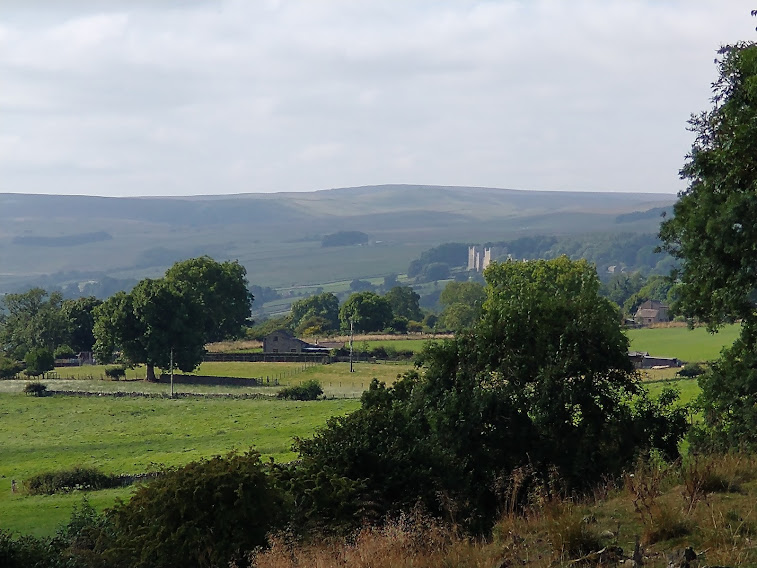
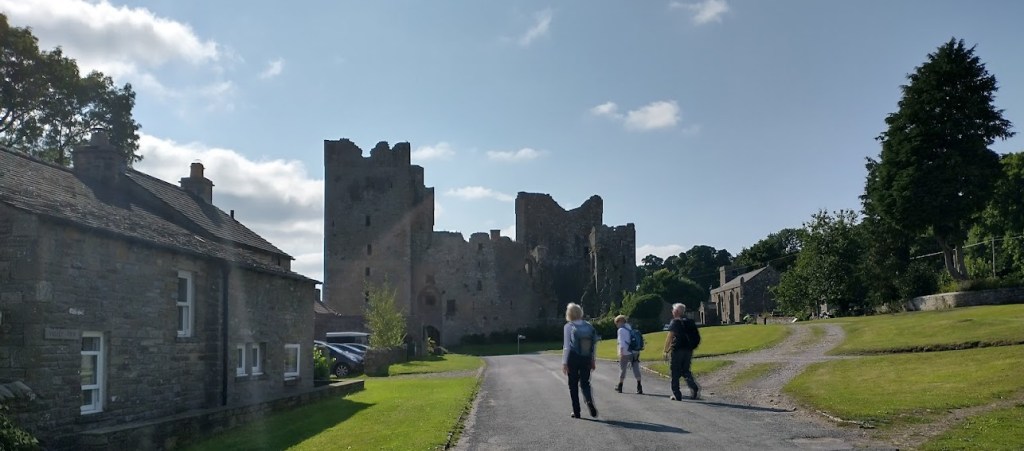
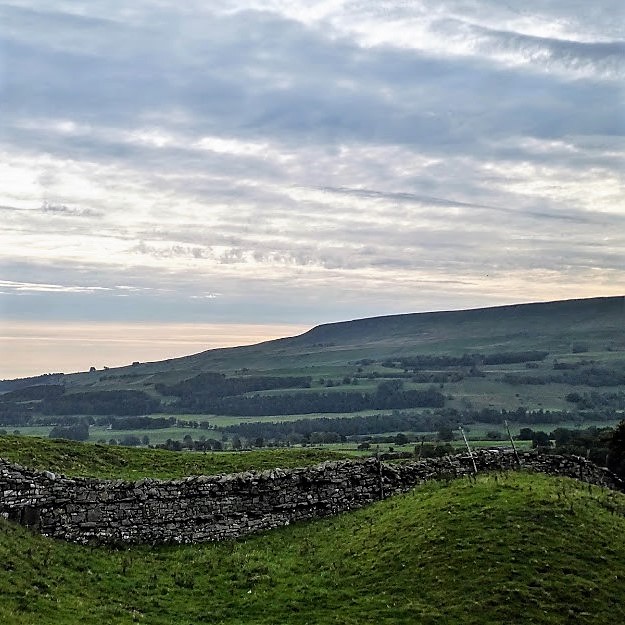
The landscape in the featured photo shows the bucolic beauty of Wensleydale, still green and welcoming at this time of year. And look! Here’s Bolton Castle, one time prison of Mary Queen of Scots: where she was obliged to stay for six months with a retinue of 30 servants, permitted to go hunting, and receive English lessons This is where we began and ended our walk last week.
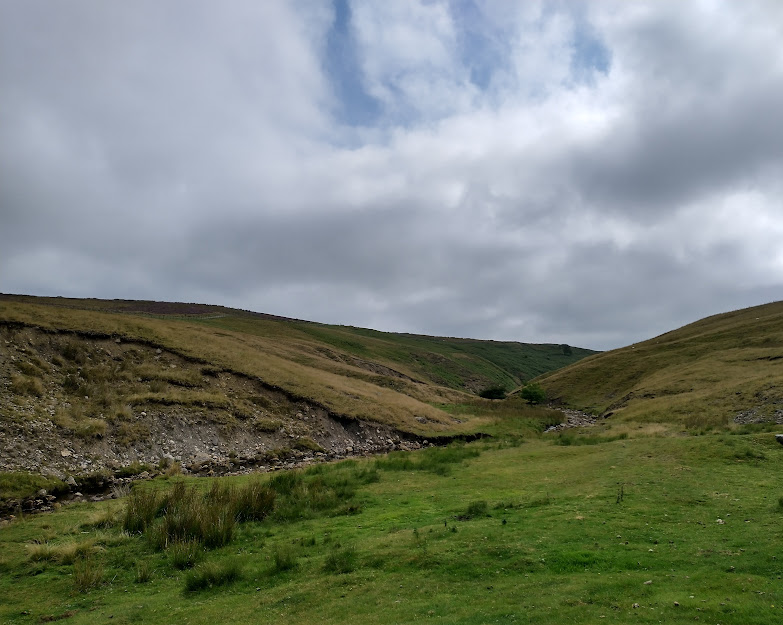
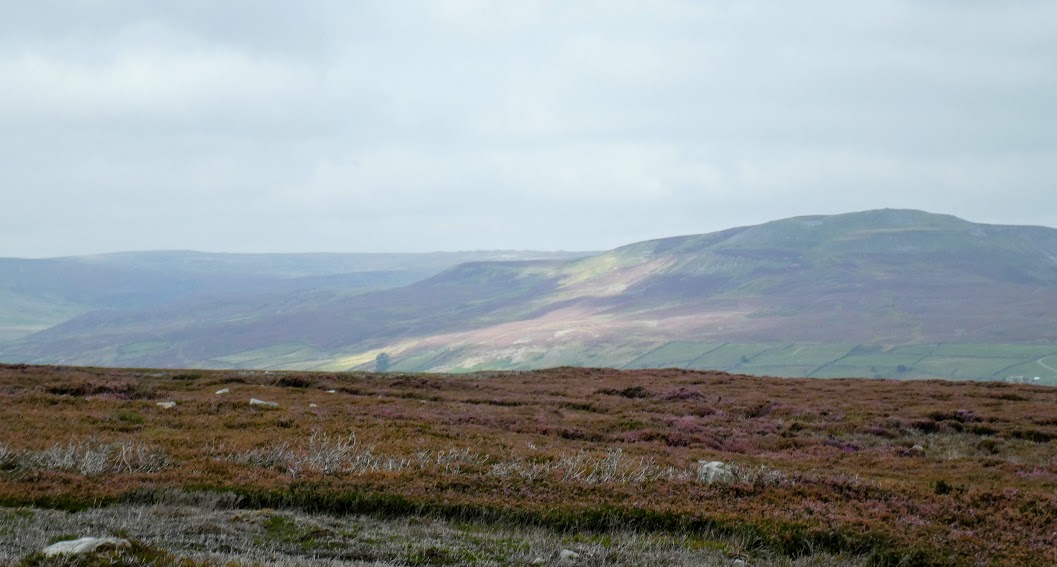
Most of our hike wasn’t in such favoured countryside. We slogged up to the bleaker moorland where once lead was mined, and no farmer could make any kind of living, unless he kept sheep. Here there are no villages, no houses or farms, and few roads.
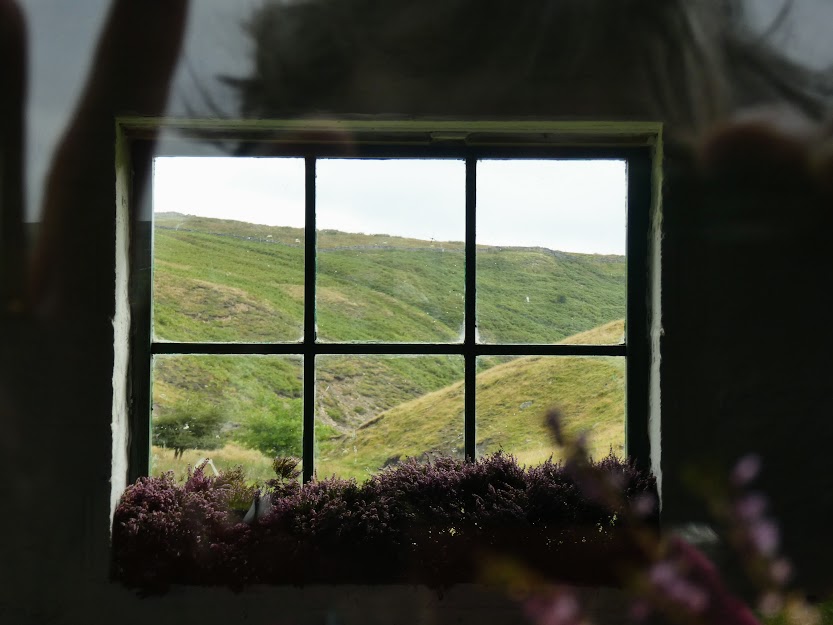
We’d hardly been going more than a mile when we came upon a shooting lodge, now set up as a resting place for the weary traveller. Here’s the view through one of the windows:
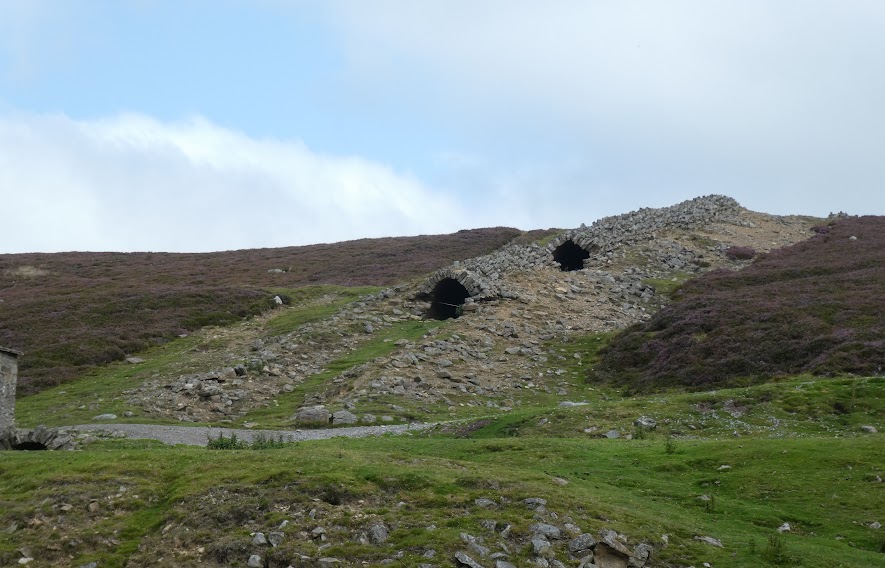
There was buffeting wind, and the smallest hint of rain, so we were glad to shelter for a few moments, and look at the view from inside, through that welcome window . But then out we went again, to the windswept landscape. It’s easy to see traces of the old lead mining industry: the grassed over spoil heaps, the ruined stone sheds, the pits where once a mine was sunk.
Lead was found here long before the Romans came. By the Middle Ages, blocks of land known as meers – roughly the size of a cricket pitch – were leased out to the miners who, if they were lucky, could find lead almost at the surface: or by running shafts below ground. The process only became industrialised, and mining companies developed in the 18th century. The last mine in the Dales closed in 1912, and for the first time in hundreds and hundreds of years, no one quarried for lead.
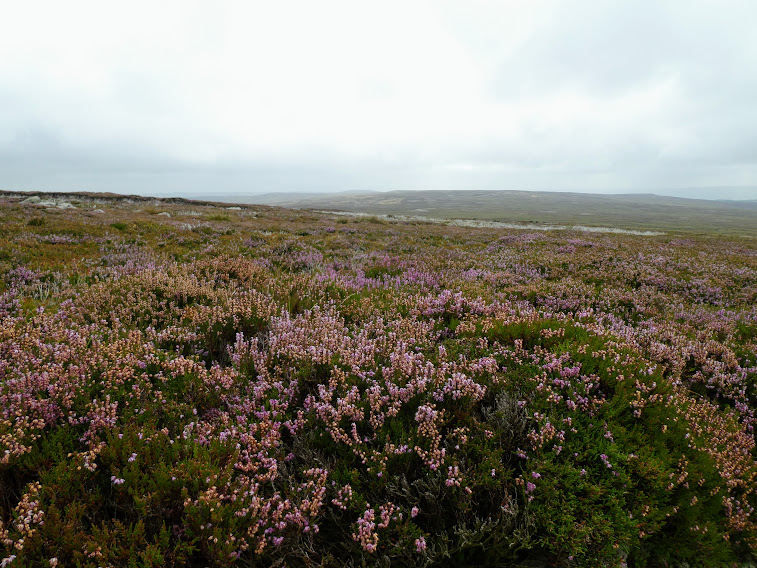
This is a bleak landscape, austere and unforgiving: open to winds coursing across the Dales, and to lashing rain. I love its ascetic grimness and the beauty to be found in its treeless simplicity. The time of year when the hillsides are cloaked in purple heather – August – is not to be missed. We caught the end of this glorious display.
Though our day had been one of grey skies, at the end the sun came out, as was fitting for the gentler Wensleydale landscape near Bolton Castle
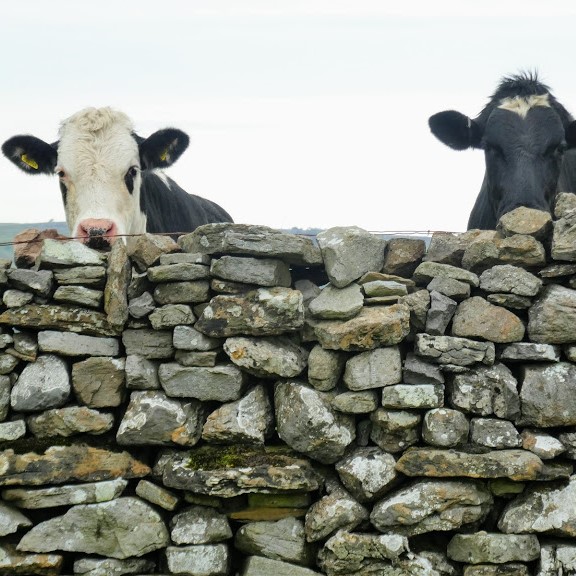
As we began our walk in Wensleydale this week, we were inspected by these curious cows. With two cow-related deaths in the news last week, I was glad they were safely tucked behind a drystone wall. I’m kind of wary these days.
The red tops blazed next week’s news: ‘A September Scorcher! 30º!’
Anyone living north of Watford Gap, or west of Slough knew better than to believe it, because only south-east England counts if you’re a London-based hack. We Yorkshire types needed to read the small print to discover that northerners could merely expect pleasant warmth, a gentle breeze and no rain whatsoever. Which was fine for a Sunday walk in Wensleydale.
On the way over there, it rained. Getting ready for the walk, it rained. The wind snatched urgently at our waterproofs and blew our hair in our eyes. Mist rose from the valley bottom. Grey cloud descended and thickened.
We didn’t mind. The rain soon stopped: it was warm, and those grey skies made for moody, atmospheric scenery. But our friend Gillian, who’d planned the walk, doesn’t know the meaning of the word ‘stroll’ and had us battling boggy paths, and huffing up rough pastureland on semi-vertical hillsides. We took it in good part.
But what rewards. We had the constant backdrop of the Wensleydale hills. Semerwater glittered at us from a distance: but close up, insistent waves rushed constantly towards our toes.
Semerwater.
Semerwater.
I don’t know who these two bikers are. But they enjoyed the view too.
We had a march along a Roman road. And at the end, blue skies, sunshine, and a relaxing cup of tea on the village green at Bainbridge.
The Roman Road.
This week’s photo challenge is to make use of empty, unoccupied space in our pictures : to make it part of the story. As I walked yesterday, I tried to use negative space: in this case, mainly the sky.
Ah, how idyllic … Bolton Castle in Wensleydale. Perfect for a summer’s day out.
Not if you were Mary Queen of Scots though. She spent six months imprisoned here in 1568. Although even that incarceration was relative. She was attended by 30 of her household, which included knights, servants, ladies-in-waiting, cooks, grooms, a hairdresser, an embroiderer, an apothecary, a physician and a surgeon. The remaining 20 or so lodged in the nearby village of Castle Bolton. She went hunting. She had her hair done. She learnt English, since up to this point she could speak only Scots, French and Latin.
These days, weeks and weeks into Life-with-Covid 19, I crave a nice quiet dinner with people I know, tea parties with friends, or a chinwag in town over a good cup of coffee and a fresh-from-the-oven buttered scone. And I can’t have any of them.
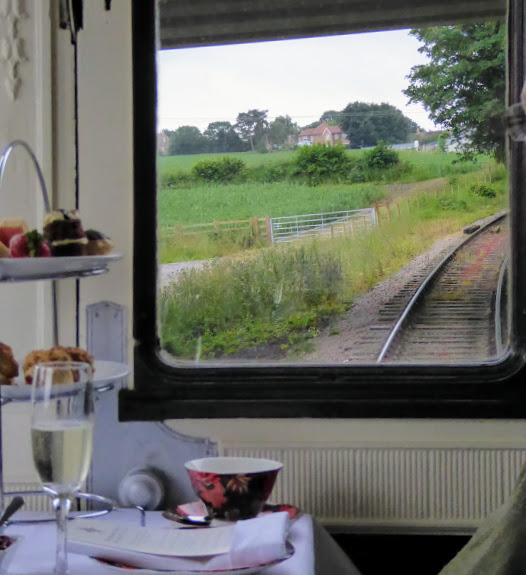
Instead, I’ll settle for memories of a tea party from a few years ago, when we met with good friends to celebrate a couple of birthdays. No tea shop for us, but instead a jaunt on the Wensleydale Railway, a Heritage Railway which runs in normal times through the heart of the Yorkshire Dales .
As we rattled along, enjoying countryside views, smart serving staff plied up with elegant little sandwiches, properly fattening cakes, and the all-important scones served with jam and cream. And tea, of course. And prosecco.
It’s not often that afternoon tea with all the trimmings includes an ever-changing bucolic view through the window.













 From Pyrenees to Pennines
You must be logged in to post a comment.