I chose Tuesday as a day to record the changing conditions outside the kitchen window from sunrise to sunset, for Jude’s 2020 Photo Challenge in which she invites us to observe a single view throughout the day. As the day wore on, I wondered why I’d bothered. It was a dull, somewhat gloomy day. Just grey and rather cold, nearly all day. But when I downloaded the pictures and looked at them, I discovered far more had been going on than I had realised. You take a look too.
5.40 a.m.
6.40 a.m.
8.00 a.m.
10.00 a.m.
Midday
2.00 p.m.
4.00 p,.m.
6.00 p.m.
8.00 p.m.
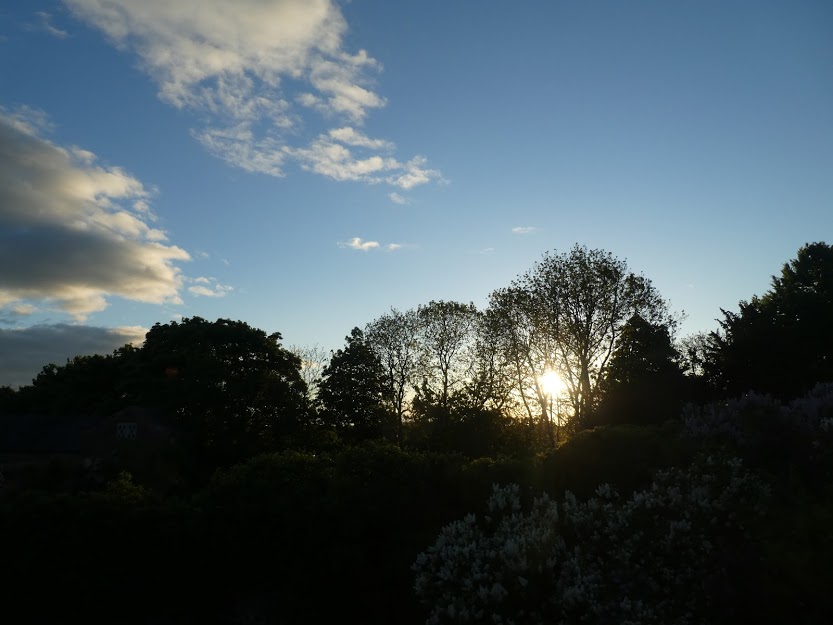
9.45 p.m.
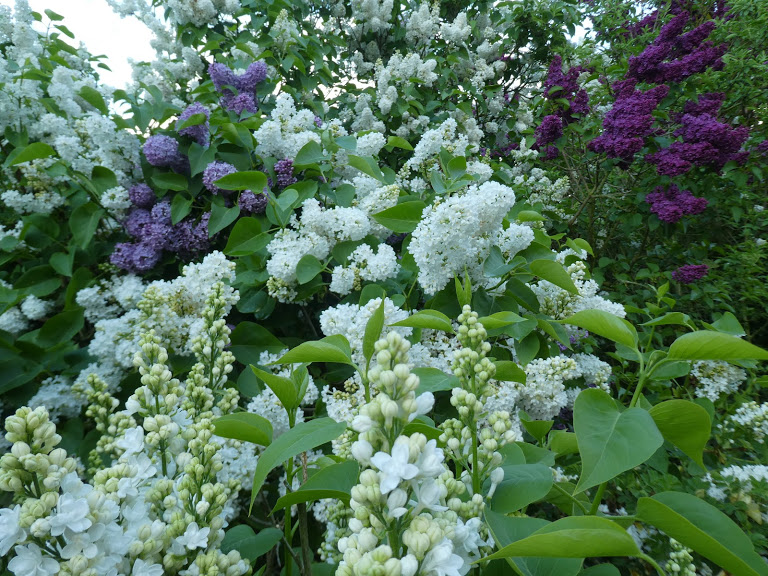
A favourite? Maybe 8.00 in the evening. The weather’s picked up and the light has softened as the evening draws in. And finally, I’ll show you some of the lilac that features in every shot.
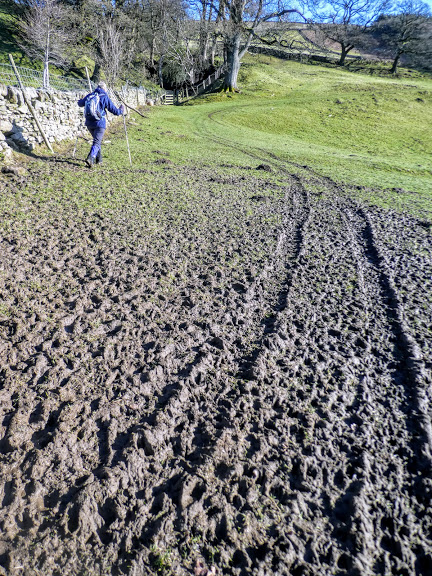
Mud. I can’t be doing with it. Viscous, squelchy, squishy, sticky, over-the-top-of-your-boots kind of mud. We’ve had ground slick with treacly mud here for weeks and weeks. But then there’s also Cabin Fever, and the need to plan a walk for our walking group in a fortnight’s time, when spring might have sprung. Walking won out over yet another day indoors.
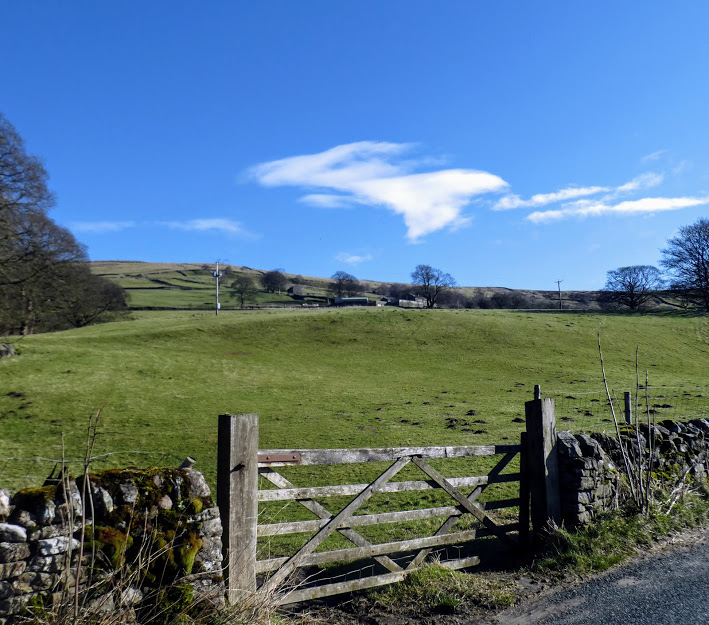
Just outside Lofthouse, our walk begins.
My friend Chris and I set forth for the Yorkshire Dales, parked up in Lofthouse, and set off. Really, it could have been worse. It was a full twenty minutes before we came upon our first serious mudbath: prior to that we’d only had water-on-the-path to deal with.
Chris paddles across the path previously trodden only by sheep.
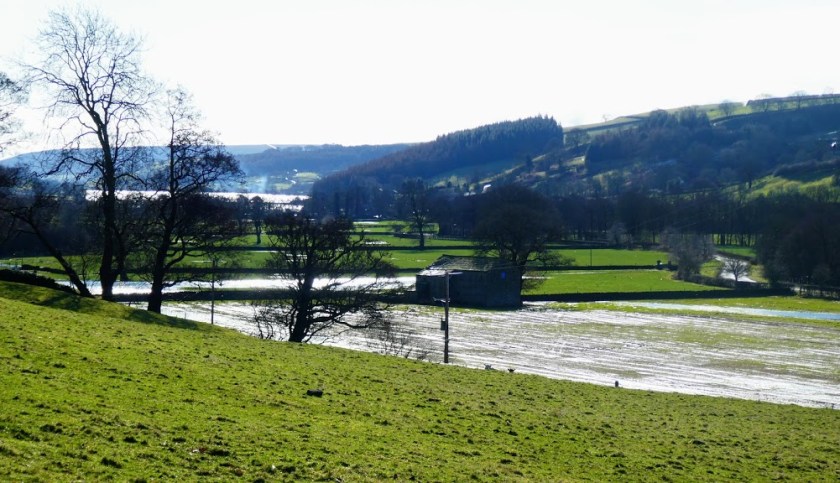
But climbing now, we saw what the fields were like: yes, those are fields you’re looking at. Gouthwaite Reservoir’s not here: it’s over there in the distance.
The path between Lofthouse and Ramsgill, with flooded fields down below and Gouthwaite Reservoir in the distance.
We had our rewards though. The views: the remnants of a snowscape: sheep – and oh look! Our very first lambs of the season – a little huddle of black ones, and just one snowy specimen with its mum.
The last remnants of the snow.
Nidderdale, between Lofthouse and Ramsgill.
White mums, black lambs.
A single lamb resting near its mother.
Middlesmoor in the distance.
Surveying the scene.
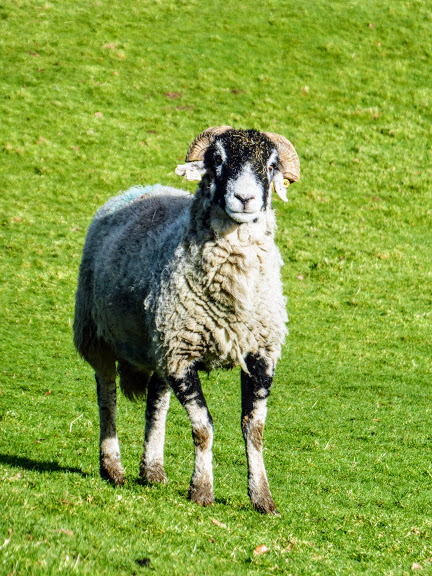
This sheep inspected us as we sat on a log for a snack.
Swaledale sheep make the logo of the Yorkshire Dales National Park.
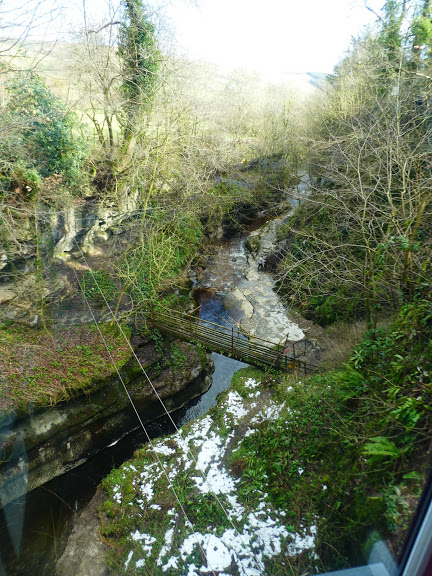
And then, a pleasant surprise. The café at How Stean Gorge was open – on a weekday in February! Coffee and home-made cake while enjoying the view of the stream jostling and hurrying through its narrow ravine. I forgot to take a photo for Jo, but the website shows the Yorkshire Slice Chris and I shared.
How Stean Gorge seen from the café .The view of Nidderdale and Gouthwaite Reservoir from Middlesmoor.
We were on the home straights now. All we had to do was struggle up a steepish hill to the now barely-populated village of Middlesmoor. Just outside its church, on the path that plunges down to our starting point are thoughtfully-provided seats. This is one of the best views in England, and despite the wind, we wanted to appreciate it.
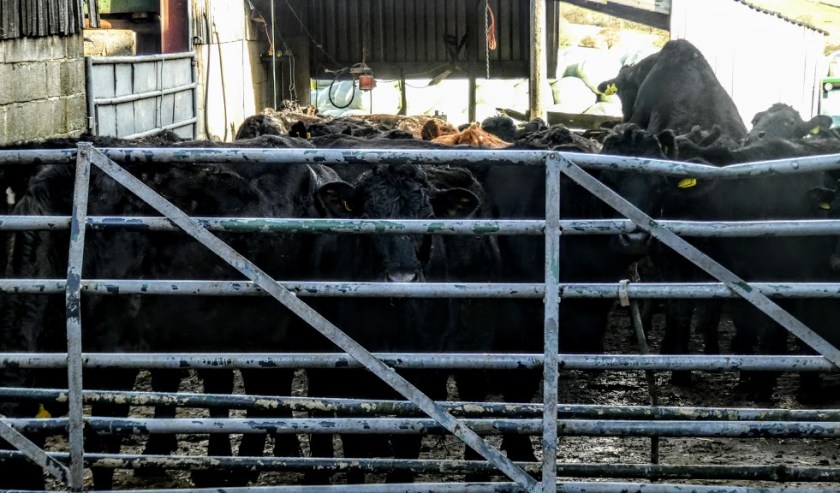
And then, half way down the hill- a traffic jam. This herd of cattle blocked our path. The farmer asked us if we’d mind waiting five minutes. He turned out to have a countryman’s clock, but no matter: we weren’t going to argue with all those cows.
Cows make themselves at home.
More mud …
… and more mud …
Finally, the cows moved on, and so did we. We got back to the car just as the rain, and then the sleet, started once more.
It’s time for my monthly trip to the archives. And an opportunity for me to remember, as I stare out at the rain sodden garden, that the grass isn’t always greener…..
November 14th 2014
Sunday Rando
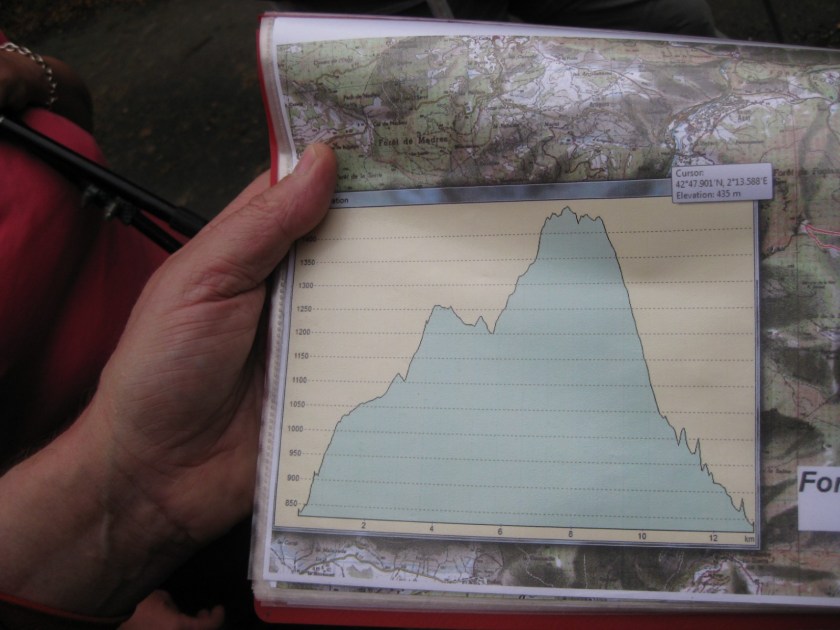
7.00 a.m. Sunday. 22 Ariègeois radios were switched on for the day’s weather forecast. ‘It’ll be an exceptionally sunny and hot day for the time of year, throughout France. Temperatures in the south will reach 23 degrees in some places.’ 22 satisfied listeners, members of the Rando del’Aubo, switched off their radios…. without bothering to listen to the end of the forecast. Instead they turned to the more important business of packing their rucksacks for a rather heavy-duty walk an hour and a half’s drive from Mirepoix, la Forêt d’en Malo.
François talks us through the walk. This is it, in cross section.
With a stiff climb of 700 metres in prospect, a 14 km. walk isn’t a stroll in the park. But the payoff as you emerge from the forest is an extraordinary panorama of the Pyrénées, jagged teeth of rock emerging from the thickly forested mountainsides: especially lovely in autumn as the trees turn from yellow, through ochre, to magenta and crimson.
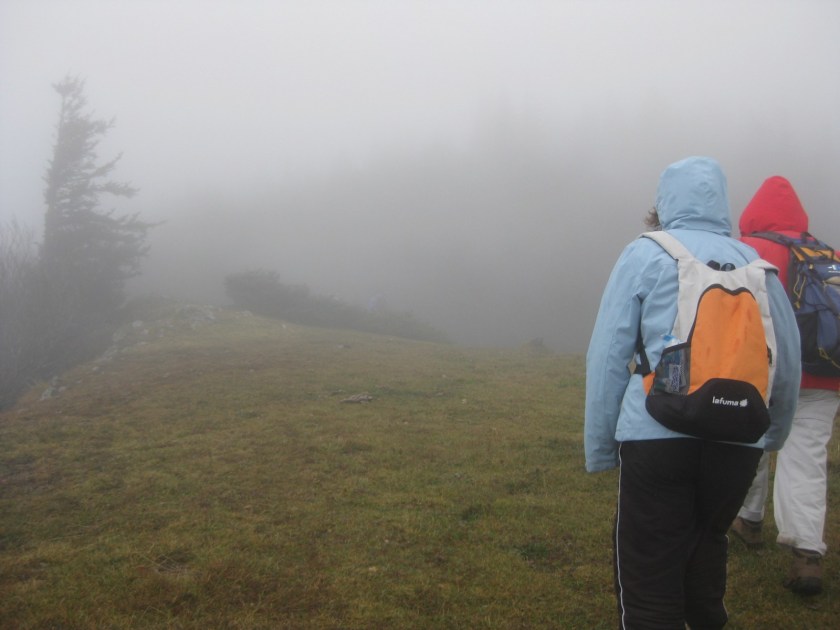
As we drove eastwards, the cloud and mist descended. We parked, we walked, we climbed, we scrambled and we struggled for three hours as the mists became ever damper and more clinging, and an unexpected cold wind whipped across the mountain side. And at the top, this was our view.
We hadn’t listened to the end of the forecast you see. What we should have known that our little patch of south eastern France was a little bad-weather cold spot. There we were bang in the middle of it.
As we finished our walk, the weather lifted a bit, and gave us a small taste of what we should have enjoyed.
Later, back at home, our smug families and friends recounted how they’d spent the day in shorts and tee shirts. Maybe they’d had a little bike ride, a gentle stroll in the sunshine, a drink on the terrace in the hot sun……
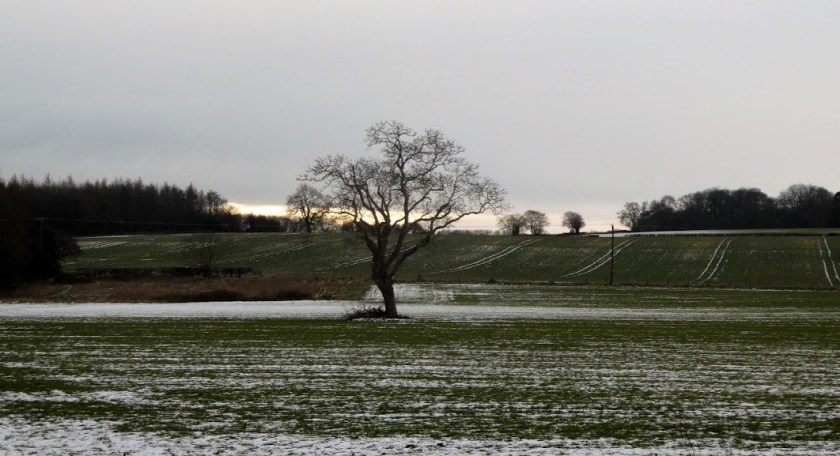
I think I like this kind of wintry day best of all. We’ve had a carpet of snow on the ground, blanking out grass, pavements and drifts of snowdrops. But today, it’s just a little warmer, and the snow is softly melting into the ground. But still here. We go out for a walk, before the cold descends once more. Winter footprints are visible now, because the impacted snow has dissolved away, leaving a silhouette of – what? Is that a crow print? A pheasant? Oh look, those are rabbits – look at how they land, four square and neatly as they run. And here’s a dog of course.
The landscape assembles itself into broad strata of austere colours: raw umber earth; no-longer pristine snow, almost dappled in places; perhaps some olive-shaded grass, and behind all these, a line of winter trees, their skeletons highlighted against the grey sombre skyline.
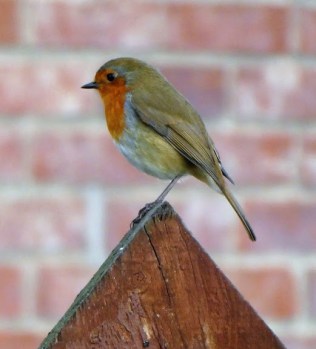
We see this robin on a fence post.
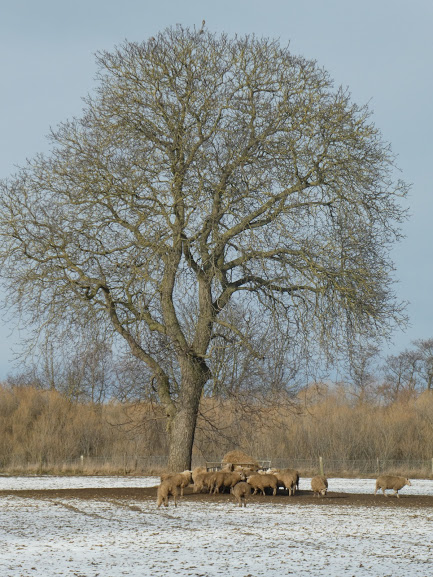
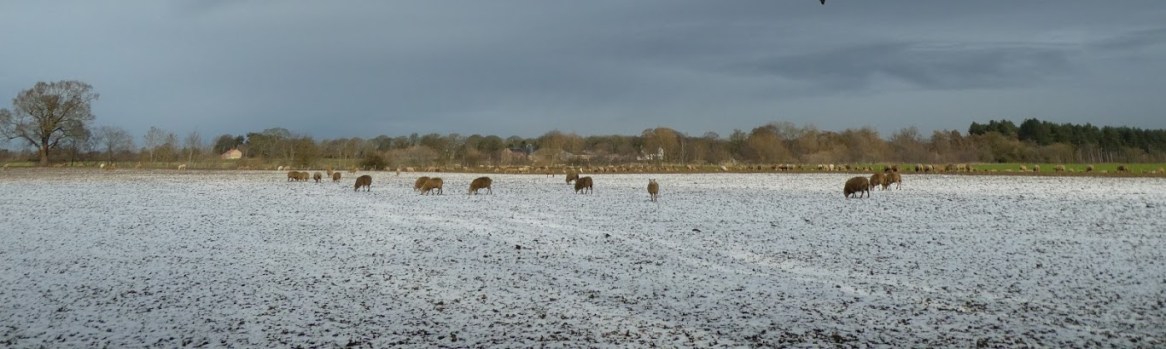
But apart from him, sheep are the only living creatures we spot on our walk today. Against the snow, they aren’t white at all, but a slightly dirty cream. They scratch an unsatisfactory meal from the less snowy parts of the fields. They come to look at us. We look at them.
Then we look for snowdrops instead, and for wood. It’s forbidden to go out at this time of year without coming back with an armful of kindling for the log burner.
And how glad we are to get back to our log burner! We enjoyed seeing our familiar landscape clothed in its skimpy veil of whiteness. But we appreciated getting back to warmth, a fireside, and a nice cup of tea even more.
Here’s a contribution to Jo’s Monday Walk (Jo’s own walks tend to be in Portugal these days. That’s where she lives. Feeling chilly Jo, reading this?)
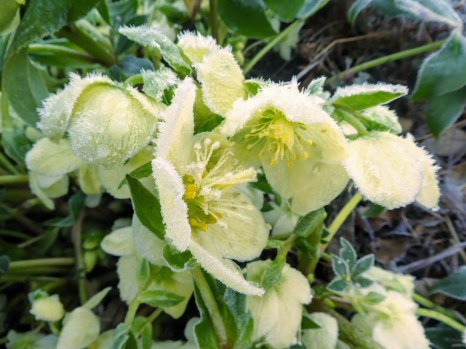
It was -3 degrees in the night. It was still -3 degrees, at nearly nine o’clock in the morning. But I started my walk anyway. Right here in the garden, next to this hellebore.
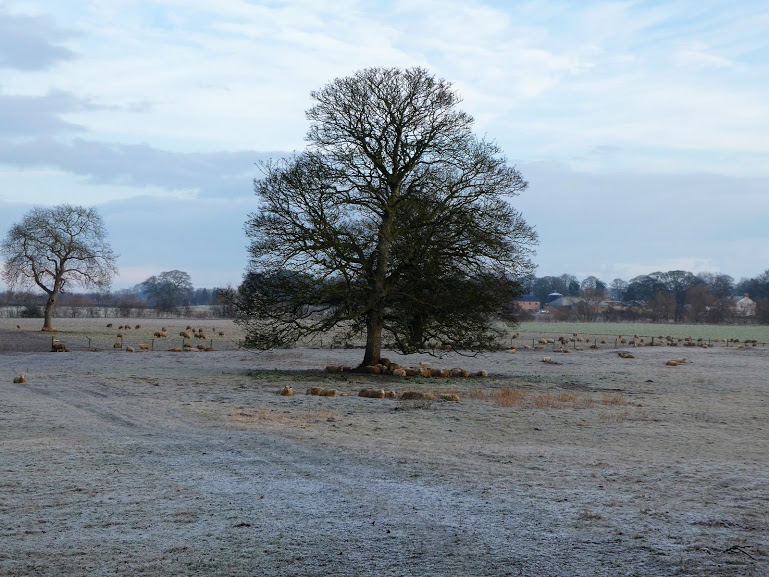
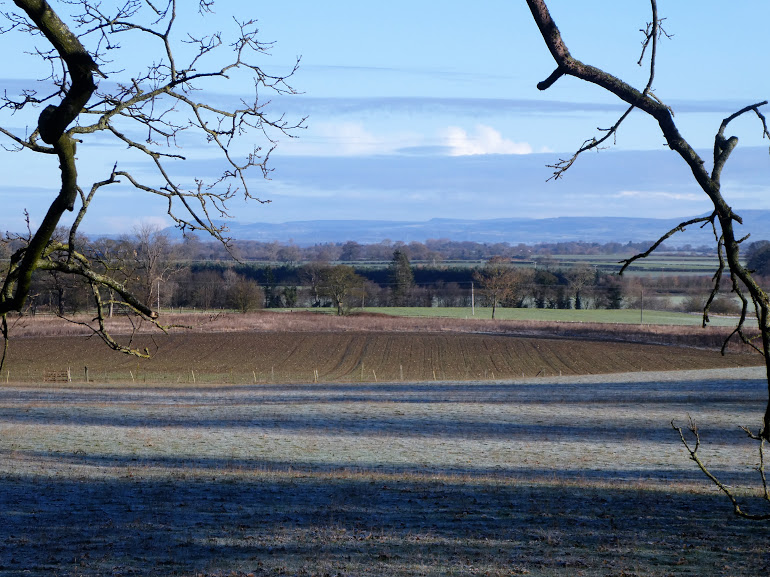
Here were the pleasures of scrunching through crisp, frosty grass. Through small puddles, frozen solid. Watching long shadows extend the trunks of trees across the width of a field. Sheep doing their best to scratch a breakfast from the hoary grass. Bracken with delicately rimed edges. A car on the roadside, blinded by Jack Frost’s artwork.
The sun rose and despite the cold, quickly burnt off the chilly white from the fields. The newborn lambs, which I’d hoped to spot in West Tanfield had been kept indoors – I could hear their plaintive bleating in barn. Instead – winter blossom, catkins, and a sky-blue sky.
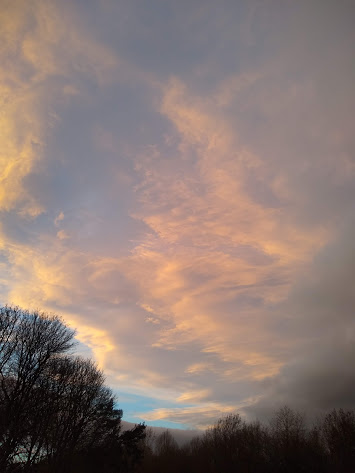
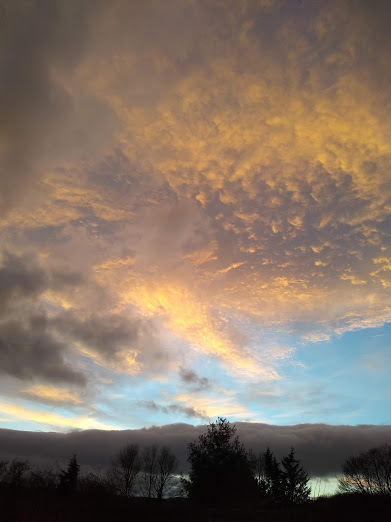
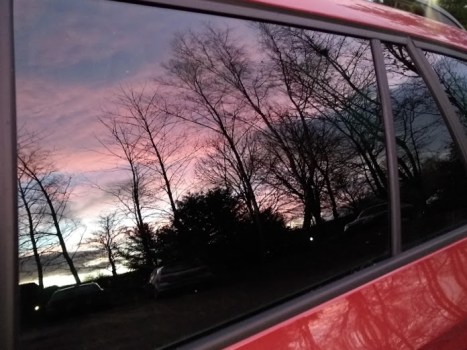
I didn’t intend to post this evening, but the sunset, even though I couldn’t actually see the sun, seemed cheerful and optimistic despite the whisps of forbidding grey which kept on drifting across the pastel pinks . This is England after all. This is our weather. And our current state of mind.
I whipped out my phone to record the clouds. It seemed a good opportunity to wish you all a happy new year, wherever you are.
Goodbye 2018. We’re driving off and forward to 2019.
Winter childhood meant cold and frosty mornings, barely daring to get out of bed to shiver while washing in an icy bathroom, before returning to an equally icy room to muffle up in a vest, a blouse, a cosy cardigan and a sensible pleated skirt. Little girls didn’t wear trousers in those days and tights didn’t seem to exist, but I don’t remember my legs resenting being bare between sock-top and skirt bottom. But then boys of my age were wearing short trousers too.
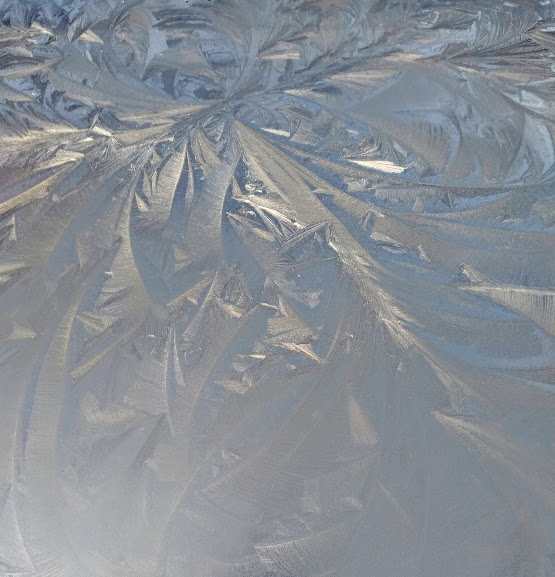
I remember Jack Frost too. He had spent the early hours of the day sketching dizzyingly complex and beautiful patterns in luminous white on the inside of my bedroom window. It’s rare to see these intricate motifs on house windows these days. But the other day, arriving early in town, I passed a car park full of vehicles exhibiting examples of his artistry. I had to take a shot or two.
It was my turn to lead our walking group on a hike on Saturday. When I was planning what to put in the programme a few months ago, I had an idea of taking the group on a pleasant wintry walk along frost-rimed canal paths with delicate fine sheets of ice coating any puddles we met. A weak sun would glimpse through downy dove-grey cloud, and we’d walk briskly in the cold clear air.
Well, that didn’t work. Last week, we’d had four days of largely non-stop rain. And Saturday was no different. Anybody with any sense would have rolled over in bed that morning and gone back to sleep. I got up, and took myself off to our rendezvous, completely confident that nobody would be there waiting for me. I’d come home and toast my toes by the fire.
Five would-be walkers greeted me. Yes, they did want to walk. No, they didn’t think it was too wet. We’re here now. Let’s get on with it.
The Ripon Canal was still looking inviting as we began our walk.
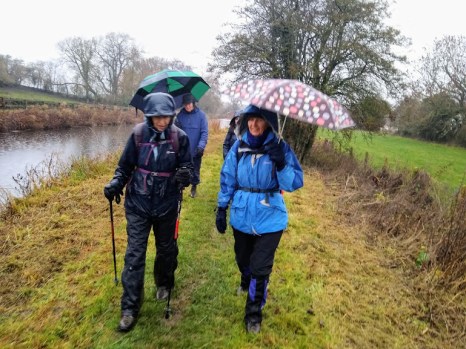
So we did. We’re an amiable bunch who like one another so the conversation flowed. We got in our several-thousand-steps for the day. But we also couldn’t see much as our glasses got wetter and wetter. Our rain gear kept the rain out and the sweat in. Our over trousers dripped and sulked. Our boots got damper and damper. The canal tow path, normally a fine surface for a winter’s walk, slipped and oozed. The trees dumped giant water drops on our heads to add to the rain’s constant spillage
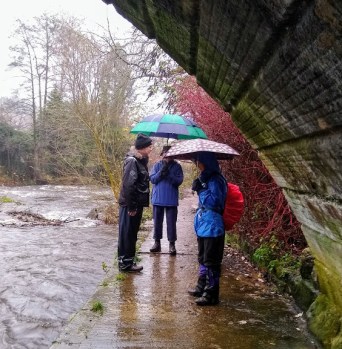
Those umbrellas were a mighty fine idea.
We got to our half-way point in record time. We got back to base in an even more record time.
‘Now honestly,’ I said to my fellow-martyrs as the end drew nigh.’If you had your time over again, knowing what you know now, would you have come?”Of course!’ they all said. And they meant it. Not me. I scuttled off home to my fireside, and stayed there for the rest of the day.
This bridge by the River Skell provided much needed shelter as we said our goodbyes at the edge of Ripon.
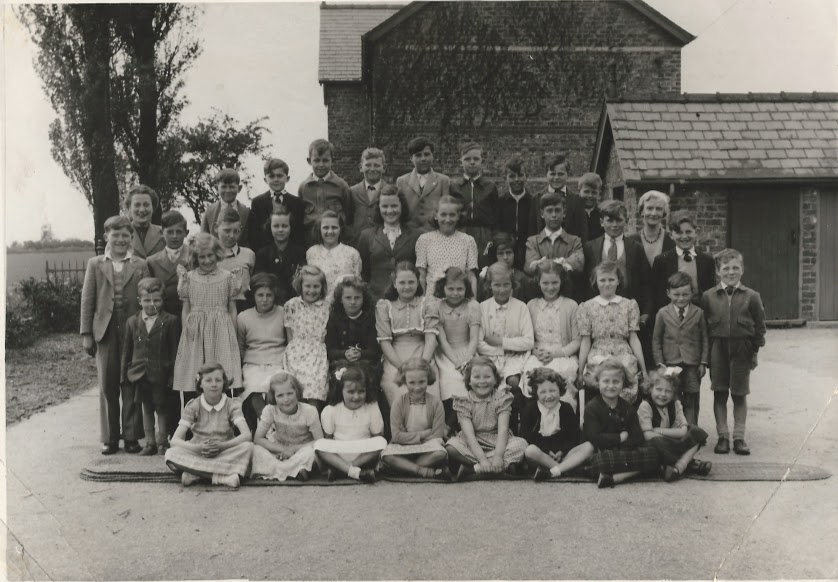
The early 1950s were in many ways the fag-end of the war. I lived in Sandhutton, a little village outside Thirsk, where my mother was head of a two-teacher school. I was with the under eights, while she taught the nine to fifteen year olds. Few pupils aimed to pass for Grammar when life as a farm labourer awaited. The school photo confirms my memory. Everything was beige and grey.
Sandhutton School, c.1952, just before I started there as a pupil. My mother is the teacher on the left, and my teacher, Miss Burnett, is on the right.
Sweets were almost unknown, and we were happy to supplement our adequate-but-dull diets by marauding the hedgerows for blackberries and rosehips, or by getting up at four in the morning to go mushrooming on the now-abandoned airfield.
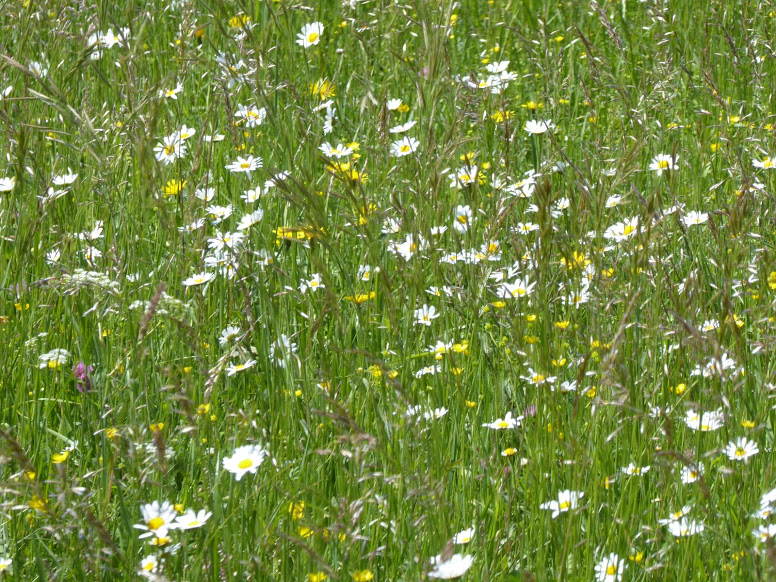
Perhaps that dinginess is why my memory of that meadow is so vivid. Not far from our house, it was where we’d go sometimes when, during the long school summer break, my mother put together a picnic . I enjoyed running wild in the fields, while she managed a rare daytime doze in the sunshine. What I remember is flinging myself down in the grasses which then rasped and tickled my bare legs. I was searching, among the vetch, the buttercups and the poppies for daisies or other small flowers that I could make into a daisy chain. I wasn’t very good at it. The stems would split and mash, and my chain would tumble apart before it had even reached bracelet proportions.
I remember the fuzzing and the droning of the bees and flying things that murmured and hummed about my head; the brief sting of one of the single-minded ants out to seize any of our stray crumbs. I think back to the vivid colours of the meadow flowers – yellow buttercups and vetch, blue cornflowers, white meadowsweet blushing faintly pink or yellow, and the delicate papery petals of scarlet poppies. It smelt – well, green – and wafting from the next field was the sappy smell of recently cut hay. In the early afternoon there were no birds singing. Instead, the whirring of insect wings, the rumble of a distant tractor.
Directly above, as I lay in the grass, were no threatening clouds at all – of course there weren’t – just puffs of white cumulus, or ethereal streaks of cirrus in the perfectly blue sky.
Distance lends enchantment to the view. But it really was like that.
This miscellany of photos doesn’t come from Sandhutton at all, but from bits of North Yorkshire, from Shopshire, from Franconia …. anywhere that has a meadow. Click on any image to see it full size.




















 From Pyrenees to Pennines
You must be logged in to post a comment.