The foothills of the Sierra Nevada

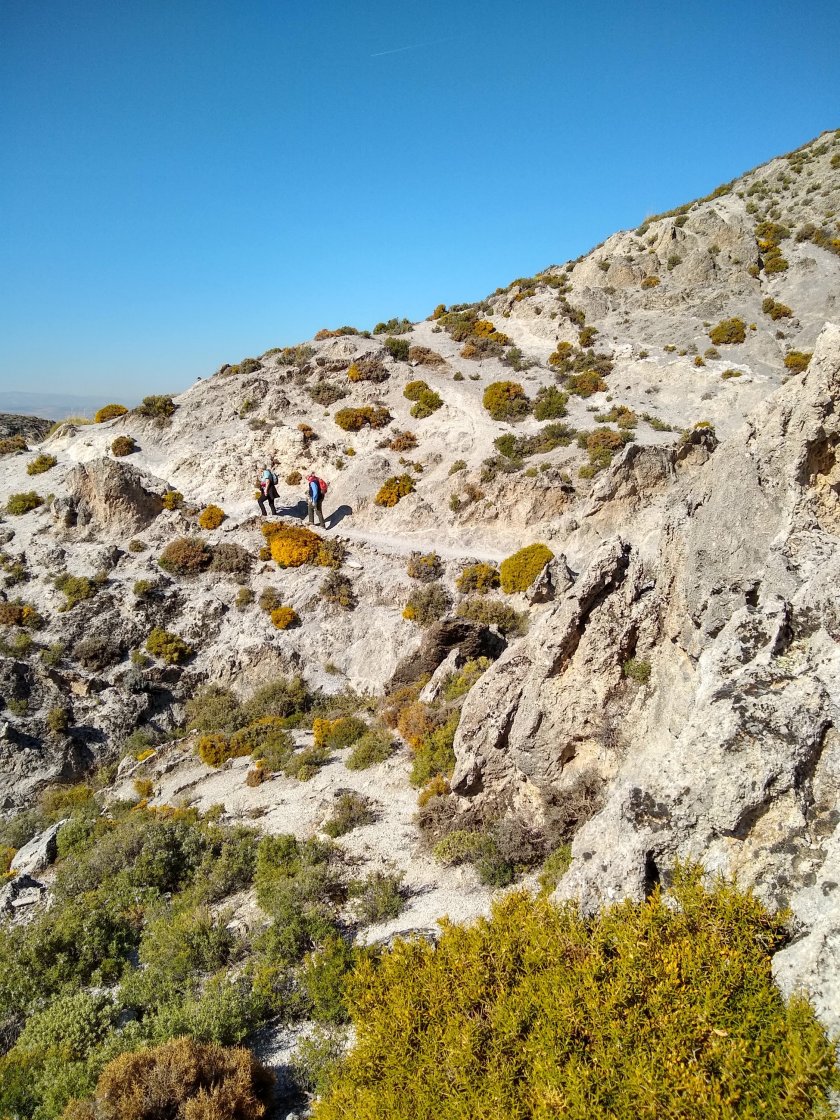
Today we went to a poor man’s Alhambra. We sought jaw-dropping beauty, tumbling cascading water, refreshing cool…. and peace. Javi delivered us a day in which, only some 12 km from Granada, we experienced soul-soothing quiet, dramatic views – and just a touch of adventure. And not a tourist in sight.

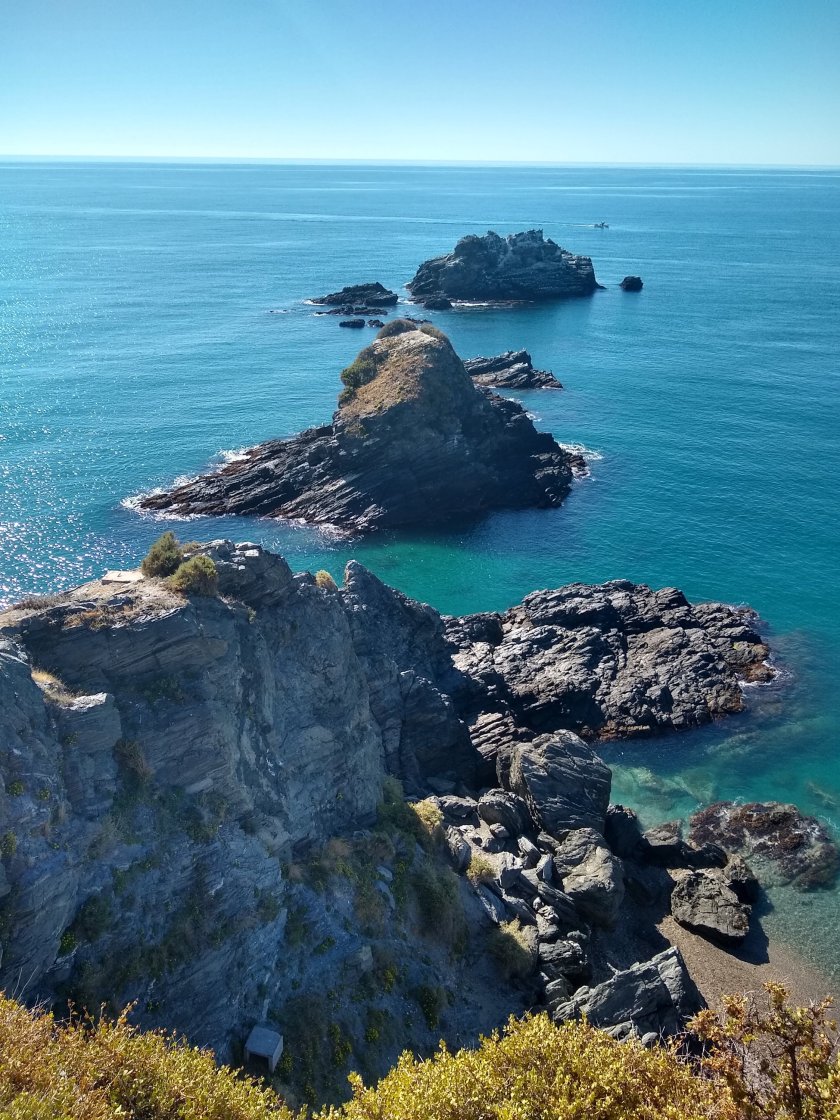
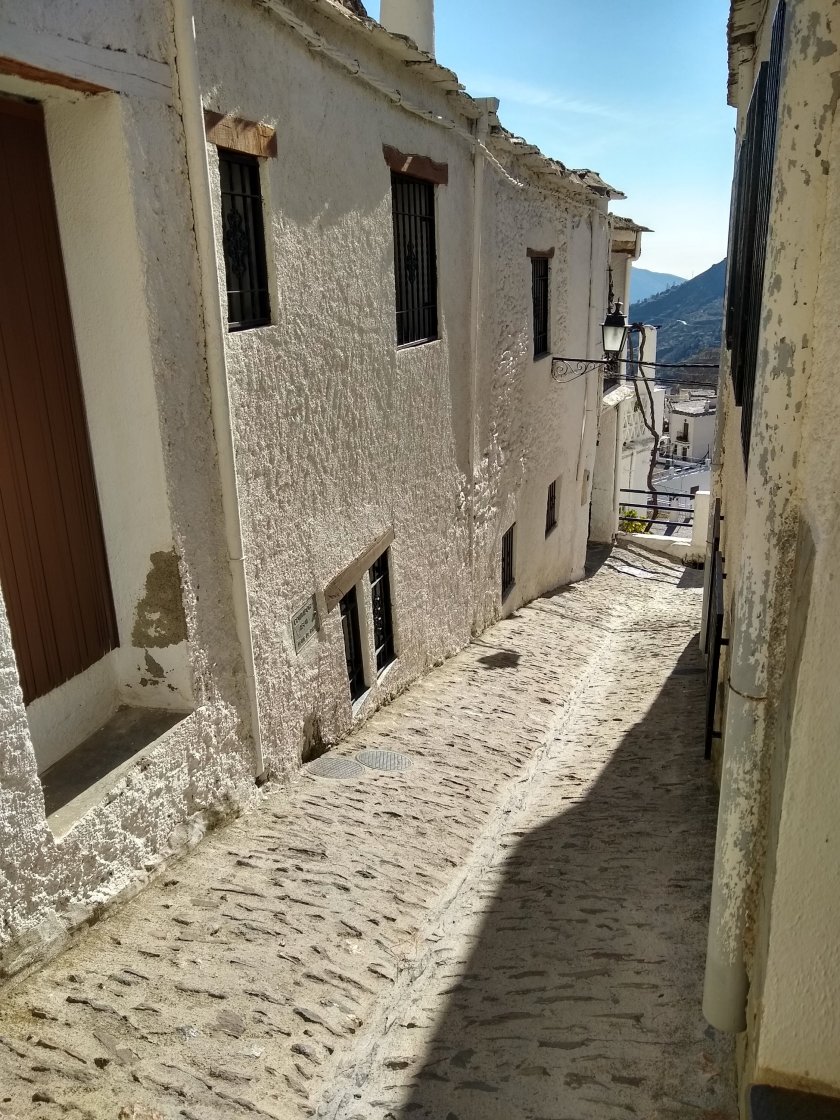
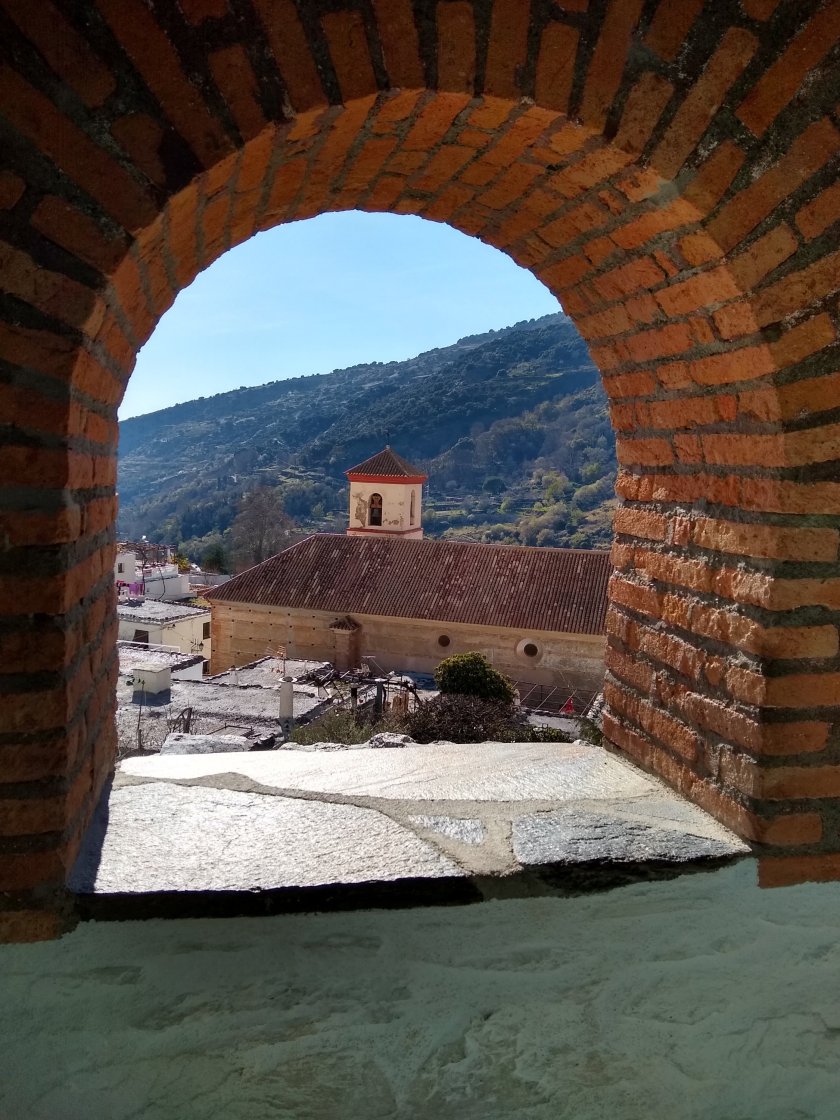
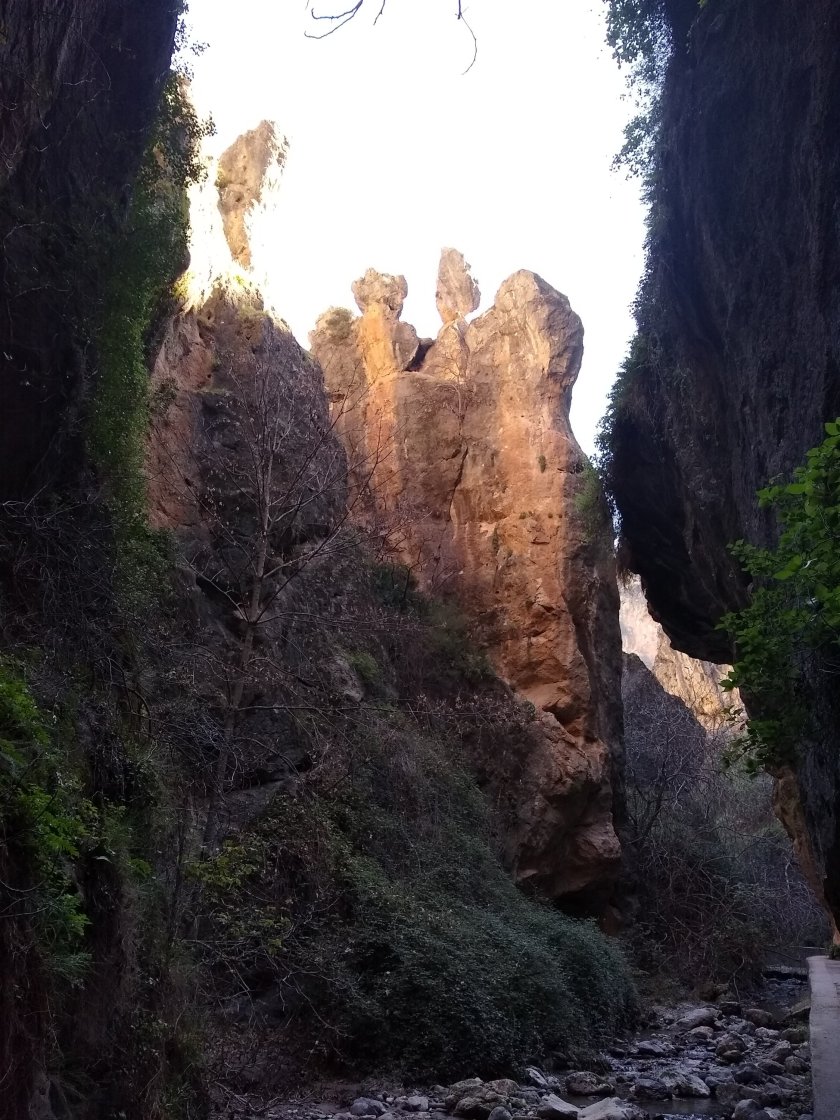
We started our day climbing from Monachil, a village set among arid yellow and red tinted slopes. As we went on, dramatic rock formations scrambled high above us.

Our path narrowed. We were obliged to hang onto nearly sheer rock and manoeuvre ourselves along a route whose path followed a stream. Swaying bridges too.

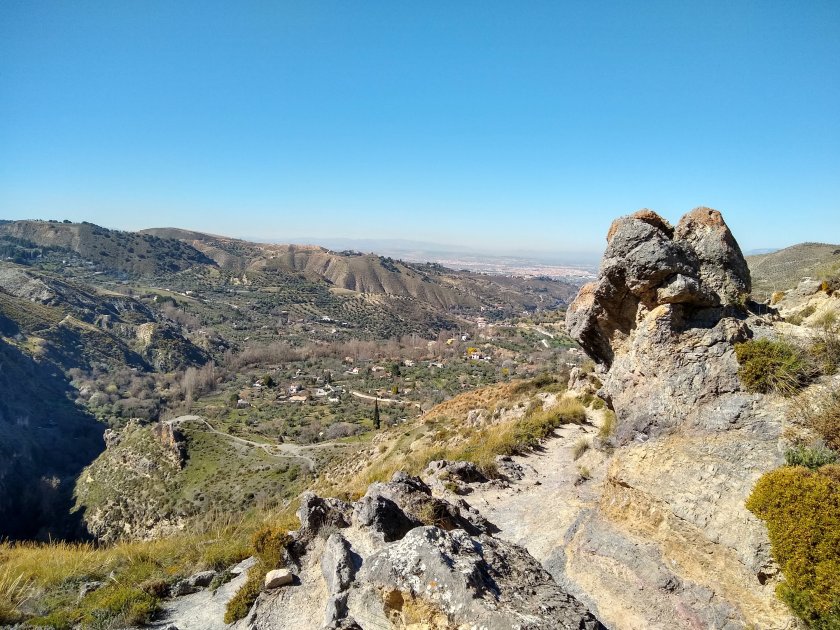
As our gorge widened, there were different views, and a grassy plain for a mid-morning rest. We watched choughs wheeling high above us, preparing to nest high on the mountainside.

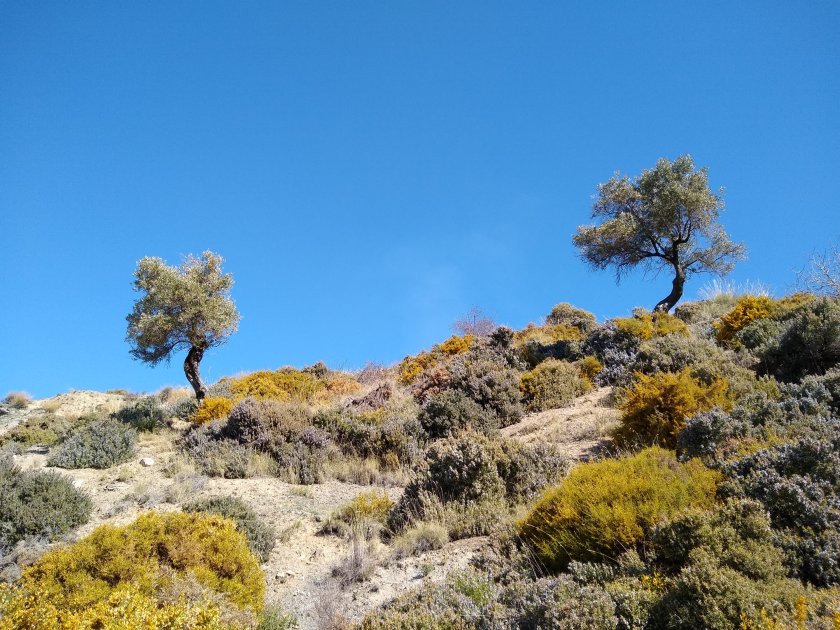
There were Mediterranean herbs, gorse, butterflies. And suddenly, over there in the distance, Granada.

Our circuit was almost complete. We’re refreshed, invigorated and renewed. Especially after our tapas, eaten sitting in a sunny riverside bar in Monachil. Don’t choose. Get what you’re given. Perfect.

Here we are. One of Jo’s Monday Walks on a Tuesday…https://restlessjo.me/jos-monday-walk/

The Alhambra

What can I say about the Alhambra in Granada that hasn’t been written a hundred times before? I shan’t even try. Since the 9th century this striking hillside site just outside Granada has been a fortress, an Islamic palace, a Royal palace, gardens, a whole city. It’s even been an abandoned ruin. Javi’s grandmother used to come up to this abandoned place with her friends for picnics.

Now it’s a UNESCO World Heritage Site.

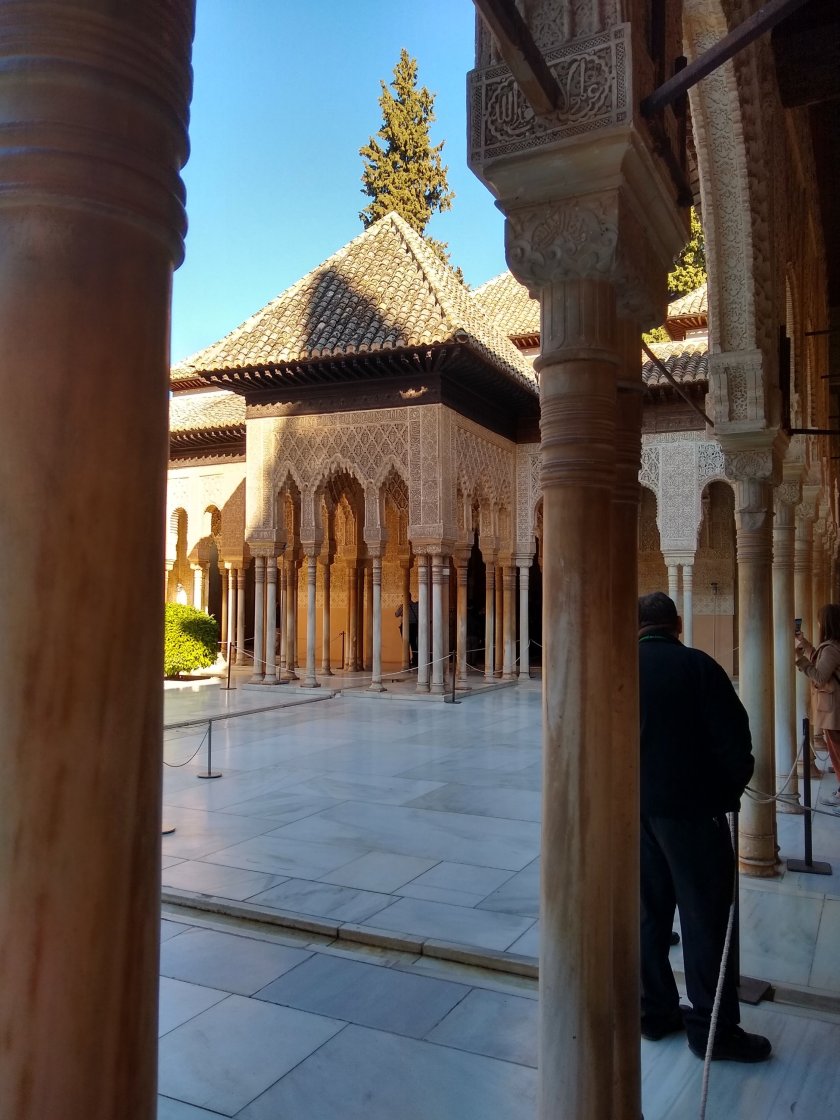
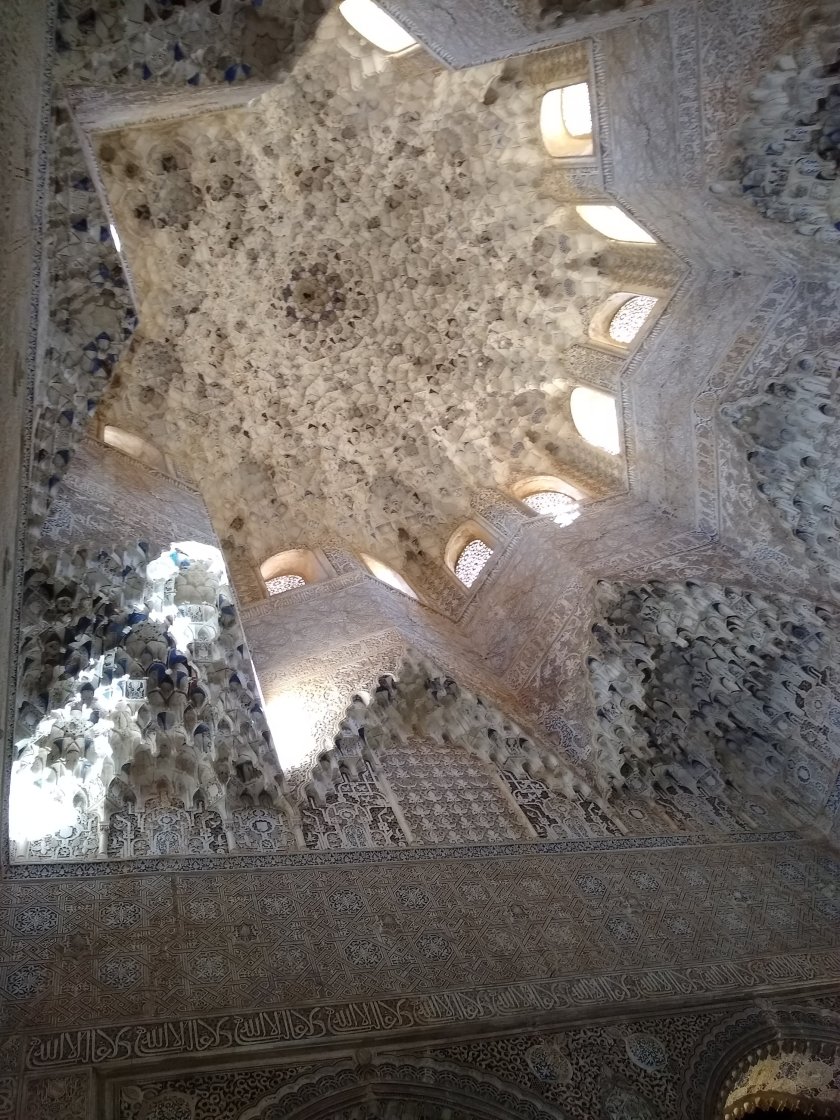
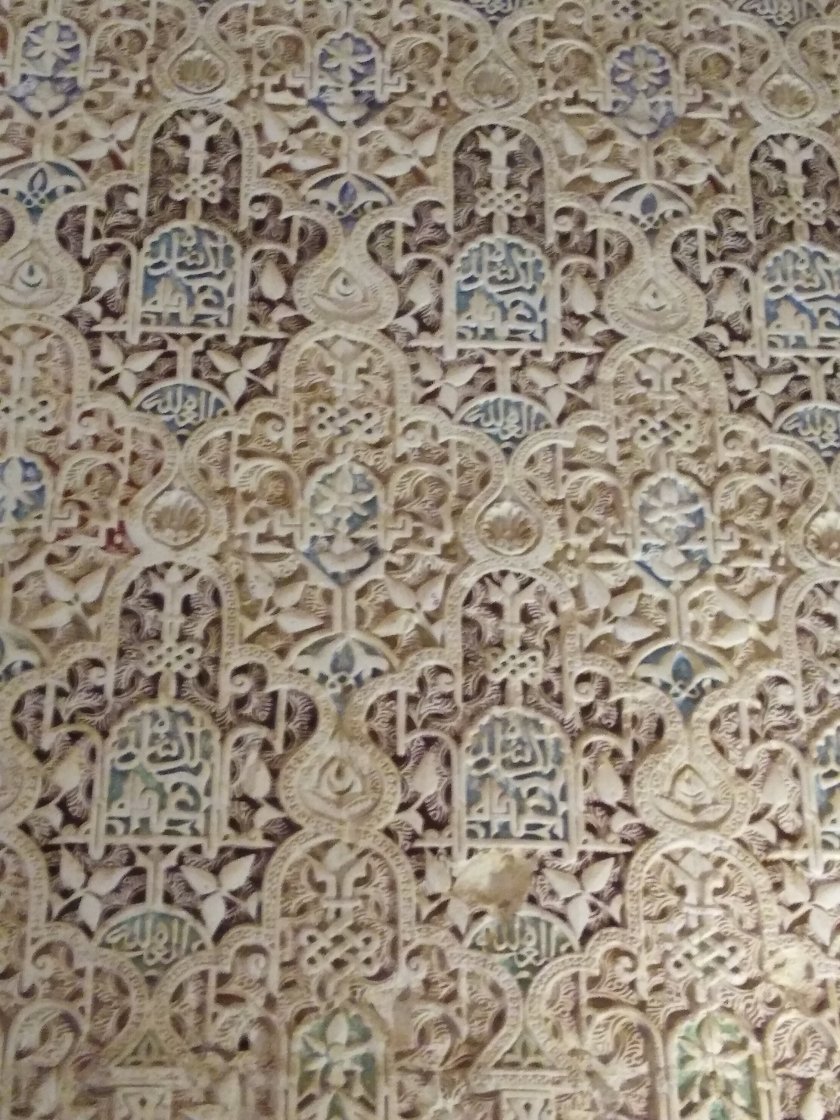
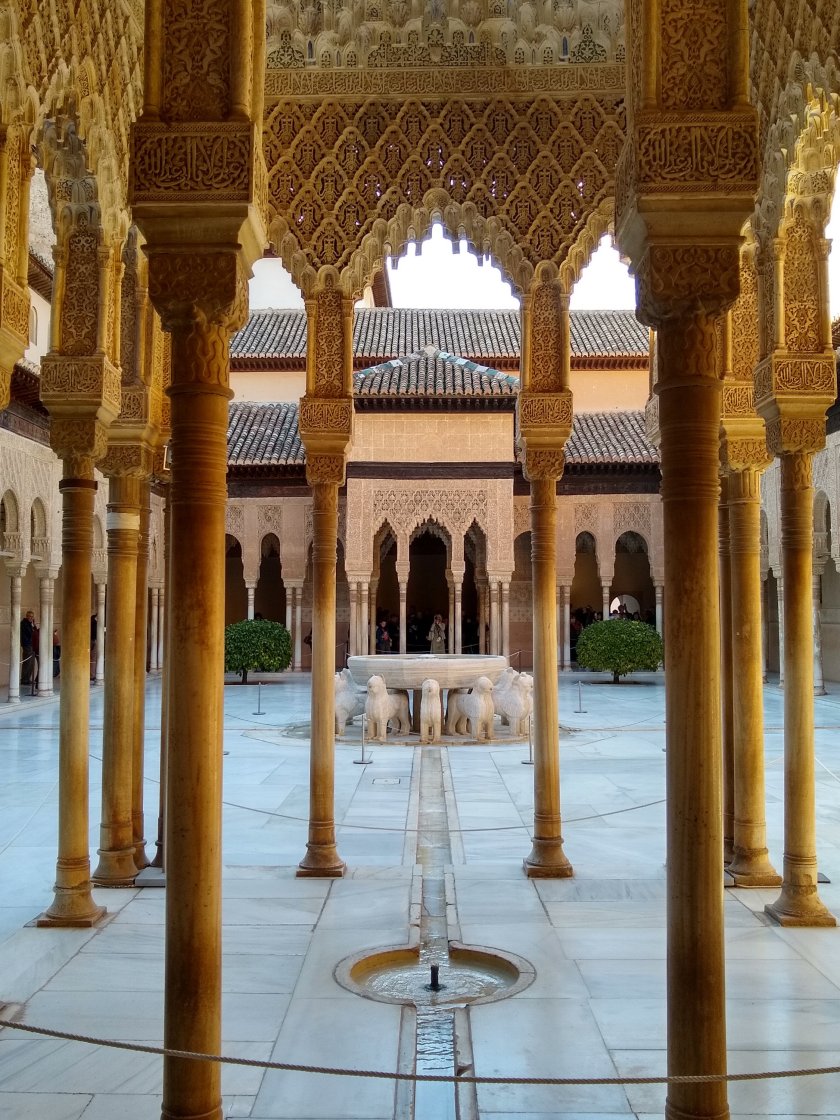
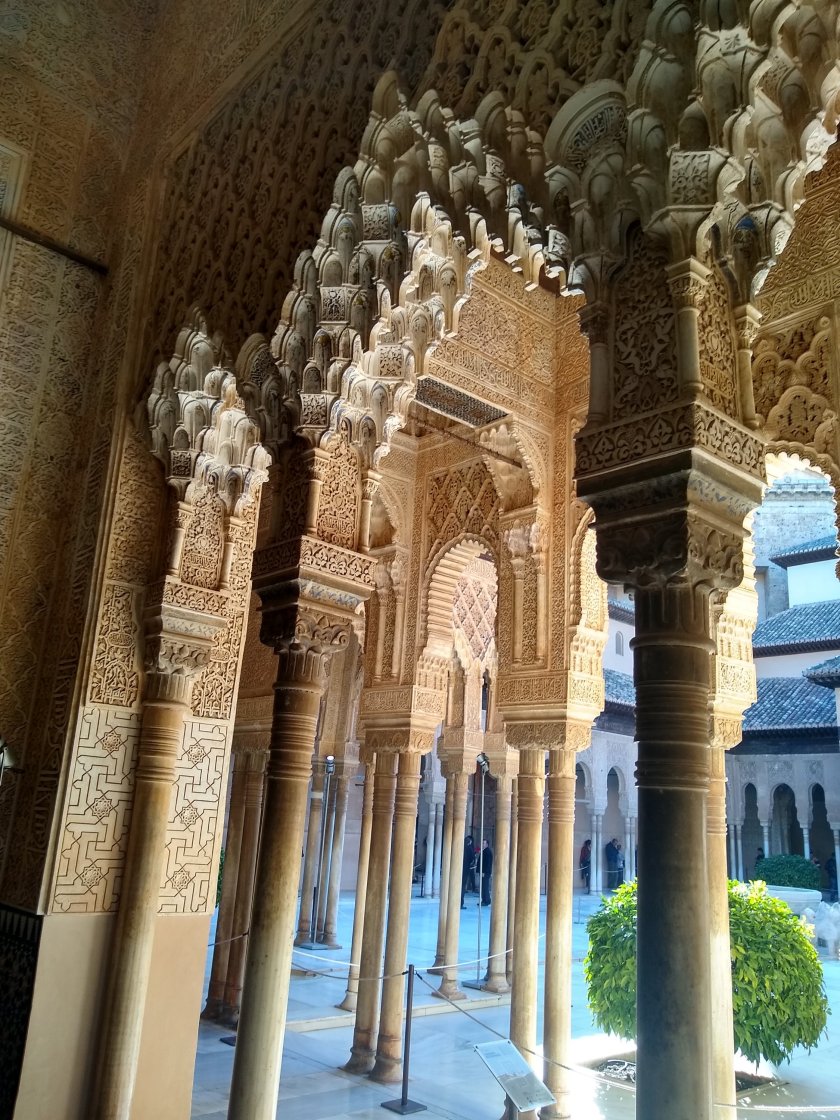
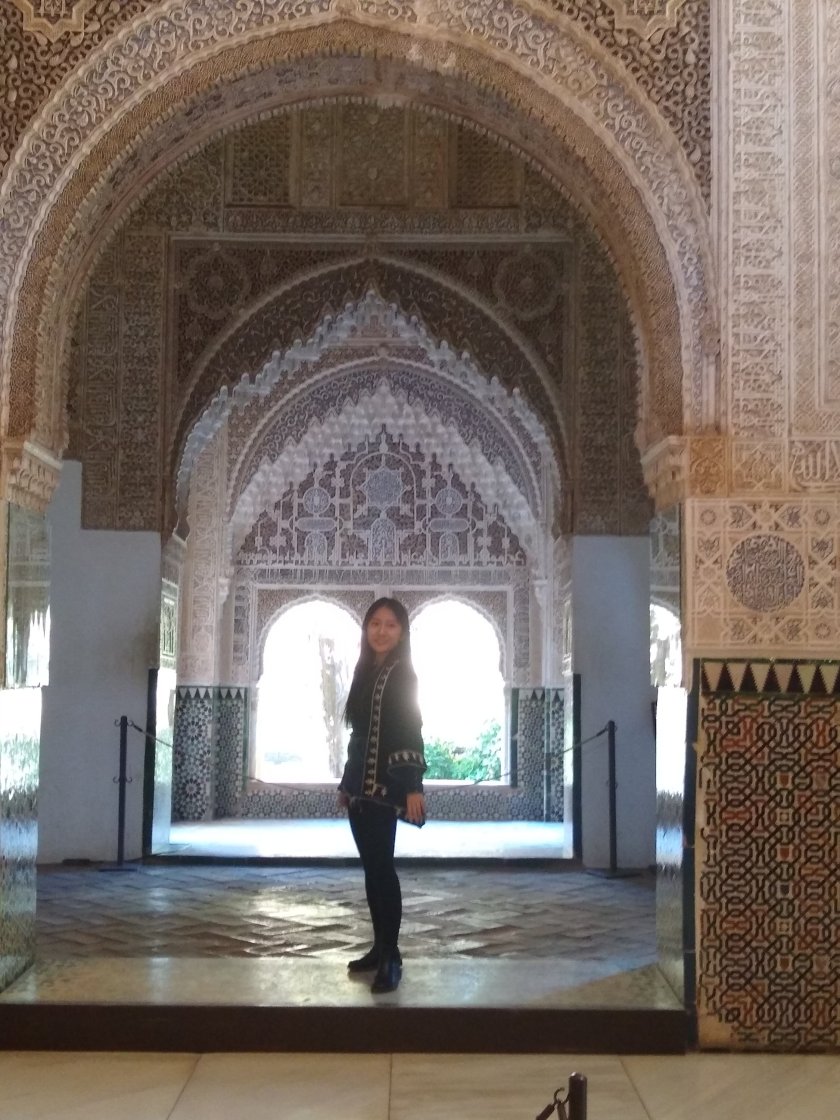
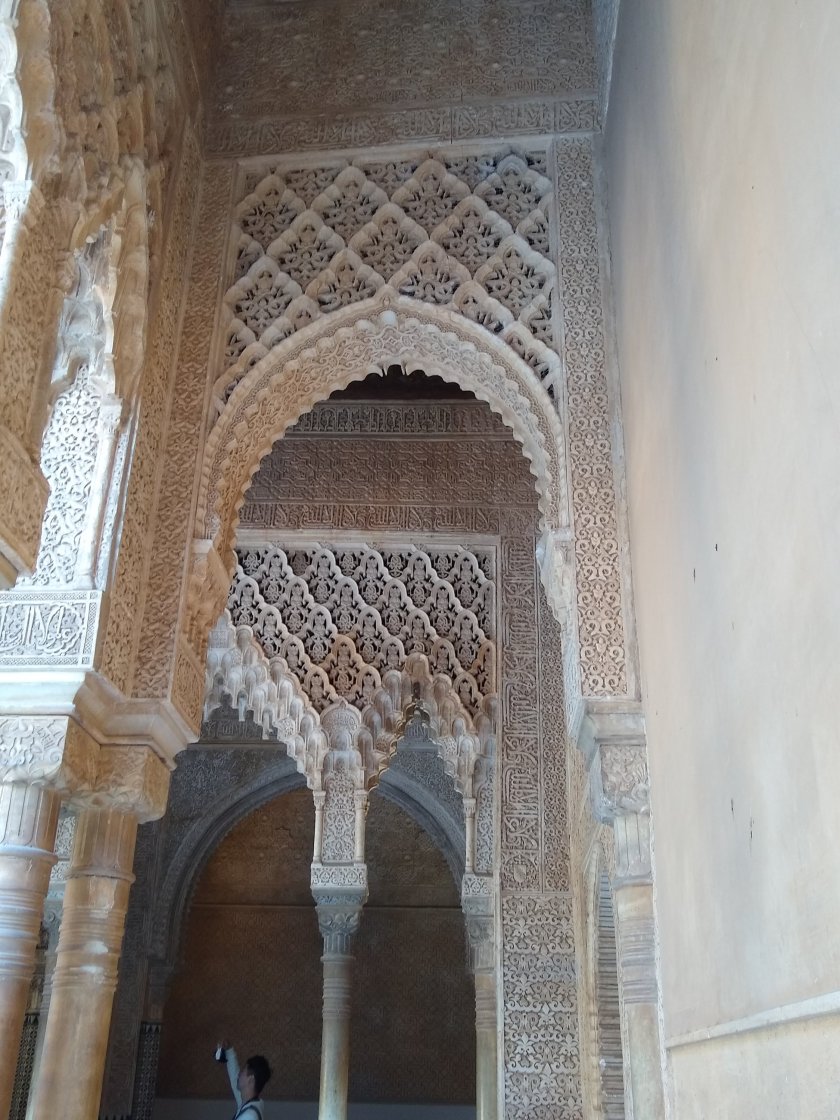
We tried to imagine what this place meant to those who lived here over the centuries. Southern Spain is hot. For months it’s rarely cool, even at night. Here are cool courtyards; formal canals and ponds; trickling or cascading fountains; elegant chambers with exquisitely, delicately carved tracery; slender columns; magically evanescent roof spaces reaching heavenwards.

I offer you a scrapbook of images. You can find history lessons, detailed descriptions elsewhere. I don’t offer you selfies. I left that to the – mainly younger – visitors who wanted only to pose and pose and pose again for yet another image against a beautifully wrought backdrop to which they paid no attention whatever.

Arab Granada

Southern Spain once upon a time was Muslim territory. So Javi’s mum decided we should begin getting to know Granada by visiting Albaícin.

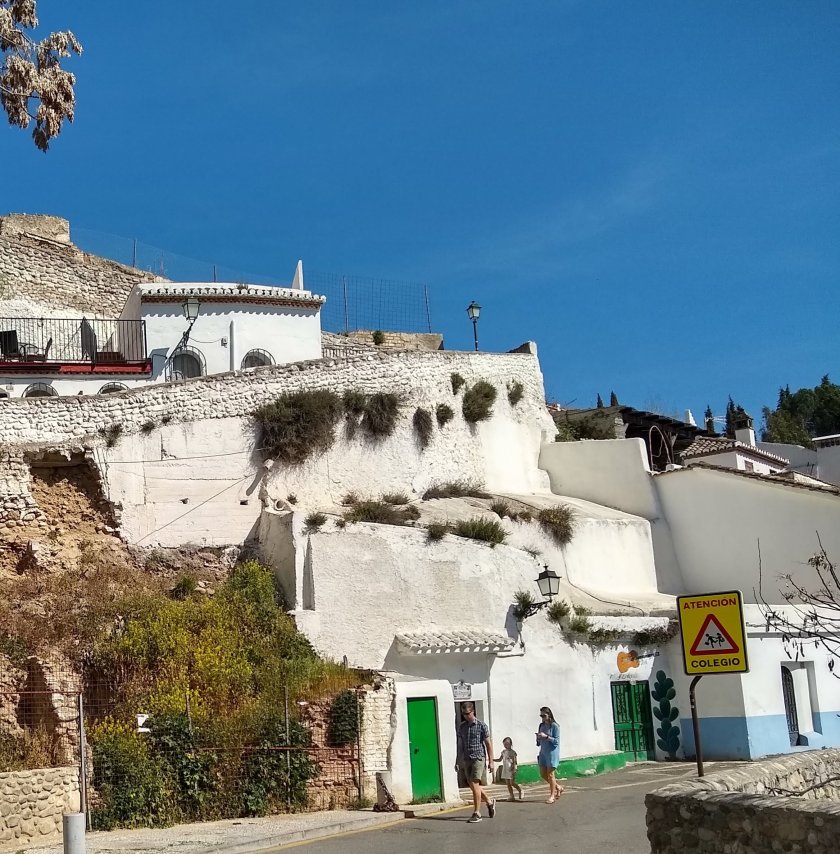
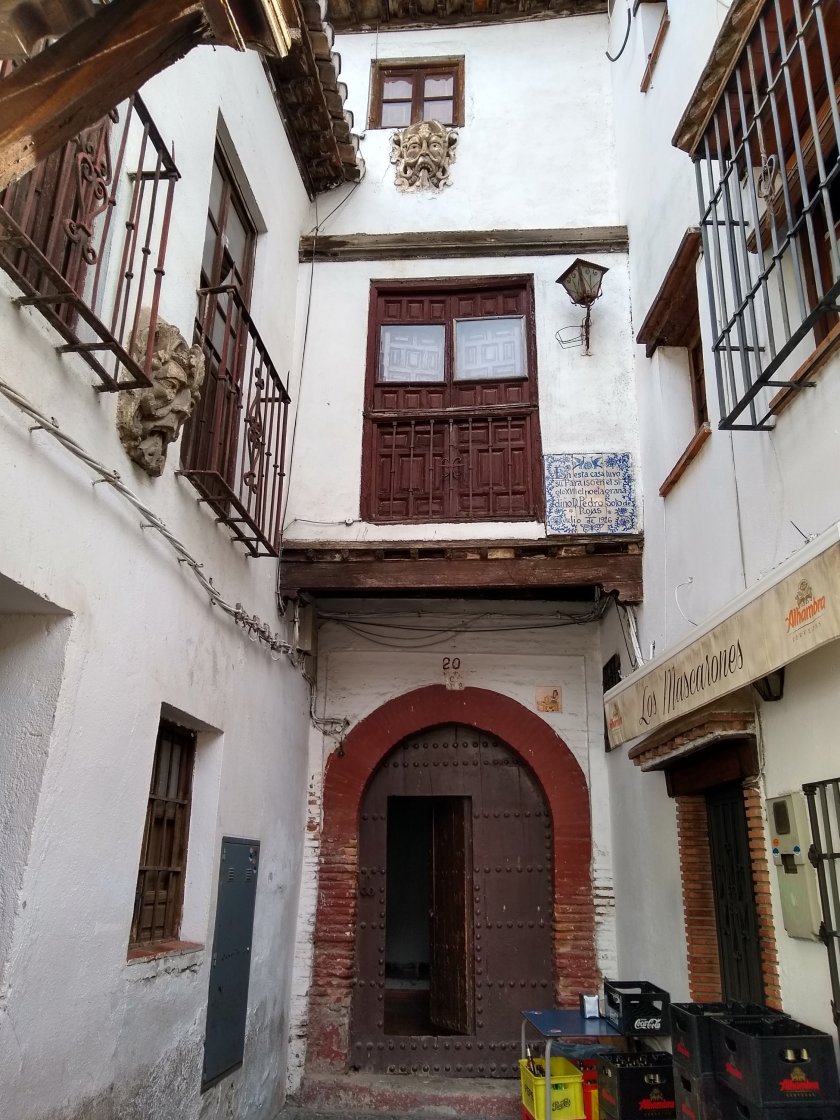
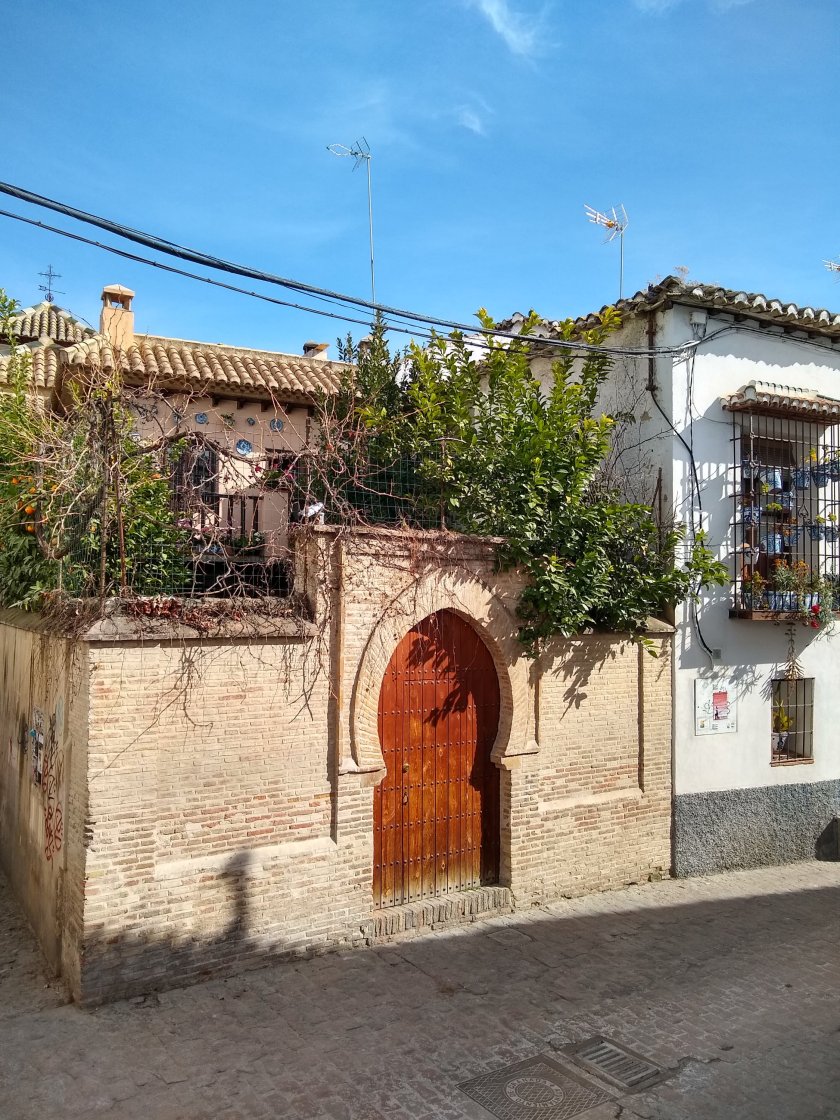
This was a quarter, then outside the main city walls, developed by the Muslims between the 6th and 15th centuries. It’s a warren of tiny characterful streets interspersed with grander dwellings, ‘carmen’. These houses had large courtyards at their core, planted with vines, with fruit trees, with sweet smelling climbing shrubs. Cooling fountains played.

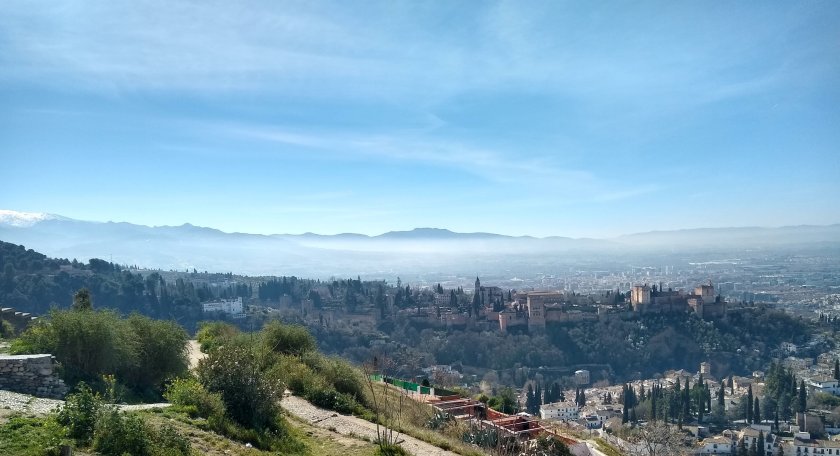
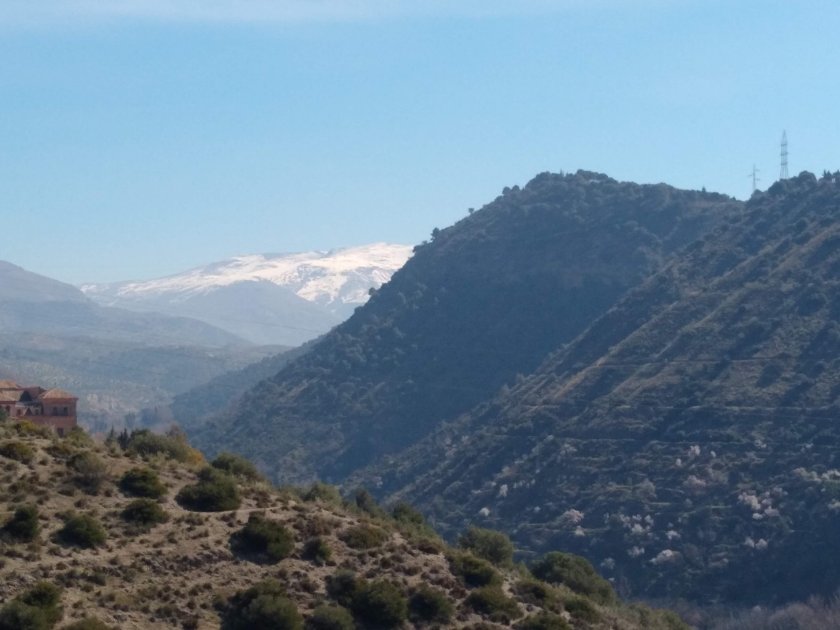
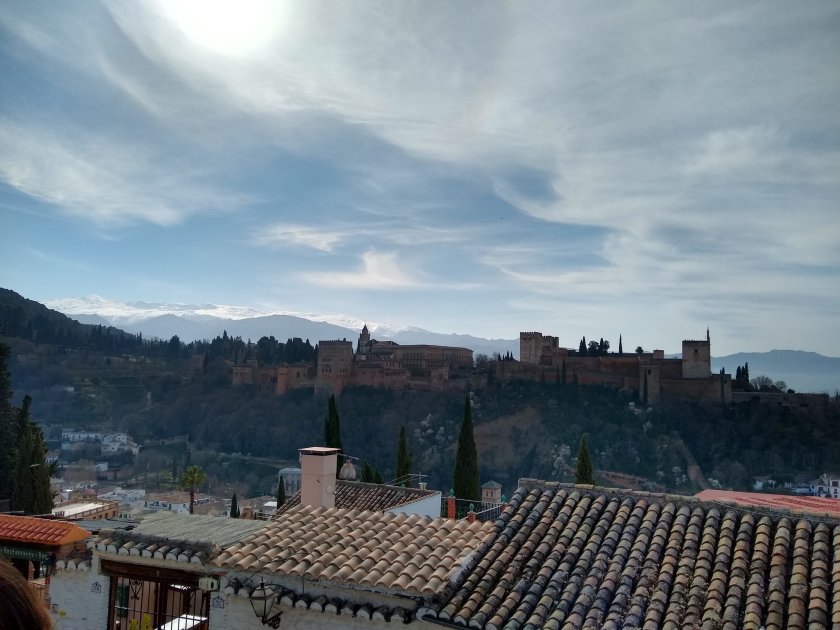
And for us there were views too, across to the snow-crusted Sierra Nevada, and to the Alhambra. That’s where we’ll go tomorrow.

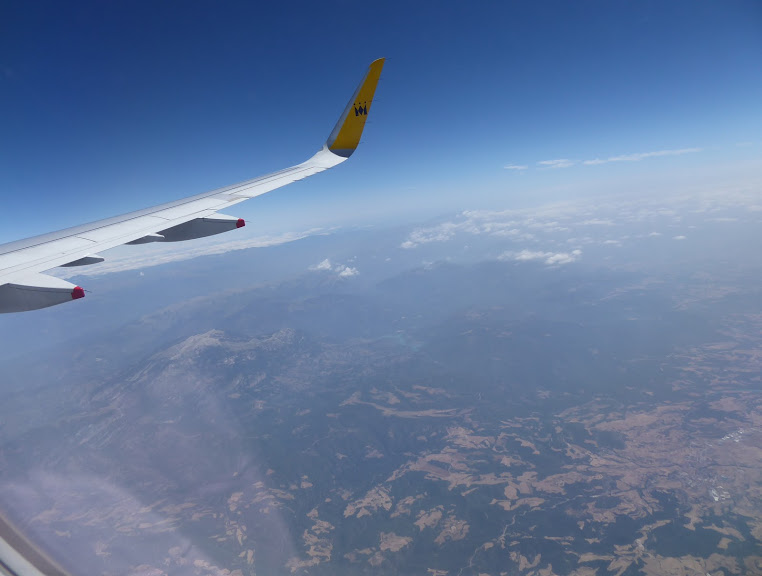
Take off in England: Land in Spain

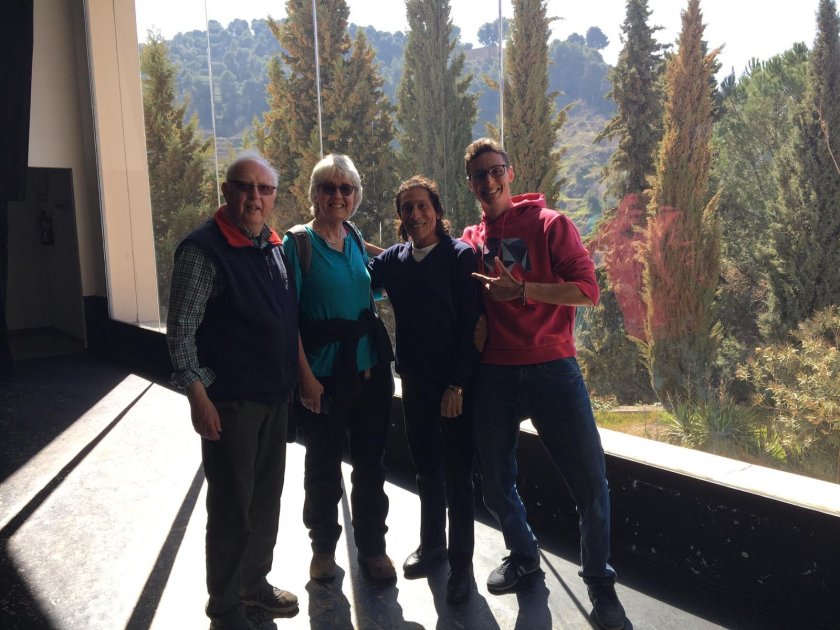
In December 2017, I introduced you to my Spanish teacher Javi, and the parallels between his life and that of my daughter living in Spain. Fast forward a year, and Javi is still my teacher and our friend, and planning a treat. He’s taking Certain Selected Pupils (two of us anyway) and Malcolm to his home town of Granada for a week. He’ll not only be our tour guide, but will get us behind the scenes of his city in a way that only a native can.

He’ll introduce us to its Moorish history (the Alhambra, of course), and to the snowy peaks of the Sierra Nevada. He’ll take us to his favourite haunts. We’ll eat together. We’ll meet his mum.

I can’t wait. On Saturday morning, bright and early, we’ll be at Leeds Bradford Airport, then airborne for Málaga, and Granada. Watch this space.

Todays’ Ragtag Prompt is ‘air’ https://wp.me/p9YcOU-vT

A district and its doors: El Carme, Valencia

When we were in Valencia, we stayed in the old district of El Carme, just within the old city walls.  It had its glory days in the 19th and 19th centuries, but fell on hard times.  By the 1980s, and into the ’90s, people referred to the area as ‘H&M’ – that’s hashish and marijuana.  Anyone with any choices moved out.  As dilapidated buildings collapsed – like here….

…. street artists moved in.  Followed by other creative people, attracted by low rents and prices.  Now El Carme’s narrow streets are vibrant, buzzing, crammed with bars and fashion boutiques.

No bars, restaurants and shops here. But in other ways this is a typical street in El Carme.

And yet its wealthy elitist past lives on, in its doors.  Why did such tall narrow houses have such magnificent doors?  Well, the rich wanted to live here.  They needed to express their individual wealth in some way, since spacious grounds were out of the question.  Doors then.  Doors through which a man on horseback could enter.  Maybe a carriage too.  Stables and servants downstairs.  The noble family above.  No two doors were the same.  Here’s a small selection.

This is my entry – my first – for the popular Thursday Doors challenge, which I first learnt about from Judith’s ever-interesting blog, Beyond the Window Box.

Click on any image to view full size.

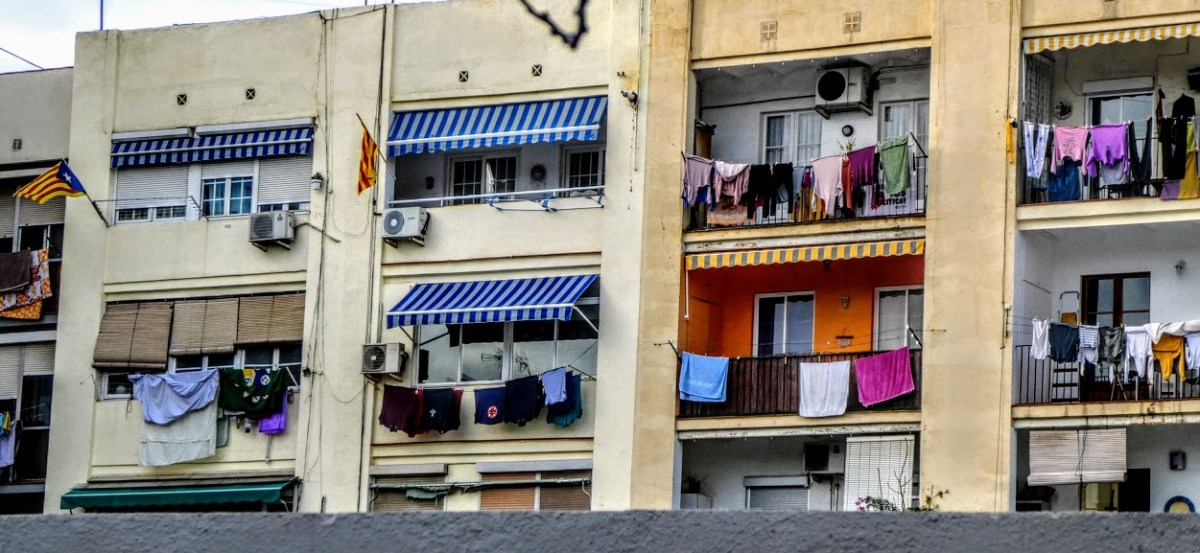
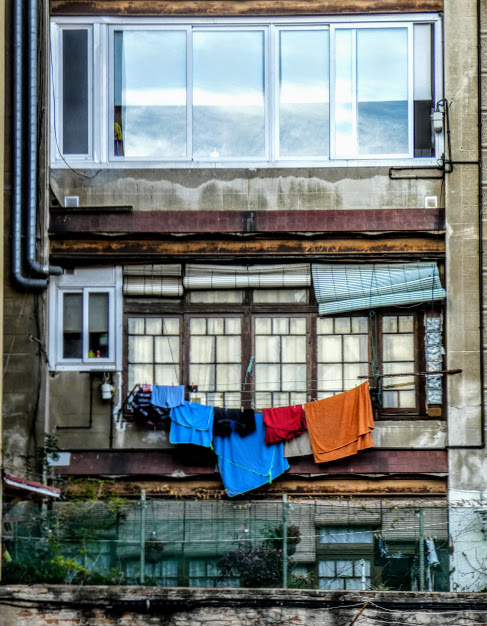
Washday

I’m a simple soul. Watching a line of clean washing blowing and tugging on the line on a sunny, breezy day is one of life’s small pleasures. Gathering up the clean dry clothes and sheets at the end of the day, and burying my nose into the pile for that incomparable fresh smell of clean washing is another.

Perhaps this is why, when I’m in Spain, I’m a sucker for shots of long lines of clean washing draping from a balcony, or hanging from a sagging line on some tall apartment block.

And that is my angle on why I’d never have a tumble drier in the house, Ragtag Daily Prompt readers. Damp-and-refusing-to-dry washing is much more my cup of tea.


Ragtag Saturday: Foraging in Valencia for marmalade in England

One of the joys of being in Valencia was walking down streets and through parks lined with orange trees.  It’s orange season right now, so they were looking at their best.  They’re bitter Seville oranges of course, the ones we use for marmalade.  Juicy sweet ones would probably be too much of a temptation for passers-by.

Orange trees in Valencia.

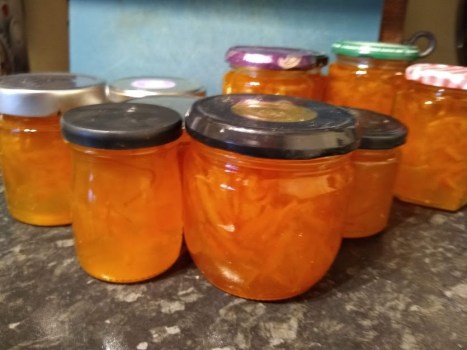
Last Sunday though, when we were walking in the Turia, we spotted fallen fruit under many of the trees.  A forager by nature, I couldn’t leave them there to rot.  No, we had to gather them, so that when we returned home, we could have a very special souvenir of our holiday.  Home-made marmalade, cooked from fruit gathered in Orange Central: Valencia.

I can’t show you the finished article.  The marmalade is simmering on the stove as I type.

Today’s Ragtag Challenge is: cook

P.S. …..

Ragtag Saturday on Sunday: The river that isn’t a river

Yesterday, I showed you a Valencian scene from centuries ago: a man fishing in the River Túria.

No, the water you see isn’t the river. Cooling ponds and watercourses break up the space.

Come with us now to see it as it is today. No longer a river, but a long sinuous public park wandering the northern edge of the old city centre. By 1957, the river had flooded once too often. Too many homes had been lost and livelihoods ruined. The city made the bold choice to move the river, and give the vacated space not to a road, not to housing, but to the people, as a park. At any moment of the day you’ll find commuting cyclists, dog walkers, joggers, families, elderly couples, sporty types – all enjoying this 9 km. long space.

Today, we were there too, walking under ancient 15th century bridges, through cool wooded glades, all the way to the Ciutat de les Arts i les Ciències, Valencia’s iconic futuristic cultural and leisure centre.

So this is part two of my contribution to Saturday’s Ragtag Challenge: and no river in sight.

Ragtag Saturday: Gone fishing

This fisherman is trying for his daily catch on Valencia’s River Túria. I found him on the staircase of the Horchateria Santa Catalina.

Horchateria? Yes: it’s a café where you go to drink horchata, a traditional Valencian drink made with dried and sweetened tiger nuts. It’s rather good, if a little sweet.

Anyway, we were just leaving after our break when we spotted this bucolic scene. And it reminded me that we haven’t yet gone for a walk along the Túria, Valencia’s river-that-is-not-a-river. More of that tomorrow.

Today’s Ragtag Challenge is ‘River’.


Reading, Valencia style

I’m very keen on Valencia’s central library. It’s situated in a wonderful building founded in 1409 as the Hospital for the Poor Innocents. Astonishingly, it was a psychiatric hospital – Europe’s first. The splendid space shown here was for male patients. Females had the same arrangement upstairs. Suitable ceramic panels showing suitable saints still remain.

In 1979, the hospital moved on, and the library moved in. What a place! It was busy with readers choosing books, students writing essays. Malcolm and I sat and read yesterday’s Times.

We looked round the children’s section. We found a good selection of books in other languages, including a large selection in English. There are two reading and philosophy clubs: one for pre-teens, the other for teenagers.

And look at this list of activities. I draw your particular attention to the last one.

As one of the volunteers at Ripon Library – one of hundreds us working throughout the UK to help keep the library services functioning now that Government funding, or lack of it, prevents libraries employing a full complement of professional staff, I was beyond impressed.