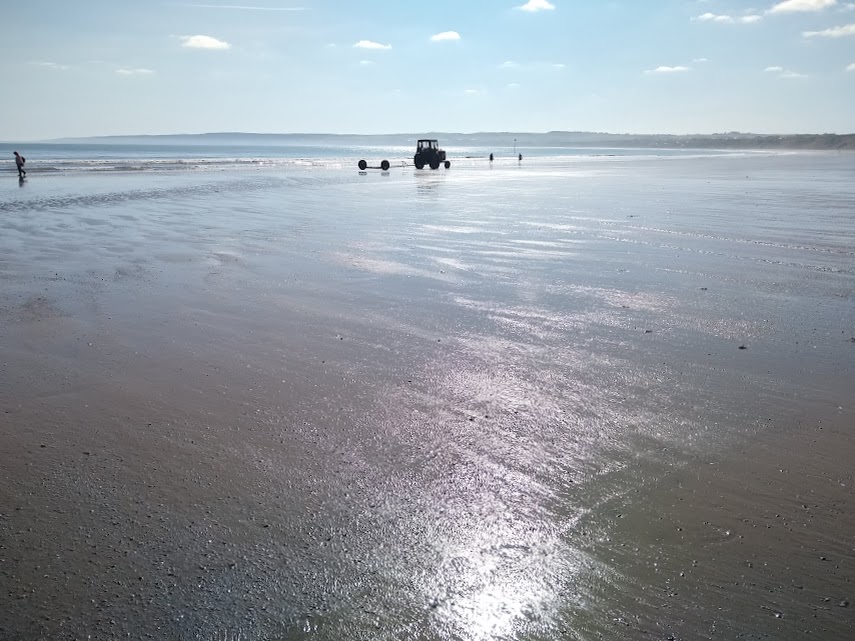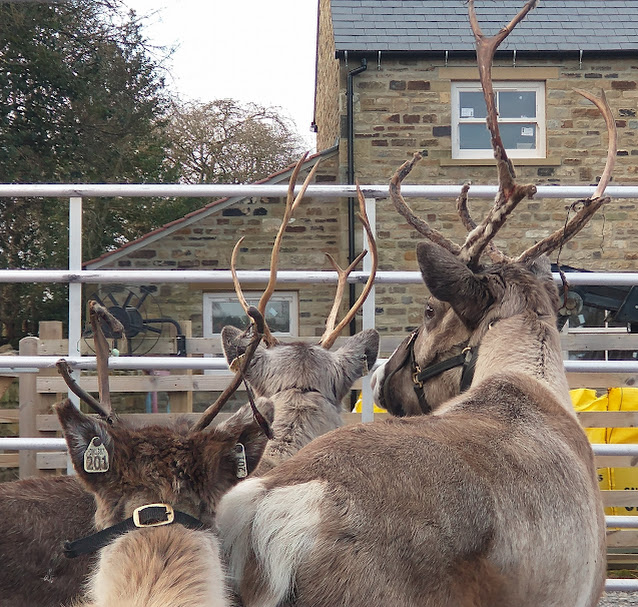
Looking at the beach and pier at Saltburn-by-the-Sea reflected in the window of a fish restaurant.
For Hugh’s Wordless Wednesday.
Looking at the beach and pier at Saltburn-by-the-Sea reflected in the window of a fish restaurant.
For Hugh’s Wordless Wednesday.
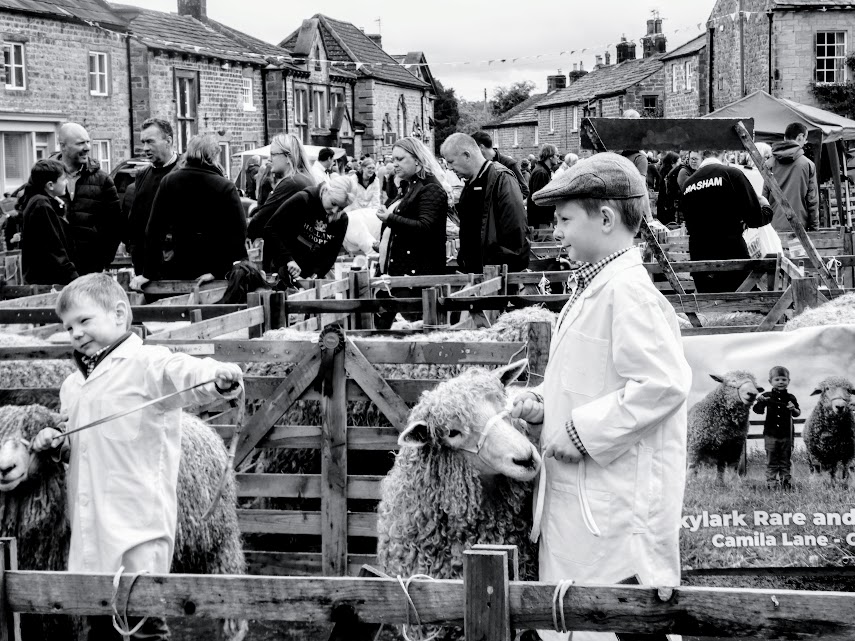
Just over a week ago, I showed you an image of Masham gearing up for its annual Sheep Fair. It’s a weekend when the town itself is on display, and sheep in their hundreds turn up to be examined by judges who come from all over the kingdom and beyond to this special event. We go without fail. Our first visit had us astounded at the sheer variety of types of sheep on display. At other times we’ve focused on watching sheep dogs doing what they do best … herding … ducks.
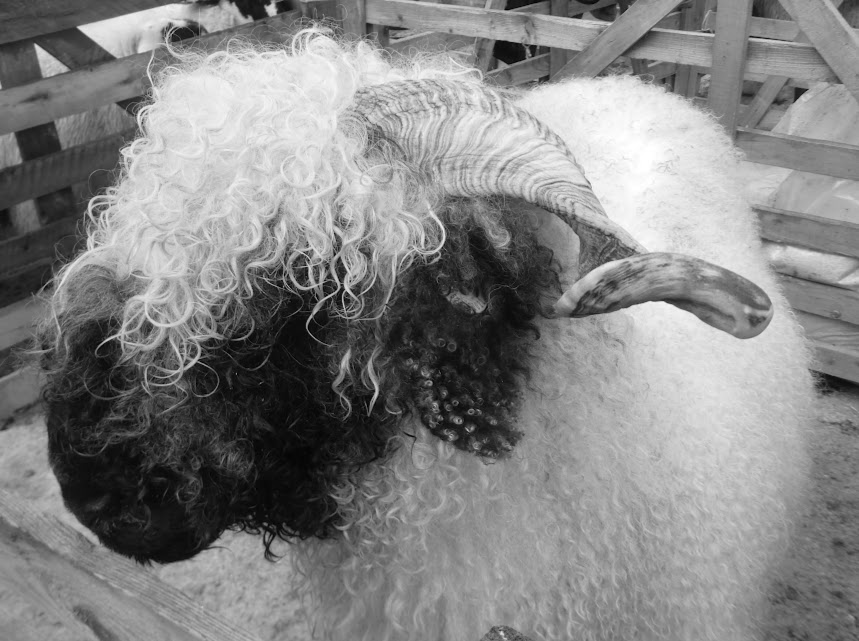
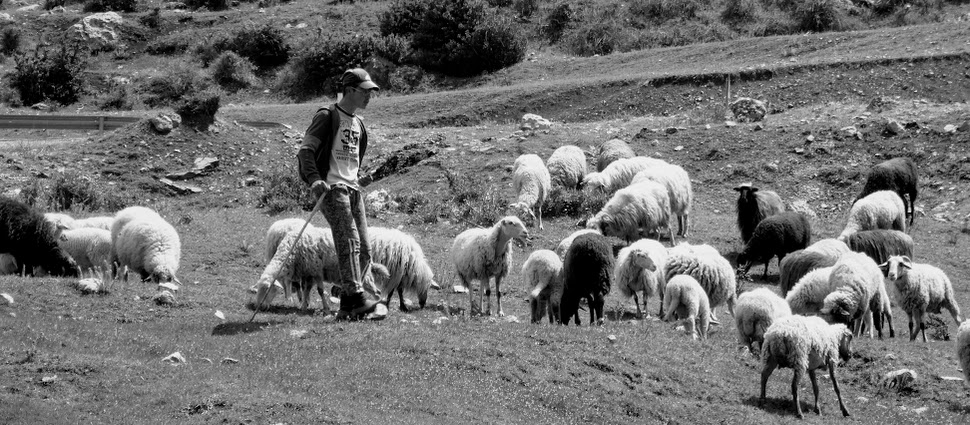
So I have photos by the score. This year, then, I thought I’d limit myself to black and white. I’d look for sheep on display, the humans who handle them, some as young as five years old. I’d look at dancing displays, at those sheep dogs, and at humans also worth a second glance. And show them to Ann-Christine, and to you, for this week’s Lens-Artists Challenge: On Display.
Sheep first then, of course…


… then their handlers…


… then there were dancers. You can see they’re not happy putting up with black and white photos. We’ll revisit them another day in glorious technicolor.


There were the passers by…


… and not forgetting the duck-dog.

And after that the walk back through the town, through fields of sheep who’d somehow dodged presenting themselves in town to the car, parked in the Nature Reserve car park.

I’m offering this to Jo as a Monday Walk too. Of course the WI had tasty soup and home-baked cakes on offer. We scoffed everything down without thinking even once of the photo-opportunity they represented.
Britain is one of the most nature-depleted countries on earth, according to the fourth State of Nature (SON) Report, the product of a collaboration of environmental NGOs, academic institutions and government agencies, including Natural England. Depressingly, England, Wales, Scotland and Northern Ireland are on the edge, as far as much of the natural world is concerned.
Look at the featured photo for instance, taken on one of those in-glorious-technicolor days of high summer, with an impossibly blue sky, and fields of golden wheat just waiting for harvest. It really shouldn’t be like that. There should be poppies, cornflowers, wild flowers in general poking their heads above the crop. There should be generous field margins and hedges, offering home, food and shelter to whole varieties of insects, small mammals and birds. Where can all this wildlife call home these days? Many of them are on the very edge of sustainability. Here’s another field, even nearer to home, equally mono-cultured.

These days grass grown for hay-making as winter feed is just that. Grass. Meadowland used to be so different, crammed with wildflowers that made much richer, more interesting fare for the cattle that rely on it as winter feed. And a mecca for insects : all-important bees among others – during its growing season. These days, it’s so rare that it’s not just meadowland, but a Site of Special Scientific Interest.

The farms nearer to our house have chosen to make do with narrow jumbles of poppies squeezed into narrow field margins, or at the edge of paths.

See these? These are swallows on a telegraph wire in mid-September one year recently, assembling prior to their big autumn migration. It didn’t happen this year. Swifts and swallows are on the edge of viability here, from habitat loss.

Let me show you something all-too common though, both in town and country. Litter. These images are hauls from litter-picks we’ve done not just in town centres, but down country lanes. Everything from a carelessly-tossed can to rather toxic rubble and waste illegally dumped in a hedge margin. Not just an eyesore, but habitat-damaging and a danger to the many small species that call such areas home.


This is meant to be a photo challenge, not a diatribe, so I’ll leave it there. There’s a lot more I could say, but I don’t have the images to support the argument. It’s for Patti’s Lens-Artists Challenge #269: On the edge. And it was inspired by Susan Rushton’s post for the same challenge. If you pop over and read it, you’ll see why.
I popped into Masham on Friday afternoon, and found they were already pretty much prepared for this weekend’s annual Sheep Fair. More of this soon, when I’ve downloaded yesterday’s camera photos from this Must-Visit event. Friday’s phone photo offers a preview.
For Brian’s Last on the Card

This week, for the Lens Artists Challenge, Tina invites us to show off ten of our all-time favourite photos. Not only must we explain why we like them, but they have to be technically top-hole too. I can’t do it. When an image is freighted with memories, whether happy or exciting or astonishing, unpicking these from technical considerations is something this snap-shot-ist can’t do. I shall be disqualified. I can live with that.
I first ‘needed’ a camera when I had the chance to spend a month travelling in India in 2007. I was even more point-and-shoot than I am now. Here’s just one memory, taken from my hotel window in the French quarter of Pondicherry (as it was then called), Builders, both men and women, unstacking their consignment of bricks to begin their day’s work at 6.00 a.m. Some of my best memories come from staring out of that window: such as the women who cleaned the streets at night, sitting right in the middle of the road at 2.00 a.m. cheerfully chattering during their break.

By then, we were already living in France. How to pick just a few shots from that period? Let’s have a go. I’ll choose pale and delicate wild daffodils in the mountains just outside Foix, in such profusion it was almost impossible to avoid treading on them. I’ll choose pristine snow, many feet deep, just waiting for a Sunday snow-shoeing outing. The only sound was the snow itself, squeaking softly as we trod it down with our raquettes. I’ll choose a dramatic , never-repeated sunset which glowered over our small town one spring evening.


And sea-voyages. We’ve had a lot of those – back and forth to France when we lived there and came back here often to see family. Nowadays it’s because we need to get to Spain where my daughter and her family live. There’s often a dramatic skyscape.

And now North Yorkshire’s home, with its stone-walled Dales, its meadows and hills, its autumn fogs.


And then there’s Fountains Abbey, where I spend so much time volunteering. Can’t leave that out. We’re just coming into autumn, which may be my favourite season there. So the Abbey in Autumn in my featured photo.

So these are my choices today. Yesterday I might have chosen differently. Tomorrow I’d choose other shots.
PS. Can anybody tell me why WP is no longer always allowing me to centre my photos? Or – now that WP have made it impossible to comment directly onto a post, how to comment on a post that’s more than a couple of days old, such as Tina’s one about this challenge, and which is no longer reachable on the Reader?
What do you need to do to recharge your batteries? That’s the question posed by Egidio, in this week’s Lens-Artists Challenge. And my answer is the same as his: I need to get out, to surround myself with the natural world.
Living in France, in the foothills of the Pyrenees, the mountains grounded me in many ways. The sheer scale of them put me in my place – in a good way: reminding me how little my own concerns counted in the great scheme of things. Here’s a quiet scene from a lakeside high up the slopes not too far from our house.


Or these, from le Cap du Carmil …


There, lakes provided the solace that being near water often provides. Back in the UK, it’s the sea.


For the everyday recharge, it’s greenery, plain and simple. Local woodlands.

…or just a little bit more distant – Coverdale.

There’s just one place I need to mention though: one I’ve talked about before, more than once. A special afternoon and evening in l’Albufera, just beyond Valencia, where there is nothing but the lagoon, the sky, and wildlife … and peace. That’s my featured photo, and my best recharge ever.
As regular readers know already, I’m a huge fan of Food for Free. Especially at this time of year, I never leave the house without a useful ‘au cas où’ bag stuffed in my pocket . This is a bag that any rural French person will have about their person always – just in case they find something useful – a few nuts, berries, fungi or leaves to add interest to the store cupboard. At the moment, this is all about the apples, blackberries, bullace and mirabelle plums all growing wild locally. At other times it might be young nettles, wild garlic or other leaves. Soon it will be puffballs. I’m not especially knowledgeable, but I do my best. Yesterday’s haul? Windfall apples (simple stewed apple) mirabelles (frangipane and jam) and bullaces (crumble and bullace cheese – think a plum version of membrillo – very labour intensive).


Although I was brought up foraging, my commitment to it was sealed when we lived in France. Here’s a post I wrote in October 2012.
October 25th, 2012
Well, at this time of year, it isn’t really a case of ‘au cas où’ . You’re bound to find something. A fortnight ago, for instance, Malcolm and I went on a country stroll from Lieurac to Neylis. We had with us a rucksack and two large bags, and we came home with just under 5 kilos of walnuts, scavenged from beneath the walnut trees along the path. A walk through the hamlet of Bourlat just above Laroque produced a tidy haul of chestnuts too.
Yesterday, we Laroque walkers were among the vineyards of Belvèze-du-Razès. The grapes had all been harvested in the weeks before, but luckily for us, some bunches remained on the endless rows of vines which lined the paths we walked along. We felt no guilt as we gorged on this fruit all through the morning. The grapes had either been missed at harvest-time, or hadn’t been sufficiently ripe. They were unwanted – but not by us.

The walnuts we’re used to in the Ariège are replaced by almonds over in the Aude. You have to be careful: non-grafted trees produce bitter almonds, not the sweet ones we wanted to find. But most of us returned with a fine haul to inspect later. Some of us found field mushrooms too.

Today, the destination of the Thursday walking group was the gently rising forested and pastoral country outside Foix known as la Barguillère. It’s also known locally as an area richly provided with chestnut trees. Any wild boar with any sense really ought to arrange to spend the autumn there, snuffling and truffling for the rich pickings. We walked for 9 km or so, trying to resist the temptation to stop and gather under every tree we saw. The ground beneath our feet felt nubbly and uneven as we trod our way over thousands of chestnuts, and the trees above threw further fruits down at us, popping and exploding as their prickly casings burst on the downward journey.

As our hike drew to an end, so did our supply of will-power. We took our bags from our rucksacks and got stuck in. So plentiful are the chestnuts here that you can be as picky as you like. Only the very largest and choicest specimens needed to make it through our rigorous quality control. I was restrained. I gathered a mere four kilos. Jacqueline and Martine probably each collected three times as much. Some we’ll use, some we’ll give to lucky friends.

Now I’d better settle myself down with a dish of roasted chestnuts at my side, and browse through my collections of recipes to find uses for all this ‘Food for Free’.
*From the words of an English hymn sung during Harvest Festival.
For Denzils’ Nature Photo Challenge #24: Edible.
And Jo’s Monday Walk: even though Jo is taking a break.

That’s this post, really. We’ve been away all week, discovering Shropshire with friends who’ve moved there. Getting to know this county and its landscapes, its industrial history, its towns and villages is a work in progress for us. But it’s left me only with time to throw together a quick response to Ann-Christine’s Lens Artists Challenge: Work in Progress.
We’re all Works in Progress – all our lives. But children especially so. Fierce concentration here, and enjoyment too …

Slightly older children can hold their own with adults when it comes to demonstrating proficiency – in this case sheep-handling at Masham Sheep Fair.

Over in the city, street art out-numbers sheep. Here are two works in progress: the first in Valencia, Spain, the second near Brick Lane, London.


And finally, two shots from India that I remember well: the house opposite my hotel in Puducherry, whose construction was a work-in-progress from about six, till late… it’s up there as my featured photo … and a metalworker hard at work producing figures inspired by the nearby temple at Kumbakonam in Tamil Nadu.

Townie Toddler has gone back to Spain. The house suddenly seems unwontedly calm and quiet. Rather dull really. This is probably because the two old fogies who live here have no remaining energy – for a day or two at least.
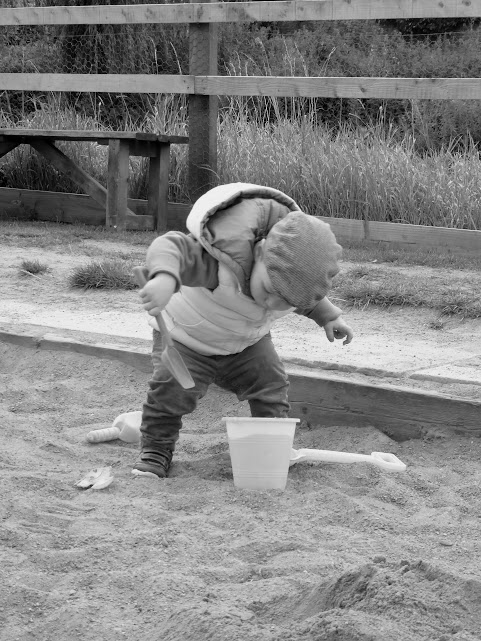
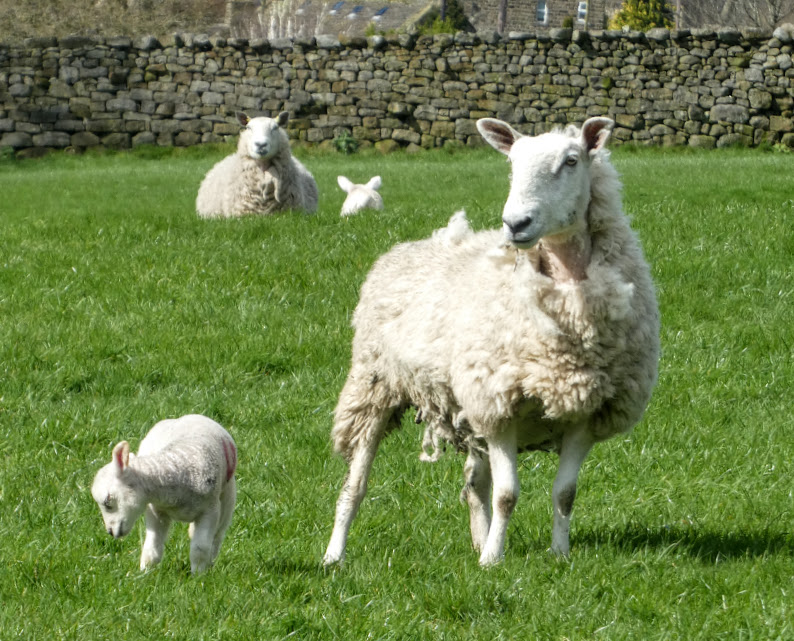
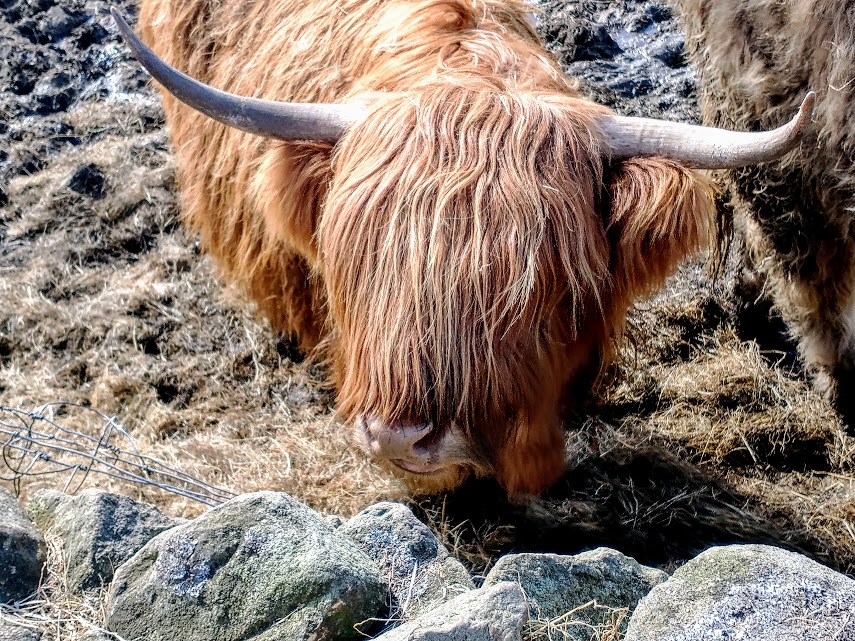
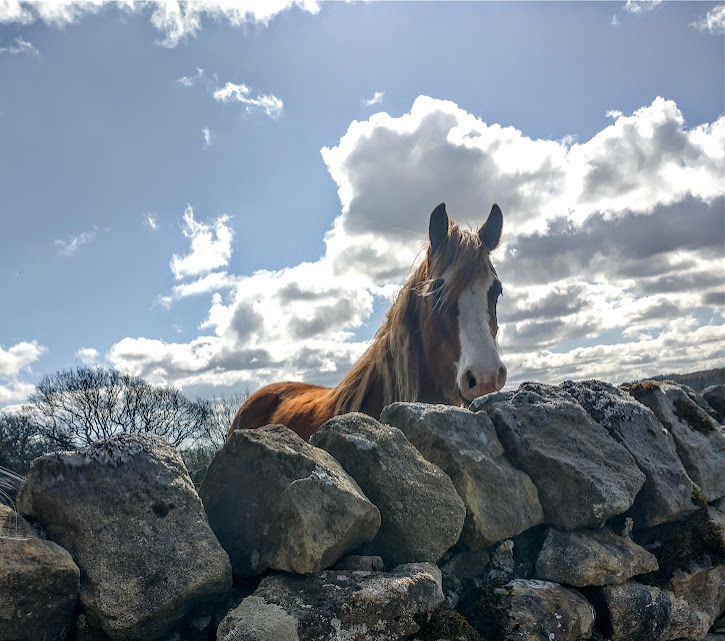
Townie Toddler’s mum wanted her daughter to spend time being a child of the countryside – spending time with its animals, plants and wide open spaces. So off we went on Saturday to Borrowby Show. Horses from shire horses to the tiniest of ponies, sheep, dogs and small animals were all Being displayed to best advantage. Oddly, the only cattle were two charming Jersey calves. One of the set pieces in the afternoon was of The Hunt. Definitely NOT our thing. But Anaïs enjoyed the chance to meet the docile and well-behaved beagles who later tore round the show ring in pursuit of – luckily – a less than realistic hare, who doubtless smelt right.
Here’s our day:


Then the next day, on our way to the airport, it was Meanwood Valley Urban Farm. It was somewhere we often went when we lived in Leeds, and the children were smaller. We loved it then. Now it’s re-invented itself. It’s larger. It has peaceful walks where you can lose yourself in dense copses and apparently distant views. It has all the farmyard animals you’d expect. Yet it’s within walking distance of Leeds City Centre. It has a vegi-box scheme. A bike workshop. It works with volunteers, those with learning disabilities, disengaged young people, and is a welcoming and environmentally focussed part of its local community. It also has a really great café. We spoke to staff and volunteers who talked with pride and enthusiasm about this special place. Almost worth moving back to Leeds for. It was a wonderful finish to Anaïs’ and Emily’s English break.


Brian? Do you see those pigs? That shot’s my Last on The Card in July.

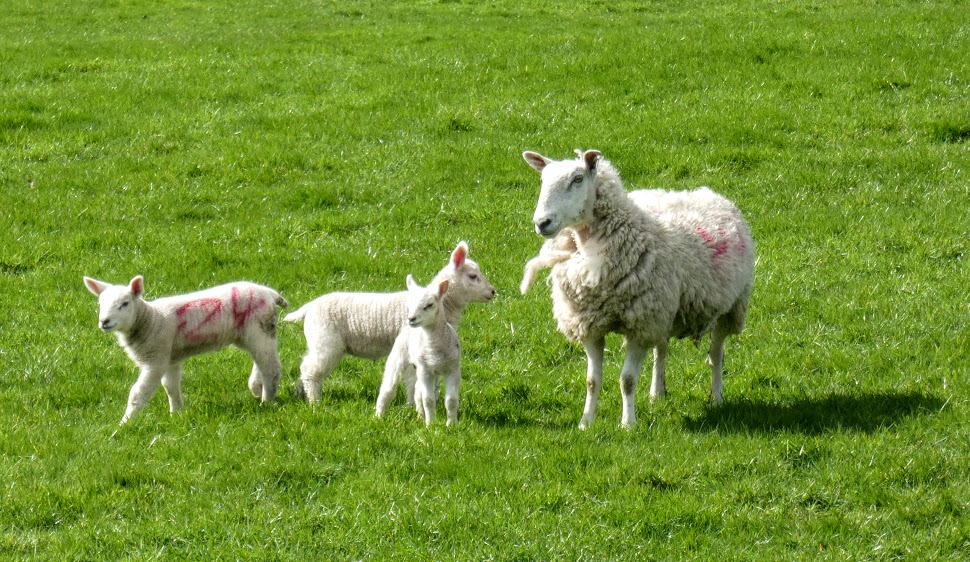
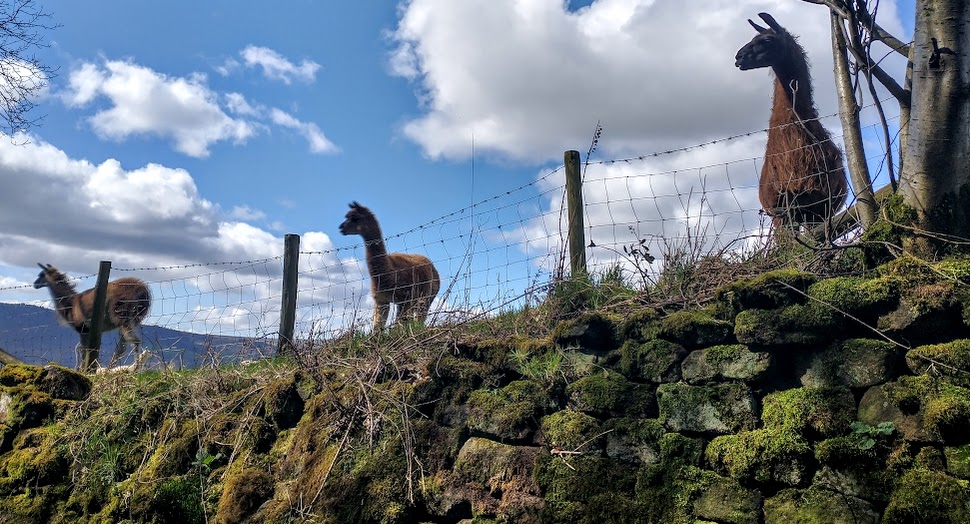
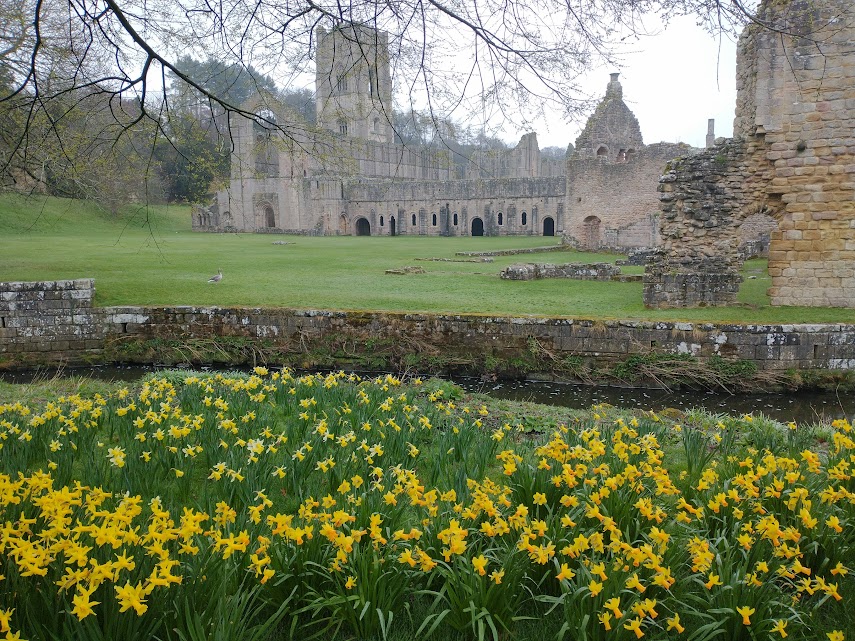
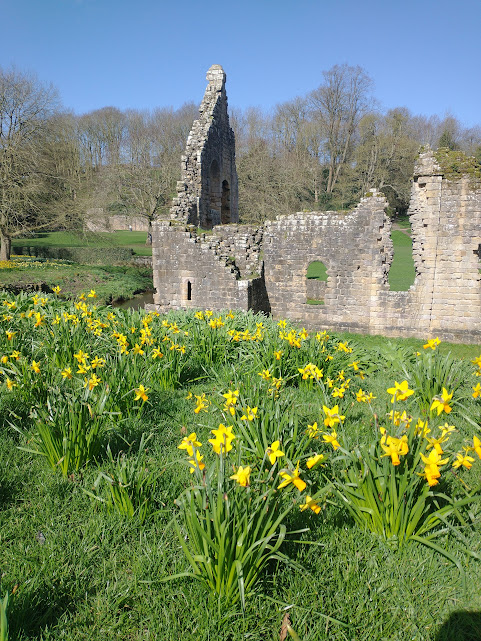
… and meets sheep and ducks and fish. Among other forms of animal, bird and insect life.

For Debbie’s Six Word Saturday.
You must be logged in to post a comment.