Somehow, we forgot all about Masham Sheep Fair last weekend. We forgot about the dozens of different breeds of sheep on show; the sheep-shearing demonstrations; the sheep dog competitions; the children, some really quite young, demonstrating their knowledge and prowess as sheep-handlers. There’s no help for it. We’ll have to revisit this post from October 2014 instead. And by the way. Please don’t show yourself up. Pronounce Masham correctly. Mas-ham. Anyone who lets the side down and calls it Mash’em is immediately recognised as an outsider.
And let’s include this blast-from-the-past in Becky’s Past Squares, as well as including it in Fandango’s Flashback Friday, a celebration of past posts which deserve another outing.
A SHEEP IS A SHEEP IS A SHEEP …
… or not.
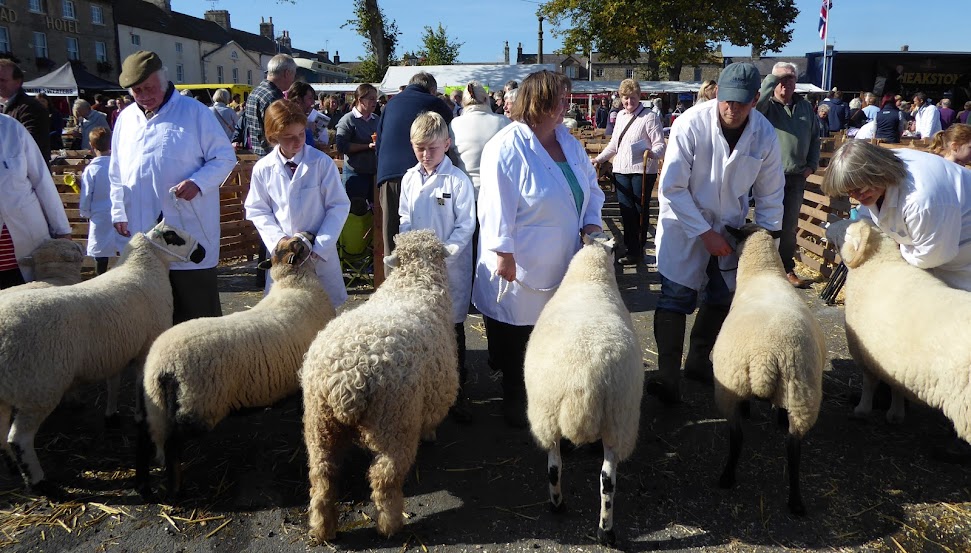
On Saturday we called in, far too briefly, at the annual Masham Sheep Fair. This is the place to go if you believe a sheep looks just like this.
Saturday was the day a whole lot of sheep judging was going on in the market square. Here are a few of the not-at-all identical candidates. And yet they are only a few of the many breeds in England, and in the world. There are 32 distinct breeds commonly seen in different parts of the UK, and many more half-breeds. I was going to identify the ones I’m showing you, but have decided that with one or two exceptions (I know a Swaledale, a Blue-faced Leicester or a Jacobs when I see one), I’d get them wrong. So this is simply a Beauty Pageant for Masham and District sheep.
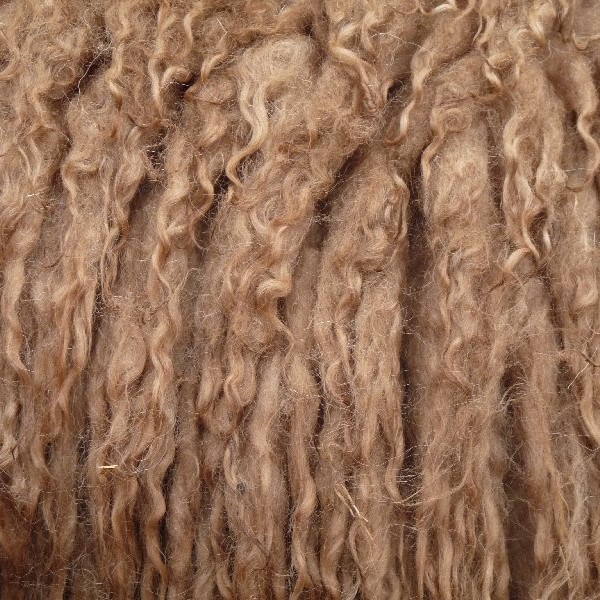
And if you thought wool was just wool, these pictures may be even more surprising. Who knew that sheep are not simply…. just sheep?
I was brought up foraging. At four years old, I’d get up with my mother at half past five in the morning and go scouting for mushrooms on the now-deserted wartime air-strips near our house. At five years old, I went as part of the autumn school day to gather rosehips for Delrosa. Expert pickers got a tin badge. Smaller fry like me got nothing. Blackberrying of course we took for granted.
Later, much later, Malcolm and I moved to France. There, foraging is a way of life. Nobody leaves the house without their ‘Au cas où’ bag – ‘just in case‘ they find something for the cooking pot. It might be wild asparagus, wild garlic or Alpine strawberries in spring, cherries later, then blackberries of course. Autumn was bonanza time. This was the time to stagger home with sacks full of walnuts, of chestnuts, of sloes, of mushrooms of every kind. Autumn hikes were constantly interrupted by the need to squat down and fill a bag with yet more free food. You can read all about it here, for Fandango’s Flashback Friday, when I described how ‘all is safely gathered in’.
Sweet chestnuts
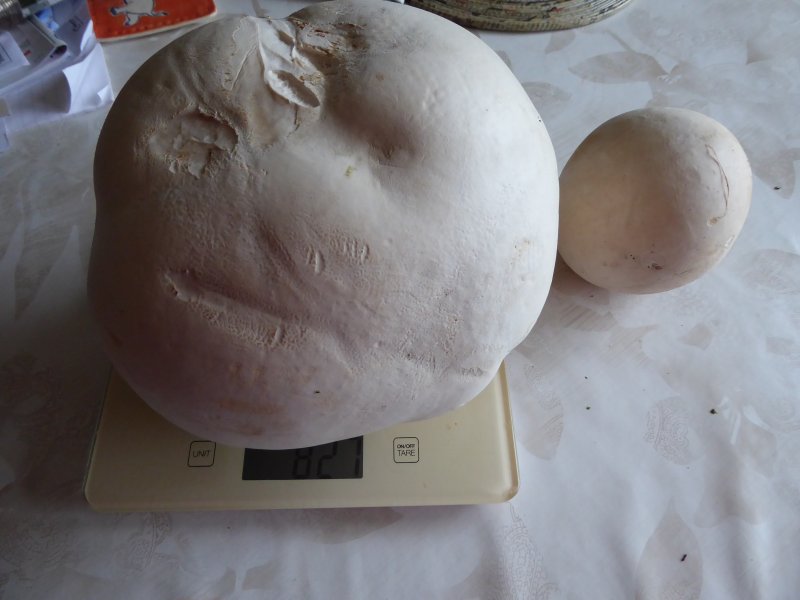
Now we’re back in England, the custom continues. I’ve discovered that locally, we’re regarded with good-humoured curiosity because of our inability to pass free food by without snaffling it. It starts with wild garlic, sometimes dandelion and nettle leaves in spring. During the last month we’ve picked several kilos of bullaces (wild plums) from Nosterfield; ditto blackberries from wherever there have been good supplies; windfall apples and crab apples from beneath village trees; a magnificent puffball weighing in at more than a kilo, which – thickly sliced and dredged first in beaten egg, then breadcrumbs and grated parmesan and fried in butter – made splendidly tasty steaks. Finally, this weekend, I glanced upwards on a familiar woodland path, and spotted golden mirabelles winking down at me. I summoned reinforcements (Malcolm, with bags, boxes and a useful stick) and now there are jars of tart but tasty mirabelle jam to see us through the winter, as well as plenty more waiting to be made into tarts and puddings.
Simple, but very real pleasures to add interest to our daily walks.
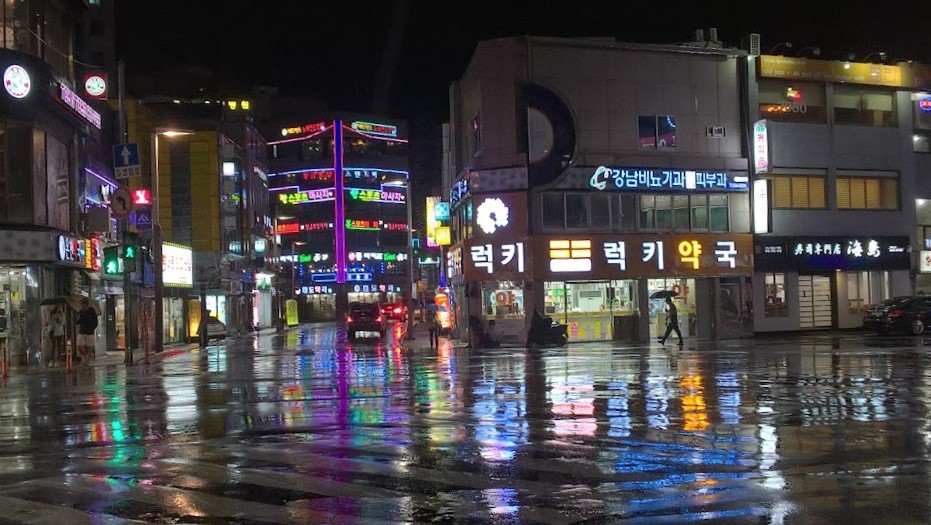
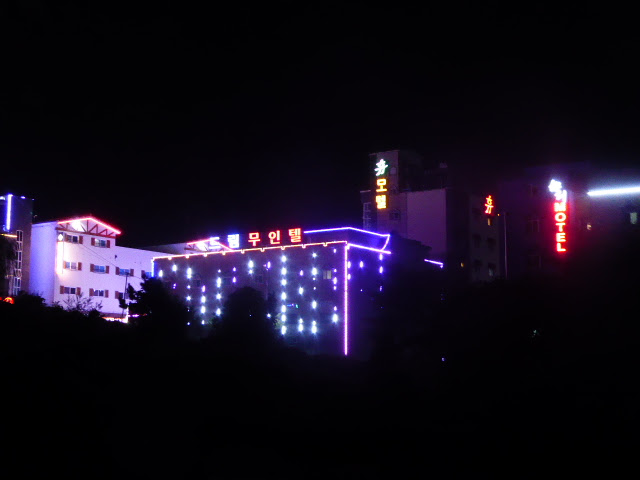
Electric light outside – as streetlights, spotlights, making our streets and subways safer: an undeniable blessing. But spotlights, bright and colourful advertising? The featured photo is of a rainy night in Busan South Korea. Cheery colours certainly, but far more than we needed to find out way round. And look at this. These hotels are out in the country, in a small mountain resort, surrounded by forest. The lights went on as dusk fell, and remained on till morning …
The JaJa, Gyeryongsang
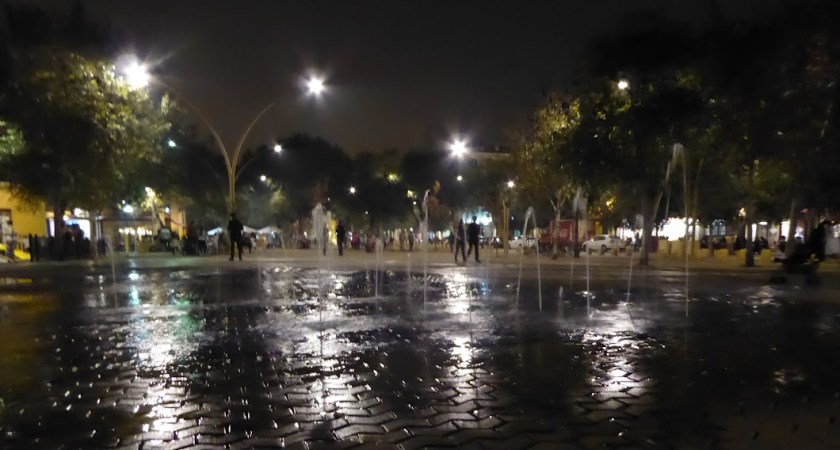
All the same, it’s hard not to enjoy streetlights reflected in the water while mooching round a city. Here are a couple of shots near the river Guadalquivir in Seville.
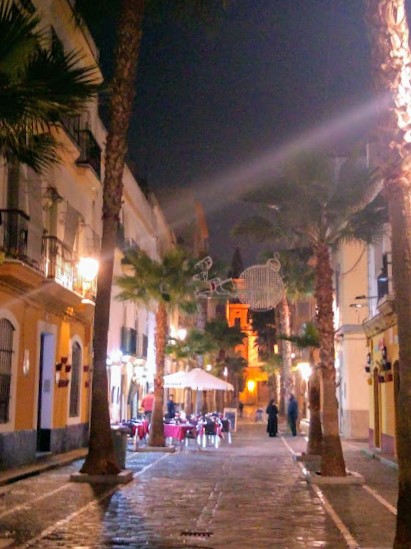
It’s mood-enhancing to see the city become a playground at night. Here are the fountains of La Alameda, also in Seville. And the neighbourhood of la Viña in Cádiz, where post-Christmas groups relax over a meal or a few drinks in the still-decorated street.
La Alameda, Seville
la Viña in Cádiz
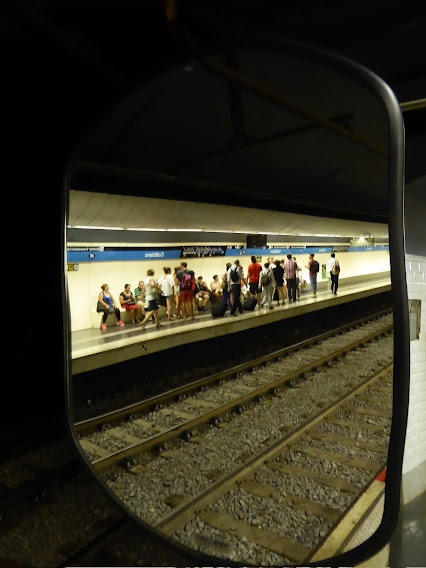
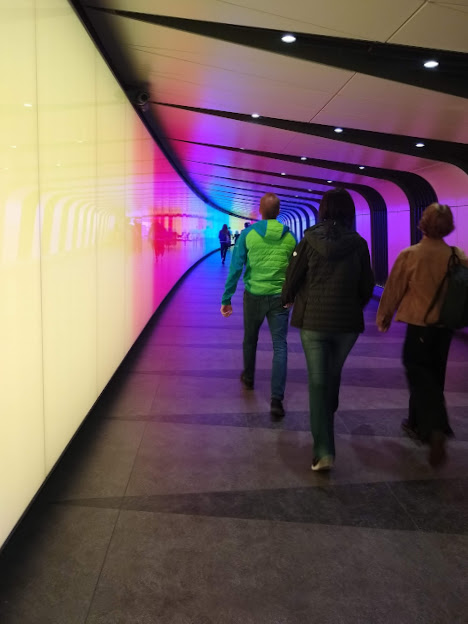
But metro stations and subways need lighting too. Here’s Barcelona, and London.
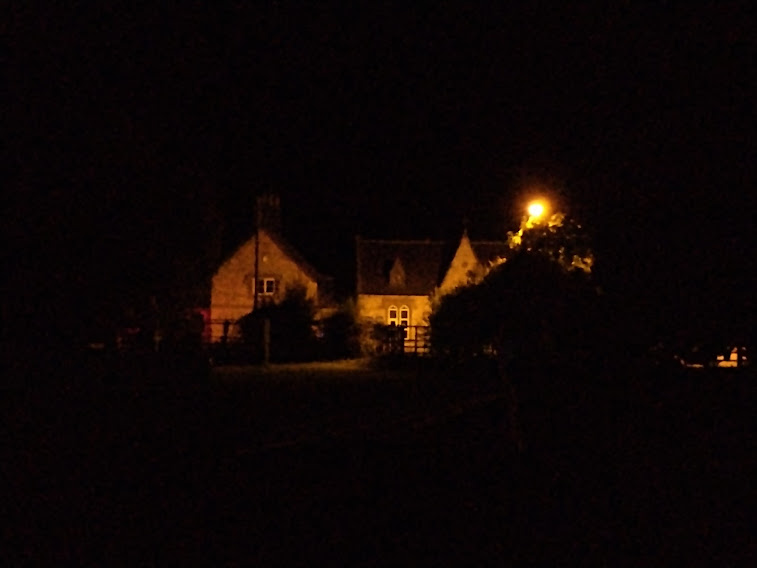
But the other evening, taking a late walk round the village, best of all was the glow surrounding the houses as families wound down for the day. A cosy, comforting and gentle radiance.
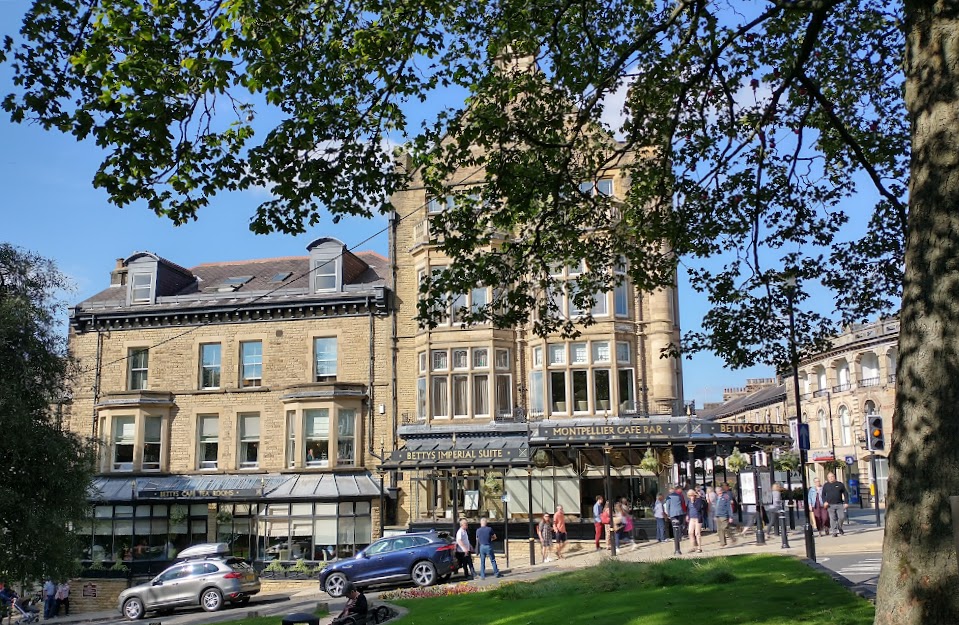
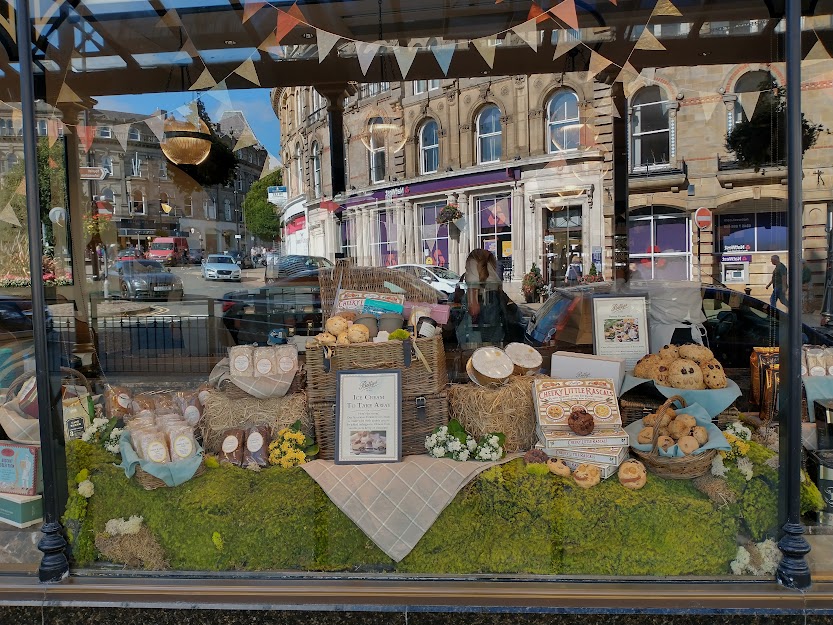
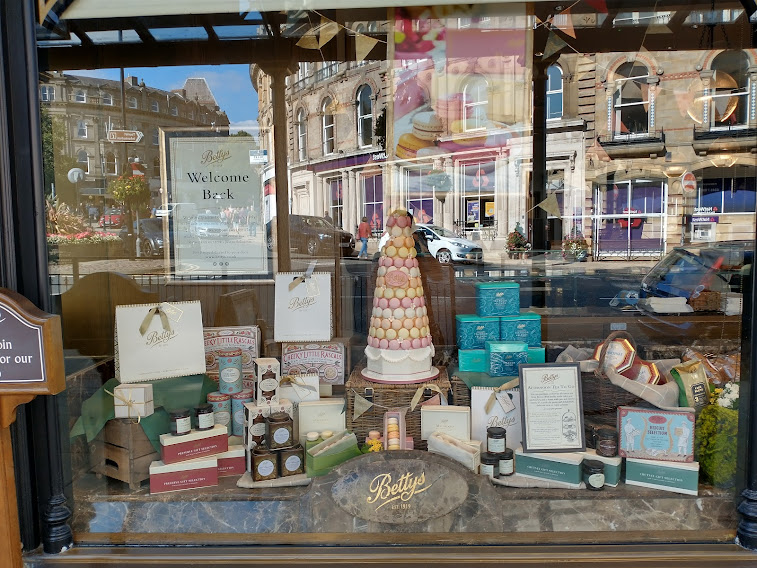
When Sheree read my post about window shopping last week, where I’d included a stop-off in Harrogate, she was disappointed I hadn’t included the windows of tea shop and bakery extraordinaire, Betty’s. I was in Harrogate again last week, and realised I had to put this right. But the sun was so high, and the light so bright that my camera got clearer views of Parliament Street behind than of the window display. Never mind. Two for the price of one.
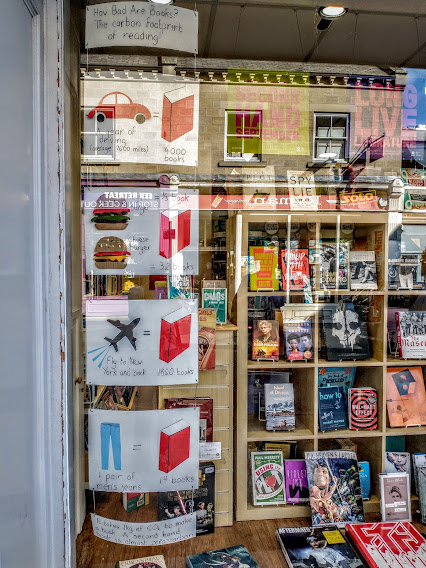
My favourite display was in the Oxfam second hand bookshop. Here’s what the signage says:
‘How bad are books? The carbon footprint of reading. A year of driving (average 1600 miles) – 4000 books. Veggie burger – 1/3 book. Cheese burger 3.2 books. Fly to New York and back – 1800 books. 1 pair of men’s jeans – 19 books. It takes 1kg of CO2 to make a book. A second hand book is almost zero carbon.’
Oxfam Books, Harrogate.
I can’t comment on the scientific observations, but I hope it’s true: I’d sooner have a book than a burger, any day. And I liked the reflections in the window too.
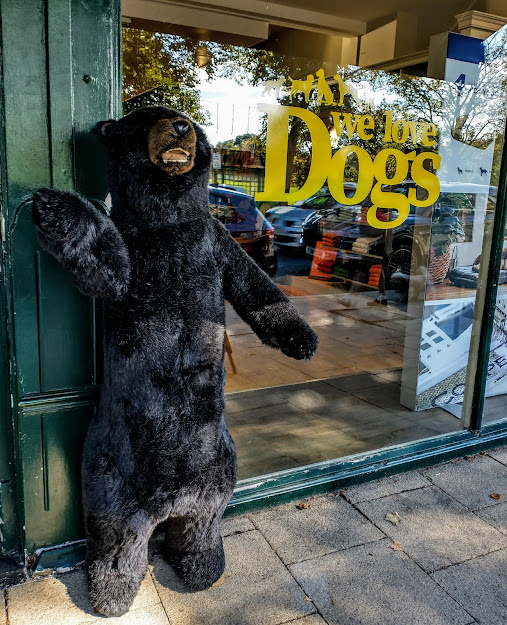
I think I’ll leave it at that – or no, let’s just look at this antique shop, where dogs are apparently welcome. Why the bear?
West Part Antiques, Harrogate
Farewell Harrogate, for the time being. Back soon.
Just before winter kicks in and we all hunker down, let’s have a trip to the shops, and spot a few windows.
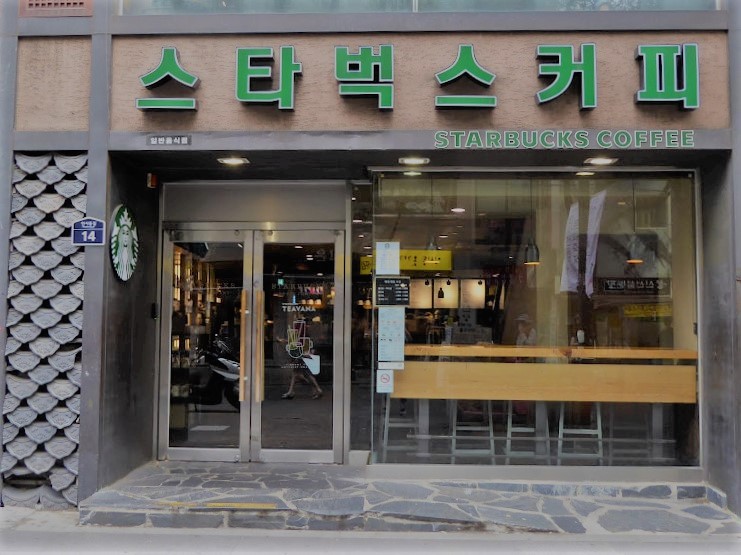
Are there enough windows here for you, in the featured photo, at the entrance to one of South Korea’s bigger shopping complexes? Once we’ve looked round, it’ll be time for a coffee: who knew that Starbucks had spread its reach so far? Not that we actually went inside here – independent coffee shops for us, every time.
Gyeongju, South Korea
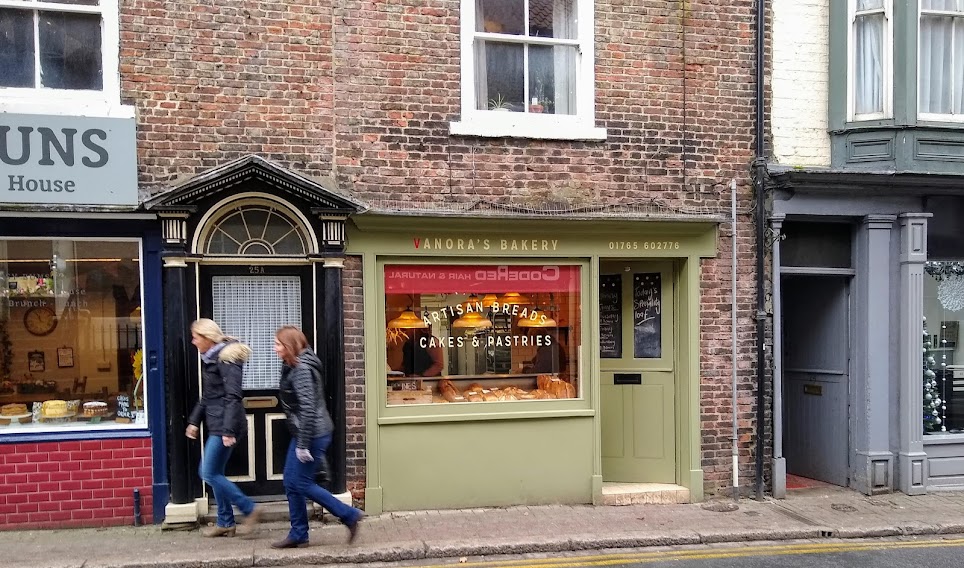
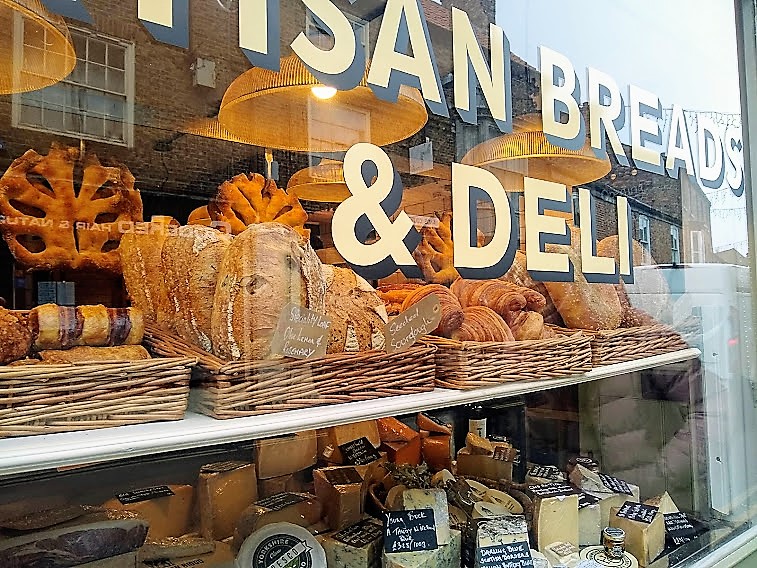
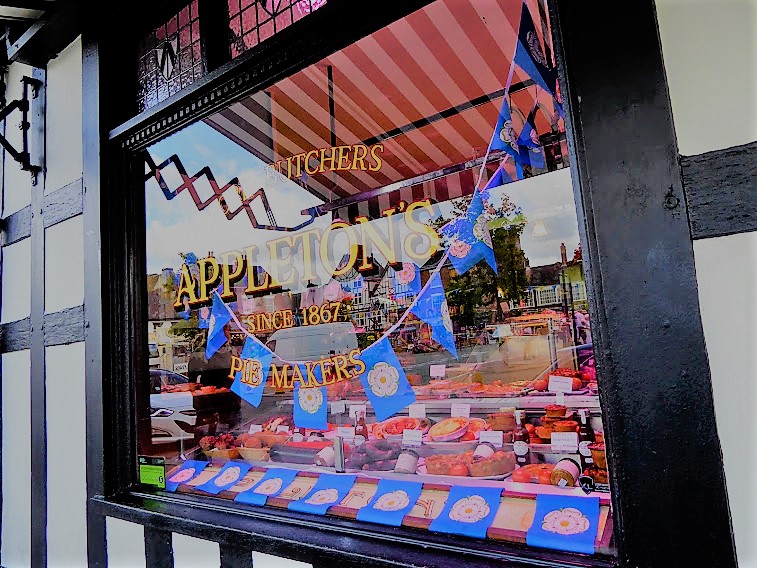
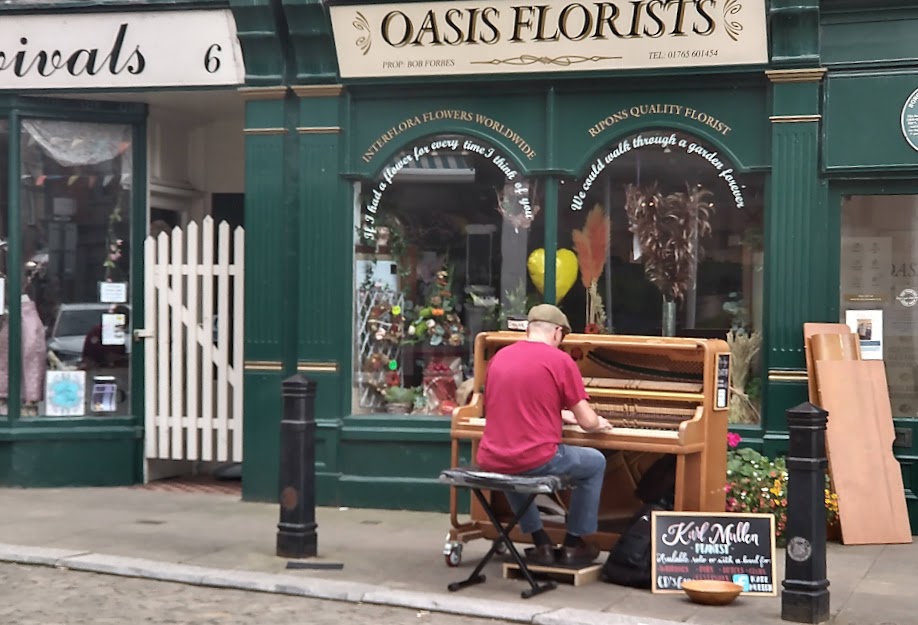
Let’s come back to England now, and stay local, in Ripon. We’ll pop into our favourite bakery, then saunter along to the pie shop. In both cases, reflections will offer us views of the street too.
Vanora’s, Westgate, Ripon, and Appleton’s, Market Square, Ripon
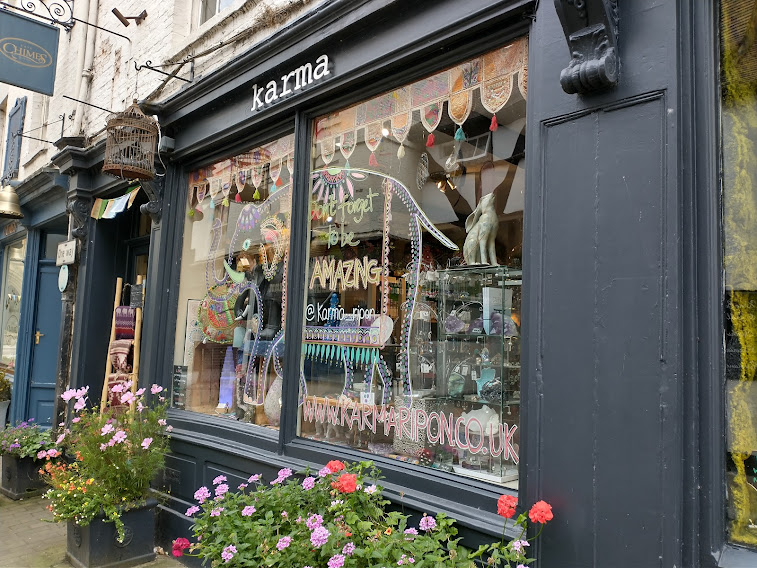
Let’s go to Kirkgate, and more independent shops: You’ll get a mood-improving slogan at Karma, and if you’re lucky, live music to cheer you along.
Scenes from Kirkgate, Ripon.
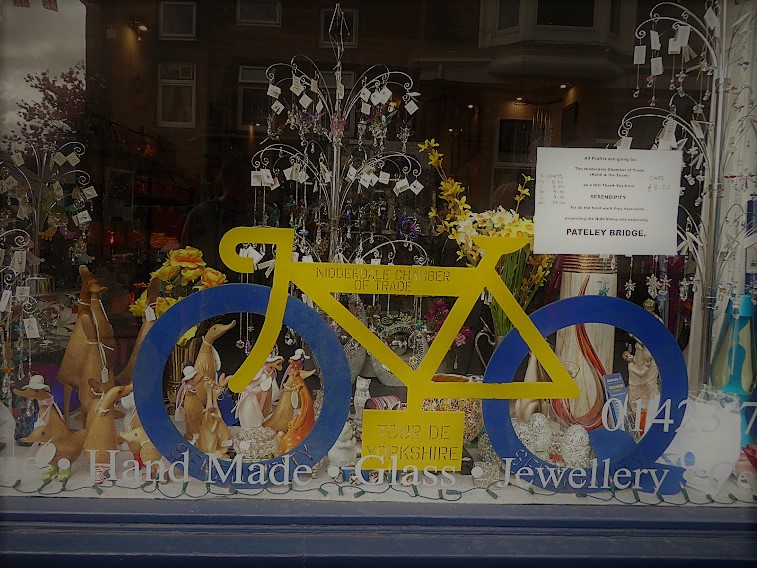
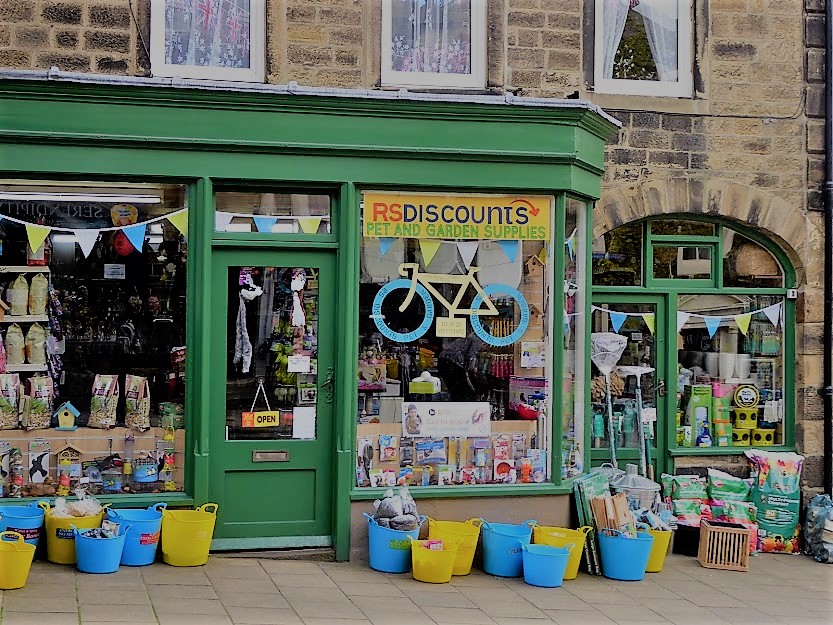
A few miles away is Pateley Bridge. I wonder if the shops there still have the displays they had when the Tour de Yorkshire was in town?
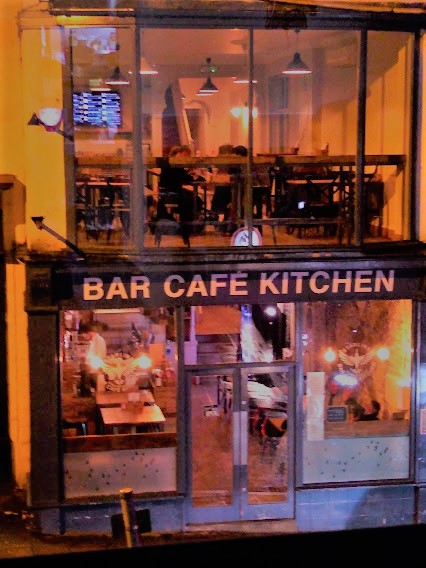
We’ll finish off by going to Harrogate. From behind other shop windows, we can get a snapshot of Starlings, the bar where we could finish our day with a drink and a very tasty pizza.
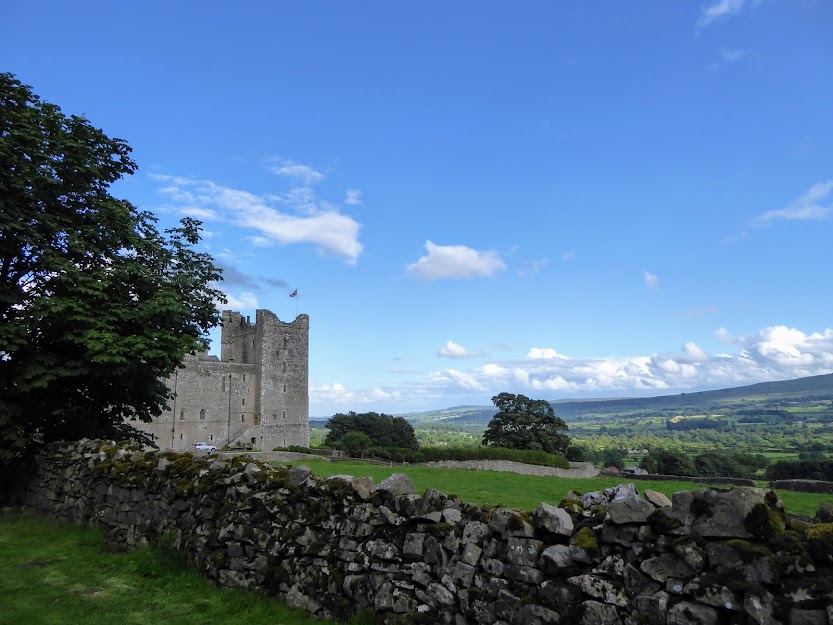
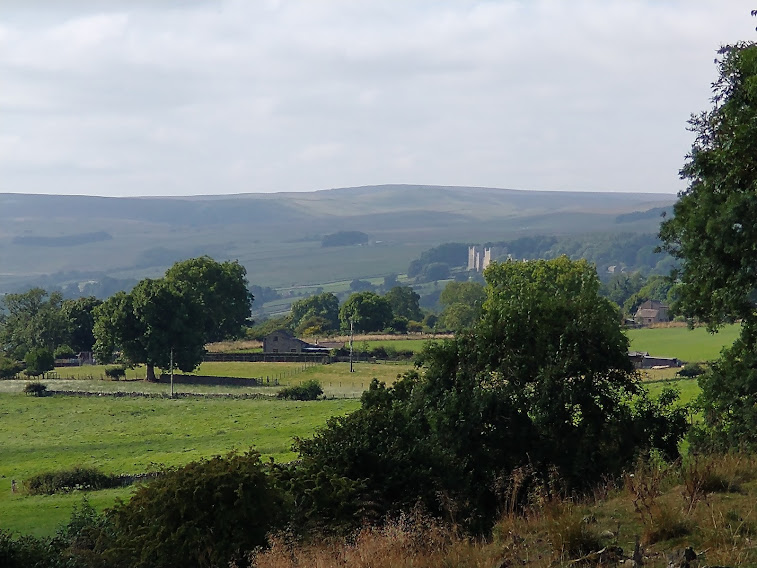
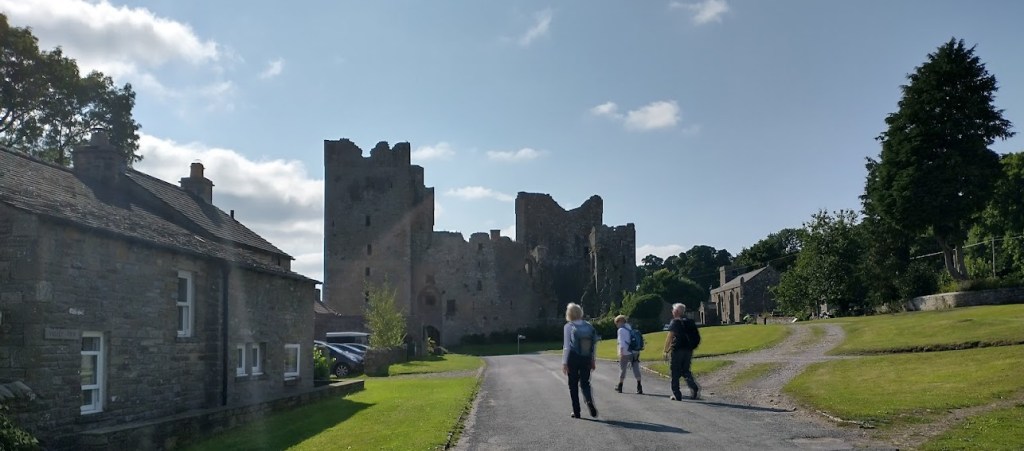
The landscape in the featured photo shows the bucolic beauty of Wensleydale, still green and welcoming at this time of year. And look! Here’s Bolton Castle, one time prison of Mary Queen of Scots: where she was obliged to stay for six months with a retinue of 30 servants, permitted to go hunting, and receive English lessons This is where we began and ended our walk last week.
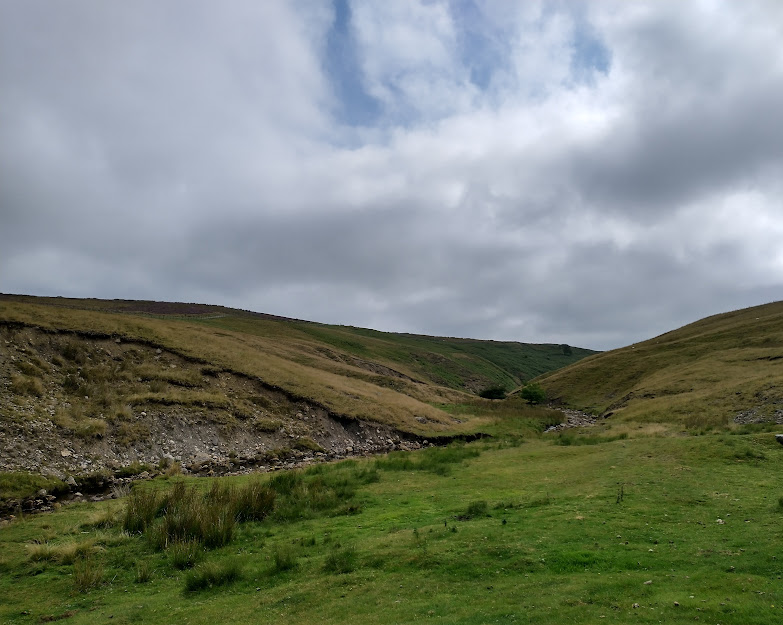
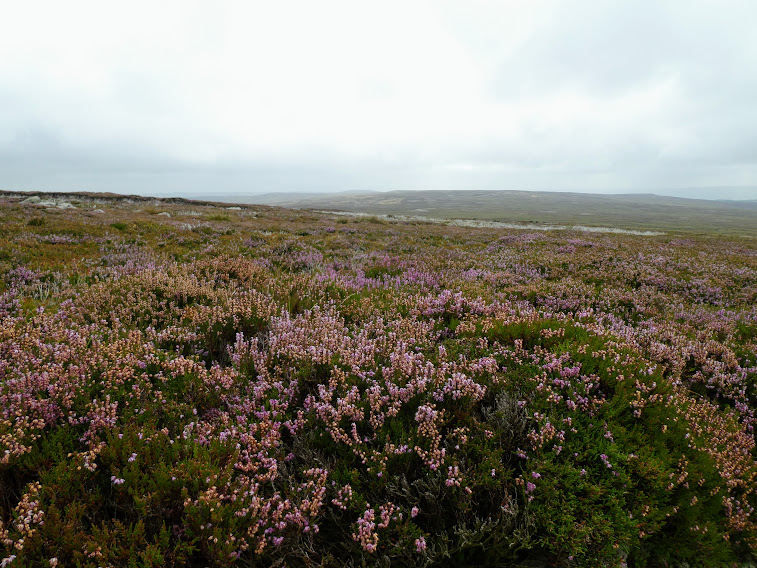
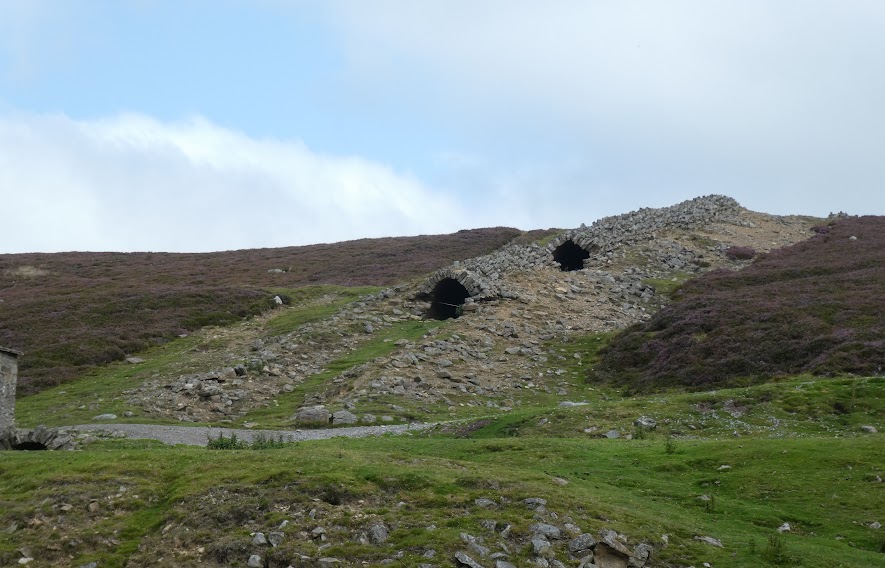
Most of our hike wasn’t in such favoured countryside. We slogged up to the bleaker moorland where once lead was mined, and no farmer could make any kind of living, unless he kept sheep. Here there are no villages, no houses or farms, and few roads.
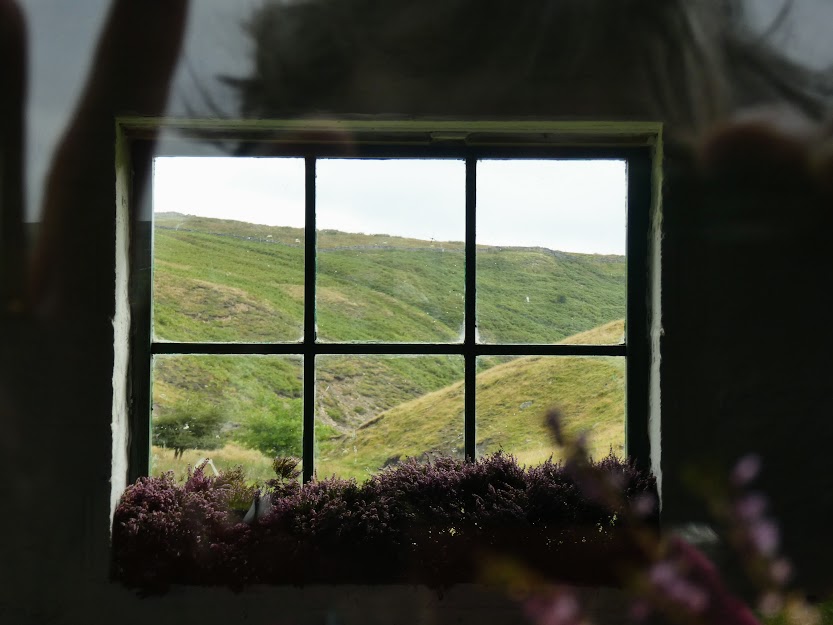
We’d hardly been going more than a mile when we came upon a shooting lodge, now set up as a resting place for the weary traveller. Here’s the view through one of the windows:
There was buffeting wind, and the smallest hint of rain, so we were glad to shelter for a few moments, and look at the view from inside, through that welcome window . But then out we went again, to the windswept landscape. It’s easy to see traces of the old lead mining industry: the grassed over spoil heaps, the ruined stone sheds, the pits where once a mine was sunk.
Lead was found here long before the Romans came. By the Middle Ages, blocks of land known as meers – roughly the size of a cricket pitch – were leased out to the miners who, if they were lucky, could find lead almost at the surface: or by running shafts below ground. The process only became industrialised, and mining companies developed in the 18th century. The last mine in the Dales closed in 1912, and for the first time in hundreds and hundreds of years, no one quarried for lead.
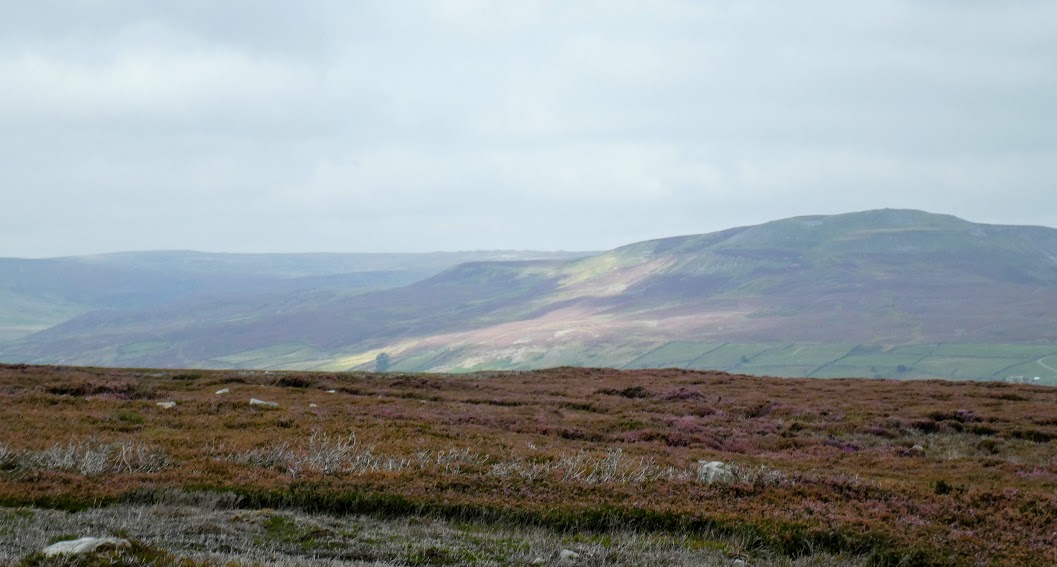
This is a bleak landscape, austere and unforgiving: open to winds coursing across the Dales, and to lashing rain. I love its ascetic grimness and the beauty to be found in its treeless simplicity. The time of year when the hillsides are cloaked in purple heather – August – is not to be missed. We caught the end of this glorious display.
Though our day had been one of grey skies, at the end the sun came out, as was fitting for the gentler Wensleydale landscape near Bolton Castle
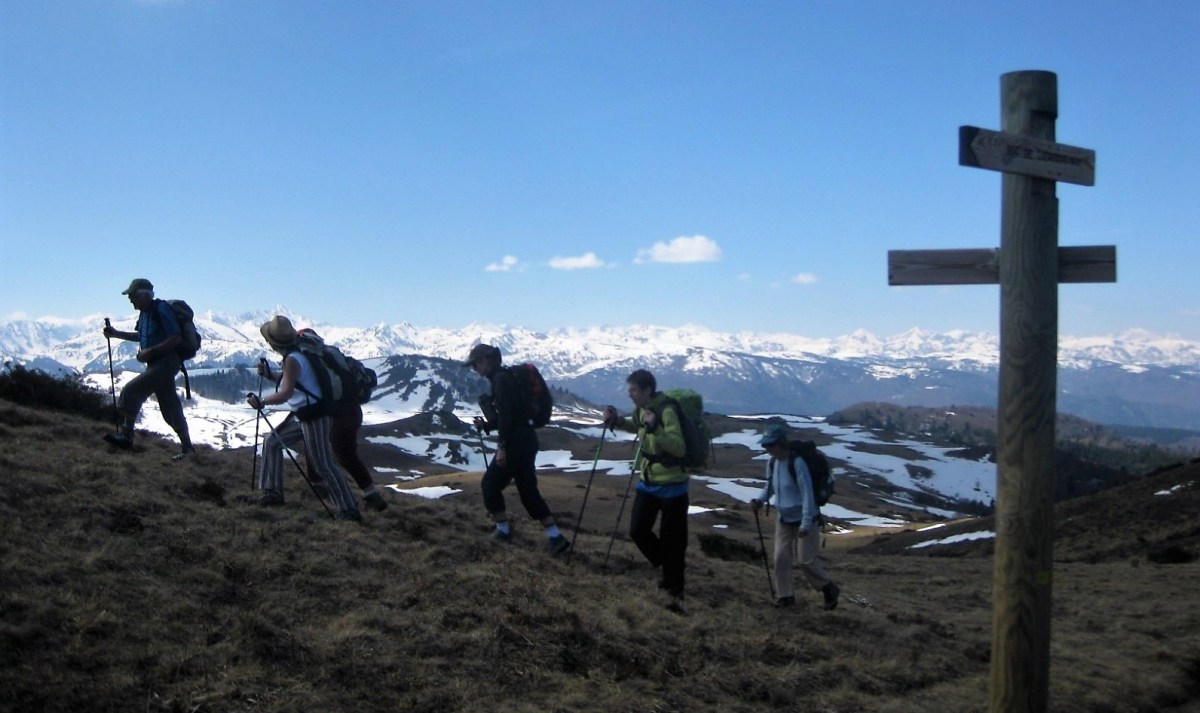
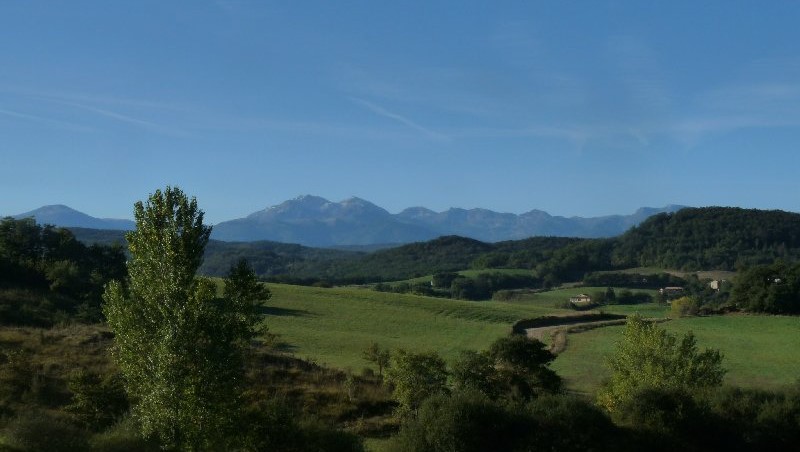
I’ve only been a walker – a proper walker, yomping over moor and mountain, hill and dale – for the last fifteen years or so. It happened when we went to live in France. What better way to discover the secret paths of the Pyrenees, and get to know our French neighbours, and improve our French too, than join the local walking group?
So we did. At first it was les Randos de’Aubo in nearby Mirepoix. We explored the foothills and higher slopes of the Pyrenees, we investigated the nearby Aude, and enjoyed the fellowship of scouting new paths together. What I remember most was the achievement of climbing, climbing, often through seven or eight hundred metres before lunch, while constantly rewarded by mountain views, colourful plant life and changing vistas. Because of these calorie-busting achievements, we might walk as few at five or six miles. But it was harder – much harder – than walking ten to twelve miles round here, and I know I couldn’t do it now. But after the effort, there was a shared picnic lunch with a splendid view thrown in, a downhill walk back to base, and a convivial drink, in whatever bar was to hand near the end of our walk.
Walking soon after dawn at la Ganguise, Aude
Rewarded by mist rising from the lake
And this is the other end of the same day
On Thursdays I went walking with a smaller group – mainly women – who’d got to know each other either through walking or singing together – I ticked both boxes.
Overlooking Foix in the3 distance …
… Maguy enjoys the view …
… before we continue on our way.
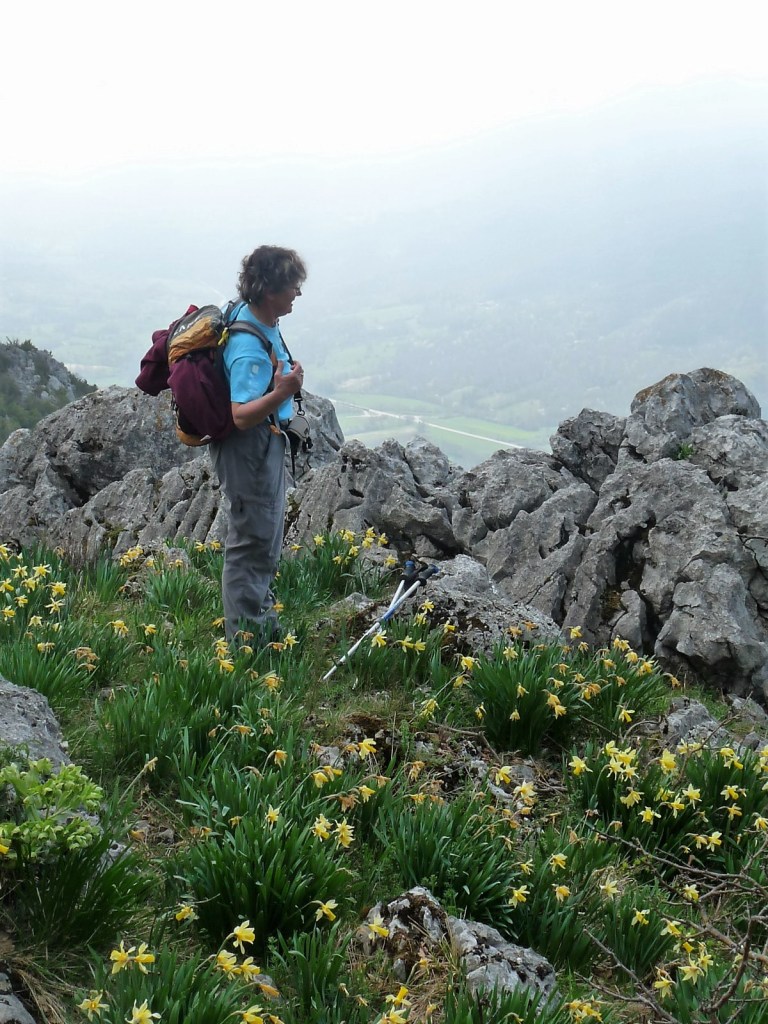
A special day among the daffodils in the Dolomies, near Foix.
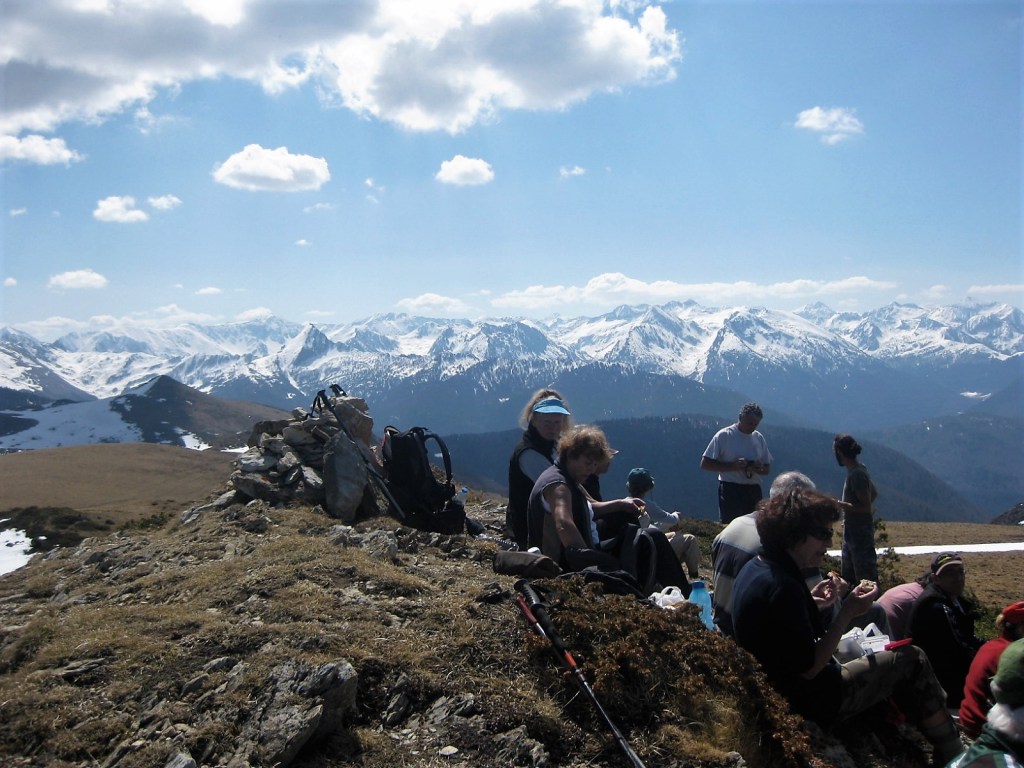
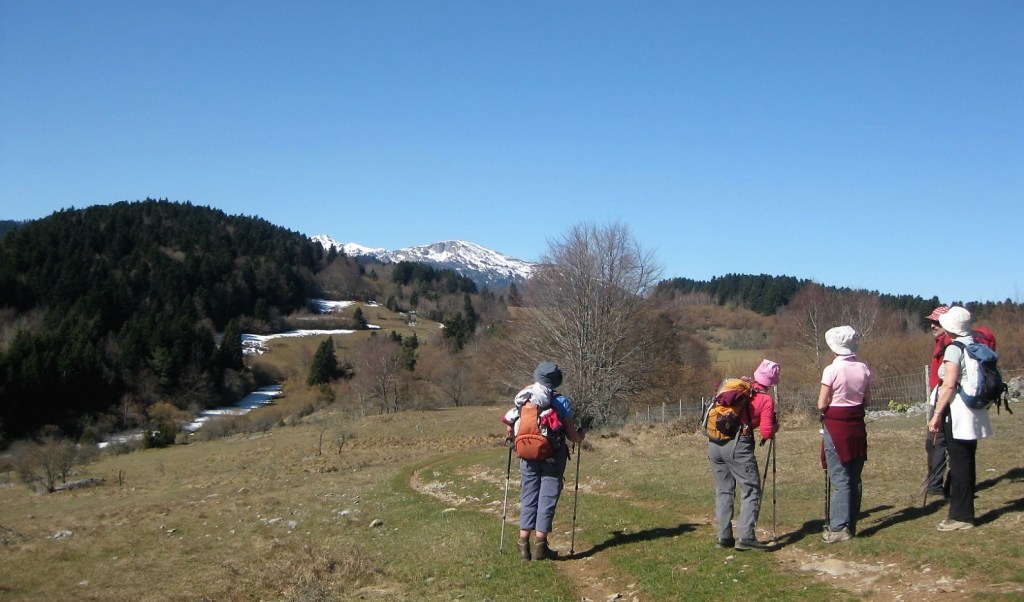
Then we were among the founders of the walking group that developed in our own community, Laroque d’Olmes. We had the confidence by then to offer to reconnoitre and lead walks ourselves. And this group had even better picnic ideas than the last one. Marcel, our local butcher brought sausage to share, as did a local amateur charcuterie enthusiast Michel. Sylvie’s daughter was a sheep farmer, so she’d bring along sheep’s cheese. Someone brought a few baguettes, Yvette and I always had homemade cake. Jean-Charles had a bottomless bottle of wine in his rucksack. And everyone brought sugar lumps. Sugar lumps? Well, yes. Someone or other would bring a bottle of grandfather’s home-made digestif, heavy on alcohol and locally harvested fruit, and would dribble just a few drops of it onto your sugar lump for you to finish off your feast in style. And we would sit for an hour or more, chatting and relaxing before continuing our hike. I miss those moments as much as I miss the countryside and mountain views we shared together.
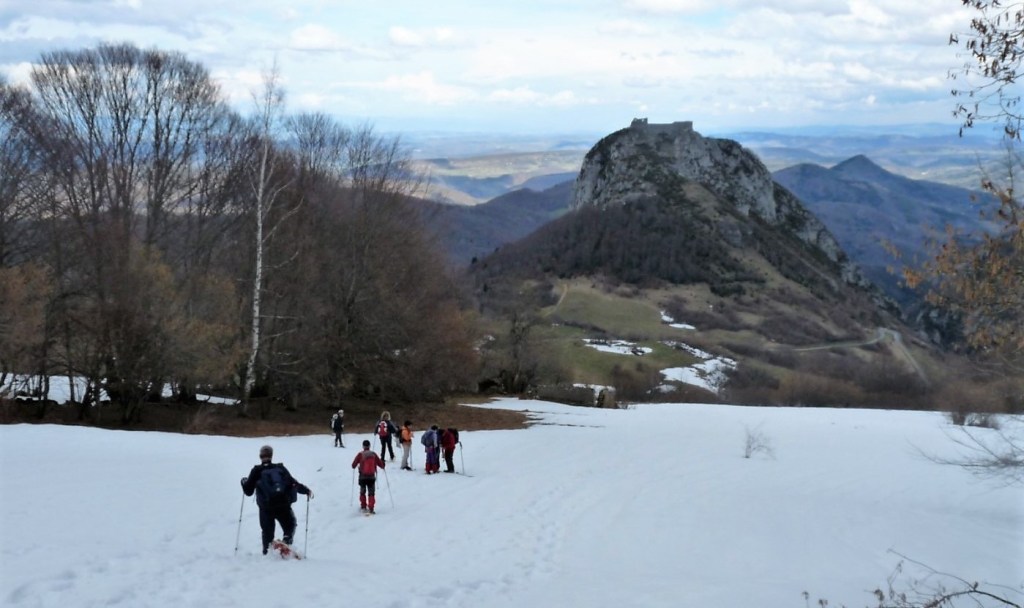
Snowshoeing near Montségur …
… and this was one of our paths.
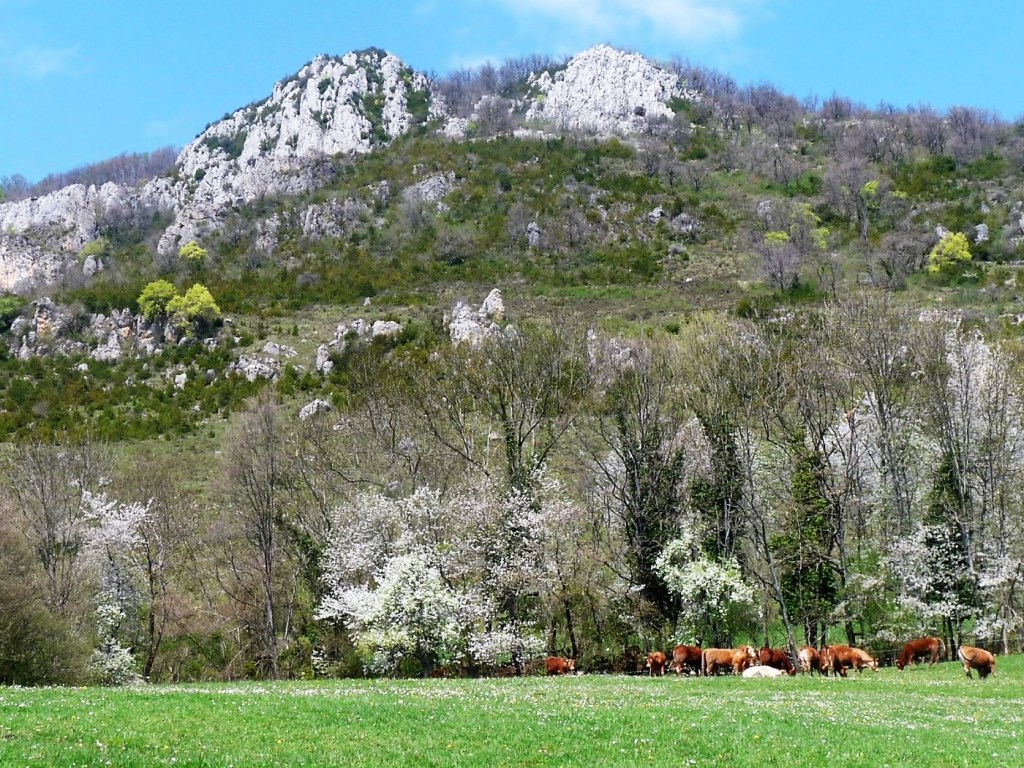
Picnic near Montaillou one April
Lanoux in June
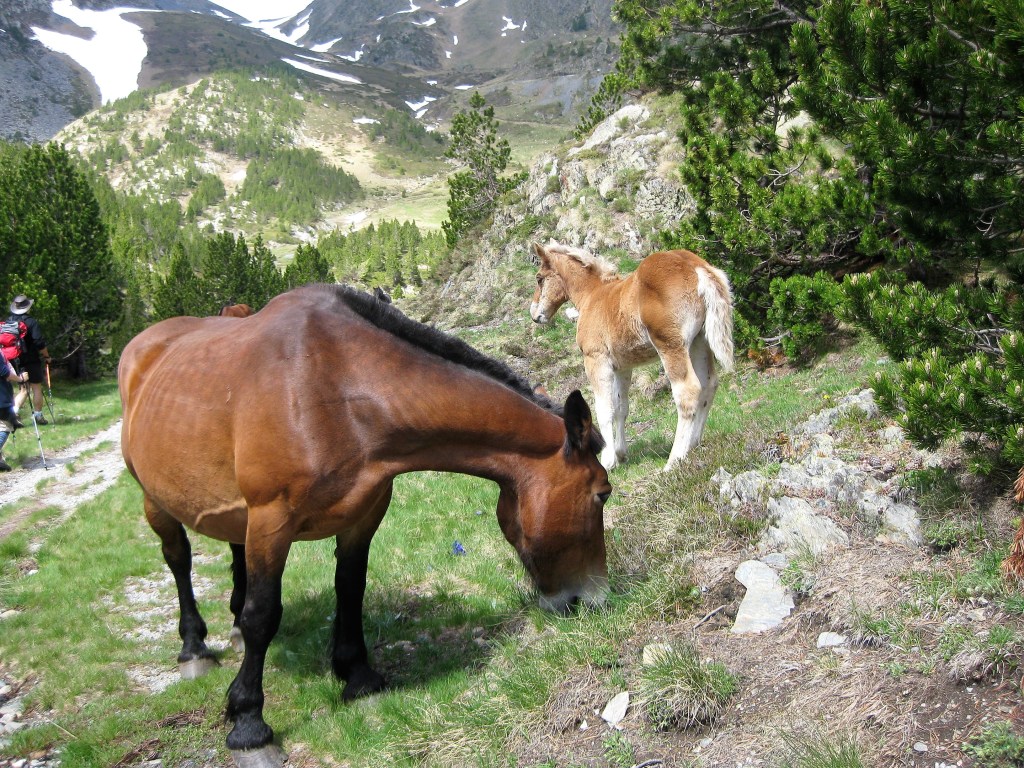
Wild horses near Lanoux
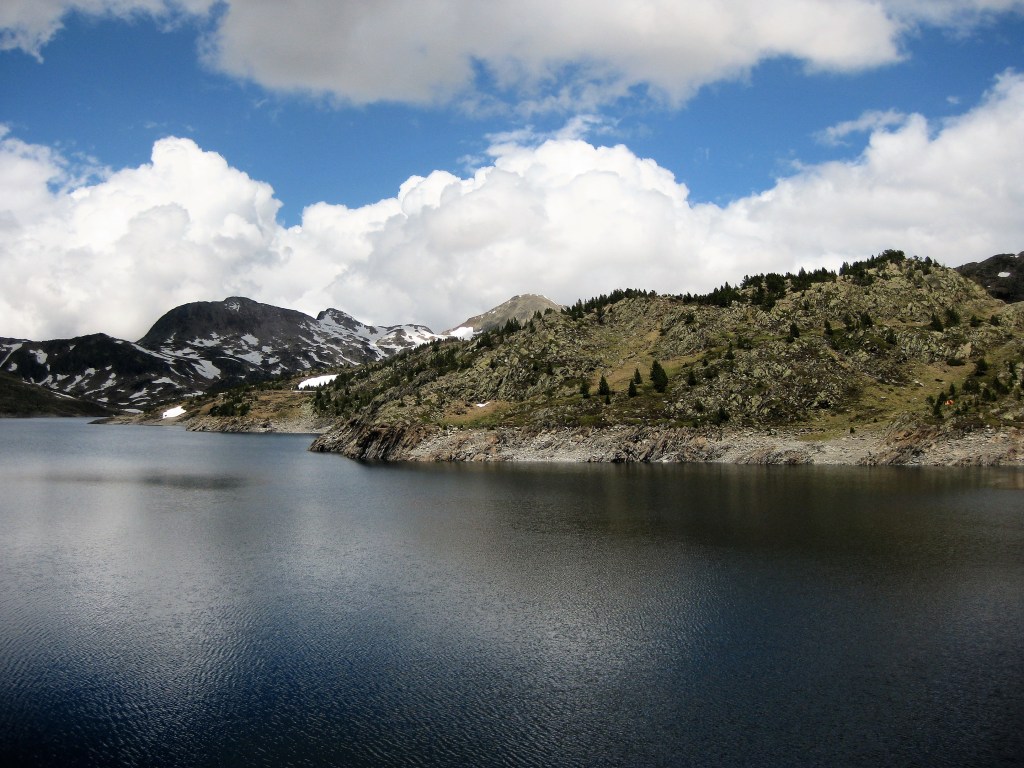
The mountain top reservoir near Lanoux
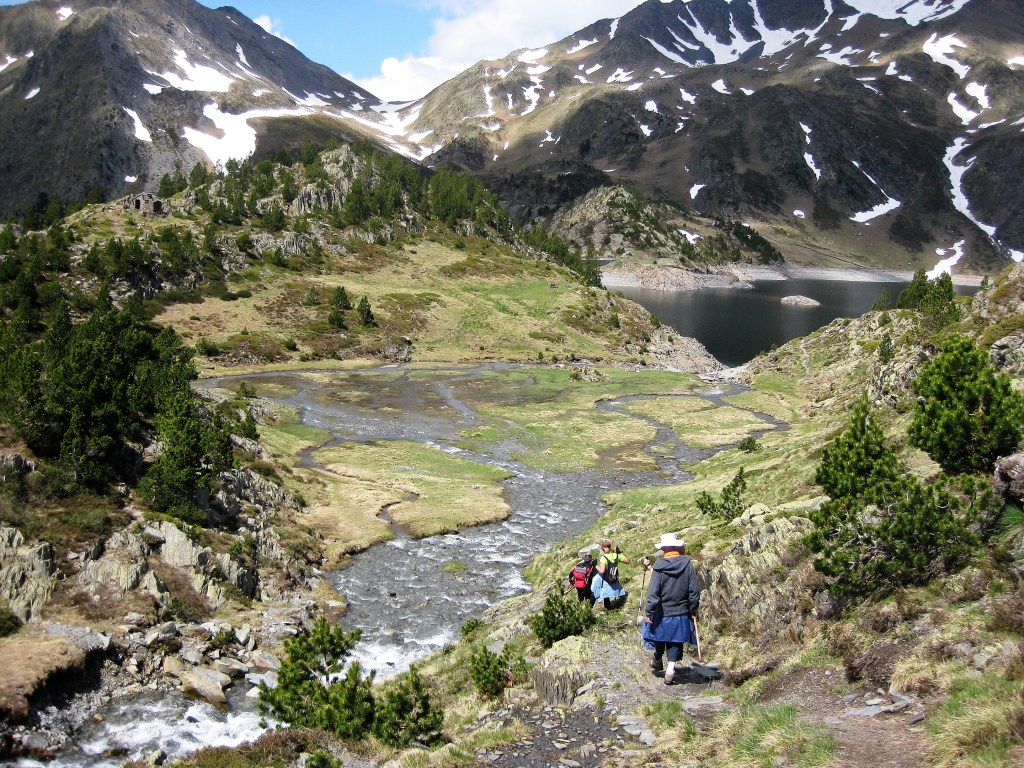
The path to Etang des Truites, Mont d’Olmes
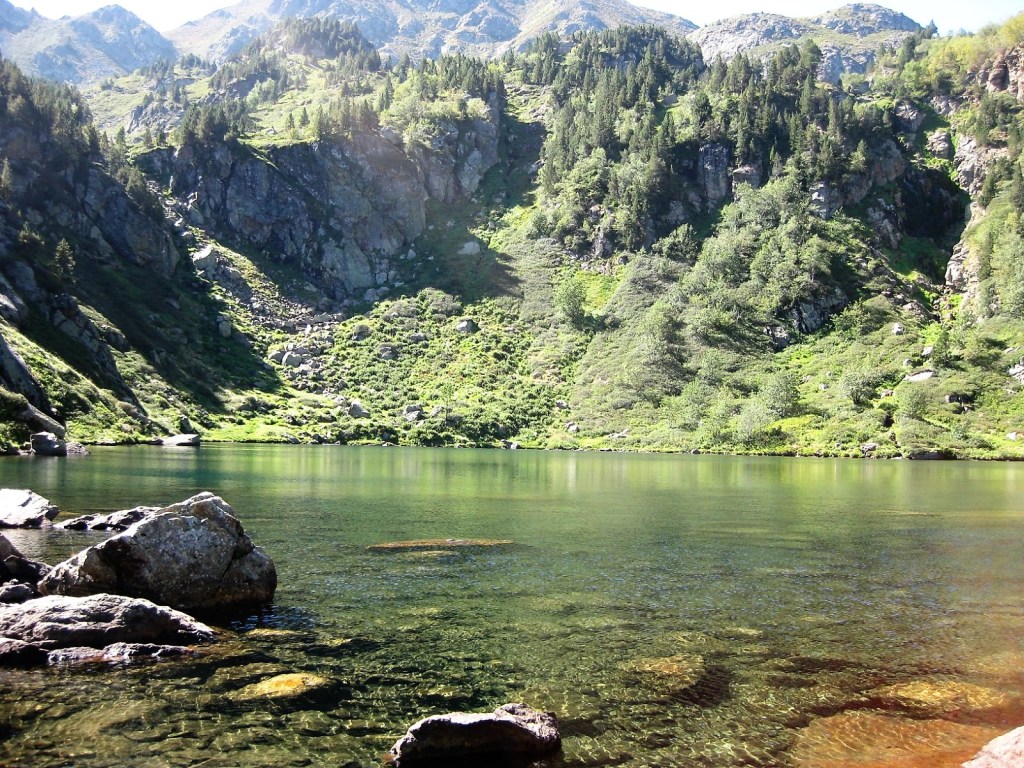
Etang des Truites, site of a hiking picnic
Saint Julien de Gras Capou
Walking on the Plateau de Sault …
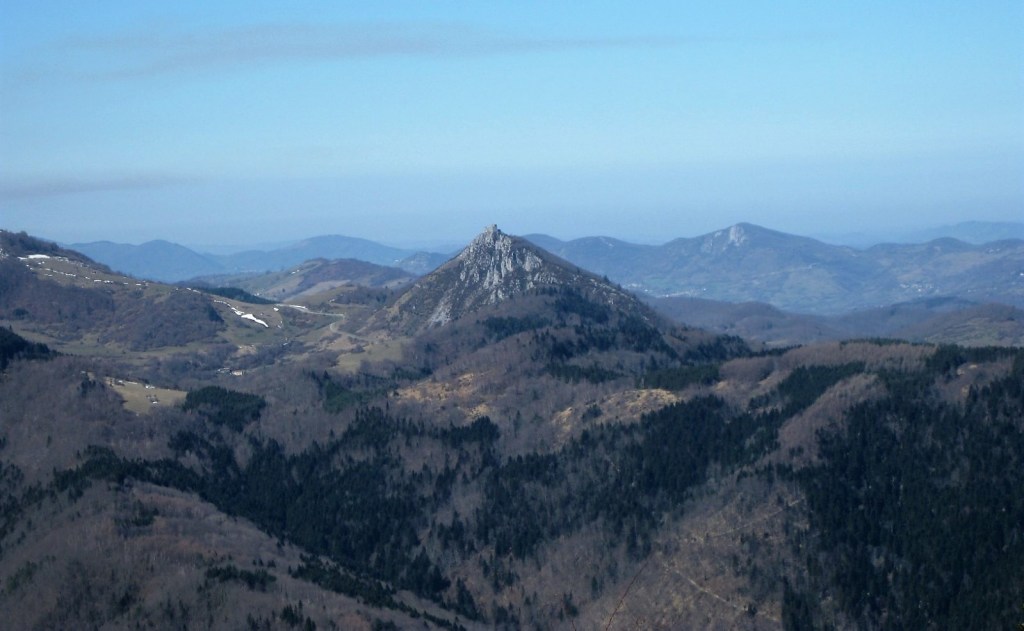
… with a view of Montségur
Our very last picnic, on our very last walk
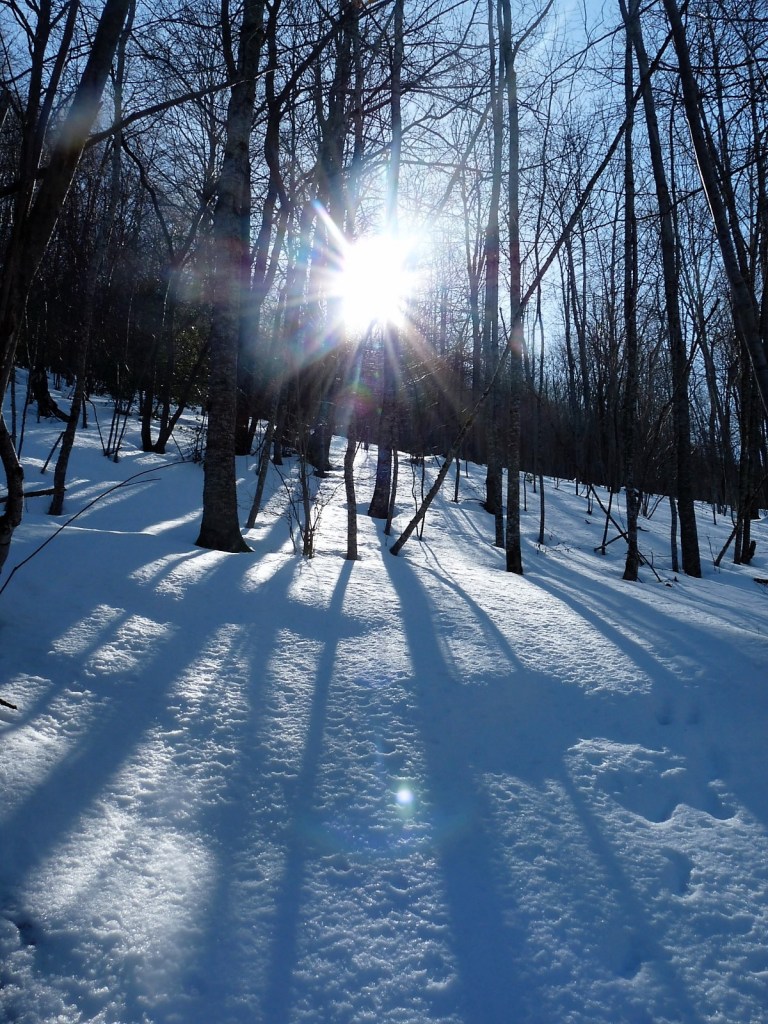
Walking in every season of the year
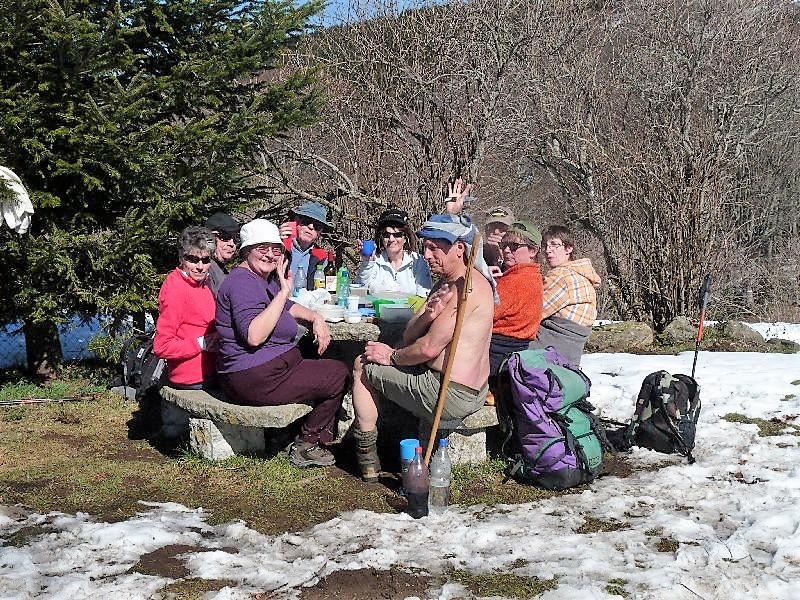
Now we’re in our local walking group here in Yorkshire. Again, we wanted to discover Yorkshire better by walking its footpaths. At midday, we eat our own pack of sandwiches and that’s that. But the comradeship is as good as it was in France.
Wharfedale
Near Grassington
The Nidderdale Way
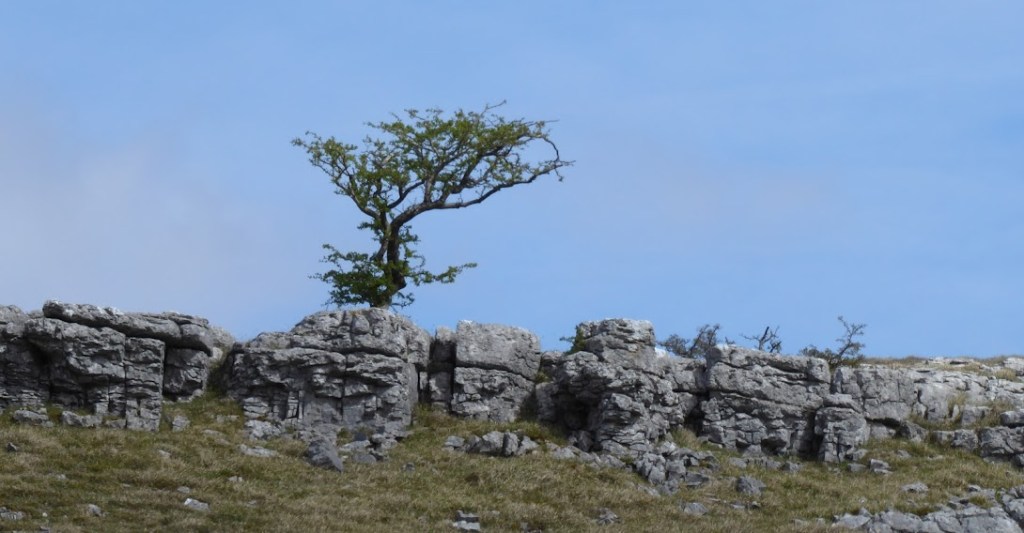
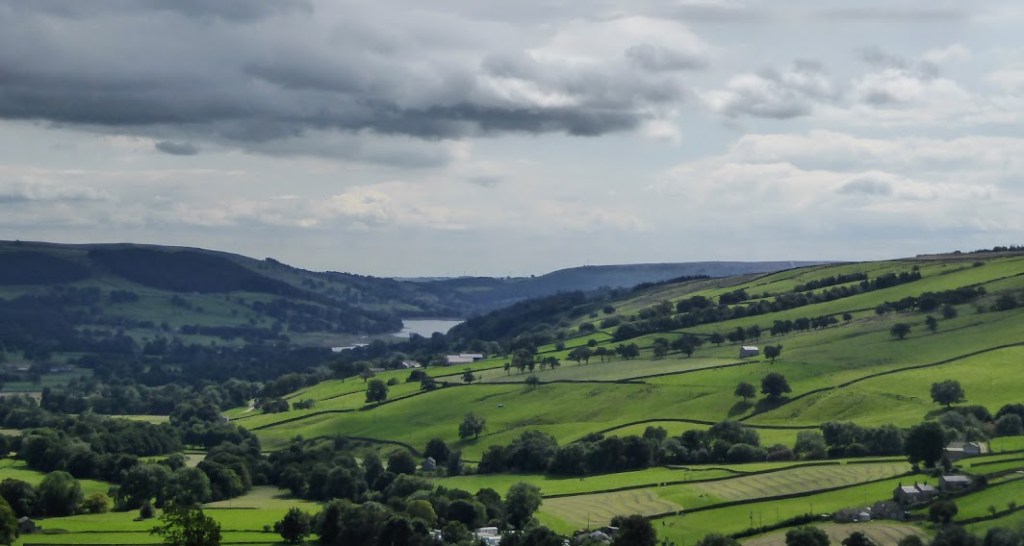
Some of the Dales in Yorkshire
Since lockdown, I’ve appreciated the pleasures of walking alone. Undistracted by companions, I notice the sounds around me – the calling birds, the running water, the sighing wind, and observe more closely the changing seasons. While I’ll always enjoy a walk with a friend, I suspect that my love of solitary walking will continue.
Nosterfield Nature Reserve
The Ripon Rowel near West Tanfield
Local woodland
It was Amy who invited us to Keep Walking! for this week’sLens-Artists’ Photo Challenge #143. Thanks for this opportunity to indulge in a spot of nostalgia, Amy.
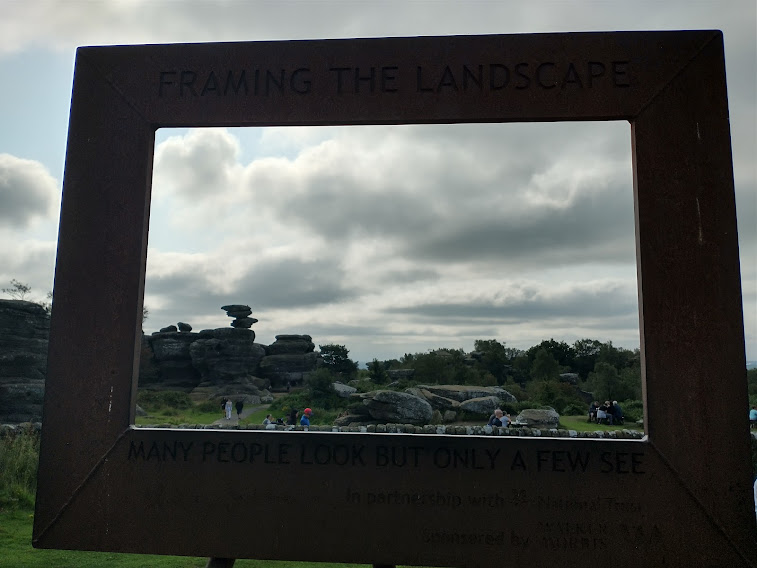
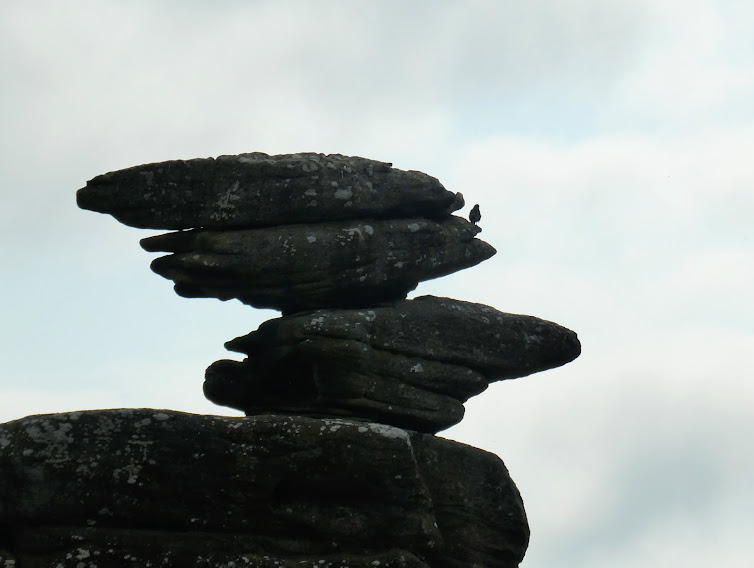
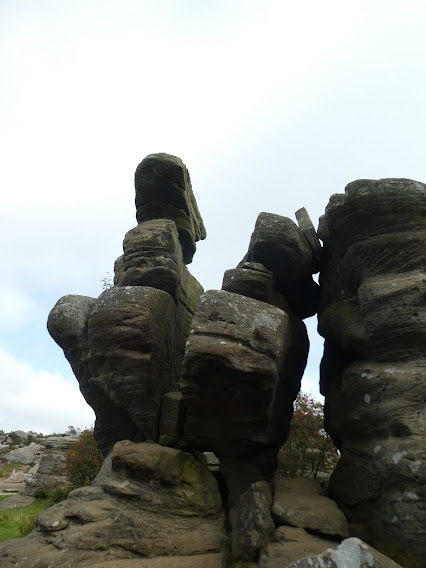
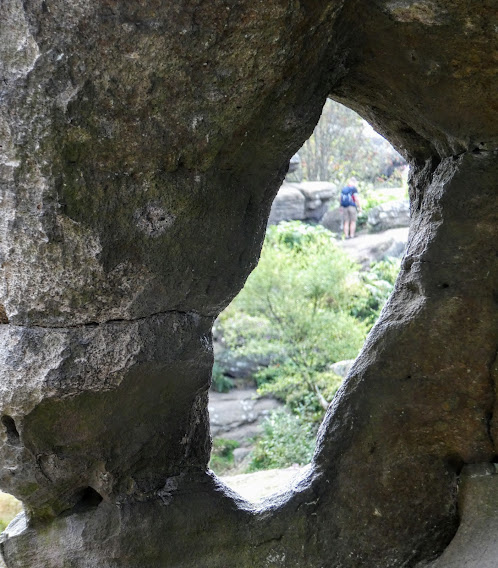
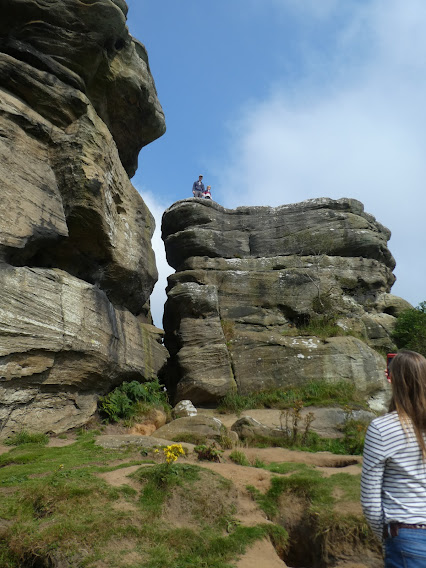
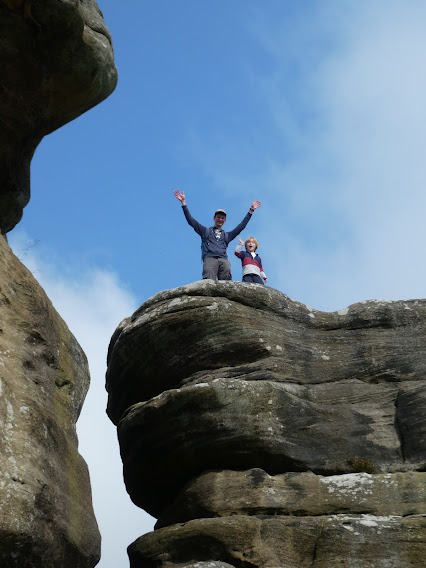
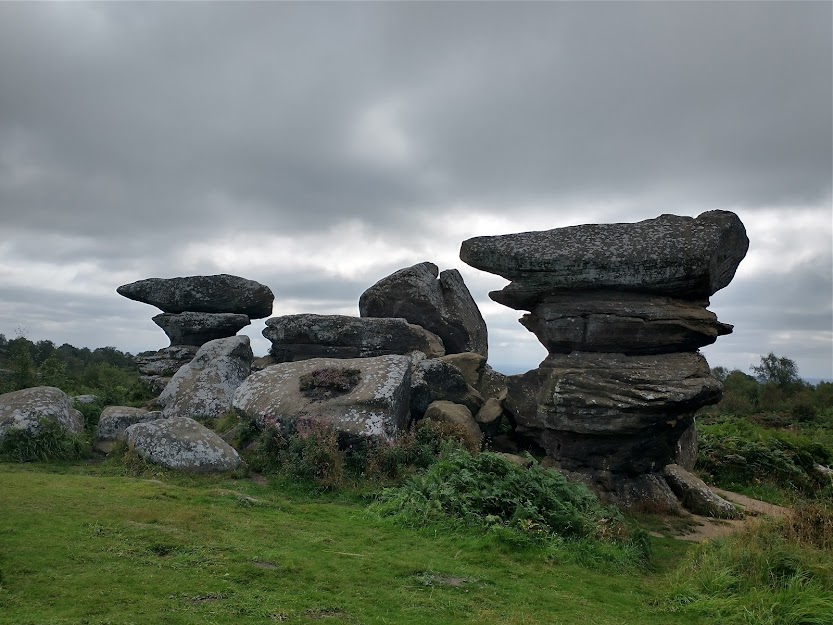
Brimham Rocks. A must-visit destination near where we live, simply to marvel at the unlikely tottering piles of fantastically shaped rocks gathered there, or, if you’re athletic and in touch with your inner-child, a challenging climbing frame.
These sandstone blocks were laid down and formed during the last 100,000 years – before, during and since the last Ice Age. Glacial action, weathering and water erosion have fashioned the rocks, leaving some apparently precariously balanced, as wind blasting continues to sculpt their contours.
During the 18th and 19th centuries, many believed that Druida could have been responsible for carving them. It was only in the 20th century that their origins became well understood, and we also came to recognise the wealth of natural life flourishing here: it’s now a Site of Special Scientific Interest.
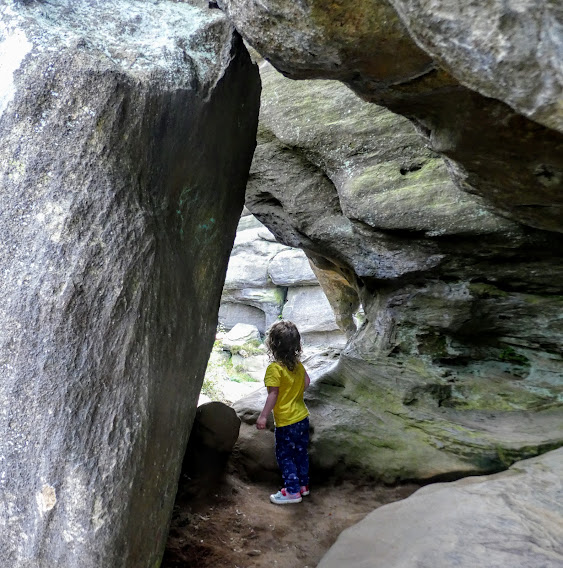
Not that William and Zoë cared when they visited last week. For them, this visit was an adventure. William climbed and Zoë looked for natural windows to gaze through. And asked to come again next time they visit.
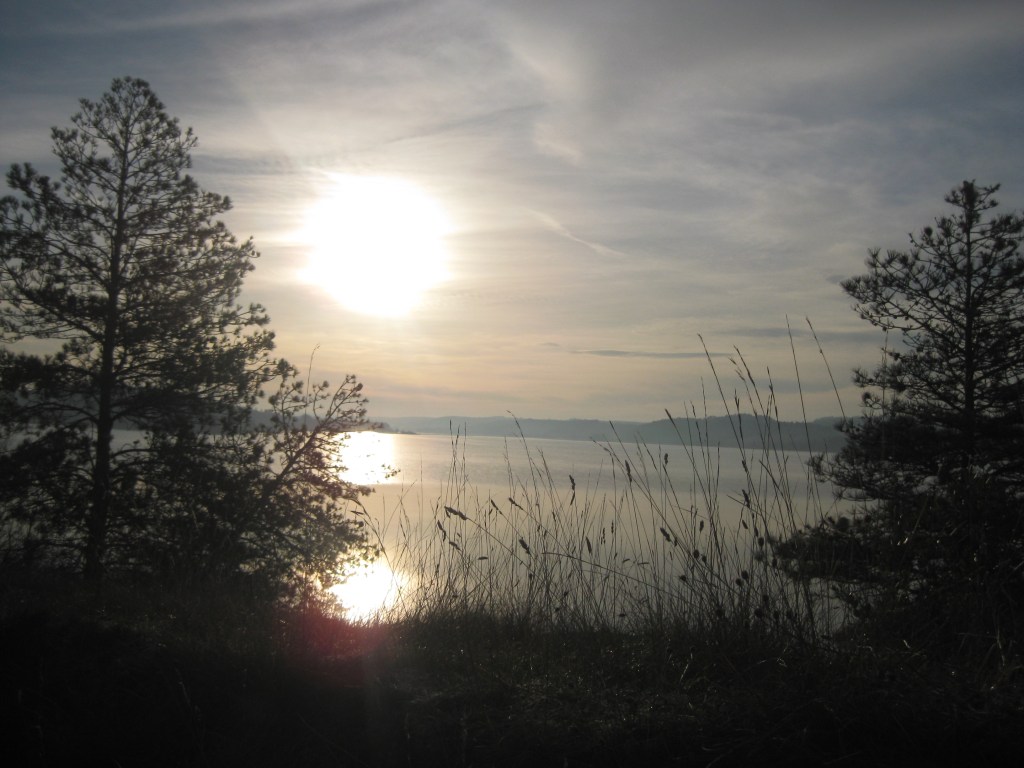
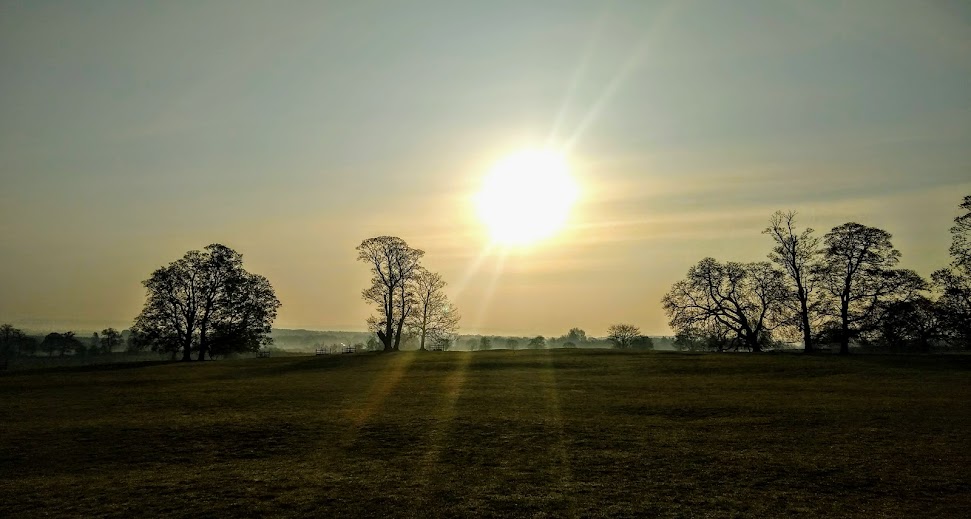
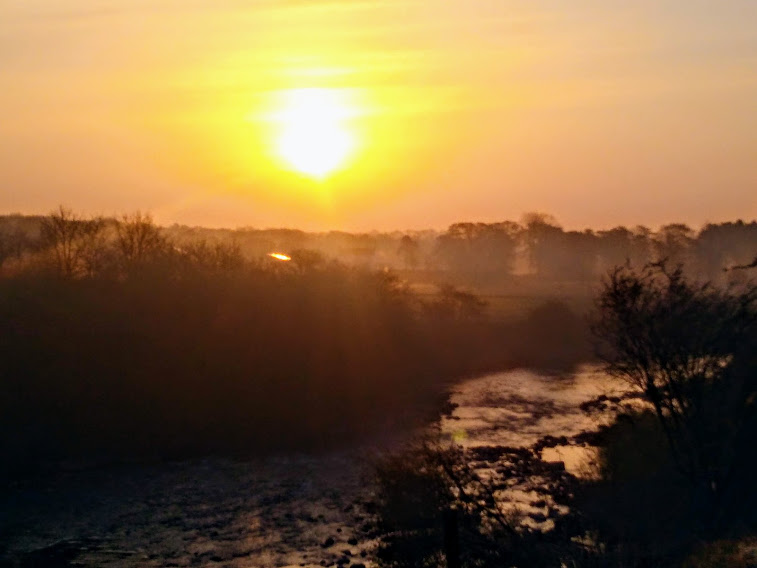
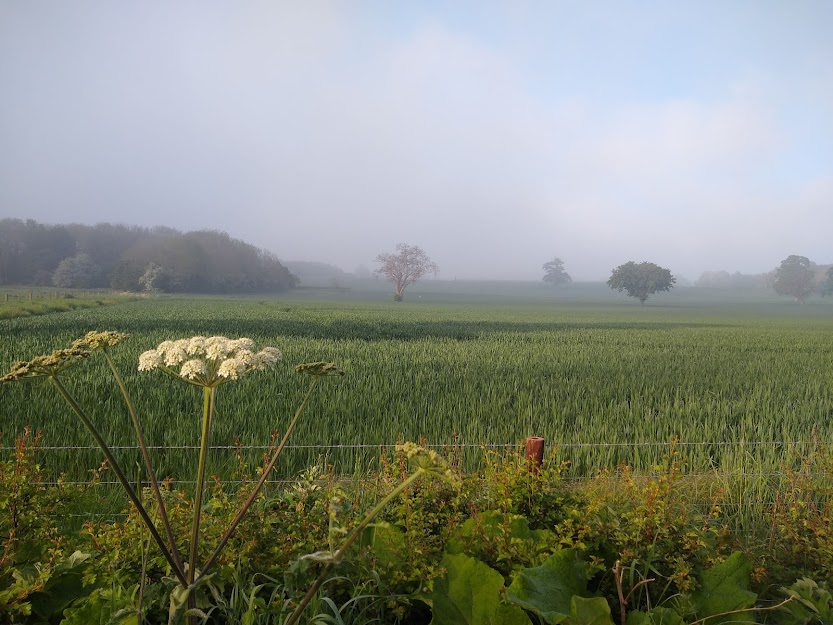
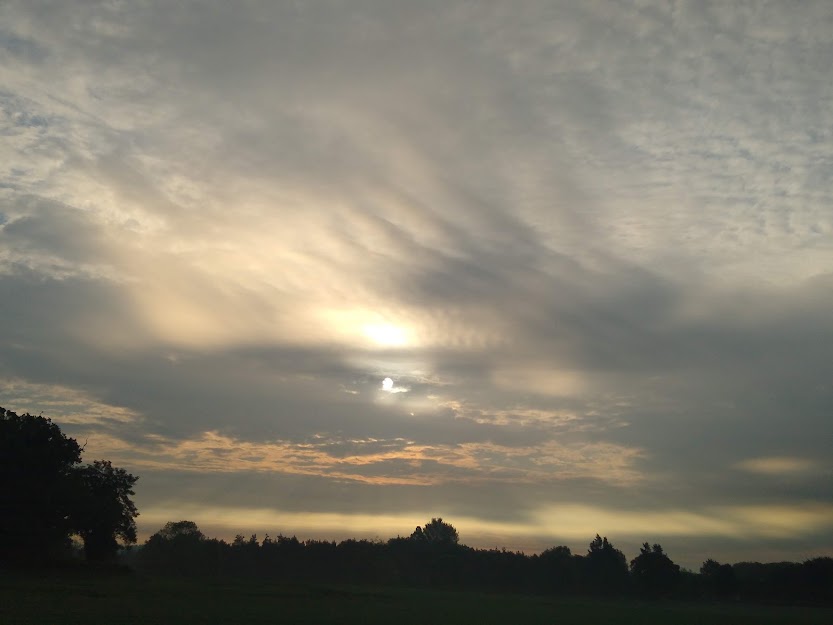
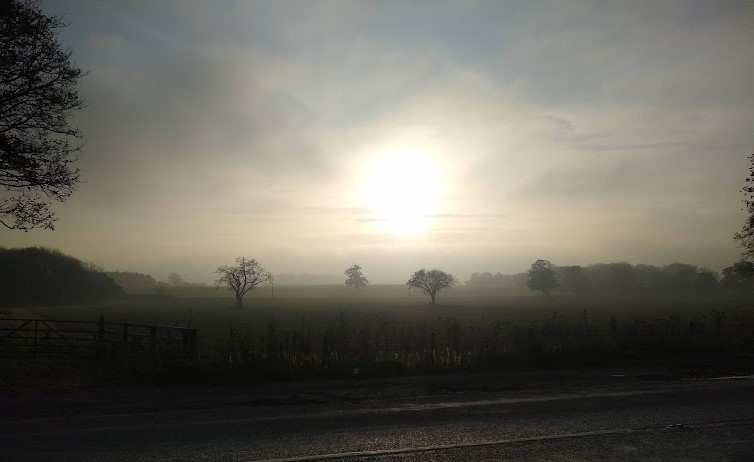
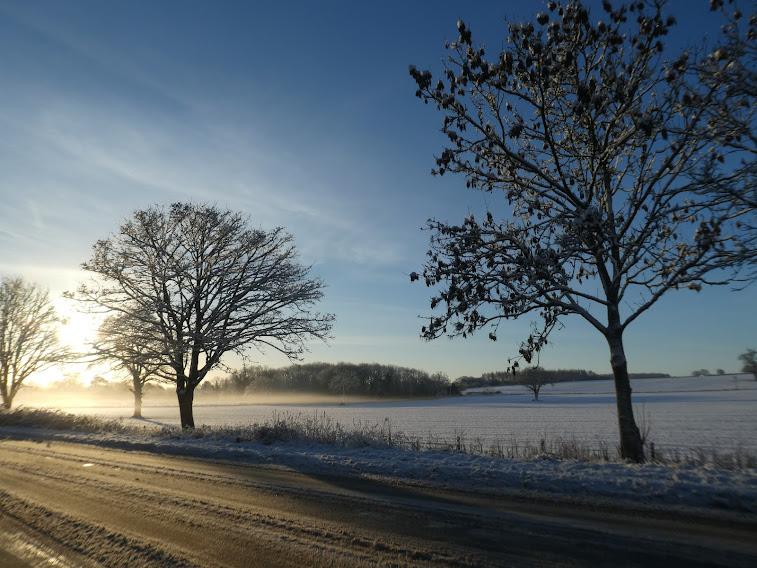
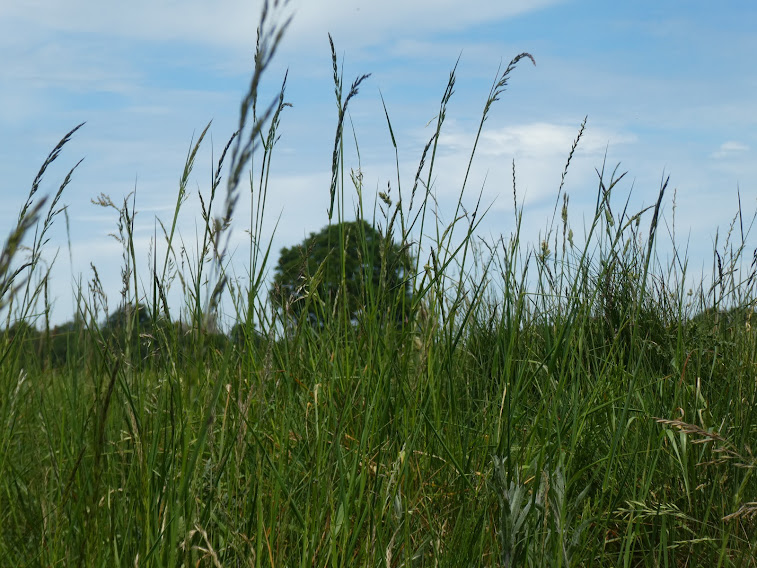
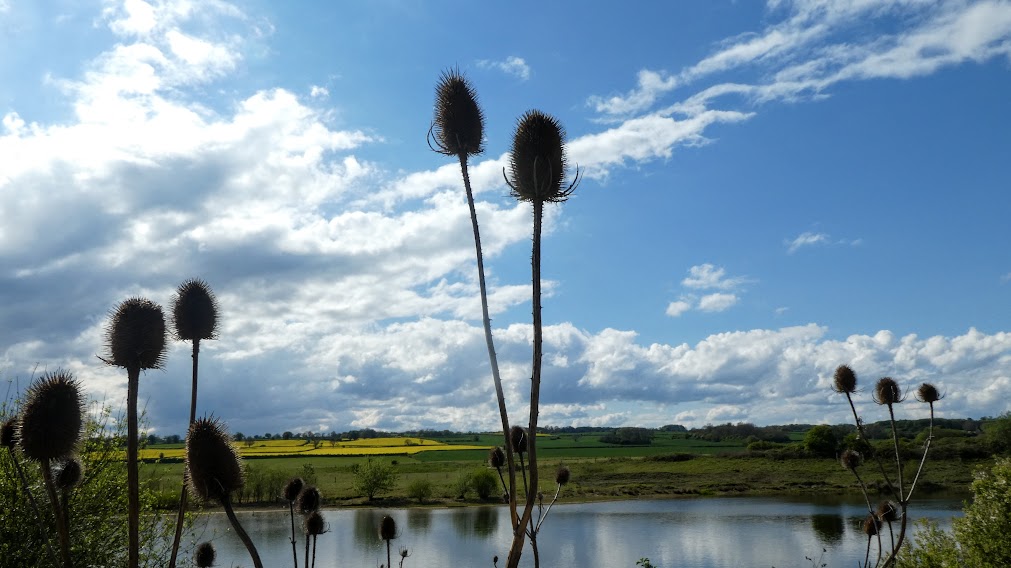
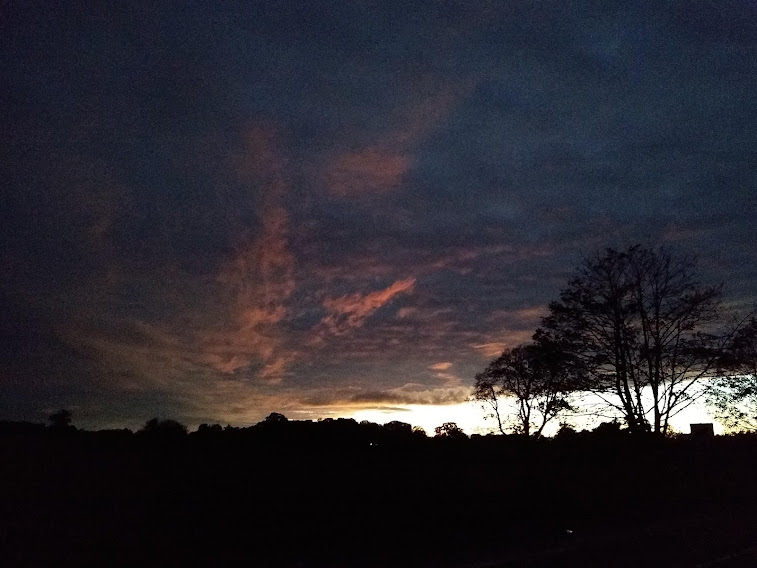
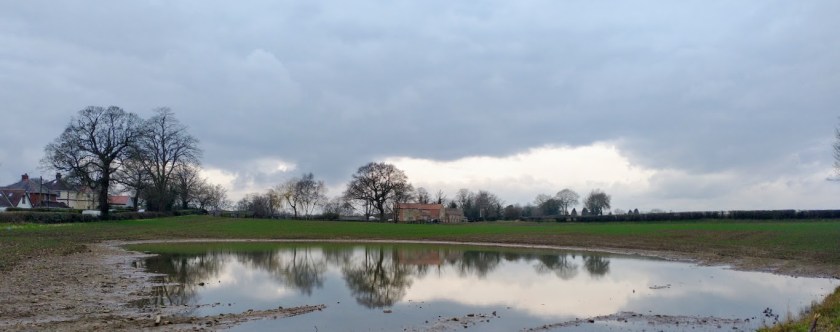
Tina’s asked us to consider light, in Lens-Artists’ Challenge #162. I decided I could do worse than wander about our own home patch, and go for a stroll that lasted from early morning to evening, from summer to a snowy day and watch how the light changes as the day wears on.
I got into the habit, during lockdown, of getting up bright and early to watch the sun rise. Here it is, over the River Ure.
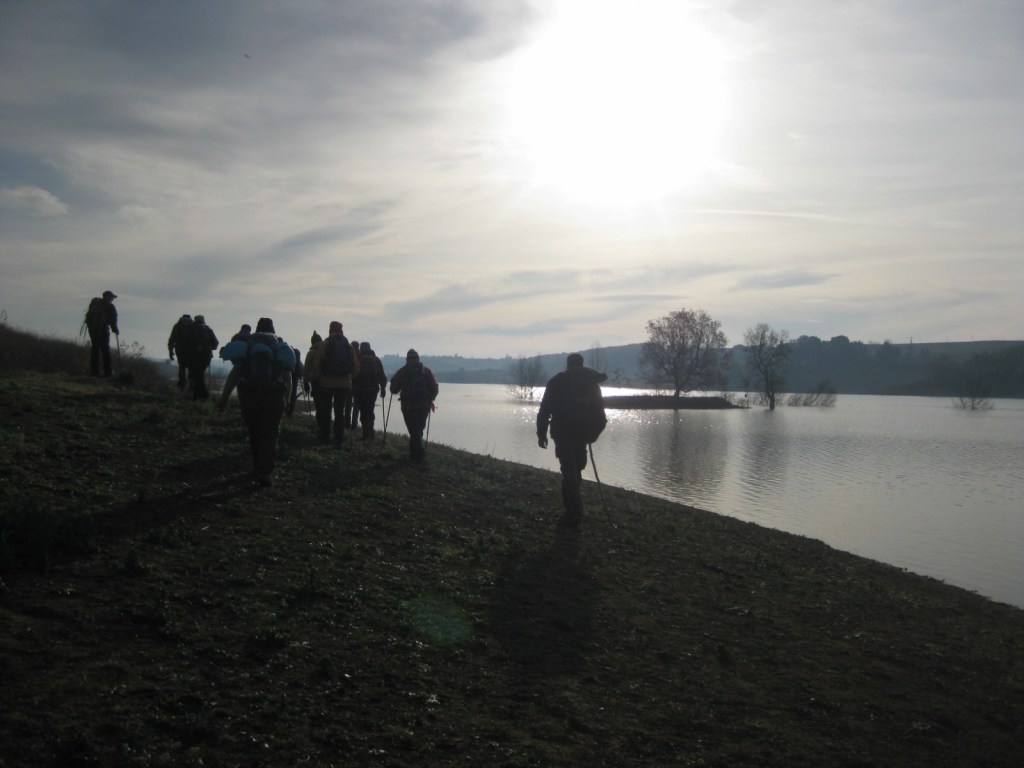
And here we are, never more than ten minutes away from home, in the morning, at noon, and at sunset.
The last two are taken, firstly on one bright morning when there’d been so much rain the fields had flooded, and then later, one evening just as the sun had set.

























You must be logged in to post a comment.