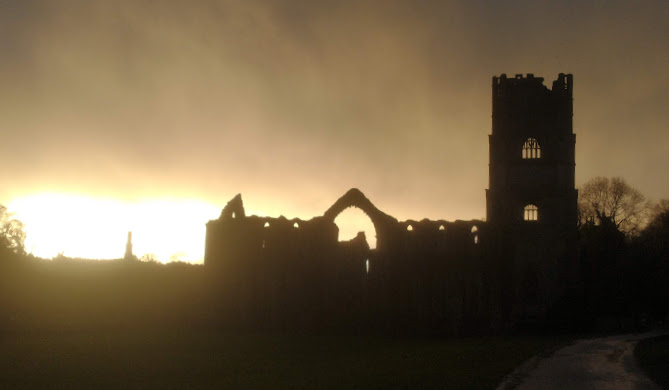
Music for Monks?

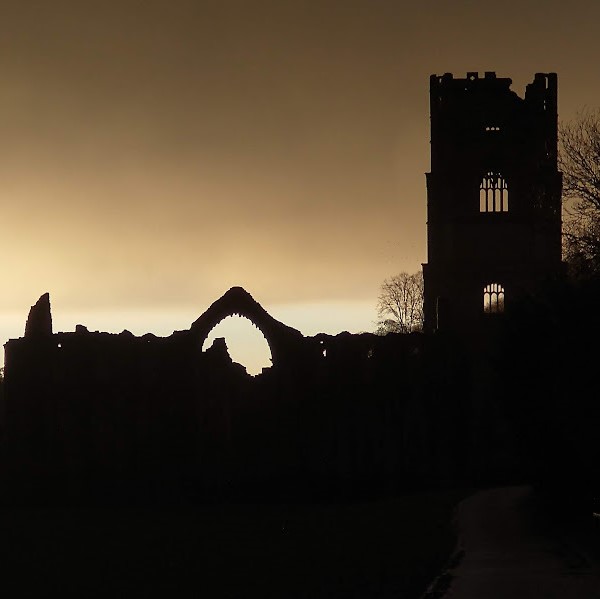
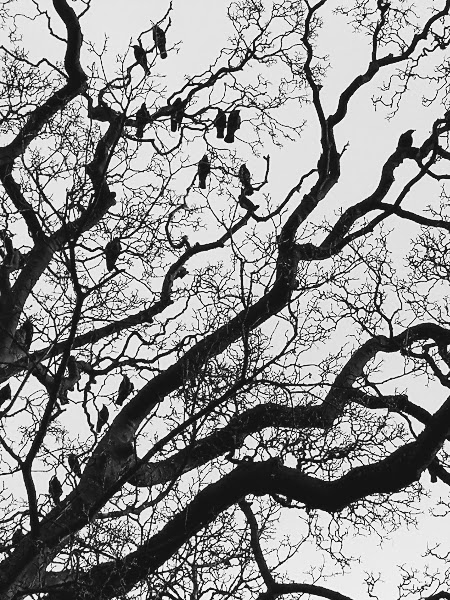
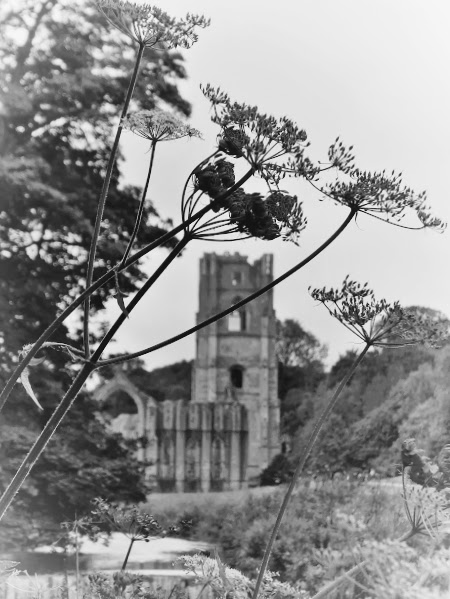
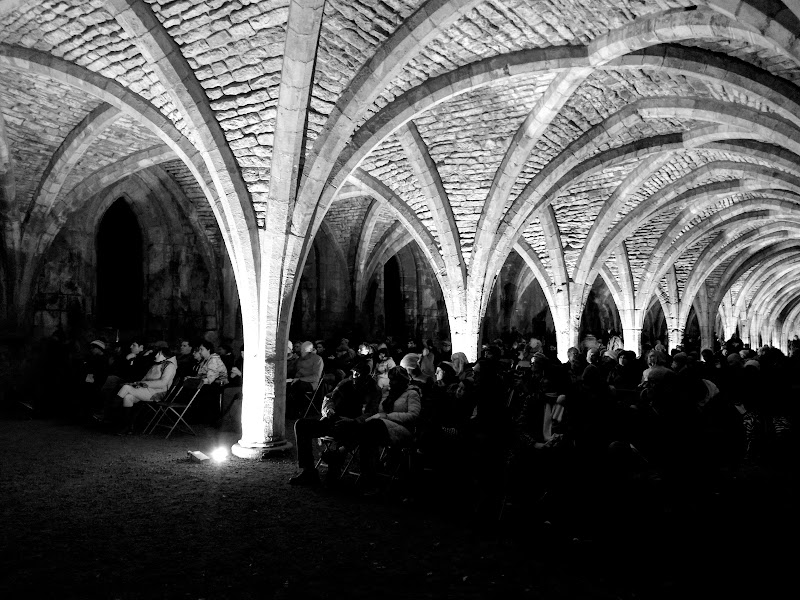
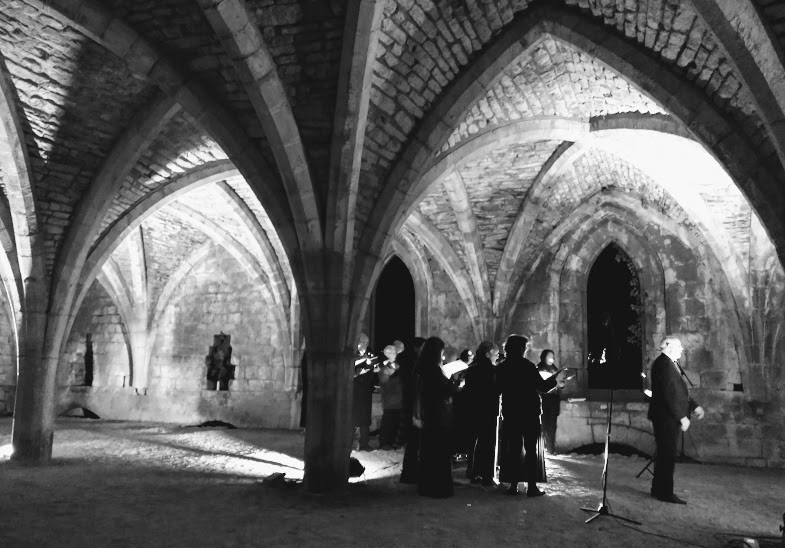
A concert in the cellarium of Fountains Abbey last Saturday.

Pitch black, cold.

The singers gather,

muffled up.

Sing loudly, like long-gone monks -

conquering the dark.

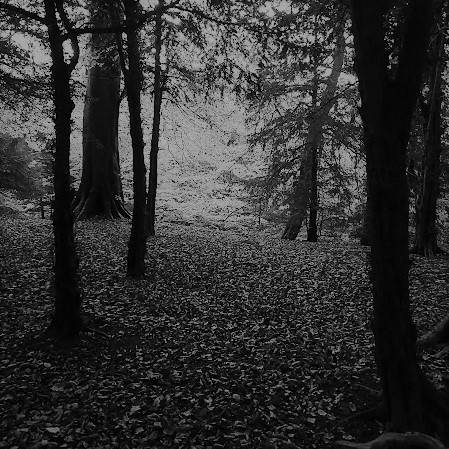
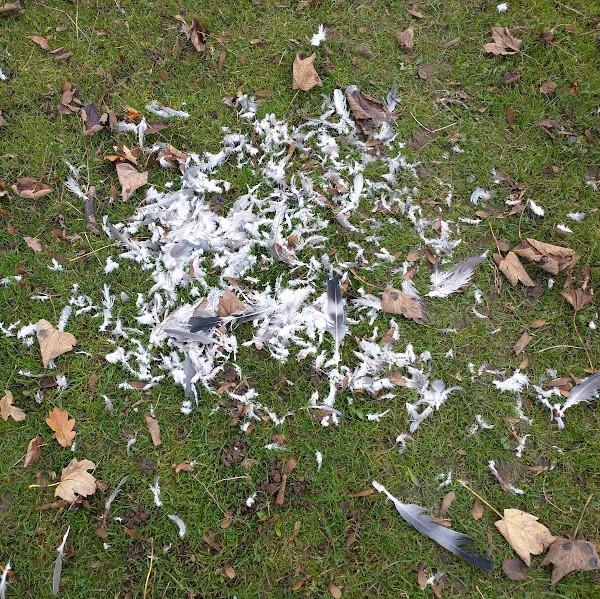
And to lower the tone, that’s the scene once the audience had departed.

For Bren’s Mid-Week Monochrome.


We’re going on a Deer Walk …

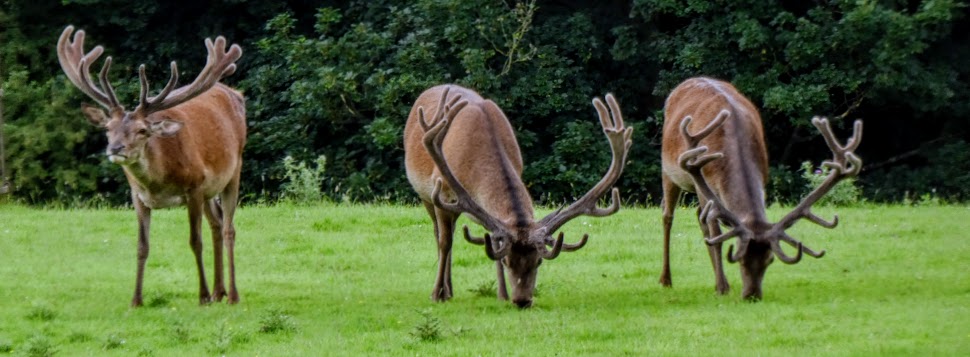
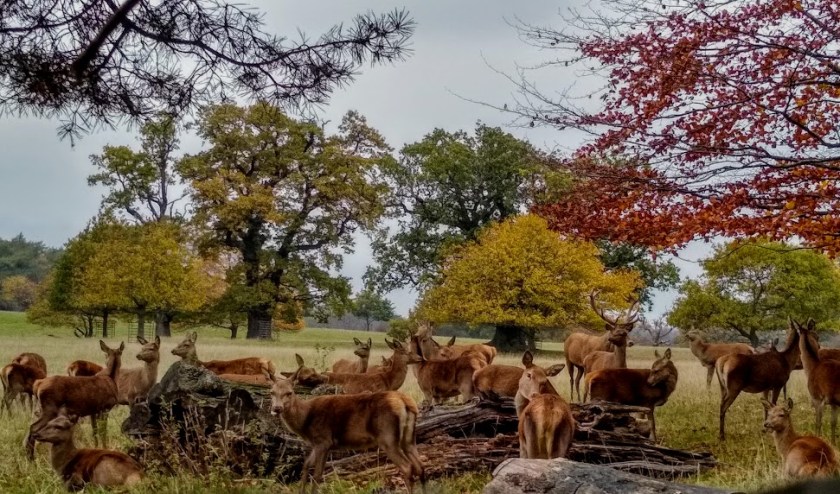
I went on a bit of a safari yesterday. Only down the road to Studley Royal’s deer park. Here are some snippets from the afternoon.

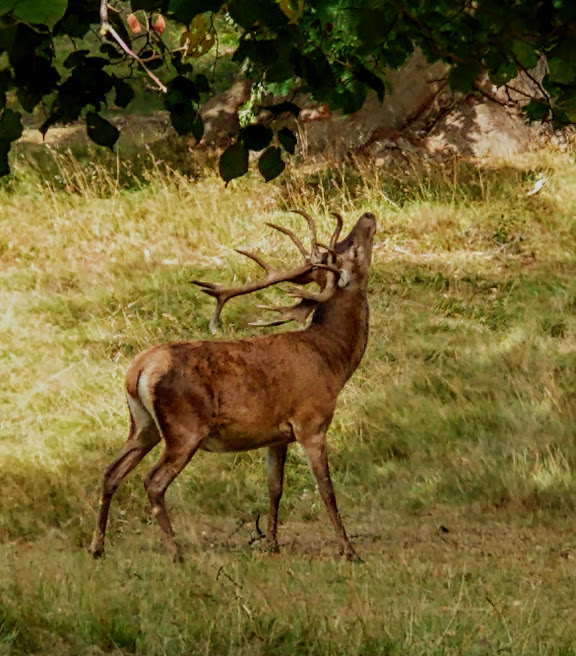
Autumn is the time of the rut, when stags compete to get the biggest and best harem of does, to secure their own blood like survives to the next generation. They wallow in the mud to leave their sexy scent behind, score trees and trash vegetation- they may even aim to toss leaves and grasses to their antlers to make them look even more imposing. We saw none of these behaviours. But we did hear them roaring and making that strange loud roaring belching noise that can be heard from quite a distance, and which warns other males that They Mean Business.

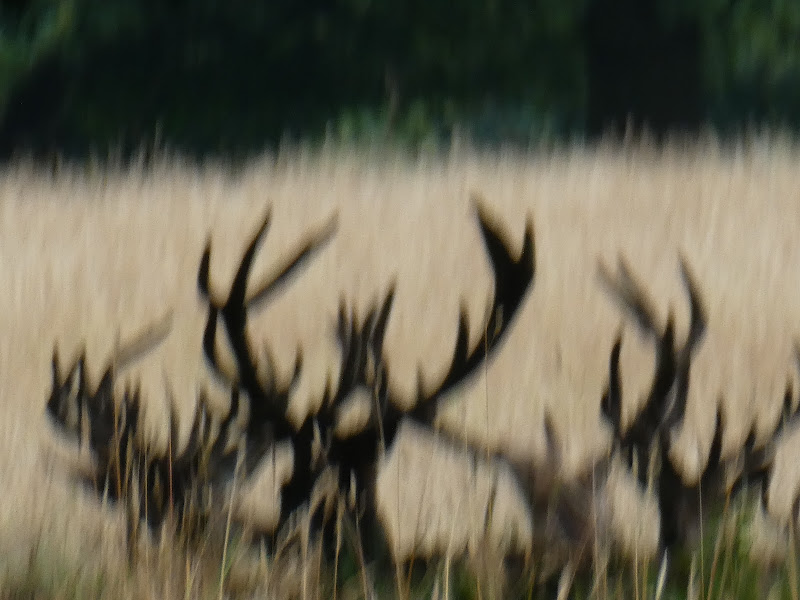
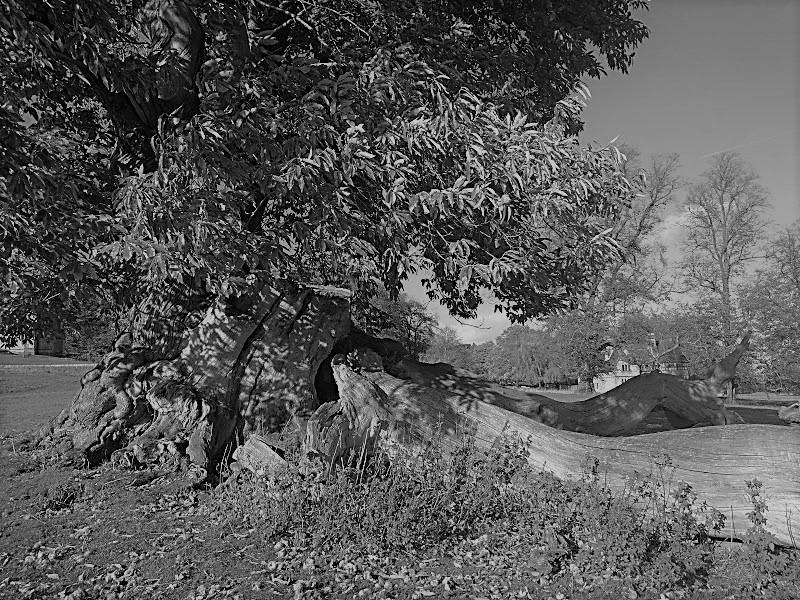
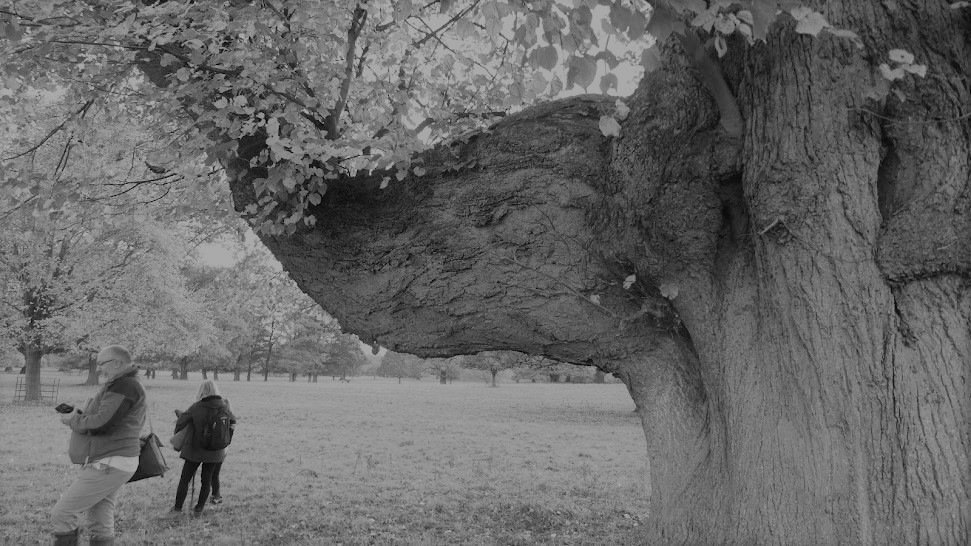
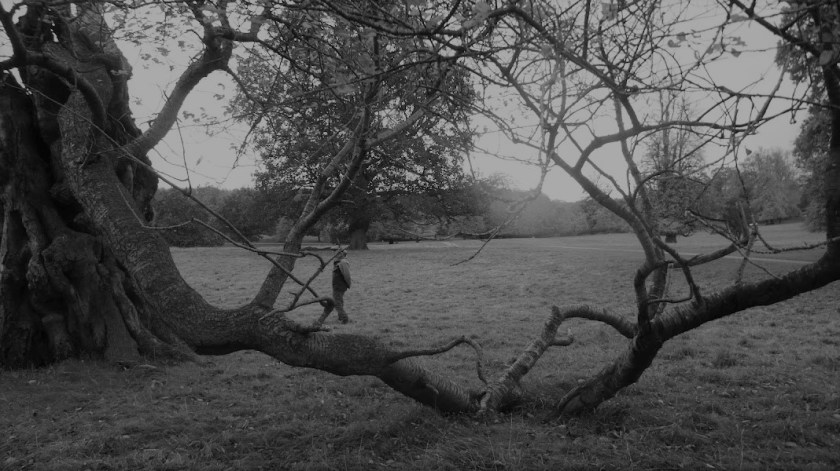
It doesn’t pay to get too near to deer at this – or indeed at any other – time of year, so all of my photos use zoom at its highest setting, which doesn’t make for the crispest of images. But you’ll know you’re in the deer park when you see trees looking like this. That horizontal finish you can see is the browse line – the highest that a red deer on its hind legs can reach to get a mouthful of leaves.

We saw these fellahs next. They’re young stags. They know they haven’t got a hope this year of attracting the females, so they just sit it out. Maybe a bit of play-fighting to get a bit of practice in, but really … it’s just not their party. That first one posed for Monday Portrait.

On we walked. Over the old bridge where females often give birth and shelter their young, to the crest of a hill where we have far-reaching views over to Ripon and the North York Moors beyond, And below, deer: fallow deer and sika deer, browsing and grazing together, with their stags keeping a proprietorial eye on them. We kept our distance and just enjoyed watching them.

Younger, older, does and stags …

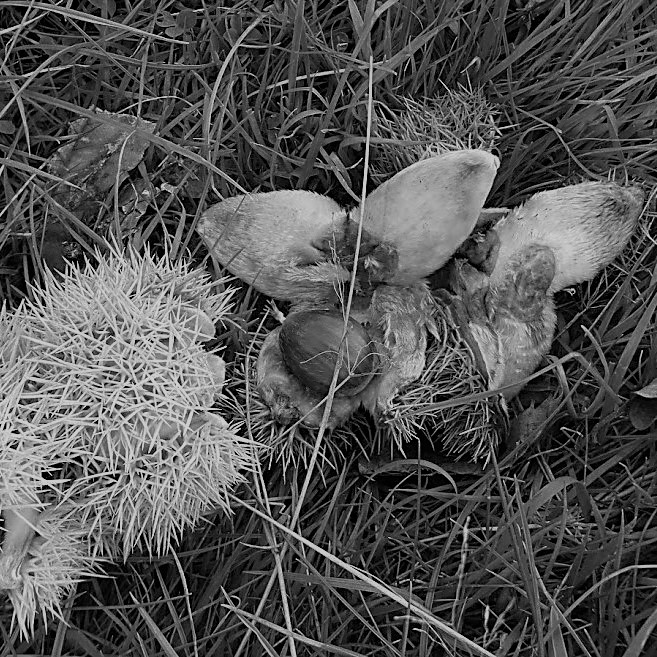
Then onward, past the sweet chestnut trees they love so much at this time of year, for their tasty chestnuts, past a popular wallowing place (oops, forgot to take a photo).

So let’s finish our walk with a few shots of those views I mentioned.

In the shot above, that’s Ripon down below. The eagle-eyed will just be able to spot the cathedral in the centre of the shot, in the distance.

For Monday Portrait and Jo’s Monday Walk.

Postcards from Kiplin Hall

Kiplin Hall. That was our destination on Sunday. We first went there a few years ago for joyful Shakespeare productions, such as Romeo and Juliet, by the irrepressible Handlebards. These days, we go if we need a quiet few hours at a country house whose grounds are extensive enough to offer a walk, a view and coffee and cake after. Here are my picture postcards – monochrome, as picture postcards always used to be – for Mid-Week Monochrome #110 – and to send to Jo, of Jo’s Monday Walk fame.

Kiplin Hall was built as a hunting lodge in the 1620s by one George Calvert, who was Secretary of State to King James VI. American readers may like to know that he was made Baron Baltimore, and was granted a charter to found a colony in America. This colony became – the State of Maryland.

Here’s our first sight of the hall:

Goodness, it was breezy that day. But walk we would, all the way round the lake -into the wind at first – one of the images give an idea of the scudding waves. We set off to get various views of the lake and hall. Here’s a clutch of postcards.

There are woodlands to explore: but the wind was picking up. Better to find shelter and explore the huge walled garden perhaps, where they grow all the fruit and vegetables used in their tearooms, and to make the jams, jellies and chutneys on sale. But wait! Suddenly it’s quite forbidding … Hallowe’en is on the way…

We’ll take our courage in both hands and enter anyway … there, that’s not so bad …

Although …. who’s that sitting on the bench over there?

We decided the tea room was a better option. Coffee, date and pecan cake anyone? No photo available. We ate every crumb before we gave the camera a thought.

Attention! Sheep Dogs at Work!

I promised you an account of a Sheep Dog Demonstration after our visit to Masham Sheep Fair. Maybe you’ve amused yourselves wondering which sheep would get hustled and herded into pens as each dog did her work. Big and super-woolly? Lean and super-curly? Well, neither …

The field behind the church was roped in such a way that we spectators gathered round the edges, so we could look at the arena, scattered with wooden gates and obstacles, traffic cones, a play-tunnel, and in the far corner, a sheep pen. We spotted two sheep dogs, panting eagerly beside their trailer.

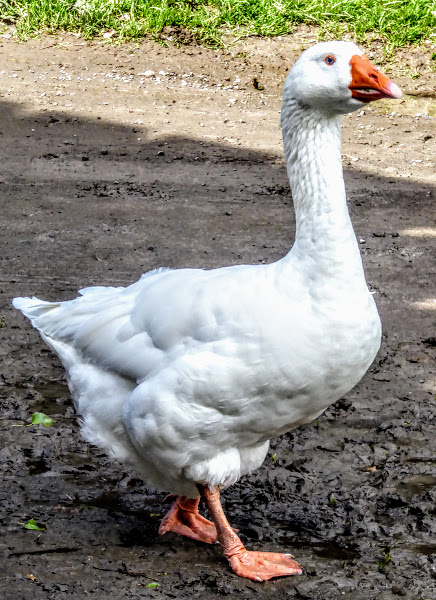
Their trainer, a farmer from Cumbria, took centre stage and introduced her dogs, each of whom would perform in turn. But where were the sheep? Not here at all it turned out. The dogs would be herding … first geese …

… who went between gates, round obstacles, round again…and into the pen …

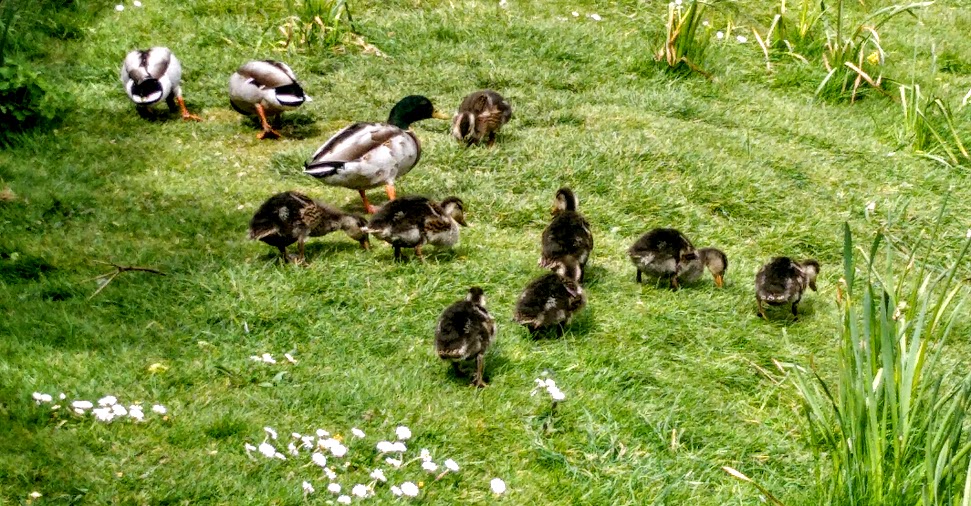
… then ducks ..

… round obstacles, over the bridge and wheee! Down the chute and into a paddling pool (I missed the photo opportunity there), in and out the traffic cones and into the pen …

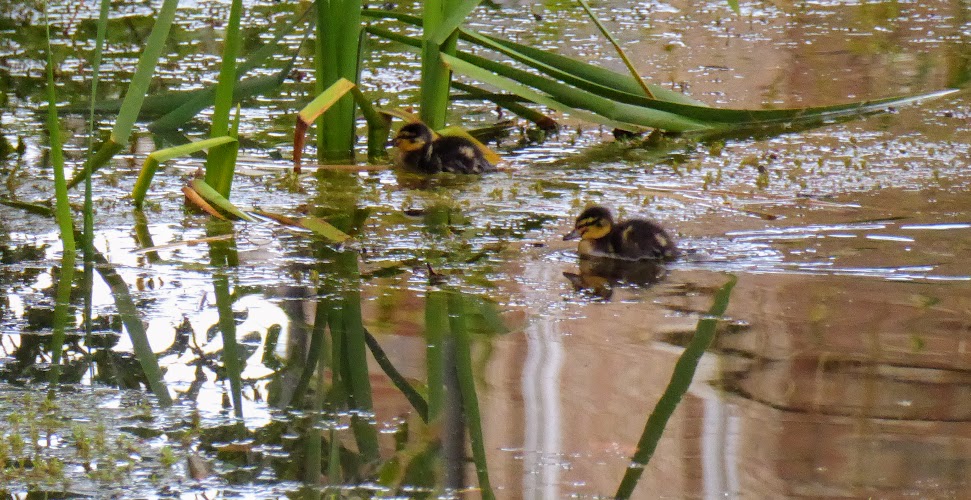
.. and finally, ducklings …

The ducklings await their moment on stage.

Through the gates, round the field. Then … can you see the ducklings scuttling down the play tunnel? The sheepdog’s about to follow them. Then, no pen for them. Just back into that big grey hutch.

I love to watch sheep dogs at work. They are so eager to get the job done, and done well. And on the whole, the creatures they chivvy seem happy enough. They put up with it anyway. A happy half hour.

Monday portraits from Masham

Yesterday, we went to Masham. Here were gathered sheep: dozens of sheep; hundreds of sheep, from every corner of North Yorkshire and beyond. They were all to be put through their paces and judged on whatever esoteric characteristics sheep are judged on, hoping to be awarded rosettes – even cups – as evidence of their good breeding and upbringing. We went early, and talked to owners, many of whom were keen to save rarer breeds from dying out: dying out because their meat is too slow-growing, maybe too flavourful for the mass market. And, as we discover round here every year at shearing time, the wool they provide is no longer a passport to wealth, or at any rate a steady income, but quite simply a drain on the farmer’s budget as there are shearers to be paid. With some exceptions, only traditional spinners, weavers and knitters seek out traditional wool.

Now then, hands up if you thought a sheep was just a sheep.

Or that wool was – quite simply – wool.

Here’s judging taking place ..

And they start ’em young here. There were classes for Young Handlers, and even an Under Fives category …

Wool, anybody?

We had to go to the Sheep Dog Demonstration, of course. But that’s worth a post all on its own. To be continued …

A portrait of a reservoir

This year has offered proof after proof that the times they are a changin’. Here, harvesting was started in mid-July, and was all done and dusted for early August. Yet schools and churches will probably continue to hold their traditional Harvest Festivals in late September, early October. Blackberries have withered a whole month early, so the Devil must have been along and spat on them. Autumn-ripening apples are already at their best. And, most worryingly of all, the reservoirs are drying up. Here are some shots of Scar House Reservoir in North Yorkshire. The header photo, and the last one of all were taken two years ago. The rest, only last week.

Scar House Reservoir two years ago.

Three favourite photos?

Choose my three favourite photos? What kind of a task is that? Hopeless, I’d say, because so many favourites rely on the memories that surround them, that only matter to those who shared the moments.

But Sarah, of Travel with Me fame, has asked us to do just that for this week’s Lens-Artists Photo Challenge.

Anyway. Let’s go. This photo dates from years ago, when we lived in France, and once, just once, there was an astonishing and dramatic sunset which we’ve never forgotten, even ten years after the event.

You can perhaps guess from the cross on the right that we’re looking up at the churchyard on the hill above the town, edged with the heavily pollarded plane trees you can see silhouetted against the sky.

Living as now we do near Ripon, we have two ‘back yards’. One is Fountains Abbey and Studley Royal, where I volunteer. And the other encompasses the paths, fields and woodland near our home.

Because I’m so often in both these places, I’ve been able to photograph them in every season, and at every time of day. Here’s an autumn favourite of Fountains Abbey.

I like how the beech leaves frame Huby’s Tower, while their warm russet tints contrast with the austere grey of the abbey’s stonework.

Meanwhile, during the summer months I like to photograph the drifts of poppies in the fields of crops near our house. It was hard to choose just one, but in the end I settled for this one. I like the poppies tumbling about in the foreground, set against the much more organised stems of wheat in their vertical serried ranks.

Ask me to choose three favourites tomorrow though, and you can bet they’d be entirely different shots.

‘Except ye Lord keep ye Cittie, ye Wakeman waketh in vain’ revisited

Ten years ago today, long before we imagined we’d one day be living here, we were having a short break from our lives in France here in Ripon. And this is what we saw…

July 2012

‘Except ye Lord keep ye Cittie, ye Wakeman waketh in vain’

That’s the  verse from the Psalms, inscribed above the town hall in Ripon, where we’re spending the next few weeks to avoid the cold and rain of the south of France (no, really, they’ve got the heating on over there).  It reminds us that every evening – EVERY evening – for well over a thousand years, the Ripon Wakeman has sounded his horn to the 4 corners of the city to announce that all is well.

We had to go and check it out yesterday evening.
Promptly at 9, a smartly dressed individual in buff coloured hunting coat, tricorn hat and white gloves took his place before the obelisk on the Market Square and sounded his horn 4 times, once at each corner of the obelisk – one long mournful note each time.

Then he grinned at us, a small crowd of 20.  ”Want to hear a bit of history?’  Well, of course we did.  He made us introduce ourselves, and we found we too came from, well, about 3 corners of the world: Catalonia, Italy, Australia, even South Shields and Merton.  And here’s some of what he told us:

In 886, Alfred the Great, 37 year-old warrior king, was travelling his kingdom to defeat the Vikings and to drum up support.  Arriving at the small settlement of Ripon, he liked what he saw and granted a Royal Charter.  He lacked the wherewithal to produce an appropriate document, and so gave a horn which is still safely locked in the town hall.

‘You need to be more vigilant, there are Vikings about’. Alfred warned.  So the people appointed a wakeman to guard the settlement through hours of darkness, and he put that horn to use by sounding it at the 4 corners of the Market Cross to announce that all was well as he began his watch.  The city’s now on its 4th horn.

If you want to know more, our current Wakeman, George Pickles,  has written the whole tale for the BBC website.  It’s a good yarn.  Read it when you have a moment.

The Market Square, where the Wakeman does his job.

2022 Update: These days there’s a team of three Wakemen, and one of them is a woman. Only Lockdown – sort of – interrupted the tradition, when the nightly task was performed from the comfort of the duty-Wakeman’s garden at home, courtesy of Facebook.

For Fandango’s Flashback Friday

Seeing double

Getting two images for the price of one. That’s this week’s Lens-Artist Challenge, hosted this week by Jez. I’m keen on seeing double like this.

Do I prefer a simple canalscape?

Regent’s Canal, London.

Or a cloudscape?

Lake Prespa, North Macedonia

A few birds could add some interest …

I often like urban reflections …

… or surprising reflections …

… or just a peaceful scene by a river …

Near Saint Naum, North Macedonia

… which is where we started. The featured photo is from a boat on the River Guadalquivir in Seville.