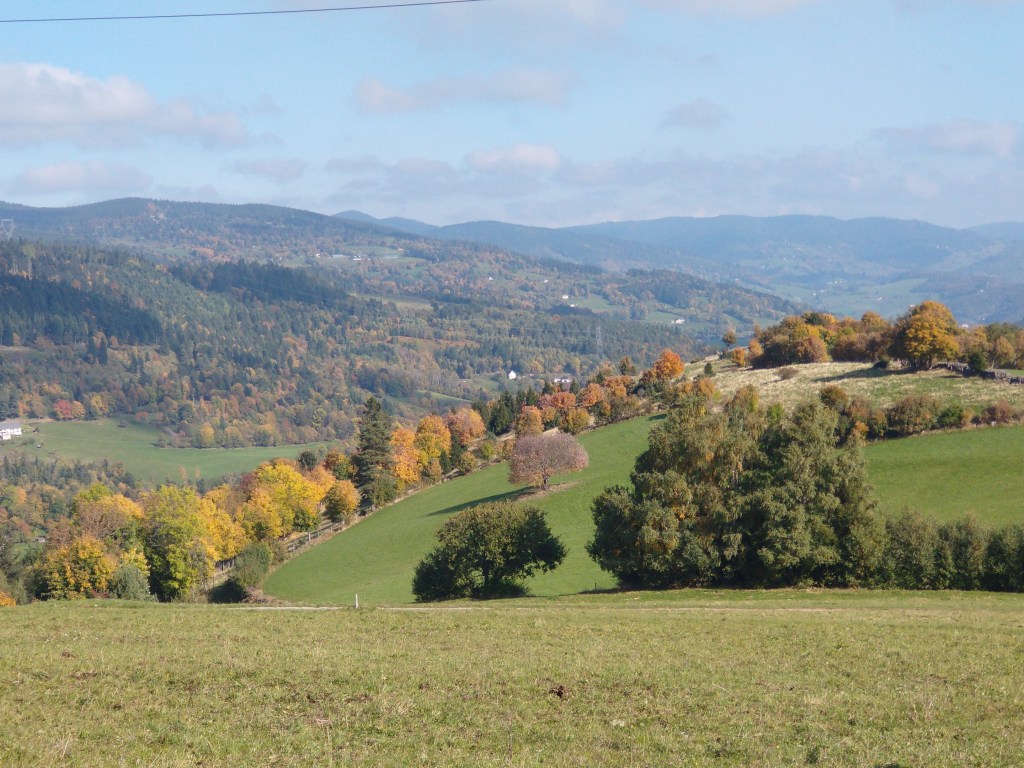
A day of contrasts: this morning, a not entirely successful walk in which we quite comprehensively failed to find the path for the latter part of our morning. Never mind. The woodland was atmospheric, the autumnal views across the Vosges just starting to become a spectacular blaze of colour.
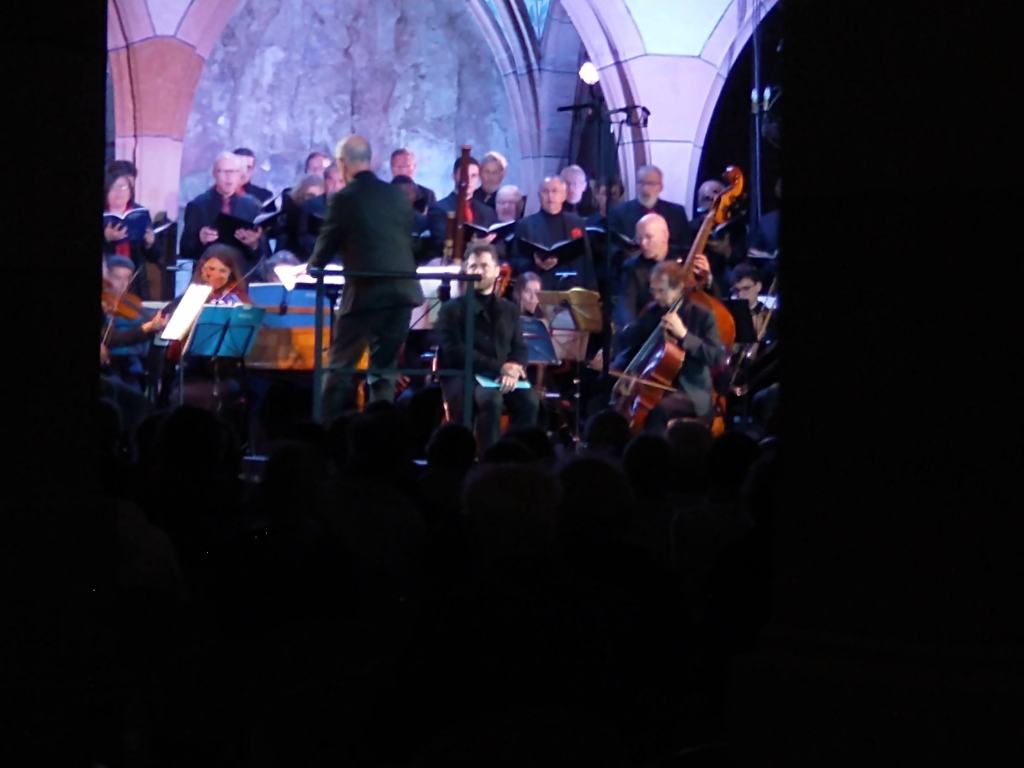
Then later, a visit to an unusual church in Colmar, St. Matthias. It was completed in the 15th century by the Franciscans, but in 1715, the church was divided in half … to serve the Catholic community at one end, the Protestants at the other…
In this case, the Catholic end of the church has become a concert hall. And we have just experienced a powerful performance of Haydn’s Creation there. The choir who performed, Passion Bach 25, recruits area-wide, and draws members from both Alsace and Germany. The accompanying orchestra was German, and the choir will perform this work in Germany as well as here in Alsace. We were so lucky to be there.
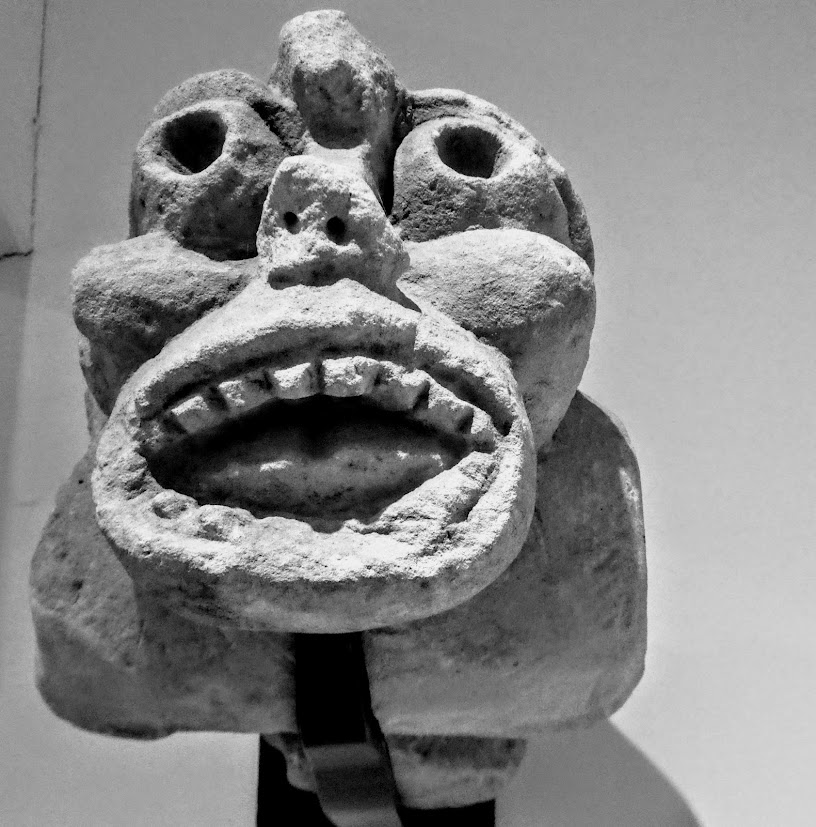
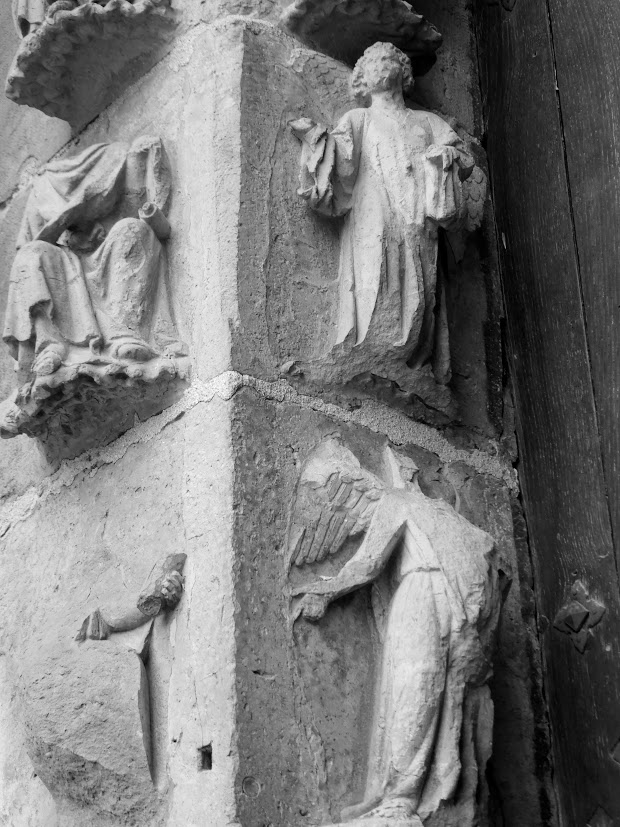
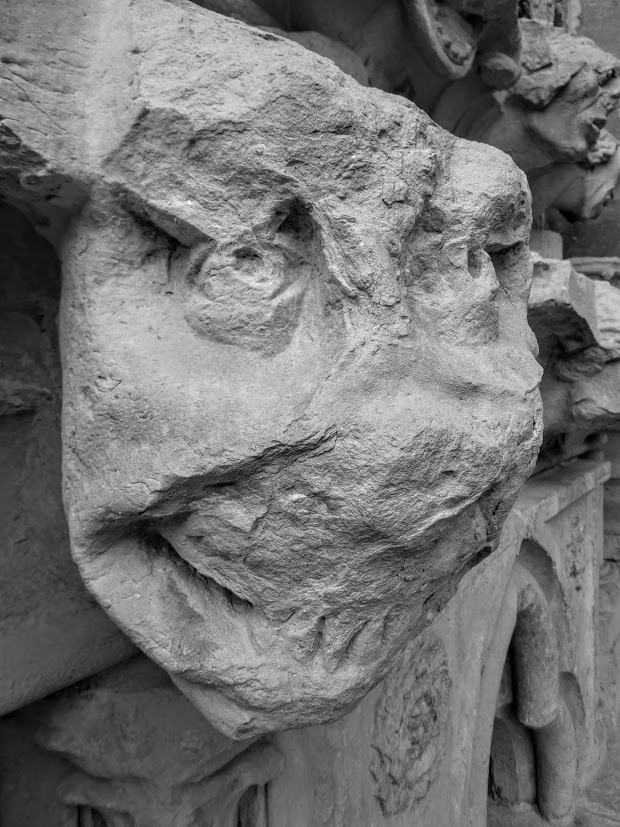
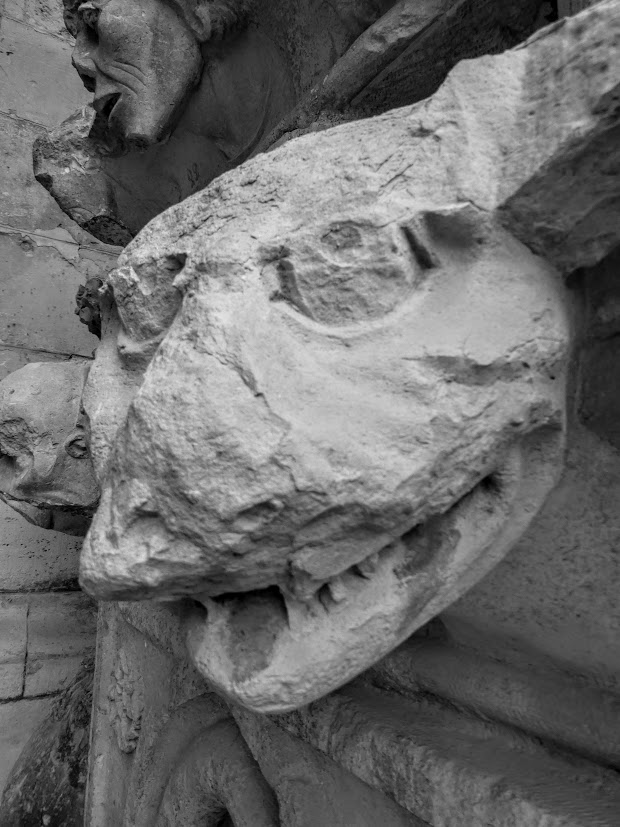
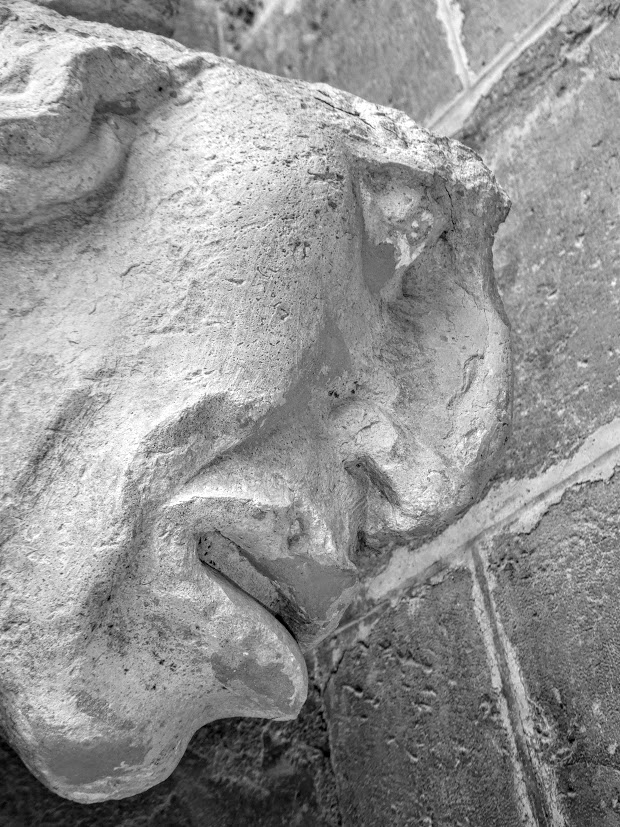
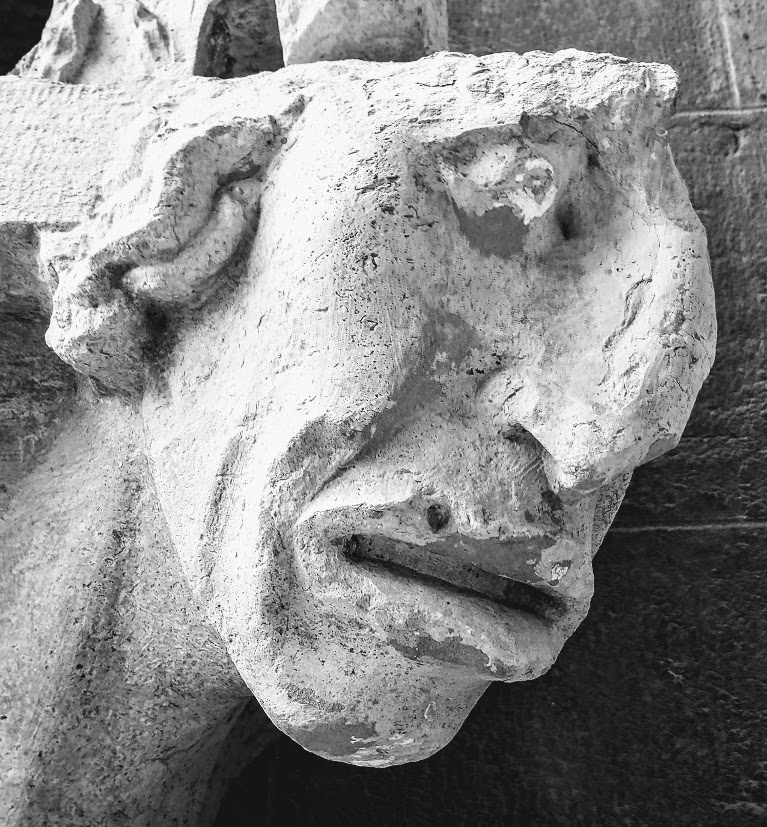
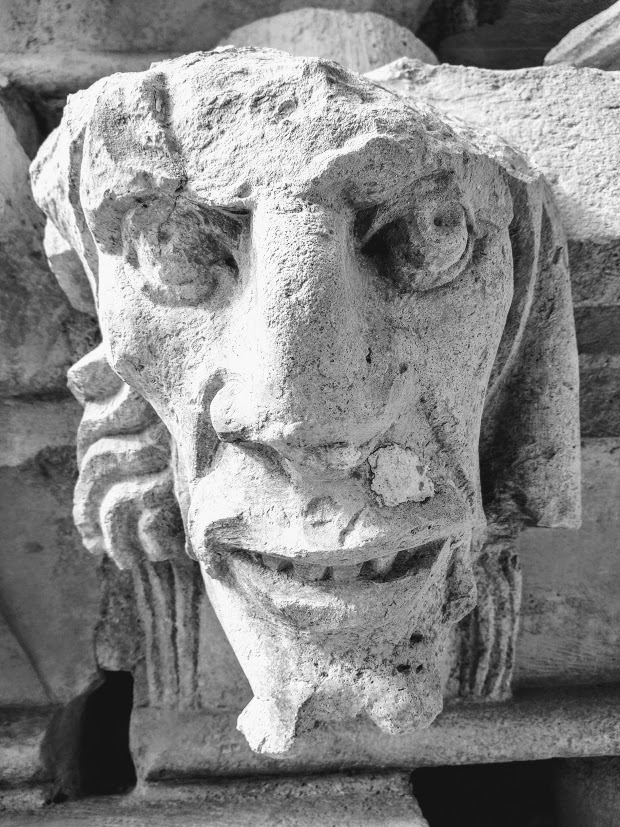
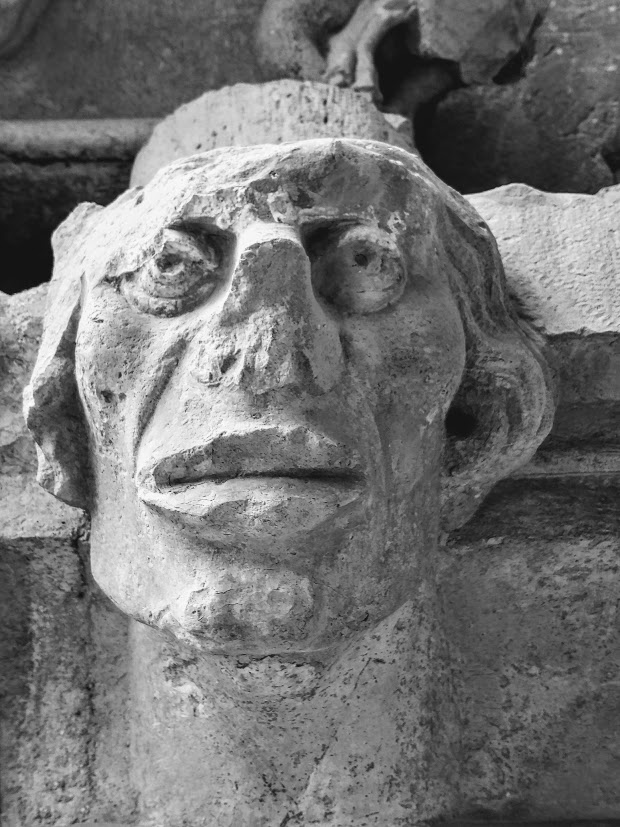
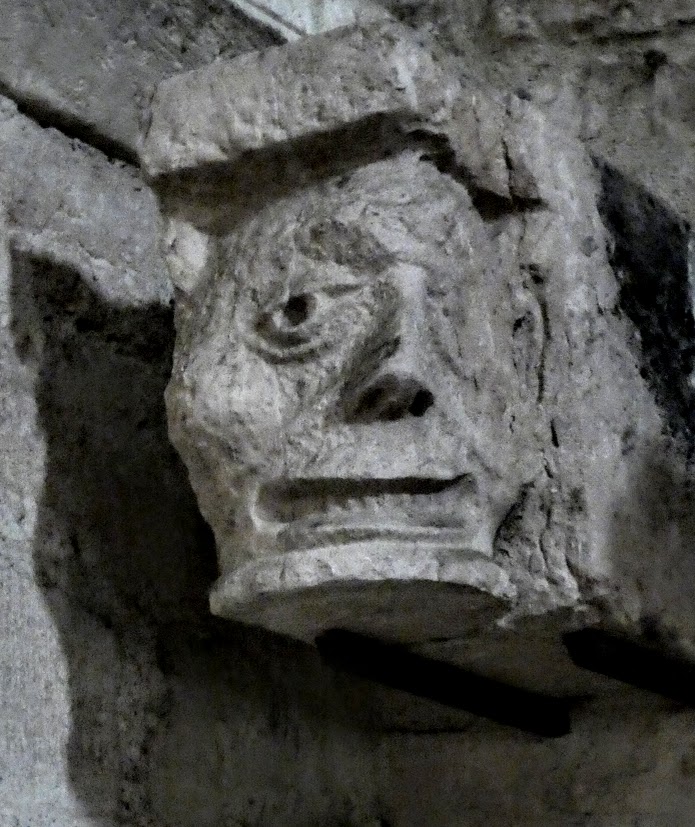
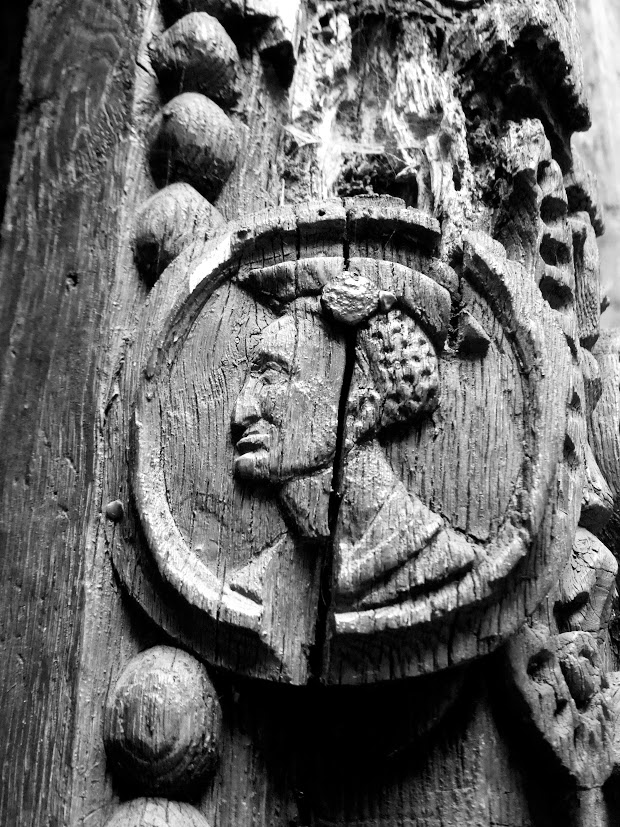
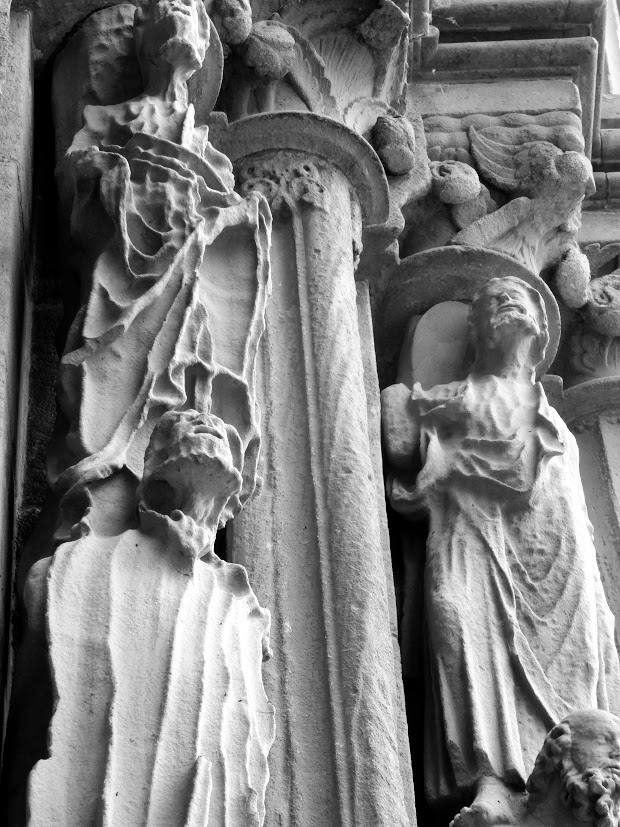
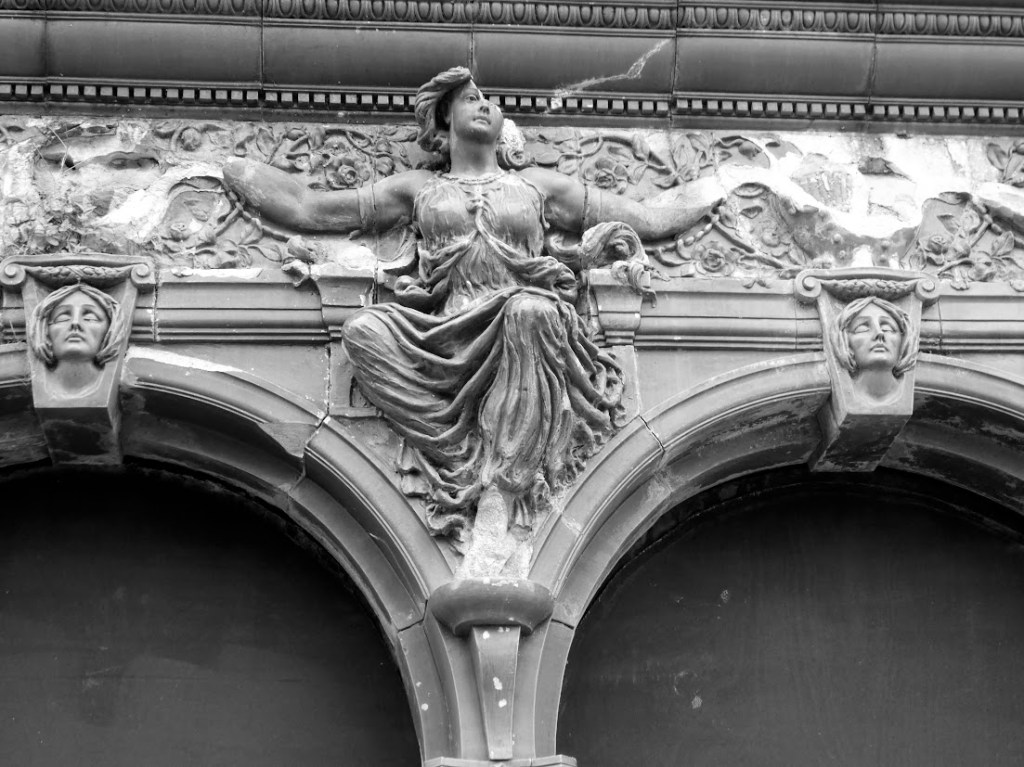
Today, for Leanne’s Monochrome Madness, Sarah of Travel with Me invites us to photograph ruins. I could so easily take you (yet again) to my favourite ruined abbeys: Fountains Abbey, Jervaulx, or Rievaulx. But Sarah herself has shown Fountains Abbey off in her post. I could take you to ruins all over this country and beyond. Instead, I thought that I’d show you not buildings, but their statues, often ruined by weather, by warfare, or quite simply the passage of time.
Best start in Rievaulx though, where carvings in its museum gave me the idea.
Off to North Eastern France, where the churches and cathedrals of Rheims, Laon and Tournus (to name but a few) have all mightily suffered from the weather eating into into the local limestone from which these were built.
And in Troyes, wooden buildings have taken a weather-beating too.
A church in Bamberg has suffered mightily from having been contructed from limestone.
But even more recent buildings have been ruined a bit. Come to Hartlepool with me.
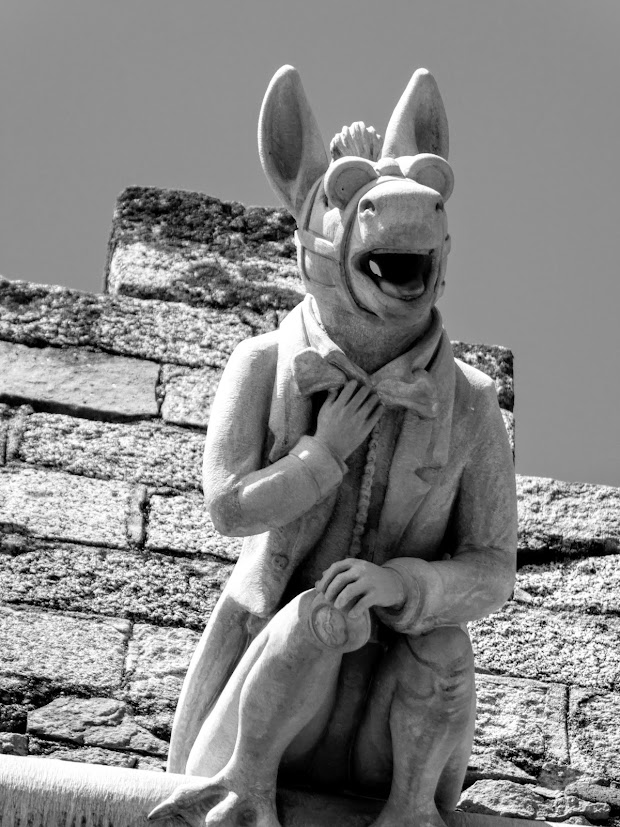
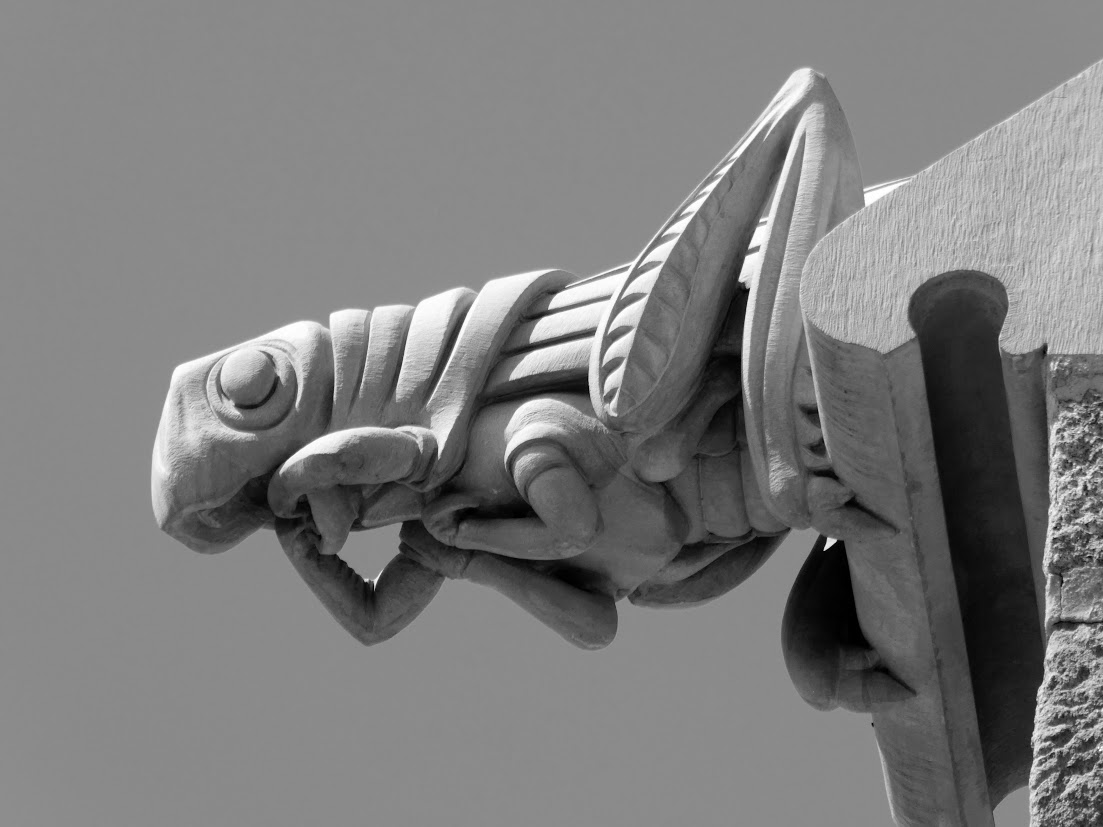
Let’s finish off by disobeying the challenge completely, at Sant Julia church, in Argentona, Catalonia. Its gargoyles were so ruined they pulled them down. And replaced them. Like this.
By the time you read this we will be at least half way down England, in transit for eastern France – Alsace. So you won’t get prompt responses to any comments I’m afraid, as we shan’t finish travelling till Friday. But I will send a postcard before the weekend is out!
This week, for the Lens-Artists Challenge, PR invites us to present balconies we’ve met. I love leaning over a balcony, with the chance to relish a bit of sunshine whilst enjoying some people -watching. But it turns out that I haven’t got a single shot of residents enjoying their bit of outdoor urban space.
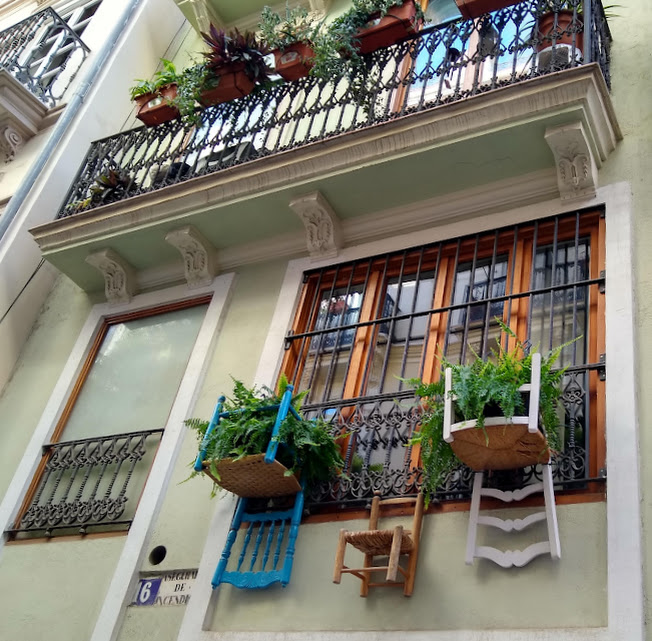
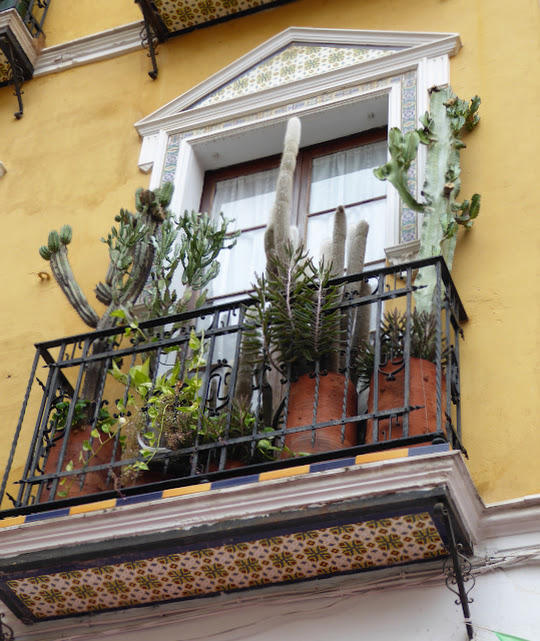
Lots of apartment-owners turn their balconies into gardens. Although the resident in my first shot hasn’t allowed a lack of an existing one to thwart plans. How about repurposing a few chairs? And the second one earns a place to show how so many Spanish and Portuguese balconies are tiled on the underside. Such a good idea!
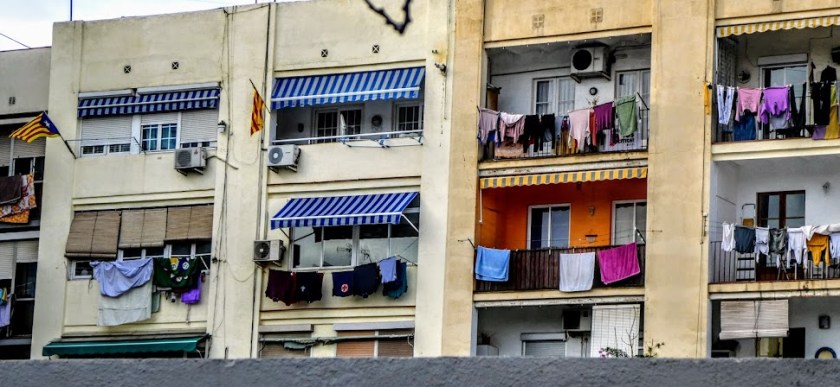
Then – obviously – there’s Balcony as Washing Line. Here are two from Spain.
Vic, CataloniaSants, Barcelona
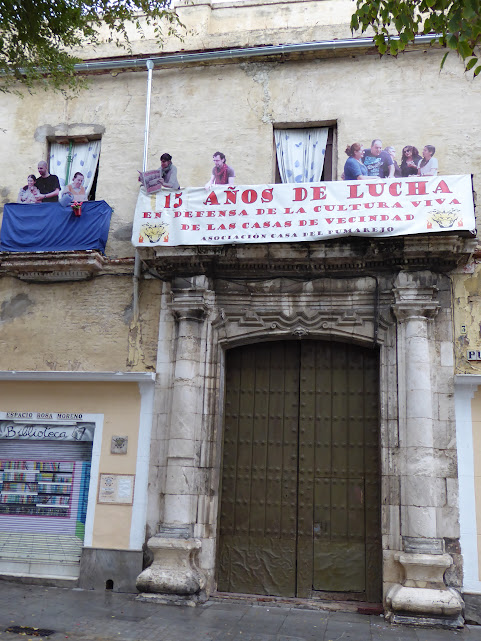
Sometimes a balcony is ideal for posting a protest. Here the citizens of Berga demanded Independence from Spain for Catalonia. Five years on, the cries don’t seem to be quite so strident. And in the adjacent images, citizens in a run-down neighbourhood in Seville sought a touch of cultural revival, accompanied by lively illustrations.
Sometimes it’s just about cheering up the neighbourhood. Here we are, first in Berlin, then in Málaga.
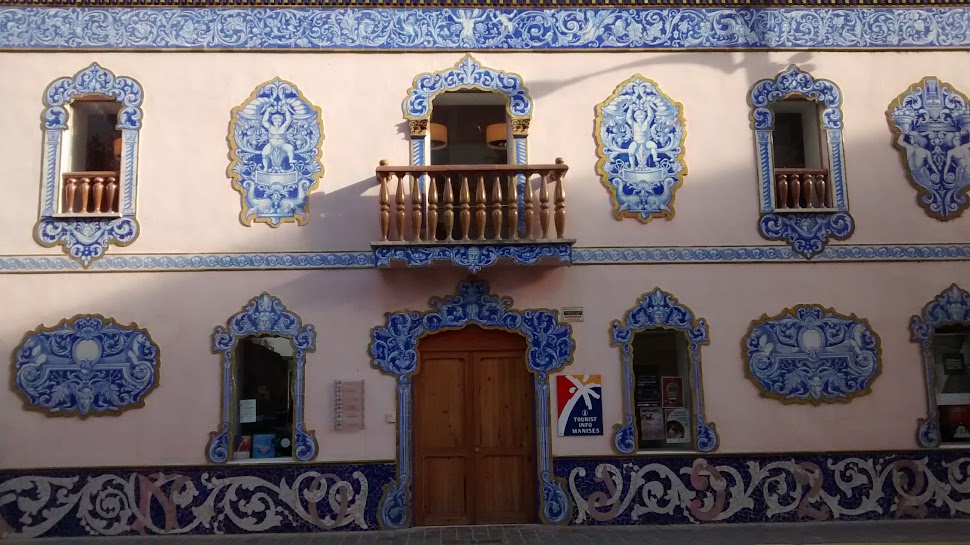
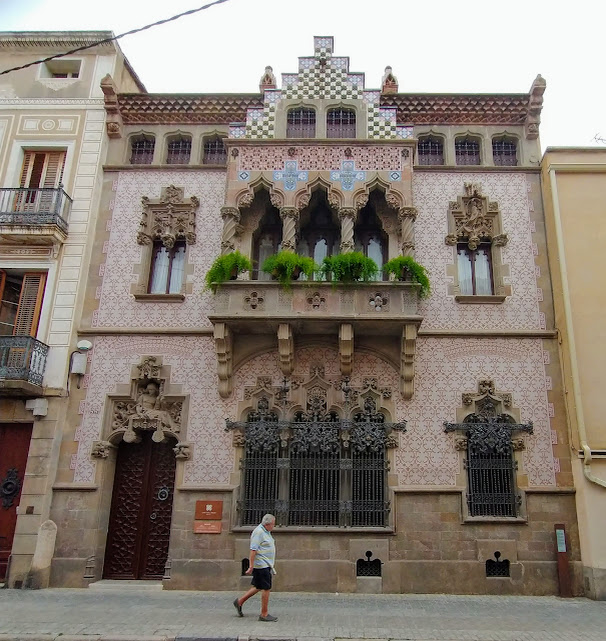
And sometimes, balaconies just wish to speak for themselves. Here are two fine examples.
This building is now the Tourist Office in Manises, a town near Valencia which was formerly one of the most important producers of ceramics in Spain. Sadly, its glory days are over.
A fine Modernista building in Mataróby Josep Puig i Cadafalch, the Casa Coll i Regàs.
And some people just don’t have a balcony. So they have to paint one instead.
Two examples of trompe-l’œil in Tournus, Saône-et-Loire, France
My feature photo is of an ordinary street in Argentona, Catalonia – where every house is sporting a balcony.
Thanks, PR – this was an inspired post to set us in the mood for summer travels, and mooching around to find balconies to admire.
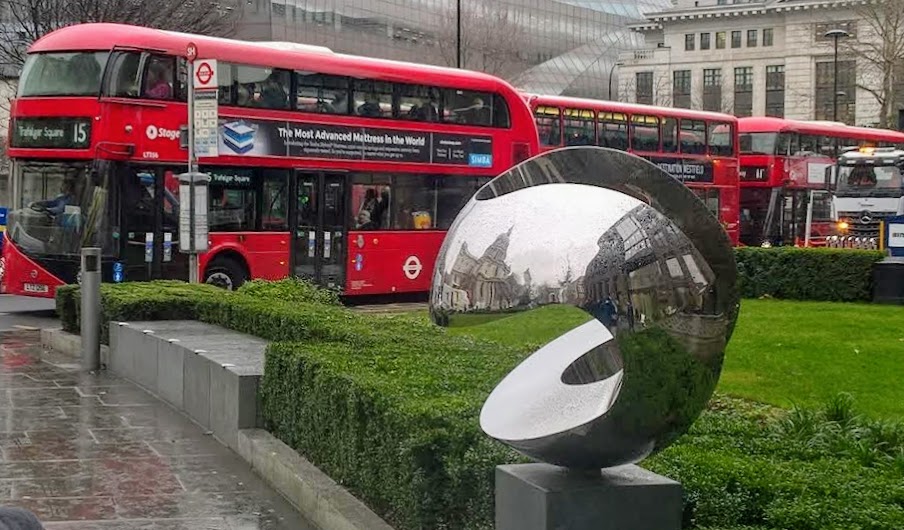
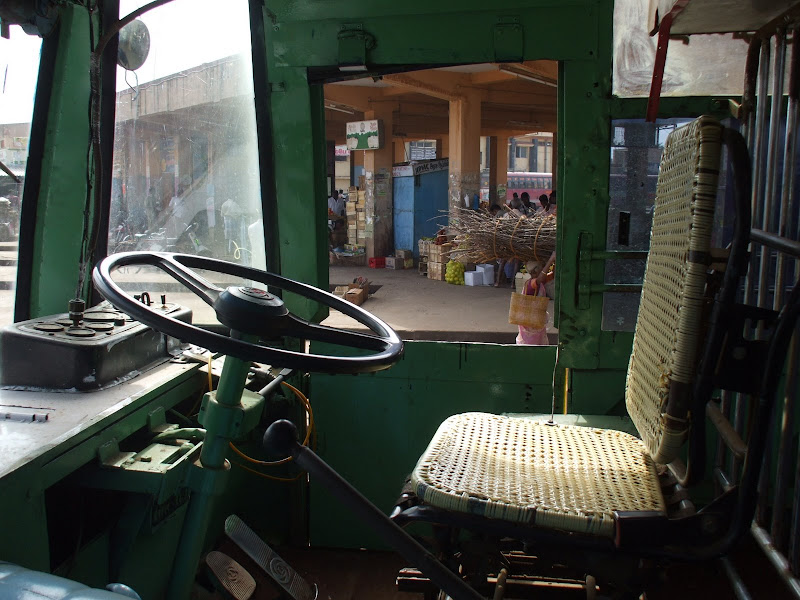
A bus can be fun, but that’s strictly for local exploring. Unless you can get yourself to India and hitch a lift in God’s Own Palace … Though you’re much more likely to be catching the long-distance bus whose driving seat I feature here …
Air travel has lost its sheen, since Airport Security and Queuing became a A Thing, not to mention those CO2 emissions of which we’re now so horribly aware. Even so, there is something thrilling about watching the changing landscapes of the earth far below, and cloud formations too.
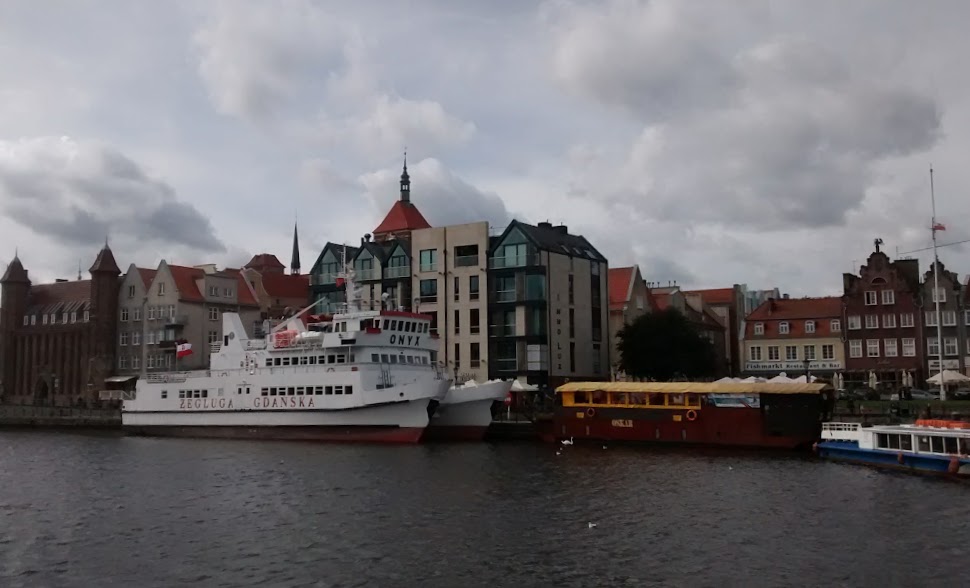
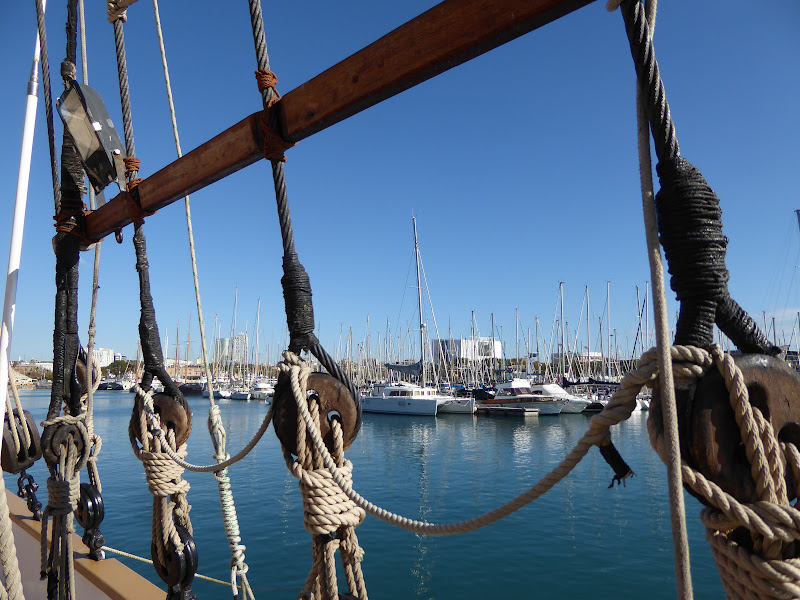
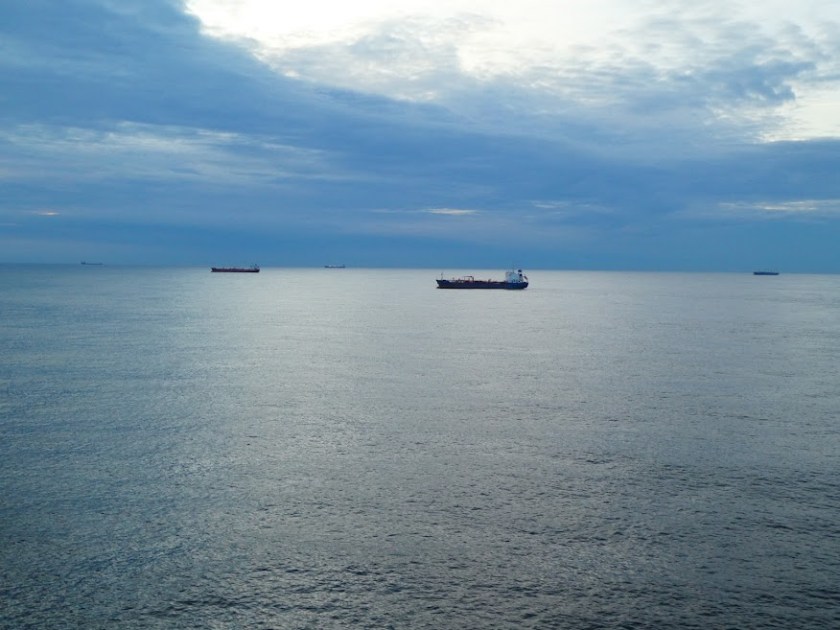
You could take to the water, and sail to your destination near or far…
On the way to Rotterdam
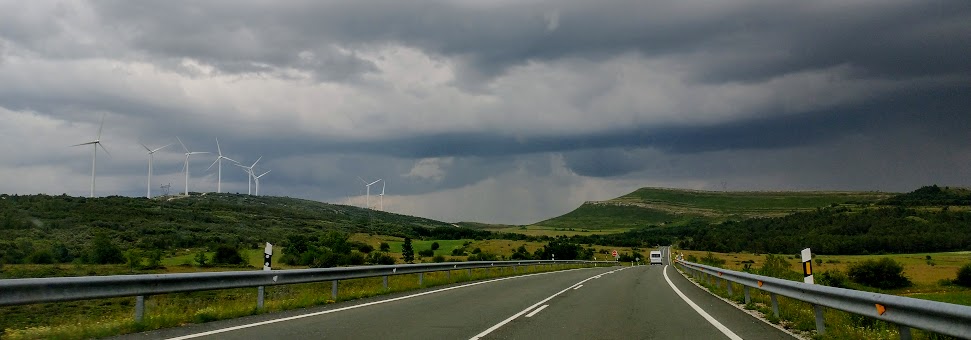
Car travel gives you the opportunity to please yourselves and follow your noses, and even to get off the beaten track, but again … all those emissions.
My own favourite way to get from A to a distant B is by train. I sit, I watch the world go by. I read. If I’m lucky, there may be coffee on offer. And the journey eases the transition from home to away by gradually introducing fresh landscapes, fresh outlooks. There’s something discombobulating about leaving – say – foggy England by plane and arriving two hours later – say – in sunny Spain. Here’s the TGV from Barcelona to Paris. It says it all …
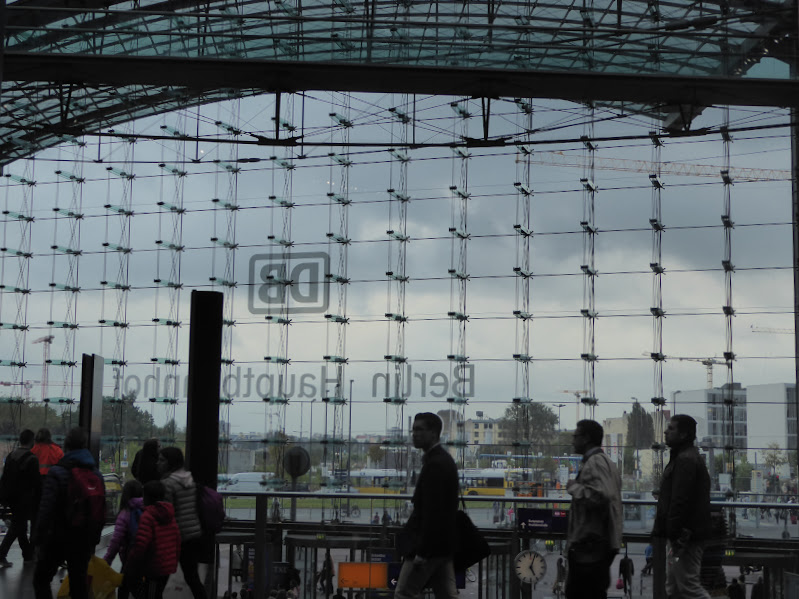
Station architecture may be inspired, whether from the Golden Age of Steam, or assertively twenty first century.
All things considered, I can’t agree with the disconsolate boredom of this particular passenger. By the way, you, get your feet off the seat!
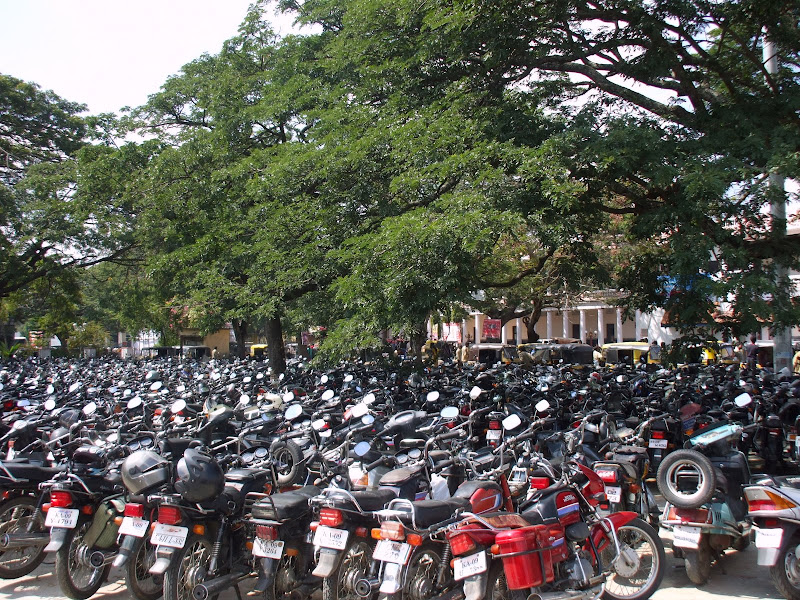
Or … there’s always the motorbike … as spotted in their dozens and dozens outside Mysore Station.
Bike park outside the Station
All the same, modern travel with all its advantages can seem busy, stressful. Sometimes, we might just want to exchange the traffic jam for something rather simpler.
John has provided this week’s LENS-ARTISTS CHALLENGE #215 – Planes, Trains, and Automobiles, and the places they take you.
This is turning into a Sunday Thing. Experimenting with different types of poetry. But with added photos. Always with added photos. This week, as my contribution to Tanka Tuesday‘s task – to write a 4-11 (the clue is in the name: 11 lines of 4 syllables each – last line repeats the first) I thought I’d focus on summer travel.
Summer travel
was always fun.
But now passport
control (Brexit!);
Covid control;
train strikes and queues;
airport queuing –
make journeys long
and so irksome.
Worth it though – for
summer travel
And to prove that travel’s always worth it, here’s my photo gallery. There’s just one problem. Most of these photos were taken in January, in February, in March … you get the idea – any month but August …
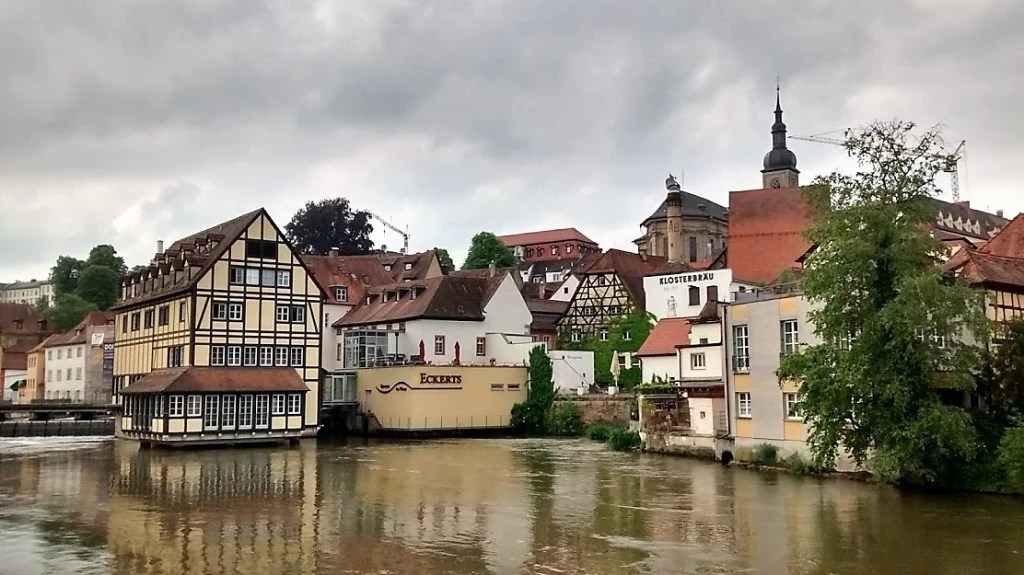
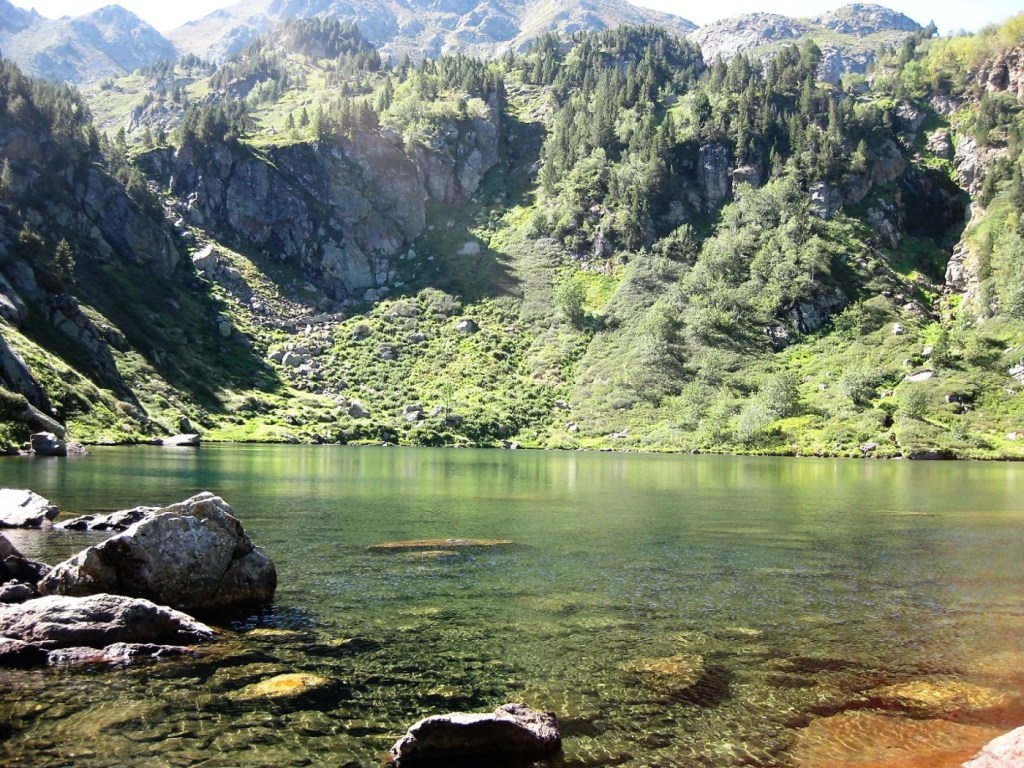
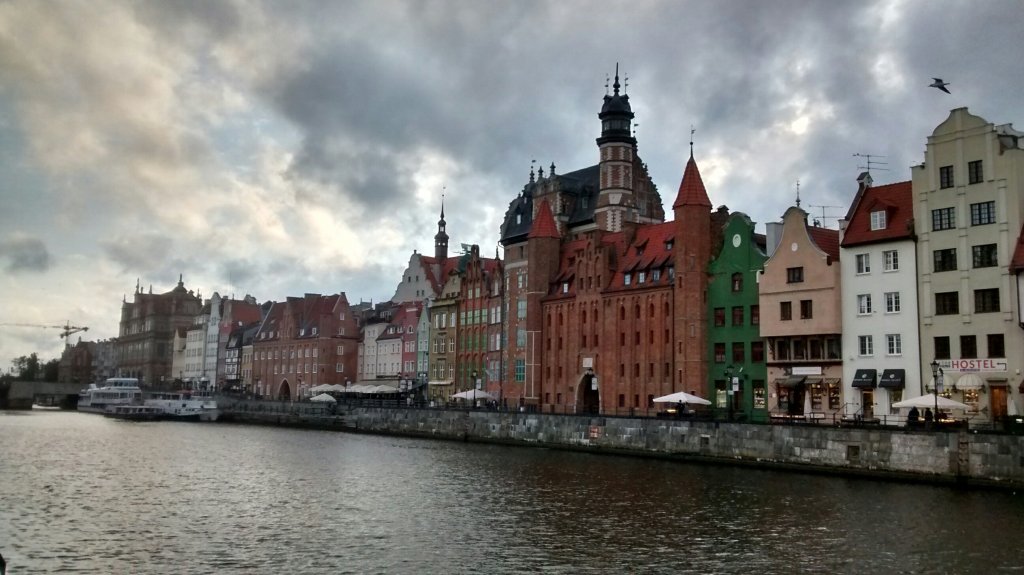
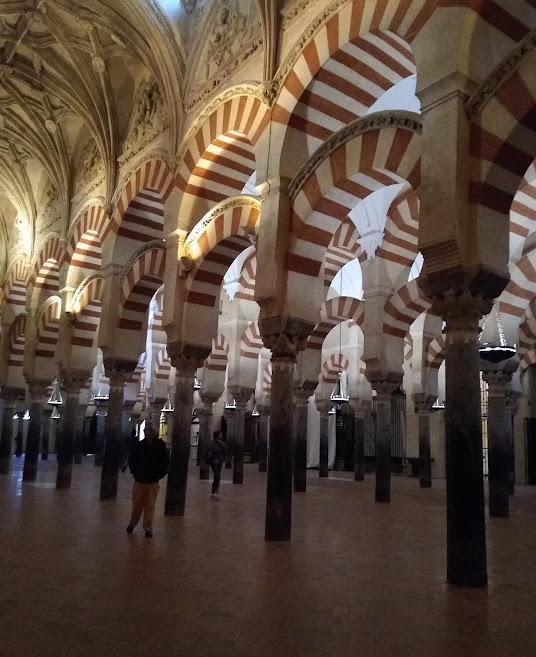
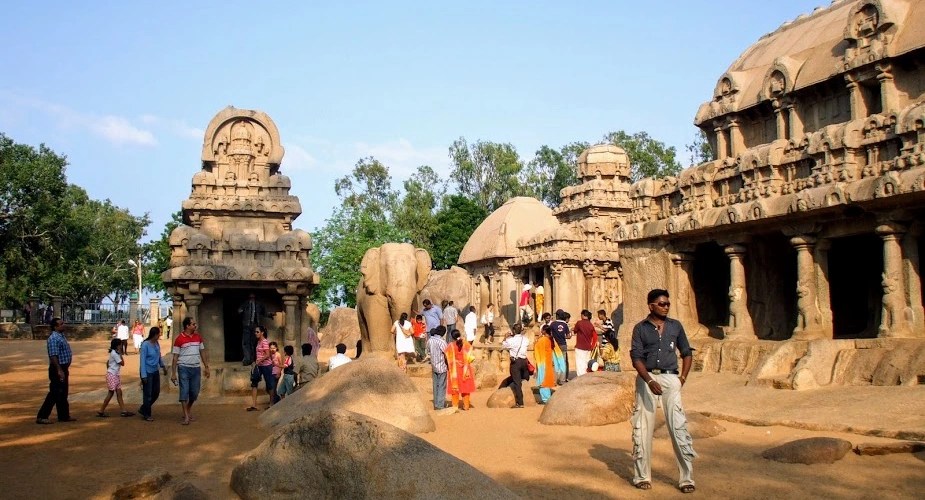
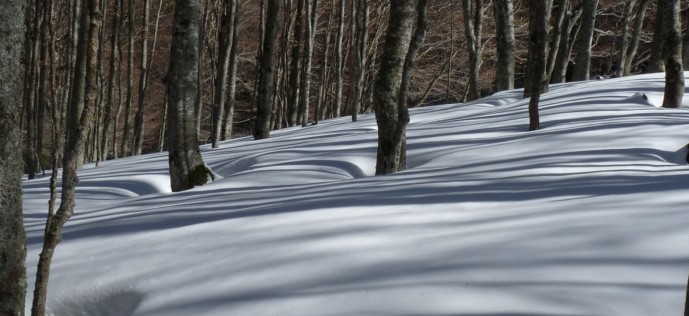
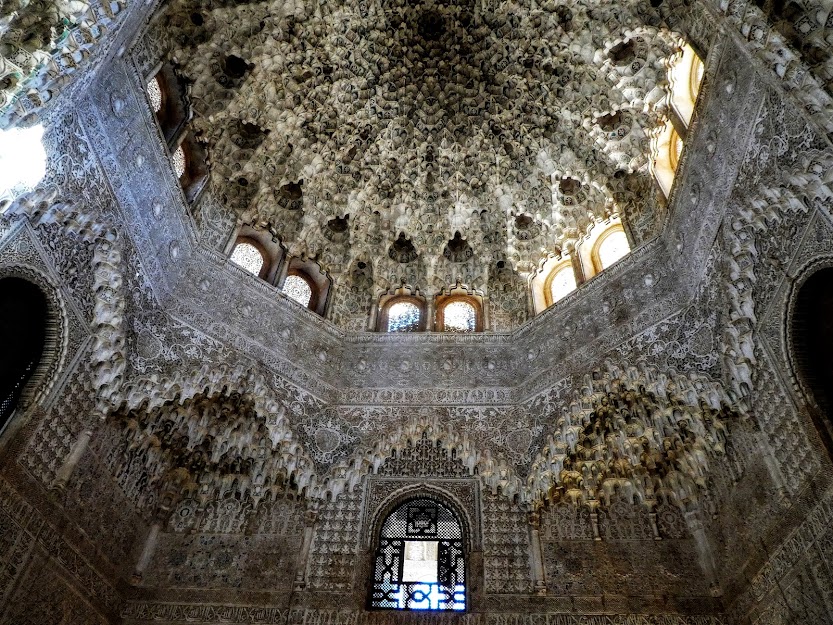
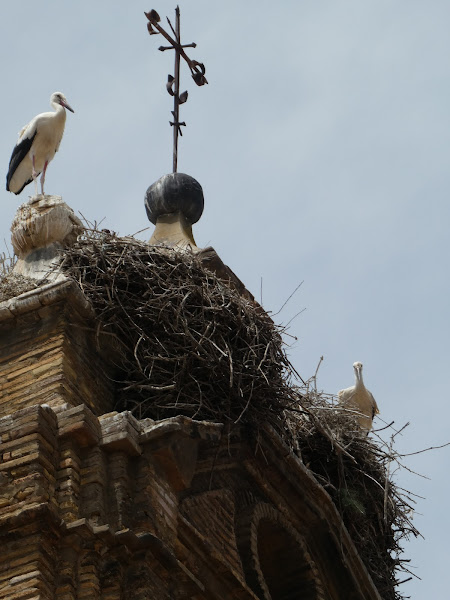
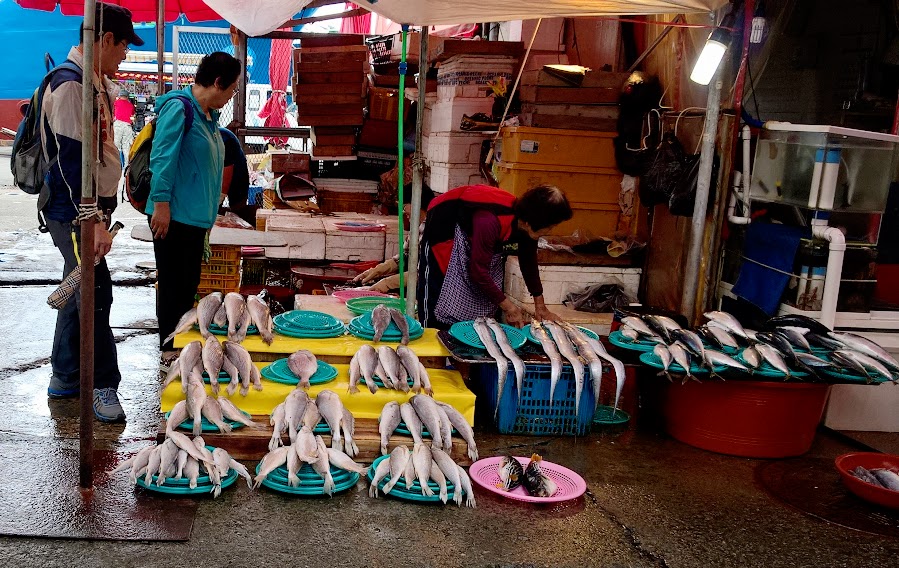
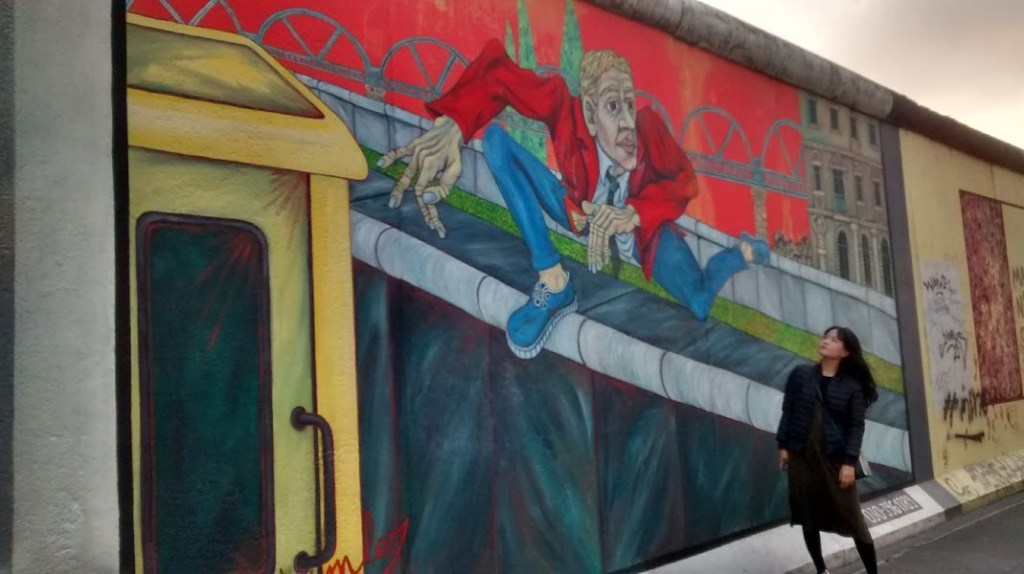
Bamberg, GermanyDeoksugung: the Palace of Vituous Longevity, Seoul, South KoreaL’Etang des Druides, Ariège , FranceGdansk, PolandLa Mezquita , Córdoba , SpainMamallapuram, IndiaNear Montségur, Ariège , FranceThe Alhambra, Granada, SpainSt. Naum Monastery, North MacedoniaStorks in Tudela, SpainFish market in Busan, South KoreaThe East Wall Gallery, Berlin.
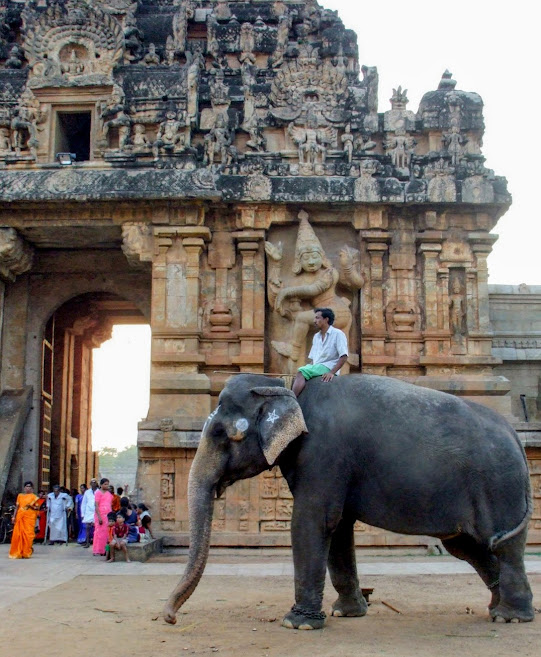
… Should have travelled by elephant …?
Temple elephant, Thanjavur
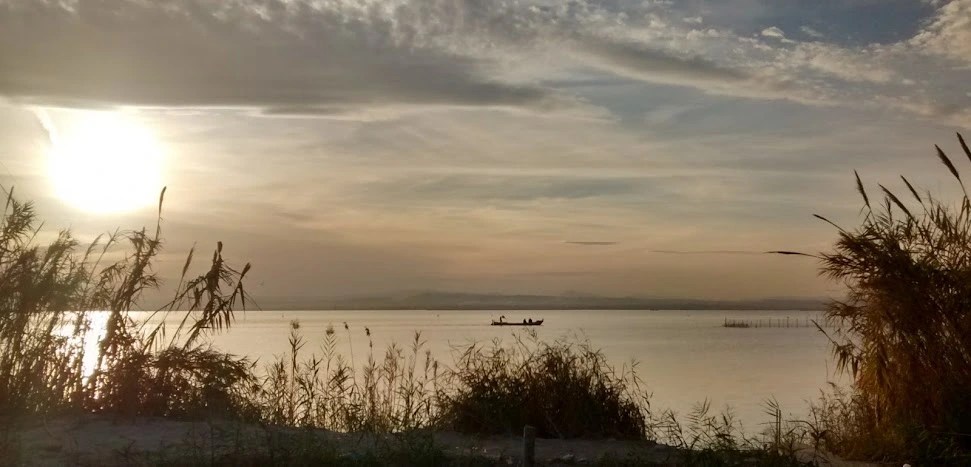
PS – the header photo was taken at l’Albufera, near Valencia, Spain.
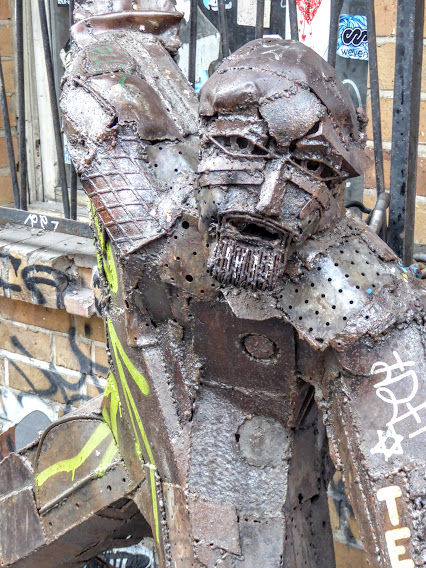
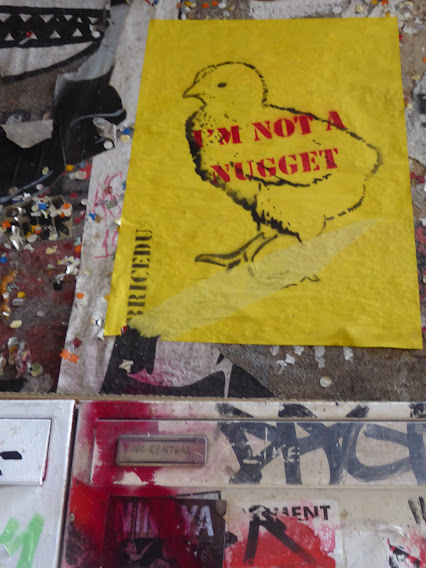
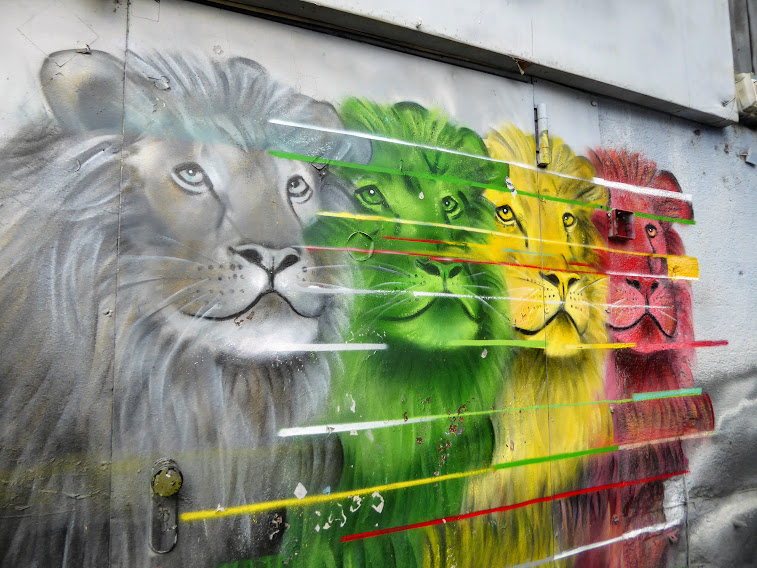
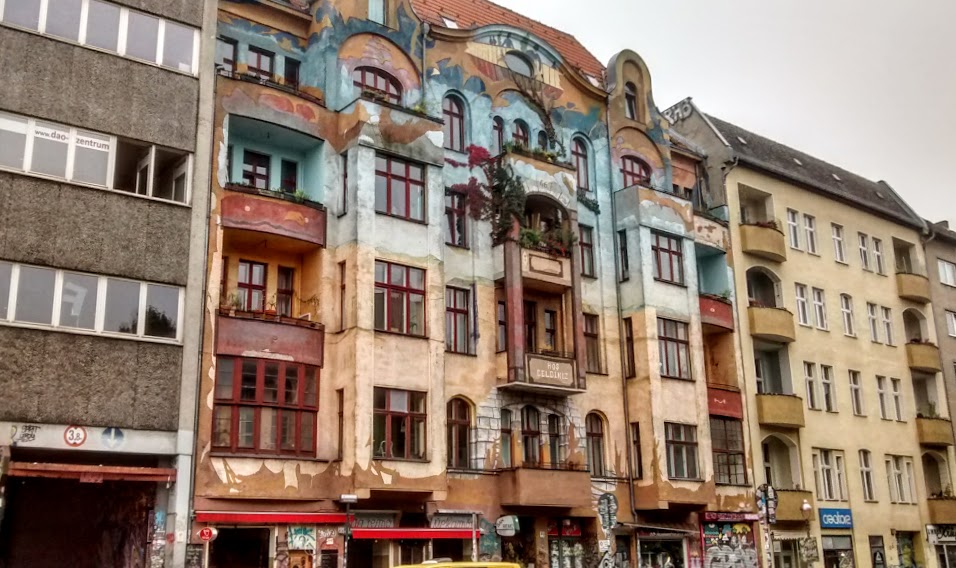
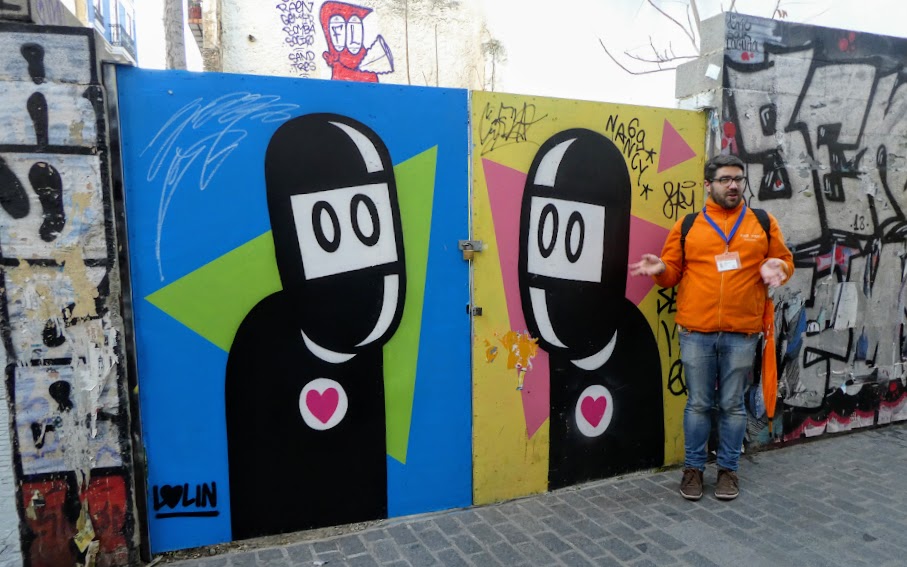
It was in Berlin that I first really discovered a love of Street Art. Maybe it’s because I got some background understanding by going out for the afternoon with Dave, of Alternative Berlin Tours. I learnt the difference between graffiti, street art, stickers and transfers, and something of the political anger and activism that can inform so much of it: particularly near the former Berlin Wall. This has now been re-invented as The East Side Gallery and I don’t show anything of that here because many of its images are so well known. Here are some examples we saw in Dave’s company, or exploring later on our own.
Having done Street Art Module One in Berlin, I was ready a year or so later to do Module Two in Valencia, It was here that I met an irrepressible type who peoples doorways and random bits of street furniture, painted by David de Limón.
Our tutor introduces us to David de Limón
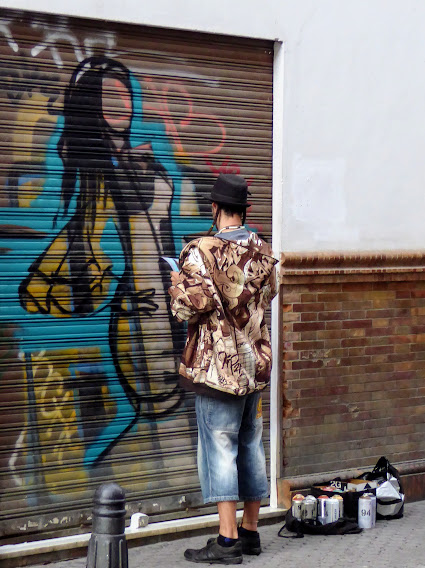
And it was here too, as we once had in Seville, that we encountered street artists doing their day – or occasionally night – job.
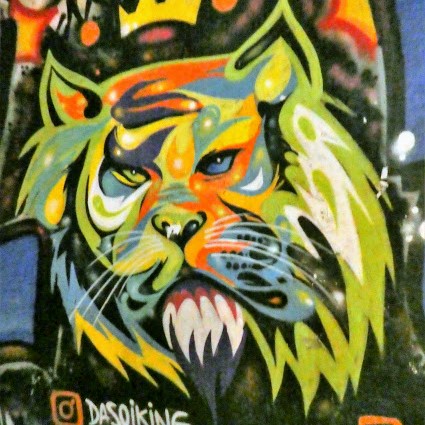
Here are a few more:
I like the way that the windows become part of the fantasy here.
And here’s one just for Past Squares …
And we’ll have a whistle-stop tour of Spain and view a few more:
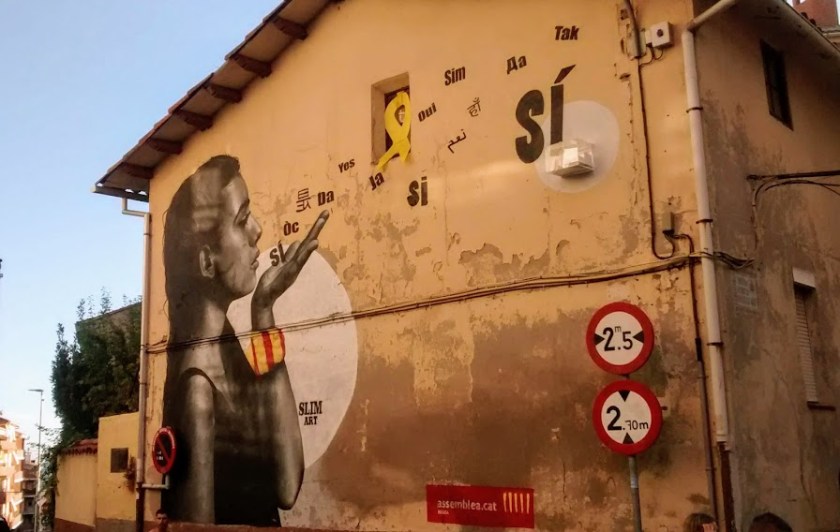
Catalan independence is always the story in Berga …
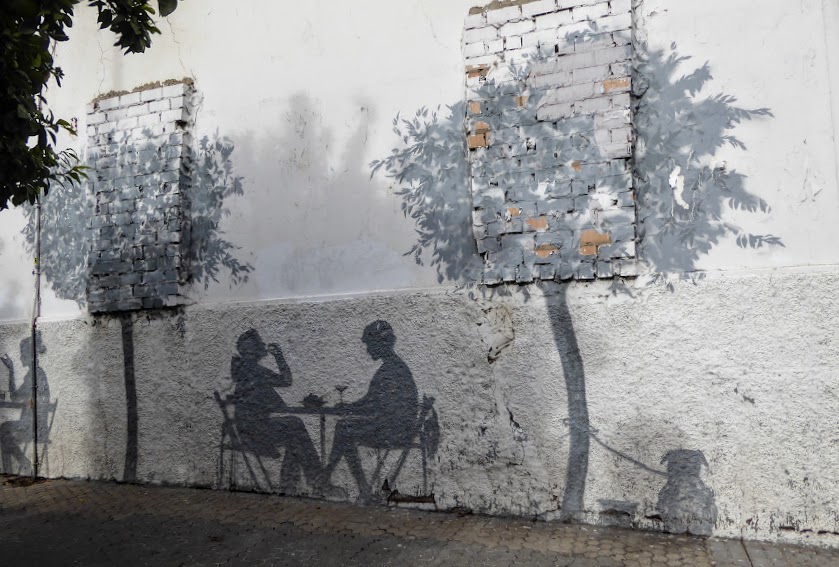
… whereas relaxing over a drink with a friend is more Seville’s style
Granada’s a place to relax too.
An ancient city with Arabic, Jewish and Christian roots, Tudela has embraced street art too
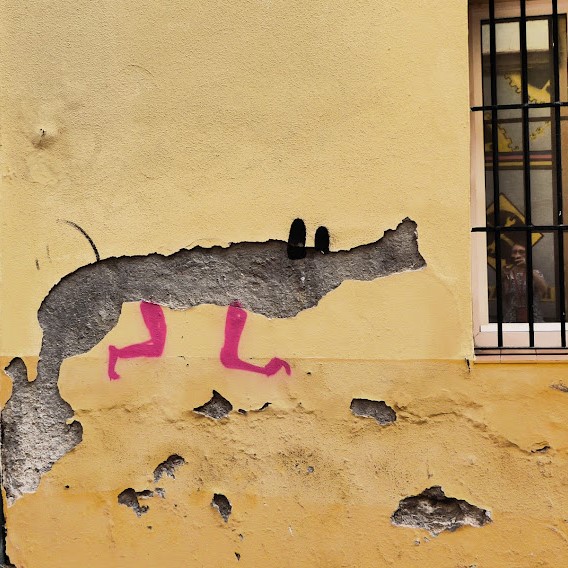
Maybe this is my favourite image of all, a bit of fun created from damaged plasterwork in Seville:
Another Past Square for Becky, and worth another outing, I think.
Although – hang on – no. My real favourite has got to be in Manor House Gardens, Hither Green, because the artist appears to have designed this image with my granddaughter in mind.
With thanks to Patti for providing us with a chance to wander city streets this week in quest of images that amuse, provoke and stimulate us. It’s the perfect moment to join the Photographing Public Art Challenge too. As well as Monday Mural. All this and Past Squares and Monday Window too … This is taking multi-tasking to a new level.
The header image comes from the top floor of an apartment block in Málaga.
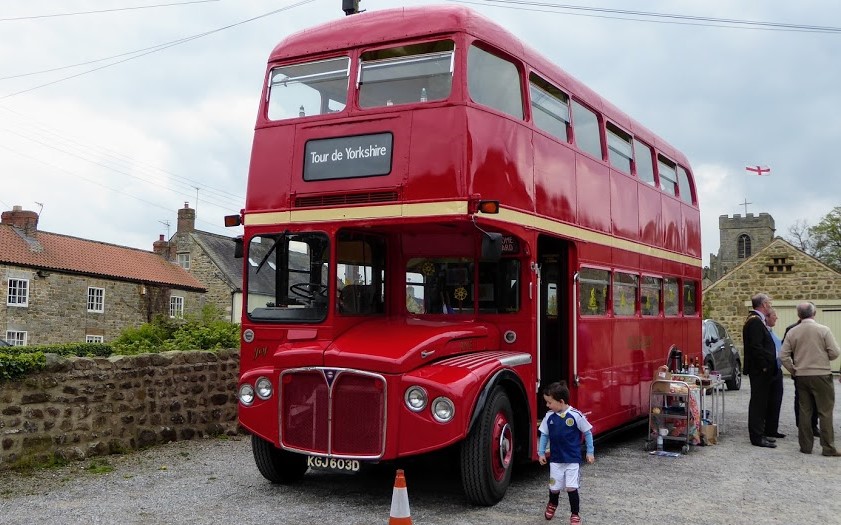
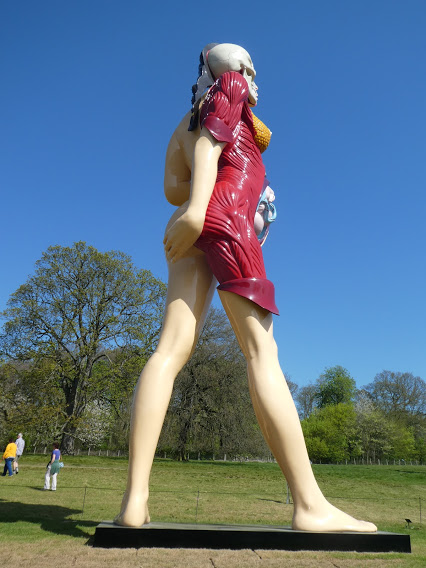
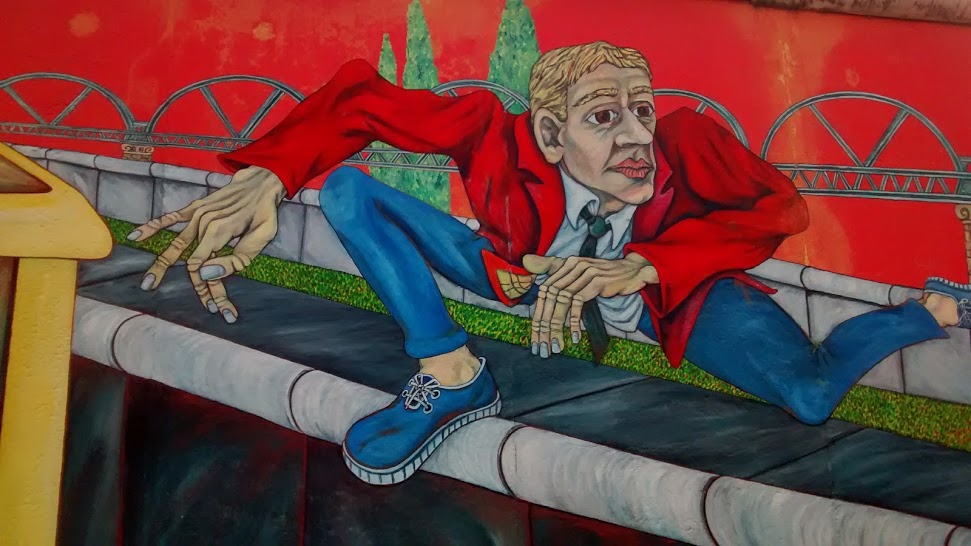
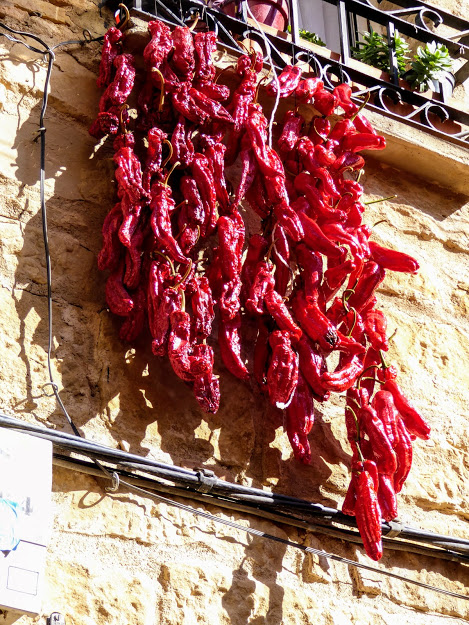
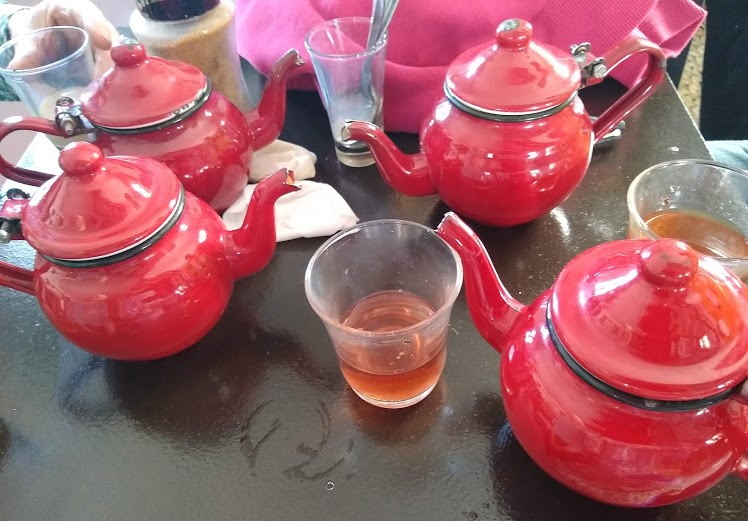
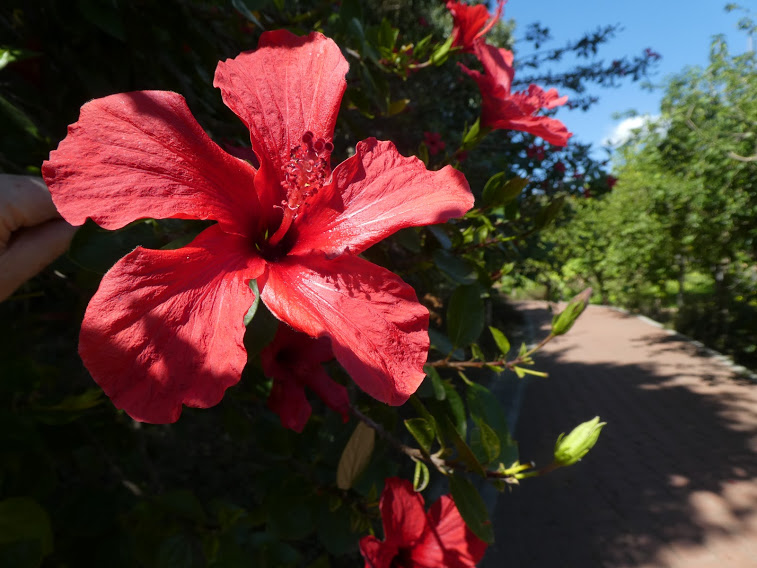
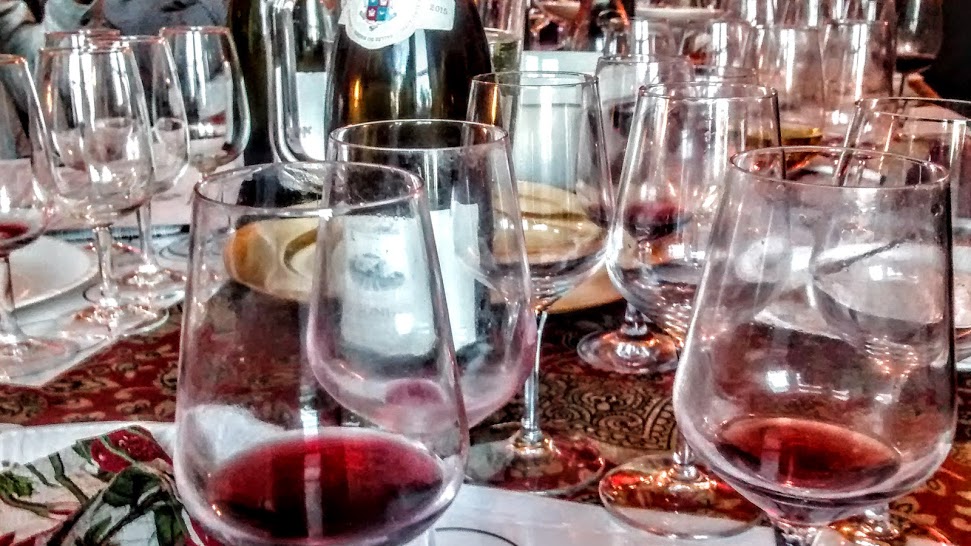
This month, Jude is inviting us to hunt forred in her Life in Colourchallenge. So let’s go on a Virtual Day Trip and hunt for red. I think we’ll travel in the bus that was conveniently parked in the next village when the Tour de France came to Yorkshire. West Tanfield is also where we see the poppies in the featured photo.
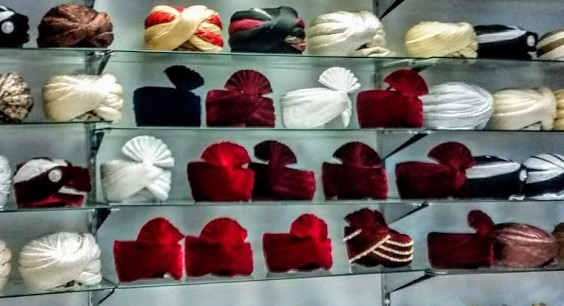
We’ll whip over to Bradford first, call in at the Bombay Stores, and get some headgear for you chaps.
Berlin next. We’ve only time to wander down a handsome street …
… before arriving for a quick visit to the Berlin Wall.
Right. That’s Germany done. Straight off to Spain. Are you peckish yet? Seeing all these peppers, tomatoes and pots of Moorish-style tea has made me think of food.
la Rioja
Premià de Mar
Granada
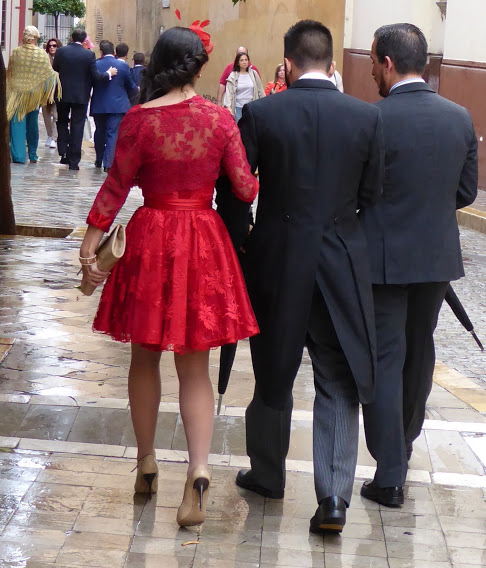
Where next? We could catch a wedding in Seville …
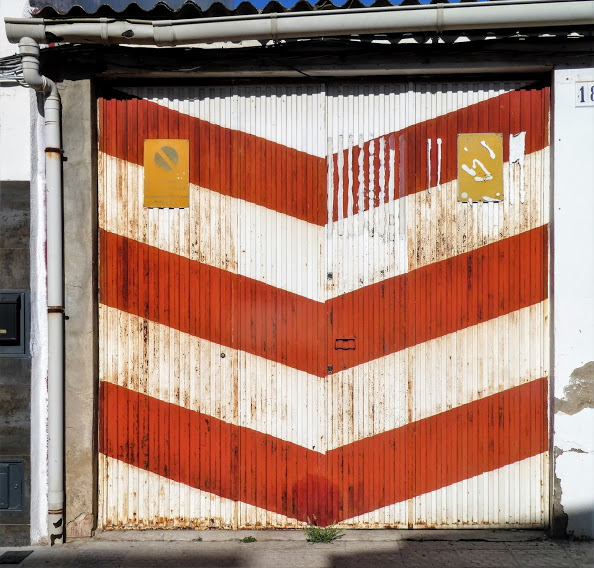
… and please don’t tell me we’ve come to Córdoba just to see this garage door.
This is not the week to get out and about with my camera looking for Unusual Points of View for Jude’s Challenge. Here’s why: *
The view from the bedroom window.
She’d like us to shoot something often photographed, but choose a less usual point of view. I thought I’d combine it with a mini-break for us all.
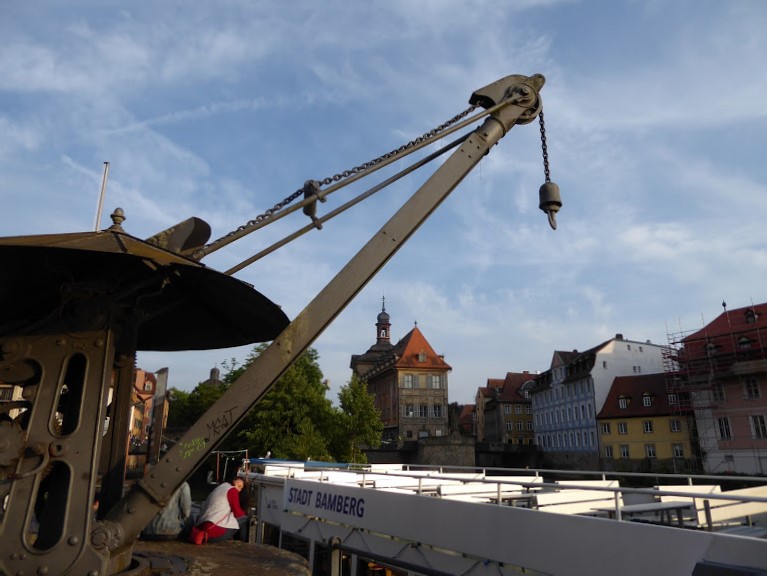
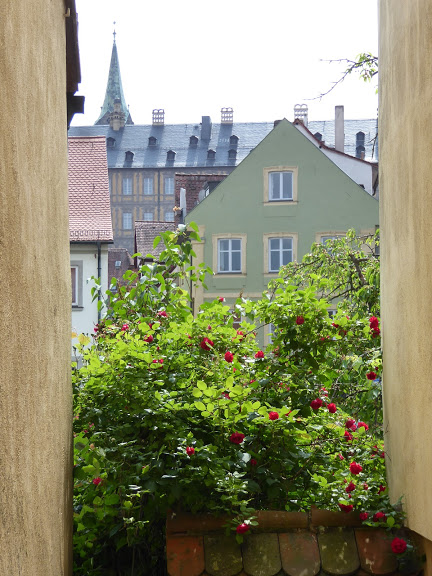
Let’s go to Bamberg. The old town there, a UNESCO World Heritage site, largely built on the rivers Regnitz and Main, between the 11th and 19th centuries can easily keep you busy and charmed for several days. You can visit the main sites here.
But we have a job to do – Jude’s challenge.
This week's assignment - take a picture of a frequently photographed subject like a flower or a person's face from an unusual POV. How can you create an out-of-the-ordinary shot?
We’ll wander along the river to get a different view of the much photographed Old Town Hall.
A view of the Old Town Hall from the riverside of the Old Town.
Another view of the Old Town, seen from the comfort of a bar.
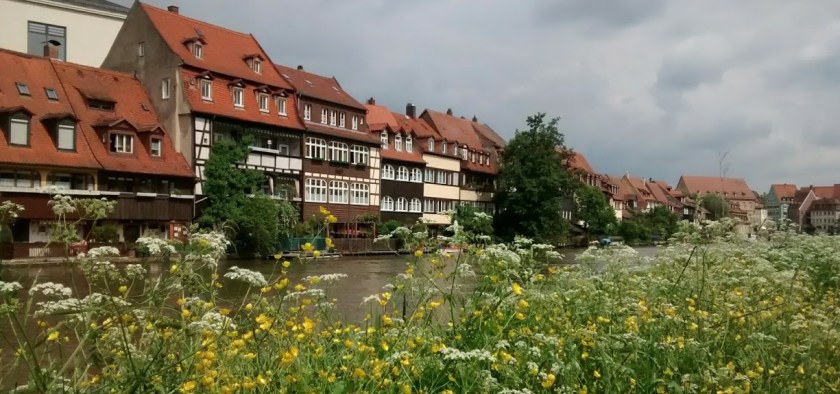
Little Venice, seen from the opposite bank of the river.
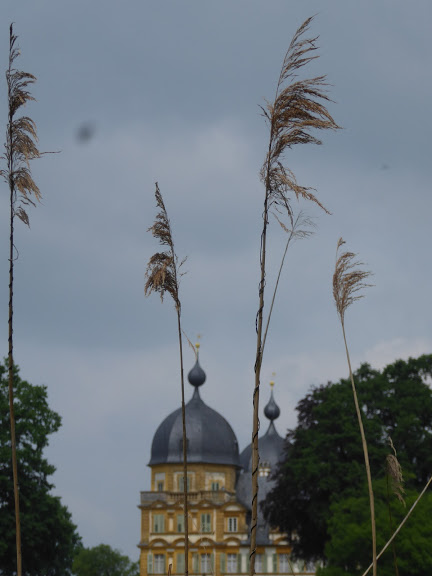
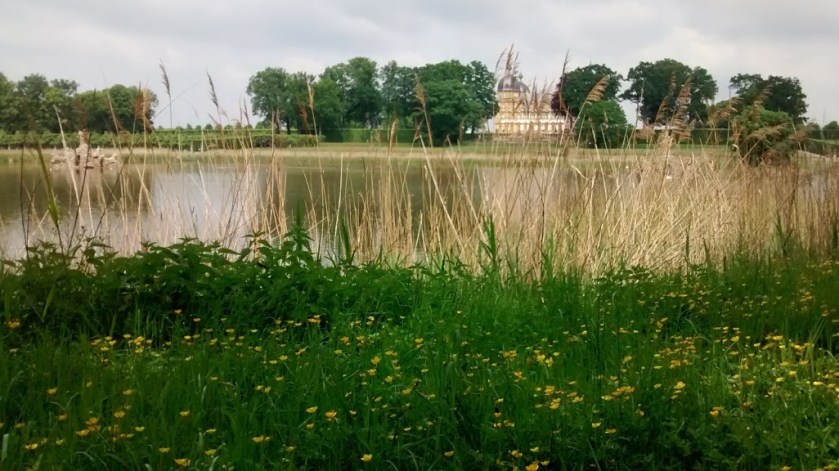
In the afternoon, we’ll go out of town and take a trip toSchloss Seehof. It was built as a palace and hunting lodge for one of the Prince-Bishops of Bamberg between 1684 and 1695. I wanted to capture the idea of this stylish palace being very much a place-in-the-country.
A view from the parkland.
Some of the parkland has become a nature reserve, with ponds and wetland. That’s the side of the palace I wanted to show here.
A short trip, I’m afraid. But with travelling being so difficult nowadays, short, sweet and virtual is probably the way forward.
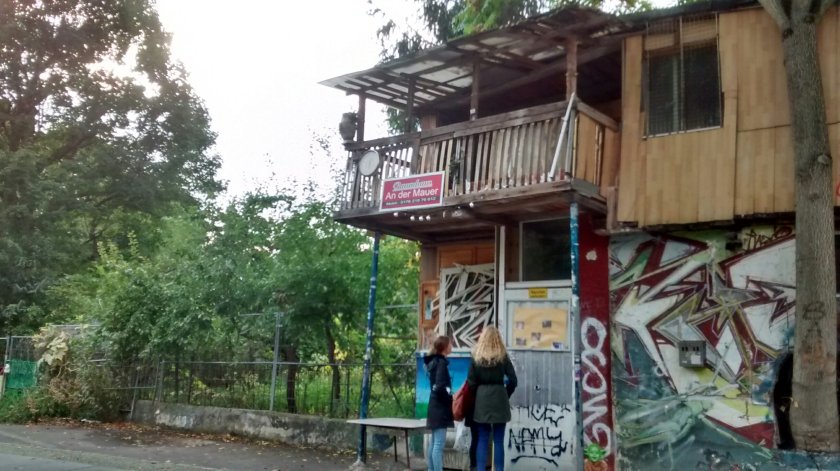
Quite suddenly and unexpectedly, one night in 1961, Berlin became a divided city. At first there was merely barbed wire fencing, then a wall. It was all done in such a hurry that mistakes were made. One tiny part of Kreuzberg that belonged to the Eastern sector got isolated in the West. The Americans – for it was in their zone – could do nothing about this unremarkable patch. It became an unloved and unlovely rubbish dump.
Then along came Osman Kalin, an immigrant Turk. He wanted a vegetable patch. He cleared the land and started to plant seeds. As his patch became productive, he gave vegetables to schools, to the local church, to anyone in need. He cobbled together a rather ramshackle tree house. He became something of a local hero.
Initially, the East didn’t mind. But when East Berliners successfully started to tunnel under his patch and escape he came under suspicion. The authorities came to interrogate him, and he welcomed them in his usual hospitable way. They gave up and left him alone.
In 1989, the Wall fell. A newly united Berlin City Council began to see Osman’s ramshackle domain as an embarrassment. They gave him notice to quit. The local and wider community was horrified. 25,000 people signed a petition demanding he be allowed to go on growing his vegetables.
He stayed. He’s 95 now, and doesn’t work so much on his vegetable patch, though his son does. He lives in a flat nearby rather than in the tree house. He’s still a much-loved local hero.
I heard this story on a walking tour offered by Alternative Berlin Tours, led by the remarkable and endlessly interesting Dave. Very highly recommended.
An entry for Six Word Saturday. In her post, Debbie too has chosen to celebrate the fall of the Berlin Wall

























 From Pyrenees to Pennines
You must be logged in to post a comment.