You’ve ‘done’ Barcelona.  Now what? (Part Two)

Nobody could accuse Barcelona of being a spot of ‘rus in urbe‘.  Oh, it’s tremendously good at public open space to relax in and at tree lined streets.  But shady expanses of groves and avenues of trees, of busy little streams and placid ponds?  Not so much. 

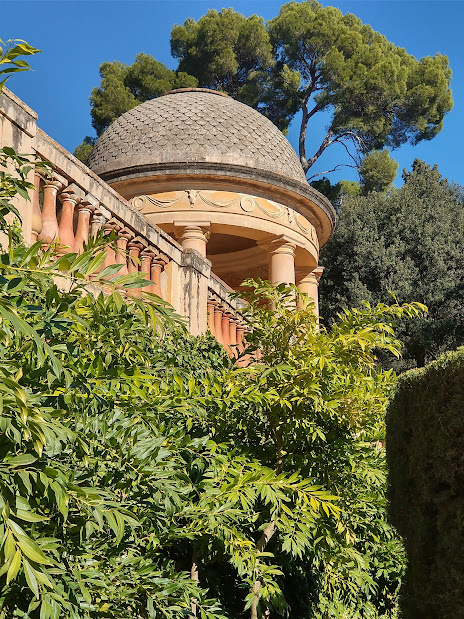
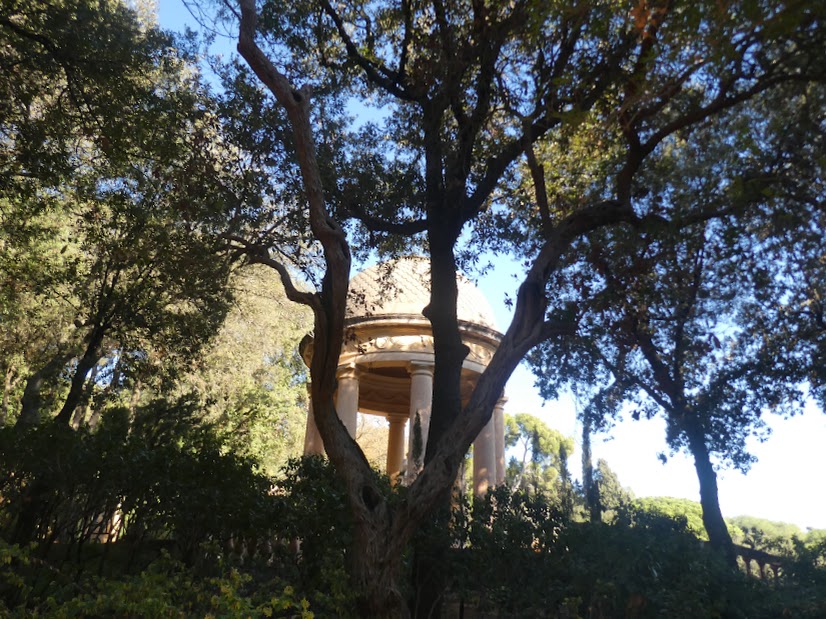
Except for one place, quite unique in the city.  The Parc del Laberint d’Horta (Labyrinth Park of Horta) has been here since 1791, when the Desvalls family had it built as a Neoclassical park, and one featuring a maze – hence the park’s name – and any number of classical statues of Greek deities.  In the mid 19th century a more free-flowing Romantic woodland park was added.  And in the 1960s it became a public park, hidden from the view of many of the city’s inhabitants, let alone tourists.  It costs the very odd sum of 2.23 Euros to get in, except on Wednesdays and Sundays when it’s free: or if your an old fogey like me, it’s always free.

Come with me for a stroll.  When we feel up to it, we’ll attempt the maze.  They say it’s harder than it looks.

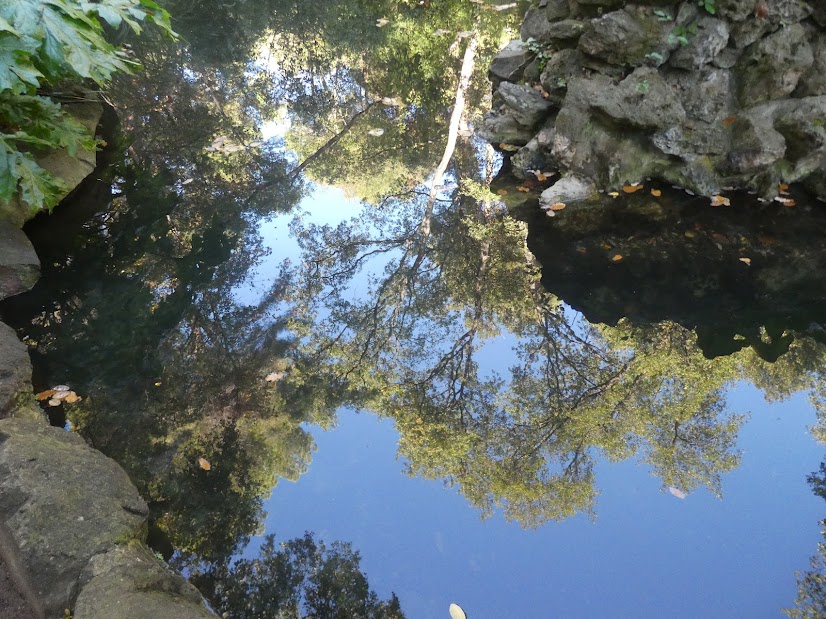
We’ll begin with a rather hearty climb among woodland glades interspersed with pretty reflective pools.
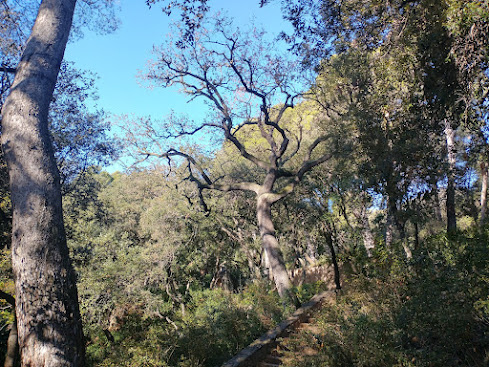
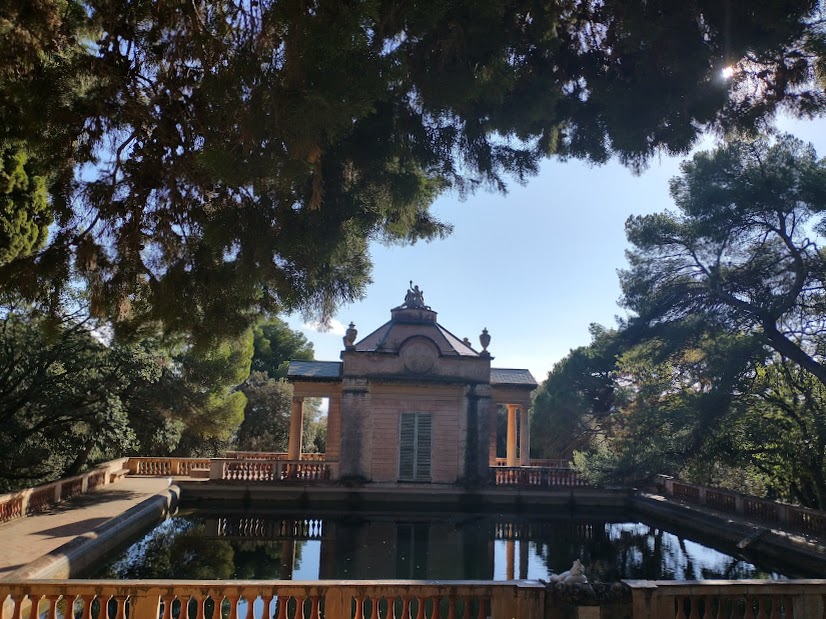
Soon, we realise we must have skirted the very heart of the garden, now lying below us.

Oh look. There are balustrades, and statuary, and pavilions and … that must be the maze in the centre? Let’s go along and look.

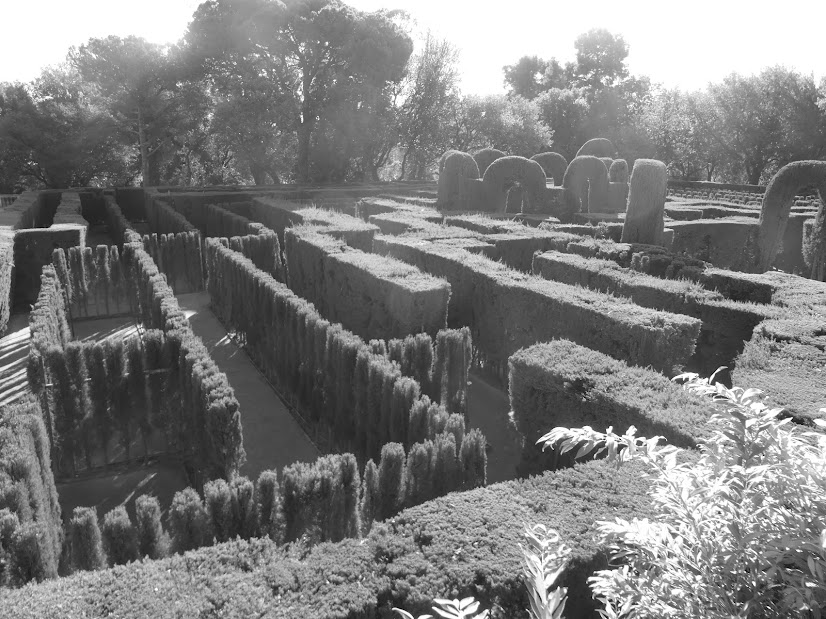
A final look at the maze from above, before we plunge in.  Black and white white might make it easier to sort out. You’d sooner not try it? Your choice.
Oh, this won’t take long.  Look, I can see through the branches easily.  In fact I can see the centre from here …

Oh hang on.  I want to go left, and I can’t.  OK, right, left and left again.  Hmm. I seem to be near the beginning again.  Right, let’s take this slowly …

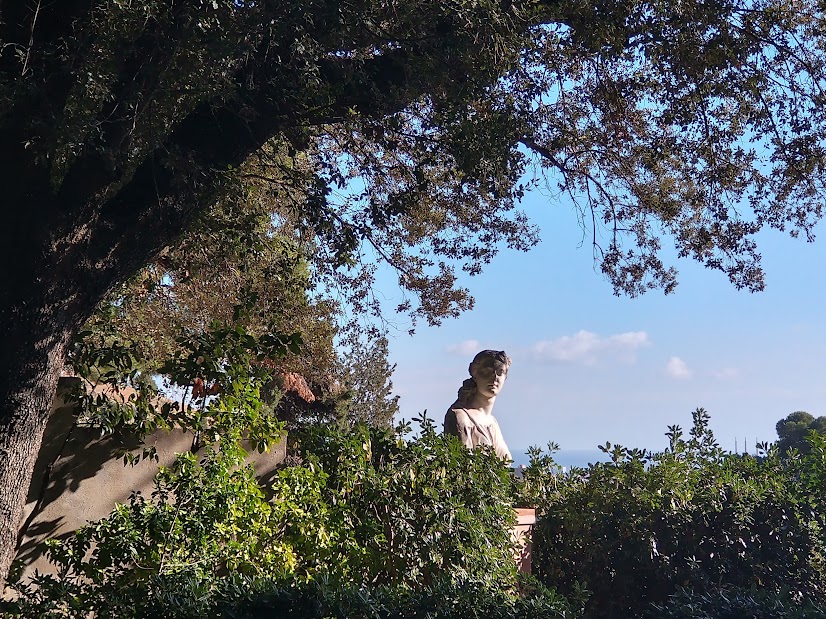
And I did.  Eventually, I met Eros in the centre and sat with him for a while.
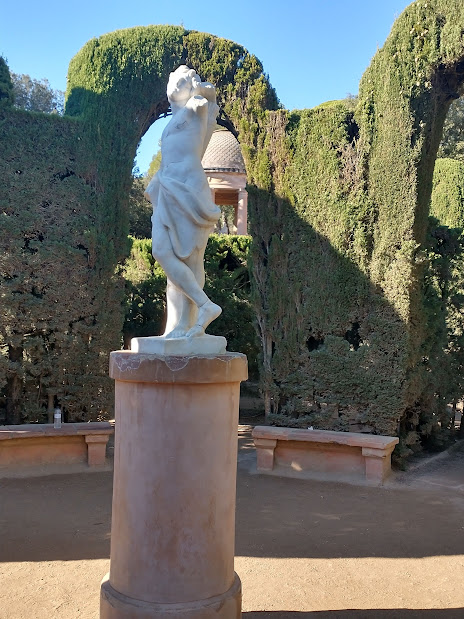
Getting out was worse than getting in.  I kept on fetching up with Eros again, or finding myself up yet another blind alley.  But I made it out eventually, and decided that I really would have liked your company as I thrashed helplessly around. 

I’d nearly explored the whole site, but went for a final stroll, encountering various characters, identity unsolved, on the way.
At this point, I could have gone home.  Instead, I walked into the Horta district, roughly a kilometre away: a well-established community where ordinary citizens live and work, and where there is no possible reason for a tourist to venture. Except I’d had a tip-off.  I should have my lunch at Quimet d’Horta.  This unique bar has been serving the locals its signature dish for almost 100 years.  An omelette sandwich.  A bit weird? I thought so.  But I was wrong.  A cheesy, herby omelette enveloped into half a crisp-crusted baguette, and helped down by a clara turned out to be just the thing I needed.  And as I was eating at the ridiculously early hour of 1 o’clock, I had the place almost to myself.


This is a multi-tasking post.  First of all, it’s part of my Barcelona series.  Then it’s for Amy’s Lens-Artist Challenge #288: Unique.  And then, despite the fact that no cake was consumed in the expedition, it’s for Jo’s Monday Walk.

What’s in the Frame?

This week, for the Lens Artists Challenge, Amy asks us to consider ways of framing our shots. So my featured photo doesn’t do that. The frame shown here, at Brimham Rocks IS the subject of the shot.

Sometimes, the photographer finds a frame has been fortuitously laid on. Here we are on the Regents Canal in London, in maritime Barcelona and at Harlow Carr Gardens in Harrogate.

A band plays on the floating bookshop, Word on the Water, on the Regent’s Canal, London

Sometimes a window – an actual window, or a suitably-shaped hole-in-the-wall provides that frame. Here’s the South Bank in London, a shot taken while sailing to Bilbao, another view at Harlow Carr, and a convenient window overlooking the River Thames near Blackfriar’s Bridge.

In her post about framing, Sarah of Travel with Me fame took us to Fountains Abbey and Studley Royal. We’ll go there too, but wander through the wooded area of the High Ride, and into the parkland of Studley Royal, allowing the trees themselves to frame the picture.

Fountains Abbey in autumn.

And lastly, another view which didn’t work as well as I hoped, through a chink in a drystone wall in the Yorkshire Dales.

Old News Comes into its Own

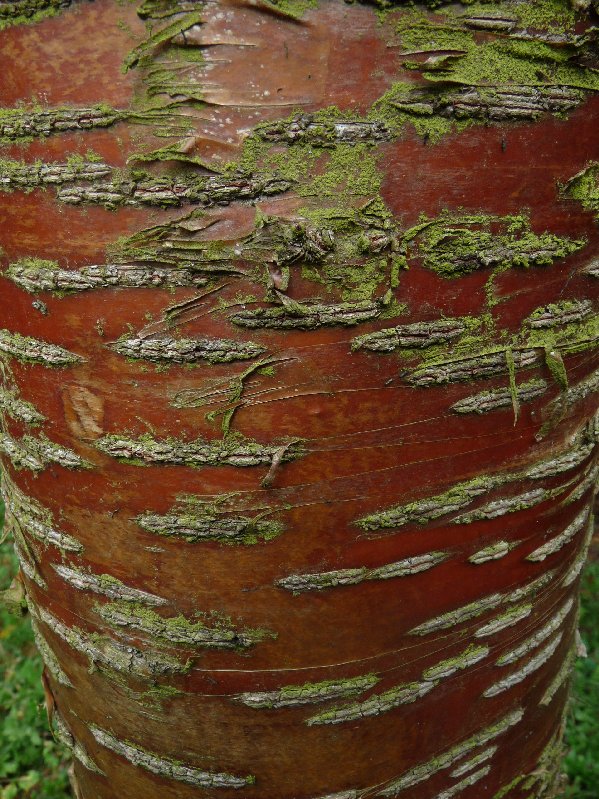
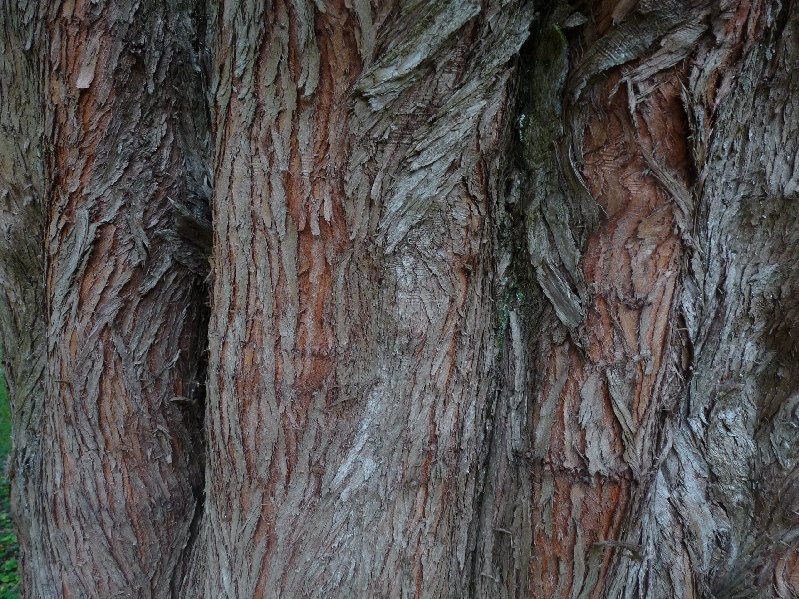
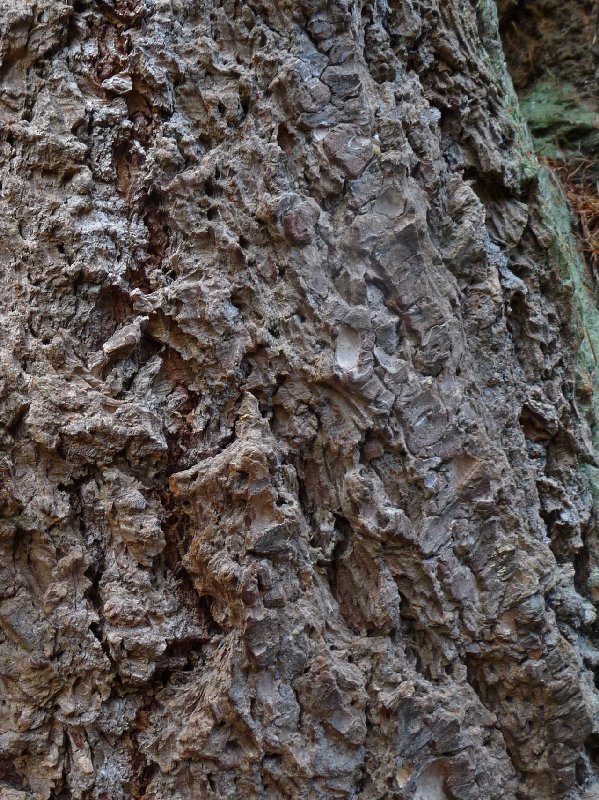
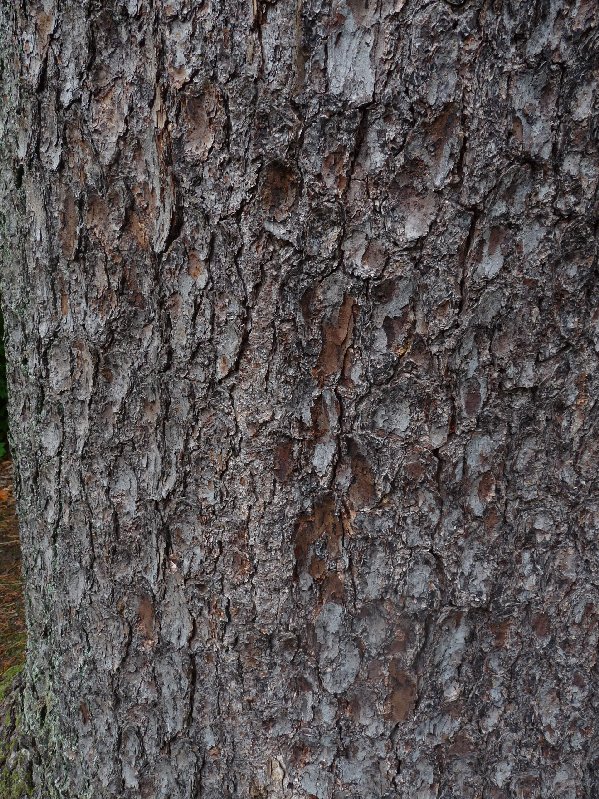
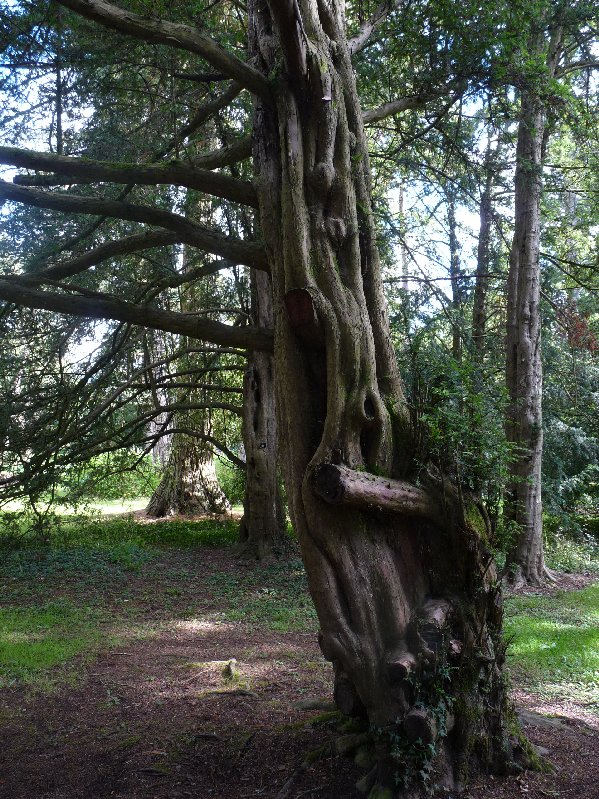
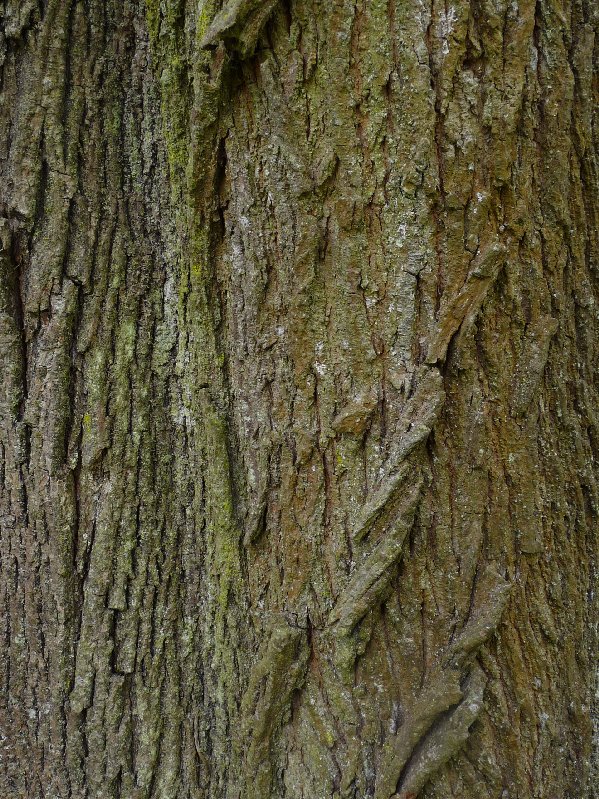
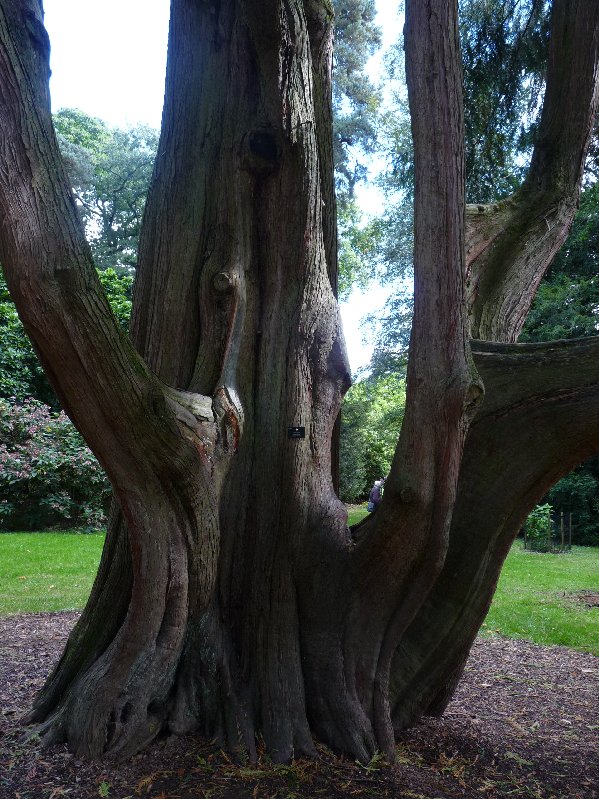
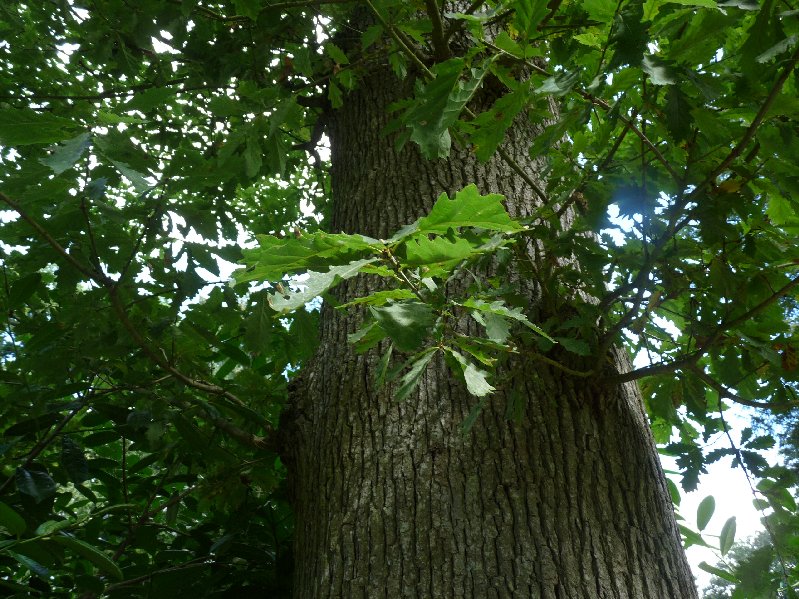
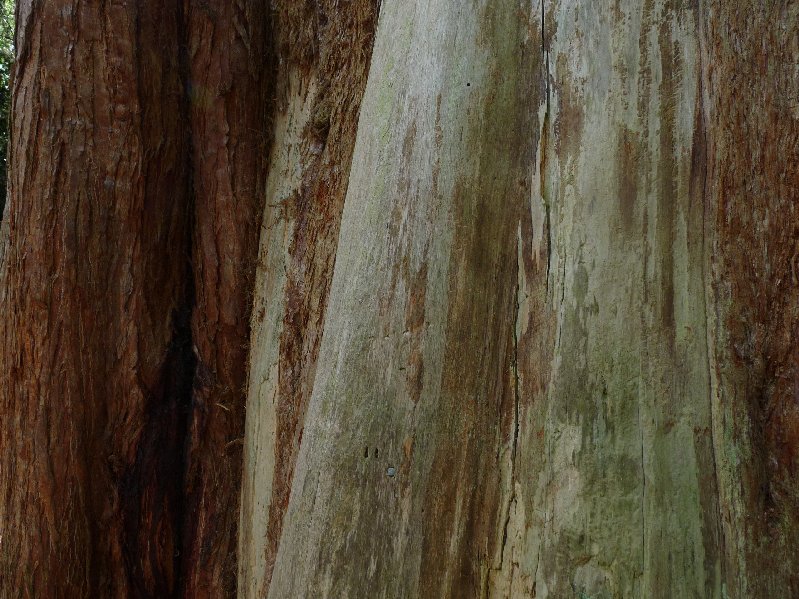
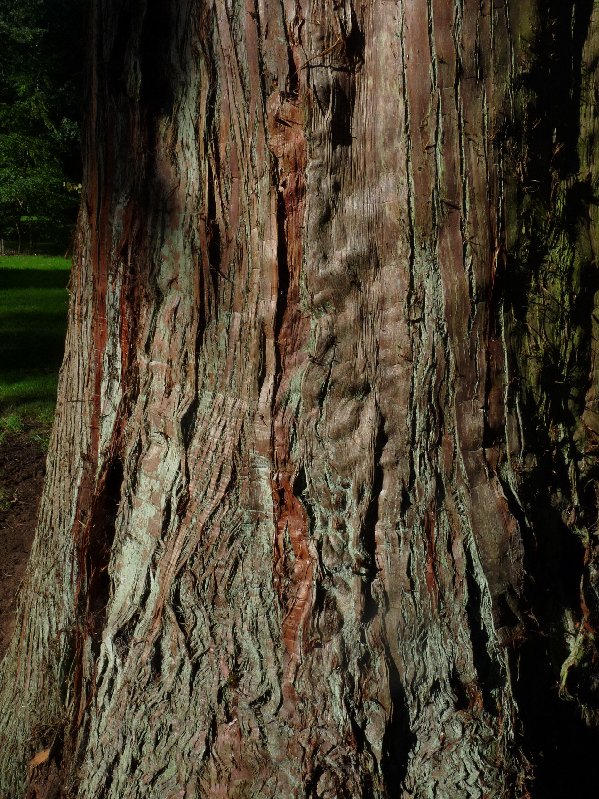
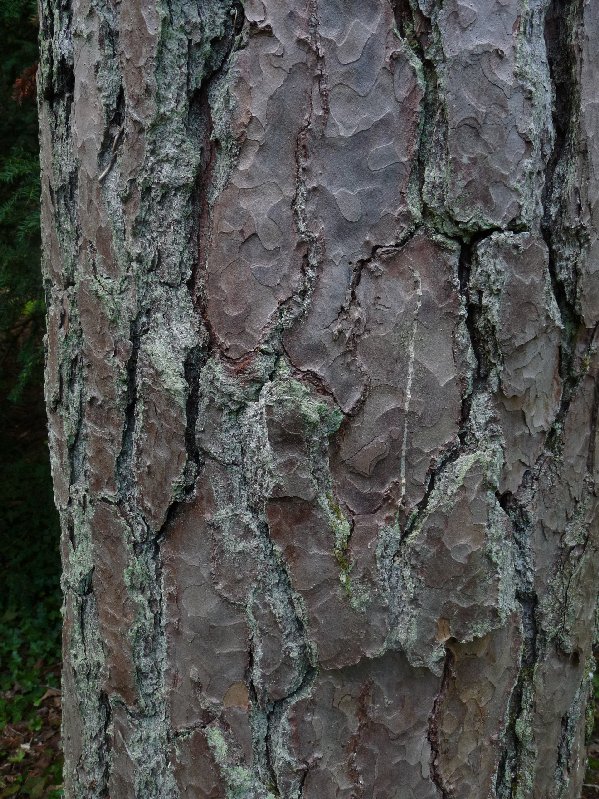
As soon as Denzil asked us to focus on tree bark for this week’s Nature Photo Challenge, I remembered a visit we’d had to Westonbirt Arboretum with my daughter-in-law’s parents. I blogged about it at the time: it was all but ten years ago. Time to re-purpose this old post!

‘Trees are the earth’s endless effort to speak to the listening heaven’*

September 22nd, 2013

On Friday our co-in-laws took us to Westonbirt Arboretum.  If you’re spending a few days round Bristol and Bath there’s no better place to recharge your batteries.  You could pass the morning in the Old Arboretum, a carefully designed landscape dating from the 1850’s.  There are something like two and a half thousand varieties of tree – 16,000 specimens in all,  from all over the world, planted according to ‘picturesque’ principles of the 18th and 19th centuries, offering beautiful vistas, enchanted glades and stately avenues.  After a light lunch in the on-site restaurant you could go on to explore the Silk Woods an ancient, semi-natural woodland, or the grassy meadows of the Downs.

It was Robert Holford who designed and encouraged the planting of the Arboretum, back in the mid 19th century.  This was a period when plant-hunters were bringing new and exotic species back from their world-wide travels. Holford was able to finance some of these expeditions, and the Arboretum contains many of the specimens his scientific adventurers brought back.

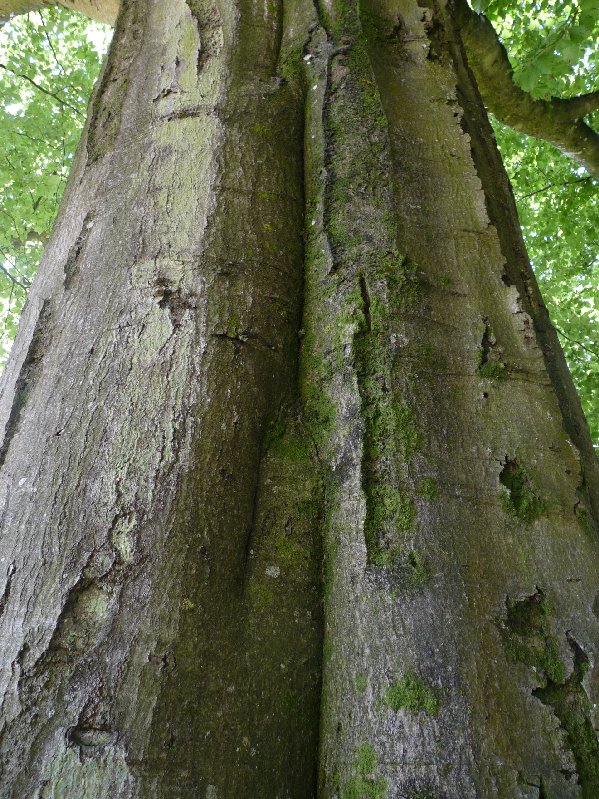
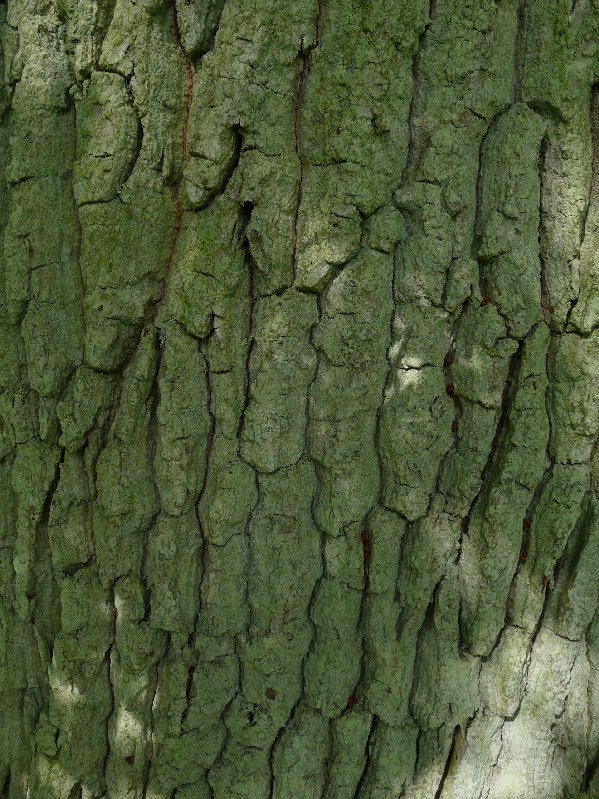
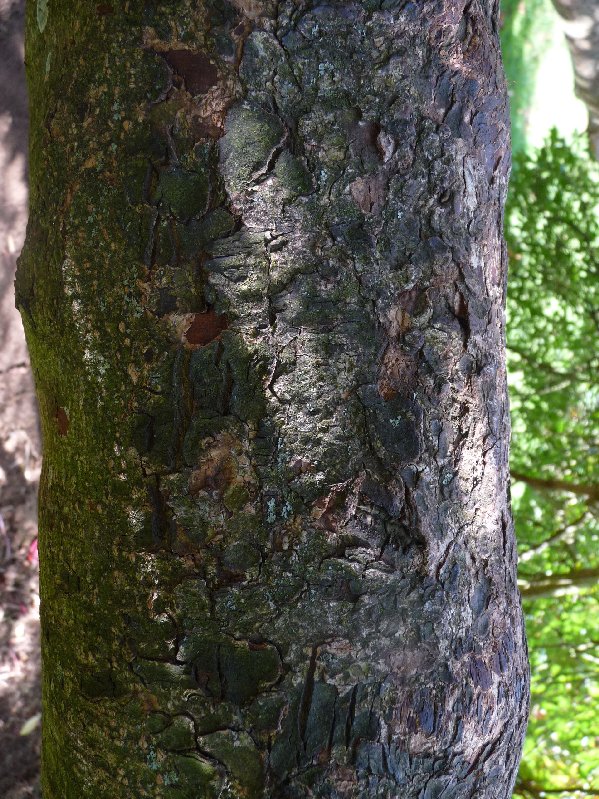
Truly, it’s a magical place.   We arrived, let out a collective sigh, and simply allowed  stress and worry to fall away.  Strolling about, we gazed upwards at trees whose end-of-summer leaves seemed to be fingering the clouds, into copses where we could glimpse others already turning to the ochres and russets of Autumn, and then closely at the trees themselves.  It was the bark that caught our attention close up.  Smooth and silvery, brown and knobbly, grey and wrinkled, the variety astonished us.  Take a look at these.  And if you get a chance to visit this Arboretum, at any time of year, then take it.

*Rabindrath Tagore

‘Inspiration is needed in geometry, just as much as in poetry’

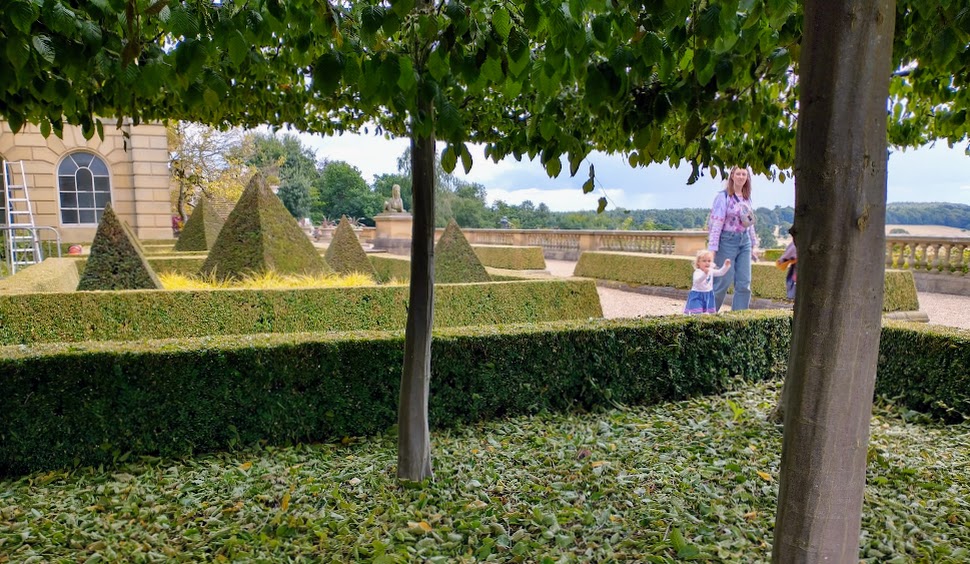
We were in the grounds of Harewood House the other day. Well, mainly we were in its adventure playground: we had our daughter and two year old granddaughter in tow. But we did walk through the formal outdoor areas near the house too, and we happened upon this hyper-geometric topiary garden.

I wondered if the quotation by Aleksandr Pushkin which forms the title of this post fitted the bill. A well-formed garden seems to me a thing of poetry. And this well-formed garden, which I was surprised to find I rather liked, is a thing of geometry too.

It’s the first time I’ve joined in Paula’s Words of Wisdom challenge, where she invites an image with a matching quotation. Let’s see if it cuts the mustard.

Keep your distance: cactus alert!

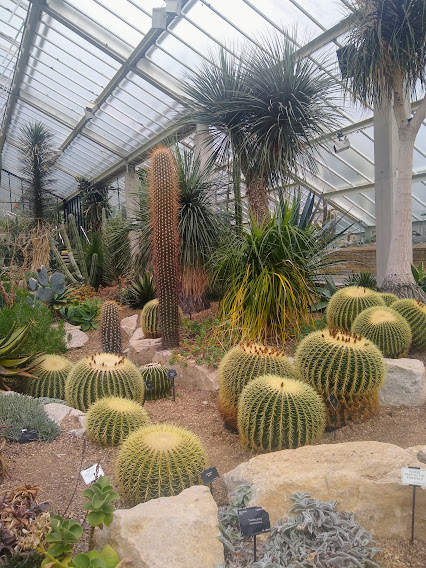
This week, Denzil’s Nature Photo Challenge #18 invites us to look at cacti. Well, apart from this one, taken in Kew Gardens, London, I have nothing to offer from England.

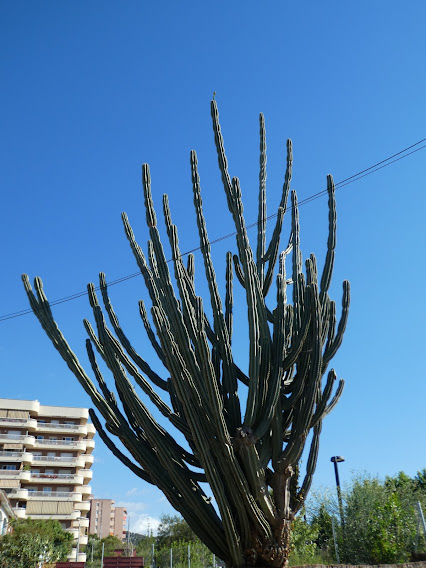
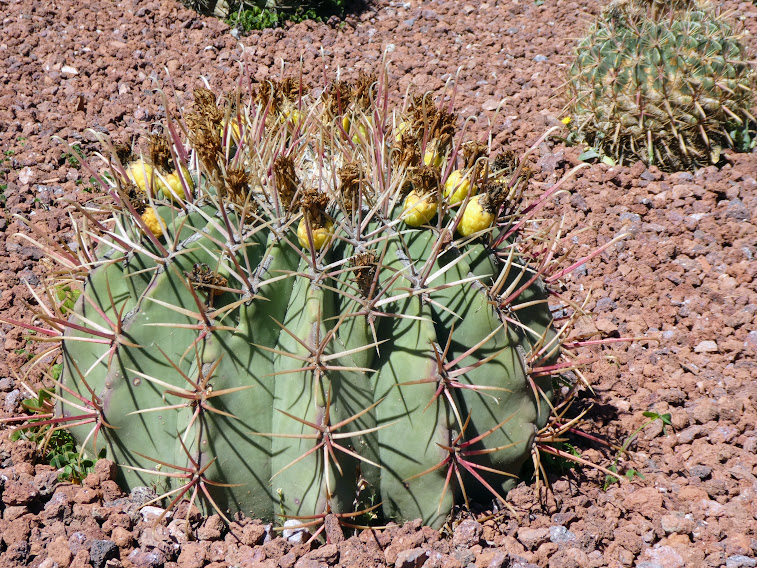
In Spain however, they are two a penny. Here are two from ordinary back gardens in daughter Emily’s home town near Barcelona.

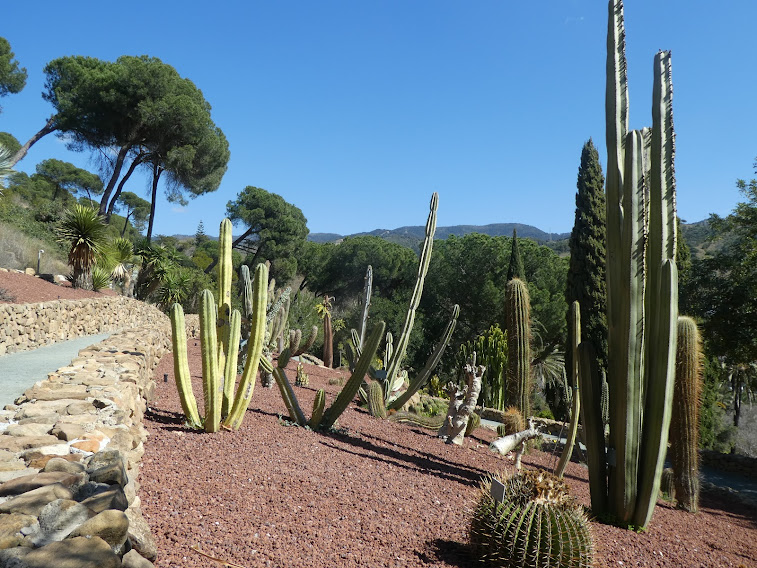
And here, more spectacularly, are a few taken in Jardín Botánico Histórico – La Concepción, Málaga. That’s where the header photo comes from too.

They’re striking things of course, cacti. But I tend to keep a very respectful distance from them. I’m quite relieved to have as the backdrop to my walks cowparsley, daisies and dandelions.

‘The busy bee has no time for sorrow’

The quotation that forms my title is by William Blake. I have no idea whether it’s true that bees have no time for sorrow, but it’s certainly the case that bees are busy. Yesterday, and unforgivably without even my phone as a camera, we saw – or rather heard at first – a brightly yellow hypericum thronged with bees, buzzing energetically, and hurrying round each flower, their pollen sacs already bulging bright and yellow. This YouTube video tells a similar tale:

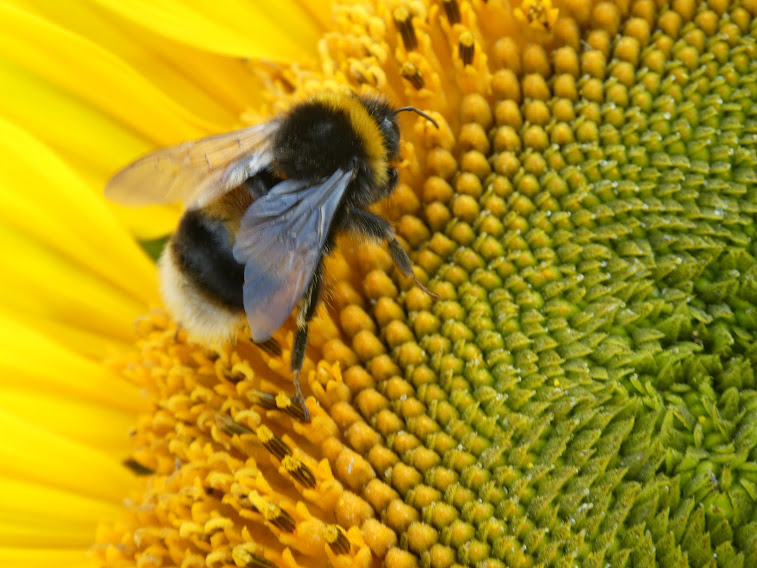
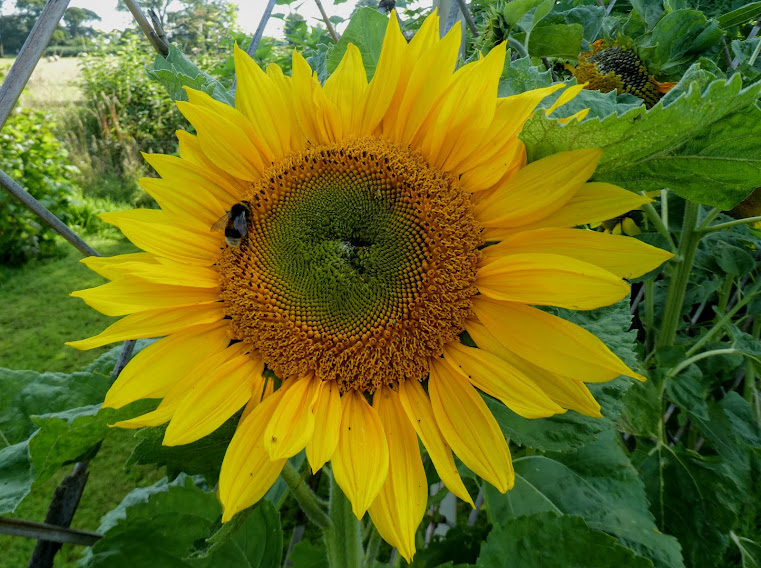
My own photos come from a friend’s sunflowers …

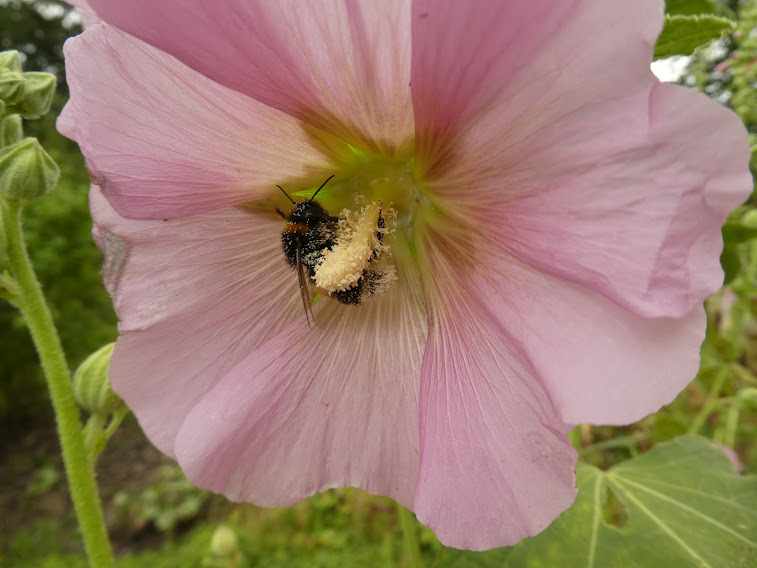
… and from elsewhere in her garden, as a bee apparently all but drowns in pollen.

For Denzil’s Nature Photo Challenge #17: Bees

My Haven of Peace

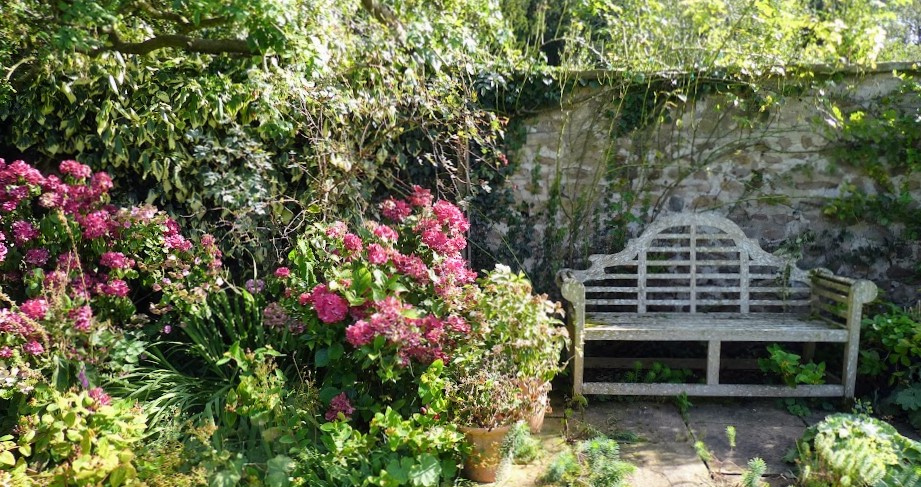
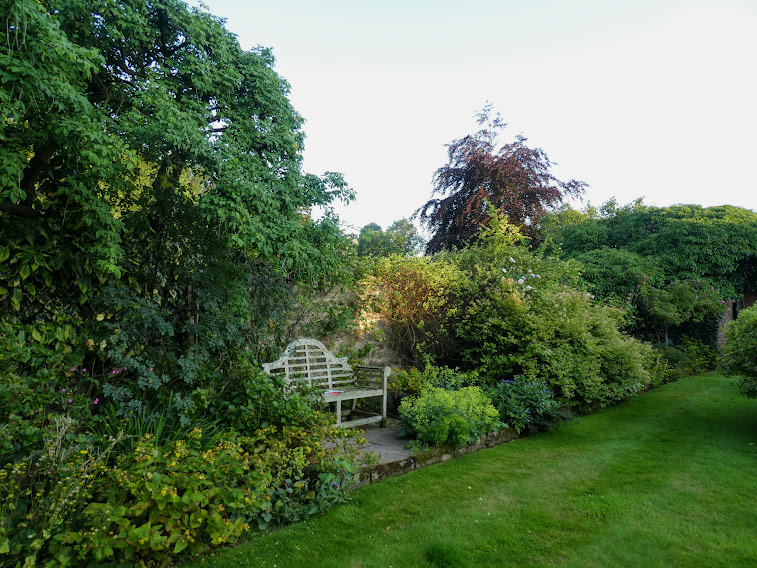
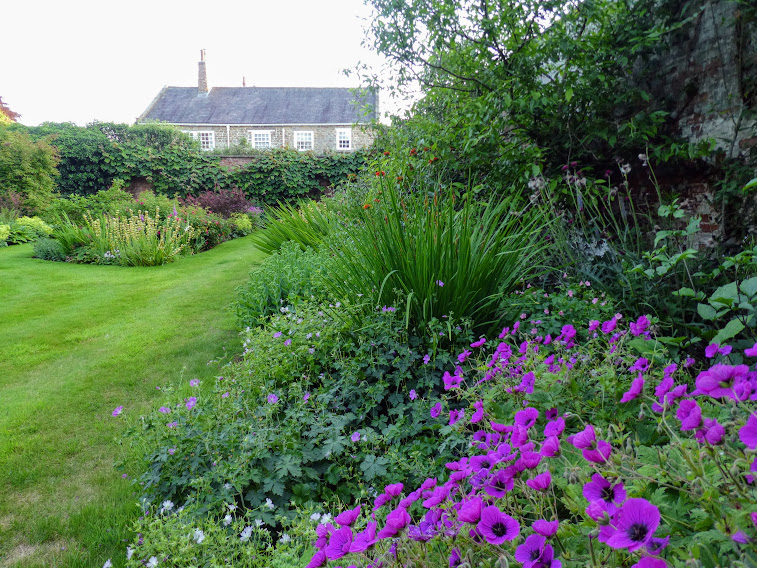
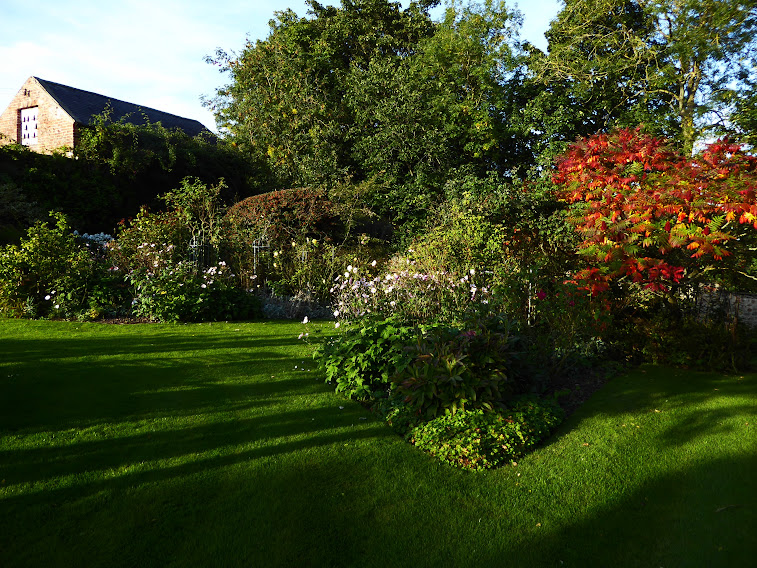
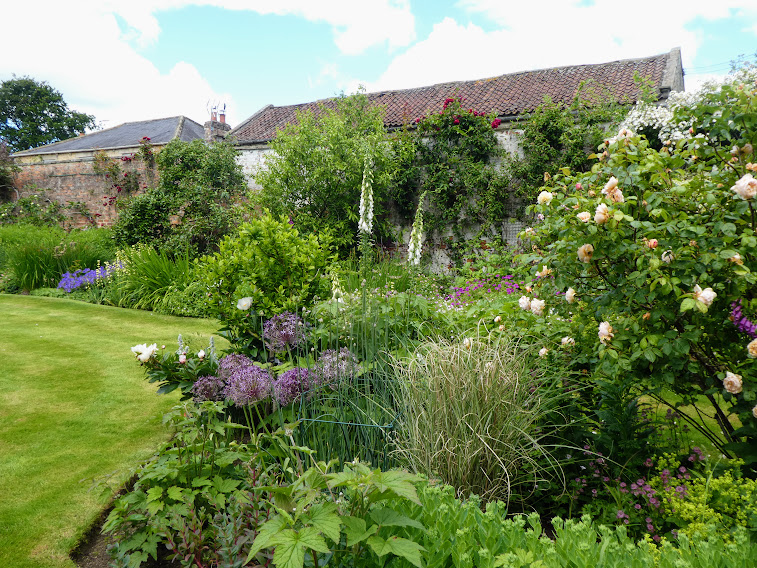
What’s your haven of peace? … asks Denzil, for this week’s Nature Photo Challenge. I don’t have to stop and think. I look out of the kitchen window, and there it is. The walled garden. It’s not ours – it belongs to our landlords. But they are eager to share it, and as they have more garden here, this space is often ours, and ours alone.

It’s a quiet place. Unless you count the birds: trilling, warbling, cooing, admonishing, singing. From our point of view, they’re often at their most tunefully loquacious in the early evening, when we’ll just go out there with a glass of something and enjoy their concert ahead of an evening meal.

That garden seat in the header photo is the place where I’ll go for a while in the afternoon, perhaps with a good book. It’s an ideal vantage point for butterfly-watching too.

Sometimes we feel it’s only right that we should do our bit towards maintaining this special space, so we wander about doing some weeding (leaving the nettles well alone for those butterflies).

We enjoy watching the seasons pass here too: from the first snowdrops and hellebores of winter, to the springtime tulips and daffodils, through to the abundance of summer and the rich russet and burnished tones of autumn.

Our special place: our haven of peace.

J’entends une chanson

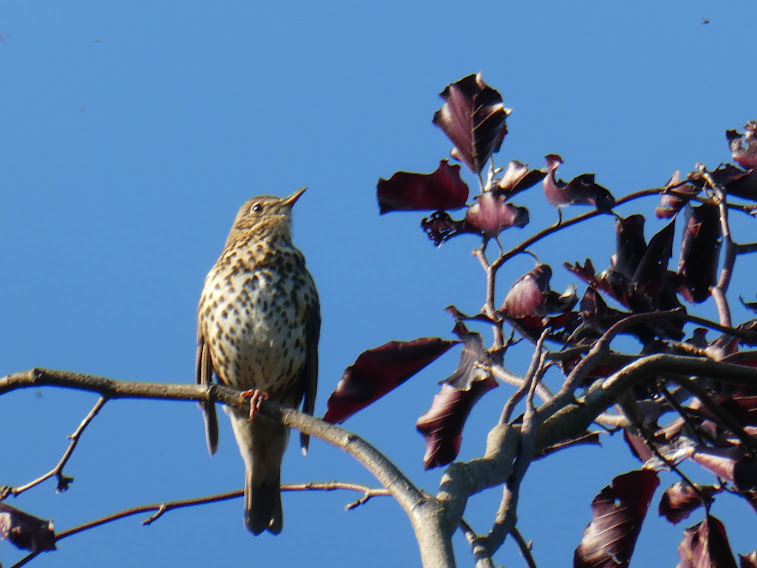
For the past few weeks, days at home have been cheered by a very vocal thrush who starts his loquacious singing at round about ten to five in the morning, and continues with almost no time off for eating, drinking or rest until about two minutes to ten at night. Here he is, in the featured photo.

For the past few weeks, our small a cappella choir has included in its repertoire a 16th century French song, composed by the German Steurlein, celebrating this very thing. I suggested it, because it brought back memories of the choir I sang with in France. Some members have cut up a bit rough, complaining their French accent wasn’t up to the challenge. In the end, I gave in and wrote an English version. I promised them cheesy, schmaltzy doggerel and that’s what they’ve got. Still, it’s all quite jolly, so why don’t you sing along with the YouTube video?

Oh, can you hear the song bird who trills and sings for me?
His joyful notes are sounding from that far-distant tree.
He banishes the darkness, casts out my dreary dreams.
Oh, can you hear the song bird who trills and sings for me?

I wander in the garden, the birds are always near.
They're trilling, crooning, fluting, and singing loud and clear.
They sound the end of winter, and welcome in the spring.
I wander in the garden, the birds are always near.

Let's greet the start of springtime, the season of rebirth,
The birds and bees and flowers, all creatures on the earth.
We'll welcome all the sunshine, and bid goodbye to chill.
Let's greet the start of springtime, the season of rebirth.

Fake Flamenco

A blogger whose posts I enjoy is Rebecca, of Fake Flamenco fame. She keeps her curious eyes open, as she walks and explores the natural world and other things that attract her notice. She informs herself and then her readers about social and political issues in Latin America -which I find so interesting as this is very little covered here in the UK. And she’s a poet. Every month she throws out a poetry challenge, which I always try to join in on, because she translates every poem that’s submitted into Spanish. There’s something very special about this. That she would spend time reading our work, then interpreting it faithfully, and in the same poetic style as our own efforts is quite wonderful.

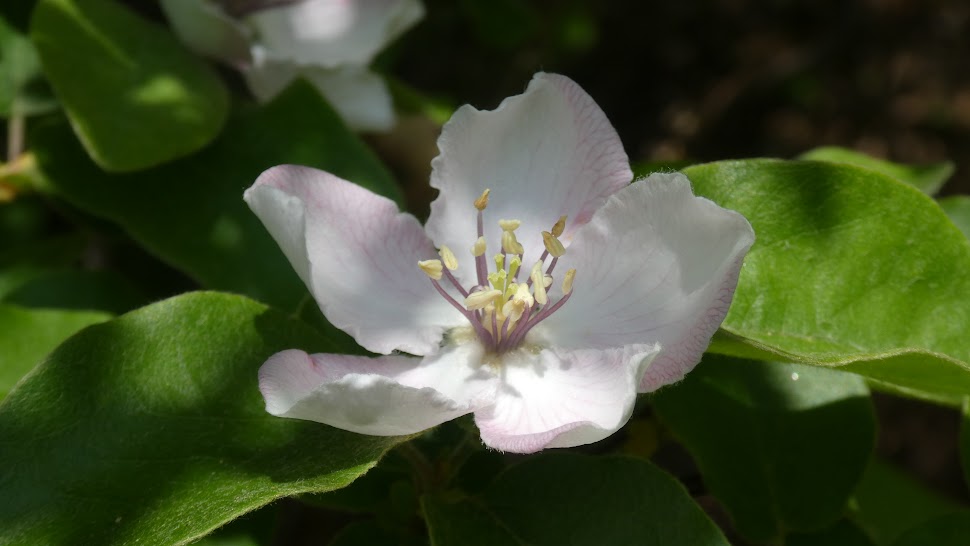
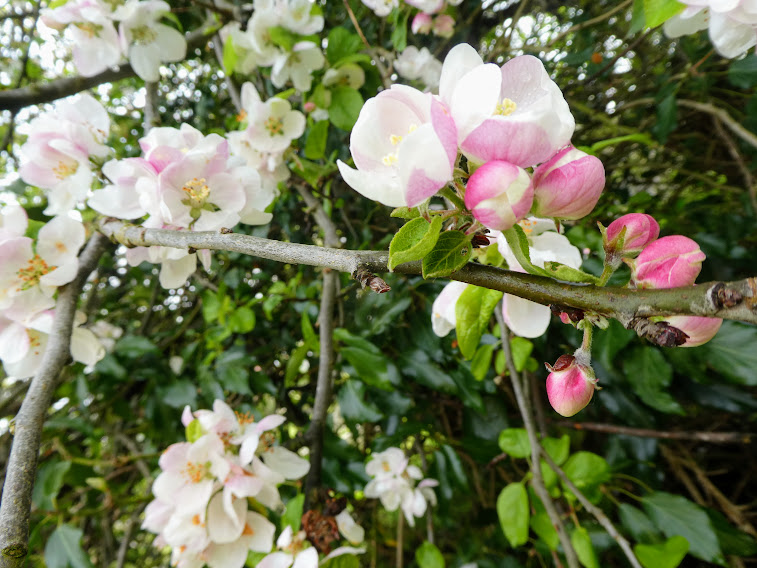
This month she invited us to submit a haiku including the words waterfall of stars. I’m not someone to whom the haiku form comes easily, but we’re coming to the end of blossom season here in the UK, and I thought I’d write about that. And Rebecca rose to the challenge of translating.

Dying petals dance,
faded blossoms flutter down –
waterfall of stars.
Pétalos bailan
flores marchitas caen–
cascada estrellar.

You can find all the other entries here.