Euskal Herria meets the Yorkshire Dales

This week was a first for us, when we made a quick visit to the Basque country (Euskal Herria), way over to the west .  When we got there, there were no frontier posts, but we knew immediately that we’d arrived.  Suddenly, houses, instead of being colour-washed in creams and beiges and ochres, or not at all, were  all tidily painted white, every single one, with ox-blood coloured shutters and paintwork.  Place names were in French and Basque, and quite a lot of other signage too.

But the thing is, despite all that, we thought we’d arrived in Yorkshire, or Lancashire, or somewhere in England at any rate.  Softly rambling ranges of hills, so very green, and studded with sheep.  Roads which preferred to ramble gently round the contours instead of going straight in the French style.  Take away the Pyrénées in the background, their jagged peaks still white with fresh snow, add in a few drystone walls, and – voilà! – the Yorkshire Dales.

After all the hard work back at the house, we needed the peace of the countryside, so we’d chosen to stay at an Accueil Paysan farm. We knew that  meant that we’d be welcomed into simple comfortable accommodation at the farmer’s house, and share a family meal with them in the evening.  Always good value in all sorts of ways.

The welcoming committee in this case turned out to be six cheerily noisy pigs, a gang of chickens, and a sheep dog.  The humans were no less friendly, and we settled in by exploring the small farm with its 30 or so cattle, and about 300 sheep.  Sheep’s cheese is the big thing round here, and throughout the autumn and spring, when there’s plenty of milk, this family makes cheese every morning (far too early for us to be there, it turned out: all over by 7 o’clock) in their fine new cheese-production shed.

Our hosts are Basque speakers.  Their children only learnt French when they went to school.  Now that one of these children has a son of his own, he and his wife (who’s not a Basque speaker) have chosen to have the boy educated at one of the many Basque-medium schools, so that he will be among the 30% of Basques who are comfortable using their language.  It’s an impenetrable and complex one.  Its roots are a bit of a mystery, and certainly it’s not Indo-European.  With French, Italian and Latin at out disposal, we can make a good stab at understanding Occitan, the language of our region, but Basque remains impenetrable to anyone who hasn’t been immersed in it.

The next day, we explored St. Jean Pied de Port. From before the time of the Romans, it’s been a market town, an important jumping off point for Spain.  It’s been a garrison too, and an important stop-over for pilgrims on their way to Compostella.  Now it’s a tourist centre too, for walkers in the region.  It’s an attractive town, surrounded by ramparts.  We pottered around, enjoying views from the ramparts, pilgrim-spotting, ancient doorways, and watching the river, before setting off for a leisurely journey home.

And next time we stay, we’ll make it much longer than 36 hours.

This slideshow requires JavaScript.
The Principality of the Brothers Grimm. And Stone Soup.

Sunday. We went to Nébias in the Aude. Just outside the village, you’ll find The Labyrinthe Verte, a natural maze, with winding pathways through a forest, where rocks and plants have created a bewildering array of natural passageways which are both beautiful and fun to explore. These paths are cut deep through limestone, often shoulder height.  Somehow, we’ve never visited.  But today, thanks to the Rando del’Aubo, our walking group, we did.

It’s been a lovely bright spring day today, but the forested labyrinth is never really sunny.  Trees, their trunks and branches bearded with feathery fronds of moss and lichen, crowd the limestone crags and fissured passageways.  Deprived of light and space, they assume crippled and fanciful shapes, or else aim straight for the sun, their thin trunks competing with each other for a place to establish their roots.  It’s not eerie however.  On this warm March day, we wouldn’t have been surprised to meet an ethereal band of fairies whirling through the dampened glades: on a bad night in November, perhaps a gnarled and wicked hag from the tales of the Brothers Grimm.

Every time of year has its own magic apparently.  On the coldest days of winter, the mosses and lichens are white and crisp with frost, making the forest fit for a Snow Queen

At lunch time, since we were in France and eating’s important, the darkened passages unexpectedly cleared.  Suddenly, beneath blue skies and bright sunshine there was a fissured limestone pavement, providing surfaces and seating for our lunchtime picnic.  Which Malcolm didn’t have with him.  The members of the group magicked their very own version of Stone Soup for him.  A mustardy ham baguette, some home cured sausage, a chunk of bread, a chocolate pudding, and apple….within half a minute, Malcolm had more food then the rest of the group put together.

The afternoon was different.  Walking away from the enchanting and enchanted labyrinth, we came to more open country, where we passed first farmland, then the edges of forest with tracks showing where wildboar and deer had recently passed.  Finally, we climbed, and had views across to the mountains and the walks we’ve enjoyed there on other Sunday rambles, finishing up listening to the lively splashing of a waterfall.

This slideshow requires JavaScript.

One lump or two?

Enfin! We are at last a real proper French household.    Pop round to us for a mid morning break these days (as Henri often does) and you’ll get coffee (freshly brewed in a cafetière of course.  Small cups.  No milk offered) and the sugar on the side will no longer be in a dinky English sugar bowl or –  even worse – bag.

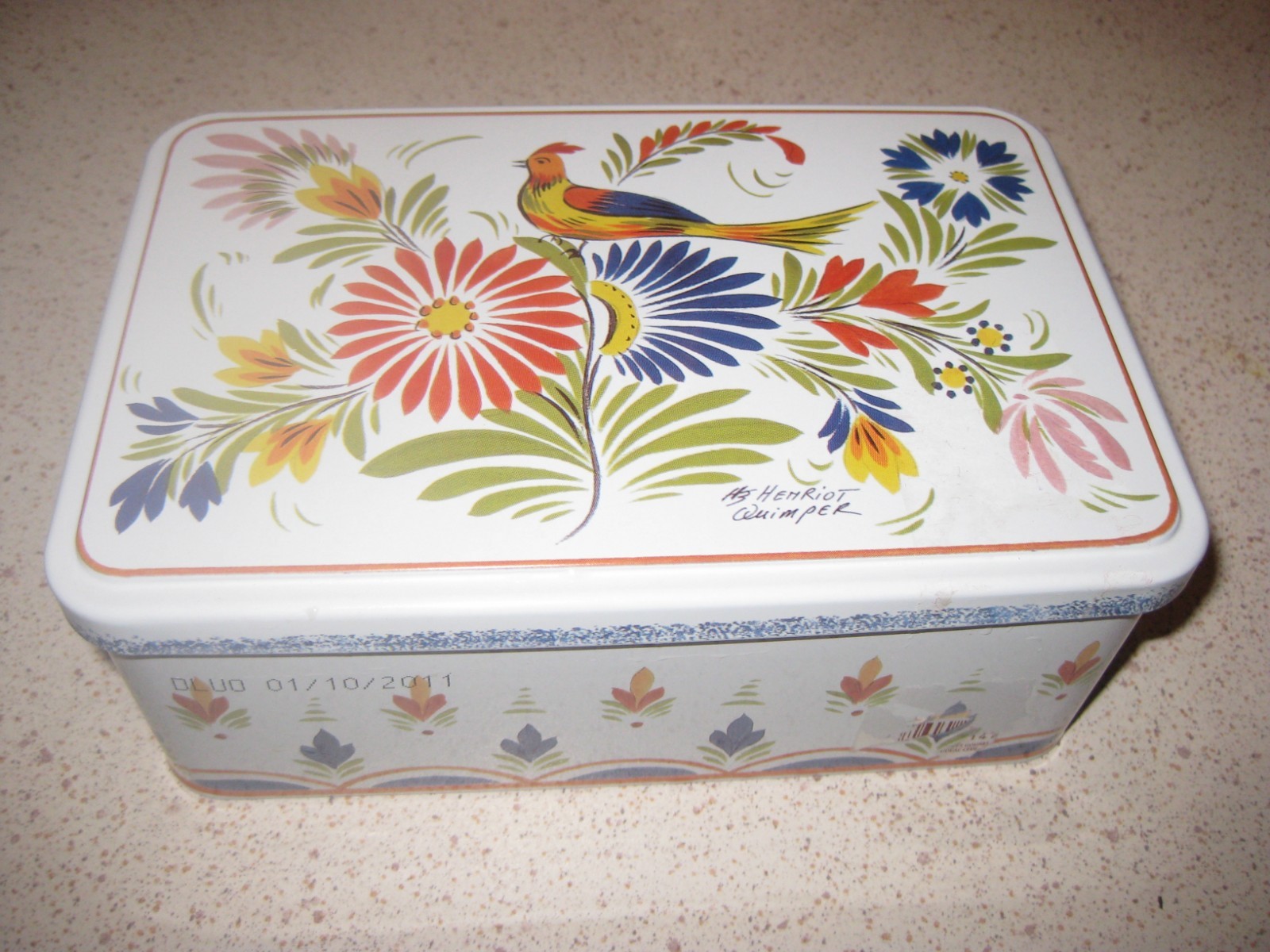
Certainly not.  We have invested, as any French householder should, in a pretty box specially designed to hold the rectangular cardboard boxes of sugar lumps on sale in any old grocer’s or supermarket. C’est normale.

Bureaucracy at work – oh, and a couple of removal men

The phone rang.  ‘Hi!  This is Holly speaking.  Your furniture, all the stuff we were going to deliver to you from England on Thursday….could the lads come now, they’re ahead of schedule?’  A quick summit meeting, and we decided that no, they really couldn’t.  We simply weren’t organized enough yet.  But we’d settle for Wednesday morning.

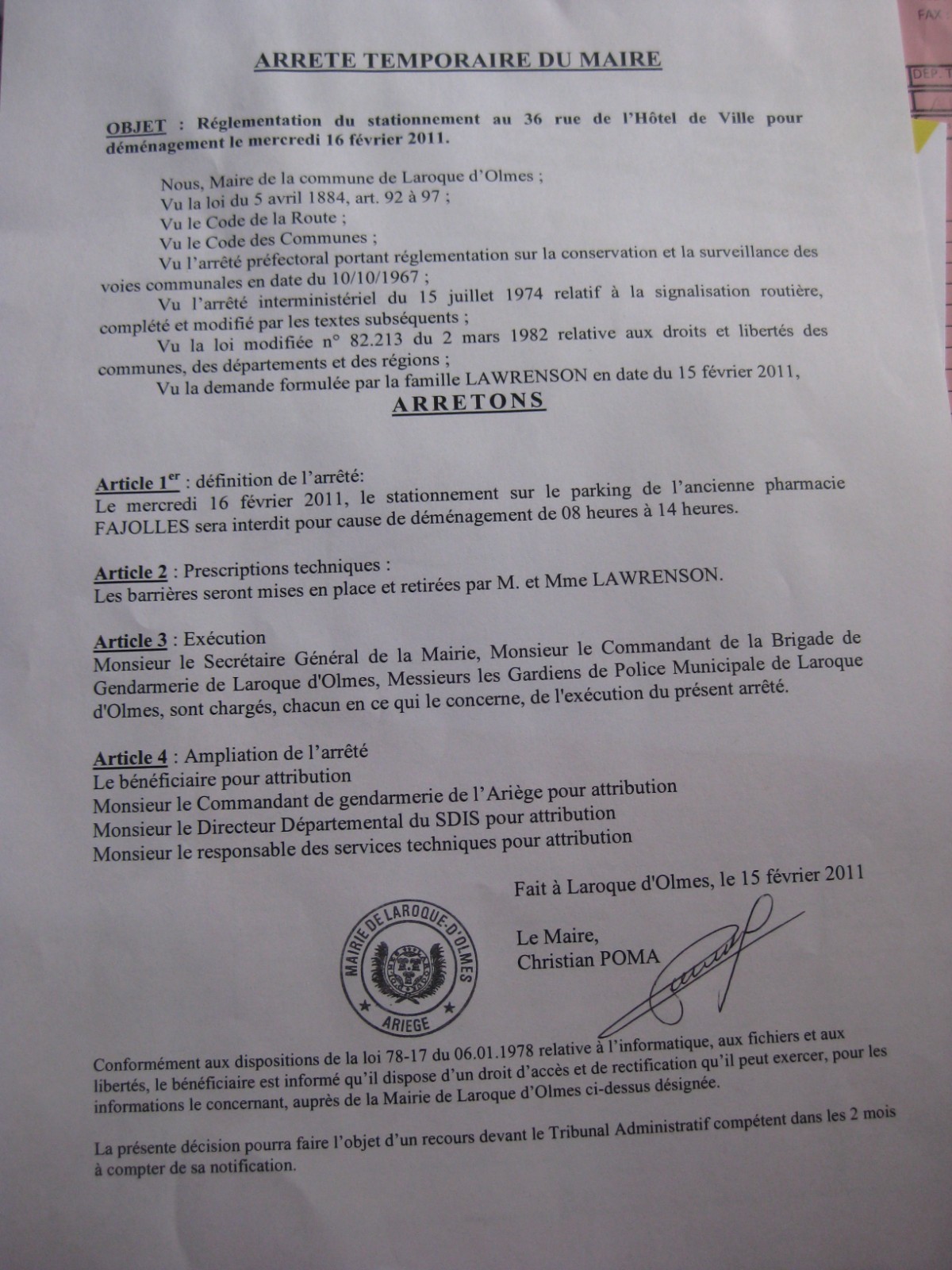
I put the phone down, and something at the back of my fuddled brain told me I really ought to tell them at the Mairie (Town Hall) that we were having a removal van the next day.  So I did.  Thank goodness.  Not telling them would have been little short of criminal, it turned out.

For more than half an hour, they filled in documents for publication outside the Mairie itself and our house, and sent copies to the Fire Brigade, the Police and Technical Services, among others, for their information.  The mayor came out of a meeting to sign the documents.  Staff told me we needed to take responsibility for placing the barricades they would arrange to have delivered, so that nobody could park in our part of the street between 8.00a.m. and 2.00 p.m.  We would also need to talk to all relevant neighbours and ask them not to park in the street between those hours.

I came home (we live 2 doors away from the Town Hall) and as I fished around for my door keys, I saw a council delivery lorry already putting 5 barriers at the end of the road for us to erect later.  Malcolm commented that this was a tale worthy of that unmissable 1970’s children’s programme ‘Trumpton’, with its vignettes of a way of life none of us could quite believe had ever existed.

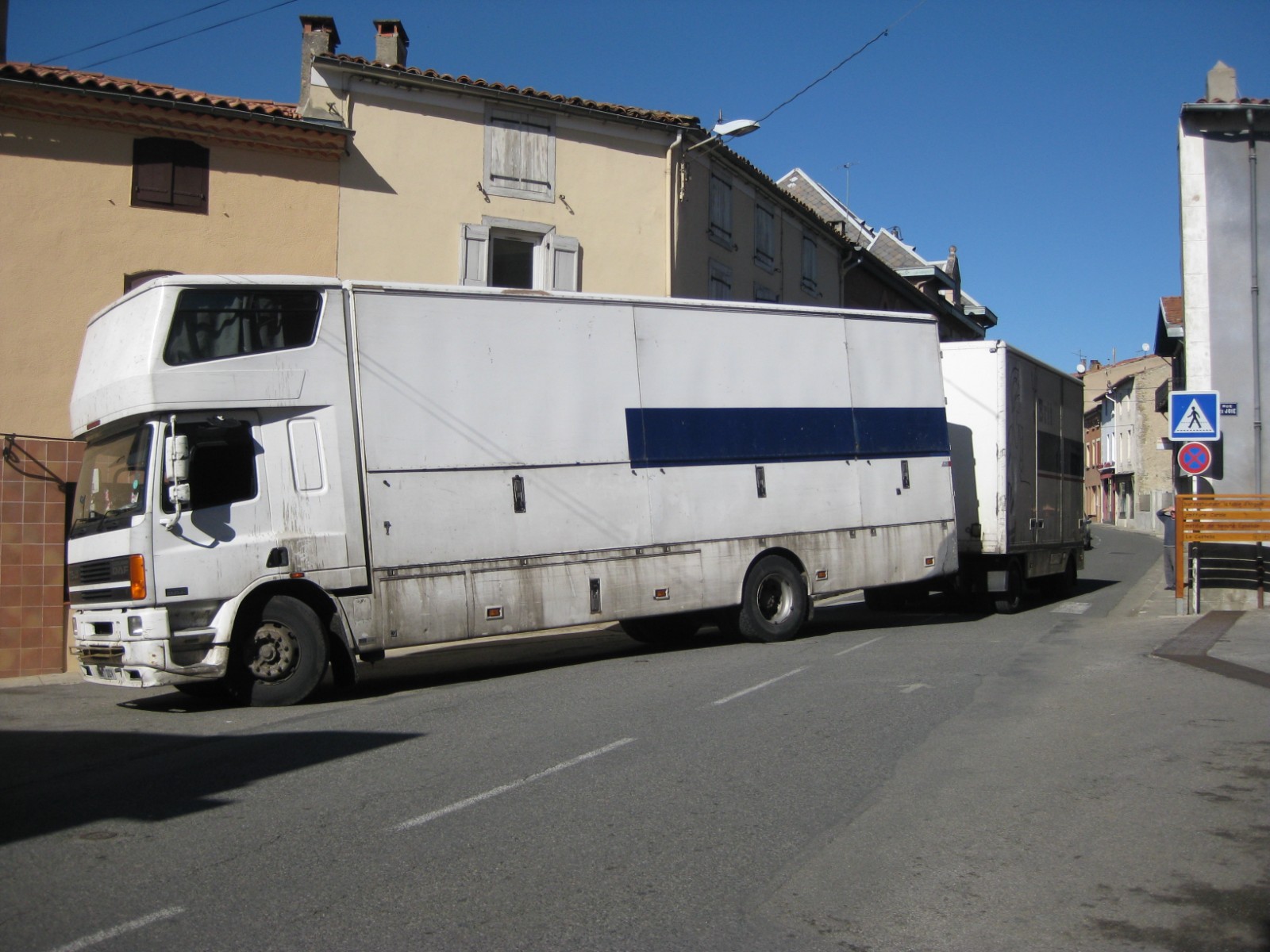
This road train's on its last trip ever. Back in the UK, it's going for scrap

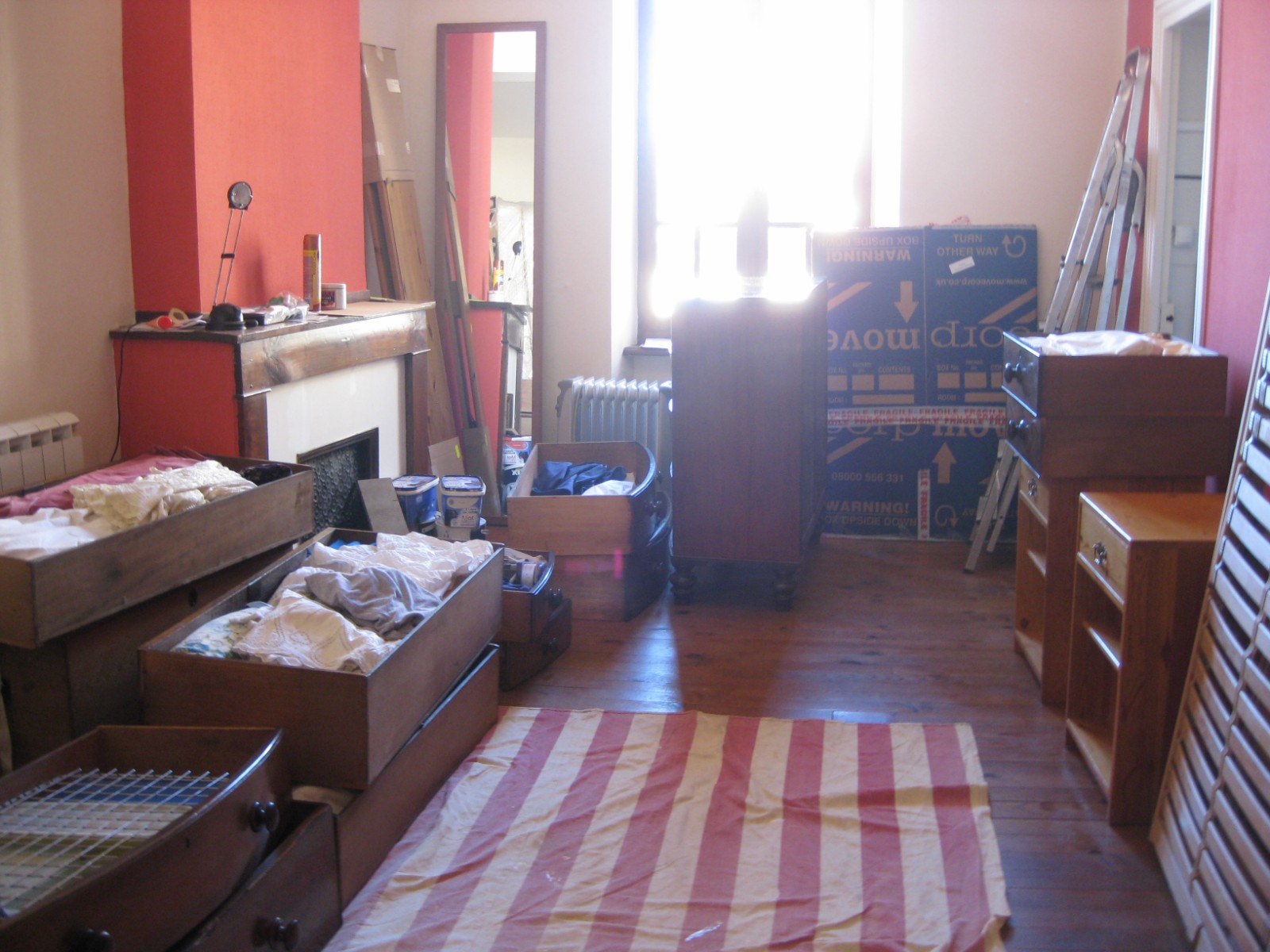
It turned out the fuss was worthwhile.  When our removal van came, it was a ‘road train’, 2 waggons long, and mopped up every bit of space in our little parking area.  It had left the UK nine days earlier, and spent all that time roving all over France: Alps, the coast – anywhere the English settle over here – delivering from the UK to some, and collecting for transporting to the UK for others.   Paul and James, in the manner of removal men everywhere, tossed sofas, chests of drawers, huge boxes of books over their shoulders and trudged up and down our narrow stars for two hours till the wagon was almost empty.  Almost, but not quite.  Next stop Perpignan, before they head back at last, to be home just in time for a weekend in England.

Now all we've got to do is sort out, move round, organise......

Ooh, and by the way.  They told us that removal vans sent to Europe are almost always unmarked, as ours was, because they can attract the interest of the Mafia in Italy, and even in parts of France.  Paul had a close encounter himself not so long ago, and had to shift himself quick, never mind that his tachograph said he’d done his hours that day.  Luckily for them, we had no such excitement here.  Just a pile of paperwork for the municipal records.

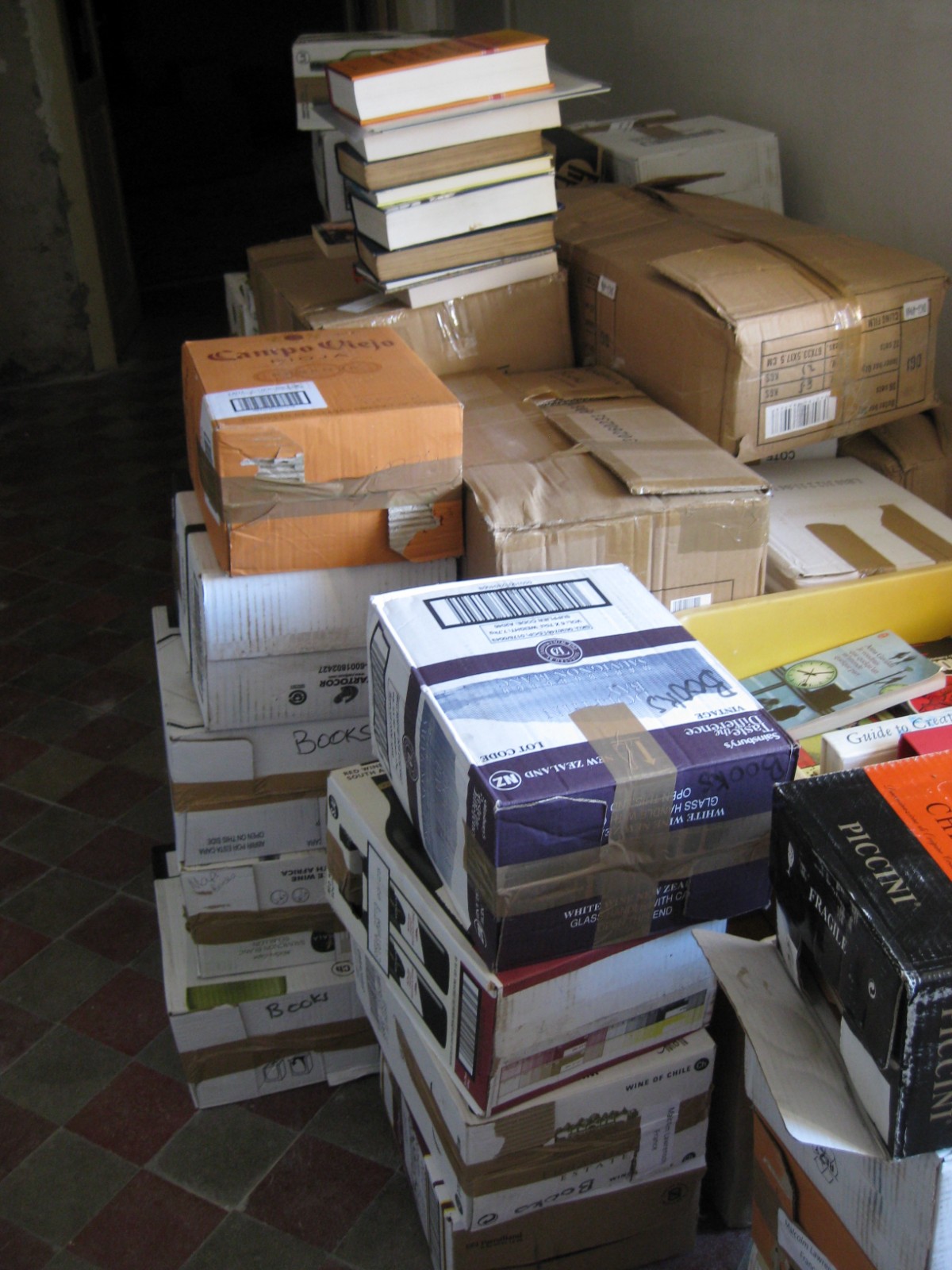
...and unpack 57 boxes of books

The horror story that never was. Not for us, anyway.

Everyone worried about our journey back to the UK.  WE worried about our journey back to the UK.  The news in France, England and throughout Europe was of snow, delay, disruption. TV images showed exhausted families sleeping on luggage conveyor belts at airports, crammed train stations, lines  of immobile traffic on motorways.  And we were planning to drive back to England, the best part of 1000 miles away from Laroque.  Friends begged us to change our plans, or at least buy snow tyres.

But we decided the information on the internet was at variance with that provided on TV and radio bulletins, and far more positive.  Our planned route, as far as http://www.meteo services were concerned, was pretty much fine, apart from some snow as we neared Pas de Calais.

And so it proved.

Motorway - or lorry park?It did snow, mainly near Rouen.  And I wouldn’t have wanted to be a lorry driver.  Gendarmes on roundabouts rounded them up from Dreux onwards and sent them on different routes.  Just after Rouen, they closed the fast lane of the motorway, and forced all the truckers to park up there, mile after mile of lorries from France, Spain, Luxembourg, Portugal, the UK….  And there they all sat in their cabs, unfed, unwatered, puffing away at endless cigarettes, or occasionally jumping down to take a stroll along the not-so-fast-lane.  I hope they’re not still there.  For us, although driving was tricky for an hour or two, it was a chance to enjoy Winter Wonderland views across hills and forests, only animal tracks disturbing the perfect white landscape

The motorway snow petered out, and we picked up speed, and got to Calais just in time.  But the ferry was late.  It had become a refuge for those unable to fly, unable to travel Eurostar, but desperate to cross the Channel any way they could.  Hard to believe we’d had it so easy.  On the other side of the Channel, travelling through to London, we listened to Radio 4.  The BBC was full of sad stories of those unable to get home to their families for Christmas. Politicians held forth about how Britain’s handling of the situation was ‘the laughing stock of Europe’.  We don’t think so. Things were hardly better in France, to our certain knowledge, and Belgium and Germany weren’t having a good time either.  Perhaps it’s quite simply that we humans aren’t quite so in charge as we like to think.  Nature has her ways of humbling us after all, from time to time.

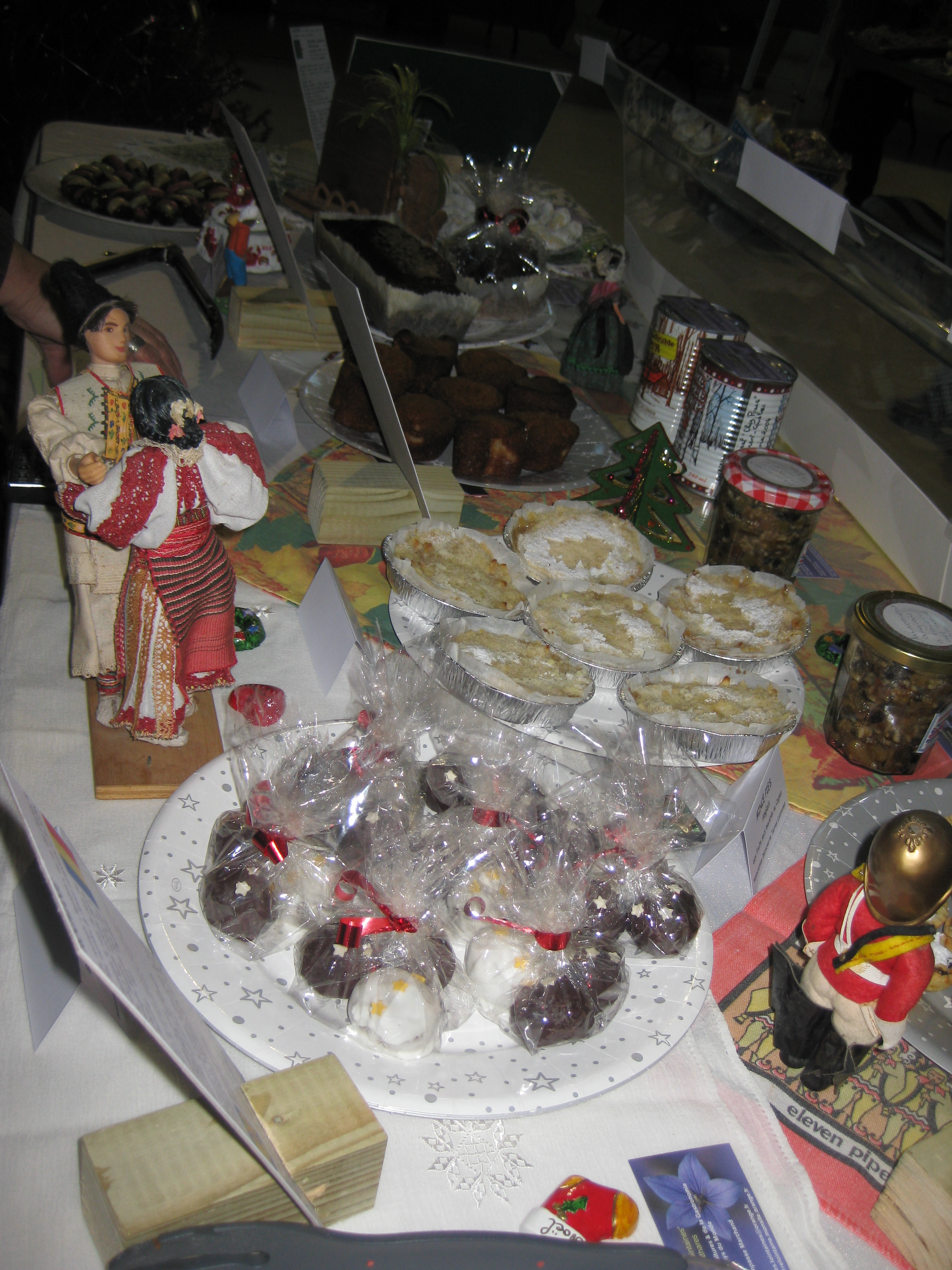
Christmas markets

Christmas markets always used to be a German thing.  They still are, I think: they do sound rather special.  It’s many years now that Leeds has had its own German Christmas Market, though I’ve always wondered what would bring German stall holders across the channel to pitch their stalls.  Just as I’ve wondered what the attraction is for the hundreds and hundreds of French market traders who regularly fetch up in the UK for the popular French markets, where the prices are inevitably sky high.

But Christmas markets, where you can look for all your presents, made by local craftspeople and artisans, or in sweatshops in China are everywhere.  The difference is that in the UK, they began in November and are now largely over.  Here they’re just beginning, and will go on in some cases, like Toulouse, until after Christmas.

Here’s our stall, Découverte Terres Lointaines, at the market at Lavelanet, on today and tomorrow

A nation of shopkeepers…or a small town with small shops

Depending on your point of view, it was either Napoleon or Adam Smith who first called England ‘a Nation of Shopkeepers’

But it was only after I came to settle here in France that I started to think of shopkeeping and market trading as  skilled occupations, and realised just what is involved in keeping the customer happy.

It’s probably because it’s just so much easier, where we live in England, to nip down to the supermarket.  There weren’t too many independent shops on our daily round:  so much for a nation of shopkeepers.  Mind you, we loved it when Emily was a Saturday girl at the French patissier who was then in Harrogate, Dumouchel. She would often be sent home with a couple of unsold petits gateaux for us to enjoy,  or some slowly-fermented sourdough bread.  It was small shop, and quite expensive, so she learnt quickly to value customers and to treat them well, so they’d come back.  She learnt too that while most of the people she served were friendly and appreciative, customers could be curmudgeonly too.

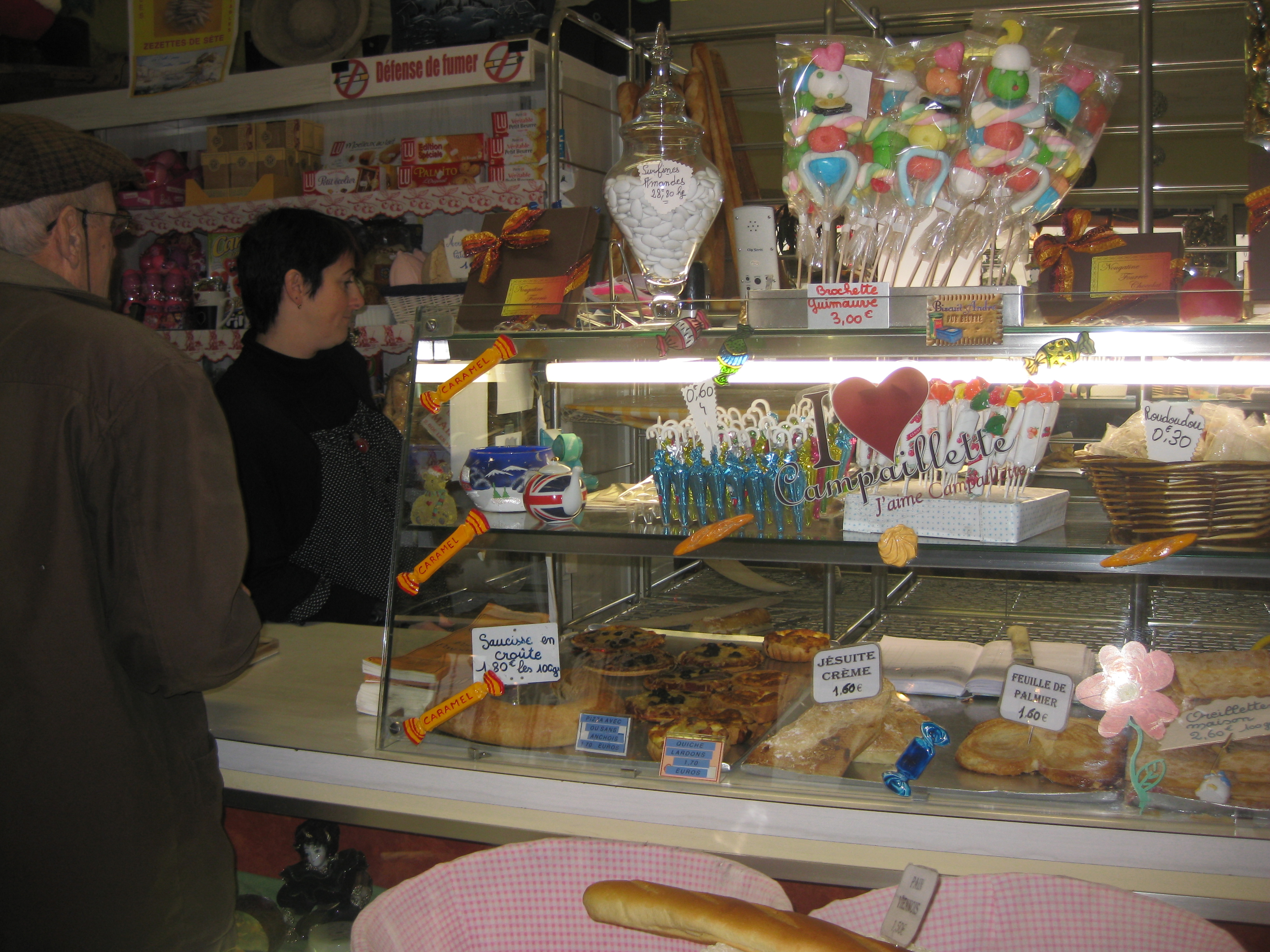
The baker’s – busy at lunchtime

So who are the good commerçants here?  Well, down at the bakers, they’ll often put aside our much-loved pain noir without being asked if I’m not in bright and early, knowing we’d be disappointed if they sold out.

Buying cheese at the market

Today at the market, madame who runs the cheese and charcuterie stall had printed off some recipes specially for me, because she knew I might enjoy trying them out.

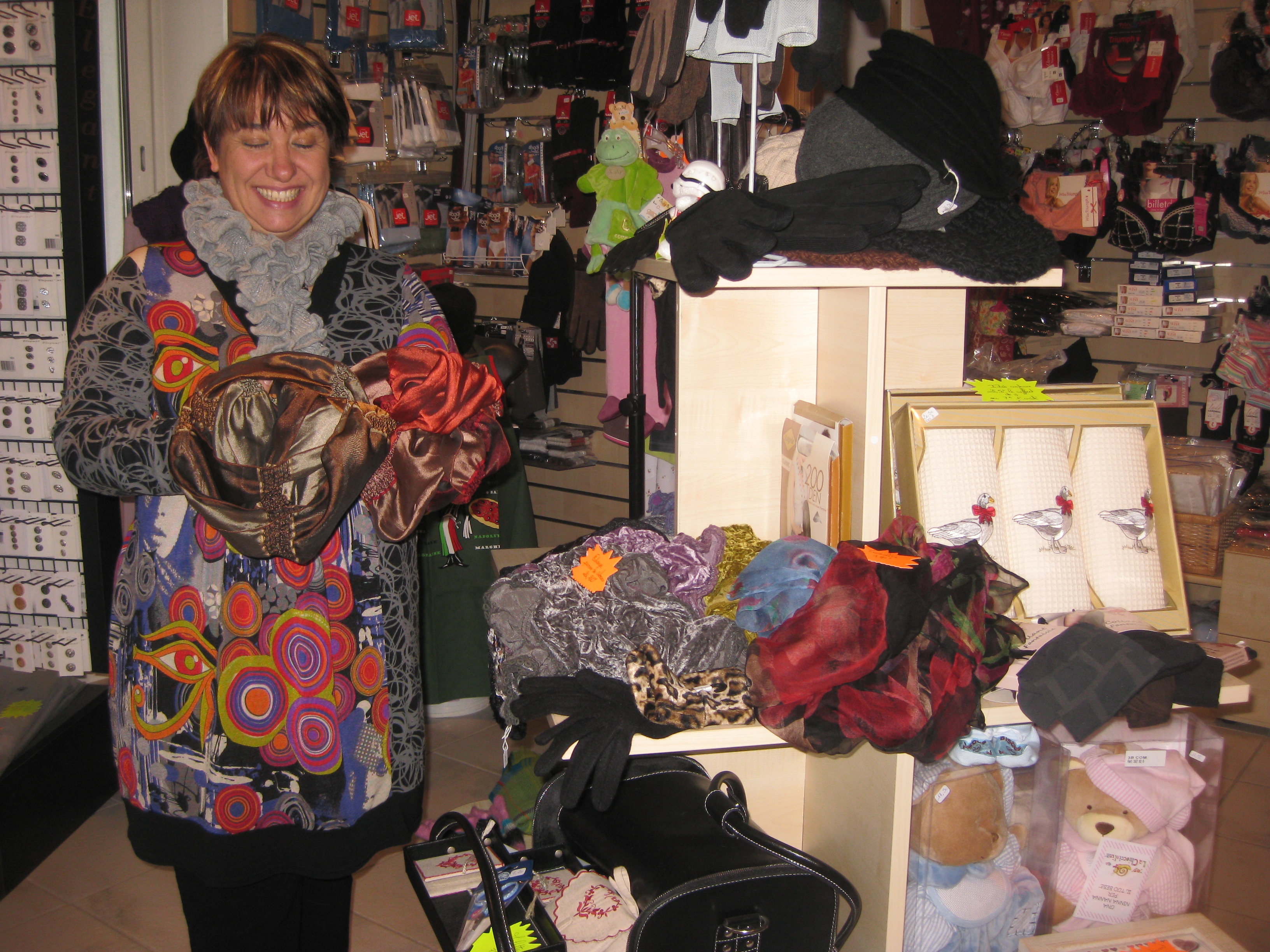
Down at Bobines et Fantaisies, she goes to Toulouse most weeks to seek out unusual scarves and accessories, so there’s always something new and worth trying at her tiny shop. ‘Let her try it on.  If she doesn’t like it, bring it back!’, she’ll insist, as you dither between a bracelet, a couple of scarves and a chic but cosy winter hat.  These shopkeepers remember us, our tastes, our whims and foibles. They welcome us, and chat cheerfully with us, even if we leave the shop empty-handed.

Madame at Bobines et Fantasies helps me choose a few presents

There’s just one shop here that doesn’t cut the mustard. ‘Il n’est pas commerçant’ we all grumble.  Those of us outside the select band are routinely ignored, and as we feel our custom isn’t valued, some of us now go elsewhere.

But not to the supermarket.  Oh no.  Yesterday we DID pop into one, but as the muzak system was belting out a schmaltzy version of ‘Auld lang syne’ in what passed for English, we very soon shot out again.  Small Shops Rule OK.

…..now Snow’s the Big Story

Everyone in Europe, it seems, has been battling with snow this week. Everyone that is, except us and anyone within easy driving distance of our part of the country.

Road clearing in Cherbourg, 2nd. Dec

Night after night the French news bulletins have been full of tales of woe, endurance, hardship, slipping and sliding and Dunkirk Spirit in Lyon, Orléans, Brittany, and Strasbourg.  Before passing on to the rest of the news, we’d then have a shot or two of traffic jams on a motorway outside Newcastle, or a firmly shut-for-business Gatwick Airport.  Neighbours and friends gleefully filled us in on how dire they’d heard things were in the UK.

Finally, yesterday morning, the snow arrived here too.  Frankly, we knew we weren’t going to get the news crews down here looking for a story.  It hardly settled, and then it began to disappear.  Still, I found excuses in the afternoon not to get on, but to sit next to the woodburner and do some jobs on the computer.  I got distracted. Somehow, although it’s not at all my newspaper of choice, I started to look at the readers’ photos on the Telegraph website.  They’re terrific. Gorgeous snowscapes from all over Britain; funnies, such as the rabbit tentatively sniffing at a snowman; curiosities such as the milk bottles out on the step whose contents had expanded to make  tall chimneys of frozen milk extrude from the top.  Sorry – my links won’t lead you to the exact photos, because the Telegraph’s organized them into galleries.  But have a look anyway.  You too may spend quite a while browsing through for your favourite.

Near Roquefixade

And now here are our snow photos, taken on the way to Pamiers, and home from Foix.  We were meant to be Christmas shopping.  Well, that didn’t last.  A cup of decadently rich smooth hot chocolate at a chocolatier in Pamiers, and we were off. The pretty way home, via Foix, seemed a much better idea.  My photos will impress nobody who’s been battling with the real stuff this last week.  But we like them anyway

On the road from Foix to Roquefixade

No snow yesterday: mountain views and a Benedictine abbey

Distant Pyrénées. Not my photo, not the view we saw. But you get the idea

I gather that the last thing anyone in England needs right now is someone chirruping about how beautiful the snow is.  Well, here in the foothills of the Pyrénées, we’ve been almost alone in France in being a snow-free zone.  But please note: ‘the foothills’. The mountain tops have been covered for some weeks, and over the last week, the snow levels have crept down..and down…and ever nearer. And it’s quite simply beautiful.

Distant Pyrénées

Yesterday we went walking in the Lauragais.  That’s a gentle, verdant region north of here on the edge of la Montagne Noir.  Perhaps the most wonderful thing about the walk we had here, through sandy woodland paths, crunchy with fallen leaves, were the views across to the Pyrénées: mile after mile of distant peaks blanketed in blue-white snow beneath a bluer sky.  If only my camera began to do justice to this impressive sight.

A misericord to support a monkish bottom
Abbaye de Saint Papoul

Healthily exercised, we came down to the village of Saint Papoul, and looked round the Benedictine Abbey of the same name.  I found myself lingering in the 14th century cloisters and in the abbey itself, inspecting the misericords, the small decorated wooden shelves hidden under the seats to provide a bit of support for the poor monks as they stood for long hours during their religious devotions.

The Flight into Egypt

Perhaps the most enjoyable bit of our visit was a chance to look at the special exhibition devoted to le Maître de Cabestany, a Romanesque sculptor who seems to have left his mark on many of the pilgrimage churches on the route from Rome to Compostella.

The infant Jesus takes a bath

His figures, despite their realism, their chunky hands and elongated eyes, seem to have a slightly supernatural feel to them and they were fun to explore and enjoy.

It was cold though.  Snow threatened, but didn’t fall in the end.  We decided against a mooch round the village: probably something to do in the future, and scurried back home to toast our toes and fingers

The weathered pillars of the cloisters, and their equally weathered capitals

A Salute to Alex Taylor

People who know me here are no strangers to the fact that we tend to avoid the English in France.  Not because we don’t like them (Some of our best friends are…. etc. etc), but because it seems to be a bit daft to seek them out here when there are some hundred and fifty thousand French living right here in the Ariège whom we’d maybe find it interesting to meet.  Our social calendar already seems entertainingly full with the ones we do know.

So perhaps it’s rather odd that my favourite radio presenter here is an Englishman, Alex Taylor. He co-presents the breakfast spot on France Musique, together with Emilie Munera. Despite the fact that he speaks excellent colloquial French, he’s got a recognisably British accent that cheers me up and brings me closer to England as I listen in on my way to the gym, or doing some early morning jobs round the kitchen.  His is a good programme too.  A well as an astonishing variety of music – not simply the classical repertoire – the pair look at current and musical news, and at what’s in the world’s press that day.  Is it my imagination, or are British papers more fully represented than others in this spot?  And I really enjoy the 5 minute Mot du Jour by Pierre Charvet when various musical terms are explored and defined.  What, for example, is the difference between ‘symphony’ and ‘philharmonic’ ? What is ‘noise’?  Thoughts on aspects of African music….and so on.

And in case you’re wondering at our relatively high-brow choice of radio station….here in the sticks we can only receive three.  France Inter, whose relentless talk drives us both nuts in the morning; France Culture, which is interesting but hard going if you’re not prepared to listen attentively; and…France Musique.  No contest.