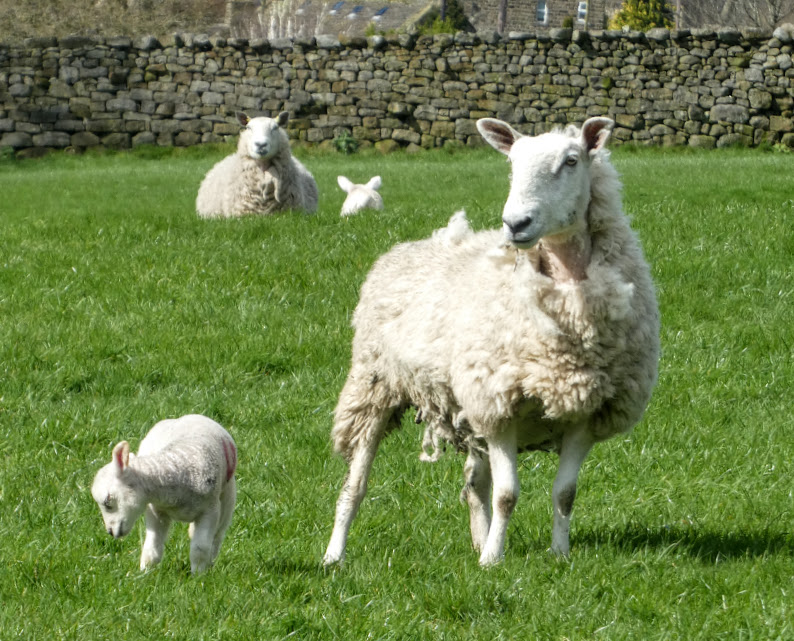
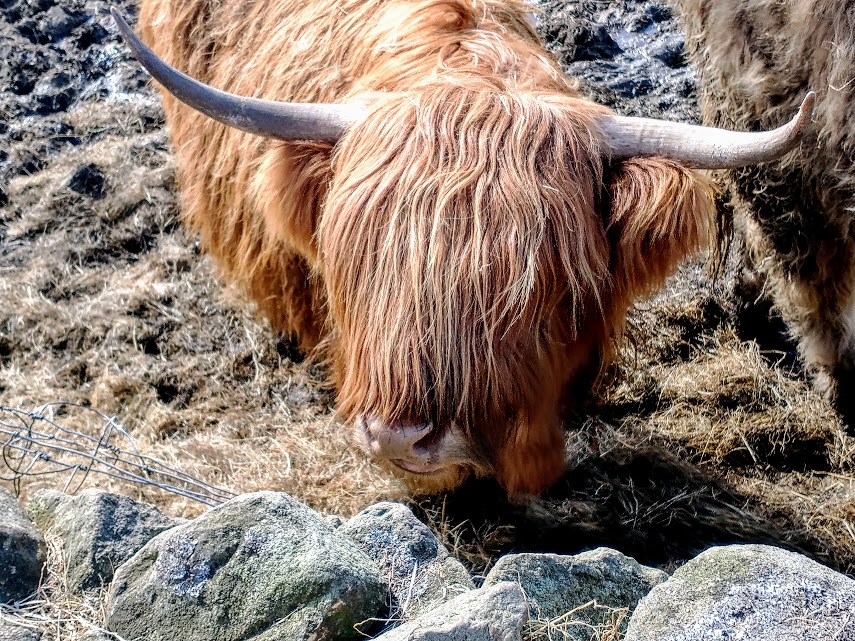
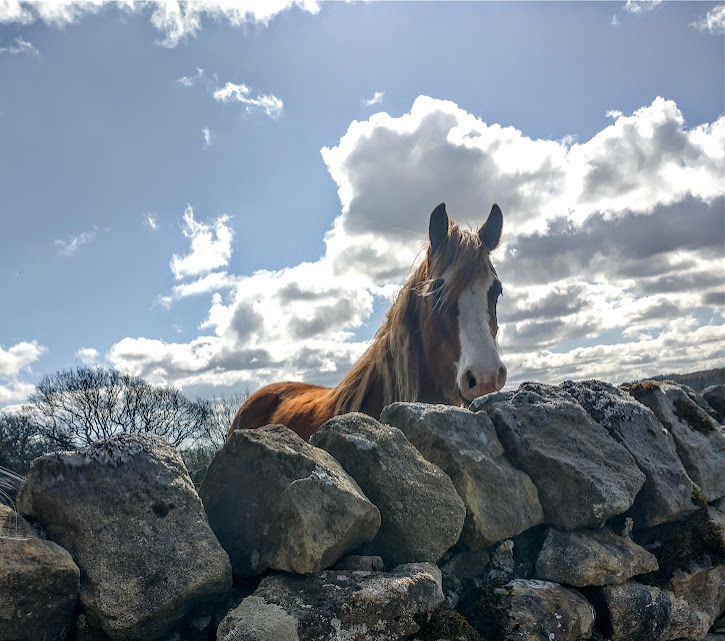
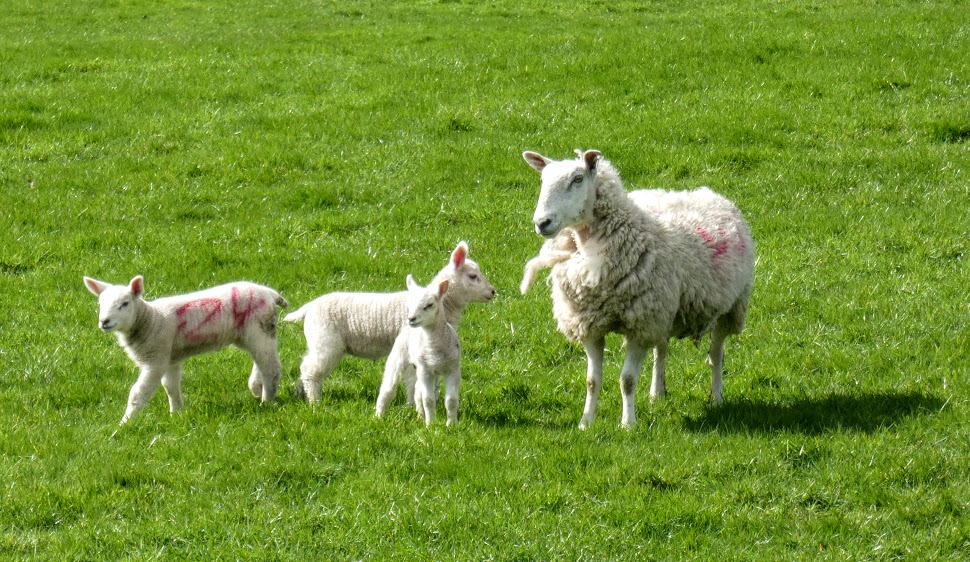
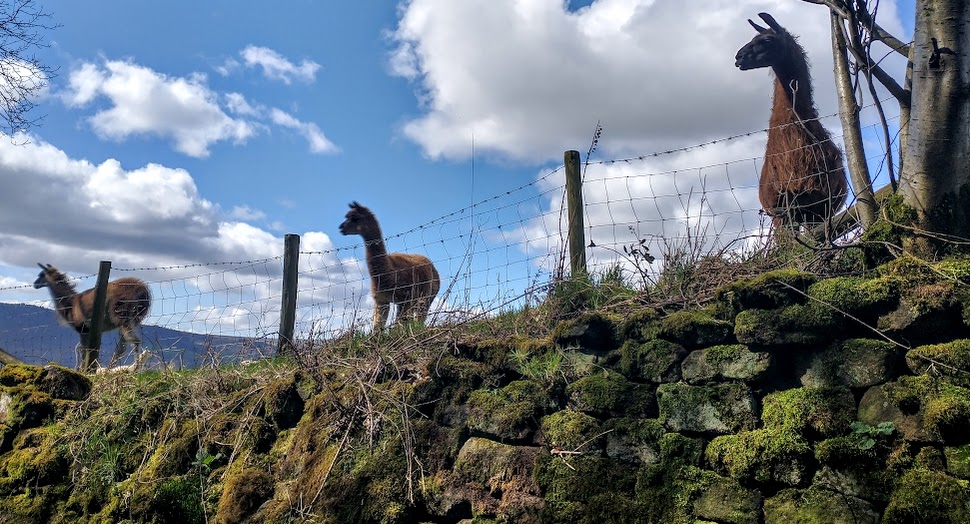
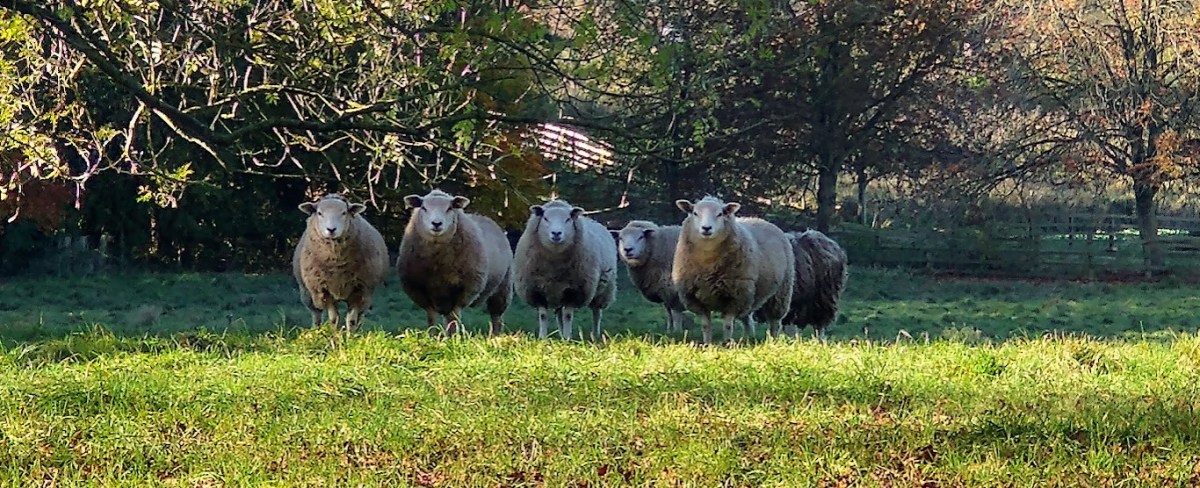
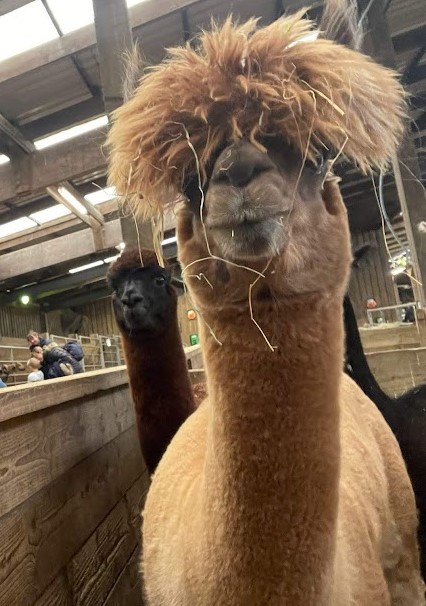
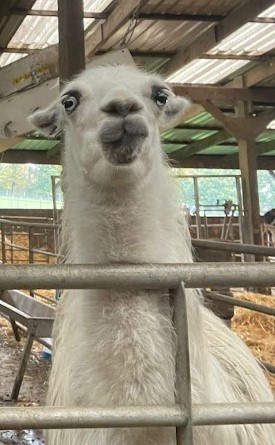
Nidderdale: the first day totally without rain in I can’t remember how long. Our walk was punctuated with encounters with animals, from Highland cattle who seemed to have strayed south, to llamas whose forebears were definitely immigrants, via horses and – of course, since it’s now officially spring -newborn lambs.
This is a window designed in honour of a vet – James Herriott. He (under his real name of James Alfred Wight) made his name by writing a whole series of books about being a young vet in Darrowby (actually Thirsk) visiting farms and their animals hither and yon in the Yorkshire Dales from the 1930s onwards. If you don’t know his books, you may know one of the TV series going out under the name of All Creatures Great and Small: 1978 & 2020, as apparently they’re doing the rounds the world over.
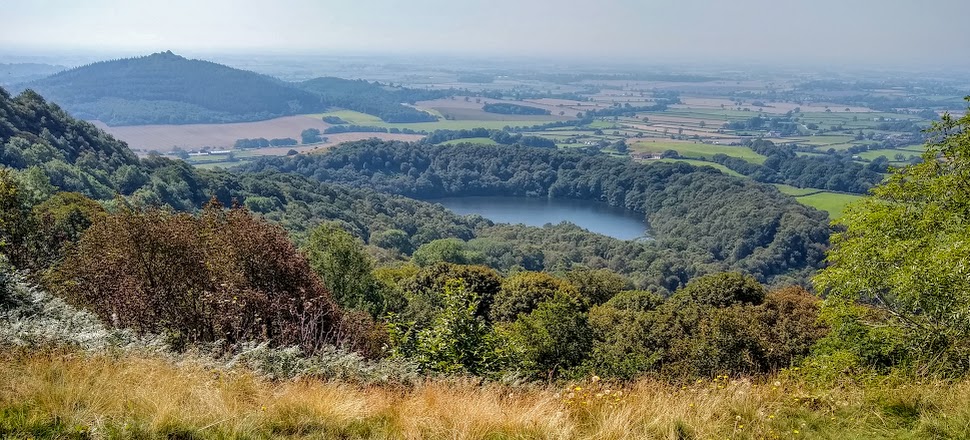
Well, there’s a museum in Thirsk as well – World of James Herriott – occupying the house he and his family lived and worked in all those years ago. And it has a window celebrating the landscape that formed the backdrop to his work. Here it is as the featured photo. And here is a bit of a collage of the backdrop to the working week of any Yorkshire vet, then and now. Except I haven’t got a picture of the White Horse at Kilburn featured in the window. About 170 years ago, it was cut into the landscape to emulate the chalk hill figures of southern England, and Herriott, like all the rest of us, would see it often as he drove round and about the area.
If you’re in the area and want a good family-friendly destination, the museum is highly recommended. You’ll come away with all the older family members saying ‘I remember those’, as they peer at tea-cosies, mangles and a thoroughly ancient car (Gumdrop, anyone?), bemused by the vetinary equipment, and entertained by the quizzes and activities in the children’s gallery. You too can insert your arm into a cow’s rear end to deliver a reluctant calf.
And for a bit of context, here’s a view from a window in the museum.
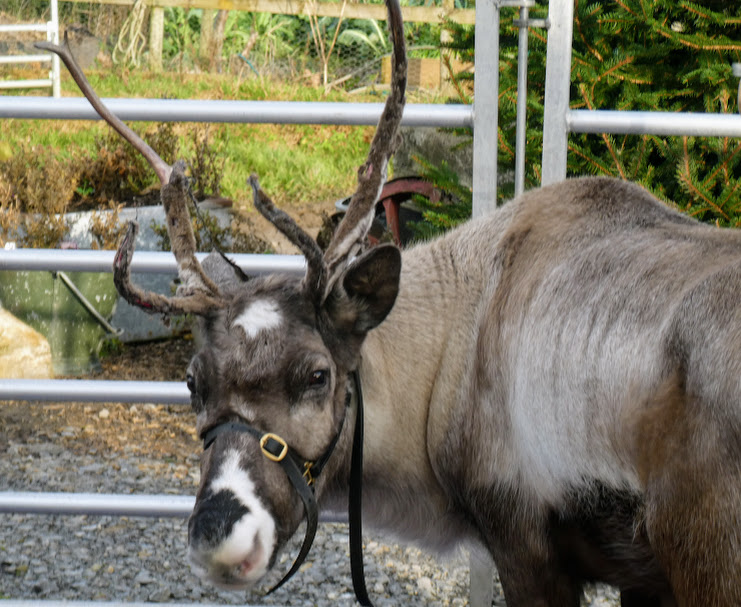
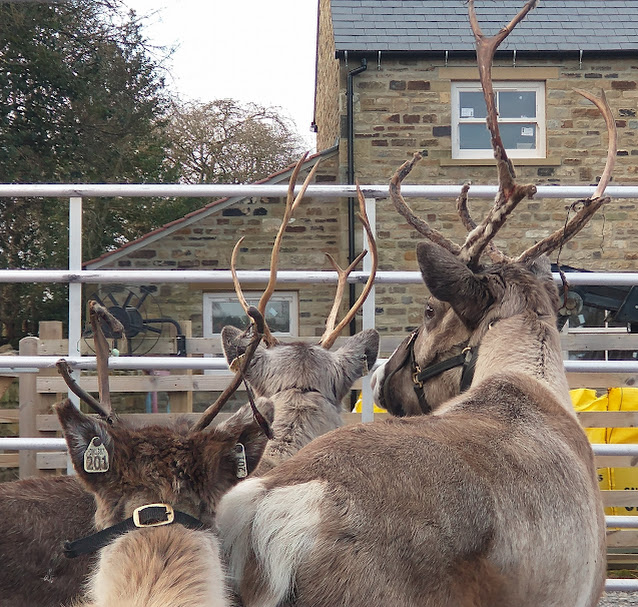
We haven’t been to Lapland for the weekend. Just a few miles up the road from here live a herd of reindeer. This is their busy season, and instead of grazing peacefully, their diet of grasses augmented by occasional goody-bags of lichen imported at enormous expense, they are toted hither and yon for the delectation of local children – and their parents. We met them at a local farm yesterday. These caribou are surprisingly small and delicate looking, with antlers far less hefty than those of their red deer cousins.
Their feet are soft and spreading, giving them their version of a snow shoe. They make a clicking sound as they walk, enabling them to keep track of each other as they wander in search of food. We didn’t hear them, but apparently they utter a low barking sound from time to time.
The last two weeks’ Lens Artist Challenge had us focussing on all the eye could see in a single glance: seeking the symmetrical and the asymmetrical. This week we’re homing in on detail for Anne of Slow Shutter Speed.
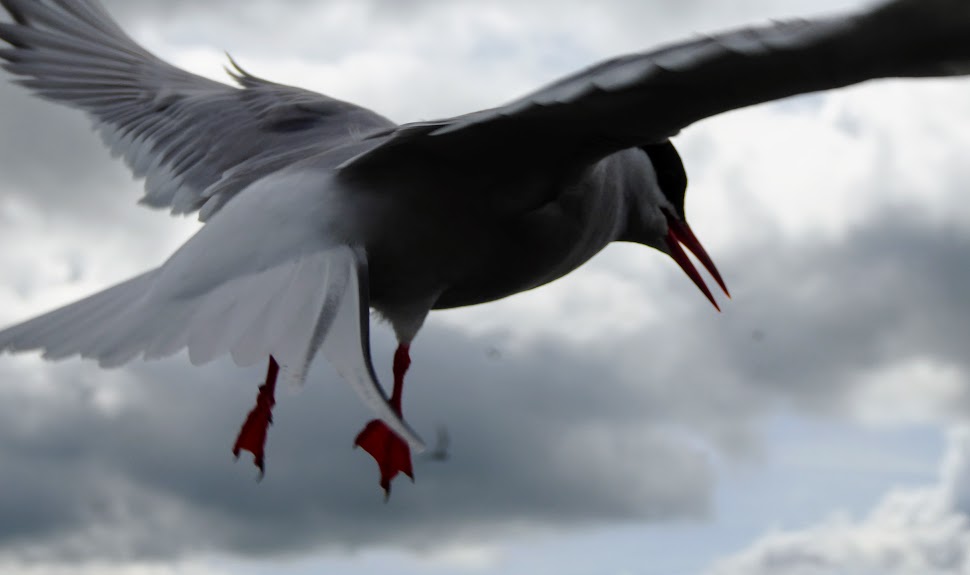
In my last post I stayed pretty rural, and I’m doing that again, though beginning at the seaside. I think that Arctic tern in the featured photo is homing in on something: maybe something that’s bothering his newly-hatched youngsters.
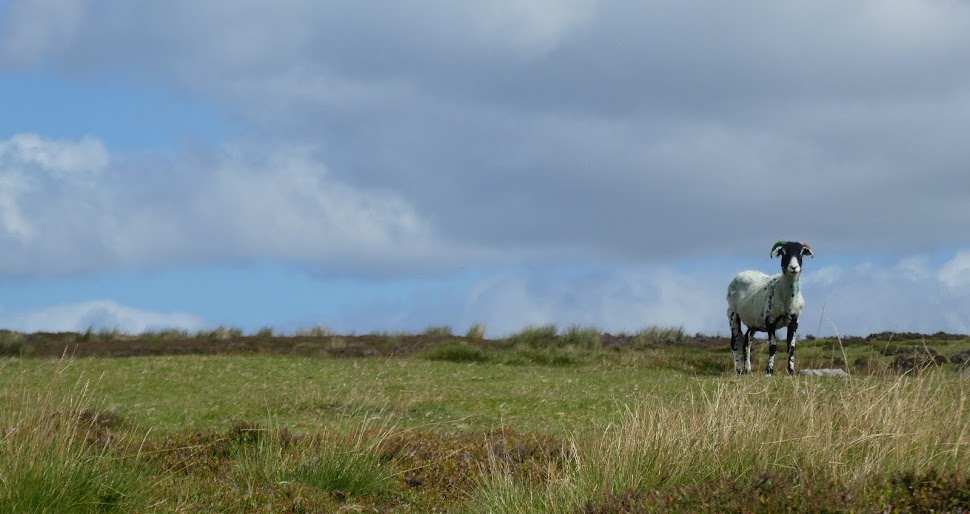
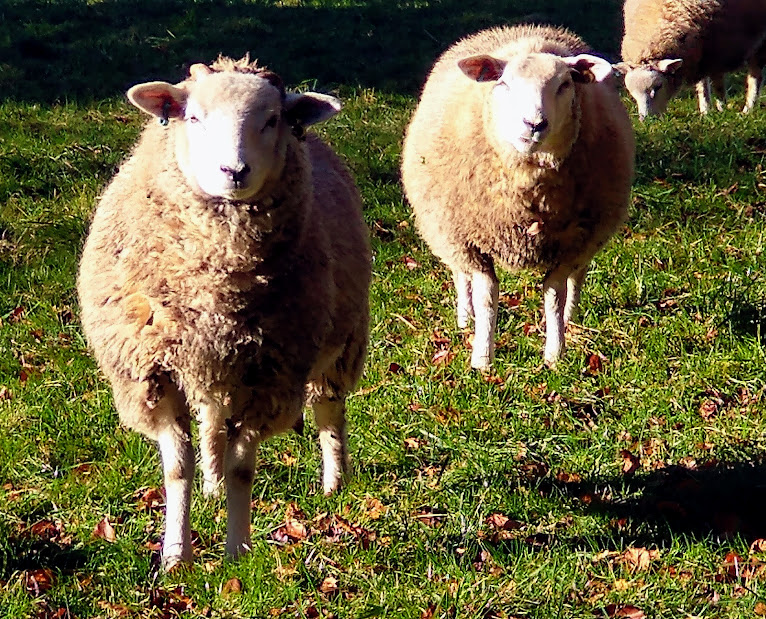
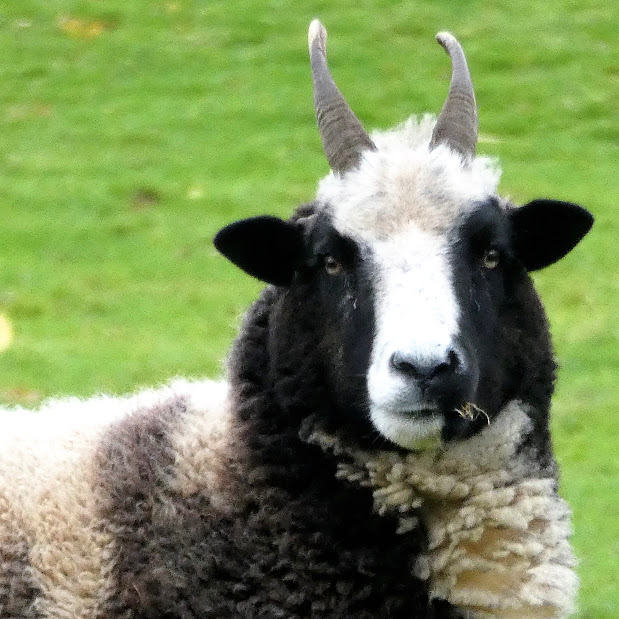
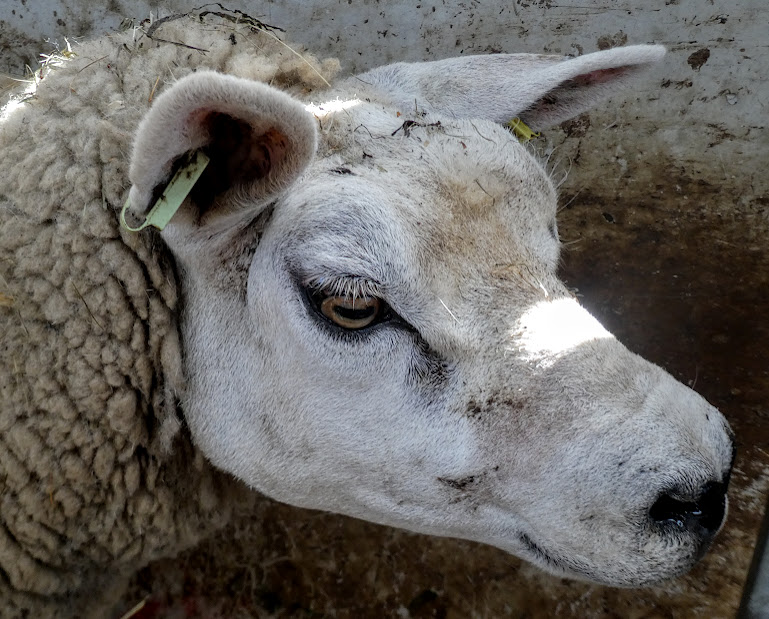
Let’s go to a farm. Here are two sheep.
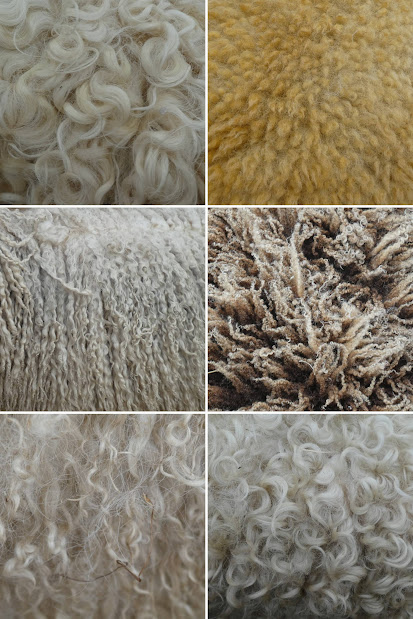
Did you think that a-sheep-is-a-sheep-is-a-sheep? Not at all. I’ve focussed on just six sheepy fleeces, filling the frame with six different styles of wool – I could have picked dozens more.
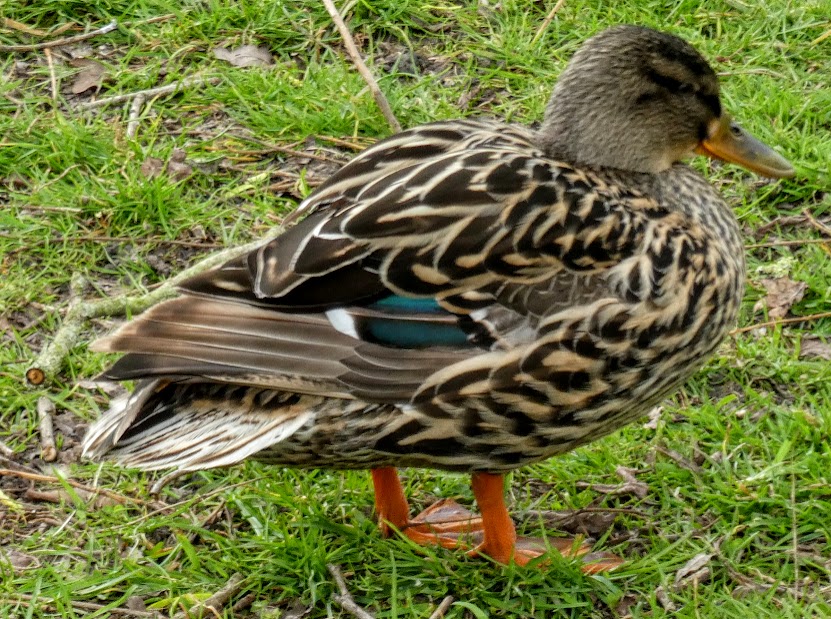
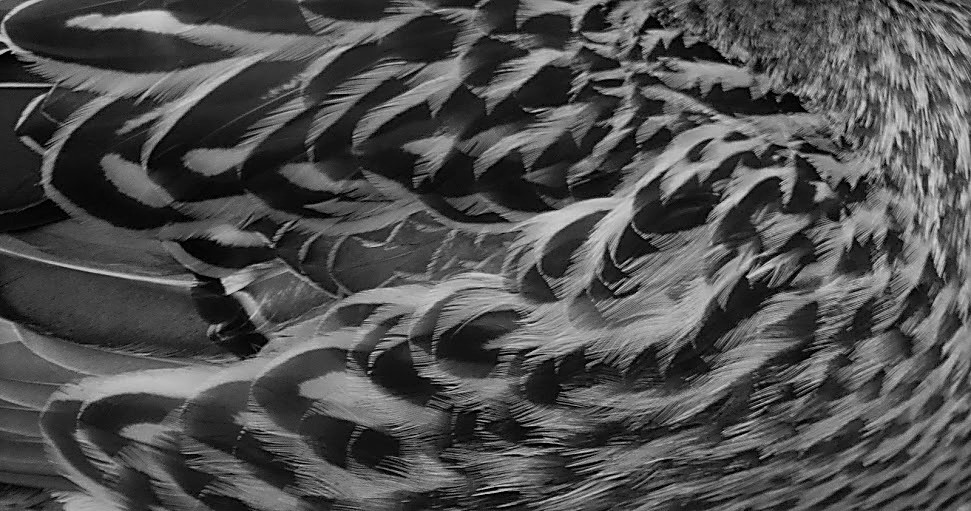
We’ll pop down to the duckpond. I’ve filled the frame with a female mallard. But let’s home in more closely:
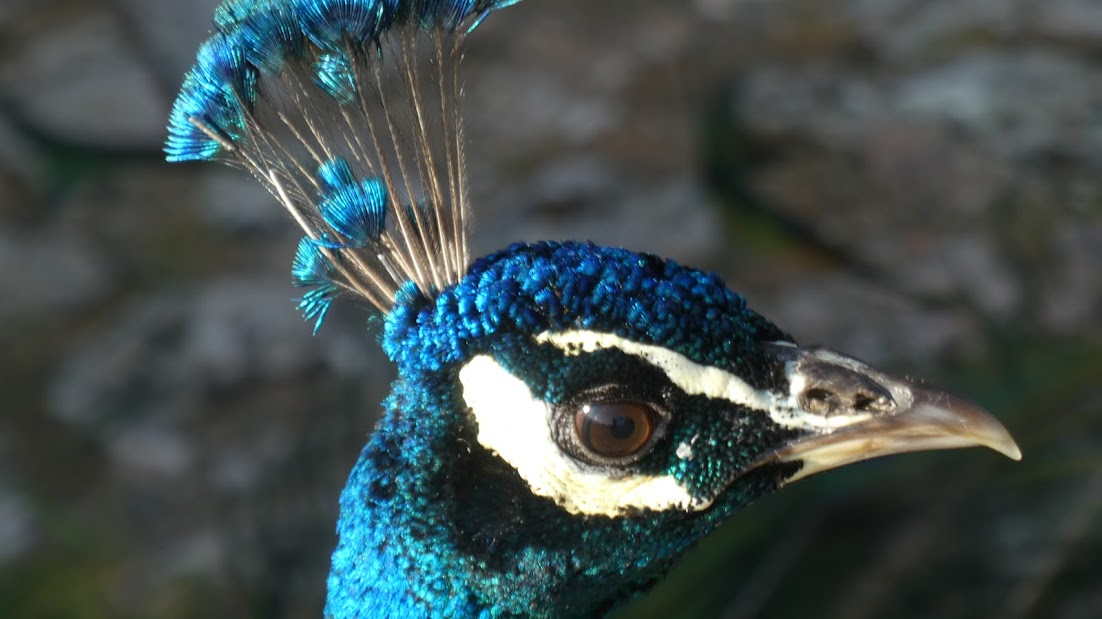
We’ll get a touch exotic, and feature a peacock: yes, there are one or two farms round here that have peacocks on parade.
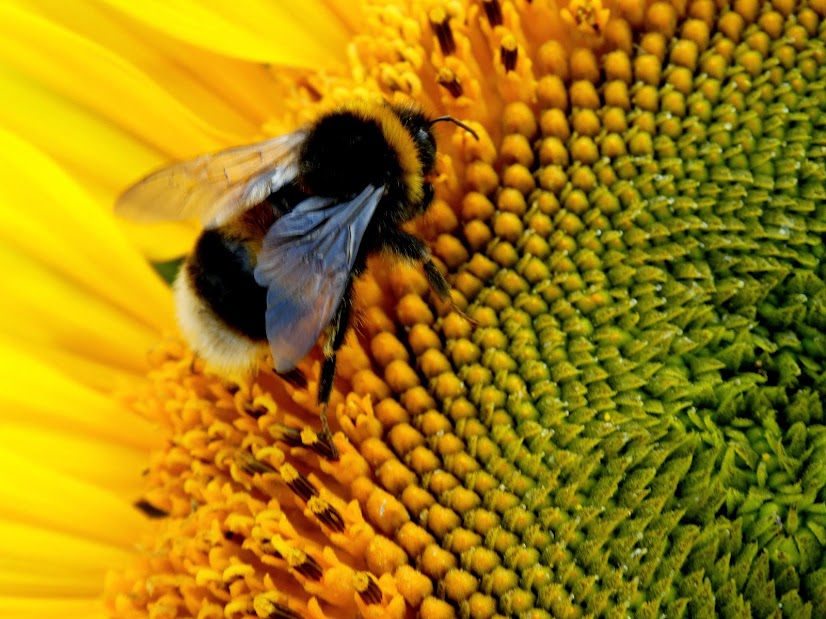
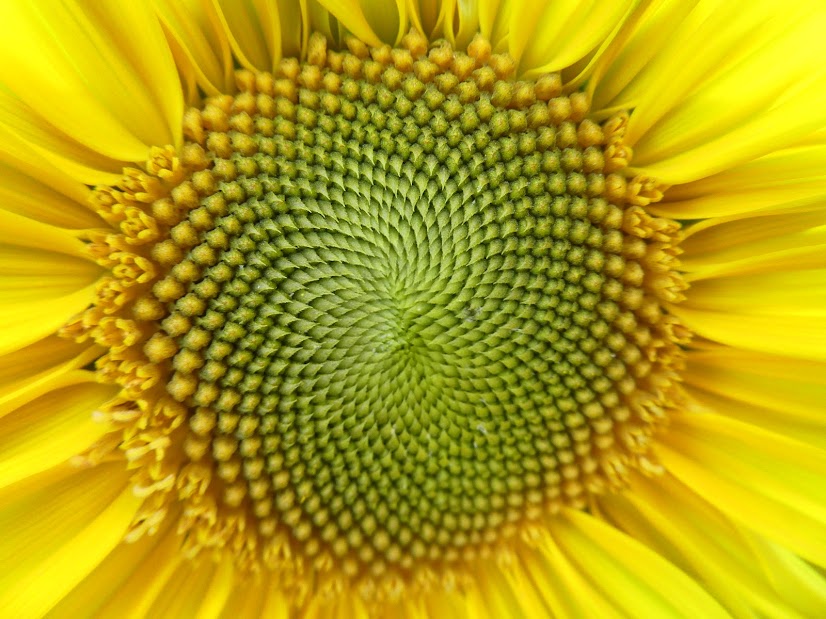
Sunflowers were exotic once in the UK. No longer. They’ve started to become a regular crop for some. And the bees are very pleased to have them.
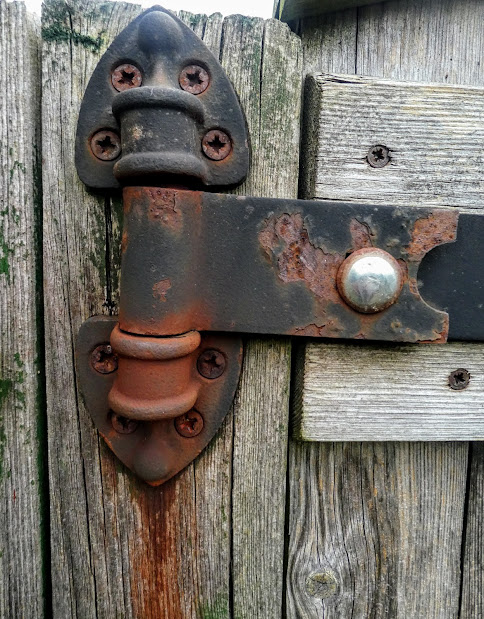
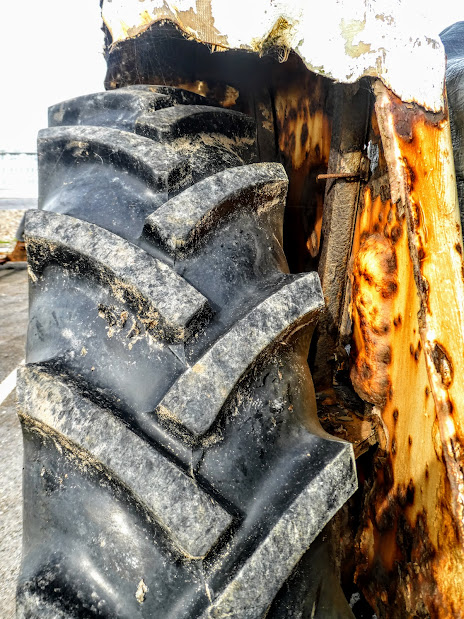
Farmyards aren’t just about pretty things. There are gates and barns to be locked, and tractors to use and maintain – maybe not well enough, in this case..
So there we have it: getting up close to our findings down on the farm. I’m on my travels this week, and may not respond very promptly to comments. But I will get back to you – eventually.
In case you’re interested, reading from left to right from the top the wools represented are: Wensleydale; Cheviot; Leicester Longwool; Shetland; also Shetland; and … er … don’t know.
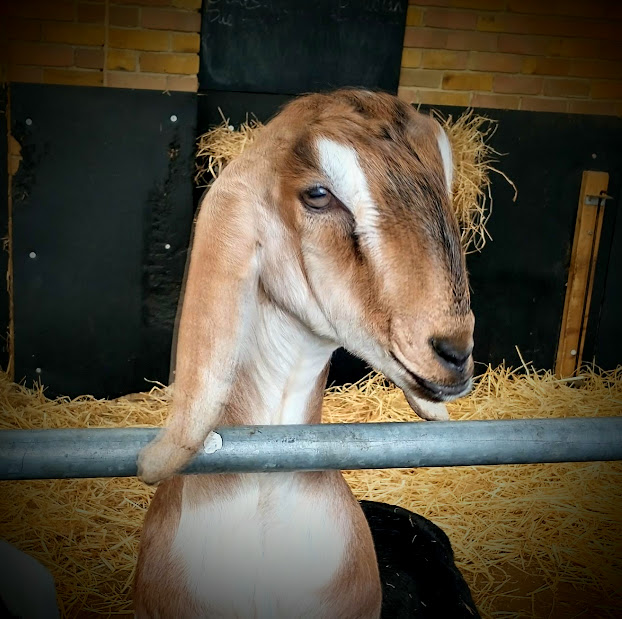
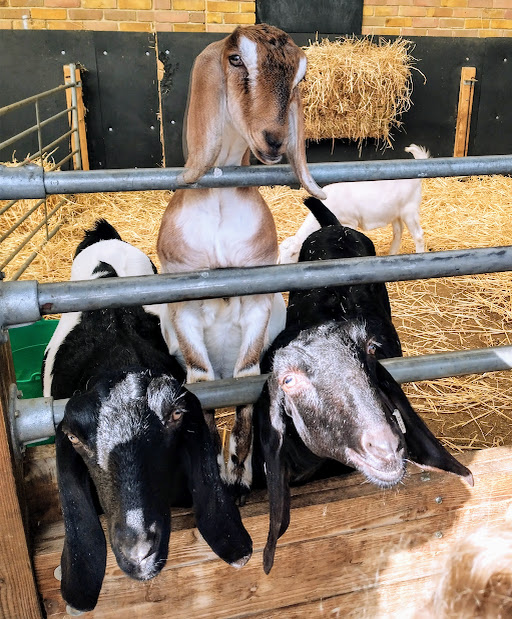
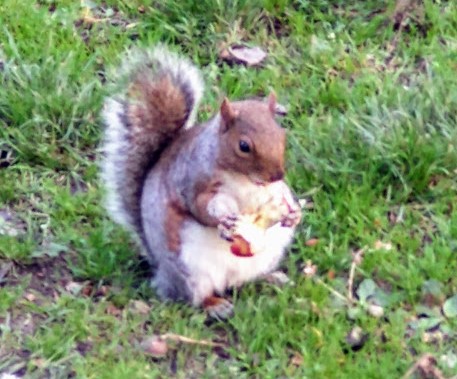
The other day I showed you the thieving squirrels of Mudchute Farm in London’s Isle of Dogs. Today it’s the turn of the thieving goats. Mind your scarves! The goats find them delicious.
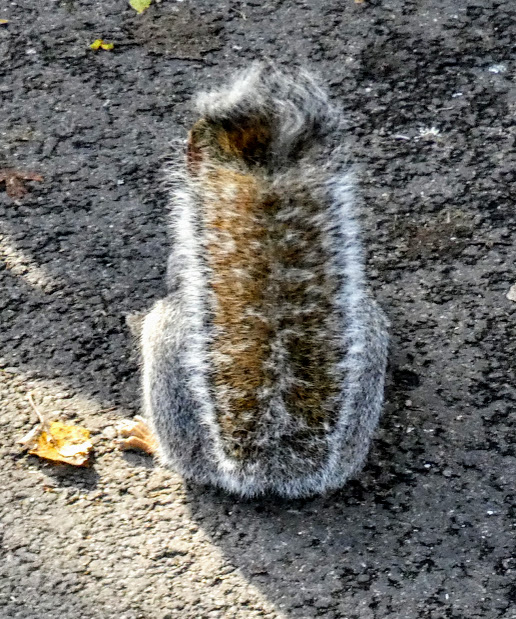
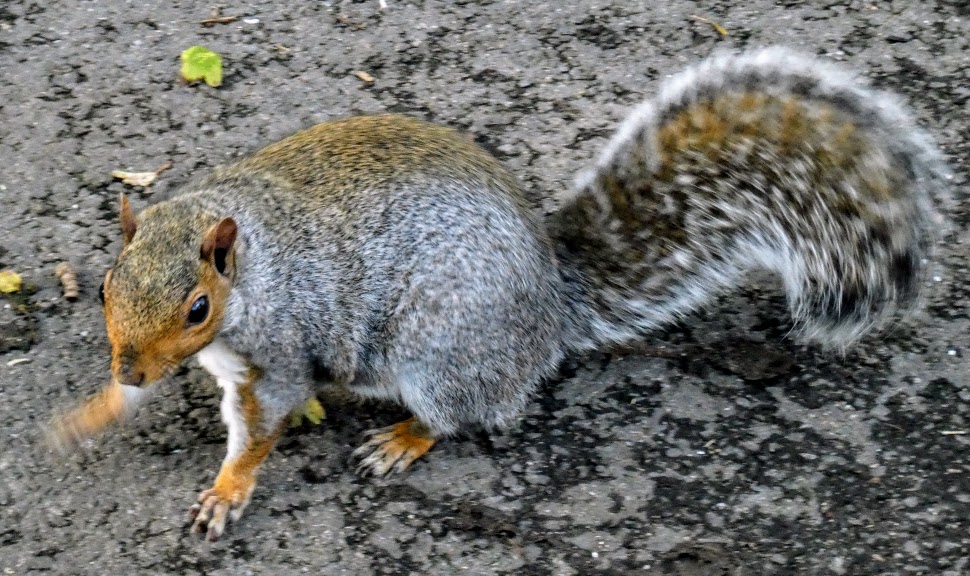
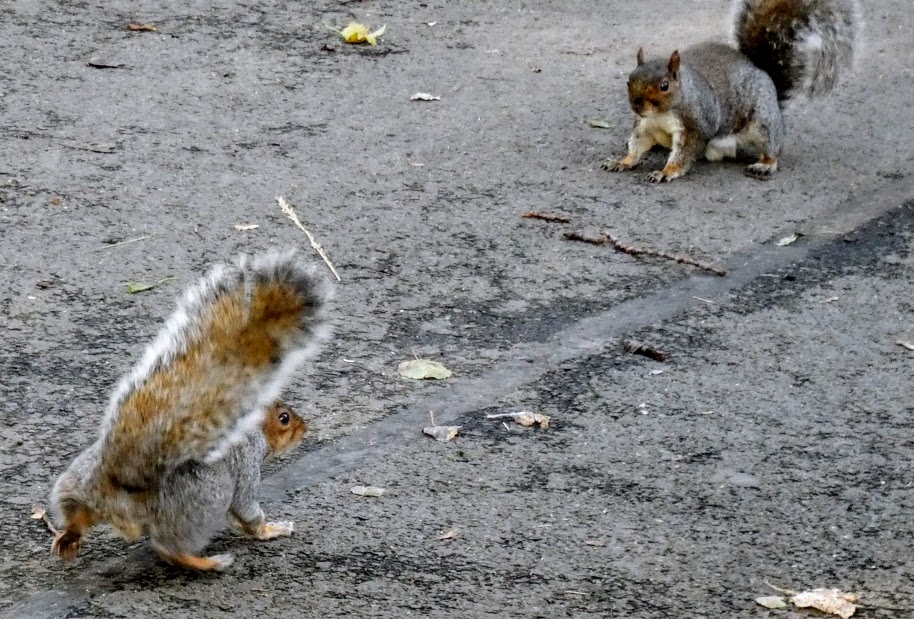
Last week – half term in London – I was on Granny Duty. And my daughter and granddaughter were over from Spain too. So one day, we went to Mudchute Farm. This is a community-based city farm that’s home to sheep and cows and ducks and geese and hens and all the usual suspects. But towards the end of the day, squirrels came centre-stage. They’re not part of the farm. But they’ve learnt that it’s a great place to hang out. All that free food. And some of it from visitors. William at one point dropped his apple core – accidentally of course: we’re not litter-louts. Before he could do anything about it, a cheeky squirrel had scuttled out and grabbed it: and retreated to a goat pen so she could eat it in peace.
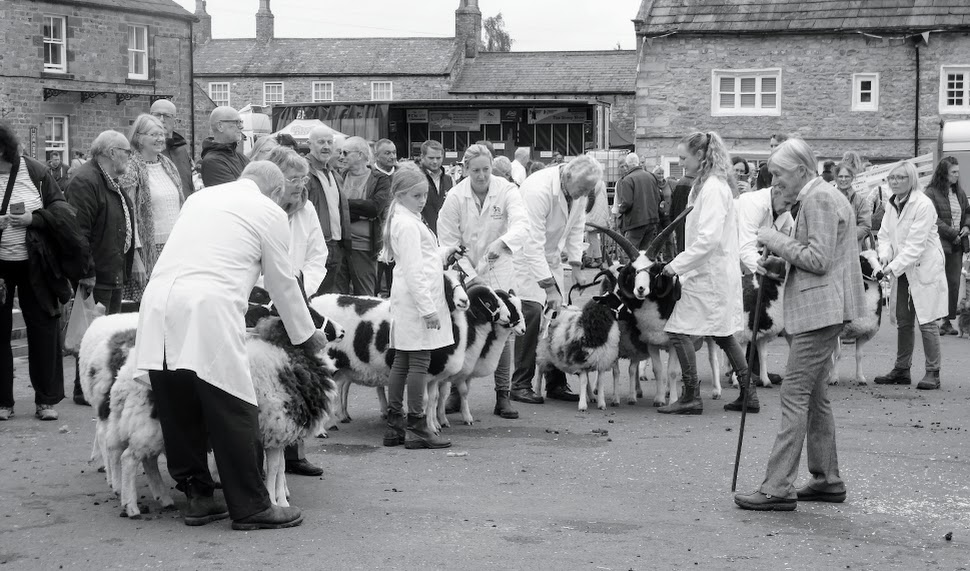
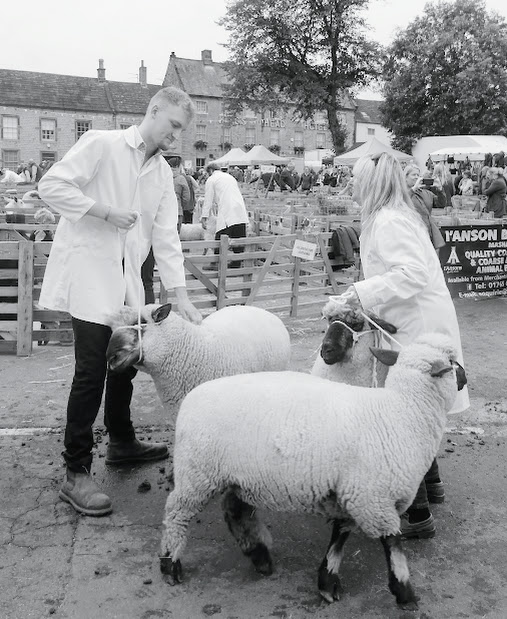
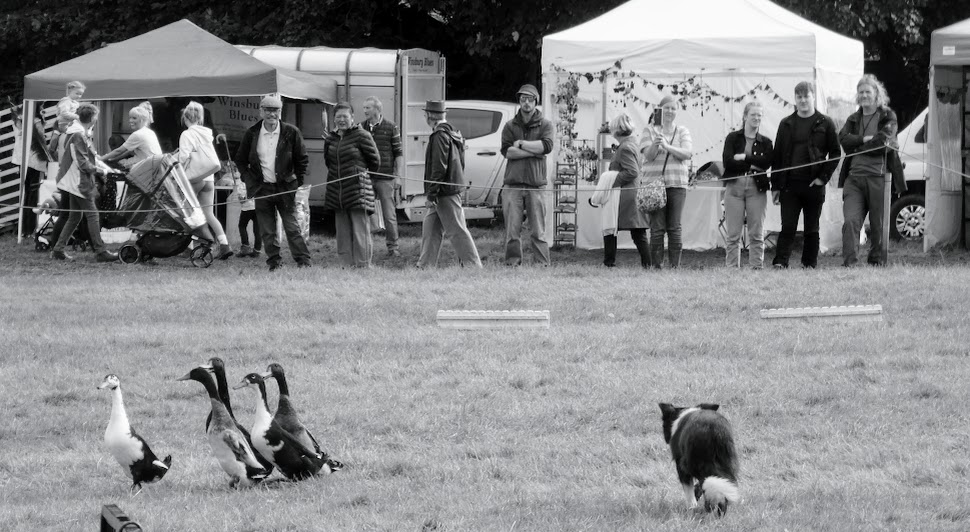
Just over a week ago, I showed you an image of Masham gearing up for its annual Sheep Fair. It’s a weekend when the town itself is on display, and sheep in their hundreds turn up to be examined by judges who come from all over the kingdom and beyond to this special event. We go without fail. Our first visit had us astounded at the sheer variety of types of sheep on display. At other times we’ve focused on watching sheep dogs doing what they do best … herding … ducks.
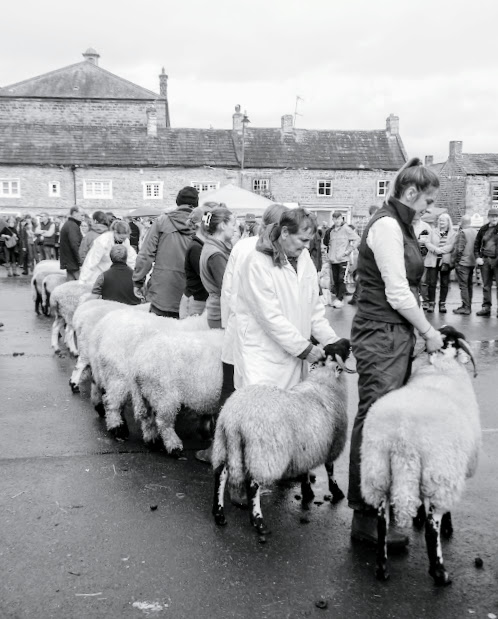
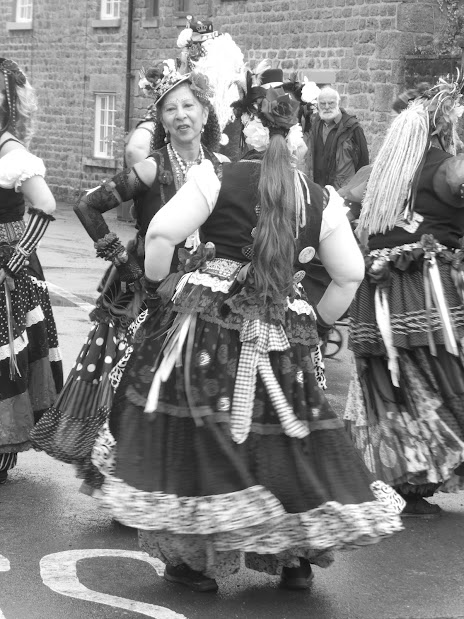
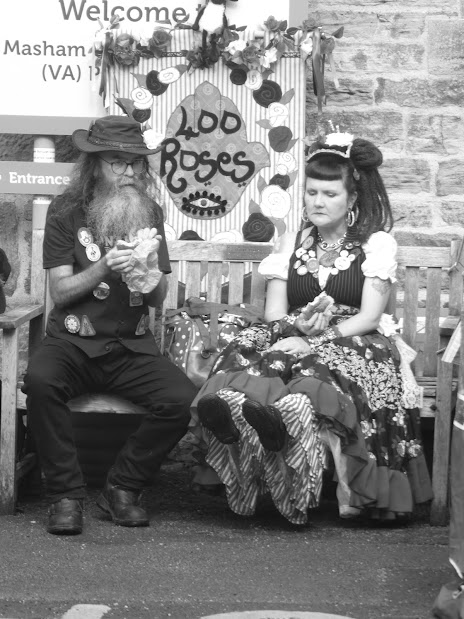
So I have photos by the score. This year, then, I thought I’d limit myself to black and white. I’d look for sheep on display, the humans who handle them, some as young as five years old. I’d look at dancing displays, at those sheep dogs, and at humans also worth a second glance. And show them to Ann-Christine, and to you, for this week’s Lens-Artists Challenge: On Display.
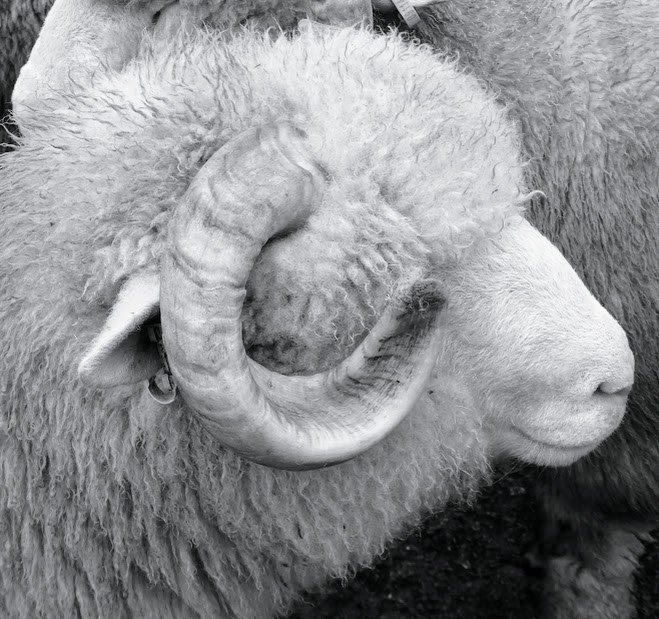
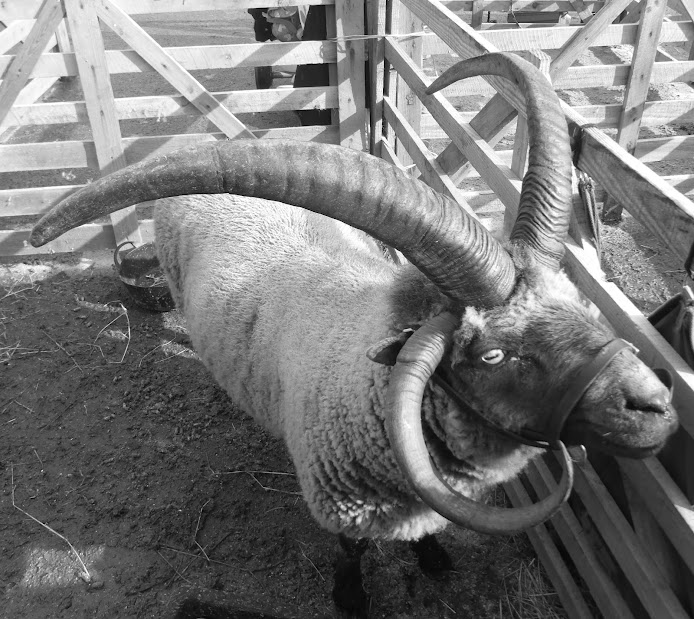
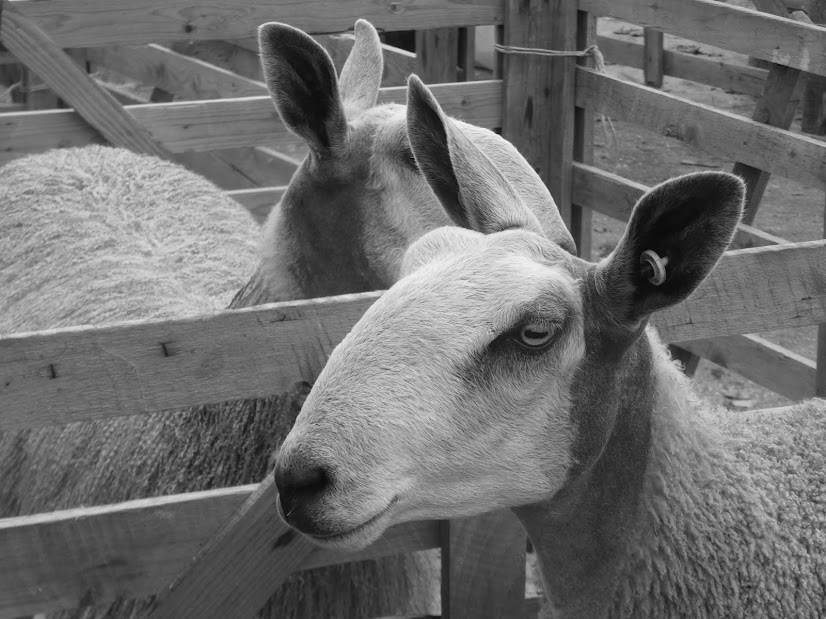
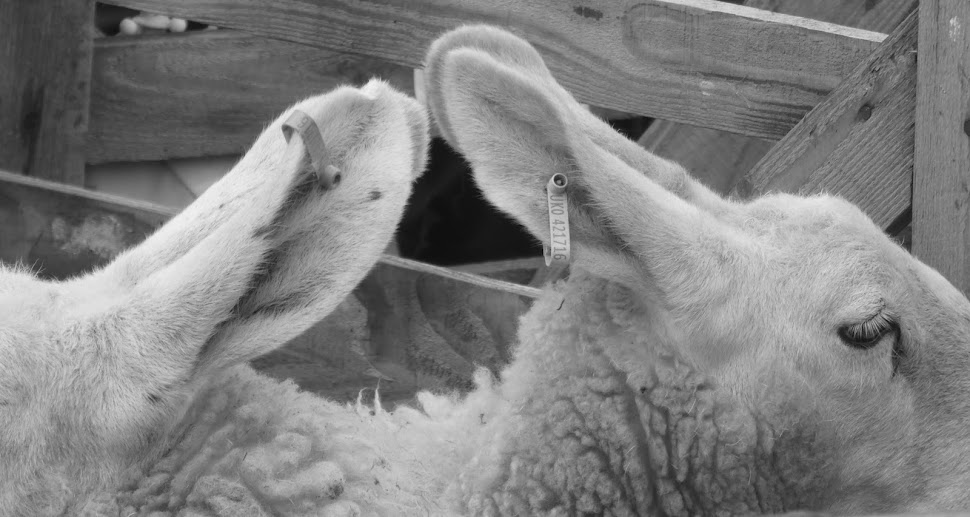
Sheep first then, of course…
… then their handlers…
… then there were dancers. You can see they’re not happy putting up with black and white photos. We’ll revisit them another day in glorious technicolor.
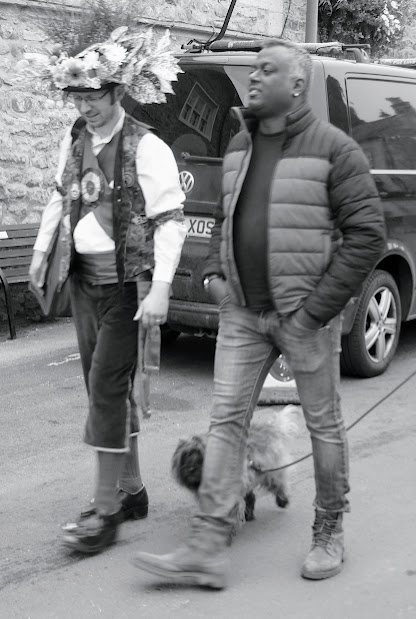
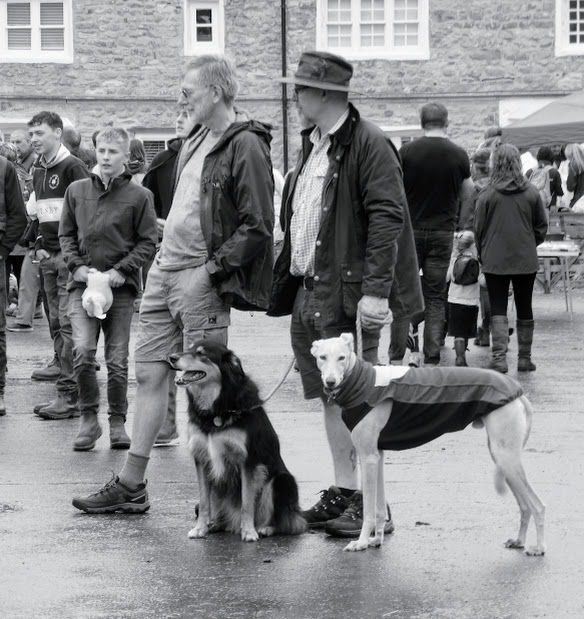
There were the passers by…
… and not forgetting the duck-dog.
And after that the walk back through the town, through fields of sheep who’d somehow dodged presenting themselves in town to the car, parked in the Nature Reserve car park.
I’m offering this to Jo as a Monday Walk too. Of course the WI had tasty soup and home-baked cakes on offer. We scoffed everything down without thinking even once of the photo-opportunity they represented.
Britain is one of the most nature-depleted countries on earth, according to the fourth State of Nature (SON) Report, the product of a collaboration of environmental NGOs, academic institutions and government agencies, including Natural England. Depressingly, England, Wales, Scotland and Northern Ireland are on the edge, as far as much of the natural world is concerned.
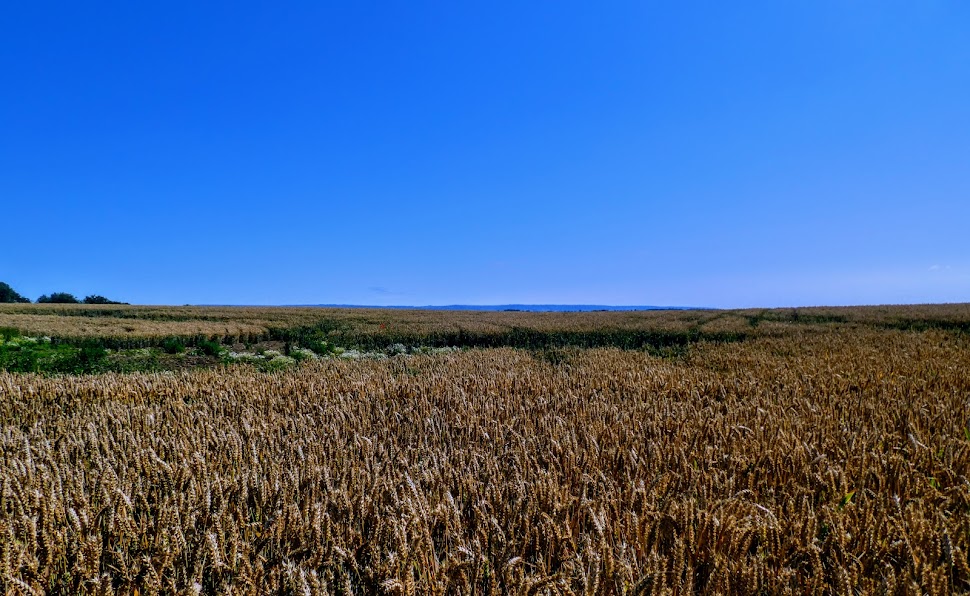
Look at the featured photo for instance, taken on one of those in-glorious-technicolor days of high summer, with an impossibly blue sky, and fields of golden wheat just waiting for harvest. It really shouldn’t be like that. There should be poppies, cornflowers, wild flowers in general poking their heads above the crop. There should be generous field margins and hedges, offering home, food and shelter to whole varieties of insects, small mammals and birds. Where can all this wildlife call home these days? Many of them are on the very edge of sustainability. Here’s another field, even nearer to home, equally mono-cultured.
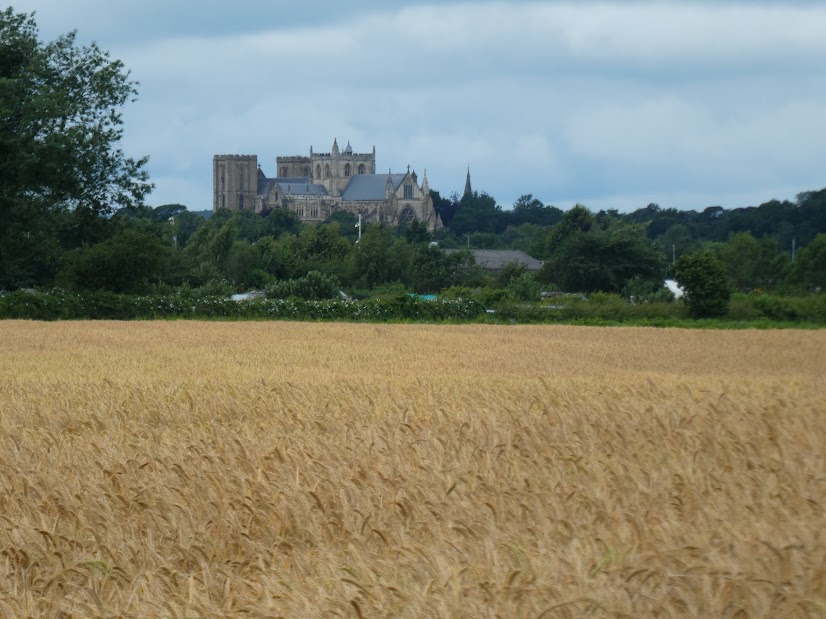
Part of the Sanctuary Way path skirting the edges of Ripon.
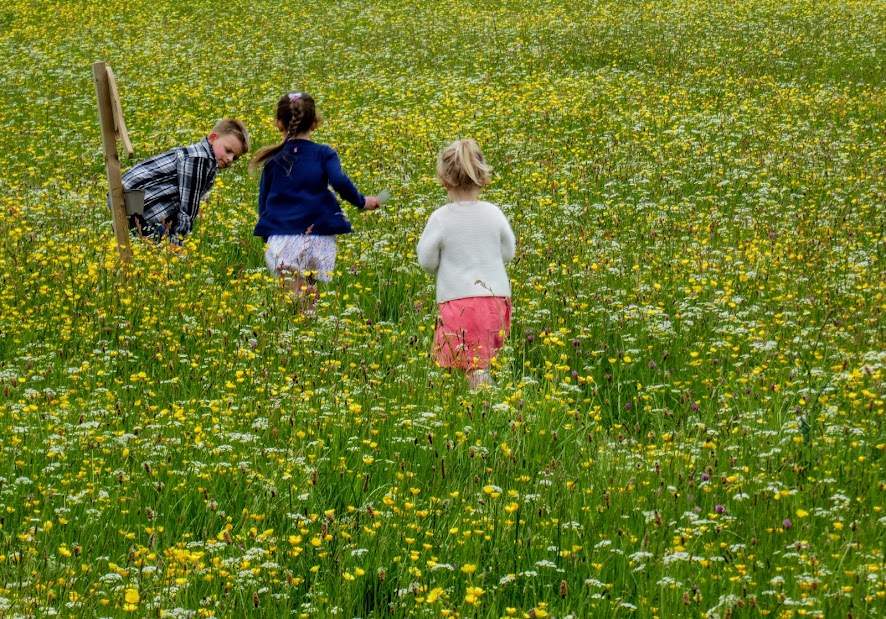
These days grass grown for hay-making as winter feed is just that. Grass. Meadowland used to be so different, crammed with wildflowers that made much richer, more interesting fare for the cattle that rely on it as winter feed. And a mecca for insects : all-important bees among others – during its growing season. These days, it’s so rare that it’s not just meadowland, but a Site of Special Scientific Interest.
Rock House Farm, Lower Wensleydale, and one of its SSSI meadows.
The farms nearer to our house have chosen to make do with narrow jumbles of poppies squeezed into narrow field margins, or at the edge of paths.
Poppies find a quiet corner along a field in West Tanfield.
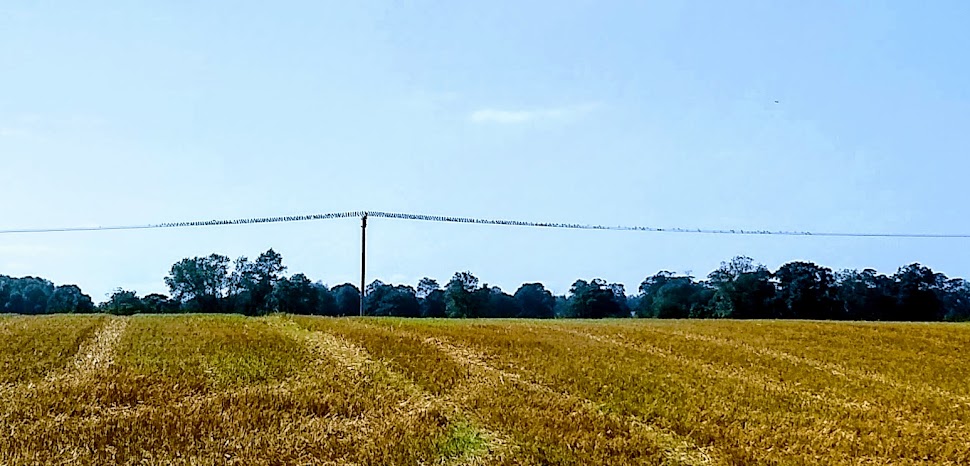
See these? These are swallows on a telegraph wire in mid-September one year recently, assembling prior to their big autumn migration. It didn’t happen this year. Swifts and swallows are on the edge of viability here, from habitat loss.
Waiting to depart on that journey to Africa
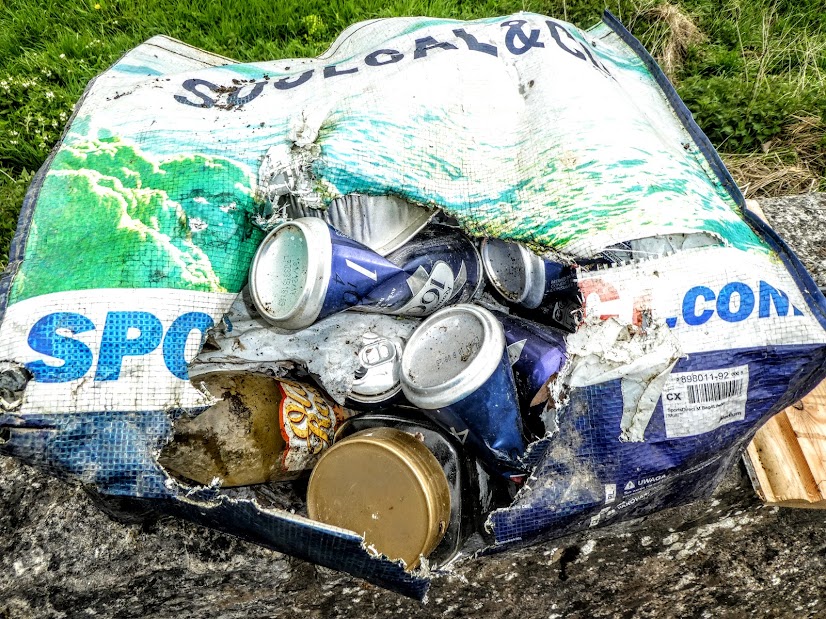
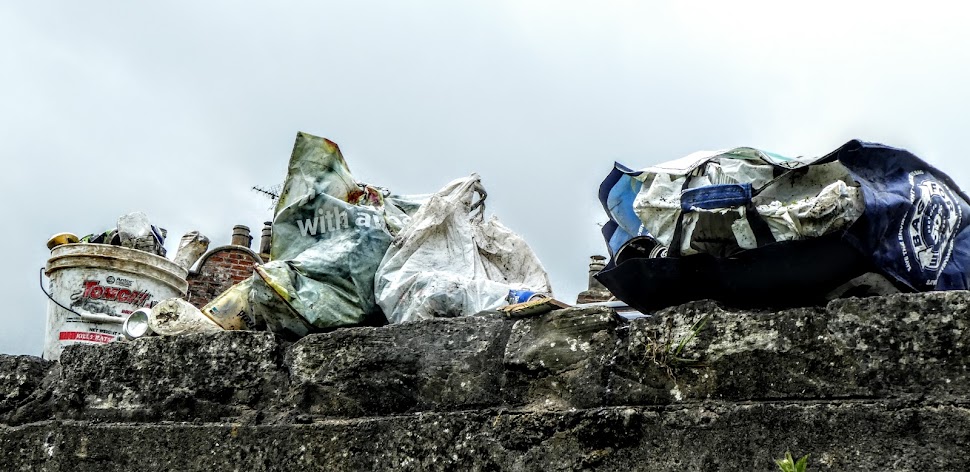
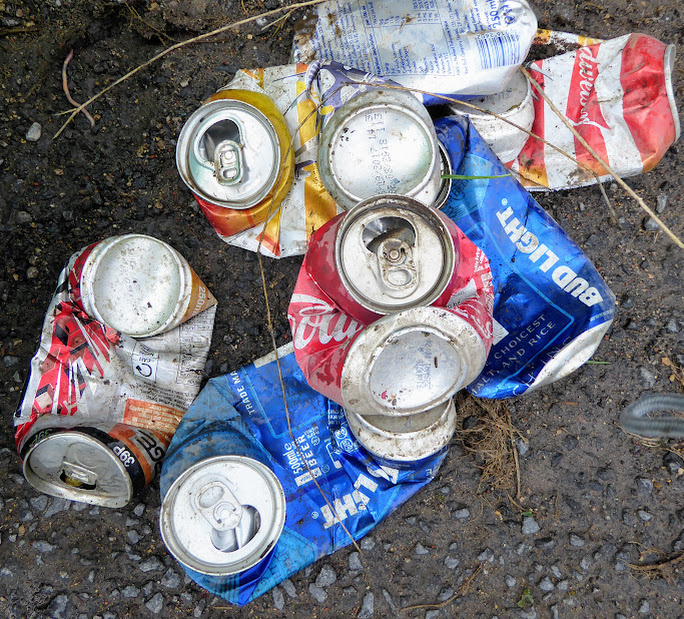
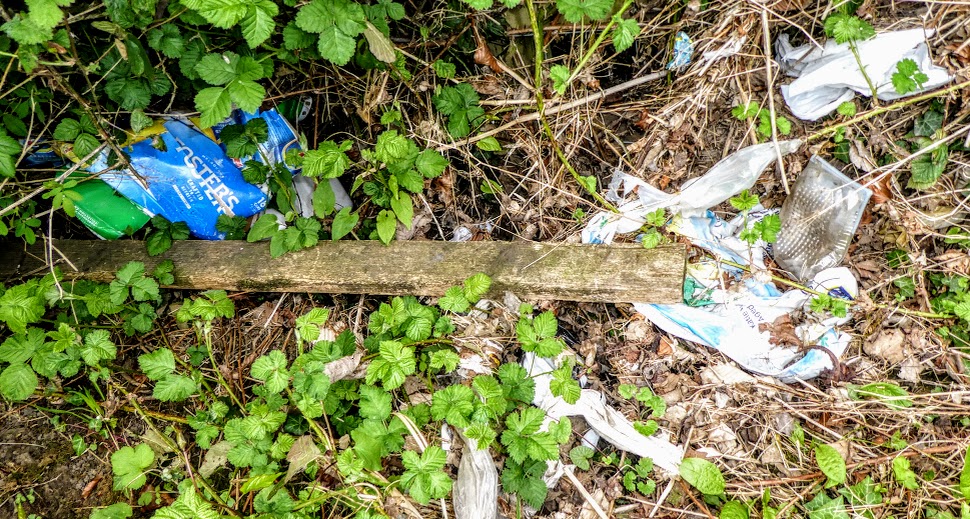
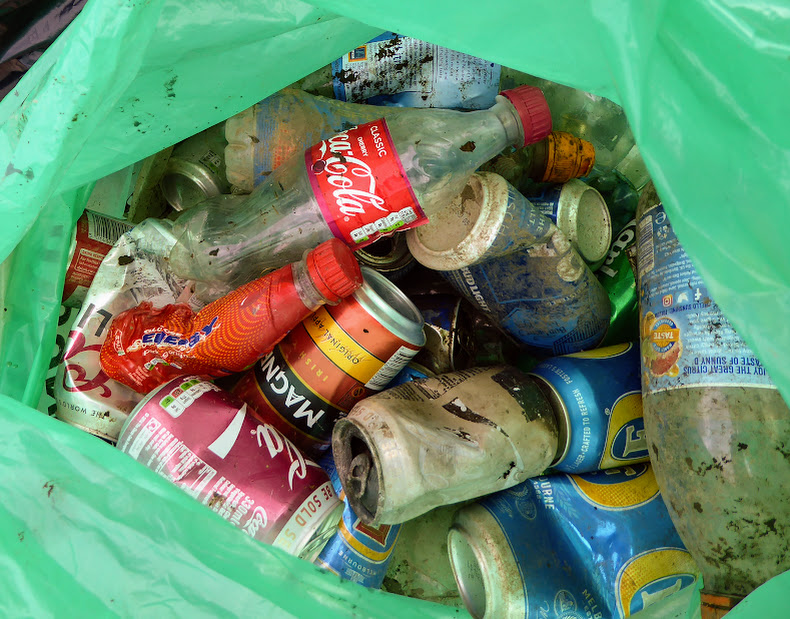
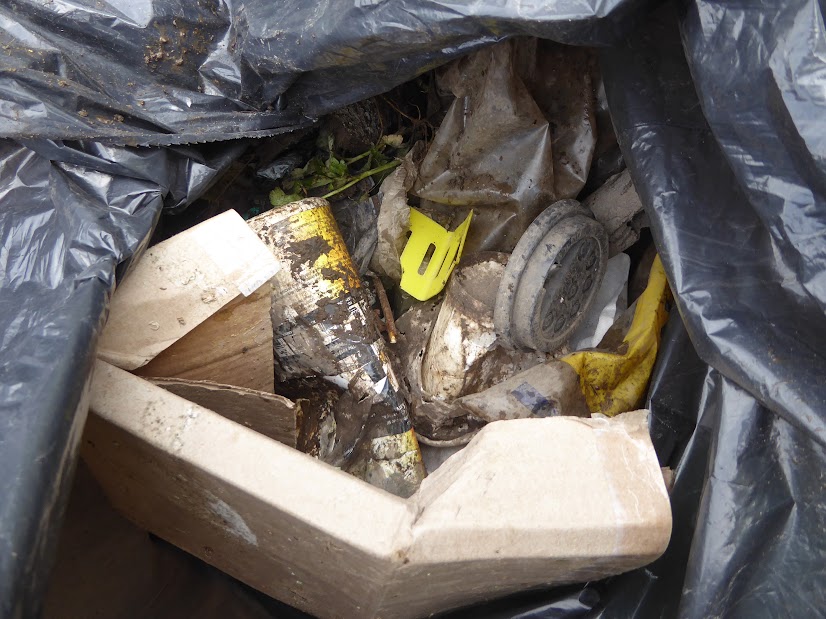
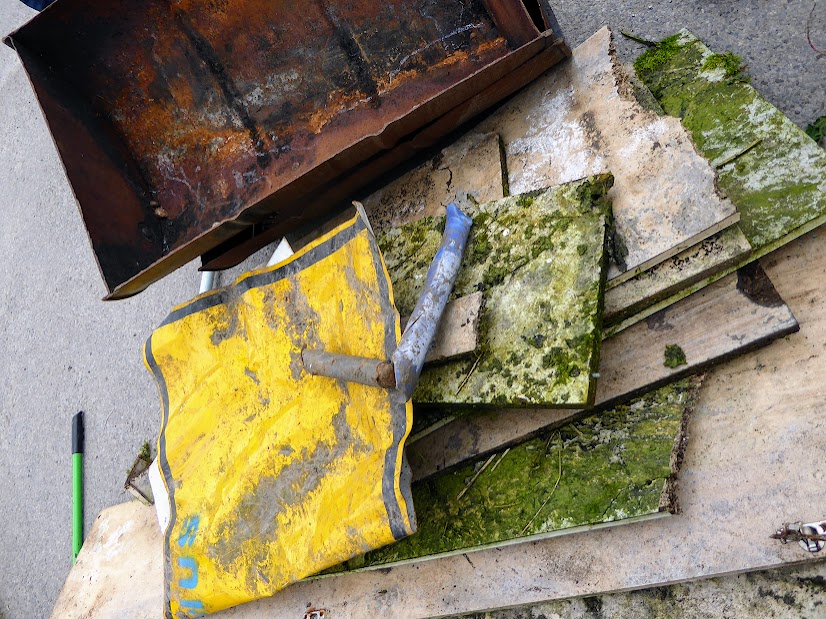
Let me show you something all-too common though, both in town and country. Litter. These images are hauls from litter-picks we’ve done not just in town centres, but down country lanes. Everything from a carelessly-tossed can to rather toxic rubble and waste illegally dumped in a hedge margin. Not just an eyesore, but habitat-damaging and a danger to the many small species that call such areas home.
This is meant to be a photo challenge, not a diatribe, so I’ll leave it there. There’s a lot more I could say, but I don’t have the images to support the argument. It’s for Patti’s Lens-Artists Challenge #269: On the edge. And it was inspired by Susan Rushton’s post for the same challenge. If you pop over and read it, you’ll see why.















 From Pyrenees to Pennines
You must be logged in to post a comment.